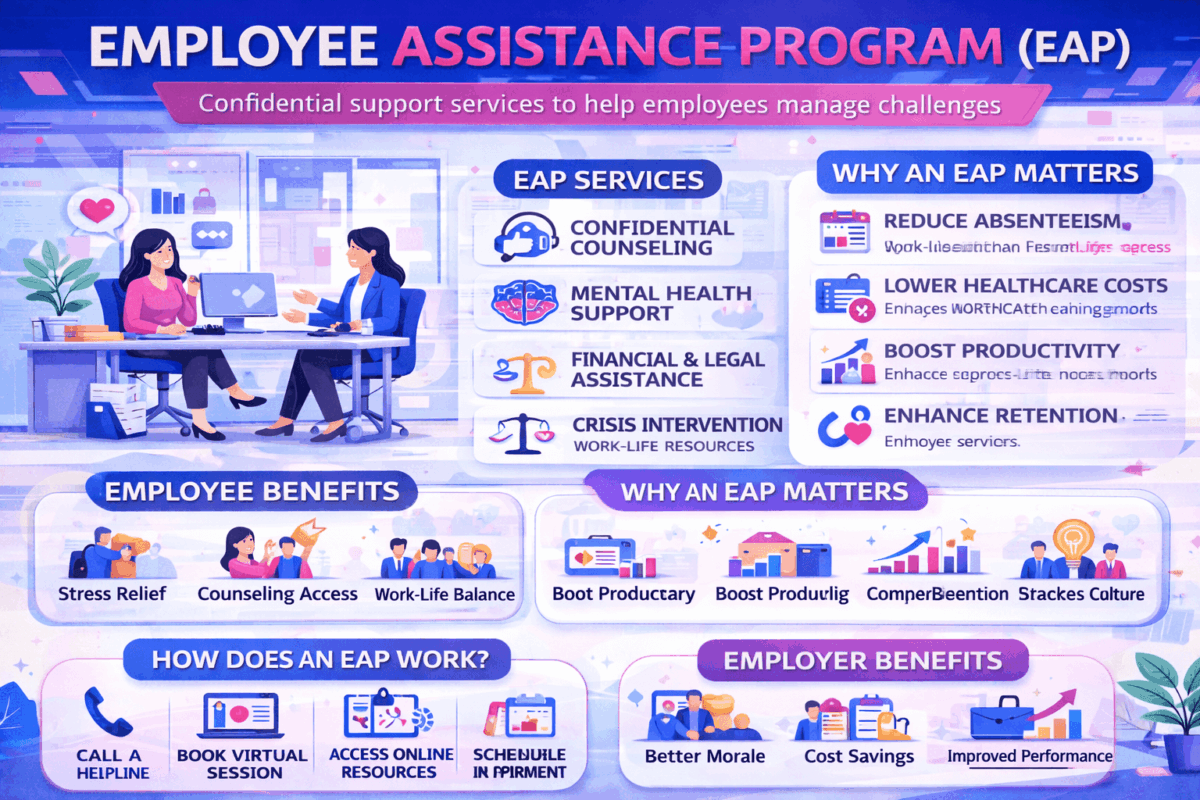
An Employee Assistance Program (EAP) is a workplace benefit that provides employees with confidential support services to help them manage personal and professional challenges. These programs typically offer short term counseling, mental health support, financial guidance, legal advice, and crisis intervention.
An Employee Assistance Program is designed to improve employee wellbeing, reduce workplace stress, and support overall productivity. It gives employees access to professional help when they need it, without stigma or complicated processes.
In many organizations, an EAP is a core part of a broader employee wellbeing strategy.
What Is an Employee Assistance Program in Simple Terms?
An Employee Assistance Program is a company sponsored service that helps employees deal with issues that may affect their work performance or personal life.
These issues can include:
- Stress and anxiety
- Relationship challenges
- Financial concerns
- Substance misuse
- Workplace conflict
- Grief or trauma
- Legal questions
The goal is early intervention. When employees receive support quickly, problems are less likely to escalate.
Why Employee Assistance Programs Matter
Workplace stress and burnout continue to rise across industries. Mental health awareness has also increased significantly in recent years.
Employee Assistance Programs help organizations:
- Reduce absenteeism
- Lower healthcare costs
- Improve employee satisfaction
- Strengthen retention
- Support psychological safety
When employees know support is available, they feel more secure and valued.
What Services Does an Employee Assistance Program Offer?
While offerings vary by provider, most EAPs include:
Confidential Counseling
Short term counseling sessions for personal or work related issues. These may be delivered in person, by phone, or virtually.
Mental Health Support
Access to licensed therapists for stress, depression, anxiety, or burnout.
Financial and Legal Assistance
Guidance on debt management, budgeting, legal disputes, or family law matters.
Crisis Intervention
Immediate support during emergencies such as workplace incidents or personal trauma.
Work Life Resources
Help with childcare referrals, eldercare support, and time management strategies.
Some modern Employee Assistance Programs also include digital wellbeing platforms, mobile apps, and online self help resources.
Are Employee Assistance Programs Confidential?
Yes. Confidentiality is a fundamental feature of an EAP.
Employers do not receive details about individual usage. They may only receive aggregated data, such as participation rates, to evaluate program effectiveness.
Confidential access increases employee trust and encourages utilization.
How Does an Employee Assistance Program Work?
Typically, the employer partners with a third party EAP provider.
Employees can:
- Call a dedicated helpline
- Book virtual sessions
- Access online resources
- Schedule in person appointments
Most programs offer a limited number of free counseling sessions per issue. If additional care is required, employees may be referred to external providers.
Benefits of an Employee Assistance Program
An Employee Assistance Program benefits both employees and organizations.
For Employees
- Access to professional support
- Reduced stress
- Improved mental health
- Better work life balance
For Employers
- Higher productivity
- Lower turnover
- Reduced absenteeism
- Stronger workplace morale
An effective EAP strengthens the overall employee experience.
Employee Assistance Program vs Health Insurance
An EAP is not the same as health insurance.
Health insurance covers medical expenses and ongoing treatment.
An Employee Assistance Program provides short term, immediate support services, often focused on counseling and guidance. It acts as a preventative resource rather than long term medical coverage.
Both can complement each other within a total rewards strategy.
How to Implement an Effective Employee Assistance Program
Successful implementation requires more than simply offering the benefit.
Organizations should:
- Communicate clearly about available services.
- Normalize mental health conversations.
- Train managers to recognize early warning signs.
- Promote the program regularly.
- Monitor participation rates and feedback.
Low awareness often leads to low usage. Ongoing communication is essential.
Common Challenges with Employee Assistance Programs
Some organizations struggle with:
- Low employee awareness
- Stigma around seeking help
- Limited session availability
- Lack of integration with broader wellbeing initiatives
Addressing these barriers requires leadership commitment and cultural support.
Frequently Asked Questions
What is an Employee Assistance Program?
An Employee Assistance Program is a company sponsored support service that offers confidential counseling and wellbeing resources to employees.
Is an Employee Assistance Program confidential?
Yes. Individual usage details are not shared with employers.
Who can use an Employee Assistance Program?
Most programs extend services to employees and sometimes their immediate family members.
Are Employee Assistance Programs free for employees?
Yes. The employer covers the cost for a defined number of sessions.
Why should companies offer an Employee Assistance Program?
It improves employee wellbeing, reduces workplace stress, and supports productivity and retention.
Why Employee Assistance Programs Are Becoming Essential
Modern workplaces face increasing pressure, rapid change, and rising mental health awareness.
An Employee Assistance Program provides structured support during challenging moments. It signals that the organization values employee wellbeing beyond performance metrics.
Companies that invest in holistic wellbeing programs create healthier, more resilient teams.

 Performance