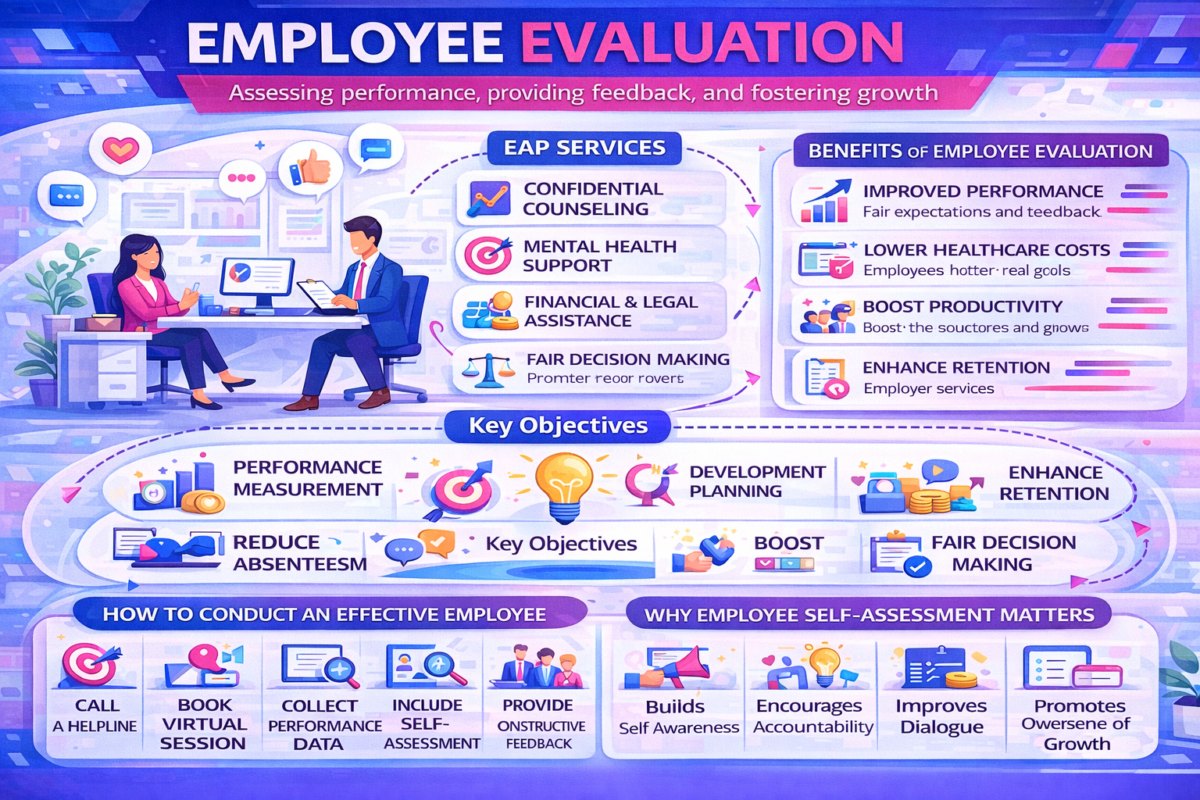
Employee evaluation is a structured process used by organizations to assess an employee’s performance, skills, behavior, and overall contribution to business goals. It is often referred to as a performance appraisal or performance review.
An employee evaluation helps managers understand how well employees are meeting expectations, where they excel, and where improvement is needed. When done correctly, it strengthens performance management, supports career development, and improves overall productivity.
Employee evaluation is not just about rating performance. It is about growth, clarity, and alignment.
What Is Employee Evaluation in Simple Terms?
Employee evaluation is the process of reviewing an employee’s work over a specific period to measure performance against defined goals and standards.
It usually includes:
- Reviewing job responsibilities
- Measuring goal achievement
- Providing structured feedback
- Identifying strengths
- Highlighting development areas
- Planning next steps
The purpose is not to criticize but to guide and improve performance.
Why Is Employee Evaluation Important?
Employee evaluation plays a central role in talent management.
It helps organizations:
- Align individual goals with company objectives
- Improve accountability
- Identify high performers
- Support promotions and compensation decisions
- Plan training and development programs
- Strengthen employee engagement
Without structured evaluations, performance expectations may become unclear, leading to disengagement or inconsistency.
Main Objectives of Employee Evaluation
The core objectives of employee evaluation include:
To assess whether employees meet predefined performance standards and goals.
Development Planning
To identify skill gaps and create targeted development plans.
Feedback and Communication
To encourage open dialogue between managers and employees.
Succession Planning
To identify potential future leaders within the organization.
Fair Decision Making
To provide a documented basis for salary adjustments, promotions, or role changes.
When evaluation is transparent and consistent, it builds trust.
How to Conduct an Effective Employee Evaluation
Conducting an effective employee evaluation requires preparation and clarity.
Here is a structured approach:
1. Set Clear Objectives
Define performance expectations and measurable goals at the start of the review cycle.
2. Use Relevant Evaluation Criteria
Align assessment criteria with job responsibilities and organizational priorities.
Use performance metrics, feedback records, project outcomes, and behavioral observations.
4. Include Self Assessment
Encourage employees to reflect on their own performance before the review discussion.
5. Provide Constructive Feedback
Discuss strengths, improvement areas, and future expectations clearly and respectfully.
6. Create Development Plans
Agree on training, mentorship, or goal adjustments for the next review cycle.
7. Follow Up Regularly
Performance evaluation should not be limited to an annual event. Ongoing check ins support continuous improvement.
An employee evaluation tool is a structured system or software that helps organizations assess performance consistently.
Common tools include:
- Performance review forms
- 360 degree feedback systems
- Goal tracking platforms
- Self assessment templates
- Continuous feedback systems
Modern performance management software enables real time tracking, goal alignment, and data driven decision making.
Digital tools also reduce bias by standardizing evaluation criteria.
Benefits of Employee Evaluation
When implemented properly, employee evaluation delivers measurable advantages.
Clear expectations and feedback improve productivity.
Stronger Communication
Regular reviews encourage open dialogue between managers and employees.
Increased Engagement
Employees feel valued when their efforts are recognized and discussed.
Better Talent Development
Structured evaluations highlight skill gaps and training needs.
Objective Decision Making
Documented reviews support fair compensation and promotion decisions.
Why Is Employee Self Assessment Important?
Employee self assessment encourages reflection and accountability.
When employees evaluate their own performance:
- They become more self aware
- They take ownership of growth
- They prepare better for review discussions
- They contribute to transparent communication
Self assessment also reveals perception gaps between employees and managers, creating opportunities for alignment.
Common Challenges in Employee Evaluation
Organizations often face challenges such as:
- Bias in ratings
- Infrequent feedback cycles
- Lack of clear performance metrics
- Inconsistent evaluation standards
- Overemphasis on ratings instead of development
Moving from annual reviews to continuous performance management reduces many of these issues.
Today, employee evaluation is evolving beyond once a year appraisals.
Modern approaches include:
- Continuous feedback
- Quarterly goal reviews
- Real time recognition
- Data driven performance insights
- Peer feedback mechanisms
This shift supports agility and keeps employees aligned with changing business priorities.
Frequently Asked Questions
How do you conduct an employee assessment?
Set clear goals, gather performance data, include self assessment, provide constructive feedback, and agree on development actions.
What is the main objective of employee evaluation?
To measure performance, provide feedback, and support professional growth.
It is a structured system or software used to assess performance, skills, and development needs.
What are the benefits of employee evaluation?
Improved productivity, better communication, informed promotion decisions, and stronger engagement.
Why is employee self assessment important?
It builds self awareness, accountability, and encourages transparent discussions between employees and managers.
Why Employee Evaluation Is Essential for Growth
Employee evaluation should not feel like a compliance exercise. It should be a meaningful conversation focused on growth and alignment.
When evaluations are fair, structured, and continuous, they strengthen trust and performance. Employees understand what is expected, managers gain clarity on contributions, and organizations build a culture of accountability and improvement.
Employee evaluation is not about judging people. It is about helping them succeed.

 Performance