











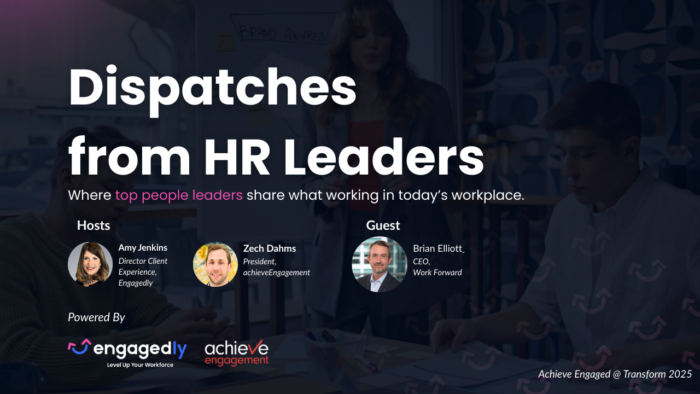

At Transform’s People, Culture, and the Future of Work series, Brian Elliott, founder of Work Forward and former tech executive at Google and Slack, shared his insights into the evolving workplace. With over 25 years of experience leading product teams, startups, and advising on flexible and hybrid work, Elliott offered a practical and strategic perspective on leadership, trust, and leveraging technology to drive results.
Key Takeaways — Brian Elliott at Transform
- Return to Office: Top-down mandates often fail — purpose-driven, co-located gatherings boost engagement.
- Trust: Leadership teams must build trust first — without it, resilience and alignment falter.
- Flexible Work: Co-located vs distributed teams require different strategies — three days may work for local teams, but distributed teams need flexibility.
- AI Adoption: Agentic AI is a tool, not a replacement — transparency and frontline engagement drive adoption.
- Employee Wellbeing: Vulnerability with boundaries is critical — burnout is rising; trust and psychological safety are non-negotiable.
Return to Office: Purpose over Presence
The COVID-19 pandemic forced organizations to adopt remote work, opening new possibilities for flexibility. Now, many companies are implementing return-to-office mandates. Elliott notes that top-down directives rarely succeed; instead, organizations should focus on purpose-driven gatherings:
- Plan clear agendas for in-person meetings.
- Invest in learning, relationship building, and belonging.
- Align office use with strategic goals, not just occupancy.
Flexible Workspace: Redesigning for Collaboration
Traditional office layouts often hinder productivity. Elliott highlights successful approaches:
- Reduce individual space and expand collaborative zones.
- Use flexible space providers to accommodate distributed teams.
- Treat shared spaces as tools to support company objectives.
AI in the Workplace: Tool for Growth, Not Fear
Generative and agentic AI adoption is rising but uneven. Elliott stresses:
- Use AI to enhance coaching, mentoring, and workflow efficiency.
- Address fears proactively — employees often associate efficiency with job risk.
- Empower frontline leaders to experiment and set norms for AI use.
- Programs like “Women Defining AI” help close adoption gaps and promote inclusivity.
Leadership and Trust: The Foundation for Resilience
Trust within leadership teams is essential:
- Build strong first-team connections across geographies.
- Foster vulnerability with boundaries — allow employees to share challenges without overextending managers.
- Strong leadership trust translates into team resilience and long-term performance.
A Bold Prediction: Innovators Thrive with Flexibility
Elliott sees a shift away from command-and-control approaches. Companies that combine flexibility, experimentation, and outcome-driven accountability will outperform rigid organizations. Smaller, nimble teams leveraging AI can move faster than larger, bureaucratic firms, creating a competitive advantage.
Final Thought
The future of work is defined by trust, purposeful flexibility, and human-centered technology. Leaders who embrace these principles will foster resilient teams, enhance performance, and create a workplace where employees can thrive. As Elliott emphasizes, success comes not from controlling presence but from aligning outcomes with empowerment, collaboration, and strategic experimentation.
