












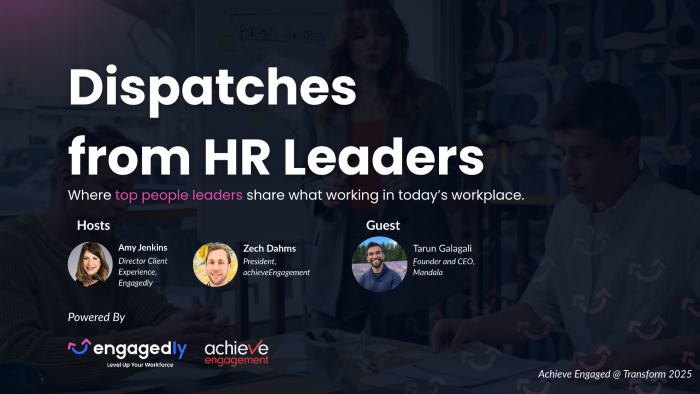

At Transform’s People, Culture, and the Future of Work series, Tarun, Founder and CEO of Mandala, shared his front-row insights into the challenges—and opportunities—facing today’s frontline managers and people leaders. Drawing from his experience as a former frontline manager and leading a learning and development startup, Tarun offered a candid look at what it takes to develop resilient leaders in the modern workplace.
Key Takeaways — Tarun at Transform
- Frontline Managers: Build inner courage before outer capability—regulate your nervous system, embrace feedback, and learn to have difficult conversations.
- CPOs & HR Leaders: Invest in manager development early—train, connect, and scale leadership without burnout.
- Performance: Prioritization > busyness—clarity, alignment, and communication drive engagement and impact.
- Future of Work: Marry AI with human connection—technology should enhance, not replace, leadership and learning.
- Culture: DEIB is a performance lever, not a compliance checkbox.
Frontline Managers: From Individual Contributor to Resilient Leader
Many high-performing individual contributors struggle when promoted to management. Tarun emphasized that true leadership begins internally: regulating emotions, overcoming imposter syndrome, and cultivating inner resilience. Only then can managers confidently provide feedback, coach effectively, and foster a culture of growth.
Key strategies include:
- Emotional regulation through breathing, affirmations, and mindfulness.
- Reframing feedback as an opportunity for others to grow rather than as a reflection of oneself.
- Building stories and shared experiences to normalize mistakes and accelerate learning.
Supporting Manager Development: Learning + Connection
Tarun highlighted the importance of pairing structured learning with relational connection:
- Effective frameworks like situational leadership guide early manager decisions.
- Storytelling and internal masterminds allow managers to learn from real experiences.
- Delegation and coaching transform managers into force multipliers, rather than overburdened individual contributors.
Organizations that invest in these areas see measurable results. For example, a Boston College study found that after resilient leadership training, employee likelihood to recommend their manager increased by 54%, reflecting stronger connections, engagement, and feedback culture.
Prioritization Over Busyness
Tarun challenged the narrative that frontline managers are overwhelmed due to workload. Instead, he framed it as a prioritization problem:
- Managers should focus on the most critical initiatives and communicate what will—and won’t—be addressed.
- Aligning teams around priorities improves engagement, reduces stress, and sets realistic expectations.
- Clear strategic focus at the organizational level is key: 1–3 objectives per year versus a laundry list of initiatives.
The Role of AI in Leadership and Learning
While AI is transforming workplaces, Tarun emphasized that human connection remains sacred. Mandala integrates AI tools to complement high-touch learning experiences, not replace them.
Key insights include:
- AI can scale learning, but should be paired with human mentoring for trust and impact.
- Early adoption of AI in workforce training can provide competitive advantage, but authenticity is crucial.
DEIB as a Performance Lever
Tarun noted that organizations often misunderstand DEIB initiatives. When framed correctly, they drive engagement, inclusion, and business results. Companies that bake DEIB into strategy—not treat it as a checkbox—unlock both talent and performance potential.
Bold Predictions: The Future of Work
- AI literacy will become essential across all roles; employees must adapt and integrate AI tools into their workflows.
- Gen Z’s full workforce entry will accelerate cultural shifts; understanding their values and wellbeing priorities is critical.
- Leadership will increasingly hinge on balancing technology adoption with human-centered management practices.
Final Thought
Whether you’re a frontline manager stepping into leadership or a CPO navigating the future of work, Tarun’s advice is clear: invest in inner resilience, prioritize what matters, integrate human and AI capabilities, and treat DEIB as a performance enhancer. The workplace of tomorrow will reward those who lead with clarity, connection, and courage.
