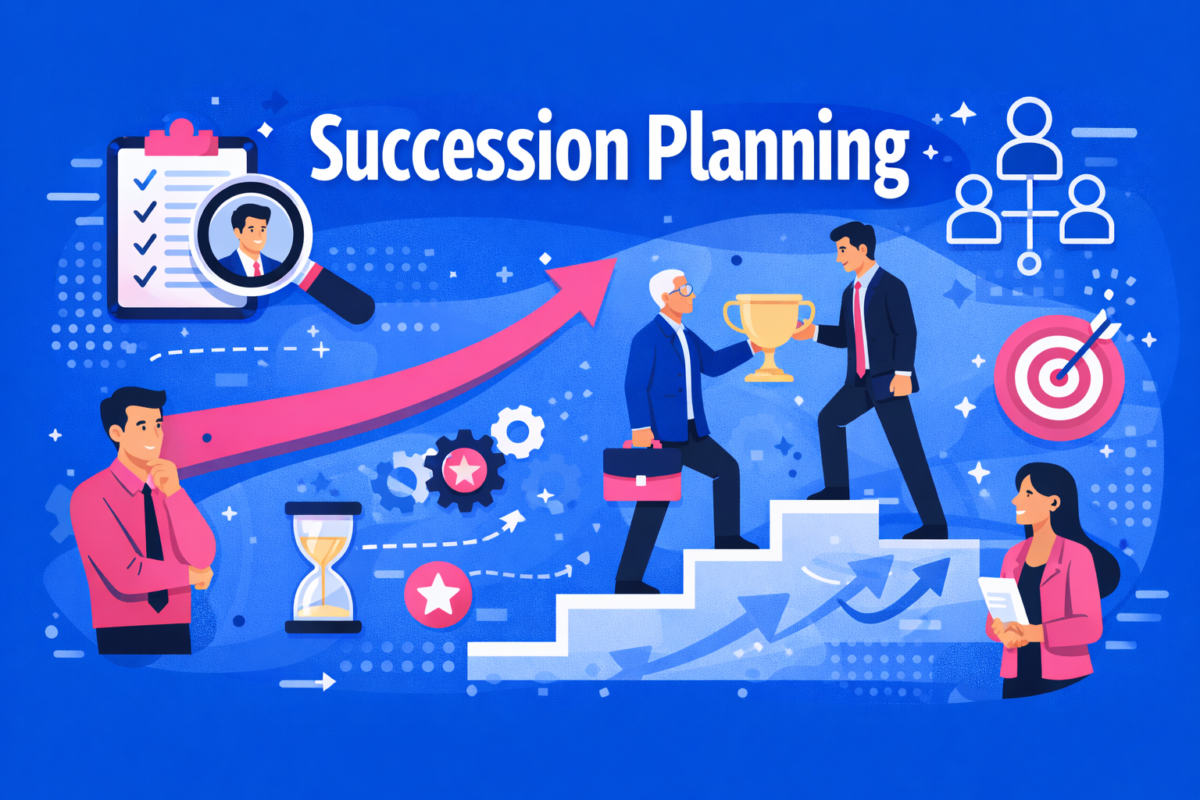
Succession planning is a structured process organizations use to identify and develop future leaders who can step into critical roles when the time comes. That transition might happen because of retirement, promotion, resignation, restructuring, or unexpected events.
At its core, succession planning protects business continuity. It ensures that when key leaders move on, the company does not lose momentum, stability, or direction.
Modern succession planning goes far beyond simple replacement planning. It is closely connected to leadership development, talent management, workforce analytics, and long term business strategy.
Succession Planning Definition
Succession planning is the proactive identification and development of employees who have the potential to fill key leadership and mission critical roles in the future.
Rather than reacting to vacancies, organizations build a pipeline of ready and near ready talent. This reduces disruption, preserves institutional knowledge, and strengthens long term performance.
A strong succession plan answers three essential questions:
- Which roles are critical to business success
- Who could step into those roles
- How do we prepare them
Why Succession Planning Matters
Leadership transitions can be expensive and risky. External executive searches take time and often cost more than internal development. When transitions are rushed, performance and morale suffer.
Succession planning helps organizations:
Maintain business continuity
Key projects and strategic initiatives continue without interruption.
Reduce hiring costs
Internal successors reduce reliance on expensive external recruitment.
Improve retention
High potential employees are more likely to stay when they see clear growth paths.
Strengthen leadership pipelines
Organizations develop leaders aligned with company culture and values.
Support long term strategy
Succession planning aligns leadership development with future business goals.
Companies that treat succession planning as an ongoing strategy rather than a one time exercise are better prepared for change.
Types of Succession Planning
Most organizations use two parallel approaches.
Long Term Succession Planning
Focuses on anticipated transitions such as retirement or strategic restructuring. Development plans are built over several years.
Emergency Succession Planning
Prepares for unexpected departures. It identifies interim and backup leaders who can step in immediately if needed.
Both are essential. One prepares for growth. The other protects against disruption.
The Succession Planning Process
Many frameworks outline steps, but practical implementation matters most. A strong succession planning process typically includes:
1. Align with Business Strategy
Understand where the organization is headed. Growth plans, digital transformation, or geographic expansion influence leadership needs.
2. Identify Critical Roles
Not every position requires a succession plan. Focus on roles that drive revenue, operations, strategy, or culture.
3. Assess Current Talent
Evaluate employees based on performance, leadership competencies, potential, and readiness levels.
4. Identify High Potential Employees
Look beyond current performance. Assess adaptability, learning agility, emotional intelligence, and strategic thinking.
5. Create Development Plans
Offer stretch assignments, mentoring, leadership training, cross functional exposure, and coaching.
6. Monitor Progress
Succession planning is continuous. Talent reviews should happen annually or more frequently.
7. Review and Adjust
Business needs change. Succession plans should evolve alongside them.
What a Succession Plan Should Include
An effective succession plan is more than a list of names. It should contain:
- Clear identification of key roles
- Defined competencies required for each role
- Readiness assessment of potential successors
- Individual development plans
- Risk analysis for leadership gaps
- Timeline projections for transitions
Technology now plays a significant role in succession management. Modern performance platforms integrate succession tracking, leadership analytics, and talent dashboards to provide real time visibility into leadership pipelines.
Who Is Responsible for Succession Planning
Succession planning begins at the top.
The CEO and executive leadership team set expectations and priorities. The Board of Directors typically oversees CEO succession specifically. Without senior level commitment, succession planning becomes a paperwork exercise.
HR designs and facilitates the process, but business leaders are responsible for identifying and developing talent within their teams.
Succession planning is a shared responsibility.
Common Challenges in Succession Planning
Even well designed programs face obstacles.
Deciding who to promote
Balancing fairness, performance, and potential can be complex. Clear competency frameworks help reduce subjectivity.
Bias in decision making
Unconscious bias may influence leadership choices. Structured evaluations and diverse review panels help minimize this risk.
Employee morale concerns
If not communicated carefully, succession discussions may create anxiety. Transparency about development pathways helps maintain trust.
Lack of follow through
Development plans without execution lead to stagnation. Regular progress reviews are essential.
Overreliance on loyalty
Tenure alone does not guarantee leadership readiness. Decisions must be based on skills and potential.
Benefits of Succession Planning
When executed properly, succession planning delivers measurable advantages:
- Stronger leadership bench strength
- Reduced disruption during transitions
- Higher engagement among high potential talent
- Improved internal mobility
- Greater organizational resilience
It also signals that the organization invests in long term growth and leadership development.
Frequently Asked Questions About Succession Planning
What are the seven steps to succession planning?
Common steps include aligning with strategy, identifying key roles, assessing talent, identifying high potentials, creating development plans, monitoring readiness, and reviewing annually.
Why is succession planning important?
It ensures leadership continuity, reduces transition risk, and strengthens long term organizational stability.
Is succession planning only for executives?
No. While often associated with senior roles, it applies to any mission critical position, including technical and operational leadership roles.
How often should succession plans be updated?
At least annually, or whenever significant business changes occur.
Does succession planning improve retention?
Yes. High potential employees are more likely to stay when they see clear career advancement opportunities.
Succession Planning in Modern Organizations
Today’s succession planning is data driven and integrated with performance management systems. Organizations use talent analytics to track readiness levels, forecast retirement risk, and identify leadership gaps before they affect performance.
It is no longer about naming a replacement. It is about building a sustainable leadership pipeline aligned with business growth and long term strategy.

 Performance