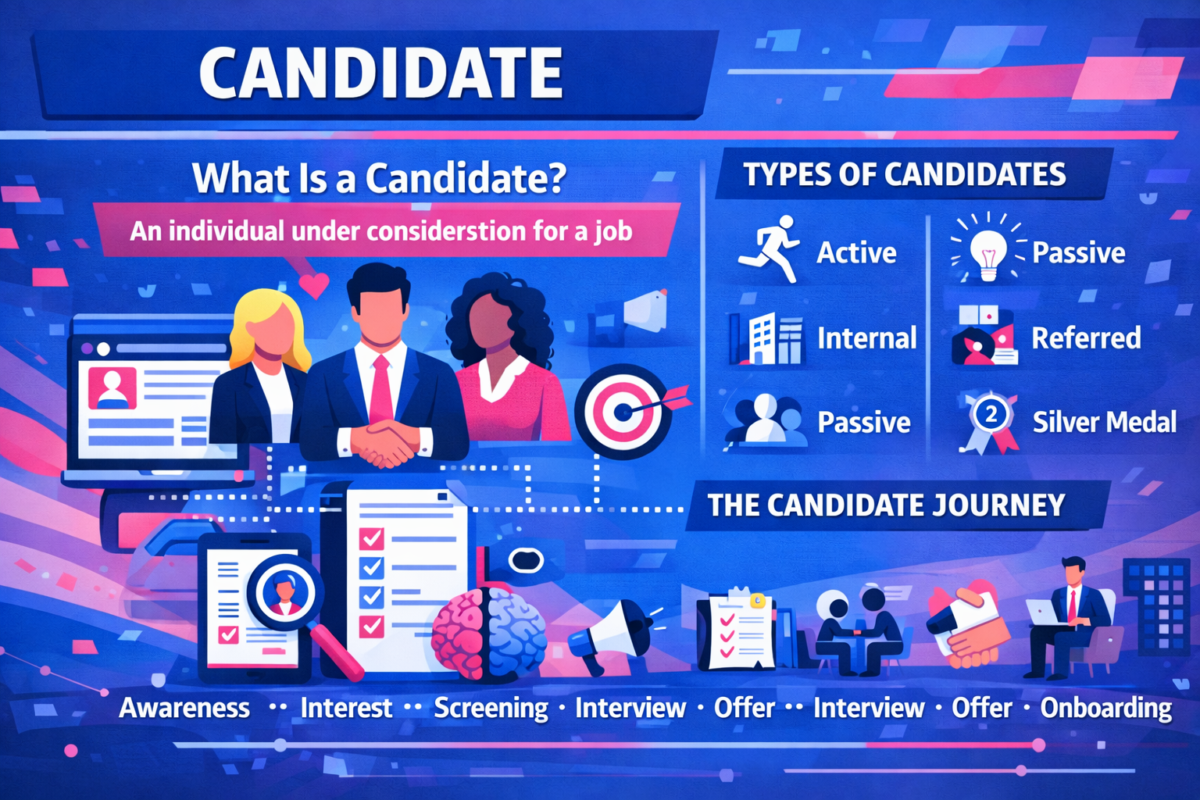
A candidate is an individual who applies for or is being considered for a job role within an organization. In talent acquisition, the term refers to anyone actively or passively evaluated for employment.
A candidate is not just a resume in a system. It is a potential future employee whose skills, experience, personality, and aspirations are being assessed against business needs.
In modern hiring practices, the definition of a candidate extends beyond applicants. It includes passive talent, internal employees exploring new roles, and even former employees considered for rehire.
Candidate vs Applicant: What Is the Difference?
These terms are often used interchangeably, but they are not identical.
An applicant is someone who has formally submitted an application for a role.
A candidate is someone who is under active consideration. This may include applicants, referrals, internal employees, or sourced professionals who have not yet applied.
All applicants can become candidates, but not all candidates begin as applicants.
Understanding this distinction matters for recruitment metrics and workforce planning.
Types of Candidates in Recruitment
Top ranking pages often define the word simply. Let’s go deeper into how hiring teams categorize candidates.
Active Candidates
These individuals are actively searching for jobs. They apply directly through career pages, job boards, or recruitment platforms.
Active candidates typically move quickly through hiring pipelines.
Passive Candidates
Passive candidates are not actively applying but may be open to opportunities. Recruiters often reach out to them through LinkedIn, networking events, or talent communities.
Many high performing professionals fall into this category.
Internal Candidates
Internal candidates are current employees applying for a new role within the organization. Promoting from within supports retention and internal mobility.
Referred Candidates
Referred candidates are recommended by existing employees. Employee referral programs often produce strong cultural alignment and higher retention rates.
Silver Medal Candidates
These are finalists who were not selected but performed well in interviews. Strong hiring teams maintain relationships with these candidates for future roles.
The Candidate Lifecycle
The concept of a candidate now includes the full journey, not just interviews.
1. Awareness Stage
The candidate learns about your company through social media, employer branding, or referrals.
Employer reputation plays a major role here.
2. Interest and Application
The candidate evaluates the job description, company culture, compensation, and growth opportunities before applying.
A complicated application process often leads to drop offs.
3. Screening and Assessment
Candidates may go through resume screening, psychometric tests, skills assessments, and structured interviews.
Fair and consistent evaluation improves candidate experience.
4. Interview and Evaluation
At this stage, communication speed and clarity matter. Delays can cause candidates to accept competing offers.
5. Offer and Acceptance
Compensation transparency and responsiveness impact offer acceptance rates.
6. Onboarding
A candidate officially becomes an employee, but their experience during onboarding still influences brand perception and retention.
Candidate experience does not end at offer acceptance.
Why Candidate Experience Matters
Candidate experience refers to how individuals perceive your hiring process.
It includes:
- Communication quality
- Transparency
- Interview fairness
- Timeliness
- Respect and professionalism
A positive candidate experience strengthens employer branding and increases referral likelihood.
A negative experience spreads quickly through review platforms and professional networks.
Organizations now track candidate experience metrics such as:
- Candidate satisfaction surveys
- Offer acceptance rate
- Application completion rate
- Time to hire
Data driven hiring teams treat candidates as long term brand ambassadors.
Candidate Data and Modern Hiring Technology
Today, candidate management relies heavily on technology.
Applicant Tracking Systems store candidate information, track progress, and centralize communication.
AI powered tools assist with:
- Resume screening
- Candidate matching
- Interview scheduling
- Predictive performance analytics
Data privacy regulations such as GDPR and other global compliance standards require organizations to handle candidate data responsibly.
Transparency in data collection and usage builds trust.
How to Attract High Quality Candidates
Attracting strong candidates requires more than job postings.
Organizations focus on:
- Clear job descriptions
- Transparent salary ranges
- Growth opportunities
- Authentic employer branding
- Strong employee value proposition
- Skills based hiring approaches
Candidates increasingly prioritize purpose, flexibility, and career progression over traditional benefits alone.
Common Mistakes in Candidate Management
Hiring teams sometimes make avoidable errors:
- Poor communication
- Lengthy hiring processes
- Unstructured interviews
- Lack of feedback
- Bias in evaluation
These issues damage employer reputation and reduce hiring effectiveness.
Structured hiring frameworks improve fairness and outcomes.
Frequently Asked Questions About Candidates
What makes a strong candidate?
A strong candidate aligns with the role requirements, demonstrates relevant skills, fits organizational culture, and shows growth potential.
What is a passive candidate?
A passive candidate is not actively job hunting but may be open to new opportunities if approached strategically.
How long does a candidate remain in a hiring pipeline?
This varies by organization, but maintaining a talent pool for future roles is considered best practice.
Why is candidate experience important?
Candidate experience impacts employer brand, offer acceptance rate, and referral potential. Even rejected candidates influence company reputation.
The Evolving Role of the Candidate in Talent Strategy
The relationship between employer and candidate has shifted. Candidates now evaluate companies as closely as companies evaluate candidates.
Hiring is no longer one sided.
Organizations that respect candidates, provide transparency, and maintain consistent communication build stronger talent pipelines.
When candidate management aligns with broader performance management and engagement strategies, hiring becomes a competitive advantage rather than a reactive task.

 Innovative