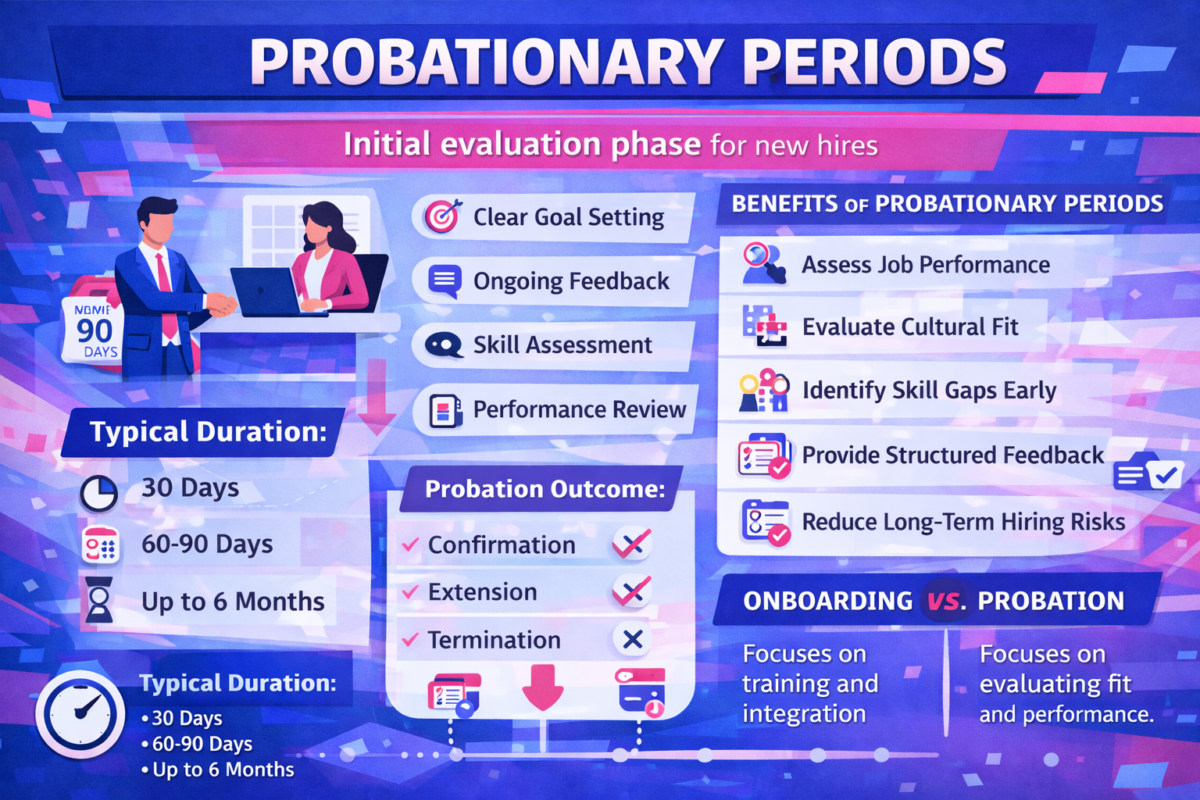
Probationary periods are predefined timeframes at the beginning of employment during which a new hire’s performance, behavior, and overall fit are evaluated. They allow both the employer and the employee to assess whether the role and working relationship are a good match.
A probationary period is not just a waiting window before confirmation. It is a structured evaluation phase designed to set expectations, monitor progress, and provide early feedback.
Most probationary periods range from 30 to 90 days, though some organizations extend them to six months depending on the role, industry, and jurisdiction.
Probationary periods serve practical and strategic purposes.
They help organizations:
For employees, probationary periods offer clarity around expectations and an opportunity to adapt to the organization.
When handled properly, this phase strengthens retention rather than increasing anxiety.
Top ranking pages often define probation simply as a trial period. That is accurate but incomplete. A well managed probationary period includes several structured steps.
Managers define measurable objectives for the probation period. These goals should align with role responsibilities and business outcomes.
Without defined expectations, evaluation becomes subjective.
Regular check ins are essential. Weekly or biweekly conversations help identify issues early and provide guidance.
Employees should know where they stand, not find out only at the end.
Managers evaluate technical competence, communication skills, collaboration, and adaptability.
In some roles, formal assessments or training milestones may be included.
Before the probationary period ends, a structured review takes place. This may result in:
Decisions should be documented and based on predefined criteria.
Employment laws regarding probation vary by country and region.
Organizations must consider:
Even during probation, employees are typically protected by labor regulations. Employers should ensure policies comply with local laws.
Clear documentation protects both the organization and the employee.
There is no universal standard, but typical durations include:
Some companies allow probation extension if performance improvement is needed.
The duration should reflect role complexity and onboarding requirements.
These two concepts are related but not identical.
Onboarding focuses on integrating the employee into the organization, providing training, and clarifying expectations.
Probationary periods focus on evaluating performance and fit during the initial phase of employment.
Effective onboarding increases the likelihood of successful probation completion.
When managed strategically, probationary periods deliver measurable benefits:
Organizations that integrate probation reviews with performance management systems often see smoother transitions.
Some organizations treat probation as a passive waiting period. That approach creates problems.
Common mistakes include:
Without structure, probation decisions may appear inconsistent or unfair.
To improve effectiveness, organizations should:
Managers should view probation as a coaching phase, not just an evaluation checkpoint.
The purpose is to evaluate a new hire’s performance, cultural fit, and ability to meet role expectations before confirming permanent employment.
In many jurisdictions, employment can be terminated during probation if performance expectations are not met. However, labor laws and notice requirements still apply.
Yes, organizations may extend probation if performance improvement is needed. Clear communication and documentation are essential.
This depends on company policy and local regulations. Some organizations provide full benefits immediately, while others have waiting periods.
Probationary periods should not exist in isolation. They work best when connected to performance management systems, goal tracking tools, and continuous feedback processes.
Organizations that integrate probation data with long term performance analytics gain deeper insights into hiring effectiveness and workforce alignment.
When probation is structured, transparent, and feedback driven, it strengthens employee confidence and reduces early attrition.