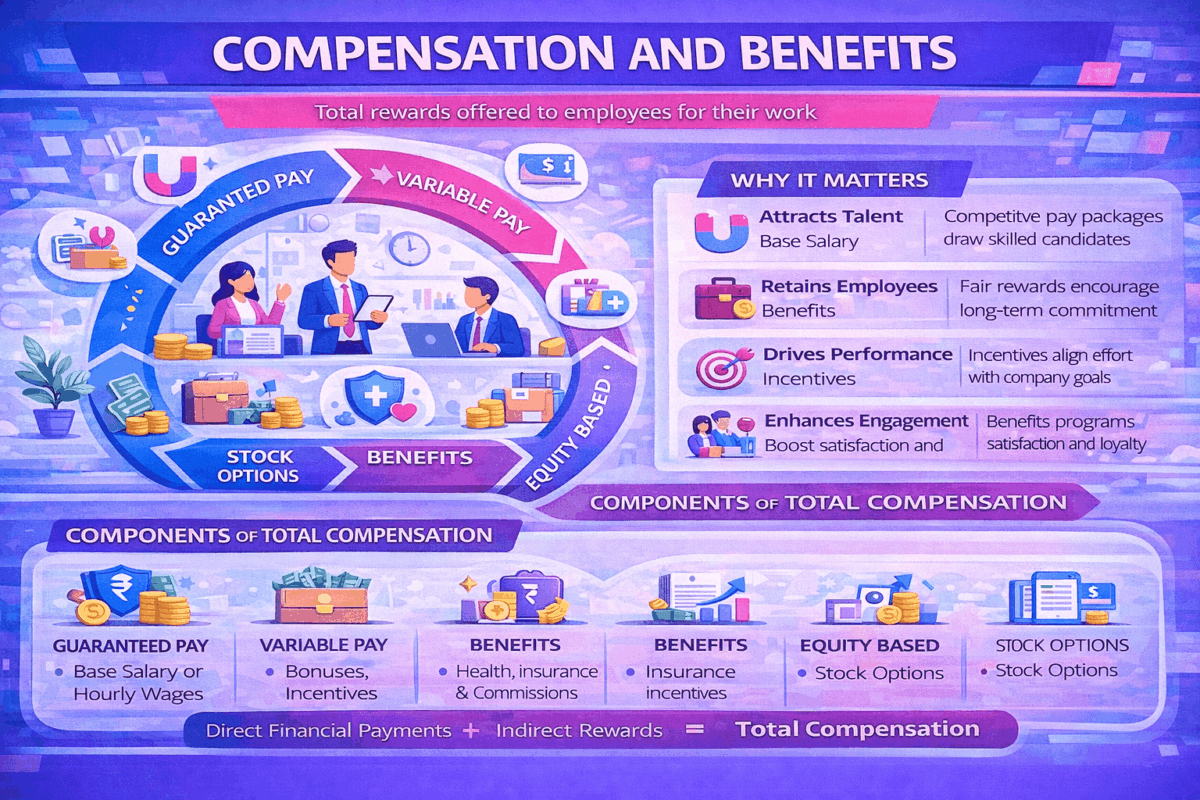
Compensation and benefits refers to the total rewards an organization provides to employees in exchange for their work. It includes direct financial payments such as salary and bonuses, as well as indirect rewards like health insurance, retirement plans, paid leave, and other perks.
In HR, compensation and benefits form the foundation of the employee value proposition. A well structured compensation strategy helps attract talent, retain high performers, and maintain workforce motivation.
It is not just about how much employees are paid. It is about how fairly and strategically they are rewarded.
What Does Compensation and Benefits Mean?
Compensation and benefits covers everything an employee receives from an employer in return for their services.
This includes:
- Base salary or wages
- Variable pay such as bonuses or incentives
- Health and insurance coverage
- Retirement contributions
- Paid time off
- Equity or stock options
- Performance based rewards
Together, these elements make up the total compensation package.
Compensation and Benefits in HRM
In Human Resource Management, compensation and benefits is a strategic function.
It involves:
- Designing pay structures
- Ensuring internal and external pay equity
- Managing payroll and incentives
- Administering benefits programs
- Aligning rewards with performance goals
- Maintaining compliance with labor laws
HR teams must balance fairness, competitiveness, and cost control.
An effective compensation and benefits framework directly influences employee engagement and retention.
The Four Main Types of Compensation
Employee compensation is commonly divided into four broad categories.
1. Guaranteed Pay
This is fixed compensation that employees receive regularly. It includes base salary or hourly wages.
Guaranteed pay provides income stability and financial security.
2. Variable Pay
Variable pay depends on performance or results. It may include:
- Performance bonuses
- Commissions
- Incentives
- Profit sharing
Variable compensation aligns employee effort with organizational outcomes.
3. Benefits
Benefits are indirect forms of compensation. They may be monetary or non monetary.
Common examples include:
- Health insurance
- Retirement plans
- Paid leave
- Wellness programs
- Flexible work arrangements
Benefits contribute significantly to overall job satisfaction.
4. Equity Based Compensation
This includes stock options, restricted stock units, or ownership shares.
Equity compensation connects employees to long term company success and is common in startups and publicly listed companies.
What Is the Difference Between Compensation and Benefits?
Compensation refers to direct financial payments such as salary, wages, and bonuses.
Benefits are additional rewards offered alongside compensation. They may include healthcare, retirement contributions, paid leave, or other perks.
In simple terms:
- Compensation equals direct pay.
- Benefits equal added value beyond salary.
Both together form the total rewards package.
Why Compensation and Benefits Is Important
A strong compensation and benefits strategy drives business performance.
Here is why it matters:
Attracting Talent
Competitive compensation packages help organizations stand out in the job market.
Retaining Employees
Employees are more likely to stay when they feel fairly rewarded.
Performance linked incentives motivate employees to achieve goals.
Enhancing Engagement
Recognition and benefits programs increase morale and commitment.
Ensuring Compliance
Proper payroll and statutory benefits reduce legal risks.
Compensation is often one of the top factors candidates evaluate when choosing an employer.
How Organizations Design Compensation and Benefits
Designing a compensation and benefits structure involves careful planning.
Organizations typically:
- Conduct market salary benchmarking
- Define pay bands and job grades
- Link performance metrics to incentives
- Review internal pay equity
- Monitor benefit utilization
- Adjust structures annually
Transparency and fairness are essential to maintain employee trust.
Trends in Compensation and Benefits
Workplace expectations continue to evolve.
Modern compensation strategies often include:
- Flexible benefit options
- Remote work allowances
- Mental health support
- Skill based pay models
- Personalized reward systems
- Data driven pay analytics
Employees increasingly value holistic benefits that support work life balance and career growth.
Frequently Asked Questions
What does compensation and benefits mean?
It refers to the total rewards an organization provides, including salary, bonuses, and employee benefits.
What are the four types of compensation?
Guaranteed pay, variable pay, benefits, and equity based compensation.
Why is compensation and benefits important?
It helps attract talent, retain employees, drive performance, and maintain compliance.
What is the difference between compensation and benefits?
Compensation is direct financial payment. Benefits are additional perks and protections offered beyond salary.
How does compensation impact employee motivation?
Performance based incentives and fair pay structures encourage accountability and higher productivity.
Compensation and Benefits as a Strategic Advantage
Compensation and benefits is not just a payroll function. It is a strategic lever.
When employees believe they are rewarded fairly and supported through meaningful benefits, they contribute more confidently and consistently.
Organizations that align compensation with performance, culture, and long term growth build stronger, more resilient teams.
 Innovative