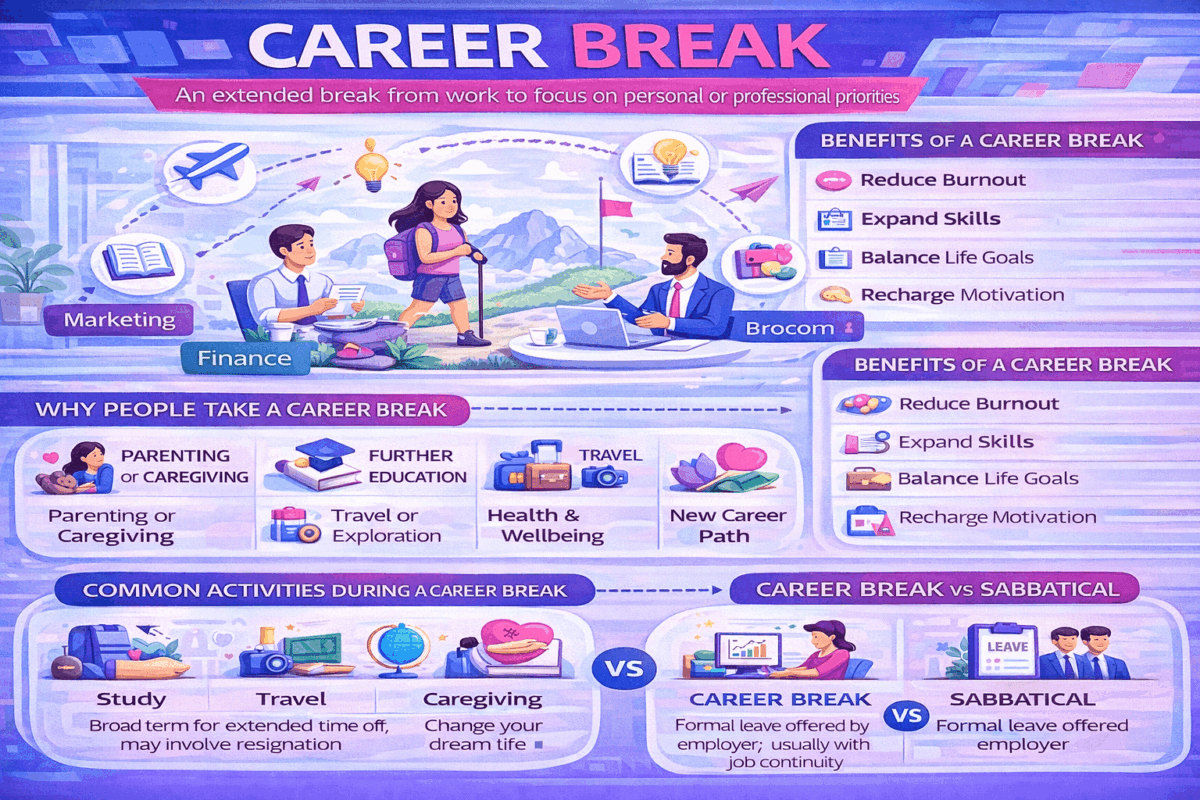
A career break is an extended period of time away from work, taken by choice, to focus on personal, professional, or family priorities. Unlike standard vacation leave, a career break usually lasts several months to a few years. It allows individuals to pause their formal employment while they travel, study, care for family, recover from burnout, explore new opportunities, or reassess their long term goals.
Career breaks are becoming more common across industries. Changing work patterns, remote opportunities, growing awareness around mental health, and evolving life priorities have all contributed to the rise of structured breaks from employment.
A career break is not the same as unemployment. It is typically planned, intentional, and often agreed upon with an employer in advance.
What Is a Career Break?
A career break refers to a voluntary, extended leave from one’s professional role. It can be taken while remaining formally employed or after resigning, depending on company policy and individual preference.
Common reasons people take a career break include:
- Parenting or caregiving responsibilities
- Pursuing higher education or certifications
- Traveling or living abroad
- Recovering from burnout or health challenges
- Starting a side business or exploring a new career path
- Volunteering or social impact work
The defining feature is intention. A career break is not accidental job loss. It is a deliberate pause.
How Long Is a Career Break?
There is no fixed duration, but most career breaks fall within these ranges:
- Short term: 1 to 3 months
- Mid term: 6 months to 1 year
- Long term: 1 to 2 years
Some organizations offer structured programs that allow employees to take extended unpaid leave for up to two years while retaining the option to return.
Short exploratory breaks are also common. Some professionals begin with a one month break before committing to a longer period.
The length often depends on financial planning, employer policies, and personal goals.
Are You Still Employed During a Career Break?
It depends on the arrangement.
In some cases, employees remain on the company’s records and return after the break. This is common in formal career break or extended leave policies.
In other cases, the individual resigns and later reenters the workforce independently.
Companies with structured talent management systems may maintain alumni networks, rehire pathways, or returnship programs that support employees who step away temporarily.
The terms should always be documented clearly in writing to avoid misunderstandings about benefits, seniority, and job security.
Is a Career Break Paid?
Most career breaks are unpaid. However, variations exist:
- Some organizations offer partial pay for a limited period
- Certain sabbatical programs include paid time off after a defined tenure
- Benefits such as health insurance may continue for a specified time
Paid career breaks are more common in academic institutions or progressive organizations that view extended leave as a retention strategy.
In most corporate settings, though, a career break means unpaid leave.
Will Taking a Career Break Hurt Your Career?
This is one of the most searched concerns around career breaks.
A well planned break does not automatically damage career prospects. In fact, many employers increasingly recognize career breaks as normal, especially for caregiving, education, or skill development.
However, how the break is framed matters.
Professionals who:
- Stay engaged with their industry
- Develop new skills
- Maintain professional networks
- Communicate their experience clearly
often transition back successfully.
The perception of career gaps has shifted. With remote work and non linear career paths becoming more common, employers are more open to diverse work histories.
How Do People Afford a Career Break?
Financial planning is critical.
People typically afford a career break by:
- Building savings in advance
- Reducing expenses before leaving work
- Creating a dedicated break fund
- Taking freelance or remote work during the break
- Planning a clear reentry timeline
A structured reentry plan is just as important as financial preparation. Knowing how and when you will return to work reduces long term uncertainty.
Career Break vs Sabbatical
The terms are often used interchangeably, but they are not identical.
A sabbatical is typically a formal leave granted by an employer after a certain period of service. The employee usually remains employed and returns to the same role or organization.
A career break may or may not involve continued employment. It can require resignation, especially if the employer does not offer formal leave programs.
In short:
- Sabbatical: structured leave with job continuity
- Career break: broader term that may involve leaving employment entirely
Understanding the distinction is important when designing HR policies.
Why Organizations Support Career Breaks
Forward thinking companies recognize that career breaks can strengthen retention and engagement.
Benefits for employers include:
- Reduced burnout and improved employee wellbeing
- Higher loyalty among returning employees
- Attraction of experienced professionals through returnship programs
- Enhanced employer branding
From a workforce planning perspective, offering structured career break options can prevent permanent attrition.
Instead of losing talent entirely, organizations create pathways for employees to step away and return when ready.
Frequently Asked Questions
How long is a typical career break?
Most career breaks last between six months and two years, although shorter breaks of one to three months are also common.
Is it okay to take a career break?
Yes. Career breaks are increasingly accepted across industries, especially when they are intentional and well planned.
Do you get paid on a career break?
Usually no. Most career breaks are unpaid unless covered by a specific sabbatical or extended leave policy.
Are you still employed during a career break?
Sometimes. It depends on whether the break is structured as unpaid leave or involves resignation.
What is the difference between a career break and a sabbatical?
A sabbatical is typically employer approved leave with job continuity. A career break may require leaving the role entirely.
Final Thoughts
Career breaks reflect a shift in how people think about work. Careers are no longer linear ladders. They are flexible journeys shaped by life stages, personal priorities, and evolving goals.
For individuals, a career break offers space to reset, grow, and explore. For employers, structured policies around career breaks support retention, wellbeing, and long term talent strategy.
Clear policies, transparent communication, and thoughtful reentry planning make the difference between a risky pause and a purposeful one.

 Innovative