Bereavement refers to the period of grief and mourning that follows the death of a loved one. In the workplace context, bereavement also relates to the time and support provided to employees who are coping with a loss.
While grief is a personal emotional response, bereavement is the broader experience that includes emotional, psychological, and practical adjustments after a death. In HR and people management, bereavement policies outline how organizations support employees during this difficult time.
Understanding bereavement is essential for building compassionate, compliant, and people centered workplace practices.
What Is Bereavement?
Bereavement is the state of loss experienced after someone close passes away. It may involve emotional distress, changes in routine, administrative responsibilities, and temporary reduced productivity.
In a professional setting, bereavement often connects to:
- Bereavement leave
- Compassionate leave policies
- Employee assistance programs
- Flexible work arrangements
- Mental health support
While the emotional impact of bereavement varies from person to person, its workplace implications require structured support.
Bereavement vs Grief
These terms are related but distinct.
Grief is the emotional response to loss. It may include sadness, anger, confusion, or numbness.
Bereavement refers to the overall experience of loss, including the grieving process and the period of adjustment after death.
In HR policy language, bereavement typically refers to leave and workplace accommodations provided to employees during this period.
What Is Bereavement Leave?
Bereavement leave is time off granted to employees following the death of a family member or close relative. It allows individuals to attend funeral services, manage family responsibilities, and process their loss.
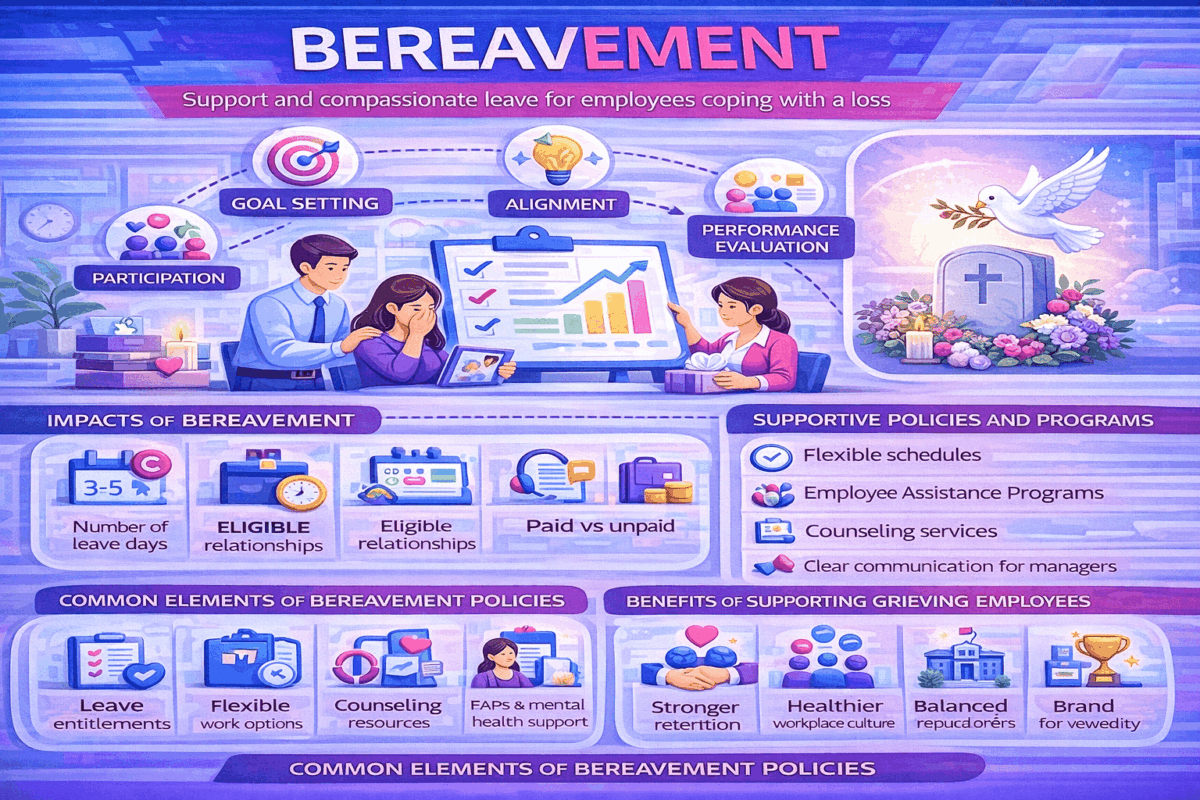
Bereavement leave policies vary by country, organization, and employment contract. They typically define:
- Eligible relationships, such as spouse, parent, child, or sibling
- Number of paid or unpaid leave days
- Documentation requirements
- Flexibility for extended time off
Some organizations offer three to five days of paid leave for immediate family members. Others provide extended leave or flexible scheduling options depending on circumstances.
In certain regions, bereavement leave is legally mandated. In others, it is provided at the employer’s discretion.
Why Bereavement Support Matters in the Workplace
Bereavement affects more than attendance. It impacts concentration, emotional wellbeing, and productivity.
Organizations that offer thoughtful bereavement policies benefit from:
- Stronger employee trust
- Improved retention
- Healthier workplace culture
- Reduced burnout risk
- Enhanced employer reputation
Employees who feel supported during difficult moments are more likely to remain engaged long term.
Compassionate leadership during bereavement builds loyalty that policies alone cannot achieve.
Common Elements of Bereavement Policies
Effective bereavement policies include more than time off.
They may also cover:
- Flexible working hours
- Remote work options
- Gradual return to work arrangements
- Access to counseling services
- Clear communication guidelines for managers
Managers play a key role. They should understand how to respond sensitively while maintaining operational continuity.
Clear documentation ensures fairness and consistency across teams.
How Long Does Bereavement Last?
There is no universal timeline for bereavement. Emotional recovery differs significantly between individuals.
While bereavement leave may last a few days or weeks, the emotional process can continue for months.
This is why some organizations offer extended flexibility even after formal leave ends. Short term support addresses logistics. Ongoing empathy addresses wellbeing.
Paid vs Unpaid Bereavement Leave
Whether bereavement leave is paid depends on company policy and local labor laws.
Some organizations provide:
- Fully paid leave for immediate family members
- Partial pay for extended leave
- Unpaid leave options with job protection
Paid bereavement leave demonstrates organizational commitment to employee wellbeing.
Employers must clearly communicate eligibility criteria and compensation terms to avoid confusion.
Legal Considerations
In some jurisdictions, bereavement leave is protected under employment law. Requirements may specify:
- Minimum leave duration
- Relationship eligibility
- Protection against dismissal during leave
HR teams should ensure compliance with regional regulations and update policies accordingly.
Failure to follow legal requirements can result in penalties and reputational damage.
Supporting Employees Beyond Policy
Formal leave is only one aspect of bereavement support.
Organizations can strengthen support by:
- Training managers in compassionate communication
- Encouraging team sensitivity
- Providing access to employee assistance programs
- Allowing flexible performance expectations temporarily
- Checking in respectfully after return to work
Small gestures of empathy often make a meaningful difference.
Frequently Asked Questions
What is bereavement?
Bereavement is the period of mourning and adjustment after the death of a loved one.
What is bereavement leave?
Bereavement leave is time off provided by an employer to allow employees to cope with a loss and manage related responsibilities.
Is bereavement leave paid?
It depends on company policy and local labor laws. Many organizations offer paid leave for immediate family members.
How many days of bereavement leave are typical?
Three to five days is common for immediate family members, though policies vary widely.
Yes. Grief can temporarily impact concentration, motivation, and emotional wellbeing. Supportive policies help employees recover more smoothly.
Final Thoughts
Bereavement is a deeply personal experience, but it has workplace implications that require thoughtful policy and leadership.
Organizations that approach bereavement with empathy and clarity create environments where employees feel respected and supported during life’s most difficult moments.
A well designed bereavement policy balances operational needs with compassion. It acknowledges that while work continues, people come first.
When companies handle bereavement responsibly, they strengthen trust, culture, and long term engagement.

 Innovative