Employee Turnover Rate – it’s a metric that resonates throughout the business world. In the intricate tapestry of industries, it acts as both a barometer and a bellwether. It tells a story of workforce dynamics, the ebb, and flow of talent, and the challenges organizations face in retaining their valuable human capital.
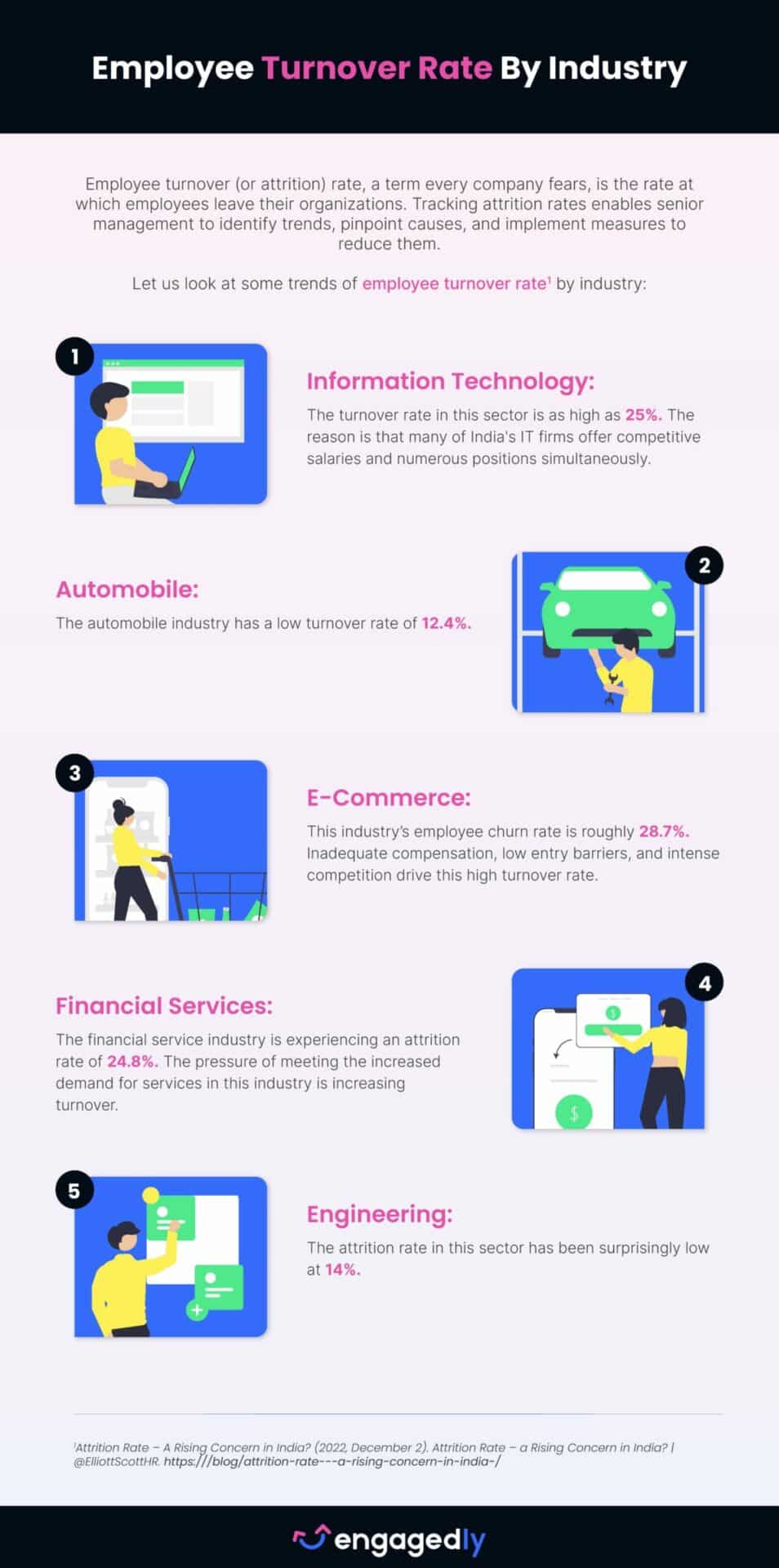
This vital statistic goes beyond mere numbers; it delves into the heart of industry-specific trends, shedding light on the factors that drive employees to stay or seek new opportunities. Whether it’s the tech sector’s battle for top tech talent or the healthcare industry‘s pursuit of skilled medical professionals, understanding the nuances of employee turnover by industry is paramount.
In this article, we embark on a journey through the labyrinth of employee turnover rates by industry. We’ll unveil intriguing insights, exploring the doorway to why some industries experience higher churn while others boast exceptional retention rates.
So, fasten your seatbelts as we navigate the multifaceted landscape of employee turnover rates by industry. The insights we uncover will not only inform business strategies but also empower organizations to tailor their retention efforts, ensuring they remain competitive and resilient in their respective sectors. If improving retention and reducing turnover is a priority, it may be worth requesting a demo to explore how continuous feedback, performance tracking, and engagement insights can support your efforts.
Frequently Asked Questions
What is employee turnover rate?
Employee turnover rate is the percentage of employees who leave an organization during a specific period and need to be replaced. It measures workforce stability and helps organizations evaluate employee retention, hiring effectiveness, and overall organizational health.
How do you calculate employee turnover rate?
Employee turnover rate is calculated using this formula:
Employee Turnover Rate = (Number of employees who left during a period ÷ Average number of employees during the same period) × 100
For example, if 20 employees leave during a year and the average workforce is 200 employees, the annual turnover rate is 10%.
Why does employee turnover vary by industry?
Employee turnover varies by industry because of differences in working conditions, labor demand, compensation, career growth opportunities, seasonal employment, workplace culture, and required skill levels. Industries with high competition for talent or large numbers of entry-level positions often experience higher turnover rates.
Which industries typically have the highest employee turnover rates?
Industries that commonly experience higher employee turnover include:
Hospitality
Retail
Food service and restaurants
Healthcare
Customer service and call centers
Transportation and logistics
These industries often face challenges related to staffing shortages, demanding work environments, seasonal hiring, or competitive labor markets.
Which industries generally have lower employee turnover rates?
Industries with relatively lower turnover rates often include:
Government and public sector
Education
Utilities
Professional and scientific services
Financial services
These sectors typically offer greater job stability, competitive benefits, structured career progression, and long-term employment opportunities.
What causes high employee turnover?
High employee turnover can result from several factors, including inadequate compensation, limited career advancement opportunities, poor management, lack of recognition, employee burnout, low engagement, poor work-life balance, and an unhealthy workplace culture. Identifying these root causes helps organizations develop more effective retention strategies.
Why is employee turnover important to measure?
Measuring employee turnover helps organizations understand workforce trends, identify retention challenges, estimate recruitment and onboarding costs, improve employee experience, and strengthen workforce planning. Monitoring turnover over time also helps evaluate the effectiveness of HR and talent management initiatives.
How can organizations reduce employee turnover?
Organizations can reduce employee turnover by offering competitive compensation, investing in employee development, creating clear career paths, recognizing employee contributions, improving manager effectiveness, promoting work-life balance, gathering employee feedback regularly, and building an inclusive workplace culture.
Author
Srikant Chellappa
CEO & Co-Founder of Engagedly
Srikant Chellappa is the Co-Founder and CEO at Engagedly and is a passionate entrepreneur and people leader. He is an author, producer/director of 6 feature films, a music album with his band Manchester Underground, and is the host of The People Strategy Leaders Podcast.


















 Innovative