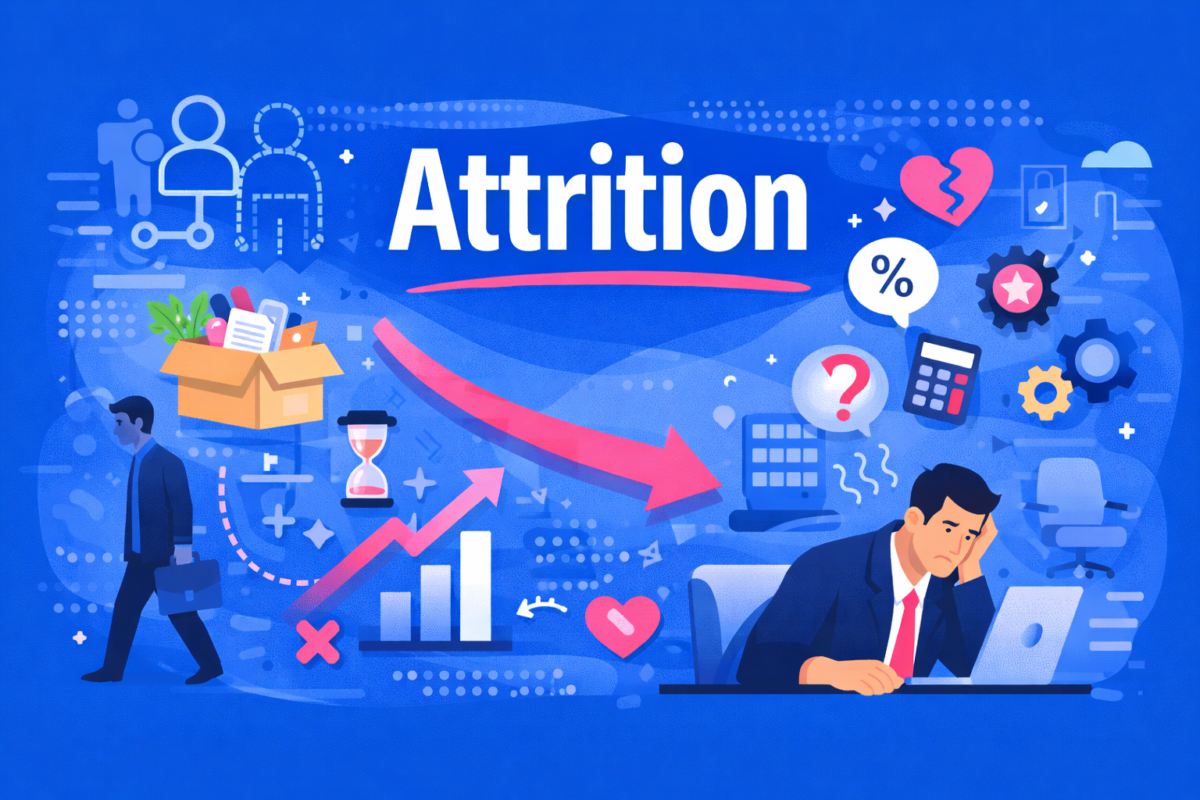
Attrition refers to the gradual reduction of employees in an organization due to voluntary resignations, retirements, internal transfers, or other departures that are not immediately replaced.
In HR terms, attrition measures how many employees leave over a specific period of time. It is closely related to turnover, but the two are not identical. Attrition often implies positions are eliminated or left unfilled, while turnover typically involves replacing employees who leave.
Understanding attrition is critical for workforce planning, budgeting, and organizational stability.
Attrition Definition
Attrition is the natural or voluntary reduction in workforce size when employees leave and are not replaced. It can happen due to resignation, retirement, relocation, health reasons, or internal role changes.
Companies track attrition rates to understand workforce trends and identify potential issues in engagement, leadership, or compensation.
In simple terms, attrition answers one key question:
How many employees are leaving, and what impact does that have on the business?
Organizations calculate attrition rate using a standard formula:
Attrition Rate = (Number of Employees Who Left During a Period ÷ Average Number of Employees During That Period) × 100
For example, if 20 employees leave during a year and the company had an average of 200 employees, the attrition rate would be 10 percent.
Tracking attrition monthly, quarterly, and annually provides a clearer picture of workforce stability.
Types of Attrition
Not all attrition is negative. The impact depends on context and business strategy.
Voluntary Attrition
Occurs when employees resign by choice. Common reasons include better job opportunities, career stagnation, compensation concerns, or work life balance issues.
Involuntary Attrition
Occurs when employees are terminated due to performance issues, restructuring, or downsizing.
Internal Attrition
When employees move to different departments or roles within the organization.
Retirement Attrition
Natural reduction due to retirement.
Functional vs Dysfunctional Attrition
Functional attrition involves the departure of underperforming employees.
Dysfunctional attrition involves the loss of high performers or critical talent.
Understanding which type of attrition is occurring helps HR teams respond strategically.
Attrition vs Turnover
These terms are often used interchangeably, but there is a subtle distinction.
Turnover refers to employees leaving and being replaced. The position remains active.
Attrition usually refers to employees leaving without immediate replacement, often reducing overall workforce size.
For workforce planning, both metrics are important.
Why Attrition Matters
Attrition directly impacts productivity, morale, and costs.
High attrition can lead to:
- Increased recruitment and training expenses
- Knowledge loss
- Lower team morale
- Reduced productivity
- Leadership instability
On the other hand, controlled attrition can help manage costs and remove performance gaps.
The key is balance. Too much attrition disrupts growth. Too little attrition may signal stagnation or lack of performance accountability.
Common Causes of Attrition
Workforce research highlights several common drivers behind employee attrition.
Limited Career Growth
Employees leave when they do not see advancement opportunities.
Poor Leadership
Manager quality strongly influences retention.
Compensation Gaps
Market competitive pay remains a major factor.
Lack of Engagement
Employees who feel disconnected from company goals are more likely to leave.
Work Life Imbalance
Burnout and workload pressure increase attrition risk.
Cultural Misalignment
Employees leave when values and workplace culture do not match expectations.
Hybrid Work Expectations
Flexibility has become a major retention factor in recent years.
Regular employee engagement surveys and exit interviews provide valuable insight into these causes.
How to Reduce Attrition
Organizations cannot eliminate attrition entirely, but they can manage it strategically.
Strengthen Onboarding
Clear expectations and early support reduce first year attrition.
Invest in Leadership Development
Managers play a critical role in employee retention.
Offer Career Development Paths
Internal mobility and skill building increase employee loyalty.
Improve Compensation Transparency
Fair and competitive pay reduces voluntary exits.
Foster a Positive Work Culture
Recognition, inclusion, and psychological safety matter.
Use Data Analytics
Modern HR platforms track attrition trends, identify risk factors, and flag departments experiencing high attrition.
Retention strategies must be proactive rather than reactive.
Attrition in Modern Organizations
The workplace has evolved significantly. Remote work, gig economy opportunities, and shifting employee expectations have influenced attrition patterns.
Organizations now monitor:
- Voluntary vs involuntary attrition
- Regrettable attrition
- First year attrition
- High performer attrition
- Diversity related attrition trends
Data driven HR teams use predictive analytics to identify employees at risk of leaving and intervene early.
Attrition is no longer just a metric. It is a strategic workforce indicator.
Frequently Asked Questions About Attrition
What is a healthy attrition rate?
It varies by industry, but moderate attrition is normal. Extremely high rates often signal deeper organizational issues.
Is attrition always bad?
No. Functional attrition can improve overall performance if underperforming employees leave.
How is attrition different from layoffs?
Layoffs are planned workforce reductions. Attrition occurs naturally through employee departures.
Can high engagement reduce attrition?
Yes. Engaged employees are significantly less likely to leave voluntarily.
How often should attrition be monitored?
Monthly tracking is common, with deeper quarterly and annual analysis.
Final Thoughts
Attrition is more than a headcount number. It reflects the health of leadership, culture, compensation, and career development within an organization.
When monitored carefully and addressed strategically, attrition becomes a valuable signal that helps organizations build stronger, more resilient teams.
 Innovative