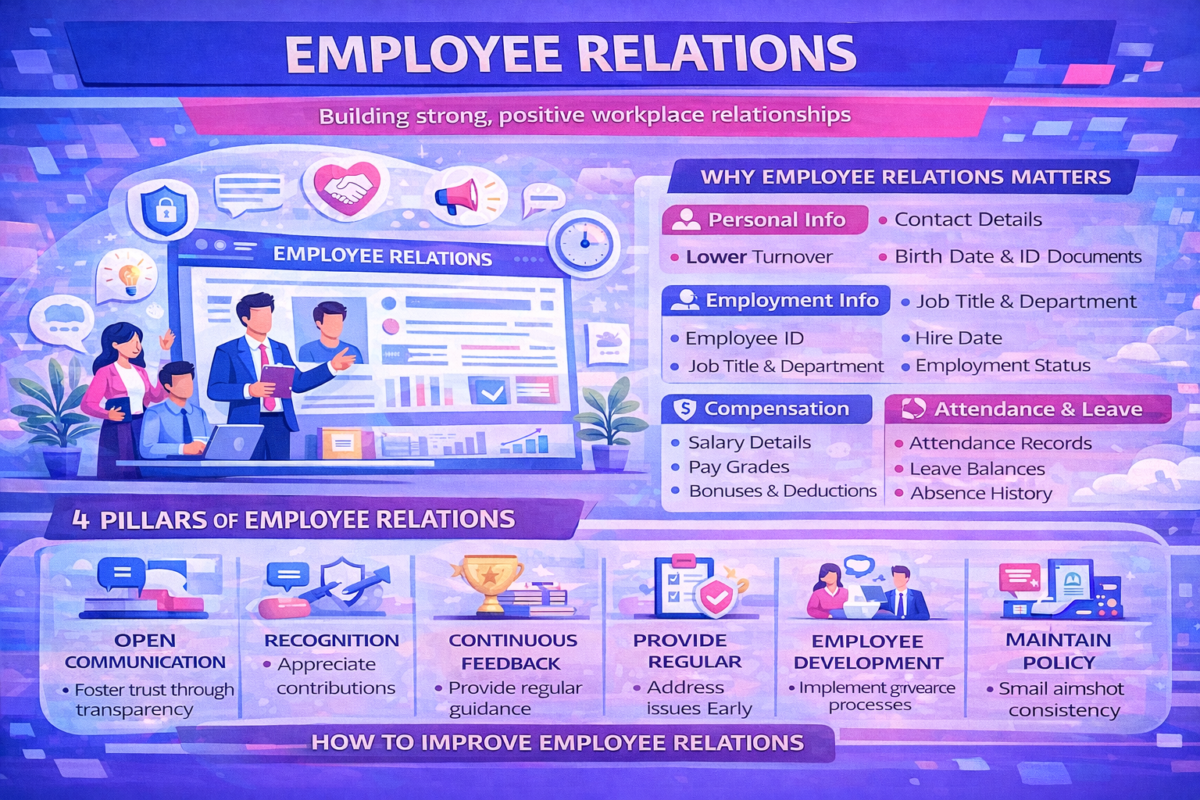
Employee relations refers to the strategies, practices, and processes an organization uses to build and maintain healthy relationships between employers and employees. It focuses on creating a positive work environment, resolving workplace issues, strengthening communication, and ensuring employees feel heard and valued.
At its core, employee relations is about trust. When employees trust leadership and feel respected, engagement rises and conflict decreases.
Strong employee relations does not happen by accident. It requires consistent communication, fair policies, and proactive leadership.
What Is Employee Relations in Simple Terms?
Employee relations is the HR function responsible for managing workplace relationships.
It includes:
- Handling employee grievances
- Supporting managers in resolving conflicts
- Maintaining fair workplace policies
- Encouraging open communication
- Promoting employee engagement
- Ensuring compliance with labor laws
In short, it is about maintaining harmony between employees and the organization.
Why Employee Relations Matters
Organizations with strong employee relations often experience:
- Higher employee engagement
- Lower turnover
- Reduced workplace disputes
- Better team collaboration
- Improved productivity
When employees feel respected and supported, they contribute more effectively. On the other hand, poor employee relations can lead to disengagement, complaints, and legal risks.
The Role of Employee Relations in HR
Employee relations is a core HR responsibility. It bridges the gap between leadership and employees.
Key responsibilities include:
- Addressing employee concerns promptly
- Conducting workplace investigations
- Guiding managers on disciplinary actions
- Supporting conflict resolution processes
- Reviewing and updating workplace policies
- Encouraging constructive feedback
HR professionals act as neutral facilitators who ensure fairness while protecting organizational interests.
Types of Employee Relations
Employee relations operates across different workplace dynamics.
Vertical Employee Relations
This refers to relationships between managers and employees. It includes performance discussions, feedback sessions, and leadership communication.
Strong vertical relations depend on clarity, transparency, and respect.
Horizontal Employee Relations
These are relationships among peers at the same organizational level. Team collaboration, cross functional work, and peer recognition fall under this category.
Healthy horizontal relations create a collaborative culture.
What Does Employee Relations Entail?
Effective employee relations goes beyond handling complaints. It involves building a work culture where issues are prevented before they escalate.
Key components include:
- Clear communication channels
- Transparent performance management
- Fair compensation policies
- Leadership accessibility
- Employee recognition programs
- Structured grievance handling processes
It also includes ensuring compliance with employment laws and maintaining workplace ethics.
Four Core Pillars of Employee Relations
While organizations may define pillars differently, strong employee relations typically rests on four foundations.
Open Communication
Employees should feel comfortable raising concerns without fear of retaliation. Regular town halls, one on one meetings, and anonymous feedback systems support transparency.
Recognition
Appreciating employee contributions builds morale and reinforces positive behavior. Recognition does not always require financial rewards. Public acknowledgment often has a strong impact.
Continuous Feedback
Feedback should not be limited to annual performance reviews. Ongoing conversations help employees improve and feel supported.
Investment in Growth
Providing training, mentorship, and career development opportunities shows employees that the organization values long term relationships.
Benefits of Good Employee Relations
Strong employee relations drives measurable business outcomes.
Higher Retention
Employees are more likely to stay in environments where they feel respected and supported.
Increased Productivity
Engaged employees focus better and collaborate effectively.
Reduced Workplace Conflict
Clear processes and open communication prevent minor issues from becoming serious disputes.
Stronger Employer Brand
Positive employee experiences improve reputation and attract talent.
Challenges in Employee Relations
Managing employee relations is not without difficulty.
Common challenges include:
- Handling sensitive investigations
- Managing generational differences
- Addressing remote or hybrid workplace issues
- Maintaining confidentiality
- Balancing employee advocacy with organizational policy
Proactive leadership and structured HR systems reduce these risks.
How to Improve Employee Relations
Organizations can strengthen employee relations through practical actions.
- Establish transparent workplace policies.
- Train managers in communication and conflict resolution.
- Conduct regular employee engagement surveys.
- Implement structured grievance mechanisms.
- Recognize achievements consistently.
- Encourage leadership accessibility.
Small improvements in communication can significantly impact workplace trust.
Employee Relations and Modern Workplaces
As workplaces evolve, employee relations now includes managing remote teams, supporting diversity and inclusion initiatives, and addressing mental well being.
Digital tools help HR teams track feedback, manage performance conversations, and maintain documentation. However, technology alone cannot replace genuine human connection.
At its heart, employee relations is about fairness, empathy, and accountability.
Frequently Asked Questions
What is the role of employee relations?
Employee relations focuses on maintaining positive workplace relationships, resolving disputes, ensuring policy compliance, and supporting engagement initiatives.
What are the types of employee relations?
The two primary types are vertical employee relations between managers and employees, and horizontal employee relations among peers.
What are the pillars of employee relations?
Open communication, recognition, continuous feedback, and employee development are widely recognized pillars.
What are the benefits of good employee relations?
Higher engagement, improved productivity, lower turnover, reduced conflict, and stronger organizational culture.
How is employee relations different from employee engagement?
Employee engagement focuses on emotional commitment and motivation. Employee relations focuses on managing workplace interactions and resolving issues. Both are interconnected.
Why Employee Relations Is a Strategic Priority
Employee relations is not just an administrative HR function. It directly influences culture, retention, and performance.
When organizations prioritize healthy relationships, they build resilient teams that can navigate change confidently.
Strong employee relations creates workplaces where employees feel secure, valued, and motivated to contribute their best.

 Innovative