Employee retention refers to an organization’s ability to keep its employees over a sustained period of time. It measures how successfully a company prevents voluntary turnover and maintains a stable, engaged workforce.
In practical terms, employee retention is about creating an environment where people choose to stay. It goes beyond salary. It includes culture, leadership, growth opportunities, recognition, and work life balance.
Strong employee retention is not accidental. It is the result of consistent strategy, fair practices, and meaningful employee experiences.
What Is Employee Retention in Simple Terms?
Employee retention means reducing employee turnover and encouraging long term employment within the organization.
When employees feel valued, supported, and fairly compensated, they are less likely to leave. When they feel overlooked or disconnected, attrition rises.
Retention reflects how well a company meets employee expectations throughout the employee lifecycle.
Why Is Employee Retention Important?
High turnover is expensive. Recruiting, hiring, onboarding, and training new employees requires time and resources. Productivity may decline during transitions.
Employee retention matters because it:
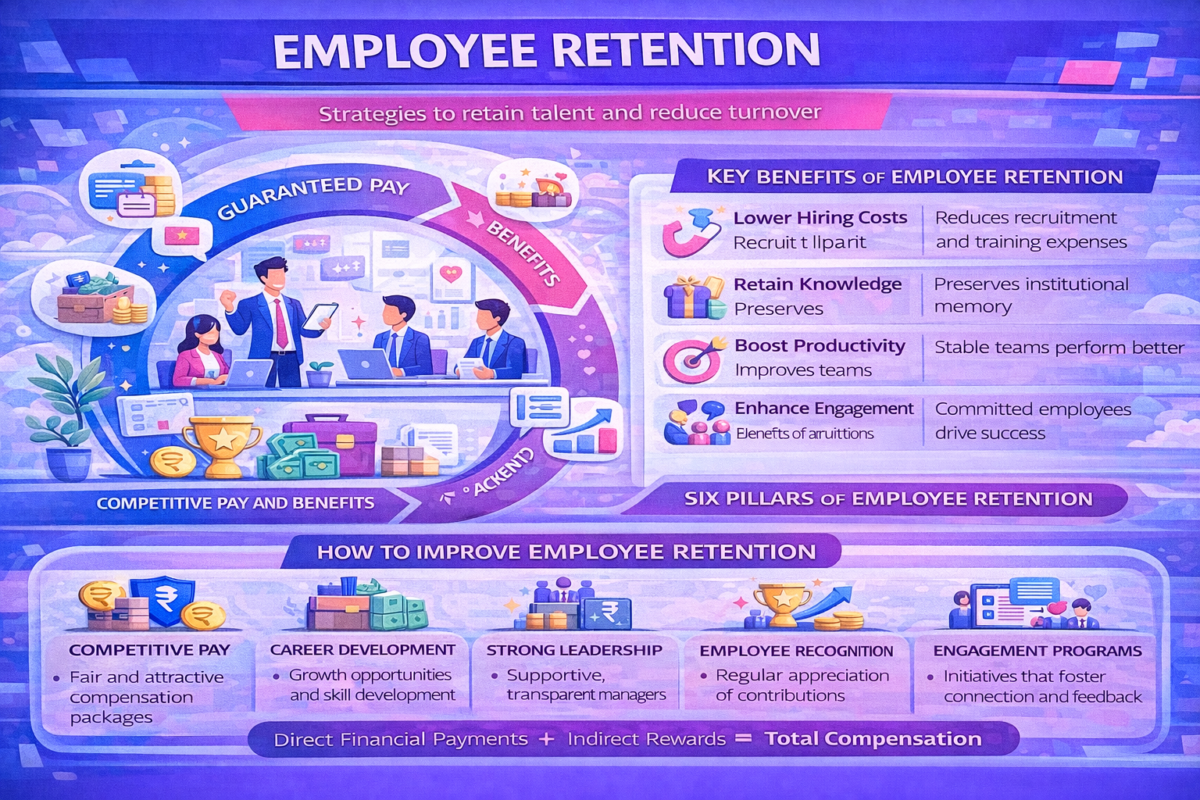
- Reduces hiring and training costs
- Maintains institutional knowledge
- Improves team stability
- Increases employee engagement
- Strengthens employer brand
Organizations with strong retention often outperform competitors because they preserve experience and consistency.
How to Calculate Employee Retention Rate
The employee retention rate measures the percentage of employees who remain with the company over a specific period.
Basic formula:
Employee Retention Rate =
(Number of employees at end of period minus new hires during period) ÷ Number of employees at start of period × 100
For example, if a company starts the year with 100 employees and ends with 90, after hiring 10 new employees during the year:
Retention Rate = (90 − 10) ÷ 100 × 100 = 80%
Tracking this metric regularly helps identify workforce trends.
Common Causes of Low Employee Retention
Understanding why employees leave is key to improving retention.
Common reasons include:
- Lack of career growth
- Poor management or leadership
- Inadequate compensation
- Limited recognition
- Workplace conflict
- Burnout
- Lack of flexibility
Exit interviews and employee surveys provide valuable insights into these factors.
Strategies to Improve Employee Retention
Improving employee retention requires proactive effort.
1. Competitive Compensation and Benefits
Fair pay remains a foundational driver of retention. Salary benchmarking and transparent reward systems help maintain trust.
2. Career Development Opportunities
Employees stay longer when they see a clear growth path. Training programs, mentorship, and internal mobility strengthen long term commitment.
3. Strong Leadership and Communication
Managers play a major role in retention. Regular feedback, transparency, and support improve workplace satisfaction.
4. Recognition and Appreciation
Acknowledging contributions increases morale and reinforces positive behavior.
5. Work Life Balance
Flexible work arrangements and wellness initiatives help reduce burnout.
6. Employee Engagement Programs
Engaged employees are more likely to stay. Surveys, team activities, and open dialogue strengthen connection.
Retention is built through consistent experience, not one time initiatives.
Employee Retention vs Employee Engagement
Employee retention and employee engagement are closely linked but not identical.
Employee engagement measures emotional commitment and motivation.
Employee retention measures how many employees remain with the organization.
High engagement often leads to better retention, but engagement alone does not guarantee it. Compensation, growth opportunities, and leadership also influence decisions to stay.
Types of Employee Retention
Organizations often focus on different retention priorities:
Voluntary Retention
Reducing voluntary resignations by improving employee satisfaction.
Involuntary Retention
Maintaining employees during restructuring or organizational changes.
Focusing on retaining top talent and critical skill holders.
Each approach requires tailored strategies.
How Technology Supports Employee Retention
Modern HR tools help track retention drivers more effectively.
Organizations use:
- Engagement surveys
- Performance management systems
- Learning and development platforms
- Compensation analytics
- Predictive attrition analysis
Data driven insights allow HR teams to identify risks early and intervene before employees disengage.
Frequently Asked Questions
What is employee retention?
Employee retention is the ability of an organization to keep employees and reduce turnover over time.
Why is employee retention important?
It reduces recruitment costs, maintains knowledge continuity, and improves overall performance.
How can companies improve employee retention?
By offering competitive pay, growth opportunities, strong leadership, recognition, and work life balance.
What is a good employee retention rate?
Retention benchmarks vary by industry. Many organizations aim for 85% or higher, but acceptable rates depend on sector and role type.
What is the difference between retention and turnover?
Retention measures employees who stay. Turnover measures employees who leave.
Employee Retention as a Long Term Strategy
Employee retention is not just an HR metric. It reflects organizational health.
Companies that invest in fair compensation, transparent leadership, career growth, and meaningful recognition build stronger relationships with their workforce.
Retention improves when employees feel respected, heard, and supported. That stability strengthens culture, productivity, and long term business success.

 Innovative