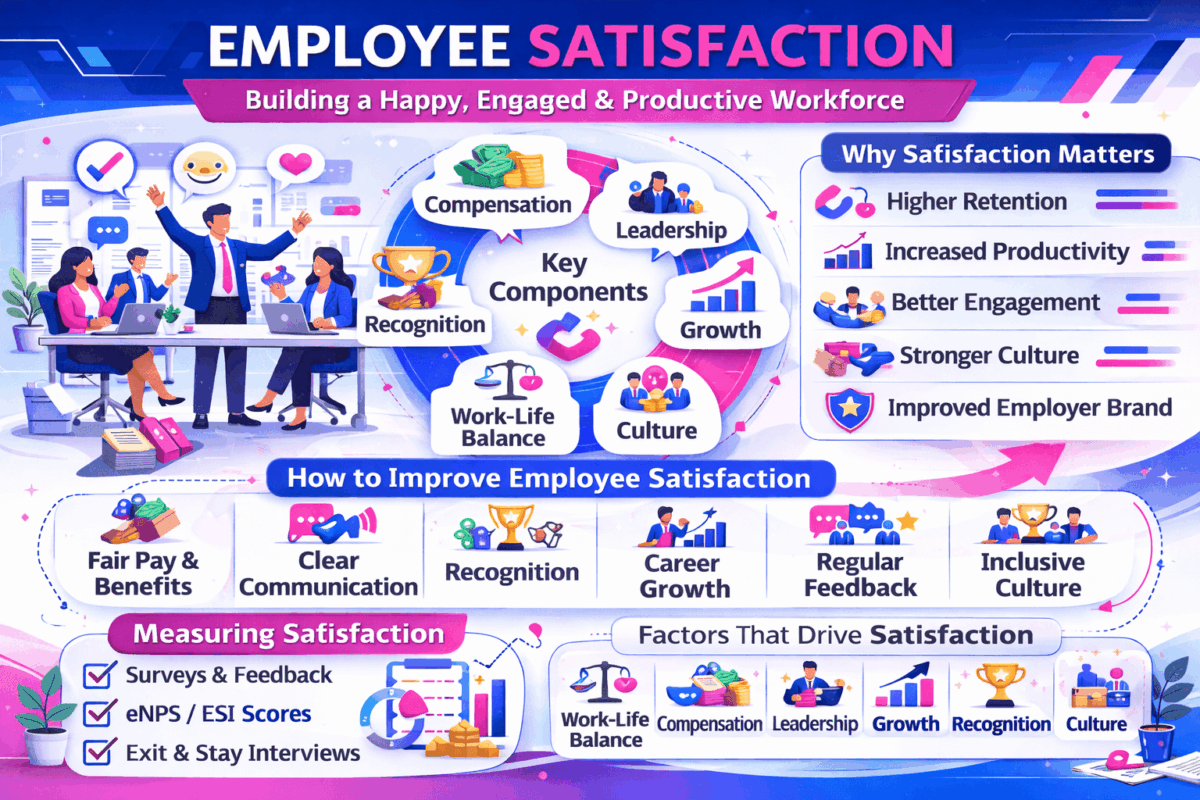
Employee satisfaction refers to how content and fulfilled employees feel about their job, work environment, leadership, and overall experience within an organization. It reflects whether employees’ expectations, needs, and professional goals align with what the organization provides.
When employees are satisfied, they are more likely to stay, contribute positively, and maintain strong performance levels. When satisfaction is low, engagement drops and turnover risk increases.
Employee satisfaction is not a one time achievement. It requires consistent effort, open communication, and fair practices.
What Is Employee Satisfaction in Simple Terms?
Employee satisfaction measures how happy employees are with their job and workplace.
It includes how they feel about:
- Their compensation
- Their manager
- Career growth opportunities
- Work life balance
- Company culture
- Recognition and feedback
Satisfaction is about perception. Even strong pay and benefits cannot compensate for a toxic culture or poor leadership.
Why Employee Satisfaction Matters
Employee satisfaction directly influences organizational outcomes.
When satisfaction is high:
- Retention improves
- Productivity increases
- Workplace morale strengthens
- Employer brand improves
When satisfaction is low:
- Attrition rises
- Performance declines
- Workplace conflicts increase
- Innovation slows
Short term dissatisfaction can lead to early resignations. Long term dissatisfaction may result in disengaged employees who remain physically present but emotionally disconnected.
Components of Employee Satisfaction
Several core factors contribute to employee satisfaction.
1. Compensation
Fair and competitive pay remains foundational. Employees expect transparency and equity in salary decisions.
2. Purpose
Employees want to feel their work has meaning. Alignment with company mission increases motivation.
3. Connectedness
Strong workplace relationships foster belonging. Collaboration and trust strengthen satisfaction.
4. Growth and Opportunity
Clear career paths, skill development, and internal mobility increase long term satisfaction.
5. Leadership and Management
Supportive managers who communicate clearly and provide feedback significantly impact employee satisfaction.
Employee Satisfaction vs Employee Engagement
Although often used interchangeably, they are different.
Employee satisfaction reflects how content employees are with conditions and rewards.
Employee engagement measures emotional commitment and willingness to go beyond basic job requirements.
An employee can be satisfied but not highly engaged. Ideally, organizations should aim for both.
How to Measure Employee Satisfaction
Measuring employee satisfaction requires consistent data collection and action.
Common methods include:
- Employee satisfaction surveys
- Pulse surveys
- Employee Net Promoter Score (eNPS)
- Employee Satisfaction Index (ESI)
- Exit interviews
- Stay interviews
Surveys should be structured, anonymous, and followed by clear action plans. Collecting feedback without acting on it can reduce trust.
Key metrics to monitor:
- Satisfaction score trends
- Voluntary turnover rate
- Absenteeism rates
- Internal promotion rates
Tracking these metrics over time helps identify patterns.
Why Employee Satisfaction Surveys Are Important
Employee satisfaction surveys provide a structured way to understand workplace sentiment.
They help organizations:
- Identify pain points
- Measure cultural health
- Evaluate leadership effectiveness
- Detect early signs of disengagement
- Shape retention strategies
Regular surveys also signal that leadership values employee voice.
How to Improve Employee Satisfaction
Improving employee satisfaction requires practical and consistent action.
Provide Clear Communication
Employees need clarity around goals, expectations, and changes within the organization.
Offer Fair Compensation and Benefits
Regular salary reviews and competitive benefits packages build trust.
Recognize Contributions
Acknowledgment reinforces value and motivates employees.
Invest in Skill Development
Training programs and mentorship opportunities support career growth.
Conduct Regular Check Ins
Frequent conversations between managers and employees prevent small issues from escalating.
Foster Inclusive Culture
Respect, fairness, and psychological safety improve workplace experience.
Small improvements across these areas often create meaningful change.
Factors That Contribute to Employee Satisfaction
Employee satisfaction is influenced by both tangible and intangible elements.
Key contributors include:
- Respectful treatment
- Transparent leadership
- Work life balance
- Timely feedback
- Performance recognition
- Growth opportunities
- Supportive policies
Organizations that address these factors build stronger workplace loyalty.
Common Challenges in Managing Employee Satisfaction
Maintaining satisfaction is not simple.
Challenges include:
- Remote and hybrid work complexities
- Generational expectations
- Communication gaps
- Performance related disputes
- Rapid organizational change
Leaders must remain adaptable and responsive.
Employee Satisfaction as a Strategic Priority
Employee satisfaction is not limited to HR functions. It affects overall business performance.
Satisfied employees create better customer experiences, collaborate effectively, and contribute innovative ideas.
When organizations treat satisfaction as a continuous priority rather than a periodic survey result, they create sustainable workplace success.

 Innovative