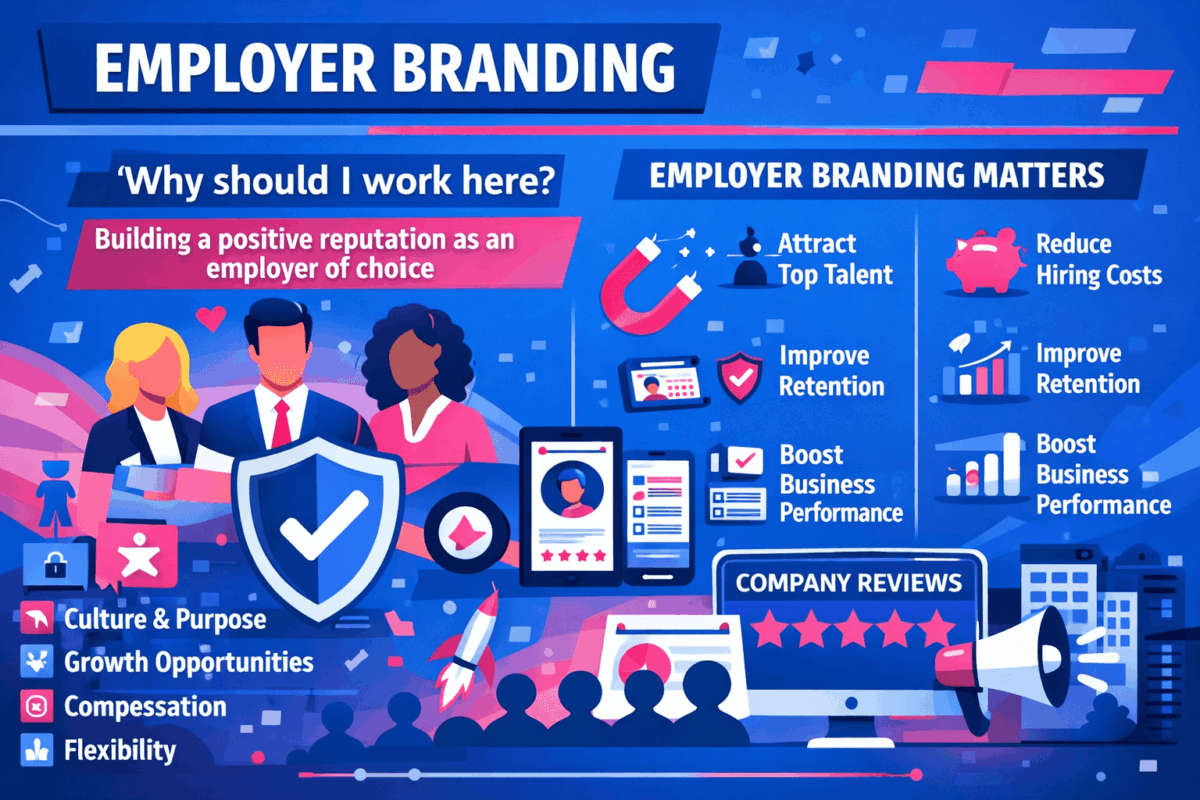
Employer branding is the way your organization is perceived as a place to work. It reflects your reputation among current employees, job seekers, and even former team members.
It answers a simple question candidates care deeply about:
Why should I work here instead of somewhere else?
Employer branding is not a marketing campaign. It is the lived employee experience shaped by culture, leadership, growth opportunities, compensation, flexibility, and purpose. The brand is what people say about your company when you are not in the room.
Strong employer branding attracts high quality talent, reduces hiring costs, improves retention, and strengthens overall business performance.
Employer Branding vs. Employee Value Proposition
These terms are related but distinct.
Employee Value Proposition (EVP) defines what employees receive in exchange for their skills and contributions. It includes pay, benefits, growth, culture, flexibility, and recognition.
Employer Branding is how that value proposition is communicated and perceived externally and internally.
In simple terms:
EVP is the promise. Employer branding is the reputation built around that promise.
If your EVP sounds great but your culture does not reflect it, employer branding weakens quickly.
Why Employer Branding Matters
Top ranking pages often highlight attraction and retention. That is true, but the impact goes deeper.
A strong employer brand leads to:
- Higher quality applicants
- Lower cost per hire
- Faster time to fill
- Improved employee engagement
- Stronger internal mobility
- Better leadership pipeline development
Candidates research companies before applying. They check reviews, social presence, leadership transparency, and employee stories. If the employer brand is unclear or inconsistent, they move on.
Organizations with clear, authentic branding tend to build more resilient teams because expectations are aligned from the start.
Key Components of Employer Branding
Employer branding is built through multiple interconnected elements.
1. Clear Employee Value Proposition
Your EVP must be specific and credible. Vague statements about growth and culture are not enough. Employees want clarity around:
- Career progression
- Skill development opportunities
- Leadership accessibility
- Work flexibility
- Compensation philosophy
- Recognition and rewards
Specificity builds trust.
2. Culture and Leadership Visibility
Leadership transparency plays a major role in brand perception. Open communication, clear goals, and consistent feedback shape how employees describe your company.
Internal alignment directly influences external perception.
3. Employee Experience Across the Lifecycle
Employer branding is shaped at every stage:
- Recruitment
- Interview process
- Onboarding
- Performance management
- Development
- Exit experience
If any stage feels inconsistent, it affects overall brand credibility.
4. Social and Digital Presence
Candidates form opinions through:
- Career pages
- Employee testimonials
- LinkedIn presence
- Company blog content
- Online reviews
Digital presence must reflect reality. Authentic storytelling outperforms polished corporate messaging.
5. Diversity, Equity, and Inclusion
Modern employer branding includes transparency around representation, inclusion initiatives, and fair opportunity. Candidates want evidence, not slogans.
Employer Branding Strategy: How It Works
A structured employer branding strategy includes several phases.
Research and Insight Gathering
Start with internal feedback:
- Employee engagement surveys
- Exit interviews
- Glassdoor analysis
- Performance data
- Internal mobility trends
Understand how employees actually feel before shaping external messaging.
Define Your Core Narrative
Clarify:
- What makes your organization different
- Who thrives in your environment
- What growth looks like internally
- How leadership supports performance
This narrative should connect culture with outcomes.
Align Internal and External Messaging
Marketing, HR, and leadership must collaborate. Employer branding should align with corporate brand identity but reflect employee experience specifically.
Activate Across Channels
Employer branding shows up in:
- Career site content
- Job descriptions
- Social media
- Recruitment campaigns
- Employee advocacy programs
- Internal communications
Consistency builds credibility.
Measure and Refine
Employer branding is measurable. Track:
- Application volume and quality
- Offer acceptance rate
- Employee referral rate
- Retention metrics
- Engagement scores
- Candidate experience feedback
Data helps refine positioning over time.
Modern Trends in Employer Branding
Employer branding continues to evolve. Several trends are shaping the field.
Skills and Growth Transparency
Candidates increasingly prioritize career mobility. Organizations that clearly communicate learning pathways, skill development programs, and leadership opportunities attract stronger long term talent.
Authentic Storytelling Over Polished Campaigns
Employee generated content performs better than scripted brand messaging. Real voices build trust.
Data Driven Employer Brand Analytics
HR teams now use analytics platforms to connect employer brand metrics with performance, engagement, and retention data. This shifts employer branding from a marketing concept to a measurable business function.
AI and Employer Branding
AI tools support:
- Candidate communication automation
- Personalization of job recommendations
- Predictive hiring analytics
- Sentiment analysis from employee surveys
AI enhances visibility but does not replace authenticity.
Common Employer Branding Mistakes
- Promising growth without development pathways
- Highlighting culture without defining it
- Ignoring employee feedback
- Treating employer branding as a one time campaign
- Overlooking internal alignment
Reputation builds slowly but can erode quickly.
Frequently Asked Questions
What is an example of employer branding?
A company known for strong mentorship programs, transparent leadership communication, and internal promotion rates has built a strong employer brand around growth and opportunity.
Is employer branding only about recruitment?
No. It influences retention, engagement, internal mobility, and overall workforce stability.
How do you measure employer branding success?
Track applicant quality, retention rates, engagement scores, referral rates, and candidate experience metrics. Connecting these metrics to business outcomes strengthens strategic impact.
How does employer branding affect employee engagement?
When expectations match reality, employees are more engaged. Misalignment creates dissatisfaction and turnover.

 Innovative