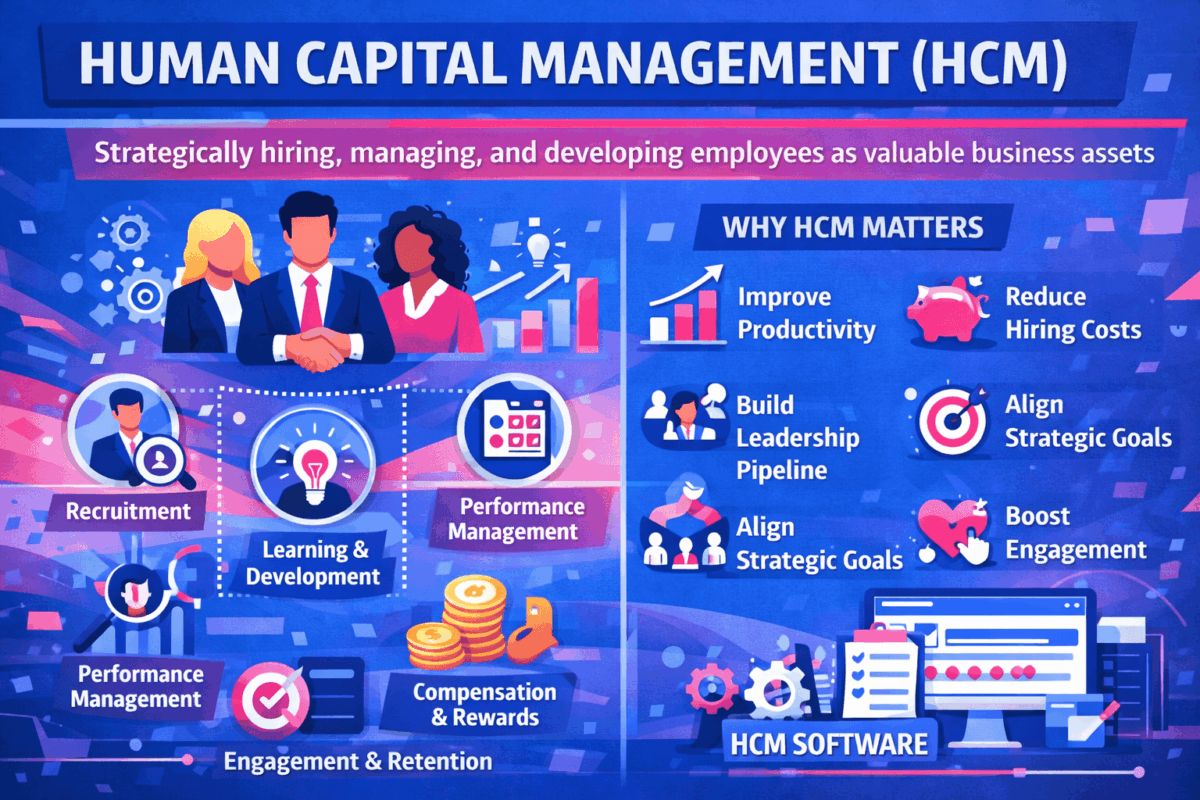
Human Capital Management (HCM) is the strategic approach companies use to hire, develop, manage, and retain employees as valuable business assets. Instead of viewing people as just headcount or payroll entries, HCM treats employees as long term investments whose skills, performance, and growth directly shape business results.
At its core, HCM connects people strategy with business strategy. It ensures that hiring, training, performance management, engagement, and succession planning all support the company’s goals.
What Is Human Capital Management?
Human Capital Management refers to the systems, processes, and strategies organizations use to manage the entire employee lifecycle. That includes:
- Workforce planning
- Recruitment and hiring
- Onboarding
- Learning and development
- Performance management
- Compensation and benefits
- Employee engagement
- Retention and succession planning
The focus is simple: build a workforce that drives measurable business impact.
Modern HCM goes beyond administrative HR tasks. It uses data, analytics, and technology to understand workforce trends, improve productivity, reduce turnover, and develop future leaders.
Why Human Capital Management Matters
Organizations compete on talent. Products can be copied. Technology evolves. But skilled, engaged employees create lasting advantage.
Strong HCM practices help companies:
- Improve employee productivity
- Reduce attrition and hiring costs
- Build leadership pipelines
- Align teams with strategic goals
- Strengthen workplace culture
- Increase engagement and morale
Companies that actively invest in human capital typically see higher performance outcomes and stronger long term growth.
Key Elements of Human Capital Management
High performing HCM strategies usually include five core components:
1. Talent Acquisition
Hiring the right people is the foundation. This includes workforce planning, employer branding, recruitment marketing, and structured selection processes.
2. Learning and Development
Employees need continuous skill development to stay relevant. Training programs, coaching, mentoring, and career pathing all fall under this area.
Clear goals, regular feedback, and structured evaluations ensure employees understand expectations and receive guidance to improve.
4. Compensation and Rewards
Competitive pay, benefits, and recognition programs help attract and retain top talent while reinforcing performance standards.
5. Engagement and Retention
Engaged employees are more productive and more likely to stay. Engagement surveys, recognition initiatives, and growth opportunities support long term retention.
Human Capital Management vs Human Resource Management
People often confuse Human Resource Management (HRM) and Human Capital Management (HCM). They are related but not identical.
- HRM focuses more on administrative functions like payroll, compliance, attendance, and record keeping.
- HCM takes a broader, strategic view. It connects talent management, workforce planning, leadership development, and analytics directly to business objectives.
Think of HRM as managing processes. HCM manages people as strategic contributors to growth.
What Is HCM Software?
HCM software is a comprehensive technology platform that supports all major human capital functions in one system.
Unlike basic HR tools, HCM platforms typically include:
- Recruitment and applicant tracking
- Digital onboarding
- Learning management systems
- Performance management tools
- Goal tracking
- Compensation planning
- Workforce analytics and reporting
- Employee self service portals
By consolidating data into a unified system, HCM software helps HR leaders make informed decisions about hiring, promotions, workforce planning, and succession management.
Benefits of HCM Software
Organizations that implement modern HCM systems often see measurable improvements, including:
- Reduced payroll errors
- Faster onboarding cycles
- Higher training completion rates
- Improved goal alignment
- Better visibility into workforce performance
- Data driven workforce planning
With built in analytics, companies can identify turnover risks, skill gaps, and performance trends before they become larger problems.
Common Challenges in Human Capital Management
Even with the right intent, HCM can face obstacles:
- Misalignment between workforce strategy and business goals
- Inconsistent performance evaluations
- Lack of real time workforce data
- Poor employee development planning
- Difficulty retaining top talent
Successful HCM requires ongoing leadership commitment, not just HR ownership.
HRIS vs HCM: What’s the Difference?
Another common question is the difference between HRIS (Human Resource Information System) and HCM.
- HRIS focuses primarily on employee data management, payroll, benefits, and administrative reporting.
- HCM includes everything within HRIS plus strategic functions like talent management, workforce analytics, succession planning, and learning systems.
In short, HRIS handles employee records. HCM shapes workforce strategy.
Tips to Improve Human Capital Management
If you want to strengthen HCM in your organization, start here:
- Align people strategy with business objectives.
- Use workforce analytics to guide decisions.
- Invest in continuous learning, not just one time training.
- Encourage ongoing feedback, not annual reviews only.
- Prioritize employee engagement and recognition.
- Adopt integrated HCM software to unify processes.
Small improvements across the employee lifecycle can significantly improve productivity and retention.
Frequently Asked Questions About Human Capital Management
What is the objective of Human Capital Management?
The primary objective of HCM is to maximize employee value and performance while aligning workforce efforts with business strategy.
What are the main functions of HCM?
Key functions include recruitment, onboarding, training, performance management, compensation, engagement, workforce planning, and analytics.
What industries use HCM?
Nearly every industry relies on HCM, including healthcare, manufacturing, technology, retail, financial services, and education.
Is HCM only for large enterprises?
No. Small and mid sized businesses also benefit from structured human capital strategies and HCM software, especially as they scale.
Final Thoughts
Human Capital Management is not just about managing employees. It is about building a workforce that drives growth, innovation, and resilience. When companies treat people as strategic assets and invest in their development, performance improves across the board.
Strong HCM practices create better leaders, stronger teams, and sustainable competitive advantage.

 Innovative