













Growing a company from twenty people to a few hundred changes far more than its size. Communication becomes harder, decisions require greater coordination, and leaders must introduce structure without allowing the organization to become overly bureaucratic.
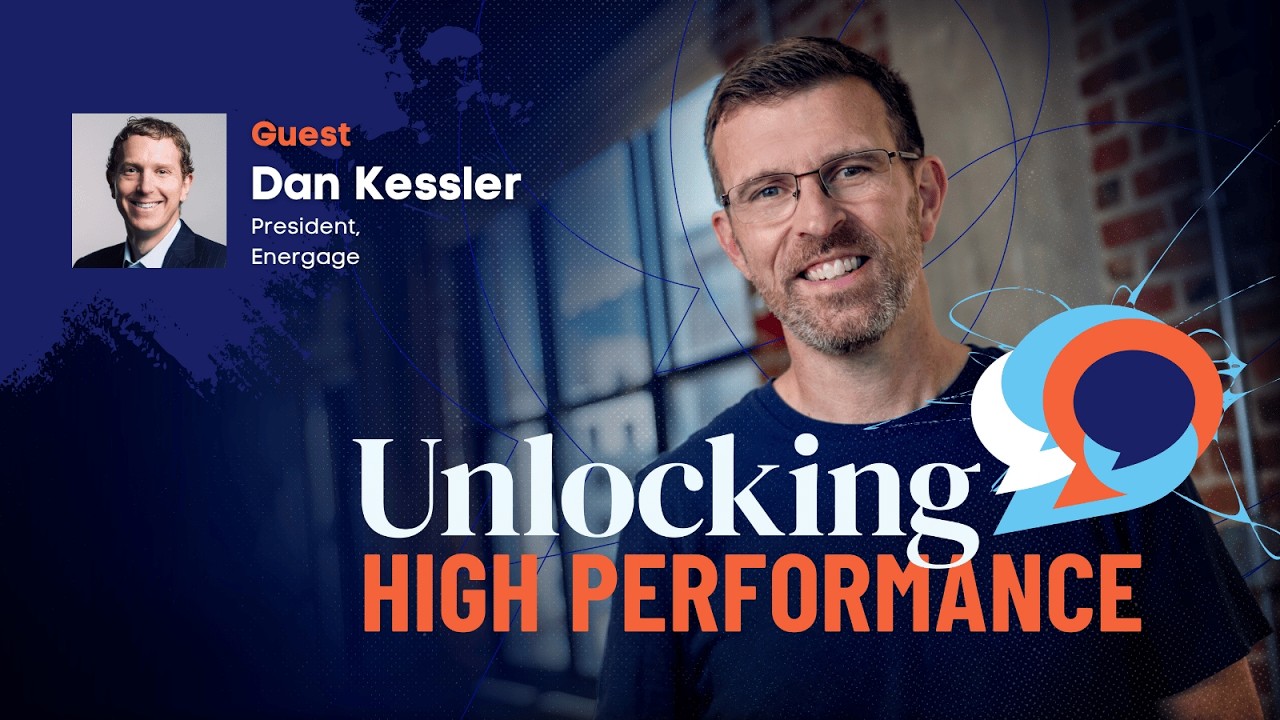
In a recent episode of Unlocking High Performance, Dan Kessler, President of Energage, joined host Jason Lauritsen to discuss what it takes to keep culture healthy through growth, acquisitions, and organizational reinvention.
Having spent fifteen years at Energage, Dan has seen the company become an entirely different organization several times. Along the way, he has also had to reinvent himself as a leader, learning when to get involved, when to step back, and how to help the executive team stay aligned as the business evolves.
Culture and Business Performance Move Together
Culture is sometimes treated as separate from business performance. Dan’s experience suggests the opposite.
Throughout Energage’s growth, the periods when he felt best about the culture were also the periods when the business performed well. A struggling culture may carry a business for a while, but the results are unlikely to last.
“You can have a decently performing business for a period of time if the culture is struggling, but it is not going to be sustainable.” Dan Kessler
For Energage, maintaining culture is not about creating a perfect workplace. It is about being intentional, regularly listening to employees, and treating culture as an ongoing commitment rather than a destination.
A Healthy Culture Starts at the Top
As an organization grows, the way its executive team operates becomes increasingly important. The conversations, decisions, and behaviors at the top eventually shape how work gets done throughout the business.
Dan looks for three signs that an executive team is working well:
👉 The team is discussing the real and difficult issues
👉 People can say what they think and challenge one another in the room
👉 Everyone leaves with a shared understanding of where the business is going and why
When those things are missing, the effects often appear elsewhere as unnecessary friction, conflicting priorities, or teams pulling in different directions.
For Dan, the “meeting after the meeting” is a particularly important signal. If people only share their real opinions after the executive meeting has ended, the team has not created enough openness or trust to address the issues that matter.
There Is No Perfect Operating Framework
Over the years, Energage has experimented with several approaches to setting goals and running the business, including OKRs and other established operating frameworks.
Dan’s conclusion is that there is no single framework that works for every leadership team. The important thing is to choose a structure, develop a clear point of view around how the business should operate, and adapt the framework to the organization’s needs.
As the company grows, that operating rhythm must also extend beyond the executive team. The next level of leadership needs greater clarity, development, and alignment so that decisions can be made effectively throughout the organization.
Core Values Should Be Durable, Not Untouchable
Core values are meant to last, but that does not mean they should never be revisited.
Energage’s values of helpfulness, open mindedness, and teamwork have played an important role in shaping its culture. As the business enters a new stage of growth, however, Dan believes it may be time to examine whether those values still fully describe how the company needs to operate.
Revisiting values does not mean discarding the organization’s identity. It means considering how the company has matured, where friction is emerging, and whether the current values offer enough guidance for the next phase.
Every Strength Has an Underbelly
Helpfulness is deeply embedded in Energage’s culture. New employees frequently notice how willing people are to support one another.
But Dan also acknowledges that helpfulness can go too far.
“Every strength has an underbelly.”
When leaders answer questions that others could resolve independently or step in to solve every problem, helpfulness can become enablement. Over time, this can reduce ownership, consume resources, and make it harder for people to develop confidence in their own decisions.
The goal is not to become less helpful. It is to recognize when support is genuinely needed and when stepping back would help someone grow.
Knowing When to Step In and When to Step Back
One of Dan’s biggest leadership lessons has been learning when to roll up his sleeves and when to trust his team to handle the work.
He believes executives should remain willing to understand the details and contribute directly when the situation calls for it. At the same time, constantly inserting themselves into the work can create confusion and prevent others from leading in their own way.
As Energage has grown, Dan has learned to trust that capable leaders may approach the work differently from how he would have done it, and that different does not mean ineffective.
Sometimes, moving the business forward matters more than pursuing a perfect outcome.
Leading With Love, Levity, and Purpose
For Dan, leadership has become easier as he has developed a clearer understanding of who he is and how he wants to show up.
His personal approach comes down to three things: love, levity, and purpose.
Whether he is speaking with one person, participating in an executive meeting, or addressing the entire company, these principles help him lead with greater consistency.
They are not intended to be a formula for every leader. The broader lesson is that leadership becomes more authentic when people understand what they stand for and bring it into their everyday interactions.
Key Takeaways for Leaders
Dan’s conversation with Jason offers several practical lessons for leaders guiding organizations through growth:
👉 Culture and business performance are deeply connected
👉 Healthy culture begins with an aligned executive team
👉 Leadership teams need an operating framework, but it must fit the business
👉 Core values should remain durable while evolving with the organization
👉 Strengths such as helpfulness can become weaknesses when taken too far
👉 Leading at scale requires knowing when to contribute and when to step back
👉 Consistent leadership begins with understanding who you are and how you want to show up
