A hospital can have a clear strategic plan and still struggle to connect it with the priorities teams work on each week. Department goals sit in separate spreadsheets, updates use different definitions, and leaders cannot see which commitments need support.
OKR and goal management software helps organize those priorities, owners, measures, and progress conversations. The right fit depends on whether you want enterprise strategy execution, departmental performance reporting, or employee goals connected with ongoing development.
Healthcare organizations also need careful goal design. A numerical target should help teams improve a defined process without encouraging shortcuts or overlooking quality, workload, and professional judgment.
This guide compares 10 OKR and goal management platforms for healthcare employers. Some are dedicated strategy tools; others connect goals with performance management and manager conversations.
Key Takeaways
Engagedly connects goals with performance reviews, feedback, and ongoing conversations.
Betterworks and Lattice combine goal alignment with broader employee performance processes.
WorkBoardAI, Profit.co, Perdoo, and Mooncamp offer different approaches to strategy execution and OKR coordination.
15Five supports goals within a manager routine, while Peoplebox.ai connects OKRs with people and business information.
ClearPoint Strategy is worth evaluating for healthcare strategic plans, measures, initiatives, and leadership reporting.
Choose a platform after defining the decisions, ownership, measures, and review rhythm your goals need to support.
Best Healthcare OKR and Goal Management Software at a Glance
Software
Best for
Key capabilities
Pricing approach
1. Engagedly
Goals connected with employee performance and development
Goals and OKRs within the Performance Suite, Goal progress available for review conversations
Confirm current package and quote
2. Betterworks
Enterprise goal alignment and performance conversations
Goal and OKR alignment, Progress and milestone updates
Confirm current package and quote
3. WorkBoardAI
Enterprise strategy execution and OKR coordination
OKR planning and alignment, Check-ins and dashboards
Confirm current package and quote
5. Perdoo
A dedicated OKR and strategy execution process
Company and team OKRs, Strategy execution context
Confirm current package and quote
6. Mooncamp
Flexible strategy and OKR workspaces
Goals and OKRs, Configurable views and dashboards
Confirm current package and quote
7. Lattice
OKRs connected with employee performance conversations
Individual, team, and company goals, Cascading goal alignment
Confirm current package and quote
8. 15Five
Goals within an ongoing manager routine
Goal and OKR tracking, Check-ins and 1:1s
Confirm current package and quote
9. ClearPoint Strategy
Healthcare strategic plans and performance reporting
Strategic plan tracking, Measures and initiative reporting
Confirm current package and quote
10. Peoplebox.ai
Goal alignment linked with people and business information
OKR and goal alignment, Progress tracking
Confirm current package and quote
Compare workforce coverage, products, minimum commitments, implementation, integrations, and support. Product information was reviewed in November 2026.
10 Best OKR and Goal Management Software for Healthcare
1. Engagedly — Goals connected with employee performance and development
Best for: Goals connected with employee performance and development.
Engagedly’s Goals & OKRs are part of its Performance Suite. Organizations can connect goal progress with ongoing performance conversations and reviews, while Marissa™ AI is available to help draft measurable goals and key results.
A healthcare employer could connect a department improvement priority with relevant team and individual goals, then discuss progress during check-ins. Keep operational goals, employee development objectives, and formal clinical requirements clearly defined.
Key features
Goals and OKRs within the Performance Suite
Goal progress available for review conversations
Connections with feedback and meetings
Optional AI support for drafting measurable goals
Pros: Useful when goal tracking should inform manager conversations and structured employee reviews.
Cons: Confirm the proposed reporting, integrations, and any additional modules rather than assuming every talent capability is included.
Pricing: Request current pricing for the selected products, users, services, and integrations.
2. Betterworks — Enterprise goal alignment and performance conversations
Best for: Enterprise goal alignment and performance conversations.
Betterworks provides goal-setting and OKR software with alignment, progress visibility, and connections with ongoing performance conversations. It is relevant to organizations that want goals to remain part of everyday management rather than a separate planning document.
A health system could link organizational priorities with departmental commitments and review progress in manager conversations. Demonstrate how teams update milestones, explain blockers, and revise goals when circumstances change.
Key features
Goal and OKR alignment
Progress and milestone updates
Connections with performance conversations
Templates and goal-setting guidance
Pros: Relevant when leaders want a shared goal process connected with continuous performance management.
Cons: Evaluate implementation support, package boundaries, and participation for employees outside desk-based workflows.
Pricing: Request current pricing for the selected products, users, services, and integrations.
3. WorkBoardAI — Enterprise strategy execution and OKR coordination
Best for: Enterprise strategy execution and OKR coordination.
WorkBoardAI focuses on strategy execution and OKRs, helping organizations coordinate priorities and track business results. WorkBoard acquired Quantive in 2025 and stated that Quantive customers would transition to the WorkBoard platform; they are not listed here as separate choices.
A multi-site healthcare organization could evaluate whether the platform gives leaders a consistent view of strategic commitments and dependencies. Test the reporting cycle, update responsibilities, and how teams explain progress beyond a numerical score.
Key features
Enterprise OKR coordination
Strategy execution visibility
Progress review workflows
AI-supported strategy execution
Pros: Worth evaluating when the main requirement is leadership alignment across a complex enterprise.
Cons: Confirm the current WorkBoard offer, deployment support, integrations, and fit for the level of process your teams need.
Pricing: Request current pricing for the selected products, users, services, and integrations.
4. Profit.co — Managing the OKR lifecycle alongside execution
Best for: Managing the OKR lifecycle alongside execution.
Profit.co supports the OKR lifecycle from planning and alignment through check-ins, dashboards, and review. Its wider platform connects strategy, performance, projects, and engagement, giving organizations several ways to organize execution around measurable results.
A healthcare operations team could set an improvement objective, define measurable results, and track the initiatives intended to influence them. Ask the vendor to show how owners update results and separate completed activities from actual outcome changes.
Key features
OKR planning and alignment
Check-ins and dashboards
Connections with projects and performance
Reporting across the OKR lifecycle
Pros: Relevant when teams want OKRs connected with a wider execution process.
Cons: Confirm which products, integrations, services, and administrative controls are included in the chosen package.
Pricing: Request current pricing for the selected products, users, services, and integrations.
5. Perdoo — A dedicated OKR and strategy execution process
Best for: A dedicated OKR and strategy execution process.
Perdoo is a dedicated OKR and strategy execution platform. It supports company and team OKRs and allows organizations to adapt framework terminology, making it relevant when leaders want a consistent approach to goals and strategic priorities.
A healthcare leadership team could use it to clarify how department objectives contribute to a shared priority. Test the distinction between outcomes, ongoing KPIs, and initiatives so the dashboard explains more than whether a list of tasks was completed.
Key features
Company and team OKRs
Strategy execution context
Configurable framework terminology
Progress tracking across goals
Pros: A focused choice for organizations building a defined OKR operating rhythm.
Cons: Evaluate how employee performance and clinical systems remain connected where those processes use separate tools.
Pricing: Request current pricing for the selected products, users, services, and integrations.
Connect healthcare priorities with employee goals
Explore how Engagedly helps teams set goals, track progress, and support ongoing performance conversations.
6. Mooncamp — Flexible strategy and OKR workspaces
Best for: Flexible strategy and OKR workspaces.
Mooncamp helps organizations centralize strategy, goals, and OKRs. Its configurable views and dashboards are relevant to teams that want to represent their planning approach and review routines in a shared workspace.
A healthcare team could compare departmental goal views with a leadership dashboard. Ask how the workspace represents owners, dependencies, updates, and private information, and test whether employees can find the priorities relevant to their role.
Key features
Goals and OKRs
Configurable views and dashboards
Strategy planning and review
Progress visibility and ownership
Pros: Useful when teams need flexibility in how they display and review their goals.
Cons: Confirm plan-specific permissions, reporting, integrations, and how much configuration administrators will maintain.
Pricing: Request current pricing for the selected products, users, services, and integrations.
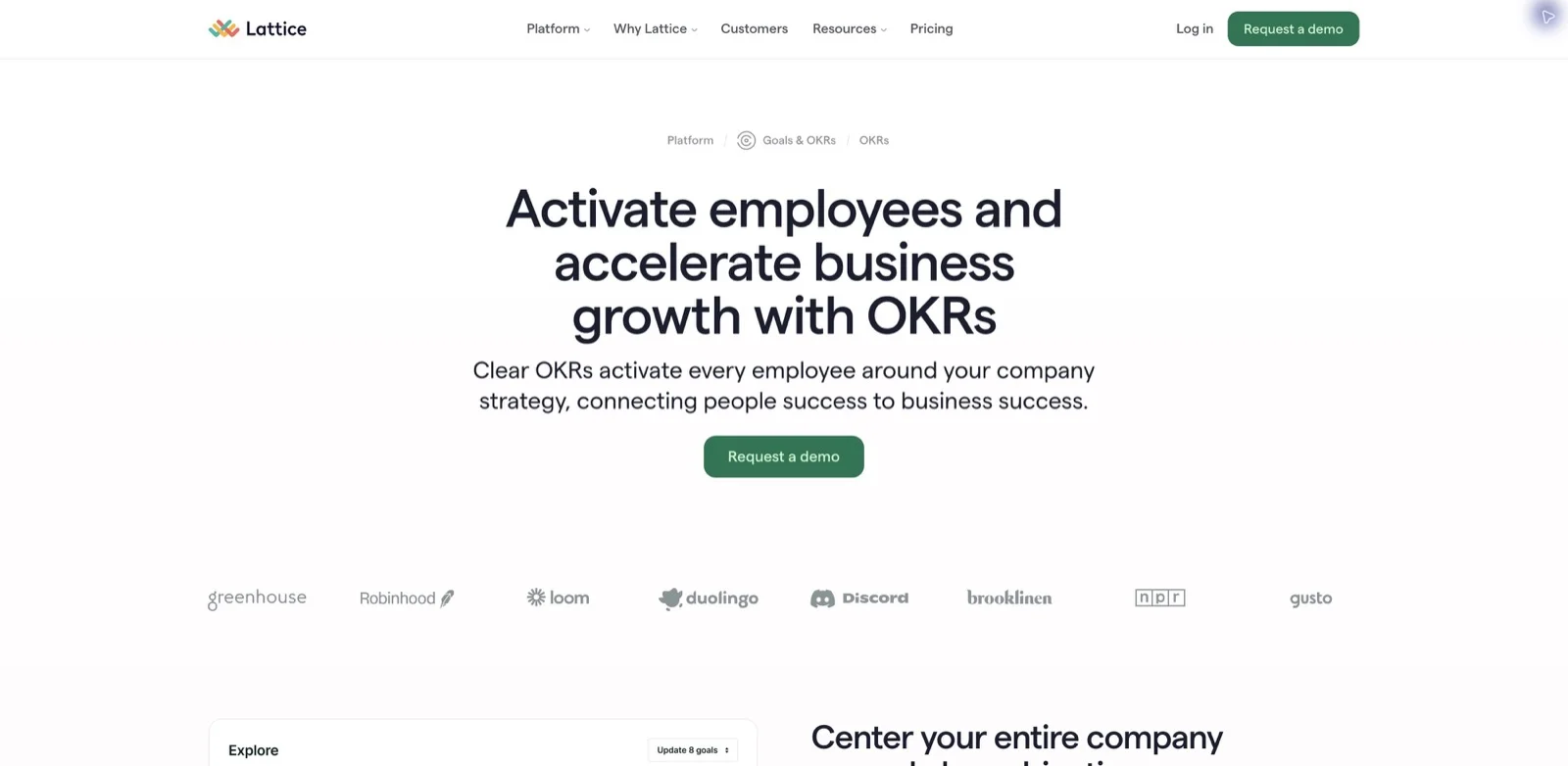
7. Lattice — OKRs connected with employee performance conversations
Best for: OKRs connected with employee performance conversations.
Lattice supports goals and OKRs with alignment between individual, team, and organizational priorities. Goal progress can connect with 1:1s and performance reviews, making it relevant when employee goals should remain visible throughout a review period.
A healthcare employer could test how a manager reviews an employee’s goal progress during a check-in and then uses that context in an appraisal. Demonstrate separate goal cycles and relevant permissions for different departments.
Key features
Individual, team, and company goals
Cascading goal alignment
Progress tracking
Connections with 1:1s and reviews
Pros: A relevant option for organizations connecting goal tracking with a broader people management process.
Cons: Confirm product packaging and access for shift-based employees, along with the requirements of any specialist clinical systems.
Pricing: Request current pricing for the selected products, users, services, and integrations.
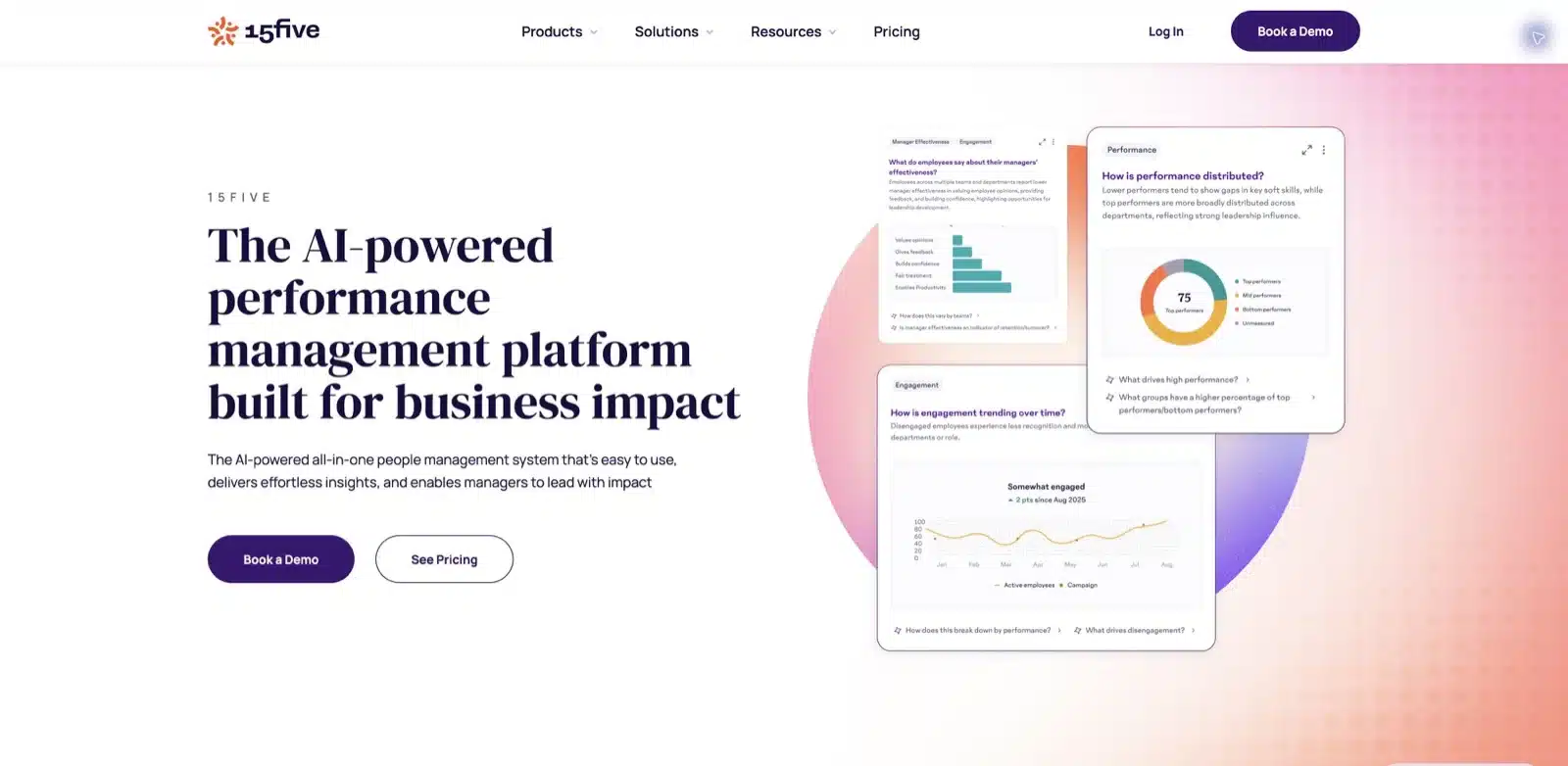
8. 15Five — Goals within an ongoing manager routine
Best for: Goals within an ongoing manager routine.
15Five Perform includes goal and OKR tracking alongside performance reviews, check-ins, and manager conversations. It is relevant when the main goal is to help managers keep employee priorities visible and discuss progress consistently.
A clinic team could use the system to track a small number of agreed priorities and revisit them in regular conversations. Evaluate whether the goal structure is sufficient for your strategic reporting needs as well as individual employee discussions.
Key features
Goal and OKR tracking
Check-ins and 1:1s
Performance review context
Manager-facing performance reporting
Pros: Useful for organizations that want goals connected with manager practices and employee development.
Cons: Compare enterprise strategy reporting requirements carefully and confirm the selected package and integrations.
Pricing: Request current pricing for the selected products, users, services, and integrations.
9. ClearPoint Strategy — Healthcare strategic plans and performance reporting
Best for: Healthcare strategic plans and performance reporting.
ClearPoint Strategy offers strategy execution software with a healthcare-focused solution for hospitals and health systems. It is relevant to organizations prioritizing strategic plans, measures, initiatives, and leadership reporting rather than employee appraisal workflows.
A hospital leadership team could evaluate how departmental measures and initiatives roll into a shared strategic review. Confirm the goal framework, data sources, reporting controls, and responsibilities for validating the measures shown.
Key features
Strategic plan tracking
Measures and initiative reporting
Healthcare-focused strategy execution
Leadership reporting workflows
Pros: Worth evaluating when the primary use case is healthcare strategy reporting and coordinated execution.
Cons: It serves a different emphasis from employee performance tools. Confirm whether its goal framework meets your OKR requirements.
Pricing: Request current pricing for the selected products, users, services, and integrations.
10. Peoplebox.ai — Goal alignment linked with people and business information
Best for: Goal alignment linked with people and business information.
Peoplebox.ai combines OKRs, talent management, and people analytics. Its goal capabilities and integrations are relevant when organizations want to connect strategic priorities with performance information and existing work tools.
A healthcare administrative team could test how goal progress is updated from an approved source system and how managers interpret the result. Confirm exactly which integrations are available, how data access is controlled, and what still needs manual review.
Key features
OKR and goal alignment
Progress tracking
Connections with talent management
Integrations with work and data tools
Pros: Relevant when goal updates and performance discussions should draw on connected business information.
Cons: Verify integration availability, data ownership, and reporting suitability for healthcare use cases before implementation.
Pricing: Request current pricing for the selected products, users, services, and integrations.
What Is OKR Software for Healthcare?
OKR software helps healthcare organizations define objectives, connect them with measurable key results, assign owners, track progress, and review priorities. Broader goal management software may also support individual goals, operational measures, strategic plans, and development objectives.
An objective describes the improvement you want. Key results define how you will know whether progress occurred. Initiatives are the activities intended to influence those results. Keeping the three distinct prevents a completed task list from being mistaken for an achieved outcome.
Employee goal tracking and enterprise strategy reporting overlap, but they are not identical. The right shortlist depends on the main decision the system needs to support.
How Healthcare Teams Can Use Goals and OKRs
Connect priorities across departments
A shared objective can clarify how teams contribute to an organizational improvement. Each department needs a defined contribution, a responsible owner, and a clear understanding of dependencies.
For example, an administrative improvement may require coordination between scheduling, reception, and finance. The platform should make those responsibilities visible without giving every employee the same goal.
Make progress conversations more specific
A useful goal update explains what changed, what is blocking progress, and what support is needed. A percentage alone can hide uncertainty or differences in how teams measure their work.
Use regular reviews to interpret the information, adjust actions, and escalate constraints. Connect employee priorities with manager meetings and ongoing feedback so the goals remain part of everyday work.
Support development without confusing it with operations
A development goal might focus on building a capability or completing a supported learning activity. An operational goal concerns the performance of a process or service. Both can be useful, but they require different evidence and review conversations.
Do not treat a stretch target as an automatic employee performance rating. Discuss the employee’s responsibilities, resources, contribution, and circumstances alongside the result.
A Practical Healthcare Goal Example
The following example illustrates structure rather than a universal target. Set baselines, measures, and safeguards using your organization’s own data and the responsible team’s judgment.
Element
Illustrative example
What to clarify
Objective
Improve the consistency of new employee orientation
Which employee groups and locations are included?
Key result
Increase completion of agreed orientation milestones from the measured baseline to an approved target
How is completion verified, and what is the timeframe?
Key result
Improve new employees’ reported clarity about where to find role support
What question and comparison method will be used?
Initiative
Revise the orientation checklist and mentor handoff
Who owns delivery and review?
Safeguard
Keep required training and competency sign-off intact
Which established processes remain authoritative?
This approach connects activity with a desired change while keeping requirements clear. The platform should show both progress and the explanation behind it.
Features to Prioritize
Clear ownership and alignment
Employees and leaders should understand who owns an objective, who contributes, and how it connects with a broader priority. Test whether the system represents cross-functional work without creating duplicate goals that drift apart.
Ask a team member to find their commitments and explain the connection. If the structure requires a long explanation, simplify it before expanding the rollout.
Measures with defined sources
Specify the measure, baseline, target, update frequency, and source for each result. Confirm whether updates are manual or integrated, who validates them, and how changes to a definition are recorded.
Healthcare employers should use appropriate access controls and avoid moving unnecessary sensitive information into a goal tool. Many strategic objectives can be tracked with approved aggregated measures.
Reporting that supports decisions
A dashboard should make priorities, risks, dependencies, and overdue decisions easier to see. Ask leaders which actions they would take after reviewing it.
Test team and enterprise views, historical progress, commentary, and reporting permissions. Confirm that the selected package includes the views you need rather than relying on an example from another product tier.
A review rhythm teams can maintain
Choose a cadence that fits the work. Frequent updates are useful when the measure changes frequently and the team can act on it. They add little value when the information is unavailable or no decision will follow.
Give owners a clear expectation for updates and make room for discussing blockers. Software should support a management routine that people can sustain.
Make goal alignment part of everyday performance
See how Engagedly can support your goal-setting process across departments, managers, and employees.
Start by deciding whether the main need is employee goal tracking, departmental improvement, or enterprise strategy execution. Then define the number of teams, goal hierarchy, reporting audience, integrations, and support required.
Pilot one real planning cycle. Ask users to create goals, update results, discuss a blocker, change an owner, and review an outcome. Include employees from different roles and working patterns.
Compare the total cost of the proposed scope. User counts, administrator roles, minimum commitments, services, integrations, and contract terms can affect the final price. Ask each supplier to price the same requirements.
We reviewed public product information, documentation, healthcare solution pages where available, and current product positioning. The comparison considers goal alignment, progress tracking, management routines, strategy reporting, and connections with employee performance. General-purpose platforms are evaluated for relevant use cases rather than presented as specialized clinical systems.
Frequently Asked Questions
What is the best OKR software for healthcare?
The right choice depends on the process. Engagedly connects goals with employee performance and development. Dedicated OKR platforms emphasize strategic alignment, while healthcare strategy tools may focus on measures, initiatives, and leadership reporting.
Can hospitals use OKRs?
Yes, for appropriate organizational and team priorities. Define measures carefully, involve the responsible leaders, and consider quality, workload, and professional judgment alongside the target. OKRs do not replace established clinical requirements.
What is the difference between a KPI and a key result?
A KPI monitors an important measure over time. A key result defines a measurable outcome linked to an objective within a period. A KPI can inform a key result, but the purpose and desired change should be explicit.
Should every employee have the same OKRs?
No. Teams and individuals need relevant responsibilities and contributions. A shared priority can connect different goals without requiring identical targets across roles.
How many goals should a healthcare team track?
Choose a manageable set that reflects real priorities and available capacity. If the team cannot explain which goals matter most or keep updates meaningful, reduce and clarify the set.
Can OKR software replace performance reviews?
No. Goals provide context, while reviews evaluate broader responsibilities, contributions, and development. Connect the processes thoughtfully through performance reviews.
How can Engagedly support healthcare goal management?
Engagedly connects goals with the Performance Suite so progress can inform feedback, meetings, and reviews. Review the healthcare solution or request a demo using your organization’s goal structure.
Jeevithan K is a Senior Solutions Consultant at Engagedly with extensive experience in HR technology, customer success, product implementation, onboarding, and training. He specializes in helping organizations adopt B2B SaaS and enterprise AI solutions effectively. His expertise also includes project management, account management, process improvement, and translating complex product capabilities into practical solutions that deliver meaningful value for customers.









 Innovative