



Jeevithan K is a Senior Solutions Consultant at Engagedly with extensive experience in HR technology, customer success, product implementation, onboarding, and training. He specializes in helping organizations adopt B2B SaaS and enterprise AI solutions effectively. His expertise also includes project management, account management, process improvement, and translating complex product capabilities into practical solutions that deliver meaningful value for customers.
Spending on engagement is the easy part. The hard part arrives a year later, when the wellness stipend has been spent, the pulse survey has run twice, and the employee engagement score has still dropped.
That number is more than a line on a dashboard: it separates a team that brings its full effort from one that has quietly stopped, and it takes retention and customer loyalty with it when it goes.
The reflex, when the score falls, is to add something people will enjoy and schedule another survey. Yet engagement rarely drops because people woke up caring less.
Engagement is an output, and a falling score is an operating-system problem: the everyday management practices that produce it have stopped running.
In a large company they rarely fail all at once. They decay in predictable places as the organization scales, and no perk reaches the level where they broke.
W. Edwards Deming, the pioneer of modern quality management, said it in ten words: “a bad system will beat a good person every time.” Engagement is what that system produces when it runs well, and what it loses when it does not.
Here is the number that explains why. Gallup has found that managers account for 70% of the variance in team engagement. Not pay or perks. The manager, more than everything else combined. And manager engagement has itself fallen to 31%, its own decade low.
When the single biggest lever on engagement is stuck, nothing downstream moves.
The rest of the picture follows from there. US engagement has slid to 31%, a 10-year low, down from 36% in 2020, which works out to roughly 8 million fewer engaged workers.
The habits that produce engagement are fading fastest of all: only 46% of employees now strongly agree they know what is expected of them at work, down from 56% before the pandemic.
You cannot perk your way past that. You cannot survey your way past it either.
The most admired companies worked this out years ago. Deloitte counted almost 2 million hours a year disappearing into performance reviews and tore the annual ritual down. The turnarounds studied ever since, at Adobe, Microsoft, Google, and Campbell’s, came from changing how the everyday system runs, not from a better perk.
Below, we look at the four parts of the engagement operating system that break most often, with a fix for each, and not one of them is a new budget line.
So what actually goes wrong? Ask the people who have run this inside a company and the same answers come back:
Expectations stop being clear
The weekly conversation disappears
Development quietly stalls
Recognition runs on the wrong clock
Start by working out which ones you have.
Which part is actually broken?
The table below turns that into a two-minute check. The left column is what you feel; the right is the part of the operating system that failed.
What you are seeing
What it usually means
Which part broke
Survey score falls despite new perks
You are treating engagement as a mood, not an output
If more than two of those rows sound like your organization, this is an operating-system problem, not an engagement-campaign one, and the four parts below are where it usually breaks.
These failures are systematic, not personal.
In a company of thirty, engagement runs on proximity: the founder knows everyone, priorities are obvious, and good work is seen the day it happens. Scale that to thousands of people across layers and locations, and every one of those informal mechanisms needs a deliberate replacement.
The first two barriers below are about whether the work is still legible to the person doing it. The last two are about whether that person has any reason to stay once it is.
The strategy dilutes on the way down
The single sharpest drop Gallup recorded is also the most basic. Only 46% of employees strongly agree they know what is expected of them at work, down from 56% in early 2020. Half the workforce is not sure what a good week looks like.
In a large organization this is structural, not lazy. Strategy is set at the top and cascades down through five or six layers, losing a little precision at each handoff, until the version that reaches the front line barely resembles the one the executives approved.
Then a reorg lands, priorities shift, and the goals set in January are never re-synced. Multiply that across thousands of employees and most of the workforce is quietly working toward targets that no longer match what the company is chasing.
The discipline that fixes this is not new. Andy Grove built Objectives and Key Results at Intel in the 1970s, John Doerr carried them to a young Google in 1999, and Google still runs on them a quarter-century later.
Doerr’s mantra from Measure What Matters is five words: “Ideas are easy. Execution is everything.” A goal nobody revisits is an idea nobody executes.
This is the first thing engagement software is built to fix. Goal and OKR software does what a spreadsheet cannot:
Cascades objectives from the top of the company down to each individual.
Keeps every goal visible, so a manager cannot quietly forget to re-sync one.
Updates targets in real time when priorities move.
Alignment ends up enforced by the system instead of by memory. The software cannot make a leadership team agree on priorities in the first place, but once they do, it is what keeps ten thousand goals pointed the same way.
Not sure whether your teams can name their top three priorities? Before you invest in anything, see how other companies rebuilt clarity: browse thecustomer case studies.
The one-to-one falls off the calendar
Two more of Gallup’s steepest declines are about the human relationship at work. The share of employees who strongly agree that someone at work cares about them as a person fell to 39%, from 47% in 2020.
The relationship that carries engagement is the one between a person and their manager, and it has thinned out.
There is a reason this matters more than any survey line item. That 70% figure from the top lives in exactly this bond. Let it fray, and the single biggest driver of engagement frays with it.
Google went looking for the opposite conclusion. Its people-analytics team launched Project Oxygen half-expecting to prove that managers barely mattered in a company full of brilliant engineers.
The data said the reverse: manager quality was one of the strongest predictors of how a team performed and whether its people stayed. Even at Google, the manager was the lever.
That relationship lives or dies on a single recurring habit: the check-in.
In a big company the problem is rarely that managers do not know this. Spans of control keep widening, a squeezed middle manager now runs a team of a dozen or more, and the one-to-one is the first thing to fall off the calendar when the quarter gets loud.
Across thousands of managers, quality swings wildly, and no training memo closes that gap. What does is giving every manager the same rails, which is what check-in software provides:
Schedules the one-to-one so it does not get quietly dropped.
Carries the agenda and open items from one meeting to the next.
Prompts the questions a good manager would ask.
The conversation then happens on a cadence, no matter who is running it.
Feedback is the other half, and at scale it has the same shape. Waiting until year-end invites recency bias and erodes trust, and in a distributed workforce most good work happens where no reviewer can see it.
The most famous version of this fix is Adobe. In 2012 it scrapped annual reviews and stack rankings for lightweight, regular check-ins between managers and their people, and reported that voluntary attrition fell by roughly 30 percent.
Smaller companies see the same effect. Emids, a healthcare IT firm, replaced twice-a-year reviews with continuous feedback and tracking through Engagedly and saw engagement rise 16%, with 89% of employees saying it became easier to communicate and share feedback.
The software did not create the conversations. It just made them hard to skip.
Want a low-effort way to restart the weekly conversation? Grab a check-in structure your managers can use on Monday: see theweekly check-in playbook.
Your best people leave to grow
The third of Gallup’s big declines is about the future. Only 30% of employees strongly agree that someone at work encourages their development, down from 36% in 2020. Fewer than one in three people feel anyone is invested in where they go next.
This is the part perks cannot touch, and in a large company it is also the most centralized. Development gets folded into an annual talent review and a compliance-driven course catalog, which turns growth into a once-a-year calibration exercise run far from the employee.
Internal moves are opaque, so the strongest performers conclude the only way up is out, and they leave companies that pay them well.
Microsoft is the cautionary tale that became a comeback. For years its stack-ranking system forced managers to grade people on a curve, which quietly taught the best engineers not to work near each other.
When Satya Nadella became CEO in 2014 he scrapped it and rebuilt the culture around growth, in his words moving the company “from a know-it-all to a learn-it-all.” Development stopped being an annual rating and became the point of the job, and Microsoft went on to become one of the most valuable companies in the world.
Engagement software attacks this by making development continuous and visible:
Skills and career-path tools surface internal moves people cannot otherwise see.
None of that removes the hardest part, a manager willing to give up a strong performer’s time so they can grow, but it does turn development from a form nobody reopens into something the organization can track and act on.
Good work goes unseen until bonus season
The last part is the cheapest to run and the most often broken.
In a large company recognition gets bolted to the compensation cycle: it arrives once a year with the review, the raise, or an award nobody remembers by February. In a distributed, hybrid org, the effort that happens in between is invisible to anyone more than one desk away.
Over the next decade he wrote roughly 30,000 handwritten thank-you notes to employees, each naming a specific contribution, and the turnaround that followed carried Campbell past the S&P 500.
The notes cost nothing. Their power was that they were specific and they were frequent.
Recognition works when it is close to the behavior it rewards, which is exactly where recognition and rewards software earns its place. Built into the flow of work, it lets peers and managers recognize specific behavior the day it happens, tied to the company’s values and goals rather than left to a manager’s memory, and it scales that habit across every team and location at once.
HIMSS built recognition into daily workflows through Engagedly and lifted employee participation by 35% in the first year, with 91% of employees earning recognition tied to company values. The frequency is the point, and software is what makes it frequent without making it somebody’s full-time job.
Where this already worked
None of this is theory. The best-known fixes of the last decade came from changing the operating system rather than the perks, and the pattern repeats across very different companies.
Company
What they changed
What happened
Adobe
Dropped annual reviews and stack rankings for regular check-ins (2012)
Voluntary attrition fell by roughly 30%
Google
Ran Project Oxygen to test whether managers matter
Manager quality proved one of the top drivers of performance and retention
Microsoft
Ended stack ranking, rebuilt around a growth mindset
Development became central to the job; the company became one of the world’s most valuable
Deloitte
Counted nearly 2 million hours a year on reviews, then scrapped the annual ritual
Moved to frequent, lightweight performance conversations
Campbell Soup
CEO sent about 30,000 specific handwritten thank-you notes
Worst-in-Fortune-500 engagement became an S&P-beating turnaround
Built recognition and goals into daily workflows (Engagedly)
Employee participation up 35% in year one
The names differ. The move is the same: make the everyday system run, then let software keep it running at scale.
How to improve employee engagement in 90 days
Software runs this operating system, but the parts still come online in sequence, not all at once.
The failure mode of engagement work is trying to fix everything in a quarter and finishing none of it, so keep the first ninety days small and let the platform carry each piece as you switch it on.
Window
Focus
What to actually do
Days 1 to 30
Clarity
Cut each team to three to five goals, make them visible, and put one review date on the calendar
Days 31 to 60
Conversation
Reinstate a biweekly one-to-one for every manager, with one standing question about blockers
Days 61 to 90
Reinforcement
Turn on lightweight recognition tied to those goals, and name one development step per person
Notice what is not on the list. There is no new survey until the system has run long enough to measure, because measuring a broken engine more often does not fix it. Which engagement metrics to watch, and how the full performance management system fits together, both come after the basics are back.
Turn the system back on
If engagement keeps falling, the answer is a working system underneath the work, not a bigger perks budget.
That is what companies running Engagedly are rebuilding. Emids raised engagement 16% by making feedback continuous. HIMSS lifted participation 35% by tying recognition to the goals people were actually chasing.
Ready to see what running the full system looks like? Book a demo.
Frequently asked questions
Why does employee engagement keep declining even when we invest in it?
Because most investment targets the symptom, not the cause. Perks and events treat engagement as a mood to lift, but the sharpest declines are in role clarity, the manager relationship, development, and recognition, all of which come from everyday management. US engagement fell to 31% in 2024 despite heavy spending on workplace experience, which says the spending is aimed at the wrong layer.
Are managers really the main driver of engagement?
Yes, by a wide margin. Gallup finds managers account for at least 70% of the variance in team engagement. That is also why the current decline is so stubborn: manager engagement has fallen to 31% itself, so the people expected to lift their teams are struggling first. Fixing engagement starts with equipping and re-engaging managers.
What is an employee engagement system?
It is the set of recurring management practices that produce engagement as an output: setting a few clear goals, running regular check-ins, giving continuous feedback, supporting development, and recognizing good work close to when it happens. Engagement is the result of that system running well, not a separate program you bolt on beside it.
How often should performance check-ins happen?
For most teams, every one to two weeks. The point is frequency over formality: a short, consistent one-to-one that surfaces blockers beats a long quarterly meeting. When Emids moved from twice-yearly reviews to continuous check-ins and feedback, engagement rose 16% and 89% of employees said communication got easier.
Do we need software to improve employee engagement?
For a team of a dozen, you can run the habits by hand. Past that, software is how the cadence survives scale: engagement platforms keep goals aligned, prompt the check-ins, log feedback in the flow of work, and make recognition continuous across thousands of managers who would otherwise each do it differently. The practices come first, but at enterprise size the platform is what keeps them running.
How long before engagement scores actually move?
Plan for one to two quarters before a survey reflects real change, because you are rebuilding a cadence, not flipping a switch. Companies that stick with it see real movement: HIMSS lifted participation 35% within the first year of running recognition, feedback, and goal-setting together.
The manager brings up something that went wrong in March. It is now November. The employee remembers it differently, or does not remember it at all. There is a short pause while both of them decide whether to argue about it.
Neither one does. The form gets signed. Nothing changes.
That pause is worth understanding, because it is not a manager problem or an employee problem. It is a design problem, and it has a price tag.
The annual review is an expensive memory test
The traditional appraisal model was built for a slower world, and its running costs are easy to underestimate. Deloitte counted the cost of its own performance process and found the firm was spending close to 2 million hours a year on it. Not on coaching. On the process itself.
Adobe ran the same audit and found 80,000 manager hours a year going into reviews, which is roughly 40 full-time people doing nothing else.
The natural next question is what all that time buys. Gallup has asked employees directly, and the answers are not encouraging.
Three out of four employees do not believe their own review is accurate. Thousands of hours go into producing a document most people quietly disagree with.
Peter Cappelli, Director of the Center for Human Resources at The Wharton School, has spent years studying why these systems underperform. His diagnosis is that annual reviews:
That distinction is the heart of the problem. A healthy performance management cycle runs through planning, monitoring, developing, and reviewing, but most companies only staff the last stage. Reviewing is measurement. Managing is what happens in the eleven months between measurements. Most companies have automated the first and left the second to chance.
Srikant Chellappa, Co-Founder of Engagedly, describes the part that gets left to chance:
“Our job as leaders is to keep people focused, by giving them a sense of purpose and highlighting their individual accomplishments and its impact on the business.” Srikant Chellappa, Co-Founder, Engagedly
Keeping people focused is a weekly act, not an annual one. When it only happens once a year, five specific failures follow.
What goes wrong in the gap
Recency bias. A manager rating twelve months of work mostly remembers the last six weeks. Everything earlier blurs, so the review reflects the calendar rather than the contribution.
Goal drift.Clear goals are the backbone of the whole system, yet a goal written in January often describes a company that no longer exists by June. If nobody reopens the document, people spend half the year working toward targets that have quietly stopped mattering.
The February exodus. Adobe found voluntary turnover spiked every February, right after ratings landed and people processed a disappointing number.
Silent underperformance. This is the most expensive of the five, and the one that costs the most trust.
Kim Scott, Co-Founder of the management training firm Radical Candor and author of the book of the same name, spent years leading teams at Google and on the faculty of Apple University. She tells the story of an employee she calls Bob, whose work was poor for ten months while she reassured him to spare his feelings. When she eventually had to let him go, his reaction was the part she never forgot:
By the time most companies act on a case like Bob’s, the only tool left is a formal plan, which is why alternatives to the performance improvement plan are worth having before you need one. Scott’s conclusion applies to every review cycle that saves the hard news for December: “It sounds so simple to say that bosses need to tell employees when they’re screwing up. But it very rarely happens.”
Every one of these five failures comes from the same source, which is distance between the work and the conversation about it. Close that distance and the failures lose their oxygen. That is what real-time performance management is for.
What “real time” actually means
Real-time performance management is not a faster annual review. It is a different shape:
Feedback lands within days of the work, not months
Goals stay visible and get updated as priorities shift
Check-ins are short, frequent, and forward-looking
The formal review summarizes things that were already said
The last point does most of the work. In a real-time system, nothing in the review is new information, so the conversation stops being a verdict and becomes a summary.
Scott builds that same timing into her definition of useful feedback, using the acronym HHIPP:
“Radical candor is humble, it’s helpful, it’s immediate, it’s in person, in private if it’s criticism and in public if it’s praise, and it doesn’t personalize.” Kim Scott, Co-Founder, Radical Candor
Immediate is the word an annual cycle cannot satisfy by design. And the research on what immediacy is worth is unusually clear.
The evidence on frequency
Gallup found that employees whose managers give daily feedback are 3.6 times more likely to be motivated to do outstanding work than those receiving annual feedback.
Recognition follows the same curve. Daily shout-outs leave 98% of employees feeling valued, while annual feedback leaves 37% feeling that way.
Josh Bersin, founder of the HR research firm The Josh Bersin Company and previously of Bersin by Deloitte, has covered this market for two decades and reaches the same conclusion. Companies with a feedback culture consistently outperform those that do not encourage it. His term for the goal is enabling performance “in the flow of work”, meaning inside the tools and rhythms people already have rather than in a separate annual exercise.
The research is one thing. What makes the case harder to argue with is that several of the largest US employers have already run the experiment, at scale, and published what happened.
In 2012, Donna Morris, then Chief Human Resources Officer at Adobe, announced the company was scrapping annual reviews. She said it to a journalist, on a flight to India, before she had told her own team or the CEO.
Her reasoning:
“Adobe was founded on four core values: genuine, exceptional, innovative, and involved. Our old annual review process contradicted every one of them.” Donna Morris, former CHRO, Adobe
Adobe replaced it with Check-in, a rhythm of frequent, lightweight manager conversations about expectations, feedback, and growth. No ratings, no rankings, no forms.
The second row answers the objection most leadership teams raise first. Involuntary departures went up because honest conversations happened earlier, and performance problems that used to sit unaddressed for a year got surfaced in weeks. Removing the annual review did not remove accountability. It moved it forward.
Marcus Buckingham, then head of people and performance research at the ADP Research Institute, and Ashley Goodall, then Director of Leader Development at Deloitte Services LP, described the redesign in Harvard Business Review. No cascading objectives, no annual review, no 360 tool. Instead, weekly check-ins, plus four short questions each team leader answers about each person at the close of a project.
Their design principle was the same one Cappelli identified from the outside: stop assessing the past and start fueling the future.
General Electric: the company that invented ranking, abandoned it
GE built the stack-ranking system that the rest of corporate America copied for thirty years, which makes its reversal the most striking of the four.
It dropped forced rankings in the mid-2010s and replaced them with an app for continuous “touchpoints” between managers and employees, built around two recurring questions: what should I keep doing, and what should I change.
Netflix: informal 360s instead of a formal cycle
Netflix went further than most and dropped formal reviews without replacing them with another process. Patty McCord, Chief Talent Officer at Netflix for fourteen years and co-author of the company’s culture deck, described what took their place in Harvard Business Review:
“When we stopped doing formal performance reviews, we instituted informal 360-degree reviews. We kept them fairly simple: People were asked to identify things that colleagues should stop, start, or continue.” Patty McCord, former Chief Talent Officer, Netflix
The underlying assumption, in her words, was that people can handle anything as long as they are told the truth. The format survives outside Netflix even if the rest of that culture does not suit your company, and it sidesteps the question of which rating scale to use entirely. Stop, start, continue takes about four minutes to answer and produces more usable feedback than a five-point scale.
Across all four, the same trade appears. Less process, more conversation, and the conversation moved closer to the work.
What changes with a real-time system
The annual model
The real-time model
Feedback once a year
Feedback in the flow of work
Manager recalls from memory
Continuous record of actual work
Goals set once, forgotten
Goals visible and updated
Review is a verdict
Review is a summary
Problems surface at year-end
Problems surface in weeks
Recognition is annual and abstract
Recognition is immediate and public
Data lives in a spreadsheet
Data lives where the work happens
The right-hand column looks obvious on paper, which is why so many companies announce it and then watch it fade. None of it runs on goodwill. Managers are already stretched, and asking them to give more feedback produces three weeks of enthusiasm followed by silence.
It holds only when a system handles the remembering, the prompting, and the record-keeping. That is where software earns its place, and it is the problem Engagedly was built to solve.
How Engagedly does this
Engagedly did not start as a performance platform. It launched as a social collaboration tool, and the market pushed the founders somewhere else.
“We were initially focused on social tools in the platform as a product, but feedback from the market and our clients revealed they needed a more holistic approach that connected employee engagement with performance objectives.” Srikant Chellappa, Co-Founder, Engagedly
Give or request feedback in a few clicks, at any time
Every piece of feedback is stored and searchable
Public praise flows to the social feed, so recognition is visible
By review season, the manager has evidence rather than recollection instead of hunting for review phrases to fill a blank form
That last line is the direct answer to recency bias. A manager writing a review from a year of logged feedback is not reconstructing anything.
Goals and OKRs, for the drift problem
OKRs & Goals keeps objectives current and visible:
Cascading goals connect individual work to company strategy, using SMART goal formats people can actually measure
Progress updates happen continuously, not at quarter-end
Everyone can see how their work ladders up
Visibility matters as much as accuracy here, because employees cannot align to a strategy they cannot see. Chellappa makes that point about the leader’s side of the equation:
“Two important things you can do as an organizational leader is to make sure that your objectives and your company’s purpose is very clear and transparent to everyone, not just your direct reports. Also, employees should have a clear understanding of what they are working towards and how their contribution is moving the needle forward.” Srikant Chellappa, Co-Founder, Engagedly
Gallup suggests this is rarer than leaders assume. Only 26% of employees strongly agree they understand how their work connects to company goals.
Goals give the check-in something concrete to be about, which is what separates a useful employee check-in from a status update. Engagedly Meetings turns one-on-ones into a habit rather than an intention:
Shared agendas, so nobody arrives cold
Talking points and action items carried forward
A running history of what was discussed and decided
Reviews with a paper trail
By the time you run a performance review, the system already holds a year of feedback, goal progress, check-in notes, and recognition. The review becomes the summary described earlier rather than a reconstruction.
Adding 360 feedback, run to established best practice, widens the picture beyond one manager’s viewpoint, which is the most reliable way to dilute the rater bias that thin evidence encourages. It is the same instinct behind McCord’s stop, start, continue, with the collection handled for you.
AI that surfaces the pattern
Marissa™ AI, Engagedly’s AI layer, drafts feedback, summarizes review inputs, and flags patterns a manager may not have noticed. Our guide to using AI in performance reviews covers where that help is safe and where it is not.
The division of labor matters, given what the Amazon example showed about automated judgment. AI drafts, the human decides. The point is not to remove the manager from the conversation but to clear the admin work off their desk so the conversation can be the job.
There is a cultural condition attached to measuring people this often. It only helps if people are still allowed to take risks, which is the argument Chellappa made in TalentCulture:
A once-a-year verdict punishes a bad quarter. A continuous record can absorb a miss in March and still register a strong second half.
Signals from the whole employee
Performance problems are often engagement problems in disguise, which is why the record of work is only half the picture. Team Pulse and Employee Surveys catch a drop in sentiment while it is still a conversation rather than a resignation, well before the February exodus pattern has a chance to repeat.
It meets people where they work
All of the above depends on people actually opening the tool. Flow of Work integrations put feedback and goals inside Slack, Teams, and the applications people already have open, which is Bersin’s flow-of-work principle in practice. The mobile app covers frontline and field teams who rarely open a laptop.
Where teams get this wrong
Having the platform is not the same as having the practice. Four failure modes account for most stalled rollouts, and we have written a fuller list of performance management adoption barriers elsewhere.
Adding real-time on top of the annual review. Keep the twelve-page form and add weekly check-ins, and you have doubled the workload. Continuous feedback should shrink the formal review, not sit alongside it, which is exactly what Adobe and Deloitte did.
Skipping manager training. Frequent bad feedback is worse than infrequent bad feedback. Scott’s HHIPP standard is a usable checklist here, and the SBI model of situation, behavior, impact gives managers a repeatable structure for being specific, behavioral, and forward-looking.
Leaders who opt out. If the executive team skips check-ins, the layers below will too. Adoption is copied downward.
Avoiding those four is mostly a question of sequencing, which is what the next ninety days should look like.
A 90-day starting plan
Days
Focus
What good looks like
1-30
Goals
Every employee has 3 to 5 visible, current goals
31-60
Check-ins
Monthly one-on-ones happening for 80%+ of teams
61-90
Feedback and recognition
Most managers giving feedback monthly; praise visible publicly
Ongoing
Review
The annual review shortens, because the year is already documented
Goals come first for the reason given earlier. Check-ins need something concrete to be about, and feedback needs a shared definition of what good performance looks like before it can be useful.
The bottom line
The annual review asks a busy person to recall twelve months of someone else’s work from memory, then compress it into a number that affects someone’s pay. Cappelli’s objection, Scott’s story about Bob, and Gallup’s numbers all describe the same failure from different angles.
Adobe stopped doing it and cut voluntary turnover by 30%. Deloitte stopped and reclaimed hundreds of thousands of hours. Netflix replaced it with four minutes of stop, start, continue. GE, which invented the ranking model everyone copied, stopped as well.
Real-time performance management is not a gentler alternative to any of that. Problems get named while they are still small, good work gets recognized while it still feels recent, and the review, when it arrives, contains nothing anyone should be surprised by.
How does real-time performance management software work?
Managers and employees set goals in a shared system, update progress as work moves, and exchange feedback through the platform or through an integration with Slack or Teams. Check-in notes, feedback, and recognition are all logged. At review time, the system assembles that history into a draft.
What features should I look for in performance management software?
The five that matter most for a real-time process are goal and OKR tracking, continuous feedback, one-on-one check-in agendas, 360 or multi-rater reviews, and integration with the tools people already use. Recognition and employee surveys strengthen the picture, since disengagement usually shows up before a performance drop does.
How is this different from employee monitoring software?
Monitoring measures activity: keystrokes, hours, screen time. Performance management software captures outcomes, feedback, and goal progress. The distinction matters to employees, given that 61% of Americans oppose AI tracking their movements at work.
Does performance management software integrate with our HRIS?
Most established platforms do, and this is worth confirming before you buy. Employee records, reporting lines, and job data should sync from the HRIS automatically, otherwise HR ends up maintaining the same org chart twice.
Is real-time performance management suitable for small HR teams?
Yes, and arguably more so. A small HR function cannot manually chase a company-wide review cycle, so automating the reminders, the collection, and the record-keeping frees up more time proportionally than it does in a large enterprise.
Does AI in performance management create bias risk?
It can, if the model makes the decision. Amazon’s scrapped recruiting tool learned bias from its own hiring history. The safer pattern is the one described above: AI drafts and summarizes, and a human reviews, edits, and owns the outcome.
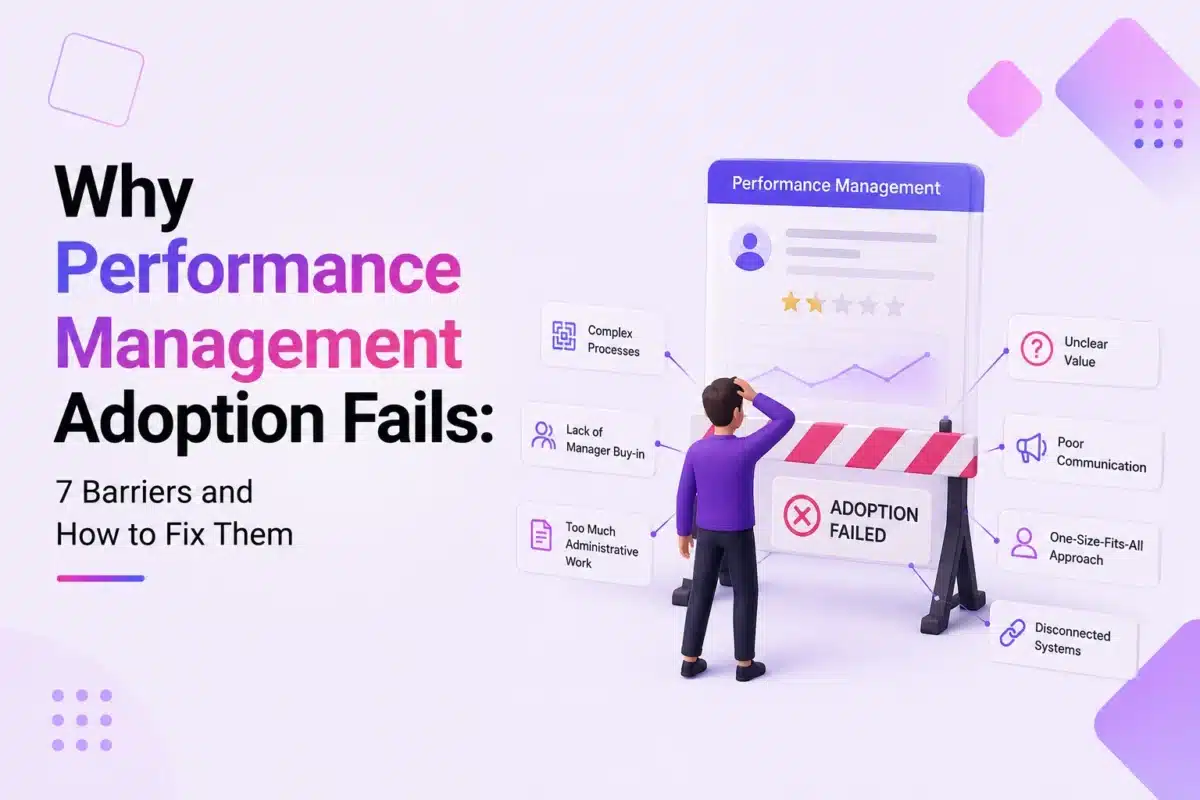
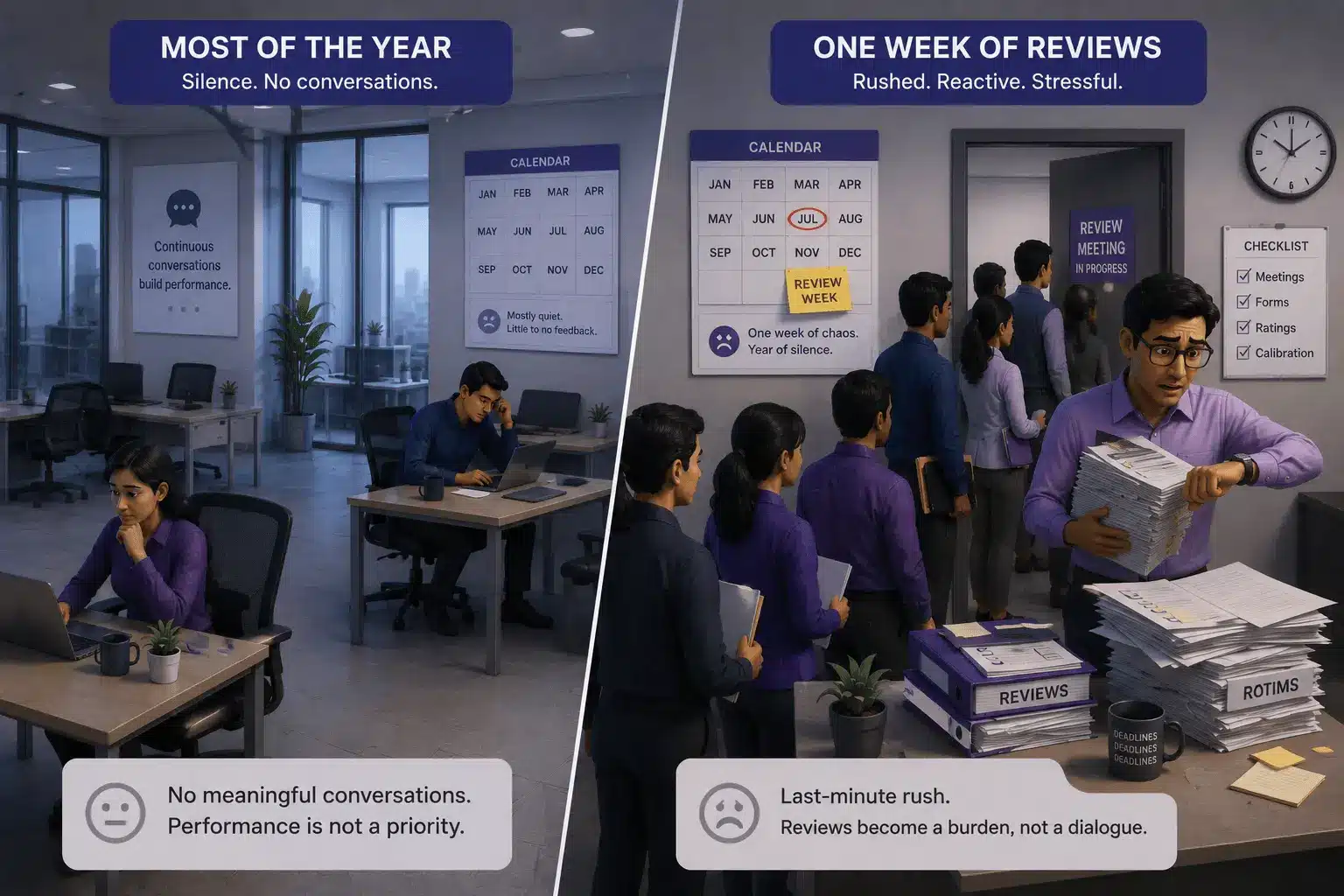
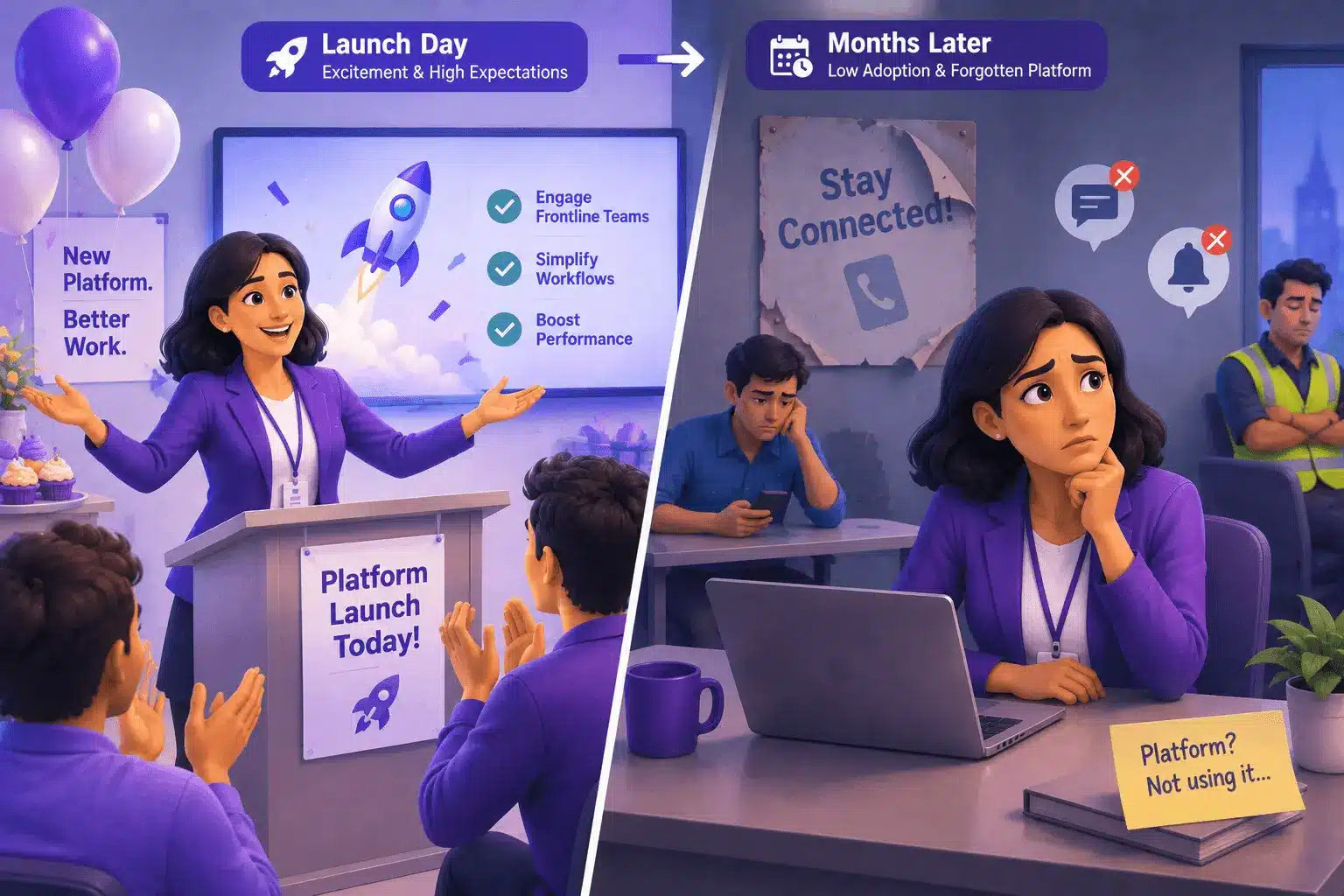
Buying software is the easy part of fixing a broken process. The hard part shows up twelve weeks later, when the platform is live, the training is done, and almost no one is using it. Nowhere is that gap more expensive than in performance management, where adoption isn’t a vanity metric; it’s the difference between a process that shapes promotions, pay, and development and one that quietly becomes a spreadsheet nobody trusts.
When a rollout fails, the instinct is to blame the tool and start a new vendor search. But low adoption is rarely a software problem. It’s a design problem: the process asks managers for time and skill they were never given, and stops mattering to employees the moment nothing happens after the review.
Here is the number that explains why. Gallup asked CHROs at Fortune 500 companies whether their performance management system inspires employees to improve. Two percent said yes. Not 2% of employees, who might be expected to grumble. Two percent of the people who bought the thing.
When the buyers do not believe in it, nobody below them has a reason to.
Deloitte’s 2025 Global Human Capital Trends survey found 61% of managers and 72% of workers could not say they trust their organization’s performance management process. You cannot train your way past that. You cannot configure your way past it either.
Below, we look at the seven barriers that stall performance management adoption — and offer an actionable fix for each one, none of which is a software feature.
So what actually goes wrong?
Ask people who have run these implementations and the same five answers come back:
Managers do not participate
The process never becomes an ongoing conversation
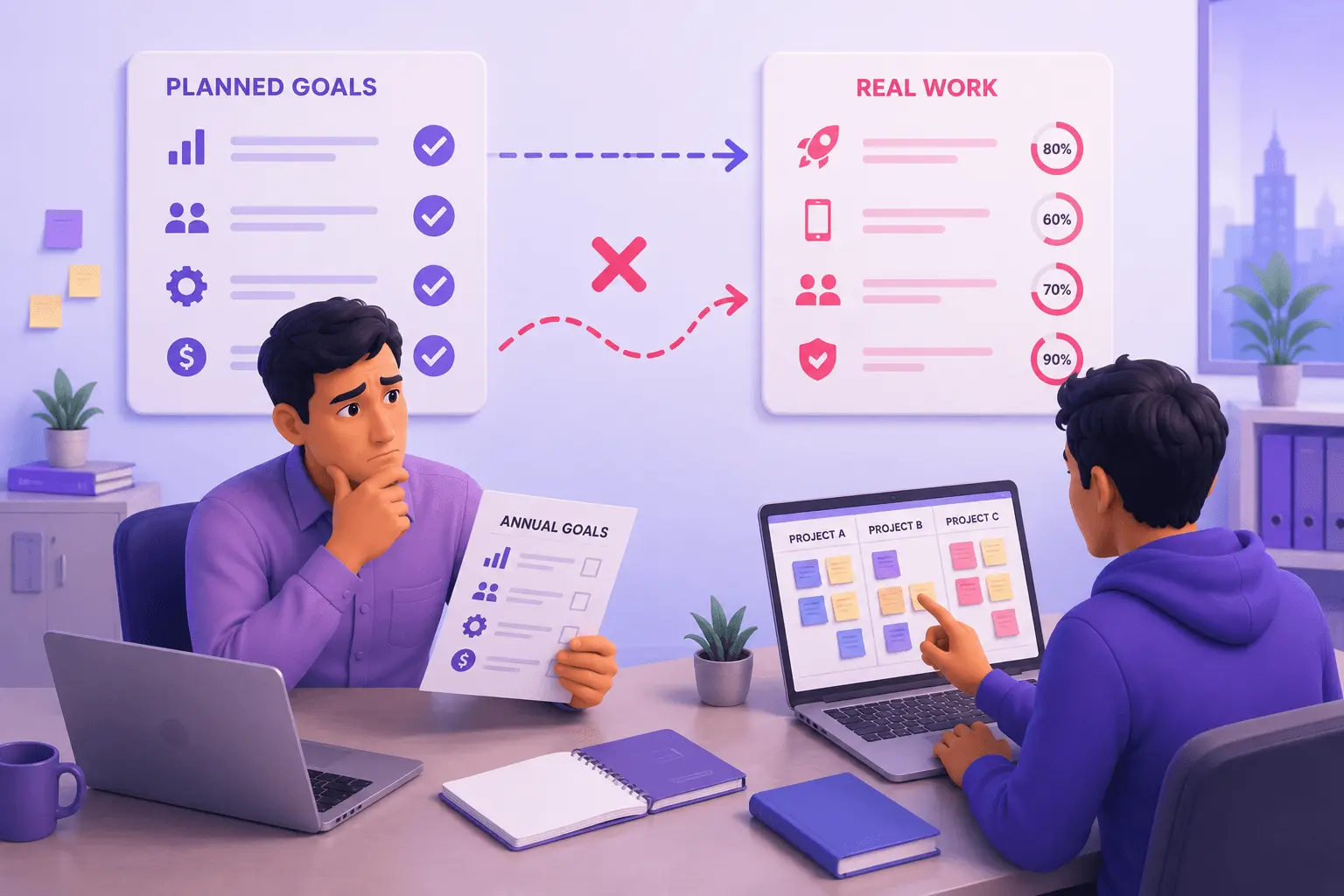
Goals drift out of alignment with real work
Nothing happens after the review closes
Change management stops at the launch email
Start by working out which ones you have.
✨ Key Takeaways
Measuring completion instead of quality hides the real problem — 96% completion with eleven-word comments is compliance, not adoption, and it’s what triggers a needless second RFP.
Low adoption is a design problem, not a software problem — the platform usually works fine; the process around it asks managers for time and skill they were never given.
Manager participation is the single biggest failure point, and it’s arithmetic: rollouts add a recurring obligation without retiring anything, and forms built by committee take 40 minutes per report.
Continuous performance management only works if the conversation is continuous — most companies just run the annual review four times a year with a login screen.
Adoption dies in cycle three, not at launch. That’s the first cycle where employees have evidence that their honest input went nowhere, so the fixes that matter happen before go-live and right after cycle one.
First, find your barrier
Low adoption looks identical from the dashboard no matter what is causing it. The symptom pattern is what tells them apart. Find the row that matches what you are seeing.
What you are seeing
Most likely barrier
Managers complete late, after multiple reminders, every cycle
1. No time was made
Check-ins are completed but comments are short and generic
2. Capability gap
Activity spikes in the review window and flatlines between cycles
3. Still an event, not a rhythm
Goals in the system do not match what the team is actually working on
4. Goal alignment broke
Cycle one was fine, cycle three collapsed
5. No post-review process
Adoption is high in one function and near zero in another
6. Change management gap
Completion is above 90% but engagement scores are flat
7. You are measuring the wrong thing
Most organizations have two or three of these at once. Fixing the wrong one produces no movement, which is usually what leads to a premature conclusion that the platform failed and a second RFP nobody needed.
What low adoption is quietly costing you
Skip this if you already have budget. It exists for the conversation where someone asks why this is worth another quarter of effort.
Global employee engagement fell to 20% in 2025, the second consecutive annual decline Gallup has recorded and the lowest since 2020. That costs the world economy roughly $10 trillion in lost productivity, about 9% of global GDP.
The part that matters for your rollout is where the decline came from. Manager engagement dropped from 27% to 22% in a single year, and the gap between managers and individual contributors has closed from 11 points in 2022 to 3 points now. Managers are barely more engaged than the people they manage, and your entire performance process runs through them.
Then there is what employees say about reviews themselves, all Gallup, all percentage who strongly agree:
Statement
% who strongly agree
My performance review inspires me to improve
14%
My performance review is accurate
26%
My performance review is fair
29%
I know what is expected of me at work
47%
Against that, employees who get weekly rather than annual feedback are 5.2 times more likely to say the feedback is meaningful and 3.2 times more likely to say they are motivated to do outstanding work. The annual model produces the table. Frequency produces the multipliers. Your platform is only the delivery mechanism.
Retention is where this reaches the finance team. Only 31% of employees strongly agree someone at work encourages their development, and development conversations are exactly what a performance process is supposed to force into the calendar. Gartner also reports that organizations with better-than-average healthy change adoption see roughly double the year-over-year revenue growth rate.
None of which is theoretical. Rudolph and Sletten, a California construction firm, was running reviews on paper: fill in the form, scan it, email it. Completion sat at 33%. After moving to Engagedly, it hit 100%, and their talent management lead, Shareen, made a point of saying people picked it up without formal training. The full case study has the detail.
Going from a third to everyone is not a software story. It is a friction story.
Before the list: adoption doesn’t die at launch — it dies in cycle three
Watch enough rollouts and they all fail on the same schedule.
Cycle one looks great. Novelty does the work, executives are watching, and the reminder emails are still new enough that people actually open them. Cycle two holds, though you’re chasing a little harder now. Then cycle three arrives, the numbers fall off a cliff, and by then the launch is nine months in the rearview — so nobody thinks to trace the drop back to a decision made before go-live.
Here’s what actually happened. Cycle three is the first time employees have evidence. They wrote something honest back in cycle one. They watched to see what it would change. Nothing changed. So this time they either skip it or type the shortest thing that clears the field validation — and who could blame them.
Two things follow from this:
Your cycle one completion rate is almost meaningless. Don’t celebrate it, and definitely don’t report it upward as a win.
The interventions that matter happen before launch or right after cycle one — not nine months later when the dashboard finally looks bad enough to panic about.
Which brings us to the seven barriers themselves.
Barrier 1: Managers were never given the time
This is the biggest one, and the least glamorous. Manager participation is the single most common failure point in performance management rollouts, and the most common cause is arithmetic.
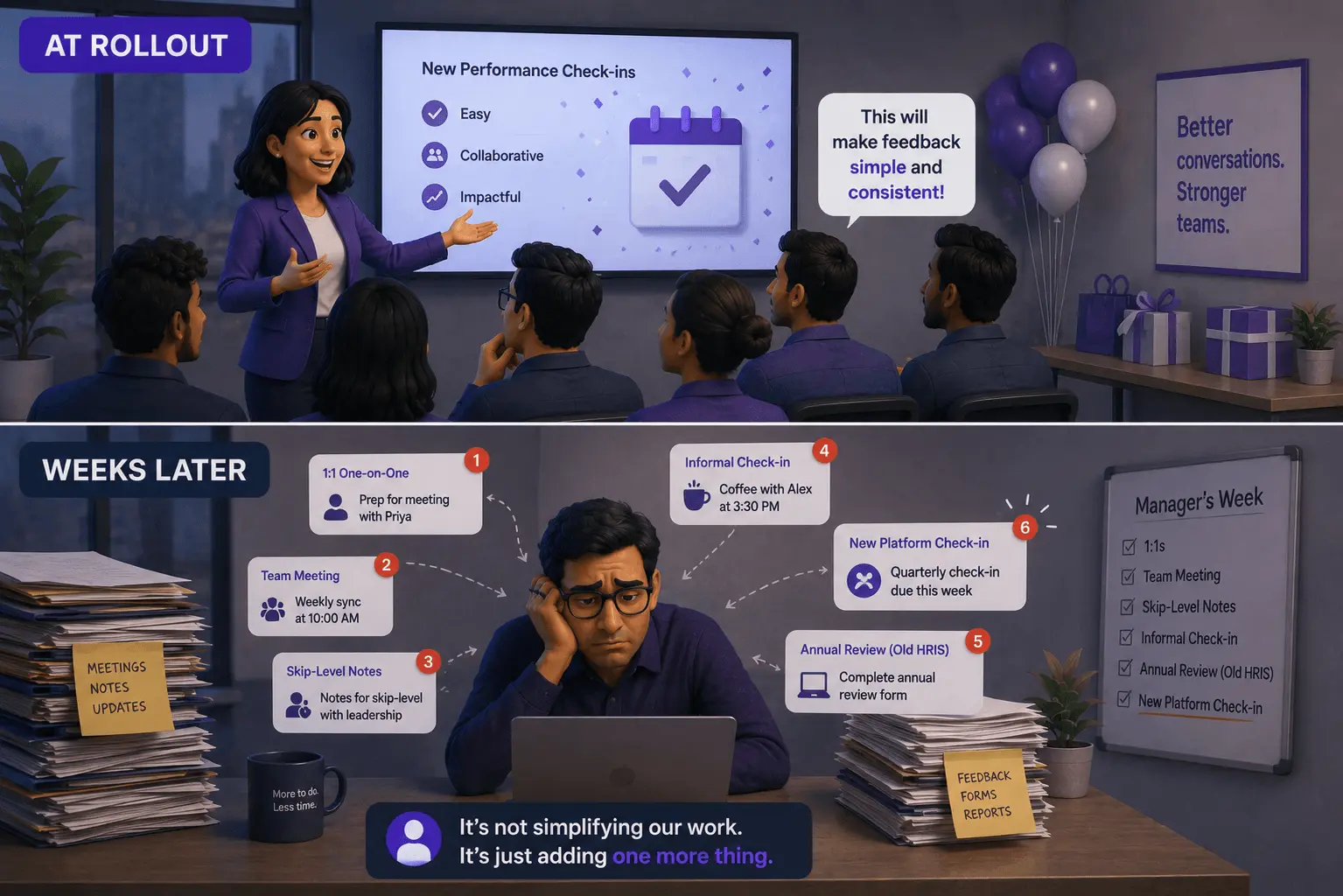
Most rollouts add work. Almost none of them remove any. The manager still has their one-to-ones. They still have the team meeting, the skip-level notes, the informal check-in over coffee, the annual review form in the old HRIS that IT has not switched off yet. Now they also have quarterly check-ins in a new platform. From where they sit, this is the sixth thing, not the replacement for the first five.
Laszlo Bock, who built Google’s people operations function, put the failure mode plainly in Work Rules!: performance management systems have become “substitutes for the vital act of actually managing people.”
That is what a sixth obligation does. It converts managing into administering.
Gartner surveyed 2,947 employees and managers in late 2025 and found 47% of managers say more is expected of them than a year ago. Two thirds said their primary responsibility is managing their people, ahead of driving progress on organizational goals. They are not resisting your platform out of principle. They are triaging.
The form itself compounds it. Somebody in the configuration workshop suggested adding a competency section. Somebody else wanted a self-assessment. Legal wanted a documented development plan. Nobody said no to anything, because saying no in a configuration workshop feels unhelpful. The result is a check-in that takes 40 minutes per report. For a manager with twelve reports, that is a full working day, four times a year.
Long forms also push managers toward vague answers, because vagueness is fast. The Gallup numbers on accuracy and fairness, 26% and 29%, are partly downstream of forms designed by committee.
The fix
Both problems are arithmetic, so both fixes are subtraction, and both belong before launch.
Subtract before you add. List every existing performance ritual by name and give each one a verdict.
Existing ritual
Verdict
What managers hear at launch
Annual review form in the old HRIS
Retired
“The mid-year form is dead. This replaces it.”
Q1 goals doc in Sheets
Retired
“Goals live in one place now.”
Weekly one-to-one
Kept, with a standing performance item added
“Same meeting, one extra question.”
Skip-level notes
Absorbed into the check-in record
“Stop keeping a parallel doc.”
Quarterly team retro
Kept, unchanged, for a stated reason
“This is a team ritual, not a performance one.”
If you cannot name one thing the new system kills, managers will read it as an additional obligation, and they will be right.
Then time the form yourself. Fill it in as a manager would, for a real direct report, with the clock running:
More than ten minutes per person and you cut fields until it is under ten
Ask of every field: what decision does this input change? If the answer is nothing, delete it
Complexity can come back in year two, once the habit exists
Deloitte found just 6% of organizations say they are doing well at using performance data in a way that also builds worker trust. Most performance data gets collected and never used, which managers work out faster than HR expects.
In Engagedly, performance review and check-in templates are built per cycle rather than fixed, so cutting a form to three questions is a configuration decision, not a support ticket. Most teams struggling here have never revisited the template they approved during the buying process.
Altisource is the counterexample. They moved to quarterly reviews with a company-wide OKR program, and their organizational development team credited the platform’s simplicity for how fast people picked it up. They reached 90% engagement and 80% goal success. Details in the Altisource case study.
Time is only half the problem, though. Give a manager a ten-minute form and an empty afternoon and you still have to answer what goes in the box.
Barrier 2: Managers have the tool but not the skill
That is the second half of the manager participation problem, and the one most often misdiagnosed as a technology issue.
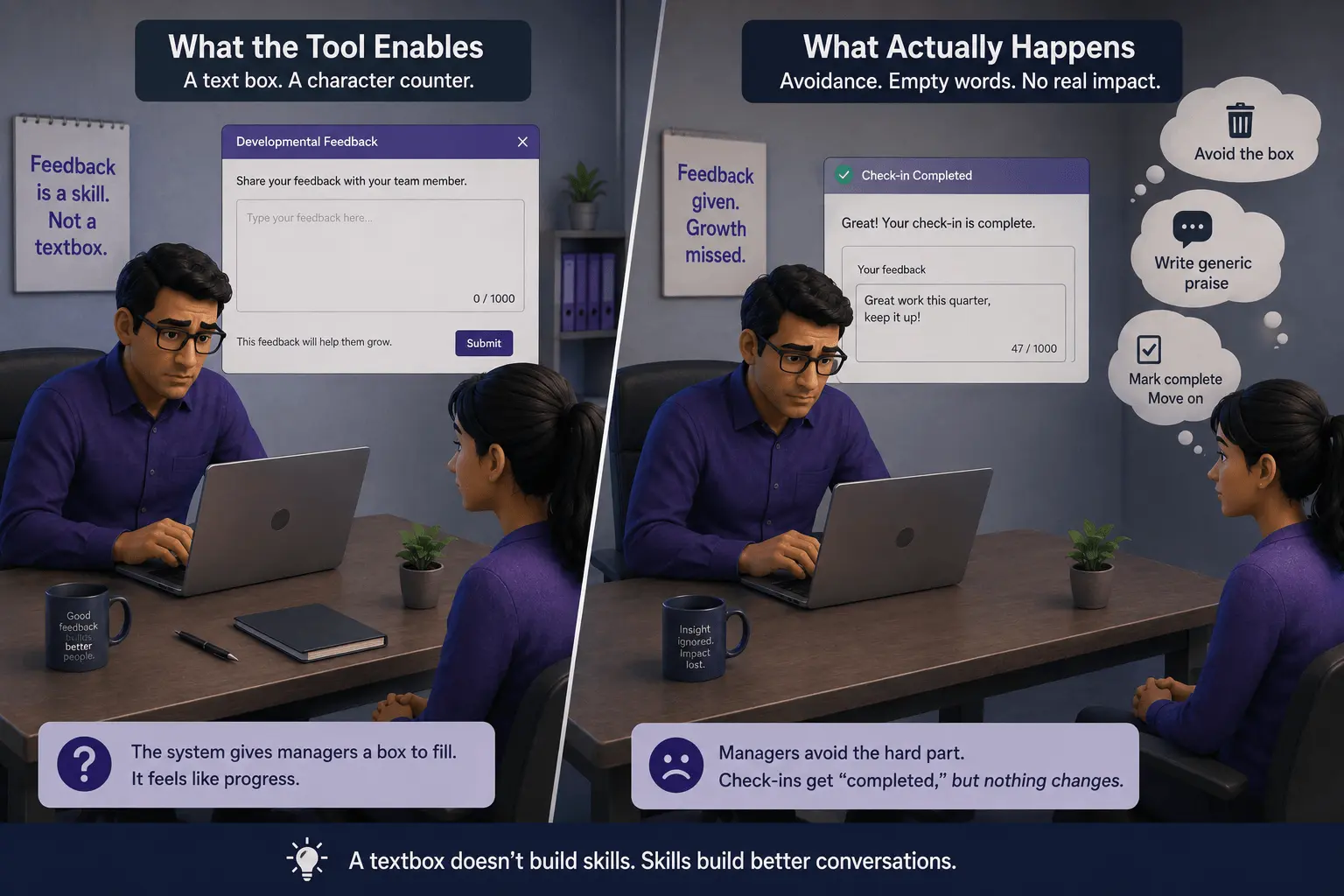
A manager who has never been taught to give developmental feedback does not become good at it because you gave them a text box with a character counter. They become good at avoiding the text box. Or they write “great work this quarter, keep it up,” which is technically a completed check-in and functionally nothing.
Douglas Stone and Sheila Heen, the Harvard Negotiation Project authors of Thanks for the Feedback, cite survey data showing 63% of executives name the same obstacle: their managers “lack the courage and ability to have difficult feedback discussions.”
Courage and ability. Neither one ships with the software.
Deloitte found that only about 26% of organizations say their managers are very or extremely effective at enabling the performance of their teams, and that managers spend roughly 13% of their time developing people. Gartner has had leader and manager development as the number one HR priority for three years running, and in its July 2024 survey 74% of HR leaders said their managers are not equipped to lead change.
So the sequence most companies run, which is buy platform, then train on platform, then hope coaching improves, has the dependency backwards. Coaching capability is the input. The platform is where the coaching gets recorded.
Worth being honest about what this costs. Coaching capability takes months and a budget line, and it competes with every other L&D priority. Plenty of HR teams know this and buy the platform first anyway, because a platform is a visible deliverable and manager capability is not. It still produces the 28% completion rate.
The fix
Separate the two training tracks completely. Collapsing them into one enablement session is why so many rollouts end up with a trained manager population that still writes eleven-word comments.
Platform training
Coaching training
Teaches
Where the buttons are
How to give developmental feedback
Format
Recorded video, self-serve
Practice with real feedback, cohort-based
Length
20 minutes, once
Recurring, months
Starts
At go-live
Before go-live
Owner
HR ops or the vendor
L&D
Success looks like
Managers can complete a check-in
Comment quality holds steady across cycles
It also helps to put the prompt inside the tool rather than in a deck a manager read once. Value-linked recognition works this way: instead of an open text box, the manager picks the behavior they saw and says why. Engagedly pairs recognition and badges with check-ins for this reason, and it is the closest thing to on-the-job coaching practice most managers get.
HIMSS did something adjacent to this. They replaced mid-year and year-end reviews with frequent check-ins and tied recognition badges to company values, so managers had a concrete behavior to reinforce rather than an empty field to fill. Employee participation rose 35%, and 91% of employees received recognition tied to values. The HIMSS case study covers how they sequenced it.
Barriers 1 and 2 are about whether the conversation happens at all. The next two are about its shape.
Barrier 3: The review stayed an event instead of becoming a rhythm
Almost every company that buys a continuous performance management platform ends up running a slightly faster annual review on it.
The mechanics look like this: the window opens, reminders go out, everyone completes their form in the last four days, the window closes, and nothing happens for eleven weeks. Usage data shows a sawtooth. Spike, flat, spike, flat.
The difference between that and an actual rhythm is not the software. It is where each thing happens.
Event, run four times a year
Actual rhythm
Where feedback happens
Inside the check-in form
Continuously, form captures a summary
When managers think about it
The four days before the deadline
Weekly, in existing one-to-ones
What the check-in contains
News
Confirmation of things already discussed
What drives completion
Reminder emails
The conversation already happened
Usage pattern
Sawtooth
Steady with mild cycle peaks
That is not continuous performance management. That is the annual review, run four times, with a login screen. The benefit was never in the frequency of the form. It was in the frequency of the conversation.
Marcus Buckingham, who redesigned Deloitte’s own performance management system, has made this his central argument: “The antidote to dynamic change is frequency.”
The quality of any single conversation matters far less than how often it happens, and most organizations have optimized the opposite variable. Gallup found 74% of employees get a review once a year or less, and 57% discuss their goals with their manager annually or less. Set against the 5.2x and 3.2x multipliers from weekly feedback, that gap is enormous.
The fix
This one is uncomfortable because it is not primarily a configuration change. Decouple the conversation from the window:
Make lightweight feedback available and expected between cycles, not just inside them
Put a standing performance item into existing one-to-ones rather than creating a new meeting
Stop treating the formal check-in as the place where things get said for the first time
If a manager’s quarterly check-in contains news, the rhythm is broken.
A useful diagnostic is the ratio of between-cycle activity to in-window activity. If more than 80% of your feedback volume lands inside the check-in window, you have an event, not a rhythm, no matter what the platform is capable of.
The platform’s job is to lower the cost of a small interaction. Real-time feedback, praise, and feedback requests in Engagedly all work outside a cycle, and the nudges keep them from being forgotten between quarters. Worth auditing whether those are switched on, because plenty of implementations configure the review cycle carefully and leave the between-cycle features dormant.
Frequency is only half of that shape, though. A conversation that happens weekly and is about nothing still fails.
Barrier 4: Goals are set once and never touched again
Goal alignment is where adoption quietly stops making sense to the people using it.
The pattern is familiar enough to put on a calendar:
When
What happens to the goals
What it does to adoption
January
Written in a rush, cascaded from something the employee never saw
Low ownership from day one
March
Team priorities shift, goals do not
Goals start describing the wrong work
June
Objectives in the system match nothing anyone is doing
Employee opens the platform, closes it
September
Manager stops maintaining the goals module
Check-ins lose their anchor
December
Goals reconstructed retroactively to match what happened
The record is fiction, and everyone knows it
Once that sets in, every check-in becomes an abstract conversation. There is nothing concrete to talk about, so the comments get vague, which is Barrier 2 showing up as a symptom of Barrier 4.
John Doerr, who brought OKRs from Intel to Google and wrote Measure What Matters, compresses the whole problem into four words: “Ideas are easy. Execution is everything.”
A goal written in January and abandoned by March is an idea. The execution is the maintenance nobody scheduled.
Fewer than half of employees (47%) strongly agree they know what is expected of them at work. The more useful Gallup finding is what fixes it: employees actively involved in setting their own goals are twice as likely to have clear expectations. Cascading goals downward produces alignment on paper. Involving people in writing them produces alignment they can act on.
The fix
Three things worth doing:
Make goal review an explicit agenda item in every check-in, so drift gets caught quarterly instead of annually
Give managers permission to retire a goal mid-cycle rather than carrying dead objectives to year end for the sake of the record
Make the parent objective visible on the employee’s goal, so the connection between their work and the company’s direction does not depend on remembering a slide from an all-hands
Cascading OKRs and goals make the third point easier, because the parent objective travels with the goal instead of living in a separate deck. If your goals sit in Engagedly but the check-in happens somewhere else, that link is the first thing to reconnect.
Zone approached this from the culture side rather than the process side. They put real-time feedback and OKRs in place and made managers accountable for team growth as part of the role rather than as a quarterly obligation. Engagement moved above 90%.
Fix the frequency and the substance and you have a conversation worth having. What happens next is where most organizations stop.
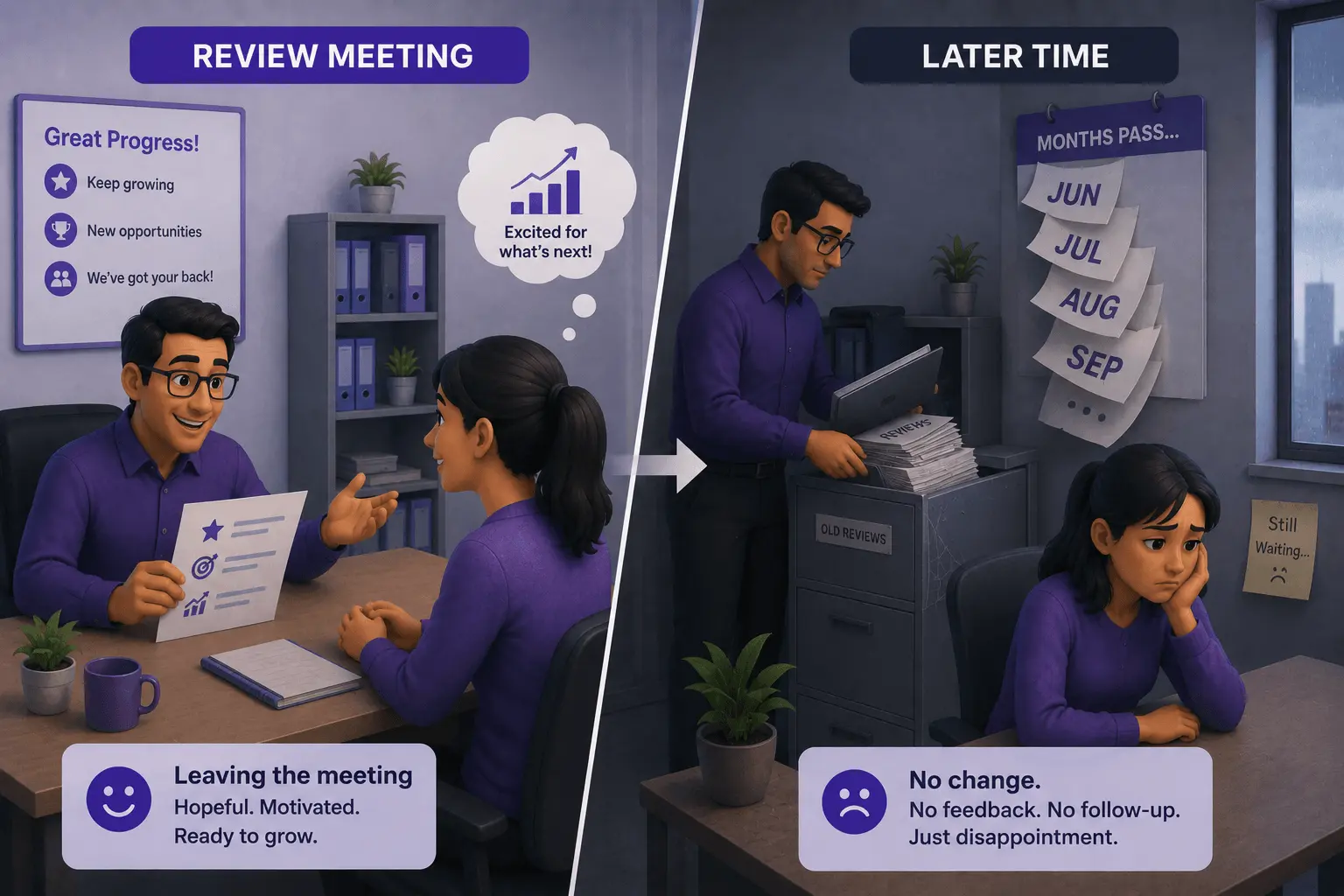
Barrier 5: Nothing happens after the review closes
This is the barrier that produces the cycle three collapse described earlier, and it is the one HR teams plan for least.
Enormous effort goes into the cycle itself: comms, configuration, calibration sessions, chasing. Then the window closes and the process ends. There is no defined sequence for what comes next, so:
Development plans get written and never revisited
Calibration outcomes never reach the people they describe
Themes that came up in forty check-ins go into a deck that goes into a folder
Ask an employee why they stopped responding to feedback requests, and you will rarely hear “the interface was confusing.” You will hear that they wrote something honest in March and nothing happened.
Wharton’s Peter Cappelli and NYU’s Anna Tavis summarized the shift in their Harvard Business Review piece on performance management: “The focus is shifting from accountability to learning.”
Accountability ends when the form is submitted. Learning does not.
Gallup’s finding that only 14% of employees strongly agree their review inspires them to improve is the aggregate version of this. People are not saying the review was unpleasant. They are saying it did not do anything.
The fix
Design the post-review process with the same care you gave the review itself. A workable minimum, all inside 30 days of the cycle closing:
Action
Owner
Deadline
Visible to
Documented next step tied to something specific in the review
Manager
14 days after close
Employee, in the platform
Every development action given an owner and a date
Manager
14 days after close
Employee and HRBP
Calibration outcomes communicated to the people they describe
HRBP
21 days after close
Employee
Organization-level themes published with specifics
HR
30 days after close
Everyone
That last row is the one that gets skipped, and it is the one that matters most. Publishing that two goals were reprioritized at leadership level, or that a process was killed because it came up in eleven separate check-ins, does more for the next cycle than any reminder campaign.
“We heard you” is not a loop closure. It is an acknowledgement of receipt, and people can tell the difference.
Two things make this survivable at scale. Development actions need to live where the next check-in happens, not in a document nobody opens, which is what individual development plans and career paths are for. And surfacing organization-level themes needs sentiment analysis on survey data, because reading forty check-ins by hand is how follow-up quietly gets dropped in cycle two. Engagedly covers both. The harder part is still committing publicly to act on what comes out.
Nuspire ran engagement surveys, acted on the results with new engagement and recognition programs, and saw engagement climb 15% over three years. The survey was not the intervention. What they did with it was.
The first five barriers are all things the process does or fails to do. The last two are things HR does around it, starting with how the whole thing was introduced.
Barrier 6: Change management stopped at the launch email
Most rollout communications explain what the platform does. Very few explain why a manager should care, in terms that the manager recognizes.
“Drive alignment and visibility across the organization” is a sentence written for the person who signed the contract. The manager reading it has fourteen direct reports, two open roles, and a quarter to close.
John Kotter, whose Leading Change remains the standard text on why transformations fail, named this as error four of eight: “Undercommunicating the Vision by a Factor of Ten.”
Kotter’s estimate was that most organizations communicate a change at a tenth of the volume required. Performance management rollouts usually manage one launch email and three webinars.
Gartner is blunt about the cost of skipping this. Only 32% of mid to senior business leaders said the last change they led achieved healthy change adoption, meaning employees acted on it, acted on time, and did so without the change wrecking their performance and wellbeing. A separate April 2025 survey of more than 2,850 employees found 79% report low trust in change. Gartner’s Kayla Velnoskey describes today’s change as “ungovernable” because it is continuous, stacked, and driven by things outside the company.
Low trust matters more than most rollout plans account for. Gartner found the inspirational approach to change leadership only works when change trust is already high. When it is low, inspiration predicts healthy adoption in roughly a quarter of cases. Your launch video is landing in a room that has been burned before.
The fix
Two practical consequences.
Build the case per audience instead of per company. Same rollout, three different arguments:
Audience
Lead with
Do not lead with
Managers
The comp conversation that goes badly because nothing was documented, and the year reconstructed from memory every December
Alignment, visibility, org-wide transparency
Employees
Clarity on what is expected, which fewer than half currently have
Process compliance or completion deadlines
Executives
The retention and revenue numbers above
The feature list
Then make leadership behavior visible, because it is the highest-bandwidth channel you have. If the CEO has not completed their own check-in, every manager knows within about a week, and what they hear is that this process is for people below a certain level. Have leadership complete check-ins in the first week of the window and say so out loud. Gartner’s guidance points the same way: amplify change influencers embedded inside the process rather than relying on top-down instruction.
One more thing. If an executive finds the process too heavy to finish, resist the urge to grant an exception. They have just surfaced a design flaw on your behalf. Fix the form.
Two things make this easier to manage. Since trust in change is usually low before you start, measure that baseline with a short employee survey rather than assuming your comms are landing. And completion reporting needs to be sliceable by management level, because if you cannot see whether adoption thins out above director, you are relying on rumor for the strongest signal in your rollout.
Get the change management right and adoption starts moving. Which creates the last problem, because now you have to decide what “moving” means.
Barrier 7: HR is measuring completion instead of quality
Completion rate is a wonderful metric. It is easy to pull, it goes up when you send reminders, and it tells you almost nothing about whether performance management is working.
A company can hit 96% completion with an average check-in comment length of eleven words. That is not adoption. That is compliance with a good dashboard.
W. Edwards Deming listed performance appraisal among the seven deadly diseases of management in Out of the Crisis, and his verdict on rating systems applies just as well to the metrics built around them: “The effect is exactly the opposite of what the words promise.”
Deming’s argument was that measuring individuals inside a system tells you about the system. Measuring completion tells you about your reminder cadence, not your managers.
The trap is that completion is what gets reported upward, so it becomes what HR optimizes. Reminders go out, completion climbs, the board deck looks healthy, and manager behavior is exactly where it was in January.
It also sets up a bad second year. When leadership sees 96% completion and flat engagement scores, the conclusion they usually reach is that the platform did not work, and the RFP starts again. The platform worked fine. The thing being measured was never the thing that mattered.
The fix
Track a few quality signals alongside completion:
Signal
What it tells you
Healthy direction
Median comment length
Whether managers are writing or clearing a field
Rising, then stable
% of check-ins referencing a live goal
Whether goals are still aligned to real work
Above 70%
Between-cycle feedback as % of total
Whether it is a rhythm or an event
Above 20%
% of employees who can state their top priority
Your local version of Gallup’s 47%
Above 60%
Time from cycle close to visible action
Whether the post-review process exists
Under 30 days
Completion by management level
Whether leadership is modeling it
Flat across levels
Then put the quality metrics at the top of the slide and completion underneath. Whatever sits at the top is what the organization optimizes for.
Most come straight out of platform analytics. The priority-clarity one needs a short pulse survey alongside, which is a two-question exercise, not a project. Engagedly reports across check-ins, goals, feedback, and surveys in one place, which matters mainly because it puts a quality number and a completion number on the same slide instead of three exports the night before the review.
Emids, a healthcare IT provider, moved off an evaluation process that had stopped working and automated the full cycle with documentation. Engagement rose 16%. The Emids case study covers the mechanics.
Most organizations have several of these at once, so the practical question is sequence.
If adoption is already low: a 90-day recovery sequence
If you are mid-rollout and the numbers are not where you want them, the order matters more than the individual actions.
Find out what is actually happening. Talk to ten managers, five with high adoption and five with none. Do not survey them. Sit with them and watch them complete a check-in. You will learn more in an hour than from a quarter of dashboard analysis.
Cut. Make the form shorter, retire whatever nobody uses, and say out loud what the new process replaced.
Fix the goals, because everything else depends on them. If the objectives in the system do not describe current work, no amount of process design will make the check-in feel worth doing.
Close one loop visibly, with names, dates, and changes people can verify. A single real loop closure does more for the next cycle’s participation than a communication campaign will.
Fix the measurement last. Once you are looking at quality rather than completion, you can go back and add the things you cut, assuming you still want them.
Most adoption problems are design problems that surfaced ninety days late.
How Engagedly closes the adoption gap
Every fix in this guide comes down to the same four design principles: keep check-ins short enough that managers actually finish them, let feedback flow between cycles instead of only inside them, keep goals current enough to be worth discussing, and report on quality instead of completion.
Engagedly is built around those four, which is why teams don’t just launch on it; they keep using it. Rudolph and Sletten went from 33% completion on paper to 100%, and adopted it without any formal training. Altisource hit 90% engagement and 80% goal success. HIMSS lifted participation 35% after swapping annual reviews for frequent check-ins tied to company values.
You already know which of the seven barriers are showing up in your own dashboard. Book a demo and we’ll walk through exactly how Engagedly fixes the ones that are costing you adoption, using your rollout, not a generic tour.
FAQs
Why do managers not use performance management software?
Usually time and capability rather than resistance. Most rollouts add a recurring commitment without removing anything, and the check-in form is often long enough to consume a full day per cycle for a manager with a large team. Underneath that, many managers have never been trained to give developmental feedback, so they avoid the parts of the tool that require it.
How do we make performance management an ongoing conversation instead of an event?
Decouple the conversation from the review window. Put a standing performance item into existing one-to-ones, make lightweight feedback available between cycles, and check whether more than 80% of your feedback volume lands inside the formal window. If it does, you are running an annual review four times a year.
What should happen after a performance review closes?
Within 30 days, every employee should have a documented next step tied to something in the review, every development action should have an owner and a date, and HR should publish what changed at the organizational level with specifics. Cycles that end without visible consequence are the main cause of participation collapse by the third cycle.
How do we keep goals aligned through the year?
Review goals in every check-in rather than annually, let managers retire objectives mid-cycle instead of carrying dead ones to year end, and make the parent objective visible on each employee’s goal. Gallup finds employees involved in setting their own goals are twice as likely to have clear expectations.
What is a realistic manager adoption rate?
Completion above 90% is achievable in most organizations within two cycles, but on its own it means very little. A better target is 90% completion with median comment length holding steady and more than 70% of check-ins referencing a live goal.
360 feedback software is a workplace technology platform that collects performance input on an employee from every direction around them, their manager, peers, direct reports, and often the employee themselves. Unlike a traditional top-down review written by one manager, it pools multiple perspectives into a single report that highlights blind spots, strengths, and development areas. The 2026 versions of these tools go further than older survey builders. They add AI-assisted analysis, bias detection, and integrations with the rest of your HR stack, turning what used to be a once-a-year form into an ongoing feedback loop tied to coaching and career growth.
If you’re reading this, you’ve probably already decided your organization needs a feedback culture, not just an annual review cycle. Good instinct. The harder part is picking the right tool out of the dozens now on the market, most of which look identical on a sales demo. This guide breaks down exactly what to look for, what’s changed since the last time you evaluated vendors, and what questions to ask before you sign anything.
What Is 360 Degree Feedback and Why Are So Many Companies Still Using It in 2026?
360 degree feedback is a review method that gathers structured input on one employee from multiple sources at once, rather than relying on a single manager’s opinion. More than 85% of Fortune 500 companies use some form of 360 feedback as part of their leadership development process, and that adoption has only grown as remote and hybrid teams make it harder for one manager to see the full picture of how someone actually performs.
The timing matters more this year than most. Global employee engagement fell to 20% in 2025, its lowest point since 2020, and Gallup estimates the drop is costing the world economy roughly 10 trillion dollars a year in lost productivity. Feedback quality is a big part of that story. Gallup’s own research has found that managers account for at least 70% of the variance in team engagement scores, which means the quality of feedback someone gets is largely determined by who happens to manage them, not by company policy or perks. 360 feedback is one of the few tools that corrects for that, because it pulls in perspectives beyond the manager’s own blind spots.
Here’s the part most companies skip. Employees usually don’t know how 360 feedback is different from a normal performance review, or why it exists. Before you roll out any software, you need to explain the purpose to your team, not just announce a new tool.
How Do You Get Your Team Ready Before You Roll Out 360 Feedback Software?
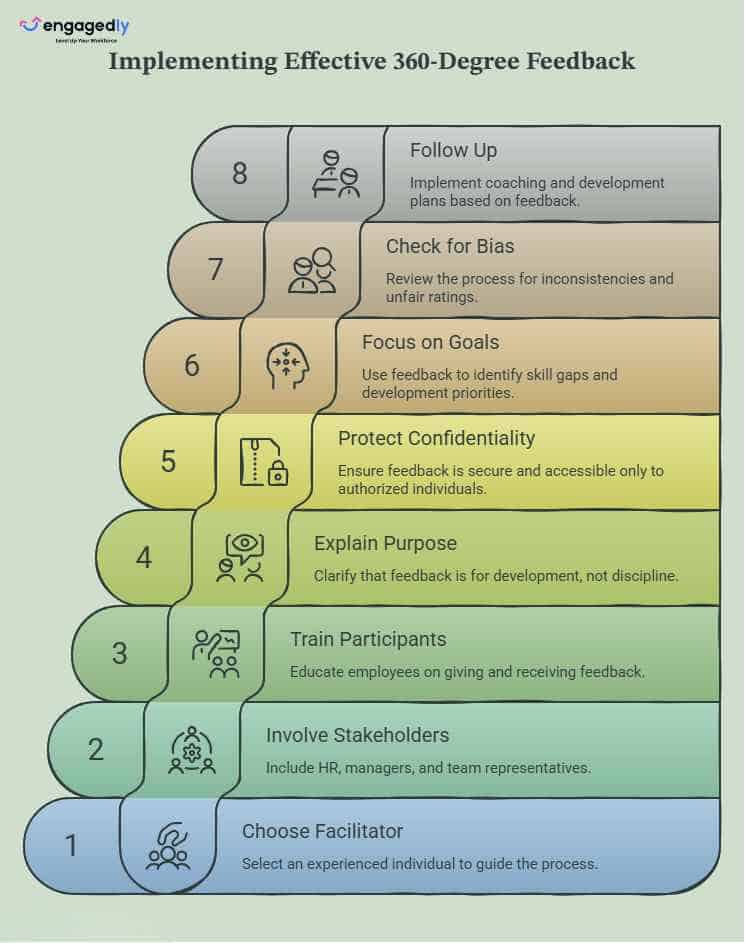
Talk to your employees before you buy anything, not after. Communicate why you’re implementing 360 feedback, what will happen with the results, and who can see them. Give people a real chance to raise concerns or ask questions, and actually respond to what they say.
This step gets skipped constantly, and it’s the single biggest reason 360 programs fail in year one. A tool rolled out without context feels like surveillance. A tool rolled out with a clear explanation of purpose feels like investment in people’s growth. Same software, completely different reception.
Once your team understands the purpose and you’ve addressed their concerns, you’re ready to actually compare vendors.
What Should You Look for in 360 Feedback Software in 2026?
The short answer is that you need a tool that’s easy enough for employees to use without training, flexible enough to match your organization’s actual competencies, secure enough to protect sensitive feedback, and smart enough to turn raw ratings into something a manager can coach on. Here’s what each of those actually looks like when you’re evaluating vendors.
Is It Actually Simple to Use?
Any software you roll out for the first time needs to be understandable without a training session. If your employees need a manual to leave feedback for a coworker, they won’t do it, or they’ll do it badly.
Most 360 feedback vendors offer free trials. Use them properly:
Have a small group of employees, not just HR, test the actual rating and comment flow
Time how long it takes someone to complete a full review
Check whether the mobile experience is usable, since a growing share of feedback now happens from a phone between meetings
If your test group is confused by the interface, your whole company will be too.
Can You Customize It to Fit Your Organization?
You have two real choices here. You can go with a standard, one-size-fits-all tool used by thousands of companies, or you can choose something built to flex around your specific competency model, values, and review cycles.
Neither choice is wrong on its own, but your organization’s needs will shift faster than they used to. A tool that locks you into a fixed question bank today becomes a constraint next year when your leadership competencies change or you expand into a new region with different cultural norms around feedback. Look for platforms that let you edit question libraries directly, rather than submitting a support ticket every time you want to adjust wording.
How Secure Is Your Employee Data?
This is the one category where cutting corners can actually cost you money and trust, not just efficiency. 360 feedback includes sensitive, often anonymous commentary from managers, peers, and direct reports about a specific person. If that data leaks or gets mishandled, the damage isn’t just reputational.
The average global cost of a data breach in 2025 was 4.44 million dollars, and healthcare and financial services organizations, which handle enormous volumes of confidential employee and patient data, paid well above that average. Before you sign a contract, ask vendors these questions directly:
Where is the data physically stored, and does that comply with the data protection laws of every country you operate in
Who inside the vendor’s company can access raw, unaggregated responses
What happens to feedback data if you cancel the contract
Do they carry SOC 2 Type II certification or an equivalent independent audit
Information security laws vary by country, so make sure the platform you choose actually complies with the regulations that apply to your organization, not just the vendor’s home market.
Will You Get Real Support When You Need It?
Every piece of software feels simple in a sales demo. It feels different three weeks into your first live review cycle when half your managers have questions about anonymity thresholds and nobody at your company knows the answer.
Look for vendors that offer live onboarding support, not just a help center article, along with documentation that’s actually kept current. Ask for references from customers who’ve been through at least two full review cycles, not just customers who recently signed.
Does It Use AI to Surface Insights, Not Just Collect Ratings?
This is the biggest shift in the category since your last evaluation. Older 360 tools were essentially survey builders that produced a spreadsheet of average scores. The stronger 2026 platforms now use AI to do three things well:
Summarize open-text comments across dozens of reviewers into a coherent set of themes, so a manager isn’t reading forty separate paragraphs
Flag potentially biased or vague language in written feedback before it reaches the person being reviewed
Suggest specific, behavior-based follow-up questions when a rating is unusually low or high, so feedback turns into a concrete example instead of a blurry number
That last point matters more than it sounds. A rating of “3 out of 5 on communication” tells a manager almost nothing actionable. A system that prompts the rater to explain what specifically happened, and when, turns a number into something a person can actually change.
Does It Protect Anonymity Without Losing Accountability?
Honest feedback depends on people trusting that it can’t be traced back to them, especially when a direct report is rating their own manager. Ask any vendor how they enforce this in practice, not just in a marketing page. The stronger platforms enforce a minimum number of respondents before releasing any category of feedback, so a single rater’s comments are never isolated and identifiable.
Does It Integrate With the Rest of Your HR Stack?
A 360 feedback tool that lives in its own silo creates extra admin work and makes it harder to connect feedback to goals, development plans, or compensation conversations. Check whether the platform integrates cleanly with your existing HRIS, your goal-tracking system, and your calendar tools for scheduling review cycles. The fewer manual exports and imports your HR team has to manage, the more likely the program survives past its first year.
What Mistakes Sink Most 360 Feedback Rollouts?
Even well-designed 360 programs run into predictable problems. Knowing them ahead of time is the difference between catching an issue early and losing momentum entirely.
Rolling out the software before explaining its purpose, which breeds suspicion instead of buy-in
Asking vague, generic questions instead of ones tied to your actual competency framework, which produces vague, unusable answers
Running a single annual cycle and calling it done, rather than treating feedback as an ongoing conversation
Ignoring the results once the report is generated, which teaches employees that feedback doesn’t lead anywhere
Failing to train managers on how to deliver the feedback in a coaching conversation, not just forward the PDF
How Do You Know If Your 360 Feedback Software Is Actually Working?
You’ll know it’s working when review cycles happen on schedule without HR chasing people down, when managers can point to specific behavior changes tied to a previous cycle’s feedback, and when participation rates hold steady or climb over time instead of dropping off. Track these numbers directly:
Completion rate per cycle, and whether it’s improving or declining
Time from cycle close to manager coaching conversation
Voluntary turnover among employees who’ve been through at least one full 360 cycle, compared with those who haven’t
If none of these numbers are moving, the tool isn’t the problem. The process around it is.
Final Thoughts
Choosing 360 feedback software isn’t really a software decision. It’s a decision about what kind of feedback culture you want your organization to have. The tool you pick just determines how easy or hard that culture is to build.
The organizations that get real value out of 360 feedback treat it the same way every time. They explain the purpose before they roll anything out. They choose a platform that’s simple enough for a busy employee to use without training, flexible enough to match how their teams actually work, and secure enough that people trust it with honest answers. Increasingly, they also expect the software to do more than collect ratings, using AI to turn vague scores into specific, coachable examples, and connecting feedback data to the rest of the HR stack instead of letting it sit in its own silo.
None of that happens automatically once you sign a contract. It happens when leadership treats feedback as an ongoing conversation rather than a once-a-year form, and when the software you choose actually supports that rhythm instead of getting in its way.
If you’re still comparing vendors, use the checklist in this guide as your baseline, not just a vendor’s feature list. Test the software with a small group of real employees before you commit. Ask hard questions about data security and AI practices. And make sure whatever you choose fits the feedback culture you’re trying to build, not the other way around.
If you’re evaluating 360 feedback software for your organization, the best next step is trying it with your own team, not just watching a slide deck. Request a Demo here.
Frequently Asked Questions
What is the difference between 360 feedback and a normal performance review?
A normal performance review is typically written by one person, usually the direct manager. 360 feedback pulls input from multiple sources at once, including peers, direct reports, and the employee’s own self-assessment, which gives a more complete and less biased picture of how someone actually performs day to day.
How much does 360 feedback software typically cost?
Pricing varies widely by vendor and company size, ranging from per-assessment pricing for standalone tools to per-employee, per-year licensing for full performance management platforms. Most vendors offer a free trial or demo, so request pricing specific to your headcount and needed features rather than relying on published list prices.
How often should you run a 360 feedback cycle?
Many organizations run a full 360 cycle once or twice a year, paired with lighter, more frequent pulse check-ins in between. Running 360 feedback too often can cause survey fatigue among peer raters, while running it too rarely turns it back into the same static, once-a-year process it’s meant to replace.
Is 360 feedback anonymous?
Most reputable 360 feedback software anonymizes peer and direct report responses, and enforces a minimum number of respondents before releasing feedback in any category, so individual comments can’t be traced back to a specific rater. Self-assessments and manager feedback are typically not anonymous, since they come from a single known source.
Can small businesses use 360 feedback software?
Yes. Several vendors now offer lightweight, per-assessment pricing built specifically for smaller teams that don’t need a full enterprise performance management suite. The core requirements, ease of use, customization, and data security, matter just as much at a 50-person company as they do at a Fortune 500 firm.
Does AI make 360 feedback less accurate?
Used well, AI improves accuracy rather than reducing it. It helps summarize large volumes of open-text feedback consistently, flags biased or vague language before it reaches the employee, and prompts raters for specific examples instead of blurry numeric scores. The risk isn’t the AI itself, it’s vendors that use AI to auto-generate feedback rather than to organize and clarify what real people actually said.
An employee performance goal example is a written, measurable statement of what someone will accomplish in a set period, along with how progress will be judged. “Get better at communication” is not one of those. “Send a written project update every Friday by 3 p.m. covering progress, risks, and next steps” is. That difference, between an intention and a target you can actually track, is where most performance review cycles quietly fall apart.
Gallup’s research on workplace expectations found that only about half of employees strongly agree they know what’s expected of them at work. That’s not a training problem or a motivation problem. It’s a goal-writing problem. When goals are vague, nobody, not the employee and not the manager, can say with confidence whether they were met.
This guide gives you 100 employee performance goal examples, organized into 10 categories and 8 job-specific roles, plus the frameworks, research, and rewrite techniques to adapt any of them to your team. We’ll also cover how performance goals differ from OKRs, how often to review them, and the mistakes that quietly undermine even well-intentioned goal-setting programs.
What Is an Employee Performance Goal?
An employee performance goal is a specific, measurable commitment that defines what an employee will achieve within a defined time frame and how success will be evaluated. It’s typically set during a performance review cycle (annual, semi-annual, or quarterly) and revisited at regular check-ins so the employee and manager can track progress, adjust for changing priorities, and document outcomes by the next review.
Performance goals usually fall into two buckets.
Outcome-based goals, which target a result such as a sales number, a quality score, or a retention rate
Behavior-based or developmental goals, which target a skill, habit, or capability the employee needs to build
Both types work when they’re specific enough that a colleague could read the goal and understand exactly what success looks like without asking a follow-up question.
Why Most Performance Goals Fail Before They’re Even Written
Most weak goals fail for one of three reasons. They’re too vague to measure, too disconnected from what the role or the business actually needs, or too rigid to survive a single change in priorities.
Goal-setting research backs this up directly. Psychologists Edwin Locke and Gary Latham spent decades studying the relationship between goal difficulty and performance. They found a strong correlation, 0.82 according to their research summarized by Strategic Management Insight, between goal difficulty and performance, as long as the goal stayed within the person’s actual ability. Once a goal became genuinely impossible, that correlation collapsed to 0.11. In plain terms, specific and challenging goals work. Specific and impossible ones don’t.
There’s also a strengths angle worth knowing. Gallup’s research on strengths-based goal setting found that employees who set goals based on their strengths are more than seven times as likely to be engaged in their work. Goals that ignore what someone is actually good at tend to feel like compliance exercises rather than something worth pursuing.
What Makes a Performance Goal Actually Work
A strong performance goal answers four questions without making the reader guess. What exactly will be done, how will you know it happened, by when, and why does it matter to the team or company.
The SMART framework (Specific, Measurable, Achievable, Relevant, Time-bound) is still the most reliable structure for this, as long as it’s applied with judgment rather than as a checklist.
Specific. “Improve sales” is a direction. “Increase pipeline coverage from 2.5x to 3.5x of quota by Q2” is a goal.
Measurable. If you can’t track it, you can’t know if it’s working. Quantitative metrics are easiest, but qualitative goals can be measured too, through survey scores, documented behavior change, or peer feedback.
Achievable. A goal should stretch someone without setting them up to fail. The best goals are negotiated, not handed down.
Relevant. Every goal should connect to something the team or company actually needs right now, not a generic competency checklist.
Time-bound. A deadline forces accountability. Even a year-long goal should have interim checkpoints.
A Quick Before-and-After Example
Weak goal: Be more proactive.
Strong goal: Identify and document at least two process improvement opportunities per quarter, each with a proposed fix and an estimated time to implement, and present them to the manager within the first two weeks of the quarter.
The weak version asks someone to feel differently. The strong version tells them exactly what to do, by when, and how it will be judged.
How Many Performance Goals Should an Employee Have?
Most employees perform best with 6 to 10 active performance goals per review cycle, including a mix of outcome-based and developmental goals, each with clear milestones rather than a single end-of-year target.
While having dozens of active targets at once will easily fracture focus, the sweet spot lies in breaking major objectives down into smaller, time-boxed targets across the year. Rather than tracking one or two massive, rigid annual goals that gather dust until December, high-performing teams use a steady quarterly cadence. When you layer together short-term project objectives, tactical outcomes, and continuous skill-building targets over four quarters, a single employee might successfully move through 15 to 20 individual goals a year.
The takeaway is simple: quantity isn’t about padding a to-do list with low-value tasks. It’s about maintaining a manageable, running pipeline of highly specific, tracked goals that naturally adapt as business priorities shift.
100 Employee Performance Goal Examples by Category
The 60 examples below are organized into 10 categories that apply across most roles. Use them as a starting point, then adjust the numbers and timelines to match your team’s actual workload and priorities.
Productivity and Time Management Goals
These goals target how efficiently work gets done, not just how much of it gets done.
Complete 92% or more of weekly assigned tasks on or before their due date, tracked through a personal log reviewed every Friday, through the end of Q2 2026.
Cut average task turnaround time from 4 days to 2.5 days by Q3 by batching similar work and limiting status meetings to twice a week.
Identify two recurring time-wasters in the current workflow by the end of the month, propose a fix for each, and pilot at least one with manager approval.
Track hours spent on core responsibilities versus ad hoc requests, and use that data to renegotiate priorities with the manager every two weeks.
Reduce missed deadlines on shared projects from three per quarter to zero by setting internal check-in dates 48 hours ahead of every external deadline.
Complete onboarding paperwork and system setup for every new hire within two business days of their start date, 100% of the time, for the rest of the year.
Tip for managers: productivity goals land better when the employee helped define what “realistic output” looks like for their actual workload. A number imposed without that conversation rarely sticks.
Quality and Accuracy Goals
Reduce the error rate on processed orders or reports from 4% to under 1% by Q3 by adding a self-review checklist before submission.
Cut revision requests on completed work by 30% by mid-year by clarifying requirements with stakeholders before starting any deliverable.
Achieve a 98% accuracy rate on data entry tasks, measured monthly, through a double-check process on high-risk fields.
Pass every internal quality audit with zero critical findings for three consecutive quarters starting in Q2.
Document the root cause and corrective action for every quality issue flagged by a client or manager within five business days.
Standardize one frequently used template or checklist by the end of Q1 to reduce formatting and consistency errors across the team.
Communication Goals
Send a written project status update every Monday by 10 a.m. covering progress, risks, and next steps, without being prompted.
Reduce clarifying questions from teammates about submitted work by 25% by Q3 through clearer documentation and context-setting.
Deliver one polished presentation to a cross-functional audience or leadership group during the first half of 2026, backed by data.
Respond to all internal messages within one business day, flagging explicitly when something needs more time, for the full review period.
Run a short retrospective after every major project milestone and share a one-page summary of what worked and what to change.
Raise the communication score on the mid-year review to at least 4.5 out of 5 by using a consistent structure for written updates.
Collaboration and Teamwork Goals
Take ownership of one defined deliverable in a cross-functional project each quarter, with a clear deadline and visible progress updates.
Increase peer feedback scores by 15% by year-end by giving specific, timely feedback to at least two teammates per month.
Flag cross-team dependencies at project kickoff rather than mid-stream, for 100% of projects led or contributed to this year.
Co-host two working sessions with a partner team in 2026 to resolve a recurring handoff problem, with documented outcomes from each.
Take on one stretch assignment outside the core job description per half, to build relationships and visibility across departments.
Mentor one new hire through their first 30 days, checking in at least weekly and documenting what actually helped them ramp faster.
Leadership and People Management Goals
Hold a structured one-on-one with every direct report at least twice a month, with notes logged and action items followed up within a week.
Improve team engagement score by 10 points by year-end through monthly listening sessions and visible follow-through on feedback themes.
Support at least one direct report in building a documented development plan with quarterly milestones by the end of Q1.
Get the team’s goal-setting completion rate to 100% within the first two weeks of every quarter, with reminders and a simplified process.
Run a pulse check with three team members per quarter to surface concerns the direct manager relationship might not reveal.
Reduce voluntary regrettable turnover on the team to under 10% for the year through earlier intervention on engagement warning signs.
Professional Development and Upskilling Goals
Complete one certification or structured course relevant to the role by the end of Q3, and apply a specific lesson to a live project within 30 days.
Build a personal development plan by the end of January identifying three skills to grow in 2026, each with a resource and a checkpoint date.
Request structured feedback from at least three colleagues per quarter, not only the manager, and log recurring themes in a personal tracker.
Shadow a colleague in an adjacent function for half a day per quarter to build cross-functional understanding of how work actually flows.
Complete one industry-relevant book, course, or certification track per quarter and share a short summary with the team.
Close 50% of the skill gap identified for the next role level, as measured by manager assessment, by year-end.
Customer Focus and Service Goals
Maintain a CSAT score of 90% or higher for the year by resolving tier-1 tickets within four business hours and confirming resolution within 24.
Cut customer escalations by 20% by Q3 through earlier detection of at-risk accounts and proactive outreach before issues compound.
Document and share three customer insights with product or leadership per quarter, using the team’s existing format for capturing feedback.
Hit a 95% or higher 90-day retention rate for new accounts through structured check-ins at day 7, 30, and 60.
Raise NPS for the assigned book of business by 8 points by year-end through more consistent, deeper quarterly business reviews.
Reduce average first response time on support tickets from the current baseline to under two hours by mid-year.
Innovation and Problem-Solving Goals
Submit three documented process improvement ideas per quarter, each with a brief note on expected impact and effort.
Pilot one new tool, workflow, or approach in Q2 with manager sign-off, and share a results summary within 30 days of launch.
Cut cycle time on one recurring, high-volume task by 15% through a process change, documented for the team by Q3.
Identify one manual, repeatable task suited for automation and propose a solution by the end of Q2, including estimated hours saved.
Lead one structured retrospective per quarter focused specifically on process rather than outcomes, ending with an action list and owners.
Propose and test one new approach to a stubborn, recurring team problem, such as a backlog or a frequent customer complaint, by mid-year.
Technology and AI Fluency Goals
Complete training on one AI-assisted tool relevant to the role by Q1 and use it to cut time on a specific recurring task by at least 20%, measured by Q2.
Build proficiency in one new core system or platform by Q2, applying it to a live project with a documented before-and-after comparison.
Maintain 95% or higher accuracy and completion in core digital systems, such as the CRM, project tool, or HRIS, as reviewed quarterly.
Complete the company’s data security or AI usage training by the end of Q1 and apply at least one best practice to a current workflow.
Help two teammates get up to speed on a tool you’ve mastered, through informal training or a short written guide, by Q3.
Automate one recurring manual report or dashboard by mid-year, with manager approval on the approach before rollout.
Well-Being and Sustainable Performance Goals
Flag the manager proactively when weekly hours exceed an agreed threshold for more than two consecutive weeks, instead of absorbing the overflow silently.
Use all scheduled PTO for the year, planning time off at least two weeks ahead to ensure proper coverage.
Set a working agreement with the manager by the end of January defining response-time expectations outside core hours.
Identify one low-value, recurring task to delegate, automate, or drop this quarter, and document the time recovered for higher-value work.
Complete one learning activity per month unrelated to immediate job requirements, as a long-term investment in career resilience.
Take an uninterrupted break away from the desk at least four days a week, tracked informally, to protect focus for the rest of the day.
40 Role-Specific Performance Goal Examples
Category-based goals work for almost any job. But goals that speak directly to the metrics a role is actually measured on tend to land with more weight, because the employee can see exactly how the goal maps to their day-to-day work.
Sales
Increase pipeline coverage from 2.5x to 3.5x of quota by Q2 through consistent weekly prospecting and tighter qualification criteria.
Improve win rate on mid-market deals by 12% by Q3 by adding a multi-stakeholder engagement step earlier in the sales cycle.
Shorten the average sales cycle from 45 days to 35 days by Q4 through faster proposal turnaround and earlier alignment on decision criteria.
Grow existing account revenue by 15% year-over-year through at least two structured expansion conversations per account per half.
Keep CRM data accuracy at 95% or higher, with all notes and next steps logged within 24 hours of every customer interaction.
Marketing
Increase qualified marketing-sourced pipeline by 20% by Q3 through two new top-of-funnel campaigns tested and optimized monthly.
Improve email campaign open rate from 22% to 28% by mid-year through subject line testing and stronger list segmentation.
Launch one new content format, such as video, audio, or an interactive tool, per quarter and track its contribution to lead generation.
Reduce cost per qualified lead by 15% by Q3 through tighter channel-level budget reallocation based on monthly performance data.
Grow organic search traffic to three priority pages by 25% within six months through targeted content updates and internal linking.
Customer Success and Support
Achieve net revenue retention of 105% or higher for the assigned book of business by year-end through proactive renewal and expansion outreach.
Reduce churn in the at-risk account segment by 20% by Q3 through weekly health-score monitoring and outreach within 48 hours of a warning sign.
Complete structured quarterly business reviews with at least 85% of accounts in the portfolio each quarter.
Raise onboarding satisfaction score from the current baseline to 8.5 out of 10 by mid-year through a redesigned welcome sequence.
Submit at least two product enhancement requests per quarter based on direct customer feedback, using the team’s standard format.
Software Engineering
Reduce P1 incident response time from 40 minutes to under 20 minutes by Q2 through documented runbooks for the most common failure modes.
Achieve zero critical bugs reaching production for two consecutive quarters by adding a mandatory peer review step before release.
Raise documentation coverage for core systems from 60% to 90% by the end of Q3, tracked on the team’s documentation board.
Complete a performance refactor of the most-flagged legacy module by mid-year, cutting average load time by 25%.
Mentor one junior engineer through two solo feature releases by Q3, with structured review feedback after each one.
HR and People Operations
Raise performance review completion rate from 75% to 95% by mid-year through automated reminders and a simplified submission process.
Cut time-to-fill for open roles from an average of 50 days to 35 days by Q3 through better intake meetings and faster screening turnaround.
Launch a structured manager onboarding program by the end of Q1 that cuts new-manager ramp time from 90 to 60 days.
Improve engagement survey participation from 70% to 85% by year-end through a redesigned launch process and visible follow-up actions.
Roll out a consistent 30-60-90-day check-in process for every new hire by Q2, with HR visibility into completion rates.
Finance and Accounting
Close the books within four business days of month-end for every month in 2026, down from the current seven-day average.
Reduce invoice processing errors by 30% by Q2 by adding an automated validation step before approval.
Cut days sales outstanding from 48 to 38 days by Q3 through earlier, more consistent follow-up on overdue accounts.
Build and maintain a rolling 13-week cash flow forecast, updated weekly, with variance under 5% by mid-year.
Automate one manual reconciliation process by Q3, reducing the time spent on it by at least 50%.
Operations and Project Management
Deliver 90% of projects on time and within scope for the year, tracked through a standardized dashboard reviewed weekly.
Reduce average kickoff-to-delivery time by 15% by Q3 through a streamlined intake and scoping process.
Cut vendor-related delays by 20% by mid-year through clearer SLAs and a monthly vendor performance review.
Implement one new process documentation standard by Q2 and apply it across all active projects going forward.
Improve cross-team handoff accuracy, measured by fewer rework cycles, by 25% by Q3 through a standardized handoff checklist.
Managers and Team Leads
Improve team engagement score from the current baseline to an agreed target by Q4 through monthly one-on-ones and two team-level pulse checks.
Support at least one direct report through a documented promotion-readiness plan by mid-year, with a formal recommendation if criteria are met.
Hit 100% of the team’s goals entered into the goal-tracking system within the first week of every quarter.
Raise the team’s review completion rate from 80% to 98% by removing friction from the submission process and adding a reminder cadence.
Run skip-level conversations with at least two team members per quarter to surface dynamics the direct manager relationship might miss.
Performance Goals vs. OKRs, What’s Actually Different?
A performance goal defines what one employee is expected to achieve in their role, usually tied to their job and development needs. An OKR (Objectives and Key Results) is a goal-setting framework that connects individual or team contribution to a measurable, company-level outcome, usually on a quarterly cycle.
They’re related, but they’re not interchangeable, and a lot of teams blur the two without realizing it.
Reduce average ticket resolution time from 6 hours to 3 hours by Q3
Objective: become the fastest support team in the industry. Key result: cut median resolution time to under 3 hours
Plenty of organizations run both. OKRs handle strategic alignment at the team and company level, while individual performance goals handle personal accountability and growth. Tools built for OKRs and goal management typically let you connect the two, so an individual’s performance goal visibly ladders up to a team-level key result instead of living in a separate spreadsheet.
How to Turn a Vague Goal Into a Specific One
Most weak goals share the same problem. They describe a feeling instead of an action. Here’s a simple rewrite pattern that works for almost any vague goal.
Replace the adjective (more proactive, better at communication, more strategic) with an observable action
Attach a number or a clear yes/no outcome to that action
Add a deadline or a recurring cadence
Name how the result will be confirmed (a report, a score, a sign-off, a log)
For example, “be a better team player” becomes “respond to teammate requests within one business day and proactively flag blockers in the team channel, tracked through response-time data pulled monthly.” It’s longer, but every word in it is checkable.
How to Align Individual Goals With Company Objectives
Goal alignment works through cascading. Company-level objectives inform team goals, and team goals inform individual goals, with an explicit line connecting all three.
An employee should be able to explain, in one sentence, how their specific goal connects to a team priority, and how that team priority connects to something the company actually cares about this year. If they can’t draw that line, the goal is probably disconnected from real priorities, and disconnected goals are the first ones to get abandoned when things get busy.
This is also where AI is starting to change the goal-setting process itself. Modern performance review and goal-management platforms can now suggest goal language based on a role, surface relevant company objectives an employee’s goal should ladder up to, and flag goals that are too vague to track before a manager even sees them. None of that replaces the conversation between employee and manager. It just removes the blank-page problem that causes so many goals to default to “improve communication skills” in the first place.
How Often Should Performance Goals Be Reviewed?
Performance goals should be reviewed at least at the mid-year and annual review, with quarterly check-ins for most roles and monthly check-ins for fast-moving or sales-driven roles.
Setting a goal once in January and revisiting it only at the December review is the single most common reason goals fail. Priorities shift, projects get reprioritized, and a goal that made sense in Q1 can be irrelevant by Q3. A useful check-in covers three things every time. What’s the actual progress since the last conversation, what’s blocking further progress, and does the goal still reflect what the team or company needs right now. If the answer to that last question is no, adjusting the goal mid-cycle isn’t a failure. It’s accuracy.
Common Mistakes That Quietly Kill Performance Goals
Even well-meaning goal-setting programs run into the same handful of problems, often without anyone noticing until review season.
Setting goals once a year and never revisiting them, which turns goals into a planning document instead of a living commitment
Writing goals around competencies instead of outcomes, which produces statements like “demonstrate leadership” that nobody can actually measure
Copying the same goal across an entire team, which ignores the fact that a goal that’s a stretch for one person might be trivial for another
Skipping the employee’s input entirely, which research consistently shows reduces both motivation and follow-through
Setting too many goals at once, which spreads attention so thin that none of them get real focus
Never connecting individual goals to a team or company objective, which makes the goal feel disconnected from anything that actually matters
Putting These Goals to Work
The 100 examples above are a starting point, not a script. The goals that actually drive performance are the ones adapted to a real role, a real workload, and a real conversation between an employee and their manager, not copied in word for word.
What matters more than any individual goal is the system around it. Goals that get reviewed quarterly, adjusted when priorities shift, and visibly connected to team and company objectives consistently outperform goals that get written once and forgotten until the next review cycle. Platforms built for continuous performance management and goal tracking exist specifically to close that gap, so progress stays visible all year instead of surfacing as a surprise in December.
Frequently Asked Questions
What is an employee performance goal example?
An employee performance goal example is a specific, measurable statement of what an employee will accomplish within a set time frame, along with how success will be evaluated. A practical example is “reduce customer escalations by 20% by Q3 through earlier detection of at-risk accounts,” rather than a vague directive like “improve customer service.”
How many performance goals should an employee have?
Most employees do best with 6 to 10 active goals per review cycle, mixing outcome-based and developmental goals with clear milestones. PerformYard’s 2026 research found that employees who set 20 to 30 smaller, time-boxed goals per year complete 38% more of them than those who set fewer than five, largely because smaller goals are easier to track and revisit.
What’s the difference between a performance goal and an OKR?
A performance goal defines what an individual employee is expected to achieve in their role, while an OKR (Objectives and Key Results) is a framework that connects individual or team work to a measurable company-level outcome. Many organizations use OKRs for strategic alignment at the team level and performance goals for individual accountability within review cycles.
How do you write performance goals for an underperforming employee?
Goals for an underperforming employee should be more narrowly scoped, reviewed more frequently, and tied explicitly to specific, observable behaviors rather than broad competencies. These goals typically live inside a formal performance improvement plan, with check-ins as often as weekly and a clear timeline for what happens if expectations still aren’t met.
Should performance goals be set by managers or by employees?
The most effective approach is collaborative, with the employee drafting an initial goal and the manager refining it for alignment and feasibility. Research on goal-setting consistently shows that employees who help shape their own goals are more committed to achieving them than employees handed a goal with no input.
How do you align individual employee goals with company objectives?
Alignment happens through cascading, where company objectives shape team goals and team goals shape individual goals, with an explicit connection between all three levels. An employee should be able to explain in one sentence how their goal supports a team priority and how that priority supports something the company is actually trying to achieve this year.
How often should performance goals be reviewed?
At minimum, goals should be reviewed at the mid-year and annual review, though quarterly check-ins produce noticeably better completion rates, and monthly check-ins work well for fast-moving or sales-driven roles. Goals that go untouched between January and December are far more likely to become irrelevant before anyone notices.
What’s a good 90-day performance goal for a new employee?
A strong 90-day goal for a new hire focuses on ramp-up milestones rather than full performance output, such as completing core systems training by day 30, shadowing two live projects by day 60, and independently handling one full task cycle by day 90. The goal should be specific enough that both the new hire and the manager can tell, without ambiguity, whether onboarding is on track.
Can AI help write or track employee performance goals?
Yes. AI-powered performance tools can suggest SMART-formatted goal language based on a role, flag goals that are too vague to measure, and automatically surface progress data so managers don’t have to chase updates manually. The technology works best as a drafting and tracking assistant, with the actual goal-setting conversation between employee and manager still doing the real work of alignment and buy-in.
What makes a goal measurable when the work itself feels qualitative?
Qualitative goals become measurable when you attach a proxy metric, such as a survey score, a documented behavior change, peer feedback ratings, or the completion of a specific deliverable by a set date. For example, “improve cross-functional relationships” becomes measurable as “achieve a peer feedback score of 4 or higher from at least three cross-functional partners by the mid-year review.”
360-degree feedback is a workplace evaluation method that gathers input on an employee’s performance from everyone around them, including managers, peers, direct reports, and sometimes clients or vendors. Unlike a standard performance review, which reflects one person’s opinion (usually the manager’s), 360-degree feedback builds a complete picture from every angle. It focuses on how someone works day to day, not just what they achieved, which makes it one of the most reliable tools for spotting blind spots and building fairer, less biased development plans.
What Makes 360-Degree Feedback Different From a Regular Performance Review?
A regular performance review is a conversation between an employee and their manager. 360-degree feedback pulls in everyone the employee actually works with, which is what makes it so much harder to game and so much more useful for real development.
Performance reviews tend to answer “what did you accomplish.” 360-degree feedback answers a different question entirely, which is “how do people experience working with you.” That distinction matters because plenty of high performers deliver strong results while damaging team trust along the way, and a single-source review will never catch that.
The rater group in a 360-degree process typically includes:
The employee’s direct manager
Peers who work alongside them regularly
Direct reports, if the person manages others
The employee themselves, through a self-assessment
Sometimes external stakeholders such as clients or vendors, a variation often called 720-degree feedback
Why Is 360-Degree Feedback Still Growing in 2026?
360-degree feedback adoption is accelerating because organizations are under pressure to prove performance data is fair, not just fast. The global market for 360-degree feedback software is projected to reach $1.37 billion in 2026, growing at a compound annual rate of 10.2 percent, with North America holding roughly a quarter of the market (Fortune Business Insights). That growth is not happening in a vacuum. It reflects a broader shift away from the once-a-year review cycle.
Companies that build continuous feedback cultures see meaningful gains. Gallup’s own Q12 meta-analysis of business units worldwide found that highly engaged teams see turnover drop by as much as 59 percent in low-turnover organizations and 24 percent in high-turnover organizations (Gallup). On the flip side, only about 32 percent of employees globally report feeling engaged at work, which is exactly the gap 360-degree feedback is designed to close by giving people a clearer, multi-angle view of how they’re actually doing.
The math backs this up further. Gallup has found that employees whose managers hold regular check-ins are almost three times as likely to be engaged as those whose managers don’t, and its Q12 meta-analysis found engaged teams post 17 percent higher productivity than disengaged ones (Gallup Q12 report).
Who Should Be Part of the Process?
Anyone with a genuine working relationship with the employee belongs in the rater pool. That includes peers, direct reports, managers, and in many organizations, vendors or clients who interact with that person regularly.
The strongest 360-degree programs are deliberate about who gets included. Raters should have worked closely enough with the employee, generally for at least three to six months, to speak to real patterns of behavior rather than a single impression. HR or an external facilitator usually manages this selection so it stays fair and isn’t left entirely to the employee to hand-pick only their biggest fans.
How Is AI Changing 360-Degree Feedback Programs?
AI is being used in 2026 to catch the kind of bias human reviewers tend to miss, not to replace human judgment in the feedback itself. AI tools can flag uneven rating patterns, surface potentially biased language in written comments, and identify gaps in who gets access to high-visibility assignments (Robert Half). That’s a meaningful upgrade for a process that has historically relied on HR staff manually combing through hundreds of qualitative comments looking for patterns.
This matters because improving performance management and productivity is one of HR leaders’ top strategic priorities for 2026, and most are backing that priority with real investment in HR technology (same source, Robert Half). The goal with AI here is narrow and specific. It should tighten consistency and reduce blind spots in how ratings get interpreted, while the actual coaching conversation still needs to happen between humans.
If your organization is exploring AI-assisted 360-degree feedback, keep the AI’s role limited to pattern detection and consistency checks. The moment it starts writing the development plan or summarizing feedback in place of a manager conversation, you’ve lost the part of the process that actually changes behavior.
How Long Does a 360-Degree Feedback Process Take, and Who Runs It?
Most 360-degree feedback cycles take one to two months from launch to report delivery, depending on organization size. HR managers or outside consultants who specialize in the process typically run it, since neutrality matters as much as expertise here.
The process usually requires raters to have worked with the person being assessed for at least a year, so the feedback reflects sustained patterns rather than a recent good or bad week. Managers complete written assessments on their direct reports, while peers and other collaborators fill out structured questionnaires covering how that person actually works day to day.
Best Practices for Implementing a 360-Degree Feedback Program
A successful rollout depends less on the survey questions and more on how much trust employees have in the process before it even starts. Here’s what separates programs that stick from ones that get quietly abandoned after one cycle.
Follow these steps when building the program:
Bring in a trusted external consultant, or an internal facilitator with real 360-degree experience
Design and run the process as a joint effort between that facilitator, an internal owner, and key people from each area being assessed
Involve line managers from the design stage onward, not just at rollout
Train everyone involved, both the people giving feedback and the people receiving it
Communicate the purpose clearly so nobody mistakes it for a disciplinary tool
Protect confidentiality at every stage, from data collection through to how results get discussed
Use the results for specific purposes, such as confidential self-awareness, peer benchmarking, coaching plans, or identifying skill gaps
Check the process regularly for bias or unequal treatment across employee groups
Train managers specifically on how to deliver this kind of feedback as a coaching conversation, not a scorecard
Make people accountable for their own development by encouraging an open mind toward the findings, since everyone has blind spots they can’t see without help
How Do You Handle Resistance to Change?
Resistance to 360-degree feedback almost always comes down to fear, either fear of being judged unfairly or fear that the process is secretly disciplinary. Address that directly instead of hoping it fades.
Use these approaches to reduce pushback:
Involve managers and key stakeholders early in the design so they help shape it rather than have it handed to them
Document policies clearly, covering exactly how results are collected, analyzed, and used for coaching
Give managers a specific action plan showing what’s expected of them once results come back
Connect individual performance to overall business outcomes so people understand why it matters
Make sure every manager also receives feedback from their own direct reports, not just delivers it downward
Train people so they understand this isn’t tied to a disciplinary process or a witch hunt
Communicate consistently about the “why” behind the process, since ambiguity is what breeds anxiety
Give managers real resources, whether that’s coaching, training, or extra support, to act on what they learn
Hold leadership accountable for following through on action plans, tying continued participation to actual performance conversations where appropriate
What Are the Real Business Benefits of 360-Degree Feedback?
Beyond individual development, 360-degree feedback drives measurable organizational outcomes when it’s tied into a broader performance management strategy rather than run as a standalone exercise.
Organizations that use it well typically see:
Stronger teamwork and cross-functional trust
Better morale and engagement, supported by the fact that highly engaged teams show 21 percent greater profitability than less engaged ones (Gallup Q12 meta-analysis)
Lower absenteeism
Managers who use the insights to actively coach their direct reports, rather than just file the report away
More efficient use of training and development budgets, since gaps are identified instead of guessed at
Sharper decision-making, since team members are giving direct input on how managers and peers can improve
None of this happens automatically. SHRM has been blunt about this shift, noting that the annual performance review as a standalone tool is effectively dead (SHRM), which is exactly why 360-degree feedback needs to sit inside a continuous performance management system rather than function as an isolated, once-a-year event.
Common Mistakes to Avoid
Even well-intentioned programs fail for a handful of predictable reasons.
Watch out for these pitfalls:
Running it as a one-time event instead of a recurring, continuous process
Skipping rater training, which leads to vague, unusable feedback
Failing to protect anonymity, which kills honesty almost instantly
Overloading the survey with too many competencies instead of focusing on four or five that actually matter for the role
Never following up with a real coaching conversation after the report is delivered
Using the results punitively, even once, which destroys trust in the process going forward
Final Thoughts
360-degree feedback works best when it’s treated as an ongoing habit, not a once-a-year event that gets filed away and forgotten. The organizations getting real value from it in 2026 are the ones pairing it with continuous check-ins, using AI to catch bias rather than replace judgment, and following through with actual coaching conversations instead of just handing someone a report.
Get those fundamentals right, confidentiality, manager buy-in, clear purpose, and consistent follow-up, and 360-degree feedback becomes one of the most reliable tools an organization has for building self-aware leaders and stronger teams. Skip them, and it becomes just another survey nobody trusts.
360-degree feedback is a performance evaluation method where an employee receives input from the people around them, including their manager, peers, direct reports, and sometimes external contacts like clients, instead of getting feedback from just one manager.
How often should 360-degree feedback be conducted?
Most organizations run it once or twice a year, though some are shifting toward more frequent, lighter-weight cycles as part of a continuous feedback approach rather than treating it as a single annual event.
Is 360-degree feedback anonymous?
Yes, in almost every well-run program. Peer and direct report responses are kept anonymous and aggregated, with the exception of the direct manager’s input, which is usually attributed. Anonymity is what makes people comfortable giving honest answers.
What is the difference between 360-degree and 720-degree feedback?
360-degree feedback stays inside the organization, covering managers, peers, and direct reports. 720-degree feedback extends that circle to include external stakeholders such as clients, customers, or vendors, giving an even wider view of how someone’s work is perceived.
Can 360-degree feedback be used to decide pay or promotions?
It’s generally not recommended. Using 360-degree results directly for compensation or promotion decisions tends to make raters soften their honesty, which defeats the purpose. Most best-practice guidance keeps it strictly developmental, feeding into coaching and growth plans instead.
How long does a full 360-degree feedback cycle take?
Typically one to two months from launch to delivering results, depending on the size of the organization and the number of raters involved per employee.
Does AI make 360-degree feedback less human?
Not if it’s used correctly. AI’s role should be limited to catching bias, inconsistent ratings, or unequal treatment patterns in the data. The actual feedback conversation and coaching plan still need a human manager or facilitator involved directly.
Every organization needs effective team collaboration, yet frequent obstacles might thwart this process. Common team collaboration problems include issues with remote work, different work styles, and generational gaps. Learning to overcome these challengesis important for creating a productive work climate. In this blog, we will discuss some common challenges in teamwork collaboration and the ways to overcome them.
When team members do not communicate clearly, information becomes fragmented, misunderstandings occur, and crucial updates may be overlooked. Expensive errors and project completion delays might be the direct consequences in this case.
One effect of poor communication is the duplication of effort, where team members unwittingly labor on the same duties. This results in wasted time and resources. In addition, a lack of communication frequently results in ambiguous expectations and goals. So, aligning team members’ efforts with the team’s objectives becomes challenging.
Poor communication may also lead to feelings of unappreciation among team members. This further lowers motivation and engagement. It may, thus, become difficult to establish a culture of confidence and mutual support among the team.
Solution:
A simple solution to the lack of communication is to prioritize honest and open communication.
Routine team meetings and one-on-one check-ins facilitate information sharing.
The use of collaborative tools guarantees smoothproject management.
It is also essential to promote active listening and offer a secure environment where team members can communicate their ideas and concerns. Encouraging real-time feedback helps address issues early instead of letting them build up.
Effective communication promotes a sense of belonging and respect. This will ultimately help improve productivityand the work environment.
As remote and hybrid work arrangements have grown popular, remote collaboration issues have become more common. Admittedly, remote work provides flexibility and opportunity for geographically dispersed talent. However, it also poses particular challenges to efficient teamwork.
The absence of face-to-face interactions and updates may hinder interpersonal relationships and team bonding. Team members may not feel included if they are not physically close. Lack of emotional expression, delayed reactions, and misinterpretations of written communication can result from a remote work culture. These effects usually lead to reduced productivity.
Additionally, it isn’t easy to plan meetings and sustain real-time communication when juggling several time zones. Delays in decision-making and response times may result, which could hinder project development. A more dangerous implication of the lack of a physical workspace is that it might be difficult to distinguish between professional and personal obligations. It causes a major work-life imbalance, leading to burnout and decreased motivation.
Solution:
Organize frequent virtual team meetings to discuss the project’s status and align the team’s efforts.
Arrange online activities and gatherings to facilitate a sense of community and interpersonal bonds. These activities can include online games, virtual coffee breaks, and virtual team lunches.
Facilitate flexible work schedules and ensure team members set aside time for relaxation and leisure. This helps team members find a work-life balance.
Make specific platforms or channels for team members to engage informally. This makes informal discussions, group celebrations, and sharing of particular interests possible. These methods promote a sense of community in the workplace.
3. Diverse Work Styles
Diverse work styles help bring various perspectives and skills to the table. However, if they are not managed well, they can lead to team collaboration issues.
Diverse work styles can create problems, particularly when conflicting methodologies and approaches arise. While some team members might favor rigorous, controlled methods, others might be more adaptable. When working on joint tasks or projects, these variances may cause misunderstandings and frustration. Additionally, different work styles lead to different priorities and time management preferences.
Solution:
Define the team’s goals and specify the deadlines, deliverables, and expectations for communication.
Utilize collaborative technologies to organize project data and monitor progress.
Assigning tasks according to individual skills is always a good idea.
When working together on certain projects, have team members adjust their approaches to establish common ground that respects individual preferences.
Encourage a climate of tolerance and respect for different working styles. This will encourage a setting where team members appreciate one another’s contributions and share constructive feedback.
Conducting team-building activities is also a valuable approach here. This approach helps form a cohesive, creative, and high-performing team.
Collaboration is thus strengthened by embracing the diversity of work styles within the team and playing to each member’s unique strengths.
4. Tribal Mentality
Tribal mentality occurs when team members focus excessively on their departments or subgroups and fail to work collaboratively with other teams. Consequently, people might fail to put the needs and objectives of the company before their tribe. Thus, this is also what makes collaboration difficult.
Information silos, where teams hoard information and fail to share it with others, are one effect of a tribal attitude. This might result in repeated work, missed opportunities, and inefficiency within the organization.
A tribal mindset can also foster a “us versus them” mentality. Conflicts, internal rivalry, and a breakdown in team trust and communication result from this. Teams lose out on unique viewpoints and potentially game-changing innovations when they don’t cooperate and exchange ideas.
Solution:
Emphasizing the importance of collaborative efforts toward a shared objective and aligning individual and team goals with the organization’s mission can effectively address this concern. Using structured OKRs and goal-setting frameworks ensures every team is working toward shared outcomes.
Encouraging collaboration through rewards is an excellent strategy for cultivating a cooperative culture that promotes teamwork.
Establish an environment where team members feel empowered to voice their opinions without fear of criticism or reprisal.
5. Generational Gap
Generational gaps resulting from age differences can make it difficult for a team to work at their full potential. Employees from different generations are bound to collaborate on some projects. During this collaboration, they may encounter issues related to differing work methods, communication preferences, experience levels, and values. These differences could make collaboration challenging.
Younger workers may seek flexibility, work-life balance, and a more dynamic workplace, whereas senior workers may favor stability and traditional work procedures. Conflicts over work priorities and methods might result from these disparities, which makes teamwork difficult. Furthermore, generational disparities may lead to stereotypes or biases among team members, which could affect trust between coworkers.
Solution:
To address this issue, employees from different generations can be paired up to bridge the generational gap.
Accept flexible work schedules and communication channels to satisfy the preferences of different generations.
Make it a point to highlight that the team’s common goals and beliefs transcend age differences.
Establish a diverse and inclusive workplace that acknowledges each generation’s skills and contributions.
Leverage the wealth of diverse experiences among team members for increased creativity, innovation, and overall success.
Proactively implement conflict resolution strategies to address any tensions or disagreements that may arise.
In conclusion, while effective team collaboration is a valuable asset, several challenges may hinder its success, such as a lack of communication, generational differences, and diverse work styles. The key to overcoming these challenges lies in emphasizing open communication, utilizing collaboration technology, encouraging flexibility, supporting tolerance, and embracing diversity. By implementing these techniques, teams can enhance their cohesiveness, foster innovation, and improve work performance, ultimately boosting overall output and enhancing company culture.
If you’re looking to strengthen collaboration, performance, and engagement across your teams, it’s worth requesting a demo to see how a unified platform can support these outcomes.
Frequently Asked Questions
What are collaboration issues in the workplace?
Collaboration issues are obstacles that prevent employees or teams from working together effectively toward shared goals. These challenges can reduce productivity, delay projects, and negatively impact team morale.
Common collaboration issues include: • Poor communication between team members • Information silos across departments • Remote and hybrid work challenges • Conflicting work styles and priorities • Lack of trust and accountability • Generational differences in communication and work preferences
Addressing these issues helps teams improve alignment, decision-making, and overall performance.
What are the most common collaboration issues teams face?
Many organizations experience recurring collaboration challenges that affect teamwork and business outcomes.
Some of the most common collaboration issues include:
• Lack of clear and consistent communication • Remote collaboration and time zone barriers • Different work styles and expectations • Departmental silos and tribal mentality • Generational differences among employees • Unclear roles, responsibilities, and goals • Poor knowledge sharing and documentation
Recognizing these challenges early allows leaders to implement strategies that strengthen collaboration.
How can organizations improve team collaboration?
Improving team collaboration requires a combination of clear communication, shared goals, and the right technology.
Best practices include: • Encourage open and transparent communication • Define team goals and individual responsibilities clearly • Use collaboration and project management tools • Schedule regular team check-ins and feedback sessions • Promote cross-functional collaboration between departments • Build psychological safety so employees can share ideas freely • Recognize and reward collaborative behavior
These practices help teams work more efficiently while improving engagement and trust.
How does poor communication affect collaboration?
Poor communication is one of the biggest causes of collaboration problems in the workplace. When information is unclear or incomplete, teams struggle to stay aligned.
It can lead to: • Misunderstandings and confusion • Duplicate work and wasted effort • Delayed decisions and project timelines • Lower employee engagement and morale • Increased workplace conflict • Reduced productivity and accountability
Establishing consistent communication channels and regular updates helps minimize these issues.
What tools help improve team collaboration?
Collaboration tools make it easier for teams to communicate, manage projects, and share information regardless of location.
Popular collaboration tools include: • Microsoft Teams for messaging, meetings, and file sharing • Slack for real-time team communication • Asana for project and task management • Trello for visual workflow management • Notion for documentation and collaboration • Google Workspace for collaborative document editing • Zoom for virtual meetings and video conferencing
Choosing the right tool depends on your team’s size, workflows, and collaboration needs.
Why is collaboration important in the workplace?
Workplace collaboration enables employees to combine their knowledge, skills, and expertise to achieve shared objectives more effectively.
Strong collaboration helps organizations:
• Improve productivity and efficiency • Make faster, better-informed decisions • Encourage innovation and creative problem-solving • Strengthen employee engagement and trust • Reduce duplication of work • Deliver projects more successfully
Organizations with collaborative cultures are better equipped to adapt to change and achieve long-term business success.
Mastering the art of communication is a valuable skill that can enhance interactions in any situation or setting. Whether engaging with challenging individuals or navigating difficult conversations, some individuals effortlessly maintain meaningful dialogues. Their ability to establish rapport and handle tough situations can make communication appear effortless and seamless.
Lack of career development is one of the most compelling reasons employees quit their jobs. Experts find that employees working without a clear chance of career progression are more likely to experience burnout. Once this phenomenon happens, it is common for their motivation for work and quality of service to plummet.
Employers and other company stakeholders should worry about burnout and how the lack of employee career development creates this problem. After all, losing employees too often is expensive and potentially debilitating to organizational operations. For this reason, companies should cautiously invest in competitive career development programs.
What Are the Benefits of Career Development in 2026?
In 2026, the benefits of career development extend far beyond individual growth—they’ve become strategic organizational assets. Companies that prioritize career growth aren’t just building skills; they’re shaping resilient, future-ready workforces.
Key advantages include:
Job satisfaction, engagement, and retention – Employees are more likely to stay when they see clear growth pathways and receive regular development opportunities. Research by WorkL shows that Best Places to Work achieve ~12% higher career development ratings alongside improved loyalty and output.
Profitability and retention – Organizations investing in career planning enjoy 11% greater profitability and double the retention of high performers.
Growth mindset and future-readiness – Personalized, AI-enhanced learning aligned with employee goals increases motivation and efficiency.
Appealing to modern talent – In 2026, 54% of new graduates reject roles without advancement opportunities, and 65% of all employees expect professional development benefits.
Why Career Development Matters More in 2026
The career development landscape is evolving quickly. Here’s why it’s now a critical differentiator for organizations:
Gig mindset meets corporate growth – Gen Z increasingly favors side hustles and rotational roles that build broad, versatile skills.
Upskill or lose out – Skills like analytical thinking, creativity, resilience, leadership, and self-awareness are now among the most in-demand.
AI readiness – Industry leaders like Amazon and Mastercard are investing heavily in upskilling to help employees adapt to technology shifts and stay competitive.
Employee Career Development Programs: An Overview
A career development program is a company-prepared plan that helps employees establish a career path and attain professional development.
The program helps employees:
Gain and enhance skills
Excel in current roles
Navigate through organizational systems
Acquire experience to qualify for career advancement opportunities
Career development programs may be specific and timebound, but they are not set in stone. As and when an employee’s career path changes, the programs should undergo necessary alterations. A well-suited program coupled with the support coming from the company would bring about significant benefits that may positively impact all involved stakeholders.
10 Major Benefits of Implementing Employee Career Development Programs
The benefits of employee career development programs are not entirely exclusive to employees. Depending on the success and consistency of the programs, other stakeholders, such as the employer, may also experience improvements in various aspects. Here is a more comprehensive look at the different advantages of having an employee career development program:
1. Reduce attrition
Employees who do not see and experience career advancement in their current position are more likely to quit. When many employees think this way, the company will be in trouble because all dissatisfied individuals may resign simultaneously. This outcome is never ideal.
Companies must keep their employees satisfied with their jobs to prevent them from resigning. Besides compensation and benefits, a good career development program could be a valuable bargaining chip. It would be irrational for employees to work for many years in a company that does not promise any promotion.
It is not enough for employees to show up for work and do the minimum. If this habit continues, employees will become too complacent and deliver low-quality services and some may show signs of quitting. Ideally, employees should have the willingness to strive harder and perform better.
Implementing a career development program can help challenge employees to bring out their A game. Since they know they have goals to meet, they would consciously work hard to attain the said goals. A little work pressure will push them to move forward.
3. Inspire professional development among employees
There are multiple directions that employees can steer their careers toward. Most of the time, employees move their careers vertically or horizontally. Vertical career growth is about promotions and occupying a higher position, while horizontal career growth refers to a transfer to another industry or functional role.
Whether moving vertically or horizontally, having chances for professional development can strengthen employees’ love and respect for their jobs. They may reignite their passion for their careers and strive to be better.
4. Challenge employees to take on a new career path
One may need to explore multiple options before settling into a chosen career. Even after establishing oneself in a selected position, it is still possible to change into something else.
Many employees are not satisfied with their current career paths. Thus, employers should provide opportunities for employees to explore other paths which could later contribute to their overall growth. Once they know what is out there, they feel more motivated to strive harder.
5. Survive unexpected crises
Before leading to better career opportunities, career development programs equip employees with skills that may or may not relate to their current jobs. These skills give them better competencies in varied professional aspects. Most importantly, these skills will prepare them for challenging circumstances. As employees grow, they develop faster and better reactions against crises. More talented and experienced workers will help companies keep up with drastic changes. Their contributions will be crucial for the company’s survival.
6. Improve overall organizational performance
Besides technical skills, career development programs also focus on soft skills. Teamwork is one of the most relevant soft skills to learn across all industries. As employees grow, they also learn how to cooperate with others and carry out common goals.
Organization at the workplace promotes orderliness and efficiency. For co-workers, being able to work well with others could signify the existence of a peaceful and functional work culture. Workers should get along with one another.
As employees do better in their respective positions, they are less likely to commit errors.
These errors cover technical difficulties that one might experience while working on projects and interpersonal issues that may cause toxicity in the workplace.
Climbing the corporate ladder can be daunting, so people need consistent and reliable support. Ideally, employees should have access to career development opportunities in managing pressure, stress, and other negative factors to prevent them from continuously committing mistakes.
8. Attract the best talent
Creating employee career growth plans and other similar programs can also be relevant to recruitment processes. After the company establishes a culture and system for its employees’ career advancement, the public will know, and applicants will become interested.
Talented and high-performing individuals can be picky with their employers, so attracting them with beneficial proposals is crucial. When these exemplary employees excel, naturally, the companies employing them will also experience a boost in productivity and performance.
9. Prepare for succession planning
Succession planning is a preemptive strategy that prevents the interruption of business and operations. It is about preparing employees to take on a higher and more challenging position in case the previous person on the job voluntarily or involuntarily quits.
This initiative helps companies forecast who could be the company’s next leaders. It is a preemptive measure that helps ensure organizational stability. For employees, having concrete succession planning is good motivation to work even harder.
10. Instill a progressive work culture
Implementing employee career growth plans may improve a company’s work culture. Aside from the encouragement employees get after knowing that something good can be attainable for performing well, they may also develop a sense of accountability to keep up with their responsibilities. While it takes time, this perspective can spread to all employees and make them more goal-oriented and competitive.
Career Development Trends
Looking ahead, several key trends are redefining career development:
Personalized learning via AI – Generative AI tailors learning to individual goals, boosting satisfaction and retention.
Career transparency & growth culture – Candidates expect open conversations about salary and promotion paths as standard.
Hybrid & flexible upskilling – Remote-friendly, bite-sized reskilling programs shared across digital platforms are becoming essential.
End Note: Maximize Career Development Opportunities
Nowadays, there are endless ways for companies to foster employee career development. Besides onsite training and conventions, employers may also utilize career development e-learning courses for faster and more dynamic career progression. Regardless of how employers handle this situation, they should provide diverse improvement programs to accommodate employees’ varying needs and goals. If you’re looking to bring more structure and visibility into employee growth, it may be worth requesting a demo to explore how modern platforms enable continuous development at scale.
Frequently Asked Questions
What does career development mean for employees?
Employee career development is the process of helping employees build skills, grow professionally, and advance through structured career paths.
Employee career development refers to the continuous, structured efforts an organization makes to guide its workforce toward upward mobility and expanded technical capabilities. A standard development framework includes: Comprehensive skills training and technical upskilling. Transparent career path planning and objective performance milestones. Formal mentorship and executive coaching opportunities. Clear internal pathways for promotion and horizontal role transitions.
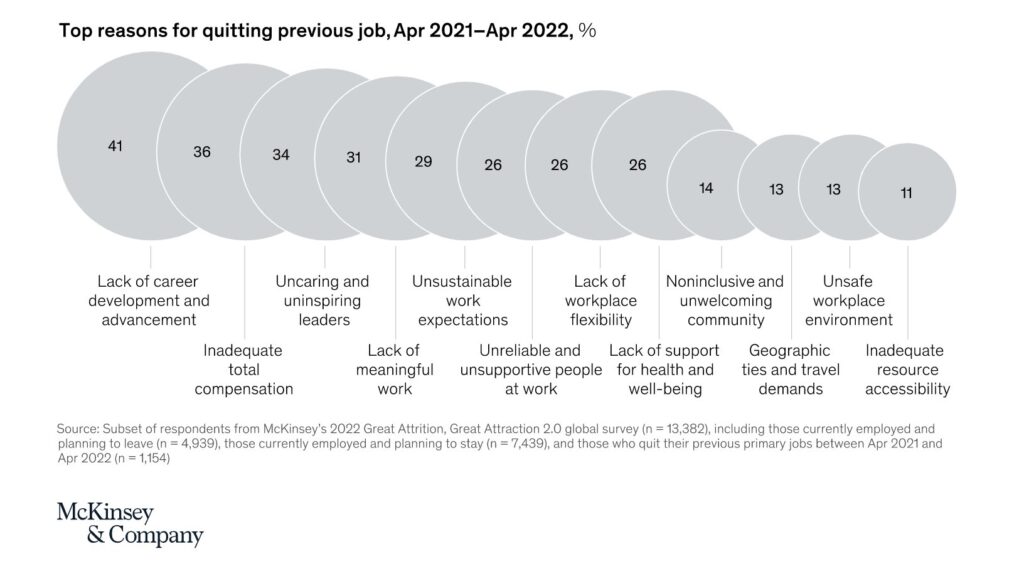
Why do companies invest in career development programs?
Career development improves employee motivation, retention, and productivity while helping organizations build skilled, future-ready workforces.
Failing to provide a clear growth path is one of the leading causes of voluntary employee turnover. Organizations invest in professional development to protect their bottom line and unlock key competitive edge benefits:
Secures Top Talent Retention: Top performers stay where they see a viable future. Closes Critical Skill Gaps: Continuously trains the workforce on emerging technologies like AI. Drives Business Profitability: Highly skilled, confident teams innovate faster and make fewer execution errors. Strengthens Succession Planning: Builds a reliable internal bench of future managers and executives.
What advantages do career development programs provide?
Career development programs increase retention, strengthen skills, improve performance, and prepare employees for leadership and future business needs.
Structured development programs transform broad career ambitions into trackable business assets. The primary organizational advantages include:
Significantly lowering talent recruitment and external backfill costs. Boosting day-to-day employee motivation and psychological engagement. Cultivating highly specialized, role-specific technical expertise internally. Enhancing overall workforce stability and strategic agility during market shifts.
What should a career development program include?
Organizations build effective career development programs through skills training, clear career paths, mentorship, and continuous learning opportunities.
An impactful corporate development program must combine individual accountability with robust organizational support. Every strong framework requires: Explicitly defined advancement criteria and promotion rubrics. Accessible digital learning platforms, micro-credentials, and upskilling tracks. Regular, data-backed development reviews that run separately from high-stakes salary reviews. Cross-functional mentorship programs to facilitate organic internal networking.
Does career growth reduce employee turnover?
Career development improves retention by giving employees growth opportunities, clear advancement paths, and continuous skill development within the organization.
Yes, there is a direct causal link between career growth and talent retention. Employees choose to stay with their current employers long-term when they are provided with transparent internal progression, consistent recognition for their growing skill sets, and psychological safety regarding their professional future. By building a strong development culture, companies minimize the operational disruptions and lost productivity associated with chronic employee churn.
360 degree feedback is a performance evaluation method where an employee receives input from everyone around them, not just their manager. That means peers, direct reports, cross functional partners, sometimes clients or vendors, and a self assessment from the employee too. The goal is a complete picture of how someone actually shows up at work, not just one person’s opinion of it.
It’s also called multi-rater feedback or multi-source assessment. The name comes from the full circle of perspectives involved, from above, beside, and below.
This isn’t new. The method has been used in leadership development for decades. What’s changed is the scale and the tooling. The global 360 degree feedback software market is projected to hit somewhere between 1.3 and 1.6 billion dollars in 2026 depending on which analyst firm you ask, growing at a compound annual rate of roughly 9 to 13 percent a year (Fortune Business Insights). That growth is being driven by two things at once, wider adoption of remote and hybrid teams that need more structured ways to gather input, and AI tools that finally make it practical to process large volumes of open ended feedback without a small army of HR analysts reading every comment by hand.
Why it matters right now
A leader’s self perception and how others actually experience them are frequently two different things. That gap between self view and others’ view is what psychologists call self-other agreement, and closing it is the entire point of running a 360. Organizations that regularly use multi-rater feedback have seen measurably better retention among the people who receive it, and leaders who get structured multi-rater input are considerably more likely to change their behavior afterward than leaders who only get a single manager’s perspective.
How AI Changed 360 Degree Feedback in 2026
AI didn’t replace the human judgment in a 360, but it did remove most of the manual grunt work involved in running one. Here’s what’s actually different now compared to five years ago.
AI now reads through hundreds of open ended written comments and surfaces the actual themes, instead of a person manually tagging each response
Sentiment analysis flags comments that read as vague, harsh, or unconstructive before they ever reach the person being reviewed
Multilingual teams can run a single review cycle where feedback comes in across five different languages and gets synthesized into one coherent report in the reviewee’s preferred language
Some platforms now coach the rater in real time, nudging someone toward a more specific example instead of a generic complaint while they’re typing
Pattern detection across an entire organization can surface things like “our first line managers all struggle with delegation,” which a single person’s 360 report would never reveal on its own
The people actually building this technology are careful to frame it correctly. AI powered 360 feedback augments the design, distribution, aggregation, and analysis of the process, it doesn’t replace the judgment behind it (KS Agents). If the underlying feedback is dishonest or shallow, AI just processes dishonest and shallow feedback faster. The quality of what goes in still depends entirely on the humans giving it.
6 Tips To Get 360 Degree Feedback Right
Do It With A Purpose In Mind
One of the most common mistakes organizations make is running a 360 because it feels like the thing to do, without a clear reason behind it. Before you launch one, get specific about what you’re actually trying to learn.
Are you trying to understand a leader’s blind spots
Are you gathering input from a wider set of voices than a single manager review allows
Are you building a more structured, repeatable feedback process across the company
Once that purpose is clear, everything else about designing the process gets easier. A related point that gets missed a lot, 360 feedback works best as a development tool. The moment it starts directly determining pay or promotion decisions, people stop being honest, and the whole exercise becomes political rather than useful.
Set Guidelines For The Process
Feedback turns vague fast if there aren’t rules going in. Before you invite anyone to participate, share a short set of guidelines with every rater.
What kind of language is appropriate
What should be avoided entirely
How feedback should be framed, ideally around specific behavior rather than personality
You’re not dictating what people are allowed to think. You’re controlling how it gets expressed, which is what keeps the whole review cycle from turning into a mess.
Practice Constructive Feedback
The point of a 360 is to build awareness of strengths and weaknesses so someone can actually grow, not to let people vent. Criticism is where this tends to go wrong, so lay down what counts as fair before the process starts.
A useful framework here is SBI, Situation, Behavior, Impact. Instead of judging someone’s character, you describe the specific situation, the specific behavior you observed, and the actual impact it had.
Good example. Mark was late to three morning stand ups this month. However, when he’s in, he completes every assigned task on time and to a high standard.
Bad example. Mark is never on time and doesn’t do much of anything in the office.
The first example gives Mark something to actually work with. It names a specific pattern and still credits what’s working. The second example is just an opinion dressed up as feedback, and there’s nothing in it for Mark to act on.
Train raters on this distinction before the cycle opens, not after the reports come back.
Ensure Confidentiality
Confidentiality and anonymity are not the same thing, and mixing them up is a common source of confusion. Anonymity means the rater’s identity is hidden entirely. Confidentiality means the information is protected and handled carefully, even if identity is known in aggregate.
If participants have any doubt about how their input will be handled, or if there’s been a breach before, you’ll get watered down, overly diplomatic feedback instead of anything real. People are naturally cautious about saying something that could come back on them.
Make the confidentiality terms explicit before the process starts, not as a footnote. Say exactly who sees what, and stick to it.
Make It A Continuous Process, Not A Once A Year Event
This is the tip that’s changed the most since the original version of this advice. The old model was to run a 360 annually or quarterly and call it done. That’s no longer where the field is heading.
Organizations are shifting toward shorter, more frequent cycles instead, sometimes quarterly, sometimes as lightweight quarterly check ins with five questions instead of twenty five (People Insight, 2026). The logic is straightforward. When a full review only happens once a year, employees start assuming no news means everything’s fine. Then the annual review lands and suddenly there’s a list of issues nobody mentioned for eleven months, which understandably leads to disengagement rather than growth.
Running shorter, more frequent check ins keeps feedback close to the moment it’s relevant, and makes the eventual bigger review far less of a surprise.
Develop An Action Plan
When people go through a 360, they expect something to actually change afterward. Running the process without a follow up plan turns it into busywork nobody wants to do again next cycle.
Before the review opens, decide roughly how you’ll approach likely problem areas or blind spots. Once results are in, don’t stop at the report.
Turn the findings into a specific development plan, not a vague list of areas to improve
Involve the employee in shaping the solutions, not just receiving the verdict
Connect the plan to real coaching conversations with their manager, not just a static PDF that sits in a drive folder somewhere
A platform that produces a report and stops there gives you a data point. One that connects the findings to an actual coaching conversation gives you a result (Betterworks, 2026).
Benefits Of 360 Degree Feedback
It reduces reliance on a single manager’s opinion, which cuts down on individual bias
It surfaces blind spots that a person’s direct manager may simply never see, since managers don’t observe someone’s day to day interactions with peers or direct reports
It’s linked to meaningfully better retention among people who receive it regularly, compared to those who don’t (People Element Research)
It gives leaders a genuine before and after way to track whether their behavior is actually changing over time
It signals to employees that the organization values input from more than just the person at the top of their reporting line
Common Mistakes To Avoid
Running a 360 without deciding in advance what will actually be done with the results
Letting untrained raters give feedback that’s really just a personal complaint dressed up as an assessment
Using 360 results to directly decide pay or promotions, which quietly encourages people to be less honest
Treating it as a once a year event and then acting surprised when the results feel disconnected from the rest of the year
Skipping the guidelines step and assuming people will naturally know how to give useful feedback
Full 360 Or A Lighter Version
Not every role needs the full model. A complete 360, with input from managers, peers, and direct reports, tends to be most valuable for people in leadership roles or those being developed into one.
For individual contributors who don’t have anyone reporting to them, a 270 degree model, manager, peers, and self, usually fits better, simply because there’s no direct report group to draw from. The core principles of good feedback apply either way. What changes is just the rater pool, which should always match the person’s actual working relationships rather than forcing a structure that doesn’t fit their role.
Final Thoughts
360 degree feedback still works in 2026, but only when it’s treated as an ongoing conversation rather than a once a year paperwork exercise. The organizations getting real value from it share a few habits, they run it with a clear purpose, they train people to give feedback around specific behavior instead of personality, they keep cycles short and frequent, and they actually act on what comes back. AI has made the process faster and easier to scale, but it hasn’t changed what makes a 360 useful in the first place, that’s still honest input and a real follow up plan.
Want to see how a connected 360 degree feedback process actually works in practice, rather than just producing a report that sits unused? Request a demo with Engagedly.
Frequently Asked Questions (FAQs)
What is the difference between 360 degree feedback and a regular performance review?
A regular performance review usually comes from one source, the direct manager. 360 degree feedback pulls input from multiple people around the employee, peers, direct reports, sometimes clients, plus a self assessment, giving a much fuller picture than a single perspective can.
How often should 360 degree feedback be run?
The current shift is away from a single annual event and toward shorter, more frequent cycles, often quarterly or through lightweight ongoing check ins. This keeps the feedback timely instead of saving everything up for one big surprise once a year.
Should 360 feedback be anonymous?
Most organizations keep individual rater identities anonymous or at least confidential to encourage honesty, while still being transparent about how the aggregated data will be used and who will see the final report.
Can AI replace human judgment in 360 feedback?
No. AI is genuinely useful for processing large volumes of comments, spotting sentiment and themes, and flagging unconstructive language before it reaches someone. It cannot replace the human judgment behind giving or interpreting the feedback itself.
Is 360 degree feedback suitable for entry level employees?
Not usually in its full form. Entry level individual contributors typically don’t have direct reports, so a 270 degree model built from manager, peer, and self feedback tends to be a better fit than a full 360.
Your employee engagement survey results have just arrived but now what? Gone are the days when you could conduct a poll just to tick a to-do box and ignore the results or skim over the negative parts.
Whether positive or negative, employee engagement surveys offer a treasure trove of information that HR departments and management can use to better engage and motivate employees at all levels. To do so, you need to first correctly interpret the survey findings, of course.
The employee survey data gives you an identifying of the main areas to focus on, which is the first step in creating a successful employee engagement action plan. No company can be expected to respond with every bit of feedback. Instead, People Insight suggests utilizing the findings of your employee survey to highlight a few areas to improve – the things that are most important to your staff.
In this article, we will discuss exactly how to do this, and the various assumptions and biases one must be aware of when analyzing employee engagement survey results.
Why Analyze Employee Engagement Survey Results?
Employee surveys are a direct approach to learning what your employees think of your company, the issues they experience, and the changes your company can make. The effectiveness of these enhancements is determined by your ability to read and analyze employee survey findings. The best employee engagement survey softwares provide tools to make this process more actionable.
Unfortunately, the majority of organizational initiatives are ineffective. In reality, according to the data, just 25% of employees believe that their company takes highly efficient responses to the feedback they offer.
Taking the wrong action or disregarding (even unintentionally) employee input can have serious ramifications for your company. When employees feel that their opinions do not matter, engagement can suffer significantly. According to Gallup, highly engaged employees contribute to stronger productivity, profitability, and workplace culture. Employee disengagement, on the other hand, can have a detrimental influence on organizational performance. Do not fall victim to this. Make data-driven modifications based on the input you get and share the outcomes with your staff. You maintain open channels of communication by closing the feedback loop and demonstrating that employee voices are valued.
Staff opinions concerning issues impacting your organization such as bad attitudes, employee attrition, and lower productivity, are captured in several employee engagement surveys. Here are a few types of employee engagement survey results:
Employee Satisfaction Survey
Employee Satisfaction Surveys are useful for determining overall happiness as well as staff satisfaction following a specific change like a layoff, merger, or business relocation.
Business Improvement Survey
Business Improvement Surveys might reveal difficulties you didn’t realize you had, such as managerial or training concerns. Such surveys can also raise staff morale by demonstrating that you respect their input.
360 Degree Feedback Survey
360 Degree Feedback statistics tell you and the employees how others see him and how he perceives himself, as well as offer ideas for growth. The survey also shows the employee that you value his previous work and acknowledge his talents and achievements.
Exit Interview Survey
This sort of survey helps in figuring out why workers depart and how to minimize future attrition by making operational changes. This survey can also assist you in reversing a valuable employee’s choice to quit by revealing that the staff is inclined to remain provided you make certain modifications to his work demands, training, promotion possibilities, salary, or general working circumstances.
Key Metrics and Indicators in Employee Engagement Survey Results
In employee engagement survey results, several key metrics and indicators provide insights into the overall health and satisfaction of the workforce. Some of the essential metrics include:
Overall Employee Engagement Score: A composite score that reflects the overall level of engagement across the organization. It is often calculated based on responses to key survey questions. These metrics depend heavily on the quality of your employee engagement survey questions.
Job Satisfaction: Measures employees’ contentment with their roles, responsibilities, and the work environment. It can be an indicator of overall morale and happiness at work.
Employee Net Promoter Score (eNPS): Assesses employees’ likelihood to recommend their organization as a good place to work. It provides an indication of employee loyalty and advocacy.
Communication Effectiveness: Evaluates how well information is communicated within the organization. It assesses the clarity, transparency, and accessibility of communication channels.
Leadership Effectiveness: Measures employees’ perceptions of leadership, including trust in leadership, communication from leaders, and confidence in leadership decisions.
Recognition and Rewards: Assesses whether employees feel adequately recognized for their contributions and if the rewards system is perceived as fair and motivating.
Career Development Opportunities: Indicates employees’ satisfaction with opportunities for professional growth, skill development, and career advancement within the organization.
Work-Life Balance: Measures how well employees feel their work and personal lives are balanced. It reflects the organization’s commitment to employee well-being.
Team Collaboration: Assesses the effectiveness of teamwork and collaboration within the organization. It provides insights into team dynamics and cooperation.
Employee Feedback and Performance Reviews: Gauges employees’ satisfaction with the feedback and performance evaluation processes, including the frequency and quality of feedback received.
Employee Inclusion and Diversity: Assesses perceptions of inclusivity and diversity within the workplace, reflecting the organization’s commitment to creating an inclusive environment.
Intent to Stay/Retention: Measures employees’ likelihood to stay with the organization. It can be an early indicator of potential turnover issues.
Analyzing these key metrics in employee engagement survey results helps organizations identify areas of strength and areas that require improvement, guiding strategic initiatives to enhance overall employee satisfaction and engagement.
How to Analyse Employee Engagement Survey Results?
It’s critical you act quickly when your staff survey has ended. This demonstrates that people’s voices have been heard and valued. Employee engagement survey results must be shared and implemented across the firm and among team members for maximum impact.
1. Quantify the information
Results that are quantified (numeric scores) are a clear and meaningful approach to conveying them. Everyone can recall numbers. This also facilitates data comparison.
For example, displaying the percentages of various respondents’ responses to a survey item might help us better grasp the general trend.
2. Dissecting the data
Everyone’s employment experience is different. By fragmenting your data by staff groups and demographics, you may gain a better understanding of the issues that various workgroups face. This will help to compare the performance of different teams and take some action where it is really needed.
3. Look for trends and patterns
Look for patterns in your survey data. What is significant to one individual may be meaningless to another. It’s striking when 80 percent of respondents indicate they’re unhappy with the overtime pay-off policy. Maybe not so much when a few employees want an additional short break during the day.
Are the replies uniform throughout the company?
Are there any distinctions between FTEs and hourly employees?
What about experienced employees versus new hires?
These questions will assist you in identifying changes that will have the greatest impact.
4. Pay attention to qualitative replies as well
Don’t only focus on the figures. Make sure you pay equal attention to both quantitative and qualitative comments. These reactions are significant because they go deeper than quantitative (numerical) data. It’s what makes the narrative come alive.
Numeric responses without context can be inaccurate since they don’t account for other aspects. Motivations, cognitive processes, and attitudes may all be captured using a qualitative technique.
5. Trust your intuition
Don’t overlook your first-hand experience and instincts when conducting data analysis. You are also an important element of your company.
Consider whether the data makes sense in light of the company’s culture and conditions. While objective analysis is important, don’t disregard your instincts.
Look into any differences between your personal observation and the results. To learn more about the statistics, think about sending an open-ended follow-up survey or hosting a small focus group. This will assist you in grasping the larger picture.
6. Compare and contrast your survey findings
Benchmarking your performance can help you gain a better understanding of how your company is performing and discover opportunities for improvement.
7. Set priorities for the changes you wish to make
It’s time to prioritize your results after you’ve reviewed your survey data. To begin, go over each item in the questionnaire and assign it to one of three categories:
“Strong,”
“Neutral,” or
“Needs Work.”
Having a solid mix of improvements is also a good idea. Concentrate on both short-term successes (1 to 3 months) and long-term gains. This will demonstrate to your personnel that you are going to act and will enable you to take on greater tasks.
8. Visualize your information
Data visualization aids in capturing the attention of your staff and stakeholders. Our brains comprehend visual information more quickly and are less prone to mistake it. There are various sorts of graphics that may be used to represent survey data, such as pie charts, bar graphs, etc.
It’s time to address back once you’ve ‘digested’ the facts. Taking action is the most critical component of assessing your survey data. Your employees will become accustomed to the procedure and appreciate your candor if you report your survey answers on a regular basis. Even if you’re not happy with the outcomes, communicate them. Consider it a chance to encourage openness and staff participation in the solutions.
What methods of communication are most effective in your workplace? Does everyone use the same platform? If not, use different communication methods to spread the message.
Consider going through the adjustments and improvements you made in answer to the survey. Make a note of whether or not scores are growing over time. This demonstrates the company’s dedication to employee input.
Conclusion
Are you ready to start driving effective employee engagement at your organization? We’ve created a comprehensive white paper on exactly how you can do that. Download now.
Terrific numbers equal great employees. Numbers are entirely objective and will protect us from partiality and nepotism. A good score is crucial, especially for people in the service industry. Top scores can be used to create a survey. The findings of an employee engagement survey are one of several tools available to small company owners to help them improve interactions with their staff and develop their enterprises.
FAQs
What do engagement survey results mean?
Employee engagement survey results are the findings from employee feedback data that show engagement levels, concerns, and improvement opportunities.
Employee engagement survey results are the collected insights from workforce feedback that reveal how employees feel about their work, leaders, and workplace experience. These results combine quantitative metrics (like engagement scores or eNPS) with qualitative open-ended responses. Together, they help HR and managers understand what is working, what is underperforming, and where to focus corporate resources to improve communication, recognition, and retention.
How do you interpret engagement survey data?
Analyze employee engagement survey results by reviewing scores, segmenting data, identifying trends, and pairing numbers with employee comments.
Analyzing employee engagement survey results means turning raw feedback into clear, actionable priorities. A practical process includes: Quantify the data: Review overall scores, approval percentages, and participation rates. Segment the results: Break down data by department, team, tenure, or job level to find localized issues. Identify patterns: Look for recurring trends across related questions. Read open-ended comments: Use qualitative feedback to find the “why” behind the numbers. Benchmark findings: Compare data against your past internal cycles or standard industry averages.
What metrics should an engagement survey track?
The most important engagement survey metrics include engagement score, eNPS, job satisfaction, retention intent, and leadership effectiveness.
The most useful survey metrics are those that link employee sentiment with business risk and action. High-value data points to track include: Overall employee engagement score and Employee Net Promoter Score (eNPS) Job satisfaction and intent to stay (retention risk) Leadership and communication effectiveness Perceptions of recognition, rewards, and career development opportunities
What happens after an engagement survey?
After getting employee survey results, prioritize key issues, communicate findings clearly, and create a realistic employee action plan.
The next step after receiving survey results is turning insights into visible, transparent action. A strong post-survey roadmap includes: Share results openly: Present findings transparently to both leadership and employees. Categorize outcomes: Group feedback into strengths, neutral zones, and high-risk areas. Prioritize core issues: Pick two or three high-impact issues to address rather than trying to fix everything at once. Build an action plan: Create near-term and long-term goals to solve those specific problems. Close the loop: Regularly report back to the team on what changes are being made based on their feedback.
How do you act on employee engagement data?
Turn engagement survey data into improvements by identifying priority gaps, assigning owners, tracking progress, and communicating outcomes regularly.
Turning data into meaningful workplace improvement requires explicit structure, accountability, and regular follow-through. Best practices include: Pinpointing priority gaps based on their direct impact on turnover and performance. Assigning clear ownership to specific leaders or cross-functional teams for each action area. Setting unambiguous timelines and success benchmarks. Monitoring ongoing progress through smaller pulse surveys, targeted focus groups, or routine manager check-ins.
Keeping employees happy at work should be a top priority for any company. While success metrics like profits and productivity are crucial for business growth, employee happiness and satisfaction are what will help ensure long-term, sustainable success. When people enjoy where they spend the majority of their waking hours each day, they will naturally be more engaged, motivated, and committed to their work.
This positive psychological state and environment leads to numerous tangible benefits for the company as well, such as increased retention rates, fewer sick days taken, higher quality and productivity of work, and even fewer safety incidents.
By focusing on employee well-being and empowerment, management can build high morale and loyalty within their workforce, which will translate directly into a competitive advantage. This article will explore 14 actionable ways that companies can genuinely improve employee happiness and engagement.
What Is Employee Happiness in 2026?
Employee happiness is more than a feel-good metric—it’s a multi-dimensional state encompassing satisfaction, emotional well-being, purpose, and a sense of belonging within your workplace.
In 2026, this includes:
Work-life balance flexibility – From four-day workweeks to remote/hybrid options, employees expect autonomy in managing their time. Dubai’s four-day workweek pilot saw significant gains in both happiness and productivity.
Well-being tools embedded in workflows – Mental health check-ins, mindfulness breaks, and digital wellness integrations are now part of daily work platforms.
Emotional well-being alignment – Positive emotions like enthusiasm, gratitude, and purpose are recognized as major drivers of performance, loyalty, and innovation.
Why Employee Happiness Will Shape Success in 2026
Productivity & Innovation – Happier employees are more helpful, creative, and high-performing. A Massey University study found increased innovation among staff reporting high happiness levels.
Business Performance & Well-being – Companies with high well-being scores (as tracked by Indeed and Oxford) have consistently outperformed major stock indices like the S&P 500 and Nasdaq.
Engagement & Economic Impact – Fully engaged, happy workforces could add $9.6 trillion to the global economy annually.
Inclusion Enhances Happiness – Inclusive workplaces increase employee satisfaction by 32% and overall wellness by 43%.
Autonomy & Retention – 83% of workers now prioritize work-life balance over higher pay. Flexible models are not perks—they’re a core requirement.
The Cost of Unhappiness – Only 23% of employees worldwide are highly engaged, representing a huge opportunity gap for businesses.
What is Employee Happiness?
Employee happiness involves maintaining a positive outlook at work, being open to solving challenges, accepting constructive feedback, and consistently striving for personal improvement without feeling overwhelmed. Content employees find joy in their work, exhibit high levels of engagement, and experience satisfaction in their jobs.
According to Sonja Lyubomirsky’s ‘The How Of Happiness’, 50% of happiness is genetically predetermined, while 10% is due to circumstances in life (Family, health, etc.) and 40% is the result of your outlook.
As an employer, you cannot do anything about the first two but the last 40% of happiness is something you can help your employees with. Analyzing what makes employees happy is quite difficult, but it is more difficult to change the structure of your daily work pattern and prioritize employee happiness.
Why Keeping Employees Happy Is More Critical in 2026
In a rapidly shifting workplace, happiness is no longer optional—it’s central to performance, retention, and cultural resilience.
Hybrid Work Expectations – A staggering 83% of employees now value work-life balance over salary, making flexible arrangements a key pillar of workplace happiness.
Trust and Empowerment Matter More than Pay – Success stories from companies like TAG Live and The Savoy show that trust—via autonomy and recognition—delivers significantly more satisfaction than compensation alone.
Genuine Happiness Outshines Perks – Deep employee happiness stems from meaningful, fulfilling work—not just pay or status. Roles in caregiving or creative fields often yield deeper satisfaction.
Proven Strategies to Keep Employees Happy
Flexible Work & Clear Boundaries – Flexible schedules and clear workload expectations help employees recharge and remain productive.
Create a Corporate Happiness Plan – Integrate happiness into company strategy to ensure consistent, meaningful action across the organization.
Use the Care–Connect–Coach–Contribute–Congratulate Framework – A simple but powerful method to build trust, engagement, and recognition.
Career Development as a Happiness Driver – Offer structured growth and progression opportunities that bring pride, empowerment, and a sense of purpose.
Prioritize Well-Being & Mental Health Support – Mindfulness training, wellness stipends, and EAPs show strong ROI in engagement and retention.
Build Connection in Hybrid Teams – Regular check-ins, virtual coffee breaks, and shared rituals to reinforce belonging.
Employee Happiness in the Workplace: 14 Ways to Keep Employees Happy
We all know that improving employee satisfaction leads to a better atmosphere at the workplace and makes teamwork effortless. But it is not easy for an employer to suddenly change their perspective and work towards individual employee’s happiness.
So instead of struggling to change your work environment drastically, here’s a list of things that you can initially start fixing at your workplace to keep your employees happy.
1. Allow Employees To Voice Their Opinions
Most employees feel dissatisfied with their jobs because their opinions are often not valued. This behavior leads to the disengagement of employees at the workplace, eventually leading to dissatisfaction at work. Give your employees a chance to express what they feel and allow them to contribute their ideas at work.
2. Recognize Their Good Work
Employees feel dissatisfied with their work when they feel like their work is not appreciated. Appreciation is the key to keeping employees motivated and engaged. Recognize the efforts of your employees and reward them. Reward doesn’t always mean money, because money is a short-term motivator. Many other things can be used as rewards to recognize good work.
3. Provide Training And Resources
Training employees and providing them with the necessary resources makes them feel that their company is invested in them. The employees who receive training are usually better satisfied and are more motivated than their counterparts who do not receive frequent training.
Another important factor that makes employees feel unhappy is inconsistent priorities.
Does the line “drop everything and do this right now” sound familiar? Bad managers use it very often and it is quite irritating for their employees to understand why the task is so important that it disrupts their daily work pattern. If you want employees to prioritize certain tasks over others, then you need to communicate why. It is easier to disrupt your routine or shift priorities when you know why exactly you need to do so.
5. Communicate Frequently
Another big problem that plagues workplaces these days is poor communication. When managers are not able to communicate with their staff, it leads to a whole host of problems.
Imagine an employer, not being able to communicate company goals with their employees properly. The first ones to be affected by this behavior are the employees. Employees feel happy and motivated to work only if their goals and responsibilities are communicated to them. And this is just a small example. A lack of communication can seriously affect engagement, and productivity and kill morale.
Communication does not always come easy. But it is something that becomes easier to do, over time. All managers need to do is start the conversation.
After a long wait of two years, employers are now getting a chance to call their employees back to offices. But is everyone interested in starting to work from the office? As per the research, 68% of US employees still want to work from the comfort of their home. Some employees are even thinking of changing jobs if they are not offered remote work. The data shows the reluctance among employees to get back to the usual work environment. In such a case, it is better to offer flexible work schedules to employees to keep them happy and committed to work.
Encouraging work-life balance goes beyond offering flexible work hours, paid time off, and family-friendly policies. Employers can actively promote work-life balance by discouraging overtime and encouraging employees to take regular breaks and vacations. Implementing remote work options and providing access to wellness programs, fitness facilities, or stress-reduction activities can also contribute to a healthier work-life balance.
8. Provide Opportunities for Growth
To foster continuous growth and development, organizations can offer not only career development opportunities but also mentorship programs and cross-functional training. Investing in employee skill development through workshops, conferences, and online courses can empower employees to take charge of their own career paths, leading to higher job satisfaction and loyalty.
Creating a positive work environment involves more than just organizing team-building activities and social events. Employers can actively involve employees in decision-making processes, seek their feedback, and address any concerns promptly. Nurturing a culture of inclusivity and diversity can enhance employee engagement and create a sense of belonging within the workplace.
10. Implement Employee Wellness Programs
Besides traditional wellness programs, employers can consider promoting mental health resources, stress management workshops, and employee assistance programs. Encouraging physical activity through fitness challenges, ergonomic workspaces, and subsidized gym memberships can boost overall well-being and reduce healthcare costs for the organization.
11. Provide Competitive Compensation
Offering competitive salaries is essential, but employers can also consider additional incentives like performance-based bonuses, profit-sharing, or stock options. Moreover, non-monetary benefits such as flexible spending accounts, retirement plans, and comprehensive health insurance packages can enhance the overall compensation package.
12. Encourage Open Communication
Establishing an open communication culture involves actively seeking feedback from employees through surveys, suggestion boxes, or regular one-on-one meetings with managers. Responding to employee concerns, providing updates on company developments, and communicating clear expectations can create a transparent and trusting work environment.
13. Recognize and Celebrate Achievements
While regular recognition is essential, employers can enhance the impact by providing personalized recognition and acknowledgment of employees’ accomplishments. Celebrate milestones, work anniversaries, and major achievements publicly, both within the team and across the organization. Consider offering tangible rewards, such as gifts, certificates, or special privileges, to showcase genuine appreciation.
14. Reward Employee Loyalty
Acknowledge and appreciate long-term commitment by implementing programs that specifically recognize employee loyalty. Consider milestone celebrations, personalized recognitions, and exclusive benefits for those who have dedicated significant time to the organization. Recognizing and rewarding loyalty fosters a sense of belonging and motivates employees to continue contributing to the company’s success.
It is important to remember, that at the end of the day, managers cannot magically make employees happy. Happiness is a very individual concept and managers cannot fix all problems. Managers can try to make employees happy and lead the way, but ultimately, it is not the responsibility of the manager and the entire burden of employee happiness should not rest on their shoulders.
2026 Trends Shaping Employee Happiness
Purpose-driven Recognition – Recognition tied to company values and community impact drives deeper satisfaction.
Hybrid Flexibility as a Norm – Flexible schedules and location choice are now baseline expectations.
AI & Well-being Support – AI is increasingly being used to provide mental health nudges, detect burnout signals, and offer personalized well-being resources.
Human-Centric AI Design – AI must enhance rather than replace human connection to maintain trust and morale.
Frequently Asked Questions
What does workplace happiness mean for employees?
Employee happiness is the overall sense of satisfaction, well-being, and purpose employees feel in their roles and workplace environment.
Employee happiness refers to the emotional and psychological fulfillment employees experience at work. In practice, it relies on a combination of critical cultural pillars:
Purpose: Feeling that daily tasks contribute to a meaningful mission. Positive Dynamics: Maintaining healthy, respectful relationships with peers and managers. Growth & Equity: Having fair access to professional development and visible recognition. Work-Life Harmony: Feeling supported in balancing personal life with professional expectations.
Does employee happiness increase productivity?
Employee happiness drives productivity, retention, innovation, and overall organizational performance by creating motivated and engaged teams.
Workplace happiness is a direct catalyst for financial and operational business success. Organizations with highly satisfied workforces unlock measurable performance advantages:
Higher Output: Satisfied employees naturally work faster, make fewer errors, and bring more energy to tasks. Reduced Overhead: Lowers costly turnover rates and significantly reduces recruiting and backfill spend. Fewer Operational Absences: Happier teams take fewer sick days and report drastically lower rates of chronic burnout. Elevated Customer Satisfaction: Employee happiness directly mirrors how teams interact with clients, boosting customer loyalty.
What improves employee morale at work?
Organizations improve workplace happiness by promoting recognition, flexible work, career development, and open communication.
Improving morale requires embedding supportive habits directly into daily company operations. Proven workplace strategies include:
Frequent Validation: Actively celebrating employee milestones, hard work, and small daily wins. Autonomy & Flexibility: Offering reliable hybrid structures or flexible work hours to respect employee time. Structured Learning: Funding clear career upskilling, mentorship opportunities, and professional tracking. Open Feedback Loops: Using continuous communication tools so employees know their ideas are valued and acted upon by executives.
What metrics measure employee satisfaction?
Companies measure employee happiness using engagement surveys, happiness indexes, feedback tools, and workforce analytics.
Organizations monitor workplace sentiment by combining direct qualitative feedback with traditional quantitative metrics:
Employee Net Promoter Score (eNPS) & Happiness Indexes: Tracking broad baseline shifts in overall workplace advocacy. Frequent Pulse Surveys: Catching early warning signs of disengagement or localized management friction. Retention & Turnover Metrics: Tracking involuntary or sudden voluntary departures across distinct business units. Absenteeism Tracking: Monitoring unexpected time-off trends to flags systemic wellness or culture problems.
What makes employees happiest at work?
The strongest drivers of workplace happiness include meaningful work, recognition, autonomy, career growth, and work-life balance.
While competitive compensation sets the baseline, long-term employee fulfillment is driven by psychological and cultural elements. Employees are happiest when they are given autonomy and trust to run projects without micro-management, receive authentic recognition from their leadership team, and work in an inclusive environment that prioritizes mental well-being alongside business results.
Years of research conducted by renowned psychologists and organizational leaders reveal that a positive workplace culture is one of the most important driving factors of business success. It leads to higher productivity, better employee engagement, and higher returns. Therefore, it is imperative to create a culture that supports employees’ growth and values them for their efforts.
Peer feedback in the workplace is an effective method for growth and development that, when implemented properly, can benefit both individual employees and the company overall. While the idea of providing and receiving feedback from coworkers may seem daunting or uncomfortable to some, research has consistently shown that peer feedback fosters improved communication, cultivates interpersonal skills, and drives better performance when incorporated into an organization’s culture regularly.
Done right, peer feedback leads to a more collaborative and supportive work environment where employees feel empowered to provide meaningful input to help one another strengthen weaknesses and enhance strengths. In this post, we will explore the definition of peer feedback, identify its different types, and discuss its importance for both employees and employers seeking to nurture an inclusive, learning-oriented culture.
Diversity, equity, and inclusion have never been more complicated to navigate or more important to get right. In 2026, companies are operating in a landscape shaped by shifting federal policy, legal scrutiny, and a workforce that still overwhelmingly cares about DEI. According to a survey cited by Juicebox, 67% of job seekers consider a company’s DEI policies when deciding where to apply, and 62% say they would decline an offer or leave a company whose management is non-inclusive.
At the same time, meaningful change is harder than ever to signal credibly. Performative DEI – the kind that lives in a press release and disappears after a news cycle – is being called out. Employees want structural action: fair pay, genuine representation in leadership, and policies that actually remove barriers.
This guide breaks down what DEI initiatives are, profiles 10 companies running programs worth studying, covers the main types of initiatives and how to measure them, and lays out the pitfalls that cause even well-intentioned programs to fail.
What Are DEI Initiatives?
DEI initiatives are structured programs, policies, and practices that organizations implement to increase workforce diversity, remove systemic barriers to fair treatment, and build workplaces where every employee feels they genuinely belong and can contribute fully.
The three components – Diversity, Equity, and Inclusion – each address a distinct challenge. Diversity is about who is in the organization. Equity is about whether the systems governing pay, promotion, and access to opportunity are fair for everyone. Inclusion is about whether people actually feel welcomed, respected, and valued once they’re there.
Effective DEI initiatives target all three levels, because making hires without addressing equity and inclusion just means more people experiencing an unfair system.
The 2026 DEI Landscape: What HR Leaders Need to Know
Before looking at who is doing DEI well, it helps to understand the environment they are operating in.
In January 2025, President Trump signed Executive Order 14173, titled Ending Illegal Discrimination and Restoring Merit-Based Opportunity, which targeted DEI programs at the federal level and directed agencies to scrutinize private-sector initiatives.
Since then, several large corporations – including Meta, Amazon, and Walmart – have scaled back or renamed their DEI efforts. An estimated 20% of companies scrapped their DEI programs entirely as of mid-2025, according to ESG Dive.
However, the legal picture is not as clear-cut as some headlines suggest. The EEOC has reaffirmed that most standard DEI practices – structured hiring, pay equity audits, employee resource groups open to all, inclusive leadership training – remain lawful. As the HR Consulting Group notes, DEI “does not have a clear legal definition according to the EEOC,” and the executive order targets specific discriminatory practices, not inclusion efforts as a whole.
What’s emerging in 2026 is a strategic reframing. According to workforce research firm Terryberry, leading organizations are now positioning DEI through the lens of “workforce effectiveness, organizational resilience, and business performance” rather than ideology – and building it into operational infrastructure rather than treating it as a standalone initiative.
The business case holds firm. Companies in the top quartile for ethnic diversity are 36% more likely to outperform peers financially, according to McKinsey. The World Economic Forum has found that companies with above-average diversity scores generate 45% of their revenue from innovation, compared to 26% for those below average. The companies profiled below understand that DEI isn’t a PR exercise – it’s a talent and performance strategy.
10 Companies With Standout DEI Initiatives (2026)
These companies were selected because their programs are well-documented, outcomes-oriented, and offer transferable lessons – not because they are perfect.
1. Accenture – Structural ERG Investment
The Program: Accenture runs some of the most rigorously structured Employee Resource Groups in the corporate world. The company also runs its long-standing “Inclusion Starts With I” initiative, which encourages employees to take personal accountability for building a more inclusive workplace culture rather than treating inclusion as only an HR responsibility. Its Pride ERG has more than 120,000 members including LGBTQ+ employees and allies, and its Disability Champions network has over 27,000 members. Crucially, both groups operate with named executive sponsors and have direct input into internal policy development – not just social events.
Measurable Outcomes: Accenture has achieved a perfect score on the Disability Equality Index for eight consecutive years (Accenture, 2024). Women now make up 42% of its executives globally – a figure that reflects sustained systemic investment, not a single hiring push.
What HR Leaders Can Learn: ERG scale matters far less than ERG structure. A small company with two well-resourced ERGs that have genuine influence over hiring and policy will outperform a large company with ten groups that have no budget or mandate. Ask yourself: do your ERGs have a named executive sponsor, an annual budget, and a formal mechanism to feed recommendations to leadership? If not, start there.
2. Salesforce – Equity Dashboard and Data-Driven Inclusion
The Program: Salesforce built one of the most transparent internal equity frameworks in tech. HR teams use a real-time equity dashboard (powered by Tableau) to monitor representation, attrition, and promotions broken down by race and gender. The company also runs an Equality Advisory Board that meets quarterly to review the data and take corrective action.
Measurable Outcomes: Between 2020 and 2022, US hires from underrepresented groups increased by 8.8%, and women hires increased globally by 3.5% (AIHR). Over 50% of Salesforce’s US workforce now comes from underrepresented groups.
What HR Leaders Can Learn: Data without accountability is just reporting. The Salesforce model works because the equity dashboard connects directly to a governance body (the Equality Advisory Board) with actual authority to change things. If you’re going to track DEI metrics, make sure someone is responsible for acting on what they show.
3. JPMorgan Chase – Community-Linked DEI Programs
The Program: JPMorgan Chase has maintained and reinforced its DEI commitments during a period when many financial institutions pulled back. Its programs extend beyond internal workforce diversity into economic empowerment: Advancing Black Pathways addresses career readiness and business growth for Black individuals and communities; Advancing Hispanics and Latinos expands access to banking, education, and career opportunity; and a Supplier Diversity initiative prioritizes spending with minority-owned, women-owned, and veteran-owned businesses.
Measurable Outcomes: CEO Jamie Dimon has publicly defended the bank’s approach at the World Economic Forum, and JPMorgan’s 2024 DEI report – one of only 36 standalone reports published by Fortune 500 companies that year (Purpose Brand) – breaks down workforce diversity across multiple demographic dimensions.
What HR Leaders Can Learn: DEI that extends into supplier and community relationships creates business value beyond the internal workforce. It also demonstrates to employees and candidates that inclusion is a genuine organizational value, not just an HR initiative.
4. Microsoft – Scale Through Training Infrastructure
The Program: Microsoft built a DEI Core Priority system that tied diversity and inclusion progress to performance reviews for managers, driving accountability at scale. The company also publishes an annual Global Diversity and Inclusion Report tracking representation data and inclusion metrics.
Measurable Outcomes: Microsoft’s October 2024 report showed women making up 31.6% of the core workforce, with 5.7% of global employees identifying as having a disability. Notably, after the DEI Core Priority system was introduced, employees taking diversity and inclusion training courses increased by 270% (Technology Magazine, 2025).
What HR Leaders Can Learn: Accountability mechanisms matter. When DEI goals were tied to performance reviews at Microsoft, training participation jumped dramatically. Since Microsoft has since scaled back some accountability structures, it’s worth watching whether representation metrics follow. The lesson: DEI intentions without accountability infrastructure rarely sustain progress.
5. Costco – Shareholder Alignment and Cultural Commitment
The Program: Costco has made DEI a matter of explicit corporate governance. When a proposed anti-DEI shareholder resolution came to a vote, over 98% of shareholders voted against it – the board arguing that their commitment to “an enterprise rooted in respect and inclusion” is a fundamental business strategy.
Measurable Outcomes: Costco continues to maintain inclusive hiring practices and supplier diversity programs. The near-unanimous shareholder vote is itself a meaningful data point: it signals that Costco’s investor base views DEI as financially material, not just reputationally important.
What HR Leaders Can Learn: DEI gains durability when it’s embedded in governance and tied to business outcomes, not just HR programs. Presenting DEI as a workforce sustainability and profitability strategy – rather than a compliance requirement – builds broader stakeholder support.
6. Delta Airlines – Sustained Commitment Under Pressure
The Program: Delta Airlines has explicitly maintained its DEI commitments despite industry-wide pressure. “DEI is not something that’s going to stop at Delta Airlines,” Delta’s Director of Pilot Outreach Eric Hendricks told NBC News. The airline actively seeks diversity in pilot recruitment – one of the more persistently homogeneous professions in aviation – and maintains a public-facing diversity policy.
Measurable Outcomes: Delta has maintained its full DEI public commitments and continues reporting on inclusion alongside its broader CSR disclosures.
What HR Leaders Can Learn: Visibility matters during uncertain times. When leadership explicitly affirms DEI commitment publicly, it signals to employees that internal programs won’t be quietly dismantled. Communication is part of the inclusion strategy, not separate from it.
7. Apple — Embedding Belonging Into Talent Strategy
The Program: Apple has consistently embedded DEI into its core talent and product strategy rather than treating it as a separate function. The company actively defended its DEI commitments in its 2024 Annual Shareholder Meeting and has tied belonging to its employer brand strategy.
Measurable Outcomes: Apple’s representation data is included in its annual corporate responsibility reporting. Notably, Apple shareholders voted to keep their DEI programs in place in 2024, reflecting strong internal and investor alignment on the value of inclusion efforts.
What HR Leaders Can Learn: When DEI is framed as belonging and talent effectiveness, rather than demographics and compliance, it tends to be more resilient across political cycles and more meaningful to employees.
8. Ben & Jerry’s – Values-Led DEI Beyond the Workplace
The Program: Ben & Jerry’s has built DEI into its organizational identity rather than treating it as a distinct program. The company has publicly opposed anti-DEI executive orders, donates to related equity causes, and uses its platform to advocate for racial equity and LGBTQ+ rights. Internally, it provides fair wages and inclusive benefits.
Measurable Outcomes: Ben & Jerry’s consistently ranks highly in employer brand surveys among job seekers who prioritize social responsibility. Its approach has translated into strong retention in an industry known for high turnover.
What HR Leaders Can Learn: For smaller organizations without large DEI budgets, consistency and authenticity matter more than program scale. A leadership team that genuinely lives the values – and communicates that publicly – creates an inclusion culture more effectively than a well-funded initiative without authentic support from the top.
9. Heineken – Women in Sales Program
The Program: Heineken developed the Women in Sales initiative to address the persistent underrepresentation of women managers in a traditionally male-dominated function. The program combines targeted recruitment, retention mechanisms, structured development pathways, and a robust internal communication plan to shift culture across regional sales departments.
Measurable Outcomes: The program was highlighted by the World Economic Forum’s DEI Lighthouse Programme, which selects initiatives based on demonstrated, measurable impact rather than stated intentions.
What HR Leaders Can Learn: Targeted functional programs – focused on one role type, one demographic gap, one part of the pipeline – often outperform broad DEI campaigns. They’re more measurable, easier to manage, and generate proof of concept that can be scaled across the business.
10. Banco Pichincha – Gender Equity With Community Impact
The Program: Ecuador’s largest bank built a DEI program that connects internal gender parity efforts with external economic empowerment. This includes internal policies promoting gender equity in leadership, combined with financial products tailored for women entrepreneurs – including a $100 million gender bond to support access to financing.
Measurable Outcomes: Banco Pichincha’s program was selected as a DEI Lighthouse by the World Economic Forum in 2024. The company created an internal commission to track, monitor, and measure progress – ensuring the initiative doesn’t stall after launch.
What HR Leaders Can Learn: DEI programs that extend beyond the organization into the communities employees come from generate both social impact and brand equity. They also signal to employees from underrepresented groups that the commitment runs deeper than hiring quotas.
While every company approaches DEI differently, most successful programs tend to rely on a common set of structural initiatives. Understanding these categories helps HR teams decide where to focus first based on their own workforce gaps and business priorities.
Types of DEI Initiatives
Understanding what’s available helps you choose what’s right for your organization’s current stage and gaps.
Employee Resource Groups (ERGs)
ERGs are voluntary, employee-led groups organized around shared identities or experiences – race, gender, disability, LGBTQ+ identity, veteran status, and so on. When structured well, with executive sponsorship, dedicated budgets, and a formal mandate to influence hiring and policy, ERGs are among the most powerful tools in a DEI strategy. When they exist only as informal social groups, they often do more to signal performative inclusion than create structural change.
Pay Equity Audits
A pay equity audit is a structured compensation analysis that examines whether employees in equivalent roles receive equivalent pay, controlling for legitimate variables like experience and performance. According to the Bureau of Labor Statistics, women in the US earned 83.7 cents for every dollar earned by men in 2025 – with larger gaps for women of color. Regular audits catch and correct these gaps before they compound, and before they become legal liability. Disney agreed to a $43.3 million gender pay discrimination settlement in 2023; Goldman Sachs was required by court settlement to conduct annual pay equity analyses. Running these proactively is significantly cheaper than addressing them reactively.
Blind Hiring and Structured Interviews
Blind resume screening – removing names, photos, universities, and locations from initial evaluation -reduces name-based and affinity bias in early screening. Structured interviews, where every candidate answers the same core questions scored against the same rubric, reduce the inconsistency that allows unconscious bias to influence decisions. Both are low-cost, high-impact interventions. Tools like Textio can also flag gendered or exclusionary language in job descriptions before they’re posted.
Inclusive Leadership and Bias Training
Effective training equips managers with specific skills – equitable delegation, active listening across difference, sponsorship versus mentorship, and how to interrupt microaggressions. Crucially, this training needs to be ongoing and practical, not a one-time compliance session. Microlearning modules and scenario-based learning have shown stronger behavior change than hour-long workshops.
Mentorship and Sponsorship Programs
Formal mentorship programs that pair underrepresented employees with senior leaders consistently deliver among the highest ROI of any DEI investment. Sponsorship goes a step further – sponsors actively advocate for their mentees in promotion and assignment decisions, not just provide guidance. Structured programs with accountability for outcomes outperform informal arrangements.
Supplier Diversity Programs
Supplier diversity initiatives prioritize procurement spending with minority-owned, women-owned, veteran-owned, and disability-owned businesses. Beyond the direct economic impact on underrepresented communities, these programs signal organizational values to candidates and customers, and often surface innovative vendors that weren’t on the procurement radar.
Accessibility Initiatives
Physical, digital, and communicative accessibility ensures that employees with disabilities can fully participate. This includes flexible work arrangements, assistive technology, accessible digital tools, and communication formats that work for neurodivergent employees. Accessibility is often the most visible test of whether inclusion is genuine or performative.
Transparent Promotion Criteria
Clearly defined, consistently applied promotion criteria reduce the risk that advancement decisions are shaped by proximity, affinity, or bias. Making criteria explicit – and communicating them to all employees – is one of the simplest structural changes an organization can make, and one of the most frequently overlooked.
How to Measure DEI Program Success
Many organizations track activity instead of outcomes. Focus on metrics that show real movement.
Representation Metrics
Track demographic representation at every level of the organization, not just in aggregate. The gap between entry-level diversity and senior leadership diversity is often where the real equity problem lives. Measure representation by function and level, not just company-wide.
Promotion and Advancement Rates
Are employees from underrepresented groups advancing at the same rate as peers? Gaps in promotion velocity are frequently where hiring diversity fails to translate into leadership diversity. Break down promotion rates by demographic group and review them at least twice a year.
Pay Equity Analysis
Run regular compensation audits comparing pay across gender, race, and other relevant dimensions for employees in equivalent roles. Track not just base pay, but total compensation including bonuses and equity grants, where gaps are often larger.
Retention and Attrition by Group
High attrition among specific demographic groups is a leading indicator that inclusion is failing, regardless of how strong your diversity hiring looks. Segment turnover data and exit survey responses by group.
Inclusion and Belonging Scores
Employee engagement surveys should include questions specifically about psychological safety, fairness, and belonging – and results should be segmented by demographic group. A high overall engagement score that masks low belonging scores among specific groups is not a DEI success.
Pipeline Metrics
Track diversity at every stage of the hiring funnel – not just who gets hired, but who applies, who advances through screening, who gets an offer, and who accepts. Identifying where underrepresented candidates drop out of the process tells you where to intervene.
ERG and Program Participation
rack engagement rates, not just membership counts. Segmenting participation data by seniority level helps identify whether development programs are reaching employees who would most benefit.
A practical framework many organizations use is the “4 Ps” – Purpose (clear DEI goals tied to business strategy), People (who owns and champions the work), Process (structured systems for hiring, promotion, and pay), and Progress (transparent metrics reviewed and shared regularly).
Common Pitfalls to Avoid
Treating DEI as a PR Exercise
Publishing a diversity report or posting on LinkedIn about your commitments is not a DEI initiative. Employees inside the organization can see the gap between stated values and structural reality, and it damages trust when the messaging outpaces the action.
One-Time Training Without Follow-Through
A single unconscious bias workshop does not change behavior. Without ongoing reinforcement, structural changes to how decisions are made, and accountability for outcomes, training alone has limited impact.
Isolating DEI From Business Strategy
DEI programs that exist parallel to the business – rather than embedded in hiring, promotion, compensation, and product decisions – are the first things cut when budgets tighten. The most durable programs are those leaders view as workforce effectiveness tools, not HR side projects.
Measuring Activity Instead of Outcomes
Tracking how many employees attended diversity training tells you nothing about whether your organization is more equitable. Focus on representation, pay equity, promotion rates, and retention -metrics that reflect real change.
Building ERGs Without Infrastructure
An ERG with no budget, no executive sponsor, and no mechanism to influence policy is not an inclusion initiative – it’s a social club. Without structural backing, ERGs signal performative inclusion and can actually increase frustration among the employees they’re meant to support.
Ignoring the Legal Landscape
In 2026, DEI program design needs to account for the current legal environment. The EEOC has clarified that most inclusion-focused practices remain lawful, but programs that restrict access based on protected characteristics – for example, ERGs with membership requirements based on identity – carry legal risk. Ensure all programs are open to all employees and designed around access and opportunity rather than demographic targeting.
Moving Too Fast Without Data
Launching programs without a baseline measurement means you can’t demonstrate impact, justify investment, or identify what’s actually working. Start by auditing where you are before deciding where to go.
Conclusion
DEI in 2026 is no longer about symbolic statements or isolated programs. The strongest organizations are embedding fairness, opportunity, and inclusion directly into how they hire, promote, compensate, and lead.
The companies making real progress treat DEI as a business system – not a campaign.
For HR leaders, the takeaway is clear: start with data, build accountability, focus on structural changes, and measure outcomes consistently. When done properly, DEI improves retention, strengthens employer brand, widens talent pipelines, and drives better performance over time.
FAQs
What are DEI initiatives?
DEI initiatives are programs, policies, and workplace practices designed to improve diversity, equity, and inclusion within an organization.
They typically help companies: Increase representation across different demographic groups Reduce barriers in hiring, promotion, and compensation Create a more inclusive workplace culture Improve employee belonging and engagement Support fair access to opportunities and career growth Strengthen retention and employer branding Effective DEI initiatives focus on all three areas—diversity, equity, and inclusion—rather than treating them as separate goals.
Why are DEI initiatives important for organizations?
DEI initiatives help organizations attract talent, improve employee engagement, and build stronger business performance.
Key benefits include: Expanding access to diverse talent pools Improving employee retention and job satisfaction Increasing innovation through diverse perspectives Strengthening employer reputation and brand perception Supporting fair and equitable workplace practices Creating a culture where employees feel valued and included
Research consistently shows that diverse and inclusive organizations are more likely to outperform competitors financially and innovate successfully.
What are the most common types of DEI initiatives?
Most organizations use a combination of DEI initiatives to address representation, equity, and inclusion challenges. Common examples include:
Employee Resource Groups (ERGs) Pay equity audits Inclusive hiring and structured interview processes Diversity recruiting programs Mentorship and sponsorship programs Inclusive leadership training Accessibility and accommodation initiatives Supplier diversity programs Employee belonging and engagement programs Transparent promotion and career advancement frameworks The most effective organizations combine multiple initiatives rather than relying on a single program.
What is the difference between diversity, equity, and inclusion?
Diversity, equity, and inclusion are related concepts, but each focuses on a different workplace objective.
Diversity focuses on representation and workforce composition Equity focuses on fairness in opportunities, policies, and outcomes Inclusion focuses on creating a workplace where employees feel respected, valued, and able to contribute A company can have diversity without inclusion, which is why successful DEI strategies address all three areas together.
How do companies measure the success of DEI initiatives?
Organizations measure DEI success using workforce, engagement, and talent management metrics.
Common DEI metrics include: Workforce representation by level and department Hiring and promotion rates Retention and turnover rates Pay equity analysis Employee engagement survey results Inclusion and belonging scores Participation in ERGs and development programs Leadership diversity representation Candidate pipeline diversity metrics Tracking outcomes over time helps organizations identify what is working and where improvements are needed.
Recent studies indicate that a significant majority of Fortune 500 companies continue to utilize 360-degree feedback as a central component of their leadership development strategies, reflecting its sustained relevance and effectiveness in contemporary organizational settings
The feedback system is often overlooked in employee management, despite its significant advantages of 360-degree appraisal. While employees typically receive feedback from their managers during quarterly or annual performance reviews, this may not be sufficient.
Peer feedback is essential for enhancing employee performance as colleagues may have a better understanding of the nature of work than managers. Thus, receiving feedback from peers brings additional advantages of 360-degree feedback in helping employees improve.
In 360 degree or multirater feedback, managers, peers, direct reports, and sometimes even customers, consultants, and vendors are involved in the feedback process. It provides an overall analysis of the performance of the employee in the organization.
Here are the main reasons why 360-degree feedback is important in today’s workplace:
Provides a comprehensive evaluation of employee performance from different perspectives
Promotes a culture of openness and transparency within an organization
Enables informed decision-making about employee development, promotions, and job assignments
Identifies potential leaders and areas where employees need support or guidance
Aligns individual goals with organizational objectives, leading to improved organizational performance and greater success.
Encourages Continuous Improvement: Promotes ongoing development by highlighting specific areas for growth.
Builds Trust and Engagement: Boosts engagement and trust by recognizing contributions from all perspectives.
Reduces Bias in Evaluations: Balances performance reviews by including diverse viewpoints.
Fosters Accountability and Ownership: Encourages accountability as performance is assessed broadly.
Enhances Team Dynamics: Improves team support through understanding of each other’s skills.
10 Benefits of 360 Degree Feedback
360 degree feedback is an employee development tool that helps in building a skilled, dynamic, engaged, and productive workforce. Due to its innumerable advantages, most of the Fortune 500 organizations are using it for workforce development. The following section talks about the benefits of 360 feedback in an organization.
360 feedback is a valuable tool for enhancing employee self-awareness and identifying their strengths and weaknesses. The best 360-degree feedback softwares help capture and present these insights effectively. By utilizing this process, employees can gain insight into their hidden strengths and weaknesses, which they may not have been aware of previously. The comprehensive nature of the 360 degree review process allows employees to gain a better understanding of their behavior and approach to work, ultimately leading to improved performance.
2. Offers Objective Evaluation
360 degree feedback provides the employee with a scope to get multiple inputs for their role, performance styles, and ideas. It provides a well-balanced view of the behavior and skills of the employee. It helps employees to know themselves from others’ perspectives and bridges the gap between what they think of themselves and what others think of them. This feedback system is constructive and more acceptable for the employees.
In a multi rater feedback process, feedback is collected not only from the manager but also from peers, subordinates, direct reports, and sometimes even customers. As a result, the feedback received in the 360-degree review process is completely impartial as it is not based on single person assessment. It helps in reducing managerial biases, which are often prevalent in the traditional feedback system.
4. Emphasises Employee Development
“According to Skills Gap Report, nearly 80% of Americans agree there is a skills gap, and more than a third (35%) say it affects them personally.”
Every employee should prioritize professional development to progress in their career. The 360 feedback process is a useful tool for identifying employee training needs and skill development opportunities.
Since employees become more self-aware through this process, they take responsibility for improving their existing skills and acquiring new ones. This not only leads to employee growth but also benefits the organization by increasing employee engagement and retention.
5. Improves Decision making
360-degree feedback is an excellent tool for managers to gain valuable insights into employee performance. This helps managers make informed decisions about employee development, promotions, and job assignments. With feedback coming from multiple sources, managers can identify employees’ strengths and areas for improvement.
This information helps managers provide targeted training and development programs that enable employees to grow in their roles. Additionally, 360-degree feedback highlights potential leaders and helps managers prepare them for leadership roles. This approach leads to better decision-making, improved employee performance, and organizational effectiveness.
6. Improves Work Relationships
“In a study of 530 organizations, Gallup reported that managers who received feedback showed an increase in 8.9% profitability and 12.5% productivity.”
In traditional one-to-one feedback, the one who receives feedback from superior generally has nothing to say from their side as it is one-sided. There is no sense of personal connection in this type of feedback process. But in 360 feedback, as superiors and subordinates review each other, it improves the superior-subordinate relationship. Everyone’s morale is boosted, and employees and managers work together to achieve mutual goals.
Multi rater feedback helps in promoting a sense of an open culture in the organization where it is implemented. Every employee feels that their opinion is valued as they take part in the review of their peers and managers. The feedback process becomes the medium to share their opinions without having a fear of getting repressed.
8. Promotes Team Building
In a 360 degree feedback process, peers review each other frequently. They understand each others’ weaknesses and strengths very well, which helps them to work as a strong and cohesive team. They work collectively to improve the productivity of the organization. An effective team is one where each team member knows how to use each other’s strengths and weaknesses effectively and get the result.
When customers are made part of this feedback process, they feel that they are valued and given importance. Since employees work closely with the customers, sometimes they can identify certain strengths and weaknesses that even managers, peers, and others fail to identify during the 360 feedback process. Thus, it helps in improving customer service when organizations ask customers to be a part of the process.
10. Enhances Performance
One of the most important benefits of a 360-degree feedback process is the enhanced performance of employees. It helps in improving employee relationships, and self-accountability, and provides clarity on how to improve overall performance. This, in turn, improves employee engagement and retention of the organization. They feel valued since importance is given to their professional development, learning, and their opinions.
Companies that leverage the benefits of 360 degree feedback often see higher levels of employee engagement, as the inclusive feedback process makes employees feel heard and valued
Advantages of 360 degree appraisal
1. Holistic Feedback
One of the primary advantages of 360 degree appraisal is its holistic approach to gathering insights from multiple sources: peers, subordinates, managers, and sometimes even customers. This way, you get a comprehensive picture of an employee’s performance.
For instance, imagine a team leader known for hitting targets but not for communication. Feedback from team members might reveal that they need to work on delegation and empathy, while their manager praises them for strategy. Together, this feedback gives a fuller, more balanced view.
2. Identifies Blind Spots
We all have areas we think we’re doing well in but may actually be our weak points. A 360-degree review can reveal these blind spots. Let’s say Priya, a manager, thinks she’s a great listener. Her team, however, might say she tends to interrupt during meetings. This feedback highlights something Priya wouldn’t notice on her own, giving her a chance to improve.
3. Encourages Personal Growth
Knowing how peers perceive you can be an eye-opener and a motivator for self-improvement. For example, if an employee receives feedback that they often shy away from presenting their ideas, they may feel inspired to speak up more. Over time, with some encouragement and practice, they grow more confident and make a bigger impact on the team.
4. Strengthens Team Relationships
The 360-degree appraisal fosters a culture of transparency, where team members feel comfortable sharing honest feedback. Imagine a scenario where teammates are hesitant to tell a employee about his overly detailed emails that take too much time to digest. With a 360 review, they can communicate this constructively, leading to a more streamlined communication style and better team dynamics.
5. Aligns Personal Goals with Organizational Goals
This appraisal method allows employees to understand how their performance aligns with company goals and what adjustments are needed.
Knowing that everyone’s feedback matters can create a stronger sense of ownership. For instance, when team members know that their opinions count toward a colleague’s development, they become more invested in the team’s success. This mutual accountability can improve engagement and commitment, as everyone feels they’re part of a supportive and cohesive unit.
How Engagedly’s 360-Degree Feedback Empowers Organizations
Traditional performance evaluations often lack crucial perspectives, relying solely on manager assessments. This can lead to incomplete evaluations, hindering employee development and organizational growth. Engagedly’s 360-degree feedback module tackles this limitation, providing a comprehensive approach to performance assessment that benefits both individuals and organizations:
Enhanced Employee Development:
Multi-rater Feedback: Engagedly’s 360-degree feedback gathers input from peers, managers, direct reports, and even clients, offering a holistic view of an employee’s strengths, weaknesses, and areas for improvement. This self-awareness empowers employees to take ownership of their development and chart a focused path for growth.
Targeted Development Plans: With a comprehensive understanding of their performance, employees can collaborate with managers to create personalized development plans. These plans leverage strengths, address weaknesses identified by diverse perspectives, and align with individual career aspirations.
Strengthened Team Dynamics: 360-degree feedback fosters open communication and builds trust within teams. By understanding how colleagues perceive each other’s strengths and weaknesses, teams can address interpersonal challenges, improve collaboration, and build a more cohesive working environment.
Data-Driven Decision Making:
Actionable Insights: Engagedly’s platform analyzes 360-degree feedback data to identify emerging trends and patterns within the organization. This data helps inform strategic decisions related to talent development, team building, and overall performance improvement initiatives.
Increased Performance Visibility: Leadership gains a bird’s-eye view of the organization’s strengths and weaknesses through aggregated feedback data. This enables them to identify areas requiring intervention, allocate resources effectively, and track progress towards improvement goals.
Engagedly’s 360-degree feedback module goes beyond simply providing data. It fosters a culture of continuous feedback and development, leading to:
Enhanced Employee Engagement: Feeling valued and supported by colleagues and managers increases employee engagement and motivation.
Improved Customer Satisfaction: A collaborative, engaged workforce translates into superior customer service and satisfaction.
Engagedly’s 360-degree feedback module is more than just a tool; it’s a catalyst for organizational transformation. By providing a holistic view of employee performance, empowering development, and informing data-driven decisions, it unlocks the full potential of both individuals and teams, driving sustainable success for the entire organization.
Measuring the Effectiveness of 360-Degree Feedback
To maximize the benefits of 360-degree feedback, organizations should establish clear metrics to assess its impact. Key performance indicators (KPIs) such as improvements in employee performance, engagement levels, and retention rates can provide valuable insights. Regularly reviewing these metrics allows organizations to refine their feedback processes and ensure alignment with overall business objectives.
Conclusion
360-degree feedback is more than just a performance evaluation tool — it’s a powerful mechanism to foster growth, collaboration, and self-awareness across all levels of an organization. When implemented thoughtfully, it helps employees understand their strengths, identify areas for improvement, and align their development with organizational goals.
In today’s hybrid and digital workplaces, leveraging technology to collect and act on feedback ensures that all employees, whether remote or on-site, have equal opportunities for development. Regularly measuring the impact of feedback initiatives also ensures that the process remains meaningful and drives tangible improvements in performance, engagement, and team dynamics.
Ultimately, organizations that embrace 360-degree feedback as a continuous learning tool, rather than a one-time assessment, create a culture of openness, accountability, and growth — a culture where both employees and the organization can thrive together. If you’re thinking about implementing a more continuous and data-driven feedback approach, it might be worth requesting a demo to explore how modern platforms bring all of this together.
FAQs
Why is 360-degree feedback useful?
The main benefits of 360-degree feedback include better self-awareness, reduced bias, stronger development, and improved team performance.
360-degree feedback is a multi-rater review process that collects input from managers, peers, direct reports, and sometimes customers. Its main benefits include: Better employee self-awareness More balanced and objective evaluation Stronger development planning Improved communication and team relationships Better performance and engagement over time
Because feedback comes from multiple perspectives, employees get a fuller picture of how they work and how others experience their behavior. For example, an employee may be rated highly by a manager for output but receive peer feedback on collaboration gaps. That combination makes development more targeted and practical, which is why many organizations use 360-degree appraisal for leadership and talent growth.
How does 360 feedback support employee growth?
360-degree feedback improves employee development by revealing strengths, uncovering blind spots, and guiding more targeted growth plans. 360-degree feedback improves employee development by giving people a clearer view of their strengths, weaknesses, and growth opportunities.
It supports development in several ways: Identifies skill gaps and hidden strengths Highlights behavior patterns across teams Supports personalized development plans Encourages ownership of improvement
For example, if an employee sees consistent feedback about communication or delegation, that insight can shape a focused coaching or training plan. This makes development more actionable than traditional top-down reviews. When paired with clear goals and manager support, 360-degree feedback helps employees build stronger capabilities, improve performance, and grow more confidently in their roles.
Is 360-degree feedback more objective?
Yes, 360-degree feedback can reduce review bias by balancing one manager’s view with input from multiple stakeholders. 360-degree feedback helps reduce bias because it does not rely on a single evaluator’s opinion.
It improves fairness by: Including multiple perspectives across roles Balancing manager feedback with peer and direct report input Reducing the impact of personal favoritism or recency bias Creating a broader evidence base for decisions
In a traditional review, one person may overemphasize recent performance or personal impressions. A multi-rater process makes the evaluation more balanced and credible. While it does not eliminate bias completely, it usually produces a more objective view of performance, behavior, and collaboration. That is especially valuable for promotion, leadership development, and succession planning.
Does 360 feedback improve team dynamics?
360-degree feedback improves team relationships by encouraging openness, accountability, trust, and better understanding across coworkers. 360-degree feedback can strengthen workplace culture by making feedback more open, inclusive, and collaborative.
When implemented well, it helps teams: Understand each other’s strengths and working styles Improve communication and trust Create shared accountability Build a more open feedback culture
For example, peers often notice collaboration habits that managers may miss. When that feedback is shared constructively, teams can address issues early and work together more effectively. Over time, employees feel their opinions matter, which supports engagement and transparency. This is one reason 360-degree appraisal is often used not just for performance, but also for team building and culture improvement.
Every organization needs effective team collaboration, yet frequent obstacles might thwart this process. Common team collaboration problems include issues with remote work, different work styles, and generational gaps. Learning to overcome these challenges is important for creating a productive work climate. In this blog, we will discuss some common challenges in teamwork collaboration and the ways to overcome them.
1. Lack of Communication
Lack of communication is a serious problem facing teamwork. Research says that workplace success can be negatively impacted by poor communication. In 31% of the cases, it resulted in low employee morale.
When team members do not communicate clearly, information becomes fragmented, misunderstandings occur, and crucial updates may be overlooked. Expensive errors and project completion delays might be the direct consequences in this case.
One effect of poor communication is the duplication of effort, where team members unwittingly labor on the same duties. This results in wasted time and resources. In addition, a lack of communication frequently results in ambiguous expectations and goals. So, aligning team members’ efforts with the team’s objectives becomes challenging.
Poor communication may also lead to feelings of unappreciation among team members. This further lowers motivation and engagement. It may, thus, become difficult to establish a culture of confidence and mutual support among the team.
Solution:
A simple solution to the lack of communication is to prioritize honest and open communication.
Routine team meetings and one-on-one check-ins facilitate information sharing.
The use of collaborative tools guarantees smooth project management.
It is also essential to promote active listening and offer a secure environment where team members can communicate their ideas and concerns.
Effective communication promotes a sense of belonging and respect. This will ultimately help improve productivity and the work environment.
As remote and hybrid work arrangements have grown popular, remote collaboration issues have become more common. Admittedly, remote work provides flexibility and opportunity for geographically dispersed talent. However, it also poses particular challenges to efficient teamwork.
The absence of face-to-face interactions and updates may hinder interpersonal relationships and team bonding. Team members may not feel included if they are not physically close. Lack of emotional expression, delayed reactions, and misinterpretations of written communication can result from a remote work culture. These effects usually lead to reduced productivity.
Additionally, it isn’t easy to plan meetings and sustain real-time communication when juggling several time zones. Delays in decision-making and response times may result, which could hinder project development. A more dangerous implication of the lack of a physical workspace is that it might be difficult to distinguish between professional and personal obligations. It causes a major work-life imbalance, leading to burnout and decreased motivation.
Solution:
Organize frequent virtual team meetings to discuss the project’s status and align the team’s efforts.
Arrange online activities and gatherings to facilitate a sense of community and interpersonal bonds. These activities can include online games, virtual coffee breaks, and virtual team lunches.
Facilitate flexible work schedules and ensure team members set aside time for relaxation and leisure. This helps team members find a work-life balance.
Make specific platforms or channels for team members to engage informally. This makes informal discussions, group celebrations, and sharing of particular interests possible. These methods promote a sense of community in the workplace.
3. Diverse Work Styles
Diverse work styles help bring various perspectives and skills to the table. However, if they are not managed well, they can lead to team collaboration issues.
Diverse work styles can create problems, particularly when conflicting methodologies and approaches arise. While some team members might favor rigorous, controlled methods, others might be more adaptable. When working on joint tasks or projects, these variances may cause misunderstandings and frustration. Additionally, different work styles lead to different priorities and time management preferences.
Solution:
Define the team’s goals and specify the deadlines, deliverables, and expectations for communication.
Utilize collaborative technologies to organize project data and monitor progress.
Assigning tasks according to individual skills is always a good idea.
When working together on certain projects, have team members adjust their approaches to establish common ground that respects individual preferences.
Encourage a climate of tolerance and respect for different working styles. This will encourage a setting where team members appreciate one another’s contributions and share constructive feedback.
Conducting team-building activities is also a valuable approach here. This approach helps form a cohesive, creative, and high-performing team.
Collaboration is thus strengthened by embracing the diversity of work styles within the team and playing to each member’s unique strengths.
4. Tribal Mentality
Tribal mentality occurs when team members focus excessively on their departments or subgroups and fail to work collaboratively with other teams. Consequently, people might fail to put the needs and objectives of the company before their tribe. Thus, this is also what makes collaboration difficult.
Information silos, where teams hoard information and fail to share it with others, are one effect of a tribal attitude. This might result in repeated work, missed opportunities, and inefficiency within the organization.
A tribal mindset can also foster a “us versus them” mentality. Conflicts, internal rivalry, and a breakdown in team trust and communication result from this. Teams lose out on unique viewpoints and potentially game-changing innovations when they don’t cooperate and exchange ideas.
Solution:
Emphasizing the importance of collaborative efforts toward a shared objective and aligning individual and team goals with the organization’s mission can effectively address this concern.
Encouraging collaboration through rewards is an excellent strategy for cultivating a cooperative culture that promotes teamwork.
Establish an environment where team members feel empowered to voice their opinions without fear of criticism or reprisal.
5. Generational Gap
Generational gaps resulting from age differences can make it difficult for a team to work at their full potential. Employees from different generations are bound to collaborate on some projects. During this collaboration, they may encounter issues related to differing work methods, communication preferences, experience levels, and values. These differences could make collaboration challenging.
Younger workers may seek flexibility, work-life balance, and a more dynamic workplace, whereas senior workers may favor stability and traditional work procedures. Conflicts over work priorities and methods might result from these disparities, which makes teamwork difficult. Furthermore, generational disparities may lead to stereotypes or biases among team members, which could affect trust between coworkers.
Solution:
To address this issue, employees from different generations can be paired up to bridge the generational gap.
Accept flexible work schedules and communication channels to satisfy the preferences of different generations.
Make it a point to highlight that the team’s common goals and beliefs transcend age differences.
Establish a diverse and inclusive workplace that acknowledges each generation’s skills and contributions.
Leverage the wealth of diverse experiences among team members for increased creativity, innovation, and overall success.
Proactively implement conflict resolution strategies to address any tensions or disagreements that may arise.
In conclusion, while effective team collaboration is a valuable asset, several challenges may hinder its success, such as a lack of communication, generational differences, and diverse work styles. The key to overcoming these challenges lies in emphasizing open communication, utilizing collaboration technology, encouraging flexibility, supporting tolerance, and embracing diversity. By implementing these techniques, teams can enhance their cohesiveness, foster innovation, and improve work performance, ultimately boosting overall output and enhancing company culture.
Employee engagement is essential for every organization. Now that employees are returning to the office after a long gap of two years, they are certainly going to experience some hiccups in settling down.
But as a manager, you can help them get past the initial inhibitions to get connected with their team members and try to enhance their engagement in the workplace culture. You can try out some employee engagement activities that will motivate employees and push them to take more ownership and responsibilities.
We all know how important employee engagement is. However, only a handful of organizations have been able to understand that it is a continuous and ongoing process. To reap the benefits of a highly engaged workforce, leaders need to keep working on some strategies to make employees feel more involved and valuable in the workplace.
To help you get started with employee bond building, we have come up with a list of 22 out-of-the-box employee engagement activities that you can carry out on a budget! If the budget is not a constraint, take a look at6 creative ideas for employee engagement!
An employee engagement survey can help you get the pulse of your workforce. Understanding their concerns and problems should be your priority. Check out our step-by-step guide on how to create and utilize an employee engagement survey in your organization.
According to a 2024 Gallup report, organizations with highly engaged teams see 21% higher profitability and 17% higher productivity. Implementing cost-effective engagement activities can significantly contribute to these outcomes. Aligning engagement efforts with clear OKRs and goals ensures they drive measurable business impact.
22 Employee Engagement Activities for 2025
While there are multiple ways to engage employees, it is important to use activities that put them at the center. Here are the ten amazing employee engagement activities for 2022.
1. Movie Marathon
This employee engagement event is simple and self-explanatory. On a Friday evening or any day really, ask your employees to come armed with a mat and a snack of their choice, queue up a list of movies, and get to watching!
Employee engagement is not just about how invested an employee is in the organization. Employees also need to know and experience that it is okay to relax and have fun in the workplace. Engagement is not about work alone!
2. Breaking Bread (Potluck Lunch)
You can divide this activity into teams and groups based on the number of people in your organization. All that needs to happen is that each person needs to bring in one dish that they want to share with everybody. Food breaks many barriers and will give your employees a chance to relate to each other on a level that is not work-related. You can also incorporate knowledge-sharing sessions to foster learning and bond-building.
Saying a few kind or good words about a colleague and their accomplishments (weekly or bimonthly, that’s up to you) takes next to no effort and does not cost any money at all. Maybe every Friday, you could set aside an hour in the evening when colleagues and managers can praise a fellow employee. Encouraging real-time feedback makes recognition more timely and meaningful.
4. Hosting Contests
A contest that has a reasonable objective that can be met and an adequate reward for meeting the objective is a surefire way to give your employees adequate cause to be engaged.
Incentives have always been a great way to motivate and engage employees. You just need to figure out what objective needs to be met and which reward should be offered. These contests need not be big office-wide contests. Rather, it can be specific to each team, and the manager of the team will be the one who decides the objective and the reward.
Before you scoff, hear us out. The ideal employee should be engaged. However, they shouldn’t be so engaged that they actually burn out because of all the hard work they are putting in. A do-nothing day is exactly what it means—a day where you do absolutely nothing. Let your employees come to the office, chill out, hang out, talk to colleagues, talk to people other than their team members, and basically view the office as a place where they can also relax and have fun, besides working hard!
6. Allow Pets In Office
Employees love it when they can just walk into the office with their pets and watch them while working. You can also create some special events in which employees can dress up their pets and get themselves clicked in the office. Gifting them a loveable picture of their pets will surely make them happy. Moreover, such events will help employees break barriers and connect with each other.
7. Sports Events
Sports bring people together. There is no doubt that people love to be involved in sports activities, and offering them that right in the office will cheer them up. It also leads to team building, ideation, and brainstorming. Just book a basketball, baseball, or cricket field and invite employees to let their inner sportsmen shine. Furthermore, for employees who are interested in some indoor activities, you can utilize some office space for organizing events.
8. Celebrate Special Events Like Birthdays And Work Anniversaries
You want to see your employees happy on their special days. Singing happy birthday for them and gifting them a personalized card will break shackles and help them connect better within teams. You can also go a step ahead and decorate their cubicle or the whole bay to make them feel special.
9. Welcoming New Hires
Your employee engagement activities should not be restricted to only tenured employees. It must encompass new hires right from their very first day in the office. Gifting them a welcome card or some nice gadgets that they can use to increase their productivity and understand their work will make them feel included and part of the company from the first day.
10. A Healthy Nap Time
Well, this might sound a bit odd, but it works wonders for employees. Our biological clocks work differently, and many people find it difficult to stay productive for the whole day without taking some time out for rest. Offering your employees some nap time in the office will enhance their productivity and keep them focused on work.
11. Book Clubs
Encourage employees to form a book club where they can pick a book to read together and then gather periodically to discuss their thoughts. This promotes a sense of community and intellectual engagement. Consider rotating the responsibility of choosing books among team members to ensure a diverse range of reading materials.
12. Skill Swap Sessions
Organize sessions where employees can share their unique skills or hobbies with their colleagues. This can range from teaching a language, cooking, or even demonstrating a craft. Create a schedule that allows different employees to showcase their talents, fostering a culture of continuous learning and appreciation for diverse skills.
13. Wellness Challenges
Launch wellness challenges that focus on aspects like daily steps, hydration, or mindfulness. Providing small incentives or recognition for achieving health goals can motivate employees. Establish a supportive environment by creating wellness teams, encouraging friendly competition, and celebrating milestones collectively.
14. Random Acts of Kindness Day
Designate a day where employees perform random acts of kindness for their colleagues. It could be as simple as leaving a positive note or helping with a task. This fosters a positive and supportive workplace culture. Encourage employees to share their acts of kindness during team meetings, spreading positivity and reinforcing a sense of community.
15. Escape Room Adventure
Take the team to an escape room where they must work together to solve puzzles and “escape” within a set time. This promotes teamwork, problem-solving, and a bit of excitement. Debrief the experience afterward to discuss the teamwork dynamics observed and relate them to workplace collaboration and problem-solving.
16. Themed Dress-Up Days 17.
Introduce fun and lighthearted-themed dress-up days. This can include retro day, superhero day, or any theme that adds a touch of playfulness to the workplace. Rotate the responsibility for selecting themes, allowing employees to contribute to the creative and enjoyable atmosphere.
17. Team-Building Retreat
Plan a day or weekend retreat focused on team-building activities. This allows employees to bond outside the usual work environment, enhancing collaboration and communication. Incorporate reflective sessions to discuss how team-building activities can be applied to improve daily work interactions.
18. Gratitude Wall
Set up a gratitude wall where employees can express their appreciation for their colleagues by posting notes of thanks. This promotes a positive and appreciative atmosphere. Periodically review and celebrate the notes during team meetings, reinforcing a culture of gratitude and recognition.
19. Lunch and Learn Sessions
Arrange regular lunchtime sessions where employees can share their expertise or experiences on various topics. This promotes continuous learning within the organization. Encourage interactive discussions and provide a platform for employees to suggest future topics, fostering a culture of knowledge-sharing.
20. Creative Workspace Makeover
Allow employees to participate in a creative makeover of their workspace. This could involve rearranging furniture, adding plants, or decorating the area to make it more personalized and inspiring. Schedule a “workspace reveal” day where employees showcase their revamped spaces, fostering a sense of pride and ownership.
21. Community Volunteer Day
Dedicate a day for employees to engage in community service or volunteer activities together. This not only fosters a sense of social responsibility but also strengthens team bonds as employees work towards a common cause outside the office environment. Reflect on the impact of the volunteer activities during team meetings, reinforcing the connection between community engagement and team cohesion.
22. Show and Tell Sessions
Organize periodic “Show and Tell” sessions where employees share interesting aspects of their personal lives or hobbies. This provides a platform for team members to connect on a personal level, fostering a more inclusive and friendly workplace culture. Rotate the hosting of sessions, allowing different team members to take the lead and share their unique stories or interests.
Engaged employees are the most valuable resources for an organization. It is the responsibility of leaders to focus on creating a healthy, happy, and productive environment where engagement can be cultivated.
We hope the employee engagement activities discussed in this article will be helpful to you.
Engaging Remote and Hybrid Teams
In today’s work landscape, fostering engagement among remote and hybrid teams is crucial. Here are some budget-friendly activities:
Virtual Coffee Breaks: Encourage informal interactions by scheduling regular virtual coffee breaks where employees can chat about non-work topics.
Online Trivia or Game Sessions: Host virtual trivia games or online escape rooms to promote teamwork and fun.
Digital Recognition Platforms: Utilize platforms like Matter to send shoutouts and kudos, celebrating achievements and fostering a culture of appreciation.
Final Thought
Employee engagement is not built through one-off events or occasional perks—it’s shaped by consistent, people-first experiences that make employees feel valued, connected, and empowered. As teams return to the office or navigate hybrid and remote setups, engagement activities play a critical role in rebuilding trust, strengthening relationships, and reinforcing a shared sense of purpose.
The most effective engagement initiatives are not always the most expensive. Simple, thoughtful activities—recognition moments, wellness initiatives, learning opportunities, and team bonding experiences—can significantly boost morale and productivity when done regularly. What matters most is listening to employees, adapting activities to their needs, and treating engagement as an ongoing process rather than a checkbox exercise.
When leaders commit to cultivating engagement intentionally, organizations benefit from higher retention, stronger collaboration, and a healthier workplace culture. In the long run, engaged employees don’t just work harder—they care more, contribute more, and grow alongside the organization. If you want to build a more engaged and connected workforce at scale, it’s worth requesting a demo to see how the right platform can support your efforts.
FAQs
What counts as an employee engagement activity?
Employee engagement activities are planned experiences that help employees feel connected, valued, motivated, and involved at work. Employee engagement activities are structured initiatives that improve how employees connect with their work, colleagues, and workplace culture. They often aim to strengthen:
team connection and collaboration recognition and appreciation morale, wellbeing, and motivation participation in workplace culture
Examples include structured recognition programs, wellness challenges, team lunches, friendly contests, learning sessions, and volunteer days. These activities are not just about fun. When chosen thoughtfully, they support stronger communication, trust, and belonging. For example, a simple weekly recognition hour can improve morale just as effectively as a larger event when it is done consistently and tied to employee needs.
Why do engagement activities matter for employees?
Employee engagement activities are important because they improve morale, productivity, retention, teamwork, and workplace culture. Employee engagement activities matter because they help employees feel seen, supported, and connected to the organization. Their biggest benefits include:
higher morale and motivation stronger collaboration across teams better retention and lower disengagement improved productivity and participation
Engagement is not built through one-time perks alone. It grows through repeated, people-first experiences that make employees feel included. For example, regular recognition, team bonding, and feedback opportunities can help employees feel more invested in their roles. Organizations with highly engaged teams often see stronger business outcomes because employees contribute with more ownership, energy, and consistency.
What are the most effective engagement activities?
The best employee engagement activities combine recognition, team bonding, wellness, learning, and fun shared experiences. The best employee engagement activities are the ones employees actually enjoy and that match the team’s culture, size, and work style. Popular options include:
recognition programs and digital gratitude walls potluck lunches or casual team meals wellness challenges, step contests, or dedicated recharge breaks skill swap sessions and informal lunch-and-learns sports events, trivia contests, and themed spirit days
For example, a recognition ritual every Friday can build deep appreciation, while a book club or skill-sharing session adds learning and connection. The strongest activities balance enjoyment with purpose. Instead of choosing only large, expensive events, many organizations get better results from smaller, repeatable activities that build belonging over time.
How do you engage remote employees?
Companies can engage remote and hybrid employees through virtual social activities, digital recognition, and regular connection points. Remote and hybrid employee engagement works best when organizations create intentional ways for people to connect beyond standard tasks and tactical status meetings. Effective ideas include:
virtual coffee chats and informal check-ins online trivia, digital board games, or virtual escape rooms digital recognition platforms for public shoutouts and peer-to-peer awards virtual learning sessions and team sharing activities
For example, a monthly virtual game session can strengthen team chemistry, while a dedicated recognition tool can make achievements visible across distributed teams. Remote engagement should also include regular feedback and pulse surveys, not just events. The goal is to reduce isolation, improve belonging, and keep employees fundamentally connected to both the team and the larger organization.
How do you plan employee engagement activities?
Choose engagement activities by listening to employees, matching team needs, and focusing on consistency over one-time events. The right employee engagement activities depend on what employees value, how teams work, and what outcomes the organization wants to improve. A smart approach is to:
use engagement surveys or continuous feedback channels to identify specific needs choose activities that naturally fit team size, budget, and hybrid or physical work styles balance fun, recognition, professional learning, and mental/physical wellbeing repeat successful activities consistently rather than introducing constant one-off events
For example, if survey feedback shows employees want more appreciation, rolling out an ongoing recognition program may work better than a large social happy hour. If teams feel disconnected, collaborative activities or shared volunteer days may help more. The most effective engagement strategies are shaped directly by employee input and treated as an ongoing cultural process, not a one-off corporate check-box.
Successful managers, exemplifying the qualities of a good manager, work towards fostering a positive work atmosphere, ensuring productivity, motivating their teams, and enhancing employees’ leadership qualities. Identifying an individual who can naturally strike this balance may be challenging, and the repercussions of selecting a poor boss can be disastrous.
One of the leading reasons for employee turnover is lousy management. According to a Gallup poll released recently, over half of all employees who quit a job do so because of their boss. This demonstrates the influence managers have on an organization’s performance, engagement, and retention.
Hiring new managers may seem like a difficult process, with its own set of challenges. However, there are data-backed characteristics of a successful manager that may assist you in making the best judgments.
Good management is key to a thriving team, but it’s not something everyone’s born with. The good news? It can be learned and strengthened over time. Even the most naturally gifted leaders can improve with the right training and support. That’s why ongoing development is so important—it helps managers stay sharp and adapt to new challenges.
So, what exactly makes a good manager? Let’s break it down by looking at the qualities that really matter. By focusing on these traits, you can help your managers become more effective, confident leaders who drive success for the whole team.
Top 10 Qualities of a Good Manager
Previously, experience and technical abilities were essential qualities of a good manager. However, today’s businesses put a larger focus on interpersonal skills like listening, flexibility, and encouraging open communication as far as the qualities of a good manager are concerned.
The efficient features that lead to a manager’s success include developing trust, demonstrating empathy, accepting responsibility, and engaging in employee development. Additionally, soft skills became an indispensable attribute of a manager. Let’s take a deeper look at the most important traits of a successful manager.
The following are the top qualities of a good manager:
In order to communicate effectively with the employees, you need to follow certain guidelines, which would ensure that you, as a manager, and the employees are on the same page.
Connect Employees to the Bigger Picture
Every employee brings his or her own understanding to the workplace, a blend of culture,beliefs,upbringing, and accomplishments. As a manager, you must develop a common broader vision for the company’s employees.
You will create a silo mindset if you fail to provide the context and portray the bigger picture. Hence, employees wouldn’t appreciate the significance of their individual efforts.
In line with this, you, as a manager, should be certain that the employees are aware of the broader vision and how they fit within it.
Communicate the “why” behind the company’s strategy to the employees. To elaborate, why does the broader vision of the organization matter? What role does your team play? And, how valuable are employees’ contributions?
Ensure that you inform your employees of what is going on in the company and underline the value of their contributions and efforts to the company’s success.
Constant Communication To Build Trust and Credibility
Several studies have shown that hearing a message multiple times helps grasp its meaning. Communication isn’t a task that can be checked off as a to-do list. It’s all about delivering a message consistently among employees when it comes to building trust and confidence. Regular one-on-one meetings between managers and employees are an effective way to reinforce this communication and ensure alignment.
Initiate a Conversation To Make Sure Everyone Is on the Same Page
Communication allows you to see whether your employees understand your opinions on a variety of issues relating to business management and processes. After the information has been conveyed, double-check that it has been heard and comprehended.
You may also ask your employees to rephrase what they learned. If you want to determine if they have comprehended your core points or want extra context or depth, just ask, “What are your basic impressions and understanding of the information I just shared?”
A manager may influence the dedication of the employees. One of the best qualities of a good manager is that they motivate employees and earn their loyalty, while a poor manager causes friction and that may cause significant attrition.
Effective Leadership
A successful manager has great leadership characteristics, sets a good example for their employees, and guides them toward the company’s goals. They are great decision-makers who utilize prudence and good judgment while being conscious of the impact their actions have on others.
A competent manager cares about their employees and recognizes that happy employees are the foundation of a successful company. They encourage theiremployees to voice their concerns, while also showing sincere care in both their personal and professional lives.
They are sympathetic and willing to make adjustments when required, such as when theiremployees want vacation time. Rather than seeing you as just another employee, they want to get to know you as a person.
Accountability, Transparency, and Integrity
Integrity: A competent manager should be known for his or her honesty. A manager who includes truth and integrity in their system of belief sends a powerful message to subordinates.
Accountability: Accountability for one’s own mistakes rather than blaming others, accompanied by honest and polite comments, may help employees to improve their performance.
Transparency: It plays a significant role in inspiring and offering a clear understanding regarding the company’s requirements of the employees.
A Level Playing Field
Good employers handle all employees fairly, listening to and weighing all sides of employee disagreements before coming to a decision. They assign tasks to people based on their abilities over preferences.
Resilience
One of the appreciable qualities of a good manager is that they know how to deal with the successes and setbacksof business. Hence, they should exhibit patience and perseverance, as success does not materialize instantly as per one’s wishes.
When confronted with a problem, one should assess the issue objectively and understand when to stick to a plan and when to modify it. Often, if managers give up quickly in difficult circumstances, their employees may adopt their qualities.
3. Effective Goal Setting
A manager’s principal role is to create objectives for his or her employees. Qualities of a good manager include establishing specific goals and devising strategies with employees to achieve them.
Setting objectives in the workplace has a number of advantages.
Aligning employees’ efforts with the company’s short-term and long-term objectives.
Creating protocols and metrics for a successful employee performance evaluation and corporate incentive program.
Here are some factors to think about while creating goals at the workplace:
Align Goals with the company’s objectives
The objectives of each employee should align with that of the organization. This can be achieved by communicating strategic business objectives frequently, along with team performance and the company’s growth targets.
Ask employees to come up with job-specific objectives
Managers might set specific goals for each employee, but asking employees for their own goals can often provide interesting insights. A manager may engage with employees to establish action plans to achieve their stated goals, conforming to the company’s objectives.
Establish SMART goals
Employees may be unsure of how to set work objectives that they can achieve with ease. In fact, oftentimes, employees start off with ambiguous or poorly worded goals, without any action plan to achieve them, which positions them for failure.
Instead, using the SMART (specific, measurable, attainable, relevant, and time-based) model, carefully structured with clear and trackable objectives, may help the cause. Each component of the SMART framework works together to establish limits, define the next actions, identify required resources, and provide success indicators.
If you break down long-term objectives into smaller chunks of objectives to be executed at a certain timeline, you can keep your team focused on the end goal while also making it simpler to execute each step.
4. Knowledge Management
Managers should have a thorough insight into their organization’s work processes and how they may lead to their company’s growth. Thosewho improve their employees’ abilities through knowledge sharing offer a positive example for employees to be engaged and educated throughout their careers. This might enhance the knowledge management process significantly.
The primary purpose of knowledge acquisition is to increase an organization’s efficiency and disseminate that information to its employees. To optimize an organization’s knowledge base, the manager should be able to contribute to the knowledge management process by providing valuable information that can be shared with all employees.
The objective is to facilitate corporate learning and foster a learning culture that encourages knowledge exchange.
5. Empowering and Inspiring the Team
Good managers turn out to be competent leaders who believe in the process of collaboration. For the same, they should ensure that each employee feels appreciated and motivated tosucceed.
This can be achieved throughpositive feedbackand when the employee shows a high level of involvement in the workplace. Make sure that each member of your team feels appreciated if you want them to succeed.
Here are some suggestions for keeping people engaged and cheerful at work.
Give them a motivating goal
Giving employees a mission they understand and feel passionate about is an important aspect of keeping them engaged and enthused about their careers.
Motivation can come from a mission statement that makes it clear why all those long hours of work are worthwhile,rather than just talking about company profits.
Appreciate employees’ efforts
One of the primary reasons for employees losing interest in their jobs is that they believe their efforts are insignificant and their contribution does not make any difference to the company. Thus, acknowledging the employee’s efforts and guiding them to align their effortswith the company objectives makes a big difference.
You can motivate your employees by merely praising them for working extra over the weekend or for their innovative ideas at a meeting.
Employees despise uncertainty about their job andfeel insecure, which reduces their productivity. Theywill feel more involved and valued if you communicate with them honestly. Of course, not every piece of information should be shared with every employee at all times, but having a policy in place that communicates key things in a timely and professional way is critical for keeping employees engaged.
Encourage them to work together
Remote employees may feel like they aren’t part of the team, which might undermine their motivation. Theyshould be encouraged to collaborate and learn from one another. Employee camaraderiegoes a long way toward making one feel included. Most employeesfeel excited and enthusiastic while working as a team.
6. Supporting Employee Growth and Development
Nothing demotivates employees more than a manager who does not seem to be on their side. A manager’s main responsibility should be to assist his team in doing their duties and ensuring that they have the tools, feedback, and support they need to do so effectively. This is where manager coaching can play a crucial role in empowering employees and guiding them towards success.
You may serve as their advocate by talking with your employees, asking if they have any difficulties or queries, and advocating their best interests to the experienced ones.
7. Upskilling Team Members
Employees want to advance in their areas, companies, and professions. They remain engaged at work if they have possibilities for personal and professional development. Give them those precise and constructive comments so they can figure out how to enhance their performance.
Helping them enhance their performance will boost their self-esteem and make them happier at work. To achieve this, it’s crucial for managers to focus on development goals for work, ensuring they can effectively guide their teams towards growth and success.
Focusing on employee training and development ensures that team members are equipped with the necessary skills to grow and succeed in their roles.
When team members do well, one of the admirable qualities of a good manager is that they give them credit and emphasize their accomplishments in briefings and performance evaluations, which helps them progress in their careers.
As a manager, you may assist your team in identifying their strengths and putting those skills to work on projects. Discuss individual team members’ professional objectives regularly.
9. Conflict Resolution and Problem-Solving Skills
Since every team includes diverse personalities, it’s critical for a skilled manager to have excellent dispute-resolution abilities. Understanding how to settle and arbitrate conflicts in a manner that makes employees feel appreciated is critical for keeping projects on track and employees’ morale high.
10. Leading by Example and Acting as a Role Model
Employees who see you as a role model may acquire the important abilities they need to succeed. To be a successful role model, show the values you want your team to have, such as honesty, openness, and a desire to accept more responsibilities.
Accepting responsibility may demonstrate to your colleagues that you are willing to learn from your errors. If you see a member demonstrating a favorable trait, be sure to compliment them. You can inspire your employees to emulate the attributes you expect from them by demonstrating them yourself.
Some other qualities of a manager that have become relevant in the current business environment include:
Adaptability – The ability to quickly adjust to changes in the business environment and industry trends is essential for a manager’s success in the current business landscape.
Strategic thinking – In order to navigate the complex and ever-changing business environment, a good manager must be able to think strategically and make informed decisions that are in line with the organization’s goals.
Emotional intelligence – A good manager should be able to understand and manage their own emotions, as well as those of their team members. This includes the ability to build strong relationships and handle conflicts effectively.
Results-driven – In the current business environment, achieving results and meeting objectives is more important than ever. A good manager should be able to set clear goals and expectations and hold their team accountable for delivering results.
Innovation – The ability to think creatively and come up with innovative solutions is highly valued in today’s business environment. A good manager should be able to encourage and facilitate innovation within their team.
Request a demo with us to learn how Engagedly can help you identify your strengths and weaknesses to help you become a good manager!
FAQ
What makes someone a good manager?
A good manager combines communication, accountability, empathy, goal setting, and team development to drive strong performance and trust. They help employees perform well while building clarity and motivation across the team.
Key Qualities of a Good Manager: Clear communication: Delivering consistent and transparent updates. Accountability and integrity: Leading by example and taking responsibility. Empathy and active listening: Understanding team needs and supporting well-being. Goal setting and feedback: Providing clear objectives and constructive guidance. Coaching and development: Helping employees grow and advance their careers. Strong managers do more than supervise tasks. They connect employees to the bigger picture, remove barriers, and create an environment where people feel supported and valued. Modern management also requires adaptability and emotional intelligence to lead effectively across in-office, hybrid, and remote settings.
Why do managers need strong communication skills?
Communication is essential because it aligns teams, builds trust, clarifies expectations, and helps employees understand their roles. It is a critical management skill that keeps employees connected to goals, expectations, and priorities.
Effective Management Communication Includes: Explaining the overarching company strategy clearly. Reinforcing key organizational messages consistently. Verifying that employees understand their specific tasks. Creating two-way conversations instead of giving one-way instructions. When managers communicate well, employees are more likely to stay aligned, engaged, and confident. Strong communication reduces confusion, improves collaboration, and strengthens trust. Regular one on one meetings, team updates, and clear feedback loops are practical ways to improve communication quality.
How do managers keep employees motivated?
Good managers motivate employees through recognition, feedback, support, growth opportunities, and a clear sense of purpose. They build engagement by helping individuals feel valued and connected to meaningful work.
Proven Ways to Motivate Teams: Recognition: Celebrating effort and key achievements. Feedback: Giving constructive, timely, and actionable guidance. Career growth: Supporting upskilling and long-term advancement. Involvement: Including employees in decision-making processes when appropriate.
Motivation improves when employees understand why their work matters and how they contribute to company success. Managers who offer coaching, remove operational obstacles, and advocate for their teams tend to build stronger retention. Simple actions, such as public appreciation or regular check-ins, significantly improve morale and performance.
Why does integrity matter in leadership?
Accountability and integrity build credibility, encourage fairness, and show employees that managers lead with honesty and responsibility. These core qualities directly shape how employees perceive workplace trust and corporate culture.
How Managers Demonstrate Integrity: Admitting mistakes openly and learning from them. Treating all employees fairly and consistently. Communicating honestly during times of change. Taking full responsibility for team decisions and outcomes. Teams respond better when they trust their manager’s judgment and character. A manager who blames others, hides information, or plays favorites can quickly damage morale. In contrast, leaders who model honesty create a stronger culture of ownership, respect, and performance.
How do companies train good managers?
Organizations develop better managers through structured training, performance feedback, coaching, assessments, and continuous leadership development.
Effective Manager Development Tools: Workshops: Targeted training programs focused on leadership core competencies. 360-degree feedback: Comprehensive leadership assessments from peers and direct reports. Mentorship: Coaching programs pairing new managers with experienced leaders. Skill pathways: Development plans focused on empathy, communication, and decision-making.
Management skills are not fixed traits; they can be improved with the right support systems. Companies that invest in manager development see better employee engagement, stronger retention, and more effective team performance. This investment is crucial in hybrid and fast-changing workplaces where leadership expectations continue to evolve.
Employees who are engaged with their work and feel a sense of commitment to their employer are more productive. Their motivation goes beyond personal factors, making them more focused and driven than their disengaged colleagues. They are efficient and driven toward organizational success.
In this article, we will discuss the relationship between employee engagement and productivity and how they drive key business outcomes.
Modern companies understand that they need to give their employees positive feedback consistently, especially during annual reviews. Your employees need to be appreciated for the good they achieve for you, and the best way to show your recognition is by offering well-structured positive feedback during annual feedback sessions.
Providing annual feedback to team members isn’t the easiest thing to do. Hence, we’ve written this guide to help you provide your employees with the best positive feedback. Use these 8 annual positive feedback examples to improve your annual feedback sessions.
What Are the Benefits of Annual Feedback for Team Members?
Employee annual reviews are a norm across companies from all over the globe. Many organizations structure this through formal performance reviews systems. These sessions are an important opportunity for managers to provide positive feedback, review employees’ performance, and assess how well they’ve done.
Performance reviews for team members are crucial because they provide an opportunity to appreciate employees for what they do right through positive feedback and inform them of areas for improvement.
Annual feedback for team members is also important because it’s a chance to teach employees and help them understand their position in the organization.
When done objectively, employee feedback sessions can clarify the workplace relationships between employees and improve their knowledge of the company. Effective employee feedback sessions, when filled with positive feedback, are also important for setting employees’ future goals and motivating them to improve. This becomes more effective when aligned with clear OKRs and goals.
1. Fuels Growth and Change
Annual positive feedback for team members lets employees understand themselves better, especially regarding how they’re seen in the company. Employees also get a better understanding of how their employers feel about them and what they think the employees could do to improve themselves.
Therefore, the employee feedback session is an excellent opportunity to improve employee confidence and fuel further growth and confidence.
In any context, human beings like being appreciated and valued. In a professional context, this means that your company needs to properly show appreciation to your employees to convince them that their interests are best served by working with you.
Your performance review for team members, therefore, is an excellent opportunity to prove to your employees that they’re fully valued by your company and that the company recognizes their contribution. So, you can use the chance to provide feedback to colleagues to improve your employee’s sense of purpose and commitment to your company, which will improve your company’s morale.
3. Increases employee engagement
Officevibefound that 4 in 10 employees become discouraged upon receiving inadequate or no feedback. This study also found that employees benefit the most from regular feedback. This is why companies increasingly adopt the best employee feedback softwares to enable continuous feedback loops.
This study found that 43% of highly engaged employees across different industries received weekly feedback. In contrast, only 18% of low engagement employees received weekly feedback.
Even if your employees don’t actively complain about the lack of feedback, they still feel it. Generation Z and Millennials make up a large majority of the modern workforce, so you need to make sure you provide them sufficient feedback to maintain their engagement.
4. Fosters better working relationship
Constructive feedback for colleagues is an excellent way to improve communication channels among your employees and reduce tensions between them. Giving feedback to employees is the best way to show your recognition of their importance.
Employees like being valued. A more complete perspective can be built using 360-degree feedback. Gaining increased value prevents employees from experiencing conflict. The benefits of an improved communication culture in your company include improvements in your company’s overall office culture and morale.
What Are the Best Positive Annual Feedback Examples for Team Members?
Learn from these 8 annual feedback examples to better understand how to approach employee feedback sessions.
1. Emphasizing Team player Spirit
It’s much easier for productive employees to become ‘lone stars’, and while sometimes that might be fine, a majority of the time you will need your ‘lone stars’ to become team players. The best way to make them team players is to give them positive feedback on their social skills and encourage them to work on their social skills.
You can use these phrases to achieve that:
“I appreciate that you cover for your colleagues when they’re sick. That shows you understand the importance of team spirit”.
“I’m glad that you’re able to get along well with your colleagues. It shows that your suitable for more important corporate positions.”
“You have a very good habit of keeping everyone in the team updated. I really appreciate it, and I think you should keep it up!”
“You consistently seek input from others, which shows that you value different perspectives. That’s what makes you a great team player.”
“I’ve seen how you go out of your way to ensure that everyone feels included in team discussions. Your efforts to build a collaborative environment have not gone unnoticed.”
“Your willingness to help others, even when it’s outside your scope of work, is a true testament to your dedication to the team’s success. We really appreciate your team-first attitude.”
2. Highlighting Key Milestones and Achievements
Milestones and important work moments are important to remember since they represent the most important moments in an employee’s work life.
You want to demonstrate to your employees that you fully recognize and understand the contributions they’ve made to the company. Doing so will encourage them to continue working harder because they’ll know that they’ll be rewarded.
Use the following phrases to achieve that:
“You had a great project idea this year, and I’m very glad that you shared it with us.”
“You’ve grown greatly the past few months, and I can see that your skills are regularly getting better”
“You set very ambitious goals this quarter, and I’m extremely impressed that you achieved all of them.”
“Your leadership in completing the major project ahead of schedule was exceptional. It set a new benchmark for the team, and we’re proud of your accomplishment.”
“The progress you’ve made on the new initiative has been remarkable. You took ownership and turned it into a huge success—great job!”
“Your contributions to reaching this quarter’s targets were outstanding. You’ve consistently delivered high-quality work, and it’s made a significant impact on our success.”
3. Recognizing Excellent Customer Service
Excellent customer service is among the most important priorities of any business because your customers are what’s needed to keep your business afloat.
So, it’s important that your employees are properly recognized for their good customer experience delivery abilities. You need to appreciate your employees for properly behaving with customers, and you can encourage your employees to further improve themselves by using the following feedback examples:
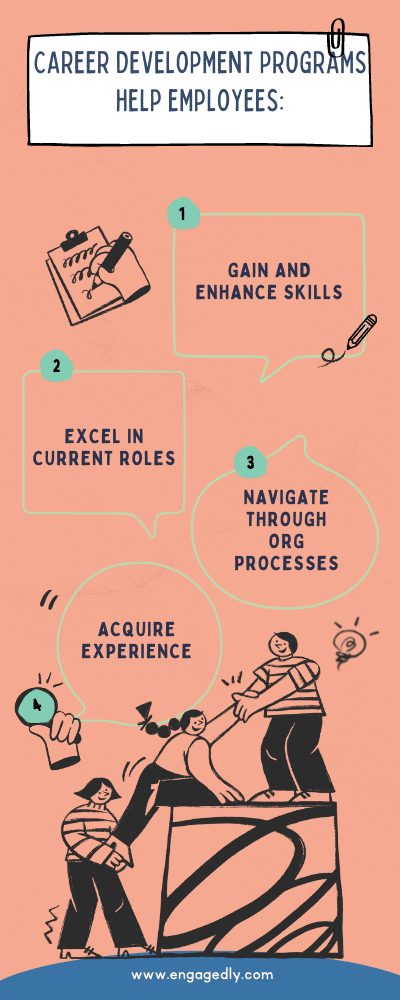
“We’ve seen very high customer satisfaction rates since you joined our team, and we’re extremely grateful for your high quality of service.”
“Our customers ranked your behavior very highly, and we’re extremely happy that you performed this well.”
“Thank you for always behaving politely with customers, no matter how difficult the situation gets. We really appreciate it.”
“Your ability to resolve customer issues quickly and effectively has been a huge asset to the team. We’ve received nothing but positive feedback about your approach.”
“You always go the extra mile to ensure that customers feel valued and heard. Your attention to detail and personal touch make a real difference.”
“The way you handled that difficult customer situation last month was outstanding. You turned a potentially negative experience into a positive one, and we really appreciate your professionalism.”
4. Inspiring Leadership Qualities
Not all employees are suitable for becoming leaders, but those who are should be highly commended for their service. You need to recognize those of your employees who have the best leadership abilities and appreciate them for it.
Appreciating your employees’ leadership abilities is especially important because your company will want to inculcate strong leadership abilities long term.
You can achieve that by using the following feedback examples:
“I appreciate that you often take charge of difficult situations, even when you’re not asked to. That you have a strong sense of responsibility.”
“You’re very good at managing your colleagues and encouraging them to excel.”
“The company values that you are good are inspiring your colleagues and motivating them to work better.”
“You consistently step up to guide the team through challenges, and your ability to stay calm under pressure is a true mark of leadership.”
“Your decision-making skills have been exemplary this year. You lead with confidence and always keep the team focused on the bigger picture.”
“I’ve seen how your mentorship has helped newer team members grow and thrive. Your leadership doesn’t just drive results—it builds others up as well.”
5. Encouraging Personal Growth
It’s important for your company that all of your employees improve their abilities and develop strong growth mindsets. Having growth-minded and progressive employees is important for achieving the most company growth and having the highest profits.
You need to encourage your employees to continue being growth-minded and progressive individuals.
Use the following feedback examples to achieve that:
“It’s extremely impressive to see how much you’ve improved in the past year. I hope you continue doing that.”
“I believe that you have an excellent mindset.”
“The company noticed that you’re constantly taking on new challenges. We’re very impressed by this, and we’d like to encourage and support you to continue doing this.”
“Your commitment to learning new skills, even outside your comfort zone, has been impressive. It’s clear you’re focused on continuous improvement, and that’s inspiring.”
“The way you’ve taken ownership of your personal development is commendable. Your eagerness to grow is setting a great example for the entire team.”
“You’ve shown tremendous initiative in seeking feedback and applying it to improve your performance. That dedication to personal growth is a quality we highly value.”
6. Helping New Hires Settle In
New hires may feel intimidated by existing employees because they might feel that they can’t compete with your existing employees. You need to help your employees overcome this fear by giving them feedback regarding the fact that they’re new to your company.
This is a delicate process, so you need to do it carefully by using the following feedback example:
“We appreciate that you’ve devoted so much time and energy to the company, despite being relatively new here.”
“We’re very glad that you joined our company, and we’re very impressed by your performance so far.”
“We’ve almost never had any other new hires work as great as you.”
“Your willingness to ask questions and seek clarity shows a strong commitment to getting things right. It’s great to see how quickly you’re integrating into the team.”
“You’ve taken on your responsibilities with confidence, and your proactive approach is really helping you settle in. Keep up the great work!”
“You’ve quickly become a go-to person for others, even as a new hire. It’s rare to see someone make such a positive impact so early on.”
7. Encouraging feedback on the Previous Year’s Performance
The best way to improve your employee’s morale is to give them positive feedback within the context of the overall work year. Your employees need to feel that their individual contributions had a big effect on the company overall. You don’t want to give them too much importance, though, because that might lead to an exaggerated sense of importance.
Achieving balance is the key, and you can do it using these feedback examples: “Your performance was splendid this year. You helped improve overall company performance considerably .”
“You achieved virtually every goal that we set out for you this year. As a result, the company benefited immensely, and we’re extremely impressed by your performance.”
“You showed a very consistent work ethic, and we’re extremely impressed with that. You helped improve our company’s work culture.”
“Your dedication and perseverance throughout the year have been remarkable. You’ve consistently delivered great results, and the company is better for it.”
“This year, you’ve shown incredible growth in both your skills and contributions. It’s clear that your hard work has played a big part in our success.”
“Looking back at the year, your impact on the team and our goals has been significant. You’ve helped drive us forward, and that’s something to be proud of.”
8. Recognizing Efforts Beyond the Job Description
Employees who’ve completed extra work deserve extra attention and rewards. You need to develop a progressive work culture where the most accomplished employees receive the best benefits and the most positive feedback.
Your employees undoubtedly crave receiving better attention from you, and you need to provide them with that feedback to fully encourage them to work better and harder.
The following feedback examples will help you achieve that: “You worked above and beyond what was required of you, and we’re extremely grateful for that!”
“You have an excellent work ethic, and we can see that you’ll easily rise through the ranks.”
“You’re a standout example of employee excellence, and we fully appreciate you for your hard work and efforts.”
“You’ve taken on tasks that weren’t part of your original role, and your initiative has really driven the team’s progress forward. Your contributions have been invaluable.”
“Your willingness to step in wherever needed, even when it’s outside your usual duties, shows your dedication and commitment to the company’s success.”
“You consistently go above and beyond to ensure the success of every project. It’s clear that your hard work and initiative have made a lasting impact on our overall performance.”
What Are the Significance and Shortcomings of Annual Feedback?
Giving annual feedback is very important, but there are also certain shortcomings involved.
Significance
1. Timely scheduled
Annual performance reviews take place at the same time every year. The benefit of annual feedback is that they make it easier for employees and employers to plan and prepare for the employee review session. Another benefit of annual reviews is that it reduces the disruption of your organization’s workflow.
2. Standardized process
An annual review offers a standardized route for reviewing employees. The benefit of standardization is that it improves your organization’s ability to institutionalize objective performance reviews. Standardized processes are easier to implement organization-wide, and they can save valuable time and resources for your company.
3. Engages all levels of management
Not all levels of management can equally engage with employees. A standardized annual feedback session is one of the best ways for your company’s managers to monitor employee performance. Another benefit of annual feedback sessions is that it provides upper management with an incentive to check and monitor employee performance.
4. Provides transparency
It’s important for employees to understand their performance and their position in their company. Annual reviews are the best way to provide employees with the feedback necessary to become effective and engaged.
5. Provides insights into strengths and weaknesses
Performance reviews also provide employees with valuable information on their strengths and weaknesses. They can use this information to improve their performance and skill sets. Combining these insights with internal talent mobility helps organizations identify future leaders and match employees with new growth opportunities.
Annual reviews happen relatively rarely, so they don’t provide frequent information for employees. The fact that these reviews occur so infrequently means that employees can’t receive regular feedback.
An additional consequence of rare feedback periods is that it lowers the impact of each performance review for team members. Annual feedback for employees also results in employees having more relaxed attitudes towards feedback sessions.
2. Anxiety over annual reviews
Annual reviews can lead employees to becoming more anxious since they won’t know what to expect. This is especially the case for new employees, who do not know what to expect from an annual review that will take such a long time away. Therefore, annual performance reviews can lead employees to not having any idea how to react or prepare for feedback sessions, and this often results in much anxiety for many employees.
3. Reinforces hierarchical structures
Annual performance reviews remove the degree of familiarity between employees and managers. Employees are less likely to be able to engage in two-way conversations with employees. Instead, your managers dominate the performance reviews, which is undesirable since it means that many of the benefits of performance reviews are lost.
4. Limited resolution regarding the performance
Employees work for thousands of hours every year. These thousands of hours vary in terms of quality and experience. So, it is not possible for a single annual performance review to capture the full complexity of an employee’s work life. Therefore, it’s possible that your annual employee performance review is just too rarely held for it to be practical.
5. Hard to rank performance
Ranking employees could adversely affect workplace culture if not done properly. You don’t want your employees to develop strict rivalries against one another. And, you also don’t want your employees to use your annual performance reviews as opportunities to put each other down.
Having annual performance reviews makes it easier for negative aspects of performance reviews to become more common because rare reviews increase the potential damage caused to employees.
In conclusion, providing positive annual feedback is extremely important for your business. The world’s most effective companies are also the ones that master the art of delivering impactful positive feedback throughout the year. So, use the feedback examples we’ve given here to improve your company’s feedback delivery abilities.

Frequently Asked Questions (FAQs)
What does annual feedback mean for employees?
Annual feedback for team members is a structured review conversation that recognizes achievements, discusses improvement areas, and sets future goals. Annual feedback for team members is a formal performance conversation between a manager and an employee, usually held once a year. It typically covers: Key achievements and milestones Strengths and positive contributions Areas for improvement Development goals for the next review cycle The purpose is not just evaluation. It is also to recognize effort, improve clarity, and support employee growth. A strong annual review helps employees understand how their work is viewed, where they add value, and what they should focus on next. When managers use clear, specific examples, annual feedback becomes more motivating and useful than generic praise or vague criticism.
Why is positive feedback important in annual reviews?
Positive annual feedback improves employee confidence, motivation, engagement, and clarity about how their work contributes to company success. Positive annual feedback matters because employees want to know that their work is noticed and valued. Its biggest benefits include: Higher motivation and morale Stronger employee engagement Better understanding of strengths Improved sense of purpose and belonging Clearer direction for future growth When managers recognize specific contributions, employees are more likely to stay committed and perform well. For example, highlighting how someone supported team collaboration or exceeded project goals makes the feedback more meaningful. Positive review comments also strengthen workplace relationships because employees feel seen, respected, and connected to company goals rather than judged only on mistakes.

What are good positive review comments for employees?
The best positive annual feedback examples are specific, behavior-based, and tied to teamwork, results, growth, or leadership. The best positive feedback examples focus on what the employee did, why it mattered, and what it says about their strengths. Strong categories include: Teamwork and collaboration Major achievements or milestones Excellent customer service Leadership potential Personal growth and initiative Contributions beyond the job description For example, instead of saying “great job this year,” say, “You consistently kept the team updated during high-pressure projects, which improved coordination and trust.” Specificity makes praise more credible and actionable. The most effective annual review comments also connect performance to business impact, team morale, or future potential.
How do managers make annual feedback more meaningful?
Managers give useful annual feedback by being specific, balanced, timely, and focused on real contributions and future growth. Annual feedback feels genuine when it is based on real observations rather than generic praise. Managers should: Use specific examples from the year Recognize both results and behaviors Explain the impact of the employee’s work Keep the tone balanced and respectful Connect feedback to future goals and growth For example, praising a team member for helping new hires settle in or stepping up outside their role feels much more authentic than broad statements like “you did well.” Employees respond better when feedback is concrete and fair. A useful annual review should leave the employee with confidence, clarity, and a sense of direction for the year ahead.
What are the disadvantages of annual performance reviews?
Annual performance feedback alone can feel too infrequent, create anxiety, miss context, and limit meaningful two-way dialogue. Annual feedback is valuable, but on its own it has important limitations. Common shortcomings include: Feedback is too infrequent to guide real-time improvement Employees may feel anxious because so much depends on one review One meeting cannot fully capture an entire year of work Managers may dominate the conversation instead of creating dialogue Delayed feedback can reduce its relevance and impact That is why many companies now combine annual reviews with more regular check-ins and recognition throughout the year. Annual feedback works best as part of a broader feedback culture, not as the only moment employees hear how they are doing.