Most HR playbooks were written for people who sit at desks. Then you walk onto a warehouse floor at 6 am and realize none of it applies.
Half of them have never logged into the HRIS. The engagement survey you spent three weeks building got a 9% response rate because it went out through a channel they can’t access.
Roughly 80% of the world’s workforce is deskless. This piece covers what actually moves the needle for frontline teams and how to pick technology that survives contact with a real shift schedule.
Where Frontline Management Breaks Down
The failures cluster in predictable places. Before fixing anything, it helps to name them honestly.
Communication that never arrives
If your default channel is email or an intranet behind a VPN, most frontline workers will never see it. The message physically cannot reach them during a shift where their phone is in a locker and their hands are full.
So updates get relayed through managers, verbally, at shift change. By the third retelling, the policy change about overtime approval has mutated into something legal would not recognize. Then people act on the mutation, and HR spends a month cleaning up.
Turnover that pay raises don’t fix
Frontline-heavy sectors bleed people. The reflex is to throw wage increases at it, and sometimes that’s genuinely the answer.
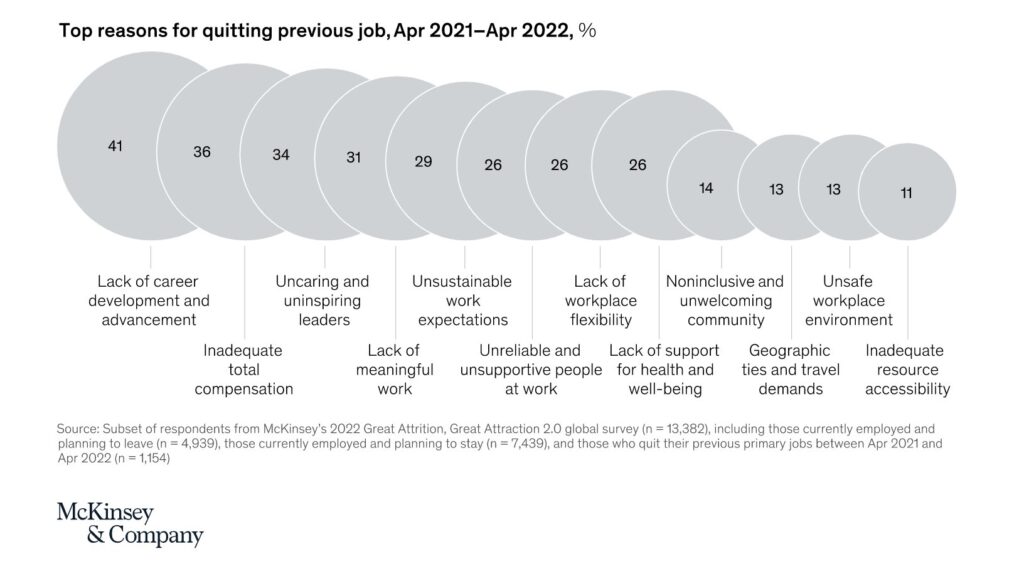
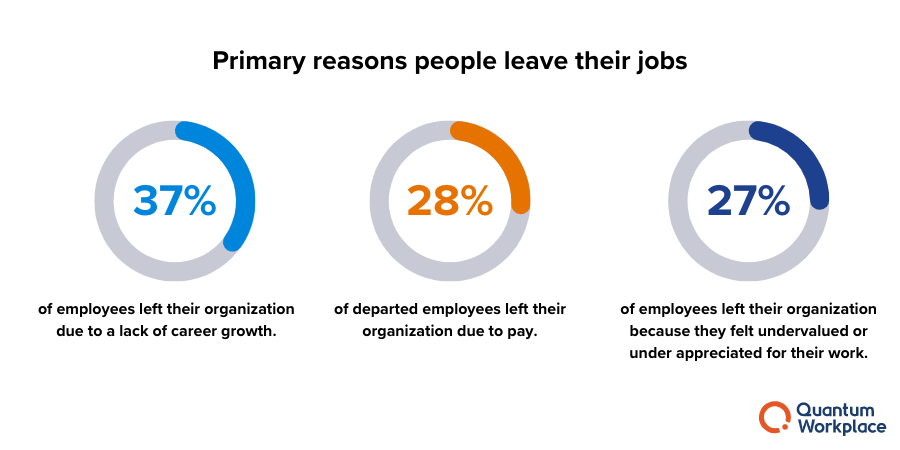
But McKinsey’s research found frontline workers cite lack of career advancement and feeling disrespected as top quit reasons, sitting right alongside pay.
You can out-pay a competitor and still lose people who’ve concluded the job goes nowhere.
Training nobody has time for
Shifts are tight. Coverage is thin. Pulling someone off the floor for a 90-minute e-learning module is a staffing problem, so it doesn’t happen, and the training backlog grows. The 2022 Microsoft Work Trend Index on frontline work found frontline employees want more technology and better training access and get enough of neither.
Underneath all three sits the culture problem. When communication, learning, and recognition all live in tools you can’t reach, the mission statement on the wall is just paint.
Engagement That Works on a Shift Schedule
Everything below shares one design constraint: it has to work for someone standing up, mid-shift, with ninety seconds to spare. If a program fails that test, it fails, full stop.
Structural inclusion
A frontline appreciation week is symbolic. A rotating council of workers from different sites and shifts who meet monthly with leadership, raise issues, and see documented follow-up on what changed is structural. One costs a banner. The other costs actual decision-making power, which is why most companies do the banner.
Do the council. Share back what changed within the month. The share-back is the entire mechanism; skip it, and the council becomes a complaint box with chairs.
Recognition at the speed of the work
A quarterly review means very little to someone working a register. What lands is recognition they can feel during the shift itself.
Two taps to recognize a teammate, not a form
Standup shout-outs and safety wins as micro-rituals built into the shift, where the work actually happens
Manager response within 24 hours when someone raises a concern, because a fast response is itself a form of respect
Voice notes instead of written submissions where literacy or language is a barrier
Physical tokens still carry weight too. Teams that mark safety milestones or service anniversaries with custom t-shirts give recognition a visible, lasting form that a notification never will, and workers wear the proof of it onto the floor.
Meet people on the device they already own
Walmart’s Me@Walmart app puts scheduling, communications, and tools directly on associate’s phones. The lesson generalizes: participation problems are usually access problems wearing a costume.
Short mobile updates with one clear call to action will outperform any beautifully formatted memo, every time, at any company size.
Retention: The Levers That Actually Hold People
Here’s where most programs underinvest, and it’s the section that deserves the most weight.
The fix is unglamorous, and it works: publish skill ladders for every frontline role, with pay transparency at each rung. Tie skill badges to real pay bumps and preferred shifts, not certificates.
Daniel Apke, Founder of Land Portal, a real estate investing platform, has built his company’s field-facing teams around this exact principle.
He says, “The people doing the ground-level work are the ones who understand the business best, and they know when a career path is real versus decorative. If someone can see the next rung and knows exactly what it takes to reach it, they stop scanning job boards. Ambiguity is what makes good people leave, not the work itself.”
Promote from within, visibly. One floor associate becoming a site supervisor does more for retention than any engagement campaign, because everyone watching just recalculated their own odds.
Compensation shaped for shift work
Base pay matters. So do the things that account for how shift work actually disrupts a life:
Earned wage access, so a car repair doesn’t become a payday loan
Transportation, parking, or childcare support
Predictable scheduling isn’t just kindness.
The manager multiplier
Gallup has found repeatedly that managers account for a huge share of variance in team engagement. On the frontline, this compounds because the manager is often the employee’s only human contact with the company.
Train them for the floor, not the classroom. Five-minute coaching conversations. Conflict resolution mid-shift, between two people who have to keep working together for six more hours. Micro-lessons a supervisor can absorb standing in a stockroom.
A frontline manager who handles those three things well is worth more to retention than the entire benefits brochure.
Technology That Survives the Floor
The rule is short. If a tool doesn’t fit in a worker’s pocket, it doesn’t exist for a deskless team.
Everything below assumes mobile-first and cloud-based, because anything else fails at the login screen.
The core stack:
Communication: mobile updates, SMS alerts, genuine two-way messaging. Broadcast-only tools train people to ignore them.
Scheduling: self-serve shift swaps, time-off requests, forecast visibility. Every swap that doesn’t require a manager is friction removed twice.
Learning: microlearning with offline mode, plus QR codes on equipment linking straight to the relevant SOP. Training at the point of task beats training in a portal.
Workflow: checklists, digital forms, safety reporting with photos or voice notes.
Recognition and feedback: one-tap kudos, pulse checks embedded in tools people already open daily.
AI without the fear
Frontline teams hear automation and hear layoffs. Address it directly, because dodging it kills adoption.
The honest framing: automation done right cuts busywork, not headcount. Smart scheduling that balances preferences against compliance rules. Shift handoffs auto-transcribed in multiple languages.
Task suggestions responding to real-time demand. Safety anomaly detection from photos or sensor data. All of it removes the repetitive load that burns people out, which is precisely the load nobody misses.
Gregor Emmian, Deputy Chief Digital Growth Officer at Rise, a fintech platform focused on global workforce payments, sees the same pattern in how frontline teams respond to new tools.
He says, “Adoption follows trust, and trust follows transparency. When workers understand that automation is taking the paperwork and not the paycheck, usage climbs on its own.
The rollouts that fail are almost always the ones where leadership announced the tool but never explained the intent behind it.”
Rollout discipline
Co-design with frontline input from day one, before procurement, not after. Pilot on one site or one shift. Train on the floor in ten-minute bites. Support BYOD securely and provide devices where BYOD isn’t fair to ask.
And explain the why: what changes, what doesn’t, and exactly how the data gets used. Skip that last conversation and the workforce will invent a surveillance story on your behalf.
Measuring Whether Any of This Worked
Metrics only matter if they change decisions. A dashboard nobody acts on is decoration.
Track a spread across the areas that actually predict outcomes:
Engagement: pulse response rates, belonging index, recognition frequency
Retention: overall and regrettable attrition, 30/60/90-day turnover, internal mobility rate
Scheduling: shift fill rate, schedule stability, voluntary vs. involuntary overtime
Safety and quality: incident rate, near-miss reporting, first-time-right completion
Learning: time-to-competency, completion rates, skills earned per FTE
Adoption: active usage, feature uptake, time saved per task
Put the numbers on mobile dashboards. Review them in weekly standups, not quarterly business reviews. And keep pairing the data with stories from the floor, because a 4% dip in schedule stability reads differently once you’ve heard what it did to someone’s childcare arrangement.
What’s Next
Skills-based staffing, portable credentials, AI copilots, AR-assisted training. All of it is moving from pilot to practice, and all of it hangs on the same thread: access. Tools, learning, and voice in every worker’s pocket.
Start small. Fix the channel before the campaign. Measure what matters, expand what works, and keep listening to the people closest to the work, because the best ideas in this space have always come from a shift-change conversation, not a boardroom.
See how Engagedly helps you put engagement, recognition, and growth tools directly in your frontline worker’s hands.
Jeevithan K is a Senior Solutions Consultant at Engagedly with extensive experience in HR technology, customer success, product implementation, onboarding, and training. He specializes in helping organizations adopt B2B SaaS and enterprise AI solutions effectively. His expertise also includes project management, account management, process improvement, and translating complex product capabilities into practical solutions that deliver meaningful value for customers.















 Performance