


The Top 10 Workday Alternatives You Need to Know in 2026

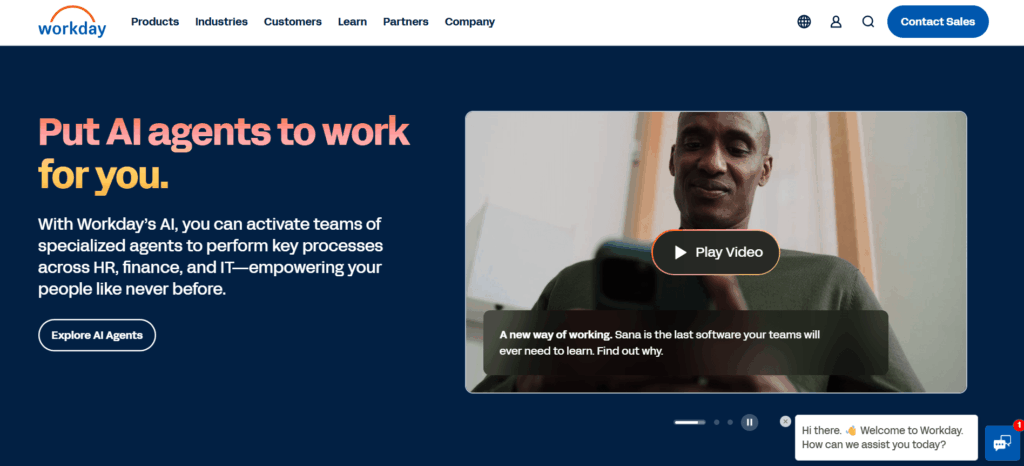
Performance management and talent development platforms are essential for organizations seeking to drive employee engagement, align goals, and foster continuous improvement. While Workday has established itself as a leading enterprise HR solution, many organizations today are exploring alternatives – whether due to implementation complexity, total cost of ownership, deployment speed, or the need for specialized features in performance management, engagement, and learning.

This comprehensive guide examines the top 10 Workday alternatives in 2026, highlighting platforms that help organizations streamline performance, boost engagement, and accelerate development while offering flexible implementations that fit diverse organizational needs.

Why Organizations Seek Alternatives to Workday

While Workday provides a comprehensive HR and financial management suite, several factors drive organizations to explore alternatives:

Cost Considerations: Workday typically requires significant upfront investment, which can be prohibitive for mid-market and smaller organizations scaling efficiently.

Implementation Complexity: The platform’s robust feature set comes with a steep learning curve and lengthy deployment timelines, often taking 6-12 months for full implementation.

Specialized Needs: Many alternatives offer deeper functionality in specific areas – continuous feedback, OKR management, employee engagement surveys, or integrated learning – that Workday treats as secondary modules.

Deployment Speed: Organizations need solutions that can be operationalized in weeks, not quarters, to address immediate performance management challenges.

User Experience: Emerging platforms prioritize intuitive interfaces and mobile-first design, reducing training overhead and improving adoption rates across organizations.

Top 10 Workday Alternatives You Should Consider in 2026

1. Engagedly

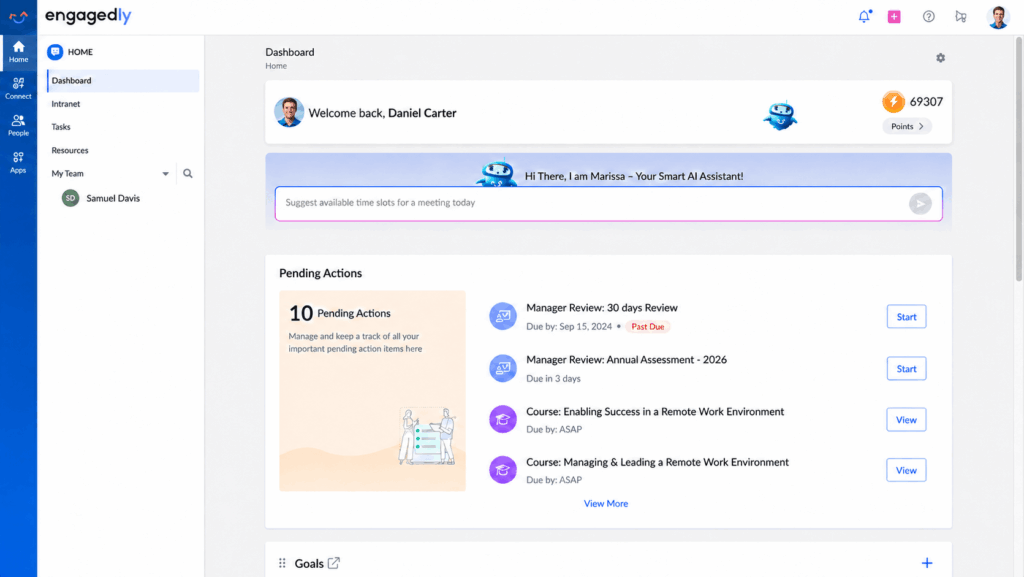
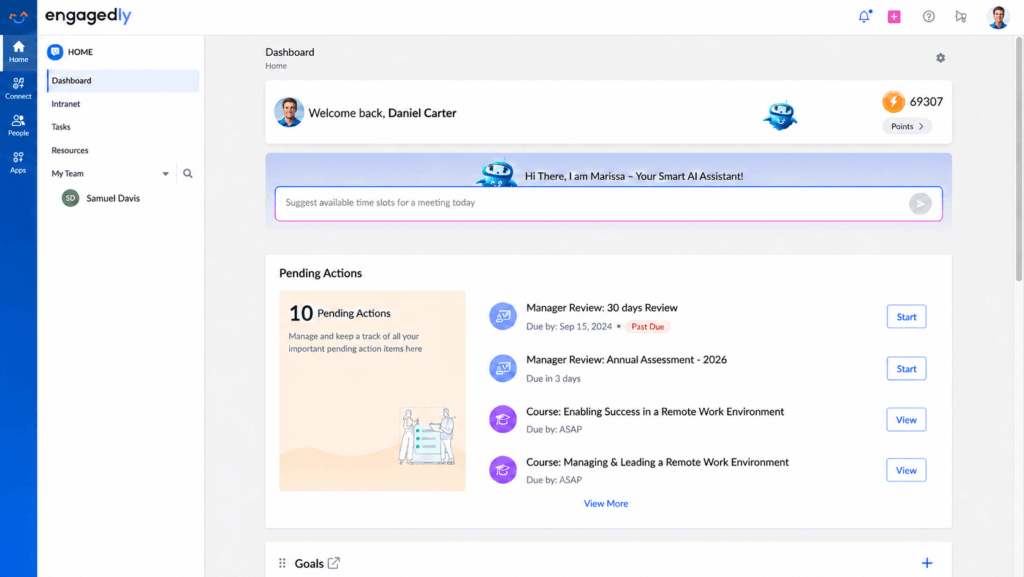
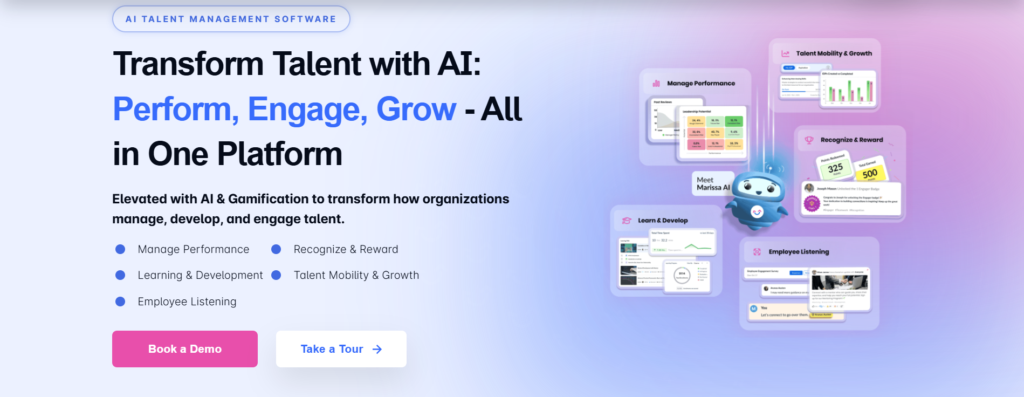
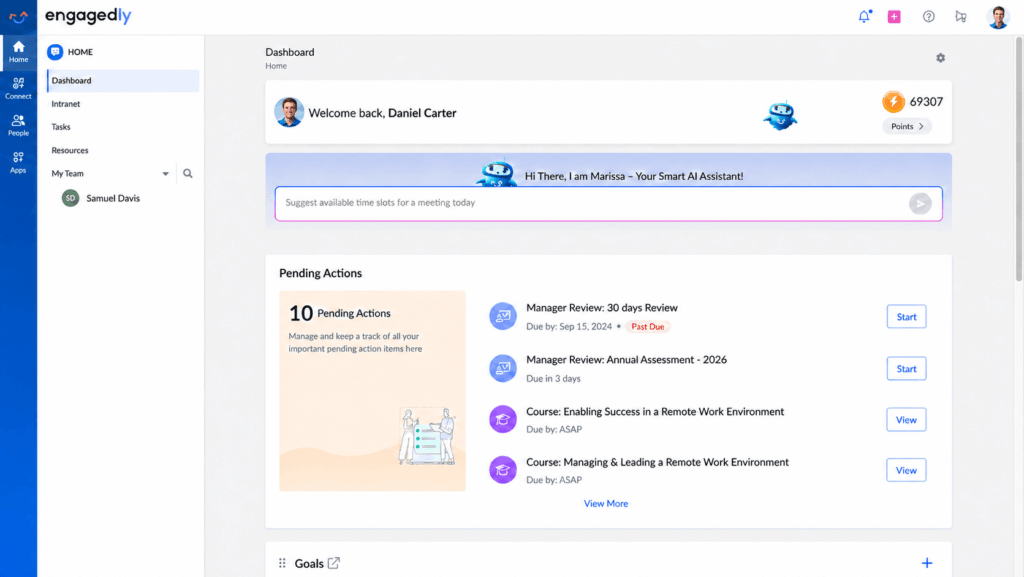
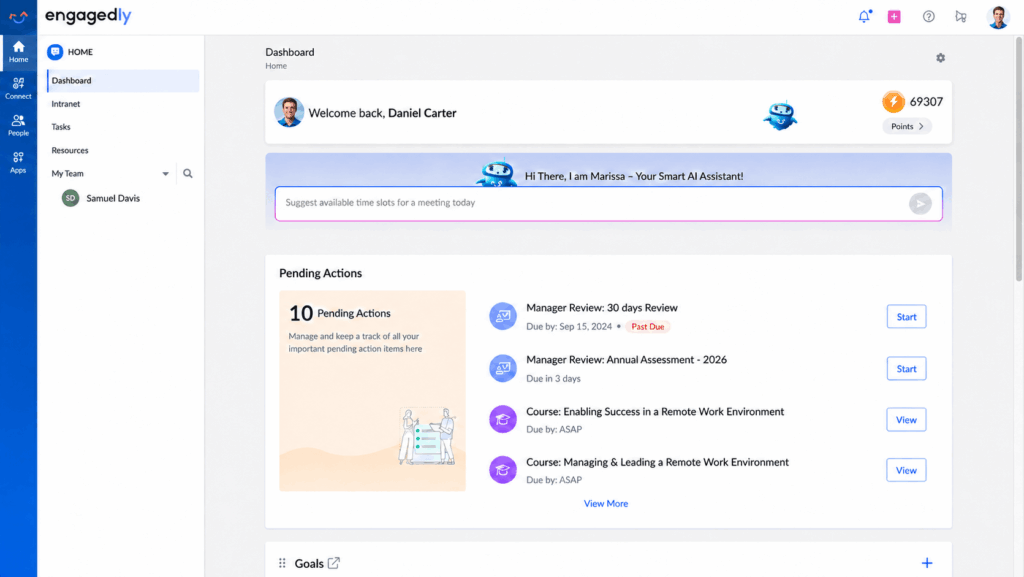
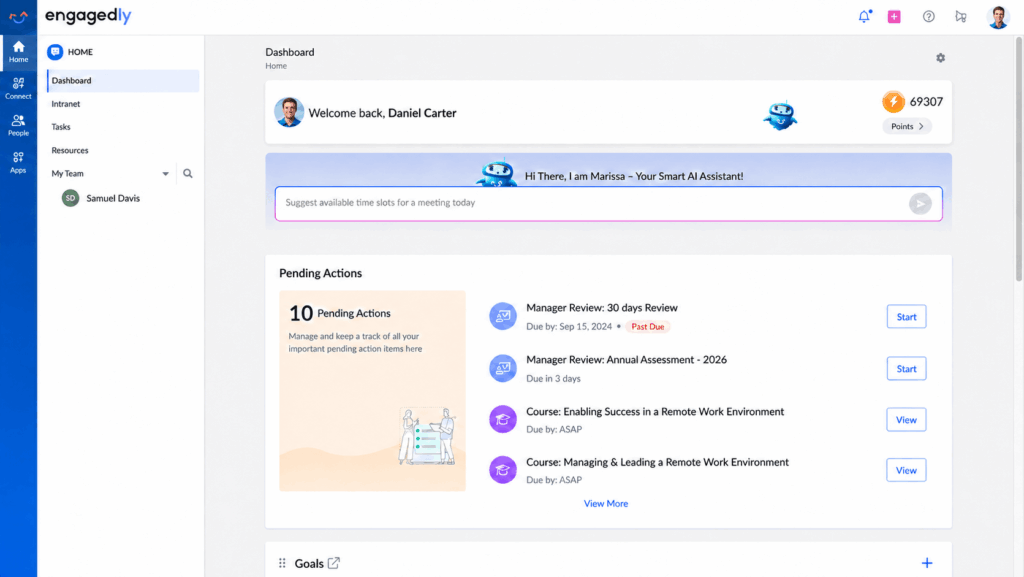
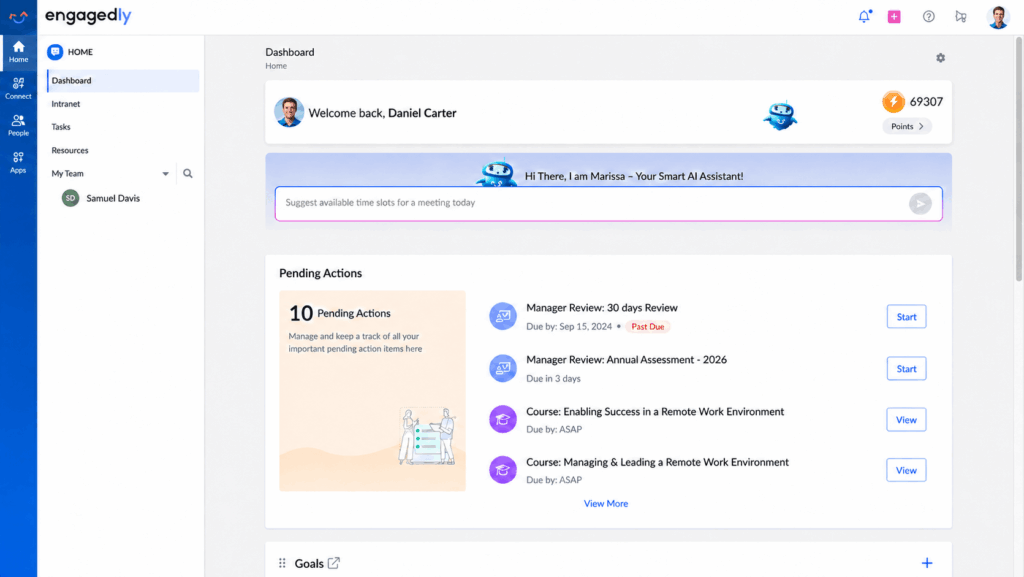
Engagedly is an AI talent management platform built to help organizations connect
performance, engagement, learning, growth, and recognition in one unified experience.
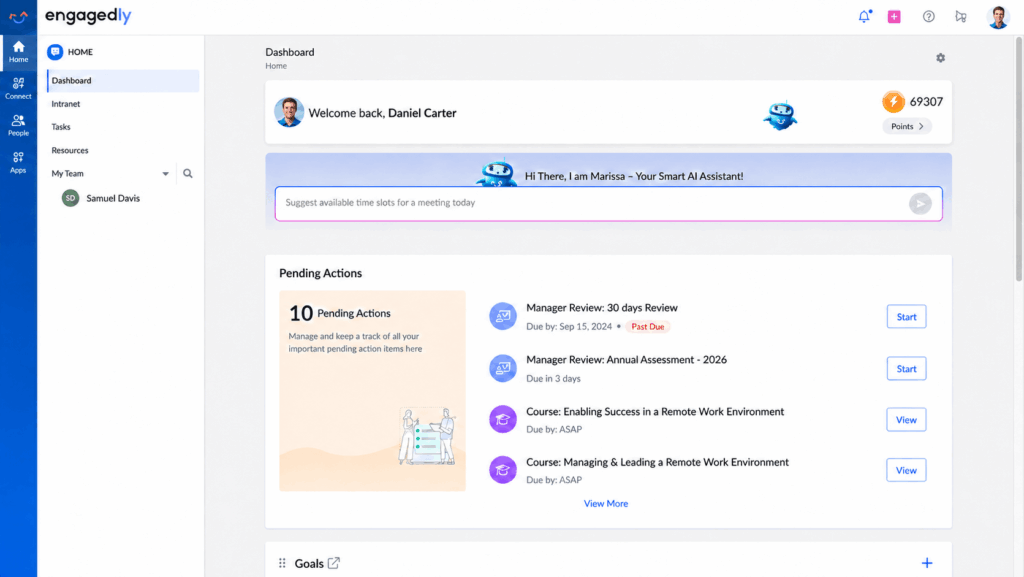
Powered by Marissa, its AI SuperAgent, Engagedly helps leaders turn people strategy into
intelligent actions, reduce talent silos, and drive measurable business outcomes. Trusted by
organizations worldwide, Engagedly supports stronger engagement, better retention, and the
development of high performing teams.

AI-driven capabilities

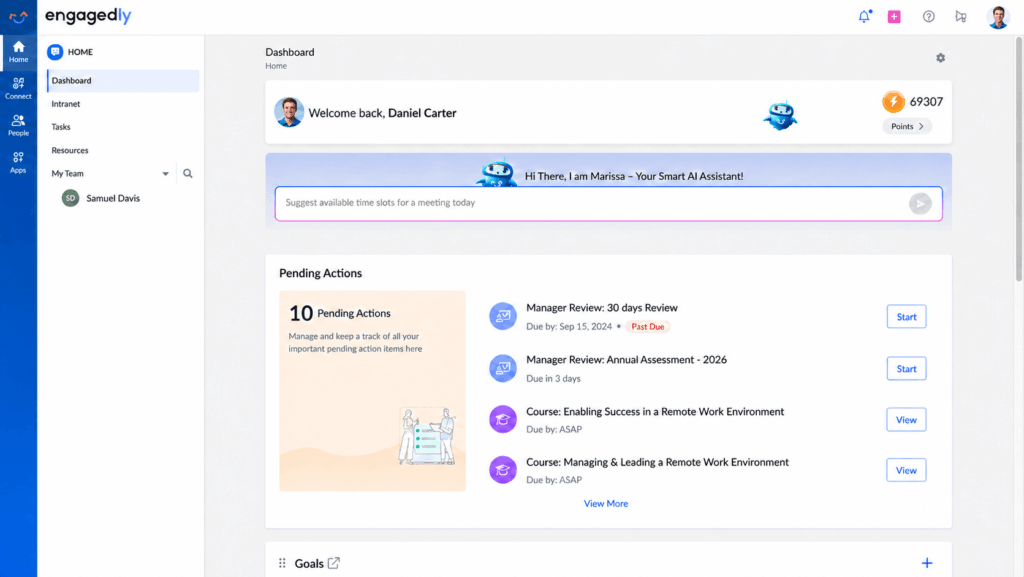
Engagedly unifies performance reviews, OKRs and goals, 360 feedback and multi-rater assessments, employee engagement, and learning management into one agentic platform. With Marissa’s guidance, organizations get actionable insights and proactive recommendations that support continuous improvement.

Key features with Marissa AI

  • Performance reviews: AI-driven evaluations that keep ratings consistent, unbiased, and transparent.
  • Goals and alignment: Marissa auto-suggests goals, aligns them with strategic objectives, and tracks progress in real time.
  • Real-time feedback: Intelligent nudges that build a feedback-rich culture between managers and employees.
  • Learning management: AI-curated learning paths through the Learning Experience Platform, so upskilling does not require a separate tool.
  • 360-degree feedback: AI-enhanced analytics that surface deeper insight from peer, manager, and report feedback.
  • Talent mobility: Skill gap analysis, IDPs, and career paths through the Growth Hub keep development tied to real opportunities.
  • Recognition: AI identifies top performers and suggests timely recognition, reinforcing a culture of appreciation.

User experience

Engagedly delivers a consistent experience across web and mobile, with AI-guided navigation. Marissa’s conversational interface lets leaders and employees interact naturally instead of digging through menus.

Unique strength

Engagedly is not just another HR system, it is an agentic AI-driven talent management platform. Mid-market organizations use it to automate tactical processes, surface predictive insights, and build a culture of engagement and high performance. For a side-by-side view of how it compares with the platform this list is built around, see Engagedly vs Leapsome.

Pricing

Modules range from $2 to $10 per user per month, billed annually, with a $7,500 per year minimum. Bundles and enterprise plans are available on request.

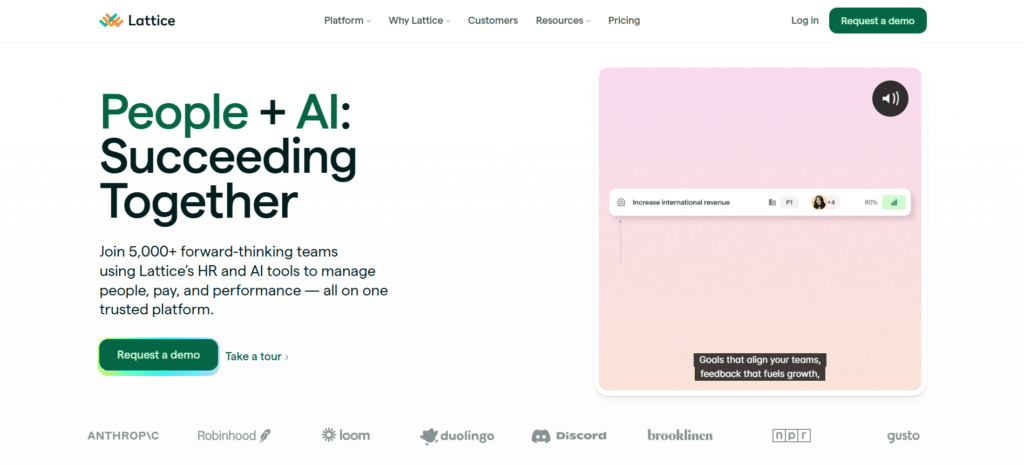
2. Lattice

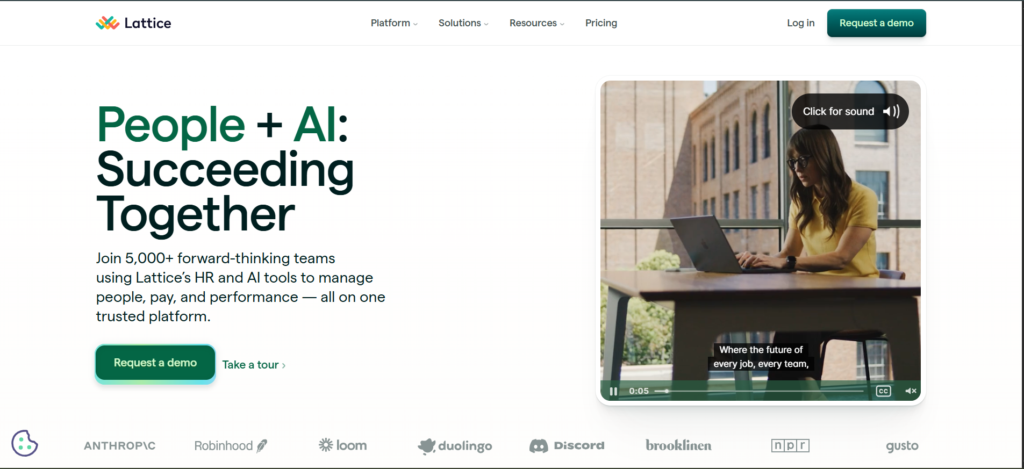
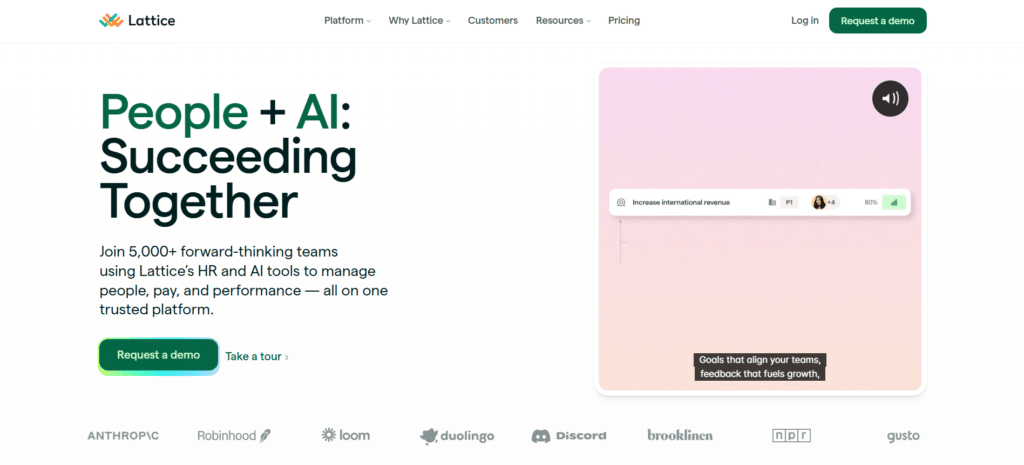
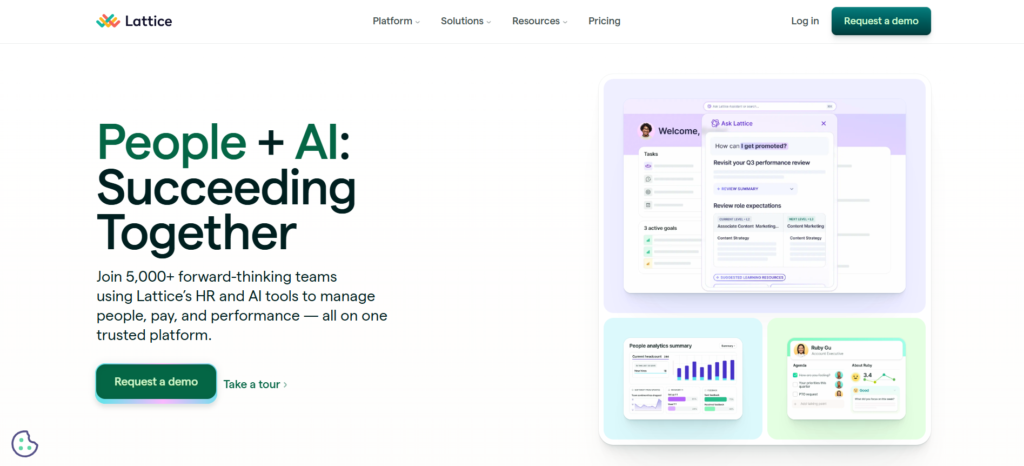
Lattice is a performance management and employee engagement platform built for mid-market companies prioritizing structured goal alignment and continuous development. The platform unifies performance reviews, OKR tracking, engagement surveys, and development planning in one system designed for HR-led programs.

Best For: Mid-market organizations (200-2,000 employees) that take performance management seriously and want deep customization without enterprise-grade complexity.

Key Capabilities: Structured performance reviews with customizable templates and multi-rater feedback, OKR cascading and goal alignment with progress dashboards, engagement surveys with benchmarked analytics, compensation planning tools, and career development frameworks. Lattice integrates with major HRIS platforms, reducing manual data entry and synchronization challenges.

Unique Strength: Lattice’s OKR architecture is among the deepest in the market. Organizations report review completion rates improve from 60% to 95% after implementing Lattice, largely due to integrated goal tracking that makes feedback contextual and performance conversations strategic.

Pricing: Lattice starts at $11/user/month for its core Talent Management module, with Engagement, Grow, and Compensation sold as add-ons at $4-6/user/month. Annual minimum commitment is $4,000. Full-featured deployments typically cost $18-25/user/month when all modules are bundled.

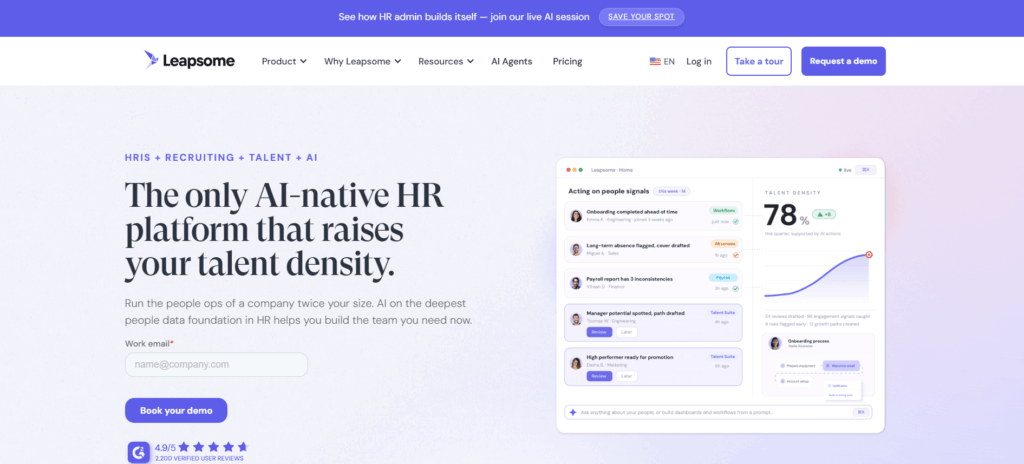
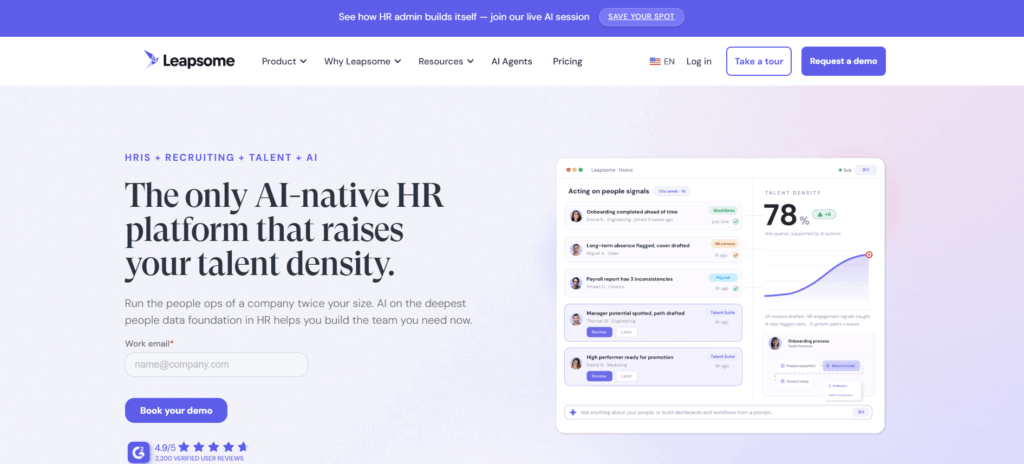
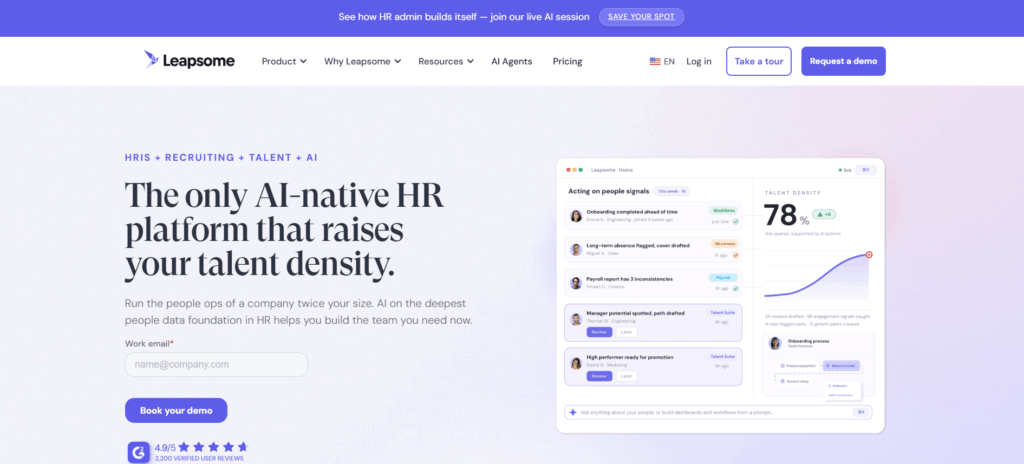
3. Leapsome

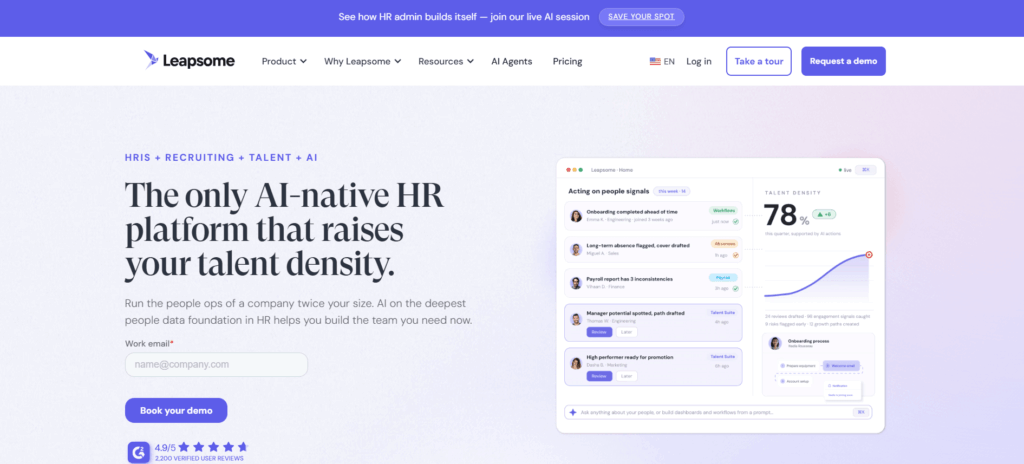
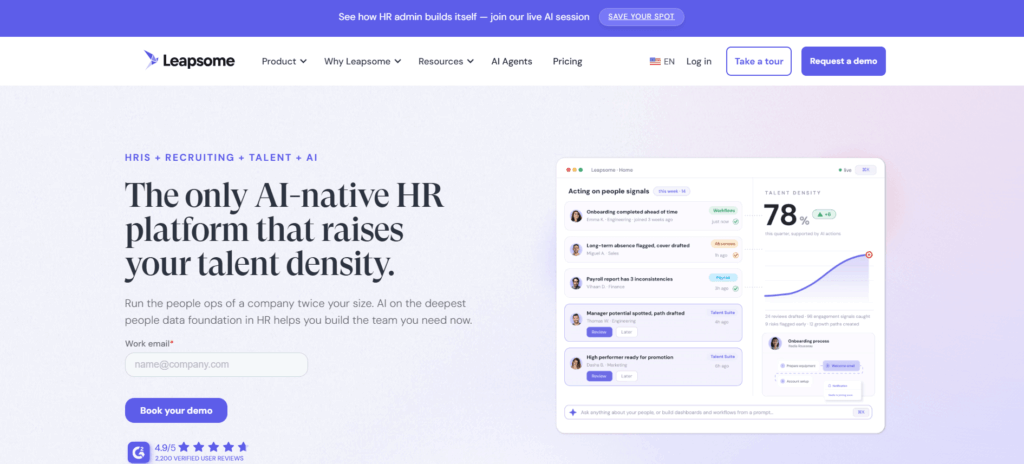
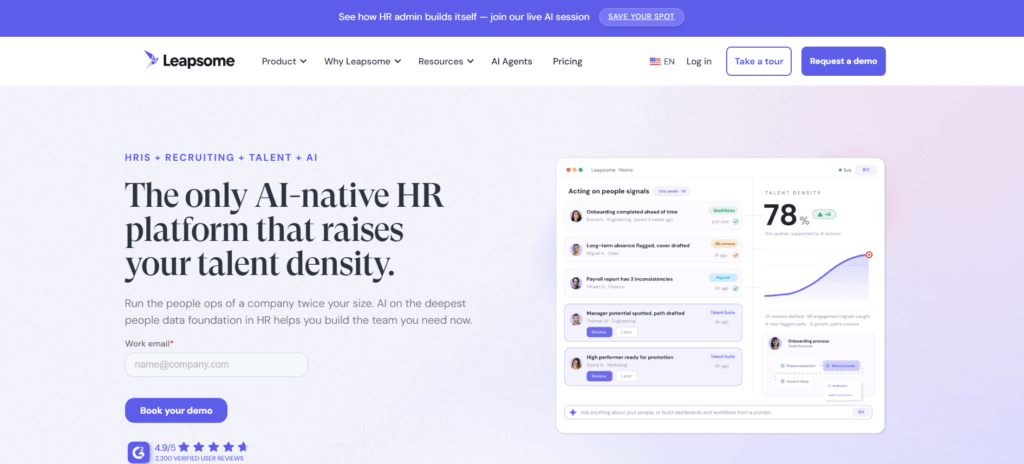
Leapsome is a people development platform that connects performance management, learning, feedback, and engagement into one cohesive experience. The platform is purpose-built for organizations seeking to align individual development with organizational performance.

Best For: Companies prioritizing skills development and learning alongside performance management, particularly those with distributed or international teams.

Key Capabilities: Customizable performance reviews with 360-degree feedback, goal setting with OKR support, integrated learning management system with AI-curated learning paths, engagement surveys with predictive analytics, and career development planning tied to skills mapping.

Unique Strength: Leapsome’s integration of learning and performance is distinctive. Organizations can attach specific development actions to performance gaps, creating a direct line from review insights to skill acquisition. Multilingual support serves globally distributed teams.

Pricing: Leapsome uses modular pricing starting at $3-8/user/month for individual modules. Full platform pricing requires a custom quote based on features, headcount, and contract length.

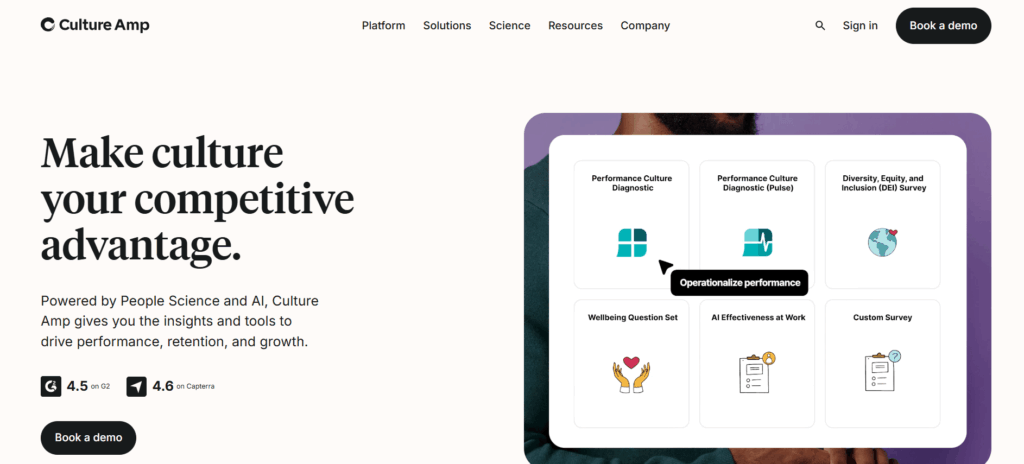
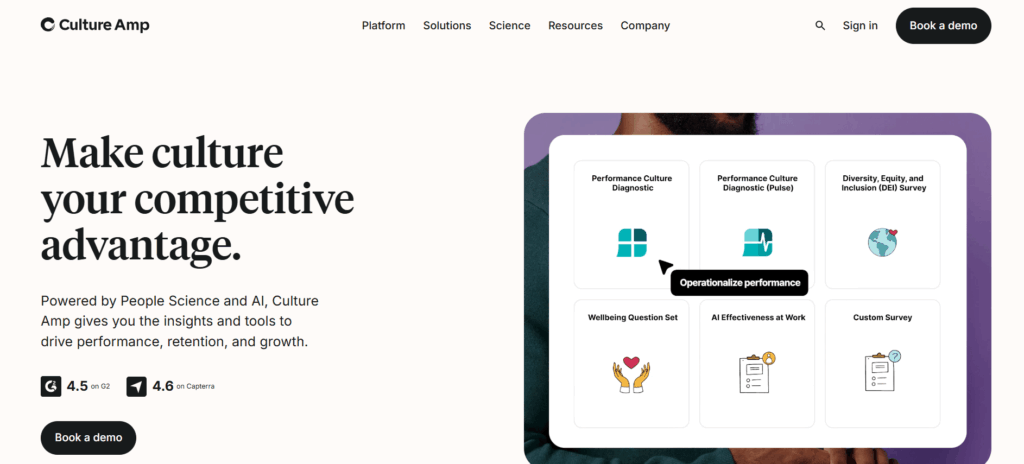
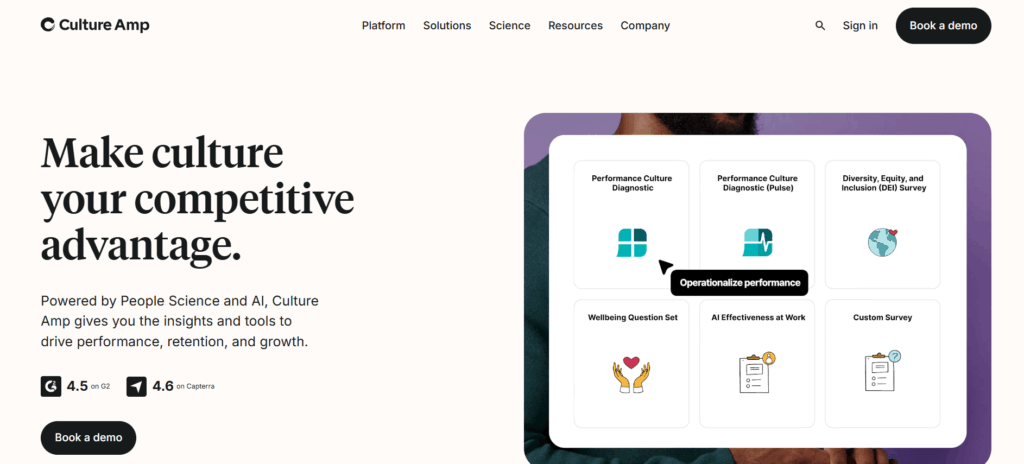
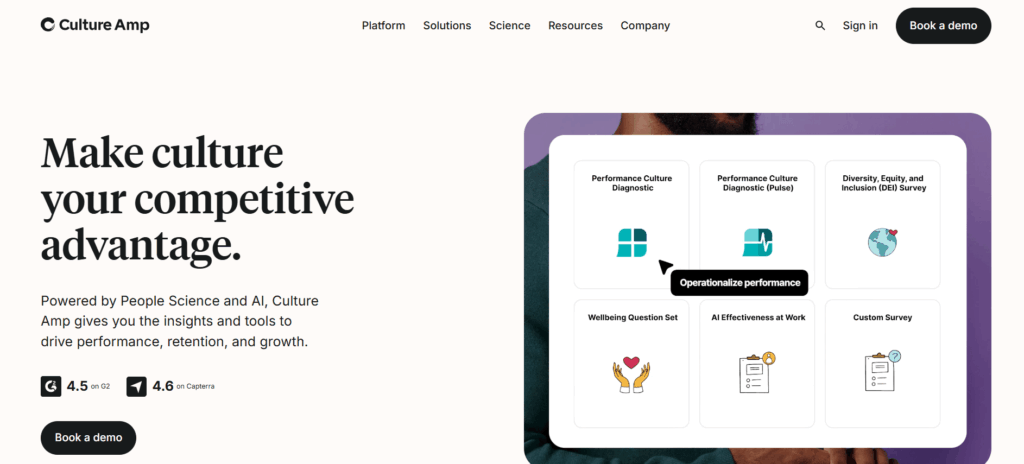
4. Culture Amp

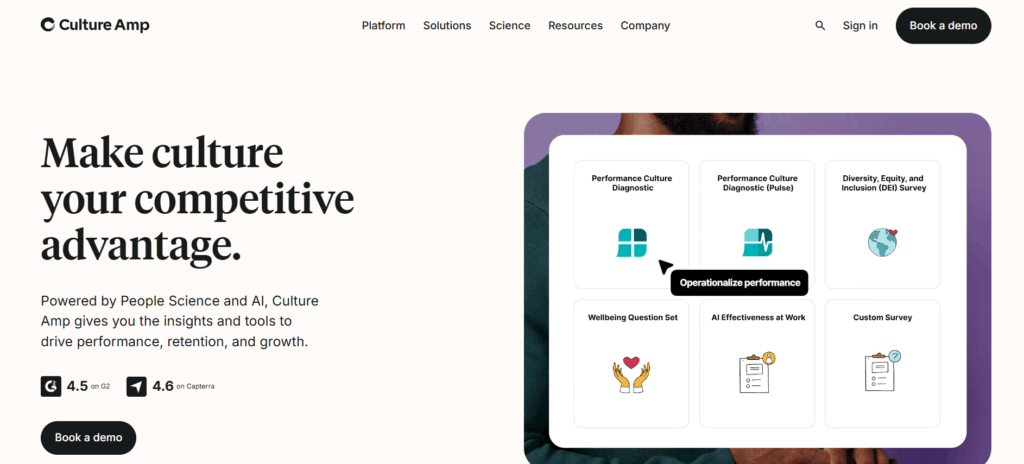
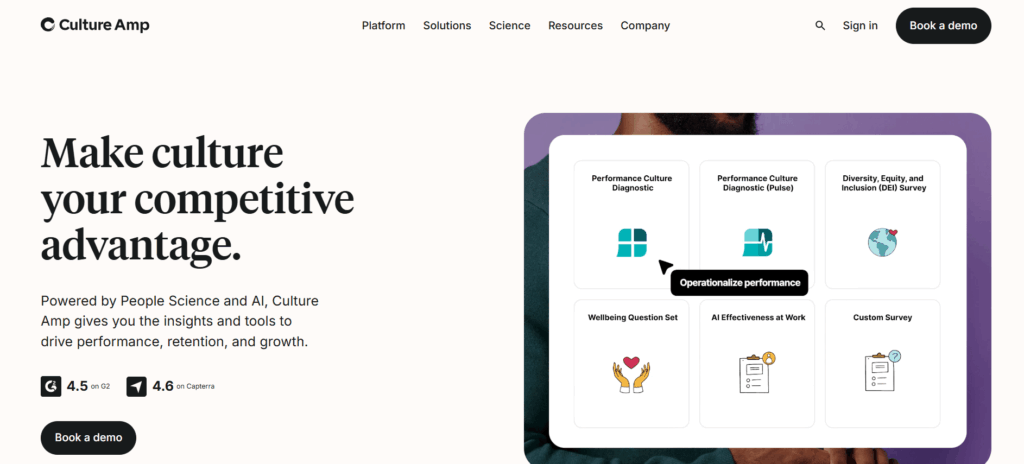
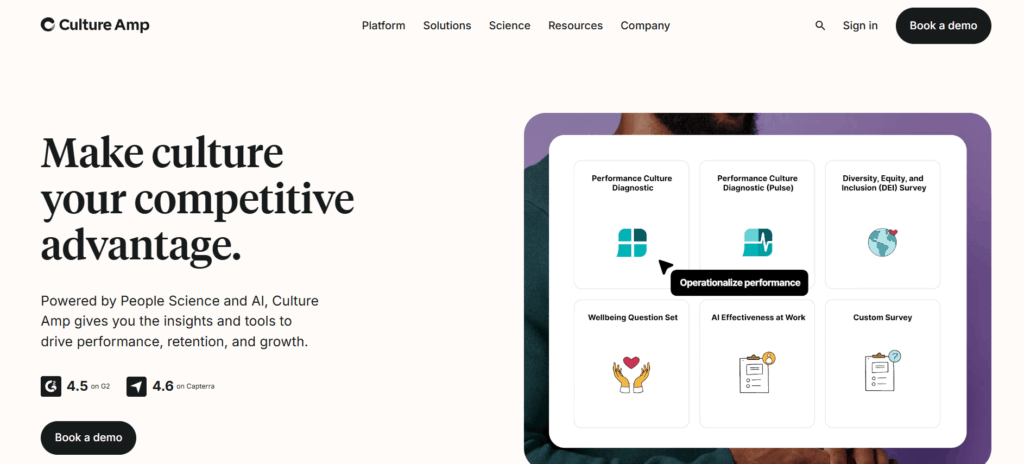
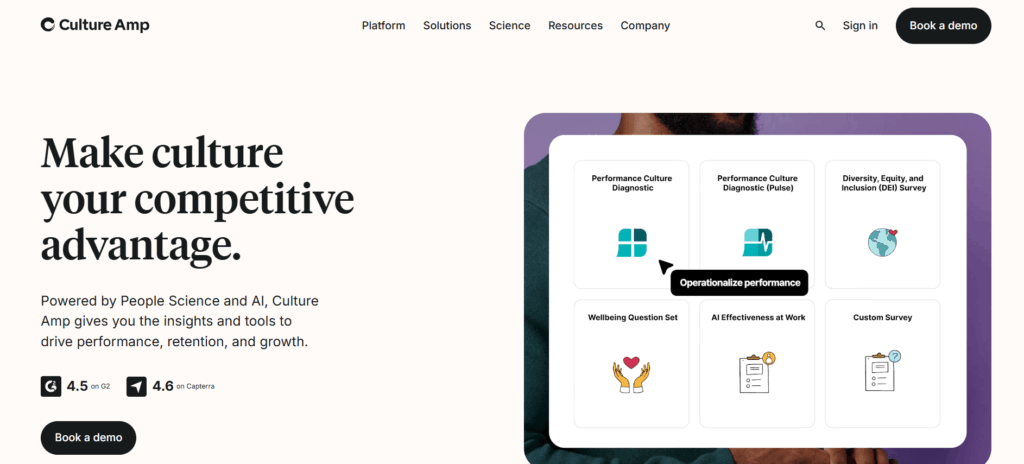
Culture Amp is an employee engagement and culture analytics platform that combines pulse surveys, feedback collection, and performance reviews with benchmarked insights. The platform focuses on transforming culture through data-driven decision making.

Best For: Organizations prioritizing employee experience and culture transformation, with strong emphasis on survey analytics and benchmarked comparisons.

Key Capabilities: Engagement and pulse surveys with sentiment analysis, performance reviews integrated with feedback, goal alignment tools, and culture benchmarking against industry peers. Advanced analytics surface hidden patterns in employee satisfaction, retention risk, and engagement drivers.

Unique Strength: Culture Amp’s benchmarking engine allows organizations to compare their scores against thousands of peer organizations, providing context for internal performance. AI-driven insights identify which actions will have the highest impact on retention and engagement.

Pricing: Culture Amp does not publish transparent pricing. Organizations typically work through a sales process.

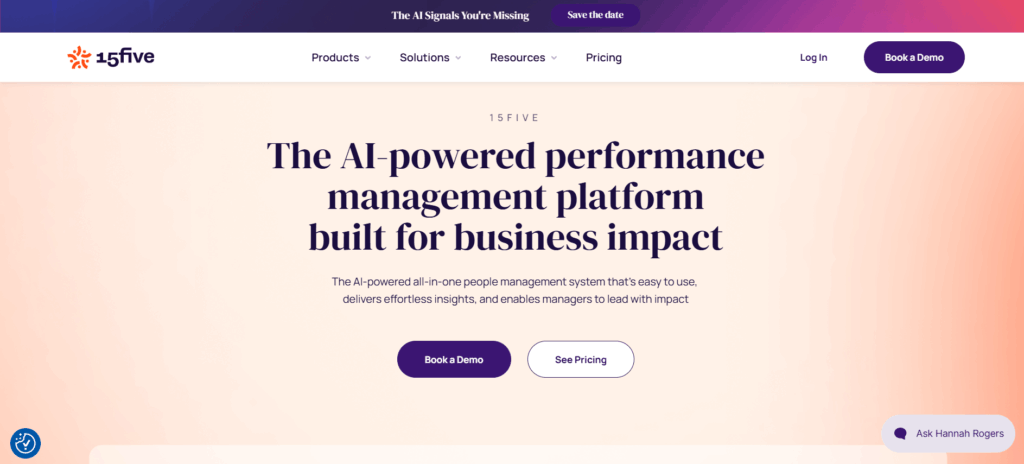
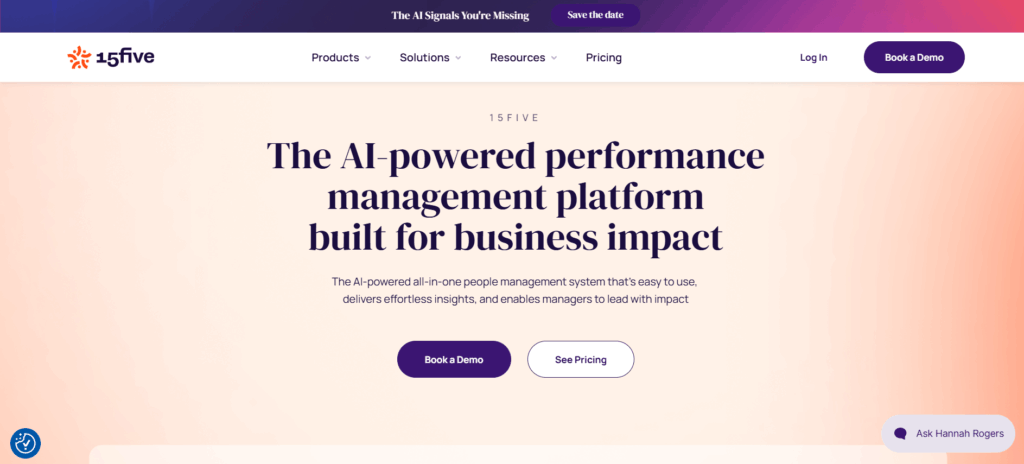
5. 15Five

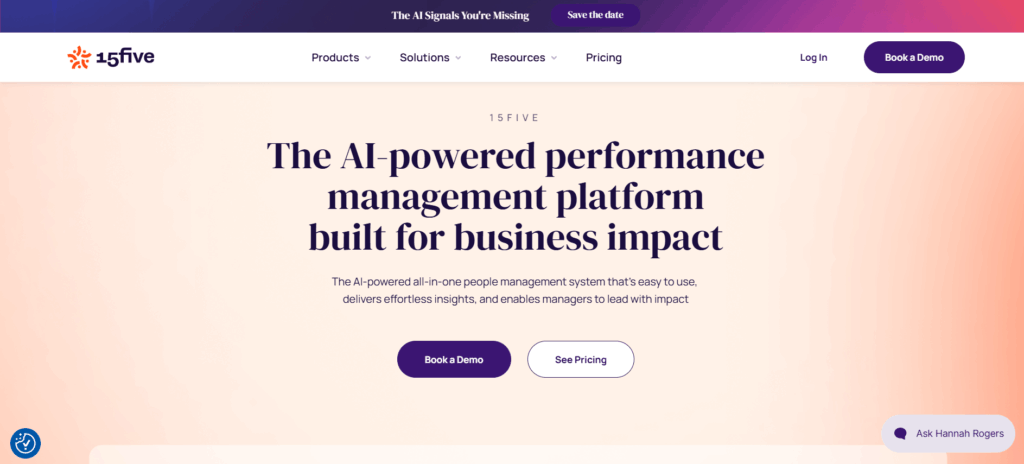
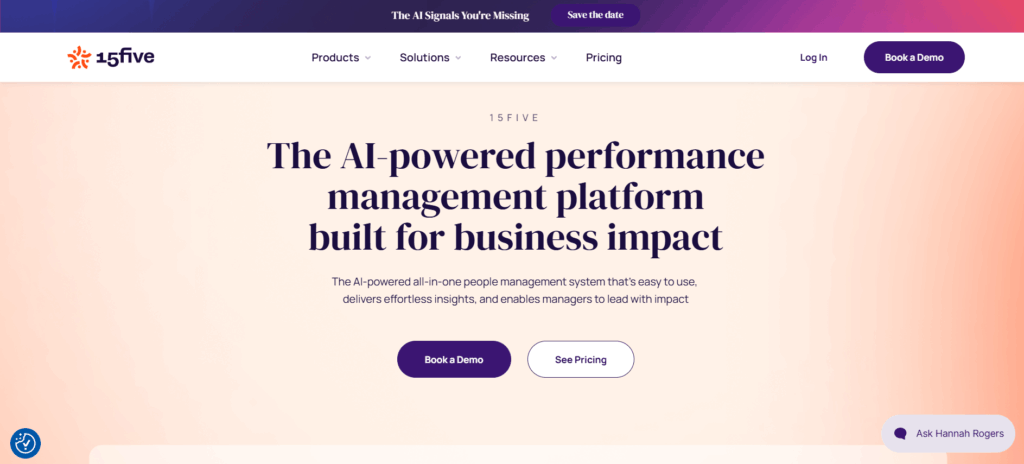
15Five is a performance management platform built around continuous feedback and manager coaching. The system is designed for organizations emphasizing weekly check-ins, ongoing development conversations, and real-time feedback over annual reviews.

Best For: Companies under 500 employees prioritizing manager coaching and weekly touchpoints, particularly tech-forward organizations.

Key Capabilities: Weekly check-in workflows with structured 1-on-1 agendas, continuous feedback and High Five recognition system, OKR and goal tracking, performance reviews with peer input, and engagement pulse surveys. The platform integrates with popular collaboration tools (Slack, Microsoft Teams).

Unique Strength: 15Five’s Work Context feature pulls signals from connected tools (Slack, Jira, GitHub) to create real-time performance context, eliminating the need for managers to remember what happened during the year.

Pricing: 15Five offers transparent tiered pricing starting at $4/user/month for basic feedback, with full Perform plans at approximately $10/user/month including check-ins, feedback, and reviews. Annual billing offers better rates.

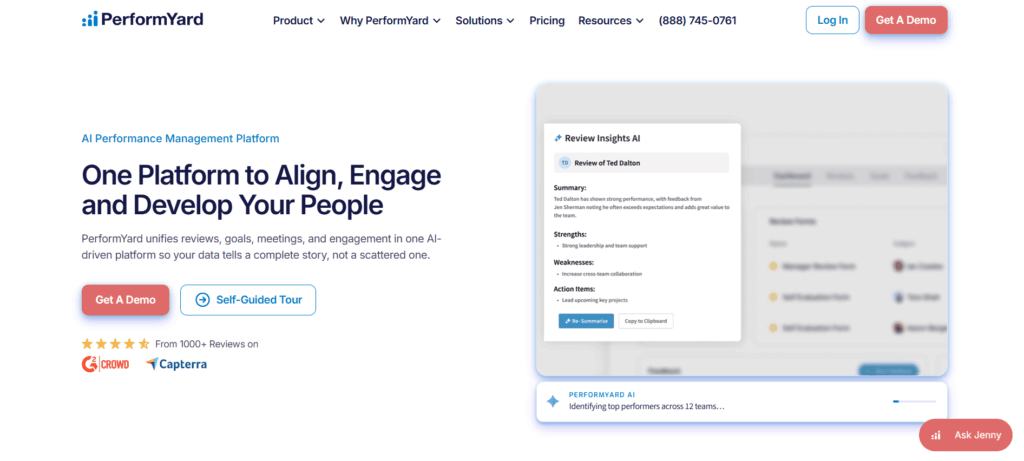
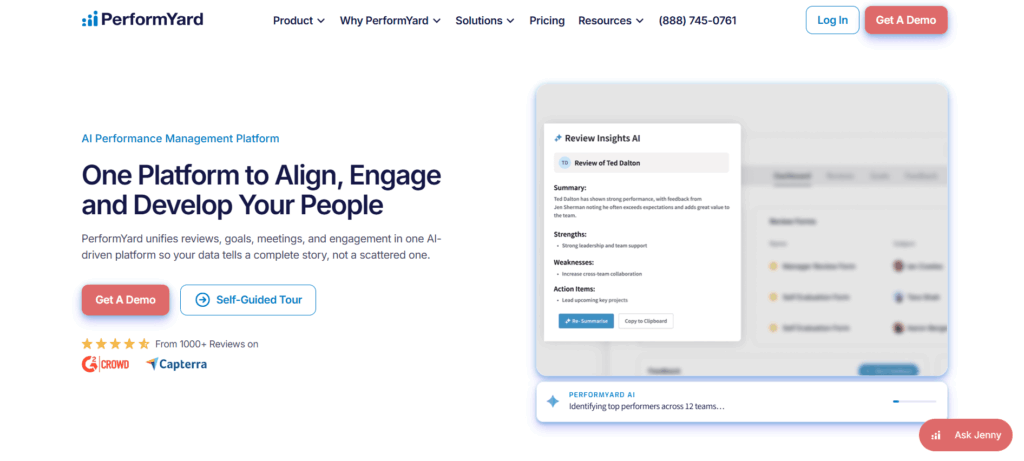
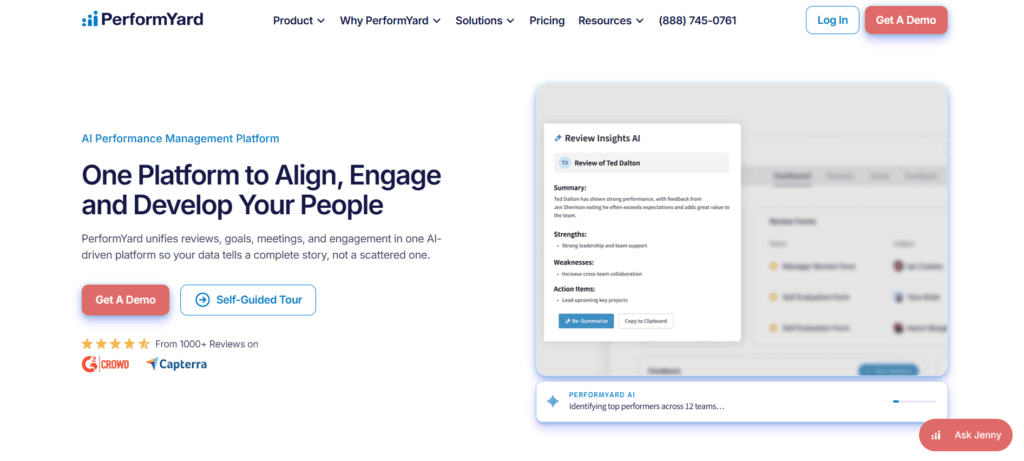
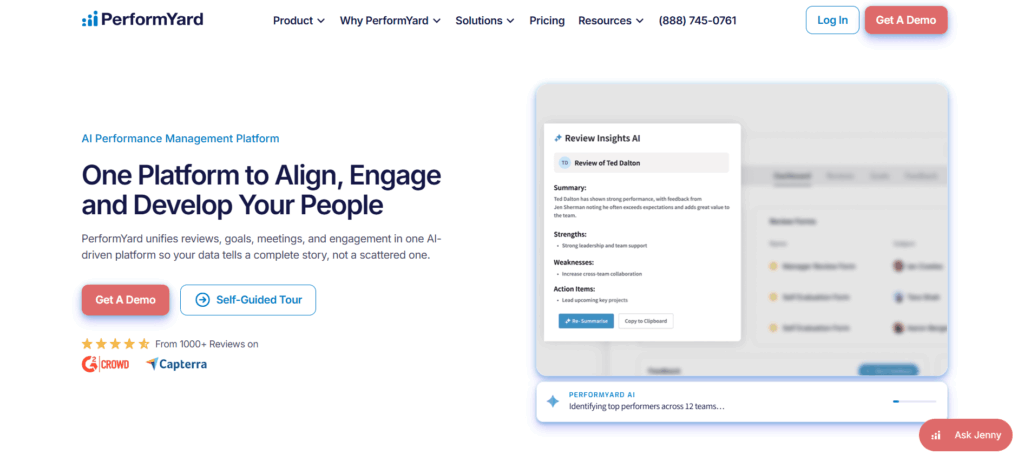
6. PerformYard

PerformYard is a focused performance management platform built for organizations that need best-in-class review customization without paying for features they won’t use. The platform excels at performance reviews and continuous feedback.

Best For: Mid-market organizations needing highly customizable review workflows and flexible feedback mechanisms without engagement or compensation modules.

Key Capabilities: Highly customizable performance review templates and workflows, continuous feedback and peer recognition, 360-degree feedback with comparative analytics, goal setting and tracking, and custom reporting.

Unique Strength: PerformYard’s customization-first approach is unmatched in the focused performance management space. Organizations can build review workflows that mirror their exact processes without compromise.

Pricing: PerformYard offers transparent pricing at $5-10/user/month depending on features selected, making it roughly half the cost of Lattice for organizations that only need performance management.

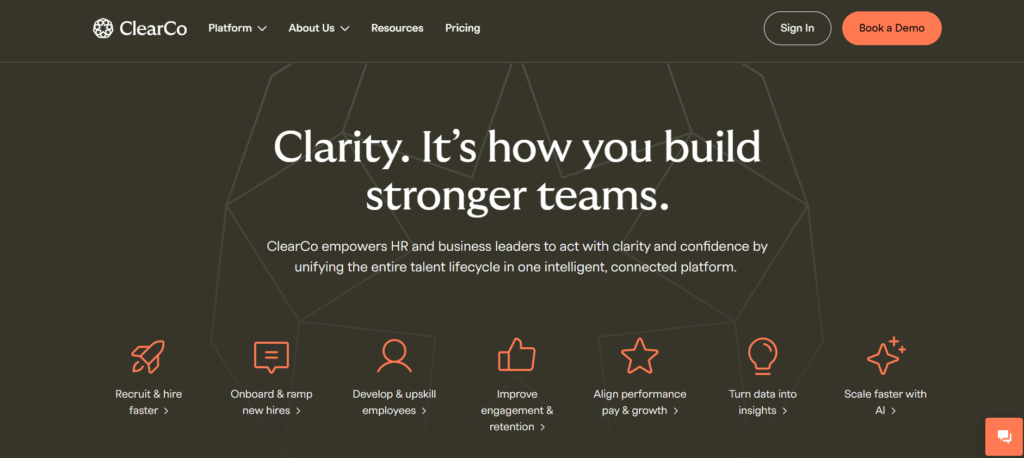
7. ClearCompany (ClearCo)

ClearCompany is an integrated talent management platform combining applicant tracking, onboarding, performance management, and employee engagement. The system is designed for mid-market organizations seeking end-to-end talent management in one place.

Best For: Mid-market organizations with dedicated talent acquisition and HR teams seeking to manage full talent lifecycle from recruiting through development.

Key Capabilities: Applicant tracking with job board integration, structured onboarding workflows with automated task management, performance reviews and goal tracking, employee engagement surveys, and workforce planning analytics.

Unique Strength: The tight integration between recruiting and performance management is rare. Organizations can track how hiring decisions correlate with later performance, creating a closed-loop talent system.

Pricing: ClearCompany uses custom pricing based on selected modules and headcount, typically ranging from $6-12/user/month. Request a quote for specific requirements.

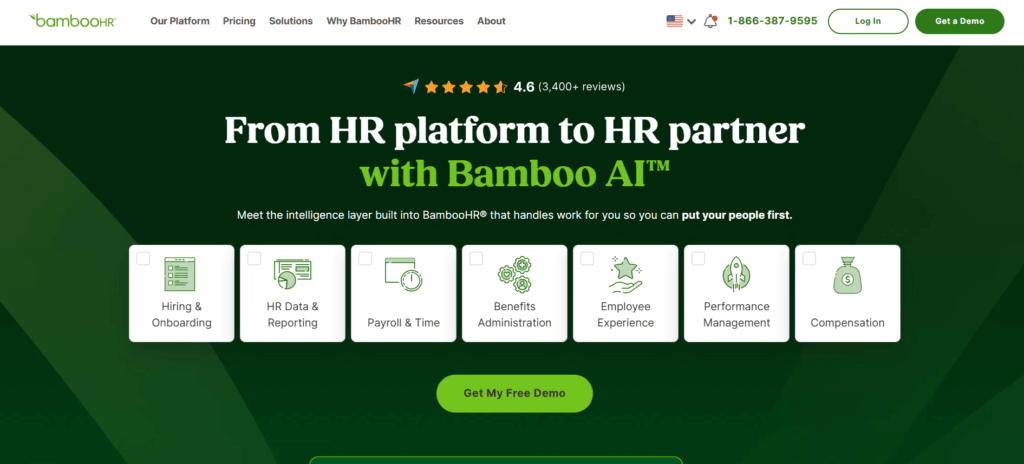
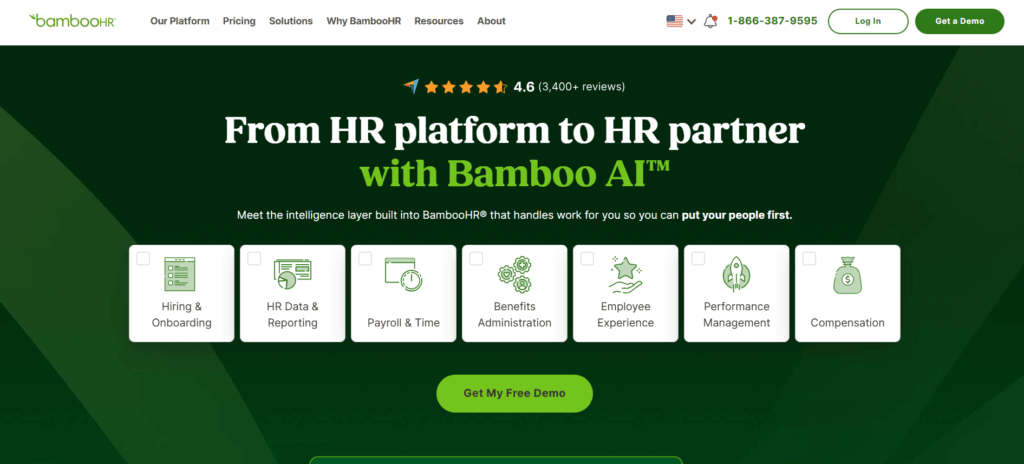
8. BambooHR

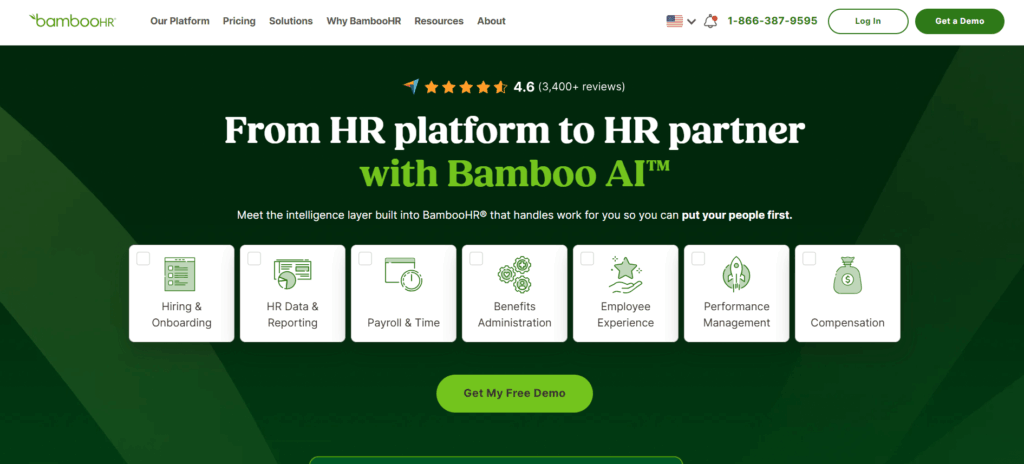
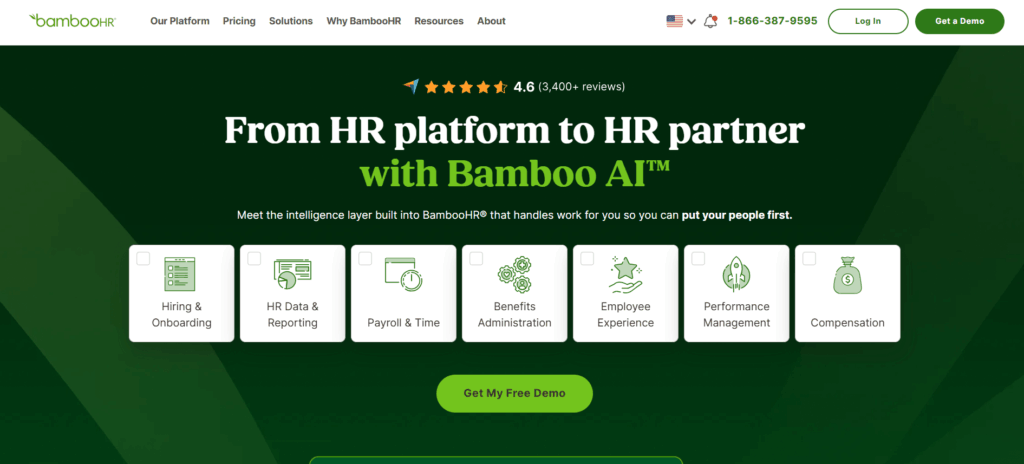
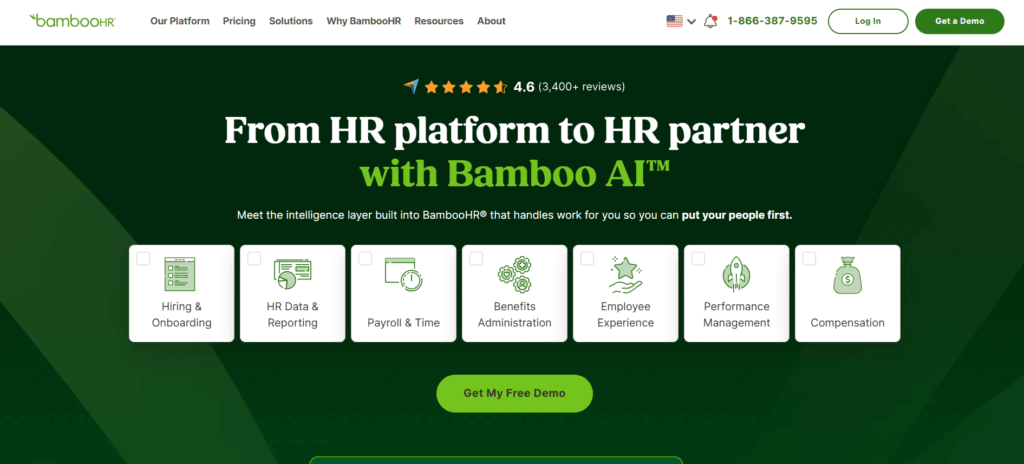
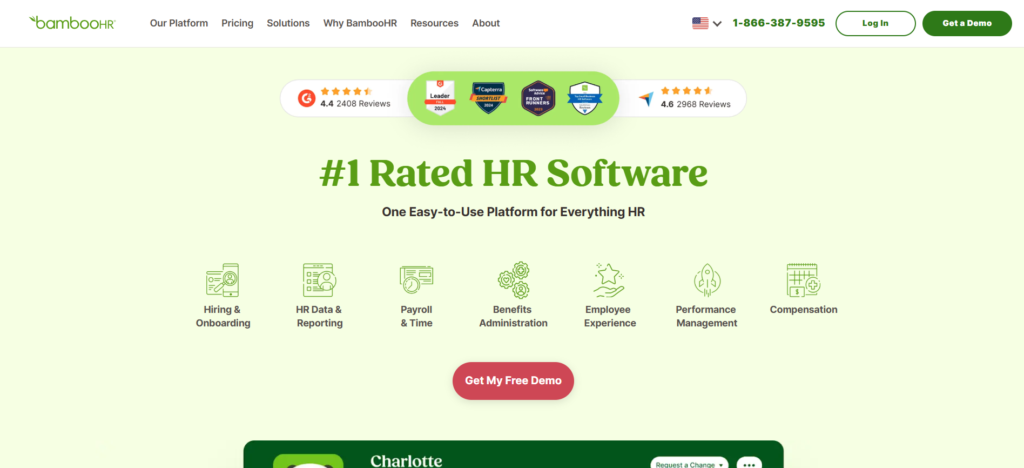
BambooHR is a foundational HRIS designed for small and mid-sized businesses that need core HR operations without enterprise complexity. The platform handles employee data, onboarding, time-off, and performance management in an interface built for quick adoption.

Best For: Small to mid-sized organizations (up to 500 employees) transitioning from spreadsheet-based HR management or requiring a lightweight HRIS with solid performance features.

Key Capabilities: Employee database with org charts, time-off tracking and workflows, applicant tracking with job board integration, performance reviews and goal tracking, onboarding checklists with e-signature, and basic reporting.

Unique Strength: BambooHR’s usability is industry-leading. The platform is built for adoption within days, not weeks. With a 92% ease-of-use rating across reviews, it minimizes training overhead.

Pricing: BambooHR offers transparent tiered pricing – Core starts at $10/user/month (basic HR), Pro at approximately $17/user/month (includes performance management), and Elite at $25/user/month (adds compensation tools). Performance management is bundled at Pro tier and above. All plans include a $250 minimum monthly fee.

9. Cornerstone OnDemand

Cornerstone OnDemand is an enterprise-grade talent experience platform built for large organizations requiring sophisticated learning management, succession planning, and talent analytics at scale.

Best For: Large enterprises (2,000+ employees) requiring integrated learning, performance, and talent mobility with global compliance capabilities.

Key Capabilities: Comprehensive learning management with content library, performance and succession planning tools, recruiting and onboarding solutions, talent analytics and workforce planning, and skills mapping. The platform supports complex multi-country deployments.

Unique Strength: Cornerstone’s breadth of enterprise features and integration with regulated industry requirements (financial services, life sciences, healthcare) make it the choice for large organizations with complex talent needs.

Pricing: Cornerstone OnDemand does not publish transparent pricing. Enterprise customers typically pay $18-25/user/month for core learning and performance modules, with implementation costs ranging $180,000-550,000 depending on deployment complexity and HRIS integration requirements.

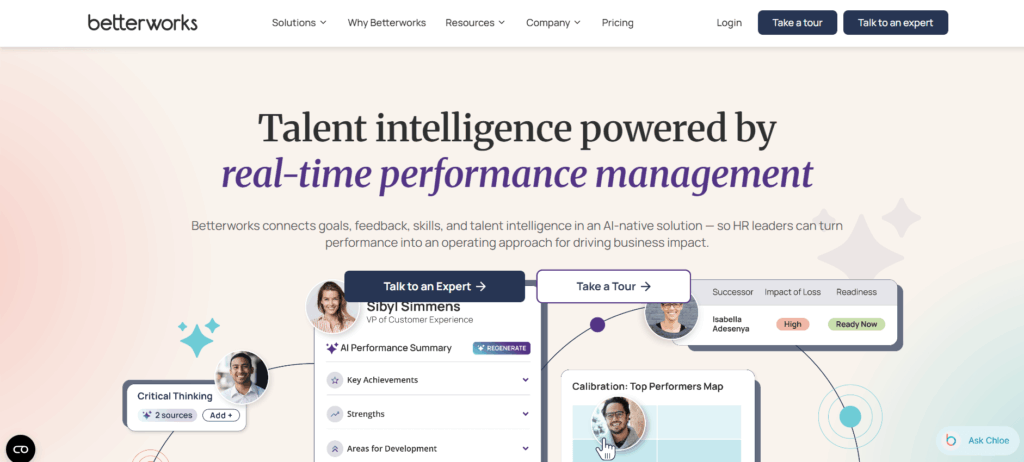
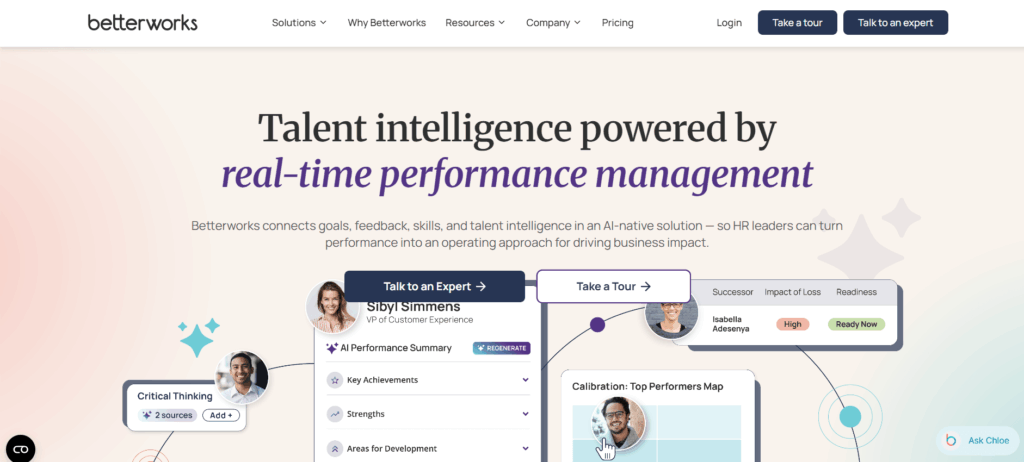
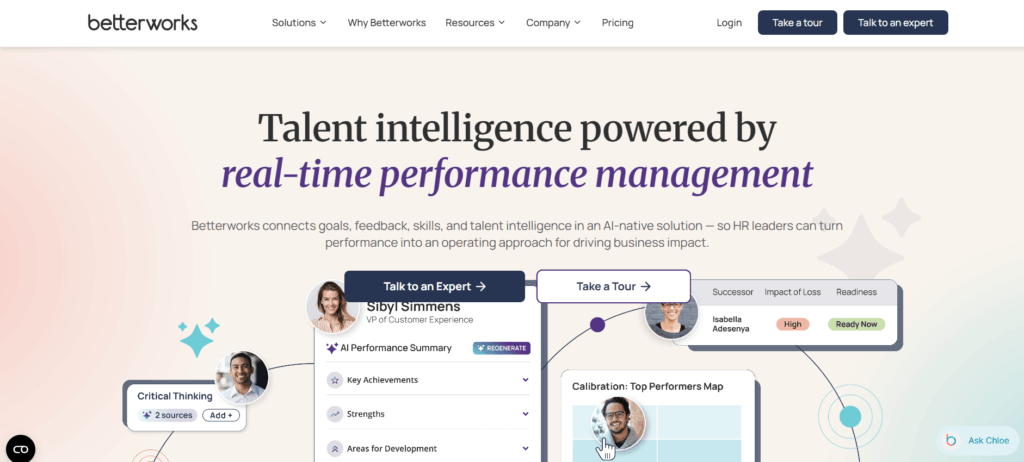
10. Betterworks

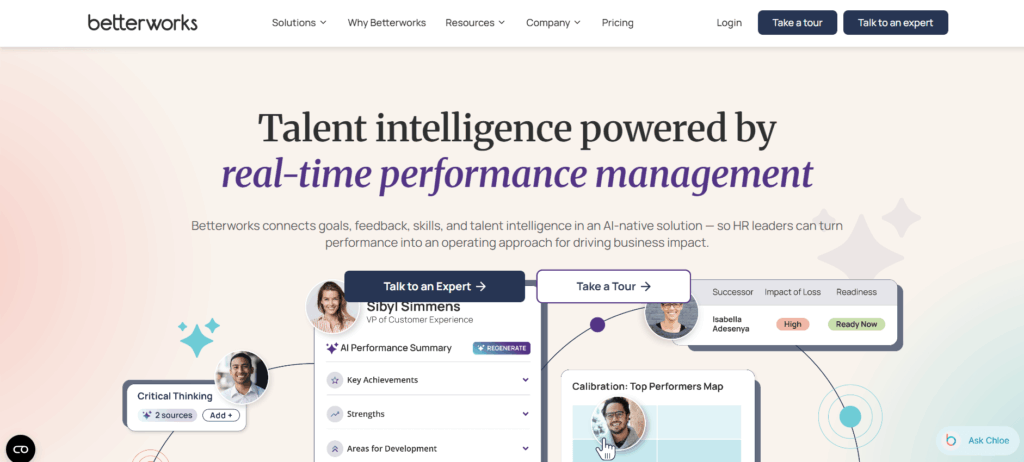
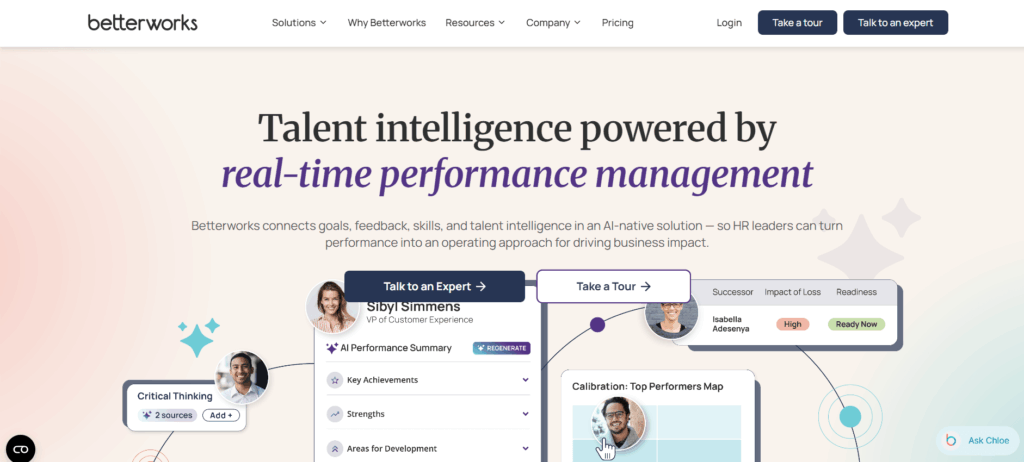
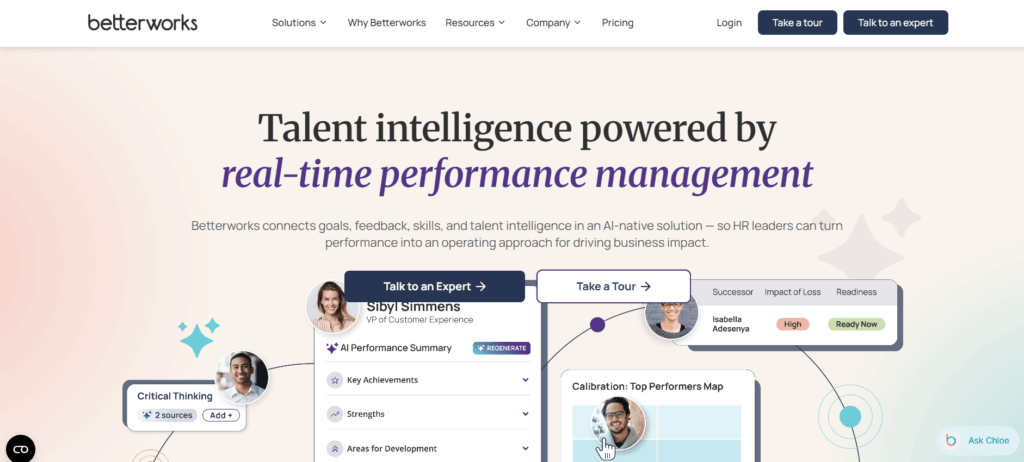
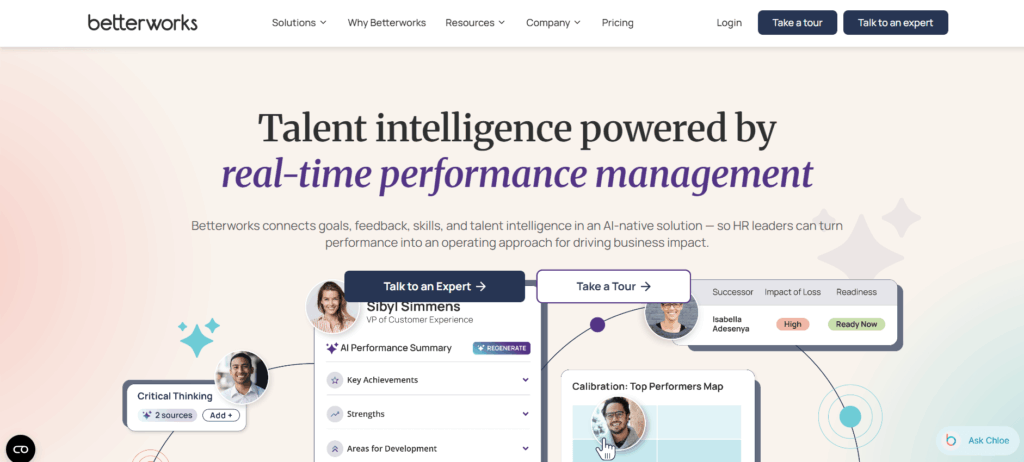
Betterworks is an enterprise performance management platform with deep emphasis on OKR alignment, continuous feedback, and performance calibration. The system is designed for organizations that have committed to OKR methodology as their primary planning framework.

Best For: Enterprise organizations (1,000+ employees) with mature performance management processes and strong emphasis on goal alignment and strategic execution.

Key Capabilities: Enterprise OKR cascading and alignment with real-time progress tracking, performance reviews with AI-powered calibration tools, continuous feedback and peer recognition, employee engagement surveys, and workforce analytics.

Unique Strength: Betterworks’ calibration module is among the most sophisticated in the market, helping HR leaders identify and eliminate rating bias at scale while ensuring fair performance evaluations.

Pricing: Betterworks pricing ranges from $8-15/user/month depending on deployment size and selected features, with enterprise pricing typically at the higher end. Implementation adds $20,000-50,000 in first-year costs.

Quick Comparison Table

PlatformBest ForStandout FeatureStarting Price
EngagedlyUnified AI-driven talent managementMarissa AI across all career planning workflows$5/user/month (modules)
LatticePerformance and OKR managementDeep OKR cascading with alignment tracking$11/user/month
15FiveContinuous feedback with manager coachingWork Context pulls signals from Slack/GitHub$4/user/month
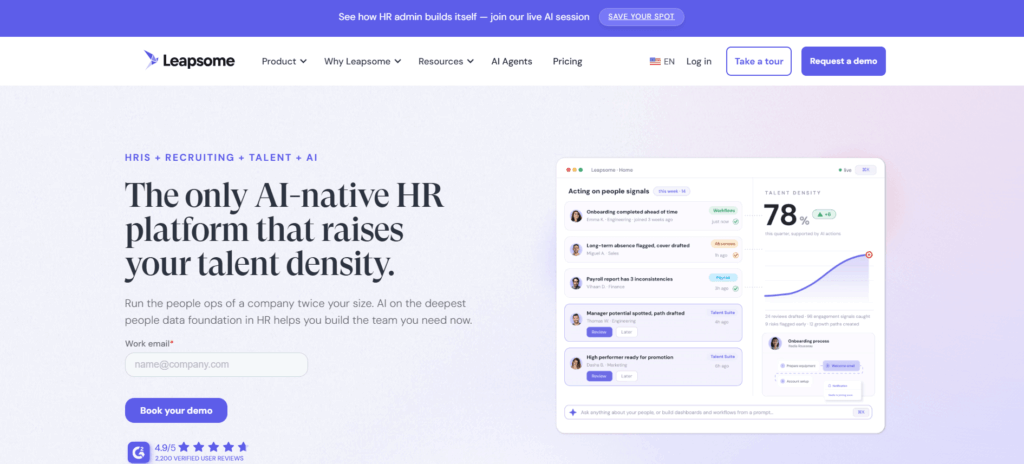
LeapsomePerformance connected to learningIntegrated LMS with AI-curated pathsCustom quote
BetterworksEnterprise OKRs and talent intelligenceReal-time Talent Intelligence launched May 2026$8-15/user/month
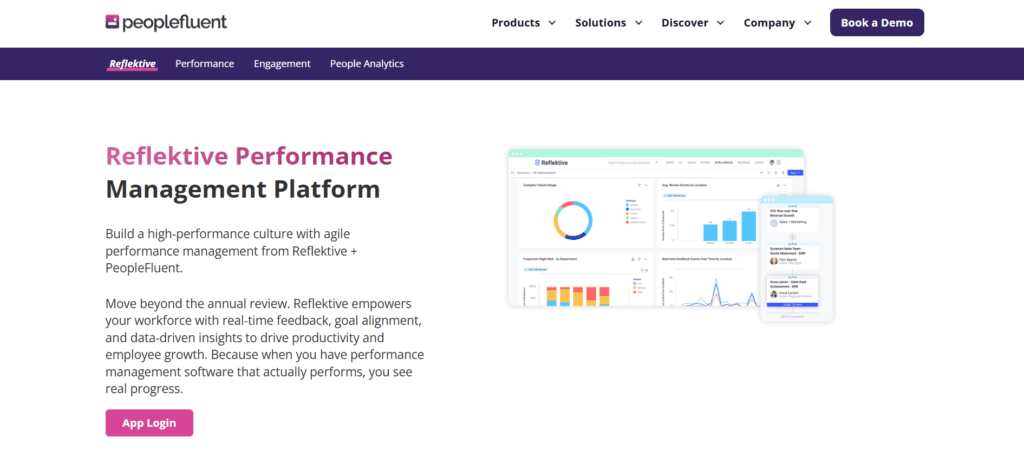
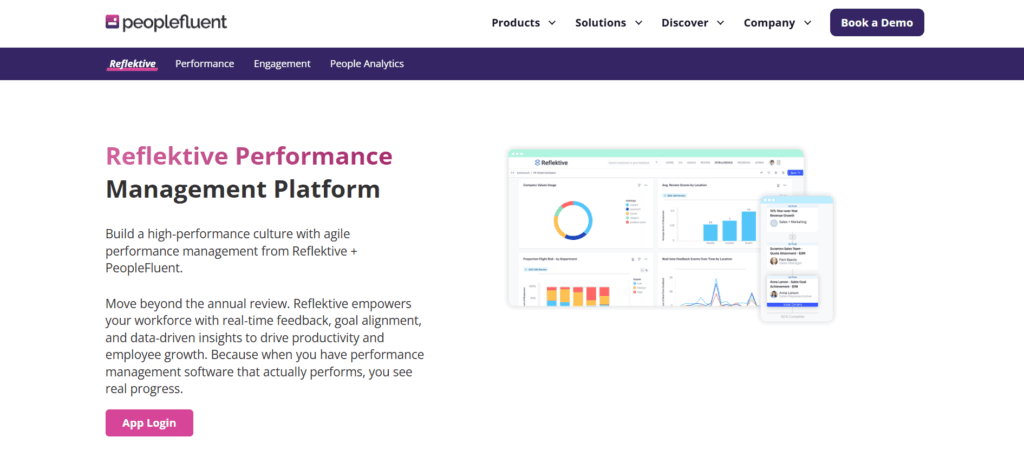
ReflectiveFeedback in daily workflowNow part of PeopleFluent, not standaloneCustom quote
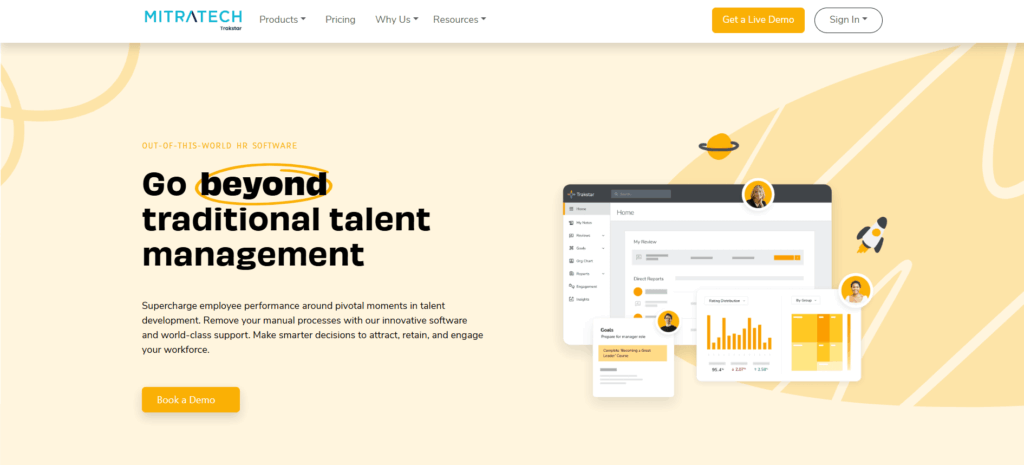
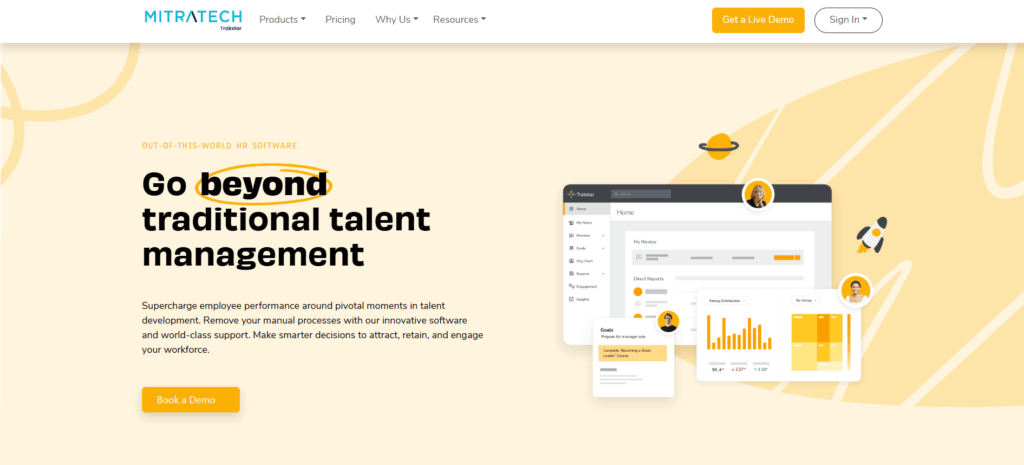
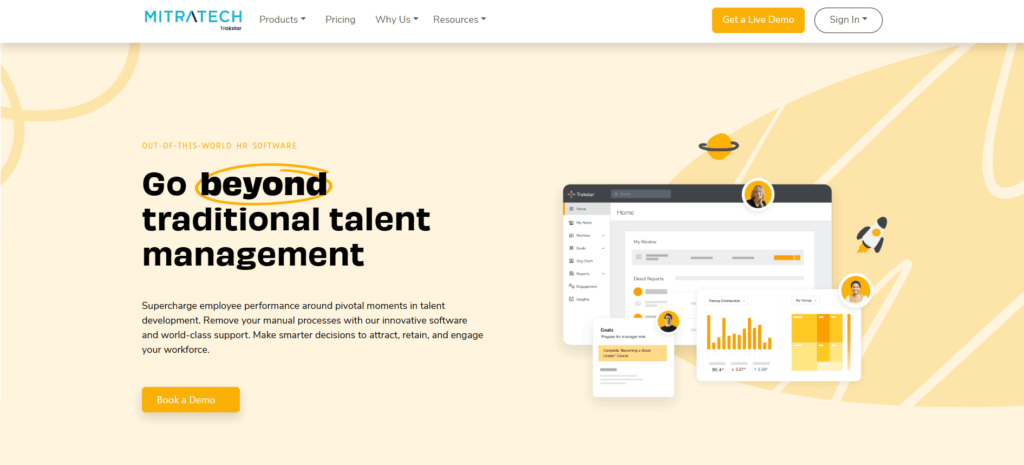
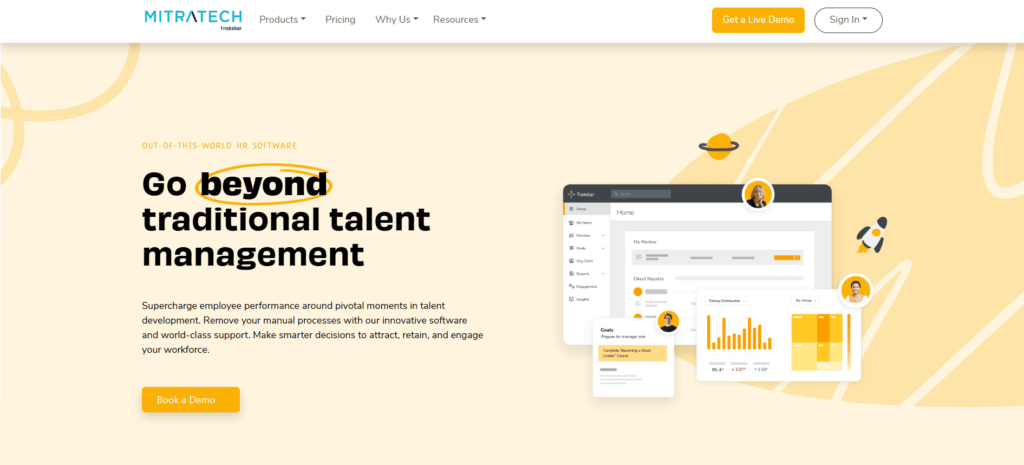
Trakstar PerformCompliance-driven reviewsRebranded, now integrated into Mitratech suiteCustom quote
Culture AmpEngagement-led performanceAI-generated survey action recommendations$10-20+/user/month
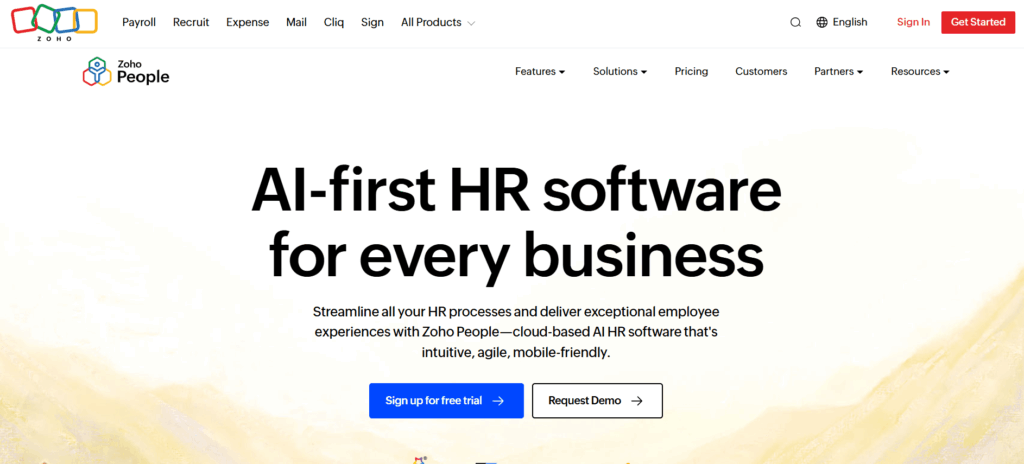
Zoho PeopleBudget-friendly HR ecosystemZIA AI expanded for HR queries and reporting$1-5/user/month
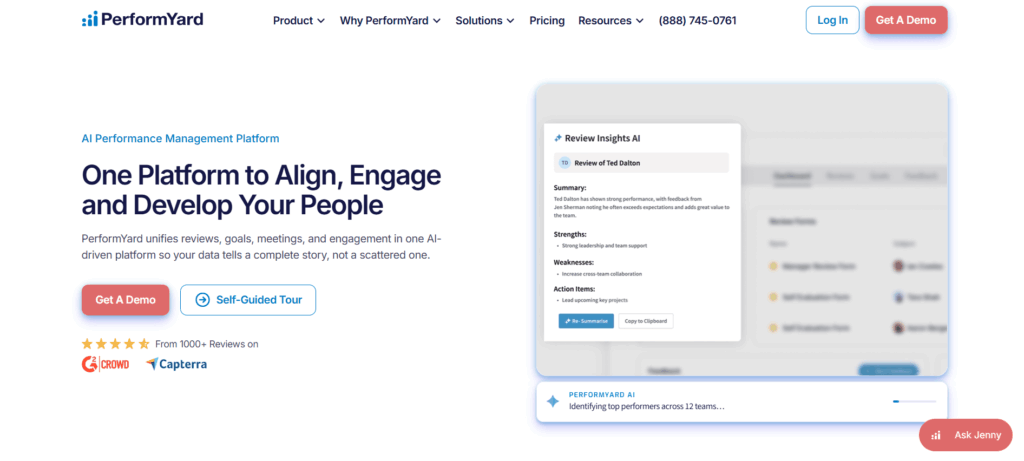
PerformYardFully customizable review workflowsBroad native HRIS integration list$5-10/user/month

How to Choose a Workday Alternative

Assess Your Current Pain Points

Begin by identifying which specific Workday limitations drive your evaluation. Is it cost? Implementation timeline? Lack of engagement features? Specific capability gaps? Your pain point should drive your selection – a focused platform solving your exact problem often outperforms an all-in-one that compromises on depth.

Define Your Organization’s Maturity

Organizations new to formal performance management need simpler, more guided platforms (BambooHR, 15Five). Mature organizations with established processes benefit from customizable systems (PerformYard, Lattice) or advanced features (Betterworks, Engagedly).

Evaluate Total Cost of Ownership

Compare not just per-user pricing, but implementation costs, training overhead, and integration requirements. Many mid-market organizations find a focused platform ($5-10/user/month with faster implementation) delivers better ROI than enterprise systems requiring 6-month deployments and $200K+ implementation.

Prioritize Integration Capabilities

Your platform must connect with existing systems (payroll, HRIS, collaboration tools). Platforms with 100+ native integrations (BambooHR, Rippling) reduce custom development costs. If you’re in Workday ecosystem, ensure bi-directional data sync requirements are clear before committing.

Pilot Before Full Commitment

Test your top two choices with a pilot group before enterprise rollout. Real user feedback on adoption, data quality, and actual feature usage often surfaces issues that demos miss.

AI Becomes Baseline, Not Feature

Platforms now embed AI across workflows – from bias detection in calibration to predictive flight risk algorithms. Marissa AI in Engagedly represents this shift – AI doesn’t just report data, it guides decisions and surfaces patterns humans miss.

Continuous Feedback Replaces Annual Reviews

Forward-thinking organizations have eliminated formal annual reviews in favor of ongoing feedback loops. Platforms prioritizing weekly check-ins (15Five) and real-time feedback (Engagedly) align with this shift.

Skills and Internal Mobility Take Center Stage

Performance platforms increasingly connect skills to development paths and internal mobility opportunities. Leapsome’s learning integration and Engagedly’s talent analytics and mobility module reflect this evolution.

Engagement Becomes Predictive, Not Retrospective

Surveys that report feelings after the fact are giving way to real-time sentiment analysis and predictive models that identify disengagement before it leads to turnover.

Final Consideration

Workday remains a powerful solution for large enterprises requiring comprehensive HCM and financial management. However, for mid-market organizations (200-5,000 employees), specialized platforms often deliver superior results in performance management, engagement, and development.

Each alternative above excels in specific areas. Engagedly’s agentic AI transforms how organizations approach performance and development. Lattice delivers the deepest OKR architecture. 15Five prioritizes manager coaching. BambooHR emphasizes ease-of-use and quick adoption. By carefully evaluating your specific needs against each platform’s strengths, you’ll find the solution that accelerates your performance culture, improves retention, and drives measurable business outcomes.

Frequently Asked Questions

What is the main difference between Engagedly and Workday?

Workday is an enterprise HR and financial management system with broad capabilities across recruiting, HR, payroll, and finance. Engagedly is an AI-powered talent management platform focused specifically on performance, engagement, and development. Engagedly deploys in weeks with Marissa’s agentic guidance, while Workday typically requires 6-12 months and substantial implementation costs. For mid-market organizations not requiring global payroll and financial management, Engagedly delivers deeper performance capabilities at lower total cost of ownership.

Which Workday alternative is best for organizations under 300 employees?

For smaller organizations, BambooHR and PerformYard offer the best combination of ease-of-use, transparent pricing, and core performance features. If AI-driven intelligence and development are priorities, Engagedly’s modular pricing allows starting with specific modules (Performance or Learning) without enterprise-scale investment.

How do I ensure a smooth transition from Workday to an alternative?

Plan a 6-12 week transition with parallel operation – run both systems simultaneously while validating data accuracy in the new platform. Prioritize data migration of active employees and recent review cycles. Start with a pilot group to surface adoption challenges before enterprise rollout. Ensure leadership clearly communicates the new platform’s benefits to drive user adoption.

What’s the best Workday alternative for OKR-driven organizations?

Lattice and Betterworks both excel at OKR management. Lattice is best for mid-market organizations (smaller deployment, faster implementation, lower cost). Betterworks is best for enterprises with complex goal cascading and sophisticated calibration requirements. Engagedly’s OKRs and Goals module offers AI-powered progress insights that help organizations stay aligned with business strategy in real time.

How important is mobile accessibility in a performance platform?

Highly important. Managers need to give feedback, celebrate wins, and check progress from anywhere – not just from a desktop. All platforms above offer mobile apps, but quality varies. Engagedly and 15Five prioritize mobile-first design. BambooHR’s mobile app is exceptionally user-friendly. If your manager population is remote or field-based, mobile experience should be a primary evaluation criterion.

Ready to explore how Engagedly’s AI-powered platform transforms performance management for your organization? Request a personalized demo today to see Marissa in action.

The 10 Best Qualtrics Competitors to Watch in 2026

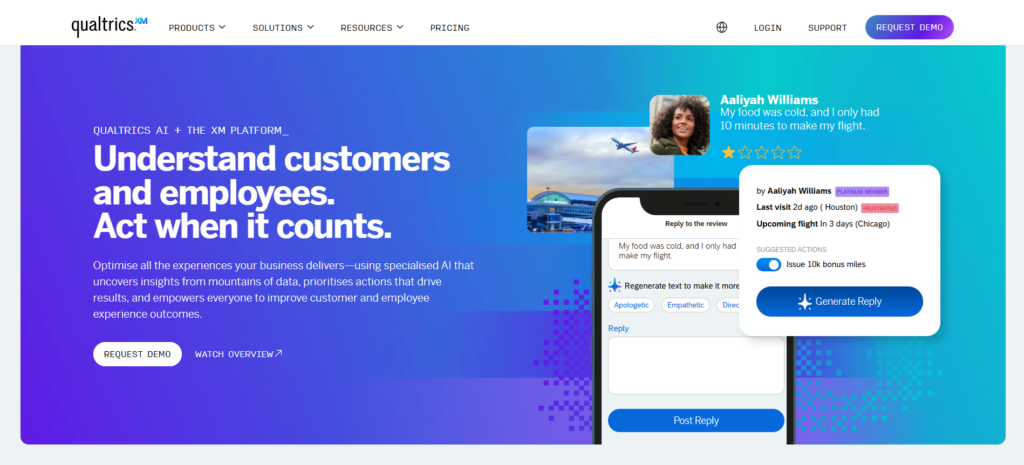
Qualtrics is an experience management platform that lets teams build surveys, collect feedback, and turn responses into reports without writing code. It covers customer, employee, product, and brand experience programs through a single suite. For teams that find its interface complex, its learning curve steep, or its pricing out of reach, a smaller and more focused tool often gets the same feedback job done for less money and less setup time.

What are the best Qualtrics competitors in 2026?

The strongest Qualtrics alternatives in 2026 are SurveyMonkey, Engagedly, Zonka Feedback, Survicate, Typeform, SurveySparrow, Jotform, Customer Thermometer, Medallia, and Forsta. Each one trades away some part of Qualtrics’s enterprise research depth in exchange for a simpler interface, faster setup, or clearer pricing, so the right pick depends on whether the priority is customer feedback, employee engagement, or general-purpose survey building.

Quick comparison: Qualtrics competitors in 2026

PlatformBest forStarting price (official)
SurveyMonkeyGeneral-purpose surveys and market researchFree plan; paid plans from $39/month (individual), $30/user/month (team, 3+ seats)
EngagedlyEmployee engagement and performance management$2–$10/user/month, billed annually; $7,500/year minimum
Zonka FeedbackMultichannel customer and employee feedbackCustom pricing based on response volume and data credits
SurvicateWebsite, product, and in-app feedbackFree plan; paid plans scale with response volume
TypeformConversational, one-question-at-a-time formsFree plan; paid plans from around $25/month (annual)
SurveySparrowChat-style surveys plus NPS and CX programsPlans from $7/month (annual)
JotformForms with built-in survey and payment logicFree; paid plans from $34/month (annual).
Customer ThermometerOne-click, high-response-rate feedbackCustom/usage-based pricing
MedalliaEnterprise customer and employee experienceCustom pricing, contact sales
ForstaMarket research combined with experience managementCustom pricing, contact sales

Top Qualtrics competitors: find the right feedback tool for your needs

1. SurveyMonkey (Momentive)

SurveyMonkey, now operating under parent brand Momentive, remains one of the most recognized names in the survey space. It started as a simple feedback tool and has grown into a full experience management platform with AI-assisted analysis built in.

Why it’s a strong competitor: The interface stays approachable even as the feature set has grown, and the platform now leans heavily on AI for survey creation and results analysis, which shortens the distance between collecting responses and acting on them.

Pricing: Team Advantage: $30/user/month; Team Premier: $92/user/month; Enterprise: Custom pricing. Individual plans range from Free to $139/month.

2. Engagedly

Engagedly is an AI talent management platform built to help organizations connect performance, engagement, learning, growth, and recognition in one unified experience. Powered by Marissa, its AI SuperAgent, Engagedly helps leaders turn people strategy into intelligent actions, reduce talent silos, and drive measurable business outcomes. Trusted by organizations worldwide, Engagedly supports stronger engagement, better retention, and the development of high performing teams.

In practice, that means continuous feedback, 360-degree multi-rater reviews, and OKRs and goal tracking live inside the same platform as engagement surveys and learning tools, rather than sitting in separate systems HR has to stitch together by hand.

Why it’s a strong competitor: Where most names on this list are built for external customer feedback, Engagedly is built for the internal side of the equation, combining performance management, engagement pulse surveys, and workforce analytics so HR teams are not stitching together three separate tools to run a single review cycle.

Pricing: Modules range from $2 to $10 per user per month, billed annually, with a $7,500 per year minimum. Bundles and enterprise plans are available on request.

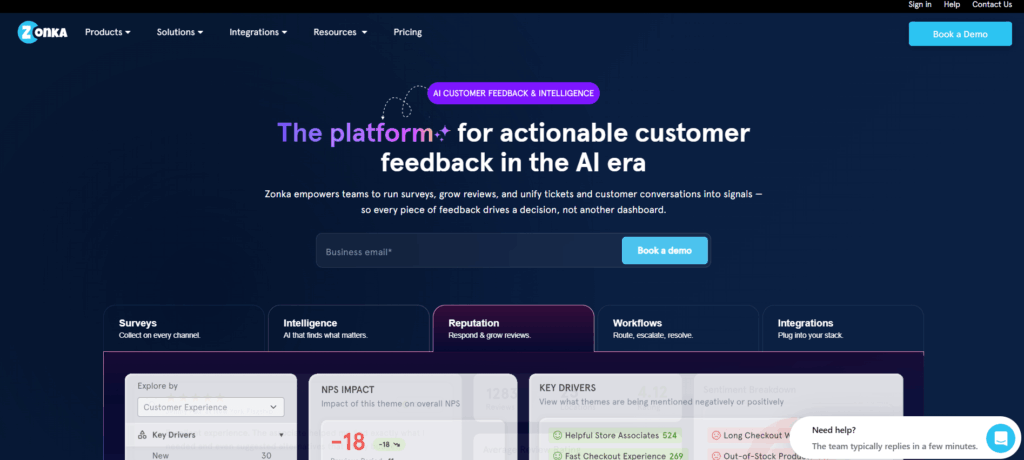
3. Zonka Feedback

Zonka Feedback is an AI-powered customer feedback and intelligence platform built to unify scattered feedback sources such as surveys, tickets, chats, and reviews into a single view, then turn that data into role-based insights teams can act on.

Why it’s a strong competitor: Zonka now runs two connected products, Customer Feedback and AI Feedback Intelligence, and it can be bundled with Engagedly’s growth hub style continuous-feedback workflows for teams that want survey data and development planning in one place.

Pricing: The company now quotes custom pricing for both products, based primarily on the number of responses for Feedback Management and on data credits for Feedback Intelligence, with the option to bundle both under one custom quote.

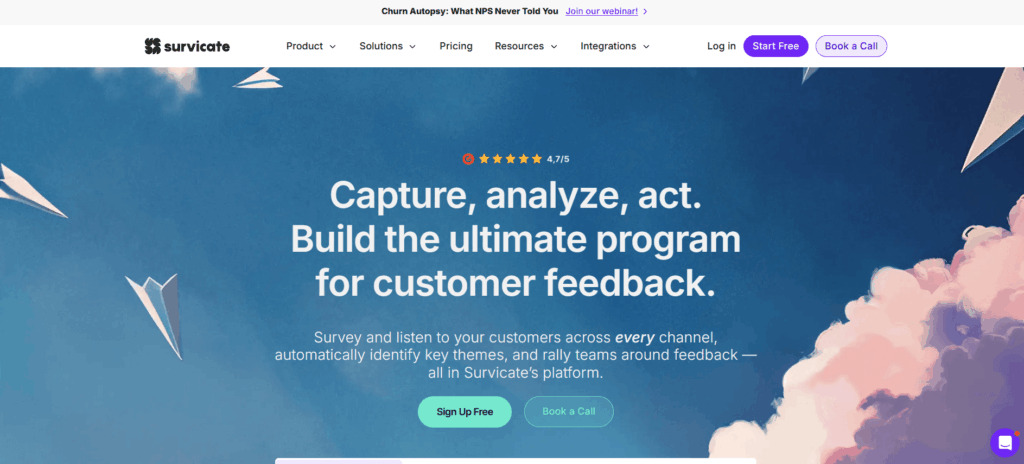
4. Survicate

Survicate takes a channel-first approach to feedback, letting teams collect input through websites, in-app prompts, and email without needing a research team to run the program.

Why it’s a strong competitor: Survicate is genuinely flexible for product and CX teams, with native integrations into HubSpot, Intercom, and Zapier that make it easy to trigger surveys based on real user behavior instead of a fixed send schedule.

Pricing: Survicate offers a free plan, and paid tiers scale up based on monthly responses, topping out at several hundred dollars per month for higher-volume plans. Current tier details are on Survicate’s own pricing page.

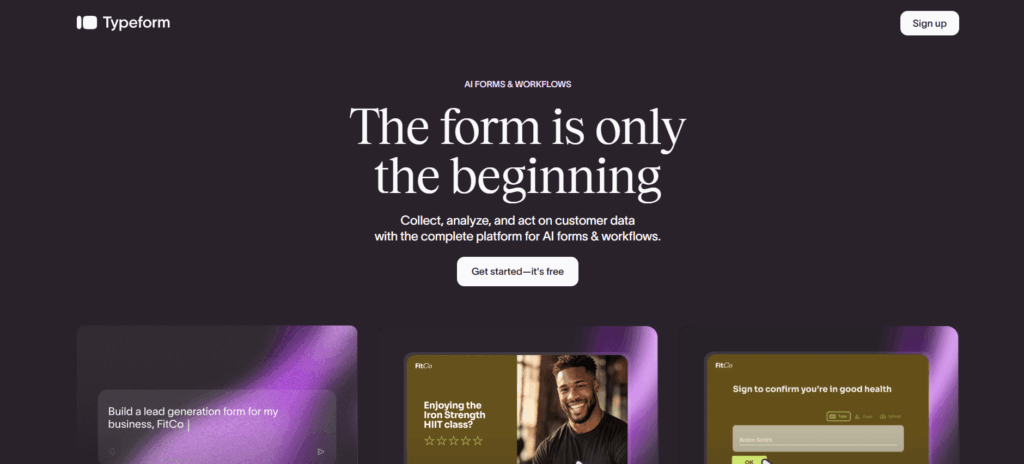
5. Typeform

Typeform began as a form builder and became known for its conversational, one-question-at-a-time format, which tends to produce higher completion rates than a traditional long-form survey.

Why it’s a strong competitor: The visual, interactive design is still Typeform’s biggest draw. For teams that care about respondent experience as much as the data itself, that design edge often outweighs a smaller feature list compared to Qualtrics.

Pricing: Typeform offers flexible plans starting at $25/month when billed annually, with higher tiers providing more responses, users, customization, analytics, and automation. Enterprise plans offer custom limits, dedicated support, advanced security, and features such as SSO, HIPAA, and GDPR compliance.

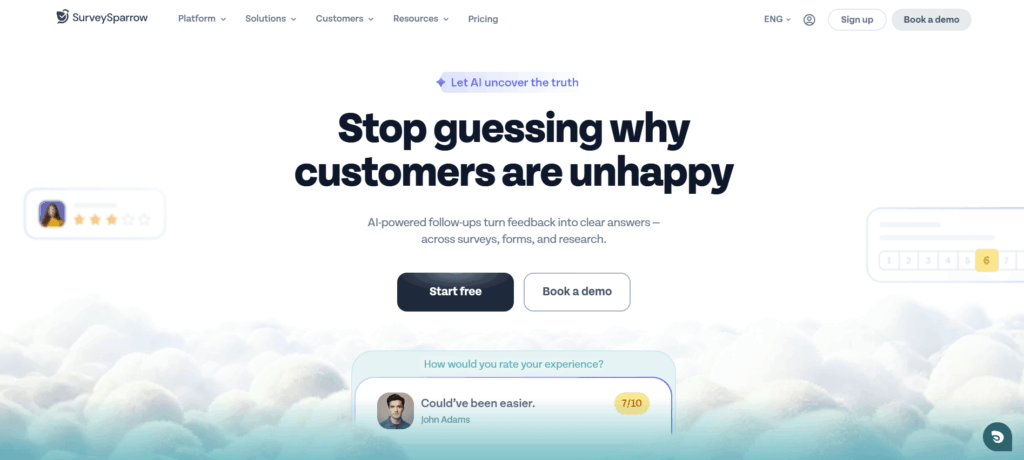
6. SurveySparrow

SurveySparrow replaces Delighted on this list following Delighted’s shutdown. It offers the same conversational, chat-style survey format Typeform is known for, plus dedicated NPS, CSAT, and CES programs built for ongoing customer experience tracking rather than one-off surveys.

Why it’s a strong competitor: SurveySparrow covers both ends of the feedback spectrum, quick single-question NPS checks and longer multi-page research surveys, inside one platform, which suits teams that outgrew a single-metric tool like Delighted.

Pricing: SurveySparrow offers flexible survey plans ranging from a Forever Free option to Enterprise, with paid plans starting at $7/month when billed yearly. Higher tiers add more responses, users, integrations, automation, advanced analytics, customization, and enterprise features such as HIPAA compliance.

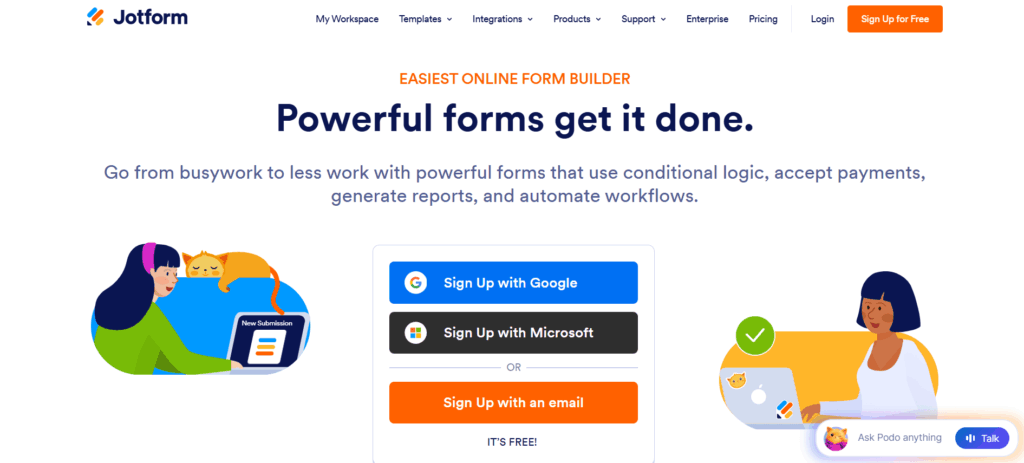
7. Jotform

Jotform has grown well past basic form building into a tool with genuine survey and feedback capabilities, built around a fast, drag-and-drop form editor.

Why it’s a strong competitor: Jotform integrates with Google Sheets, Slack, Zapier, and dozens of other platforms, so teams can automate what happens after a response comes in instead of just collecting it. Its mobile app also makes it practical to gather feedback on the move.

Pricing: Jotform offers flexible pricing plans, from a free Starter plan to customizable Enterprise plans, with increasing limits for forms, submissions, storage, and advanced features. Paid plans start at $34/month when billed annually, with nonprofit and education discounts available.

8. Customer Thermometer

Customer Thermometer built its name on one-click feedback: a single click from the customer captures satisfaction data with almost no friction, which keeps response rates high.

Why it’s a strong competitor: The one-click format is the differentiator here. It works especially well for support and service teams who want a fast pulse check rather than a full survey, and it integrates with tools like Salesforce and HubSpot to route results automatically.

Pricing: Customer Thermometer offers usage-based pricing with unlimited users, rollover responses, reporting, and flexible upgrades or cancellations. Advanced plans add features such as NPS reporting, embedded surveys, and email-footer Thermometers, with 10 surveys available free to get started.

9. Medallia

Medallia has long been positioned as an enterprise leader in experience management, built around collecting real-time feedback from customers, employees, and other stakeholders so businesses can act on it quickly.

Why it’s a strong competitor: Medallia’s AI and machine learning tools are built for large organizations that need to estimate future trends and understand sentiment across many channels at once, rather than run a single survey campaign.

Pricing: Medallia does not publish self-serve pricing on its site.

10. Forsta (formerly Confirmit)

Forsta formed in 2021 from the merger of Confirmit, Dapresy, and FocusVision, and it focuses on blending traditional market research with day-to-day experience management.

Why it’s a strong competitor: Forsta pairs advanced survey logic with text analytics that goes beyond multiple-choice data, which suits research and consulting teams that need to make sense of large volumes of open-ended feedback.

Pricing: Forsta does not list public pricing. Quotes are custom and depend on the scope of the research program, so a conversation with their sales team is required to get exact numbers.

Conclusion

The market for experience management tools keeps expanding, and the list of realistic Qualtrics competitors has shifted even over the past year, with Delighted’s shutdown being the clearest example. Each platform here is still built for a different job: SurveyMonkey and Typeform for general survey work, Medallia and Forsta for enterprise-scale research, Zonka Feedback, Survicate, and SurveySparrow for ongoing CX programs, Jotform and Customer Thermometer for lightweight, fast feedback collection, and Engagedly for the employee side of the equation.

If the priority is bringing performance management, continuous feedback, and engagement surveys into one connected platform instead of stitching several tools together, Engagedly is worth a closer look.

Request a demo of Engagedly →

Frequently asked questions

Is SurveyMonkey cheaper than Qualtrics?

For most small and mid-sized teams, yes. SurveyMonkey’s published team plans start at $30 per user per month, and its individual plans start free, while Qualtrics generally requires a custom enterprise quote regardless of team size.

Which Qualtrics competitor is best for employee feedback specifically?

Engagedly is the strongest option on this list for employee-focused programs, since it combines performance reviews, engagement surveys, and workforce analytics rather than treating pulse surveys as a standalone feature.

Do any of these tools offer a free plan?

SurveyMonkey, Jotform, Survicate, and Typeform all offer usable free tiers with limited responses or questions. Medallia, Forsta, and Engagedly are enterprise tools quoted through sales, with no self-serve free option.

What is the main difference between Qualtrics and Engagedly?

Qualtrics is built primarily around research and experience data collection across customers, employees, and products. Engagedly is built specifically for the employee lifecycle, connecting performance reviews, goal tracking, and engagement surveys into one workflow rather than treating each as a separate module.

Which Qualtrics competitor is easiest to set up?

Typeform, SurveySparrow, and Jotform are generally the fastest to get running, since each relies on a visual, template-driven builder rather than the configuration layer research platforms like Qualtrics or Forsta require.

How often should companies re-evaluate their feedback platform?

An annual review is a reasonable baseline, since pricing, features, and even product availability change: Zonka Feedback shifted from flat tiers to custom quotes, and Delighted shut down entirely within the same year. Checking each platform’s own pricing and status page before renewal avoids budgeting around information that is no longer current.

Can a small business afford a Qualtrics alternative?

Yes. SurveyMonkey, Survicate, Typeform, and Jotform all publish self-serve pricing that starts free or under $50 a month, which makes them realistic options for small teams that do not need enterprise-scale research tools.

Top 10 Peoplebox.ai Alternatives in 2026

Peoplebox.ai alternatives are performance management platforms that replace or expand on Peoplebox’s OKR-focused toolset with broader capabilities like continuous feedback, learning, engagement surveys, and AI-driven talent analytics. The strongest alternatives in 2026 – including Engagedly, Lattice, and 15Five – combine performance reviews, goal alignment, and engagement tracking in a single connected system rather than a single-purpose OKR tool.

Performance management platforms are critical for helping organizations align goals, enhance employee engagement, and improve overall productivity. These tools streamline processes like continuous feedback, goal setting, performance reviews, and engagement tracking, ensuring a motivated and high-performing workforce. With the right system, companies can align individual objectives with organizational priorities, close performance gaps, and foster a culture of continuous development.

Why Do Companies Look for Peoplebox.ai Alternatives?

Companies most often look for Peoplebox.ai alternatives when they need HR functionality that goes beyond OKR tracking, such as full performance reviews, learning management, or AI-driven talent analytics, in one connected platform instead of a point solution.

Peoplebox.ai has built a reputation around OKR alignment and Slack-native check-ins. But as organizations scale, many need deeper customization, broader HR functionality, and tighter integrations with the rest of their tech stack. Businesses are increasingly searching for a single platform that unifies performance, engagement, and learning rather than stitching together several tools.

Criteria for Evaluation

Features

The performance management functionalities that matter most in 2026 include:

  • Performance Reviews: Structured evaluations to track progress and growth.
  • Goal Setting and Tracking: Tools to set, align, and achieve goals across teams.
  • Feedback Mechanisms: Continuous channels for manager-employee and peer communication.
  • Employee Engagement: Surveys and insights to track and improve morale.
  • Analytics and Reporting: Actionable insights into organizational and individual performance.
  • Integration Capabilities: Smooth integration with HRIS, payroll, and collaboration tools.

User Experience

Ease of use is critical for adoption and effectiveness. Important aspects include:

  • Intuitive Design: A clean interface that requires minimal training.
  • Accessibility: Web and mobile access for on-the-go engagement.
  • Customization: Ability to adapt workflows to company-specific needs.
  • Support & Training: Strong customer support, documentation, and resources.

Unique Selling Points (USPs)

Each tool has its own strengths, such as:

  • Innovative Features: Distinct capabilities like OKRs, 360-degree feedback, or AI-driven recognition.
  • Market Position: Credibility and adoption across industries.
  • Differentiation: How the platform stands out in approach, technology, or experience.

The Top 10 Peoplebox.ai Alternatives in 2026

  1. Engagedly
  2. Lattice
  3. Betterworks
  4. Culture Amp
  5. Reflektive (now part of PeopleFluent)
  6. Leapsome
  7. Trakstar
  8. 15Five
  9. Zoho People
  10. PerformYard

1. Engagedly

Engagedly is an AI talent management platform built to help organizations connect
performance, engagement, learning, growth, and recognition in one unified experience.
Powered by Marissa, its AI SuperAgent, Engagedly helps leaders turn people strategy into
intelligent actions, reduce talent silos, and drive measurable business outcomes. Trusted by
organizations worldwide, Engagedly supports stronger engagement, better retention, and the
development of high performing teams.

AI-Driven Capabilities

Engagedly unifies performance management, employee engagement, and learning management into a single, agentic platform. With Marissa’s guidance, organizations gain actionable insights and proactive recommendations that optimize performance and foster a culture of continuous improvement.

Key Features with Marissa AI

  • Performance Reviews: AI-driven evaluations that keep reviews consistent, unbiased, and transparent, helping mid-market organizations improve satisfaction and retention.
  • OKRs & Goals: Marissa auto-suggests goals, aligns them with strategic objectives, and tracks progress in real time.
  • Employee Engagement: AI-powered sentiment analysis and recommendations help leaders boost morale and reduce turnover.
  • Real-time Feedback: Intelligent nudges foster a feedback-rich environment where managers and employees communicate effectively.
  • Learning Experience Platform: Personalized learning paths, curated by AI, make upskilling efficient without needing a separate platform.
  • 360 Feedback or Multi-Rater: AI-enhanced analytics provide deeper insights into peer, manager, and direct-report feedback.
  • Growth Hub / IDPs: AI-powered development plans and role-based recommendations that support internal mobility.

User Experience

Engagedly delivers a seamless experience across web and mobile with an intuitive design and AI-guided navigation. Marissa’s conversational interface lets leaders and employees interact naturally, turning intent into action without digging through complex menus.

Unique Value Proposition

Engagedly isn’t just another HR system, it’s an agentic AI-driven talent management platform. By combining Marissa’s intelligence with a full suite of tools, mid-market organizations can automate tactical processes, gain predictive insights, and build a culture of engagement and high performance. For a closer look at how it stacks up against specific tools on this list, see Engagedly’s comparisons against Lattice, Culture Amp, and 15Five.

Price

The Manage Performance suite starts at $5 to $8/user/month, billed annually, with a $7,500/year minimum. Learn & Grow, Recognize & Reward, and Engage & Listen modules can be added individually starting at $2 to $5/user/month.

2. Lattice

Lattice is a performance and engagement platform designed to foster continuous development and organizational alignment through modular, add-on-based products.

Key Features

  • Performance Reviews: Customizable review cycles, talent reviews, PIPs, and succession planning.
  • Goals & OKRs: Cascading goals with progress updates and CRM/Jira integrations.
  • Engagement: Pulse and eNPS surveys with AI-powered analysis and trends.
  • Grow & Compensation: Career tracks, IDPs, and pay planning as paid add-ons.

User Experience

Lattice is widely appreciated for its intuitive interface and robust analytics, giving managers the data they need to drive change, though several review sites note its module-based structure can make total cost planning less transparent for smaller teams.

USP

Lattice’s strength lies in its continuous feedback and employee development tools, backed by an AI Agent that acts on HR data across the platform.

Price

The Foundations package starts at $13/seat/month, with Performance at $10, Goals & OKRs at $8, and Engagement at $4/seat/month. Compensation and Grow are add-ons at $6 and $4/seat/month respectively, and Enterprise plans are custom-quoted.

3. Betterworks

Betterworks emphasizes goal alignment and achievement through a structured, enterprise-oriented performance framework.

Key Features

  • Goal Setting & Tracking: OKRs for company-wide alignment.
  • Performance Reviews: In-depth, configurable evaluation tools.
  • Continuous Feedback: Encourages ongoing manager-employee conversations.
  • Progress Tracking: Real-time monitoring of goal and development progress.

User Experience

Its interface integrates with existing HR workflows, though the platform is oriented toward larger, HR-led deployments rather than self-serve setup.

USP

Betterworks is best known for ensuring employee goals align directly with business objectives at enterprise scale.

Price

Cost is tailored based on workforce size, selected products, implementation needs, and support level, so visiting their platform page for a custom quote is the only way to get exact figures.

4. Culture Amp

Culture Amp combines engagement and performance management with data-driven people analytics.

Key Features

  • Engagement Surveys: Measure and improve workplace sentiment with benchmarking.
  • Perform: Goal or OKR tracking plus 360-degree, peer, and manager reviews.
  • Develop: Career paths, role tracks, and trackable growth goals as an add-on.
  • Enterprise Add-ons: Manager and executive training, plus People Scientist consultations.

User Experience

Culture Amp offers clear, actionable insights with a design that promotes adoption, particularly for HR teams focused on engagement analytics.

USP

Its data-driven approach to culture and engagement, backed by in-house people scientists, makes it a standout choice for research-heavy HR teams.

Price

Visit their platform page for pricing details tailored to your organization.

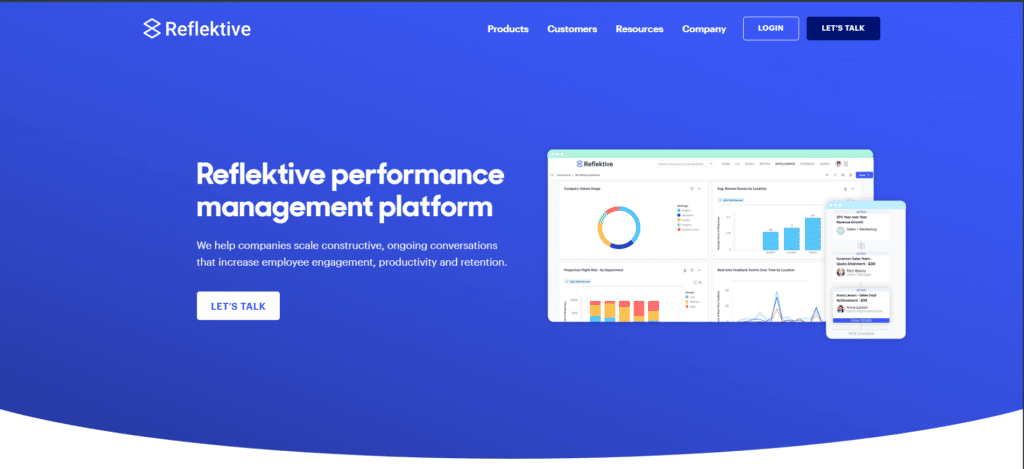
5. Reflektive (now part of PeopleFluent)

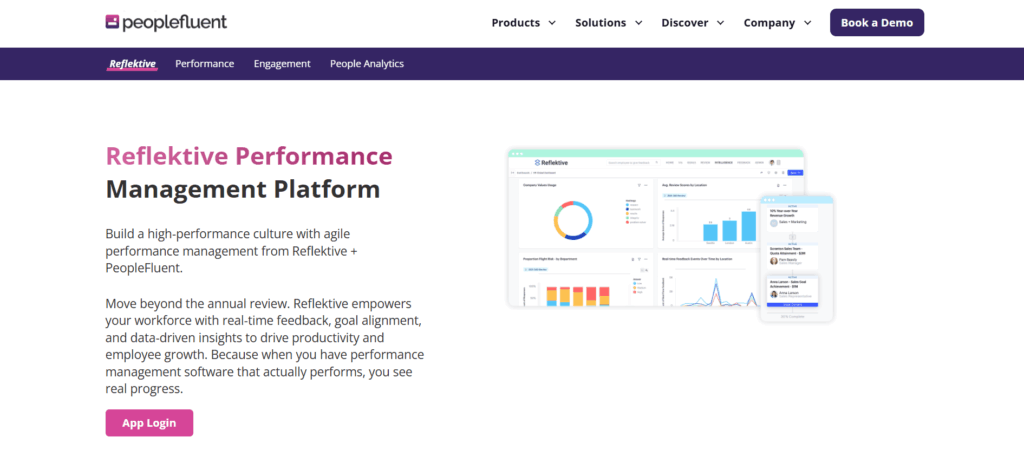
One notable change since this list was last updated: Reflektive is no longer sold as a standalone product. Learning Technologies Group (LTG) acquired Reflektive in 2021, and its performance, engagement, and analytics capabilities were folded into PeopleFluent’s talent management portfolio. Organizations evaluating “Reflektive” today would be evaluating PeopleFluent’s combined suite instead.

Key Features (as part of PeopleFluent)

  • Goal Management: Collaborative goal-setting and OKR tracking.
  • Real-Time Feedback: Continuous, agile feedback in the flow of work.
  • Recognition & Engagement: Tools carried over from Reflektive’s original engagement suite.

User Experience

Existing Reflektive customers are migrated into PeopleFluent’s broader talent management environment rather than a standalone Reflektive product.

USP

The combined offering leans on PeopleFluent’s enterprise talent management depth rather than Reflektive’s original lightweight, real-time feedback focus.

Price

PeopleFluent does not publish pricing publicly.

6. Leapsome

Leapsome is an all-in-one people enablement platform combining HRIS, performance reviews, engagement surveys, goals, and learning on connected people data.

Key Features

  • Reviews: Best-practice questions, cross-cycle analytics, and drag-and-drop calibration.
  • Surveys: Science-backed question library with benchmarking and DEI analytics.
  • Goals: Individual, team, and company OKRs with a visual goal tree.
  • HRIS & Learning: Centralized employee data plus SCORM/xAPI course support.

User Experience

Leapsome is modular by design, letting teams start with one process and add more as needs grow, backed by a dedicated Customer Success team for higher-tier contracts.

USP

Leapsome differentiates by combining a native HRIS with performance, engagement, and learning tools on one connected data model, per its comparison of Engagedly vs Leapsome.

Price

Pricing depends on employee count, contract length (minimum one-year term), and the modules purchased, with multi-module and volume discounts available. Visit their platform page for an exact quote.

7. Trakstar

Trakstar (now Mitratech Trakstar) delivers performance management with a strong focus on analytics and appraisal workflows.

Key Features

  • Structured Performance Reviews with automated reminders.
  • Goal Setting and Tracking aligned to company objectives.
  • 360-degree feedback from managers, peers, and direct reports.
  • Engagement Tracking and workforce analytics via Trakstar Insights.

User Experience

Trakstar is simple to navigate for administering review cycles, and provides data-driven reports for decision-making, though some reviewers note a learning curve around customization.

USP

Its robust reporting and analytics, plus the option to bundle with Mitratech’s ATS and LMS products, distinguish it from single-purpose competitors.

Price

Visit their platform page for pricing details.

8. 15Five

15Five is known for driving continuous feedback and manager effectiveness through structured check-ins, AI coaching, and recognition.

Key Features

  • Engage: Employee engagement surveys, targeted assessments, and benchmarking.
  • Perform: AI-assisted performance reviews, OKRs & goals, 360° feedback, and a talent matrix.
  • Total Platform: Engage plus Perform, an HR outcomes dashboard, and manager training microlearnings.
  • Add-ons: Kona AI coaching, compensation planning, and live manager coaching.

User Experience

The platform features an easy-to-use design with mobile accessibility, and every customer gets dedicated support through 15Five’s “Right Expert, Right Time” model.

USP

15Five’s focus on manager effectiveness and AI-assisted coaching, via its Kona AI product, makes it a strong alternative for organizations prioritizing manager development.

Price

Engage starts at $4/user/month, Perform at $11/user/month, and Total Platform at $16/user/month, all billed annually. Add-ons like Kona Meeting Assistant ($2/employee/month), Kona Coach ($19/manager/month), and Compensation ($9-$11/user/month) are priced separately.

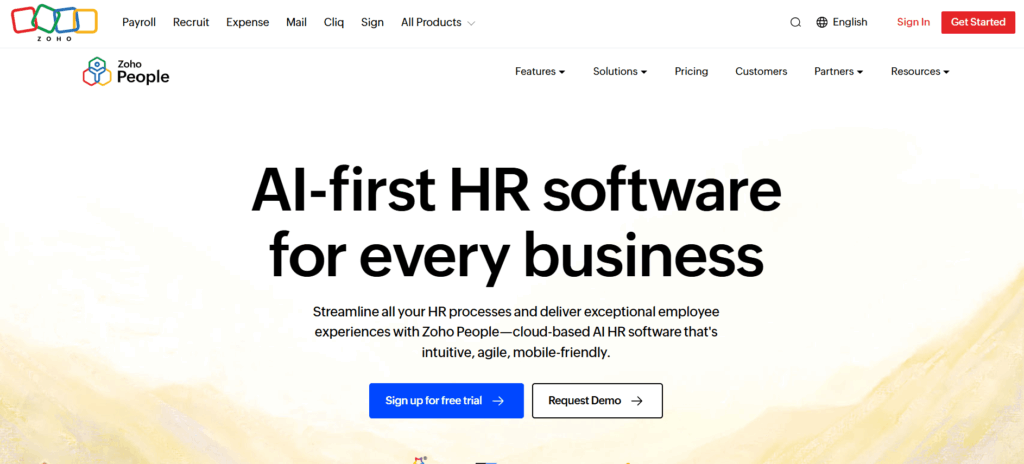
9. Zoho People

Zoho People is a full-fledged HR suite with core HR, attendance, and performance management tools built into the broader Zoho ecosystem.

Key Features

  • Performance Management: Goals, KRAs, competencies, 360-degree feedback, and appraisals (Premium tier and above).
  • Time-Off & Attendance: Leave policies, accrual rules, and facial-recognition attendance tracking.
  • HR Help Desk & LMS: Case management and course creation at the Enterprise tier.
  • Zia AI Bot: A smart HR assistant included from the Essential HR tier upward.

User Experience

Zoho People integrates seamlessly with the wider Zoho suite (Recruit, Payroll, Expense, Connect) for a unified HR experience, though performance-specific features only unlock at higher tiers.

USP

Zoho People stands out as an affordable, all-in-one HR and performance solution, with a permanently free plan for very small teams.

Price

Visit their platform page for current per-tier rates, since Zoho prices by region and billing cycle.

10. PerformYard

PerformYard provides a flexible, all-features-included solution for performance reviews and goal management.

Key Features

  • Customizable Performance Review Cycles built around your existing process.
  • Goal Setting and Tracking with continuous feedback.
  • 360-degree and multi-rater feedback options.
  • Reporting & Analytics with automatic review-cycle data collection.

User Experience

The platform offers flexibility and simplicity, and every customer gets a dedicated customer success manager for onboarding, training, and support at no additional cost.

USP

PerformYard’s customization and “everything included, one price” model make it a strong contender for businesses of all sizes, per Engagedly’s comparison against PerformYard.

Price

Visit their platform page for pricing details.

Conclusion

Performance management platforms continue to evolve quickly, and 2026 has brought real changes to this list, from Lattice and 15Five publishing clearer tiered pricing, to Reflektive disappearing as a standalone product entirely. Whether you’re looking for an all-in-one AI-powered system like Engagedly, an HRIS-plus-performance platform like Leapsome, or an analytics-driven tool like Trakstar, there is a solution to match your goals.

By evaluating these Peoplebox.ai alternatives on features, user experience, and unique strengths, and by confirming pricing directly on each vendor’s official site, companies can select the platform that fits both their budget and their long-term performance culture.

Ready to see how Engagedly’s AI-powered platform compares for your team? Request a demo and get a walkthrough tailored to your organization’s goals.

Frequently Asked Questions

What is the best Peoplebox.ai alternative for mid-market companies in 2026?

Engagedly is the strongest fit for mid-market organizations that want performance management, engagement, and learning unified in one AI-powered platform rather than juggling separate point solutions.

Is Reflektive still available as a standalone performance management tool?

No. Reflektive was acquired by Learning Technologies Group in 2021, and its capabilities are now part of PeopleFluent’s talent management portfolio rather than a separate product.

Which Peoplebox.ai alternatives publish transparent per-seat pricing?

Engagedly, Lattice, and 15Five publish per-seat pricing ranges directly on their official pricing pages. Betterworks, Culture Amp, Trakstar, and PerformYard require contacting sales for a custom quote.

Do these platforms include AI features in 2026?

Most do. Engagedly’s Marissa AI, Lattice’s AI Agent, Leapsome’s AI Agents, and 15Five’s Kona AI Coach are all built into their respective platforms as of 2026, spanning goal suggestions, review drafting, and manager coaching.

How is Engagedly different from Lattice or 15Five?

Engagedly bundles performance, learning, engagement, recognition, and talent mobility into modular suites starting at $2 per user per month, while Lattice and 15Five price performance and engagement as separate, higher-cost tiers. See the full breakdown in Engagedly’s comparisons against Lattice and 15Five.

The Top 10 BambooHR Alternatives You Need to Know in 2026

BambooHR is still one of the most recognized names in HR software, and 2026 has been a big year for the platform. In July, BambooHR rolled out Bamboo AI, an embedded system of AI agents built to handle reporting, payroll analysis, scheduling, and employee self service, alongside a restructured Core, Pro, and Elite pricing model and new modules for contractor management and time and attendance. It is a genuinely stronger product than it was even twelve months ago.

Even so, a lot of growing companies are still shopping around. BambooHR was built as an HR system of record first, and while its AI layer is catching up fast, organizations that need deep, purpose built performance management, agentic talent intelligence, or workforce analytics often find themselves outgrowing it once headcount and complexity increase.

If you’re one of them, this guide walks through 10 of the strongest BambooHR alternatives on the market in 2026, what changed with each of them this year, and how to think about the switch.

Why Companies Still Look for BambooHR Alternatives in 2026

BambooHR’s core HR, payroll, and benefits tools remain genuinely good for small and mid-sized teams. But a few key gaps keep pushing growing companies to look elsewhere:

  • Basic Performance Management: Many organizations need evaluation tools that go beyond standard review cycles – requiring true goal alignment, calibration, and continuous feedback built for scale.
  • Limited Predictive Analytics: Companies often outgrow standard reporting and require deeper, more predictive people analytics than a general HRIS typically delivers.
  • Superficial AI Features: Modern HR teams want agentic AI that actively assists within performance and talent workflows, rather than basic chatbots built only for helpdesk and reporting tasks.
  • Disconnected L&D Tools: Businesses need learning and development closely tied to performance data, rather than treated as a separate, add-on course library.
  • Escalating Costs at Scale: As headcount grows, BambooHR’s tiered pricing (Core, Pro, and Elite) locks key AI and performance capabilities behind its higher-cost tiers.

None of this makes BambooHR a bad product. It simply means the calculus changes as an organization’s HR strategy matures – and that is precisely where the specialized platforms below win.

Criteria for Evaluation

Core capabilities: performance reviews, goals and OKRs, continuous feedback, engagement surveys, and learning and development.

AI and automation: how much of the platform’s 2026 roadmap is genuinely agentic versus a chatbot bolted onto old workflows.

Scalability and integrations: how well the platform grows from mid market to enterprise, and how it fits into an existing HR stack.

User experience: onboarding time, day to day usability for managers and employees, not just admins.

Top 10 BambooHR Alternatives to Consider in 2026

Here are 10 excellent alternatives to BambooHR worth considering:

  1. Engagedly
  2. Lattice
  3. 15Five
  4. Leapsome
  5. Betterworks
  6. Reflektive
  7. Trakstar
  8. Culture Amp
  9. Zoho People
  10. PerformYard

1. Engagedly

Engagedly is an AI talent management platform built to help organizations connect
performance, engagement, learning, growth, and recognition in one unified experience.
Powered by Marissa, its AI SuperAgent, Engagedly helps leaders turn people strategy into
intelligent actions, reduce talent silos, and drive measurable business outcomes. Trusted by
organizations worldwide, Engagedly supports stronger engagement, better retention, and the
development of high performing teams.

AI-Powered Talent Transformation

Engagedly brings performance management, employee engagement, and learning into one connected platform. Guided by Marissa’s intelligence, organizations receive actionable insights and proactive suggestions that boost productivity while creating a culture of continuous growth.

Key Features with Marissa AI

  • Performance Reviews: AI-led assessments deliver fair, consistent, and transparent evaluations, improving employee trust, retention, and satisfaction.
  • Goal Setting & Alignment: Marissa recommends goals, aligns them with company strategy, and monitors progress in real time.
  • Employee Engagement: AI sentiment analysis uncovers morale issues and offers data-driven ways to strengthen engagement and reduce attrition.
  • Continuous Feedback: Smart nudges encourage regular feedback loops, helping managers and employees build stronger communication and growth habits.
  • Learning Management: AI-personalized learning paths streamline upskilling and development – no need for separate tools.
  • 360-Degree Feedback: Enhanced analytics deliver deeper, well-rounded insights from peers, managers, and direct reports.
  • OKRs (Objectives & Key Results): Automated tracking and predictive insights keep teams aligned with organizational objectives.
  • Employee Recognition: AI identifies high performers and recommends timely recognition, reinforcing motivation and appreciation.

User Experience

Engagedly provides a clean, intuitive experience across desktop and mobile. With Marissa’s conversational interface, users interact naturally – transforming what used to be complex menus into straightforward, strategic conversations that drive intelligent action.

What Makes Engagedly Different

Engagedly is more than a standard HR platform – it’s an Agentic AI-powered talent engine. With Marissa at its core, organizations can:

  • Automate routine tasks, freeing leaders to focus on strategy.
  • Access predictive insights to solve issues before they become problems.
  • Build a culture of recognition, growth, and sustained high performance.

For mid-sized businesses looking to elevate their talent strategy, Engagedly with Marissa offers more than an upgrade – it delivers a true competitive edge.

2. Lattice

Lattice is a performance management platform built around structured reviews, goal alignment, continuous feedback, and employee growth. It enables organizations to set goals, conduct structured performance reviews, and measure engagement. In 2026, Lattice sharpened its focus considerably: following a partnership with Workday announced in late 2025, the company discontinued its HRIS and payroll products (payroll access ended March 31, 2026, and HRIS access ends July 31, 2026) to concentrate entirely on performance management, engagement, goals, growth, and compensation.

Key Features:

  • Performance reviews for structured evaluations, now with AI drafted summaries grounded in goals, feedback, 1:1s, and prior review data.
  • OKRs and goal tracking tools.
  • Continuous feedback and 1:1 tools, including an AI meeting agent that documents conversations and surfaces coaching insights.
  • Engagement surveys for employee satisfaction.
  • Compensation planning tied directly to performance data.

User Experience: Lattice’s interface is intuitive, analytics are strong, and adoption is high due to its simple design, though full implementation for larger teams typically runs 8 to 12 weeks.

USP: A strong focus on employee development and continuous improvement, now delivered as a focused, AI driven performance and engagement layer rather than an all in one HRIS, making it ideal for growth oriented companies that already have a core HR system in place.

3. 15Five

15Five is a performance management platform focused on continuous check ins, goal tracking, and manager development. Its flagship AI capability, Work Context, pulls signal from tools employees already use, including Slack, Teams, Asana, Notion, Jira, and GitHub, into a shared context graph, so managers get a fuller picture of performance without asking people to duplicate updates across systems. AI Assisted Reviews then draw on that same context, plus existing goals, feedback, and prior reviews, to help managers draft stronger evaluations faster.

Key Features:

  • Continuous check ins and weekly progress updates.
  • AI assisted performance reviews and 360 degree feedback.
  • Goal and OKR tracking.
  • Manager coaching and training modules, sold as an add on.
  • Engagement surveys with heat maps and action planning.

User Experience: Straightforward and check in driven, which makes it easy for employees to adopt, though HRIS integration isn’t always seamless and weekly check in questions can start to feel repetitive without enough variation.

USP: 15Five’s strength is turning scattered day to day work signal into manager ready context, making it a solid fit for mid market teams that want continuous feedback and strong manager coaching without the weight of enterprise calibration tools.

4. Leapsome

Leapsome is a people enablement platform that connects performance reviews, OKRs, 1:1s, engagement surveys, and a learning library in a single system, with support for English, German, French, and other languages that makes it a common pick for international teams.

Key Features:

  • Customizable review cycles with competency frameworks.
  • Goals and OKRs tied to individual and company objectives.
  • Continuous feedback linked directly to learning content.
  • Engagement and pulse surveys.

User Experience: Modern and integrated, though buyers evaluating Leapsome should factor in pricing that scales quickly once multiple modules are added, and limited API support for updating goals programmatically.

USP: Leapsome’s unique strength is closing the loop between a performance gap and the training that fixes it, since a review that surfaces a skill gap can route directly to a learning course inside the same platform, which suits distributed or multilingual teams especially well.

5. Betterworks

Betterworks is a performance management platform built around goal alignment, continuous conversations, and workforce planning. Its AI powered Talent Intelligence capabilities, unveiled in May 2026, give leaders real time visibility into performance, skills, and workforce readiness based on actual work happening across the business rather than static review cycles. The company’s own State of Performance Enablement Report found executives are roughly six times more likely than employees to believe performance systems have kept pace with AI driven work, a gap its Talent Intelligence tools are built to close.

Key Features:

  • Goal setting and OKR tracking at enterprise scale.
  • AI enabled coaching and structured 1:1s.
  • Talent intelligence, calibration, and succession planning.
  • Skills intelligence and unified talent profiles.

User Experience: Clean interface with strong integration capabilities, generally regarded as the stronger choice for large, OKR driven enterprises rather than smaller teams.

USP: Betterworks stands out for tying goal alignment directly to workforce and succession planning rather than treating those as separate processes, which makes it a strong fit for enterprises that need performance data to inform real staffing decisions.

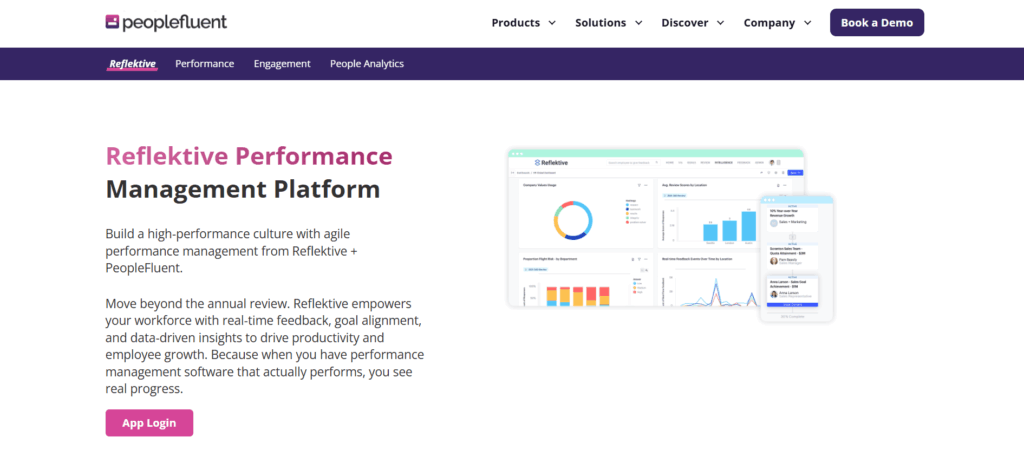
6. Reflektive (by PeopleFluent)

Reflektive is a performance and engagement platform built around real time feedback and agility. It is no longer an independent company: it was acquired by Learning Technologies Group and now operates as part of PeopleFluent’s talent management portfolio. Evaluating Reflektive today means evaluating PeopleFluent’s combined performance and engagement suite.

Key Features:

  • Real time feedback through Slack, Microsoft Teams, and Outlook integrations.
  • Goal management and OKR tracking.
  • Self, manager, and 360 degree reviews.
  • Engagement surveys with sentiment analysis and industry benchmarking, built with input from Stanford organizational behavior researchers.
  • People analytics with HRIS syncing, including native BambooHR data integration.

User Experience: Praised for making feedback a habit through email and chat integrations rather than a separate portal, though it’s now sold and supported as part of the broader PeopleFluent talent suite rather than as a standalone product.

USP: Reflektive’s edge is putting feedback directly inside the tools employees already use, which makes it a solid pick for organizations that want lightweight, flow of work performance tools and are comfortable buying into the PeopleFluent ecosystem.

7. Trakstar

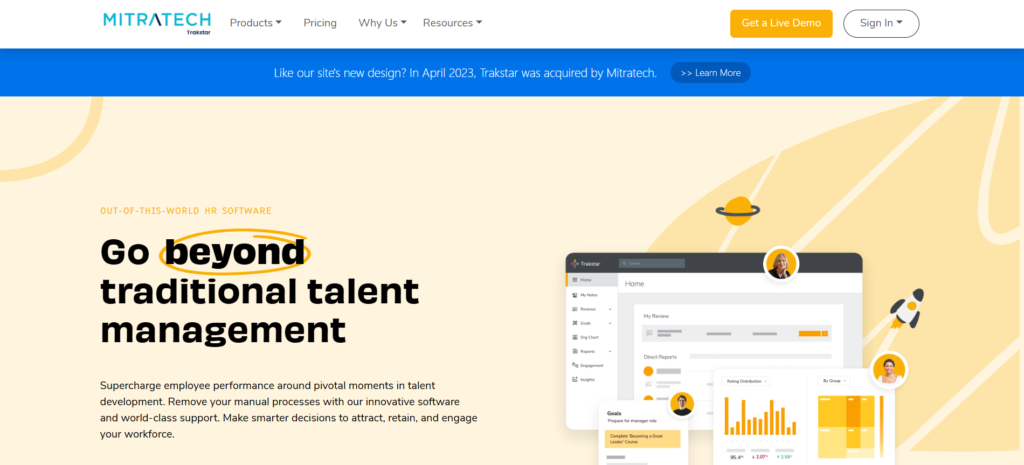
Trakstar Perform is a performance management solution combining structured reviews with compliance focused analytics. Mitratech acquired Trakstar in April 2023, rebranded the product Trakstar Perform, and folded it into a broader talent suite that also includes Trakstar Hire for applicant tracking and Trakstar Learn for learning management. The entity itself was formally renamed Mitratech Trakstar, Inc. in October 2024.

Key Features:

  • Structured performance reviews and goal tracking.
  • Compliance focused workflows, useful for organizations that need audit ready documentation.
  • Analytics dashboards for performance trends.
  • Integration with Trakstar’s hiring and learning modules.

User Experience: Straightforward and reliable rather than flashy, with most reviewers pointing to its strength in standardized, compliance driven review cycles over continuous feedback or engagement features.

USP: Trakstar Perform is built for consistency and documentation over social engagement, which makes it a natural fit for organizations, especially in regulated industries, that need audit ready review records more than they need continuous feedback tools.

8. Culture Amp

Culture Amp is an employee experience and performance platform built around engagement data. It unified performance cycles with engagement data and added AI powered feedback summaries, along with AI generated survey action recommendations that tie engagement driver scores to specific interventions backed by outcomes drawn from Culture Amp’s own aggregate benchmarking dataset spanning thousands of organizations.

Key Features:

  • Research backed engagement and pulse surveys.
  • Performance reviews and structured goal tracking.
  • AI powered action planning tied directly to survey results.
  • Benchmarking against a large, cross industry dataset.
  • DEI focused survey modules.

User Experience: Admins managing performance cycles report a real learning curve, though the survey and feedback tools themselves are considered easy to use once teams are ramped up.

USP: Culture Amp shines in combining engagement and performance data, then translating survey results into specific, evidence backed actions rather than leaving HR teams to interpret raw scores on their own.

9. Zoho People

Zoho People is a full HR suite with integrated performance management features, combining core HR functions with performance tools to support employee development. Zia, Zoho’s AI assistant, is embedded across Zoho People for handling routine actions and queries, and Zoho’s broader Zia platform has expanded with natural language reporting and deeper automation across the suite.

Key Features:

  • Core HR functions: attendance, leave, and employee data management.
  • Performance reviews and goal tracking.
  • Zia AI assistant for HR queries and natural language reporting.
  • Granular permissions for confidential appraisal data.
  • Learning management with an online test builder.

User Experience: Tight integration with the rest of the Zoho suite is the biggest draw, making it a natural fit for companies already running Zoho CRM, Zoho Books, or other Zoho apps.

USP: Zoho People offers a cost effective, all in one HR and performance platform that gets noticeably more valuable the more of the Zoho ecosystem a company already uses.

10. Perform Yard

PerformYard is a performance management solution built for flexibility and customization, providing tools for reviews, goal setting, and feedback tailored to organizational needs rather than forced into a rigid template.

Key Features:

  • Fully custom review cycles: annual, quarterly, project based, or imported from existing forms.
  • Goal management tied directly into reviews.
  • Continuous feedback and structured check ins.
  • Native integrations with ADP, BambooHR, Gusto, Rippling, UKG, Workday, Paylocity, and more.
  • Dedicated Customer Success Manager included for setup and configuration.

User Experience: Consistently rated highly for ease of use and support, with reviewers specifically calling out its intuitive review process and hands on onboarding.

USP: PerformYard stands out for its flexibility, letting companies build review workflows around their own process instead of adapting their process to fit the software, without the added cost of engagement or learning modules they may not need.

Quick Comparison

PlatformBest ForStandout
EngagedlyUnified AI driven talent managementMarissa’s agentic framework across career planning and workforce analytics
LatticeComprehensive performance and talent intelligenceAI review drafts, Workday integration, discontinued native HRIS
15FiveContinuous feedback with manager coachingWork Context pulls signal from Slack, Jira, GitHub, and more
LeapsomePerformance connected to learningMultilingual support for international teams
BetterworksEnterprise OKRs and talent intelligenceReal time Talent Intelligence launched May 2026
ReflektiveFeedback in the flow of workNow part of PeopleFluent, not standalone
Trakstar PerformCompliance driven reviewsRebranded and folded into Mitratech’s talent suite
Culture AmpEngagement led performanceAI generated survey action recommendations
Zoho PeopleBudget friendly, Zoho ecosystemZia AI expanded for HR queries and reporting
PerformYardFully custom review workflowsBroad native HRIS integration list

Conclusion

The performance management category moved fast in 2026. Nearly every platform on this list shipped a real agentic AI feature this year, not just a chatbot wrapper, and two long standing names, Reflektive and Trakstar, now operate under new parent companies rather than as independent products. BambooHR itself closed a lot of ground with Bamboo AI, which is worth factoring in if your needs are closer to core HR than deep performance management.

If your organization is outgrowing BambooHR’s performance tools specifically, platforms like Engagedly, Lattice, and Betterworks offer the deepest AI driven performance and talent intelligence. If budget and simplicity matter more, Zoho People and PerformYard are hard to beat. And if engagement is your primary lever, Culture Amp still leads there.

Frequently Asked Questions (FAQs)

Why are companies still looking for alternatives to BambooHR in 2026?

BambooHR closed some gaps this year with Bamboo AI and its new Core, Pro, and Elite tiers, but performance management, AI agents, and compliance training are still concentrated in the higher priced tiers. Companies that need deep performance calibration, agentic workforce planning, or advanced people analytics often still find dedicated platforms deliver more for their specific use case.

What should you prioritize when evaluating a BambooHR alternative?

Focus on how AI is actually implemented, whether it’s genuinely agentic and grounded in your company’s real data, or just a chatbot layered over existing workflows. Beyond that, prioritize goal and OKR management, continuous feedback, engagement surveys, learning and development, and how well the platform integrates with your existing HR stack

Is an all in one platform better than combining specialized tools?

It depends on your size and complexity. All in one platforms like Engagedly or Zoho People reduce data silos and administrative overhead. But organizations with very specific performance or engagement needs sometimes get better results from a specialized tool like PerformYard for reviews or Culture Amp for engagement, paired with a lighter HRIS like BambooHR for core HR.

Which companies benefit most from switching away from BambooHR?

Fast growing and mid sized companies that need performance management to scale with headcount, organizations building out formal calibration or succession planning, and teams that want AI embedded directly into goal setting and feedback rather than added on as an afterthought.

Did any major BambooHR alternatives change ownership recently?

Yes. Reflektive is now part of PeopleFluent, owned by Learning Technologies Group, and Trakstar was acquired by Mitratech in 2023 and rebranded Trakstar Perform. Both are still active products, but they’re sold and supported differently than when they were independent companies, so it’s worth confirming current pricing and support structure directly with the vendor before you commit.

The Top 10 ADP Workforce Now Alternatives You Need to Know in 2026

When it comes to HR management and workforce operations, ADP Workforce Now has long been one of the most recognized platforms in the industry. Known for its deep payroll expertise and broad HR administration capabilities – including benefits, time tracking, compliance, and reporting – it’s often the go-to choice for mid-sized and larger organizations.

But as we move into 2026, many organizations are realizing that ADP Workforce Now may not always be the perfect fit for their growing needs.

Some companies want more advanced performance management features, deeper AI-driven insights, or stronger learning and development functionality. Others are searching for more modern, employee-centric platforms that go beyond payroll and compliance to actively drive engagement, growth, and culture.

The good news? There are plenty of excellent ADP Workforce Now alternatives on the market—platforms that go beyond traditional HR and payroll administration to deliver modern, AI-powered talent solutions.

If you’re exploring your options, you’re in the right place. Below, we’ve rounded up 10 of the best ADP Workforce Now alternatives in 2026.

Why Companies Might Seek Alternatives to ADP Workforce Now

ADP Workforce Now has become popular thanks to its comprehensive payroll and core HR capabilities. But there are a few reasons why companies may consider switching to alternatives:

With so many HR and talent management solutions available, businesses now have more flexibility to find tools that best match their needs.

This article provides a curated list of the top ADP Workforce Now alternatives, each evaluated by features, usability, and unique selling points, to help you choose the right fit for your organization in 2026.

Criteria for Evaluation

Features

  • Core HR: Employee data management, payroll, time off, and compliance.
  • Performance Management: Reviews, goals, and feedback.
  • Engagement & Culture: Surveys, recognition, and communication tools.
  • Learning & Development: Training and upskilling features.
  • Analytics & Reporting: Insights to guide HR and leadership decisions.
  • Integrations: Seamless syncing with HRIS, payroll, and productivity apps.

User Experience

  • Ease of Use: Intuitive, user-friendly design.
  • Accessibility: Desktop and mobile availability.
  • Customization: Configurable workflows and branding.
  • Support: Resources, onboarding, and customer success.

Unique Selling Points (USPs)

  • Innovation: AI-driven features, automation, or analytics.
  • Scalability: Ability to support growth from small to enterprise.
  • Differentiation: Strong specialization in HR, performance, or engagement.

Top 10 ADP Workforce Now Alternatives in 2026

1. Engagedly

Engagedly is an AI talent management platform built to help organizations connect
performance, engagement, learning, growth, and recognition in one unified experience.
Powered by Marissa, its AI SuperAgent, Engagedly helps leaders turn people strategy into
intelligent actions, reduce talent silos, and drive measurable business outcomes. Trusted by
organizations worldwide, Engagedly supports stronger engagement, better retention, and the
development of high performing teams.

AI-Powered Talent Transformation

Engagedly brings performance management, employee engagement, and learning into one connected platform. Guided by Marissa’s intelligence, organizations receive actionable insights and proactive suggestions that boost productivity while creating a culture of continuous growth.

Key Features with Marissa AI

  • Performance Reviews: AI-led assessments deliver fair, consistent, and transparent evaluations, improving employee trust, retention, and satisfaction.
  • Goal Setting & Alignment: Marissa recommends goals, aligns them with company strategy, and monitors progress in real time.
  • Employee Engagement: AI sentiment analysis uncovers morale issues and offers data-driven ways to strengthen engagement and reduce attrition.
  • Continuous Feedback: Smart nudges encourage regular feedback loops, helping managers and employees build stronger communication and growth habits.
  • Learning Management: AI-personalized learning paths streamline upskilling and development – no need for separate tools.
  • 360-Degree Feedback: Enhanced analytics deliver deeper, well-rounded insights from peers, managers, and direct reports.
  • OKRs (Objectives & Key Results): Automated tracking and predictive insights keep teams aligned with organizational objectives.
  • Employee Recognition: AI identifies high performers and recommends timely recognition, reinforcing motivation and appreciation.

User Experience

Engagedly provides a clean, intuitive experience across desktop and mobile. With Marissa’s conversational interface, users interact naturally – transforming what used to be complex menus into straightforward, strategic conversations that drive intelligent action.

What Makes Engagedly Different

Engagedly is more than a standard HR platform – it’s an Agentic AI-powered talent engine. With Marissa at its core, organizations can:

  • Automate routine tasks, freeing leaders to focus on strategy.
  • Access predictive insights to solve issues before they become problems.
  • Build a culture of recognition, growth, and sustained high performance.

For mid-sized businesses looking to elevate their talent strategy, Engagedly with Marissa offers more than an upgrade – it delivers a true competitive edge.

2. Lattice

Lattice is a performance management and employee engagement platform centered on continuous feedback and employee growth. It enables organizations to set goals, conduct structured performance reviews, and measure engagement. In 2026, Lattice sharpened its focus considerably: following a partnership with Workday announced in late 2025, the company discontinued its HRIS and payroll products (payroll access ended March 31, 2026, and HRIS access ends July 31, 2026) to concentrate entirely on performance management, engagement, goals, growth, and compensation.

Key Features:

  • Performance Reviews for structured evaluations.
  • OKRs and goal-tracking tools.
  • Continuous feedback and 1:1 tools.
  • Engagement surveys for employee satisfaction.

User Experience:
Lattice’s interface is intuitive, analytics are strong, and adoption is high due to its simple design.

USP:
A strong focus on employee development and continuous improvement, now delivered as a focused, AI-driven performance and engagement layer rather than an all-in-one HRIS – making it ideal for growth-oriented companies that already have a core HR system in place.

3. Leapsome

Leapsome Home Page

Leapsome combines performance management with learning and development, offering a holistic platform for employee growth. Leapsome has continued expanding its North American footprint, adding a native ADP Workforce Now integration alongside deeper built-in AI agents that help HR teams, managers, and employees cut down on admin work and surface performance and engagement insights.

Key Features:

  • Customizable performance review processes.
  • Goal setting and OKR alignment.
  • Continuous feedback channels.
  • Built-in learning management tools.

User Experience:
Leapsome’s workflows are highly customizable, and its clean design ensures easy navigation.

USP:
The integration of performance management and learning – now paired with a native ADP Workforce Now connection – gives organizations moving off ADP’s own performance tools a two-in-one solution that still works alongside their existing ADP payroll setup.

4. PerformYard

Performyard Home Page

PerformYard focuses on flexible performance management tailored to each company’s unique processes. The platform has become notably AI-driven, with AI-assisted review writing and AI Insights that surface recommendations and action items from 1:1s, appraisals, 360-degree reviews, and engagement surveys.

Key Features:

  • Customizable performance review cycles.
  • Goal tracking and alignment tools.
  • 360-degree feedback options.
  • Reporting and analytics dashboards.

User Experience:
Known for its adaptability, PerformYard provides flexibility without overwhelming users.

USP:
Ideal for organizations wanting customized workflows that fit their exact performance management strategy, now with AI assistance built into the review and reporting process.

5. 15Five

15Five Home Page

15Five is a well-recognized performance management platform emphasizing weekly check-ins and ongoing feedback. Its AI capabilities have grown substantially, with Amaya (an AI “ask-me-anything” agent for HR leaders) and Kona, an AI meeting assistant that turns 1:1 conversations into performance-review-ready notes.

Key Features:

  • Weekly pulse check-ins for managers and employees.
  • OKRs and goal-setting tools.
  • Engagement surveys and peer recognition.
  • Performance review functionality.

User Experience:
The platform is designed to encourage frequent manager-employee touchpoints through a clean, user-friendly interface.

USP:
Its check-in model fosters ongoing conversations and accountability, now reinforced by AI that captures and structures those conversations automatically.

6. Culture Amp

Culture Amp combines engagement surveys with performance management tools, offering data-driven insights to improve culture. The platform has expanded its AI Coach, which helps managers prepare for difficult conversations, draft performance reviews, and act on engagement survey results.

Key Features:

  • Engagement surveys with benchmarks.
  • Performance review tools.
  • Goal setting and tracking.
  • Continuous feedback.

User Experience:
Provides actionable insights through an easy-to-use interface.

USP:
Known for culture-focused analytics, it helps organizations improve engagement and inclusivity, and manager effectiveness.

7. Workday

Workday Home Page

Workday is an enterprise-grade HR and finance platform with comprehensive performance and workforce management tools. Its AI layer, Workday Illuminate, has expanded with purpose-built agents – including a dedicated Performance Agent – rolling out through 2026 to automate tasks across HR and finance.

Key Features:

  • Goal setting and career development planning.
  • Performance evaluations.
  • Learning and talent management.
  • Workforce analytics.

User Experience:
Workday is robust and feature-rich but comes with a steeper learning curve, making it more suited to large enterprises.

USP:
Its end-to-end HR and finance integration, now paired with agentic AI across both functions, sets it apart for enterprise-scale businesses.

8. BambooHR

BambooHR Home Page

BambooHR is an all-in-one HR solution with lightweight performance management capabilities. In 2026, BambooHR introduced Bamboo AI, an embedded system of AI agents built natively into the platform to support decision-making, engagement, and day-to-day HR workflows.

Key Features:

  • Performance reviews and self-assessments.
  • Feedback and goal tracking.
  • Employee data management.
  • Time-off and leave tracking.

User Experience:
BambooHR is known for its ease of use and clean design, making it popular with SMBs.

USP:
Its all-in-one HR approach, now paired with native AI agents, appeals to smaller organizations needing both HR and performance tools without stitching together separate systems.

9. Cornerstone OnDemand

Cornerstone OnDemand Home Page

Cornerstone OnDemand is a comprehensive talent management suite focused on learning and development alongside performance. The company’s platform is now marketed as Cornerstone Galaxy, an AI-powered workforce agility platform that unifies learning, skills intelligence, performance, and talent management.

Key Features:

  • Learning management and training.
  • Performance review tools.
  • Succession planning.
  • Skills development.

User Experience:
Feature-rich and scalable, though better suited to larger companies.

USP:
Its strength lies in deep learning and development tools paired with AI-driven skills intelligence, making it well suited to organizations focused on closing workforce skills gaps.

10. ClearCo (ClearCompany)

ClearCompany Home Page

ClearCo or ClearCompany is a talent management system with a strong emphasis on recruiting and performance alignment. The rebrand reflects the platform’s evolution into an AI- and agent-powered unified talent platform spanning hiring, onboarding, performance, and development.

Key Features:

  • Applicant tracking and onboarding.
  • Performance review tools.
  • Goal alignment and feedback.
  • Engagement surveys.

User Experience:
A straightforward interface with strong recruiting-performance integration.

USP:
Unique for its recruitment + performance management blend, now amplified with AI agents, making it useful for growing companies – particularly those already on ADP platforms, given its deep ADP integrations.

Conclusion

While ADP Workforce Now remains a strong HR platform, organizations in 2026 have no shortage of alternatives offering specialized tools, deeper AI capabilities, or more intuitive user experiences.

Platforms like Engagedly, Lattice, and Leapsome stand out for employee-centric growth and continuous improvement – though it’s worth noting Lattice has narrowed its scope to performance and engagement after exiting HRIS and payroll, and Leapsome now offers a native ADP Workforce Now integration for teams that want to keep ADP for payroll.

PerformYard and 15Five excel at flexible, feedback-driven models, both increasingly powered by built-in AI agents.

Workday, BambooHR, and Cornerstone deliver scalability and comprehensive HR functionality, each now layering agentic AI (Workday Illuminate, Bamboo AI, and Cornerstone Galaxy) across their platforms.

Culture Amp and ClearCo (ClearCompany) focus on engagement, analytics, and alignment, with AI Coach and AI-driven talent analytics respectively.

By carefully evaluating features, user experience, and unique value propositions – including how much of the AI and HRIS landscape has shifted in the past year – businesses can identify the ADP Workforce Now alternative that aligns best with their goals, and build a motivated, high-performing workforce.

FAQs

What should companies look for in a modern workforce management platform?

A modern workforce management platform should combine performance management, goal tracking, engagement surveys, and learning tools in one unified system.
Look for:
AI-powered insights and agents for predictive analytics and automation
360-degree feedback and continuous feedback loops
OKR alignment and real-time progress tracking
Integration with payroll and HRIS systems
Clear analytics dashboards

How do AI-driven talent management platforms improve performance reviews?

AI-driven talent management systems use automation and data analysis to make evaluations more consistent, unbiased, and actionable.
For example, platforms like Engagedly use AI agents to recommend goals, flag engagement risks, and standardize review feedback. This reduces manual work and improves fairness. Competing platforms have moved in the same direction throughout 2025–2026: Lattice, 15Five, Culture Amp, and PerformYard have all introduced AI-drafted reviews and AI-generated coaching insights.
Benefits include:
Real-time performance insights
Predictive attrition signals
Automated feedback nudges
Personalized development plans
These features help HR leaders shift from reactive reviews to proactive talent development.

Which performance management tools are best for mid-sized businesses?

Mid-sized businesses typically need flexibility, scalability, and strong adoption rates without enterprise-level complexity.

Options like Lattice and 15Five emphasize continuous feedback and goal tracking, while BambooHR appeals to SMBs needing all-in-one HR functionality alongside its new Bamboo AI agents.

The best choice depends on:
Whether you prioritize engagement analytics
If AI automation is important
The need for built-in learning management
Whether you need a single system of record or a dedicated performance layer that sits on top of your existing HRIS (as Lattice now does)
Budget and integration requirements

What is the difference between performance management and talent management software?

Performance management software focuses on evaluations, goal tracking, and feedback cycles.
Talent management platforms go broader by including:
Learning management and upskilling
Succession planning
Employee engagement analytics
Workforce planning
For example, Cornerstone (via its Cornerstone Galaxy platform) emphasizes learning, development, and AI-driven skills intelligence, while Workday offers end-to-end HR and finance integration – now expanded with Workday Illuminate AI agents – for enterprise-scale operations.
Understanding this distinction helps decision-makers choose between a focused solution or a comprehensive workforce ecosystem.

Are there better alternatives to ADP Workforce Now for engagement and culture building?

Yes, several platforms specialize in engagement and culture analytics rather than core HR administration.
For example, Culture Amp is known for benchmarked engagement surveys, culture insights, and its expanding AI Coach, while ClearCo (ClearCompany) connects recruiting with performance alignment and deep ADP integrations.
Organizations seeking stronger employee experience outcomes should evaluate:
Sentiment analysis capabilities
Recognition systems
Continuous feedback tools
Actionable engagement dashboards
AI coaching or agent-based support for managers

10 Best SAP SuccessFactors Alternatives in 2026

SAP SuccessFactors alternatives are performance management, employee engagement, and talent development platforms that organizations choose instead of SAP’s HCM suite, usually to get simpler setup, more transparent pricing, or deeper AI-driven insights. The best SAP SuccessFactors alternatives in 2026 – starting with Engagedly, Lattice, and Leapsome – pair AI automation with flexible, modular pricing across performance, engagement, and learning, so teams only pay for the pieces they actually use.

SAP SuccessFactors is still one of the most widely used Human Capital Management (HCM) suites on the market, covering everything from performance and goals to learning and workforce analytics. But it isn’t always the right fit. Some organizations find it too complex to configure, too expensive to scale, or too rigid for the AI-driven, continuous performance culture they’re trying to build.

This article breaks down the 10 best alternatives to SAP SuccessFactors in 2026, along with their features, user experience, and current pricing, verified directly from each provider’s official website.

Why Companies Look for Alternatives to SAP SuccessFactors

Most organizations that move away from SAP SuccessFactors cite one of five recurring issues:

  • Complexity: the breadth of features can make the platform difficult to configure and manage, especially for mid-sized businesses.
  • Cost: licensing and implementation costs can exceed the budgets of growing companies.
  • Integration challenges: some businesses need smoother integrations with modern collaboration or productivity tools.
  • User experience: employees and managers increasingly expect intuitive, mobile-first experiences rather than legacy enterprise UI.
  • Innovation gaps: companies want AI-powered insights, real-time analytics, and continuous feedback tools rather than an annual-review-only system.

However, the good news is there’s no shortage of strong competitors offering flexible solutions for performance management, engagement, and learning, several of which have shipped major AI features in the past year alone.

Criteria for Evaluating SAP SuccessFactors Alternatives

To compare these platforms consistently, we focus on three things:

Features – performance reviews, goal setting and OKRs, continuous feedback, engagement and recognition, learning management, reporting and analytics, and third-party integrations.

User experience – intuitive design, mobile and web accessibility, customization flexibility, and the quality of customer support and training.

Unique selling points – AI-driven functionality, credibility and reputation, real customer adoption, and what actually differentiates the platform from the rest of this list.

Top 10 SAP SuccessFactors Alternatives in 2026

  1. Engagedly
  2. Lattice
  3. Leapsome
  4. Culture Amp
  5. 15Five
  6. PerformYard
  7. BambooHR
  8. Workday
  9. ClearCompany (now ClearCo)
  10. Cornerstone OnDemand

1. Engagedly

Engagedly is an AI talent management platform built to help organizations connect
performance, engagement, learning, growth, and recognition in one unified experience.
Powered by Marissa, its AI SuperAgent, Engagedly helps leaders turn people strategy into
intelligent actions, reduce talent silos, and drive measurable business outcomes. Trusted by
organizations worldwide, Engagedly supports stronger engagement, better retention, and the
development of high performing teams.

Key features: Marissa AI powers performance reviews with consistent, bias-reduced assessments, recommends and tracks OKRs and goals against organizational strategy, and surfaces engagement gaps through sentiment analysis. The platform also includes 360-degree feedback, real-time recognition, and AI-curated learning paths, all accessible through a single conversational interface.

User experience: Engagedly offers a seamless experience across desktop and mobile, with Marissa’s conversational layer helping managers and employees focus on action rather than navigating menus.

Pricing: Engagedly uses a modular, per-user, per-month model billed annually. Manage Performance costs $5-$8, while Learn & Grow costs $3-$5. Recognize & Reward, Engage & Listen, and Talent Mobility each cost around $2. The annual minimum is $7,500, with custom enterprise pricing available.

2. Lattice

Lattice is a performance management and people-analytics platform that combines continuous feedback, goal tracking, and engagement surveys with a growing set of AI tools, including an AI agent that answers HR questions and coaches managers directly in the flow of work.

Key features: Structured performance reviews, calibration, and succession planning; cascading Goals & OKRs; pulse and lifecycle engagement surveys with AI-analyzed trends; and add-on modules for compensation planning and career growth (Grow).

User experience: Lattice is known for a clean interface and strong analytics, and its “Foundations” bundle keeps 1:1s, feedback, and weekly updates included across every base product.

Pricing: Lattice’s Foundations bundle (Performance + Goals & OKRs) runs $13/seat/month, with Performance and Goals & OKRs available separately at $10 and $8/seat/month, Engagement at $4/seat/month, and Compensation and Grow add-ons at $6 and $4/seat/month.

3. Leapsome

Leapsome is a people-management platform that connects HRIS, performance, engagement, and learning on one data foundation, positioning itself as an alternative to running separate point solutions for each function.

Key features: Configurable performance reviews and calibration, company-wide OKRs, science-backed engagement surveys with benchmarking, an integrated learning module, and AI Agents that draft reviews, summarize meetings, and answer policy questions.

User experience: The platform supports 38 languages and uses a modular dashboard. Teams can add HRIS, Reviews, Surveys, Goals, and Learning as separate but connected modules.

Pricing: Leapsome’s per-user pricing starts around $199/month at the platform base and scales with the modules selected, contract length, and headcount; a 14-day free trial is available, and dedicated Customer Success support requires a $6,000/year minimum commitment.

4. Culture Amp

Culture Amp is an employee experience platform built around engagement surveys, performance management, and AI Coach, an assistant grounded in the company’s decades of People Science research rather than a general-purpose chatbot.

Key features: The Engage module covers pulse surveys, retention insights, and DEI benchmarking; Perform covers continuous feedback, calibrated reviews, 1-on-1s, and goal management. Every plan includes AI Coach, HRIS integrations, and full GDPR and SOC 2 compliance.

User experience: Culture Amp leans on intuitive dashboards and data visualization, which is why it’s often chosen by HR teams that want engagement analytics to be genuinely actionable rather than a static report.

Pricing: Culture Amp does not publish list pricing. Costs depend on employee count, selected modules, and service tier. Plans are billed annually. Visit its platform page for pricing details.

5. 15Five

15Five is a performance management and engagement platform built around continuous check-ins, AI-assisted reviews, and manager coaching, aimed at teams that want ongoing communication rather than a once-a-year evaluation cycle.

Key features: Weekly check-ins, 1-on-1 agendas, and High Fives recognition sit alongside AI-assisted performance reviews, weighted OKRs, 360° reviews, and a 9-Box talent matrix. AMAYA, the platform’s AI thought partner, and Kona, an AI meeting assistant and coach, are available as add-ons.

User experience: 15Five is designed around a simple, adoptable check-in rhythm, and every plan includes dedicated human support through the company’s “Right Expert, Right Time” model.

Pricing: Engage runs $4/user/month, Perform runs $11/user/month, and Total Platform runs $16/user/month, all billed annually, with Kona and Compensation add-ons priced separately.

6. PerformYard

PerformYard is a flexible performance management platform built to mirror a company’s existing review process rather than forcing a fixed one, with employee engagement, meetings, and survey modules layered on top.

Key features: Customizable review cycles and forms, goal management tied to reviews, continuous feedback and public recognition, and reporting dashboards including 9-Box visualizations. PerformYard AI adds review drafting and feedback summarization across the platform.

User experience: Every customer gets a dedicated customer success manager and free onboarding and training, and the pricing calculator on the site lets teams estimate cost before ever talking to sales.

Pricing: Performance Management runs $5-$10 per person/month billed annually, with PerformYard AI at $1-$3, Employee Engagement at $1-$3, and Meetings or Surveys at $2-$4 per person/month as add-ons.

7. BambooHR

BambooHR is a broader HRIS platform with performance management, hiring, and payroll built in, making it a fit for companies that want a single system of record rather than a standalone performance tool layered on top of SAP SuccessFactors.

Key features: Core HR data and workflows, an applicant tracking system, time-off tracking, AI-assisted performance management, wellbeing tracking, and, on higher tiers, compensation management and custom dashboards.

User experience: BambooHR has a clean, approachable interface. This simplicity makes it appealing to mid-sized companies that want to avoid complex enterprise suites.

Pricing: Core runs $10/employee/month, Pro runs $17/employee/month, and Elite runs $25/employee/month, all billed on a per-employee basis; companies with 25 or fewer employees pay a flat $250/month instead.

8. Workday

Workday Human Capital Management is an enterprise-grade HCM platform covering HR, payroll, and performance management, built for large, complex organizations that want one system spanning the entire employee lifecycle. It’s powered by Workday Illuminate, the company’s AI layer, and Workday Skills Cloud for skills-based workforce planning.

Key features: Structured performance and goal-tracking cycles, integrated learning, workforce planning, and full payroll and benefits administration, all built on a single data model shared across HR and finance.

User experience: Workday offers deep reporting and analytics. However, its steeper learning curve can make lighter performance tools more appealing to smaller teams.

Pricing: Workday does not publish pricing. Costs are quoted per employee on an annual subscription basis and vary with organization size, modules, and complexity – visit their platform page for pricing details.

9. ClearCompany (now ClearCo)

ClearCompany rebranded as ClearCo in March 2026, repositioning itself as an AI- and agent-powered unified talent platform spanning the entire employee lifecycle rather than a recruiting-first tool. It still unifies recruiting, onboarding, performance management, and employee engagement in one system.

Key features: Applicant tracking and AI-assisted candidate sourcing, digital onboarding workflows, performance reviews with goal alignment, and an Agent Platform that automates routine talent-management tasks and surfaces AI-generated recommendations.

User experience: ClearCo delivers a fairly seamless experience across the hiring-to-performance lifecycle, which is its biggest differentiator from point solutions that only cover one stage.

Pricing: ClearCo quotes costs per user or employee, depending on the modules selected. Visit its platform page for pricing details.

10. Cornerstone OnDemand

Cornerstone OnDemand is a global talent and learning management platform, historically known for its learning management system (LMS) and now expanded through acquisitions of Saba, SumTotal, EdCast, and SkyHive into a broader talent suite covering recruiting, performance, and skills intelligence.

Key features: A robust LMS for training and compliance, structured performance reviews, succession planning tools, and advanced workforce analytics, all built for organizations managing large, distributed workforces.

User experience: Cornerstone offers deep, enterprise-level capabilities, though the comprehensive feature set can require dedicated admin resources to configure and maintain well.

Pricing: Cornerstone OnDemand does not publish pricing. Costs are custom-quoted based on modules, headcount, and contract length – visit their platform page for pricing details.

Quick Comparison: SAP SuccessFactors Alternatives in 2026

PlatformBest ForStandout
EngagedlyUnified AI-driven talent managementMarissa AI across performance, learning, and engagement
LatticeAI-powered performance and people analyticsAI Agent plus evidence-based review drafts
LeapsomePerformance connected to HRIS and learningUnified HRIS and Talent Suite with AI Agents
Culture AmpEngagement-led performance and people scienceAI Coach grounded in decades of People Science
15FiveContinuous feedback with manager coachingAMAYA AI thought partner and Kona AI meeting coach
PerformYardFully custom review workflowsTransparent pricing calculator with a dedicated CSM
BambooHRAll-in-one HRIS with built-in performance toolsFlat-rate pricing for teams of 25 or fewer
WorkdayEnterprise-grade HCM at global scaleUnified HCM, payroll, and workforce planning
ClearCompany (ClearCo)Talent lifecycle from recruiting to performanceRebranded in 2026 around an AI Agent Platform
Cornerstone OnDemandLearning-led talent development at scaleDeep LMS heritage plus Saba, SumTotal, and EdCast

Conclusion

SAP SuccessFactors remains a capable HCM platform, but it isn’t the right fit for every organization. Whether the driver is cost, complexity, or the need for AI-native features, the alternatives above cover very different priorities – from Engagedly’s unified AI suite to Workday’s enterprise-grade scale and Cornerstone’s learning depth.

The right choice comes down to matching a platform’s strengths to your organization’s size, culture, and goals rather than picking the biggest name on the list. If you want a deeper look at how these platforms stack up feature by feature, this list of performance management system examples and this guide to performance management are good next reads.

If your team is ready to see how AI-driven performance management, engagement, and learning can work together in one platform, request a demo of Engagedly to get a walkthrough tailored to your organization.

Frequently Asked Questions

What is the best SAP SuccessFactors alternative in 2026?

There isn’t a single “best” alternative, since it depends on company size and priorities. Engagedly is a strong fit for organizations that want AI-driven performance, engagement, and learning in one platform, while Workday and Cornerstone OnDemand suit larger enterprises needing full HCM or LMS depth.

Is Engagedly cheaper than SAP SuccessFactors?

Engagedly’s modular pricing starts at $2-$8 per user/month depending on the suite, which is typically more transparent and accessible than SAP SuccessFactors’ enterprise-quoted pricing, though final cost always depends on company size and the modules each platform requires.

Which alternative is best for small and mid-sized businesses?

15Five, PerformYard, and BambooHR all publish per-user pricing that scales down comfortably for smaller teams, and Engagedly’s modular suites let smaller companies start with just one or two modules instead of a full enterprise rollout

Do these platforms integrate with existing HRIS and payroll systems?

Yes. Every platform on this list, including Engagedly, Lattice, Leapsome, and 15Five, offers integrations with common HRIS, payroll, and collaboration tools such as Slack, Microsoft Teams, and major HRIS providers, so switching performance tools doesn’t require replacing your system of record.

How is AI changing performance management software in 2026?

Most platforms on this list, including Engagedly’s Marissa, Lattice’s AI Agent, 15Five’s AMAYA, and Culture Amp’s AI Coach, have moved from AI as a add-on feature to AI as the primary interface for drafting reviews, summarizing feedback, and flagging engagement risks before they become retention problems.

Can I switch from SAP SuccessFactors without losing historical data?

Most alternatives, including Engagedly, support data migration and historical review imports as part of onboarding, though the scope of what transfers cleanly depends on how your SAP SuccessFactors instance was configured, so it’s worth confirming migration support during a demo.

Which platform is best for pure engagement and culture measurement?

Culture Amp is generally considered the deepest option for engagement surveys and people-science-backed benchmarking, while Engagedly and 15Five both offer engagement modules that connect survey data directly to performance and recognition workflows.

The Top 10 ClearCompany Alternatives You Need to Know in 2026

Performance management and talent management platforms have become essential for organizations aiming to boost employee productivity, engagement, and alignment with company goals. ClearCompany remains one of the recognized players in this space, offering tools for applicant tracking, onboarding, performance management, and employee engagement, with AI now built into its ATS to help teams draft messages, surface top candidates, and prioritize pipelines.

However, organizations might seek ClearCompany alternatives for several reasons. Some may require more advanced performance analytics, stronger learning and development features, better scalability, or tighter integrations with existing HR systems. Others might look for platforms with more user-friendly designs, cost-effective pricing, or deeper agentic AI capabilities that have become standard across the category in 2026.

This article provides an overview of the top 10 ClearCompany alternatives in 2026, evaluating them based on features, usability, and unique selling points (USPs).

Criteria for Evaluation

Features Key functionalities such as performance reviews, goal setting, engagement tools, feedback, onboarding, and learning management.

User Experience Ease of use, intuitive design, accessibility, customization options, and available customer support.

Unique Selling Points (USPs) What differentiates each platform: advanced analytics, continuous feedback, strong integrations, agentic AI, or holistic employee development.

Top 10 ClearCompany Alternatives in 2026

Here are 10 excellent alternatives to ClearCompany worth considering:

  1. Engagedly
  2. Lattice
  3. Betterworks
  4. Culture Amp
  5. Leapsome
  6. Zoho People
  7. BambooHR
  8. Mitratech
  9. Trakstar
  10. PeopleFluent

1. Engagedly

Engagedly is an AI-powered talent management solution built to cover every aspect of workforce growth. With the support of Marissa, our AI SuperAgent, the platform helps mid-sized organizations tackle common challenges such as inconsistent reviews, misaligned goals, low engagement, and scattered learning experiences – turning these obstacles into opportunities for development.

AI-Powered Talent Transformation

Engagedly brings performance management, employee engagement, and learning into one connected platform. Guided by Marissa’s intelligence, organizations receive actionable insights and proactive suggestions that boost productivity while creating a culture of continuous growth.

Key Features with Marissa AI

  • Performance Reviews: AI-led assessments deliver fair, consistent, and transparent evaluations, improving employee trust, retention, and satisfaction.
  • Goal Setting & Alignment: Marissa recommends goals, aligns them with company strategy, and monitors progress in real time.
  • Employee Engagement: AI sentiment analysis uncovers morale issues and offers data-driven ways to strengthen engagement and reduce attrition.
  • Continuous Feedback: Smart nudges encourage regular feedback loops, helping managers and employees build stronger communication and growth habits.
  • Learning Management: AI-personalized learning paths streamline upskilling and development – no need for separate tools.
  • 360-Degree Feedback: Enhanced analytics deliver deeper, well-rounded insights from peers, managers, and direct reports.
  • OKRs (Objectives & Key Results): Automated tracking and predictive insights keep teams aligned with organizational objectives.
  • Employee Recognition: AI identifies high performers and recommends timely recognition, reinforcing motivation and appreciation.

User Experience

Engagedly provides a clean, intuitive experience across desktop and mobile. With Marissa’s conversational interface, users interact naturally – transforming what used to be complex menus into straightforward, strategic conversations that drive intelligent action.

What Makes Engagedly Different

Engagedly is more than a standard HR platform – it’s an Agentic AI-powered talent engine. With Marissa at its core, organizations can:

  • Automate routine tasks, freeing leaders to focus on strategy.
  • Access predictive insights to solve issues before they become problems.
  • Build a culture of recognition, growth, and sustained high performance.

For mid-sized businesses looking to elevate their talent strategy, Engagedly with Marissa offers more than an upgrade – it delivers a true competitive edge.

2. Lattice

Lattice is a performance management and employee engagement platform centered on continuous feedback and employee growth. It enables organizations to set goals, conduct structured performance reviews, and measure engagement. In 2026, Lattice sharpened its focus considerably: following a partnership with Workday announced in late 2026, the company discontinued its HRIS and payroll products (payroll access ended March 31, 2026, and HRIS access ends July 31, 2026) to concentrate entirely on performance management, engagement, goals, growth, and compensation.

Key Features (2026)

  • Performance reviews, check-ins, and manager analytics with flexible cycles (annual, quarterly, or project-based)
  • OKRs and goal alignment
  • Employee engagement surveys and pulse checks with industry benchmarking
  • Career development tools, including career tracks, skill matrices, and individual development plans
  • Compensation planning tied directly to performance review data
  • Lattice AI Agent for HR support and AI-assisted performance summaries
  • A new bidirectional integration with Workday HCM, allowing performance ratings and compensation data to sync between systems
  • Lattice MCP, which connects Lattice talent data with Claude, ChatGPT, and other AI tools

User Experience

Lattice is known for its clean design and robust analytics, and remains intuitive and widely adopted, though organizations relying on it for HRIS or payroll functions will need to migrate to a separate system of record.

USP

Lattice’s strength is now squarely in performance management and employee development rather than end-to-end HR administration. Organizations that want a dedicated talent suite that plugs into an existing HRIS (such as Workday or BambooHR) may find this refocus appealing; those wanting a single all-in-one HR platform should look elsewhere.

3. Betterworks

Betterworks is a goal alignment and continuous performance management platform built to help organizations drive results through OKRs, real-time feedback, and, as of 2026, expanded Talent Intelligence capabilities.

Key Features

  • OKR tracking and goal alignment, with goal cascading
  • Continuous performance reviews and AI-assisted performance summaries
  • Real-time feedback and recognition
  • Skills Intelligence, which infers workforce capabilities from goals, outcomes, feedback, and 1:1s, validated by managers
  • Calibration and succession planning tools for faster, more consistent talent decisions
  • Integration with workplace apps, including learning platforms like Docebo

User Experience

Betterworks has a straightforward interface with integrations into popular productivity tools, and the platform’s newer AI features are designed to work alongside managers rather than replace their judgment.

USP

Betterworks is particularly strong in goal alignment and, with its 2026 Talent Intelligence launch, in surfacing real-time workforce insights for enterprise talent decisions.

4. Culture Amp

Culture Amp blends employee engagement, performance management, and analytics, and has significantly expanded its AI capabilities in 2026 with the platform-wide rollout of AI Coach.

Key Features

  • Engagement and pulse surveys with heatmap exploration
  • Performance reviews and feedback, including AI-powered Suggest Improvements for coaching managers on review quality
  • Goal setting and tracking
  • People analytics for insights, built on Culture Amp’s People Science research
  • AI Coach, now available across the full platform at no additional charge, which helps managers interpret engagement data and prepare for performance conversations

User Experience

Culture Amp is valued for its data-driven design, offering actionable insights based on employee sentiment. The company states its AI features keep a human in the loop rather than automating decisions outright.

USP

Its core strength remains culture transformation, now paired with AI coaching grounded in over a decade of workplace research data.

5. Leapsome

Leapsome has evolved from a performance-focused tool into a combined HRIS and Talent Suite platform, with AI capabilities spanning both.

Key Features

  • HRIS: employee records, absence management, time tracking, e-signatures, onboarding, and payroll preparation, including a native ADP Workforce Now integration
  • Talent Suite: performance reviews, engagement surveys, goals and OKRs, learning, and compensation and promotion reviews
  • AI Copilot, which analyzes survey results and team sentiment, suggests OKRs, and helps turn manager notes into structured feedback
  • AI Widget Builder, which generates analytics dashboards from natural-language questions

User Experience

Leapsome offers high flexibility, with customizable workflows for different organizational needs, and around 70 integrations across HR, talent acquisition, and communication tools.

USP

Leapsome’s combination of core HR administration and performance and learning tools in one connected data foundation makes it a strong option for teams that want fewer disconnected systems, an area where it now directly competes with Lattice’s former positioning.

6. Zoho People

Zoho People is a full HR management suite with integrated performance management tools, and in June 2026 Zoho rebuilt its AI assistant, Zia, into an agentic system available from its Essential HR tier upward.

Key Features

  • Performance reviews
  • Goal and KPI tracking
  • HR administration features (leave, attendance, and more)
  • Feedback tools
  • Zia for HR, which can now execute multi-step tasks such as filing leave requests from uploaded documents, and surfaces behavioral signals like absenteeism or login pattern changes

User Experience

Part of the Zoho ecosystem, it integrates seamlessly with other Zoho applications and now includes voice commands across multiple languages within the same interface.

USP

Zoho People’s all-in-one HR and performance approach, now paired with agentic AI bundled into mainstream plans rather than gated behind enterprise tiers, makes it appealing for SMB and mid-market teams wanting a unified, AI-enabled HR stack.

7. BambooHR

BambooHR is a widely used HR management platform with performance management as part of its suite, and in July 2026 the company introduced Bamboo AI, an embedded system of AI agents across the platform.

Key Features

  • Employee performance reviews and goal tracking
  • Employee database management
  • HR functions like payroll and leave management
  • Compensation benchmarking, using peer-matched data by company size, industry, and location
  • Ask BambooHR, an AI assistant that can reference uploaded company documents to answer employee questions
  • Expanded reporting, including AI-powered benchmark matching against peer organizations

User Experience

BambooHR is designed for simplicity, making HR and performance management approachable for SMBs. Performance management features are available on its Pro and Elite plans rather than its entry-level Core plan.

USP

Its ease of use, all-in-one HR features, and growing suite of embedded AI agents make it attractive for small to mid-sized businesses.

8. Trakstar

Trakstar now operates as Mitratech Trakstar following its acquisition, and provides HR and performance management solutions that combine employee engagement, performance reviews, and analytics.

Key Features

  • Customizable performance reviews with competencies and rating scales
  • OKR goal management with automatic progress tracking
  • Talent calibration, including 9-box grid capabilities
  • Development planning tied to review data and competency gaps
  • Integrations with Workday, Cornerstone OnDemand, and other HR and BI tools

User Experience

A straightforward, easy-to-use platform with an emphasis on analytics and reporting, available via native iOS and Android apps.

USP

Trakstar’s robust reporting and analytics, now backed by Mitratech’s broader compliance and HR technology portfolio, make it valuable for data-driven organizations.

9. Reflektive (by PeopleFluent)

Reflektive is a performance and engagement platform built around real time feedback and agility. It is no longer an independent company: it was acquired by Learning Technologies Group and now operates as part of PeopleFluent’s talent management portfolio. Evaluating Reflektive today means evaluating PeopleFluent’s combined performance and engagement suite.

Key Features:

  • Real time feedback through Slack, Microsoft Teams, and Outlook integrations.
  • Goal management and OKR tracking.
  • Self, manager, and 360 degree reviews.
  • Engagement surveys with sentiment analysis and industry benchmarking, built with input from Stanford organizational behavior researchers.
  • People analytics with HRIS syncing, including native BambooHR data integration.

User Experience: Praised for making feedback a habit through email and chat integrations rather than a separate portal, though it’s now sold and supported as part of the broader PeopleFluent talent suite rather than as a standalone product.

USP: Reflektive’s edge is putting feedback directly inside the tools employees already use, which makes it a solid pick for organizations that want lightweight, flow of work performance tools and are comfortable buying into the PeopleFluent ecosystem.

10. Paycor (formerly 7Geese)

7Geese, once an OKR-focused standalone platform, no longer exists as an independent product. Paycor acquired it in September 2020 and fully integrated it into Paycor’s HCM suite as Paycor Talent Development. The 7Geese domain now redirects to Paycor.

Key Features

  • OKR setting and alignment
  • Continuous feedback and performance reviews
  • Employee recognition tools
  • Access requires a broader Paycor HCM subscription, which also covers payroll, timekeeping, and benefits administration

User Experience

Its clean, goal-first structure carries over from the original 7Geese product, though it is only accessible as part of Paycor’s full HCM platform rather than as a lightweight standalone tool.

USP

For organizations already using or considering Paycor for payroll and core HR, Paycor Talent Development offers OKR-driven performance management within the same system. Teams that want a standalone, lightweight OKR tool will need to look elsewhere.

Conclusion

While ClearCompany remains a strong player in the performance and talent management market, organizations in 2026 have a wide, and shifting, set of alternatives to choose from. Lattice’s exit from HRIS and payroll, Reflektive’s absorption into PeopleFluent, and 7Geese’s disappearance as a standalone product are all reminders that this category consolidates quickly. Platforms like Engagedly, which integrates performance, engagement, and learning with agentic AI, or Leapsome, which now combines core HR administration with talent tools, each offer a different answer to the same underlying question: how much do you want in one system versus best-of-breed.

By carefully evaluating current features, ownership status, and usability, and by verifying details directly on each vendor’s official site before signing a contract, companies can select the solution that aligns best with their needs, driving not only better employee performance but also long-term organizational success.

FAQs

What is the best ClearCompany alternative in 2026?

Engagedly is the best overall ClearCompany alternative for organizations seeking AI-powered performance, engagement, and learning management in one platform. It combines performance reviews, goal setting, OKRs, continuous feedback, employee engagement, learning, 360-degree feedback, and recognition with its Marissa AI SuperAgent. Other strong alternatives include Lattice for performance and engagement, Betterworks for OKRs, Culture Amp for engagement analytics, and Leapsome for unified HR and talent management.

How do AI-driven talent management platforms improve performance reviews?

AI-driven talent management systems use automation and data analysis to make evaluations more consistent, unbiased, and actionable.
For example, platforms like Engagedly use AI agents to recommend goals, flag engagement risks, and standardize review feedback. This reduces manual work and improves fairness. Competing platforms have moved in the same direction throughout 2025–2026: Lattice, 15Five, Culture Amp, and PerformYard have all introduced AI-drafted reviews and AI-generated coaching insights.
Benefits include:
Real-time performance insights
Predictive attrition signals
Automated feedback nudges
Personalized development plans
These features help HR leaders shift from reactive reviews to proactive talent development.

What are the best alternatives to ClearCompany?

The best ClearCompany alternatives include Engagedly, Lattice, Betterworks, Culture Amp, Leapsome, Zoho People, BambooHR, Mitratech Trakstar, PeopleFluent Reflektive, and Paycor Talent Development. Each platform differs in its strengths, including performance management, OKRs, employee engagement, learning, HR administration, analytics, and AI capabilities.

What is the best ClearCompany alternative for performance management?

Engagedly is a strong ClearCompany alternative for performance management because it brings AI-powered performance reviews, goal setting, continuous feedback, 360-degree feedback, engagement, and learning into one platform. Lattice is another strong choice for continuous feedback and employee development, while Culture Amp stands out for engagement analytics and Leapsome combines performance management with core HR administration.

Which ClearCompany alternative is best for OKRs?

Betterworks is one of the strongest ClearCompany alternatives for OKRs and goal alignment. It supports OKR tracking, goal cascading, continuous performance, real-time feedback, and Skills Intelligence. Paycor Talent Development, formerly 7Geese, is another option for organizations that want OKRs integrated with Paycor’s broader HR and payroll platform.

Which ClearCompany alternative is best for employee engagement?

Culture Amp is a leading ClearCompany alternative for employee engagement and people analytics. It combines engagement and pulse surveys, performance management, goal setting, people analytics, and AI Coach to help managers interpret employee data and improve performance conversations.

Which ClearCompany alternative is best for small and mid-sized businesses?

BambooHR and Zoho People are strong ClearCompany alternatives for small and mid-sized businesses because they combine core HR administration with performance management and AI capabilities. BambooHR offers performance reviews, goal tracking, compensation benchmarking, and Ask BambooHR, while Zoho People combines performance tools, HR administration, feedback, and its agentic Zia assistant.

Is 7Geese still available as a standalone product?

No. 7Geese is no longer available as a standalone product. Paycor acquired 7Geese in September 2020 and integrated its OKR and performance management capabilities into Paycor’s HCM suite as Paycor Talent Development. Organizations evaluating the product today should consider it as part of Paycor rather than as a separate 7Geese platform.

Is Reflektive still an independent company?

No. Reflektive is no longer an independent company. Learning Technologies Group acquired Reflektive in 2021, and it now operates within PeopleFluent’s talent management portfolio. Its performance and continuous feedback capabilities remain part of the broader PeopleFluent offering.

Why is Lattice discontinuing its HRIS and payroll products?

Lattice is discontinuing its HRIS and payroll products to focus on performance management, employee engagement, goals, growth, and compensation. Payroll access ended on March 31, 2026, and HRIS access ended on July 31, 2026. Lattice now positions its platform as a focused talent suite that integrates with an organization’s existing HRIS.

What AI features do modern performance management platforms offer?

Modern performance management platforms increasingly use AI to draft reviews, suggest goals, analyze employee sentiment, summarize feedback, recommend actions, and surface workforce insights. Examples in this comparison include Marissa from Engagedly, Zia from Zoho People, Bamboo AI from BambooHR, AI Coach from Culture Amp, Skills Intelligence from Betterworks, and Lattice AI Agent.

Should I choose an all-in-one HR platform or a specialized performance management tool?

Choose an all-in-one HR platform when you want core HR, payroll, attendance, onboarding, and performance management in one system. BambooHR and Zoho People fit this model. Choose a specialized talent or performance platform when you already have a core HRIS and need deeper capabilities for OKRs, engagement analytics, continuous feedback, or performance management. Betterworks, Culture Amp, and Lattice’s Talent Suite fit this approach.

How do I choose the right ClearCompany alternative?

Choose a ClearCompany alternative based on the capabilities you need most, such as performance management, OKRs, employee engagement, learning, HR administration, integrations, usability, and AI. Also verify current ownership, product availability, pricing, integrations, and plan requirements before making a purchase because the HR technology market changes quickly. The comparison in this article evaluates platforms based on features, user experience, and unique selling points.

The Top 10 PerformYard Alternatives You Need to Know in 2026

PerformYard is a performance management platform built around customizable reviews, goal tracking, and continuous feedback for small and mid-sized companies. PerformYard itself states that performance management software typically runs $5 to $10 per employee per month, and its own pricing sits in that same band with every feature bundled into one flat rate and a dedicated Customer Success Manager included. It is a genuinely solid product for teams that want a simple, flexible review builder.

Even so, a lot of growing companies are still shopping around. PerformYard was built as a lean, review-first platform, and while that focus is a strength for small teams, organizations that need native learning management, AI-driven talent intelligence, or deeper workforce analytics often find themselves outgrowing it once headcount and complexity increase.

If you are one of them, this guide walks through 10 of the strongest PerformYard alternatives on the market in 2026, what each one does well, and how their pricing compares.

Why do companies still look for PerformYard alternatives in 2026?

Companies most often move away from PerformYard when they need performance management that goes beyond structured reviews and goal tracking. PerformYard’s flat-rate simplicity is genuinely appealing for small teams, but a few gaps keep pushing growing companies to look elsewhere:

  • Feature limitations: PerformYard covers reviews, goals, and feedback well but does not include a native learning management system or advanced predictive people analytics.
  • Limited AI depth: Modern HR teams increasingly want agentic AI woven into performance and talent workflows, not just a customizable form builder.
  • Disconnected L&D tools: Businesses want learning and development tied directly to performance data, not treated as a separate system entirely.
  • Scalability: Larger or fast-growing organizations frequently need modular pricing, multi-entity support, and enterprise-grade reporting that a flat-rate model does not offer.
  • Engagement depth: Companies that want engagement surveys and sentiment tracking alongside performance data often need a broader platform.

None of this makes PerformYard a bad product. It simply means the calculus changes as an organization’s HR strategy matures, and that is precisely where the specialized platforms below win.

What to Look For When Evaluating a PerformYard Alternative

Core capabilities: performance reviews, goals and OKRs, continuous feedback, engagement surveys, and learning and development.

AI and automation: whether the platform’s AI features run natively across reviews and goals, or sit as a bolted-on add-on.

Scalability and integrations: how well the platform grows from mid-market to enterprise, and how it fits an existing HR stack.

User experience: onboarding time and daily usability for managers and employees, not just HR admins.

Top 10 PerformYard Alternatives to Consider in 2026

We evaluated these platforms based on performance management depth, AI capabilities, integrations, scalability, learning and development, engagement features, user experience, and pricing transparency.

  1. Engagedly
  2. Lattice
  3. 15Five
  4. Leapsome
  5. Betterworks
  6. Reflektive (by PeopleFluent)
  7. Trakstar
  8. Culture Amp
  9. Zoho People
  10. BambooHR

1. Engagedly

Engagedly is an AI talent management platform built to help organizations connect
performance, engagement, learning, growth, and recognition in one unified experience.
Powered by Marissa, its AI SuperAgent, Engagedly helps leaders turn people strategy into
intelligent actions, reduce talent silos, and drive measurable business outcomes. Trusted by
organizations worldwide, Engagedly supports stronger engagement, better retention, and the
development of high performing teams.

Key features with Marissa AI:

  • Performance reviews: AI-led evaluations support fair, consistent, and transparent review cycles that help mid-market organizations improve trust and retention.
  • Goals and OKRs: Marissa suggests goals, aligns them to company strategy, and tracks progress in real time.
  • 360-degree feedback: AI-enhanced analytics surface deeper insight from peers, managers, and direct reports.
  • Real-time feedback: Smart nudges encourage regular feedback loops between managers and employees.
  • Learning experience platform: AI-personalized learning paths make upskilling part of the performance workflow instead of a separate tool.
  • Talent analytics and mobility: Supports succession planning and predictive workforce insight.
  • CXO insights: Gives leadership-level visibility into workforce trends.

User experience: Clean and intuitive across desktop and mobile, with Marissa’s conversational interface turning complex admin menus into straightforward, strategic conversations.

What makes it different: Engagedly pairs performance, engagement, and learning with agentic AI rather than treating them as separate systems admins have to stitch together manually. See it directly against PerformYard’s review-first approach in Engagedly vs PerformYard.

Price: Engagedly’s Manage Performance suite runs $5 to $8 per user per month, billed annually, with a $7,500 annual minimum. Learning, Recognition, Engagement, and Talent Mobility add-ons are priced separately from $2 to $5 per user per month.

2. Lattice

Lattice is a performance management platform built around structured reviews, goal alignment, continuous feedback, and employee growth. Following a partnership with Workday announced in October 2025, Lattice discontinued its HRIS and payroll products, with payroll access ending March 31, 2026 and HRIS access ending July 31, 2026, to focus entirely on performance, engagement, goals, growth, and compensation.

Key features:

  • Performance reviews with AI-drafted summaries grounded in goals, feedback, 1:1s, and prior review data.
  • OKRs and goal tracking tools.
  • Continuous feedback and 1:1 tools, including an AI meeting agent that documents conversations and surfaces coaching insights.
  • Engagement surveys and compensation planning tied directly to performance data.

User experience: Intuitive interface with strong analytics and high adoption, though full implementation for larger teams typically runs 8 to 12 weeks.

USP: A strong focus on employee development and continuous improvement, now delivered as a focused, AI-driven performance and engagement layer rather than an all-in-one HRIS, which suits companies that already run core HR elsewhere. Compare it directly in Engagedly vs Lattice.

Price: $4,000 minimum annual agreement, billed in USD only, with per-seat and per-module costs quoted directly by their sales team. No flat per-user rate is published.

3. 15Five

15Five is a performance management platform focused on continuous check-ins, goal tracking, and manager development. Its AI capability, Work Context, pulls live signal from tools employees already use, including Slack, Jira, GitHub, and Salesforce, into a shared context graph, so managers get a fuller picture of performance without extra manual updates.

Key features:

  • Continuous check-ins and weekly progress updates.
  • AI-assisted performance reviews and 360-degree feedback.
  • Goal and OKR tracking, with manager coaching modules available as an add-on.
  • Engagement surveys with heat maps and action planning.

User experience: Straightforward and check-in driven, which makes it easy for employees to adopt, though HRIS integration isn’t always seamless.

USP: 15Five’s strength is turning scattered day-to-day work signal into manager-ready context, making it a solid fit for mid-market teams that want continuous feedback and strong manager coaching. See Engagedly vs 15Five for a closer comparison.
Price: Engage starts at $4, Perform at $11, and Total Platform at $16 per user per month, all billed annually.

4. Leapsome

Leapsome is a people enablement platform that connects performance reviews, OKRs, 1:1s, engagement surveys, and a learning library in a single system, with support for English, German, French, and other languages that makes it a common pick for international teams.

Key features:

  • Customizable review cycles with competency frameworks.
  • Goals and OKRs tied to individual and company objectives.
  • Continuous feedback linked directly to learning content.
  • Engagement and pulse surveys.

User experience: Modern and integrated, though buyers should factor in pricing that scales quickly once multiple modules are added.

USP: Leapsome’s strength is closing the loop between a performance gap and the training that fixes it, since a review that surfaces a skill gap can route directly to a learning course in the same platform. See Engagedly vs Leapsome for a closer look.

Price: Visit their platform page for pricing details.

5. Betterworks

Betterworks is a performance management platform built around goal alignment, continuous conversations, and workforce planning. Its Talent Intelligence capabilities give leaders real-time visibility into performance, skills, and workforce readiness based on actual work happening across the business rather than static review cycles. Betterworks’ own research found that only 16% of organizations describe their approach to talent decisions as predictive, even though most describe themselves as proactive, a gap its Talent Intelligence tools are built to close.

Key features:

  • Goal setting and OKR tracking at enterprise scale.
  • AI-enabled coaching and structured 1:1s.
  • Talent intelligence, calibration, and succession planning.
  • Skills intelligence and unified talent profiles.

User experience: Clean interface with strong integration capabilities, generally regarded as the stronger choice for large, OKR-driven enterprises rather than smaller teams.

USP: Betterworks stands out for tying goal alignment directly to workforce and succession planning rather than treating those as separate processes.

Price: Betterworks’ official page lists promotional pricing starting at $1 per user per month for the first contract year on a 3-year agreement, with the offer expiring August 31, 2026. Standard pricing is available on request.

6. Reflektive (by PeopleFluent)

Reflektive is a performance and engagement platform built around real-time feedback and agility. It is no longer an independent company; Learning Technologies Group acquired Reflektive, and it now operates as part of PeopleFluent’s talent management portfolio. Evaluating Reflektive today means evaluating PeopleFluent’s combined performance and engagement suite.

Key features:

  • Real-time feedback through Slack, Microsoft Teams, and Outlook integrations.
  • Goal management and OKR tracking.
  • Self, manager, and 360-degree reviews.
  • Engagement surveys with sentiment analysis and industry benchmarking.

User experience: Praised for making feedback a habit through email and chat integrations rather than a separate portal, though it is now sold and supported as part of the broader PeopleFluent talent suite.

USP: Reflektive’s edge is putting feedback directly inside the tools employees already use, which suits organizations comfortable buying into the PeopleFluent ecosystem.

Price: Visit their platform page for pricing details.

7. Trakstar

Trakstar Perform is a performance management solution combining structured reviews with compliance-focused analytics. Mitratech acquired Trakstar in April 2023, rebranded the product Trakstar Perform, and folded it into a broader talent suite that also includes Trakstar Hire and Trakstar Learn. The entity was formally renamed Mitratech Trakstar, Inc. in October 2024.

Key features:

  • Structured performance reviews and goal tracking.
  • Compliance-focused workflows, useful for organizations that need audit-ready documentation.
  • Analytics dashboards for performance trends.
  • Integration with Trakstar’s hiring and learning modules.

User experience: Straightforward and reliable rather than flashy, with most reviewers pointing to its strength in standardized, compliance-driven review cycles.

USP: Trakstar Perform is built for consistency and documentation over social engagement, which suits regulated industries that need audit-ready review records.

Price: Visit their platform page for pricing details.

8. Culture Amp

Culture Amp is an employee experience and performance platform built around engagement data. It combines performance cycles with engagement data and AI-powered feedback summaries, tying engagement driver scores to specific interventions backed by its own aggregate benchmarking dataset.

Key features:

  • Research-backed engagement and pulse surveys.
  • Performance reviews and structured goal tracking.
  • AI-powered action planning tied directly to survey results.
  • Benchmarking against a large, cross-industry dataset.

User experience: Admins managing performance cycles report a real learning curve, though the survey and feedback tools themselves are considered easy to use once teams are ramped up.

USP: Culture Amp shines in combining engagement and performance data, then translating survey results into specific, evidence-backed actions. See Engagedly vs Culture Amp for a direct comparison.
Price: Visit their platform page for pricing details.

9. Zoho People

Zoho People is a full HR suite with integrated performance management features, combining core HR functions with performance tools to support employee development. Zia, Zoho’s AI assistant, is embedded across the platform for routine actions, natural language reporting, and automation.
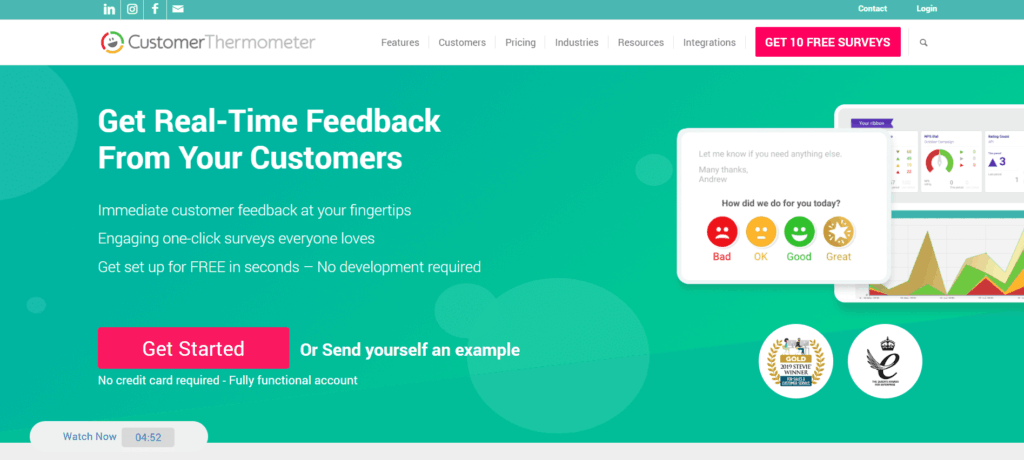
Key features:

  • Core HR functions: attendance, leave, and employee data management.
  • Performance reviews, goals, KRAs, competencies, and OKRs on Premium tier and above.
  • Zia AI assistant for HR queries and natural language reporting.
  • Learning management with an online test builder on the Enterprise tier.

User experience: Tight integration with the rest of the Zoho suite is the biggest draw, making it a natural fit for companies already running other Zoho apps.

USP: Zoho People offers a cost-effective, all-in-one HR and performance platform that gets more valuable the more of the Zoho ecosystem a company already uses.

Price: Zoho People offers a free plan for up to 5 users, with a 30-day free trial on paid plans and performance management, OKRs, and feedback tools unlocked from the Premium tier upward. Exact current rates are shown after selecting monthly or yearly billing directly on the page.

10. BambooHR

BambooHR is a widely used HR system of record that has added its own performance management layer, along with Bamboo AI, an embedded system of AI agents for reporting, payroll analysis, and employee self service introduced in 2026.

Key features:

  • Core HR, payroll, and benefits administration.
  • Performance management module with review cycles and goal tracking.
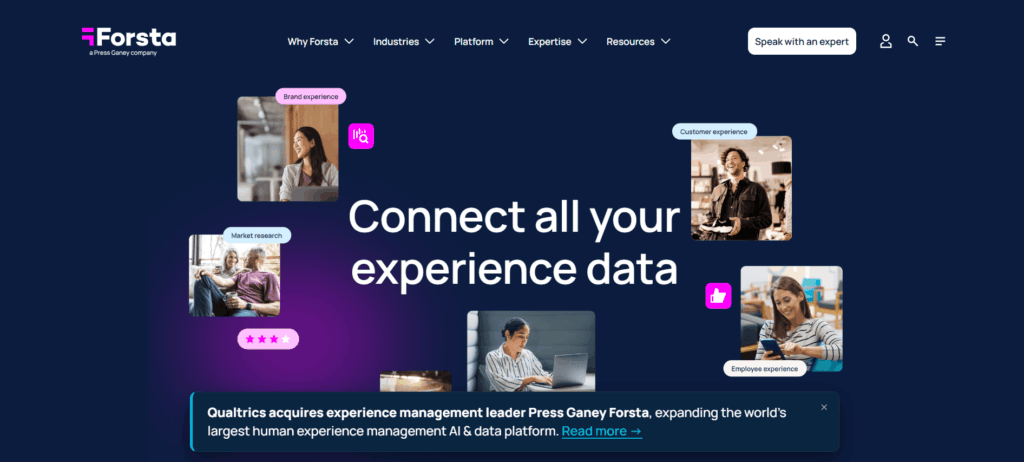
  • Bamboo AI agents for reporting and workflow automation.
  • Native integrations across a wide HR and payroll ecosystem.

User experience: Well suited to small and mid-sized teams that want core HR and light performance tools in one system rather than a dedicated performance platform.

USP: BambooHR is strongest for teams that want HR administration and performance reviews under one roof rather than running a separate specialist tool. See Engagedly vs BambooHR for how the two compare on performance depth.

Price: Core at $10, Pro at $17, and Elite at $25 per employee per month, with a flat $250 per month rate for companies with 25 employees or fewer.

Quick Comparison

PlatformBest ForStandoutPrice
EngagedlyUnified AI-driven talent managementMarissa’s agentic framework across performance, learning, and talent mobility$5-$8/user/mo, $7,500/yr minimum
LatticeComprehensive performance and talent intelligenceAI review drafts, Workday partnership, discontinued native HRIS$4,000/yr minimum, custom quote
15FiveContinuous feedback with manager coachingWork Context pulls signal from Slack, Jira, GitHub, and more$4-$16/user/mo
LeapsomePerformance connected to learningMultilingual support for international teamsCustom quote
BetterworksEnterprise OKRs and talent intelligenceTalent Intelligence tools for workforce readinessFrom $1/user/mo (promo, first year)
ReflektiveFeedback in the flow of workNow part of PeopleFluent, not standaloneCustom quote
Trakstar PerformCompliance-driven reviewsRebranded and folded into Mitratech’s talent suiteCustom quote
Culture AmpEngagement-led performanceAI-generated survey action recommendationsCustom quote
Zoho PeopleBudget-friendly, Zoho ecosystemZia AI expanded for HR queries and reportingFree for up to 5 users, paid tiers vary
BambooHRCore HR with a performance layerBamboo AI agents added in 2026$10-$25/employee/mo, $250/mo flat under 25 employees

For reference, PerformYard states on its own site that its Professional plan is priced between $5 and $10 per employee per month, with every feature included and no separate paid tiers, while its official pricing page notes pricing can also vary by seat count and selected products.

Conclusion

The performance management category kept moving through 2026. Most platforms on this list shipped genuinely agentic AI features this year, not just a chatbot layer, and Reflektive and Trakstar now operate under new parent companies rather than as independent products.

If you are outgrowing PerformYard’s review-first model specifically, platforms like Engagedly, Lattice, and Betterworks offer the deepest AI-driven performance and talent intelligence. If budget and simplicity matter more, Zoho People and BambooHR are strong options for teams prioritizing affordability and simplicity.

If your team wants deeper performance management, agentic AI, and learning without stitching together separate tools, request a demo of Engagedly to see how Marissa AI brings performance, engagement, and growth into one platform.

Frequently Asked Questions

What should companies look for when evaluating PerformYard alternatives?

Organizations should focus on how well a platform supports their performance strategy today and at scale. Key factors include continuous feedback, goal alignment, analytics depth, and ease of use. Many companies also prioritize learning management, AI-driven insights, and integrations with HRIS or payroll systems. Beyond features, adoption matters. An intuitive interface and flexible workflows affect long-term success far more than a feature checklist does.

Why do growing organizations switch from PerformYard to other platforms?

Growing organizations often outgrow PerformYard’s flat-rate simplicity as their needs become more complex. As teams scale, they may need advanced analytics, integrated learning, or AI-powered recommendations that a lean review tool does not include natively. Cost predictability, customization limits, and the need for broader HR ecosystem integration are common reasons businesses start comparing alternatives.

Which PerformYard alternative offers the strongest AI-driven performance management?

Engagedly, Lattice, 15Five, and Betterworks all shipped substantial AI capabilities in 2026. Engagedly’s Marissa AI spans performance, engagement, and learning in one system. Lattice added AI-drafted review summaries. 15Five introduced Work Context to pull live signal from tools like Slack and Jira. Betterworks launched Talent Intelligence for real-time skills and succession visibility. The right fit depends on whether you need a unified talent platform or a focused performance layer.

Is Reflektive still a good option now that it is part of PeopleFluent?

Reflektive’s real-time feedback tools are still supported and actively developed, but it is no longer sold as an independent product. Buyers should evaluate it as part of PeopleFluent’s broader talent management suite rather than expecting the standalone pricing or roadmap Reflektive had before the acquisition.
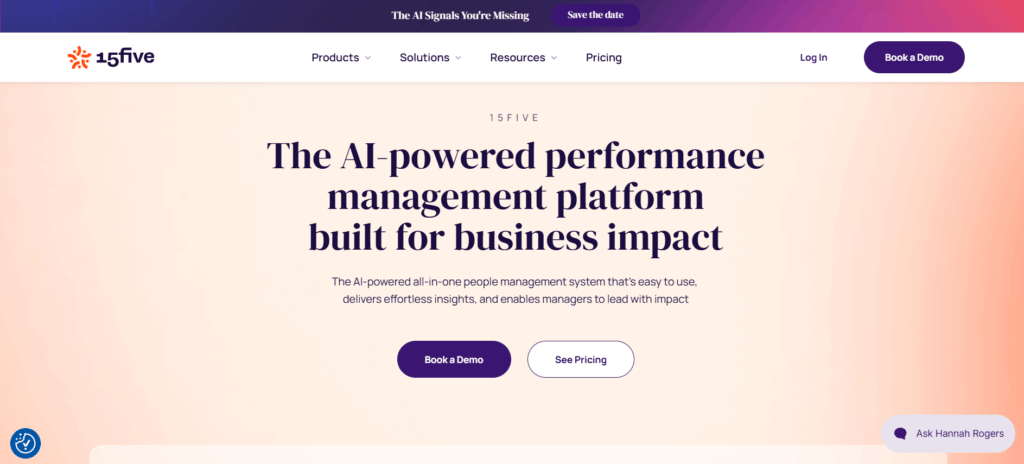
How should a company budget for a PerformYard alternative?

Start with what PerformYard alone would cost at your headcount using its published $5 to $10 per employee per month range, then compare that to the per-user or module pricing of your shortlist. Several platforms on this list, including Lattice, Culture Amp, Reflektive, Leapsome, and Trakstar, do not publish pricing and require a custom quote, so it is worth requesting quotes from two or three vendors before committing.
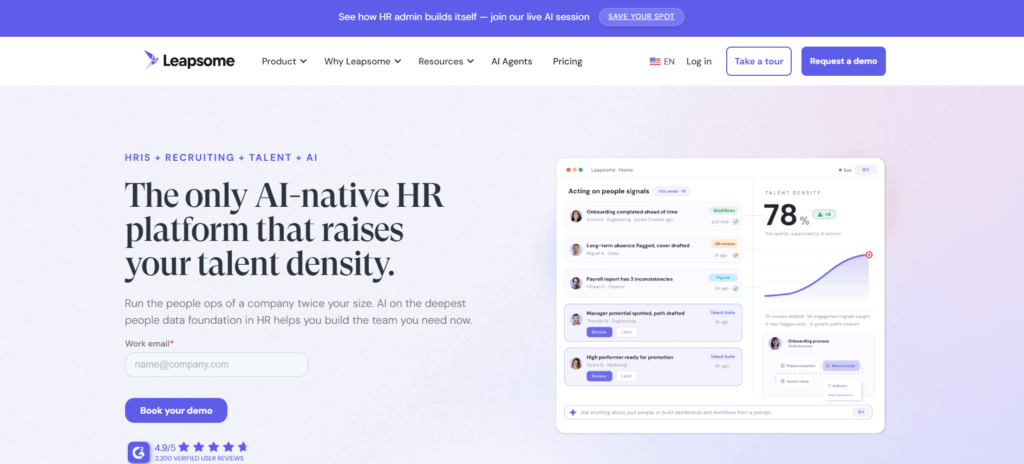
The Top 10 Cornerstone OnDemand Alternatives You Need to Know in 2026

Performance management and talent development platforms have become essential for organizations working to improve productivity, engagement, and overall workforce readiness. These platforms support goal alignment, continuous feedback, employee engagement, and learning management in a single system.

Cornerstone OnDemand remains one of the most recognized names in this space. In 2026, the company has continued building out Cornerstone Galaxy, its AI-powered workforce agility platform, and has layered on Cornerstone Galaxy AI and a newer Workforce AI agent layer that ties skills data, learning, and performance together across its Learn, Transform, and Elevate products. For organizations already invested in enterprise-scale skills intelligence, Cornerstone continues to expand what it offers.

Even so, not every organization finds Cornerstone the right fit. Some businesses want a more agile, cost-effective, or easier-to-implement platform. Others are further along in consolidating point solutions and want tighter integration between performance reviews, goals, feedback, engagement, and learning, or a lighter AI layer that does not require a lengthy enterprise rollout. Pricing, scalability, and how quickly a team can get value from the platform all factor into the search for alternatives.

This article covers the top 10 alternatives to Cornerstone OnDemand in 2026, evaluated on features, usability, and unique selling points, so you can make an informed decision for your organization.

Criteria for Evaluation

Features: Core functionality such as performance reviews, goal setting and OKRs, continuous feedback, engagement surveys, and learning management, along with how much of the platform is genuinely AI-assisted versus AI-branded.

User Experience: Ease of use, onboarding time, mobile access, and how much configuration is needed before teams see value.

Unique Selling Points (USPs): What sets each platform apart, whether that is depth of analytics, agentic AI, integration breadth, or an all-in-one HR and performance approach.

Top 10 Cornerstone OnDemand Alternatives in 2026

  1. Engagedly
  2. Lattice
  3. Leapsome
  4. Culture Amp
  5. 15Five
  6. PerformYard
  7. BambooHR
  8. Workday
  9. ClearCo (ClearCompany)
  10. PeopleFluent Reflektive

1. Engagedly

Engagedly is an AI talent management platform built to help organizations connect
performance, engagement, learning, growth, and recognition in one unified experience.
Powered by Marissa, its AI SuperAgent, Engagedly helps leaders turn people strategy into
intelligent actions, reduce talent silos, and drive measurable business outcomes. Trusted by
organizations worldwide, Engagedly supports stronger engagement, better retention, and the
development of high performing teams.

AI-Driven Capabilities

Engagedly brings performance management, employee engagement, and learning management into one connected, agentic platform. Guided by Marissa, organizations get proactive insights and tailored recommendations that support performance and a culture of continuous improvement.

Key Features with Marissa AI

  • Performance Reviews: AI-assisted evaluations built for fairness, consistency, and transparency, which supports employee trust and retention.
  • Goal Setting and Alignment: Marissa suggests goals, aligns them to company priorities, and tracks progress against OKRs in real time.
  • Employee Engagement: Sentiment analysis surfaces engagement gaps and recommends concrete steps to improve morale and reduce turnover.
  • Continuous Feedback: Smart nudges encourage regular feedback exchanges, strengthening manager and employee communication.
  • Learning Management: AI-curated learning paths through Engagedly’s Learning Experience Platform simplify upskilling without needing a separate LMS.
  • 360-Degree Feedback: Deeper analytics give visibility into peer, manager, and team feedback for a fuller picture of performance.
  • Employee Recognition: Marissa identifies standout performers and suggests timely recognition.

User Experience

Engagedly offers a consistent experience across web and mobile, with an intuitive design and AI-assisted navigation. Marissa’s conversational interface lets leaders and employees interact naturally, replacing complex menus with straightforward, strategic conversations.

Unique Value Proposition

Engagedly positions itself as more than a standard HR platform: an agentic, AI-driven talent management system. With Marissa at the core, organizations can automate routine processes, act on predictive insights before problems grow, and build a culture centered on recognition, development, and sustained performance. For mid-market organizations replacing Cornerstone, Engagedly offers a lighter-weight, faster-to-deploy alternative that still covers performance, engagement, and learning in one system.

2. Lattice

Lattice is a performance management and employee engagement platform built around continuous feedback and employee growth. In 2026, Lattice sharpened its focus considerably. Following a partnership with Workday announced later in the year, the company discontinued its HRIS and payroll products, with payroll access ending March 31, 2026 and HRIS access ending July 31, 2026, in order to concentrate fully on performance management, engagement, goals, growth, and compensation.

Key Features

  • Performance reviews, check-ins, and manager analytics, with flexible review cycles.
  • OKRs and goal alignment.
  • Engagement surveys and pulse checks with industry benchmarking.
  • Career development tools, including career tracks and individual development plans.
  • Compensation planning tied to performance review data.
  • A Lattice AI Agent for AI-assisted performance summaries and HR support.
  • A bidirectional integration with Workday HCM for organizations that use Workday as their system of record.

Key Features

Lattice is known for a clean interface and strong analytics, and remains straightforward to roll out. Organizations that relied on Lattice for HRIS or payroll will need to migrate that functionality to a separate system.

USP

Lattice’s strength is now squarely in performance management and employee development rather than end-to-end HR administration. It suits organizations that want a dedicated talent suite that plugs into an existing HRIS.us feedback makes Lattice an ideal fit for organizations prioritizing growth-oriented cultures.

3. Leapsome

Leapsome is a people enablement platform that connects performance reviews, OKRs, 1:1s, engagement surveys, and a learning library in a single system, with support for English, German, French, and other languages that makes it a common pick for international teams.

Key Features

  • HRIS functions including employee records, absence management, time tracking, e-signatures, and onboarding.
  • Talent Suite functions including performance reviews, engagement surveys, goals and OKRs, learning, and compensation reviews.
  • An AI Copilot that analyzes survey results and team sentiment, suggests OKRs, and turns manager notes into structured feedback.
  • An AI Widget Builder that generates analytics dashboards from natural-language questions.

User Experience

Leapsome offers customizable workflows for different organizational needs and a wide range of integrations across HR, talent acquisition, and communication tools.

USP

Leapsome’s combination of core HR administration with performance and learning tools in one data foundation makes it a strong option for teams that want fewer disconnected systems, a positioning that now puts it in more direct competition with where Lattice used to sit.

4. Culture Amp

with AI generated survey action recommendations that tie engagement driver scores to specific interventions backed by outcomes drawn from Culture Amp’s own aggregate benchmarking dataset spanning thousands of organizations.

Key Features:

  • Research backed engagement and pulse surveys.
  • Performance reviews and structured goal tracking.
  • AI powered action planning tied directly to survey results.
  • Benchmarking against a large, cross industry dataset.
  • DEI focused survey modules.

User Experience: Admins managing performance cycles report a real learning curve, though the survey and feedback tools themselves are considered easy to use once teams are ramped up.

USP: Culture Amp shines in combining engagement and performance data, then translating survey results into specific, evidence backed actions rather than leaving HR teams to interpret raw scores on their own.

5. 15Five

manager development. Its flagship AI capability, Work Context, pulls signal from tools employees already use, including Slack, Teams, Asana, Notion, Jira, and GitHub, into a shared context graph, so managers get a fuller picture of performance without asking people to duplicate updates across systems. AI Assisted Reviews then draw on that same context, plus existing goals, feedback, and prior reviews, to help managers draft stronger evaluations faster.

Key Features:

  • Continuous check ins and weekly progress updates.
  • AI assisted performance reviews and 360 degree feedback.
  • Goal and OKR tracking.
  • Manager coaching and training modules, sold as an add on.
  • Engagement surveys with heat maps and action planning.

User Experience: Straightforward and check in driven, which makes it easy for employees to adopt, though HRIS integration isn’t always seamless and weekly check in questions can start to feel repetitive without enough variation.

USP: 15Five’s strength is turning scattered day to day work signal into manager ready context, making it a solid fit for mid market teams that want continuous feedback and strong manager coaching without the weight of enterprise calibration tools.

6. PerformYard

PerformYard offers flexible, configurable performance management with AI features layered into reviews, goals, and engagement.

Key Features

  • Performance reviews and customizable appraisal cycles.
  • Goal and OKR tracking.
  • Continuous feedback, 1:1 meeting tools with AI-generated meeting summaries, and recognition.
  • AI Review Summary and AI Goal Creation, which help managers and employees draft review content and goals faster.
  • An employee engagement module with AI-powered recommendations for improving culture.

User Experience

PerformYard is designed to be configurable, letting companies build review processes around their own culture rather than a fixed template. Pricing is modular: core performance management, the engagement add-on, and deeper AI insights are priced and licensed separately.

USP

PerformYard’s flexibility and customization continue to appeal to organizations that want close control over how performance management is structured, now paired with AI writing and summarization tools.

7. BambooHR

BambooHR Home Page

BambooHR is a widely used all-in-one HR platform with performance management built in. In mid-2026, the company introduced Bamboo AI, a set of embedded AI agents across the platform.

Key Features

  • Performance reviews and goal tracking.
  • Core HR functions, including employee data management, leave tracking, and payroll.
  • Compensation benchmarking using peer-matched data by company size, industry, and location.
  • Ask BambooHR, an AI assistant that can reference a company’s own uploaded documents to answer employee questions.
  • AI-powered benchmark reporting against peer organizations.

User Experience

BambooHR is designed for simplicity, which keeps HR and performance management approachable for small and mid-sized businesses. Performance features sit on BambooHR’s Pro and Elite plans rather than its entry-level tier.

USP

Its ease of use, all-in-one HR feature set, and growing suite of embedded AI agents make BambooHR attractive for small to mid-sized businesses that want HR and performance management in one place.

8. Workday

Workday Home Page

Workday is an enterprise-level HR and finance platform with performance management as part of a much broader suite. Throughout 2025 and into 2026, Workday has expanded Workday Illuminate, its AI agent layer, adding agents such as the Performance Agent, Case Agent, and Business Process Copilot Agent alongside existing agents for recruiting and talent mobility.

Key Features

  • Talent and performance management, tied to Workday’s broader HR and finance data.
  • Comprehensive analytics and workforce reporting.
  • Learning and workforce planning.
  • Workday Illuminate agents, including a dedicated Performance Agent, that automate parts of the review and workforce-planning process.

User Experience

Workday offers extensive functionality but tends to come with a steeper learning curve and longer implementation than mid-market tools.

USP

Its enterprise-grade analytics, scale, and expanding agentic AI layer make Workday a fit for large, global organizations that need HR and finance on one platform.

9. ClearCo (ClearCompany)

ClearCompany Home Page

ClearCompany rebranded to ClearCo in March 2026, a change the company says reflects its evolution into an AI- and agent-powered unified talent platform spanning recruiting, onboarding, performance, and learning.

Key Features

  • An AI-powered applicant tracking system that drafts candidate messaging and helps prioritize pipelines.
  • Performance reviews, goals, continuous feedback, and calibration tools.
  • Onboarding automation and a built-in learning management system.
  • People analytics that apply AI across recruiting, onboarding, performance, and compensation data.

User Experience

ClearCo’s integration of talent acquisition and performance management provides an end-to-end HR experience, though smaller teams may find the full platform more than they need.

USP

ClearCo stands out by linking talent acquisition and performance management in one system, an approach it has doubled down on with its rebrand and expanded AI agent capabilities.lent acquisition and performance management, creating a unified workforce strategy.

10. PeopleFluent Reflektive

Reflektive is no longer an independent company. Learning Technologies Group acquired it in 2021, and it now operates as part of PeopleFluent’s talent management portfolio. Evaluating Reflektive today means evaluating PeopleFluent’s combined performance and engagement suite rather than a standalone product.

Key Features

  • Real-time feedback delivered through Slack, Microsoft Teams, and Outlook integrations.
  • Goal management and OKR tracking.
  • Self, manager, and 360-degree reviews.
  • Engagement surveys with sentiment analysis and benchmarking.

User Experience

Reflektive built its reputation on making feedback a habit through the tools employees already use rather than a separate portal. It is now sold and supported as part of the broader PeopleFluent suite.

USP

Reflektive’s edge is putting feedback directly inside everyday work tools, which suits organizations comfortable buying into the PeopleFluent ecosystem for a lightweight, flow-of-work approach to performance.

Conclusion

Cornerstone OnDemand remains a powerful, established platform, especially for large organizations investing in skills intelligence through Cornerstone Galaxy. But it is not the right fit for every organization, and 2026 has brought real movement across the alternatives market. Lattice’s exit from HRIS and payroll, Leapsome’s shift into a combined HRIS and Talent Suite, and ClearCompany’s rebrand to ClearCo are all reminders that this category keeps consolidating and repositioning.

From agentic, AI-driven platforms like Engagedly, to data-driven engagement insight from Culture Amp, to enterprise-scale solutions like Workday, there is no shortage of strong alternatives. By evaluating these platforms on features, user experience, and unique strengths, and by confirming current ownership, pricing, and plan details directly with each vendor before signing a contract, you can choose a performance management solution that fits your organization now and as it grows through 2026 and beyond.

FAQs

What should I look for when choosing a performance management platform in 2026?

Start by evaluating how well the platform supports goal alignment, continuous feedback, and employee development in one system. Look for AI that genuinely reduces manual work rather than AI branding alone, built-in OKRs with real-time tracking, engagement surveys with sentiment analysis, learning integration for upskilling, and solid analytics and reporting. Also weigh scalability, ease of integration with your existing HRIS, and how quickly your teams can adopt the tool. Mid-market organizations often prioritize flexibility and fast time to value, while enterprises tend to focus on workforce analytics and global compliance.

How do AI-powered talent management platforms improve performance reviews?

AI-powered platforms use automation and data analysis to make reviews more consistent, fair, and efficient. Engagedly’s Marissa, for example, suggests goals aligned to company priorities, flags feedback bias patterns, and surfaces predictive insight on engagement or attrition risk. Across the category, platforms including Lattice, 15Five, Culture Amp, and PerformYard have introduced similar AI-drafted reviews and coaching insights in 2025 and 2026. This reduces administrative burden while improving transparency and trust, and helps managers move from reactive reviews to proactive development conversations.

Which alternative is best for mid-sized companies replacing Cornerstone?

Mid-sized companies typically prioritize usability, affordable pricing, and faster implementation. Engagedly, Lattice, and Leapsome all offer strong performance reviews, OKRs, and engagement features without the complexity of an enterprise platform like Cornerstone or Workday. If you need AI-powered automation alongside integrated learning, Engagedly is a strong fit. If you have already consolidated HR systems and want continuous development and feedback culture, Lattice or Leapsome may fit better.

How does employee engagement software differ from traditional performance management systems?

Traditional systems focus mainly on periodic reviews and goal tracking. Modern engagement platforms go further by measuring sentiment, feedback frequency, and workplace culture over time. Culture Amp and 15Five, for example, combine pulse surveys and engagement analytics with manager coaching insights, continuous check-ins, and recognition programs. Pairing engagement data with performance metrics gives organizations more visibility into what actually drives productivity and retention.

Is it better to choose an all-in-one HR suite or a specialized performance tool?

It depends on how much you want in one system. All-in-one platforms like Workday, BambooHR, and ClearCo centralize HR, payroll, workforce planning, and performance management. Specialized performance tools such as Engagedly, Culture Amp, or the post-refocus version of Lattice tend to deliver deeper functionality in reviews, OKRs, and continuous feedback, usually with a more intuitive experience, but they plug into a separate HRIS rather than replacing it. If you need enterprise-scale reporting and global workforce management, an all-in-one suite may make sense. If agility and fast adoption matter more, a focused performance management solution can offer better ROI.

Is ClearCompany still called ClearCompany?

Not officially. ClearCompany rebranded to ClearCo in March 2026 to reflect its expansion into an AI- and agent-powered unified talent platform. The underlying product still covers recruiting, onboarding, performance management, and learning.

Why did Lattice discontinue its HRIS and payroll products?

Lattice discontinued its HRIS and payroll products in 2026 to focus fully on performance management, employee engagement, goals, growth, and compensation, following a partnership with Workday. Payroll access ended March 31, 2026 and HRIS access ended July 31, 2026. Organizations that want Lattice’s talent tools now need a separate HRIS, such as Workday or BambooHR, alongside it.

Is Reflektive still available as a standalone product?

No. Reflektive has not operated as an independent company since Learning Technologies Group acquired it in 2021. It is now part of PeopleFluent’s talent management portfolio, so buying Reflektive today means buying into the broader PeopleFluent suite.

The Top Lattice Alternatives You Should Consider for 2026

A Lattice alternative is a performance management platform that replaces or competes with Lattice’s reviews, goals, engagement, and growth tools, typically at a lower entry price, with more flexible modules, or with features Lattice does not offer. Organizations look for one when Lattice’s per-seat cost, rigid review templates, or module structure no longer fit their budget or workflow. The best alternatives in 2026, including 15Five, Leapsome, BambooHR, Engagedly, and PerformYard, each take a different approach to reviews, OKRs, feedback, and engagement.

Some want more budget-friendly pricing. Some want a platform that fits a specific industry or team structure. Others simply want tools that are easier to adapt to how they already work. This blog breaks down the most important considerations for Lattice alternatives in 2026 and helps you figure out which platform actually fits your organization.

Why Look for a Lattice Alternative in 2026?

Most teams switch away from Lattice for one of three reasons: cost, rigidity, or a mismatch between the platform’s structure and how the organization actually runs performance and engagement work.

1. Cost at Scale

Lattice’s own pricing page lists Foundations (Performance plus Goals & OKRs) at $13 per seat/month, with standalone Performance at $10, Goals & OKRs at $8, and Engagement at $4 per seat/month, on top of a $4,000 minimum annual agreement. For a growing team, add-ons like Compensation (+$6/seat/month) and Grow (+$4/seat/month) push the total higher fast, which is exactly why many small and mid-sized companies start comparing alternatives.

2. Limited Flexibility for Niche Industries

Standardized platforms do not always meet sector-specific requirements. Users report friction with rigid review templates and sampling forms, which makes it harder to adapt the system to unique organizational workflows, especially in regulated industries or fast-moving startups.

3. Other Common Pain Points

Complex OKR structures can create obstacles to aligning individual, team, and company-wide goals. Fixed cadences around 1-on-1s and review cycles can also limit planning flexibility for teams that want a more continuous approach to feedback.

4. What’s Changed Going Into 2026

Continuous, real-time feedback has become the expectation rather than the exception. Nearly all employees, 94%, now say they prefer real-time feedback over formal annual reviews, according to SHRM. On the learning side, 72% of HR professionals say their organization’s L&D strategy is now driven primarily by the skills employees will need in the next one to two years, per SHRM’s 2026 research. Platforms that treat performance, feedback, and skill-building as one connected system, instead of separate modules, are winning out.

5. Making the Switch

Moving to a better-suited platform can improve goal alignment, streamline performance tracking, and deliver more value per dollar spent. The right tool should scale with your organization while staying flexible enough to adapt as your needs change. Our comparison of the top performance management systems walks through how several of these platforms stack up feature by feature.

Best Lattice Alternatives in 2026

Here are the platforms worth evaluating if Lattice is not the right fit for your organization this year.

1. 15Five

15Five is an AI-powered performance management platform built around continuous feedback, manager coaching, and engagement surveys in one connected system.

Key Features:

  • AI-assisted performance reviews and AMAYA AI thought partner
  • Weighted OKRs and goal management with 1-on-1 agendas
  • 360-degree feedback and a 9-box talent matrix
  • Engagement surveys, eNPS, and AI-powered predictive impact scoring
  • Kona AI meeting assistant and coaching add-ons
  • Manager training microlearnings on the Total Platform tier

Who It’s Best For: Mid-market and enterprise teams that want AI-driven insights baked into reviews, engagement, and manager effectiveness.

Price: Engage starts at $4/user/month, Perform at $11/user/month, and Total Platform at $16/user/month, all billed annually.

2. Leapsome

Leapsome is an all-in-one people enablement platform combining performance reviews, OKRs, engagement surveys, and learning paths with an integrated HRIS layer.

Key Features:

  • Visual competency frameworks and skill progression tracking
  • Custom learning pathways with interactive content
  • 360-degree feedback and structured review cycles
  • Compensation management tied to performance data
  • Meeting tools with action-point tracking
  • AI Copilot for guidance and action plans

Who It’s Best For: Organizations that want employee growth and structured development built directly into their performance process.

Price: Visit their platform page for exact pricing details.

3. BambooHR

BambooHR is a unified HRIS and performance management solution built for small to midsize businesses that want HR, reviews, and workflow automation in one place.

Key Features:

  • Customizable 360-degree feedback templates
  • 125+ integrations with Slack, Google, and Microsoft tools
  • Time tracking with payroll management
  • Automated onboarding and progress tracking
  • Flexible review templates for different roles
  • Mobile-friendly self-service portal

Who It’s Best For: Small to medium-sized businesses that want a single, uniform HR platform rather than a standalone performance tool.

Price: Core starts at $10/employee/month, Pro at $17/employee/month, and Elite at $25/employee/month, with a flat $250/month rate for companies with 25 or fewer employees.

4. Engagedly

Engagedly is an AI talent management platform built to help organizations connect
performance, engagement, learning, growth, and recognition in one unified experience.
Powered by Marissa, its AI SuperAgent, Engagedly helps leaders turn people strategy into
intelligent actions, reduce talent silos, and drive measurable business outcomes. Trusted by
organizations worldwide, Engagedly supports stronger engagement, better retention, and the
development of high performing teams.

Key Features:

  • Customizable performance review templates with 9-box calibration and integrated IDPs
  • AI-powered OKRs and goal tracking with weighted goals and directory-wide visibility
  • 360-degree feedback and multi-rater assessments with bias-reducing calibration
  • Gamified recognition with redeemable points, badges, and a reward storefront
  • Growth Hub for individual development plans and AI-powered role recommendations
  • Marissa AI Coach, workflow automation, and a mobile app included across every module

Who It’s Best For: Companies that want performance, engagement, and learning connected in one platform instead of stitched together from separate tools.

Price: The Manage Performance suite starts at $5 to $8/user/month, billed annually, with a $7,500/year minimum. Learn & Grow, Recognize & Reward, and Engage & Listen modules can be added individually starting at $2 to $5/user/month.

5. PerformYard

PerformYard is a performance management platform focused on flexible, customizable review cycles and straightforward goal alignment without unnecessary complexity.

Key Features:

  • Fully customizable review templates and cycles
  • Goal alignment tools connected to review data
  • Live-tracking dashboards for progress visibility
  • Employee satisfaction and sentiment analysis tools
  • 360-degree and multi-rater feedback support
  • Dedicated customer success manager on every plan

Who It’s Best For: Organizations that want efficient, no-frills performance management at a predictable cost.

Price: PerformYard costs $5 to $10 per employee/month, with every feature included and no separate charges for onboarding or training.

6. Culture Amp

Culture Amp is an employee experience platform that combines engagement surveys, performance management, and development tools, backed by an in-house people science team.

Key Features:

  • Engage module for pulse and engagement surveys with benchmarking
  • Perform module for continuous feedback, goal tracking, and 360-degree reviews
  • Develop module for career pathing and skills growth plans
  • AI-assisted analysis that surfaces themes from open-text survey comments
  • Access to Culture Amp’s People Science team for survey design and action planning
  • Integrations with major HRIS and collaboration platforms

Who It’s Best For: Larger organizations that want survey-driven insights tied directly to performance and development programs.

Price: Visit their platform page for pricing details.

7. Betterworks

Betterworks is an AI-powered performance management platform built around real-time goal alignment, continuous feedback, and talent intelligence.

Key Features:

  • Goals & OKRs module with organization-wide alignment visibility
  • Continuous feedback, structured 1-on-1s, and in-the-flow-of-work check-ins
  • Calibration and succession planning through Talent Intelligence
  • Skills Intelligence and Unified Talent Profiles
  • AI embedded across every module for coaching prompts and insights
  • Standalone Employee Engagement survey module

Who It’s Best For: Enterprise organizations, generally 500+ employees, that want a connected, AI-driven system linking goals to talent decisions.

Price: Visit their platform page for pricing details.

8. WorkTango

WorkTango is an employee experience platform combining Recognition & Rewards with Surveys & Insights, along with a newer listening tool called Constellation.

Key Features:

  • Peer-to-peer recognition tied to company values
  • Rewards Marketplace with zero markup on point redemptions
  • Unlimited pulse, lifecycle, and engagement surveys with eNPS
  • AI-powered recommended actions generated from survey data
  • Anonymous Conversations for private, two-way feedback
  • Constellation, WorkTango’s newer employee listening and intelligence tool

Who It’s Best For: Companies prioritizing recognition and engagement alongside survey-based listening over formal review cycles.

Price: Visit their platform page for pricing details.

9. Trakstar

Trakstar, now part of Mitratech, is a modular talent management suite covering hiring, learning, performance reviews, and workforce analytics.

Key Features:

  • Trakstar Perform for reviews, goal tracking, and 360-degree feedback
  • Trakstar Hire, a built-in applicant tracking system
  • Trakstar Learn, a learning management system for onboarding and training
  • Trakstar Insights for workforce analytics and benchmarking
  • Automated reminders and configurable review cycles
  • Competency assessments and documented action plans

Who It’s Best For: Organizations that want to buy individual HR modules separately and expand the suite as needs grow.

Price: Trakstar does not publish pricing. Visit their platform page for pricing details.

10. ClearCompany

ClearCompany, recently rebranded to ClearCo on its own site, is a unified talent platform spanning hiring, onboarding, performance, engagement, and learning.

Key Features:

  • ClearRecruit for candidate attraction and recruiting workflows
  • ClearGrow, bundling performance management, engagement, learning, and compensation
  • TotalTalent package covering the full hire-through-grow lifecycle
  • Talent AI and People Analytics built into every package
  • Background checks and structured onboarding tools
  • ClearCare professional services for implementation and ongoing support

Who It’s Best For: Mid-market to enterprise organizations that want hiring and performance management connected on one platform.

Price: ClearCompany does not list pricing publicly. Visit their platform page for pricing details.

How to Choose the Right Performance Management Tool for 2026

The right Lattice alternative depends on your budget, team size, and how much your organization values continuous feedback versus structured annual cycles.

Key Factors to Consider:

  • Budget Alignment: Match your financial resources to the platform’s pricing, including setup costs and ongoing per-seat charges. Weigh ROI potential against improved retention and performance outcomes.
  • Scalability: Confirm the tool can grow with your headcount, including how pricing and feature access change as you scale.
  • Feature Requirements: Identify must-haves like goal tracking, 360 feedback, and analytics, and make sure the platform supports your specific review cadence.
  • Integration Needs: Check compatibility with your existing HRIS, communication tools, and productivity platforms.
  • User Experience: Look at interface intuitiveness, mobile accessibility, and likely adoption across different teams.
  • Support Quality: Review available training resources, onboarding support, and customer service responsiveness.
  • Learning Capabilities: Evaluate built-in training tools, learning paths, and skills development options if L&D is part of your strategy.
  • Analytics Depth: Compare dashboard customization, reporting depth, and data visualization across shortlisted platforms.

Practical Selection Tips

1. Run Thorough Evaluations Test core functionality through free trials or sandbox demos in real team scenarios, document feedback across roles, and confirm mobile access works for remote and hybrid teams.

2. Plan Implementation Early Estimate training needs, map out a realistic rollout timeline, and clarify data migration and security requirements before signing a contract.

3. Bring in Stakeholders Include managers and employees from different departments in the evaluation so the tool fits actual workflows, not just HR’s preferences.

4. Monitor Performance Post-Launch Set clear success metrics, schedule regular effectiveness reviews, and track adoption rates once the new system is live.

5. Vet the Vendor Check the vendor’s market stability, customer support responsiveness, product roadmap, and security certifications before committing. Our roundup of performance management tools every HR leader needs in 2026 is a useful starting point if you want a broader view before narrowing your shortlist.

Wrapping Up

Choosing the right Lattice alternative comes down to your organization’s specific needs, budget constraints, and growth objectives for 2026. Lattice remains a stable option for many mid-market and enterprise teams, but alternatives like Engagedly, 15Five, Leapsome, BambooHR, and PerformYard each solve for gaps that Lattice’s pricing or structure leaves open, whether that’s cost, flexibility, or a more connected approach to performance, learning, and engagement.

Engagedly brings performance reviews, OKRs, real-time feedback, learning, and recognition together in one AI-powered platform, without locking you into Lattice’s per-module pricing structure. If you want to see how it fits your team’s workflow, request a demo and we’ll walk you through it.

Frequently Asked Questions (FAQs)

What is the cheapest Lattice alternative in 2026?

Based on published starting prices, Engagedly’s individual modules and 15Five’s Engage plan both start around $2 to $4/user/month, making them among the more budget-friendly entry points compared to Lattice’s $10/seat/month starting price for Performance.

Does Lattice have a free plan?

No. Lattice does not offer a permanent free plan. It requires a minimum annual agreement of $4,000, as confirmed on Lattice’s own pricing page.

Which Lattice alternative is best for small businesses?

BambooHR and Engagedly are generally the strongest fits for small and midsize teams, since both offer modular pricing that scales with headcount rather than requiring a large upfront commitment.

Can I combine performance management with learning and development in one platform?

Yes. Engagedly and Leapsome both combine performance reviews, goals, and learning and development in a single platform, which reduces the need for separate point solutions.

How long does it typically take to switch performance management platforms?

Implementation timelines vary by vendor and company size, but most platforms, including Engagedly, offer dedicated onboarding support and structured rollout plans to help minimize disruption during the transition.

The Top 10 Leapsome Alternatives You Need to Know in 2026

Leapsome alternatives are performance management and employee engagement platforms that replace or extend Leapsome’s review, goals, feedback, and learning tools with different pricing models, AI capabilities, or integration depth. The right alternative depends on company size, budget transparency, and whether you need a standalone performance tool or a full people platform. Below are the 10 strongest options for 2026.

Performance management and employee engagement platforms remain essential tools for modern organizations. These solutions help businesses streamline performance reviews, align goals, collect continuous feedback, and strengthen employee engagement, all of which directly affect productivity and retention.

Leapsome is still one of the better-known platforms in this space, known for combining performance management with learning, engagement, and (more recently) core HRIS tools. But many companies continue to look for alternatives to Leapsome, whether because of its custom, contact-sales pricing, specific feature gaps, integration preferences, or scalability concerns.

This blog covers the 10 best Leapsome alternatives in 2026, with updated details on features, pricing, and what has changed in the market over the past year, including two products that no longer exist as standalone tools.

Why Do Companies Look for Alternatives to Leapsome?

Companies look for alternatives to Leapsome when they need clearer pricing, deeper AI automation, or a platform that has not narrowed its scope. While Leapsome offers a broad suite of tools, it is not the right match for every organization. Common reasons teams shop around include:

  • Pricing transparency: Leapsome does not publish fixed rates. Pricing is modular and quote-based, starting around $8 per user per month according to third-party buyer data, but the official Leapsome site does not list exact figures and directs prospects to talk to sales.
  • Scalability: Some businesses outgrow Leapsome’s navigation and reporting structure as headcount grows.
  • Integration needs: Companies may prefer platforms with tighter connections to their existing HR or productivity stack.
  • Specialized needs: Some organizations want deeper AI-driven analytics, a stronger learning management system, or more robust recognition tools.

Criteria for Evaluation

When reviewing alternatives, this list weighs:

  • Features: Performance reviews, goal setting, continuous feedback, employee engagement, analytics, integrations.
  • User experience: Interface design, ease of use, accessibility, support.
  • Pricing clarity: Whether the vendor publishes real numbers or requires a sales call for every quote.
  • Unique selling points (USPs): Distinct advantages, AI capabilities, and market positioning.

For a broader view of the category beyond this list, Engagedly’s guide to the top performance management software of 2026 breaks down 21 platforms across use case and company size.

Top 10 Leapsome Alternatives in 2026

  1. Engagedly
  2. Lattice
  3. Betterworks
  4. Culture Amp
  5. Reflektive (now part of PeopleFluent)
  6. 15Five
  7. 7Geese (now Paycor Talent Development)
  8. Trakstar
  9. Zoho People
  10. BambooHR

1. Engagedly

Engagedly is an AI talent management platform built to help organizations connect
performance, engagement, learning, growth, and recognition in one unified experience.
Powered by Marissa, its AI SuperAgent, Engagedly helps leaders turn people strategy into
intelligent actions, reduce talent silos, and drive measurable business outcomes. Trusted by
organizations worldwide, Engagedly supports stronger engagement, better retention, and the
development of high performing teams.

AI-driven capabilities

Engagedly unifies performance reviews, OKRs and goals, 360 feedback and multi-rater assessments, employee engagement, and learning management into one agentic platform. With Marissa’s guidance, organizations get actionable insights and proactive recommendations that support continuous improvement.

Key features with Marissa AI

  • Performance reviews: AI-driven evaluations that keep ratings consistent, unbiased, and transparent.
  • Goals and alignment: Marissa auto-suggests goals, aligns them with strategic objectives, and tracks progress in real time.
  • Real-time feedback: Intelligent nudges that build a feedback-rich culture between managers and employees.
  • Learning management: AI-curated learning paths through the Learning Experience Platform, so upskilling does not require a separate tool.
  • 360-degree feedback: AI-enhanced analytics that surface deeper insight from peer, manager, and report feedback.
  • Talent mobility: Skill gap analysis, IDPs, and career paths through the Growth Hub keep development tied to real opportunities.
  • Recognition: AI identifies top performers and suggests timely recognition, reinforcing a culture of appreciation.

User experience

Engagedly delivers a consistent experience across web and mobile, with AI-guided navigation. Marissa’s conversational interface lets leaders and employees interact naturally instead of digging through menus.

Unique value proposition

Engagedly is not just another HR system, it is an agentic AI-driven talent management platform. Mid-market organizations use it to automate tactical processes, surface predictive insights, and build a culture of engagement and high performance. For a side-by-side view of how it compares with the platform this list is built around, see Engagedly vs Leapsome.

Pricing

Modules range from $2 to $10 per user per month, billed annually, with a $7,500 per year minimum. Bundles and enterprise plans are available on request.

2. Lattice

Lattice is a performance management and employee engagement platform known for continuous feedback and employee development tools. In late 2025, Lattice announced it would discontinue its HRIS and payroll products, with payroll access ending March 31, 2026, and HRIS access ending July 31, 2026. The company has refocused entirely on performance management, engagement, compensation, and career development. If you are evaluating Lattice today, you are evaluating a performance suite, not an all-in-one HR system.

Key features

  • Performance reviews: Structured evaluations to assess and develop employee performance.
  • OKRs: Tools for setting and tracking objectives and key results.
  • Feedback: Continuous feedback options for regular manager-employee communication.
  • Employee engagement surveys: Tools to measure and improve engagement and satisfaction.

User experience

Lattice is known for an intuitive interface and strong analytics, with a design that favors simplicity and clarity.

USP

Lattice’s focus on employee development and continuous feedback, now sharpened by narrowing its product scope, makes it a strong pick for organizations that prioritize ongoing growth conversations over administrative HR features.

Pricing

No public pricing. Modular, per-user pricing based on which products you select; visit their platform page for pricing details.

3. Betterworks

Betterworks is a performance management platform built around goal alignment and achievement. It offers tools for setting and tracking goals, running performance reviews, and supporting continuous performance management.

Key features

  • Goal setting and tracking: Tools to set, monitor, and achieve individual and organizational goals.
  • Performance reviews: Comprehensive evaluation tools.
  • Feedback: Continuous feedback mechanisms to support development.
  • Continuous performance management: Tools for ongoing tracking and improvement.

User experience

Betterworks has a clean, integration-friendly interface built around ease of use.

USP

Betterworks stands out for goal alignment and achievement, helping organizations keep individual goals tied to broader business objectives.

Pricing

Visit their platform page for pricing details

4. Culture Amp

Culture Amp is an employee experience platform built around engagement surveys, performance management, and people analytics. It offers modular tools (Engage, Perform, and Develop) for engagement surveys, performance reviews, goal setting, and feedback.

Key features

  • Employee engagement surveys: Tools to measure and improve engagement.
  • Performance reviews: Comprehensive evaluation tools.
  • Goal setting: Support for individual and team goal tracking.
  • Feedback: Continuous feedback mechanisms.

User experience

Culture Amp’s design surfaces actionable insights clearly, making it easy to navigate toward informed decisions.

USP

Culture Amp’s data-driven approach to company culture makes it a strong fit for organizations that want to tie engagement data directly to action planning.

Pricing

Visit their platform page for pricing details

5. Reflektive (now part of PeopleFluent)

Reflektive was acquired by Learning Technologies Group, the parent company of PeopleFluent, and its performance and engagement tools are now sold as part of PeopleFluent’s talent management portfolio rather than as an independent product. Existing capabilities, including real-time feedback, goal alignment, and 1:1 conversation tools, continue to be supported and developed under the PeopleFluent brand.

Key features

  • Goal management: Track and drive individual, team, and company-wide alignment.
  • 1:1 conversations: Tools to encourage regular, productive manager-employee check-ins.
  • Feedback and recognition: Instant feedback and public praise to reinforce culture.
  • Calibration: In-app calibration for rating consistency across teams.

User experience

Reflektive integrates into daily workflows through Slack, Microsoft Teams, and Outlook, so feedback becomes a habit rather than a scheduled event.

USP

Now backed by PeopleFluent’s broader talent suite, Reflektive’s strength is combining real-time feedback with enterprise-grade performance and calibration tools, useful for organizations that outgrew a point solution.

Pricing

Visit their platform page for pricing details

6. 15Five

15Five is a widely used performance management platform built around continuous feedback and manager effectiveness. It offers performance reviews, OKRs, engagement surveys, and weekly check-ins, along with AI tools like AMAYA and 15Five Agents.

Key features

  • Performance reviews: AI-assisted, structured evaluations to support employee growth.
  • OKRs and goals: Weighted goal tracking tied to reviews.
  • Feedback: Continuous feedback and High Fives recognition to strengthen communication.
  • Engagement surveys: eNPS, pulse, and lifecycle surveys with benchmarking.

User experience

15Five emphasizes simplicity and adoption, with a mobile app and manager-focused tools built around its Best-Self Management approach.

USP

15Five’s focus on manager effectiveness, paired with AI features like its AMAYA thought partner and Kona AI coaching, sets it apart for organizations building a coaching culture.

Pricing

Engage starts at $4/user/month, Perform at $11/user/month, and Total Platform at $16/user/month, billed annually.

7. 7Geese (now Paycor Talent Development)

7Geese is no longer available as a standalone OKR and performance tool. Paycor acquired the company in 2020, and its features are now fully integrated into Paycor’s HCM suite as Paycor Talent Development. Accessing the original 7Geese feature set today requires a full Paycor HCM subscription rather than a lightweight, standalone plan.

What it offers today

  • OKRs: Goal-tracking tools carried over from the original 7Geese product.
  • Performance reviews: Agile review workflows within the Paycor platform.
  • Continuous feedback and recognition: Peer-to-peer feedback tools inside a full HCM suite.

USP

If your organization already runs payroll and core HR through Paycor, Talent Development is a natural extension. If you only need lightweight OKR tracking, this is worth knowing before you evaluate it as a “simple” alternative.

Pricing

Visit their platform page for pricing details.

8. Trakstar

Trakstar (now operating under Mitratech) is a performance management solution offering structured reviews, goal tracking, and analytics. Its modular suite includes Trakstar Perform, Trakstar Learn, Trakstar Hire, and Trakstar Insights.

Key features

  • Performance reviews: Tools for consistent, transparent evaluations.
  • Goal setting: Features to align individual and organizational goals.
  • Feedback: Continuous feedback to support development.
  • Analytics: Reporting tools that surface performance trends for managers.

User experience

Trakstar is straightforward to navigate, with reporting and analytics that give managers deeper visibility into trends.

USP

Trakstar stands out for its reporting depth and its modular product structure, letting teams start with one module (like Hire or Perform) and expand.

Pricing

Visit their platform page for pricing details.

9. Zoho People

Zoho People is an HR platform that combines performance management features with core HR functions, making it a strong fit for organizations already using other Zoho apps.

Key features

  • Performance management: Goals, KRAs, 360-degree feedback, and appraisals in higher-tier plans.
  • Attendance and time tracking: Facial recognition attendance, timesheets, and shift management.
  • Employee database management: Centralized records, onboarding, and offboarding workflows.
  • HR analytics: Standard and custom reporting, with advanced analytics through Zoho Analytics.

User experience

Zoho People offers a seamless experience for businesses already inside the Zoho ecosystem, with a functional, if less polished, interface than some rivals.

USP

Zoho People’s versatility (part core HR suite, part performance platform) plus a genuinely free tier for small teams makes it a budget-friendly entry point for organizations that want to grow into more advanced modules over time.

Pricing

A free plan is available for up to 53 users, with paid tiers (Essential HR, Professional, Premium, Enterprise) priced per user, per month; visit their platform page for pricing details.

10. BambooHR

BambooHR is an HR management solution built for small to mid-sized businesses, combining employee data management with performance tracking and feedback tools.

Key features

  • Performance management: 360-degree reviews and 1:1s, available from the Pro plan up.
  • Feedback: Continuous feedback mechanisms to support employee growth.
  • Goal setting: Features for setting, tracking, and achieving goals.
  • Employee data management: Comprehensive tools for managing records and core HR processes.

User experience

BambooHR is known for a clean, intuitive design, which makes it appealing to SMBs that want an easy-to-use platform without excess complexity.

USP

BambooHR’s all-in-one HR approach, with transparently published per-employee pricing, makes it valuable for companies that want core HR and performance features from a single, easy-to-budget-for vendor.

Pricing

Core starts at $10, Pro at $17, and Elite at $25 per employee per month, with a flat $250/month rate for teams of 25 employees or fewer.

How to Choose the Right Tool for 2026

The best Leapsome alternative is the one that matches your organization’s stage, not the one with the longest feature list. Before booking demos, run each option against these questions.

What is actually broken in your current process? If reviews take too long to calibrate, prioritize tools with strong calibration and 9-box features, like Engagedly or Lattice. If engagement is the gap, weight Culture Amp or 15Five’s survey and pulse capabilities more heavily. Buying for a problem you do not have leads to paying for modules nobody opens.

How much of the platform will managers actually use day to day? A tool with more features is not better if adoption stalls. 15Five and BambooHR are built around simplicity and habit-forming check-ins, while Culture Amp and Lattice lean toward HR-led, data-heavy workflows. Watch a live demo with a manager on your team, not just an HR admin, before deciding.

Does the product still do what it says it does? The market moved fast in the past year. Reflektive is now sold only through PeopleFluent, 7Geese only exists inside a full Paycor HCM subscription, and Lattice has dropped its HRIS and payroll products entirely. Confirm what a vendor currently supports, not just what a features page from a year or two ago claimed.

How is AI actually used, not just mentioned? Most platforms now list “AI” somewhere on their homepage. The more useful question is whether AI drafts real work (goal suggestions, review summaries, feedback synthesis) or just answers basic questions. Engagedly’s Marissa and 15Five’s AMAYA are built to do the former; ask any vendor for a live example rather than a slide.

Does it fit your existing stack? Zoho People makes the most sense for teams already inside the Zoho ecosystem. BambooHR and Trakstar integrate cleanly with common ATS and payroll tools. If your company already runs on a specific HRIS, prioritize alternatives with a proven, direct integration over ones that require middleware.

Can you get a straight answer on cost before a sales call? Some vendors publish real numbers, others require a conversation for every quote. Neither approach is automatically wrong, but a platform that will not give even a ballpark range early in the process is worth an extra question or two before you invest time in a full evaluation.

Weigh these against your team’s size, budget cycle, and how quickly you need to be live, and the shortlist usually narrows to two or three real contenders fast.

Final Thoughts

Choosing the right alternative to Leapsome in 2026 comes down to clarity around your organization’s priorities, and increasingly, clarity around pricing itself. Two products on past versions of this list, Reflektive and 7Geese, no longer exist as standalone tools, and Lattice has narrowed its scope after exiting the HRIS and payroll market. That kind of consolidation is worth factoring into any long-term platform decision.

If your focus is AI-driven automation and predictive workforce insights, a platform like Engagedly may offer a strategic advantage. If continuous feedback and manager coaching are the priority, 15Five is a strong contender. For organizations prioritizing engagement analytics and culture transformation, Culture Amp stands out. For a deeper look at what belongs on a shortlist beyond this article, Engagedly’s performance management software buyer’s checklist walks through the criteria worth weighing before a demo.

The key is to evaluate scalability, integration flexibility, analytics depth, pricing transparency, and user experience, not just a feature list. The right platform should not only replace your current system, but also strengthen goal alignment, elevate employee development, and support long-term organizational growth.

Ready to see how an AI-powered, agentic talent management platform compares to Leapsome for your team? Request a demo of Engagedly and get a walkthrough built around your organization’s goals.

FAQs

What are the best alternatives to Leapsome for performance management?

The best alternatives to Leapsome combine performance reviews, goal alignment, feedback, and engagement in a scalable system with transparent pricing. Strong options include Engagedly, 15Five, Culture Amp, and BambooHR. When evaluating alternatives, weigh goal-setting flexibility, analytics depth, learning integration, and how clearly each vendor publishes its pricing.

Why do companies look for alternatives to Leapsome?

Companies look for alternatives to Leapsome when they need clearer pricing, greater scalability, more advanced analytics, or tighter integrations. Some organizations want stronger AI capabilities, while others prioritize employee recognition, OKRs, or deeper engagement insights. As teams grow, customization and reporting needs often increase, prompting a search for more flexible, transparently priced platforms.

Which Leapsome alternative is best for mid-sized organizations?

Mid-sized organizations often benefit from platforms that balance advanced features with ease of use and predictable cost. Engagedly and 15Five are strong fits because they offer performance reviews, OKRs, engagement surveys, and continuous feedback with published, per-user pricing rather than a mandatory sales negotiation.

How do Leapsome alternatives differ in goal setting and OKRs?

Leapsome alternatives vary widely in how they handle goal management and OKRs. Betterworks is strongly OKR-focused, while Engagedly ties AI-powered goal suggestions directly into performance reviews and learning paths. The best choice depends on whether your organization prioritizes strict OKR execution or holistic performance growth.

Is it better to choose an all-in-one HR platform or a specialized performance tool?

The decision depends on your organization’s size and complexity. All-in-one platforms like Zoho People and BambooHR simplify HR operations by combining performance management with core HR features. Specialized tools often deliver deeper insight into feedback, engagement, and goal alignment, and Lattice’s 2026 exit from HRIS and payroll is a reminder that platform scope can shift, so it is worth checking what a vendor still supports before committing long-term.

6 Powerful Rippling Competitors for HR Teams You Need to Know About

Human resource management encompasses more than just recruiting and termination. It includes building a thriving workplace environment, engaging employees, and ensuring that HR operations run smoothly and efficiently.

According to Gallup research, highly engaged employees can increase profitability by up to 21% over those in less involved firms.

The correct HR software may greatly improve the management of these operations. Rippling provides flexible solutions for payroll, benefits, and personnel administration. Its extensive features and user-friendly interface have received excellent responses from numerous companies.

However, Rippling may not be the best answer for many businesses. HR professionals are constantly looking for options that meet their organization’s specific needs, budget, and size.

Rippling competitors are HR platforms that offer an alternative to Rippling’s all-in-one payroll, IT, and workforce system – ranging from engagement and performance suites like Engagedly, to payroll-first tools like Gusto, to enterprise HCM systems like Workday. Each takes a different approach, so the right pick depends on company size, budget, and whether payroll, engagement, or performance is the priority.

In this blog, we will explore six tough Rippling competitors and compare their HR solutions to help you make an informed choice. Read on!

6 Rippling Competitors HR Teams Can Explore

Here are six compelling alternatives to Rippling that HR teams can consider to meet their specific needs.

1. Engagedly

Engagedly is an AI talent management platform built to help organizations connect
performance, engagement, learning, growth, and recognition in one unified experience.
Powered by Marissa, its AI SuperAgent, Engagedly helps leaders turn people strategy into
intelligent actions, reduce talent silos, and drive measurable business outcomes. Trusted by
organizations worldwide, Engagedly supports stronger engagement, better retention, and the
development of high performing teams.

Key Features:

  • Performance Management: Performance reviews, instant feedback, and progress tracking keep teams aligned and focused on getting things done.
  • OKRs and Goals: Goal setting and alignment tools give employees and managers a shared, AI-assisted view of what matters most.
  • 360 Feedback: Multi-rater assessments uncover blind spots and growth opportunities across teams.
  • Employee Engagement: Pulse surveys, rewards, and social collaboration strengthen corporate culture and how employees interact.
  • Learning and Development: A built-in learning experience platform makes training and upskilling easily accessible.
  • CXO Insights: AI-powered analytics turn performance, engagement, and skills data into strategic, data-driven decisions.

Pricing: Manage Performance runs $5-$8 per user/month, Learn & Grow runs $3-$5 per user/month, and Recognize & Reward, Engage & Listen, and Talent Mobility are each $2 per user/month, billed annually with a $7,500/year minimum.

2. Gusto

Gusto is a popular Rippling competitor for small and medium businesses, known for its simple, easy-to-use approach to payroll, benefits, and onboarding. It’s a strong fit for teams that want clear pricing without a lot of setup complexity.

Key Features:

  • Automated Payroll: Tax payments and direct deposits run automatically, removing manual errors and keeping filings compliant.
  • Employee Benefits Management: A broad range of benefit options, including health insurance and retirement plans, in one place.
  • Leave Management: Built-in time-off tracking makes it easy to manage absences and stay compliant.
  • Onboarding Tools: New hire paperwork and compliance tasks are automated to speed up onboarding.

Pricing: Simple starts at $49/month plus $6 per employee/month, Plus starts at $80/month plus $12 per employee/month, and Premium starts at $180/month plus $22 per employee/month.

3. BambooHR

BambooHR is another leading Rippling competitor built for small and medium businesses that want a powerful, user-friendly employee management interface. It covers everything from basic HR records to compensation planning and advanced analytics.

If you’re also comparing BambooHR itself against other tools, our BambooHR alternatives guide breaks down how it stacks up in more detail.

Key Features:

  • Employee Data Management: A central, secure repository for all employee records and reporting.
  • Performance Management: 360-degree review cycles, 1:1s, and instant reporting support continuous improvement.
  • Customizable Reporting: Custom dashboards turn HR data into insights on turnover, headcount, and trends.
  • Time Tracking: Shift scheduling, overtime calculations, and automated approval workflows.

Pricing: Core starts at $10 per employee/month, Pro at $17 per employee/month, and Elite at $25 per employee/month for companies with more than 25 employees.

4. Workday

Workday is one of the most established software solutions for human resources at large organizations with complex HR processes. It combines payroll, benefits, talent management, and workforce planning into a single enterprise-grade platform.

Key Features:

  • Cloud-Centric HR and Financial Framework: A unified approach to managing HR, finance, and planning.
  • Talent Management: Recruitment, onboarding, learning management, and employee development in one system.
  • Real-Time Analytics: Deep, built-in reporting gives HR teams visibility into workforce trends.
  • Workforce Planning: Tools for budget-aligned, schedule-optimized workforce planning at scale.

Pricing: Pricing is custom-quoted based on company size, modules selected, and implementation scope.

5. TriNet Zenefits (HR Platform)

Zenefits is now part of TriNet, operating as TriNet’s HR Platform and HR Plus offering following TriNet’s 2022 acquisition of the brand. It still simplifies benefits administration, payroll, and compliance for small to mid-sized businesses, now backed by TriNet’s broader HR infrastructure.

Key Features:

  • Payroll and Benefits Administration: Manages employee benefits and payroll, including direct access to healthcare providers and tax filings.
  • Compliance Oversight: Automatically updates for federal and state standards, with e-signatures to speed up approvals.
  • Time-Off Management: A built-in approval system for tracking vacation days and sick leave.
  • HR Plus Add-Ons: Optional Payroll Pro and People Pro services add dedicated payroll and HR experts to the platform.

Pricing: TriNet does not publish standard rates for HR Plus (formerly Zenefits). Pricing follows a per-employee-per-month model, and a custom quote is required based on company size and services needed .

6. ADP Workforce Now

ADP Workforce Now is a powerful Rippling competitor generally serving mid-sized and large corporations. ADP is well known across the HR industry, particularly for the reliability of its payroll engine.

Key Features:

  • Payroll Automation: Automates payroll processing, tax filing, and compliance across jurisdictions.
  • Talent Management: Tools to support recruitment, performance evaluations, and employee development.
  • Time and Attendance Tracking: Reduces time theft and errors with built-in tracking capabilities.
  • Benefits Administration: Simplifies health insurance and retirement plan administration with full payroll integration.

Pricing: Pricing is custom-quoted based on company size and the modules selected; contact ADP’s sales team for a personalized quote.

Quick Comparison: Rippling vs Top Competitors in 2026

HR SoftwareBest ForKey FeaturesPricing
EngagedlyMid-sized businesses and enterprisesPerformance management, employee engagement, learning & development, talent mobilityManage Performance: $5-$8/user/month · Learn & Grow: $3-$5/user/month · Recognize & Reward: $2/user/month · Engage & Listen: $2/user/month · Talent Mobility: $2/user/month (billed annually)
RipplingSmall to mid-sized businessesAll-in-one HR platform, payroll, IT, benefits, onboarding, time trackingCustom pricing – Rippling does not publish a full rate card; most figures require a sales quote
GustoSmall to mid-sized businessesAutomated payroll, benefits management, time-off tracking, onboardingSimple: $49/mo + $6/employee · Plus: $80/mo + $12/employee · Premium: $180/mo + $22/employee
BambooHRSmall to medium businessesEmployee data management, performance tracking, reporting, time trackingCore: $10/employee/mo · Pro: $17/employee/mo · Elite: $25/employee/mo.
WorkdayLarge enterprisesCloud-based HR, financial management, talent management, workforce planningCustom pricing, enterprise-level – not published publicly
TriNet Zenefits (HR Platform)Small to mid-sized businessesBenefits and payroll management, compliance tracking, document storageCustom pricing – billed per-employee-per-month, quote required
ADP Workforce NowMid-sized to large businessesPayroll automation, talent management, time tracking, benefits administrationCustom pricing, based on company needs

To Wrap Up

Rippling is undoubtedly a strong player in the HR software space, but the Rippling competitors we’ve discussed, including Engagedly, prove there is no one-size-fits-all solution.

Depending on your company’s size, needs, and goals, one of these platforms may be the best fit for streamlining your HR processes and creating a positive employee experience.

Take the time to evaluate the priorities within your organization, including payroll, compliance, employee engagement, and development. The right platform will make HR’s job easier and create an environment for a more motivated, productive team.

Want to inspire performance in your team? Try Engagedly. Request a demo today to see how it can help you build an engagement powerhouse.

FAQs

How do I choose the right HR platform?

Start by matching company size and budget to key needs like payroll, engagement, compliance, or talent management. Book demos of your top choices to check out features firsthand before committing.

What are the key benefits of using HR software?

HR software streamlines processes, reduces manual work, improves compliance, enhances employee engagement, and provides valuable insights through analytics.

How secure is my data with HR software?

Reputable HR software providers prioritize data security through measures such as encryption, regular security audits, and compliance with standards like GDPR and CCPA.

Can HR software integrate with other tools?

Most HR platforms offer integration capabilities with other tools and systems, such as payroll, benefits, and time-tracking software, for a seamless, consistent experience.

How much do Rippling competitors typically cost compared to Rippling?

Costs vary widely by platform type. Gusto and BambooHR publish clear per-employee rates starting around $10-$55 per employee/month depending on plan, while Rippling, Workday, TriNet, and ADP all require a custom sales quote. Engagedly’s engagement and performance suites start at $2 per user/month, making it more accessible for teams that don’t need a full payroll platform.

Do Rippling alternatives require long-term contracts?

It depends on the vendor. Gusto runs month-to-month with no long-term contract and lets customers cancel anytime. BambooHR, TriNet, Workday, and ADP typically involve annual or multi-year agreements, especially at larger company sizes, so it’s worth confirming contract length and renewal terms before signing.

What’s the difference between an HRIS, a PEO, and an ASO?

An HRIS (like BambooHR or Engagedly) is software your internal HR team uses to manage records, performance, and processes. A PEO (Professional Employer Organization) becomes a co-employer and takes on shared liability for payroll taxes and compliance. An ASO (Administrative Services Organization), such as TriNet’s HR Plus, outsources HR administration without the co-employment relationship. The right fit depends on how much HR responsibility you want to keep in-house.

Is there a free trial available for any of these platforms?

BambooHR offers a free trial directly from its website with no credit card required. Gusto and most enterprise platforms like Workday, TriNet, and ADP typically route prospects to a guided demo instead of a self-serve trial, since pricing and setup depend on company-specific configuration.

How is Engagedly different from payroll-focused Rippling alternatives like Gusto or ADP?

Engagedly focuses on performance management, employee engagement, and learning and development rather than payroll processing. It’s built for HR teams that already have payroll covered and want to strengthen goal alignment, feedback culture, and career growth, which makes it a strong complement to (rather than a replacement for) payroll-first tools like Gusto or ADP.

Top 10 15Five Alternatives You Need to Know in 2026

A 15Five alternative is any performance management platform that helps companies run continuous feedback, goal tracking, and employee reviews without relying on 15Five’s specific feature set. Companies typically look at alternatives when they need broader talent management capabilities, tighter integrations, more advanced analytics, or pricing that better fits a growing headcount. Below is an updated, fact-checked look at the ten platforms most commonly evaluated against 15Five in 2026, along with what each one actually charges according to its own website.

Performance management tools play a pivotal role in enhancing employee performance and overall organizational productivity. These tools facilitate continuous feedback, goal setting, performance reviews, and employee engagement, all of which matter for keeping a workforce motivated and productive. By implementing a strong performance management system, companies can align individual objectives with organizational goals, close performance gaps, and build a culture of continuous improvement.

Why Companies Might Seek Alternatives to 15Five

Companies usually start evaluating alternatives to 15Five for one of a few reasons: they need functionality that goes beyond check-ins and reviews (like learning management or talent mobility), they want deeper analytics and reporting, they need better integration with their existing HRIS, or they’ve simply outgrown the platform’s pricing model as headcount scales. As the performance management market keeps evolving, new entrants and AI-driven platforms are giving buyers more to compare than ever before.

This article breaks down the leading 15Five alternatives for 2026, evaluated on features, verified pricing, user experience, and what makes each one different, so you can find the right fit for your organization.

Criteria for Evaluation

Features

The core functionality that matters most in a performance management platform includes:

  • Performance Reviews – structured, recurring assessments of employee performance
  • Goal Setting and OKR Tracking – tools for setting, monitoring, and cascading individual and team goals
  • Feedback Mechanisms – continuous, real-time feedback between employees and managers
  • Employee Engagement – surveys and sentiment tools that track satisfaction over time
  • Analytics and Reporting – dashboards that turn performance data into decisions
  • Integration Capabilities – clean connections to existing HRIS, Slack, Teams, and productivity tools

User Experience

  • Intuitive design that reduces the learning curve for managers and employees
  • Mobile and web accessibility
  • Customization to match how the organization actually runs reviews and goals
  • Support and training resources, including onboarding help and documentation

Unique Selling Points (USPs)

What separates one platform from another usually comes down to how deep the AI capabilities go, how the platform is priced, how it’s reviewed by real users, and how well it fits mid-market versus enterprise needs.

Top 10 Excellent Alternatives to 15Five You Should Consider

Here are 10 excellent alternatives to BambooHR worth considering:

  1. Engagedly
  2. Lattice
  3. Betterworks
  4. Culture Amp
  5. Paycor Talent Development (formerly 7Geese)
  6. Leapsome
  7. Trakstar
  8. Zoho People
  9. BambooHR
  10. Reflektive (PeopleFluent)

1. Engagedly

Engagedly is an AI talent management platform built to help organizations connect
performance, engagement, learning, growth, and recognition in one unified experience.
Powered by Marissa, its AI SuperAgent, Engagedly helps leaders turn people strategy into
intelligent actions, reduce talent silos, and drive measurable business outcomes. Trusted by
organizations worldwide, Engagedly supports stronger engagement, better retention, and the
development of high performing teams.

Key features:

Benefits: All-in-one suite that covers performance, engagement, learning, and talent mobility without needing separate vendors; highly customizable workflows; AI-driven insights through Marissa.

Pricing:

  • Manage Performance: $5-$8/user/month
  • Learn & Grow: $3-$5/user/month
  • Recognize & Reward: $2/user/month
  • Engage & Listen: $2/user/month
  • Talent Mobility: $2/user/month
  • Mentoring Suite (add-on): $8/user/month
  • Manage Compensation (add-on): $10/user/month

2. Lattice

Lattice connects performance management to business outcomes through an integrated approach to reviews, goals, and engagement.

Key features:

  • Performance reviews, talent reviews, PIPs, and succession planning
  • Goals and OKRs tied to cascading business priorities
  • Engagement surveys with AI-powered trend analysis
  • An AI HR agent that answers questions and coaches managers in the flow of work

Benefits: Used by companies like Discord, Duolingo, and Robinhood; strong analytics layer included with every base product; dedicated human support on every contract.

Pricing:

  • Foundations bundle (most popular): $13/seat/month
  • Performance: $10/seat/month
  • Goals & OKRs: $8/seat/month
  • Engagement: $4/seat/month
  • Compensation add-on: +$6/seat/month
  • Grow add-on: +$4/seat/month
  • Enterprise: custom pricing
  • Minimum annual agreement: $4,000

3. Betterworks

Betterworks is a performance management platform focused on goal alignment, continuous conversations, and AI-assisted talent decisions.

Key features:

  • Goals & OKRs
  • Performance reviews with calibration tools
  • Competency frameworks
  • Generative AI features that surface coaching and development insights

User experience: Betterworks integrates into the tools employees already use, like email, calendars, and messaging apps, so performance conversations happen in the flow of work rather than in a separate portal.

USP: Betterworks stands out for how it ties goal alignment directly to talent decisions like calibration and succession planning, rather than treating goals as a standalone module.

Pricing: Visit their platform page for pricing details.

4. Culture Amp

Culture Amp is an employee experience platform that combines engagement surveys, performance management, and people analytics into one system.

Key features:

  • Engagement and pulse surveys
  • Performance reviews, including 360-degree feedback
  • Goal setting
  • Benchmarking against industry data

User experience: Culture Amp is generally praised for ease of implementation and an intuitive interface that surfaces actionable insights without heavy configuration.

USP: Culture Amp’s data-driven approach to company culture makes it a strong fit for organizations that want engagement analytics as central as performance reviews, not an afterthought.

Pricing: Visit their platform page for pricing details.

5. Paycor Talent Development (formerly 7Geese)

7Geese, once a standalone OKR and performance management tool, was acquired by Paycor in 2020 and has since been folded into Paycor’s HCM suite as Paycor Talent Development. It’s worth noting for anyone still comparing “7Geese” directly, since the product no longer exists as an independent platform.

Key features:

  • OKR-driven goal tracking
  • Agile performance reviews
  • Continuous feedback
  • 1-on-1s
  • Values-based recognition
  • People analytics
  • Integration within the broader Paycor HCM platform

User experience: Because it now sits inside Paycor’s full HR and payroll suite, existing Paycor customers get a more unified experience, though standalone buyers will be evaluating the whole HCM platform rather than a single point solution.

USP: For companies already running or considering Paycor for payroll and core HR, folding in talent development avoids a second vendor relationship entirely.

Pricing: Visit their platform page for pricing details.

6. Leapsome

Leapsome is a people enablement platform that bundles HRIS, performance reviews, goals, engagement surveys, and learning into one modular system.

Key features:

  • Performance reviews with calibration
  • Goals & OKRs
  • Engagement and pulse surveys
  • Learning module
  • AI Agents that can draft reviews, summarize meetings, and answer policy questions

User experience: Leapsome’s modular design means teams can start with the modules they need, such as Reviews and Goals, and add HRIS, Learning, or Compensation as they scale, all inside one connected platform.

USP: Leapsome’s combination of HRIS and Talent Suite in one connected platform appeals to teams that want performance data and core HR data living in the same system rather than synced across tools.

Pricing: Pricing depends on the number of employees, contract length, and modules purchased.

7. Trakstar

Trakstar is a performance management platform, now owned by Mitratech, offering reviews, goal tracking, 360 feedback, and engagement surveys.

Key features:

  • Customizable appraisal forms
  • SMART goal setting
  • Flexible review workflows
  • 360-degree and multi-rater feedback

User experience: Trakstar is generally described as straightforward to set up, with a visually simple interface geared toward HR teams that want fast implementation over heavy customization.

USP: Trakstar’s modular structure, where Perform, Hire, and Learn can be purchased separately, lets buyers pay only for the pieces of talent management they actually need.

Pricing: Trakstar does not publish pricing publicly. Visit their platform page for pricing details.

8. Zoho People

Zoho People is a cloud-based HR management platform that includes performance management as part of a broader HR suite, integrating tightly with the rest of the Zoho ecosystem.

Key features:

  • Performance appraisals
  • Goal and OKR tracking
  • 360-degree feedback
  • Employee database management
  • Compensation management and advanced HR analytics in higher tiers

User experience: Zoho People’s interface is functional and integrates naturally with other Zoho apps, which makes it a comfortable choice for organizations already using Zoho CRM, Books, or other Zoho products.

USP: Zoho People’s biggest differentiator is being part of the wider Zoho suite, which makes it an efficient option for teams that want HR, performance, and business software under one vendor.

Pricing: Visit their platform page for pricing details.

9. BambooHR

BambooHR is an all-in-one HR platform that includes performance management, feedback, and goal-setting as part of its broader HR suite.

Key features:

  • 360-degree review cycles
  • Structured 1-on-1s
  • Goal tracking
  • Employee community and recognition tools
  • Compensation planning with salary benchmarking in higher tiers

User experience: BambooHR is consistently rated as easy to use, with a clean interface that simplifies core HR and performance workflows for small and midsize teams.

USP: BambooHR’s advantage is publishing real starting prices, which makes it one of the easier platforms on this list to budget for without a sales call.

Pricing: BambooHR’s plans start at $10 per employee/month, with Pro at $17 and Elite at $25. Companies with 25 or fewer employees pay a flat rate starting at $250/month.

10. Reflektive (PeopleFluent)

Reflektive was once a standalone continuous performance management platform, and it’s now operated under PeopleFluent, part of the Learning Technologies Group. It’s included here because many buyers still search for it by its original name.

Key features:

  • Agile performance reviews, including 360-degree and peer reviews
  • Goal and OKR alignment
  • 1-on-1s
  • Real-time feedback through Slack, Teams, and Outlook
  • Engagement and people analytics

User experience: Reflektive integrates into email and chat tools, which its own data shows drives significantly more feedback activity than portal-only tools.

USP: Reflektive’s workflow-embedded design, giving and requesting feedback directly from Slack or Outlook, remains one of its more distinctive features even under its new ownership.

Pricing: PeopleFluent does not publish Reflektive pricing publicly. Visit their platform page for pricing details.

Conclusion

Performance management platforms in 2026 span a wide range, from AI-native systems like Engagedly and Lattice to broader HR suites like BambooHR and Zoho People that bundle performance management into an all-in-one platform. Some vendors that were previously independent, like 7Geese and Reflektive, are now part of larger HCM providers, which is worth knowing before you request a demo under an old name. When comparing options, weigh functionality, verified pricing, and user experience against what your organization actually needs today and where it’s headed. For a deeper look at how continuous feedback fits into the bigger picture, Engagedly’s guide to performance management system examples and its breakdown of the employee performance review process are both useful next reads.

Ready to see how an AI-powered talent management platform compares to 15Five in practice? Request a demo of Engagedly and see how Marissa AI, performance reviews, OKRs, and learning come together in one platform.

Talent Management

Frequently Asked Questions (FAQs)

What should you look for in a performance management platform besides 15Five?

A strong performance management platform should support continuous feedback, structured performance reviews, and clear goal alignment. Beyond basic check-ins, look for OKR or KPI tracking with real-time progress updates, 360-degree feedback capabilities, engagement surveys with sentiment analysis, advanced analytics and reporting dashboards, and solid HRIS and payroll integrations. Modern tools increasingly offer AI-driven insights to reduce bias and improve decision-making. Prioritize ease of use, mobile accessibility, and scalability so adoption holds up as your team grows.

Why do companies switch from 15Five to other performance tools?

Organizations often explore alternatives when they need deeper analytics, broader talent management features, or tighter system integrations. Common reasons include wanting integrated learning management or employee recognition, more advanced OKR tracking with predictive insights, better alignment with industry-specific workflows, and cost scalability as the team grows. As performance management shifts toward continuous, data-driven models, companies increasingly want a unified ecosystem rather than a standalone check-in tool.

How do AI-powered performance management systems improve employee outcomes?

AI-powered performance management systems use automation and analytics to improve fairness, alignment, and development. These platforms can detect performance trends and engagement risks early, suggest SMART goals aligned with company objectives, reduce review bias through structured evaluations, and recommend personalized learning paths. By turning performance data into actionable insight, AI-driven systems help leaders shift from reactive annual reviews to proactive talent development.

What is the difference between goal tracking tools and full performance management software?

Goal tracking tools mainly focus on setting and monitoring objectives, like OKRs or KPIs. Full performance management software goes further, adding performance reviews and calibration, continuous feedback and manager check-ins, employee engagement surveys, recognition and development planning, and workforce reporting and analytics. If your organization wants strategic alignment plus long-term employee growth, a full performance management platform offers more than a standalone goal-tracking tool.

Which type of organization benefits most from switching performance management software?

Mid-sized and scaling organizations tend to benefit most from upgrading their performance management systems. As teams grow, spreadsheets and manual reviews become inconsistent and hard to maintain. Companies going through rapid hiring, remote workforce expansion, or leadership development typically need automated workflows, structured review cycles, real-time goal visibility, and integrated engagement analytics. Moving to a unified platform can streamline HR operations, improve manager effectiveness, and support sustainable growth through better talent decisions.

The Top 10 Culture Amp Alternatives You Need to Know in 2025

When it comes to employee engagement, feedback, and culture building, Culture Amp is often one of the first platforms that comes to mind. It’s widely recognized for its research-backed engagement surveys, analytics, and performance review tools. But as we step into 2025, many organizations are realizing that Culture Amp isn’t always the perfect fit for their needs.

Some companies are seeking deeper performance management capabilities, stronger integrations, or more affordable options tailored to their scale. Others want platforms that unify engagement, learning, and performance into one ecosystem rather than using multiple tools. The good news? There are several excellent alternatives to Culture Amp that offer robust features and innovative approaches to people enablement.

If you’re exploring your options, you’re in the right place. Below, we’ve rounded up 10 of the best alternatives to Culture Amp in 2025.

Why Companies Might Seek Alternatives to Culture Amp

Culture Amp is a well-known player in employee engagement and analytics, helping HR leaders measure sentiment and act on data-driven insights. However, companies might look for alternatives for a variety of reasons:

  • Some organizations want more comprehensive performance management or learning functionality.
  • Pricing or scalability may not align with every company’s growth stage.
  • Businesses with distributed workforces may prefer platforms with real-time feedback and continuous communication features.
  • Companies may want stronger integration into HR systems, payroll, or productivity apps.

As the employee experience landscape evolves, new platforms are emerging with fresh ideas and unique value propositions—making it worthwhile for businesses to explore additional options.

This article provides a curated list of top Culture Amp alternatives—each evaluated through features, pricing, user experience, and unique selling points—to help organizations find the solution that best fits their needs in 2025.

Criteria for Evaluation

Features

  • Engagement Surveys: Pulse checks, sentiment analysis, and benchmarking.
  • Performance Management: Reviews, goals, and continuous feedback.
  • Learning & Development: Training, coaching, and growth-focused tools.
  • Recognition: Tools to celebrate achievements and boost morale.
  • Analytics & Reporting: Actionable insights to guide leaders.
  • Integration: Seamless syncing with HRIS, communication, and productivity tools.

User Experience

  • Ease of Use: Simple, intuitive design to encourage adoption.
  • Accessibility: Cross-platform availability on desktop and mobile.
  • Customization: Configurable workflows and branding.
  • Support: Training, resources, and customer success assistance.

Unique Selling Points (USPs)

  • Innovation: AI-driven insights, gamification, or other advanced features.
  • Market Trust: Reputation, credibility, and proven results.
  • Differentiation: Standout approach in performance, engagement, or culture.

Top 10 Excellent Alternatives to Culture Amp You Should Consider

1. Engagedly

Engagedly is an AI-powered talent management platform designed to address every facet of workforce development, empowering organizations to solve persistent challenges with intelligent precision. Powered by Marissa, our AI SuperAgent, Engagedly helps mid-market organizations overcome hurdles like inconsistent performance evaluations, goal misalignment, low engagement, and fragmented learning experiences—transforming these challenges into opportunities for growth.

AI-Driven Capabilities

Engagedly unifies performance management, employee engagement, and learning management into a single, agentic platform. With Marissa’s intelligent guidance, organizations gain actionable insights and proactive recommendations that optimize performance and foster a culture of continuous improvement.

Key Features with Marissa AI

  • Performance Reviews: AI-driven evaluations ensure consistent, unbiased, and transparent reviews, helping mid-market organizations improve satisfaction and retention.
  • Goal Setting & Alignment: Marissa auto-suggests goals, aligns them with strategic objectives, and tracks progress in real time.
  • Employee Engagement: AI-powered sentiment analysis and recommendations help leaders boost morale and reduce turnover by addressing engagement gaps.
  • Continuous Feedback: Intelligent nudges foster a feedback-rich environment, empowering managers and employees to communicate effectively and grow together.
  • Learning Management: Personalized learning paths, curated by AI, make upskilling efficient and engaging without the need for separate platforms.
  • 360-Degree Feedback: AI-enhanced analytics provide deeper insights into peer, manager, and report feedback for holistic performance development.
  • OKRs (Objectives and Key Results): Automated tracking and predictive analytics keep teams aligned and on track to meet organizational goals.
  • Employee Recognition: AI identifies top performers and suggests timely recognition opportunities, fostering motivation and a culture of appreciation.

User Experience

Engagedly delivers a seamless experience across web and mobile with an intuitive design and AI-guided navigation. Marissa’s conversational interface allows leaders and employees to interact naturally—no complex menus, just strategic conversations that turn intent into intelligent actions.

Unique Value Proposition

Engagedly isn’t just another HR system—it’s an Agentic AI-driven talent management powerhouse. By combining Marissa’s intelligence with robust tools, mid-market organizations can:

  • Automate tactical processes so leaders can focus on strategy.
  • Gain predictive insights to proactively address workforce challenges.
  • Build a culture of engagement, growth, and high performance.

For organizations seeking scalable talent transformation, Engagedly with Marissa is not just an upgrade—it’s a competitive advantage.

2. 15Five

15Five is a performance and engagement platform designed around continuous feedback and coaching. It provides organizations with tools to strengthen employee-manager connections, foster alignment, and encourage regular conversations that drive growth.

Key Features:

  • Weekly Check-Ins and Pulse Surveys: Simple tools to keep managers connected with employees and track sentiment on an ongoing basis.
  • Goal Tracking and OKRs: Structured goal-setting and monitoring features that align individual objectives with company priorities.
  • Performance Reviews and Feedback: Flexible review cycles combined with continuous feedback to support employee development.
  • AI-Powered Coaching Recommendations: Insights-driven suggestions to help managers provide better coaching and guidance.

User Experience:
15Five offers a lightweight and intuitive interface that makes adoption easy. Its quick check-ins take only a few minutes each week, ensuring employees remain engaged without adding unnecessary workload.

USP:
15Five stands out for its feedback-centric design and focus on manager-employee relationships. Its emphasis on continuous improvement and meaningful conversations makes it an excellent choice for organizations that value connection and growth.

.

3. Leapsome

Leapsome is a people enablement platform that combines performance management, engagement, and learning into one customizable solution. It allows organizations to run review cycles, set goals, and build personalized learning paths to drive both employee growth and organizational success.

Key Features:

  • Performance Reviews and 360° Feedback: Flexible review processes designed to promote development-focused evaluations.
  • OKRs and Goal Alignment: Tools to connect individual and team objectives with company strategy.
  • Engagement Surveys with Analytics: Pulse surveys and sentiment tracking to measure and improve employee engagement.
  • Learning Paths and Skill Development: Built-in learning modules to support continuous growth and upskilling.

User Experience:
Leapsome features a clean, modular design that makes it highly adaptable. HR leaders can tailor workflows and processes to fit their organization’s culture with ease.

USP:
Leapsome stands out for its ability to unify engagement, learning, and performance in a single platform—helping organizations not only evaluate performance but also actively foster employee development.

4. Betterworks

Betterworks is a performance management platform that emphasizes goal alignment and achievement. It enables organizations to set and track goals, conduct performance reviews, and maintain continuous performance management processes to keep employees on track.

Key Features:

  • Goal Setting and OKR Tracking: Tools to define, monitor, and achieve individual and organizational objectives.
  • Performance Reviews: Structured evaluation tools that ensure fair and transparent assessments.
  • Feedback: Continuous feedback mechanisms that support coaching and employee development.
  • Continuous Performance Management: Features that provide ongoing tracking and improvement of performance.

User Experience:
Betterworks offers a clean, intuitive interface with seamless integrations. Its design emphasizes simplicity and ease of use, ensuring employees and managers can adopt it with minimal effort.

USP:
Betterworks stands out for its strong focus on goal alignment, helping organizations ensure that employee efforts consistently support broader business outcomes.

5. Reflektive

Reflektive is a performance management platform that emphasizes real-time feedback and agility. It provides tools for instant recognition, regular check-ins, and continuous goal tracking, helping organizations build a culture of ongoing development and improvement.

Key Features:

  • Peer-to-Peer Feedback: Real-time tools that make it easy for employees to give and receive feedback instantly.
  • Check-Ins and Conversations: Structured yet flexible check-in processes to encourage frequent manager-employee dialogue.
  • Goal Tracking: Features to set, monitor, and align goals with organizational priorities.
  • Recognition Tools: Built-in recognition features to celebrate achievements and boost employee morale.

User Experience:
Reflektive offers a sleek and modern interface designed to make giving and receiving feedback simple and natural. Its streamlined design ensures adoption across teams without added complexity.

USP:
Reflektive stands out for its feedback-first approach, making it the ideal solution for companies that want to foster agility, continuous recognition, and a culture of ongoing coaching.

6. Qualtrics EmployeeXM

Qualtrics EmployeeXM is an employee experience platform that focuses on advanced analytics and insights. It provides organizations with tools to run engagement surveys, analyze employee sentiment, and leverage predictive data to improve retention and performance outcomes.

Key Features:

  • Engagement and Lifecycle Surveys: Comprehensive surveys to measure employee sentiment across the entire employee journey.
  • AI-Driven Insights and Predictive Analytics: Advanced tools that identify trends and anticipate retention risks.
  • Performance and Sentiment Dashboards: Visual dashboards that make complex data actionable for leaders.
  • Integrations: Seamless connections with major HR systems to unify employee data.

User Experience:
Qualtrics features data-rich dashboards designed to simplify interpretation for HR teams. Its user-friendly reporting makes it easy to move from insights to action.

USP:
Qualtrics stands out for its enterprise-grade analytics, making it the top choice for organizations that prioritize deep insights into employee engagement, sentiment, and retention.

7. Zoho People

Zoho People is an HR management platform that combines core HR functions with performance and engagement tools. It enables organizations to manage employee data, track attendance, and run performance reviews while integrating seamlessly with the broader Zoho ecosystem.

Key Features:

  • Performance Reviews and Goal Tracking: Tools to evaluate employee performance and align goals with organizational objectives.
  • Core HR Management: Features for attendance, leave tracking, and employee database management.
  • Feedback: Continuous feedback mechanisms that support employee growth and communication.
  • Integrations: Seamless connectivity with other Zoho apps to create a unified HR ecosystem.

User Experience:
Zoho People is best suited for organizations already invested in the Zoho ecosystem. Its interface supports smooth workflows and ensures consistency across HR and performance processes.

USP:
Zoho People stands out as a cost-effective, all-in-one HR and performance platform—making it ideal for businesses that want both people operations and performance management in a single solution.

8. Lattice

Lattice is a performance management platform that emphasizes feedback, goal setting, and employee development. It provides tools for conducting structured reviews, facilitating check-ins, and promoting continuous employee engagement across organizations.

Key Features:

  • Performance Reviews and Check-Ins: Comprehensive tools to run recurring evaluations and manager-employee conversations.
  • Goal Setting and Feedback: Features that help align employee objectives with company strategy while supporting ongoing feedback.
  • Engagement Tools and Surveys: Built-in surveys to measure employee sentiment and strengthen organizational culture.

User Experience:
Lattice offers a clean and intuitive interface that is widely adopted by mid-size and enterprise organizations. Its design makes it easy for managers and employees to integrate performance management into daily workflows.

USP:
Lattice stands out for its strong focus on continuous feedback and structured review processes, making it a powerful option for companies that prioritize performance management and employee development over advanced analytics.

9. Trakstar

Trakstar is a performance management platform that combines structured review processes with powerful analytics. It provides tools for goal tracking, engagement, and continuous feedback while delivering data-driven insights to support workforce development.

Key Features:

  • Goal Tracking and Performance Reviews: Tools to set, monitor, and evaluate employee goals and performance.
  • Engagement Features: Capabilities to foster employee motivation and participation.
  • Feedback: Continuous feedback mechanisms that encourage coaching and ongoing improvement.
  • Analytics Dashboards: Robust reporting tools that highlight performance trends and provide actionable insights.

User Experience:
Trakstar features a simple, easy-to-use interface that is accessible to managers and employees while still offering advanced analytics for HR leaders who need deeper workforce insights.

USP:
Trakstar stands out for its insights-driven approach to performance management, making it an excellent choice for organizations that value powerful analytics combined with a straightforward user experience.

10. BambooHR

BambooHR is a comprehensive HR platform that includes built-in performance management capabilities. It provides tools for performance reviews, goal management, and continuous feedback, while also integrating payroll, benefits, and core HR functions into a single solution.

Key Features:

  • Performance Reviews: Lightweight tools to conduct employee evaluations.
  • Goal Management: Features to set, track, and manage individual and team goals.
  • Feedback: Continuous feedback mechanisms that support ongoing employee growth.
  • HR Suite Integration: Payroll, benefits, and core HR tools combined with performance management.

User Experience:
BambooHR offers a simple and intuitive interface designed for small and medium-sized businesses, ensuring ease of use and quick adoption across teams.

USP:
BambooHR stands out as a cost-effective all-in-one solution, combining essential HR processes with performance management in a seamless platform.

Conclusion

The employee engagement and performance management landscape is evolving rapidly, and while Culture Amp is a strong player, there are many powerful alternatives available in 2025. From platforms that excel in analytics (Qualtrics, Trakstar) to those that unify engagement, performance, and learning (Engagedly, Leapsome), businesses have a wide range of options to match their goals and culture.

By assessing these platforms against your organization’s needs—features, usability, innovation, and scalability—you can select the solution that best empowers your teams and drives long-term success.

Frequently Asked Questions (FAQs)

What are the best alternatives to Culture Amp?

The best alternatives to Culture Amp depend on your organization’s priorities—engagement analytics, performance management, learning, or all-in-one HR capabilities. Popular options include:

  • Engagedly for AI-powered performance, engagement, and learning in one platform
  • 15Five for manager-focused continuous feedback
  • Leapsome for unified OKRs, reviews, and learning
  • Qualtrics for enterprise-grade employee analytics
  • BambooHR for integrated HR and performance tools

Choosing the right platform depends on company size, integration needs, and long-term talent strategy.

Why do companies switch from Culture Amp to another platform?

Companies typically switch when they need broader performance management capabilities, deeper HR integrations, or better pricing scalability. While Culture Amp is strong in engagement surveys and sentiment analysis, some organizations want:

  • More advanced goal alignment and OKR tracking
  • Built-in learning management and development pathways
  • AI-driven insights and automation
  • Tighter integration with payroll or HRIS systems

Growing companies, especially mid-market firms, often prefer unified talent management ecosystems rather than managing multiple disconnected tools for engagement, performance, and development.

How do Culture Amp competitors compare on performance management features?

Many Culture Amp competitors expand beyond engagement surveys to offer structured performance management systems. Platforms like Lattice and Betterworks emphasize continuous feedback, structured reviews, and OKR alignment.

AI-driven platforms such as Engagedly integrate 360-degree feedback, SMART goals, predictive analytics, and personalized learning recommendations.

The key difference often lies in whether the platform focuses primarily on employee sentiment (survey-first) or delivers a complete performance-development-recognition ecosystem.

Which platform is better for mid-sized or growing businesses?

Mid-sized organizations typically benefit from scalable, easy-to-implement systems that unify engagement and performance. Solutions like Zoho People and Trakstar provide cost-effective performance tracking with analytics.

For companies seeking AI automation, learning integration, and advanced goal alignment, Engagedly or Leapsome may be more suitable.

The right choice depends on growth trajectory, integration needs, and whether the company prioritizes analytics depth, development tools, or HR suite consolidation.

How do you choose the right employee engagement and performance platform?

Choosing the right platform requires evaluating business goals, workforce size, and long-term talent strategy. Key decision criteria include:

  • Engagement survey capabilities and benchmarking
  • Continuous feedback and 360° review functionality
  • Goal management (OKRs or KPIs)
  • Learning and development integration
  • AI-driven analytics and predictive insights
  • Ease of use and system integrations

Organizations should also assess scalability and user adoption. A platform that aligns performance, engagement, and development in one ecosystem typically delivers stronger retention, productivity, and culture outcomes.