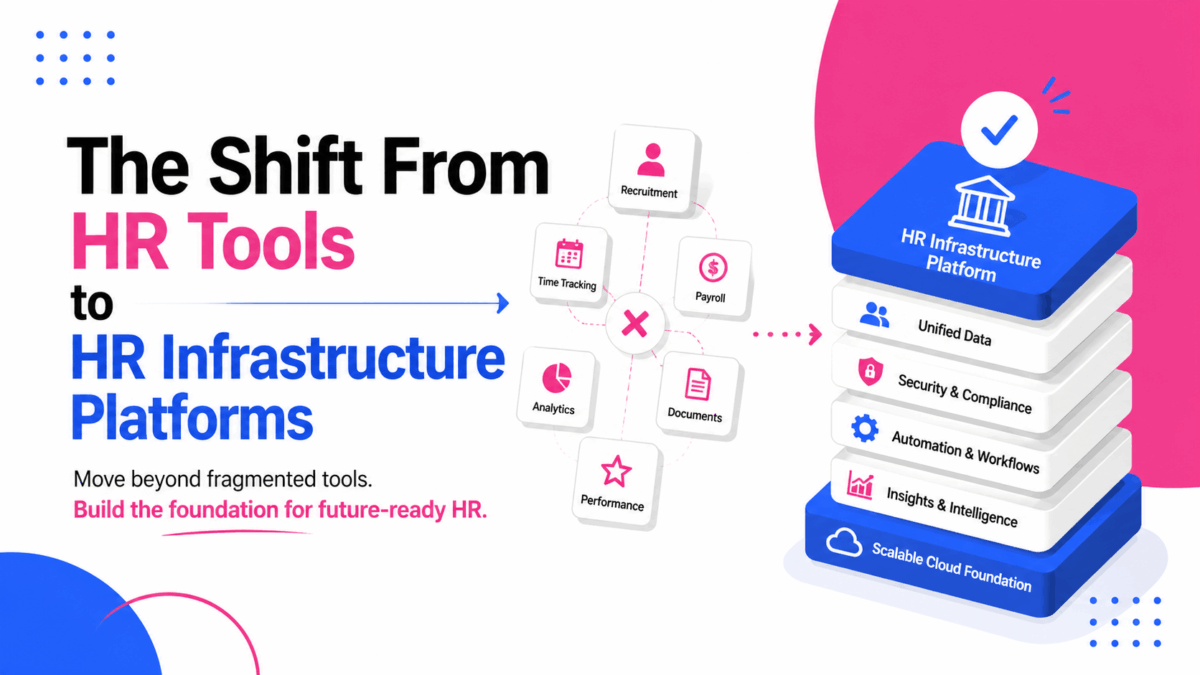
Not long ago, HR teams juggled a stack of point solutions to get through the week. One app for payroll; another for time tracking, A standalone performance tool; a learning portal. And an ATS held together with spreadsheets and goodwill.
Those tools did the job. However, they rarely talked to each other. Data got stuck in silos. Employees bounced between logins. Managers guessed more than they should have.
Something’s changing. HR infrastructure platforms are replacing collections of disconnected tools with a single, integrated backbone for people operations. With this in place, you’re building the foundation for your entire people strategy.
Why does this matter now? Business moves faster than it used to. Talent markets shift. Roles evolve. Compliance rules change. Companies that treat HR technology as core infrastructure adapt better when things move.
Keep reading to learn how to shift from HR tools to HR platforms for your company or organization.
HR Tools vs. HR Infrastructure Platforms
Traditional HR tools solve one task at a time. Run payroll, schedule shifts, file expenses, request PTO, and complete a review cycle.
They’re usually easy to buy and roll out, and for a while, that works. But as you grow, each new tool becomes another island. Integrations help, but only so much. See HR tech trends in 2026, which companies sometimes invest in separately.
HR infrastructure platforms work differently. They provide a connected layer that spans the employee lifecycle (hiring, onboarding, performance, learning, engagement, compensation, and offboarding). They take into account the PPT framework:
People
Process
Technology
With this in place, data flows end-to-end. You get a shared employee profile, consistent permissions, unified analytics. Not to mention a common team experience. You operate one platform where modules already work together. Rather than stitching five tools together.
The key differences:
HR Tools
HR Infrastructure Platforms
They handle tasks
They handle outcomes
They fix immediate problems
They build long-term agility
They capture data
They turn it into insight and action
Driving forces behind the transition
Several forces are pushing organizations toward platforms:
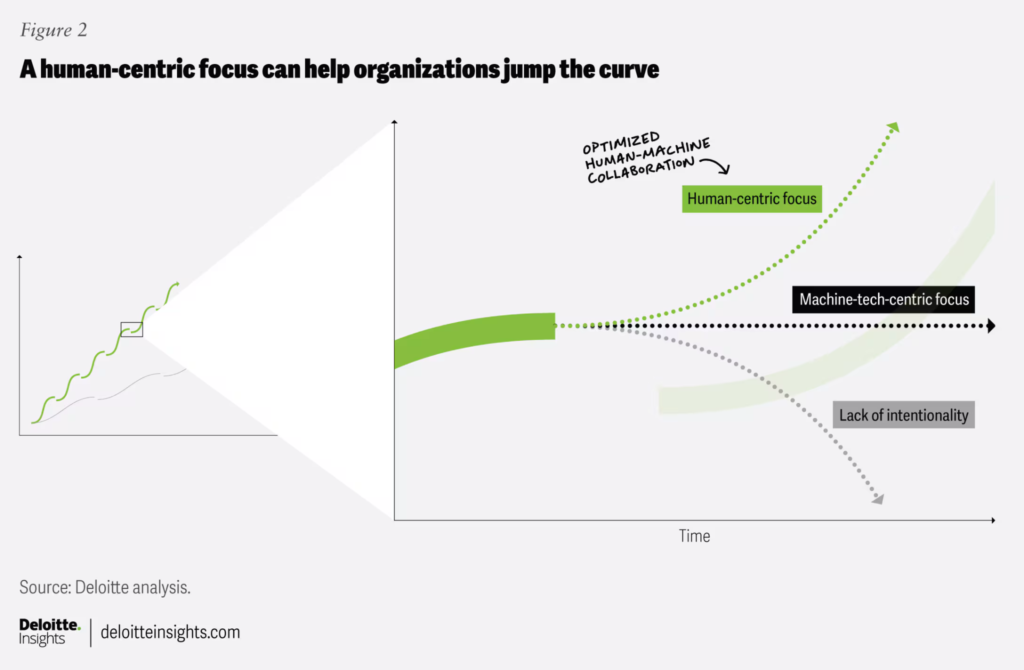
Cloud-native architectures smoothen integration. AI and machine learning bring pattern recognition and recommendations to everyday HR decisions. Deloitte’s Human Capital Trends research shows that organizations are redesigning work around human-and-technology collaboration.
Workforce complexity keeps multiplying. Hybrid work, global hiring, contingent labor, and skills-based staffing add more moving parts. A unified platform gives you one source of truth across locations and workflows.
Employee expectations have shifted. People want the same frictionless digital experience at work that they have in their personal lives. When you’re competing for talent, the friction of logging into six different systems to complete onboarding matters. That’s what it takes to create a great employee experience with technology.
Leaders need real-time visibility. Visibility into hiring funnels, performance trends, engagement hot spots, skills gaps, and internal mobility. That’s hard when the story is chopped into separate tools. People analytics drives business value when it sits on clean, connected data across the employee lifecycle.
Taken together, these shifts point in the same direction: fragmentation no longer scales. With HR infrastructure, teams can see what employees actually want using real data, whether that’s preferences or participation trends. That makes it easier to plan things like a blank t-shirt collection for giveaways or team-building activities for engagement based on real demand.
Benefits and Challenges in Adopting HR Infrastructure Platforms
Potential benefits
When the parts work together, the whole gets smarter. Possible advantages:
Efficiency scales better. Fewer duplicate logins and manual data handoffs. Automations span entire workflows. A candidate accepts an offer. And the system triggers IT provisioning, onboarding tasks, learning paths, and manager check-ins without anyone having to chase five systems.
You get real-time insights. A unified data model lets you track time-to-fill, first-year attrition, manager coaching activity, and internal mobility in one place. You spend less time reconciling reports and more time acting on what they say.
The employee experience improves. From onboarding through growth, employees see an integrated journey. Learning recommendations align with goals. Feedback and recognition are woven into daily work. Pay and performance live side by side.
Platforms with open APIs and modular capabilities make it easier to plug in new tech and adjust as your organization evolves. That flexibility also helps HR respond quickly to different employee needs. Whether it’s improving day-to-day worker experiences or supporting more complex, sensitive matters like family law and health benefits, without rebuilding systems from scratch.
Possible challenges
Platform transitions are big projects. The common hurdles:
Upfront investment matters. Consolidating tools and migrating data require budget and time. Clear success metrics and a phased roadmap help keep momentum.
Old habits are sticky. Technology is only part of the equation. You need a solid change management plan that addresses resistance and skill gaps. Organizations that invest in thorough training and communicate clearly see smoother transitions and faster ROI.
Centralizing data risks privacy and security. Look for vendors with strong certifications and controls (ISO 27001 and SOC 2). If you operate in the EU, ensure compliance with GDPR. If you’re testing AI-powered features, track evolving guidance on fairness and transparency.
Admins and managers also need time to adjust to new ways of working. Plan role-based training and give people space to practice so adoption sticks. This is especially important when integrating tools like contract management software into your HR infrastructure. Where consistent use and proper workflows are key to keeping data accurate and connected.
Future Trends in HR Technology
A few shifts worth watching:
AI is moving from descriptive to prescriptive. Today’s dashboards tell you what happened. Tomorrow’s platforms will help you decide what to do next. Systems that predict which employees are ready for promotion suggest optimal team compositions for projects. Or identify emerging skills gaps before they impact business performance.
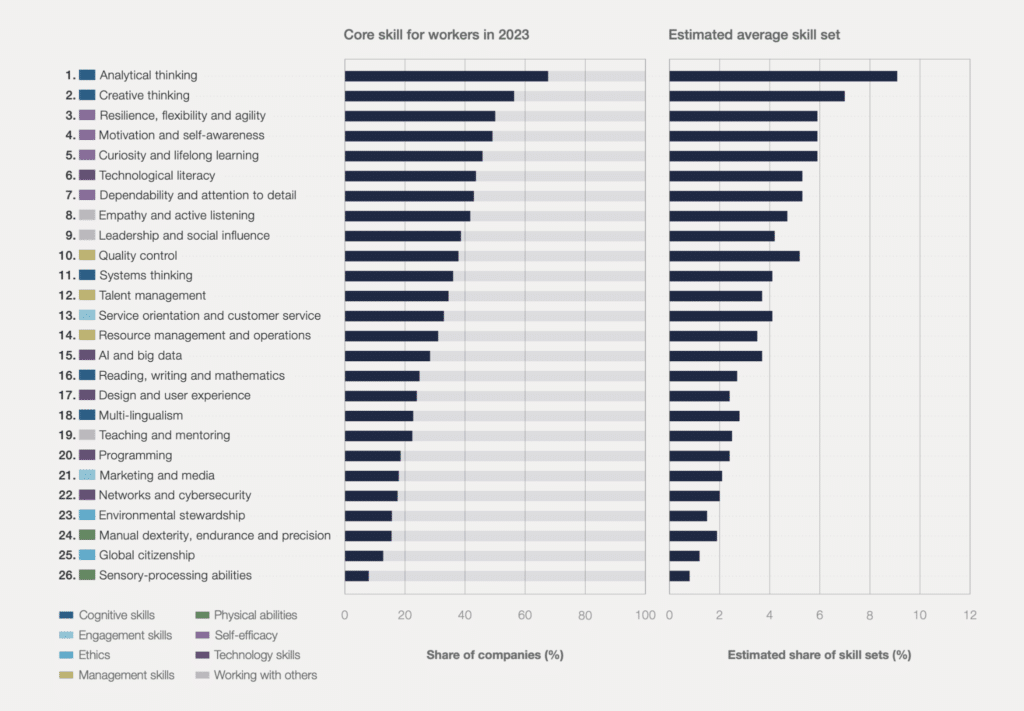
People’s data is getting richer. Skills taxonomies, internal mobility signals, even learning outcomes will feed more dynamic talent marketplaces. Organizations will increasingly manage work around skills rather than fixed roles. A theme echoed in the World Economic Forum’s Future of Jobs research.
Workforce planningis becoming more proactive. Predictive models that forecast hiring needs and capacity constraints will help leaders get ahead of change rather than react to it. The key is grounding predictions in transparent methods and audited data sources.
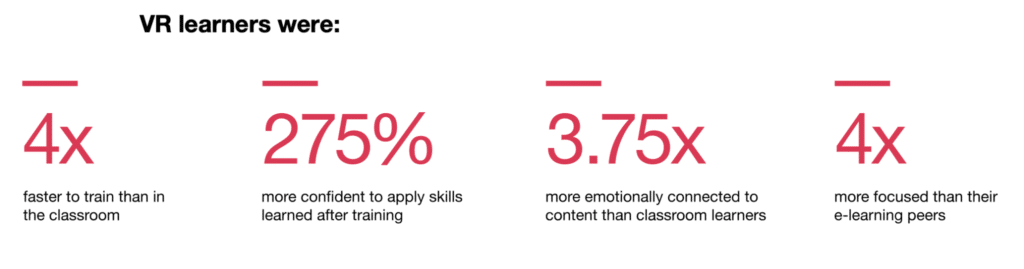
Immersive learning is scaling up. VR and AR will move from pilots to day-to-day training for safety, customer service, leadership, and more. PwC found that VR learners can be trained up to four times faster than in the classroom while feeling more emotionally connected to the content.
Moving from HR tools to HR infrastructure platforms changes how organizations run their people operations. This impacts how they make decisions and shape the employee experience. The payoff shows up in faster cycles and clearer insights. Even a smoother journey for everyone, from candidates to alumni.
AI advancements, skills-based planning, immersive learning, and emerging tech will continue to change the playbook. You don’t need to predict the future to prepare for it. You just need infrastructure built to handle change.
If you’re looking to shift from HR tools to HR infrastructure, consider leveraging Engagedly’s AI-powered talent management software. Engagedly enables you to develop, engage, and manage people…all in one place. To get started, request a demo today!
Brooke Webber
Brooke Webber is a passionate advocate for a people-first strategy in HR. Her major focus areas are workplace psychology and employee listening, where she has already accumulated five years of writing experience.
Frequently Asked Questions About HR Infrastructure Platforms
What are HR infrastructure platforms?
HR infrastructure platforms are integrated software solutions that connect every stage of the employee lifecycle, including recruitment, onboarding, performance management, learning, engagement, compensation, and offboarding. Unlike standalone HR tools, they provide a centralized system where employee data, workflows, and analytics work together to improve efficiency, decision-making, and the overall employee experience.
How are HR infrastructure platforms different from traditional HR tools?
Traditional HR tools are designed to perform individual functions, such as payroll, attendance tracking, or performance reviews. HR infrastructure platforms combine these functions into a single connected system, creating one source of truth for employee data, automating workflows across departments, and providing unified reporting instead of disconnected information.
Why are organizations moving to HR infrastructure platforms?
Organizations are adopting HR infrastructure platforms to reduce technology silos, improve operational efficiency, support hybrid and global workforces, enhance employee experiences, and gain real-time workforce insights. A unified platform also makes it easier to scale HR operations as the business grows while maintaining data consistency and compliance.
What are the main benefits of HR infrastructure platforms?
HR infrastructure platforms offer several benefits, including:
Centralized employee data Automated HR workflows Better workforce analytics Improved employee experience Easier compliance management Reduced administrative work Greater scalability for growing organizations
These advantages help HR teams spend less time managing systems and more time supporting strategic business goals.
What features should you look for in an HR infrastructure platform?
When evaluating HR infrastructure platforms, prioritize features such as:
Employee lifecycle management Performance and goal management Learning and development tools Employee engagement capabilities AI-powered analytics and reporting Open APIs and integrations Workflow automation Role-based security and compliance certifications Mobile accessibility
These features ensure the platform can support both current and future business needs.
Can small and mid-sized businesses benefit from HR infrastructure platforms?
Yes. HR infrastructure platforms are valuable for businesses of all sizes. Small and mid-sized organizations benefit from centralized employee records, automated HR processes, simplified compliance, and scalable technology that grows alongside the company without requiring multiple disconnected systems.
How do HR infrastructure platforms improve the employee experience?
HR infrastructure platforms create a seamless employee experience by providing one place to complete HR tasks, access learning resources, set goals, receive feedback, request time off, and manage career development. This reduces friction, saves time, and helps employees stay connected throughout their journey with the organization.
Are HR infrastructure platforms secure?
Most enterprise-grade HR infrastructure platforms are built with strong security measures such as data encryption, role-based access controls, audit logs, and certifications like SOC 2 and ISO 27001. Organizations operating internationally should also ensure the platform supports regulatory requirements such as GDPR and other applicable privacy laws.
How does AI enhance HR infrastructure platforms?
AI enhances HR infrastructure platforms by automating repetitive tasks, identifying workforce trends, recommending personalized learning, supporting skills-based workforce planning, predicting employee turnover risks, and providing actionable insights from workforce data. This enables HR teams to make faster, more informed decisions.
How do you choose the right HR infrastructure platform?
Choose an HR infrastructure platform that aligns with your business size, workforce strategy, integration requirements, security standards, scalability goals, and budget. Look for a solution that supports the complete employee lifecycle, offers flexible integrations, provides reliable customer support, and can adapt as your organization evolves.
Simon Rakosi is the co-founder of Butterfly.ai, now part of Engagedly. An entrepreneur and HR technology leader, he focuses on improving employee experience, manager effectiveness, and workplace engagement. His work helps organizations better understand their people, support frontline teams, and equip managers with actionable insights that strengthen wellbeing, productivity, and overall team performance.
















 Innovative