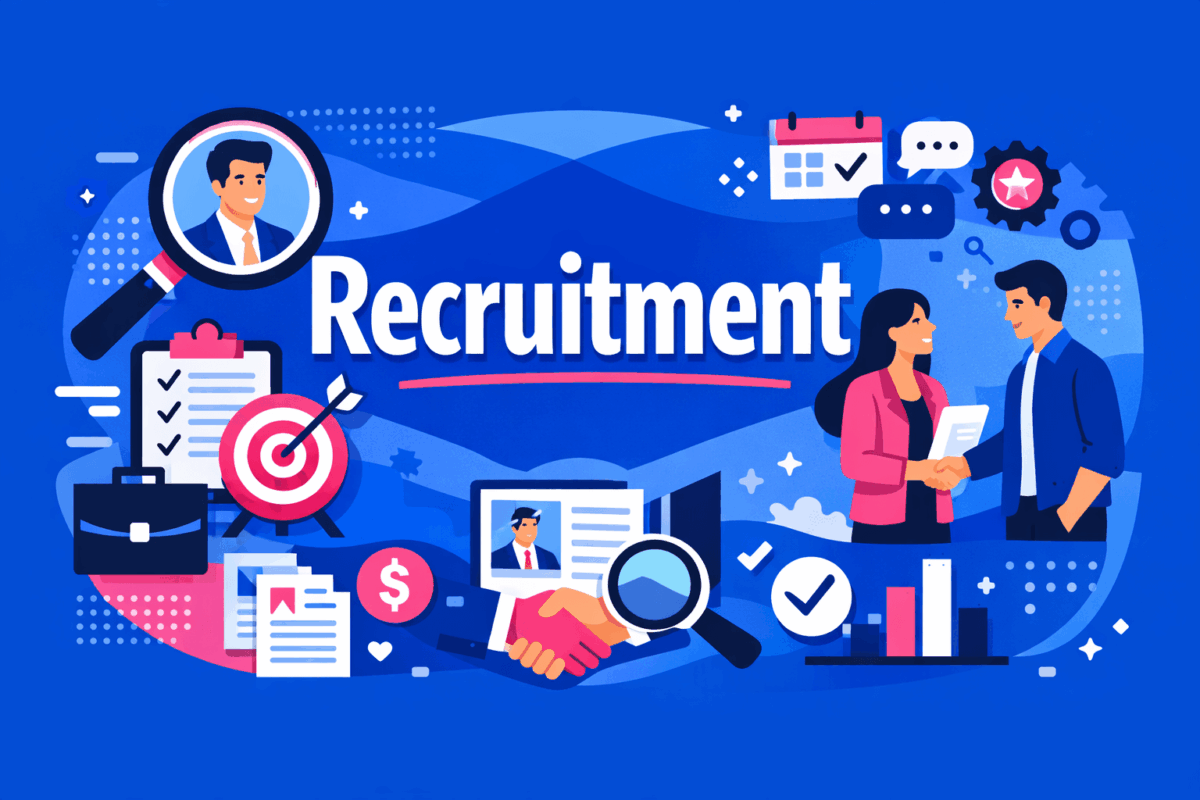
Recruitment is the process of identifying, attracting, screening, and selecting candidates to fill open roles within an organization. It focuses on matching the right talent to the right position at the right time.
Recruitment is a core function of human resources and talent acquisition. While talent acquisition looks at long term workforce planning, recruitment is typically more immediate. It responds to current hiring needs and ensures business continuity.
In practical terms, recruitment begins when a vacancy is identified and ends when a candidate accepts the offer.
Why Recruitment Matters
Recruitment directly affects productivity, culture, and long term business performance. A strong recruitment process helps organizations:
- Fill roles faster
- Improve quality of hire
- Reduce turnover
- Control hiring costs
- Maintain operational stability
Poor recruitment decisions, on the other hand, lead to higher attrition, disengagement, and performance gaps.
Organizations that treat recruitment as a strategic function, not just an administrative task, build stronger teams.
Recruitment vs Talent Acquisition
The terms are closely related but not identical.
Recruitment focuses on filling current vacancies.
Talent acquisition includes workforce planning, employer branding, succession planning, and long term capability building.
Recruitment is often a subset of talent acquisition.
Understanding the distinction helps organizations build structured hiring strategies instead of reacting to vacancies.
The Recruitment Process
Top ranking pages often list a simple hiring flow. Let’s look at it in a structured and practical way.
1. Job Analysis and Role Definition
Recruitment starts with clarity.
Hiring managers and HR teams define:
- Key responsibilities
- Required skills
- Experience level
- Performance expectations
- Reporting structure
Well defined roles reduce misalignment later.
2. Job Posting and Sourcing
Recruiters advertise the role through:
- Company career pages
- Job boards
- Social media
- Recruitment agencies
- Employee referral programs
Modern recruitment also includes proactive sourcing of passive candidates through professional networks.
3. Screening and Shortlisting
Applications are reviewed based on predefined criteria.
Technology often supports this stage through Applicant Tracking Systems and AI assisted resume screening tools.
Structured screening ensures fairness and efficiency.
4. Assessment and Interviews
Shortlisted candidates move through interviews and, in some cases, assessments such as:
- Skills tests
- Psychometric tests
- Case studies
- Technical challenges
Structured interviews improve consistency and reduce bias.
5. Selection and Offer
Once a preferred candidate is identified, recruiters prepare an offer based on:
- Market compensation data
- Internal pay structure
- Candidate expectations
Fast communication increases offer acceptance rates.
6. Onboarding
Recruitment formally ends when the candidate joins, but onboarding plays a critical role in early retention and performance.
Types of Recruitment
Recruitment strategies vary based on organizational needs.
Internal Recruitment
Hiring from within the organization supports career progression and improves retention. It also reduces recruitment costs.
External Recruitment
External hiring brings fresh perspectives and specialized expertise into the organization.
Campus Recruitment
Organizations hire fresh graduates through university partnerships and internship programs.
Agency Recruitment
Companies engage recruitment agencies for specialized or high volume hiring needs.
Digital Recruitment
Online platforms, AI powered tools, and social media have transformed how companies identify and engage candidates.
Recruitment Metrics That Matter
Modern recruitment relies heavily on data.
Key metrics include:
- Time to fill
- Time to hire
- Cost per hire
- Quality of hire
- Offer acceptance rate
- Source of hire
- Candidate experience score
Tracking these metrics improves accountability and decision making.
For example, if time to hire is high, organizations may need to simplify interview processes. If quality of hire is low, role definition or assessment methods may need revision.
The Role of Technology in Recruitment
Recruitment technology has evolved rapidly.
Applicant Tracking Systems centralize candidate data and automate workflows.
AI tools support:
- Resume parsing
- Candidate matching
- Interview scheduling
- Chatbot communication
- Predictive analytics
Video interviews and remote hiring platforms have also become standard in many industries.
While technology improves efficiency, human judgment remains critical in final decisions.
Recruitment Best Practices
Organizations that consistently hire well follow structured approaches.
- Write clear, realistic job descriptions
- Standardize interview questions
- Train hiring managers
- Reduce bias through structured evaluation
- Communicate regularly with candidates
- Measure recruitment outcomes
Recruitment should align with broader performance management and engagement strategies to ensure long term success.
Common Recruitment Challenges
Recruiters face several challenges:
- Talent shortages in specialized roles
- High competition for skilled professionals
- Unconscious bias in hiring decisions
- Long hiring cycles
- Candidate drop offs during application
Addressing these challenges requires both technology and strong hiring governance.
Frequently Asked Questions About Recruitment
What is recruitment in HR?
Recruitment in HR refers to the process of attracting and selecting candidates to fill job vacancies within an organization.
What is the difference between recruitment and selection?
Recruitment focuses on attracting candidates, while selection involves evaluating and choosing the most suitable candidate.
Why is recruitment important for business growth?
Effective recruitment ensures organizations have the right talent to meet strategic objectives, maintain productivity, and innovate.
How can recruitment improve candidate experience?
Clear communication, transparent timelines, structured interviews, and respectful feedback significantly improve candidate experience.
Recruitment in a Data Driven Workforce
Recruitment today is not just about filling positions. It is about ensuring alignment between role requirements, employee capability, and long term organizational goals.
When recruitment connects with workforce planning, performance management, and engagement initiatives, hiring becomes a strategic advantage.
Strong recruitment builds the foundation for everything that follows, from onboarding to leadership development.
 Innovative