How To Improve Employee Productivity In 2025?

Improving employee productivity can be a challenge, especially when most of the employees are newcomers who are also new to the industry. In fact, according to a study by Academia, the employee productivity rate is decreasing day by day, which has created an atmosphere of panic for employers. But you don’t need to worry, as there is a solution to this problem. 

There are many tried-and-tested ways to improve productivity that are quite effective. In this blog, we’re going to reveal five such ways that will help you improve employee productivity.

What is Employee Productivity?

Before we begin to learn about ways to improve productivity, we need to know what employee productivity is. It is not just a way to evaluate employee performance but also to know if the employees are working to their full potential. Business leaders want their companies to compete with others in their industry. For them to do so, they need an engaged workforce that will increase productivity.

Employee productivity is an assessment of the efficiency of a worker or group of workers. Productivity may be evaluated in terms of the output of an employee in a specific time.

As a general rule of thumb, it’s best to find ways for your employees to feel like they’re spending their time working toward something meaningful. This can make employees feel like they’re a part of something bigger than themselves. In that case, it is likely to have a positive impact on productivity. Encourage a positive work culture and team engagement. Tracking each employee’s performance so that you can share the feedback with them will go a long way toward enhancing their growth and development in the company.

Also Read: Employee Engagement on Productivity

Why Measure Employee Productivity?

Before you even think about improving workforce productivity, you need to ensure that you can measure your employees’ performance in a meaningful way. There are multiple ways to measure an employee’s productivity; for example, you can track how many files are processed or what percentage of clients have been contacted per day. You need to clearly identify what you want your employees to do and then build a way to measure it. Otherwise, you will never know if they are achieving their targets.

Why Employee Productivity Might Be Low?

In today’s day and age, organizations have to fight common contemporary factors that often hurt employees’ productivity levels. Factors such as long working hours and irregular shifts can cause mental health issues among employees. While these factors might not affect every individual who works within an organization, they do play a pivotal role in lowering the productivity levels of individuals. 

It’s essential to understand what caused your low productivity before improving it. Chances are, several factors contributed to the problem. At times, when employees are working remotely, they can feel disconnected from their workplace, and can be challenging to supervise—and that can hamper their performance. It can also be due to a lack of clear objectives or expectations. Time management can also be an issue, for example, some people need more structure than others and may struggle with setting their schedules or meeting deadlines without some guidance from you.

Also Read: Reduce Anxiety at the Workplace

How to Improve Productivity In the Workplace?

Managers spend a lot of time working on an employee’s growth and development. Still, sometimes they lack concrete tools to help them achieve their goal. If you are having productivity issues, here are five tried-and-tested ways to improve your employees’ productivity:

1. Increase Visibility and Access

You can encourage your employees to be more productive by increasing their visibility and access to resources. It’s pretty easy to get into a rut where employees are frustrated with limited software or equipment access, but it’s just as easy to change that.

Bring in a consultant if you need assistance in helping your staff upskill themselves. Then, work with them on creating a timeline for training. The end result is an engaged workforce aligned with the organization’s vision, with increased motivation and overall productivity.

2. Set Clear Expectations

As a leader, it’s up to you to set clear expectations. Connect with an individual employee or a group to assess their career goals and figure out areas of improvement. 

Some companies have structured annual reviews that are handled by managers. If your company handles performance reviews more informally than that, then your first step should be setting clear expectations about where people should focus their attention and how they can improve. 

3. Goal-Setting and Tracking

Delegating tasks is a tried and tested way to get employees up to speed. Encourage your employees to take on as much responsibility as they can handle and learn from their mistakes along the way. You could say that managing smart employees is really about managing their development, which requires some investment of time and resources. Ultimately, it will improve employee performance and productivity in leaps and bounds. 

The key here is to trust your team. When you do, you’ll see employee engagement and satisfaction increase dramatically, which should translate into increased output over time as well. Don’t try to be everything for everyone—it may seem like a lot of work at first, but it pays off in employee engagement in terms of encouraging your team’s productivity over time.

5. Use Employee Productivity Tools

Learning how to improve employee productivity is all about having access to good tools. This can be in-house software or off-the-shelf applications that are available online. All of these offer ways to get more work done and improve processes, allowing you to spend less time on manual work and more time focusing on activities that help boost your bottom line. 

If you can find tools that can better connect employees and empower them at every level, you’ll notice a real increase in their productivity. Invest in those tools that have proven value for your specific business needs and goals.

6. Measure Performance Periodically

It’s not always easy to find that one sure thing that makes employees more productive; there are usually a number of factors involved. However, if you take a look at any employee review website and search for tips on improving employee performance, you’ll notice that most revolve around giving employees room for improvement. 

Make sure you share feedback with them on a regular basis and try to avoid looking at mistakes as signs of failure. Pay attention to each little detail. Just remember—don’t rush things! It takes time for new hires to become familiar with your company culture and standards.

Scaling Up Productivity

Businesses frequently look for strategies to motivate staff to work harder in an effort to increase productivity. The use of bonuses and commissions is one of these strategies. You’ve probably dealt with performance-based incentives if you’ve worked in sales or customer service. Although these techniques may be useful in some situations, they aren’t always reliable. In fact, if something looks too good to be true, it probably is, as with many other things. 

According to a recent Stanford University study, offering a small wage raise has a greater impact on productivity and job satisfaction than introducing commission-based compensation systems. In the end, commission-based pay is less effective than simply paying people what they earn based on their time spent at work because it may appear like an easy method to inspire employees—especially those who don’t feel personally motivated by their professions. Naturally, employing wage raises doesn’t imply you should stop using any other employee motivation strategies; instead, think about how each strategy fits into your overarching strategy for enhancing employee satisfaction and productivity.

Conclusion

There is no universal way to boost employee productivity. But if you use these five tried and tested ways that we have shortlisted, you will be able to help your employees enhance their productivity and boost their career growth.

While no one can say for sure which method is best for you and your team, we believe in practicing what we preach. We’ve seen first-hand how rewarding it is to invest in individual development of our employees.

Everyone comes to work excited and ready to take on new challenges, because they know their manager believes in them and their growth potential. When people feel appreciated and valued by those around them, they want to keep those relationships strong. So invest in employee development!

Employee Engagement

Elevate Your Workforce: 14 Dynamic Employee Development Ideas for 2025

Employee development is a crucial part of creating a culture of continuous learning within your organization. 

When companies consider employee growth and development, there are several ways to motivate and interact with employees in business and related activities. Effective employers take advantage while understanding the need for a growth process within a corporation for future benefits. 

Individuals’ growth must be continuous; anything stagnant loses value and deteriorates. Employee development keeps corporations alive and thriving, increasing productivity and improving individual functionality. Constant training instills confidence and boosts performance.

Explore the strategies for employee development in this insightful video.


How to Create an Employee Development Plan?

Employers who deliver time in staff development add more value to the work they do and positively impact their business. This enhances the culture of learning and development to improve employee engagement aligned with OKRs and goals and equip them for their current roles.

Competition

The covid – 19 pandemic led to work from home (WFH) scenario for most of the employees, which reversed the definition of jobs. Since many employees started to work remotely globally, the market for good talent has become increasingly competitive. A staggering 83% of HR professionals in a study reported continuing difficulty in recruiting.

Talent Development

According to ClearCompany, 74 percent of employees say that a lack of professional development is preventing them from reaching their full potential. Investing in employee development not only allows your employee to feel good about growing their skills, but these learning opportunities can also translate into integral promotions that allow you to retain top talents.

Culture of Learning

Continuous learning can be part of a rewards program that helps to retain employees because they value self-development and advancement. 

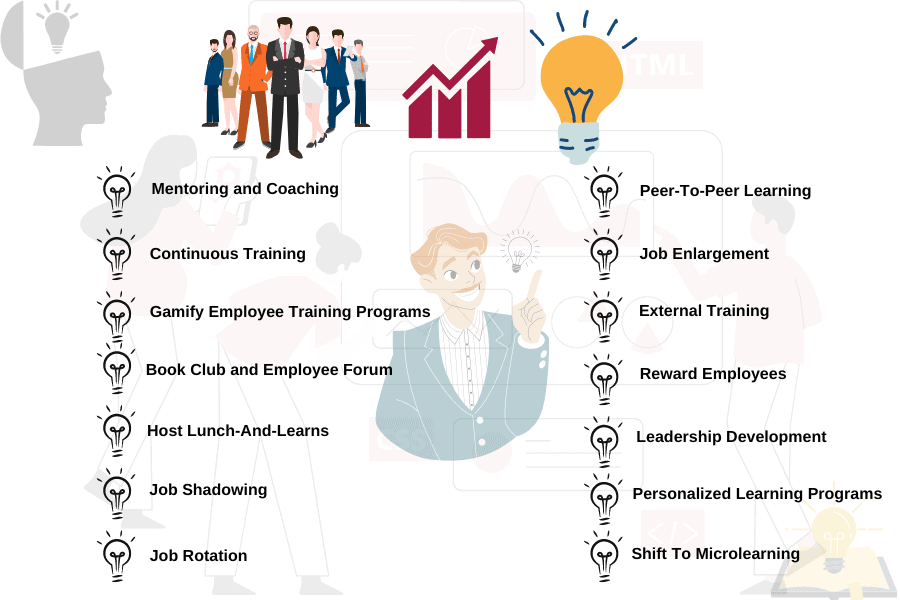
14 Proven Employee Development Ideas to Drive Success

The following growth ideas for employees form the benchmark for every organization.

employee development ideas

1. Employee Mentoring and Coaching 

Mentorship is the key to helping employees grow and be the best at their work. Staying competitive with others in their industry build a good reputation for employee growth and boost them to adapt to be quick learners in the changing business structure and models. 


Employee Development Ideas

2. Regular And Continuous Training

An effective training program increases efficiency in the company’s work and gains a profitable output. Moreover, it reduces the investment in the program and helps the employees to excel in soft skills training, thereby improving employee behavior and interaction with their colleagues.

To further improve employee growth and performance, explore these performance review examples to understand how regular appraisals can contribute to development goals.

Also Read: Importance, Implementation, and Benefits of Training and Development Program

3. Shift To Microlearning

Microlearning is a revolutionized method of learning that chunks overwhelming information into digestible, bite-sized modules. This will help employees to troubleshoot problems, overcome obstacles, and broaden their knowledge. Moreover, it saves time and money and improves workplace productivity more rapidly and efficiently.

4. Gamify Employee Training Programs

Infusing gamification elements into your learning content will excite your learners and sustain their interest in participating and completing their mandatory training courses.

Typical eLearning courses only have completion rates of 20%. However, gamification creates an engagement of up to 90% and raises them towards completion.

5. Organize A Book Club and Employee Forum

Employees can select a book, article, or topic and meet regularly – in person or via videoconference – for discussion. This is a fun way for employees to share the latest ideas and trends in their industry or their roles, or learn more about critical talents and skills.

6. Host Lunch-And-Learns

Many companies were successful in arranging an over-lunch educational program in both remote and office work environments. The lunch-and-learns program became a new and fresh development opportunity after bringing the employees back on-site in the post-pandemic era.

7. Job Shadowing

Shadowing is a term used when an employee follows another member of staff to observe and learn from that person. Shadowing can be an easy way to learn new skills like aligning to organizational strategy, fitting in the organization’s needs, and gaining a much greater understanding of other people’s roles.

8. Job Rotation

Rotation of jobs is the perfect way to acquire specific skills, learn, gather knowledge, and competencies. This helps new hires understand the different facets of business and get to know their colleagues. This can challenge and reinvigorate employees, encouraging them to flex different muscles and approach their roles from a new perspective. 

9. Peer-To-Peer Learning Opportunities

peer-to-peer learning supported by 360-degree feedback is an approach to teaching where learners teach each other by building teamwork and collaboration in the workplace. With this method, employees can learn knowledge sharing, and social learning skills like strategic thinking, and leadership, and improve team building. 

10. Job Enlargement

Job enlargement is another definite possibility whereby expanding employees’ responsibilities within their current jobs, can help them to increase their knowledge and skill sets. An idea is a good option for an employee who is keen and happy to take on new duties. This builds the impression that the company trusts them and values them. 

11. Promote External Training

External training programs play a significant role in strengthening the confidence of the individuals. It is specially designed for workforce play and its benefits in creating a change in the environment. It proves to be efficient in the use of digital tools and provides a unique approach to teaching tactics. 

Amazon runs multiple training programs like Associate2Tech under the Amazon Technical Academy to prepare non-technical employees to move into software engineering profiles. It is an ingenious way to assist employees move to their desired career goals.

12. Reward Employees Suitably 

Rewarding and recognizing play a key role in boosting employee morale. The employees generate motivation to work hard for new challenges and evolve better in team building that brings out the best performances with efficiency and effectiveness. This benefits both the company and the employee to grow and learn together and functions as a key factor in the employee development program.

Also Read: Employee Rewards and Recognition For An Engaged Workforce

13. Focus on Leadership Development

Leadership development focuses on enabling the current employees to be the leaders of tomorrow. It helps in developing skills that are important for effectively leading the organization and ensuring succession planning. Leadership skills like decision making, problem solving, innovative and creative thinking, and project management are imparted to employees to help them scale the career ladder.

14. Personalized Learning Programs

Personalized learning programs focus on individual abilities, skills, strengths, weaknesses, and aspirations. It offers training based on the needs of employees and thereby helps them perform their job duties efficiently. Every employee is unique, and they all grow at a different pace. Having personalized development programs enables employees to be committed to their learning journey and makes them more accountable towards their jobs.

Conclusion 

Fostering employee development is essential for the continuous growth and success of an organization. We trust that the innovative professional development ideas highlighted in this blog will provide valuable insights for implementing growth ideas for employees in your organization. We are eager to learn about the employee growth strategies that you employ within your company. If you’re looking to build a more structured and scalable approach to employee development, it may be worth requesting a demo to see how leading organizations are doing it.


Employee Career Development

Frequently Asked Questions

What is employee development?

Employee development is the continuous process of improving employees’ knowledge, skills, and abilities through training, coaching, mentoring, job experiences, and learning opportunities. It helps employees grow professionally while enabling organizations to build a more skilled, engaged, and future-ready workforce.

Why is employee development important?

Employee development improves employee performance, engagement, retention, and job satisfaction. It also helps organizations close skill gaps, prepare future leaders, increase productivity, support succession planning, and remain competitive in a rapidly changing business environment.

What are the most effective employee development strategies?

Some of the most effective employee development strategies include:
Mentoring and coaching

Continuous learning and training programs
Microlearning
Job rotation and job shadowing
Leadership development
Peer-to-peer learning
Personalized learning plans
External certifications and workshops
Stretch assignments
Regular performance feedback

Combining multiple development methods creates a more engaging and impactful learning experience.

How do you create an employee development plan?

To create an employee development plan:

Assess employees’ current skills and career goals.
Identify skill gaps and development opportunities.
Set SMART development goals.
Choose appropriate learning activities and training.
Assign mentors or coaches where needed.
Track progress through regular check-ins.
Update the plan as business needs and career goals evolve.

What is the difference between employee training and employee development?

Employee training focuses on helping employees learn the skills needed for their current roles. Employee development has a broader, long-term focus that prepares employees for future responsibilities through continuous learning, leadership development, mentoring, and career growth opportunities.

How does employee development improve retention?

Employees are more likely to stay with organizations that invest in their professional growth. Providing learning opportunities, career advancement pathways, mentoring, and leadership development increases job satisfaction, strengthens employee engagement, and reduces voluntary turnover.

Understanding Employee Wellbeing In 2025

2020 has been a busy and difficult year for everyone! While employees were busy settling down with the idea of remote work, HR leaders were busy in making this transition seamless.

For many of us, the transition from a physical workspace to a remote one has been palatable. Work from home has its own benefits for the employees and the organization. It helped companies reduce their costs and recruit a global workforce. Similarly, employees have gained the flexibility to work from anywhere around the world.

Also Read: Tips To Manage Stress Of Your Remote Team

However, recent studies and reports suggest otherwise. They highlight that continuous work from home has resulted in increased stress, anxiety, and feelings of isolation among employees. It has affected their mental and physical health and has increased disengagement.

The health and wellness of an employee have a direct impact on an organization’s productivity. Companies and HR leaders must treat employee health as a top priority and realign, and change the existing employee wellness initiatives to support remote employees.

Here are four employee wellbeing initiatives that we expect to see in 2025.

Employee Wellbeing Initiative #1: More Importance To Work-Life Balance

With employees working from home, they often tend to spend more time in front of their screens. They tend to overwork without even realizing it. This leaves the employee stressed and exhausted, which ultimately affects their productivity. Moreover, they get less time to spend with their families. Gallup, in their recent research, highlights that employees who report burnout are 2.6 times more likely to look for a new job.

Employees should know when to switch off, and organizations must understand the importance of work-life balance. Having a work-life balance is as important as having a good salary, job satisfaction, security, employee benefits and perks, etc.

Also Read: The Essential Guide To Employee Productivity In A Hybrid Setup

Employee Wellbeing Initiative #2: Address Employee Mental Health

According to the U.S. National Comorbidity Survey for Americans ages 15 to 54, 18% of employed individuals experienced symptoms of mental health issues.

While discussing workplace issues, almost every article or survey revolves around topics such as bullying, bad managers, workplace biases, and work-life balance. However, the topic of mental health is often overlooked. The mental health issue is one serious issue that needs to be given importance like any other.

Working from home has allowed employees to work from anywhere and flexibly at any time. However, it has led to other issues such as insomnia, anxiety, and isolation. As a manager or an HR, you cannot act as a therapist or a shrink, but you can take a series of steps to ensure that your employees are doing good.

  • Have informal conversations with them from time to time to understand how they are doing
  • Conduct anonymous surveys
  • Give equal importance to mental health as physical health
  • Give every employee training so that they can identify their mental health issues because often the signs are ignored
  • Make online therapy and counseling sessions a part of employee benefits and perks
  • Encourage everyone to speak up

Also Read: Employee Burnout: What You Need To Know About It

Employee Wellbeing Initiative #3: Your Employees Need To Be Physically Fit Too

While we cannot undermine the importance of mental health, physical well-being is important too. When employees were working out of the office they had access to ergonomically designed workstations, gyms, healthy eating options, etc. But with work from home, many of us have the habit of working from the couch or bed. Additionally, there is no fixed routine for work or breaks. It leads to obesity and fatigue, which ultimately affects the productivity of the employee.

Here are a few things that you can do to ensure your employee’s physical well-being:

  • Invest in their remote workspace set-up
  • Conduct exercise and yoga sessions online and encourage your employees to take part
  • Gift your employees’ smart bands to track their steps
  • Offer incentives to your employees for calories burnt

Also Read: Virtual Onboarding: A New Reality

Employee Wellbeing Initiative #4: Communication Is The Key

In the remote workspace, employees often feel disconnected and isolated from their teammates and the organization because of a lack of communication. Whether casual or formal, it helps employees to stay connected. Connect with your team over a one-on-one or in group meetings to hear their concerns. Let them know that you are there to help them out if they face any difficulty working remotely. Encourage your employees to block time for virtual water cooler breaks so that they can have a casual discussion with their colleagues. Additionally, ensure that they have the tools and software required to make communication and collaboration easy. Some of the most commonly used tools are:

  • Engagedly–  for real-time performance management, feedback, rewards, and gamification
  • Slack, Google Meet, and Skype- for communication and easy collaboration
  • Asana, Basecamp, and Trello- for Project Management

Your employees are your assets! Have you started taking care of them yet?


Do you want to know how Engagedly can help you with Employee Engagement and Employee well-being? Request for a live demo.

Request A Demo

[/vc_column_text][/vc_column][/vc_row]

How are Organizations Increasing Employee Engagement in 2025?

Are you struggling to keep your employees engaged in the current era of hybrid work? You’re not alone! According to a recent survey, only 28% of employees feel highly engaged while working remotely. The problem is real, and if you don’t find a solution, it will ultimately impact job satisfaction and employee productivity. But don’t worry; there are ways to boost employee engagement and keep your team motivated, even in this new way of work.

In this article, we’ll dive into the latest trends and best practices for increasing employee engagement in 2025. We’ll also explore how to effectively navigate hybrid work and keep your employees connected and invested in their work.

What is Employee Engagement? 

Employee engagement is a measure of how committed and invested employees are in their work and in the company’s success. It is characterized by employees who are motivated, productive, and satisfied with their jobs.

Employee Engagement in 2024

An example of high employee engagement would be a team of employees who consistently go above and beyond their job roles, take initiative on projects, and have a positive attitude toward their work. They are not just clocking their hours but also taking ownership of their role and responsibilities and looking out for opportunities to improve the process and benefit the company.

So, whether you are a business leader, HR professional, or an employee looking for ways to stay engaged, here’s how to increase employee engagement in 2025!

1. Clear Communication:

Clear communication helps foster employee engagement. When leaders communicate clearly, it helps employees understand the company’s mission and goals. They have a clear idea of where they fit into the bigger picture. It helps to build trust and transparency between management and employees and fosters a sense of ownership and empowerment. Conduct regular team meetings, share company-wide updates, and have an open-door policy to promote a culture of communication.

2. Provide employees with opportunities for growth and development:

This can include training programs, mentorship, and internal job mobility. By investing in their employees’ professional development, organizations can help build a more skilled and motivated workforce. Additionally, providing employees with opportunities to take on new challenges and responsibilities can help keep them engaged and motivated.

3. Create a positive and inclusive work culture:

This includes fostering a sense of belonging and encouraging employees to share their ideas and concerns. Employers can also help to create a positive work environment by promoting work-life balance and providing employee benefits such as flexible work hours, mental health support, and wellness programs. When employees see that the company values them and their opinions, they in return become satisfied and engaged at work.

4. Invest in tools and technologies:

In this era of hybrid or remote work, investing in tools and technology will help increase employee engagement. By providing employees with tools that make their work easier, such as automation and collaboration software, organizations can help to increase productivity and improve communication. Some of the commonly used tools are:

  • Project Management: Trello, Basecamp, etc.
  • Goal Setting / OKRs: Engagedly, etc.
  • Communication: Slack, Zoom, Google Hangouts, etc.

5. Surveys and feedbacks :

Many organizations use employee engagement surveys and feedback to gather data on employee satisfaction and engagement. It helps keep tabs on the current environment in the organization. This data can identify areas for improvement and track progress over time.

6. Recognition:

Organizations can increase employee engagement by recognizing and rewarding employees for their contributions. This can include formal recognition programs, bonuses, public praise, announcements in newsletters, and other incentives. Additionally, organizations can recognize and celebrate employee milestones, such as birthdays, work anniversaries, and other special events.

Also Read: The Top Talent Retention Challenges in Business

How HR is the lifeline of employee engagement?

How HR impacts employee engagementHuman Resources (HR) drives employee engagement initiatives in an organization. Here’s how they are doing it.


1. The tale behind every storyteller

Storytelling has brought more people together than a cult ever has. For eras now, it has been a soft skill that dominates and influences people’s mindsets, and the HRs of today have mastered this art. Personal storytelling is a good idea for employee engagement. Conduct first-person interviews, with realistic and relatable scenarios where the employees can picture themselves in the story and come to a stage of self-discovery. When employees are engaged, they share their ideas and opinions, work harder, stretch their bandwidth, and work towards the goal of the organization.

2. Be The jack of all trades

As an HR professional, being a jack of all trades contributes to employee engagement. The diverse skill set of an HR professional enables them to work with employees across the organization. From payroll, administration, talent sourcing, employee relations, performance management, and setting office policies and guidelines, they work on practically everything. Their versatile nature of work allows them to offer comprehensive solutions and holistic support to employees. They help employees align their individual goals with the organization’s goals. Their nature of work enables them to create an inclusive and engaging work culture that fosters a sense of belonging.

3. Driving Continuous Transformation and Organizational Growth

A strategic HR department delivers world-class leadership activities. As per the research report at McKinsey, HR fits into a bigger picture and sets out a clear message on “Who we are,” “How we operate,” “How we plan to grow,” and to roll out the below:

  1. HR adopts new prototypes and the latest technology software that promotes effective internal-external collaboration.
  2. Introduces the next-generation performance management system.
  3. Map talent to its actual value, taking employee experience to the next level.
  4. Make better judgments faster and take the right guidance and training from the experts.

In a nutshell, HR is an agent of continuous transformation, shaping processes, and a culture that together enhances an organization’s capacity for change.

4. Networking 101

Whether internal or external, HR professionals are number one when it comes to their networking skills. They are good at establishing connections with all the employees in the organization. They are easily approachable, which helps build a sense of trust and open communication. It results in building strong employee relationships. Networking enables HR to better understand their employees. They understand their needs and aspirations and create tailor-made engagement strategies for them. HRs can also help in the personal and professional growth of employees by establishing learning and development opportunities. 

5. Tech-driven organization

Now that HR has fully embraced technology, companies are depending on tech solutions for hiring, onboarding, and engagement. Technology has taken the traditional way of database maintenance using spreadsheets. The virtual world offers organizations a wide range of benefits, and leadership teams are leveraging it to stay connected with employees more often. The use of digital town halls, newsletters, organizational communication, and feedback sessions facilitates a technology-driven, collaborative culture within an organization.

6. Building a safe space in your second home

In a space where you spend most of your day, it is important to keep it healthy, and HR ensures that. It is often said that “changing habits is equal to changing the culture” and it is in HR’s hands to build a healthy culture. From conceptualizing the process of culture to explaining why it directly impacts business outcomes, HR bridges the necessary gaps to propose, facilitate discussions, gather feedback, and incorporate the best practices.

7. The final say in any Mergers and Acquisitions (M&A), because why not and who else?

While onboarding a new candidate is a job in itself, retaining the existing ones and making sure they are happy is a challenge that every HR faces. M&As can make employees feel ignored as organizations prioritize their leadership team. As such, employees can end up in somewhat of a holding pattern and feel they aren’t being heard, or that their role has been usurped.

In fact, almost half (47%) of all employees leave a business within a year after a merger or acquisition takes place, and 75% leave within three years. Another challenge is to bring all the HR database and information without any delay in delivery.HR moderates plans strategically and provide self-service tools, communication, centralized databases, and in-depth training to employees.

Also Read: 6 Recruitment Strategies for Hiring Great Employees in 2025

Takeaway: Invest a huge chunk in employee engagement 

Investing in employee engagement is not a one-time effort but a continuous process. It enhances the performance and productivity of the organization while increasing employee satisfaction and motivation. It is a win-win situation for both employees and the company.

  1. Communicating clear goals and expectations: Employees are more engaged when they understand what is expected of them and how their work contributes to the overall success of the company.
  2. Providing opportunities for growth and development: Employees are more engaged when they feel like they are learning and growing in their roles. Offering training and development programs, as well as opportunities for advancement, can help with this.
  3. Recognizing and rewarding good performance: Employees are more engaged when they feel like their hard work is valued and appreciated. Implementing a performance appraisal and recognition program can help with this.
  4. Involving employees in decision-making: Employees are more engaged when they feel like their input is valued and that they have a say in how the company is run. Encouraging employee involvement in decision-making processes can help with this.
  5. Building a positive and inclusive culture: Employees are more engaged when they feel like they belong and are valued as part of the company. Promoting diversity and inclusion and fostering a positive work environment can help with this.

free e10 Survey

Top 20 Essential Pulse Survey Questions You Should Ask in 2025

Employee engagement strategies are rapidly revolutionizing the modern workplace with comprehensive and cutting-edge approaches. An employee engagement survey is one of the most reliable ways to measure a company’s employee engagement. However, completing an engagement survey is a time-consuming and tedious activity. Here, a pulse survey is a quick means of corporate communication to get employee feedback.

The typical response rate for an employee engagement survey is just 30–40%, whereas the average response rate for a pulse survey is 85%. The entire feedback process is streamlined and enhanced through a pulse survey. You can get feedback on workplace morale, challenges, and relationships by conducting pulse surveys. We have compiled the top pulse survey questions for your perusal. Let’s explore pulse surveys’ meaning, benefits, and important questions to include.

What Are Pulse Surveys?

Pulse surveys are quick ways to receive feedback from your employees. They can highlight present issues or chances to improve your employees’ working conditions. Pulse surveys, commonly conducted monthly, quarterly, or weekly, are intended to be shorter, more targeted, and more frequent than traditional annual or biannual engagement surveys. Pulse surveys are a less expensive and more effective way to learn about the workplace.

Employee pulse surveys are suitable for large and small businesses, and their popularity is growing constantly due to their many advantages. They help improve company culture, provide honest feedback to management, and increase employee retention.

Top 20 Essential Pulse Survey Questions 

Employees can score or provide genuine feedback on a few targeted pulse check questions in pulse surveys. Here are some examples of the top pulse survey questions in 2025 you can use to gain insights into your workforce:

Questions About Employee Satisfaction

Employee discontentment poses risks such as increased turnover, diminished performance, and harm to the organization’s reputation. Factors contributing to this dissatisfaction include a lack of connection with coworkers, a surge in workload, and inadequate support from supervisors.

Understanding the satisfaction levels of your workforce is crucial. Content and loyal employees are more likely to stay with the company, becoming valuable brand ambassadors who aid in attracting and retaining talent. Consider incorporating the following pulse survey questions to gauge employee satisfaction:

  • How satisfied are you with your current job?
  • How would you rate your work-life balance?
  • How likely are you to recommend your company to a friend or peer seeking employment?

Questions on Inclusion and Diversity

DEI questions to ask in pulse surveyAssessing Diversity, Equity, and Inclusion (DEI) is imperative in the ever-evolving and fast-paced workplace, as improvement hinges on a clear understanding of existing gaps. Achieving diversity, equity, and inclusion involves offering every employee equal opportunities and recognition, irrespective of their background or identity. Monitoring the progress of diversity and inclusion within an organization is effectively accomplished through pulse surveys. Given that sensitive topics such as diversity and inclusion can be challenging for employees to discuss openly, pulse surveys provide a valuable platform for employers to gauge sentiments regarding inclusion, justice, equity, respect, and diversity.

Key DEI-related questions for inclusion in pulse surveys are:

  • Are diverse viewpoints and innovative ideas valued within the organization?
  • Does the organization provide equal opportunities for learning and advancement to all employees based on merit?
  • Can you express concerns or ideas without fear of repercussions?

Questions on Communication

Utilizing an employee pulse survey is a valuable method to assess the effectiveness of your organization’s communication channels. This tool aids in identifying strengths and areas for improvement, ensuring that communication serves as a catalyst for swift goal achievement while minimizing misunderstandings. Evaluating employee satisfaction with internal communications is pivotal in maintaining a cohesive and informed workforce. Consider incorporating the following employee pulse survey questions related to company communication:

  • How effectively does the company communicate its goals, objectives, and strategic initiatives to its personnel?
  • Are the communication channels we utilize—such as emails, instant messages, and internal platforms—effective in promoting collaboration and knowledge-sharing?
  • Does the company cultivate a culture of two-way communication, where employees feel encouraged to share ideas, express opinions, and voice concerns?
  • Does the organization demonstrate respect and appreciation for its employees’ contributions and achievements?

Questions on Company Culture

Company culture pulse questions Company culture forms the bedrock of your organization’s values, serving as a steadfast motivator for employee engagement during both prosperous and challenging times. Robust corporate cultures empower teams to surmount significant obstacles by fostering a deep connection to the central organizational mission and strong values.

The pursuit of establishing and perpetuating a positive workplace culture is a primary objective for every leader. However, cultivating a culture centered on appreciation and creativity is a nuanced endeavor. To gain a comprehensive perspective, leaders can pose pertinent questions about organizational culture. Key inquiries include:

  • On a scale of 1 to 10, how comfortable do you feel at work?
  • Do you believe that your workplace actively promotes collaboration and teamwork?
  • On a scale of 1 to 10, how closely do you perceive the alignment between the principles of your organization and your personal values?
  • Do you have access to the necessary resources and technology to successfully carry out your tasks?

Questions on Work-Life Balance 

Work-life balance is integral to promoting employee well-being, reducing stress levels, and enhancing overall productivity. Employees who perceive a harmonious balance between their professional and personal commitments are more likely to remain interested, motivated, and satisfied in their careers.

To identify areas where employees may face challenges in managing personal and professional responsibilities, consider asking the following questions related to work-life balance. This data can be instrumental in crafting strategies to foster improved work-life integration:

  • How frequently do you find yourself working after regular business hours?
  • Does your work schedule provide sufficient flexibility to meet your personal commitments and obligations?
  • In your opinion, how effectively does the company support the mental health and overall well-being of its employees?

Questions on Leadership 

Employees are sometimes required to step outside their comfort zones or exert extra effort, particularly in unforeseen circumstances. The success of leadership teams is significantly shaped by managers and leaders who actively support organizational change, foster employee participation, and ensure the provision of necessary resources for optimal performance.

To precisely assess the impact of their actions on their workforces, managers and leaders can leverage employee pulse surveys. These surveys serve as valuable tools for gathering feedback, enabling leaders to identify areas that may require adjustments. Consider incorporating the following questions in these surveys to gauge employee sentiment:

  • Does your manager empower you to determine the best way to accomplish tasks?
  • Are company leaders consistent in expressing gratitude for your contributions?
  • How effectively do you believe leadership welcomes and values employees’ opinions and ideas?

Summing Up 

Pulse surveys serve as a valuable tool for assessing team morale, gaining insights into ongoing projects, understanding the direction of your organization, and inspiring staff to excel in their roles. Crafting effective survey questions is paramount to acquiring accurate and meaningful data about various aspects of your workplace culture. Employing best survey practices, such as clarity, impartiality, and anonymous response options, ensures that you receive insightful feedback from respondents.

Leveraging a pulse survey platform to administer these thoughtfully crafted survey questions facilitates the swift gathering of employees’ feelings and sentiments. Engagedly, an employee performance management platform, streamlines the creation and analysis of pulse surveys. With features allowing for automated distribution to specific teams or departments at scheduled intervals, you can effortlessly collect relevant data and glean insightful employee statistics. This, in turn, opens avenues for organizational change and improvement. Schedule a DEMO with Engagedly today!

Frequently Asked Questions

Q1. What characteristics distinguish a quality pulse survey? 

A quality pulse survey typically possesses characteristics such as clear and concise questions, anonymity options, regular and timely distribution, alignment with organizational goals, and the ability to gather actionable insights swiftly. It should prioritize clarity, impartiality, and relevance to effectively measure and improve various aspects of workplace culture and employee engagement.

Q2. How is a pulse survey taken? 

A pulse survey can be distributed to the staff via email, a Google form, or a workforce management app for the quickest and most effective results. Avoid using the pen-and-paper approach, as this leaves room for lost records, inaccuracies, and unnecessarily long processing times.

Q3. What benefits does a pulse survey offer?

Pulse surveys enable you to concentrate on key employee metrics, including engagement, satisfaction, and retention. It aids businesses in locating issues and gaps so they may address them as soon as possible. Continuous learning about employee opinions and the resulting corrections is encouraged by pulse surveys.

10 Productivity Tips For Managers and Employees In 2025

Over the past two years, we saw a series of transitions in how we work. First organizations went remote, and work from home became the new norm. Then, when the pandemic normalized in some countries, organizations went hybrid. 

But the question that remains is whether the pandemic is over? No.

With the discovery of newer strains of the COVID-19 virus, we can understand that the pandemic is far from being over and is still a global threat. Like the past two years, many of us will still be working from home, and this will be the norm for organizations worldwide. Working from home has made life simple for many, but many are still struggling to stay productive and engaged while tackling the numerous distractions at home, and the thought of the pandemic.

Also Read: 10 Best Employee Feedback Tool To Track Performance

Here are some useful productivity tips that will help you be more productive in 2025.

1. Have A Dedicated Workspace 

To ensure that you are productive and have a supportive work environment, you need to set up a dedicated workspace for yourself. According to an article on Forbes, having a dedicated workspace improves your focus, and results in lesser distractions. If you have a dedicated office at your home, then it is the best thing to have. But if not, then select an area in your house with the least distraction and which you can use as your workspace daily. Study table, dining room table, etc. can serve as your regular workspace. If you are still unsure which space in your house is best suited for work, then invest in a work desk and chair. Most organizations these days are helping employees set up workstations at home. Check with your employer to see if you can get that facility. 

2. Identify Your Most and Least Productive Hours

According to research on ultradian rhythms, the human body follows a cycle that affects how productive they are. They go through a cycle of 90-120 minutes, where they go from a productive peak to an unproductive trough. 

Everyone is not equally productive during all hours of the day, the body clock works differently for all. Some are more productive in the morning, while others are productive in the evening, or others might be productive consistently throughout the day. The human brain is more productive, active, and focused during the high productive hours. Schedule important and difficult tasks for the highly productive hours and the routine or rote tasks can take place in the less productive hours. This will help you identify when you are most productive, distribute workload, and produce more effective results.

Also Read: The Impact Of Employee Engagement on Productivity

3. Take Breaks

Taking breaks is important for your body and mind. Sitting at one position throughout the day in front of your screen is difficult, uncomfortable and stressful. While your upper part of the body is active while working, the lower part remains more or less in a stationary state. Use the Pomodoro technique to schedule your work time and breaks. Take a small walk, do simple stretches, or go for a short walk with your dog. This will not only improve your productivity but will also help you refresh your mind and improve blood circulation.

4. Start With SMART Goals

Lofty goals (no matter how good they look) are not always easy to achieve. More often than not, they might lead to failure. Or often, we don’t even tackle them, because the goal feels too lofty to begin with. On the other hand, simple goals might not even challenge us and give us a false sense of achievement that will soon diminish as the year progresses.

Use the SMART goals method to set goals that challenge you but also seem achievable. Or maybe there’s another method that you used to set goals. Regardless of the method you use, ensure that your goal list challenges you, but does not overwhelm you.

5. Breakdown Your Goals 

Assume you want to write 100 blog posts in a year. At first, this goal might seem a little daunting to achieve. But when you break them down into smaller chunks, they seem more achievable. So 100 blog posts in a year becomes 25 blog posts each quarter. This way, 100 will not be the number you focus on. Rather, it will be 25, 50, 75, and then finally 100. 

Use the OKR methodology to set monthly, quarterly, and yearly goals and tie them with the business goals. It makes it easy to track progress and align individual goals with organizational goals.

Also Read: OKRs: How To Set Winning Objectives and Key Results?

6. Assign Priority To Your Goals

Every goal that you set has a different priority. Even if your goal list only has 5 goals, there must be some priority based on which you can classify your goals. Prioritize them under High, Medium, and Low. This way, you know what you want to focus on first. And you will not try to stretch yourself in five different ways to achieve your goals.

7. Create A Routine

Set up a disciplined routine for yourself. We know it can be difficult to follow a routine while you are working from home, but having a routine always helps. Your routine does not need to ensure that you work your nose to the grindstone to achieve your goals. But it should provide a structured period for work without distractions. Even dedicated pockets of focused time will ensure that you can work towards achieving your goals, rather than trying to expend all your energy at one go and feeling discouraged about not reaching your goal.

8. Check In With Your Colleagues / Team

When you are working from home or remotely, it can create a sense of isolation and disconnect. This affects mental health. 

Make sure to check in with your team or colleagues weekly, if not daily. Catch up with them on what they are working on and whether they need any help from your end. Various video conferencing tools, such as Zoom, Google Meet, or Slack, will make the job easy. It will reduce the stress and anxiety among employees and help them stay engaged and productive.

9. Block Out Digital Distractions

We are not going to say social media is evil, but there is no denying that it does distract us. When working on your goals, ensure that you schedule time off. This means no email alerts, no notification pings, and no quickly scrolling through Facebook Instagram, or Twitter. Instead, completely silence your phone and place it some distance away from you. You can even prioritize notifications to ensure that you don’t miss out on important messages.

Also Read: How To Curb Digital Distractions

10. Treat Yourself As the Priority

Last two years have been hard, so wherever you are working from, home or office, treat yourself as the priority. You will be at maximum productivity only when your body gets what it needs. Sleep on time and have healthy food so that your brain and body function well. Once your body gets what it needs, it will function like a well-oiled machine.

As individuals, it might take time for us to adopt these habits or tips into our daily routine. But we need not try out all these tips right away or in a single day. Slowly incorporate them into your daily routine and see the changes they bring to your productivity and the way you work. 


Want to know how Engagedly can help you improve your team’s productivity, request a demo from our experts!

Request A Demo

How to Fight Employee Burnout in Healthcare?

Healthcare is one of the most demanding industries to work in. Unfortunately, burnout among healthcare professionals has become increasingly common in recent years. How can we prevent this and keep employees energized and motivated?

According to Medscape National Physician Burnout, the reported burnout rate is around 43%, which is considerably high. 

Burnout affects a wide range of healthcare employees. All nurses, physicians, and support staff have felt some emotional exhaustion due to their increased workloads. It often leads to decreased job satisfaction and an inability to complete tasks proficiently, ultimately hampering the overall functionality of the workplace.

We need effective strategies that address the underlying causes of burnout among healthcare professionals. In this article, we will be discussing several ways in which organizations can help fight employee burnout in healthcare by promoting a better working environment through better decision-making processes, encouraging team-building initiatives, giving employees control over their schedules, and creating policies that promote work-life balance for their employees.

What is Employee Burnout? 

Employee burnout is a state of physical, mental, and emotional exhaustion caused by prolonged stress. It can be triggered by various factors, including long working hours, high workloads, lack of control over one’s work environment, and inadequate support from colleagues or supervisors. Burnout can lead to decreased job satisfaction and productivity and increased absenteeism and turnover rates.

Also read: How Engagedly Can Drive Your Performance Management Process Forward

The Present Condition of Healthcare Professionals

Burnout among healthcare workers is a growing concern, with approximately one in three physicians experiencing burnout at any given time. It can have a significant impact on the quality of care they provide as well as their well-being.

According to statistics, 15.6% of nurses were burned out, which is at an all-time high of 95% in just three years post-COVID. In 2021, around 30% of nurses quit their jobs. 

Feelings of exhaustion, depersonalization, and a reduced sense of accomplishment characterize burnout. Various factors, such as long hours, a lack of support from colleagues or supervisors, and an overwhelming workload, can cause it.

The diagnosis and treatment of burnout in healthcare workers require an understanding of its cause and symptoms. Diagnosis typically involves assessing signs and symptoms such as fatigue, irritability, difficulty concentrating, and decreased motivation.

Treatment strategies may include lifestyle changes such as increased exercise or relaxation techniques; cognitive-behavioural therapy; stress management training; or organizational interventions such as improved communication between staff members or better work-life balance policies.

Prevention strategies should focus on creating supportive environments that promote resilience and reduce stressors associated with the job. Ultimately, it is essential to remember that even the most muscular arms grow weary without proper rest and support.

Why are a Large Number of Healthcare Employees Suffering From Burnout? 

employee burnout in healthcare industry

Burnout is a significant issue in the healthcare industry due to the high demands placed on employees. Healthcare workers are often expected to work long hours, handle complex tasks, and manage difficult patient cases. It can lead to feelings of exhaustion and frustration, resulting in burnout.

Additionally, many healthcare organizations need more adequate support systems for their staff members, which can further contribute to burnout. Furthermore, healthcare workers often feel their work is undervalued and needs to be adequately compensated for their efforts.

Also read: Benefits of Implementing an Employee Career Development Program

How do you Fight Employee burnout in Healthcare? 

Here are some of the great ways to fight employee burnout in the healthcare industry:

  1. Promote a healthier working environment: Organizations should strive to create an environment where employees feel supported and valued. It can be done by providing adequate resources, offering flexible scheduling options, and encouraging open communication between staff members.
  2. Encourage team building initiatives: Team- building activities can help foster a sense of camaraderie and collaboration amongst healthcare professionals. These activities can range from simple icebreakers to more complex problem-solving exercises.
  3. Give employees control over their schedules: According to studies, aAllowing employees to have some control over their work schedules can help reduce stress levels and prevent burnout. Organizations should consider implementing flexible scheduling options that allow employees to take breaks when needed and adjust their hours as needed.
  4. Create policies that promote work / life balance: Healthcare organizations should strive to create policies that promote a healthy work/life balance for their staff members. It can include offering paid time off, providing childcare services, and encouraging employees to take regular daily breaks.
  5. Provide adequate resources: Organizations should ensure that their staff members can access the resources they need to do their jobs effectively. This can include providing suitable training, offering support services, and ensuring employees have the necessary tools and equipment to do their jobs.
  6. Provide recognition and rewards: Organizations should recognize the hard work of their staff members and reward them for their efforts. It can include offering bonuses, providing additional vacation time, or identifying employees publicly for their achievements.
  7. Encourage self-care: Healthcare organizations should encourage their staff members to practice self-care to prevent burnout. It can include taking regular breaks throughout the day, engaging in physical activity, and getting enough sleep. Additionally, organizations should provide access to mental health services for employees who may be struggling with burnout.
  8. Implement stress-reduction techniques: Organizations should provide employees access to processes such as mindfulness, yoga, and meditation. These activities can help employees manage their stress levels and reduce the risk of burnout.
  9. Promote open communication: Organizations should create an environment where employees feel comfortable communicating their concerns and needs. It can include providing feedback mechanisms, offering mentorship programs, and encouraging employees to speak up when feeling overwhelmed.
  10. Encourage team-building: Healthcare organizations should promote team-building activities to help employees build relationships and foster a sense of camaraderie. It can include organizing social events, offering team-building exercises, and encouraging collaboration between departments.
  11. Monitor workloads: Organizations should monitor the workloads of their staff members to ensure that they are not taking on too much work. Organizations should provide additional resources or reassign tasks to other staff members if an employee feels overwhelmed.

By implementing these strategies, healthcare organizations can help reduce employee burnout and create a healthier working environment for their staff members. By addressing the underlying causes of burnout, organizations can ensure that their employees can perform at their best and remain motivated in the long term.

Also read: Start, Stop, Keep-Doing: 3 Words That Will Transform How Your Managers Deliver Feedback

What are the Major Symptoms of Burnout in the Healthcare Industry? 

The significant symptoms of burnout in the healthcare industry include exhaustion, frustration, and a lack of motivation. Other signs may be an increased sense of cynicism or detachment from work, difficulty concentrating, and decreased job satisfaction. Employees may also experience physical symptoms such as headaches, fatigue, and insomnia. If left unchecked, burnout can lead to more serious mental health issues, such as depression and anxiety.

Impact of Healthcare Employee Burnout  

Healthcare employeeburnout is a growing crisis that affects us all. It is a state of physical, emotional, and mental exhaustion caused by excessive and prolonged stress. Healthcare workers are at the forefront of providing care to those in need, and when they become overwhelmed with anxiety, it can have severe consequences for everyone.

We must address this issue now before it becomes an even bigger problem. We must take steps to reduce stress levels among health workers by providing better support systems and resources so that they can continue providing quality care without burning out.

Burnout can significantly impact the quality of care that healthcare workers provide. When health workers are burned out, they may be less likely to follow protocols and procedures, leading to errors in diagnosis and treatment. Additionally, burnout can lead to decreased job satisfaction and higher turnover rates, which can further strain an already overburdened healthcare system.

Organizations must take proactive steps to reduce stress levels and create a healthier working environment to combat burnout in the healthcare industry. 

Conclusion

Burnout in the healthcare industry is a growing crisis that affects us all. Organizations must take proactive steps to reduce stress levels and create a healthier working environment for their employees.

By providing adequate resources, monitoring workloads, and creating support systems such as counseling and stress management programs, organizations can help prevent burnout and ensure that their employees can provide quality care without burning out.

Frequently Asked Questions

Q1: What are the long-term effects of burnout? 

A: The long-term effects of burnout can include physical and mental health issues such as depression, anxiety, and insomnia. Additionally, burnout can lead to decreased job satisfaction and higher turnover rates.

Q2: What are some strategies to prevent burnout? 

A: Some strategies to prevent burnout include providing adequate resources, monitoring workloads, and creating a healthier work environment. Additionally, organizations should provide support systems such as counseling and stress management programs to help employees cope with the demands of their jobs. Organizations should also encourage employees to take breaks and practice self-care to reduce stress.

Q3: How can hospitals support employees who are experiencing burnout?

A: Hospitals can support employees who are experiencing burnout by providing resources such as counseling and stress management programs. Hospitals should also create an open communication culture where employees feel comfortable discussing their feelings and concerns. Finally, hospitals should encourage employees to take daily breaks to reduce stress levels.

Women Business Leaders You Should Know About Leading Great Teams

When women are empowered to lead, businesses and the economy flourish. A 2016 survey by the Hay Group found that women outperform men in 11 emotional intelligence traits. These included emotional self-awareness, empathy, conflict management, flexibility, teamwork, and more. These skills are essential to becoming a good leader at work. Decades of studies have proven the role of women leaders in enhancing productivity, collaboration, organizational dedication, and workplace fairness.

Despite the exceptional skills a woman leader brings to an organization, only 10% of Fortune 500 companies are led by women. Women continue to confront higher obstacles to success and authority in the 21st century than their male colleagues. However, despite these challenges, women are slowly yet steadily moving up the career ladder. This blog aims to celebrate women making strides and setting an example for other women with a business idea or wanting to grow up to be leaders.

Female Leadership in the Workplace 

Women leaders in the workplaceAs stated earlier, women taking over leadership can have metamorphic effects on organizational performance. Studies have supported the notion that female leaders exhibit transformational leadership skills. Additionally, the simple fact that a female leader is in a position of authority is a beacon illuminating the way to progress and upward mobility. It fosters trust, innovation, and fair treatment in an organization.

An analysis by McKinsey & Company reported that increasing gender diversity at the senior executive level contributed to the highest performance increase in their data set. For every 10% increase in gender diversity, EBITDA rose by a glaring 3.5%.

Also read: This Study Says That You Should Hire More Female Leaders

Importance of Female Leadership

Women are blessed with a unique set of skills and creative talents. Effective solutions are fueled by the structural and cultural distinctions that female executives bring to the table. Their creative standpoint and exceptional awareness enable them to study and uncover the finer details that others may miss. Following are the six ways female leadership benefits an organization:

  • Enhanced Teamwork 

Women exhibit passion, zeal, and the capacity to assume control of a situation when necessary. They are considered good leaders as they exhibit the ability to make audacious yet prudent choices when promoting collaboration within the team. Additionally, the ability to inculcate a family-like feel in the team boosts teamwork across the organization.

Also read: Managing Virtual Teamwork in 2023

  • Superior Leadership Values 

A Pew Research Center Social and Demographic Trends survey report outlines that half of the respondents ranked women as more honest than men. Moreover, most respondents believe women are smarter than their male counterparts. In other cases, women were ranked as being more compassionate, outgoing, and creative. These are some of the essential skills that make a great leader.

  • Enhanced Business-Wide Communication  

Communication skills are one of the greatest strengths of women. Female leaders utilize this power to facilitate meaningful conversations with employees, co-workers, customers, and partners, maintaining an open communication stream to promote clarity.

Also read: Tips on Communicating Better in a Hybrid Work Environment
  • Better Financial Decisions

Since more than half of women are responsible for managing their household finances and savings, investing in women leaders is a smart business move. In a workplace study, it was found that 21% of businesses are more likely to experience greater profitability and lower turnover rates when led by a female leader.

  • Better Conflict Resolution 

Women often reflect more and analyze better, which helps them practically resolve most problems. The resolution of disputes is crucial since it affects the team’s energy level. Men are more inclined to take a more linear approach to dispute resolution in the workplace. They are generally competitive and work toward resolving the conflict by compromising and accommodating.

Conversely, women are naturally good at bringing people together and are more aware of potential underlying issues, such as personality conflicts or authority issues. A great female leader will assist people in resolving a problem to enhance relationships among staff members and avoid a recurrence.

Also read: The Delicate Art Of Conflict Resolution
  • Improved Pay Equity 

It is possible today to see the gender pay gap transformed into a gender opportunity gap. Employing more women in leadership roles provides the benefits listed above and helps close the pay gap more effectively. Moreover, when one organization hires women as leaders, other organizations are either inspired or forced to keep up with the trend to satisfy customer and employee expectations.

Famous Business Leaders and Their Leadership Styles 

Shattering glass ceilings and challenging traditional barriers, here are the five inspiring female business leaders who took risks, persevered, and paved their way to success.

  • Susan Wojcicki, YouTube 

Susan Wojcicki took charge of YouTube, an online video-sharing and social media platform, in 2014. She made her way to one of today’s highest-performing female CEOs. The American business executive is enriched with strong analytical knowledge and innovative thinking.

Her innovative leadership style drove YouTube towards innovation, cultivating a culture of creativity and a conducive work culture. Some innovations proposed under Susan Wojcicki’s leadership that propelled the company’s success are AdSense, the doodles on Google’s homepage, Google Analytics, DoubleClick, and AdWords.

Susan Wojcicki understands the idea of teamwork and encourages employees to add value to the organization by working on new ideas or reworking an existing one. She values and carefully considers all recommendations or suggestions from team members, implementing those that she deems beneficial for the organization. 

  • Falguni Nayyar, Nykaa 

Falguni Nayar, a self-made billionaire, is among India’s top 20 wealthiest people. Her strong belief in taking risks and experimenting with business ideas helped her business scale to new heights.

As a leader and successful businesswoman, Ms. Nayyar has always participated actively in the various aspects of the business, from drafting the overall business strategy to building growth through new initiatives, technology, marketing, and commercial strategy, all while cultivating a customer-oriented business. Her agile methodology and open-minded approach have adeptly guided the company through the challenges posed by the pandemic.

  • Kiran Mazumdar-Shaw, Biocon 

Kiran Mazumdar-Shaw is another self-made woman, ranked among India’s richest women. She is the chairperson of Biocon Limited, a leading biopharmaceutical company. She is a visionary leader, inspiring thousands of women aspiring to become entrepreneurs. Her managerial approach promotes employee engagement and empowerment. Her leadership has cultivated a culture of creativity, excellence, and diversity.

  • Melanie Perkins, Canva 

Canva, the graphic design platform, has helped hundreds of Fortune 500 companies create professional-looking designs. Its co-founder and CEO, Melanie Perkins, is just 34. What’s more interesting is that Perkins was 19 when she first pitched this business idea of an online platform that makes it easy and free to create designs and templates.

Her ability to spot sticking points in industries and her commitment to offering a platform that allows easy creation of custom graphics helped her company reach a valuation of $40 billion. Furthermore, she upholds the values of compassionate leadership and social responsibility, exemplified by the significant portion of the company’s profits dedicated to charitable causes.

  • Tricia Griffith, Progressive 

Tricia Griffith, CEO of Progressive Corporation, is known for her innovative ideas and speaking honestly about women’s challenges in the corporate workplace. Under Griffith’s leadership, Progressive ranked among the top companies in diversity and inclusion.

Tricia played a crucial role in reshaping the company’s human resources department. She helped the company embrace diversity and introduce employee engagement programs, including employee resource groups. Her strategy to cultivate an inclusive culture paid off, and the business started witnessing revenue soaring under her leadership.

Also read: How To Add More Women in Leadership Roles

Summing Up 

In recent decades, workplaces have recognized the importance of gender equality and inclusivity, highlighting the necessity of bridging the employment gap between men and women. Despite considerable progress, there remains room for improvement. It’s crucial for organizations to implement enhanced policies and opportunities for women to address this challenge effectively.

A robust performance management software is one such solution that offers an unbiased and effective solution to managing performance, helping women rise in organizations based on their merit. Engagedly offers a platform that effectively streamlines HR processes to ensure everything remains on track. It offers centralized goal-setting and tracking, keeps goal progress auto-updated with native integrations, and provides real-time visibility into performance review cycles, mitigating the risk of gender bias.

Frequently Asked Questions

Q1. How does gender inequality hamper the progress of an organization?  

Workplace gender inequality hinders innovation and productivity. When women employees aren’t appreciated and their distinct perspectives are ignored, the company misses out on a powerful competitive advantage – fresh ideas and innovation. Women contribute diverse insights and experiences crucial for fostering new idea generation and effective problem-solving.

Q2. What are some of the initiatives that organizations can take to help develop women leaders? 

Organizations can take the following initiatives to encourage qualified women to take on leadership roles.

  • Flexible working options to help women have a more balanced work-life equation.
  • Training and tools to tackle gender bias, negotiate salaries, etc. Female mentors can empower women with this knowledge to help them climb the corporate ladder. 
  • Identify and address unconscious biases to improve employee satisfaction.

Q3. How do employee resource groups help in reducing gender disparity in organizations?

Employee Resource Groups (ERGs or affinity groups) are voluntary, employee-led, and interest-based groups created to build a diverse, inclusive workplace aligned with their organizations. Women’s ERGs, particularly help in ensuring equality for women employees. This, in turn, fosters diversity, reduces gender disparity and promotes effective team building.

Employee Engagement Roles: Who is in Charge of Employee Engagement?

Employee engagement is the cornerstone of a successful business, directly impacting performance and profitability. When employees feel valued, engaged, and empowered, they are more likely to go above and beyond, leading to a thriving company culture. However, a recent survey reveals a stark reality: only 20% of employees globally are truly satisfied and engaged with their work.

This alarming statistic underscores the urgent need to clarify and activate the diverse employee engagement roles within every organization. While HR and senior executives play a crucial role in establishing the strategic framework for employee engagement, it’s not simply their task.

Every member of the organization, from HR and senior executives to managers and individual employees, has a defined and crucial role to play in bridging the engagement gap. It’s a collaborative effort that requires ongoing commitment and strategic intervention, with each individual contributing their unique skills and perspectives.

By collectively identifying and fulfilling these diverse employee engagement roles, organizations can unlock the full potential of their workforce and achieve sustainable success.

What is Employee Engagement?

Employee engagement is a concept that describes the emotional commitment an employee feels towards their work, organization, and colleagues. It goes beyond mere job satisfaction and encompasses a sense of purpose, motivation, and dedication.

Highly engaged employees become valuable assets, exceeding expectations through initiative, collaborative spirit, and unwavering loyalty. Fostering a positive workplace culture and encouraging desired behaviors pave the way for long-term growth and success.

Cultivating this level of commitment requires ongoing effort, including:

  • Providing constructive feedback to foster continuous improvement.
  • Supporting employees in acquiring new skills and expanding their knowledge base.
  • Recognizing and celebrating accomplishments boosts motivation and morale.
  • Empowering employees to contribute their ideas and actively participate in decisions that impact their work and the organization as a whole.

Who is in Charge of Employee Engagement?

engaged employees having a discussion in office settingThe emphasis on employee engagement is rising. However, employee engagement roles are never limited to the company’s HR department. It is a trend that involves and impacts the whole organization at every level and deserves thoughtful attention.

Recent engagement survey reports have shed light on a crucial aspect of organizational success: the shared responsibility of building and nurturing a positive employee engagement culture. This responsibility falls upon three distinct pillars: human resources (41%), management (28%), and employees (31%). Let’s understand the three different levels:

  • Human Resources Leadership

While every individual contributes significantly to employee engagement endeavors, HR leaders assume a pivotal role in these initiatives. Armed with expertise and experience, they comprehend strategies to elevate employee engagement rates. Through proactive measures, HR not only cultivates a positive workspace but also plays a crucial role in exemplifying its unwavering commitment to the overall success of the organization.

  • Managers

According to a recent survey, the primary driver of employee engagement is the role of management in creating a welcoming and conducive environment. From the interview process to the actual onboarding, the company’s management should employ coordinated efforts to make employees feel comfortable and excited to work. Some strategies involve encouraging a positive company culture and being open to overall feedback to enhance the engagement rate.

  • Employees

Employees play the most active role in employee engagement initiatives. Their performance and engagement rate will be directly affected by the input they give and the decisions they make. Even though HR and senior management highly influence employee engagement, the behavior and actions of the employer also matter.

Every employee is responsible for their actions and attitude in approaching situations, from entry-level staff to senior executives. Maintaining engagement in their job will empower them to make deliberate contributions and navigate their career path successfully.

According to a survey from Gallup, companies with engaged workforces are 24% more profitable than others. It is no wonder that organizations with better and more skilled employee engagement roles outperform their competitors in the long term.

Also Read: Strategies to Promote Workplace LGBTQ+ Diversity and Inclusivity

1. The Role of Human Resources Leaders in Employee Engagement

  • Hiring talent to balance diverse cultures

The major responsibility of HR is to find the best talent for every open profile. During the hiring process, it is important to emphasize diversity within the company, ensuring that the organization has employees from every cultural background and that they complement the organizational values.

  • Emphasizing the significance of individual contributions

In today’s leading companies, human resource management is entrusted with the crucial task of conducting annual performance appraisals. While effectively managing overall performance is essential, HR professionals can unlock significant potential by facilitating individualized assessments that emphasize employee goals. This shift in focus fosters a sense of ownership and empowers individuals to contribute meaningfully to the organization’s success.

  • Promoting open communications across levels

The rise of remote and hybrid workforces has revolutionized the business landscape, offering cost-effectiveness and flexibility. However, this new paradigm presents challenges in maintaining open communication, a vital ingredient for employee engagement and organizational success. To address this, HR professionals must strategically implement ongoing and active communication initiatives that cater to the unique needs of a dispersed workforce.

  • Recognizing and rewarding employee achievements

Do you regularly and publicly acknowledge the accomplishments of your employees? If your answer is anything other than a confident yes, it’s time to improve. Going the extra mile to reward the good efforts of employees and making it a part of company culture will pay off in the future.

Be it through digital systems or introducing awards nights, recognition serves as an essential element in creating an engaged workforce.

2. The Role of Managers in Employee Engagement 

  • Providing learning and growth opportunities

Employee engagement is not only about recognition and appreciating the employee’s efforts. It encompasses every aspect of employees’ work-life and will ultimately lead the management to provide fair opportunities to boost their professional and personal development.

Lack of learning opportunities can affect employees’ career advancement, making them feel disengaged. However, employee engagement managers offer employees the necessary learning and growth chances, enhancing their organizational involvement.

  • Instilling a feedback culture

Increasing employees’ performance while focusing on revenue is a fundamental aspect of the company’s management. The management must focus on a real-time and transparent feedback system that will promote employee engagement in the long run. The ideal feedback mechanism helps gauge the employee’s job satisfaction, productivity, and other essential metrics.

  • Promoting diversity and inclusion

In recent years, there has been a growing acknowledgment among companies regarding the advantages of fostering diversity and inclusion within the workplace. A work environment that actively supports Diversity, Equity, and Inclusion (DEI) treats every employee fairly, ensuring equal opportunities regardless of their backgrounds.

Organizations prioritizing employee engagement actively promote awareness of these workforce initiatives, actively seeking talent from diverse pools. This not only enhances the engagement rate within the workforce but also contributes to elevating the global reputation of the organization.

3. The Role of Employees in Employee Engagement

While organizations play a vital role in fostering employee engagement, individual employees also hold significant responsibility for their own experience and contribution. By actively engaging in various aspects of their work and that of the organization, employees can significantly impact their own engagement and the overall engagement culture.

Here are some key ways individual employees can contribute to their own engagement:

  1. Taking Initiative and Ownership:
  • Proactively seeking out new challenges and responsibilities within their roles.
  • Identifying areas for improvement and proposing solutions or initiatives.
  • Taking ownership of their work, projects, and personal development.
  1. Participating in Community Events and Activities:
  • Engaging in company-organized team outings, social events, and community activities.
  • Contributing to employee resource groups or volunteering for internal initiatives.
  • Building connections and fostering a sense of belonging within the organization.
  1. Investing in Personal Growth:
  • Taking initiative to learn new skills and gain additional knowledge through training programs, workshops, or self-directed learning.
  • Seeking feedback and guidance from managers and mentors to identify areas for improvement and development.
  • Applying new knowledge and skills to work effectively and contribute to organizational goals.
Also Read: Discovering the Importance of Employer Branding Guide

Summing Up

While individual employees play a vital role in driving their own engagement, a truly engaged workforce requires a collaborative effort from HR, management, and the employees themselves. HR sets the stage with effective engagement strategies; management fosters trust and empowers; and employees actively contribute to the culture. This shared responsibility unlocks the full potential of the workforce, leading to increased productivity, innovation, and ultimately, organizational success.

free e10 Survey

Frequently Asked Questions

1. How does employee engagement affect the bottom line of the organization?

Highly engaged employees are more productive, innovative, and loyal, leading to reduced costs, increased revenue, and a stronger brand reputation, ultimately boosting the organization’s bottom line and enhancing its long-term sustainability.

2. Are managers responsible for employee engagement?

Yes, managers also play a vital role in improving engagement among employees. They have to organize regular meetings and help employees understand established goals. A good employee engagement manager should be committed to their responsibility and encourage the other team members to realize the same, delivering optimal performance.

3. How can HR improve employee engagement?

HR plays an important role in improving employee engagement by facilitating a healthy work atmosphere that stimulates trust and collaboration. The professionals will help employees find and overcome the bottlenecks in their workflow, ensuring they feel supported and valued in the office.

DEI in Manufacturing: Challenges & Strategies for Inclusion

Today, many businesses aim to live up to the three ideals of diversity, equality, and inclusion (DEI) to better serve the needs of individuals from all walks of life. Every industry needs DEI, and the manufacturing sector is no different. A diverse workforce solves problems more creatively and effectively; DEI also improves hiring, retention rates, employee engagement, and financial performance.

Recent data from the Manufacturers Alliance for Productivity and Innovation paints a troubling picture regarding workplace DEI. The number of women employed in the business has decreased over the past twenty years, despite attempts to increase diversity. This highlights the urgent need for manufacturing to give DEI more attention.

In this changing environment, manufacturers who use DEI are better positioned to innovate, adapt, and prosper. In this blog, we will explore the challenges of achieving DEI in manufacturing and offer practical strategies for creating a more inclusive environment.

Also Read – Strategies to Promote Workplace LGBTQ+ Diversity and Inclusivity

Challenges of Achieving DEI in Manufacturing

Achieving DEI in the manufacturing industry presents several challenges, including:


  • Historical Lack of Diversity


The manufacturing industry has historically been dominated by men, with minimal representation from women, minorities, and other marginalized groups. Despite constituting over half of the American workforce, women make up less than one-third of manufacturing professionals today. Stereotypes and societal norms play a significant role in excluding women from the manufacturing sector.

Underrepresented groups are often dissuaded from pursuing careers in manufacturing due to perceptions of the industry as physically demanding and potentially risky, further reinforcing its male-centric image. This perpetuates the stereotype that manufacturing is better suited for men.

Also Read – Most Successful and Innovative Women Business Leaders in 2025

  • Unconscious Bias


In the workplace, unintentional bias fosters homogeneity by giving preference to candidates who share recruiters’ values or resemble them. This leads to a terrible loop in which marginalized groups—like women, people of color, and people with disabilities—get negligible employer attention.

Unconscious biases are influenced by stereotypes and ideas about gender, race, ethnicity, and other characteristics. These prejudices have the potential to limit career options and progression for underrepresented groups.


  • Unwelcoming Workplace Culture


The manufacturing sector’s discriminatory work climate might make it difficult for people of different races and genders to succeed. For underrepresented groups, a lack of DEI in manufacturing initiatives can devalue emotions. Talent from a diverse pool may leave an organization if the culture accepts and encourages harassment, discrimination, or microaggressions.

Additionally, underrepresented groups in manufacturing can struggle to conceive successful careers and find mentors and advisors due to a lack of easy access to professional networks and role models. Thus, an inclusive, courteous, and belonging culture is necessary to retain talent.


  • Attracting a Diverse Talent Pool


Many marginalized groups may have false beliefs about jobs in manufacturing, believing them to be potentially risky, exhausting, or non-competitive. Furthermore, these groups likely don’t receive enough information on the industry’s variety of positions, career paths, and opportunities for growth. This lack of complete knowledge may impact their decision to join manufacturing jobs.

Also Read – 5 top companies embracing diversity and inclusion | Engagedly

Strategies for Creating a More Inclusive Manufacturing Workplace

Leadership Commitment:

Your leadership team serves as the cornerstone in establishing and nurturing an inclusive workplace environment. Leaders wield significant influence over organizational culture, and when they actively advocate for diversity, equity, and inclusion (DEI) in manufacturing, it permeates decision-making at all levels. By fostering a culture where DEI is fundamental, leadership sets the stage for a sincere and welcoming atmosphere for all employees. Therefore, securing leadership buy-in is not just advantageous but imperative for the success of DEI initiatives.

Diverse Recruitment Practices:

To cultivate a more diverse workforce from the outset, organizations must scrutinize and revise job descriptions to eliminate any language that could deter qualified applicants from diverse backgrounds. Expanding the talent pool involves collaborating with staffing agencies, forging partnerships with educational institutions, and engaging with like-minded companies that prioritize diversity in their recruitment efforts.

Inclusive Onboarding and Training:

Creating inclusive onboarding and training programs is essential to bolster employee engagement, retention, performance, and the organization’s reputation. A standardized onboarding process should be implemented for every new hire, irrespective of their background. Furthermore, regular DEI training and clear policies help ensure that employees from diverse backgrounds feel valued and embraced from day one.

Mentorship and Sponsorship Programs:

Underrepresented employees stand to gain invaluable soft skills such as negotiation, leadership, and effective communication through mentorship and sponsorship programs. These initiatives not only facilitate professional growth but also help individuals overcome barriers to advancement. Implementing such programs underscores an organization’s steadfast commitment to fostering diversity and inclusion throughout its ranks.

Also Read – 7 Diversity, Equity, and Inclusion Best Practices

  • Employee Resource Groups (ERGs)


ERGs provide a safe space for underrepresented employees to freely demonstrate who they are, what they’ve been through, and what challenges they face at work. They reflect the concerns and interests of underrepresented personnel, advocate for more inclusive policies and practices, and encourage employees from all backgrounds to voice their opinions. ERGs also provide a sense of community, empowerment, and support among staff members. By encouraging a workplace culture supporting DEI in manufacturing, ERGs enhance employee engagement, retention, and overall organizational success.


  • Data-Driven Approach


Data may be used to accurately measure an organization’s current DEI level. Identifying and addressing gaps in the expected and current levels can help companies address prejudice, exclusion, and discriminatory acts, promoting a more inclusive work environment. It also offers information on initiative results and helps distinguish between successful areas and those that still need work. Data analysis provides a structure that companies may use to establish their objectives, assess their progress, and ultimately create better DEI work environments.

Benefits of a Diverse and Inclusive Manufacturing Workforce


  • Innovation and Problem-Solving


A diverse and inclusive workforce brings together individuals with varying backgrounds, perspectives, and abilities. This diversity of views leads to increased creativity and innovation within manufacturing groups. When employees from different backgrounds collaborate, they provide fresh perspectives and ideas that foster the development of innovative solutions and improved decision-making.


  • Employee Engagement and Retention


Workers who have a sense of belonging in their organizations are more likely to be enthusiastic about their jobs and the organization as a whole. They have a stronger sense of dedication and ownership, which boosts output and performance. Employees are inspired to go above and beyond in their positions when they feel that their efforts are valued and acknowledged.

Moreover, people are less stressed and anxious when they feel satisfied with their work. This results in better mental health, a rise in job satisfaction and retention, and improved morale.


  • Enhanced Reputation and Employer Branding


Customers, investors, and the community tend to have positive opinions of businesses that emphasize DEI initiatives. A firm dedication to DEI strategies in manufacturing may help a company stand out from the competition and improve its reputation by showing that it values equality and social responsibility. Companies may also access a wider talent pool by actively promoting diversity and inclusion. This broadens the company’s pool of potential hires and raises the possibility of identifying the most suitable candidates for available roles.

Also Read – Diversity and Inclusion In The Workplace: Benefits

Summing Up

Embracing Diversity, Equity, and Inclusion (DEI) in manufacturing heralds a promise of innovation, expansion, and harmony. According to a Workday poll, 78% of executives in global companies acknowledge the growing significance of DEI in 2023. By cultivating a DEI-centric work culture that fosters creativity, boosts employee engagement and retention, fortifies decision-making processes, and underscores a commitment to social responsibility, firms can attract top talent and enhance their reputation. Moreover, DEI fosters financial competitiveness and directly enhances business performance and innovation. Thus, companies that prioritize creating a diverse and equitable work environment are strategically positioned to excel in today’s dynamically evolving manufacturing landscape.

Performance Management System

Frequently Asked Questions

What is diversity, equity, and inclusion (DEI) in manufacturing?

Diversity, equity, and inclusion (DEI) in manufacturing refers to creating a workplace where employees from different backgrounds have equal opportunities to succeed, feel respected, and are included in decision-making. DEI initiatives aim to build a more innovative, collaborative, and equitable manufacturing workforce.

Why is DEI important in the manufacturing industry?

DEI helps manufacturing organizations attract skilled talent, improve employee engagement, increase retention, strengthen innovation, and enhance decision-making. A diverse workforce brings different perspectives that improve problem-solving while an inclusive culture helps employees feel valued and motivated to contribute.

What are the biggest DEI challenges in manufacturing?

Common DEI challenges in manufacturing include historical underrepresentation of women and minority groups, unconscious bias in hiring and promotions, limited access to mentorship, workplace discrimination or microaggressions, skills shortages, and difficulties attracting diverse candidates to manufacturing careers.

How can manufacturers improve diversity and inclusion?

Manufacturers can strengthen DEI by:

Demonstrating leadership commitment.
Using inclusive recruitment practices.
Providing unbiased hiring and promotion processes.
Offering DEI training and education.
Establishing mentorship and sponsorship programs.
Supporting Employee Resource Groups (ERGs).
Measuring progress through workforce data and employee feedback.

What are Employee Resource Groups (ERGs)?

Employee Resource Groups (ERGs) are voluntary employee-led groups that bring together individuals with shared backgrounds, identities, or interests. ERGs provide networking, mentoring, peer support, and professional development opportunities while helping organizations build a more inclusive workplace culture.

Top 20 Essential Pulse Survey Questions You Should Ask in 2025

Employee engagement strategies are rapidly revolutionizing the modern workplace with comprehensive and cutting-edge approaches. An employee engagement survey is one of the most reliable ways to measure a company’s employee engagement. However, completing an engagement survey is a time-consuming and tedious activity. Here, a pulse survey is a quick means of corporate communication to get employee feedback.

The typical response rate for an employee engagement survey is just 30–40%, whereas the average response rate for a pulse survey is 85%. The entire feedback process is streamlined and enhanced through a pulse survey. You can get feedback on workplace morale, challenges, and relationships by conducting pulse surveys. We have compiled the top pulse survey questions for your perusal. Let’s explore pulse surveys’ meaning, benefits, and important questions to include.

What Are Pulse Surveys?

Pulse surveys are quick ways to receive feedback from your employees, often powered by modern pulse survey platforms. They can highlight present issues or chances to improve your employees’ working conditions. Pulse surveys, commonly conducted monthly, quarterly, or weekly, are intended to be shorter, more targeted, and more frequent than traditional annual or biannual engagement surveys. Pulse surveys are a less expensive and more effective way to learn about the workplace.

Employee pulse surveys are suitable for large and small businesses, and their popularity is growing constantly due to their many advantages. They help improve company culture, provide honest feedback to management, and increase employee retention.

Top 20 Essential Pulse Survey Questions 

Employees can score or provide genuine feedback on a few targeted pulse check questions in pulse surveys. Here are some examples of the top pulse survey questions in 2025 you can use to gain insights into your workforce:

Questions About Employee Satisfaction

Employee discontentment poses risks such as increased turnover, diminished performance, and harm to the organization’s reputation. Factors contributing to this dissatisfaction include a lack of connection with coworkers, a surge in workload, and inadequate support from supervisors.

Understanding the satisfaction levels of your workforce is crucial. Content and loyal employees are more likely to stay with the company, becoming valuable brand ambassadors who aid in attracting and retaining talent. Consider incorporating the following pulse survey questions to gauge employee satisfaction:

  • How satisfied are you with your current job?
  • How would you rate your work-life balance?
  • How likely are you to recommend your company to a friend or peer seeking employment?

Questions on Inclusion and Diversity

DEI questions to ask in pulse survey

Assessing Diversity, Equity, and Inclusion (DEI) is imperative in the ever-evolving and fast-paced workplace, as improvement hinges on a clear understanding of existing gaps. Achieving diversity, equity, and inclusion involves offering every employee equal opportunities and recognition, irrespective of their background or identity. Monitoring the progress of diversity and inclusion within an organization is effectively accomplished through pulse surveys. Given that sensitive topics such as diversity and inclusion can be challenging for employees to discuss openly, pulse surveys provide a valuable platform for employers to gauge sentiments regarding inclusion, justice, equity, respect, and diversity.

Key DEI-related questions for inclusion in pulse surveys are:

  • Are diverse viewpoints and innovative ideas valued within the organization?
  • Does the organization provide equal opportunities for learning and advancement to all employees based on merit?
  • Can you express concerns or ideas without fear of repercussions?

Questions on Communication

Utilizing an employee pulse survey is a valuable method to assess the effectiveness of your organization’s communication channels. This tool aids in identifying strengths and areas for improvement, ensuring that communication serves as a catalyst for swift goal achievement while minimizing misunderstandings. Evaluating employee satisfaction with internal communications is pivotal in maintaining a cohesive and informed workforce. Consider incorporating the following employee pulse survey questions related to company communication:

  • How effectively does the company communicate its goals, objectives, and strategic initiatives to its personnel?
  • Are the communication channels we utilize—such as emails, instant messages, and internal platforms—effective in promoting collaboration and knowledge-sharing?
  • Does the company cultivate a culture of two-way communication, where employees feel encouraged to share ideas, express opinions, and voice concerns?
  • Does the organization demonstrate respect and appreciation for its employees’ contributions and achievements?

Questions on Company Culture

Company culture pulse questions

Company culture forms the bedrock of your organization’s values, serving as a steadfast motivator for employee engagement during both prosperous and challenging times. Robust corporate cultures empower teams to surmount significant obstacles by fostering a deep connection to the central organizational mission and strong values.

The pursuit of establishing and perpetuating a positive workplace culture is a primary objective for every leader. However, cultivating a culture centered on appreciation and creativity is a nuanced endeavor. To gain a comprehensive perspective, leaders can pose pertinent questions about organizational culture. Key inquiries include:

  • On a scale of 1 to 10, how comfortable do you feel at work?
  • Do you believe that your workplace actively promotes collaboration and teamwork?
  • On a scale of 1 to 10, how closely do you perceive the alignment between the principles of your organization and your personal values?
  • Do you have access to the necessary resources and technology to successfully carry out your tasks?

Questions on Work-Life Balance 

Work-life balance is integral to promoting employee well-being, reducing stress levels, and enhancing overall productivity. Employees who perceive a harmonious balance between their professional and personal commitments are more likely to remain interested, motivated, and satisfied in their careers.

To identify areas where employees may face challenges in managing personal and professional responsibilities, consider asking the following questions related to work-life balance. This data can be instrumental in crafting strategies to foster improved work-life integration:

  • How frequently do you find yourself working after regular business hours?
  • Does your work schedule provide sufficient flexibility to meet your personal commitments and obligations?
  • In your opinion, how effectively does the company support the mental health and overall well-being of its employees?

Questions on Leadership 

Employees are sometimes required to step outside their comfort zones or exert extra effort, particularly in unforeseen circumstances. The success of leadership teams is significantly shaped by managers and leaders who actively support organizational change, foster employee participation, and ensure the provision of necessary resources for optimal performance.

To precisely assess the impact of their actions on their workforces, managers and leaders can leverage employee pulse surveys. These surveys serve as valuable tools for gathering feedback, enabling leaders to identify areas that may require adjustments. Consider incorporating the following questions in these surveys to gauge employee sentiment:

  • Does your manager empower you to determine the best way to accomplish tasks?
  • Are company leaders consistent in expressing gratitude for your contributions?
  • How effectively do you believe leadership welcomes and values employees’ opinions and ideas?

Summing Up 

Pulse surveys serve as a valuable tool for assessing team morale, gaining insights into ongoing projects, understanding the direction of your organization, and inspiring staff to excel in their roles. Crafting effective survey questions is paramount to acquiring accurate and meaningful data about various aspects of your workplace culture. Employing best survey practices, such as clarity, impartiality, and anonymous response options, ensures that you receive insightful feedback from respondents.

Leveraging a pulse survey platform to administer these thoughtfully crafted survey questions facilitates the swift gathering of employees’ feelings and sentiments. Engagedly, an employee performance management platform, streamlines the creation and analysis of pulse surveys. With features allowing for automated distribution to specific teams or departments at scheduled intervals, you can effortlessly collect relevant data and glean insightful employee statistics. This, in turn, opens avenues for organizational change and improvement. Schedule a DEMO with Engagedly today!

Frequently Asked Questions

What are pulse survey questions?

Pulse survey questions are short, focused questions designed to collect quick employee feedback on topics such as engagement, job satisfaction, leadership, communication, workplace culture, well being, and career development. Unlike traditional employee surveys, pulse surveys are conducted more frequently to provide real time insights and support faster decision making.

Why are pulse survey questions important?

Pulse survey questions help organizations monitor employee sentiment, identify workplace issues early, measure engagement trends, and evaluate the impact of HR initiatives. Regular feedback enables leaders to make timely improvements that strengthen employee experience, retention, and productivity.

How often should pulse surveys be conducted?

Most organizations conduct pulse surveys monthly or quarterly. Some teams use weekly pulse surveys during periods of organizational change, while others conduct them after major events such as onboarding, training programs, or performance review cycles. The ideal frequency depends on business goals and the type of feedback being collected.

What are the best pulse survey questions to ask employees?

Effective pulse survey questions typically focus on key workplace areas, including:

How satisfied are you with your current role?
Do you have the resources needed to perform your job effectively?
Do you receive helpful feedback from your manager?
Do you feel recognized for your contributions?
Would you recommend this organization as a great place to work?
Do you see opportunities for career growth?
How would you rate your work life balance?
Do you feel comfortable sharing ideas and concerns?
Does leadership communicate clearly?
Do you feel connected to your team?
These questions provide actionable insights across multiple dimensions of employee engagement.

How many pulse survey questions should be included?

Most pulse surveys contain between 5 and 15 questions. Keeping surveys short encourages higher participation rates, reduces survey fatigue, and improves response quality while still providing meaningful insights.

How to Measure Employee Sentiment Analysis?

Did you know that organizations with high levels of employee engagement report a 23% increase in profitability? This shocking statistic by Gallup clearly shows how important it is to understand employees’ feelings. In this blog, we examine the delicate arena of employee sentiment analysis, why it’s so important to your business, and how dramatically it can shift productivity, retention, and overall workplace culture.

This guide offers the essential knowledge and tools needed for effectively measuring and analyzing employee sentiment. If you are new to the concept or looking to refine existing practices, you’ll find valuable insights here. In return, this will guarantee that your team’s voice is heard and actively responded to.

What is Employee Sentiment Analysis?

Employee sentiment analysis is a strong instrument that processes employee feedback data to gauge the overall sentiments of the workforce. This helps organizations understand how employees feel about their workplace, leadership, and roles. This organizational understanding helps to improve the ambience at the workplace and ensures that the employees are kept happy.

This is where the importance of employee sentiment analysis comes into play. It will have a direct influence on strategic business decisions by giving actionable insights into areas such as employee engagement, workplace culture, and overall morale. According to a Gallup study, companies with active employee engagement appear to recover and increase their earnings per share (EPS) more rapidly compared to their industry peers. This underscores how understanding employee sentiment boosts individual morale and also drives financial outcomes for businesses.

Why Measure Employee Sentiment?

Employee sentiment is crucial as it helps track the general employee experience. It provides an important understanding of how employees view surroundings, relations, and roles within any organization. By using tools like employee sentiment surveys and advanced AI-driven analysis software, companies can capture and analyze a broad spectrum of employee emotions.

  • Understanding Employee Experience: Sentiment analysis can help you know employees’ daily experiences and how they affect their productivity. For instance, organizations leading in employee experience outperformed the S&P 500 by 122%. Statistics like this show that understanding and improving employees’ experiences has a highly marked impact.
  • Identifying Strengths and Weaknesses:  By measuring sentiment, organizations can identify their strengths and weak areas that require improvement. This ongoing assessment allows for targeted interventions that can address issues before they escalate.
  • Impact on Business Metrics:  Employee sentiment is intrinsically linked to key business metrics such as productivity, customer satisfaction, and profitability. According to IBM,  if a Company could increase its EXI (Employee Experience Index) score by 0.25, its Return on sales could increase by 1.81%. By understanding and improving employee sentiment, companies enhance workplace morale and drive better business outcomes. This illustrates the profound impact of employee sentiment analysis on organizational performance.
Also Read: Impact of Continuous Performance Management on Employee Retention

Methods for Measuring Employee Sentiment

Understanding employees’ sentiments needs to be approached in a multifaceted way. From traditional surveys to AI technologies, it is now possible to get very comprehensive and actionable insights.

1. Surveys

Surveys are a fundamental tool for measuring employee sentiment. They can be categorized into:

  • Pulse Surveys: Short and frequent surveys aimed at rapidly capturing the immediate sentiments of employees on a regular basis. The shortness and frequency of pulse surveys help companies get a real-time pulse of employee mood and engagement at that particular point in time. Companies using pulse surveys often notice higher engagement as they can promptly address employee concerns.
  • Annual Surveys: Comprehensive and detailed surveys can provide a macro view of employee sentiment across the organization. They provide insight into long-term trends and broader issues that frequent, shorter surveys would fail to capture.

2. Interviews and Focus Groups

  • Interviews: One-to-one interviews, either face-to-face or virtual, have the potential to dig much deeper into individual employees’ experiences. This approach can uncover insights, details, and meanings that might be missed in surveys.
  • Focus Groups: These are organized discussions between employees facilitated by a leader. They prove valuable in exploring complex issues fully and gaining insight into diverse views present within the workplace.

3. Social Media Listening

  • Monitoring Platforms: Tools like CultureMonkey and Intellica.ai employ AI and natural language processing (NLP) to analyze employee feedback from social media platforms and internal communication channels. This method is particularly effective for capturing unsolicited opinions and broader sentiments that might not be expressed in formal surveys or interviews.
Also Read: Succession Planning: A Comprehensive Guide for HR

Sentiment Analysis Tools

Artificial intelligence and natural language processing tools are gradually becoming integral to employee sentiment analytics. This advancement is changing how organizations interpret complex human emotions and feedback. These tools perform text analysis of emails, chat logs, social media posts, or feedback forms to sense employee sentiment accurately.

  • AI Tools: AI tools conduct sentiment analysis at a large scale, inferring patterns and sentiments that would be missed in a human analysis. These tools rely on machine learning to enhance their accuracy over time and adapt to the subtleties involved in the use of languages within a given organization.
  • NLP tools: NLP allows machines to understand human language and interpret the context and emotion behind the words. This forms the core of actually understanding sentiments expressed in written feedback, giving insight into employee satisfaction, engagement, and overall morale.

Best Practices for Effective Sentiment Analysis

To ensure that sentiment analysis yields meaningful and actionable results, organizations should adhere to a set of best practices that optimize data collection and analysis processes:

  1. Regular and Anonymous Feedback: Maintaining anonymity in feedback collection is crucial for obtaining honest responses from employees. Anonymity encourages openness without fear of repercussion, leading to more accurate data. Regular collection of feedback through methods like weekly or monthly pulse surveys allows for timely assessment and response to issues as they arise.
  2. Actionable Insights: A final goal of conducting sentiment analysis is the extraction of insights that can be acted on. This includes:
    • Systematically analyzing the data to identify trends and recurring themes.
    • Prioritizing issues according to their effect on employee satisfaction and business results.
    • Designing focused interventions for these areas.
  3. Business Metrics Correlation: When worked out with results, sentiment analysis can clearly be drawn in relation to business metrics like employee turnover, productivity of employees, and customer satisfaction. The linkage of these areas helps quantify the impact that employee sentiment has on business performance. This understanding justifies further investment in other employee-centric initiatives.

Tools and Technologies for Sentiment Analysis

Choosing the right tools and technologies is crucial for effectively measuring and analyzing employee sentiment. Here are some of the top tools in the market and the key features to look for when selecting a sentiment analysis tool.

Top Tools:

  • CultureMonkey: Designed specifically for employee feedback, CultureMonkey offers robust survey tools and real-time analytics to help organizations gauge employee sentiment and culture health.
  • Intellica.ai: Utilizes AI and machine learning to analyze textual feedback from various sources, providing deep insights into employee emotions and attitudes.
  • KeenCorp: This innovative software measures changes in workforce engagement and tension. It analyzes communication patterns within corporate emails and messaging platforms.

Features to Look For:

  • User-Friendly: The tools should be developed so that HR professionals can set up and manage surveys or analyses without in-depth knowledge of the tools themselves.
  • Analytics: Rigorous analytical capabilities must be in place to dissect large datasets and extract useful insights.
  • Customization: Surveys can be customized to be done according to organizational needs and analysis parameters.
  • Integration Capabilities: Smooth integration with any other operational and HR system to pull the data together for more coherent insights.
  • Privacy and Security: Verify the compliance of the tool with data protection so that information regarding employees will be secure.
Also Read: Enhancing Employee Wellness: A 10-Step Guide

How to Implement Sentiment Analysis in Your Organization

Implementing sentiment analysis effectively requires careful planning and execution. Here are some practical steps to get started, along with common challenges and their solutions:

  • Define Objectives: It is important to define what you hope to achieve with sentiment analysis clearly. For example, it can improve employee engagement, reduce turnover, or enhance workplace culture.
  • Select the Right Tools: Select tools that match your requirements with consideration of ease of use, integration ability, and analytics features.
  • Rollout Plan: Develop a plan for implementing the tools in the organization. This includes workshops for managers and communication with employees about how and why sentiment analysis will be used.
  • Gather Information: Begin collecting data through surveys, social listening on social media, or any other way relevant to your objectives.
  • Analyze and Act: Act on an analysis of the data collected to derive actionable insights. Develop mechanisms to act based on the derived insights, like resolving trouble spots or reinforcing best practices.

Common Challenges and Solutions:

  • Employee Privacy Concerns: Ensure that all information gathering and analysis methods meet the legal standards and that the employees’ views are clear. The data should be anonymous, and the employees should be assured of data confidentiality to build trust.
  • Information Overload: Avoid data paralysis by focusing the analysis on pre-defined specific objectives and using available AI-driven tools to manage and sort large datasets.
  • Integration with Existing Systems: Choose a sentiment analysis tool that integrates seamlessly with existing HR systems, causing no disturbances and maintaining continuity in handling data.

Case Studies and Examples

Prominent companies have successfully harnessed the power of employee sentiment analysis to enhance their organizational health and employee satisfaction. For instance:

  • Google: Google uses its platform, Googlegeist, to conduct annual employee surveys that inform their people operations strategies, helping maintain high employee satisfaction rates in the tech industry.
  • Rabobank: This global bank implemented sentiment analysis tools to monitor employee engagement and morale, resulting in a more agile response to employee needs and a noticeable improvement in workplace satisfaction.
  • Amazon: Amazon utilizes internal feedback tools and sentiment analysis to gauge employee satisfaction across its global operations. This enables quick adjustments and creates a culture that values employee feedback.
  • Zappos: Known for its strong focus on company culture, Zappos employs sentiment analysis to track and respond to employee feedback in real time. This helps them maintain a reputation for exceptional workplace happiness and customer service.
Also Read: Understanding 360-Degree Leadership Assessment: A Complete Guide

Conclusion

In summary, appropriate sentiment analysis of employees will lead to better engagement and enhanced productivity at the workplace. Employee sentiment and their performance in business can be put together by surveying, interviewing, using AI tools, and monitoring social media. Embracing such tools and methodologies has far-reaching effects on the decisions that can change company culture and employee satisfaction.

As you look to implement these strategies, consider Engagedly’s suite of sentiment analysis tools designed to streamline this process. Start measuring employee sentiment today with Engagedly to foster a more responsive and engaged workforce. Ready to transform your organizational health? Book a demo now.

Employee Engagement Survey

Frequently Asked Questions

How often should employee sentiment surveys be conducted?

Frequency can vary based on organizational needs, but generally, pulse surveys are recommended monthly for timely insights, whereas comprehensive surveys might be conducted annually.

What makes AI tools effective in employee sentiment analysis?

The AI tools are very effective since they can analyze massive amounts of data in such a short time, where identification of patterns and insights in real-time is not easily recognizable through human analysts.

How do you ensure the privacy of employees when measuring sentiment?

Ensuring privacy involves anonymizing data, securing feedback channels, and making participation voluntary to uphold confidentiality and trust.

DEI Best Practices: 7 Ways To Make A Real Impact

Diversity, equity, and inclusion are the buzzwords that have surrounded businesses for more than a decade. In the last few years, we have heard innumerable global leaders talk about the importance of DEI and how it impacts the future of an organization.

But the myriad of challenges caused by the COVID-19 pandemic, followed by the excessive pressure from the great resignation, accentuated the DEI process in numerous organizations.

For essential statistics that highlight the impact of DEI in today’s workplace, check out this collection of top DEI statistics.

Multiple research and studies have shown that diversity and inclusion are flag bearers of higher productivity, engagement, and overall organizational success. That’s why the emphasis on DEI initiatives has been amplified and, globally, organizations are taking innovative steps to attract and retain employees from diverse backgrounds.

To create more awareness in the business domain regarding the importance of diversity, every year in the month of April, organizations observe “Celebrate Diversity Month.” The importance of the event lies in coming together to embrace the differences in cultures, people, interests, and unique characteristics of individuals.

It helps foster a respectful, open-minded, and accommodating business environment. Companies that embrace workforce diversity organize multiple events to give an open platform for their employees to express themselves freely. 

“A diverse mix of voices leads to better discussions, decisions, and outcomes for everyone.” —Sundar Pichai, CEO, Google.

It is high time that leaders understand the value of diversity and promote it throughout the organization by undertaking several DEI initiatives. This article will provide DEI best practices that you can follow to make the most of ‘Celebrate Diversity Month 2024’.

7 DEI Best Practices To Adopt In 2024

Check out the following Diversity, Equity, and Inclusion best practices to adopt for enhancing employee engagement and productivity.

DEI Best Practices 1: Switch To Empathetic Leadership

Empathetic leaders try to understand the concerns, feelings, and thoughts of their team while undergoing an organizational change. Much research has shown that they are able to bring better changes and can manage inhibitions and resistance from employees.

When it comes to diversity, equity, and inclusion, many leaders consider DEI the responsibility of HR and are not completely involved in the end-to-end processes. Such organizations aren’t able to achieve much from the DEI initiatives. 

A study conducted by Catalyst found that empathy can create inclusivity in the workplace. It states that 50% of the people working with empathetic leaders experience higher workplace inclusion, in contrast to 17% with less empathetic leaders.

Empathy has a direct relationship with innovation, creativity, acceptance, and engagement. By switching to empathetic leadership, organizations make the workplace more inclusive and accommodative.

Leaders should get personally involved in the process and must share stories with employees that answer critical questions like why DEI matters and what changes the organization anticipates with the DEI initiatives.

DEI Best Practices 2: Empower the Chief Diversity Officer

A chief diversity officer is a person who helps shape the DEI initiatives of an organization. They help in creating strategies to include diversity, equity, and inclusion in all organizational processes.

Many organizations have started to realize the need for DEI professionals in their teams. That’s why the current demand for CDOs is high, but the harsh reality is that their turnover is even higher. 

In comparison to 2018, the average turnover of a CDO officer in 2021 had reduced from three years to two years. Furthermore, around 60% of CDOs working in 2018 have left their positions, and most of them are looking for different professional endeavors. 

While it is imperative to have DEI professionals on board, empowering them with financial and human resources is the key to successful organizational change. Reducing red-tapism and distributing the responsibilities of creating and implementing DEI initiatives should be shared between employees.

If required, upper management should consult external officers for help and support from the CDOs in strategizing the processes.

DEI Best Practices 3: Include DEI In Your Branding 

As per the Fortune 500 list, the top 5 companies with the best diversity and inclusion initiatives included Microsoft, Centene, Target, Gap, and Biogen. These organizations have embedded DEI initiatives into their business DNA and are making the rounds with exemplary performance and success.

Other than garnering high employee performance and empowering various underrepresented groups, they have achieved the pinnacle of success in employee satisfaction, product innovation, and customer acquisition and retention.

Organizations can notch up their DEI initiatives by rebranding themselves and letting employees from different groups be a part of the change. While this makes employees feel more valued and responsible, it also provides better visibility in the marketplace and attracts better talent.

DEI Best Practices 4: Make Workplace More Accessible

As per the US department of labor, from 2020 to 2021, there was an uptick in the employment of people with disabilities from 17.9 to 19.1 percent. The numbers in themselves show a dismal performance in providing employment opportunities for people with disabilities. Unfortunately, both the business culture and environment are not suitable or accessible for differently-abled employees. 

The number of disability discrimination claims remains a significant concern for employers. According to the U.S. Equal Employment Opportunity Commission (EEOC), disability discrimination consistently ranks among the most frequently filed workplace discrimination charges, highlighting the importance of creating accessible and inclusive workplaces.

The foremost step organizations need to take is to make the workplace more accessible to differently-abled employees. The following steps will help create a better workplace for them.

  • Empower and direct HR professionals to formulate policies and procedures to safeguard employees against disability discrimination
  • Openly communicate the policies through different channels to get more visibility
  • Create infrastructure to provide specific facilities to different-abled employees
  • Flexible work timings and internal communication structure to accommodate differences
  • Create guidelines and grievance redressal mechanisms for employees

DEI Best Practices 5: Accountability At Every Step

“Accountability breeds response-ability.”― Stephen R. Covey.

It is a harsh reality that nothing in the business world changes until we make someone accountable for it. To successfully implement DEI initiatives, it is important to make every employee accountable for the change. Strictures and guidelines should be made a part of the onboarding process and addressed on several occasions. 

Understanding how to set measurable DEI metrics is key to holding individuals accountable. Learn more about how to set meaningful DEI metrics

HR management should conduct anonymous employee surveys to gather feedback and report any biases or discriminatory behavior within the team and leadership. Furthermore, management should inculcate a responsible and inclusive leadership style to understand and respond to the concerns of the employees.

DEI Best Practices 6: Employees To Elevate Awareness 

Mentoring is a time-tested technique to increase awareness regarding diversity, equity, and inclusion in an organization. Continued learning and mentoring have proved vital in enhancing the growth and development of diverse talent.

Multiple research projects have provided insights into how minorities and underrepresented groups find mentoring to be a pivotal tool in their career and professional development. This is especially true for women of color and employees from different backgrounds who are looking for leadership opportunities.

Organizations can create specific mentoring programs targeting the skill development of minorities and provide mentors from varied backgrounds. It is important to note that such programs should be made available to other employees to raise awareness regarding workplace diversity and inclusion.

DEI Best Practices 7: Create a Safe and Supportive Workplace

Creating a safe and supportive workplace is essential to promoting DEI. This includes implementing policies and procedures that ensure that every employee feels safe from discrimination and harassment, as well as providing resources for employees who may need support or assistance.

For an organization to remain competitive in the marketplace and reap the benefits of a diverse workforce, it is important to work on the DEI best practices and support its employees at every step. Make the most out of Celebrate Diversity Month and inculcate the discussed DEI best practices into your organizational culture. 

For more insights on how to integrate DEI strategies into your business, check out this comprehensive guide.

Employee Engagement

Frequently Asked Questions (FAQs)

What are DEI best practices?

DEI best practices are strategies that help organizations create a diverse, equitable, and inclusive workplace. They include inclusive hiring, equitable career development, leadership accountability, employee resource groups (ERGs), accessibility improvements, bias reduction, mentorship programs, and regular measurement of DEI outcomes.

Why are DEI best practices important?

DEI best practices help organizations attract diverse talent, improve employee engagement, increase innovation, strengthen collaboration, reduce workplace bias, and improve employee retention. A strong DEI strategy also enhances employer branding and supports long-term business performance.

What are the key pillars of DEI?

The three pillars of DEI are:

Diversity: Building a workforce with people from different backgrounds, experiences, identities, and perspectives.
Equity: Providing fair access to opportunities, resources, and career growth by addressing systemic barriers.
Inclusion: Creating a workplace where every employee feels respected, valued, heard, and able to contribute.

How can organizations implement DEI best practices?

Organizations can implement DEI best practices by:

Setting measurable DEI goals.
Training leaders on inclusive leadership.
Removing bias from hiring and promotion processes.
Improving workplace accessibility.
Supporting employee resource groups (ERGs).
Offering mentorship and sponsorship programs.
Measuring DEI progress through employee feedback and analytics.
Holding leaders accountable for DEI outcomes.

What role does leadership play in DEI initiatives?

Leadership is essential for successful DEI initiatives. Inclusive leaders set expectations, model respectful behaviors, allocate resources, encourage accountability, and ensure diversity and inclusion become part of the organization’s culture and business strategy.

How do DEI best practices improve employee engagement?

DEI best practices improve engagement by creating an environment where employees feel respected, included, and supported. Employees who experience belonging are more likely to collaborate effectively, contribute innovative ideas, remain committed to the organization, and perform at their best.

Emotional Intelligence for Managers: Boosting Employee Retention

One of the biggest challenges in today’s business environment is retaining talented employees.

Employee retention is four times higher in a company where managers possess strong emotional intelligence (EI), according to research. The significance of EI in the workplace is highlighted by this substantial association.

The ability to recognize, comprehend, and regulate emotions—one’s own as well as those of others—is known as emotional intelligence. For managers looking to enhance working conditions and lower turnover rates, these abilities are essential.

In this blog post, we’ll explore various aspects of managers’ emotional intelligence and its impact on employee retention. We’ll also discuss strategies for developing these skills and review case studies to illustrate their effectiveness.

Understanding Emotional Intelligence (EI)

The term “emotional intelligence,” coined by psychologist Daniel Goleman, refers to a set of five fundamental components: motivation, self-regulation, self-awareness, empathy, and social skills. These elements are required to develop emotionally intelligent leaders who can effectively navigate a range of organizational difficulties.

Managers with high EI bring positive energy to the workplace and can significantly influence their team members. They can:

They can:

  • Self-regulate and do not act impulsively during stressful and conflicting situations.
  • React in a proper manner to their team members’ emotional conditions.
  • Encourage themselves and others to get the job done regardless of the odds.
  • Develop good interpersonal relationships with the members of their team.

According to a study, 87% of HR leaders stated that retention is either a high or critical priority for the next few years. This statistic alone is enough to justify the need for emotionally intelligent managers who will enhance employees’ satisfaction and loyalty.

Also Read: 12 Professional Development Goals for Managers in 2024

The Role of EI in Enhancing Employee Retention

Source

The role of EI in enhancing employee retention is as follows:

1. Improving Communication

How does emotional intelligence help managers enhance communication? Emotionally intelligent leaders excel at:

  • Active Listening: They listen to their team members with keen interest. They do not just listen to what is being said but rather try to understand the speaker’s feelings. This makes employees feel heard and valued.
  • Providing Constructive Feedback: They give criticism in a way that does not discourage people but instead encourages them. Thus, being mindful of the feelings evoked by their words, they can provide feedback that brings change instead of creating a feeling of self-defense.
  • Ensuring Clarity: They make the exchange of messages easy, thus eliminating scenarios where one party ends up giving or receiving the wrong message. They are also good listeners and can pick up on other unspoken issues that the person may be experiencing.

A study found that leaders who listen and respond with empathy perform over 40% higher in decision-making. This improved communication fosters trust and transparency, crucial factors in employee retention.

2. Boosting Job Satisfaction

Emotional intelligence for managers in employee retention plays a vital role in increasing job satisfaction. Managers with high EI are adept at:

  • Acknowledging and Praising job Efforts of Employees: They are aware of the concept of appreciation and, to the extent that they are able, they ensure that they find methods to show their gratitude for an employee’s job, no matter how basic.
  • Taking Care of Team Members’ Emotional and Psychological Health: They respond in a way that would make the other team members feel better when they notice any signs of tension or tiredness.
  • Establishing a Captivating Workplace: They inspire dedication and a sense of ownership, including workers in the tasks and objectives of the company as a whole.
Also Read: The Stop, Start, Continue Approach To Feedback – Engagedly

3. Fostering a Positive Organizational Culture

Leaders with emotional intelligence make a substantial contribution to fostering a healthy work environment through:

  • Promoting Inclusivity and Respect: Regardless of the jobs they perform, they make sure that every team member is treated with dignity and respect.
  • Ensuring Alignment between Organizational and Employee Values: They assist in ensuring that the objectives of the company and its personnel coincide, leading to a unified comprehension of the company’s mission.
  • Creating a Secure and Supportive Work Environment: They promote taking calculated risks and open communication, which stimulate creativity and innovation.

According to various studies, the encouragement of employees at the workplace determines the morale and motivation of the team, which in turn affects retention rates strongly. Thus, the idea of a positive culture makes employees stick to the organization for a long time.

4. Supporting Career Development

Managers with high EI are better equipped to support their team members’ career growth by:

  • Mentoring and Coaching: They care about the professional growth of their staff members and are always willing to make recommendations and provide insightful counsel based on their own experiences.
  • Finding and Presenting Opportunities for Skill Development: They are constantly searching for methods to advance their skills and are aware of their colleagues, their own abilities, and their limitations.
  • Delivering Regular Feedback and Guidance: They provide ongoing, constructive feedback that helps employees understand their progress and areas for improvement.

A study indicated that 75% of the reasons for employee turnover can be prevented, with a lack of career development opportunities being a significant factor. Emotionally intelligent managers help reduce turnover risk by fostering the growth of their team.

Also Read: How to Conduct Performance Reviews for Managers?

Practical Steps to Develop EI in Managers

Here are the practical steps to developing EI in managers:

1. Self-Awareness Exercises

Encourage managers to:

  • Maintain a Journal: Keep a journal of their emotions, thoughts, and actions. This will aid them in recording their pattern of response and behavior during emotional outbursts.
  • Seek Feedback: Find out how others perceive your emotional intelligence by getting feedback from coworkers and team members. To do this, the 360-degree feedback method can be applied.
  • Develop mindfulness: It can help managers deal with difficult situations more skillfully and increase self-awareness.

2. Empathy Training

Implement training programs that focus on:

  • Perspective-Taking Exercises: These allow the managers to understand things from another person’s perspective, resulting in improved interpersonal relations.
  • Active Listening Workshops: They aid the managers in discovering how to listen to what the other person is saying verbally or through gestures.
  • Role-Playing Scenarios: These enable the managers to rehearse the empathetic responses in a safe environment.
Also Read: One-On-One Questions For Managers and Employees

3. Active Listening Practice

Source

Promote the regular practice of:

  • Keeping Eye Contact and Using Open Body Language: This communicates curiosity and encourages candid conversation.
  • Asking Open-Ended Questions: Asking open-ended questions encourages people to elaborate on their ideas and feelings by giving them the opportunity to give their opinions on the subject in detail.

4. Stress Management Techniques

Teach managers effective stress management through:

  • Mindfulness and Meditation Practices: These can help managers to be calm and stay brief, even in emergent circumstances.
  • Time management and Prioritization Skills: These reduce stress by helping managers feel more in control of their workload.
  • Regular Exercise and Self-Care Routines: Physical well-being plays a critical role in determining one’s mental state and ability to cope with stress.

Case Study: Sky’s EI Leadership Development Program

Sky, a leading media company, implemented a tailored EI Leadership Development program to address challenges in attracting and retaining talent. The results were impressive:

  • 25% increase in empathy among leaders
  • 21% improvement in relationship skills
  • 5% overall increase in emotional capital

The Group CEO of Sky, Jeremy Darroch, stated, “We are making better business decisions.” We’re making greater use of the organization’s depth and breadth, and we’re handling conflicts far better now than we were in the past. It has significantly changed the internal dynamics of the company. It’s an improved workplace.”

This scenario stands out as an excellent example of how the management team may improve operations practically by concentrating on emotional intelligence training for the managers. Sky’s leaders were able to make better decisions and increase employee satisfaction by fostering a more positive work environment through the application of their enhanced EI abilities.

Also Read: Developing Great Managers: Strategies for HR Leaders

To Wrap Up

Retaining employees requires emotional intelligence. High EI managers foster an environment where workers feel valued and understood, which motivates them to stick with the company.

Emotional intelligence is a potent tool for keeping top talent since it can improve communication, raise job satisfaction, promote a healthy workplace culture, and assist career progression.

Through the creation of a work atmosphere where people feel appreciated and free to voice their ideas, emotional intelligence has an impact on employee retention. Higher work satisfaction and retention rates are the results of managers with high emotional intelligence (EI) because they are better able to meet the emotional requirements of their team members.

With Engagedly‘s advanced solutions and expertise, you can further cultivate these essential skills within your leadership team, ensuring a more engaged and committed workforce. Book a demo now!

Employee Engagement

Frequently Asked Questions

What is emotional intelligence in the workplace?

Emotional intelligence is the ability to recognize, understand, manage, and influence emotions in yourself and others. In the workplace, emotionally intelligent leaders communicate effectively, handle conflicts professionally, build trust, and create supportive environments where employees feel valued and motivated to succeed.

How does emotional intelligence improve employee retention?

Managers with high emotional intelligence strengthen employee retention by building positive relationships, providing constructive feedback, recognizing employee contributions, and supporting career growth. Employees who feel understood, appreciated, and supported are more likely to remain engaged and stay with the organization for the long term.

What are the five components of emotional intelligence?

According to Daniel Goleman’s framework, the five core components of emotional intelligence are:

Self awareness
Self regulation
Motivation
Empathy
Social skills

Together, these competencies help leaders make better decisions, communicate effectively, resolve conflicts, and build stronger workplace relationships.

How can managers develop emotional intelligence?

Managers can strengthen their emotional intelligence by:

Practicing self reflection and mindfulness.
Seeking regular feedback through 360 degree assessments.
Improving active listening skills.
Participating in empathy and communication training.
Learning effective stress management techniques.
Coaching and mentoring team members regularly.

Consistent practice helps managers become more self aware and improve their leadership effectiveness.

Enhancing Employee Wellness: A 10-Step Guide

Studies show that 61% of employees experience burnout, highlighting the critical need to prioritize employee health in modern organizations. Healthy and engaged employees are the cornerstone of any successful organization.

As talent development leaders, it’s time to embrace the challenge and lead the way in transforming your workplace into a healthier environment.

This guide provides a detailed, step-by-step approach to designing or redesigning effective employee wellness programs. Read on!

Enhancing Employee Wellness: 10 Essential Steps to Follow

Here are the ten essential steps to follow for enhancing employee wellness:

Step 1: Assess Current Wellness Status 

The first step is to determine the current wellness status of the individual or the group of individuals being targeted. To engage in wellness promotion, first identify the employees’ health status and needs.

  1. Conduct Wellness Surveys: Provide detailed questionnaires to collect information on the employees’ health risks, lifestyle, and preferences for wellness programs. This will assist in developing specific programs for the needs of your employees and also highlight any demands that can be considered critical.
  2. Health Risk Assessments: Survey the workforce using a professional health risk assessment tool to identify potential health risks and areas for improvement in workforce health. The collected data can be useful for the organization and determine what aspects of wellness should be prioritized in the company. 

Step 2: Secure Leadership Buy-In 

To become effective, corporate wellness programs require the backing of top management. 

  1. Executive Support: You need to involve your C-suite executives in the wellness initiative. Show them figures and statistics on the success of the wellness programs, including lower healthcare expenses and enhanced productivity. Promote the involvement of leaders in wellness activities and make them write about it. This implies that when the top management sets a good example, it will have a positive impact on the working conditions.
  2. Wellness Champions: Select and recruit a group of enthusiasts from the various departments of the company to be the wellness ambassadors. Provide support for champions and their involvement in any wellness activities, organizing such events and acting as peer support for others. It might be useful for these champions to receive training or certification to improve their performance. 
Also Read: The Impact of HR Policies on Employee Well-being: A Comprehensive Overview

Step 3: Establish Clear Objectives and Goals

It is important to have specific goals when practicing the act of building an employee health and wellness program.

SMART Goals

With regard to the objectives, it is important that they meet the criteria identified by the acronym SMART: Specific, Measurable, Achievable, Relevant, and Time-bound. For example: 

  • Implement strategies with goals for increasing the level of employee participation in wellness activities by 25% within a month-long timeframe.
  • Lower stress levels in the workplace by 15% in a year.
  • Cut the cost of health care delivery by 10% within the next two years.

Program Metrics

A set of factors that will help you evaluate the success of wellness programs is referred to as the KPI.

These might include: 

  • Participation rates in wellness activities
  • Alterations in the dimensions of health risk factors such as blood pressure, cholesterol levels, etc.
  • Employee satisfaction scores

Employee Engagement Survey

Step 4: Develop a Comprehensive Wellness Plan 

Source

Employee wellness can be defined as the combination of specific factors, and all these aspects have to be, in principle, advertised under the idea of health promotion. 

Holistic Approach

Start by collecting all wellness dimensions, including the physical, mental/emotional, and financial dimensions, when designing your wellness program. For example:

  • Physical: Fitness classes, nutrition counseling, health screenings
  • Mental: Stress management workshops, mindfulness training
  • Emotional: Employee Assistance Programs (EAPs), support groups
  • Financial: Retirement planning seminars, financial literacy workshops 

Customizable Programs

Provide a range of wellness solutions that reflect the employee’s choices and their conditions and needs.

This might include:

  • On-site and virtual fitness classes
  • Health coaching sessions
  • Smoking cessation programs
  • Weight management support
  • Stress reduction techniques
Also Read: Employee Lifecycle Journey for Measuring Engagement

Step 5: Promote Physical Health 

Physical health is one of the major components of human health. Develop measures to promote physical activity and mobility in employees. 

  1. Fitness Facilities and Programs: Offer workout facilities on the company premises or subsidize gym memberships. It is essential to establish an exercise area in the workplace using basic equipment such as a treadmill, weights, and yoga mats. Schedule group fitness classes for lunch hours or after working hours.
  2. Active Workstations: Introduce the use of standing and treadmill desks to ensure employees are active during work. Consider creating walking meeting routes for one-on-one discussions.
  3. Fitness Challenges: Facilitate step contests and group exercise challenges. Encourage fitness-tracking apps or equipment to help employees monitor compliance. Reward individuals for getting to specific goals or for departments with the highest total step count. 

Step 6: Focus on Nutrition

Proper nutrition is a significant aspect that defines the energy levels and overall health of an individual.

  1. Healthy Snack Options: Provide healthy snack options in your office, such as fruits, vegetables, nuts, and any food processed from whole grains. Remove junk foods from the vending machines and replace them with health-promoting foods and drinks.
  2. Nutritional Education: Organize seminars and fairs to teach about healthy nutrition and diet preparation. Topics could include reading nutrition labels, healthy meal prep for busy professionals, understanding portion sizes, and so on.
Also Read: What is the Difference Between Employee Satisfaction and Employee Engagement?

Step 7: Support Mental Health 

Issues related to mental health are among the critical aspects of human health that require adequate focus. 

1.  Mental Health Resources

Develop an online library with articles, videos, and tips on stress and anxiety, as well as other common mental health issues. Ensure these resources are available and regularly updated.

2.  Mental Health Days

Implement a policy allowing employees to take days off specifically for mental health. Communicate this policy clearly and encourage managers to support employees who need to use it.

Mindfulness Programs

Offer mindfulness and stress reduction workshops. 

This could include:

  • Guided meditation sessions
  • Yoga classes
  • Breathing exercises
  • Stress management seminars

Learning and Development

Step 8: Encourage Work-Life Balance

Source

Promoting work-life balance is also a key criterion, and it must be part of employees’ long-term work plans.

  1. Flexible Work Arrangements: Allow employees to work from home and have flexible working schedules so that it is easier for them to balance their work and personal responsibilities.
  2. Paid Time Off: This implies that it is important to ensure that employees use their vacation days to rest. Consider implementing a minimum vacation policy or offering sabbaticals for long-term employees.
  3. Family Support: Provide child-care facilities and corporate policies, including parental leave, adoption, and flexible working schedules for those with family responsibilities.
Also Read: 10 “Employee Engagement Metrics” Your HR Department Should Be Tracking

Step 9: Foster a Positive Work Environment 

A supportive workplace culture is essential for the success of any wellness program. 

1.  Team Building Activities

Encourage people to be together and engage in group-related activities and functions. This can include:

  • Volunteer opportunities in the community
  • Team sports or fitness challenges
  • Social gatherings or celebrations of team achievements

2.  Recognition Programs

Acknowledge and reward employees’ wellness achievements. This could include:

  • Monthly wellness champion awards
  • Incentives for reaching health goals
  • Public recognition of teams or individuals who exemplify wellness principles

3.  Improve Workplace Culture

Promote a health-literate community through supporting wellness efforts. Facilitate discussions regarding wellness and establish ways through which the employees can describe their wellness experiences. 

Step 10: Evaluate and Improve

Assessment and improvement of the wellness program should be continuous to ensure that it meets all required quotas in any given period.

1.  Regular Feedback

Gather recurrent information on the wellness programs from the employees. Use a mix of methods: 

  • Anonymous surveys
  • Focus groups
  • One-on-one discussions
  • Suggestion boxes (physical or virtual)

2.  Program Adjustments

Make necessary changes based on feedback and wellness data. Regularly review participation rates, health outcomes, and employee satisfaction to identify areas for improvement. 

3.  Celebrate Success

Share success stories and testimonials to inspire and motivate others. Consider creating a wellness newsletter or dedicated section in your company communications to showcase achievements and upcoming initiatives. 

Also Read: Why Workplace Wellness Should Be A Key Priority For Organizations

To Wrap Up

It’s important for any organization to remember that establishing a robust employee wellness program will be a process characterized by sustained commitment, innovative approaches, and energy.
If you are just starting this wellness process, you should consider useful applications and websites that can assist you. Implementing these ten changes in the workplace context will promote health, happiness, and productivity. 

High Performance Culture

Frequently Asked Questions

1. What is the average time horizon for an employee wellness program? 

The impact of an employee wellness program can start to be visible within a few months, but significant improvements are typically observed over a period of 6 to 12 months.

2. Which wellness program is most effective for small businesses in terms of cost? 

For small businesses, cost-effective wellness programs often include simple, scalable initiatives like step challenges, walking programs, and wellness webinars. These programs require minimal financial investment while promoting employee health and engagement.

3. What metrics can I use to determine the ROI for the wellness program? 

Some examples of measurable aspects include healthcare costs, rates of absenteeism, productivity, and employee satisfaction ratings before and after introducing your wellness program.

8 Simple Steps to Conduct Effective Employee Surveys (Proven tips)

Employee surveys can be used as an effective employee performance management tool when utilized appropriately. The results of surveys can be used to build new strategies for organizational development.

Employee surveys should be designed in such a way that they drive employees to engage more and have a positive impact on them. Once you know how your employees feel, it will be easier to figure out how to engage them better and obtain employee engagement ideas.

Nowadays, organizations conduct different types of employee surveys, such as engagement surveys, to understand the level of engagement among employees and develop strategies to increase it.

This article will answer questions like, “How to conduct an employee engagement survey?” and “Why are employee surveys important?“. Stay tuned to understand the intricacies of employee surveys.

Here are eight steps to embrace when you conduct employee surveys.

1. Determine The Survey Objective

Setting a clear objective is the foundation of any successful employee survey.

Ask yourself: Why is this survey important to the organization? What do we hope to achieve with the results? Having a well-defined goal gives your survey direction and increases the likelihood of getting meaningful responses from employees. This also helps in framing better employee engagement survey questions aligned with your objectives.

For example, you might conduct a survey to understand employee satisfaction or identify areas where engagement could be improved. If the objective is to gauge overall engagement, frame your questions around how employees feel about their work, team dynamics, and management. Having this clarity ensures that the data you collect is actionable.

Imagine sending out a survey without a clear purpose—you’ll end up with a lot of data, but without knowing what to do with it. A clear objective, on the other hand, keeps everything focused and makes the analysis more effective.

Plus, when employees know the purpose, they’re more motivated to participate, knowing their feedback will lead to improvements that matter.

2. Select Survey Methodology

Once you’ve established a clear objective, the next step is to choose the right survey methodology. This involves deciding how you will collect the feedback. Your choice should be influenced by factors such as the number of participants, ease of distributing the survey, and how easily responses can be gathered and analyzed.

For example, online surveys have become the go-to method for many organizations due to their convenience and efficiency. With platforms like Engagedly, you can quickly design and implement surveys, allowing you to reach a large audience with minimal effort. Online tools also make it easier to analyze data in real time.

There are generally two popular methodologies to consider:

  1. Census Approach – Surveying the entire employee population, which is ideal if you want comprehensive feedback.
  2. Sampling Approach – Surveying a representative group of employees, which can be more efficient when dealing with large organizations.

For instance, if you’re conducting a survey to understand the overall satisfaction in a company with hundreds of employees, an online questionnaire can be sent to all staff or to a specific department, depending on your focus.

3. Design Questionnaire

Once you’ve determined your survey objective and methodology, it’s time to design the questionnaire. This step involves selecting the right topics and questions that align with your goals. The key is to ask clear, relevant questions that gather meaningful insights without causing discomfort or damaging relationships within your workforce.

Focus on crafting positive, constructive questions. Avoid phrasing that might unintentionally encourage criticism of coworkers or the organization. Many of the best employee engagement survey softwares provide templates to guide this process.

For example, instead of asking, “What do you dislike about your team?”, reframe it as, “What can we do to improve team collaboration?”

This encourages employees to provide thoughtful, solution-oriented feedback rather than focusing on negativity.

Additionally, it’s a good idea to include questions that may inspire new ideas for improving engagement—things you might not have considered.

For instance, you could ask, “What would make you feel more valued at work?” This open-ended question can reveal unique insights that structured questions might miss.

Depending on your audience, you may need to create multiple versions of the questionnaire for different teams or departments. Once your drafts are ready, validate them through a small pilot group to ensure they are clear and relevant.

Employee Engagement

4. Communicate The Importance

Once you are set, it’s important to let your employees know why their participation is crucial. Surveys often fail because people don’t see their value or take them seriously. To avoid this, clearly explain why the survey matters and how their feedback will shape future decisions.

For example, you could send an email that says, “This survey is part of our ongoing effort to improve our workplace. Your honest feedback will help us create a better work environment and make positive changes that directly benefit you. To ensure fairness and confidentiality, we’ve partnered with an independent provider, so please feel free to share your thoughts openly.”

5. Promote The Survey

Now that the questionnaire is ready, all you have to do is, get your employees to take the internal employee survey. To get responses across the board, you might have to promote the survey aggressively.

Start by announcing the survey through multiple channels—send an email to all employees, post about it on the company’s internal communication platform, or pin a notice on the office bulletin board. The goal is to make sure everyone knows about it and understands why it’s important.

For example, you could send a message that says, “We’ve launched our employee survey, and your feedback will play a huge role in shaping the future of our workplace. Please take a few minutes to complete it—it’s your opportunity to share your thoughts and help us improve!”

6. Communicate The Results

After the survey is conducted, make sure that you communicate the results to your employees. Don’t suppress the results. In fact, your employees deserve to know what the survey says and what the general consensus is.

Consider organizing a short presentation to highlight key insights from the survey. For example, you could say, “Thank you to everyone who participated in the survey! We’ve gathered your feedback and would like to share the main takeaways. Here’s what we learned and how we plan to use this information to improve our workplace.”

Following the presentation, you can open the floor for discussion, allowing employees to ask questions or offer further suggestions. This open dialogue not only builds trust but also encourages ongoing engagement.

7. Act On The Results

After presenting the survey results, make sure that you act on them as discussed with your employees during the presentation. Create a plan of action and a set of goals to be achieved through a staff survey. Also, involve your employees in the plan and assign them responsibilities so that they solve the issues themselves and feel empowered.

8. Make It Regular

Carry out employee surveys at regular intervals. Any survey is of no use if it is conducted once a year or once every two years. You will only know how your employees feel if you make a habit of asking them.

Internal employee surveys are a prominent tool used across industries for various purposes, such as employee experience, engagement, and even issues related to the work environment. It is essential to create a strategy to get the best results out of this method. The discussed steps will help you carry out the survey efficiently.

Have you carried out surveys in your organization? Share your experiences with us in the comments section below!

free e10 Survey

Frequently Asked Question (FAQs)

What is an employee survey?

An employee survey is a structured questionnaire that collects employee feedback about workplace experiences, engagement, satisfaction, leadership, culture, communication, and other aspects of the organization. Companies use employee surveys to identify strengths, uncover challenges, and make informed decisions that improve employee experience and organizational performance.

Why are employee surveys important?

Employee surveys help organizations understand how employees feel about their work environment, leadership, and company culture. The insights help improve employee engagement, reduce turnover, strengthen communication, identify workplace issues early, and support better business decisions based on employee feedback.

How do you conduct an employee survey effectively?

To conduct an effective employee survey:

Define a clear objective.
Choose the right survey method.
Create relevant and unbiased questions.
Explain the survey’s purpose to employees.
Promote participation.
Share the survey results.
Act on employee feedback.
Conduct surveys regularly to track progress.

What types of employee surveys do organizations use?

Organizations commonly use several types of employee surveys, including:

Employee engagement surveys
Employee satisfaction surveys
Pulse surveys
Employee experience surveys
Onboarding surveys
Exit surveys
Diversity, equity, and inclusion (DEI) surveys
Manager effectiveness surveys
Training and development surveys
Well-being surveys
Each survey serves a different purpose and helps organizations improve specific aspects of the employee experience.

What questions should an employee survey include?

A good employee survey should include questions about:
Job satisfaction

Employee engagement
Leadership effectiveness
Team collaboration
Communication
Career growth opportunities
Recognition and rewards
Work-life balance
Company culture
Employee well-being
Including a mix of rating-scale, multiple-choice, and open-ended questions provides both measurable data and detailed feedback.

How often should employee surveys be conducted?

Most organizations conduct comprehensive employee engagement surveys once or twice a year. Many also use quarterly or monthly pulse surveys to monitor employee sentiment, measure the impact of workplace initiatives, and identify issues before they become larger problems.

How can organizations increase employee survey participation?

Organizations can improve employee survey participation by explaining the survey’s purpose, ensuring confidentiality, keeping surveys short and relevant, sending timely reminders, making surveys easy to complete on any device, and acting on employee feedback. Employees are more likely to participate when they see meaningful changes resulting from previous surveys.

What should organizations do after an employee survey?

After an employee survey, organizations should analyze the results, share key findings with employees, prioritize improvement areas, create action plans, assign accountability, implement changes, and regularly measure progress. Taking visible action builds employee trust and encourages higher participation in future surveys.

What is the difference between an employee engagement survey and an employee satisfaction survey?

An employee engagement survey measures employees’ emotional commitment, motivation, and willingness to contribute to organizational success. An employee satisfaction survey focuses on how satisfied employees are with factors such as compensation, benefits, work environment, and management. Together, these surveys provide a more complete view of the employee experience.

What are the benefits of conducting employee surveys regularly?

Regular employee surveys help organizations monitor employee sentiment over time, improve engagement, strengthen workplace culture, reduce turnover, identify emerging issues early, measure the effectiveness of HR initiatives, and make data-driven decisions that support long-term organizational success.

The Future of Employee Engagement: Trends to Follow

Employee engagement is a key driver for the achievement of your organization’s goals in the current dynamic business environment. Therefore, as you move towards 2024 and even the future, the organizational work environment changes at an unprecedented pace. The aftermath of global events and the rapid advancement of technology have changed how you address engagement at work.

At a certain point, you may think that the famous phrase “Happy Employees, Healthy Profits” is not just another marketing slogan but a strategy that is necessary in the world of business.

A considerable fact to mention is that there are some findings in the studies that were carried out in 2023: the organizations with the engaged workforce are more profitable by 21% on average than the organizations with the non-engaged workforce. This shocking figure is enough to make you realize that there is a need for you to be more keen when it comes to the trends in employee engagement.

In this article, you will discover eight key employee engagement trends that will define the further evolution of the work environment. These insights will assist you in creating a more effective, creative, and engaged employee in the workplace in the years to come.

Also Read: Innovative Employee Engagement Initiatives You Should Try

Rise of People-First Culture

Current trends in employee engagement point to the need to focus on changing towards a people-centric culture. Unlike many other models, this approach is not limited to mere benefits—it implies creating conditions under which every employee feels valued and appreciated.

Companies like Hilton or Salesforce are setting an example of how company culture can be elevated to a new level. They know that people focus not only on self-interest but also on establishing a sense of belonging and purpose. Studies reveal that 92% of HR consider empathy important for employee retention, supporting this trend.

Moreover, emotional intelligence is becoming a key factor in leadership. As a leader, when you understand and address your employees’ needs, you’re better equipped to boost engagement levels. Moving forward, continued focus on this employee-oriented approach will result in increased satisfaction and retention rates in your company.

Flexibility and Work-Life Harmony

One of the most prominent global employee engagement trends is the flexibility in work schedules. A flexible working environment transitions from having a fixed workplace to a new way of working that involves working from home, shift work, and a new concept of the four-day working week.

In the Buffer remote work report 2023, 98% of the participants asserted that they would like to work remotely, at least part of the time, for the rest of their working years. Such an overwhelming preference for flexibility underlines the need to align with your employees’ expectations and needs.

Companies that have adopted this trend are reaping benefits in their business. Research highlights that 65% of employees have enhanced productivity at home, stating that the environment is free from distractions and reduces commute stress. As we move into 2024 and beyond, offering flexibility can be seen as one of the key factors to attract and maintain outstanding performers.

Also Read: Top 10 Employee Engagement Metrics to Track

Integration of AI and Technology

The integration of Artificial Intelligence (AI) and Machine Learning (ML) are among the latest trends in employee engagement. These technologies are changing the way you engage by offering personalized experiences and data-driven insights.

AI-powered tools are being used for various aspects of engagement, including continuous feedback systems, personalized learning programs, and predictive analytics for identifying engagement trends.

According to a Gartner survey, 76% of HR executives believe that organizations that do not embrace AI solutions within the next one to two years may fall behind in terms of organizational success.

However, it is necessary to achieve a balance. Although the application of AI can be very helpful when it comes to data analysis, the human touch is still relevant in your engagement approaches with employees. The trick is to use AI as a supplement to the interpersonal communication that takes place at the workplace.

Continuous Feedback Over Annual Reviews

Recent trends in employee engagement show a clear shift from traditional annual performance reviews to more frequent, ongoing feedback sessions. This approach allows for timelier course corrections and helps your employees stay aligned with organizational goals.

Continuous feedback that is given to the employees can help to improve performance, lower stress levels, and increase the level of engagement. It allows you to address issues promptly and recognize achievements in real-time. This trend is most preferred by the younger generation working in organizations as they prefer frequent communication and career development.

Implementing continuous feedback systems often improves employee performance and satisfaction. It creates a culture of open communication and continuous improvement, which are essential for high engagement.

Also Read: Employee Engagement Roles: Who is in Charge of Employee Engagement?

Purpose-Driven Work and Corporate Social Responsibility

Another emerging new trend in employee engagement is the growing importance of purpose-driven work. The young generation of employees, in particular, is becoming more selective in the choice of the organization and wants to work only for the organization that aligns with their personal values and contributes positively to society.

You can respond to this by incorporating social causes into corporate initiatives. It helps in attracting socially conscious talent and increases the level of commitment as they are working for a cause beyond mere monetary gains. People who understand that they work for a cause rather than for a paycheck are likely to be more dedicated to their companies.

This trend also applies to any social responsibility activities, including diversity and inclusion. The market value of D&I initiatives is expected to grow to about $15.4 billion by 2026, proving that such programs are more significant in developing an involved and diverse workforce.

Focus on Health and Well-Being

Paying attention to an employee’s health and overall satisfaction is one of the most critical trends in global employee engagement. Wellness initiatives that address the health needs of the physical, psychological, and social aspects of the employee can be incorporated.

This trend has become even more important over the years. Employers are offering several different types of wellness programs, which may range from mental health services to fitness services and stress management services. The emphasis is on creating a work environment that supports employees’ overall well-being.

Studies have repeatedly revealed a correlation between an employee’s health and his level of motivation. Management that implements good wellness programs for its workers can be assured of higher productivity, fewer cases of truancy, and happier workers, which can benefit both the workers and the employer.

Also Read: The Impact Of Employee Engagement On Productivity

Enhancing Company Culture

A positive company culture remains a cornerstone of effective employee engagement strategies. The latest employee engagement trends highlight the importance of culture in the acquisition and retention of top talents.

Key elements of a strong company culture include recognition programs, transparent communication practices, and inclusive policies. You should also strive to achieve the goal of creating a community feeling especially where the employees are working online or in a hybrid mode.

The flexible work arrangement that has become the norm in today’s organisations means that the creation and sustenance of a healthy company culture has become even more difficult but equally important. So, it is crucial to look for ways to maintain and develop teamwork when employees are located in different offices or even countries. Recognizing that a strong culture is crucial for high engagement levels will help you succeed in this endeavour.

Importance of Manager Support

Again, managers’ contributions cannot be overemphasized when it comes to engaging employees. Recent practices in employee engagement also increase the understanding of the necessity of providing managers with the tools and knowledge to positively impact their subordinates.

Hence, managers need to be trained through curricula that target aspects such as communication, emotional Intelligence, and team-building methodologies. Leaders with proper backing and orientation provide constructive criticism and recognize a staff member’s work in the process, in addition to guiding the development of a healthy workplace culture within the organization.

Moving to 2024 and beyond, the significance of managers for implementing engagement strategies is expected to increase even more. In other words, having focused on managers and their development and well-being you will have better chances of maintaining the levels of employees’ satisfaction and performance.

Also Read: Most Effective Pulse Questions to Boost Employee Engagement

Conclusion

When planning for the future of employee engagement, what can be seen is that it is not set to become stagnant, and organizations will need to continue to be flexible and act with purpose. The directions in employee engagement highlighted in this article – from adopting flexibility and integrating AI to enhancing well-being and purpose-driven work – serve as a blueprint for you to promote employee engagement and productivity.

Suppose you remain aware of these general trends in employee engagement and keep rehearsing changes to the strategies outlined above. In that case, you can establish settings that will attract the best-performing personnel and ensure that they remain motivated throughout their careers.

Employee Engagement

Frequently Asked Questions

1. What are the key drivers of employee engagement in 2024?

Key drivers include flexible work arrangements, purpose-driven work, continuous feedback, and a focus on employee well-being.

2. How is AI impacting employee engagement strategies?

AI is enabling personalized experiences, data-driven insights, and more efficient HR processes, leading to improved employee engagement strategies.

3. Why is a people-first culture important for employee engagement?

A people-first culture promotes trust, respect, and compassion, all of which are critical factors that can help increase employees’ engagement and, thus, their retention rate.

Understanding 360-Degree Leadership Assessment: A Complete Guide

Without effective leadership, businesses are nothing more than aimless meetups with people. It forms the crux of organizational success.

However, there is still much ambiguity surrounding the traits and aspects that make a good leader. Even though good and bad leadership and their respective outcomes are fairly evident, it’s hard to define and quantify them.

This may make you wonder how successful leaders keep growing. This has been made feasible by numerous attempts over the years at systems, frameworks, and tools.

One such framework that has received a lot of attention in management circles is the 360-degree leadership assessment. Due to its thorough evaluation of a leader’s effectiveness, it is becoming increasingly common in corporate settings.

Continue reading to learn about a 360-degree leadership assessment, how it works, its benefits, and how to maximize its use.

What is a 360-Degree Leadership Assessment?

The 360-degree leadership assessment, as its name implies, is an evaluation technique that collects input on a leader’s performance from multiple angles. This provides a comprehensive picture of a leader’s performance inside the company and includes peers, supervisors, direct reports, and perhaps even clients. Hence, the term “360-degree evaluation.”

Unlike traditional reviews, which only offer the perspective of a superior, this provides a variety of viewpoints and a clear picture of how a leader handles interpersonal dynamics and responds to different situations.

Also Read: 360 Degree Feedback: Definition | Benefits | Process

Benefits of a 360-Degree Leadership Assessment

Such an approach to leadership assessment at your organization provides many benefits and, when done right, can add substantial value in the long run.

1. Increased Self-Awareness

By assessing different perspectives from various colleagues, leaders gain a comprehensive understanding of their professional position. Besides, they are more likely to strive harder when representing themselves in professional settings, no matter who they are with.

It is often seen that leaders put on a different face when dealing with subordinates than with their own supervisors or superiors. They tend to drop the ball regarding cordial relationships with peers, all of which can be addressed with well-rounded feedback.

Most importantly, this helps build self-awareness with managers, leaders, or executives and ensures they do not lose the plot in professional settings, no matter who they are dealing with.

2. Improved Leadership Skills

Armed with detailed feedback, leaders can pinpoint specific areas that need development. For example, if feedback consistently points to challenges in conflict resolution, a leader can focus on building skills in this area.

This targeted development approach helps leaders improve areas that directly impact their effectiveness and team performance.

Great leaders are neither born nor trained; they are built on years of experience and continuous feedback. Someone who aspires to hone their leadership skills should seek robust feedback across all corners, whether it’s their subordinates, peers, or superiors.

The worst thing an organization can do, in all honesty, is not to push leaders to reach their full potential and hold them responsible for their leadership performance.

Companies like Goldman Sachs, Morgan Stanley, and McKinsey generate a large number of C-suite executives for a reason: they have robust leadership development initiatives.

3. Enhanced Relationships

By implementing a 360-degree feedback system, you can do wonders for interpersonal relationships within your organization.

Such a system essentially compels leaders to be more open to and willing to receive feedback, not just from their peers and supervisors but also from their subordinates. This demonstrates humility and respect, boosting morale throughout the rank and file.

Over time, you’ll see progress toward an open, transparent, and communicative workplace that ensures any interpersonal frictions are dealt with immediately.

Also Read: 7 Essential Features of a 360 Degree Feedback Tool

How Does a 360-Degree Leadership Assessment Work?

The effectiveness of a 360-degree leadership assessment depends largely on how it is implemented. Thus, there is a set of practices to ensure the perfect results for your organization.

1. Anonymity and Confidentiality

Anonymity and confidentiality are essential, given the nature of this assessment. If fear of reprisals keeps subordinates from giving honest feedback to supervisors and superiors, it should be very obvious why.

If the participants in a 360-degree leadership assessment cannot provide open, sincere, and transparent feedback, the evaluation will lose its essence and intent.

2. Asking the Right Questions

The next step is crafting the right questions that truly measure the various competencies and leadership qualities that your organization values.

Many leading organizations even use external consultants or coaches to conduct this survey. This helps maintain total transparency and objectivity in the process while also helping track, analyze, and better interpret the results.

3. The Role of Human Resources

Irrespective of external consultants’ value, the role of in-house HR cannot be discounted altogether when it comes to a leadership assessment.

The HR team plays a crucial role in selecting the right respondents, distributing assessment tools, and collecting responses.

Apart from this, the task of analyzing and generating insights from the feedback received is also important. The consultant might help with this, but the in-house team decides on the right course of action based on the insights received.

4. Diverse and Structured Feedback

What makes such assessments so powerful is the fact that they receive input from across all rungs within an organization. This includes peers, supervisors, subordinates, and more, resulting in a well-rounded assessment.

This also makes feedback more structured, as opposed to the disorganized way it is routinely carried out in most organizations in informal settings, which makes it ripe for abuse, miscommunication, and hurt feelings.

5. Supportive Environment

Another key aspect of the 360-degree assessment is that it helps foster a supportive environment where all employees are nudged toward helping one another. Maintaining good relationships is key to progressing in their goals.

Also Read: 9 Mistakes to Avoid When Delivering 360-Degree Feedback

What to Expect in a 360-Degree Leadership Assessment Report?

Ideally, your organization’s 360-degree assessment report is detailed and well-structured, breaking down core areas that matter most to your firm. These include communication, teamwork, strategic thinking, and emotional intelligence.

In addition, each area should include positive feedback alongside areas for improvement, with the option to include word-for-word comments from respondents. This should provide clear and actionable insights for leaders, which they can use to chart their development going forward.

Though the report should be honest and straightforward, it should maintain a sense of decorum so as not to come off as an attack on individuals. The key is to help leaders improve rather than criticize or demotivate them; all raters must be aware of this.

Tips for Getting the Most out of a 360-Degree Leadership Assessment

Leaders should adopt the right attitude and approach to maximize the benefits of a 360-degree assessment.  This must be done to add the most value to their respective careers and organizations.

Tip 1: Be receptive to criticism and resolute in pursuing professional and personal development.

Tip 2: Carefully consider the comments you’ve received, seeking out recurring themes and potential areas for development.

Tip 3: Consider developing a detailed action plan to address the feedback. This might involve setting specific, measurable goals for skill development.

Tip 4: Leaders can also consider working with a coach or mentor to help interpret the feedback and support the development of new skills and behaviors.

Also Read: Why 360-Degree Feedback is Essential: 10 Benefits You Need to Know

Conclusion

When used well and taken in the right stride, 360-degree leadership assessment can do absolutely wonders for an organization. It’s easy to set up and implement and doesn’t require extensive tools or solutions. Simple forms, spreadsheets, and report generators should do the trick.

The key, however, is the systems and processes that the evaluation team implements to ensure a transparent and anonymous process for hitting the targets to perfection.

If you are looking for the right tools, consider working with Engagedly, a leading talent management platform with extensive features covering everything you need for leadership assessment.

360-degree Feedback

Frequently Asked Questions

1. What is the best 360-degree assessment for leaders?

Regarding the best 360-degree assessment for leaders, Zenger Folkman’s Extraordinary Leader is considered among the most effective models worldwide.

This is mainly owing to the actionable feedback it provides, alongside its focus on strengths and core competencies, helping develop good-caliber leaders.

2. What are the elements of leadership assessment?

Leadership assessments usually aim to assess six core traits of leaders, namely adaptability, discernment, communication, maturity, and resourcefulness.

3. What are the eight dimensions of leadership assessment?

Each leader and leadership style within an organization can be categorized across eight dimensions. These include commanding, pioneering, energizing, inclusive, resolute, affirming, humble, and deliberate.

Strategies for Reducing Stress in the Modern Workplace

Fast-paced work environments have made stress a menace that affects employees of all industries today. There are many negative results of unmanaged stress in the workplace. The possible consequences with employees range from serious health problems due to chronic stress, such as depression, burnout, and anxiety, which may contribute to higher absenteeism and reduced capacity for work.

Recent research has shown that over 83% of US workers get stressed while on the job. This amounts to about 1 million workers not going to work in the country every day. The worrying statistics are not suitable for the health and the welfare of individuals, but the businesses are equally adversely affected.

In fact, on a business level, over-stressed employees generally exhibit lower productivity and innovation, which leads to higher turnover costs and difficulties attracting top talent.

Hence, it becomes essential to understand what strategies work for managing stress at the workplace as stress becomes an integral aspect of professional life. This blog will give you a detailed view of these varied individual and organizational strategies that help reduce stress and provide a better working environment.

Why Stress Management Matters in the Workplace

Exploring various strategies for managing stress in the workplace enhances employee well-being and boosts organizational productivity. Uncontrolled stress can cause higher rates of absenteeism and turnover, thus adversely affecting a company’s results. Stress management strategies are imperative to making a workplace more resilient and flourishing.

1. Impact on Employee Health and Well-being

Employees’ well-being is very crucial to a productive and harmonious workplace. Stress can, therefore, potentially wear off this well-being and make the employee more prone to burnout, anxiety, or even depression.

According to the WHO, work-related stress costs American organizations close to 300 billion annually. In addition, high-stress conditions compromise employees’ immunity and result in lower productivity.

It is undeniable that there is a direct link between the well-being of employees and efficiency in work. The American Psychological Association has shown that offices that implement stress management programs to reduce work time see a 25% reduction in absenteeism and increased productivity.

2. Impact on Business Performance

On a broader view from the business point of view, the statistics are equally daunting. As employees start to show less productivity and innovation due to their stress, the growth and development within a company will eventually slow down.

Moreover, a highly stressful work environment is strongly related to high employee turnover, which becomes equally expensive. Recruitment and training new employees also involve high costs and a substantial investment of time. This breaks the continuity of projects and, in some cases, delays the effective marketplace response.

Additionally, with increasing stress within the company, the reputation of the company as a ‘preferred place to work’ is also compromised, and it becomes increasingly difficult to attract the best talents. This is especially problematic in competitive industries where human resource quality is a value-added factor of competition.

Furthermore, the quality of customer service can be significantly affected by stress, which could hurt a company’s standing. A survey found that depression and anxiety cost the global economy approximately $1 trillion in lost productivity.

Also Read: Dealing With Workplace Stress[Infographic]

Individual Strategies for Reducing Stress

Employees can effectively manage workplace stress through strategies that increase resilience and foster a healthier working environment. Mastered together, these strategies mitigate daily stress, improve well-being, and improve performance.

These days, time management and mindfulness have become essential tools for fighting the stress brought about by working. Let’s delve into how these practices can easily be incorporated into one’s regular day to make life in the office much less stressful.

1. Time Management

One of the most effective ways of reducing stress in the workplace is mastering time management, which instructs employees on the prioritization of tasks based on relative importance and the establishment of reasonable time frames for completing tasks. In so doing, the pressure that culminates in stress is relieved, resulting from the prioritization of what needs to be done and the creation of reasonable deadlines.

Therefore, it is equally essential to note here the importance of maintaining proper boundaries and taking breaks in the personal and professional domains. Research by the University of Illinois indicates that short diversions from a task can dramatically improve a person’s ability to stay focused on their task or activity over extended periods.

As such, promoting planned time off and protecting personal and professional offline hours mitigates the strain of excessive work and concurrently improves performance. Therefore, encouraging scheduled breaks and respecting after-hours boundaries reduces stress and boosts overall productivity.

2. Mindfulness and Relaxation Techniques

Employees who are thinking about how they can reduce stress in the workplace can understand that including physical exercise and a balanced diet in their daily activities significantly improves stress resilience. Mindfulness and relaxation techniques, including meditation, deep breathing, and progressive muscle relaxation, drastically minimize the effects of stress.

They help diminish the impact of physiological stress by calming the mind. These benefits have been well documented, as Johns Hopkins research suggests that meditation helps reduce symptoms of anxiety and depression, similar to the effects of antidepressant medications.

Many tools and resources are available in the market to guide individuals going through mindfulness practices, especially for beginners. Tools such as Engagedly, Headspace, and Calm can help tailor programs to ensure that employees can include these practices in their schedules without any hassle.

3. Healthy Habits

Regimens for sleep, exercise, and a balanced diet are the most fundamental bases for effective stress management. It is here that the National Sleep Foundation insists that adequate sleep is of primary importance, making a recommendation that adults should sleep 7-9 hours per night to keep in good health and well-being.

Exercise in concise bursts can reduce one’s stress level significantly, according to the Anxiety and Depression Association of America. This may sound difficult in a busy work schedule, but with planned meal preps or regular short exercise sessions, such as 30-minute walks or yoga, one can enhance their resilience to stress.

Also Read: Tips To Manage Stress Of Your Remote Team

Organizational Strategies for Promoting Well-Being

Organizations play a huge role in the improvement of the well-being of employees through strategies taken at an organizational level that target the sources of stress in workplaces.

These strategies include better communication, improved management regarding a balanced workload, balancing work-life factors, and the development of support at the workplace. Let’s consider how the organizational strategies support well-being and minimize employee stress.

1. Communication and Workload Management

To reduce stress at the workplace, open communication should be maintained so that employees can voice their concerns and feel that both peers and superiors understand them.

Strategies that would make workloads fair include the explicit delegation of tasks and regular review of the workload of the workers so that one is not overburdened or underworked.

2. Work-Life Balance Initiatives

A creative way to manage stress in the workplace is to provide flexible work arrangements and cultivate a supportive work environment. This substantially improves employee satisfaction and productivity.

Compressed workweeks, when coupled with the choice to remote work or simply at flexible hours, may provide good options for the employees to balance office and home responsibilities well so that they do not feel overstressed, boosting their job satisfaction.

Paid time off encourages employees to let go when they are away from work. It is easy for them to take some time off to mentally and physically rejuvenate. Further, a higher work-life balance will also increase the employee’s job performance.

3. Development of Stress Management Training Programs

Organizations can reduce workplace stress by developing and implementing stress management training programs. These programs should educate employees on recognizing signs of stress, understanding its sources, and learning various coping mechanisms.

Training can include workshops on time management, conflict resolution, and effective communication techniques that are crucial in mitigating stress triggers. It can also be customized to the specific needs of different departments or teams, ensuring relevancy and effectiveness.

4. Promotion of Creative and Recreational Outlets

Encouraging creativity and recreation in the workplace is a refreshing strategy for managing stress. Providing spaces for artistic expression, like music rooms or art corners, and organizing regular team-building activities that include sports, games, or creative projects can alleviate stress.

These activities offer employees a break from routine work, stimulate their creativity, and enhance team cohesion. Companies can set up committees to manage and rotate these activities, ensuring they cater to diverse interests and include all employees.

Also Read: Work Stress? 5 Easy Ways to Tackle it

The Role of Leadership in Stress Management

Leaders play a critical role in managing workplace stress, demonstrating how to deal with work stress effectively through open communication and empathetic leadership. They have a powerful influence on workplace cultures. They set the tone for the organizational climate, and their attitudes and behaviors influence employee stress levels and overall well-being.

1. Setting a Positive Example

Leaders who invest in themselves and are role models for effectively managing stress stimulate the same in their teams. Discussing these self-practices with others, whether it be a mental health day, clear work-life boundaries, or having interests outside of work to de-escalate stress, makes them more legitimate in their employees.

2. Strategies for Promoting a Healthy Work Environment

Leaders can promote a sound working environment through a number of well-thought-out strategies:

  • Empathetic Leadership: Knowing and addressing the emotional needs of staff may reduce workplace stress, for example, by providing one-to-ones as an ordinary course of events and an open-door policy, where staff feel free to express concerns without consequences.
  • Resource Availability: Ensuring the availability of resources and tools that employees should be adequately enabled to perform their jobs effectively reduces stress and prevents burnout. This could be anything from providing them with the right technology to offering professional development opportunities.
  • Environmental Adjustments:  It is crucial to create a physically and psychologically comfortable workplace. This might involve ergonomic adjustments, quiet spaces for relaxation, or improvements to the overall office ambiance.
  • Recognition and Reward Systems: Establishing a system that constantly recognizes and rewards efforts and accomplishments tends to boost morale and reduce stress significantly.
Also Read: How To Handle The Stress of A Bad Boss

Conclusion

In summary, the above strategies to reduce workplace stress are imperative for making the organizational setting a healthy one and thereby benefiting both the individuals and the broader organization. In summary, management of workplace stress in the larger framework is a tool for keeping the employees well and seeing to it that the organizations are healthy.

Both companies and their staff cushion against the adverse effects of stress through strategies such as effective time management, mindfulness stimulation, and a supportive work environment.

Leaders crucially model behavior in this direction and support actions for stress reduction. Adopting these is a good idea and a critical part of the strategy that raises productivity and employee satisfaction. For more resources on managing workplace stress, check out Engagedly’s comprehensive solutions.

For expert guidance on implementing strategies effectively within your team or organization, contact Engagedly today! By adopting these approaches, organizations can foster a healthier, more productive workforce and position themselves as preferred employers in today’s competitive job market.

High Performance Culture

Frequently Asked Questions

1. How can leaders influence workplace stress management?

Leaders can significantly impact stress management by setting a positive example, promoting open communication, and supporting policies that prioritize employee well-being, such as access to mental health resources and providing flexible work arrangements.

2. Can flexible work arrangements help reduce workplace stress?

Yes, flexible work arrangements such as remote work and compressed workweeks allow employees to manage their work-life balance better. This leads to reduced stress levels and increased job satisfaction.

3. What are some quick techniques to manage stress during the workday?

Quick stress management techniques include taking short breaks to stretch or breathe, practising mindfulness or meditation exercises, and engaging in brief physical activities like a quick walk.

What Are the Benefits of Employee Recognition Software?

You must have the most hardworking and skilled team in the organization, but you realize that they have not performed well for the last few months! Have you taken out time to recognize them? Yes, you guessed it right; most employees fail to perform well when they do not receive enough recognition.

A study highlights that almost 69% of employees feel they would work harder if appreciated more. Employee recognition brings out the best in employees. They feel encouraged and motivated to work. When they receive recognition for their work, they feel valuable and important.

In this current era, having employee recognition software in place will allow you to recognize and reward your employees on time.

The need for recognition in today’s workforce is even greater. Employee recognition acts as a great tool to improve morale and engage your remote employees. Some of the other benefits of employee recognition include:

  • Reduced Turnover
  • Increased Productivity
  • Improved Employee Retention
  • Improves Collaboration
  • Helps in building a positive work culture

Top Benefits of Employee Recognition Software

Given that now we understand how important it is to recognize people for their efforts and the instant gratification it can bring to them, here are five ways in which employee rewards and recognition software will benefit your organization.

1. Instant Recognition

Employee rewards and recognition software makes it possible for managers to recognize their employees instantly. When employees fail to receive recognition on time, they lack enthusiasm or encouragement towards their work.

Furthermore, in the absence of employee rewards software, employees sometimes have to wait for the half-yearly or annual reviews for recognition. It reduces the impact recognition has on employees.

As a result, it does not create a significant impact on them. For recognition to be effective, it should be done on time.

‘Late recognition is equal to no recognition.’

2. Data-Driven Performance Management

Recency biases often cloud the judgment of managers in yearly or half-yearly reviews. It is a type of cognitive bias in which managers judge their employees based on recent events.

They tend to ignore past achievements. Additionally, most managers are not responsible for a single team; they have many to manage. It becomes difficult for them to keep track of everyone’s achievements.

Consequently, the employees feel ignored and are left unhappy and unsatisfied after a review. On the other hand, employee rewards and recognition software helps in tracking performance over time. It helps managers to make performance-related decisions based on data and insights.

Also Read: 4 Benefits Of Having Performance Management Software

3. Easier and Simplified Process

Employee recognition software not only helps in instant recognition but has made the whole process a lot simpler. In addition to reducing the time taken, it has reduced some of the problems associated with offline processes.

Using an employee recognition system has made the job of HR a lot easier. In the traditional process, they were the ones who were involved in planning and coordinating the recognition programs from start to end.

It was time-consuming and tedious. In the presence of software, managers/leaders can directly recognize their employees. It reduces the need for unnecessary communication between different members of the organization.

4. Recognize From Anywhere

Now managers need not wait or need to be in front of their office computers to recognize their employees. They can do it on the go and from anywhere in the world. Most employee rewards and recognition software are designed to work on multiple devices and platforms. It should be accessible anywhere on phones, tablets, and laptops with internet connectivity.

Also Read: Employee Recognition And Rewards During COVID19

5. Peer-To-Peer Recognition

Research by Workhuman (previously Globoforce) highlights that 41% of organizations that use peer-to-peer recognition reported an increase in customer satisfaction. 

Employees not only recognition from their bosses or managers but from their peers, too. Most employee recognition software comes with an inbuilt feature where peers can praise each other. It reduces unwanted collaboration and improves the bond between the team members. As a result, it increases the productivity and engagement of the team.

While choosing the best employee recognition software for your organization, consider the above benefits. Employee recognition is one of the strategic tools to engage and develop your workforce. By adopting an employee recognition platform, you can create a dynamic and engaging workforce who are always ready to go one step ahead to achieve organizational goals.

6. Boosts Employee Retention

When employees feel appreciated and valued, they are more likely to stay with the company. Employee recognition software ensures that recognition happens consistently, leading to higher levels of job satisfaction.

Without consistent recognition, employees may feel undervalued and consider leaving for other opportunities. By recognizing employees regularly, the software plays a crucial role in reducing employee turnover and retaining top talent.

Employee retention is directly linked to how valued employees feel in the workplace.

7. Promotes a Positive Company Culture

Employee recognition software helps foster a culture of appreciation and positivity in the workplace. Regular recognition makes employees feel more engaged and connected to their peers and leaders.

When recognition becomes part of everyday interactions, it promotes a supportive work environment, where employees are encouraged to collaborate and help each other succeed.

A positive culture increases both individual and team performance.

8. Increases Employee Motivation

Frequent recognition of employees leads to higher motivation levels. When employees know that their efforts are being noticed and appreciated, they are encouraged to keep performing at their best.

Employee recognition software makes it easy to set up consistent recognition programs, helping employees feel motivated to go the extra mile and contribute to the company’s success.

Recognition acts as a strong motivator, driving employees to maintain high performance.

9. Customizable Rewards Programs

Employee recognition software allows companies to customize recognition and reward programs to suit their unique needs. It offers flexibility in creating recognition criteria, setting up different types of rewards, and making recognition personalized for each employee.

This ensures that the recognition resonates with employees and aligns with the organization’s culture, making the process more meaningful and impactful.

Customization ensures the recognition program is effective and well-received by employees.

Final Thoughts

Delayed or inconsistent recognition leaves employees feeling undervalued, often leading to disengagement and high turnover. Employee recognition software addresses this by offering timely, consistent appreciation, which boosts motivation and retention.

Beyond individual acknowledgment, it fosters a culture of appreciation that enhances productivity. By investing in these tools, leaders can empower their workforce, strengthen engagement, and align their teams with the company’s long-term objectives—ultimately turning recognition into a strategic advantage.

Employee Career Development

Identifying and Resolving Disengagement among Employees

Disengagement among employees is a serious problem that affects many companies. Did you know that only 30% of American workers are engaged at work, with the majority being either not involved at all or actively disengaged? This disengagement creates a hostile work environment, lowers productivity, and increases turnover rates.

Disengaged employees frequently perform the bare minimum, which has a detrimental effect on productivity and team spirit. This may lead to higher expenses for hiring and training staff members, as well as lower client satisfaction because of subpar service. Disengagement also inhibits creativity and innovation, which makes it more difficult for businesses to remain competitive.

Another important factor is the effect that employee disengagement has on their health and well-being. Disengaged workers frequently experience higher levels of stress and discontent, which can negatively impact their physical and mental health. This can, therefore, lead to more absenteeism and higher healthcare expenses for the company.

Resolving this issue is essential to preserving a productive workplace and guaranteeing the success of the business.

Also Read: How to Recognize the Warning Signs of Employee Disengagement

Recognizing the Signs of Disengagement

Identifying the warning signs of employee disengagement is critical to keeping morale and productivity high. Early intervention in addressing these indicators can also lower employee turnover and raise general job satisfaction.

Here are some ways to recognize signs of disengagement:

1. Behavioral Signs

Behavioral signs include low effort, frequent absenteeism, and unfavorable attitudes. They relate to modifications in an employee’s interactions and behaviors.

1. Decreased Effort and Initiative

Disengaged workers frequently put little effort into their work and are hesitant to go above and beyond the call of duty. These signs show a discernible decrease in initiative. It includes a lack of drive, excitement, and readiness to go above and beyond in their position.

2. Frequent Absences, Tardiness, or Early Departures

Disengagement may be indicated by a rise in unplanned absences, persistent tardiness, or a propensity to depart early.

This sign denotes a pattern of irregular attendance, such as frequently missing work without notice, arriving late, or departing early. It raises the possibility of problems with dependability, timeliness, or dedication to the work.

3. Lack of Participation in Meetings or Team Activities

Disengaged workers could refrain from participating in team activities or holding conversations.

A hallmark of this behavior is a reluctance or refusal to participate fully in group situations, such as meetings, conversations, or team activities. It could show up as apathetic conduct, little involvement, or outright avoidance of group events.

3. Increased Mistakes or Errors in Work

Consistently low-quality work with a high frequency of errors can be cause for concern. This indicator denotes a discernible increase in the quantity or degree of mistakes, inconsistencies, or oversights in a worker’s output.

It raises the possibility of problems with concentration, competence, or attention to detail.

4. Negative Attitude or Withdrawal

It’s obvious when someone starts to have a more pessimistic attitude or stops interacting with others in the workplace. This sign includes a change in attitude that is typified by pessimism, cynicism, or disengagement from coworkers and the workplace.

It could show itself as a general feeling of pessimism, a lack of excitement, or a reluctance to engage in social interactions.

Also Read: Employee Happiness: 14 Ways To Keep Employees Happy

2. Performance Signs

The term “performance signs” refers to quantifiable results in an employee’s work, such as missing deadlines, deteriorating quality, and less originality. These labels aid in the classification and identification of various disengagement-related factors.

1. Missed Deadlines or Declining Work Quality

Disengaged workers frequently exhibit lower-quality work and miss deadlines.

This sign shows that an employee is not meeting deadlines or that their work is becoming noticeably lower quality. It raises possible concerns about time management, setting priorities, or being able to complete activities to the required standard of performance.

2. Decreased Creativity and Problem-Solving Skills

A lack of involvement can hinder one’s ability to solve problems and be creative.

This sign relates to a reduction in an employee’s capacity for creative problem-solving or novel idea generation. It could manifest as a reluctance to suggest novel ideas, a lack of participation in brainstorming sessions, or trouble adjusting to changing conditions.

3. Lack of Interest in Taking on New Challenges

Disengaged workers frequently show little interest in accepting new tasks or challenges. This sign points to resistance or a lack of interest in seeking opportunities for improvement, progress, or growth.

It could show up as an unwillingness to take on new tasks, to learn new abilities, or as resistance to moving beyond one’s comfort zone.

Also Read: 10 “Employee Engagement Metrics” Your HR Department Should Be Tracking

3. Emotional Signs

A shift in an employee’s emotional state and attitude toward their work is one of the emotional signs of employee disengagement. They reveal information about an employee’s happiness and general state of well-being.

1. Low Morale and Motivation

There is an overall feeling of discontent and a deficiency in the will to achieve success. This sign denotes a general feeling of sadness or dissatisfaction among workers, frequently coupled with a lack of motivation or excitement. It could manifest as lower production, lower engagement, or a negative effect on morale and team chemistry.

2. Cynicism or Negativity Towards the Company

Increased criticism of the company and a lack of trust in its direction are signs of cynicism or negativity toward it.

This sign is indicative of a generalized attitude of mistrust, cynicism, or criticism toward the organization, its leaders, or its policies. It could show itself as a culture of disenchantment among staff members, cynical remarks, or a pattern of regular complaints.

3. Increased Stress or Anxiety Levels

Elevated stress and anxiety levels may also indicate disengagement. This sign points to a discernible rise in stress or anxiety levels among staff members.

Physical symptoms like headaches and exhaustion, mental symptoms like irritation and mood swings, or behavioral symptoms like withdrawal and avoiding work-related duties are some of the ways it might show itself.

Also Read: Building Your Employee Listening Strategy: A Framework to Success

Understanding the Causes of Disengagement

Knowing the reasons for employee disengagement is crucial because it enables companies to deal with the underlying problems rather than simply the symptoms. By recognizing underlying causes, employers can adopt focused measures to increase employee engagement and foster a more positive work environment.

1. Lack of Purpose or Challenge

Workers who perceive their work as repetitive or without a distinct goal may become disengaged. Boredom and a sense of futility may result. Workers without a sense of direction may find it difficult to connect with their work, which can result in feelings of discontent, indifference, and lack of dedication.

2. Poor Communication or Recognition

A deficiency in feedback and a rift between staff members and management can lead to feelings of undervaluation and loneliness. When communication lines are opaque, erratic, or lacking in openness, staff members could feel misinformed, unsupported, and cut off from the company’s objectives and choices.

3. Limited Growth Opportunities

If there isn’t a clear path for job advancement or development, workers could feel uninspired and stuck. Workers who believe there aren’t enough prospects for advancement may feel stuck in their positions, which can demotivate and cause emotions of irritation and boredom.

4. Unrealistic Workload or Stress

Disengagement may result from an excessive workload or an inability to handle stress properly. Workers may feel unprepared to handle the expectations placed on them, which would sap their motivation, productivity, and general sense of job satisfaction.

5. Toxic Work Culture

Disrespect, incompetence, and unhealthy competition can all lead to a toxic work culture that causes people to disengage. Workplace toxic cultures can take many different forms, including micromanagement, favoritism, bullying, and a shortage of openness and trust.

Also Read: The Go To Guide To Perfecting The Employee Engagement Survey

Strategies to Address Employee Disengagement

Often, employee disengagement can be resolved with the appropriate strategy. Employers can greatly increase employee engagement by determining the root causes of disengagement and implementing effective solutions to address them.

1. Open Communication and Feedback

Promote frequent, open communication with staff members. In addition to helping to resolve performance concerns, giving constructive criticism can help staff members feel appreciated and heard. It also:

  • Stimulates creativity and the exchange of ideas.
  • Helps resolve conflicts and solve problems.
  • Increases openness and confidence inside the company.

2. Invest in Employee Development

Invest in your staff’s professional development by providing training, skill-building, and career-growth opportunities. As a result, employees may feel more capable and upbeat about their futures at the organization. This will:

  • Increase work satisfaction and staff engagement.
  • Give workers the abilities and information they need to meet new challenges.
  • Create a talent pool for positions of leadership in the future.

3. Foster a Culture of Recognition

Encourage a culture of recognition by regularly praising and acknowledging staff accomplishments, regardless of size. This acknowledgment can increase drive and spirit. It can also:

  • Encourage the organization’s desired values and practices.
  • Raise spirits and foster a happy workplace.
  • Promote an attitude of thankfulness and appreciation.

4. Promote Work-Life Balance

Advocate for flexible work schedules, push for frequent downtime and stress the significance of keeping a positive work-life balance. This may lessen burnout, raise contentment levels all around, and:

  • Promote the mental health and well-being of employees.
  • Lower both presenteeism and absenteeism at work.
  • Increase job loyalty and employee satisfaction.

5. Empower Employees

Assign work correctly, grant decision-making authority, and promote project ownership. Employees who feel empowered are more likely to be devoted and engaged. It also:

  • Creates a culture of independence and trust.
  • Motivates staff members to drive change and exercise initiative.
  • Encourages a sense of accountability and ownership for results.

6. Build Strong Teams

Hold team-building events and encourage open communication between teams to encourage cooperation and a sense of community. A solid team dynamic can increase engagement and productivity. It also helps:

  • Improve cross-functional cooperation and collaboration.
  • Encourage a feeling of unity and belonging among team members.
  • Promote the exchange of knowledge and the transfer of skills.
Also Read: How To Interpret Your Employee Engagement Survey Results

Conclusion

Addressing employee disengagement requires initiative and dedication to comprehending and enhancing the work environment.

Organizations may cultivate a more engaged, productive, and positive workforce by identifying the symptoms of disengagement, comprehending its root causes, and implementing effective initiatives. These actions help the organization succeed and thrive overall, which benefits the employees as well.

Employee Engagement

Frequently Asked Questions

1. What is disengagement among employees?

A worker who exhibits a lack of intellectual or emotional investment in their work and organization is said to be disengaged.

2. How to identify employee disengagement?

Look for indicators such as low output, frequent absences, bad attitudes, and a lack of involvement.

3. What typical reasons lead to disengagement among employees?

Lack of direction, inadequate communication, few chances for professional advancement, excessive workloads, and a hostile work environment are typical factors.

4. What effects does a company experience from disengaged employees?

Disengagement creates a hostile work atmosphere, lowers productivity, and increases turnover rates.

5. How can I get disgruntled workers back into the fold?

To re-engage staff, encourage work-life balance, offer career growth opportunities, acknowledgment, open communication, and employee empowerment.