A template alone will not improve performance, but it makes good goal-setting habits easier to follow. Research such as the Dominican University goal-writing study suggests that writing goals down and sharing progress helps, though the study was small and self-reported. Results still depend on clear priorities and regular manager follow-up.
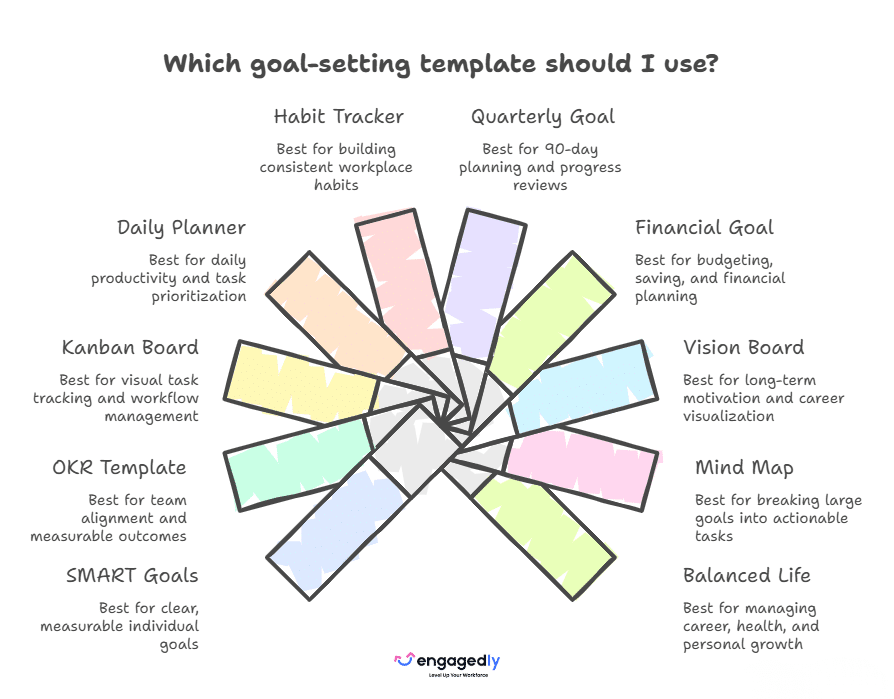
Which goal-setting template should you use?
Template
Best for
Suggested review rhythm
SMART goals
Individual performance goals
Monthly
OKRs
Company or team goals that need alignment
Weekly or biweekly
Annual goals
Yearly performance cycles
Quarterly
Quarterly goals
Breaking big goals into 90-day targets
Monthly
Team goals
Shared outcomes across a group
Biweekly
1:1 goal check-in
Manager and employee conversations
Every 1:1
Employee development
Skills, promotion and growth plans
Quarterly
Kanban board
Visual task and workflow tracking
Weekly
Habit tracker
Building daily work routines
Weekly
Daily planner
Day-to-day priorities
Daily
Why Is Goal-Setting Important for Employee Performance?
Goal-setting templates help employees turn broad expectations into clear, trackable actions. Instead of vague priorities, employees know what they are responsible for, how progress will be measured, and when goals will be reviewed.
Key Benefits of Goal Setting
Goal-setting templates improve performance because they make work easier to prioritize, measure, and manage.
1. Improved Focus and Productivity
A study shows that employees who have goals are 14.2 times more likely to stay inspired. They help you move forward in the right direction. This becomes even more effective when teams use a standardized employee goal setting template to define and track objectives.
When you prioritize tasks and are clear about what you have to do, you put all your energy into something that matters to you. Clear targets help you manage your time in meaningful progress rather than just time-wasting.
2. Clear Expectations and Accountability
When you define your goals clearly and definitely, you avoid the chance of misunderstanding or guesswork. When employees focus on established goals, they understand their targets and the next steps upon task completion. This enhances accountability and fosters confidence in their roles.
3. Better Collaboration and Alignment
When employees complete their tasks, fulfilling the objectives, they promote collaboration across the team. It becomes easier to manage work and move together towards shared goals.
What Are the Top 10 Free Goal-Setting Templates?
Here, we are discussing 10 highly effective employee goal-setting templates for different performance, productivity, and planning needs:
1. SMART Goals Template
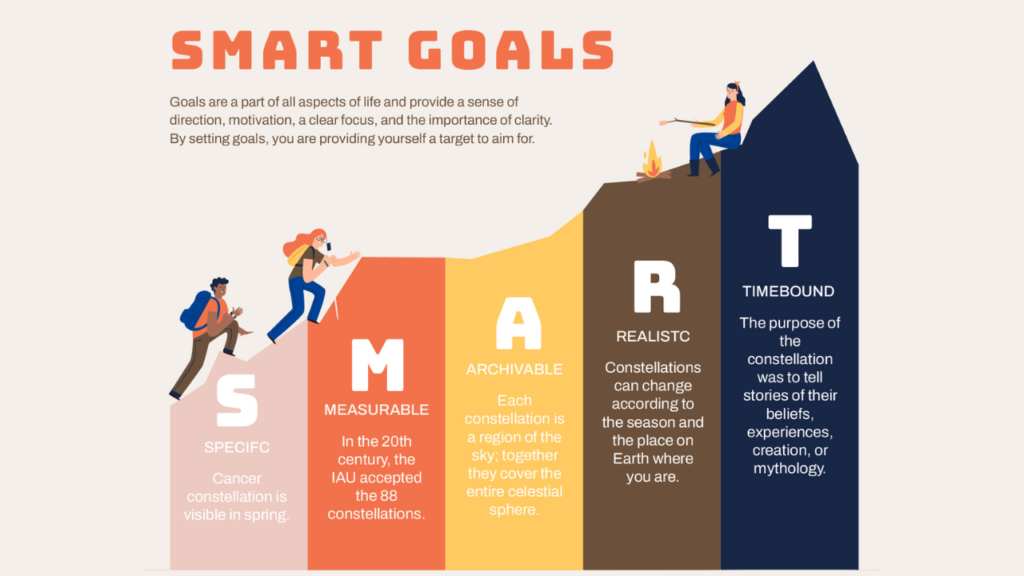
This structured template follows the SMART framework. That means: Specific, Measurable, Achievable, Relevant, and Time-bound. It helps users create actionable steps for their desired goals.
Criteria
Description
Example
Specific
Define your goal clearly with precise details on what you want to achieve.
“Increase website traffic by improving SEO content strategy.”
Measurable
Identify measurable indicators to track progress and success.
“Achieve a 20% increase in website traffic within 3 months.”
Achievable
Ensure the goal is realistic and attainable within your resources and constraints.
“Assign a dedicated team member to update 10 blog posts monthly.”
Relevant
Align the goal with broader business objectives or team priorities.
“Enhancing SEO supports the goal of improving lead generation.”
Time-bound
Set a deadline to create urgency and track progress effectively.
“Achieve the 20% traffic increase by the end of Q2.”
Features:
Prompts to define clear objectives and timelines.
A breakdown to measure progress and determine feasibility.
Sections to align goals with personal or professional priorities.
This SMART employee goal-setting template is perfect for creating structured objectives that employees can track and measure easily.
2. OKR (Objectives and Key Results) Template
The OKR method aligns larger objectives with measurable outcomes. It breaks large objectives into actionable tasks. Big tech companies like Google favor this system the most.
Quarterly or annual tracking for progress reviews.
Tips for Writing Effective OKRs
✅ Objectives should be clear, inspiring, and aligned with your business goals. ✅ Key Results must be measurable, specific, and outcome-focused. ✅ Use a progress tracking system like percentages (0-100%), traffic lights (🟢, 🟡, 🔴), or milestones.
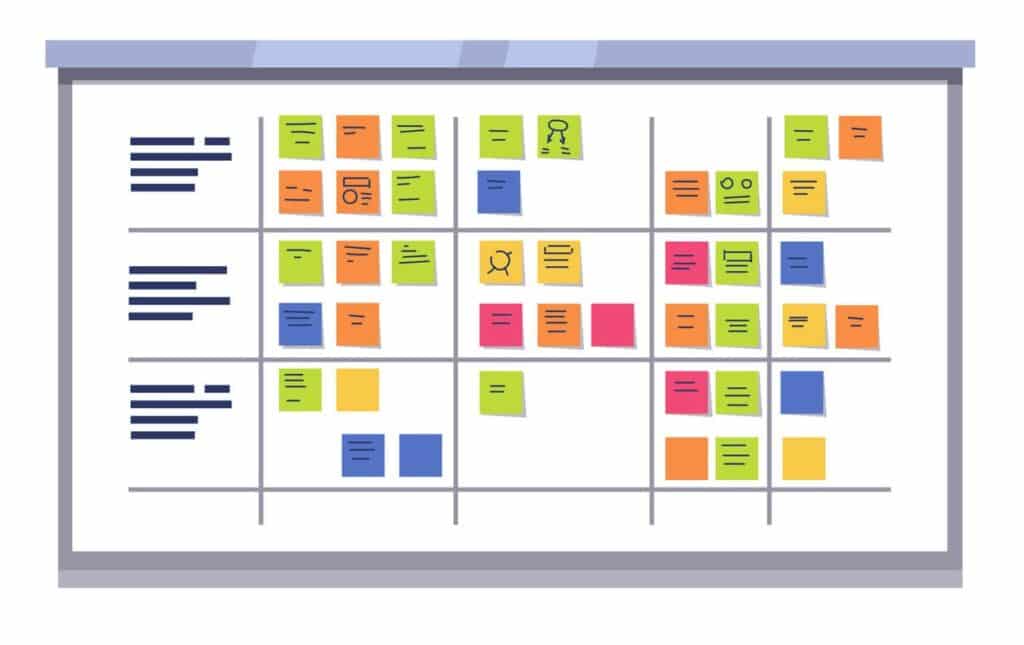
3. Kanban Board Template
This template has built-in visual designs. It divides tasks into different stages based on their completion, such as “To Do,” “In Progress,” and “Completed.” This makes it excellent for monitoring the workflow in each phase. It also ensures that a record of all the work is kept so that no action goes unnoticed.
✅ Identify key habits that improve your productivity. ✅ Use visual cues like colors or icons (✅ = Achieved, ❌ = Missed) to spot patterns. ✅ Reflect regularly to adjust your strategy for improved workflow and focus.
Features:
Monthly or weekly grids with checkboxes for each day.
Visual progress tracking, for example, color coding for completed habits.
Space for reflections or notes on challenges faced.
6. Quarterly Goal Template
This template breaks down annual goals into manageable 90-day increments, helping to promote sustained focus over a shorter period.
Sections for outlining goals, strategies, and metrics for each quarter.
Milestone tracking for continuous progress updates.
Reflection prompts to review successes and areas for improvement.
7. Financial Goal Tracker
This template focuses on managing finances effectively. It is most suitable for saving, investing, or paying off debt.
Features:
Sections to outline goals like savings, income, and expenses.
Charts or graphs to visualize financial progress.
Monthly and yearly trackers for budgeting.
8. Vision Board Template
This creative and inspiring template helps users visualize their goals through images, quotes, and affirmations.
Features:
Drag-and-drop functionality for adding pictures and text.
Categorized sections, such as career, health, and relationships.
Focus on long-term aspirations and dreams.
9. Mind Map Template
Mind maps organize complex ideas into simpler forms. It breaks down large goals into smaller and actionable tasks.
Features:
Central space for the main goal.
Branches for sub-goals and supporting tasks.
Visual format for brainstorming and prioritizing.
10. Balanced Life Goal Template
This holistic template helps users set goals in different areas of life, like career, relationships, health, and personal growth.
Features:
Separate sections for each life category.
Prompts for setting short-term and long-term goals.
Encourages focus on overall well-being.
Understanding their features and uses can help you select the best goal-setting template to align with your objectives and achieve success efficiently. To get the most from any employee goal-setting template, organizations must provide guidance, training, and routine feedback loops.
How Is Employee Goal Setting Changing in 2026?
Goal setting in 2026 is shorter-cycle, more visible and more conversational than the once-a-year form many teams grew up with. Here is what that looks like in practice.
Managers who set goals with employees, not for them, tend to get clearer buy-in and fewer surprises at review time.
Teams are pairing annual goals with quarterly targets and monthly check-ins, so goals can change when priorities do.
Hybrid and remote teams need goals stored in one shared place, so progress is visible without extra status meetings.
Employees increasingly use AI tools to draft goals. That is fine as a starting point, but managers should review the draft and make sure each goal measures an outcome and not just activity.
How Can You Implement Goal-Setting Templates Effectively?
Only having great templates does not mean you have achieved your goals. It is just half the battle. Implementation is the key to determining how you get the desired result. Here are some steps to maximize these templates’ effectiveness:
Training & Introduction: Organize training sessions, as they make companies 17% more productive. These sessions familiarize employees with the templates and their benefits and provide examples of how the templates can be used to achieve individual and team goals.
Integration with Tools: Sync templates with digital tools like Trello, Asana, or Google Sheets for seamless collaboration. Digital integration makes it easier to update and share goals.
Regular Reviews: Schedule regular check-ins to review progress and adjust goals when needed. Routine feedback ensures that employees stay on track and maintain accountability.
Feedback & Improvement: Encourage employees to share feedback on the templates. This helps refine this feedback over time. A collaborative approach by employees ensures the templates are relevant and effective.
Ease of Use: A good goal-setting template must be simple and easy to use. It should be designed so that employees can use it without any special training. A complicated and detailed template can discourage employees from adopting it.
Clarity: A good template should clearly outline the goal-setting process, including timelines, metrics, and actionable steps. This clarity helps employees make their goals actionable and achievable.
Customization: A rigid template is likely to be more achievable only if it fits a certain role, project, or department. Every team or even individual needs its template according to its needs.
Tracking and Progress: The template should be able to track regular updates and progress. Templates help monitor progress and identify areas for improvement. Visual tools like progress bars or color coding enhance usability.
Alignment: A good goal-setting template should align individual employee goals with organizational objectives. This alignment guarantees that all the employee’s input directly impacts the organization’s achievement.
With all these beneficial features, a goal-setting template becomes a valuable tool for employees and managers. This helps them more likely to accomplish their tasks with a well-designed template. This also leads to better outcomes for both individuals and teams.
Conclusion
Setting goals does not have to be complicated. The 10 free templates shared here are practical, easy to use, and designed to fit various needs, from personal development to team collaboration and performance reviews. With employee goal-setting templates like SMART goals and OKRs, teams can focus on what truly matters, track their progress, and stay motivated.
Remember, successful goal setting is more than just filling out a template. It is about creating a workplace culture where goals drive growth, collaboration, and innovation. Take the time to introduce these templates properly, adapt them to fit your team’s needs, and make them a part of everyday work routines.
If you are ready to take your goal-setting efforts to the next level, consider using a platform like Engagedly. It is designed to simplify performance management and enhance employee engagement. With features for goal setting, feedback, and more, Engagedly can help you build a high-performing team. Choosing the right employee goal-setting template ensures consistency, accountability, and long-term performance alignment.
A goal-setting template is a structured form that helps an employee and manager define a goal, choose a measure of success, set a deadline and plan how progress will be reviewed. It gives every goal the same format, which makes goals easier to compare, track and discuss.
What should an employee goal-setting template include?
At minimum it should include the goal itself, a success measure, a due date, the company or team priority it supports, and the support the employee needs. Many teams also add milestones, a status field and a notes section for check-ins.
How many goals should an employee have at one time?
Most managers aim for three to five goals per cycle. That is common practice and not a fixed rule, so adjust for the role. A new hire or someone with a heavy workload may do better with fewer.
What is the difference between SMART goals and OKRs?
SMART goals describe a single objective with a specific measure and deadline, and they work well for individual performance. OKRs pair a broader objective with a few measurable key results, and they work well when you want teams to align around shared priorities. Many companies use both, with OKRs at the team level and SMART goals for individuals.
How often should managers and employees review goals?
A monthly review is a good minimum, with a quick progress question in each 1:1. Quarterly is the longest gap most teams can afford before goals start to drift from reality. Annual reviews alone are too slow for most roles.
Can I use these templates in Google Sheets or Excel?
Yes. The tables in this guide can be copied into Google Sheets, Excel or a Word document and adjusted to your needs. If your team already tracks work in a project tool, you can recreate the same columns there so goals stay next to daily tasks.
Do goal-setting templates actually improve performance?
A template alone will not improve performance, but it makes good goal-setting habits easier to follow. Research such as the Dominican University goal-writing study suggests that writing goals down and sharing progress helps, though the study was small and self-reported. Results still depend on clear priorities and regular manager follow-up.
Gabby Davis is the Lead Trainer for the US Division of the Customer Experience Team. She develops and implements processes and collaterals related to the client onboarding experience and guides clients across all tiers through the initial implementation of Engagedly as well as Mentoring Complete. She is passionate about delivering stellar client experiences and ensuring high adoption rates of the Engagedly product through engaging and impactful training and onboarding.
















 Performance