A hospital may have complete employee records and still struggle to answer a practical question: who is developing the capabilities the organization will need next?
Learning records, performance reviews, career aspirations, and succession plans often sit in separate systems. Managers see only part of the picture, while employees struggle to understand how development connects with future opportunities.
Talent management software can help organize those processes. For healthcare organizations, the right choice needs to support clinical and non-clinical roles, varied working patterns, and the critical positions where a vacancy or capability gap would be difficult to manage.
This guide compares 10 talent management platforms for healthcare employers. The focus is on employee development and the talent lifecycle, with clear distinctions between broad HR suites, learning-centered platforms, and connected employee growth tools.
Key Takeaways
Engagedly connects performance, learning, listening, recognition, and talent mobility through its AI Talent Suites.
Workday, Oracle, SAP SuccessFactors, UKG Pro, and Dayforce are worth evaluating for broader enterprise HR and talent environments.
Cornerstone emphasizes learning and talent development, while symplr and HealthStream bring healthcare-focused workforce portfolios.
ClearCo connects several stages of the employee lifecycle, including hiring, performance, and development.
Define critical roles, development needs, data ownership, and integration requirements before comparing feature lists.
Confirm how specialist clinical requirements remain supported; a broad talent platform does not automatically replace every healthcare system.
Best Healthcare Talent Management Software at a Glance
Software
Best for
Capabilities to evaluate
Pricing approach
1. Engagedly
Connected employee growth across talent processes
Performance and feedback, Learning experience and development
Request current package and quote
2. Workday
Enterprise talent management in a Workday environment
Performance and talent review processes, Feedback and check-ins
Request current package and quote
3. Oracle Fusion Cloud HCM
Talent management within an enterprise Oracle environment
Performance and development, Learning and career processes
Request current package and quote
4. SAP SuccessFactors
Skills-based talent management at enterprise scale
Talent lifecycle processes, Learning and performance
Request current package and quote
5. Cornerstone
Learning-centered talent development
Performance management workflows, Goal and feedback processes
Request current package and quote
6. UKG Pro
Talent processes connected with HR and workforce management
Employee performance reviews, Coaching and development workflows
Request current package and quote
7. symplr
Healthcare-focused workforce talent processes
Healthcare employee evaluations, Employee goals and development
Request current package and quote
8. HealthStream
Healthcare workforce learning and development
Healthcare performance assessments, Assessment assignments and review steps
Request current package and quote
9. ClearCo
Connecting hiring, performance, and development
Self and manager reviews, Peer and 360-degree feedback
Request current package and quote
10. Dayforce
Talent development connected with broader workforce operations
Performance and learning, Employee development
Request current package and quote
Pricing depends on workforce size, products, services, integrations, and contract terms. Product information was reviewed in November 2026.
10 Best Talent Management Software for Healthcare
1. Engagedly — Connected employee growth across talent processes
Best for: Connected employee growth across talent processes.
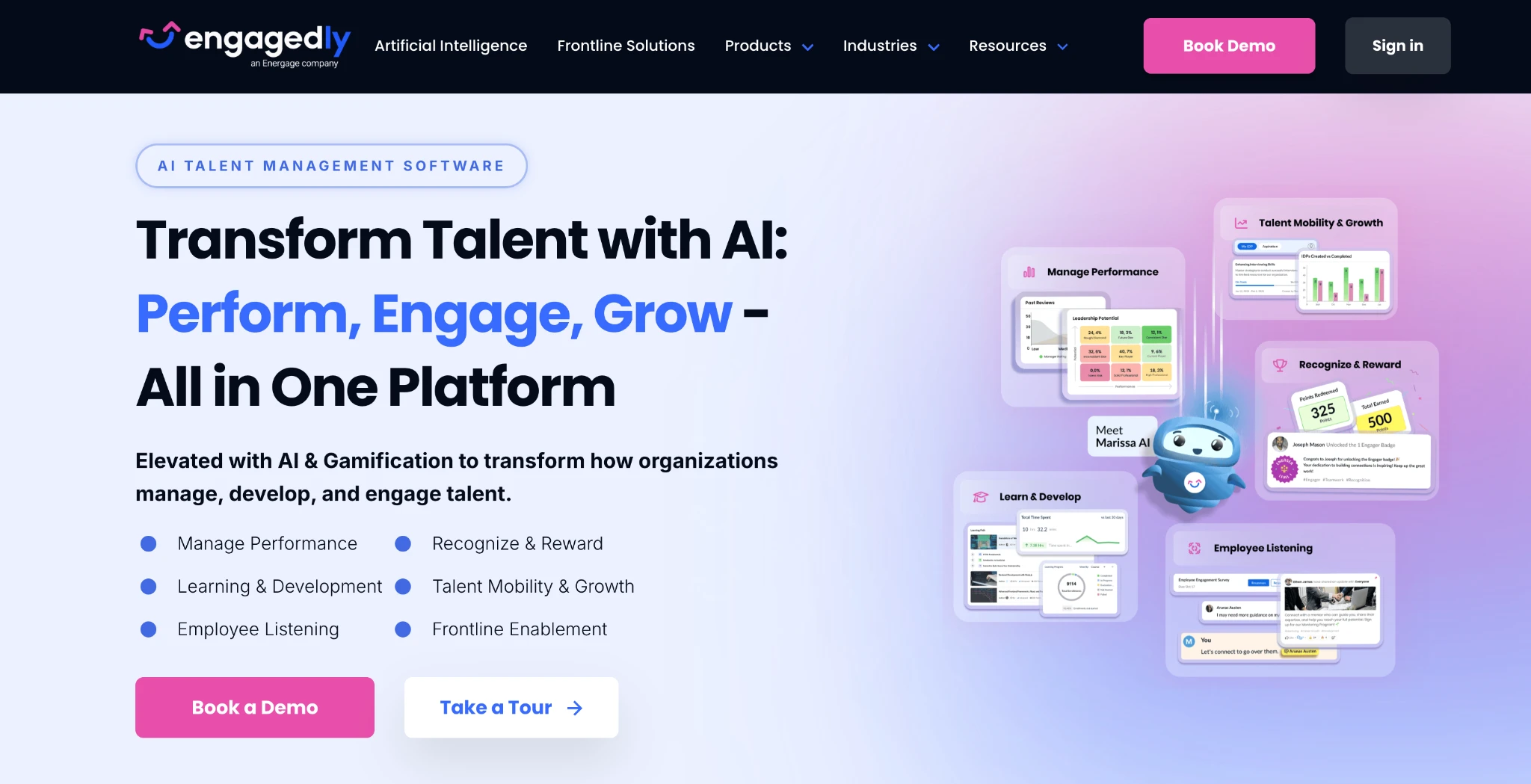
Engagedly’s AI Talent Suites cover performance, learning experience, recognition and rewards, employee listening, and talent mobility. Organizations can connect development priorities with the processes employees and managers use throughout the year.
A healthcare employer could identify a development need, agree on an individual plan, connect relevant learning and manager support, and revisit progress. Evaluate the exact suites and data connections needed for your workforce.
Key features
Performance and feedback
Learning experience and development
Recognition and employee listening
Talent mobility and succession planning
Pros: Useful when talent management should connect employee development across several complementary processes.
Cons: Confirm suite boundaries, integrations, and specialist clinical requirements before defining the deployment.
Pricing: Request a current proposal for the selected products, employee coverage, implementation, and integrations.
2. Workday — Enterprise talent management in a Workday environment
Best for: Enterprise talent management in a Workday environment.
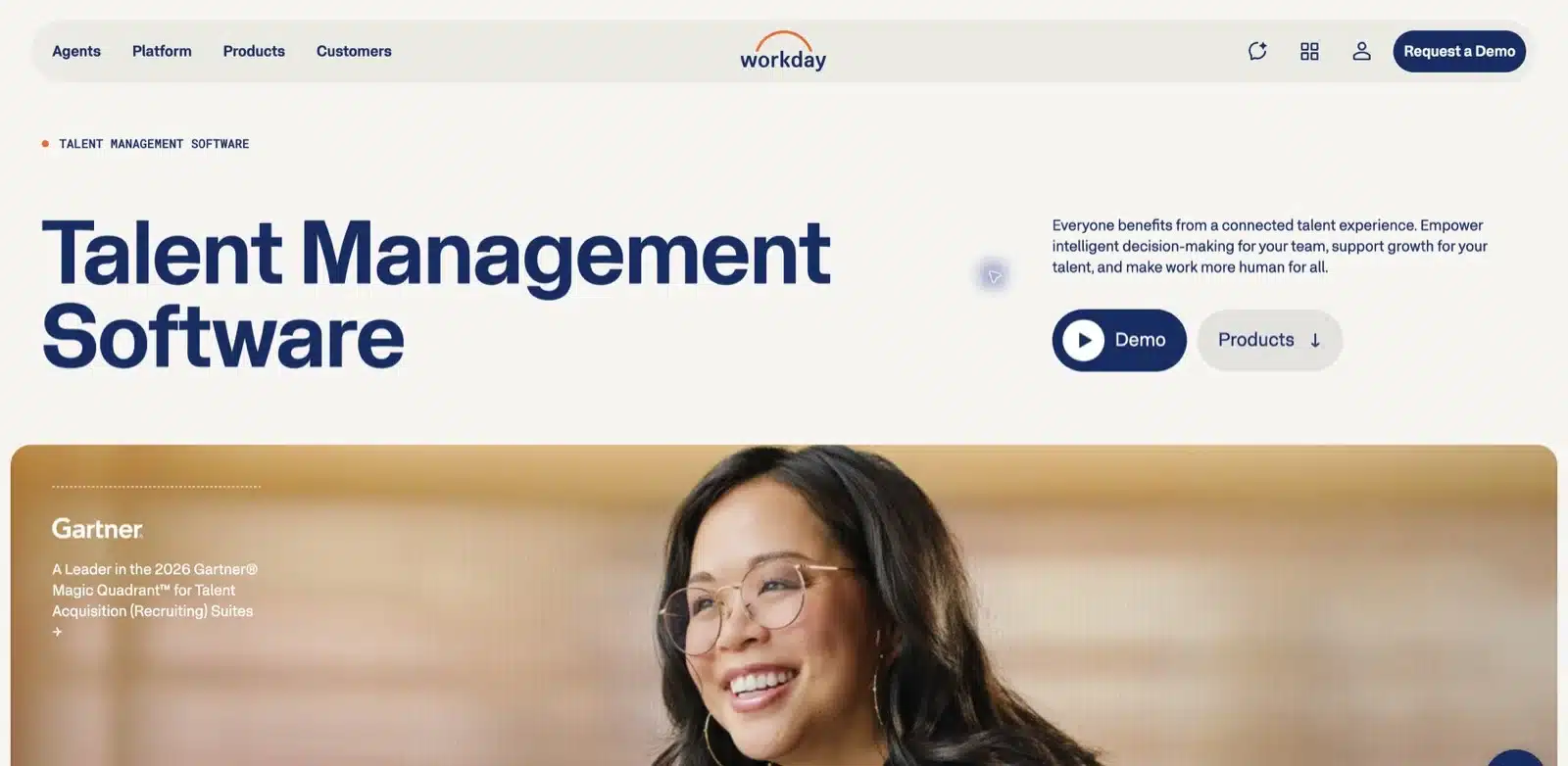
Workday combines recruiting, employee skills, performance, development, and talent processes within a broader HR environment. It is relevant to healthcare employers coordinating talent information and growth across a large workforce.
A health system could evaluate how employee skills and aspirations connect with development discussions and internal opportunities. Test data quality, manager access, reporting, and the effort required to maintain role information.
Key features
Performance and talent review processes
Feedback and check-ins
Employee skills and development context
Connections with wider Workday HR data
Pros: Worth evaluating when the organization already relies on Workday and wants a coordinated talent process.
Cons: Confirm configuration, deployment effort, and licensing. Enterprise breadth can exceed the needs of a team seeking only simple annual appraisals.
Pricing: Request a current proposal for the selected products, employee coverage, implementation, and integrations.
3. Oracle Fusion Cloud HCM — Talent management within an enterprise Oracle environment
Best for: Talent management within an enterprise Oracle environment.
Oracle Talent Management connects recruiting, performance, learning, career development, talent review, and succession within its broader HCM environment. It is relevant to large healthcare organizations seeking a coordinated approach to employee information and talent processes.
A health system could evaluate how employee profiles and development information support talent discussions across facilities. Demonstrate the actual workflows, permissions, and reporting using the proposed products rather than a generic suite overview.
Key features
Performance and development
Learning and career processes
Talent reviews and succession planning
Connections with wider Oracle HCM
Pros: Relevant when enterprise talent processes should share context with the organization’s wider HR environment.
Cons: Confirm licensing, configuration, implementation effort, and integration responsibilities.
Pricing: Request a current proposal for the selected products, employee coverage, implementation, and integrations.
4. SAP SuccessFactors — Skills-based talent management at enterprise scale
Best for: Skills-based talent management at enterprise scale.
SAP SuccessFactors offers talent management across recruiting, learning, performance, and career development. Its Career and Talent Development offering brings succession, development, and opportunity marketplace capabilities together.
A healthcare organization could assess how job and skills information supports development and internal opportunities. Test the employee experience, manager workflow, and governance of role expectations across different professional groups.
Key features
Talent lifecycle processes
Learning and performance
Career and talent development
Skills and succession context
Pros: Worth evaluating for large employers coordinating a broader SAP SuccessFactors talent environment.
Cons: Verify the current product packaging and deployment scope, including data readiness and administrative capacity.
Pricing: Request a current proposal for the selected products, employee coverage, implementation, and integrations.
5. Cornerstone — Learning-centered talent development
Best for: Learning-centered talent development.
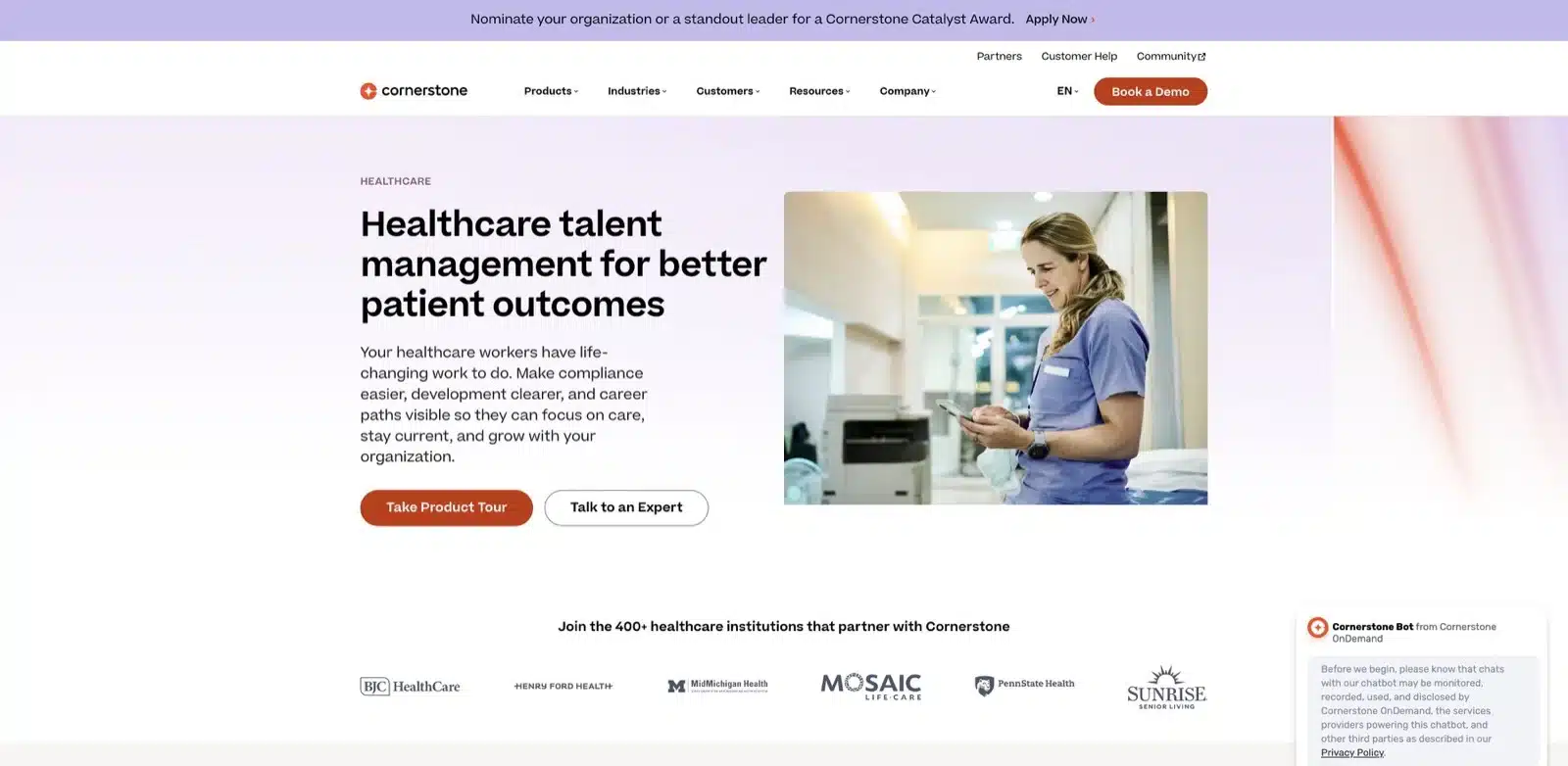
Cornerstone connects learning with performance management, succession planning, and talent marketplace capabilities. Its healthcare offering makes it relevant when workforce development and skills readiness are central to the talent strategy.
A healthcare employer could connect an identified development priority with learning and later talent discussions. Demonstrate the specific products, reporting, and employee experience proposed for different roles.
Key features
Performance management workflows
Goal and feedback processes
Development planning
Connections with learning and talent tools
Pros: An option when review administration is part of a broader enterprise learning and talent development program.
Cons: Compare package boundaries and implementation effort carefully. A broad portfolio may require more configuration than a standalone review tool.
Pricing: Request a current proposal for the selected products, employee coverage, implementation, and integrations.
Connect performance with employee development
Explore Engagedly’s approach to talent management for healthcare organizations building capability across critical roles.
6. UKG Pro — Talent processes connected with HR and workforce management
Best for: Talent processes connected with HR and workforce management.
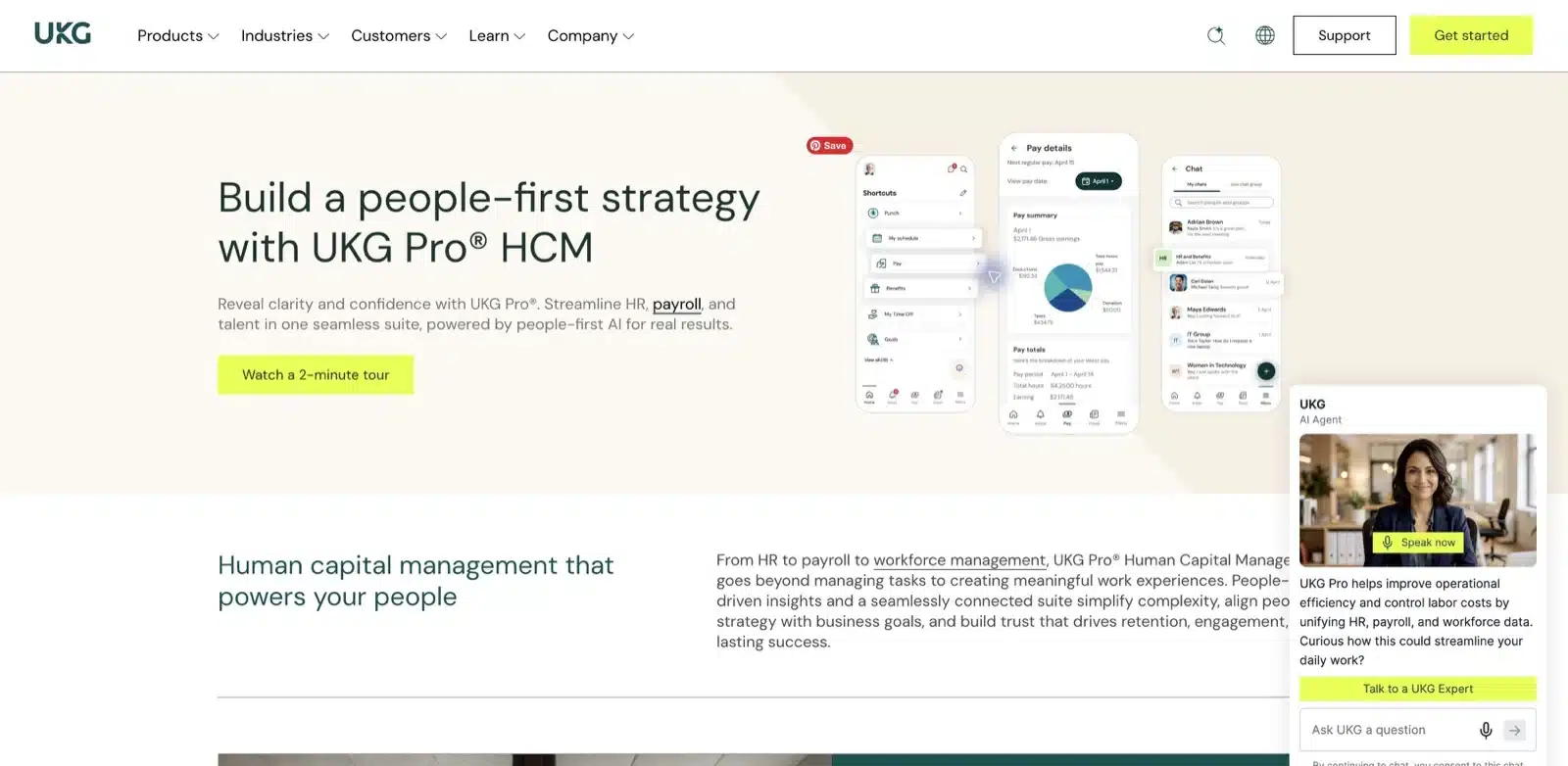
UKG Pro combines core HR, payroll, talent, and workforce management. Its talent offering is relevant when employee performance, development, and succession need to sit alongside broader workforce information.
For an existing UKG employer, test how manager assignments, employee records, and development information move through the talent process. Confirm the current UKG Pro bundle and keep it distinct from UKG Ready.
Key features
Employee performance reviews
Coaching and development workflows
Goals and feedback
Connections with the wider UKG Pro environment
Pros: Relevant when the organization wants talent processes connected with its existing UKG HR operations.
Cons: Confirm the exact UKG product and bundle. UKG Pro and UKG Ready have different offers and should not be treated as interchangeable.
Pricing: Request a current proposal for the selected products, employee coverage, implementation, and integrations.
Best for: Healthcare-focused workforce talent processes.
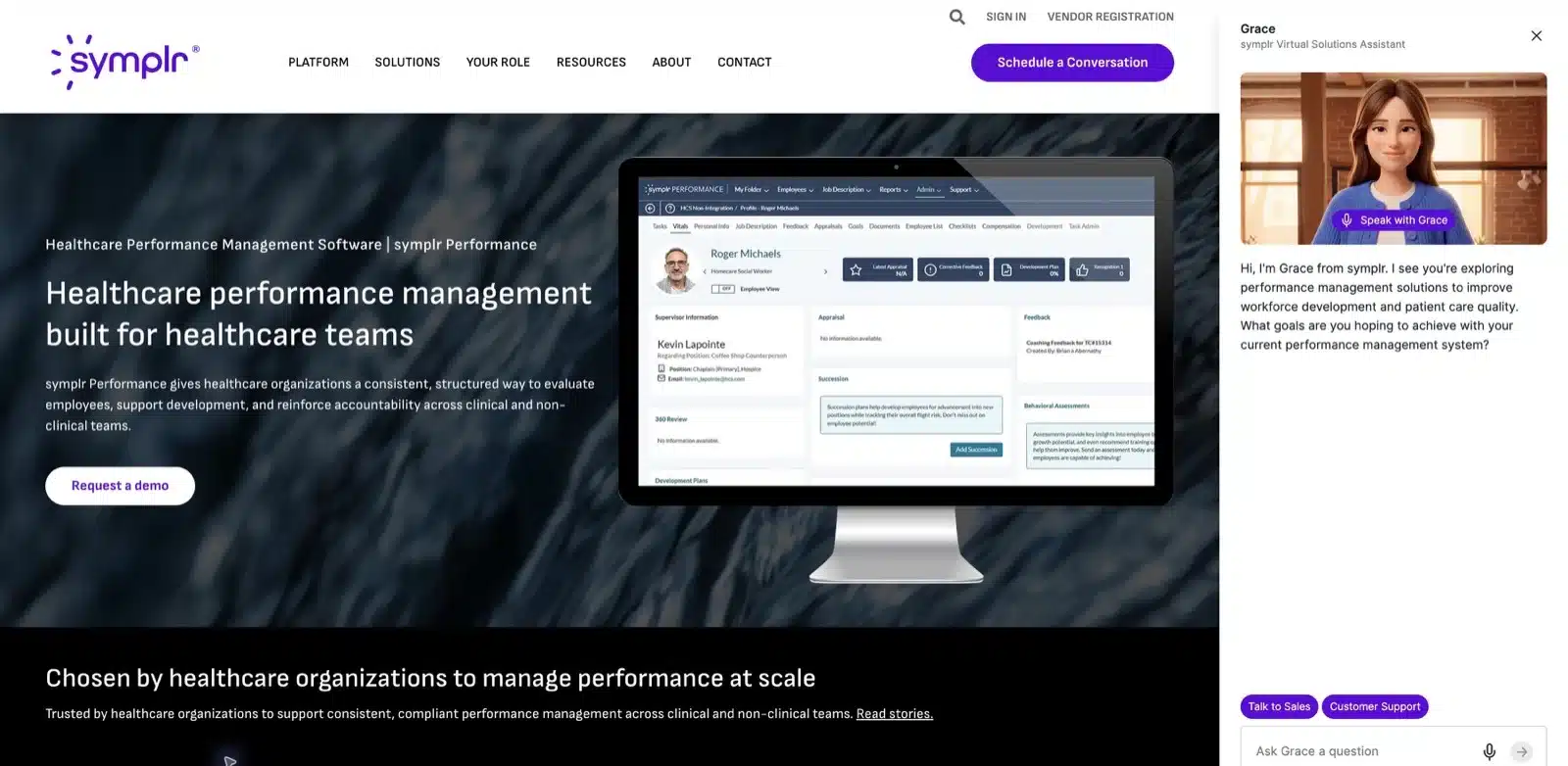
symplr’s talent management portfolio brings a healthcare focus to recruiting, learning, employee performance, and development. Different products support different parts of the talent lifecycle, so the proposed combination matters.
A health system could compare how performance and learning information support development for clinical and non-clinical staff. Ask which products share data, what requires integration, and how administrators maintain the workflow.
Key features
Healthcare employee evaluations
Employee goals and development
Workflow automation
Performance visibility across departments
Pros: A healthcare-focused option for organizations that want appraisal administration within a specialist workforce environment.
Cons: Confirm integration responsibilities, form flexibility, reporting access, and which related symplr products are required.
Pricing: Request a current proposal for the selected products, employee coverage, implementation, and integrations.
8. HealthStream — Healthcare workforce learning and development
Best for: Healthcare workforce learning and development.
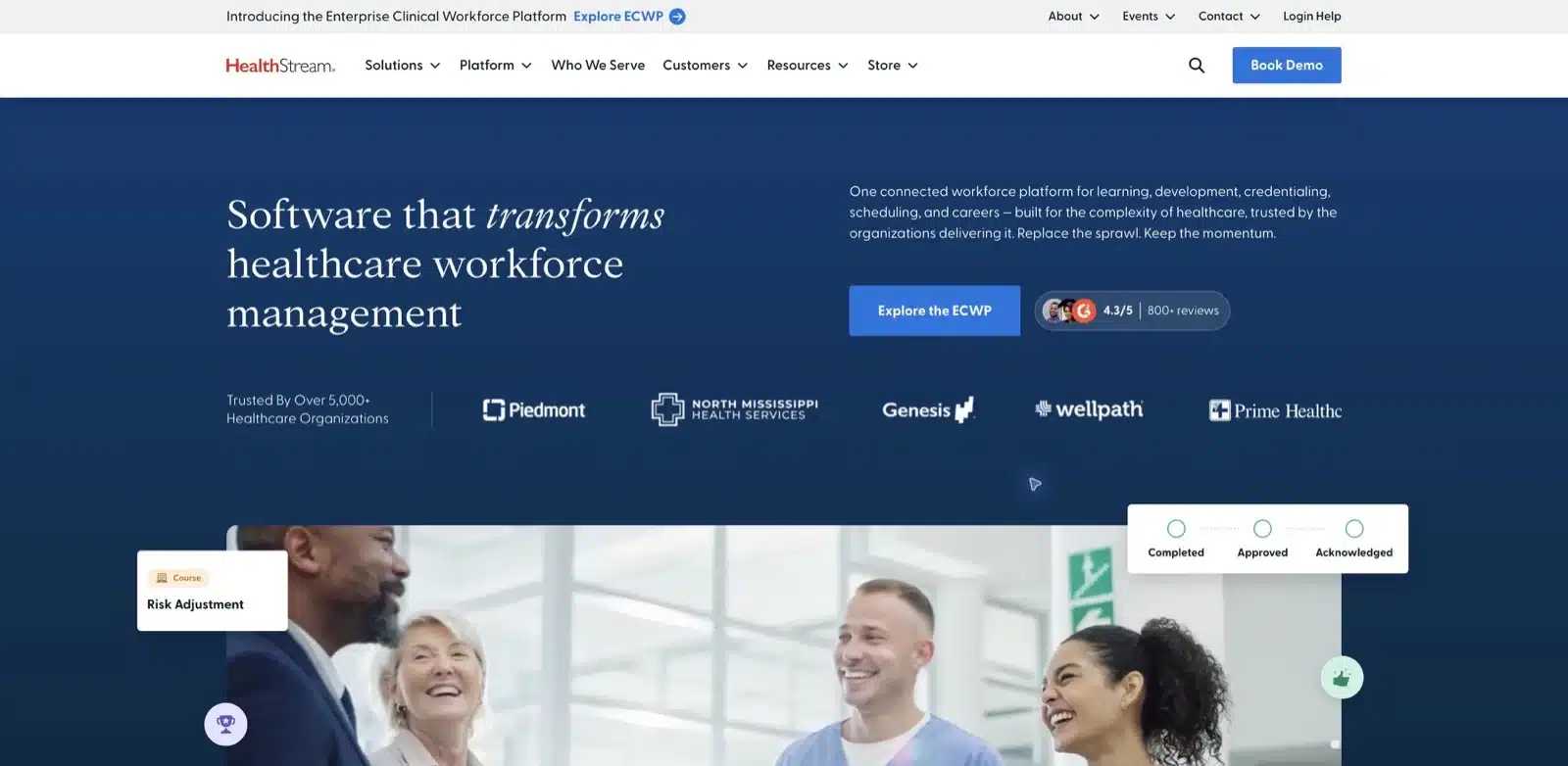
HealthStream offers a healthcare workforce platform spanning learning, development, credentialing, scheduling, and careers. Its portfolio is relevant when clinical workforce development and learning are central to the organization’s talent priorities.
A healthcare employer should map the products needed for learning, performance assessment, and broader workforce development. Demonstrate actual data connections and responsibilities rather than assuming the portfolio is a single interchangeable workflow.
Key features
Healthcare performance assessments
Assessment assignments and review steps
Employee review and sign-off
Connections with workforce development
Pros: Worth evaluating for healthcare organizations already coordinating learning and development through HealthStream.
Cons: Confirm current product packaging, assessment configuration, reporting, and integration boundaries before choosing the deployment.
Pricing: Request a current proposal for the selected products, employee coverage, implementation, and integrations.
9. ClearCo — Connecting hiring, performance, and development
Best for: Connecting hiring, performance, and development.
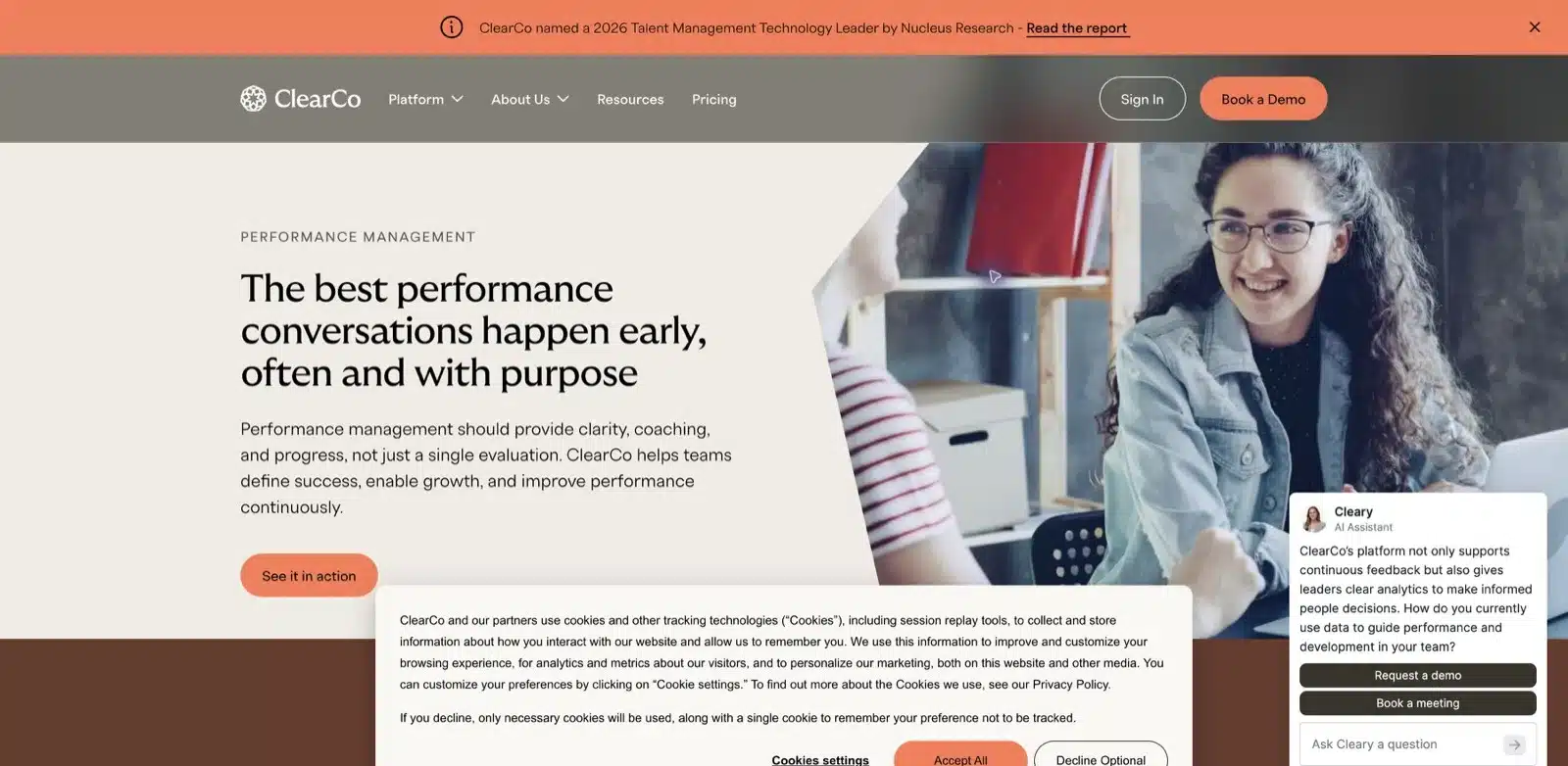
ClearCo, formerly ClearCompany, offers talent capabilities spanning recruiting, onboarding, performance, learning, and engagement. It is relevant when employers want to connect talent processes across more of the employee lifecycle.
A healthcare organization could evaluate how the employee journey moves from hiring and onboarding into performance and development. Test the relevant products, reporting, and integrations with existing HR and specialist systems.
Key features
Self and manager reviews
Peer and 360-degree feedback
Goals and ongoing check-ins
AI assistance within review forms
Pros: Relevant when an organization wants structured reviews connected with ongoing performance information.
Cons: Confirm the required products, configuration, integrations, and how role-specific criteria are maintained over time.
Pricing: Request a current proposal for the selected products, employee coverage, implementation, and integrations.
10. Dayforce — Talent development connected with broader workforce operations
Best for: Talent development connected with broader workforce operations.
Dayforce offers talent management capabilities covering development, performance, learning, succession, and employee feedback within its wider HR environment. It is relevant when employers want employee growth and workforce information connected.
A healthcare employer could evaluate how performance and learning information inform career discussions and succession plans. Confirm the capabilities and employee groups included in the deployment and how the system works alongside clinical applications.
Key features
Performance and learning
Employee development
Succession planning
Connections with wider workforce information
Pros: Relevant when the organization wants talent processes connected with its Dayforce environment.
Pricing: Request a current proposal for the selected products, employee coverage, implementation, and integrations.
What Is Talent Management Software for Healthcare?
Talent management software helps healthcare employers coordinate processes such as recruiting, onboarding, performance, learning, career development, employee engagement, and succession. The scope varies: some products focus on employee growth, while broader suites also include core HR, payroll, and workforce operations.
The purpose is to make talent decisions and development more coherent. Managers should be able to understand expectations and support growth, employees should see practical next steps, and HR should be able to identify gaps that require attention.
Choose against the problem you need to solve. Replacing manual review forms is a different project from connecting learning with career pathways or coordinating talent information across a health system.
Why Critical Roles Need a Connected Approach
Identify the roles that require continuity
A critical role is a position where a vacancy or capability gap would create a significant operational challenge. It may be a leadership position, a specialist role, or a less visible job that carries essential knowledge.
Define criticality with the responsible leaders. Consider the role’s impact, scarcity, time to develop capability, and available coverage. Avoid assuming that the highest-ranking positions are the only ones that matter.
Understand current capability and future needs
Reliable talent discussions need clear role expectations and useful employee information. Review the skills and experience needed, the evidence available, and the development employees want to pursue.
A platform can organize that information, but incomplete profiles or unclear role definitions will limit its value. Decide who maintains the data and how it is reviewed before relying on a dashboard.
Turn development into practical support
A development plan should describe a capability to build, the activity that will help, the support available, and when progress will be discussed. It should be specific enough for the employee and manager to act on.
Relevant activities may include learning, mentoring, supervised experience, or a defined project. Match the activity to the role and keep established clinical requirements and approvals intact.
Features to Prioritize
Employee profiles and role context
Check whether the platform represents job families, skills, experience, aspirations, and organizational relationships in a useful way. Demonstrate an employee transfer or manager change so you can see how the information stays current.
Clarify the source of each field and who can edit it. Avoid creating a second employee record that gradually diverges from the authoritative HR system.
Performance and development connections
Review outcomes should inform an ongoing conversation, not disappear after sign-off. Ask how managers connect an identified development need with a plan, support, and a later review of progress.
Employees need a realistic path from identifying a development need to finding support. Test how the platform connects learning, experience, and career opportunities with a specific goal.
For the training side of the decision, compare our guide to healthcare LMS platforms. Learning administration and broader talent management may require complementary capabilities.
Talent reviews and succession coverage
Where succession is in scope, ask how the platform represents critical roles, potential successors, readiness, and development. Check visibility and permissions carefully because talent discussions can contain sensitive employee information.
A readiness label should have an agreed meaning and supporting evidence. It should not be treated as an automatic promotion decision or a replacement for role requirements.
A Practical Evaluation Checklist
Area
What to demonstrate
What a useful result looks like
Employee information
Update a role, manager, or profile field
Clear ownership and consistent records
Development
Turn a review priority into a plan
A relevant activity, support, owner, and review date
Learning
Find support for an agreed capability
Employees understand the next step
Talent review
Discuss a critical role and development pipeline
Evidence, readiness definitions, and appropriate access
Reporting
Review gaps across teams and locations
Information leads to a clear action or decision
Build a more connected approach to healthcare talent
Discuss how performance, learning, and employee development can fit together around your workforce priorities.
Start with a limited set of outcomes. For example, you may want more consistent development plans, better visibility of internal capability, or a clearer process for critical-role coverage. Define success in terms of those outcomes.
Map the current systems and their responsibilities. Include HR records, learning, performance, credentialing, competency assessment, recruitment, and workforce operations where relevant. Decide which information should move between systems and which records remain authoritative.
Pilot the proposed workflow with employees, managers, HR, and IT. Include clinical and non-clinical teams and people with different working patterns. Ask participants to use the system rather than watch a presentation.
Compare costs using the same scope. Separate subscriptions, implementation, data preparation, integrations, training, support, and advisory services. Confirm who will maintain the platform after launch.
How We Compared These Platforms
We reviewed public product pages, healthcare solution information, documentation, and current product positioning. The comparison considers talent lifecycle coverage, employee growth, healthcare relevance, critical-role planning, and connections across HR processes. Portfolio breadth does not imply that every capability is included in one package.
Frequently Asked Questions
What is the best talent management software for healthcare?
The right fit depends on the organization’s systems and priorities. Engagedly is relevant when employee growth should connect across performance, learning, recognition, listening, and mobility. Enterprise suites and healthcare-focused portfolios offer different strengths and deployment requirements.
How is talent management different from core HR?
Core HR manages foundational employee and organizational records. Talent management focuses on attracting, developing, supporting, and retaining employees. Broad HCM suites may include both.
Can one platform cover clinical and non-clinical employees?
It can when the configuration and access methods fit both groups. Test contrasting roles, expectations, workflows, and working patterns before making that assumption.
Does talent management software replace credentialing?
Not automatically. Confirm specialist requirements, records, assessment methods, and integrations. A broader talent platform and clinical systems may serve complementary purposes.
How should hospitals identify critical roles?
Consider operational impact, scarcity, development time, and available coverage with the responsible leaders. Include specialist and support positions as well as leadership roles.
Where should an organization start?
Choose one clear talent problem, define the information and workflow needed, and pilot it with representative users. Expand after the organization can maintain the process and demonstrate value.
How can Engagedly support healthcare talent development?
Engagedly connects complementary talent processes through its AI Talent Suites. Review the healthcare solution or request a demo centered on your employee development and critical-role priorities.
Jeevithan K is a Senior Solutions Consultant at Engagedly with extensive experience in HR technology, customer success, product implementation, onboarding, and training. He specializes in helping organizations adopt B2B SaaS and enterprise AI solutions effectively. His expertise also includes project management, account management, process improvement, and translating complex product capabilities into practical solutions that deliver meaningful value for customers.







 Innovative