You’re reviewing staffing and budgets when a department head raises another concern: new hires still have training to complete, several certifications are coming up for renewal, and the team needs records for an upcoming audit.
You need a clear picture of what’s outstanding, who needs support, and whether managers have time to follow through. Meanwhile, patient care continues, shifts need covering, and budgets remain tight.
A healthcare LMS can help bring those responsibilities into one place. The right learning management system for healthcare makes onboarding easier to coordinate, training gaps easier to spot, and records easier to retrieve. It should also help employees build the skills to take on greater responsibility.
This guide compares 12 platforms, their strengths, pricing models, and best-fit scenarios to help you choose a system that supports your teams and your organization’s priorities.
Quick Comparison: 12 Best Healthcare LMS Platforms
Platform
Best for
Key strength
G2 rating
Engagedly
Learning connected to performance and development
Learning paths, development plans, and performance alignment
4.3/5
Relias
Clinical education and compliance
Healthcare content and continuing education
4.0/5
HealthStream
Hospitals and health systems
Healthcare learning administration and education ecosystem
4.4/5
MedTrainer
Compliance operations
Learning, policies, and credentialing in one platform
4.4/5
TalentLMS
Fast training rollout
Straightforward course delivery and administration
4.6/5
Absorb LMS
Enterprise learning programs
Scalable administration and learner experience
4.6/5
Docebo
Large organizations with multiple audiences
Personalization, automation, and integrations
4.3/5
iSpring Learn / iSpring LMS
Teams creating their own courses
Authoring ecosystem and structured training
4.6/5
SkyPrep
Distributed and multi-site teams
Accessible administration and separate training environments
4.6/5
Tovuti LMS
Branded, customizable learning
Interactive authoring and learner portals
4.6/5
Cornerstone
Enterprise talent and learning strategies
Compliance learning connected to workforce development
4.1/5
Moodle
Custom builds with technical support
Open-source flexibility and ownership
4.1/5
12 Best Healthcare LMS Platforms
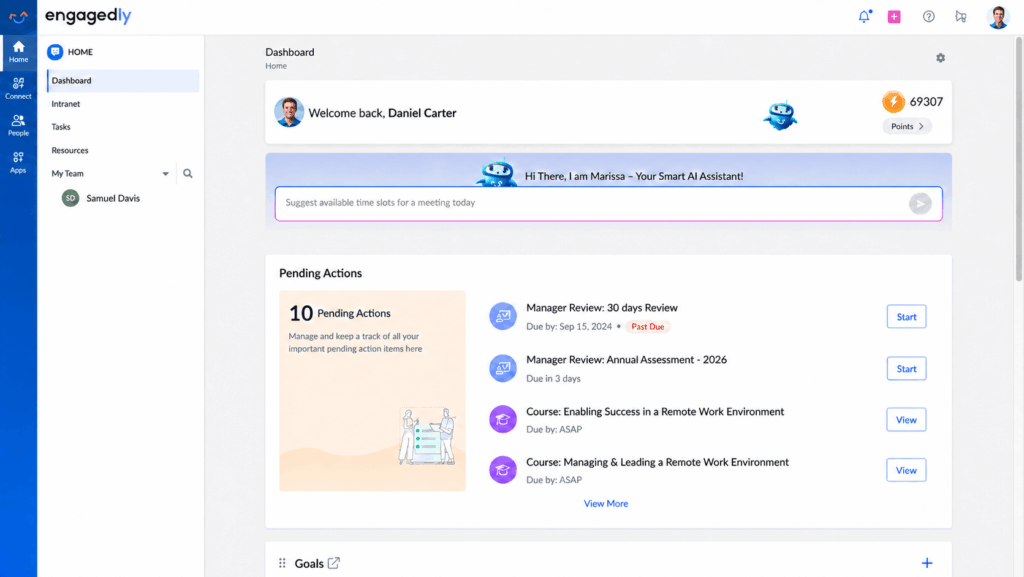
1. Engagedly — Best for Connecting Learning With Performance and Development
Verdict: Engagedly is a strong choice for healthcare organizations that want required training and ongoing employee growth within a connected talent-development strategy.
Best for: Healthcare HR and learning teams prioritizing onboarding, upskilling, manager development, and career growth.
Engagedly’s Learning Suite includes LMS capabilities within its learning experience platform. Its appeal is the connection between what employees learn, the capabilities they need, and their development goals.
For example, a healthcare organization could build a development program for new supervisors around communication, coaching, and team leadership, alongside structured learning assignments.
Key features:
Structured learning paths and learning recommendations.
Assessments, certification, and compliance tracking.
Pros: Connects learning with performance conversations and career development. Suits organizations seeking a consistent approach to employee growth beyond mandatory training.
Cons: Organizations needing specialty clinical libraries, board-specific CE reporting, or observed clinical sign-offs should validate those workflows during the demo.
Pricing: The Learning Suite lists 3–5 per user per month, billed annually. Engagedly states a $7,500 annual minimum, with pricing affected by employee count and bundling. Engagedly pricing.
G2 rating: 4.3/5 for Engagedly overall.
2. Relias — Best for Clinical Education and Compliance
Verdict: Relias deserves a place on the shortlist when healthcare-specific education and continuing learning are central requirements.
Best for: Care providers seeking clinical content, compliance education, and continuing education across healthcare and human services.
The Relias LMS combines training administration with healthcare-focused learning resources. It supports organizations that want to source education and manage assignments through a connected platform.
Key features:
Role-based training assignments and learning paths.
Pros: Strong alignment with clinical education needs. Healthcare content can reduce the amount of training an internal team needs to create.
Cons: Buyers must map content packages and accreditation coverage to their workforce; library breadth alone does not establish suitability.
Pricing: Custom quote. Request separate details for the platform, content, assessments, and implementation.
G2 rating: 4.0/5.
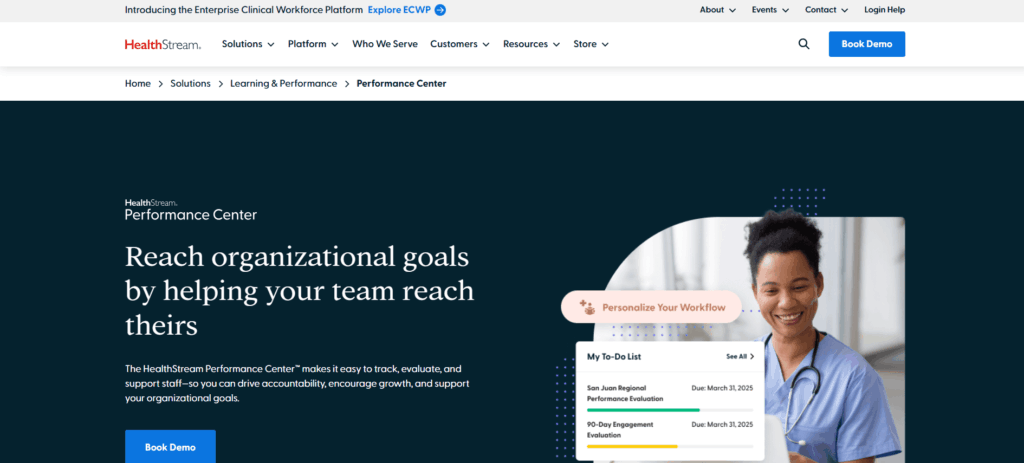
3. HealthStream — Best for Hospitals and Health Systems
Verdict: HealthStream is a strong candidate for hospitals coordinating substantial healthcare education programs.
Best for: Hospitals and health systems with dedicated education teams and multiple workforce learning needs.
The HealthStream LMS, including its Learning Center offering, focuses on administering required education across healthcare workforces. Its wider ecosystem gives buyers additional learning and workforce products to evaluate.
Key features:
Administration and monitoring of required training.
Learning assignments and education records.
Healthcare-focused learning infrastructure.
Complementary learning-experience capabilities.
HealthStream positions Learning Center around compliance, consistency, and administrative efficiency, with Learning Experience supporting personalization and learner engagement. HealthStream Learning Center.
Pros: Healthcare-specific focus and an established education ecosystem. Worth considering for organizations standardizing learning across hospital departments.
Cons: Buyers need a precise package definition. Confirm which content, competency tools, integrations, and learner-experience products are included.
Pricing: Request a custom quote covering the LMS, selected content, implementation, and connected products.
G2 rating: 4.4/5.
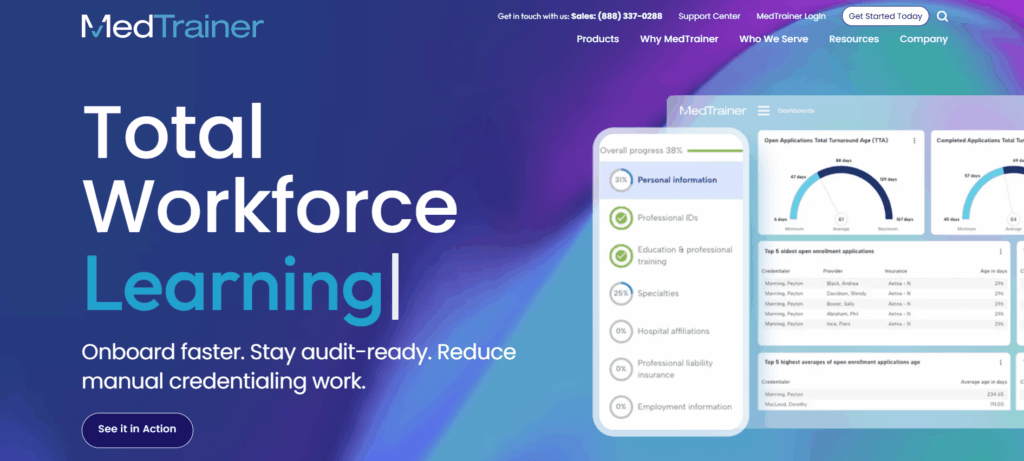
4. MedTrainer — Best for Compliance-First Organizations
Verdict: MedTrainer is particularly relevant when training needs to sit alongside policy management and provider credentialing.
Best for: Healthcare organizations seeking a unified approach to learning and compliance operations.
MedTrainer’s healthcare learning platform connects training with broader administrative workflows. That makes it useful to evaluate when education records, policies, and credentialing information currently live in separate systems.
Key features:
Healthcare-specific courses and continuing education options.
Role-specific onboarding workflows.
Training reports by role or location.
Connections with policy management and credentialing.
Its learning offering includes proprietary healthcare content and customizable reporting. MedTrainer Learning.
Pros: Brings several related compliance functions together. Healthcare-focused content can simplify required-course sourcing.
Cons: A broad compliance platform requires careful scope definition; buyers should identify which functions they need before comparing packages.
Pricing: Custom quotes across Select, Premier, and Signature tiers. Pricing depends on licensed users, modules, and content requirements. MedTrainer pricing.
G2 rating: 4.4/5.
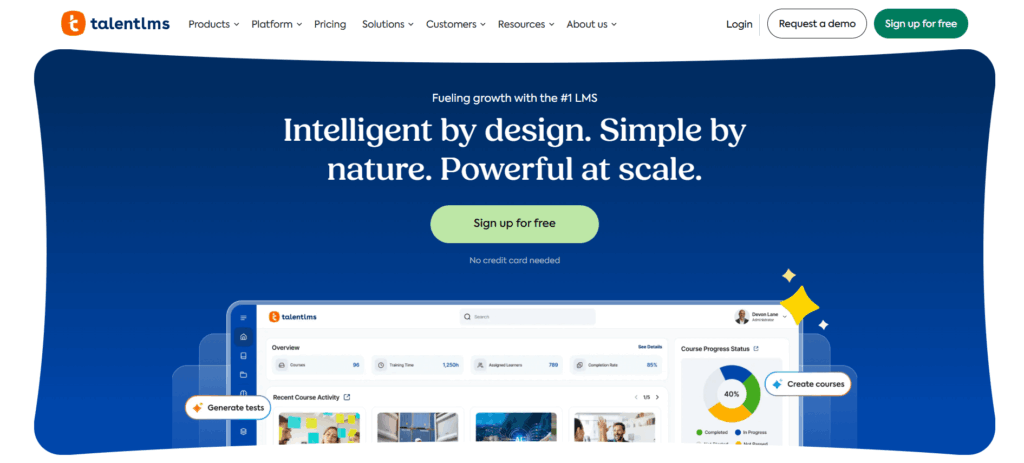
5. TalentLMS — Best for Fast Training Rollout
Verdict: TalentLMS is a practical option for healthcare teams seeking straightforward course delivery and manageable administration.
Best for: Clinics, smaller provider groups, and organizations building a structured training program.
TalentLMS offers general learning-management capabilities that healthcare organizations can configure around their own content and policies. It is worth evaluating when ease of launch matters more than purchasing a specialist clinical education ecosystem.
Key features:
Learning paths and course-assignment automation.
Reports and analytics.
SSO and API access.
Branches for organizing separate training experiences.
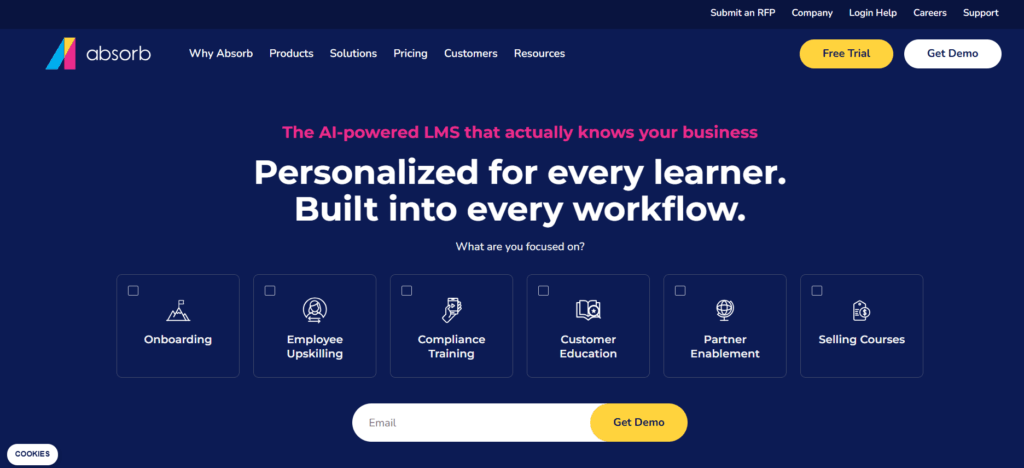
Absorb’s healthcare offering covers onboarding, compliance, frontline learning, and upskilling. It is worth considering when an organization needs one broader learning environment for clinical and nonclinical audiences. Absorb for healthcare.
Key features:
Learning administration and training tracking.
Onboarding and upskilling support.
Mobile learning.
Observation checklists accessible through its mobile app.
Pros: Combines enterprise learning delivery with practical assessment options. Suitable for evaluating a shared platform across multiple workforce groups.
Cons: Healthcare course coverage, accredited CE, and specialty workflows still need validation against your requirements.
Pricing: Custom quote. Confirm content, integrations, implementation, and any additional products in the proposal. Absorb pricing.
G2 rating: 4.6/5.
7. Docebo — Best for Large Organizations Using Personalization and Automation
Verdict: Docebo is a strong candidate for healthcare enterprises managing learning across several audiences.
Best for: Large organizations training employees, partners, and extended networks.
Docebo’s healthcare positioning emphasizes scalable learning, automation, and integration with existing technology. Its broader platform can support organizations seeking a common learning infrastructure across business units. Docebo for healthcare.
Key features:
Personalized learning and multiple audience support.
Pros: Broad functionality for complex learning programs. Multiple audience support is useful when training extends beyond direct employees.
Cons: Buyers need clear requirements and implementation ownership to make effective use of the platform’s breadth.
Pricing: Quote-based Elevate and Enterprise packages. Confirm integration allowances, analytics, mobile branding, and support entitlements.
G2 rating: 4.3/5.
8. iSpring Learn — Best for Course Authoring and Structured Training
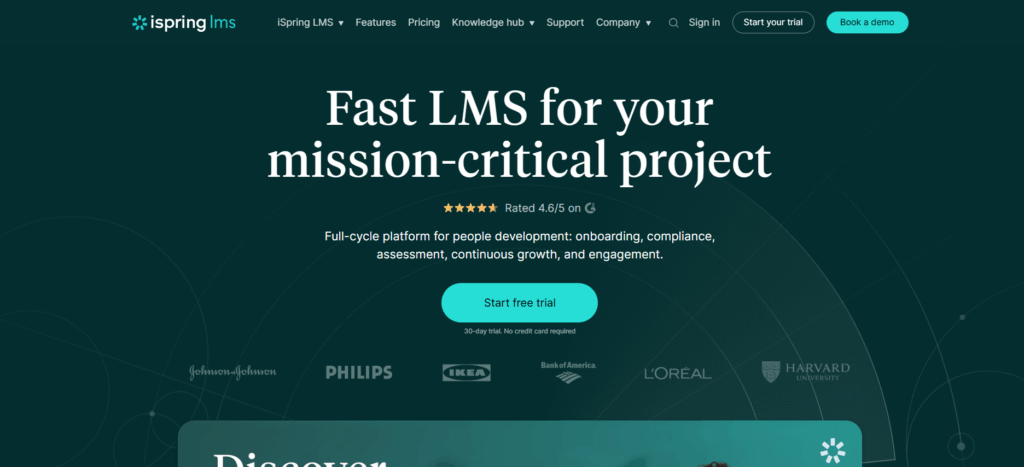
Verdict: iSpring Learn, now presented as iSpring LMS, is a good option for teams producing their own healthcare training.
Best for: Internal educators turning organizational knowledge, procedures, and presentations into structured courses.
Its appeal is the combination of LMS delivery and a related authoring ecosystem. That is useful when site-specific processes make internally developed education an important part of the program.
Key features:
Course creation through the iSpring authoring ecosystem.
Learning tracks and automated training workflows.
Progress reporting and supervisor visibility.
On-the-job training checklists and development plans.
Pros: Strong fit for organizations investing in their own training content. Supports structured learning alongside practical assessment workflows.
Cons: Confirm authoring licenses, product packaging, and healthcare content requirements before comparing total costs.
Pricing: Active-user subscription pricing. iSpring defines an active user as someone who logs in at least once during a month. iSpring pricing.
G2 rating: 4.6/5.
9. SkyPrep — Best for Distributed and Multi-Site Training
Verdict: SkyPrep is worth evaluating when separate teams or sites need organized training with accessible administration.
Best for: Clinic networks, distributed providers, and organizations coordinating learning across locations.
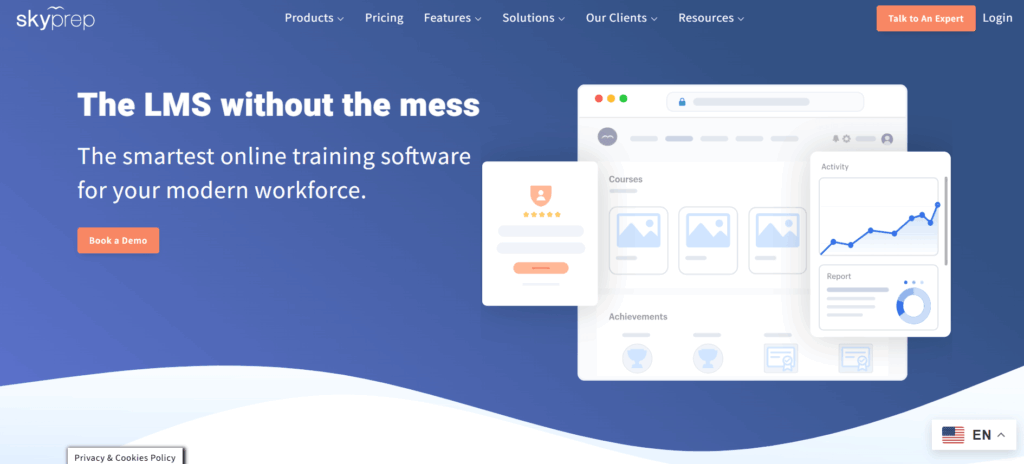
SkyPrep’s healthcare offering addresses onboarding, compliance education, certification training, and continuing learning. Its broader platform also offers multi-tenant options for separate learning environments. SkyPrep healthcare solutions, SkyPrep platform options.
Key features:
Course delivery and assessments.
Custom certificates.
Compliance reporting.
Mobile access.
Options for organizing distinct learner populations.
Pros: A useful candidate for standardizing training while giving groups an appropriate learning environment. Its healthcare use cases align with common provider training needs.
Cons: Buyers should confirm which plan supports their required site structure, integrations, permissions, and consolidated reporting.
Pricing: Quote-based Lite, Premium, and Enterprise tiers. Ask how active users and separate environments affect the subscription.
G2 rating: 4.6/5.
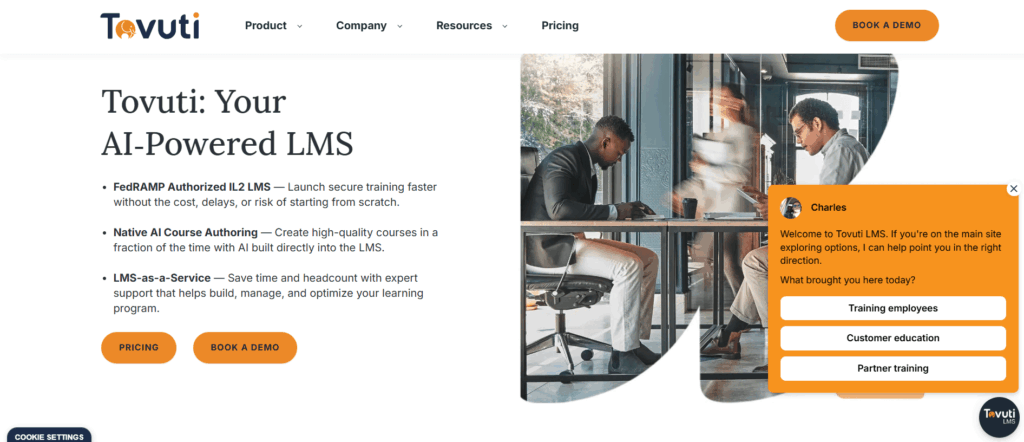
10. Tovuti LMS — Best for Customizable Learning Experiences
Verdict: Tovuti suits organizations that want branded learning portals and interactive course experiences.
Best for: Healthcare learning teams combining internal content with purchased courses.
Tovuti provides tools to create, deliver, and track learning, with substantial control over presentation. It is worth considering when the learner experience and course interactivity are important selection criteria.
Key features:
Interactive H5P content authoring.
Learning paths and certification tracking.
Branded portals and a mobile app.
Access to prebuilt content through library subscriptions.
Pros: Flexible branding and interactive content tools. Supports a mix of custom-built and purchased education.
Cons: Confirm the clinical relevance and accreditation of purchased content, along with subscription boundaries.
Pricing: Learner-based custom quote. Optional authoring products, content subscriptions, and services can affect the total.
G2 rating: 4.6/5.
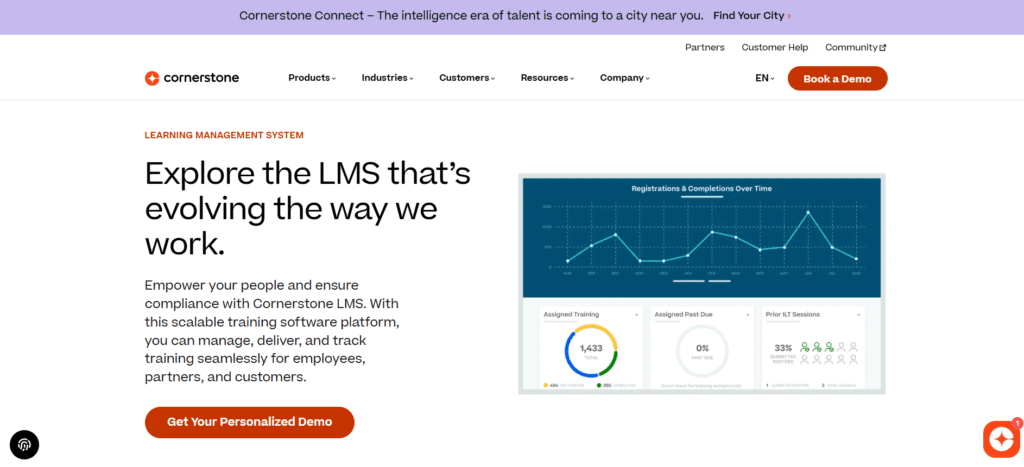
11. Cornerstone — Best for Enterprise Talent and Learning Strategies
Verdict: Cornerstone is a strong enterprise candidate when learning forms part of a wider workforce-development strategy.
Best for: Large healthcare organizations coordinating compliance education, skills development, and career growth.
Cornerstone Learning supports large-scale training administration, while the wider platform connects learning with talent development. Its healthcare offering emphasizes compliance, workforce skills, and career visibility. Cornerstone for healthcare.
Pros: Broad scope for organizations aligning enterprise learning with workforce planning and employee development.
Cons: Organizations should budget for configuration, governance, and administrator training. A broad suite requires careful package and responsibility definitions.
Pricing: Custom quote. Specify learning products, content subscriptions, integrations, implementation, and support when requesting proposals.
G2 rating: 4.1/5 for Cornerstone Learning.
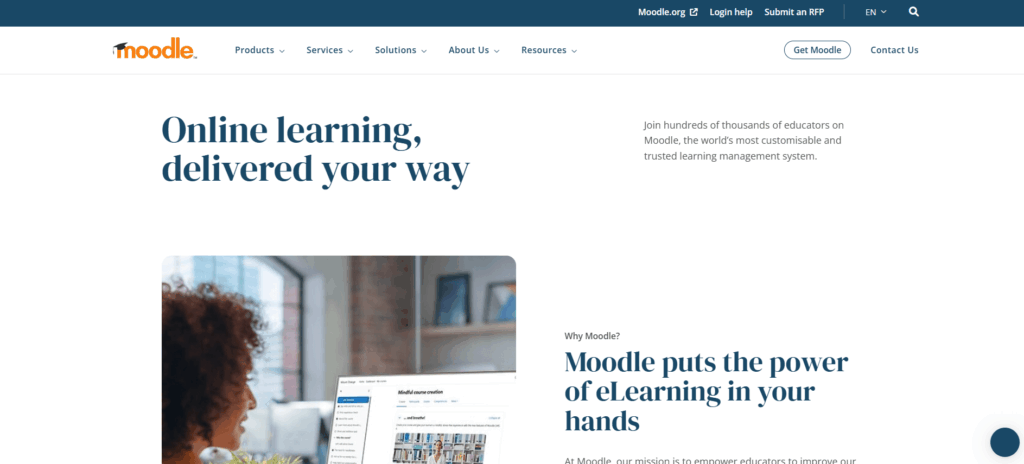
12. Moodle — Best for Open-Source Flexibility and Custom Builds
Verdict: Moodle is a viable choice when customization and technical ownership matter more than a packaged healthcare solution.
Best for: Organizations with internal technical resources or a dependable implementation partner.
Moodle LMS is free, open-source software that organizations can run on their own infrastructure or access through hosting providers. That flexibility gives teams control over their learning environment. Moodle project overview.
Key features:
Configurable courses and learning activities.
Assessments and completion tracking.
Plugins and integrations.
Flexible hosting and customization.
Pros: No license fee for the open-source core. Extensive flexibility for organizations with defined requirements and technical support.
Cons: Healthcare content, maintenance, security, and specialized workflows require implementation work. Free software still has operating costs.
Pricing: Free core software; hosting, administration, development, and support cost extra. Moodle Workplace is a separate licensed offering with additional corporate-learning functionality. Moodle LMS and Workplace differences.
G2 rating: 4.1/5 for Moodle.
What Is a Healthcare LMS?
A healthcare learning management system is software that helps healthcare organizations assign, deliver, track, and document employee education. It centralizes onboarding, compliance training, assessments, and learning records, while healthcare-focused configurations may also support continuing education, certification renewals, and clinical competency workflows across roles, departments, and locations.
The difference from a general corporate LMS comes down to content, workflows, and evidence.
A general platform might track whether an employee completed a course. An LMS for healthcare may also need to distinguish between completing a lesson, earning an accepted CE credit, renewing a credential, and demonstrating a clinical skill.
Healthcare LMS software can be purpose-built for the industry or configured from a broader learning platform. The right choice depends on the requirements you need to manage and the resources available to maintain the system.
If you’re also evaluating learning experience platforms, our LMS vs. LXP comparison explains how the two approaches differ.
Why Healthcare Organizations Need a Dedicated LMS
Compliance requirements create ongoing administrative work
Healthcare training involves overlapping requirements, organizational policies, and accreditation expectations. These responsibilities sit alongside broader healthcare HR challenges, including staffing, retention, and workforce development.
HIPAA requires appropriate workforce training on privacy policies and procedures, alongside security awareness and training obligations. OSHA’s Bloodborne Pathogens Standard requires initial and at least annual training for employees with occupational exposure. These requirements have different scopes and schedules, so they need separate assignment rules. HHS Privacy Rule summary, HHS Security Rule summary, OSHA standard.
A healthcare compliance LMS helps administrators organize these assignments and retrieve supporting records when needed.
Frontline employees need training that fits their work
Nurses, technicians, caregivers, and support staff work across shifts and locations. Training programs need accessible content, clear deadlines, and enough scheduling flexibility to accommodate patient care.
Mobile access and shorter lessons can make participation easier. Organizations also need to provide appropriate time and access to complete required learning.
Onboarding needs consistency across roles and sites
A new receptionist, registered nurse, and department manager need different onboarding paths. Rebuilding those assignments manually increases administrative work and creates opportunities for missed steps.
Healthcare onboarding software can standardize the core employee onboarding experience while allowing role-specific education and local requirements.
Training completion and competency need separate evidence
Joint Commission guidance distinguishes education and training from competency assessment, which validates an individual’s ability to perform a task. A completed course alone does not establish that ability. Joint Commission competency guidance.
Choose workflows that capture the evidence each requirement actually needs.
Key Features to Look for in a Healthcare LMS
Compliance tracking, reminders, and audit-ready reports
Your healthcare training software should assign learning by role, department, location, or employment status. Look for learning automation that supports assignment workflows, deadline notifications, manager escalation, and clear overdue reporting.
An audit-ready report should help explain who completed which requirement, when they completed it, and which course or policy version applied. Test whether historical records remain accessible after an employee changes roles.
Certification and CE credit tracking
Course certificates, professional certifications, and continuing education credits serve different purposes.
Evaluate expiration tracking, renewal cycles, external certificate uploads, credit categories, and transcript exports. If automatic reporting to professional boards matters, ask vendors to demonstrate the exact boards and professions supported.
Check course-level accreditation and acceptance rather than assuming every course in a library qualifies.
Clinical competency and skills assessments
A strong healthcare training platform should accommodate knowledge checks and practical assessments where your program requires them. Start by defining the workplace competencies each role needs, then establish appropriate assessment methods.
Useful capabilities include observation checklists, evaluator permissions, documented sign-offs, remediation assignments, and reassessment dates. Ask a clinical educator to test a real workflow during evaluation.
Ready-made healthcare courses
A healthcare course library can reduce content-development work, but relevance matters more than catalog size.
Review coverage for your care setting, employee roles, locations, and required topics. Ask who maintains the content, how updates are handled, and whether clinical courses, compliance content, and accredited CE require separate subscriptions.
HRIS integrations, EHR training support, and SSO
The right LMS integrations can keep employee records and reporting relationships current. Single sign-on can make access easier.
For EHR-related training, define the actual requirement: delivering software education, receiving completion data, or exchanging information with another system. These are different integrations. Confirm supported connectors, data fields, update frequency, and implementation responsibilities.
Mobile access for shift workers
Test the mobile learning experience on the devices employees will use. Check readability, login steps, progress saving, assessments, and accessibility.
If offline learning is essential, verify which content types work offline and how completion records synchronize.
Security and appropriate data handling
Review permissions, encryption, administrative logs, retention, and contractual terms. Keep patient information out of training materials unless the approved workflow requires it.
Where a cloud provider creates, receives, maintains, or transmits electronic protected health information on your behalf, evaluate the applicable business associate agreement and safeguards. HHS cloud-services guidance.
For broader development goals, also consider how the LMS connects with healthcare talent management software.
Healthcare LMS Use Cases
New Hire and Nurse Onboarding
Build role-specific pathways covering organizational policies, systems, patient communication, and required education. Combine online modules with instructor-led sessions and supervised practice.
Track progress through meaningful milestones: pre-start requirements, first-week learning, department orientation, and practical sign-offs. This gives managers a clearer view of what remains before onboarding is complete.
Annual Compliance and Policy Training
Organize recurring healthcare staff training around applicable requirements and internal policies. Common compliance training programs include privacy, safety, infection prevention, and emergency procedures.
Set the cadence for each topic individually. An annual compliance campaign can be useful operationally, while individual legal and accreditation requirements may follow different schedules.
Continuing Education and License Renewal
Use an LMS for continuing education to organize eligible courses, record credits, and remind employees about upcoming deadlines.
Keep license status, professional certifications, and CE completion distinguishable. Before assigning courses, confirm acceptance for the relevant profession, jurisdiction, and renewal period.
Skills and Competency Development
Combine education with observation, simulation, or supervised practice. Record the evaluator, assessment outcome, supporting evidence, and any follow-up learning.
For example, a knowledge assessment can identify a gap that triggers coaching and a later practical reassessment.
Leadership and Career Development
Healthcare workforce development also includes leadership development for managers, stronger communication, and support for internal progression.
Connect learning to development goals, coaching, and performance conversations. Use skill gap analysis to prioritize development needs and career paths to clarify potential next steps.
This is where a platform such as Engagedly becomes especially relevant: organizations can evaluate learning alongside broader employee growth instead of treating every course as an isolated event.
Measure development through changes in demonstrated skills and manager observations as well as participation.
How to Choose the Right Healthcare LMS
Start With an Evaluation Checklist
Define your requirements before scheduling demos.
Workforce size: Include employees, contractors, students, and other learners.
Compliance load: List required topics, renewal schedules, and evidence.
Care settings: Identify specialties and location-specific needs.
Organizational structure: Document sites, departments, and administrator permissions.
Content: Separate existing courses from content you need to purchase.
Integrations: Specify HRIS, SSO, reporting, and other data connections.
Resources: Assign an implementation owner and ongoing administrator.
Budget: Compare subscription, content, migration, integration, and support costs.
Separate launch requirements from capabilities you may need later. This keeps comparisons grounded in the workflows that matter first.
Avoid Common Selection Mistakes
Do not select a learning management system for hospitals based only on catalog size or a polished dashboard.
Check reporting with realistic records. Test the employee experience with frontline staff. Involve clinical educators, HR, compliance, and IT early enough to influence the decision.
Review common LMS implementation pitfalls before finalizing your rollout plan, particularly around requirements, stakeholder involvement, and adoption.
Finally, confirm who maintains assignments and content after launch. Even an effective learning management system for compliance training needs clear ownership, current requirements, and a reliable review process.
Choose a Healthcare LMS That Supports Compliance and Growth
The right healthcare LMS should make required education easier to manage and employee development easier to sustain.
Shortlist Relias for clinical education, HealthStream for hospital learning programs, MedTrainer for connected compliance operations, and TalentLMS for straightforward rollout. Consider Engagedly when you want learning connected to performance, development plans, and career growth.
Start with your most important workflows, test them with real users, and compare the complete cost.
Ready to connect healthcare training with employee development? Book an Engagedly demo to explore its LMS, learning paths, assessments, and Learning Suite.
FAQs
What Is a Healthcare LMS?
A healthcare LMS manages the delivery, assignment, tracking, and documentation of workforce education. Depending on the platform and configuration, it can support onboarding, compliance training, continuing education, certification renewals, and clinical competency workflows.
What Is the Best LMS for Healthcare Organizations?
The best LMS for healthcare depends on your priorities. Engagedly suits organizations connecting learning with performance and development. Relias is worth considering for clinical content and CE, HealthStream for hospital learning programs, and MedTrainer for connected compliance operations.
How Does a Healthcare LMS Help With HIPAA Compliance?
It can distribute privacy and security education, assign organization-specific policy training, assess understanding, and retain completion records. Training is one part of the broader privacy and security program; software must support the organization’s applicable obligations and safeguards. HHS Privacy Rule summary, HHS Security Rule summary.
How Much Does a Healthcare LMS Cost?
Pricing varies by workforce size, billing model, content, integrations, and implementation. Options include free core software, user-based subscriptions, and custom enterprise agreements. Compare total annual costs, including minimum commitments, content licenses, migration, support, and ongoing administration.
Can a Healthcare LMS Track CE Credits and Certifications?
Many platforms support some combination of credits, certificates, and expiration dates. The details vary. Confirm profession-specific credit categories, external uploads, renewal rules, transcript exports, and any required board reporting. Course acceptance must also match the learner’s requirements.
Do I Need a Healthcare-Specific LMS or Will a General One Work?
A general LMS can work when you have suitable content and mainly need assignments, assessments, reminders, and records. A healthcare-specific platform may be preferable when specialist clinical libraries, accredited education, or complex competency workflows would otherwise require substantial additional work.
Jeevithan K is a Senior Solutions Consultant at Engagedly with extensive experience in HR technology, customer success, product implementation, onboarding, and training. He specializes in helping organizations adopt B2B SaaS and enterprise AI solutions effectively. His expertise also includes project management, account management, process improvement, and translating complex product capabilities into practical solutions that deliver meaningful value for customers.





 Innovative