The HR field is evolving faster than ever, yet only 21% of professionals possess the skills necessary to navigate today’s dynamic labor market. This alarming statistic comes at a time when organizations are rapidly transforming work practices and adapting to shifting employee expectations.
The consequences of this skills gap are significant. Today’s HR departments deal with advanced technologies, a telecommuting workforce, and highly evolved and complicated employee relations scenarios around the globe.
Across the board, certified HR professionals report significantly higher compensation than those who are not certified, with up to 31% higher salaries, showing that organizations understand the importance of properly trained HR personnel.
In this blog post, you will learn about the key programs in HR training for 2025, their advantages, and how to progress in your HR career.
The Importance of HR Training in 2025
Here are the reasons why professional HR training has emerged as an essential requirement for thriving in the current career world:
1. Strategic Business Partnership
Contemporary human resource management specialists require high skills to act as strategic partners. Since 82% of global leaders acknowledged that HR has become more important than ever, extensive HR training prepares professionals for effective strategic planning, data analysis, and business-oriented performance of the organization. Many organizations rely on the best HR analytics softwares to support this data-driven approach.
2. Digital Transformation Management
Technology integration in HR practices is an ongoing process that requires constant improvement. HR training programs are effective in this regard as they equip these professionals with the knowledge of how to harness HR technologies, analytics tools, and digital platforms.
3. Employee Experience Enhancement
The modern workforce requires leaders to possess complex people skills in orderto address them effectively.
By participating in HR training sessions, executives are trained in how to build compelling experiences for the workers, construct powerful training and development programs, and undertake retention activities to improve morale and productivity in employees.
4. Compliance and Risk Management
It becomes imperative to learn about the changes that have occurred in the regulatory environment. Training makes it easier for HR professionals to stay up to date with employment laws, workplace safety rules, and legal/ethical standards to reduce organizational risks while observing compliance.
5. Performance and Development Expertise
The growth and development of the employee is a concept that is of most importance within organizations.
HR training strengthens knowledge acquisition in performance management systems, learning program design, and career development, hence empowering HR professionals to improve the capability of the workforce and the performance of the organisation.
Parameter for Choosing the Best HR Training Courses
Below are the critical factors that any company should consider when assessing human resource training programs to maximize their investment:
1. Subject Matter Depth and Relevance
This content should, therefore, be current with best practices in Human Resource Management as well asbest practices in the future. Search for thorough information on operations of the key HR tasks such as recruiting, employee relations, performance, and planning. Make sure that, in your chosen subject, you have the opportunity tostudy examples of actual practice that will be useful to confront you with real work conditions.
2. Learning Format Flexibility
Think about the correspondence between the training and instructional methods you prefer. Quality programs provide for a variety ofdelivery methods, including Web-based self-study sessions and real-time workshops. Determine if there is an option to learn at will using the same program from different devices so that you canjuggle work and education.
3. Instructor Expertise and Teaching Quality
Consider the employment experience of program instructors. The best training involves people in the industry who can provide real-life insights about the topic. Check course previews or sample lectures for the tone the teacher sets and the level of students’ activity.
4. Interactive Learning Elements
Search for programs that include different types of learning. These are practical activities, quizzes, sources, and working assignments that help to strengthen knowledge and practical skills.
5. Professional Community Access
Value programs targeted at providing networking options. Some of the best practices of HR training include allowing participants to join professional groups and forums, discussion forums, and mentor networks to share knowledge and new opportunities for career advancement.
6. Certification and Recognition
Think about the program’s reputation in the field of other organizations’ human resources. Recognized quality certifications increase not only your salary but also your caliber. Subsequently, determine whether the given certification is accepted by organizations, associations, or employers.
Overview of Ten Leading HR Training Programs and Models
In 2025, as organizations evolve, HR professionals need to engage with effective and innovative training programs. These programs cater to different career stages, offering unique benefits to help professionals adapt to the changing workforce demands.
Here are the top ten programs and models shaping HR training in 2025:
1. Engagedly Academy
A specialized platform focused on performance management and employee involvement in HR training, as well as the integration of modern HR technology solutions.
As a leading online HR training marketplace, AIHR stands out by its applicability and professionalism. The university offers practical curricula blended with intense theoretical understanding, thus suitable for new and practicing HR personnel.
Key Features:
International endorsement by the SHRM and HRCI guarantees this field’s recognition
SRI Resource Library with templates, checklist, and guidelines for implementing the recommendations
Source of information and research focus for the practitioner community.
Convenient learning schedule that comes in small pieces to accommodate working people
Substantial and timely content involving changes in the industry as well as the latest recommendations.
Get professional tips and advice from professionals
Specifically, it is defined as a concept that is designed to be flexible and compatible with using the content on the go and on a mobile device
Comprehensive Programs:
Digital HR and Analytics Certificate: Implement best-of-breed data-oriented HR processes
Strategic HR Management: It’s important to learn about the integration of HR with business goals.
Talent Acquisition and Management: Working on the assumption that traditional recruitment practices would not serve this particular client well, modern recruitment strategies had to be developed.
Compensation and Benefits Design: Establish equal but challenging reward frameworks
Learning and Development Specialization: Specialist training regime
Organizational Development: Successfully change the leadership of organizations
HR Metrics and Analytics: Make data-informed decisions
Program Details:
Duration: 22-36 hours per certificate, in total, not more than 120 hours or 4 months
Format: Web-based; totally flexible with features of computer-based learning.
Access Period: 12 months with a possibility of renewal
Support: Teacher facilitation supported with online discussion boards and opportunities for group work
Assessment: These include project-based assessments that include real-life examples.
Certification: Once a student completes the program it earns internationally accredited certification.
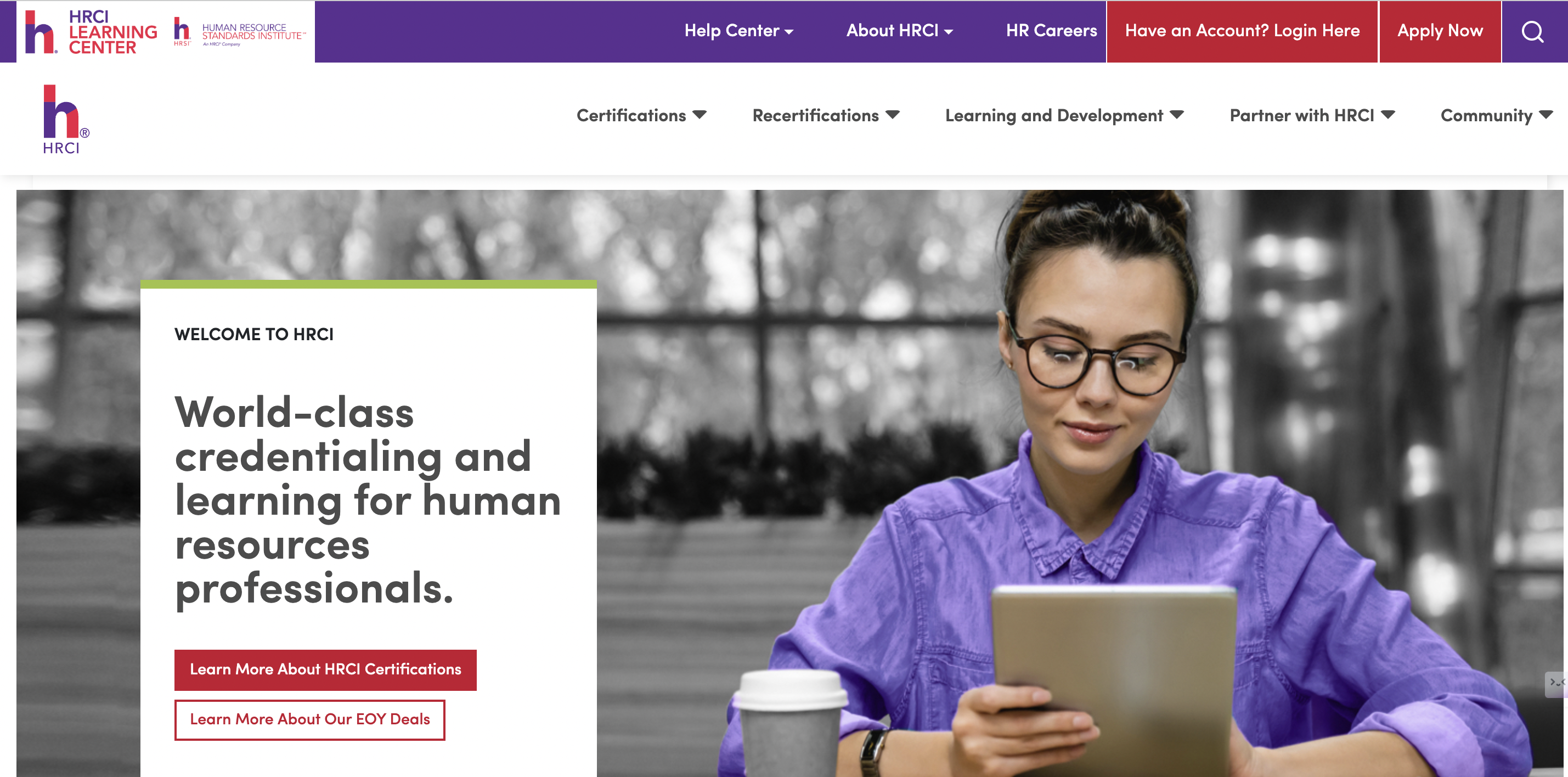
3. HR Certification Institute (HRCI)
HRCI provides globally recognized certifications for various levels of HR training expertise, establishing itself as a benchmark for HR professional standards worldwide.
Certification Levels:
Associate Professional in HR: Entry-level certification
Professional in Human Resources: Mid-level practitioners
Senior Professional in Human Resources: Strategic leaders
Global Professional in HR: International HR specialists
California PHR: State-specific certification
Program Benefits:
Comprehensive exam preparation with updated content
Practice assessments simulating actual exam conditions
Self-paced study options for busy professionals
Global recognition from employers worldwide
Ongoing professional development opportunities
Access to exclusive HR resources and research
Career advancement support
Study Resources:
Online learning modules with interactive content
Practice exams with detailed explanations
Comprehensive study guides and materials
Mobile learning options for flexibility
Expert support through study groups
Video tutorials and webinars
Downloadable study tools
Support Features:
Virtual study groups
Exam preparation workshops
One-on-one coaching options
Online practice questions
Progress tracking tools
Recertification support
4. SHRM HR Certification
The Society for Human Resource Management provides professional human resource training in strategic management orientation. Their programs prepare human resources with comprehensive human resources skills to meet the new challenge of an organized workplace.
Program Components:
Developed based on related research while presenting total competencies needed.
SHRM principles with examples of operations
An assessment of business experiences by analyses of different cases
Exclusive professional networking with active and passive leaders in the fields.
This category includes liberties to other research and publications done by SHRM.
Continuous learning resources and updates
Specialized Focus Areas:
A version of the paper focused on talent acquisition for the digital age
Work relations and industrial relations
The techniques of the working optimisation
Organizational development approaches
Combined certainty that legal requirements have been met and reduced uncertainty as to how best to address risk.
Organizational development particularly in the aspects of change management and organizational culture transformation
Employee engagement and retention
Sometimes it may be necessary to state diversity, equity, and inclusion initiatives.
Learning Structure:
Duration: between 3-4 months with choices of flexible completion.
Format: Online classes with self-study and guiding webinars
Study Materials: Detailed tutorials and real full-length tests
Practice Exams: Multiple full-length tests included
Support: Expert guidance through email and chat
Learning Tools: Mobile app, flashcards, and study planners
Recertification: Credits available for ongoing education
5. ATD: Association for Talent Development
They offer learning and development part of HR training mainly courses under certifications that are targeted and relevant to the modern workplace.
Main Certifications:
Certified Professional in Talent Development (CPTD)
Associate Professional in Talent Development (APTD)
Specialized Learning Certificates in Development
Custom corporate training solutions
Focus Areas:
Design Methodology / Best Practices in Training
Adult Learning Principles and Applications
Performance Improvement Strategies
Learning Experience Creation and Optimization
Evaluation and Measurement Techniques
E-learning Development
Instructional design principles.
Advanced Topics:
Virtual training delivery
Microlearning design
Mobile learning strategies
Gamification in training
Social learning implementation
Learning analytics
ROI measurement
Delivery Options:
In-person workshops at various locations
Virtual live sessions with expert facilitators
Self-paced modules with progress tracking
Team training programs for organizations
Hybrid learning options combining methods
Customized corporate solutions
International training opportunities
6. Cornell HR Programs
Cornell University has an online presence that provides access to quality education. Its focus is on programs that prepare students for the workplace with the foremost HR training services. Faculty specialists develop these programs in conjunction with professionals in the field.
Distinguished Features:
Peer-constructed curriculum that embraces contemporary research findings
Opportunity to organize learning in small groups with a limited number of students – no more than 20 people
Situational case studies providing project-based problem-solving experiences
Expert instructor interaction throughout the program
Networking chances with other professionals and international counterparts
The analysis of different cases of leading organizations
Regular webinars with industry experts
Certificate Programs:
HR Essentials: Core fundamental principles and practices
Diversity and Inclusion Management: Creating inclusive workplaces
Specialized certification tracks offer expert HR training through comprehensive video instruction and practical applications for modern HR professionals.
Program Functions:
Accessibility of learning platforms to request
Interactive content with engagement tools
Case studies and scenarios in practice
Expert instruction of industry leaders
Certification material
Progress tracking possibilities
Mobile learning opportunities
Specialization Tracks:
HR Generalist Certification Program
Diversity management and integration
Strategic Talent Development
HR Analytics and Metrics
Management of industrial relations
Performance management
Compensation and benefits
Educational Material:
Video Lessons
Downloadable Templates
Practical evaluations
Implementing directives
Industrial research
Network capabilities
Careers resources
9. Bersin Academy
Modern HR training focuses on contemporary challenges and future skills for HR professionals who navigate digital transformation.
It offers strategic workforce development and leadership-focused HR training programs designed for forward-thinking HR professionals.
Core Programs:
Strategic Workforce Planning Certification
Talent Acquisition Strategy Development
Change Management Leadership
Strategic Leadership Development
Employee Experience Design
Analytics for HR Leaders
Engagement Strategy
Program Benefits:
Workshop-style interactive learning
Conference access and networking
Professional certification opportunities
Global networking platforms
Resource library access
Research publications
Consultation services
Learning Methodology:
Interactive workshops
Case study analysis
Role-playing exercises
Group discussions
Action learning projects
Virtual simulations
Mentoring opportunities
To Wrap Up
The HR training landscape continues to evolve with technological progress and changing dynamics in the workplace. These top HR training programs offer different learning opportunities for professionals at every career stage.
Whether certification, skills enhancement, or extensive HR knowledge, these programs offer the necessary tools and expertise. Investment in HR training programs remains crucial to remain competitive in the dynamic business environment of 2025 and beyond.
Ready to transform your HR expertise? Learn how Engagedly’s advanced HR training tools and resources can help you manage performance and engage employees. Start today!
Frequently Asked Questions (FAQs)
What is HR training and why is it important for modern organizations?
HR training is the structured development of skills, knowledge, and competencies required to manage people, compliance, performance, and workforce strategy effectively.
It equips HR professionals to act as strategic business partners rather than administrative support. With digital transformation, remote work, and evolving labor laws, organizations need HR teams skilled in analytics, employee experience, and performance management systems. Proper training improves compliance, strengthens talent acquisition, enhances retention strategies, and supports workforce planning. Companies that invest in professional certifications and continuous learning often see stronger organizational performance and reduced operational risk.
Which certifications are most recognized in the human resources industry?
The most recognized HR certifications are those backed by established professional bodies and global employers. Programs from the HR Certification Institute and Society for Human Resource Management are widely respected across industries.
These certifications validate expertise in employment law, strategic HR management, and workforce planning. For professionals focused on talent development, credentials from the Association for Talent Development also carry strong industry weight. Choosing an accredited certification improves credibility, salary potential, and career mobility while ensuring alignment with global HR standards.
How do you choose the right HR course for your career stage?
Selecting the right program depends on your experience level and long-term career goals.
Entry-level professionals benefit from foundational HR management and compliance training.
Mid-level practitioners should prioritize analytics, strategic HR management, and digital HR transformation.
Senior leaders may focus on workforce planning, organizational development, and executive leadership.
Evaluate course depth, instructor expertise, learning format flexibility, and certification recognition. Programs that include real-world case studies, performance management tools, and project-based assessments offer stronger practical application than purely theoretical coursework.
Can HR training increase salary and career advancement opportunities?
Yes, professional HR certification and advanced training often lead to higher earning potential and promotion opportunities.
Certified HR professionals report significantly higher compensation compared to non-certified peers because organizations value validated expertise in compliance, analytics, and strategic planning. Training in areas such as HR metrics, employee engagement strategies, and digital transformation strengthens decision-making capabilities. Employers are more likely to promote HR professionals who demonstrate business acumen, data-driven insights, and workforce optimization skills supported by recognized credentials.
What skills should HR professionals focus on developing today?
Modern HR roles require a blend of technical expertise and strategic leadership capabilities. Key skills include:
People analytics and data-driven decision making
Performance management system design
Talent acquisition and workforce planning
Employee experience and engagement strategy
Change management and digital HR implementation
As organizations adopt AI tools and advanced HR technology platforms, professionals who combine compliance knowledge with digital fluency gain a competitive advantage. Continuous upskilling ensures HR teams can support organizational growth while managing risk and cultural transformation effectively.
Gabby Davis is the Lead Trainer for the US Division of the Customer Experience Team. She develops and implements processes and collaterals related to the client onboarding experience and guides clients across all tiers through the initial implementation of Engagedly as well as Mentoring Complete. She is passionate about delivering stellar client experiences and ensuring high adoption rates of the Engagedly product through engaging and impactful training and onboarding.






















 Performance