A nurse, a physician, and a billing specialist shouldn’t be evaluated using exactly the same performance criteria. Yet many healthcare organizations still rely on standardized annual review forms, spreadsheets, and disconnected systems to manage employee performance.
Although software alone cannot address healthcare staffing and retention challenges, effective performance management can help organizations establish clearer expectations, provide timely feedback, and connect employee development with organizational goals.
The right healthcare performance management software supports these processes while accommodating the different responsibilities of clinical and non-clinical employees.
But with options ranging from healthcare-specific evaluation systems to enterprise HR platforms, how do you identify the best fit?
We compared 10 performance management solutions based on their features, healthcare relevance, strengths, limitations, and pricing to help hospitals, clinics, and health systems make a more informed decision.
Key takeaways
Engagedly is a strong option for organizations seeking connected performance reviews, goals, feedback, learning, and talent development.
symplr Performance and HealthStream Performance Center offer healthcare-focused evaluation workflows for hospitals and health systems.
PerformYard and 15Five are worth considering for flexible reviews and continuous performance conversations.
Cornerstone, UKG Pro, and Workday are relevant for larger organizations with broader talent management or enterprise HR requirements.
HR for Health is a particularly relevant choice for smaller medical, dental, and other healthcare practices.
Best Healthcare Performance Management Software at a Glance
Not every platform offers the same capabilities. Some specialize in performance reviews and employee development, while others combine performance management with learning, scheduling, payroll, or broader HR operations.
Here’s how the top options compare.
Software
Best for
Key capabilities
Pricing
1. Engagedly
Connected performance and talent development
Reviews, goals, feedback, learning, engagement, AI
Performance Suite: 5–8/user/month
2. symplr Performance
Healthcare-specific performance evaluations
Role-based reviews, documentation, development workflows
Pricing is based on publicly available vendor information as of October 2026. Published per-user prices generally assume annual billing. Contract minimums, selected modules, and implementation costs may affect the final price. HR for Health’s advertised starting package price should be confirmed directly for billing frequency and included features.
10 Best Healthcare Performance Management Software in 2026
1. Engagedly — Best for Connected Performance and Talent Development
Best for: Healthcare organizations looking to connect employee reviews, continuous feedback, goals, engagement, and professional development.
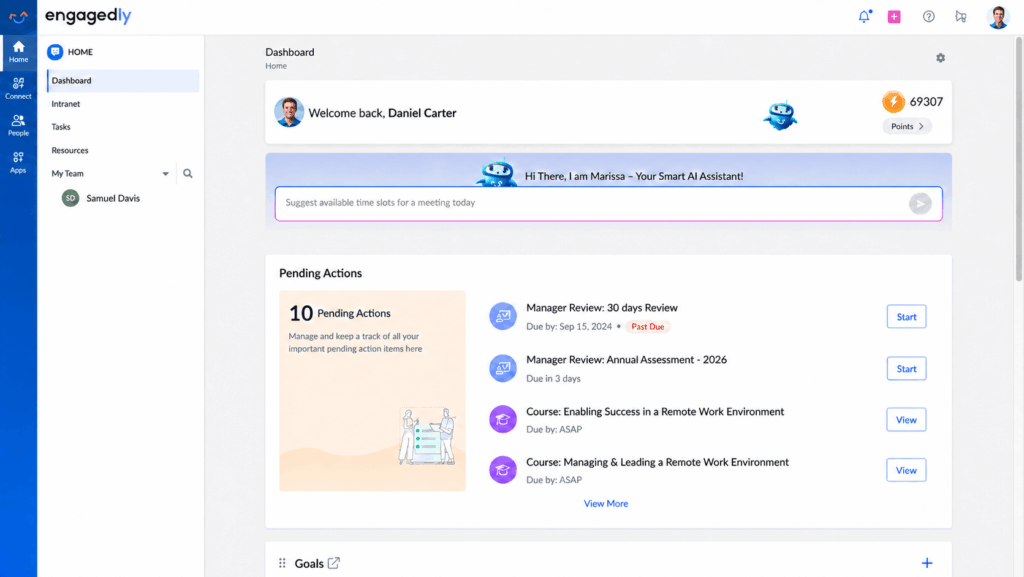
Engagedly is an AI-powered talent management platform that helps organizations manage employee performance and development throughout the employee lifecycle.
Its AI Talent Suites, powered by Marissa™ AI, connect performance management with learning, recognition, engagement, and talent mobility.
For healthcare organizations managing employees across departments and locations, Engagedly offers configurable review workflows and tools for ongoing performance conversations.
Rather than limiting performance management to annual evaluations, organizations can use the platform to track goals, document feedback, identify development needs, and support employees’ professional growth.
Goals and OKRs: Connect employee goals with departmental and organizational priorities.
Continuous feedback: Support 1:1 meetings, check-ins, and ongoing manager feedback.
360-degree feedback and calibration: Gather multiple perspectives and support more consistent evaluations.
Learning and development: Connect performance conversations with individual development plans and learning opportunities.
Marissa AI: Assist with performance summaries, goal suggestions, and development insights.
Pros
Connects performance management with other talent development processes.
Flexible evaluations for different employee groups.
Supports continuous feedback and professional growth.
Offers AI-assisted capabilities for managers and HR teams.
Cons
Organizations needing only basic annual appraisals may not require the broader platform.
Specialized clinical competency validation and medical credentialing may require separate systems.
Pricing: The Performance Suite is listed at 5–8 per user per month, billed annually. Engagedly publishes a $7,500 minimum annual contract.
Best fit: Healthcare organizations that want performance reviews to inform ongoing feedback, learning, and employee development.
2. symplr Performance — Best for Healthcare-Specific Employee Evaluations
Best for: Hospitals and health systems requiring performance evaluation workflows designed around healthcare roles and documentation needs.
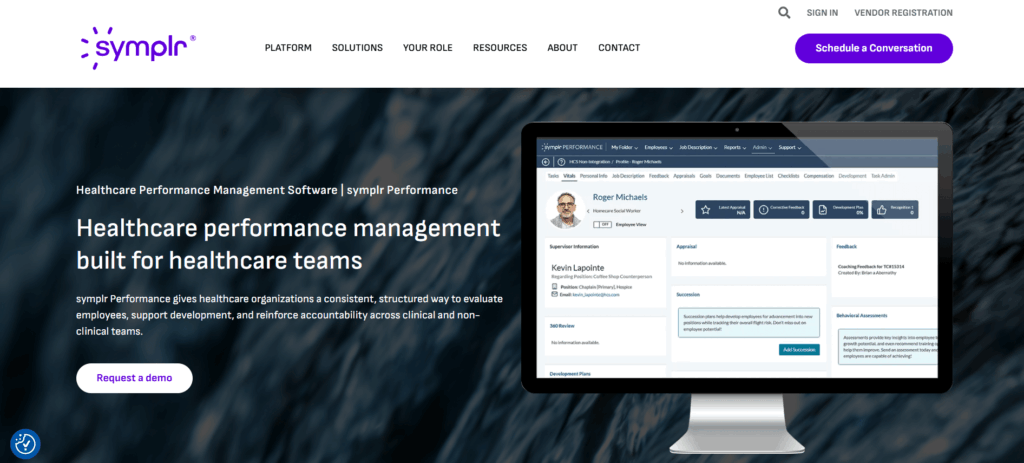
symplr Performance is a healthcare-focused performance management platform that helps organizations standardize employee evaluations across clinical and non-clinical teams.
Its workflows reflect healthcare job structures, department-specific responsibilities, and documentation requirements.
The platform supports goal management, automated review processes, and reporting, helping HR leaders monitor evaluation progress across multiple departments or facilities.
For organizations using other symplr workforce products, performance reviews can also connect with learning and assessment activities.
Key features
Healthcare-specific templates: Configure evaluations around clinical and administrative roles.
Goal tracking: Connect individual employee goals with organizational priorities.
Automated workflows: Schedule evaluations, send reminders, and monitor completion.
Performance dashboards: Review evaluation status and department-level trends.
Development planning: Connect evaluations with symplr Learning and Assessments when integrated.
Structured documentation: Support recordkeeping for relevant healthcare evaluation requirements.
Pros
Designed specifically for healthcare organizations.
Supports clinical and non-clinical review workflows.
Strong emphasis on standardized documentation.
Can connect performance reviews with learning and assessments.
Cons
Some connected capabilities require additional symplr products.
Organizations may need to evaluate the costs and complexity of adopting multiple modules.
Pricing: Custom quote.
Best fit: Hospitals and health systems prioritizing healthcare-specific appraisal processes, documentation, and consistent performance evaluations.
3. PerformYard — Best for Flexible Performance Review Cycles
Best for: Healthcare HR teams that need different evaluation schedules and formats for clinical, administrative, and management employees.
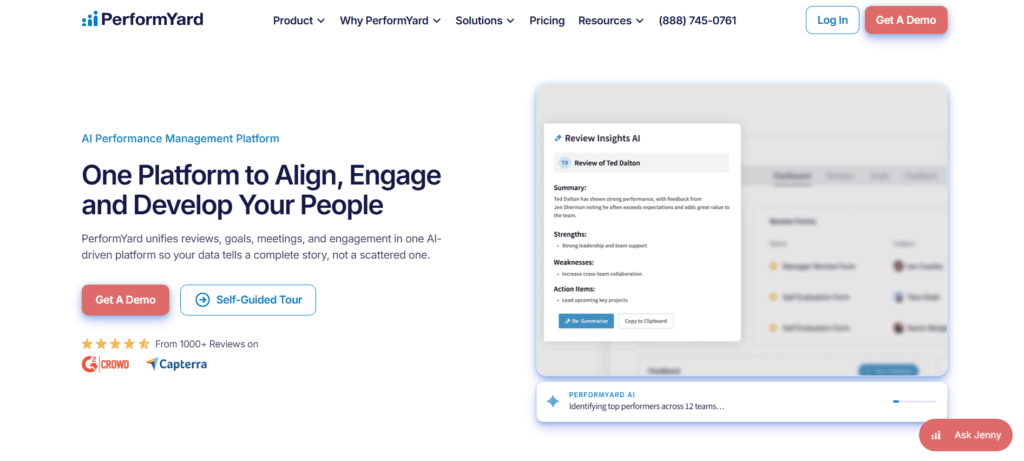
PerformYard is a performance management platform known for its configurable review workflows, goal tracking, and continuous feedback capabilities.
Healthcare organizations often need to run several evaluation processes simultaneously. Nurses may follow an annual review schedule, administrative employees may receive quarterly evaluations, and new hires may require assessments during their first 90 days.
PerformYard allows organizations to manage these different review cycles without forcing every department into the same process.
The platform also provides reporting tools that help HR teams monitor completion rates and performance trends.
Key features
Concurrent review cycles: Run evaluations with different schedules and workflows.
Customizable review forms: Adjust questions, rating scales, and evaluation criteria.
Continuous feedback: Document employee achievements and development needs.
Goals and performance tracking: Monitor objectives throughout the year.
Reporting and calibration: Review performance data and evaluation progress.
Flexible review processes for different employee groups.
Supports continuous feedback and goal management.
Useful for organizations replacing manual evaluation systems.
Publishes pricing and provides implementation support.
Cons
Specialized clinical competency validation requires separate evaluation.
Organizations seeking an extensive learning and talent mobility ecosystem should compare available capabilities.
Pricing:PerformYard’s pricing page lists performance management at 5–15 per person per month.
Best fit: Healthcare organizations looking for configurable evaluations and an easier way to administer different review cycles.
4. HealthStream Performance Center — Best for Hospital Performance Appraisals
Best for: Hospitals seeking structured employee appraisals, goal-setting, and development planning within a healthcare-focused system.
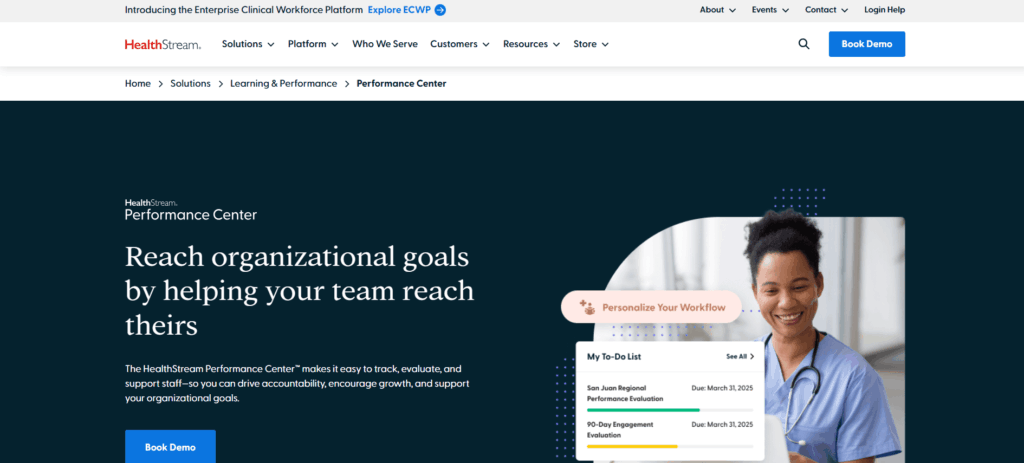
HealthStream Performance Center is designed to help healthcare organizations manage employee performance evaluations through digital workflows.
The platform supports configurable appraisals, performance goals, and individual development plans.
Its healthcare-specific focus is particularly relevant for hospitals that need to evaluate employees consistently while accommodating different departments and job responsibilities.
HealthStream also offers separate learning and competency management solutions, making it relevant for organizations that want to connect performance evaluations with broader workforce development activities.
Key features
Custom performance appraisals: Configure assessments around job roles and organizational expectations.
Goal-setting: Establish and monitor employee performance objectives.
Development plans: Document areas for improvement and professional growth.
Digital evaluation workflows: Replace manual appraisal forms and processes.
Performance reporting: Track review progress and evaluation information.
Learning connections: Work alongside relevant HealthStream workforce development products.
Pros
Designed specifically for healthcare organizations.
Supports configurable employee appraisals.
Connects goals and individual development planning.
Relevant for hospitals already using HealthStream learning solutions.
Cons
Organizations seeking broader engagement and talent mobility features should review the available product ecosystem.
Clinical competency management may require additional HealthStream products.
Pricing: Custom quote.
Best fit: Hospitals seeking a healthcare-oriented employee performance appraisal system, particularly those already using HealthStream.
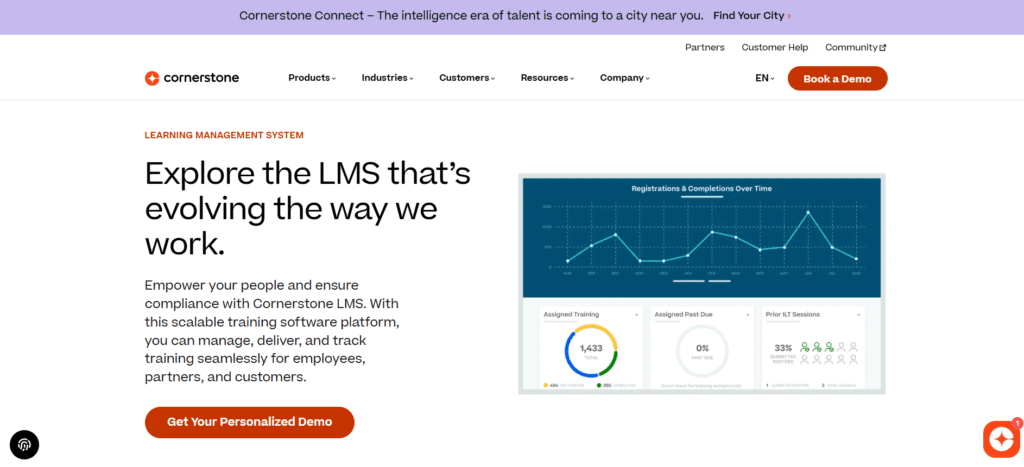
5. Cornerstone Performance — Best for Enterprise Performance and Skills Development
Best for: Large healthcare organizations wanting to connect employee performance, skills, learning, and professional development.
Cornerstone Performance is part of Cornerstone’s broader talent development ecosystem.
It helps organizations establish goals, conduct performance reviews, provide feedback, and identify employee development opportunities.
For healthcare employers, one of Cornerstone’s advantages is the connection between performance management and learning.
This can be useful when an organization wants employee evaluations to inform development programs and workforce skills initiatives.
Cornerstone has also documented healthcare implementations, including Carilion Clinic, where learning and performance tools were used to support training and competency development.
Key features
Performance reviews: Support structured evaluations and employee assessments.
Goal management: Connect individual priorities with organizational objectives.
Continuous coaching: Facilitate manager feedback and development conversations.
Skills and competency insights: Identify potential workforce capability gaps.
Development planning: Connect performance information with learning opportunities.
Workforce reporting: Monitor performance and development trends.
Pros
Connects performance management with learning and skills development.
Suitable for complex organizations.
Supports continuous coaching and employee growth.
Has documented healthcare customer implementations.
Cons
Implementation and administration may be more involved for smaller organizations.
Buyers should verify which learning and skills capabilities require additional products.
Pricing: Custom quote.
Best fit: Hospitals and health systems looking to connect enterprise performance management with learning and workforce development.
6. UKG Pro — Best for Integrated Healthcare HR and Workforce Management
Best for: Healthcare organizations seeking performance management within a broader HR and workforce technology ecosystem.
UKG provides HR, payroll, scheduling, workforce management, and talent solutions used across healthcare organizations.
UKG Pro Performance and Coaching supports employee evaluations, goal management, feedback, and development.
For hospitals already using UKG workforce management products, this can provide an opportunity to connect talent processes with existing employee information and HR workflows.
The broader UKG ecosystem may also be relevant to organizations managing complex staffing schedules and workforce operations.
Key features
Performance reviews: Manage employee evaluations and development discussions.
Goals and feedback: Track objectives and support ongoing manager conversations.
Coaching and development: Help managers guide employee growth.
Talent dashboards: Provide visibility into employee performance information.
Succession planning: Support workforce development and leadership planning.
HR and workforce integrations: Connect with relevant UKG products and services.
Pros
Broad HR and workforce management capabilities.
Established healthcare industry presence.
Supports performance management within a larger HR ecosystem.
Useful for organizations already invested in UKG.
Cons
Performance and coaching capabilities may require specific UKG subscriptions.
Implementation and integration requirements can be substantial for organizations adopting multiple products.
Pricing: Custom quote.
Best fit: Mid-sized and large healthcare organizations using UKG or seeking closer integration between HR and talent management.
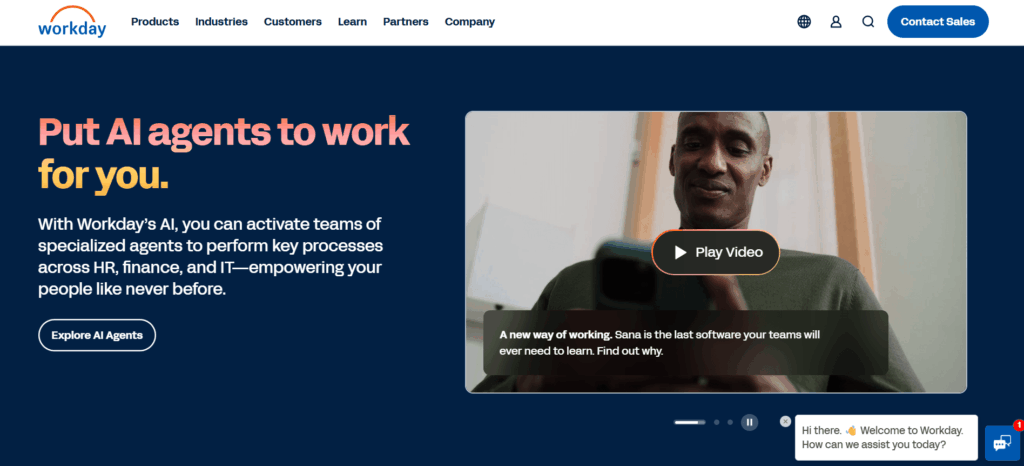
7. Workday HCM — Best for Large Health Systems
Best for: Large healthcare enterprises requiring performance management alongside enterprise HR, talent, and workforce planning.
Workday Human Capital Management is an enterprise HR platform that supports employee performance, goal management, skills information, and workforce development.
For healthcare organizations operating multiple hospitals or facilities, Workday offers a way to manage talent processes within a broader employee information system.
Its performance management capabilities can support formal evaluations and ongoing feedback while connecting relevant information with other HR processes.
Workday also has an established presence in large healthcare organizations, including documented implementations involving health systems.
Goal management: Align individual and team objectives.
Continuous feedback: Support manager-employee performance conversations.
Skills information: Connect workforce capabilities with development initiatives.
Talent management: Support succession and employee growth.
Enterprise analytics: Analyze workforce information across departments.
Pros
Comprehensive enterprise HR functionality.
Supports complex organizational structures.
Connects performance management with wider HR processes.
Relevant for large healthcare networks.
Cons
Implementation can require significant planning and configuration.
May be more extensive than smaller healthcare organizations need.
Specialized healthcare evaluation and competency processes may require additional configuration or tools.
Pricing: Custom enterprise quote.
Best fit: Large health systems seeking performance management as part of a comprehensive enterprise HR strategy.
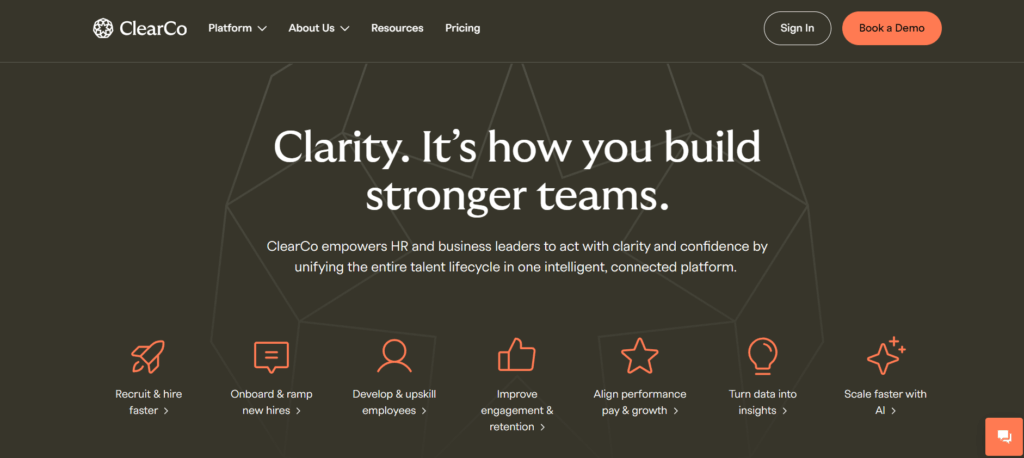
8. ClearCo — Best for Connected Hiring-to-Performance Workflows
Best for: Healthcare employers wanting to connect recruitment, onboarding, employee reviews, and talent development.
ClearCo, formerly ClearCompany, is a talent management platform that connects performance management with other stages of the employee lifecycle.
Its performance tools help organizations manage employee reviews, establish goals, collect feedback, and support development.
For healthcare employers experiencing ongoing recruitment and onboarding demands, connecting new-hire performance with later evaluations can create a more consistent talent management process.
ClearCo supports different review schedules and provides performance reporting across employee groups.
Key features
Configurable reviews: Run annual, quarterly, and new-hire evaluations.
Goal management: Connect individual objectives with organizational priorities.
Continuous feedback: Document performance conversations and coaching.
360-degree reviews: Collect input from multiple reviewers.
Performance calibration: Support more consistent evaluation decisions.
Talent analytics: Monitor ratings, goals, and review progress.
Pros
Connects performance reviews with broader talent processes.
Flexible evaluation workflows.
Supports ongoing feedback and calibration.
Offers performance dashboards and reporting.
Cons
Healthcare-specific clinical competency requirements may need separate tools.
Organizations should assess which capabilities are included in their selected package.
Pricing: Custom quote.
Best fit: Healthcare organizations seeking performance management connected to hiring, onboarding, and employee development.
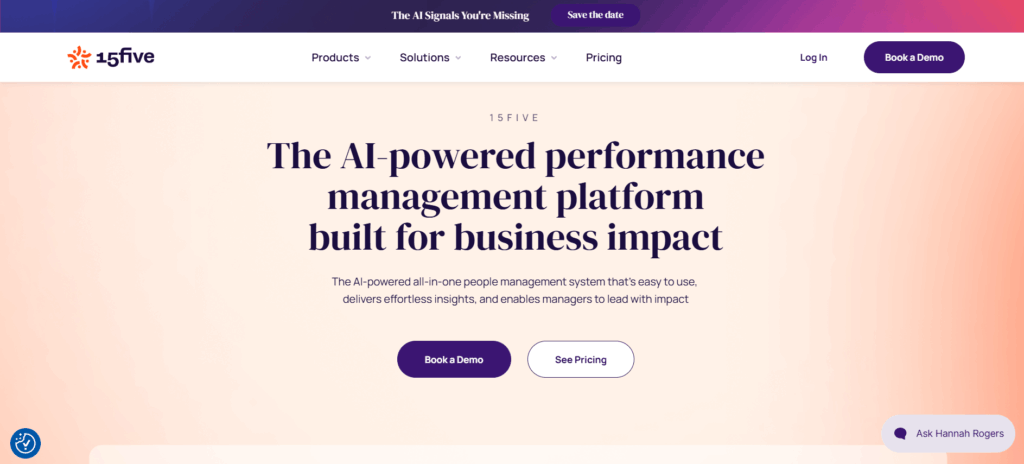
9. 15Five — Best for Continuous Feedback and Manager Effectiveness
Best for: Healthcare organizations prioritizing regular manager check-ins, employee engagement, and continuous performance improvement.
15Five is a performance management platform that connects employee reviews, goal-setting, engagement surveys, and manager development.
Its approach emphasizes frequent communication rather than relying exclusively on annual performance evaluations.
The platform includes structured check-ins, 1:1 meetings, performance reviews, and development tools.
15Five also has a healthcare-specific offering and a published customer story involving Core Medical Group, which used the platform to improve its performance management and employee feedback processes.
Key features
Performance reviews: Conduct structured evaluations and 360-degree feedback.
Weekly check-ins: Capture progress, challenges, and employee feedback.
Goals and OKRs: Track employee and team objectives.
Manager effectiveness: Support coaching, development, and manager insights.
Employee engagement: Collect workforce feedback through relevant modules.
AI-assisted reviews: Help managers prepare and summarize performance information.
Pros
Strong focus on continuous feedback and manager development.
Supports goals, check-ins, and employee engagement.
Not specifically designed for clinical competency validation.
Organizations may need additional software for healthcare-specific assessments and credentialing.
Pricing: The Perform plan costs $11 per user per month, billed annually. The Total Platform plan is listed at $16 per user per month.
Best fit: Healthcare organizations seeking better manager-employee communication and continuous performance conversations.
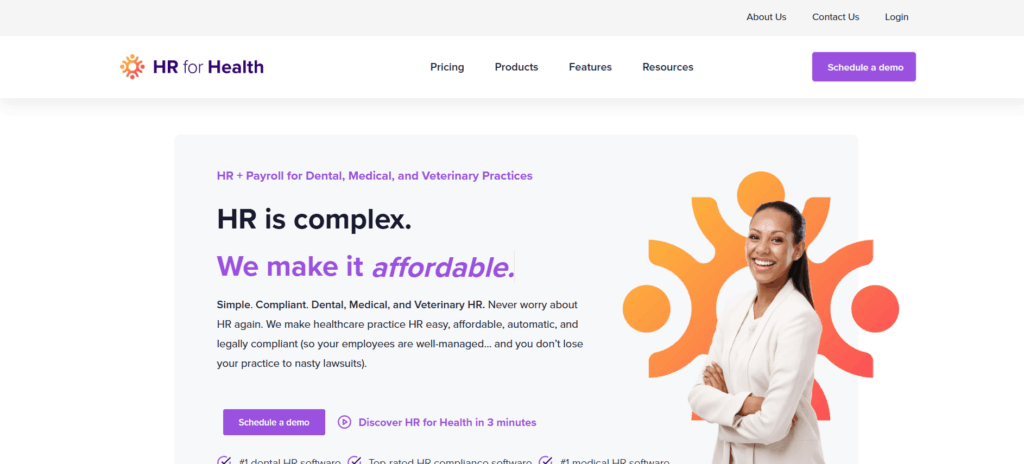
10. HR for Health — Best for Small Medical and Dental Practices
Best for: Small healthcare practices looking for straightforward performance reviews alongside HR administration and documentation tools.
HR for Health provides HR software designed specifically for healthcare practices, including medical, dental, optometry, chiropractic, and veterinary businesses.
Its performance management tools help practice owners and managers conduct reviews, document feedback, establish improvement goals, and maintain employee records.
Unlike platforms primarily targeting large enterprises, HR for Health focuses on the needs of practice managers who may handle several HR responsibilities without a dedicated HR department.
Key features
Performance review templates: Create and customize employee evaluations.
360-degree feedback: Include peer input in performance reviews.
Review acknowledgments: Document that employees have received and reviewed feedback.
Performance improvement: Track goals and corrective actions.
HR documentation: Maintain organized employee notes and records.
Continuing education alerts: Monitor relevant renewal and education deadlines.
Pros
Designed for medical and dental practices.
Combines performance management with practical HR tools.
Supports review documentation and employee acknowledgments.
Offers access to HR advisory resources.
Cons
Large health systems may require more extensive enterprise reporting and talent management capabilities.
Organizations should confirm package inclusions and pricing details before purchasing.
Pricing: HR for Health advertises packages starting at $199. Buyers should confirm the billing frequency and available features.
Best fit: Independent clinics, medical practices, and dental offices looking for performance management within a healthcare-focused HR platform.
What Is Healthcare Performance Management Software?
Healthcare performance management software is a digital platform that helps hospitals, clinics, and health systems evaluate employee performance, establish goals, collect feedback, manage performance reviews, and support professional development across clinical and non-clinical teams.
These tools replace manual appraisal processes with structured evaluations, centralized records, automated workflows, and reporting.
Many platforms also support continuous feedback, 360-degree reviews, learning, and employee development plans.
However, healthcare employee performance management is different from clinical competency management and clinical performance analytics.
Software category
Primary focus
Common examples
Employee performance management
How employees perform, develop, and achieve goals
Reviews, feedback, goals, development plans
Clinical competency management
Whether employees demonstrate required clinical knowledge and skills
Nursing assessments, skills validation, competency records
Clinical performance analytics
How healthcare services perform against quality and operational measures
Readmission rates, patient outcomes, utilization
A healthcare organization may need more than one category of software.
For example, a hospital might use employee performance management software to evaluate teamwork, goals, and leadership development while using a separate competency management system to validate clinical skills.
Why Healthcare Performance Management Is Different
Healthcare organizations face unique workforce challenges that make conventional performance review processes difficult to manage.
1. Different roles require different evaluation criteria
A nurse’s responsibilities are fundamentally different from those of a physician, billing specialist, or HR manager.
Using identical performance criteria across these roles can result in irrelevant evaluations and inconsistent expectations.
Healthcare performance management software should support role-specific evaluation templates while maintaining organizational consistency.
2. Employees work across shifts and locations
Hospitals and healthcare facilities operate around the clock.
Managers may oversee employees working nights, weekends, and rotating shifts, making it difficult to schedule performance conversations.
Accessible review forms, automated reminders, and flexible evaluation workflows can help employees participate without relying on fixed office schedules.
3. Healthcare requires careful documentation
Hospitals and other healthcare providers operate within complex regulatory and accreditation environments.
Depending on the employee’s role and the applicable requirements, organizations may need to maintain records of evaluations, training, and competency assessments.
Performance management software can support documentation, but organizations must still ensure their policies and procedures meet relevant standards.
4. Workforce retention remains a challenge
Healthcare turnover creates recruitment costs, staffing disruptions, and additional pressure on existing employees.
Regular feedback, development opportunities, and effective management can support a healthier employee experience.
However, performance management should complement – not replace – efforts to address workload, staffing levels, compensation, and working conditions.
5. Development needs extend beyond annual reviews
Employees need opportunities to improve their skills and advance professionally.
A performance review that identifies development needs but produces no follow-up action has limited value.
Effective software helps managers connect evaluations with goals, learning, coaching, and development planning.
Key Features to Look for in Healthcare Performance Management Software
When comparing software, focus on capabilities that address your organization’s actual evaluation and workforce development needs.
Role-specific performance reviews
Look for customizable forms, evaluation criteria, and rating scales.
The system should support different employee groups without requiring separate manual processes.
Multiple review cycles
Healthcare employers may need annual evaluations, quarterly reviews, new-hire assessments, and additional development check-ins.
The platform should allow these cycles to run simultaneously.
Goal-setting and continuous feedback
Managers should be able to establish measurable goals, document progress, and provide feedback throughout the year.
This helps employees understand expectations before their formal reviews.
Clinical competency integration
If your organization needs clinical skill validation or credentialing, determine whether the system supports those processes or integrates with a specialist platform.
Do not assume that a general performance review tool provides all clinical assessment capabilities.
360-degree feedback and calibration
Multi-rater feedback can provide additional perspectives on teamwork, communication, and leadership.
Calibration tools can help managers review performance ratings for consistency across departments.
Learning and development plans
Look for ways to document development needs, assign follow-up activities, and monitor employee progress.
An evaluation should lead to meaningful development conversations.
Employee engagement and recognition
Employee surveys and recognition tools can provide useful context alongside performance information.
Consider whether the platform helps managers act on the feedback collected.
Reporting and integrations
Useful reporting capabilities include review completion, goal progress, development activity, and department-level performance trends.
Check integrations with existing HRIS, payroll, learning, and scheduling systems.
Security and access controls
Healthcare performance records can contain sensitive employee information.
Evaluate role-based access, audit logging, data retention, encryption, and relevant security certifications.
Organizations should also assess applicable privacy requirements rather than assuming HIPAA applies to every employee record.
Clinical vs. Non-Clinical Staff: What Should You Evaluate?
Healthcare performance reviews should reflect each employee’s actual responsibilities.
Employee role
Common evaluation areas
Important software capabilities
Registered nurses
Teamwork, communication, documentation, professional development
These are illustrative evaluation areas, not universal clinical standards.
Organizations should involve qualified clinical leaders when establishing role-specific expectations and competency requirements.
How to Run Effective Healthcare Performance Reviews
Choosing the right software is important, but a successful performance management process also requires clear expectations and consistent follow-through.
Start by identifying the responsibilities and development expectations associated with each employee group.
Work with managers and relevant clinical leaders to establish appropriate evaluation criteria.
Step 2: Set measurable goals
Goals should be specific, realistic, and relevant to the employee’s work.
For example, an administrative employee may focus on reducing preventable billing corrections, while a department manager may focus on completing employee development conversations.
Clinical goals should be approved by qualified leaders and designed to avoid unintended patient-safety risks.
Step 3: Provide feedback throughout the year
Managers should document relevant achievements, challenges, and development needs rather than waiting until annual evaluations.
Regular check-ins make it easier to address issues early and recognize progress.
Step 4: Conduct consistent evaluations
Use documented examples and clearly defined criteria.
Where appropriate, calibration discussions can help managers identify inconsistent rating practices.
Step 5: Create development plans
After the evaluation, establish clear next steps.
These might include training, mentoring, additional feedback, or new development goals.
Step 6: Track progress
Schedule follow-up conversations and review progress against the agreed objectives.
This makes performance management an ongoing process rather than a once-a-year activity.
Not every healthcare organization needs the same type of performance software.
If your primary challenge involves clinical skills validation, nursing readiness, or competency documentation, dedicated clinical competency management tools may be more appropriate.
Three options worth evaluating are:
HealthStream Competency Suite
HealthStream Competency Suite focuses on clinical competency assessment and development, including nursing skills and clinical judgment.
It is particularly relevant for organizations looking to evaluate clinical readiness and identify professional development needs.
Relias
Relias offers healthcare-focused competency assessment and learning tools, including digital skills checklists and clinical development resources.
It is relevant for healthcare employers seeking to connect competency evaluations with employee education.
Its healthcare applications are especially relevant for nursing competency management and skills tracking.
These platforms may complement broader employee performance management software rather than replace it.
How to Choose the Right Healthcare Performance Management Software
The right platform depends on your organization’s workforce, current systems, and biggest operational challenges.
For small clinics and medical practices
Prioritize software that is easy to configure and administer.
Important capabilities include customizable reviews, employee records, performance improvement tracking, and manageable pricing.
Healthcare-specific HR platforms such as HR for Health may be particularly relevant.
For mid-sized hospitals
Look for flexible evaluations, different review cycles, continuous feedback, reporting, and employee development capabilities.
Platforms such as Engagedly, PerformYard, symplr, and HealthStream offer different approaches depending on whether the main priority is connected talent development or structured healthcare evaluations.
For large health systems
Prioritize scalability, centralized reporting, permissions, integration capabilities, and support for multiple facilities.
Cornerstone, UKG, Workday, and other enterprise platforms may be suitable for organizations that require broader HR and workforce management functionality.
Before choosing a platform, ask these eight questions:
Can we configure different evaluation templates for clinical and non-clinical employees?
Can different departments run separate review cycles?
How does the platform connect performance reviews with goals and development?
Can frontline and shift-based employees easily access the relevant workflows?
Does the software integrate with our existing HRIS, LMS, payroll, and scheduling systems?
What reporting, security, and access control capabilities are available?
Which features require additional subscriptions or modules?
What implementation, migration, training, and ongoing support are included?
Request demonstrations using real healthcare scenarios rather than generic product presentations.
How We Evaluated These Healthcare Performance Management Tools
This comparison is based on publicly available product documentation, healthcare-specific vendor resources, published pricing, and industry information available as of October 2026.
We considered:
Performance management functionality: Reviews, goals, feedback, calibration, and reporting.
Healthcare relevance: Suitability for clinical and non-clinical employee groups.
Flexibility: Configurable review processes, templates, and schedules.
Employee development: Learning, coaching, and talent development capabilities.
Integration and scalability: Compatibility with broader HR and workforce systems.
Pricing transparency: Public pricing information and clarity around available modules.
Engagedly is included as the publisher’s own product. The ordering reflects our assessment of relevance to employee performance management across healthcare settings, with different products recommended for different use cases.
This is an editorial comparison, not a standardized hands-on product test. Buyers should validate capabilities through vendor demonstrations, customer references, implementation assessments, and independent user reviews.
Final Verdict: Which Healthcare Performance Management Software Should You Choose?
There is no single performance management platform that fits every hospital, clinic, or health system.
The best choice depends on whether your organization needs structured employee evaluations, continuous feedback, clinical competency tracking, or broader workforce management.
Engagedly is worth considering for organizations seeking connected performance management, employee engagement, learning, and talent development.
symplr Performance and HealthStream Performance Center are particularly relevant for hospitals that prioritize healthcare-focused employee evaluation workflows.
PerformYard offers flexibility for managing different review cycles, while 15Five focuses on continuous feedback and manager effectiveness.
Cornerstone, UKG Pro, and Workday provide broader enterprise capabilities, and HR for Health offers a practical option for smaller healthcare practices.
The most important decision is not simply which platform has the longest feature list. It’s which solution helps your managers establish clear expectations, conduct useful performance conversations, and follow through on employee development.
Frequently Asked Questions About Healthcare Performance Management Software
What is the best healthcare performance management software?
The best healthcare performance management software depends on organizational needs. Engagedly is a strong option for connected performance and talent development, symplr and HealthStream offer healthcare-focused evaluation workflows, and PerformYard provides flexible review processes. Specialized clinical competency tools may also be required.
What is the difference between employee performance management and clinical competency management?
Employee performance management focuses on employee responsibilities, goals, feedback, and development. Clinical competency management evaluates whether healthcare professionals demonstrate the required knowledge and skills for specific clinical responsibilities.
Can one platform manage performance reviews for clinical and non-clinical staff?
Review frequency depends on organizational policies, employee roles, and applicable requirements. Annual reviews are common, but regular check-ins and additional evaluations for new hires or role changes can provide more timely feedback. Clinical competency assessments may follow separate schedules.
What should a nursing performance review include?
Pricing varies by vendor, employee count, contract length, and selected features. Some vendors publish per-user monthly rates, while many healthcare-specific and enterprise solutions require customized quotes. Buyers should also consider implementation, training, integrations, and additional module costs.
How much does healthcare performance management software cost?
Pricing varies by vendor, employee count, contract length, and selected features. Some vendors publish per-user monthly rates, while many healthcare-specific and enterprise solutions require customized quotes. Buyers should also consider implementation, training, integrations, and additional module costs.
Is healthcare performance management software HIPAA compliant?
HIPAA applicability depends on the data processed and how the software is used. According to HHS guidance, employment records generally are not protected health information under HIPAA, even when held by a covered healthcare employer. However, patient information and other sensitive data may be subject to different obligations.
Can healthcare performance management software help reduce employee turnover?
Performance management software can support retention efforts by helping organizations provide regular feedback, recognize achievements, establish development goals, and improve manager communication. However, staffing levels, workload, compensation, scheduling, and leadership practices also have a major influence on turnover.
How long does healthcare performance management software implementation take?
Implementation time depends on organizational size, the number of departments, data migration, workflow customization, and integration requirements. Smaller deployments may be relatively straightforward, while multi-facility enterprise implementations can require more extensive planning. Vendors should provide organization-specific implementation estimates.
Jeevithan K is a Senior Solutions Consultant at Engagedly with extensive experience in HR technology, customer success, product implementation, onboarding, and training. He specializes in helping organizations adopt B2B SaaS and enterprise AI solutions effectively. His expertise also includes project management, account management, process improvement, and translating complex product capabilities into practical solutions that deliver meaningful value for customers.








 Innovative