A department leader announces a departure. The organization has a list of possible replacements, but no shared view of who is ready, what development is needed, or how quickly another person could take on the responsibilities.
Healthcare succession planning needs to happen before that moment. It should cover leadership and other critical positions, connect readiness with clear role requirements, and turn identified gaps into practical development.
Succession planning software can help organize role coverage, potential successors, readiness discussions, and follow-through. Some products specialize in talent development; others provide succession within a broader HR environment.
This guide compares 10 succession planning platforms for healthcare organizations, including their strengths, features, limitations, and pricing considerations. The focus is on supporting informed planning and employee development across critical roles.
Key Takeaways
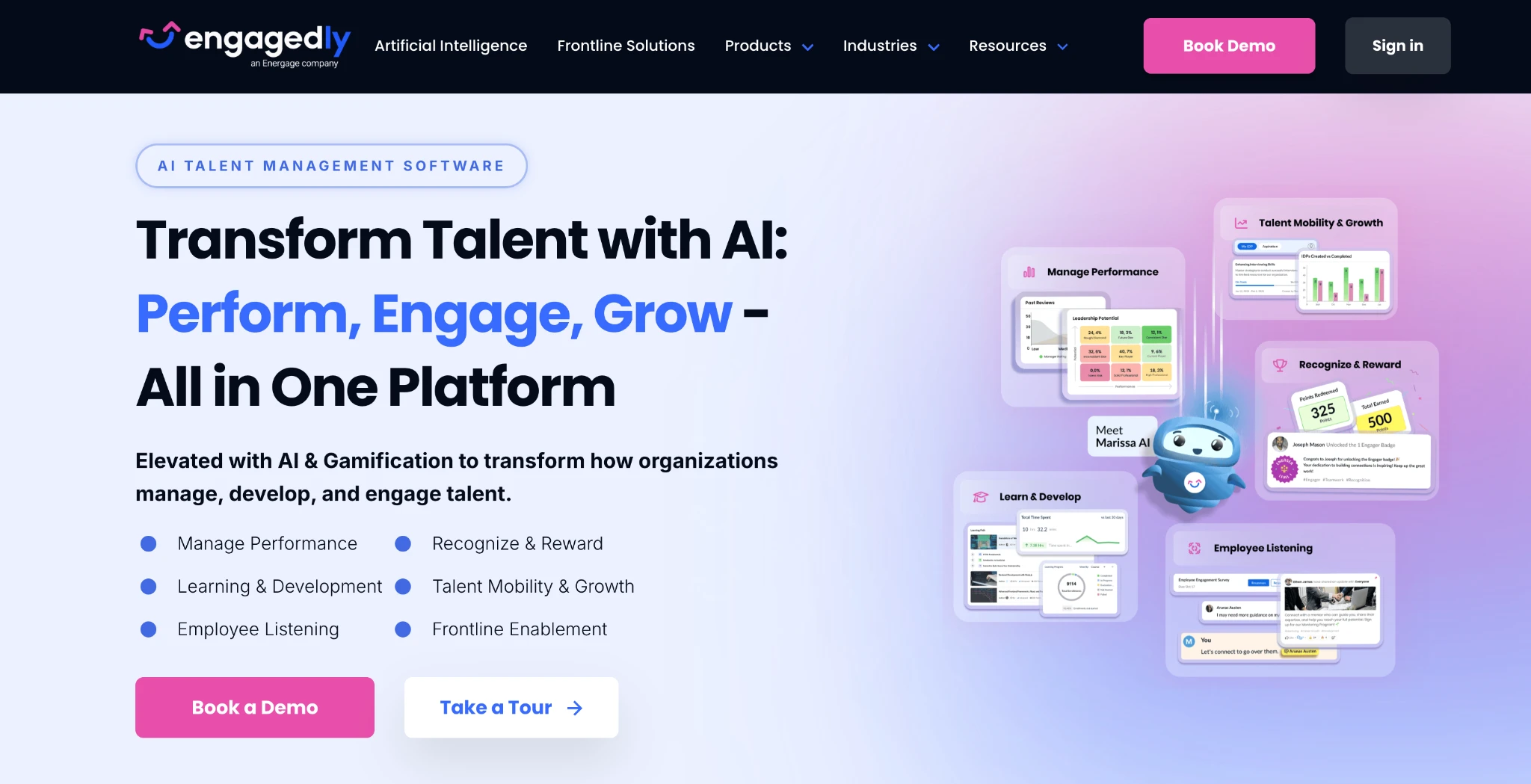
Engagedly connects readiness and critical-role coverage with broader talent mobility and employee development.
Workday, Oracle, SAP SuccessFactors, UKG Pro, and Dayforce support succession within wider enterprise talent environments.
Cornerstone connects succession with its learning and talent development portfolio.
TalentGuard emphasizes role and skills requirements, while Quantum Workplace and PageUp support succession and development discussions.
Define critical roles and readiness criteria before relying on a talent matrix.
Keep successor planning distinct from promotion commitments, credentialing, and formal clinical eligibility requirements.
Best Healthcare Succession Planning Software at a Glance
Software
Best for
Key capabilities
Pricing approach
1. Engagedly
Connected readiness and employee development
Critical-role coverage, Successor readiness
Request current quote
2. Workday
Succession planning within a Workday talent environment
Succession plans, Employee talent information
Request current quote
3. Oracle Fusion Cloud HCM
Enterprise talent reviews and succession planning
Talent review discussions, Succession plans and readiness
Request current quote
4. SAP SuccessFactors
Career development and succession in a broader SAP environment
Succession and development, Career pathing
Request current quote
5. Cornerstone
Succession connected with learning and talent development
Succession planning, Talent review context
Request current quote
6. UKG Pro
Succession planning connected with broader HR information
Succession and development, Employee talent information
Request current quote
7. Dayforce
Successor planning within a Dayforce environment
Key-role succession plans, Talent factor ratings
Request current quote
8. TalentGuard
Skills-based readiness for critical roles
Critical-role requirements, Skills and proficiency context
Request current quote
9. Quantum Workplace
Succession within a broader employee development process
Succession planning, Talent information
Request current quote
10. PageUp
Leadership pipelines and successor development
Leadership pipeline visibility, Successor development
Request current quote
Compare products, workforce coverage, implementation, integrations, services, and contract terms. Product information was reviewed in November 2026.
10 Best Succession Planning Software for Healthcare
1. Engagedly — Connected readiness and employee development
Best for: Connected readiness and employee development.
Engagedly Succession Planning helps organizations see readiness and coverage across critical roles, identify succession risks, and connect priorities with development. It sits within the broader talent mobility offering.
A healthcare employer could define a critical position, review possible successors against agreed requirements, and record the development needed before someone is ready. Keep the readiness discussion supported by evidence and appropriate access.
Key features
Critical-role coverage
Successor readiness
Development planning context
Connections with talent mobility
Pros: Useful for connected readiness and employee development.
Cons: Organizations needing only a simple replacement chart should assess the wider talent mobility scope and the employee information required.
Pricing: Request a current proposal for the succession capabilities, users, implementation, and integrations required.
2. Workday — Succession planning within a Workday talent environment
Best for: Succession planning within a Workday talent environment.
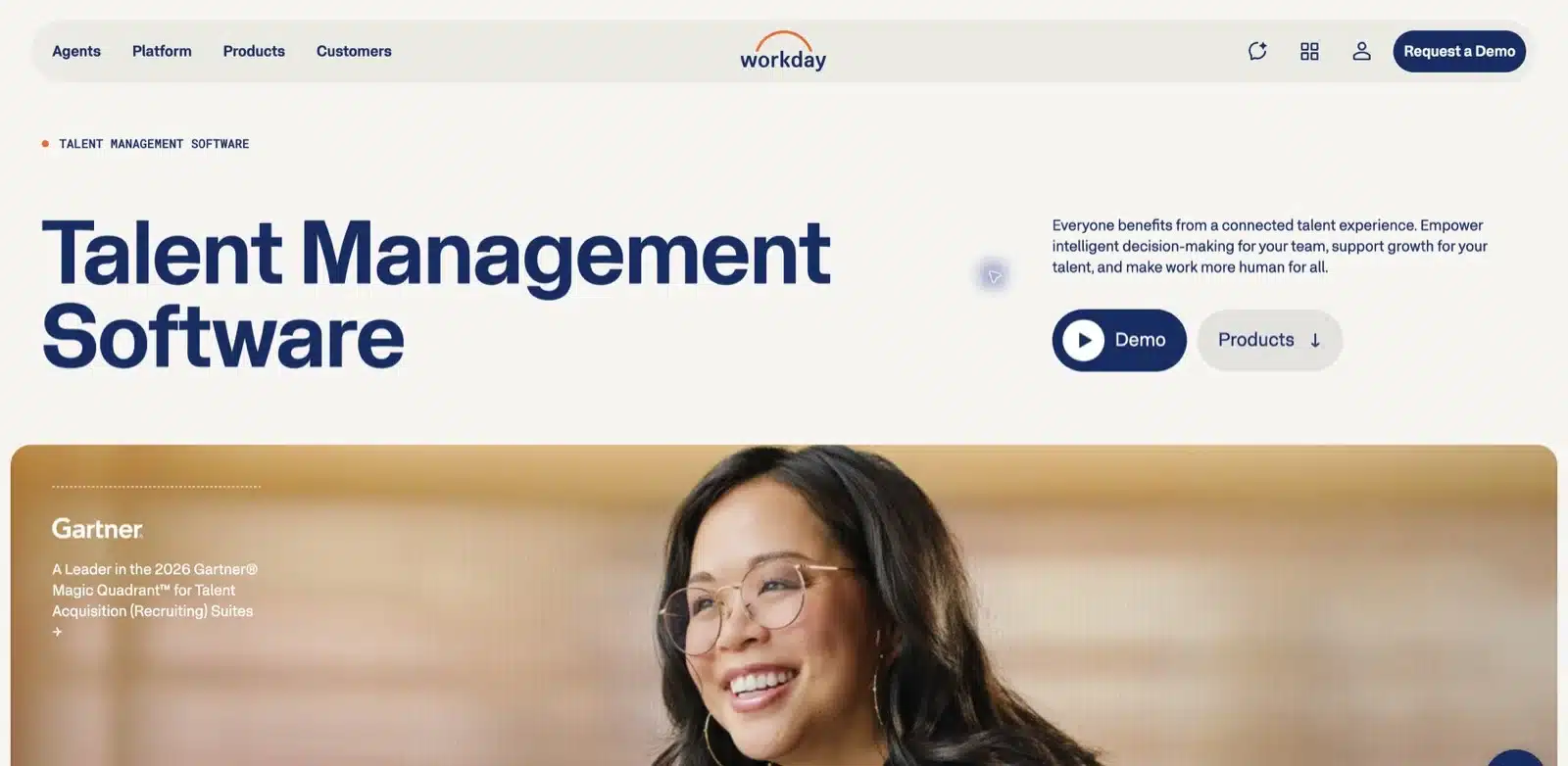
Workday supports succession planning within its talent environment, with succession plans, employee talent information, and reporting. It is relevant to larger employers coordinating talent decisions across an established Workday organization.
A health system could evaluate how HR partners review role coverage, maintain successor information, and connect development with a broader talent process. Test permissions and reporting for the actual organizational structure.
Key features
Succession plans
Employee talent information
Talent pipeline reporting
Connections with broader Workday processes
Pros: Useful for succession planning within a Workday talent environment.
Cons: Best evaluated against an existing Workday strategy; confirm licensing, configuration, and the administrative effort for the proposed succession model.
Pricing: Request a current proposal for the succession capabilities, users, implementation, and integrations required.
Best for: Enterprise talent reviews and succession planning.
Oracle Talent Review and Succession Management supports identifying potential successors, evaluating readiness, and conducting structured talent discussions. Succession candidates can also be associated with talent pools to support development.
A healthcare organization could compare the coverage of leadership and specialist roles, then agree on development priorities. Demonstrate the plan structure, talent pool workflow, and access controls using the products included in the proposal.
Key features
Talent review discussions
Succession plans and readiness
Talent pools
Employee profile context
Pros: Useful for enterprise talent reviews and succession planning.
Cons: Confirm the talent profile, talent pool, and review configuration required. Enterprise implementation can involve substantial data preparation.
Pricing: Request a current proposal for the succession capabilities, users, implementation, and integrations required.
4. SAP SuccessFactors — Career development and succession in a broader SAP environment
Best for: Career development and succession in a broader SAP environment.
SAP SuccessFactors Career and Talent Development brings succession, development, and opportunity marketplace capabilities together. It is relevant when an organization wants succession discussions connected with employee growth and internal opportunities.
A health system could evaluate how role requirements, employee profiles, and development activities inform readiness. Test the current product configuration and confirm how the offering fits an existing SAP SuccessFactors environment.
Key features
Succession and development
Career pathing
Skills-based development
Internal opportunity context
Pros: Useful for career development and succession in a broader SAP environment.
Cons: Confirm the current Career and Talent Development packaging and the work required to connect role, skills, and employee profile information.
Pricing: Request a current proposal for the succession capabilities, users, implementation, and integrations required.
5. Cornerstone — Succession connected with learning and talent development
Best for: Succession connected with learning and talent development.
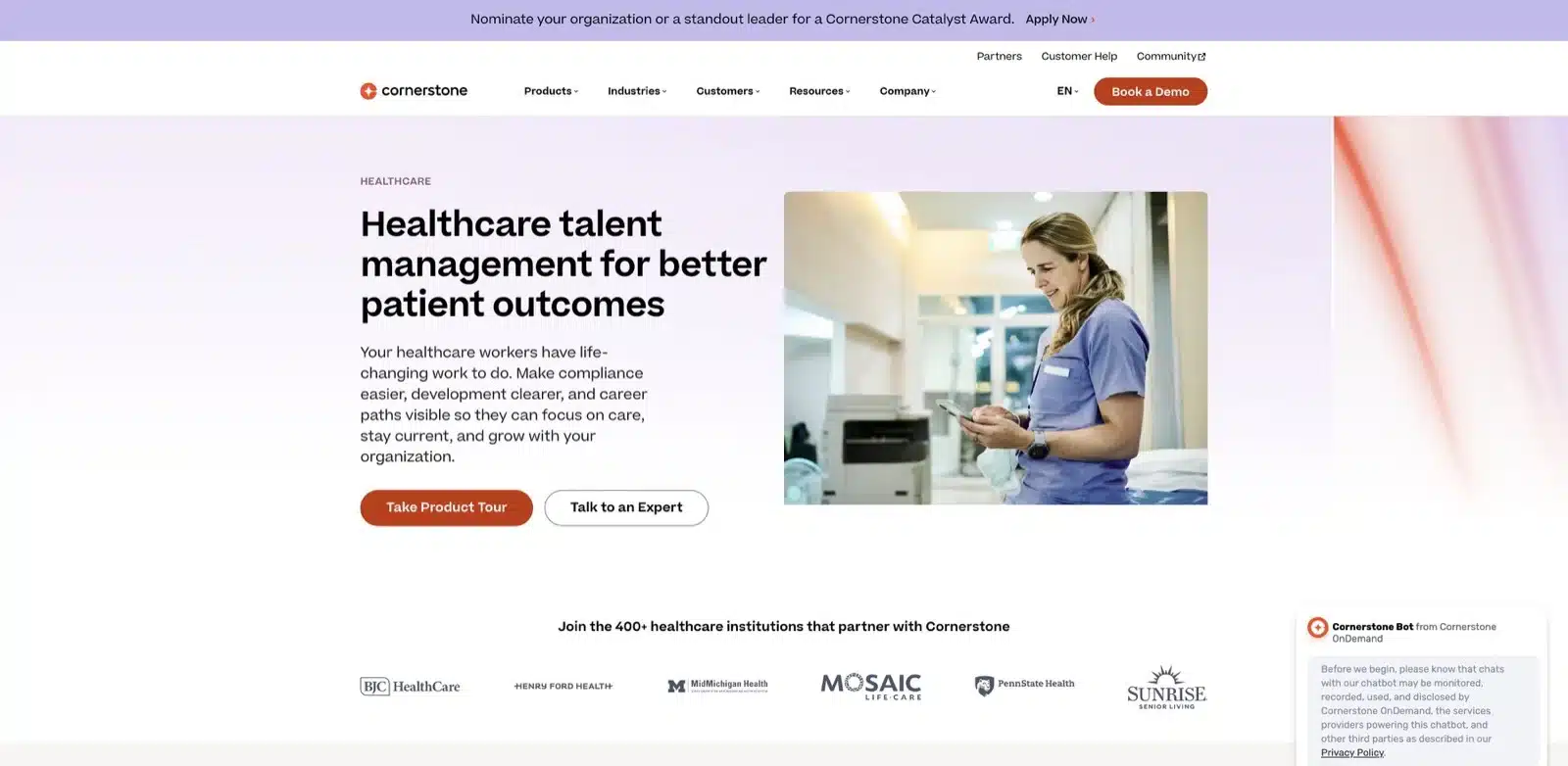
Cornerstone includes succession planning within its broader talent development portfolio, alongside performance management, learning, and talent marketplace capabilities. It is relevant when readiness gaps should lead to practical employee development.
A healthcare employer could demonstrate how a talent review identifies a development need and how that need is followed through with support. Confirm the actual succession, learning, and performance products proposed.
Key features
Succession planning
Talent review context
Development connections
Learning and performance portfolio
Pros: Useful for succession connected with learning and talent development.
Cons: Verify which succession, performance, and learning products are included; the broader portfolio does not establish that every workflow is available together.
Pricing: Request a current proposal for the succession capabilities, users, implementation, and integrations required.
Turn succession discussions into development priorities
Explore how Engagedly supports succession planning and helps teams organize readiness and development for critical roles.
6. UKG Pro — Succession planning connected with broader HR information
Best for: Succession planning connected with broader HR information.
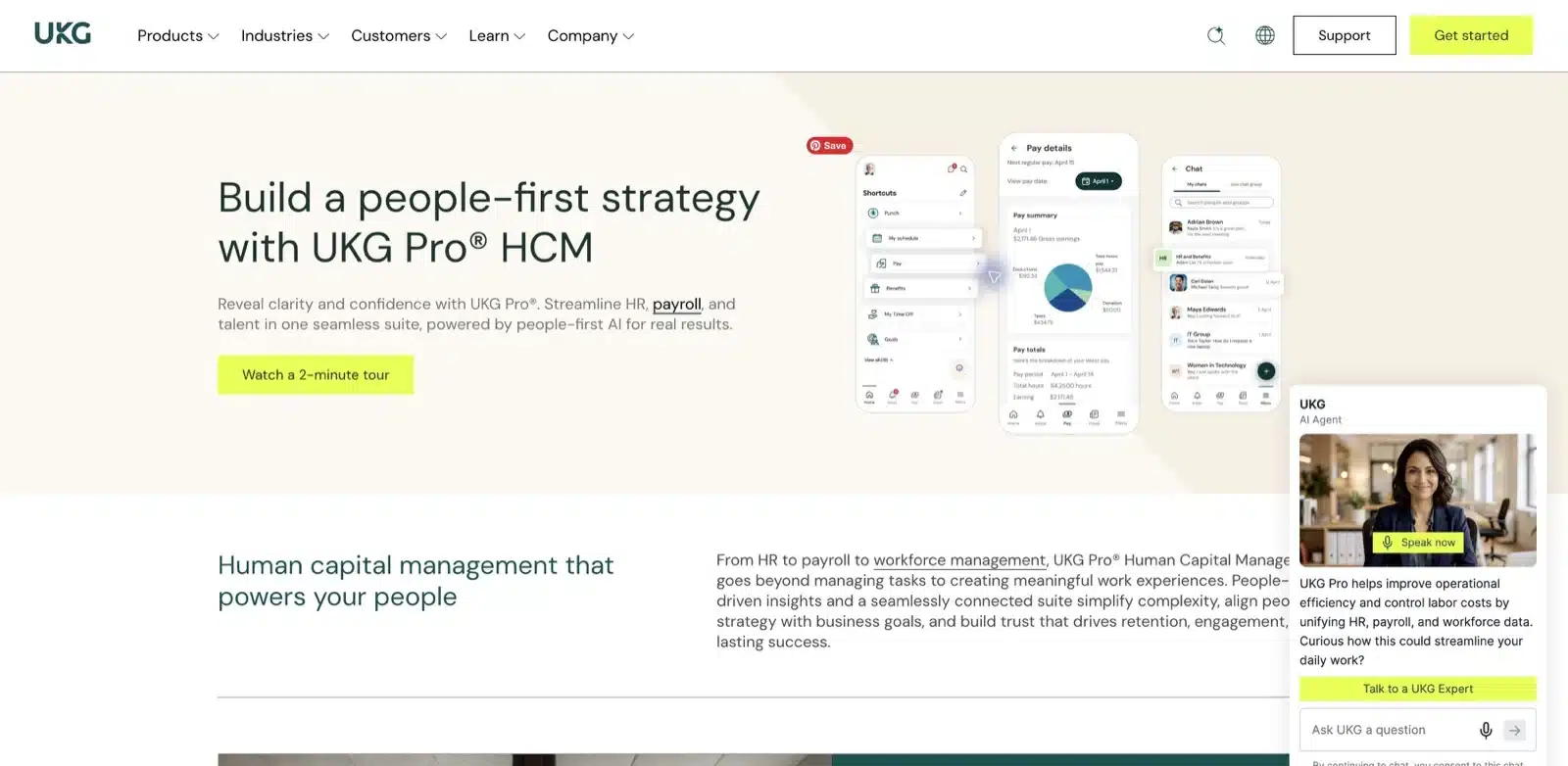
UKG Pro includes talent capabilities that support succession planning and development within its wider HR environment. It is relevant to organizations seeking position coverage and talent information alongside existing UKG workforce records.
An existing UKG employer should test the required role-based succession process, manager access, and reporting. Confirm the exact UKG Pro bundle and avoid assuming that UKG Ready has identical capabilities.
Key features
Succession and development
Employee talent information
Position coverage context
Connections with UKG Pro
Pros: Useful for succession planning connected with broader HR information.
Cons: Check the exact UKG Pro capabilities and position-based planning requirements. UKG Ready should be evaluated separately.
Pricing: Request a current proposal for the succession capabilities, users, implementation, and integrations required.
7. Dayforce — Successor planning within a Dayforce environment
Best for: Successor planning within a Dayforce environment.
Dayforce supports succession plans for key roles, employee talent factors, and talent matrix views. Its succession offering connects with broader performance and learning information in the Dayforce talent environment.
A healthcare employer could compare candidates against defined readiness factors and document the development needed for a critical role. Demonstrate how factors are configured and which users can view the plan.
Key features
Key-role succession plans
Talent factor ratings
Talent matrix views
Performance and learning context
Pros: Useful for successor planning within a Dayforce environment.
Cons: Talent factor and matrix configuration need clear definitions and reliable employee data to support useful discussions.
Pricing: Request a current proposal for the succession capabilities, users, implementation, and integrations required.
8. TalentGuard — Skills-based readiness for critical roles
Best for: Skills-based readiness for critical roles.
TalentGuard focuses succession planning on role requirements, skills, proficiency, and leadership capabilities. It is relevant when organizations want a structured basis for discussing whether potential successors meet the requirements of a critical role.
A healthcare employer could define a specialist or leadership role, review the available evidence, and agree on development priorities. Confirm how role standards are maintained and how employee aspirations are considered.
Key features
Critical-role requirements
Skills and proficiency context
Successor readiness
Development priorities
Pros: Useful for skills-based readiness for critical roles.
Cons: The skills-based approach depends on maintained role standards and evidence; establish ownership before relying on readiness assessments.
Pricing: Request a current proposal for the succession capabilities, users, implementation, and integrations required.
9. Quantum Workplace — Succession within a broader employee development process
Best for: Succession within a broader employee development process.
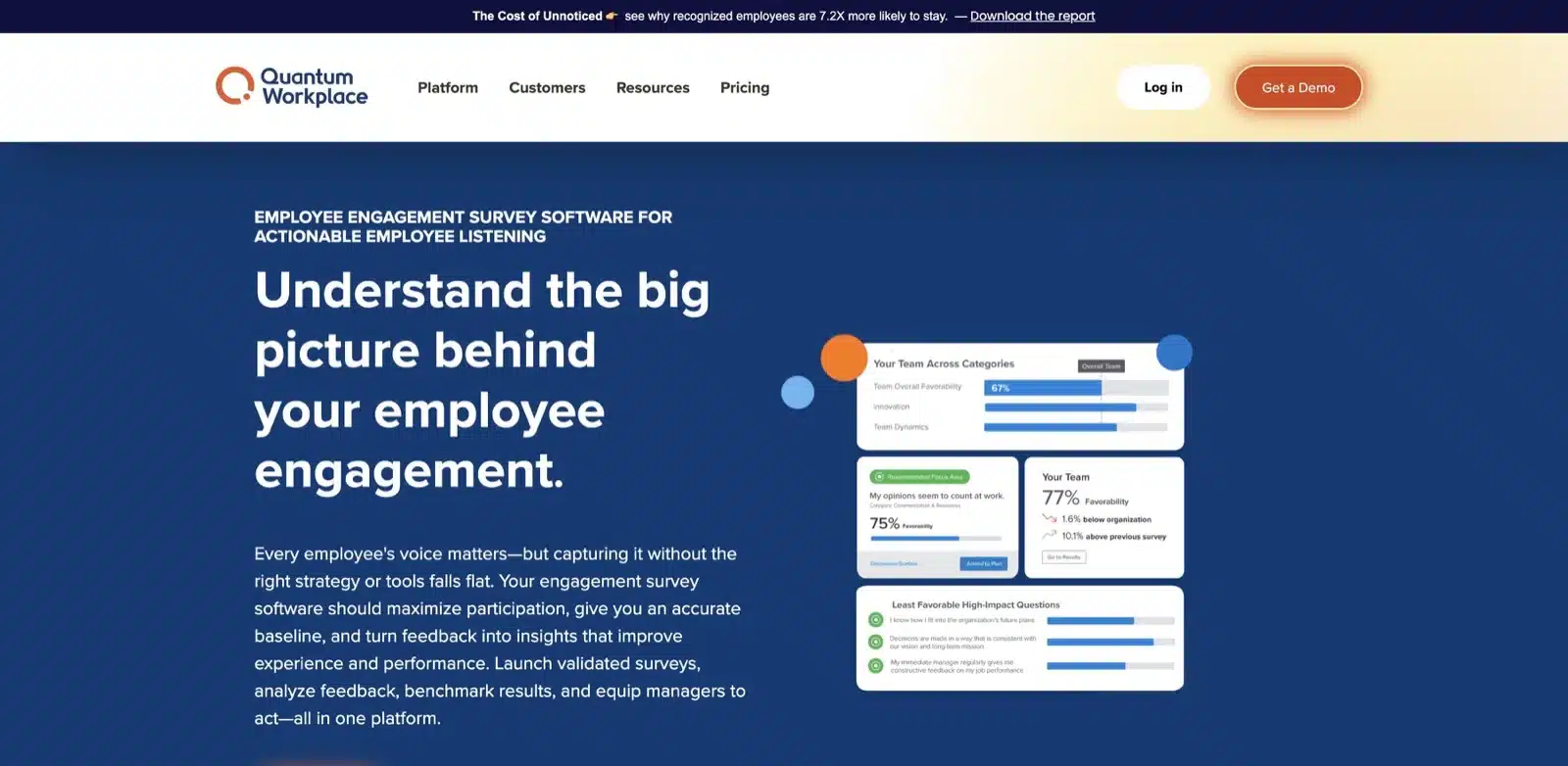
Quantum Workplace offers succession planning tools as part of a broader talent platform. It is relevant when HR wants to coordinate role coverage, talent discussions, and development using a clear process for managers and leaders.
A healthcare organization should demonstrate how succession information is maintained, including the talent data import process, permissions, and development follow-through. Test the process with one leadership and one specialist role.
Key features
Succession planning
Talent information
Employee development context
Role coverage discussions
Pros: Useful for succession within a broader employee development process.
Cons: Test talent data imports and ongoing maintenance, including who updates succession information and how changes are reflected.
Pricing: Request a current proposal for the succession capabilities, users, implementation, and integrations required.
10. PageUp — Leadership pipelines and successor development
Best for: Leadership pipelines and successor development.
PageUp offers succession tools to help organizations identify and develop employees with leadership capability or potential. It is relevant when leaders want a clearer picture of the future leadership pipeline and the development required.
A healthcare employer could evaluate how role coverage and readiness are represented and how leaders agree on next steps. Ask the vendor to show the actual data, workflow, and reporting rather than relying on a generic talent matrix.
Key features
Leadership pipeline visibility
Successor development
Role coverage planning
Talent information for discussions
Pros: Useful for leadership pipelines and successor development.
Cons: Evaluate coverage of specialist and non-leadership critical roles alongside the leadership pipeline use case.
Pricing: Request a current proposal for the succession capabilities, users, implementation, and integrations required.
What Is Succession Planning Software for Healthcare?
Succession planning software helps healthcare employers identify critical positions, organize potential successors, assess readiness against defined requirements, and coordinate development. It can give HR and leaders a clearer view of coverage and the work required to build a stronger pipeline.
The system supports a planning process. It does not establish that a person is qualified for every responsibility of a role, guarantee promotion, or replace the organization’s selection and clinical requirements.
Good succession planning also considers employee aspirations. A person’s strong performance in a current role does not automatically mean they want, or are ready for, a different position.
Which Healthcare Roles Should Be Included?
Start with positions where a vacancy would create a significant continuity challenge. Leadership roles matter, but criticality can also come from specialist expertise, scarce capability, operational knowledge, or the time needed to develop a replacement.
Review the scope with clinical, operational, and HR leaders. Consider the impact of a vacancy, current coverage, development time, and the availability of alternatives. Avoid making the process only a list of senior titles.
For each role, document the responsibilities and requirements that matter. Keep professional credentials and clinical eligibility requirements explicit and connected with the organization’s authoritative processes.
Features to Prioritize
Clear role requirements
Potential successors should be discussed against the role’s actual needs. Define the capabilities, experience, responsibilities, and other requirements before assigning a readiness label.
Ask vendors to demonstrate one leadership role and one specialist position. Confirm how requirements are maintained, who approves changes, and whether the platform can represent different kinds of critical roles.
Readiness with supporting evidence
Agree on what readiness means. A label such as ready now or ready later is useful only when participants share a definition and can explain the evidence behind it.
Separate current performance, future potential, aspirations, and readiness. They are related considerations, but they answer different questions. A strong current review does not establish readiness for every future responsibility.
Development that follows the discussion
A succession plan should lead to practical support. Identify the capability to build, the activity that will help, the support available, and when progress will be reviewed.
Development may include learning, mentoring, an appropriately supervised experience, or a defined project. Preserve the approvals and requirements relevant to the employee’s role and the work involved.
Appropriate access and accountability
Succession information can include sensitive assessments about employees. Demonstrate who can see candidate lists, readiness ratings, comments, plans, and reports. Review exports as well as the main interface.
Define who maintains each plan, how often it is reviewed, and what happens after organizational changes. Stale succession records can create confidence without useful coverage.
A Practical Healthcare Succession Planning Framework
Step
What to establish
Useful output
Identify critical roles
Impact, scarcity, development time, and coverage
A clear scope with responsible owners
Define requirements
Capabilities, experience, responsibilities, and eligibility
A shared basis for discussion
Review potential successors
Evidence, aspirations, gaps, and readiness
A reasoned assessment with appropriate access
Plan development
Activities, support, owners, and review dates
Practical next steps for the employee and manager
Review coverage
Changes in roles, employees, and organizational needs
An updated plan and visible unresolved gaps
Use this framework to evaluate the software. Ask participants to complete the workflow using example data rather than watching a generic demonstration.
How to Avoid Common Succession Planning Problems
Do not let a matrix replace the discussion
A talent matrix can organize information, but a position on a grid is not a complete explanation. Ask what evidence supports the assessment, whether role requirements are clear, and what development would change readiness.
Review differences between managers and departments. Consistent definitions and documented reasoning are more useful than visually tidy categories.
Look beyond the most visible employees
Opportunity, visibility, and manager relationships can influence who gets discussed. Use clear criteria, relevant evidence, and a process for considering employees across locations, shifts, and professional groups.
Employee development should not depend entirely on being named on a successor list. Broader performance reviews, manager conversations, and learning support can help more employees build capability.
Keep emergency coverage and long-term development distinct
An interim coverage plan addresses what happens if a position becomes vacant unexpectedly. A longer-term succession plan focuses on developing capability over time. Both matter, but one does not prove the other is complete.
Clarify responsibilities and escalation routes outside the software where necessary. Make sure the people accountable for continuity understand the plan.
Plan the next steps for your leadership pipeline
See how Engagedly can support your talent reviews, successor development, and ongoing readiness discussions.
Define the roles, workforce groups, readiness model, review rhythm, and data required. Then assess whether a dedicated development platform or an existing enterprise HR environment provides the more practical workflow.
Pilot a small set of contrasting roles. Test profile updates, candidate discussions, permissions, development plans, reporting, and organizational changes. Include the leaders and managers who will maintain the process.
Compare the same scope across suppliers. Ask for subscription, implementation, integrations, data preparation, training, and support costs. Confirm which products are needed to connect succession with performance and learning.
We reviewed public product information, documentation, and current product positioning. The comparison considers critical-role coverage, successor readiness, talent discussions, development follow-through, and connections with broader talent processes. Package details and healthcare-specific requirements should be tested in the proposed deployment.
Frequently Asked Questions
What is the best succession planning software for healthcare?
The right fit depends on role complexity, existing systems, and the development process. Engagedly connects readiness and coverage with talent mobility. Enterprise suites and specialist talent platforms offer different approaches to succession discussions and follow-through.
Should succession planning cover only senior leaders?
No. Include positions where a vacancy or capability gap would create a significant challenge, including specialist and operational roles. Define criticality with the responsible leaders.
What does successor readiness mean?
It describes how prepared a person is for a defined role against agreed requirements. Use shared definitions, supporting evidence, and a review process rather than relying on an unexplained label.
Does being a successor guarantee promotion?
No. A succession plan supports development and continuity. Actual appointments depend on role requirements, employee interest, the organization’s selection process, and the circumstances at the time.
Can software replace credentialing or clinical eligibility checks?
No. Verify the role’s formal requirements through the organization’s approved processes. Succession information can provide planning context while specialist records remain authoritative.
How often should a healthcare succession plan be reviewed?
Use a regular rhythm and revisit the plan when roles, employees, readiness, or organizational priorities change. Assign an owner so the information remains useful between formal talent discussions.
How can Engagedly support healthcare succession planning?
Engagedly helps organizations review readiness and coverage across critical roles and connect priorities with development. Explore Engagedly Succession Planning, review the healthcare solution, or request a demo using your critical-role planning process.
Simon Rakosi is the co-founder of Butterfly.ai, now part of Engagedly. An entrepreneur and HR technology leader, he focuses on improving employee experience, manager effectiveness, and workplace engagement. His work helps organizations better understand their people, support frontline teams, and equip managers with actionable insights that strengthen wellbeing, productivity, and overall team performance.











 Innovative