How To Maximize The Potential Of OKRs?

A surge of companies adopted OKRs during lockdown to make sure remote employees are aligned with company goals. Even if companies used them before the pandemic, many did not use OKRs to their highest potential. It is critical that your OKR system is impactful to every member of your organization. Google adopted an OKR strategy when they started in 1999, and used it to grow from 40 employees to 60,000 today. They still use OKRs today, and they are not the only ones. If you have been using OKRs in your company and feel it is not giving you the desired results, make sure to follow these steps to reap maximum benefits.

What are OKRs?

OKR stands for “Objectives and Key Results”. Objectives are what goals your organization wants to achieve. Everything an employee does should be working towards achieving this objective. Key results are measurements and benchmarks that are in line with achieving the objective. Key results keep employees action-oriented and break down exactly how the organization will work towards the objectives. Set up 3-5 key results set for each objective. 

Also Read: Product Management OKRs: Examples

USE MULTIPLE METRICS

It is important to set different key results so that every employee and department knows what to work towards. Financial metrics are often seen as the most important, but are not an actionable key result for every employee. There are many more important metrics to measure for business success. The Society for Human Resource Management reported that out of 600 employees surveyed, only 30 percent of respondents were satisfied with how their work contributed to the overall success of the company. Leaders need to make sure no workers are excluded when setting the OKR strategy. Having key results and objectives to improve customer service, team satisfaction, brand strength, and internal development will have many long term benefits. Good leaders set qualitative goals too.

Each objective should have no more than 5 key results. If you are setting over 10 key results per objective, you need to have more specific objectives. Otherwise, it means your measurements for key results are too small. If managers are using key results to micromanage their team, it will lower employee engagement. Often the employees that know best for what key results need prioritizing are the team members doing the task, so make sure they are being heard when setting these benchmarks. When managers don’t micromanage, their employees have a greater sense of accomplishment and can work towards their fullest potential. 

Also Read: 5 Key Focus Areas for CEOs: The Post Pandemic Shift

Using Engagedly’s performance management software you can implement OKRs that can be set for any metric and easily shared across the entire organization. Easy visibility of the objectives and how each employee is progressing on key results is critical to maximize efficiency. Provides easy visibility to employees and managers about implementation of OKRs. Employee engagement increases when they can see how their work contributes to achieving larger company goals.

STEP BACK AND REALIGN 

If your OKR system has been failing recently, make sure you step back and see if your objectives and key results are outdated. Setting OKRs is a cycle, and needs to be performed regularly. Since the key results are in line with different objectives, each objective should be accomplished and replaced when all the measurable key results are reached. If this doesn’t happen, check if your key results are comprehensive enough. Make sure to avoid short-sighted key results and objectives. Always keep the big picture in mind. 

Also Read: 5 Things to Look for in an OKR Software

When trying to think of more key results, always put the needs of the customer first. Having an OKR system that is aimed to satisfy the customers will build brand strength and loyalty. OKRs should not reflect the needs of company managers, but the needs of the customers. Always conduct research to see if the behavior or needs of your customers are changing and adjust your objectives and key results accordingly. 

USE STRETCH GOALS

If your teams are achieving every goal, you’re doing it wrong. It is important to include stretch goals to push your employees farther. Increase the key results when reevaluating your OKR to see if you are currently underperforming. Make sure managers communicate with their team that it is ok, and expected, not to reach every goal. OKR systems need to be adjusted for unforeseen circumstances and opportunities. The more past data and past OKRs you study before setting new goals, the better those goals can accurately reflect what your employees can achieve. Stretch goals encourage your employees to take risks and think creatively about new strategies to try and achieve them. Techrepublic reports 75% of corporate employees who use a formal goal framework feel empowered to take risks at work. Companies like Google, LinkedIn, Target, and Airbnb have gotten their employees to think outside the box by all using OKRs.


Want to know how Engagedly can implement OKRs into your company? Request for a live Demo!

Request A Demo

Product Management OKRs : Examples

For holistically product-based companies, product managers and their product management team is the backbone of the organization. From Google to Microsoft to Amazon, every successful organization has talented product managers to provide the perfect solutions to their customer’s problems. They work with cross-functional teams and help everyone to be on the same page with what customers want. They are a part of a myriad of activities which include:

  • Understanding customer requirements and translating them for the development team 
  • Build and design product roadmaps 
  • Enhance existing feature of the product
  • Research on competitors

While it is not as easy as marketing or the sales team to set OKRs for those in product management, having OKRs help them stay focused and measure their success. In this article, we will share some sample OKRs for your product management team that will help you get started. But before we take a look at the OKRs let us take a look at its history and what are okrs.

Also Read: The Essential Guide To OKRs: Your Ultimate Tool To Setting Winning Goals

OKRs :  A Brief History

“OKRs have helped lead us to 10x growth, many times over.” – Larry Page, Co-founder of Google.

The concept of OKRs was first introduced by the former Intel CEO, Andy Grove, in the 1970s. But it was relatively unknown until it was introduced in Google in 1999 by John Doerr. Doerr was introduced to OKRs while working at Intel. To Google, it is a part of their culture, and they consider it a management methodology that helps them focus on the same issues throughout the organization. Organizations such as Amazon, LinkedIn, Dropbox, Netflix, Microsoft, Disney, Zynga, etc., credit OKRs for their success.

What Are OKRs?

Objectives and Key Results (OKRs) comprise of: 

  • An Objective: It is a clearly defined goal to be achieved
  • 3-5 Key Results: Measurable steps to track the progress of the objectives

Each set of Objectives and their Key Results should answer two primary questions: ‘What is that we are planning to achieve?’ and ‘How to achieve it?’. 

Almost every organization globally uses the OKR methodology to set their goals because of its multitudinal benefits. Here are some of them: 

  • Short term and agile
  • Easy to align
  • Improves Transparency and Accountability
  • Time-Saving
  • Tracks progress and help prioritize tasks
  • Improves Team Collaboration

goal setting guide

How To Write Good Objectives?

  • Plain Language – Use a language that everyone understands, avoid using specific jargon and acronyms. The intention here is not to make things sound fancy. The right intention here is to convey the goals with clarity
  • Start With A Verb – Begin with a verb to describe the action and the desired direction. It helps in understanding a clear target to achieve and gives direction to the employee
  • Challenge the Status Quo – Objectives should be  set in such a way that it challenges your current way of working otherwise it would be ineffective to move your business forward
  • What’s Holding You Back? – Understand what problems are holding you back from moving forward and executing your strategy
  • Clarifying Questions – Use the Questioning method to move from abstracts to specifics of your OKRs. This will reduce confusion and help everyone understand the true objectives
  • Use Simple Rules – Use simple rules while drafting your OKRs. Have your own set of key criteria for objectives which are straightforward and simple to follow
  • Limited and Time Bound – Set no more than three objectives per quarter so that they remain impactful. Having too many objectives takes away focus from the priorities.
Also Read: Employee Engagement: Why Is It Important For Organizations?

How To Write Good Key Results?

  • Keep Them Simple And Clear – Make them simple and easy, so that they can be easily communicated understood by others
  • Assign Owner – Assign an owner who takes the responsibility of creating and achieving the key results and is responsible for updates on the progress
  • Use Positive Language – Use positive language while creating your key results as it will enhance motivation and increase commitment
  • Limit the Key Results – Set a minimum of three and maximum of five key results for every objective. Setting few will not be challenging, and setting too many will be difficult to achieve
Also Read: 360 Degree Feedback : 7 Tips To Get Started

With an insight into what is OKRs and how to write them, now let us take a look at some of the sample OKRs.

Objective 1: Research and Understand what users want

Key Results:

– Interview five Tier 1, ten Tier 2, and fifteen Tier 3 clients

– Sales Team or the Product Team interviews recent churned out customers

– Analyze Client Exit Surveys of past quarters

Objective 2: Deliver Version 2 of the project by the end of ______ (Time Frame)

Key Results: 

– Wireframe review and sign off on UI prototype

– Review and sign off on Mobile Responsive screens

– Ready for hand-off within the timeframe

Objective  3: Enhance features and improve usability

Key Results: 

– Identify and handover bugs to the development team

– Research on competitor’s products

– Connect with high level executive (clients and non-client)

Objective 4: Employee engagement and development of team members

Key Results:

– Each team members attends one training session each month

– Team members set their OKRs for each quarter

– Peer feedback is conducted half-yearly

– Two best performers from each quarter is rewarded


schedule demo with okr expert

OKR Examples for The Human Resource Team

HR or Human Resources is the backbone and the most critical team of any organization. From selecting and recruiting the right employees, implementing policies, building company culture, deciding compensation & benefits, performance management, etc., everything comes under an HR’s job function.Some of the job functions might vary from organization to organization, but they are almost similar across industries.

We cannot undermine the impact of OKRs on their work, considering the role HR plays in building an organization. When they have well-defined OKRs, it makes their job simple. It becomes easy for them to stay focused on the various activities they are involved in and achieve the goals.

Also Read: Top Five Common OKR Challenges

Brief History Of OKRs

In the 70’s Andy Grove introduced OKRs at Intel while working there. It and was later made popular by John Doerr while working at Google. It became a management methodology to help ensure that the company focuses efforts on the same important issues throughout the organization.

OKRs or Objective and Key Results consist of an objective– a clearly defined goal (the what). And 3-5 key results – measurable steps (the how) to achieve the objective. OKRs are a great way to align individual goals with team and organization goals.

Moreover, they help increase productivity, track regular progress towards goals, and increase employee accountability. Let us take a look at some tips on how to set objectives and key results.

Also Read: 5 Things To Look For In An OKR Software 

Here’s a list of OKRs for the People Operation/ HR department that can help you get started!

Objective 1: Have OKRs Set And Adopted By All Teams

Key Results:

– Organize OKR Goal Setting training workshop for all team members

– Achieve an 85% approval rating on employee survey on OKR effectiveness

– Achieve  at least 60% completion rate for the first OKRs cycle

Objective 2: Create And Sustain A Diverse And Inclusive Team

Key Results:

– Increase women in leadership positions (Director and above) to 41%

– Conduct an unconscious bias workshop and train the managers

– Improve the rate of underrepresented minorities in all roles up to 40%

Also Read: Why OKRs are crucial when onboarding new employees?

Objective 3: Grow The Organization With A-Players

Key Results:

– Increase referral bonuses for Employee referral programme by 20%

– Achieve a ratio of 3:1 between interviewed and hired candidates

 –Achieve 11% increase in job offer acceptance rate

– 85% of new hires score “meets expectations” or higher after 6 months on the job

Objective 4: Create And Implement An Effective Benefits Program

Key Results:

– Research and understand the benefit programs of 5 competitor companies (50-200 employees) 

– Compare the current employee benefits with industry standards and recommend better ones

– Achieve usage of about 70% of the benefits program

Maintain the budget for benefits for each team below 700$

Objective 5: Create an effective leave management system

Key Results:

– Hire a new team member to service employee administrative needs

– Evaluate 3 solutions for leave tracking and select the best one for the team

– Achieve 90% satisfaction rate of the new system


Do you want to know how Engagedly can help you with OKRs? Then request us for a live demo

Request A Demo

Know Why Your Organization Should Start Using An OKR Software

Before plunging into the discussion of why your organization requires an OKR software, let’s take a look at a short story. Steve is a product manager at a startup. Recently, from the time his team started working from home, he has realized that his team is often falling behind schedule and crossing the deadline of projects. Not only this, many have reportedly lost interest in their work.

Steve and his team are not the only ones out there; there must have been many teams like his or organizations who must have reported the same. It has become quite common for people to lose focus and get disengaged while working from home.

Also Read: Virtual Onboarding: A New Reality

Having an OKR software in place helps your employees to stay focussed and keep them engaged even though working from home. Here are five benefits of using an OKR software at your organization.

Easy To Track Progress

One of the vital parts of employee goal setting is tracking their progress and actively helping them with their goals. OKR software allows you to track employee progress on goals effectively by sending out notification to goal assignors each time the someone checks in on the goal and giving the goal assignors the ability to comment on each goal check-in.
The ability to comment on goals allows both managers and employees to have a discussion about the goal and the progress that is being made. Commenting is an easy way to foster communication without having to formalize it.

Also Read: 5 Best Tips To Reduce Employee Turnover

Goal Assignment Becomes Simpler

Assigning goals is the basic functionality to look for in any goal setting software. This functionality allows managers to assign a goal to their direct reports without directly involving themselves into the goal. This functionality also allows managers to keep track of the progress that their direct reports make.
Assignment makes it easy for managers to assign goals to their direct reports without having to set up a formal meeting to do so.

Helps Prioritize Tasks

We all have those days when we have too much on our plates and do not know where to start. Defining Objectives and Key Results helps you understand which tasks hold more importance and which ones can be pushed behind. Using an OKR software to do this can make the whole process easier and interesting. They help your employees understand their goals better and give them a sense of direction. It is easier to accomplish goals when they are specific and easy to understand.

Also Read: Have You Set Effective OKRs for Your Customer Success Team?

Helps Align Individual OKRs With Company Goals

This is one of the very important aspects of using an OKR software at the workplace. Most employees usually have one question: ‘What difference does my contribution make to the organization’. With an OKR software, you can align individual goals with company goals and employees can easily understand how their contribution matters to the organization.
They can also check their progress and see how their work has contributed in organizational success.

OKR Software Promotes Team Collaboration

Company and team OKRs are usually visible to everyone when you use an OKR software. This allows the employees to gain an understanding of what their coworkers are working on and how they can contribute to accomplishing company goals as a team. This visibility of team OKRs to each other allows team members to support each other and complete their individual goals too.

If your organization hasn’t started using an OKR software, this is the right time to do so.


Are you looking for an OKR software for your organization? Then request for a live demo

Request A Demo

Top Five Common OKR Challenges

There is a surge of start-ups in this era, some of whom start generating large sums of profits within a few years of foundation. Are you wondering how these companies manage to hit success so early?

Well, it’s not a very well hidden secret. The answer lies in the management framework these companies follow. OKR is definitely an important aspect, which stands for Objectives and Key Results. The Objectives are the end goal that you want to reach, and the Key Results are measurable ways by which you can get there.

Some of the top companies to use OKR include Google, Twitter, Intel, Sears, LinkedIn, Oracle and Zynga. OKRs essentially help bring teams and the entire company together.

Why Use OKRs?

Gives A Sense Of Direction:

Imagine the outcome when a collective of dozens or hundreds of employees, all moving as one towards a common objective. It’s surely to derive fantastic results.

Improved Focus:

OKRs allow you to revisit objectives on a frequent basis and measure where you stand in comparison. This enhances focus and personal growth.

Increases Collaboration:

Every employee has certain set skills and if you have to make things happen in your workplace, you need to work with different teams that can move different aspects and finally get you to the finishing line.

Most companies have different layers of OKRs. There are entire company objectives and key results followed by the different departments such as Marketing, Product, Engineering, IT and Data, HR, Customer Service, Sales, Ops, etc. Breaking these down, each individual has their individual OKRs.

If your OKRs have not been fetching the right results, you might want to look into the following pointers.

Have Well Thought Objectives

When your team is achieving the OKRs too quickly, it might mean you are setting goals that are too easy. Objectives need to be ambitious, yet not impossible. If you achieve 70-80% in a given time period, it’s a positive progress. If you don’t, you need to re-evaluate.

Weekly Check-Ins

Most often teams set OKRs only to forget about them after some time. To tackle that situation, have weekly meetings to discuss team OKRs and the progress. Otherwise you might lose sight of the finishing line and go completely off-track.

Also Read: Why OKRs Are Crucial When Onboarding New Employees

Have Limited OKRs

Too many OKRs can completely mislead the employees and leave them utterly confused. Plan a maximum of 3 Objectives per timeframe and about 3-5 key results per objective.

Number Your Key Results

Key results make objectives measurable. While objectives are the bigger goals, Key Results measure how far you have achieved those goals. So it’s important to specify in numbers, what is your target and how you will get there.

Also Read: What To Look For In A Goal Setting Software

Don’t Miss The Bigger Picture

It might be easy to keep the key results in sight and keep working, don’t forget to keep the bigger picture in mind. Make sure to mention the objectives often, so that employees know where they are heading and if there are any diversions, they’ll identify and correct themselves.

OKRs definitely help in creating a sturdy process wherein thinking out of box is necessary in order to solve company problems. It’s easy as long as you know where you are headed and what are the measurable steps required to get there.


Do you want to know how Engagedly can help you with implementing OKRs? Then request for a live demo

Request A Demo

Why OKRs Are Crucial When Onboarding New Employees

It’s your first day at work and you are filled with enthusiasm to contribute to the company’s vision and prove yourself. But you have no idea how things work at your new office or where to start.

Wouldn’t it be more helpful, if your work goals and key results were communicated to you?

Onboarding is a fairly overwhelming affair and most new hires face a few common challenges like lack of clarity in their job role,  change management, learning about the company, product, marketplace etc.

But as an HR manager, you can use OKRs to help your new hires.

What Are OKRs?

OKRs stand for ‘Objectives And Key Results’. OKRs are a popular approach for goal-setting which allows employees to execute individual and organizational goals.

OKRs are a popular approach for goal-setting which allows employees to execute individual and organizational goals. OBJECTIVES are something that you want to achieve, and KEY RESULTS are a measurable way to keep track of how close you are to achieve your objective.

Also Read: OKR Goal Setting For Successful Businesses

Here are six reasons why you need objectives and key results for new hires at your workplace.

Aligns Individual Goals With Company Values

This is one of the very important aspects of using OKRs in the workplace. When you hire someone new, they usually have one question: ‘What difference does my contribution make to the organization’. With OKRs, you can align individual goals with company goals, and employees get a fair idea of how their contribution matters to the organization. It helps them to understand where they fit into the bigger picture.

Promotes Teamwork and Collaboration

Company and team OKRs are usually visible to everyone. This allows the new hires to gain an understanding of what their coworkers are working on and how they can contribute to accomplishing company goals as a team. This visibility of team OKRs to each other allows team members to support each other and complete their individual goals too.

Also Read: 5 Common Teamwork Challenges Every Team Encounters! 

Help Prioritize Tasks

We all have those days when we have too much on our plates and do not know where to start. Defining Objectives and Key Results helps you understand which tasks hold more importance and which ones can be pushed behind. They help your new hires understand their goals better and give them a sense of direction. It is easier to accomplish goals when they are specific and easy to understand.

Gives Clarity Of Work

OKRs are simple and transparent. They give you a clear understanding of why you need to accomplish a goal and how you can do it. They reduce the overall time spent on setting and accomplishing a goal. Objectives help new hires understand what is expected of them and key results help them understand how they can achieve the objective.

Also Read: Remote Team: Goal Setting And OKRs

Offers Flexibility

OKRs have a shorter goal cycle when compared to traditional goal-setting methods. Using OKRs, employees can set goals for a year, half-yearly, quarterly, or even monthly. As OKRs are set for a shorter cycle, it allows organizations and employees to adjust and update existing OKRs whenever required.

Helps Monitor Progress

As a new hire, it is really stressful to manage your tasks, learn about your work at a new office and keep track of your performance. There is a possibility that your manager and you might not even be on the same page when it comes to evaluating your own performance. OKRs allow you to keep track of your progress. With OKRs, managers also can keep track of the progress of their direct reports and communicate with them directly.

Also Read: Virtual Onboarding: A New Reality


Working with a coach is a proven best practice to help implement your OKR strategy and drive business outcomes.

The OKR Launch and Coaching Program is a customized consulting service program designed by Engagedly to help organizations successfully implement and widely adopt the OKR approach.

Click To Know More


The Benefits Of Using OKRs In Large Scale Organizations

In 1999, John Doerr made a presentation about OKRs at a fledgling startup.

If you know your tech history well, you probably know where this is going. The startup in question was Google, and OKRs stands for Objectives and Key Results. Google’s use of OKR’s is legendary. OKRs are widely credited with helping Google really take off. In short, here is what Google did to harness all of the potential that OKRs promised.

How OKRs helped Google?

Firstly, they made sure that everybody’s OKRs were public. The OKRs in question had to be ambitious and slightly out of reach. If the OKR did not make you sweat, then it probably wasn’t ambitious. These OKRs were then made to be measurable. They utilized a scale of 0 to 1.0 – where getting a score of 0.6 to 0.7 was acceptable and good even. And finally, bad grades weren’t punished. Instead, they were simply used to refine the next set of OKRs. The implementation of Objectives and Key Results changed the way things worked. Goals were more open, easily understood and measurable. This use of OKRs set off a precedent and as a result, they are used even today at Google. Oh and additionally, today Google is a multinational tech giant.

While OKRs were not the sole reason for Google’s success, there must be some value to them if Google continues to utilize them even today, despite having an employee base that numbers in the thousands.

So what exactly are the benefits of OKRs? But before we begin, it is important to clarify one thing.

goal setting guide

Also Read: Planning To Set OKRs For Your Sales Team?

OKRs are not to be confused with employee performance evaluations. And nor should employee performance evaluations be considered similar to OKRs. They are two completely different things. OKRs involve goals and results, while employee performance evaluations measure how well an employee had performed within a period of time.

Now, back to OKRs and why they are so great.

Streamlines Goals And Ideas

In the absence of discipline, ideas look good on paper but remain frustratingly improbable.  You might have a brilliant idea about streamlining a certain process. But if that idea does not help you accomplish your personal goals or align with company goals, then it is not relevant to your work. It could certainly be your pet hobby project, but it has no place at work. Establishing an objective and laying out the key results that you want to achieve ensures that your ideas, thoughts, and processes have a determined focus on them.

Also Read: The Essential Guide To OKRs: Your Ultimate Tool To Setting Winning Goals

Boosts Communication Among Team

Here is a scenario: Employee A sets a list of objectives that need to be met. And so does Employee B. At some point of time, their objectives overlap and they realize that in order to achieve these objectives, they will have to collaborate. While initially, they might collaborate out of necessity, over time as they get comfortable, they will begin collaborating and communicating in earnest, all because they like working with each other.

Setting OKRs at every level, not just personal, but also at the company and team levels means that at some point or the other, all employees will begin communicating. And over time, this communication becomes genuine and organic and positively impacts performance. An additional benefit is that with some practice and skill, good performance can turn ordinary teams into high-performance teams.

Also Read: 4 Goal Setting Mistakes Managers Make

Gives Clarity of Job Roles

OKRs involve everybody and are not private. It is not right to expect employees to align themselves to organization goals when they have no clue as to what the organization’s goals are! And how can we expect employees to figure out they need to collaborate with another colleague if they do not know what the colleague’s goals are?

Knowing about an organization’s goals, objectives and key results and how an employee fits into the grand scheme of things gives them a clearer idea about the big picture, and how they themselves fit into the big picture. Think of it as a schematic where everyone knows where they are headed and what they need to do. Once they know what role they play in an organization, employees find it much easier to meet goals and objectives.

Prioritize Tasks and Improves Productivity

This point is an offshoot of the above one. When there’s an objective with measurable key results to be met, employees are able to streamline their efforts and focus on achieving results that matter to the objective. They learn to prioritize some tasks over the others and in essence separate the wheat from the chaff. Prioritizing becomes an important skill as well. Employees need to be able to gauge if what they are currently doing impacts their OKRs positively or detrimentally. If they find that their time is being spent on other laborious tasks, then they can figure out alternate solutions as well This ensures that employees spend their time and efforts productively.

Also Read: A Guide To Understanding Job Competencies

Identifies Clears Measure of Success

If you ask me, this is one of the most important aspects of OKRs. More often than not, success tends to be measured by the end result. This isn’t to say that this method of determining success is wrong. However, it is one-dimensional and it does not take into account a lot of other factors such as the methods implemented in order to be successful. Or the skill sets, dedication and hard work involved. OKRs, on the other hand, redefine the meaning of success and the measurability of goals. They set visible targets and help convert work into something countable that even displays the amount of effort the employee expended on it.


Working with a coach is a proven best practice to help implement your OKR strategy and drive business outcomes.

The OKR Launch and Coaching Program is a customized consulting service program designed by Engagedly to help organizations successfully implement and widely adopt the OKR approach.

Click To Know More


How to Set OKRs for Your Company in 2024

Have you aligned your employee goals with your organizational goals yet? If not, 2024 is the right time to get started with the practice. Learn how to establish this practice at your workplace this new year!

OKRs have become an important part of performance management in most organizations; many HR managers are adopting them for employee goal setting. Objectives and Key Results (OKRs) methodology is one of the most simple and effective ways for goal setting and monitoring at workplaces.

A Brief History of OKRs 

Objectives and Key Results or OKRs is a goal-setting framework that is used widely by organizations all over the world. These organizations include the likes of LinkedIn, Google, Amazon, Disney, and many more. They were first introduced by Andy Grove at Intel in the ‘70s, and later, it was made popular by John Doerr when he introduced it at Google in 1999. To date, it is a central element of Google’s culture and serves as a management methodology, which helps focus company efforts on the same issues throughout the organization.

OKRs consists of two components, namely:

– Objectives: a clearly defined goal to be achieved

– Key Results: measurable steps to achieve the objectives

Here’s a simple guide for you to get started with OKRs in 2024!

Introduce OKRs To Your Team

It is important to introduce your team to the OKR methodology and give them an opportunity to familiarize themselves with the whole process. While there are a number of OKR guides out there, why not go to the one that is synonymous with the term OKRs. Google has an OKR guide that will take users through history and set up and even teach them how to write actionable OKRs.
Before moving onto the next step make sure that your teams understand why OKRs play an important role in the growth of a company and how the alignment of goals works internally.

Also Read: How To Set Effective Goals

Decide Organizational OKRs

The next step is to create business goals based on your company’s annual strategy. This step requires a lot of brainstorming and collaborating with different departments. Understand the company’s vision and mission to establish these OKRs.

Remember that your OKRs should answer these two questions:

Objectives – What Do You Want To Achieve?

Key Results – How To Know If You Are Getting Closer To Achieving It?

Example:

ObjectiveIncrease market reach by 35% by Q4

Key Results2nd largest distributor network in Q2 growing at 15% per month Voted most popular product across 5 leading publications

Objective:Leverage product feature that is ranked most popular in the market<

Key ResultsThe heat map of the website shows 60% of visitors focus on a primary feature of the product and remaining on secondary features. Feedback received from customers indicates the product’s primary feature provides 2x more value.

Collaborate With Team 

Once all your teams are sufficiently familiar with the approach, encourage them to draft their own OKRs. Collaborate with them and help them create their OKRs, this can sometimes lead to conversations that help you understand your teams and their plans better. It allows employees to understand what is expected of them by management.

Also Read: High Performing Teams In Healthcare

Align Individual OKRs

All goals need to be aligned with an organization’s goals. That is the true purpose of achievable goals and objectives. Once your employees have set their individual OKRs, align their goals with company OKRs or business goals of your company.

Review Your Team’s OKRs

Now that all your teams understand the purpose of OKR methodology for goal setting and have set their individual OKRs and successfully aligned them with company OKRs, all you need to do is review these OKRs before they start working on them. Review the OKRs of all your teams and make sure that their OKRs are aligned with the company properly.

Also Read: Wondering How To Set OKRs For The Engineering Team?

Track Progress Of Success

The next step is to monitor these OKRs. You have to keep track of the progress your employees make on these OKRs in the coming days. Monitor how regularly your teams are checking-in on their OKRs and keep track of their progress regularly and modify the OKRs if needed.


Working with a coach is a proven best practice to help implement your OKR strategy and drive business outcomes.

The OKR Launch and Coaching Program is a customized consulting service program designed by Engagedly to help organizations successfully implement and widely adopt the OKR approach.

Click To Know More


OKR Goal Setting For Successful Businesses

Using OKRs without realizing their purpose or objective, makes them feel complex or unusable. However, it is possible for organizations to use OKRs, just like Google, and achieve success if you understand every aspect of it.

Most businesses have digitized their goal setting processes by using OKR software. Here are a few things you should take care of before implementing OKR software in your organization.

Identify Your High-Level Goals

This is the first thing that an organization needs to identify. Organizational goals tie into the mission and vision of the organization.

Use your organization’s values to establish what you would like the high-level goals to be. Remember that all the department goals, as well as individual employee goals, will be linked to these goals and your metrics too will depend on these goals.

To give you an idea of what high-level goals are, here is an example.

“Become the market leader in the medical software field in the APAC region.”

This is a lofty and high-level goal, and by itself, it seems very impossible. However, it is necessary for you to figure out what your other goals will be. Do not fall into the trap of setting too many high-level goals. Instead, focus on setting 3 or 4 (or a maximum of 5) quality high-level goals. Keep refining them until you think they encapsulate what you want to achieve for the year.

Also Read: Employee Engagement Software To Help Enhance Productivity

Have Flexible and Challenging Goals

Flexibility and fluidity are important for goals because it gives employees the leeway to accomplish a goal in different ways. It also allows you to account for outliers or abnormalities that you would not have considered beforehand.

Often at times, when setting goals, we get carried away and set a number of goals that seem very easy to accomplish at the outset.

Goals should challenge you, that is for certain. However, they should not derail your work or even consume most of your energy, so much so that it is not possible to focus anywhere else.

Goals that consume an inordinate amount of time and energy and do not contribute to the main goal in an impactful way are wasteful goals.

Align Employee Goals To Organizational Goals

It is important to align employee goals with organizational goals. All employees’ goals should connect back to the overarching main goals of the organization. This ensures that everyone is on the same page, and more importantly, is working towards the same objective.

Goal alignment ensures clarity of purpose for employees because they can now see how their work ties into the overall scheme of things. It also ensures that employees are invested in the work they are doing since they are working with the knowledge that their work has a larger purpose and makes significant contributions.

Also Read: Using OKRs In Startups To Measure Success

Set Key Results

By breaking down your high-level goals, you can figure out how you can achieve them. Using the example from earlier on, let us break down the goal to its objectives and key results.

High-level goal: “Become the market leader in the medical software field in the APAC region.”

This is your objective. In order to achieve this objective, you need key results that can help you measure success.

Key Result 1: Gain 200 clients

Key Result 2: Increase sales team by 20 members

Key Result 3: Gain profit of $250k or more

As you can see, these three key results seem disparate, but they all tie into the higher-level organization goal. Achieving these key results will help you achieve your main objective.

When setting key results, clarity of purpose is really important. These key results are what you will measure to estimate if you have achieved your goal or not. If your key results are vague (or your main goal is vague as well), then the goal-setting process will become muddled as well. Your key result will not be a key result if it doesn’t have a number.

Also Read: Remote Team: Goal Setting And OKRs

Measure Progress

It is vital to track goal progress not just to see how far along you have come, but mainly, to take stock of the situation. Tracking goals and reviewing them tells you where you stand and what you need to do next.

Maybe you have been working really hard on accomplishing one goal and are close to completing it. Tracking that goal tells you that you can now afford to devote less time to it. Or conversely, you are tracking a goal and notice you have not been able to accomplish much. By taking stock of the situation, you understand that accomplishing the goal will require more resources and an adjustment to the end result.

By tracking goals regularly, you can make quick changes if necessary, rather than slogging away at the same goal with nothing to show for it.


Working with a coach is a proven best practice to help implement your OKR strategy and drive business outcomes.

The OKR Launch and Coaching Program is a customized consulting service program designed by Engagedly to help organizations successfully implement and widely adopt the OKR approach.

Click To Know More


Why do you need a Real Time Performance Management Software

Covid-19 has changed the way we work today. We all know that! As everything turns virtual, it’s become necessary to have a performance management process in place. If cultivated right, it motivates and aligns employees to the company goals. For those many companies who are still using traditional paper- based processes to track and record performance management, it’s highly difficult to extract or collate data. Now that the world has moved to remote working, why not change with situation and embrace more efficient business processes?

Earlier, annual performance reviews were the indisputable norm, and it used to be dreaded by both the managers and the employees. Today, though, performance management has evolved tremendously, making it more flexible and inclusive. Traditional performance processes work fine when organisations are small or have a very simple review process. But once organisations get bigger, and job roles get more complex, there’s a need for software to enhance the process, or rather, to ease the process.

We would like to elaborate on how real-time performance management software can benefit your organisation. Here are the reasons:

Also read: Know What Features To Look For In A 360 Feedback Software

Easy to use:

Depending on the choice of software, a performance management software can be extremely easy to use. All the things required for a review cycle are in one place. Most of the processes are automated, and once the review information has been submitted – start dates, review templates etc, there’s not much else an HR manager has to do, except oversee the entire process.

Even better, HR managers don’t have to frequently remind employees to complete their reviews. Most software has built-in reminders that will urge employees to complete the review process. The software takes the burden off HR’s shoulders and instead allows them to focus on the outcome of performance reviews.

Integrated features:

If you think that a performance management software focus solely on the review processes alone, you are mistaken. They offer other features as well, such as the ability to share feedback, goals and objectives, an LMS, etc. All these features are often integrated so that when the review process is going on, users can view an employee’s complete profile, such as the feedback they have received, the goals they could complete, to what extent they could complete their goals, or even what new skills they have learned.

Performance management software offers a macro view of an employee’s performance and helps others make informed decisions during the review process.

Well-defined goals:

Imagine a situation, wherein a remote employee is expected to put in his or her 100% effort but is not sure what’s the end result of this. Do you think she or he will be able to put in the right kind of effort? Performance management software enables the company to have clear-cut goals, and make them visible to every employee. Every worker gets to see how their effort can help the company achieve higher-level goals.

When they see how they can make an impact at the individual level, it makes them want to strive harder. Managers can easily keep a track of their team performances remotely and can provide feedback accordingly.

Real-time information:

The best part about real time performance management software is, you can access data anytime, and it helps to make quick and efficient decisions. They provide old as well as new data in one place, for you to compare and understand patterns and identify any gaps or bottlenecks. It becomes easy to track the performance level.

Also read: How Important is Feedback in Today’s World?

Insights on performance:

Performance management software can provide a very insightful look at an employee’s performance. This is not just related to ratings and feedback they have received over the past years. Rather, many performance management software also offers performance analytics that track employee performance in graphical chart format, calculate leadership potential, etc. This way, you can also track how well an employee is performing.

These employee data can help others make informed review decisions when reviewing performance. And they can also help managers make compensation decisions or even promotion decisions.

Efficiency in control

When everything is in one place, a lot can become easier. Conducting the review process through performance management software offers HR managers greater control over the entire process. They can control when the cycle starts and when it ends, how many employees should participate in the cycle, etc. HR managers can also restrict review visibility, call back reviews etc, thereby also maintaining a fair and just review process.

As a manager, you have a ton of other responsibilities, other than just tracking your employees’ performance. So if you wish to be more efficient and handle things with ease, a performance management software is your go-to option.


Engagedly is offering a suite of products part of its Remote Work Toolkit free to any organisation, until Sept 30th, 2020. 

The Coronavirus has affected the way we work today and for months to come. Unprecedented events require unprecedented measures. We at Engagedly believe it is our responsibility as socially conscious corporate citizens to help equip organisations with additional tools and resources during this time of crisis.


Do you want to know how Engagedly can help you with seamless Performance Evaluation? Then request for a live demo.

Request A Demo

Planning To Set OKRs For Your Sales Team?

Have you ever wondered what separates a high performing sales organization from an average or low performing one? The answer to this question is easy; employees in a high performing organization have well-defined goals. But is having well-defined goals enough? No, having goals alone does not lead to success. Organizations must have strategies in place to manage them. One such popular approach is ‘Objective and Key Results’ or popularly known as the OKRs. Before we learn more about OKRs for your sales team, let us take a look at ‘What Are OKRs?’ and ‘Tips To Set OKRs’. Continue reading “Planning To Set OKRs For Your Sales Team?”

How Engagedly Can Help You Enhance Employee Engagement

We are all aware of the way the world has changed in the past 6 months. Work from home has become the norm, and keeping remote employees engaged and motivated is a challenge all organizations face today. Before we leap into the core topic, it’s important for you to understand the employee’s perspective.

75% of the world’s population of employees used to commute to their offices everyday, live a routine of movement and activity. Only about 7% of U.S. workers had the option to regularly work from home (source). However, with the outbreak of Covid-19, that scene has drastically changed. Now employees spend almost everyday at home, working remotely and hardly stepping out in the process. Movement and activity has reduced tremendously, along with face-to-face interactions with colleagues and leaders. From enjoying very active, healthy, and interactive schedule, to a shift in being homebound most of the time; a certain amount of physical, intellectual and emotional inertia is bound to set in. This can slow down organizational growth and in the long run, economical growth. That’s why employee engagement is of utmost importance today.

Also Read: Continuous Performance Management: A Necessity During COVID-19

We often come across interesting articles which convey that engaged employees can help you increase your organizational productivity. But larger organizations, more often than not, are still focusing on their deadlines and on getting the work done. They are forgetting that it is also important for employees to be enthusiastic about what they are doing. One engaged employee can contribute a lot more to organizational productivity than ten disengaged employees.

It is not a change that you can bring about overnight. It is a culture that should be fostered gradually by encouraging employees to participate and communicate more. What if, an application is exclusively dedicated to promoting engagement for your employees? Engagedly is a performance management software that drives a culture of engagement, even if your employees are working remotely.

Here are 5 reasons why you need Engagedly to drive employee engagement.

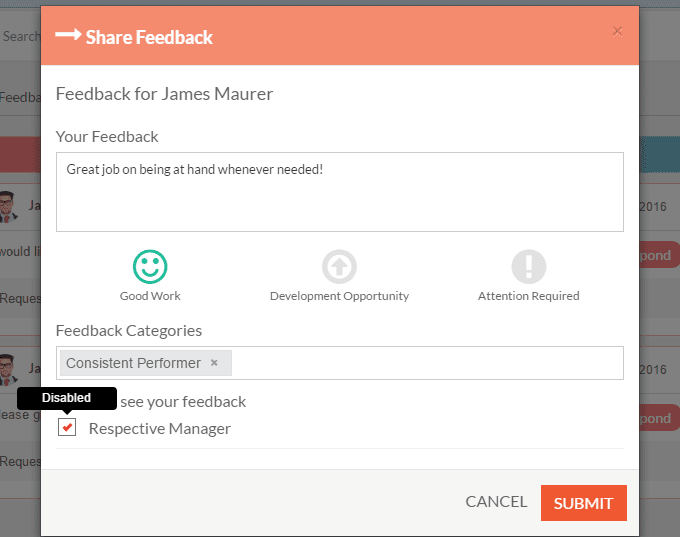
Continuous feedback

Impact and validity of feedback is very time-bound. If they are not shared immediately, they fail to direct employees in the right direction. Engagedly’s feedback feature normalizes the idea of giving and receiving feedback anytime throughout the year. Employees can request feedback whenever they want to. Engagedly also gives you an option to select the areas on which the feedback should be given.

Also read: 5 Best Tips To Reduce Employee Turnover

This allows all the employees in an organization to improve themselves constantly. This process of continuous feedback keeps employees driven throughout the year and not just before performance reviews; hence promoting employee engagement.

User can respond to Feedback Request

Social forum for ease of communication

Every employee is smart and exceptional in their own way. Having a platform to express their thoughts and opinions is a great motivator. Engagedly’s social feature allows employees to share posts, share ideas, request for help and share knowledge. Engagedly allows you to create interest groups and share documents and other material with colleagues. Encouraging employees to express themselves and interact socially makes your virtual workplace a communication-friendly space and helps employees remain engaged.

Objectives and Goals

With very less chances of personal interactions these days, we have to streamline the process of clear goal setting. Setting clear and distinct goals is very important to complete any task. Employees can create goals for themselves and their direct reports using the Engagedly goals module. As a manager or an HR, it is important to set clear goals for your employees so that everyone works towards a collective goal.

Engagedly also has an option to align individual goals with the organizational goals so that employees know how the success of their individual goals can contribute to the accomplishment of organizational goals. In Engagedly, goals can also be reviewed by managers from time to time to check if their employees are on the right track.

Also read: Customize 360 Feedback Survey Questions According to Departments

Learning and development

Its needless to say that we’ve got to keep learning constantly. Otherwise we’ll not be able remain on the top of our game. No matter how old you are, what you do, keeping yourself up to date with the current industry trends is very important.

Video File Unit

Engagedly’s Learning feature helps you create new courses, and for each course an employee completes, they are awarded points by the course creator. When you assign courses to employees for their development, it motivates them because they know you are genuinely interested in developing them and improving their skills. When employees develop their professional skills, it boosts their self-confidence which in turn promotes an engagement culture.

Also read: These Features Can Make A Big Difference In A Goal Setting Software

Recognition and praise

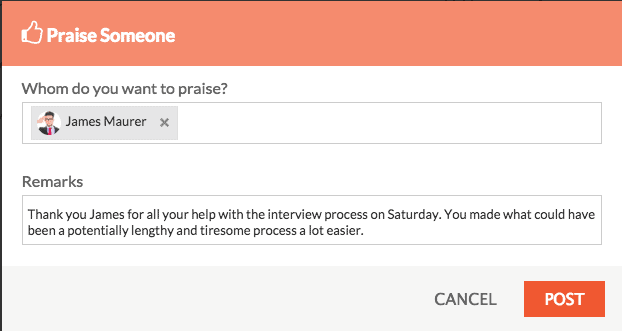
This is an extremely important module, especially for today’s work culture. This can be considered another type of feedback. Receiving praise and recognition for their work is every employee’s dream. Engagedly’s public praise feature allows you to praise any employee publicly for the extra effort that they put in towards achieving a goal.

Praise An Employee

When employees go above and beyond to accomplish their goals, it is important to recognize their efforts and praise them. This keeps them motivated and engaged.


Engagedly is offering a suite of products part of its Remote Work Toolkit free to any organisation, until Sept 30th, 2020. 

The Coronavirus has affected the way we work today and for months to come. Unprecedented events require unprecedented measures. We at Engagedly believe it is our responsibility as socially conscious corporate citizens to help equip organisations with additional tools and resources during this time of crisis.


Want to know more about our software? Request for a FREE demo!

Request A Demo

Wondering How to Set OKRs For the Engineering Team?

Why do we need goals? Because measuring performance is a very important aspect of any organization and goals help us monitor and track employee performance. So why not shift to something that’s highly effective? Objectives and key results (OKRs) is one of the most popular approaches for setting goals and achieving them.

If you wish to keep your team on track and align the work with the organization’s overall objectives, OKRs are a really great way to do so. It is recommended that you set OKRs at your team level and then move to individual OKRs. If you are looking for examples to get started with OKRs for your engineering team, here are a few examples that can help you get started!

Critical thinking is the basic essence of OKRs. These are examples that you can use as base to start framing OKRs for your team. 

Also read: Wondering How to Conduct a Complete 360 Performance Review?

1. Objective: Improve software’s performance

Key Results: 

  1. Create a checklist of standard procedure to follow
  2. Reduce number of critical bugs by 10%
  3. Reduce the average response time on the app to less than 500 ms
  4. 30% reduction in runtime warnings

2. Objective: Improve quality in every release

Key Results:

  1. Contribute to at least 1000 code reviews by the end of every sprint
  2. Increase sprint capacity from 85 to 100 SP
  3. Reduce bugs by 20% a week before release

3. Objective: Improve data security for users

Key Results:

  1. Upgrade processes and reduce data migration time by 80%
  2. Reduce occurrences of data breach to 100%
  3. Reduce breakdowns in the peak hours by 90%
  4. Increase security by 50% using new protocol for addressing product security issues

4. Objective: Update testing procedures

Key Results:

  1. Increase unit test coverage to 75% of code
  2. Revisit all open issues from 6 month old code and find up to 50 bugs
  3. Less than 3 bugs reported by end users per release

Also read: How To Set Effective Employee Goals?


Engagedly is offering a suite of products part of its Remote Work Toolkit free to any organisation, until Sept 30th, 2020. 

The Coronavirus has affected the way we work today and for months to come. Unprecedented events require unprecedented measures. We at Engagedly believe it is our responsibility as socially conscious corporate citizens to help equip organisations with additional tools and resources during this time of crisis.


Get in touch with us to know more about the free remote working tool-kit. 

How To Set Effective Employee Goals?

Did you ever wonder why your employees are not able to achieve their targets or why they are disengaged at their work? With everyone starting to work from home due to COVID-19, this situation has become even more common. There is a very simple answer to this: your employees don’t have clear goals. When employee goals are not set correctly, not only the employees fail, the organization gets affected too.  Continue reading “How To Set Effective Employee Goals?”

Tips For Setting OKRs During On-boarding

Imagine that it is your first day at your new office and you are bombarded with tons of project details and deadlines to be met. Sounds disastrous, doesn’t it? Employees need to understand the culture of work in their new workplaces before they get thrown into never-ending cycles of deadlines.

We aren’t telling you to excuse them from their actual job. But it is important to understand that employees need time to adjust to the new culture and goals at their workplace. This is where OKRs play a major role. At Engagedly, we use OKRs to set goals and objectives for employees so that they can understand how they are contributing to the bigger picture.

Also Read: 5 Things To Look For In An OKR Software

OKRs are one of the most popular and effective ways of setting goals and tracking them.

OBJECTIVES are something that you want to achieve, and KEY RESULTS are a measurable way to keep track of how close you are to achieve your objective. OKRs work on all levels, be it corporate, departmental or individual goals. Using OKRs promotes collaboration and helps you drive employee engagement in your organization.

Here are a few tips to set OKRs for new employees during their on-boarding:

Be Clear And Specific

It is impossible not to make mistakes when setting goals. After all, goals are just the blueprint for what you would like your employees to achieve. But as with many things, over a period of time, it becomes easier to set goals when you and your employee know what the employee is capable of and whether they have the skills to achieve the goals that have been set.

It also makes it easier to avoid goal-setting mistakes if you follow a process methodology for setting goals. One of the most commonly know goal-setting processes is that of SMART goal-setting. The concept of SMART goals seems to have first originated from George T. Doran in 1981. S.M.A.R.T is an acronym for:

  • Specific–Have a specific purpose. If your goal isn’t specific, it’s going to be doomed from the start.
  • Measurable–What is the point of setting a goal if you cannot measure it? When you can measure a goal, you will also be able to tell if the goal was met successfully or not.
  • Achievable–There needs to be a sweet spot for your goals. They cannot be too easy, but nor can they be too difficult.
  • Relevant–Goal-setting in itself is not enough–you must make sure that these goals are relevant to the people who will utilize them.
  • Time-Bound–There needs to be a time period during which the goal can be carried out and the objective met. More importantly, when goals are time-bound, they also tend to be motivating.

The SMART method of goal-setting can help avoid major goal-setting mistakes. And of course, with time, it becomes easier and easier to use.

Align The Goals To Organizational Goals

Goal alignment is one of the most important aspect of goal setting because it allows users to not only align their goals with organization goals but it also allows them to see the big picture. For example, if one of the organization’s main goals is breaking into an as yet untapped market, the ability to align goals shows an employee how they are contributing to this specific goal.

There are software that allow you to see how the progress on your individual goals contribute to organizational/ department goals.

Also Read: Employee Performance Reviews : A Guide For New Managers

Trust And Encourage

As a manager, it is important for you to trust your employees’ capability to accomplish the goals set. Express your faith in them and encourage them to do better by regularly monitoring these goals. Be a positive influence on them and drive engagement in your team.

Feedback After Monitoring

One of the vital parts of employee goal setting is tracking their progress and actively help them with their goals. You can also choose to use a software that allows you to track employee progress on goals effectively by sending out notification to goal assigners each time the someone checks in on the goal and giving the goal assigners the ability to comment on each goal check-in.

The ability to comment on goals allows both managers and employees to have a discussion about the goal and the progress that is being made. Commenting is an easy way to foster communication without having to formalize it.


How can you sidestep poor goal-setting practices? Engagedly can help! Request a demo from us to find out!

Request A Demo


Get In Touch With Us


Sticking To Your New Year Resolutions 2020

Are you having trouble staying motivated and sticking to your resolutions, just after a month into the new year? Well, you aren’t alone. You may set out with the best of intentions, but with unexpected emergencies, new initiatives, and competing priorities for your time and attention, it can be challenging to stay on track towards your long-term goals.

Fortunately, it’s never too late to course correct. Here are three things that you can do to reinvigorate yourself to work on your goals.

Continue reading “Sticking To Your New Year Resolutions 2020”

OKR Software For A Successful Business

Using OKRs without realizing their purpose or objective makes them feel complex or unusable. However, it is possible for organizations to use OKRs, just like Google and also achieve some measure of success if you break down the process of goal setting and understand every aspect of it.

Continue reading “OKR Software For A Successful Business”

Benefits Of Having An OKR Software At Your Workplace

You are running behind a deadline and your manager wants the project outcome as soon as possible. You are going to have to stay for longer hours at work and complete the project. There’s a huge pressure and you can hardly focus on the project.

How could you have handled this situation better? This is one of the most common challenges faced in today’s corporate.

Continue reading “Benefits Of Having An OKR Software At Your Workplace”