



20 Company Culture Ideas To Drive Team Cohesion

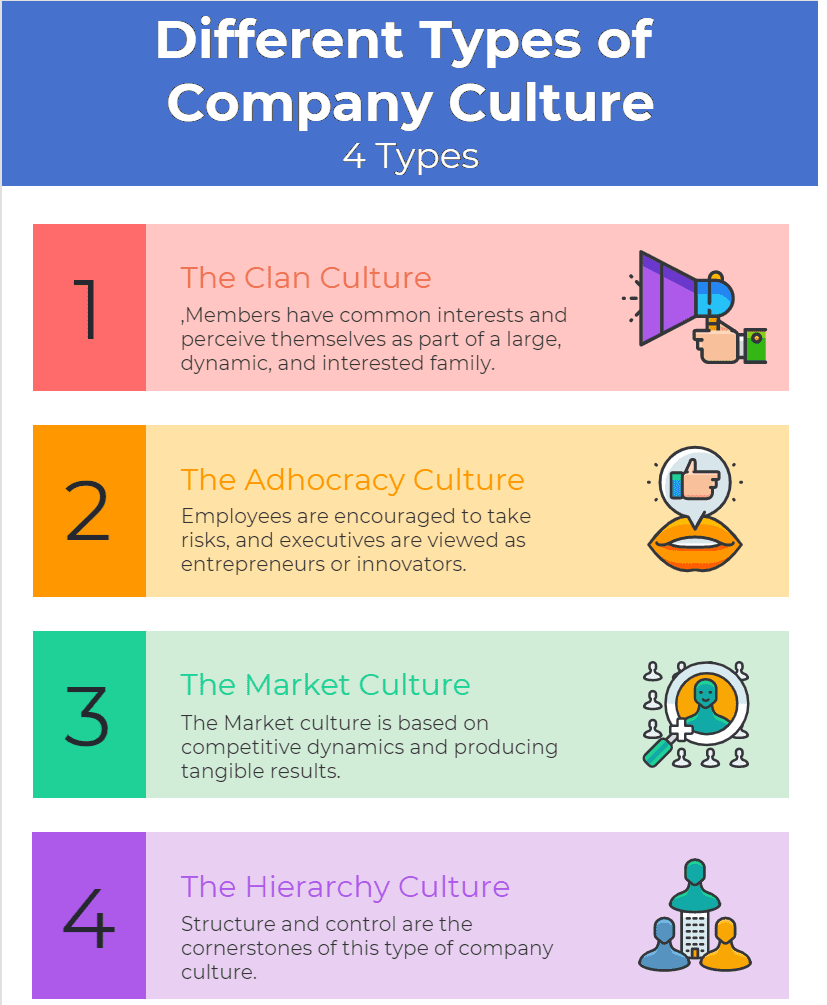
Organizational culture can be defined as the set of shared values, goals, and practices that characterize an organization. It’s about how people think about their work, what values ​​they believe in, where they see the company, and what they do to get there. These characteristics represent the personality and culture of an organization. 

Why is Company Culture Important?

Company culture is as important as business strategies, as it either strengthens or undermines the objectives. A positive culture is significant and here are 5 reasons why it is important:

1. Increased employee engagement

A work environment with organizational culture is driven by goals and clear expectations. This encourages employees to be more engaged in their work and in their interactions with others. It also leads to higher levels of employee engagement, which increases productivity. A strong connection between an organization and its employees creates a positive atmosphere that is hard to ignore.

2. Raised Productivity

It helps improve productivity and overall performance levels when employees have the resources and tools they need to succeed. Organizational culture influences the structure of the workplace in ways that bring people with the same skills together. People with similar backgrounds and skills can work together more quickly on corporate projects.

Also Read: 5 Tried and Tested Ways to Improve Employee Productivity

3. Brand identity

A company’s organizational culture reflects its public image and reputation. People make assumptions about companies based on their internal and external interactions. A lack of organizational culture or a bad image can make customers hesitant to do business with someone associated with your brand. Companies with strong brand identities tend to attract more businesses and job seekers with similar values ​​that support their mission.

4. Successful Onboarding

Organizational cultures increasingly rely on effective onboarding practices to train new hires. Onboarding practices, including orientation, training, and performance management programs, help new hires access the right resources and achieve a better transition to the role. This promotes employee longevity and loyalty and reduces the frustration some employees experience when they don’t have the information they need to do their job well.

5. Healthy Team Culture

Organizational culture contributes to the improvement of work processes and guides the decision-making process. It also helps teams break down barriers of ambiguity. Team members who are well informed and knowledgeable about a particular process are often more motivated to complete the project. A clear culture that connects employees and promotes an organized work structure helps people work together in a goal-oriented way.

Company Culture Ideas

How to Improve Company Culture? 

  • Communicate Well

    Knowing how to communicate well is the best way to improve your company culture. Misunderstandings are the main reason people are dissatisfied with their jobs and look for other opportunities. Improve your team’s experience by doing your part and communicating well. When sending emails and joining meetings, try to share your ideas as clearly as possible. It may be helpful to provide some background information on the topic or give a specific example.

  • Listen to Concern And Welcome Ideas

    If you are in a leadership position, provide your employees with a public or anonymous platform where they can easily share their opinions. Encourage one-on-one meetings with members of the team, giving them the opportunity to talk openly and confidentially about sensitive issues. Employees feel valued by letting them know they can count on you for questions.

  • Encourage Feedback

    If you identify a particular aspect of your business that needs improvement, take the time to provide feedback on the issue and encourage others to do the same. While some businesses have strict standards requiring a procedure for submitting feedback, others are more relaxed. When providing comments, be sure to communicate in a professional and genuine manner. Discuss details and potential alternatives to the company’s challenges.

  • Consistency

    Consistency in leadership efforts helps people feel stable. Once your company’s organizational structure is in place, do your best to maintain processes and procedures. Treat everyone professionally and equally and avoid preferential treatment.

20 Company Culture Ideas 

A successful company culture that includes clear and concise policies, effective communication strategies, and fair and equal treatment helps employees feel engaged and valued. Beyond base pay and benefits, check out these 20 company culture ideas that can make your small business a better place to work and ultimately more successful.

1. Launch a company culture committee

A cultural committee can be a very valuable tool for boosting morale and cohesive teams. The committee should be responsible for developing and implementing policies that promote a positive work environment (e.g., developing codes of conduct and setting standards of behavior for employees) and should consist of representatives from all departments and levels of the company. By establishing a cultural committee, employers can ensure that their employees have the resources they need to succeed in their roles. 

2. Company culture in job descriptions

A job description contains some of the most important information a company can provide when hiring a new employee. These can not only specify the requirements of a particular role but also provide a snapshot of the company’s culture and values. This allows you to attract qualified candidates and high salaries. With this in mind, job descriptions should always reflect company values ​​and employee expectations. 

3. Include company culture in your employee handbook

As an employer, you want your employees to feel welcomed and valued. But what about communicating your company’s culture? How do you make your employees aware of this? One way is by including a culture section in your employee handbook. This creates a common ground for all employees and ensures that everyone knows what is expected of them. 

4. Establish town hall meetings

Town hall meetings are company-wide gatherings to discuss policies, procedures, events, and employee recognition. This is a great time to make sure all employees are on the same page when it comes to expectations at work. Additionally, these gatherings promote open communication. It provides a forum for employees to raise concerns and ask questions while allowing companies to receive feedback on internal culture and opportunities for improvement.

5. Categorize diversity & inclusion

Diversity and inclusion are key values ​​in the workplace, as they help create a welcoming and supportive environment for all employees. Cultivating a culture that prioritizes these can improve communication and teamwork, reduce stress in the office, and ultimately improve employee productivity and happiness.

6. Evaluate office workspaces

The majority of office space is rooms and booths lined up against walls and interiors, giving employees a sense of self-containment. You can contribute to collaboration, employee well-being, and the overall well-being of your company culture. Start by getting rid of cubicles and creating a more open workspace. This has many benefits, including improved communication and collaboration. An open workspace also allows creativity to flourish. 

7. Develop culture with benefits

Benefit packages are one of the most important benefits for employees. You can strengthen your company culture by creating something full of traditional benefits. Start offering typical benefits such as paid vacation, health insurance, life/disability insurance, and retirement plans. Next, consider extras who can demonstrate and support your company’s culture and values.

8. Offer remote and hybrid work schedules

To reduce commute times and improve work-life balance, remote work and flexible working hours are growing in popularity in today’s competitive job market. As mentioned earlier, offering these types of options can improve company culture and help attract and retain top talent. Flexible working hours can also reduce stress and increase employee productivity.

Also Read: How to Build and Sustain Company Culture in a Hybrid Work Environment?

9. Encourage time off

Encouraging employees to use paid time off is an important way to keep employees happy and productive. This is a direct result of a healthy corporate culture. There are many ways to make paid time off available to your employees, including:  

  • Make sure your PTO policy is clear and concise. Employees need to know exactly what rights they have and when they can exercise them 
  • Require an employee to use a certain number of his/her PTO days per year 
  • Unused PTO Rollover Permit

10. Promote work-life balance

Too much work can lead to burnout, while too little work can make employees feel bored or undervalued. Employers must ensure a healthy work-life balance for their employees. There are several ways to do this:  

  •  Setting clear and reasonable deadlines 
  •  Providing flexible working hours 
  •  Provision of maternity and childcare leave 
  •  Creating an environment where employees can easily take time off 

By enforcing certain policies and practices, businesses can help employees manage their time and workload in a  productive and enjoyable way.

11. Create collaborative teams

A collaboration team is a group of people (usually from different departments) working together to achieve a common goal. This can take the form of a brainstorming team, a project team, or a scrum team. It is an integral part of an organization’s success and helps reduce conflicts and improve communication among employees by enabling them to share knowledge, skills, and ideas. All of this leads to increased productivity.

12. Recognize employee achievement

Recognizing employees for their contributions to the company is an easy way to develop company culture. This can be done through praise and appreciation, recognition on important occasions, and awarding employee perks such as employee discounts and free tickets to company events. These simple actions contribute to a positive work environment.

13. Provide growth opportunities

Corporate culture is stagnant and ambitious. To break this cycle and improve employee engagement, companies must offer professional development opportunities. This may include training and development programs, mentoring partnerships, and other opportunities to help employees expand their skills and contribute to the company’s success.

14. Offer wellness program

When it comes to creating a healthy work environment, many companies overlook one of the most important factors: wellbeing. Wellness programs help employees feel better physically and emotionally, which in turn can improve organizational culture.

15. Provide company merchandise

Merchandise placement is the simplest way to push your business. There’s nothing better than having your company’s employees wear your company’s logo on their t-shirts, mugs, and pens. This is often called ‘company swag’ and maybe a product that showcases your name and logo.

16. Give performance incentives

Incentives are a vital part of performance management and are shown to be effective in motivating employees. There are various sorts of incentives, each with its own benefits and disadvantages. It’s important to settle on the correct form of incentive and ensure it’s appropriate for the staff involved.

17. Encourage volunteer work

Employees are passionate about more than what they do. You have desires and goals outside the workplace. Help your employees nurture their passion by offering them incentives to volunteer in their communities. This shows that employers care about their employees and what they do outside of work, rather than just focusing on the productivity they bring to the organization.

18. Use employee engagement survey

Employee engagement surveys help to assess employee satisfaction, morale, and motivation. By understanding employees’ opinions, organizations can make informed decisions about a way to best serve their customers and employees. Surveys may also be accustomed to identify areas of improvement.

Also Read: All You Need to Know About Employee Engagement Surveys

19. Improve onboarding process

Onboarding is the first point of contact for new hires. To improve the onboarding process, companies should focus on creating a welcoming environment for new hires. 

This can be done by:  

  • Create a welcoming culture 
  • Ensure all new hires are properly introduced to the company and its purpose 
  • Ensure new hires are provided with clear instructions and expectations of their role within the organization, as well as customer-facing guidelines.

20. Mentoring

Mentoring is a great way to develop and encourage an employee’s career. Employees who have a mentor feel more involved in their work, stay with the company longer, and communicate better. The benefits of mentoring go beyond individual employees. Companies that mentor their employees are seeing lower turnover, increased creativity and productivity, and increased innovation.

office culture ideas

Real-world Examples of Company Culture 

Google

Google is known for being an excellent employer that has pioneered many of the perks and advantages that startups are now known for. Google’s employees are hardworking, talented, and enthusiastic. For its employees, Google’s corporate culture is a treasure trove of perks and bonuses. Free meals, employee vacations and parties, cash bonuses, open speeches by high-level executives, employee recognition, gyms, and a pet-friendly atmosphere are all available at Google. It’s no surprise that Google’s company culture is the gold standard by which all other IT firms are judged.

Zappos

Zappos’ culture is now well-established and well-known. They concentrate on hiring to keep things going. The goal of the hiring process is to discover people who share the company’s values. Zappos devotes a significant amount of time and resources to employee team building and culture promotion. They want every employee to embody the company’s principles. Customers can even tell that Zappos staff are happy.

DHL

DHL is unique in how it benefits from its dynamic, multicultural environment. With a variety of programs, such as the unique integrated learning platform that fosters talent development, the organization looks after its employees throughout their careers.

Another pillar is workplace wellness, which includes annual events and long-term activities to protect employee health.

What conclusions can be drawn from company culture? 

A company’s culture includes values, beliefs, behaviors, norms, and artifacts that connect the members of an organization. As in all other cultures, an organizational culture develops over a long period of time with the participation of the members. Through studying or analyzing the culture of a company, people can come up with various conclusions. These include conclusions about the resistance of culture, performance, communication, and leadership styles. These conclusions can be helpful for managers and consultants seeking to encourage better company cultures.


company culture ideas

FAQs About OKR Tracking Software

Objectives and Key Results, or OKRs, are used to focus a group or an individual on a bold objective.

Google, a current high-growth company to which many aspire, was first introduced to OKRs in 1999!

This demonstrates that the benefit of utilizing this approach to measure performance has not diminished. However, we now use OKR software to help us plan (and track) these goals. With several software solutions available, it might be tough to figure out exactly what you’re looking for in terms of your overall business goals.

What Are The Frequently Asked Questions (FAQs) Related To OKR Tracking Software?

To assist you in your search for the finest OKR tool, we have a set of frequently asked questions that you’d like to consider when you compare the various solutions. If you’re persuaded of the advantages of using an OKR tool, let’s look at the important questions you should ask to determine the best one for the specific company’s needs:

1. Why is it important to know what your goal is?

Begin by making a set of demands or objectives that your OKR program should meet.

Do you want your OKR tool to just create goals, or do you want it to provide maximum visibility, transparency, and accessibility for all employees? Make sure everyone in your company understands what you want to accomplish with your OKR tracking software.

2. What are the benefits of measuring the team size and scaling up requirements?

OKR tracking software is tailored to specific team sizes. As a result, you must consider the number of employees who will use the product. Furthermore, if your firm is rapidly expanding, you will most likely need to extend your workforce size shortly and OKR will help you to do that.

As a result, choose a tool that allows you to scale up (or down) without investing money from your pocket.

3. What integrations do I need to use?

If you already have to switch between various tools, your staff will unlikely use the OKR tracking software. As a result, determine the most important integrations your team uses and make sure the tool you chose supports them.

Engagedly, for example, offers advanced integrations with systems like GChat, MS Teams, and Slack, as well as data and project management apps like Jira, Github, Trello, HubSpot, MySQL, and a host of others.

4. How should I work and find out my OKR experience?

If you’re introducing the entire OKR framework, for the first time, look for software that includes coaching from specialists and onboarding assistance for all users.

The right software will help you set the right goals and implement best practices to get the most out of your OKRs.

5. How would knowing your company’s budget assist you?

When choosing the correct OKR tool, you must also consider your budget and money. If you’re in the early stages of your company’s development, you may have budgetary constraints and must pick a solution that meets your needs while staying within your budget.

Begin by establishing a list of the fundamental functions you want from your OKR software and building a budget around that. Then, using that list, evaluate the OKR tools in the marketplace to make an educated decision.

6. Why do I need OKR tracking software for a user-centered approach?

The success of the OKR tracking software will ultimately be determined by how well your team uses it. As a result, concentrating on the user experience is critical.

Answer the following questions:

  • Does your team have to switch between platforms to use the OKR tool?
  • Is the platform compatible with mobile devices?
  • Are the directions easy to understand?
  • How quick is customer service?

These are some factors to consider to determine how users (members of your team) will respond to the tool and just how many hours they will require to manage it.

7. How does OKR Software help me in understanding Data Protection Compliance?

Finally, you’ll use your OKR to share a lot of critical information about your organization and team members. Such data and information must be safeguarded, and anonymity must be respected.

You must verify that your chosen software complies with the primary data security and GDPR. You would normally speak to your sales consultant about this. 

8. Does the OKR software provide the whole roadmap for the business?

Many OKR programs will just provide you with an overview of what you want to do, not the overall picture. They’ll mostly use a quantitative approach, providing you with knowledge in the form of data sets and statistics.

However, you should select a tool that can assist you in making insights from each data item. The correct software should comprehend the difficulties your team is encountering. Otherwise, you may accomplish the desired outcomes, but you will be sacrificing the correct culture.

Also Read: How To Get Started With OKRs? Types| Process| Benefits| Templates

9. Is this OKR software capable of scaling up?

You might be planning to expand pretty quickly if you’re growing quickly. However, you must consider if you will be able to boost with the software you have chosen. Preparing for a circumstance when your team has increased significantly is ideal.

For example, you might want to integrate OKRs throughout the business, or create separate teams – can your software be customized to match your growing needs?

10. How well does the OKR program assist you in tracking your progress?

The greatest OKR software not only assists in establishing goals and aligning duties tracking but also in tracking progress. This way, you’ll be able to keep track of the status and take practical steps to accelerate it.

Engagedly, for example, enables enhanced goal transparency and cooperation among departments of an organization by allowing team leaders to link OKRs and measure collective progress. It also allows you to combine OKRs and 1:1 check-ins to ensure that all members and leaders are always on top of high-priority objectives.

11. Is the software capable of increasing engagement?

Finally, huge targets and critical outcomes should not frighten your team members while using an OKR tool. It should concentrate on fostering an inspiring culture in which employees are empowered and aware of their role in the organization’s success. This will encourage them to do better.

The correct OKR software should assist in starting the right discussions so that team members can give feedback on what is and is not working. They can invariably shift the discussion narrative from a top-down perspective to guarantee that issues are addressed before they stifle progress and that cooperation is seamless.

12. What features should an OKR tool have?

Actionable dashboards, as well as insights, should be provided by OKR software products. It should be simple to comprehend and evaluate to be useful. It should also emphasize the number of objectives, the proportion of goals completed, goal alignment, and goal status.

13. In Microsoft teams, how do I keep track of OKRs?

To keep track of your goals, add live OKR dashboards as a tab to any team channel or personal chat. To understand target status, compare OKR improvement over time.

Conclusion

OKR is a common management method for setting goals and tracking progress. It promotes alignment and participation in quantifiable objectives. It was first used at Intel in the 1970s and has since expanded throughout the technology industry as a tool to assist employees to know and participate in the company’s charter.

Engagedly connects your business model to technical prowess. Engagedly gives a clear perspective into targets, key results you measure, and the effort toward fulfilling objectives, whilst OKRs monitor the results of execution. The native OKR capabilities in Engagedly let your team become oriented, remain aligned, and integrate work with value delivery instantaneously.


If you’re looking to find out more about OKRs, then take a look at our Ultimate Guide to OKRs – we‘ve included some nifty templates to get you started today.

OKR tracking software

What You Can Learn from P&O’s Firing of 800 Employees by Video

Is a video message enough to offboard employees who have been serving your company for years? Well, this is precisely what happened at the leading UK shipping company P&O Ferries. P&O made a decision of firing employees over a video call.

The company announced sudden mass layoffs over a video conference which led to many civil and criminal investigations against the firm. Multitudes of people suggested putting the owners behind bars.  

Such a scenario was inevitable, because no one expected losing one’s job so abruptly, just over a video call. P&O employees did not have any idea that they would be laid off even hours before the actual thing happened.   

This begs the question: how could the HR personnel have avoided such an unpleasant scenario? Laying off is normal, but not this way. What are the acceptable practices for termination? Let us find out the common HR practices for mass layoffs and how they can be improved.

Also Read: Overcoming remote work challenges

How and Why Did P&O Lay Off Employees?

P&O, a leading shipping firm in the UK, fired around 800 employees on March 17th, 2022 in a move to restructure its operations that would guarantee the company’s future viability. According to company officials, “no unions could accept our proposals”. 

While wage negotiations often lead to a deadlock, what is more surprising in this case is that the termination notice came just minutes before the actual action took place which led to widespread protests and chaos at the Port of Dover.

In a 24-second-long video clip received by BBC on March 17th, a person from the P&O office in Dover is seen saying that the company has decided that they would be going forward with a third-party crew provider. The company said, “Therefore, I am sorry to inform you that this means your employment is terminated with immediate effect on the grounds of redundancy. Your final day of employment is today.”

Immediately after this, around 800 employees were sacked within minutes.

According to sources, one of the P&O officials told a leading magazine that it was necessary to take this step to keep the business afloat. They have incurred huge losses, around £100 million over the years. Such a situation urged the company to take necessary actions without which the business would not be viable.

How Did This Sudden Layoff Impact Employees in the Post-Covid Era?

Such an abrupt action has undoubtedly set an unhealthy example for companies around the world. Companies decide to lay off employees usually after thorough strategic planning to enhance organizational efficacy. Employees should at least be given a heads-up that the company might downsize soon to prepare for layoffs.  

In a survey released by the U.S. Bureau of Labor Statistics, about one-third of US employees battled anxiety about their companies shutting down during the COVID 19 pandemic. Such anxieties are not only detrimental to the employees affected by layoffs but also to the growth and productivity of the company and the remaining employees.

Also Read: Battling workplace anxiety

How Did It Impact P&O?

Company officials confirmed that they had to suspend all sailings immediately after the protests started. Due to this sudden suspension of services, the company lost one million pounds each day. Cross-party MPs and Nautilus Unions called for stringent actions to be taken across the ports of Liverpool, Dover, Hull, and Larne.

 To add to their woes, the shipping company lost the Border Force Contract that was supposed to bring in huge revenue. The UK Home Office terminated the contract to provide contingency services over the company’s sudden decision of mass layoff. 

How Should HR Personnel Handle Mass Layoffs?

HR teams should be aware of the various ways to manage remote workers, especially during these post-Covid times. Here are some common practices that HRs can follow to keep things under control:

  • They should discuss the HR policies and agreement clauses during employee onboarding. Employers or company HRs are legally required to consult employees during the statutory notice period regarding layoffs.
  • Before conducting an exit interview, company HRs should serve a notice for termination and settle the severance pay. HRs need to have meetings with the employees who are to be laid off and send out a clear message on the termination. A better thing to do is notifying the employees about the impending layoffs before the actual announcement.
Also Read: Effective and trending HR practices

Conclusion 

The point to be noted is that P&O suffered dire consequences not just because of its random and sudden decision of mass layoffs. It suffered because of the way that decision was communicated to the employees. Company HRs should consider this a great learning. News regarding layoffs should be imparted to employees well before the actual event, that too with empathy.


Check out how Engagedly can help you find the right performance management software for your remote workplace. Book a live demo with us.

Request A Demo


7 Common Questions Related to Setting OKRs That Are Achievable

You will find it difficult to successfully operate a team without defining proper goals and objectives. It would be taking a stab in the dark. Your bright personnel will be useless if they don’t have a shared goal to strive toward. That is where setting apt OKRs come in to play.


Have you ever wondered how the industry’s behemoths slaughter the market with ever-increasing profits? The key is to use OKRs.


You might be wondering what setting OKRs are and how they operate.


Without further ado, continue reading to find how to create a sustainable OKR approach as well as some practical examples you can use in your management to accomplish more in less time.

What Is an OKR?

OKR stands for Objectives and Key Results. It’s a goal-setting strategy that dates back to the 1970s. OKR was popularized by John Doerr, a prominent venture capitalist. It lays the groundwork for outlining your organization’s goals over a given period of time.


We know that every project or task needs to be completed on time. OKRs are often created and assessed during the lifetime of a project. They may also be used in the future to see how successfully you completed the tasks before.


The fundamental principle to follow while setting an OKR is to set an aim and three to five expected or desired outcomes. These important outcomes are clear and quantifiable actions and contribute to the achievement of goals.

An essential reason behind setting OKRs is ensuring that everyone understands what they want, need to accomplish, or is expected of them.


Now that you have learned about OKRs, you might be wondering how they differ from another similar concept which is KPIs or Key Performance Indicators.

OKRs vs. KPIs


Although both can be considered as performance indicators, they serve a distinct and different purpose. Here are a few differences between OKRs and KPIs:


KPI OKR
KPIs are critical measures used to assess how well a team is meeting its objectives. These measurements are often quantitative in form and correctly describe the current state of the product. OKRs, on the other hand, are related to wider corporate goals. KPIs are primarily tied to individual ability.
KPIs are used to control daily operations and assess the performance of a certain process or activity. OKRs, on the other hand, are primarily concerned with measuring goals and priorities in order to measure operational success. The OKR framework places a greater emphasis on strategic goals, identifying a goal, and brainstorming strategies to achieve it.

Advantages of OKR

Do you know how the giants like Google, Intel, Spotify, Target, Airbnb, and ING have become these huge beacons of success?


They are some of the major businesses that employ OKRs in their daily operations. Of course, you don’t need a large workforce to get the benefits. The continuous usage of OKRs by small and big businesses demonstrates the value of goal management in providing direction and objectivity.


Implementing and setting OKRs will offer you an edge over your competition when it comes to getting the job done and keeping yourself and others accountable. “At the end, you may look, without any kind of arguments: Can I do it or can I not do it?”, remarked the Father of OKRs, Yes? No? Simple. There are no judgments in it.”

Also Read: 5 Things To Look For In An OKR Software

Questions About Setting OKRs That Are Achievable

The primary question that needs to be answered is how to set up an org-wide process of setting OKRs.

Setting up a procedure for OKR alignment might take varying amounts of time and effort based on the scale and structure of your business. We’ll go through the fundamentals in this part to help you plan for success. You may use the sample OKR cycle shown at the conclusion to figure out how to get started right away, after reviewing the following considerations for setting the OKR process.

1.   Timing

Timing is a crucial consideration while setting up the procedure. Our goals should not just be time-constrained. We need the goals modeled in a way that will surely give us some feedback on our work. The best way is to set achievable targets and regularly monitor them. Many businesses follow a quarterly schedule, but it’s important to include time for planning, implementation, and assessment.

2.   Keeping It Simple

Concentrate on goals you believe you can accomplish in the specified time. Many employees believe they must contribute to every department’s goal and end up overstretching themselves. Prioritize your goals based on what the company most requires. Remember that the amount of targets you should have depends on how difficult they are and the time and energy you have.

3.   Cascading the Objectives

Employees, sometimes, struggle to recognize how their profession contributes to overarching corporate goals and achievement. What can a payroll clerk do to assist their organization in reaching 10,000 users? The answer is cascading the goals from the corporate level to the department level to the individual level.

4.   Be Specific

When establishing objectives, consider multiple approaches to achieve the desired outcome. Create a detailed strategy on how to reach your goal. Consider how performance may be measured for each major result. The more precise you are in setting goals, the more clear your expectations will be. With clear objectives, you’ll know precisely everything you need to accomplish your aims.

5.   Stop Worrying About Stretch Goals

Managers are sometimes concerned that setting simple goals may be a hindrance for an employee in the way to reach their full potential. Are stretch goals, on the other hand, a good idea? It depends entirely on how authentic they are. Employees will not like being given unachievable assignments if incentives are used to inspire them. Ambitious objectives are excellent, but they shouldn’t be set up to fail.

6.   Connection to Performance

Considering the fact that setting OKRs should push us beyond our perceived boundaries, it’s critical to establish a criteria for success and separate them from the performance evaluation process. For example, some companies, like Google, utilize a 70 percent success rate as a metric. We’re just not thinking big enough if we’re constantly reaching 100 percent. However, if it appears that we aren’t functioning to our full potential because we don’t meet the maximum level of our OKR, it can be disappointing and daunting.


If your organization and the employees solely connect setting OKRs with an assessment process at the end of a year or month, they’ll be more motivated to set objectives that are simple to attain. While quantification aids in benchmarking and identifying opportunities for improvement, our entire performance is much more than a collection of numbers.

7.   Celebrate the Achievement

When you accomplish a goal, reward and acknowledge yourself and others. Positive behavior helps in the maintenance of optimal practices. Don’t only acknowledge work at the conclusion of a project; acknowledge incremental progress as well. Encourage everyone on your team to post their OKRs openly and form a support system.

Conclusion

Executive leadership should maintain that the organization, as a whole, shares both the triumphs and mistakes as a method of identifying areas for development and celebrating hard work. Personal development should be greatly promoted because it is tied to corporate performance and growth. As there is a high level of faith in individual responsibility, being accountable should not be something to be afraid of but rather an opportunity to shine. Thinking outside of established boundaries should be encouraged, resulting in a work atmosphere where any ambition appears feasible.


Does this seem like a place you would want to work at? If you want to create the perfect workplace, start by establishing an OKR-based culture of continual development and progress, helpful feedback, and transparency.


Do you want to know how Engagedly can help you set up a perfect OKR system in your organization? Book a live demo with us.

Request A Demo


7 Unwritten Office Etiquette rules

Most employees spend more than half of the time at their workplace. But it is sometimes frustrating to see the fellow employees not following basic office etiquette rules just because they are unwritten.

Don’t be the one employee everyone hates because of the lack of etiquette. Here are 7 unwritten office etiquette rules that you should follow.

1. Plug in – No loud music

Listening to music might be make you feel really energized but not necessarily everyone has the same taste in music. And everyone doesn’t want to listen to music at the same time; you don’t want to be a disturbance to people around you. So plug in your headphones and listen your music.

2. Respect Co-worker’s Privacy

No matter how close you are to your co-worker, you have to respect their privacy. Always ask before entering their cubicle. And never take their stuff without their consent. If you happen to borrow your co-worker’s stationery stuff or anything, return it as soon as possible without fail! (And in working condition)

Also Read: Dealing With Mental Health In The Workplace

3. Keep Your Voice To Yourself

When you are on phone, your colleagues don’t have to know what the conversation is. So stop screaming and yelling; keep your voice to yourself. Be calm and smooth when on phone so that your conversation doesn’t disturb anyone around you.

4. Re-organize Messy Space

Your work-space is not only in view of your colleagues but also the visitors at your office. No one wants to see a messy, smelly and dusty table at workplace.
It creates a really bad impression on you as a person as well as on the organization. So make some efforts to re-organize and clean your work-space from time to time.

5. Dress Appropriately

This is a very important part. When someone looks at you, the first thing they observe is your dressing. You don’t have to wear a really costly dress, just a clean, simple and appropriate-to-work dress. Dress codes vary from industry to industry but no one wants you to dress as if you are going to a carnival down the street.

Also Read: Make Your Work A Craft

6. Don’t Steal The Time

You might really need someone to talk at your workspace sometimes, but do not pop into your co-workers’ cubicle and start the conversation. They might be in the middle of something important, so wait till lunch break or tea break to talk to them. Do not steal their work time!

7. Mind Your P’s and Q’s

No one will tell you this but it is really important to use ‘Please’, ‘Thank You’ and ‘sorry’ in your conversation with your co-workers.

Being at your best behavior can make a huge difference (In a good way!).


Interested in knowing how Engagedly can help you with communication and employee engagement?

Request a demo to find out!

4 Ways To Get Away From Work On Weekends

Most working professionals are always connected to their work through their smart phones, laptops, i-pads, etc. But it is also important to disconnect yourself from work during the weekends. Everything in life needs a break, and so do you from your daily work.

Continue reading “4 Ways To Get Away From Work On Weekends”

9 Ways To Inspire Your Team To Meet OKRs

“A mission keeps you on the rails. The OKRs provide focus and milestones.” -Christina Wodtke

The world of business is goal-oriented. Every business organization and different teams within the company have their own goals to chase. These goals are in alignment with the overall vision and mission of the company. If we observe closely, the task of setting goals is easier, but the task of accomplishing them is challenging.

To continue, while pursuing goals, our vision often gets blurred as we only know the finish line. We know where we want to go, but we don’t often know how far we have come or how close we have come to our final destination. Consequently, a lack of a sense of progress inhibits our motivation. 

Realizing these things, John Doerr, one of the richest American investors and venture capitalists, came up with the term, “Objectives and Key Results.” OKRs help you set measurable goals. When you measure your goals, every day is a saga of progress that takes you ahead toward your final objectives. To validate, as per statistics, 95% of the U.S. adults who use the OKRs goal-setting framework know and understand how their work contributes to achieving their company’s business objectives. 

However, if your team doesn’t feel inspired to meet OKRs, despite setting the best key results to achieve along the way, you cannot meet your objectives as per the schedule. This implies that when it comes to accomplishing the OKRs, a lot depends on how motivated your team is.

This blog provides 9 refreshing ways to inspire your team to achieve their OKRs.

9 ways to encourage your team to meet OKRs

Involve your team in the goal-setting process

This is one of the best ways to motivate your team. Involve every team member in the goal-setting process. Consider their ideas, opinions, and visions when it comes to setting goals. Even if you have some predefined goals, ask your teammates what they think about the key results that you should achieve while progressing towards your ultimate goal. This is important because when you make your team feel heard, you inspire them to give their best every day. 

As they answer these questions, you can try to link their goals and aspirations with the team objectives and then get their assistance in defining the key results. Moreover, when your team members see that you have set their suggested key results, they feel elated. Consequently, they feel motivated to achieve those goals. 

Celebrate every milestone accomplished

Don’t be deluded by the idea that only big milestones are to be celebrated. No, that’s not how it is. You should celebrate every milestone your team accomplishes on the path to achieving their objectives. Whether it is big or small, celebrate it. These celebrations are motivation boosters. They are a token of praise for your team’s efforts and motivate them to perform even better and pave their way towards many more such celebrations. 

Furthermore, every celebration should also include a short gap analysis where you all together see where you have reached and how far you still have to go. This analysis will gear everyone up for the next mission.

Exhibit trust in your team’s capabilities

Many times, we just need a little external push to evolve into the best possible versions of ourselves. Hence, you should exhibit trust in your team’s capabilities and let everyone know that you are there for them at all times. You should not only express these things through your words, but your actions should demonstrate them. 

For example, you can’t say that you trust your team when you engage in micromanagement. If you trust your team, there is no question of micromanagement. You give everyone the autonomy to work freely in the office without any control. As a leader, you have a lot of pressure on your shoulders, but the more you trust your team and delegate responsibilities without micromanaging, the more you’ll feel at ease and the better the overall performance of your team will be. 

Communicate effectively

Effective communication leads to effective leadership. It is the key to inspiring your team to achieve their OKRs. When there is a communication gap between you and your team, you aren’t connected with them emotionally. The lack of this emotional connection is one of the prime reasons why often, team members don’t feel as inspired to pursue the goals you want them to pursue. 

Given that, you should engage in effective conversations with your team members. These conversations should always be two-way. This will ensure that your team is emotionally inclined towards you and feels encouraged to leave no stone unturned to keep you happy. 

Moreover, you should also remind your team about the OKRs to be achieved. This will assist in enhancing their efficiency and will assist you in attaining the SMART goals of your business.

Be a role model for your team: Inspired leaders lead to inspired teams

Whether you believe it or not, your team is a reflection of you. If you exhibit high levels of enthusiasm towards your work, your team will exhibit high levels of enthusiasm too. 

Quite the contrary, if you don’t take things seriously, your team doesn’t either. If you exhibit low levels of professionalism, your team will do the same too. In short, your team looks up to you and reflects your personality as a leader. Given that, if you aspire to inspire your team to meet the OKRs, you should be inspired to do the same first. 

Incorporate team play sessions into the daily schedule

It is imperative to know that all work and no play makes employees dull workers. Yes, that’s true. When our professional lives get filled with too much work, dullness seeps in.

The best way to prevent that is to incorporate team play sessions into the daily schedule. Devoting 20 to 25 minutes to these play sessions can be a game-changer. Try this out and see the results for yourself. You’ll find your employees happy and energized, which will eventually lead them to meet the OKRs.

Focus on improving team engagement

Did you know that engaged team members are more likely to meet the OKRs? That’s true because engaged team members have a strong inclination not only towards their work but towards their team as well. This inclination inspires them to give their best for themselves and for their team.. Moreover, as per the report, highly engaged businesses successfully generate 21% more profitability compared to non-engaged ones. 

Whereas, disengaged team members do the exact opposite. With that said, engaging your team members can go a long way in inspiring them to accomplish the OKRs. Further, below are multiple strategies that you can implement to engage your team members. 

  • Appreciating everyone for their efforts, however small it isTake 
  • anonymous feedback to resolve their issues
  • Organize happy hours

Establish cordial connections within your team

The relationships between your team members have a significant impact on their overall performance. When you are a part of a team, you are impacted by the relationships with your team members. If you don’t have a good relationship with them, you feel elated in their presence. But, if you have a poor relationship with them, you will feel irritated and agitated in their presence. Your mood obviously impacts your work performance.

Given that, it is imperative for you to focus on the relationships between your team members. The major reason behind the same is that positive, cordial relationships add to the happiness of employees, which further enhances their productivity. To substantiate, according to the University of Oxford, happy employees are 13% more productive and efficient. 

Hence, there should be cordial bonds between them if you have to derive the best performance from your team. Further, informal discussions, weekly team outings, and involvement in sports are some of the most effective tactics to form cordial relationships between your team members. 

Design your workplace in a captivating manner

The type of workplace we work in also impacts our productivity and potential. If it is chaotic, doesn’t have an appealing appearance, or radiates positive vibes, we can’t function at our full potential. Hence, it is imperative for you to design your workplace in a captivating manner. Try to add some color to your workplace, bring in some plants, and allow your employees to bring their pets if you feel okay. These things will together contribute to uplifting the energy level of your employees, which will eventually help them meet the OKRs.

The above-discussed methods are some of the tried and tested ways to motivate your team to meet their OKRs. Do try them out and see the results for yourself. We hope that these tactics truly impact your team and that you, together, achieve all that you aspire to accomplish. 


Author’s Bio

Jessica Robinson is a charismatic corporate leader, a selfless educator, and a versatile content creator. Despite a management degree, her vision behind blogging is not only to follow her passion but to create more informed societies. Her selflessness reflects in every piece of her work on The Speaking Polymath.

Understanding OKRs: Best Practices and Benefits

Occasionally, you hear about organizations gaining popularity owing to their performance and achievements. However, the real story of how they got there is rarely told. To elaborate, some of the most recognizable brands, like Google, Apple, and Amazon, began with objectives and they all had one commonality: they all used the OKR (Objectives and Key Results) approach or OKR best practices.

When properly enforced, the OKR framework aligns organization, team, and employee objectives with quantifiable outcomes.

According to Google co-founder, Larry Page, OKRs have the potential to lead to “10x growth” in the long term.

OKRs are a straightforward yet effective method for establishing objectives and monitoring progress. Techniques that other businesses have tested and improved should also be beneficial to your company — when you follow the tried-and-tested OKR best practices.

Continue reading to understand the best practices of OKR for your teams! Managers and executives may use OKRs to enhance accountability, openness, and alignment of objectives with performance in their businesses.

Differentiating factors of OKRs and their effectiveness

Setting goals, a fundamental component of every performance management strategy, assist organizations in increasing their productivity. OKRs are a common goal-setting framework that organizations use to establish and monitor achievement at various organizational levels. OKRs foster creativity, unify teams and establish a clear roadmap for organizations to reach the next level when applied successfully.

Most often, OKRs are specified quarterly (a 3-month cycle). Andy Grove, “The Father of OKRs,” created this framework in the 1970s. Later, Google applied this structure with great success and saw exponential growth. Thousands of enterprises, from Apple to Amazon and the United States Navy, use OKRs today.

OKR structure framework’s primary objective is to align employees, working company-wide, to direct their efforts toward clearly stated objectives. OKRs apply on a global, department, workgroup, and/or team level.

Also Read: The Ultimate Guide To OKRs And Templates

Why do most organizations prefer OKRs?

OKR best practices provide a tangible method for measuring progress. In addition, they provide the flexibility to fulfill your goals. They enable you to concentrate on outcomes rather than micromanaging the execution of activities.

Other important reasons for employing OKRs include:

— Improving collaboration by aligning individual efforts with shared objectives

— Increasing employee commitment and motivation.

— Enabling managers to provide effective performance evaluations and constructive criticism.

Also Read: Have You Set Effective OKRs For Your Customer Success Team?

OKRs’ approach to driving business success

Companies can utilize OKRs in five fundamental ways to manage performance:

  1. Arrangement

OKRs ensure every employee understands what agendas and objectives teams are working on; their purpose, and how they can contribute to the company’s success.

  1. Establishing priorities

OKRs fill the void between high-level objectives and everyday tasks. This provides employees with the ability to prioritize daily chores and long-term ambitions.

  1. Openness

OKR best practices build transparent organizational cultures by apprising everyone, from the CEO to the intern, about the priorities and goals of multidisciplinary teams.

  1. Accountability

OKRs outline the responsibility and goals of each employee and eliminate any ambiguity about who is accountable for achieving certain objectives.

  1. Trust and confidence

OKRs allow employees to see the results of their efforts and feel in control of their own progress.

Are the objectives and the key results the same?

No, the objectives and the key results differ in concept and definition. We have described each of them individually so that you can get a better understanding of them.

  1. Objective

An objective is a desired accomplishment and hence, conveys the “what” has to be achieved by employees. By nature, thus, an objective is both decisive and realistic. It is measurable, distinct, and should be obvious whether a goal has been achieved. Most significantly, an objective must provide unambiguous and specific value to an organization. 

  1. Key Result

A Key Result is associated with an objective and offers an understanding of how well an organization is performing and whether it is on the intended track to meet its objectives. It’s a measuring stick for the milestone or the target (objective). An objective should preferably include no more than five key results.

An example of differentiating objective and key results for a marketing team is:

Objective:

Increase market growth, compared to Q2, 2021.

Related Key Results:

  • Expand lead generation pipeline by 15% 
  • Increase email marketing campaigns by 2X
  • Increase social media read by 3X
Also Read: What Are Objectives And Key Results (OKR)?

A step-by-step implementation guide of OKR best practices

Setting objectives is not a one-size-fits-all approach. To implement an OKR management framework successfully, an organization must plan out a variety of processes before, during, and after implementing the OKR checklist. Given below are some step-by-step guidelines for implementing OKR practices.

Goal, vision, mission, and strategy

In order to get the most out of an OKR program, organizations need to clearly understand their goals, mission, vision, and business strategies. OKRs should be based on your goals and business strategies; serve as a vehicle for fulfilling your vision, and be consistent with your overall mission statement.

Make sure the OKRs are simple

Ensure that OKRs are simple to understand and achievable. Too many objectives may make prioritizing and implementation difficult. Hence, begin by making OKR objectives separately for an organization and its teams. Ideally, each team should have a maximum of five objectives and three Key Results per objective.

Familiarizing employees with best practices of OKR

The ability to establish goals is a taught rather than being an intrinsic talent, thus, organizations must offer employees with sufficient directions on how to set achievable OKRs. Workshops are an excellent tool for helping newcomers to get familiarized with the OKR process.

Analyzing essential elements before developing OKRs 

The business environment of an organization should define its methodologies for achieving objectives. Before developing OKRs, businesses should analyze several facets of their day-to-day operations, including headcount, management structure, and business processes.

Employee Participation

Occasionally, it may not be possible to include every employee in every step of the OKR-setting procedure. Employees should understand who is accountable for defining and monitoring OKRs at each level; which projects and KPIs they should prioritize; why the company is implementing a new goal-setting process, and how their work relates to the business.

Allow employees to contribute to the development of their own OKRs

Empower employees to actively participate in their own OKRs in order to foster autonomy. This may enable individuals to concentrate on initiatives that pique their interests; maximize their skill sets and advance their careers. Their supervisors may help ensure alignment with departmental and corporate OKRs, as well as fulfilling business requirements.

Defining OKRs in advance before each quarter

Start establishing OKRs prior to the beginning of the quarter, particularly company-level objectives. Developing team OKRs may also require significant work, preparation, and consensus. 

In addition, you will need time to outline the strategies and programs that you will implement to achieve success on the Key Results. It is ideal to prepare OKRs two weeks before the beginning of the quarter. This way, you will be prepared when the OKR cycle begins.

Integrating Departmental OKRs with Organizational OKRs

OKRs for a specific department are distinct from those for the whole organization. However, they must align to support the organizational objectives to produce optimal outcomes. You can start working as a team today by using Engagedly’s solution (OKR/Goal Alignment platform), which offers you the best functionalities and ideas to create OKR for both department and organization.

Dedicated goal tracking software to maintain the quantitative nature of OKRs.

Tracking OKRs may be a difficult procedure for businesses of any size. To keep OKRs transparent and quantifiable, you may use a goal tracking software, which includes OKR performance evaluation tools and a specialized goal-tracking program.

Also Read: Know Why Your Organization Should Start Using An OKR Software
Evaluating OKRs through a grading system

Grading is the method through which organizations assess OKR performance objectively. OKRs are scored on a scale, ranging from 0.0 to 1.0. Each key outcome is rated, and the average of those grades is used to determine the grade for each goal.

If an employee consistently receives a perfect score on your OKRs, create more challenging objectives. Similarly, if an employee frequently scores less than 0.3 on your goals, it may be time to revise your objectives and key outcomes.

Sharing Developments

Meetings to review OKRs are crucial. Every quarter, employees, managers, and higher management should meet to review OKRs achievement, established at the beginning of the previous goal cycle. Managers’ review of feedback and management of direct reports should include OKRs in their one-on-one sessions.

Reward your employees for achieving OKRs

Reward your team after they have successfully met their OKRs at the end of a quarter since recognition is more like positive reinforcement. However, note that OKRs work as an efficient tool for goal alignment than for employee performance appraisal. Use OKRs with other assessment elements, such as agile metrics and workplace behavior, to analyze team success.

Analyzing to get insight and make corrections

Grading is an objective assessment, while learning is the process of examining success and failure within the OKR cycle. Evaluation of OKRs should occur often, but each cycle should also involve a more in-depth analysis of what went well; what did not go well, and what lessons may be transferred to the following cycle.

Top advantages of adopting the best OKR practices

  • Determine how the planned progress aligns with the mission, vision, strategies, and key objectives
  • Align and link your employees to your organization’s objectives
  • Make better judgments that are more effective and well-founded
  • Provide each team and employee with clear guidance
  • Increase productivity by concentrating on your objectives
  • Analyze the underlying reasons why goals are not met and work on them with the corrective measures
  • Enhance allocation of resources and their efficiency
  • Achieve transparency, accountability, and clarity.
  • Utilize weekly updates to gain perspective and understanding
  • Measure regular progress toward objectives
  • Manage accomplishment and execution with increased responsibility and transparency
  • Your goal-setting approach may help employees to feel more empowered and engaged
  • Enhance executive-level visibility and openness across the company
  • Establish clear and explicit objectives
  • Identify and document cross-functional linkages across teams

Summing up:

The OKRs framework is a potent instrument for assisting organizations in defining objectives and the corresponding quantifiable activities. Here are some concluding recommendations for making OKRs work for your organization:

  • Keep your OKR checklist simple and adaptable
  • Use the lessons learned from previous OKRs to iterate, design, and build new OKRs.
  • Establish OKRs periodically – preferably quarterly, or set OKRs at least every six months.
  • Ensure OKRs are aspirational, quantifiable, and transparent
  • Use technologies that facilitate and prioritize OKR tracking

To understand more about OKR best practices or how Engagedly software can enable you to better organize, measure, and accomplish your objectives, check out its features and book a demo. You can chat with one of our OKR specialists about your organization’s OKR or management requirements. 


Want to know how Engagedly can help you manage your hybrid employees better? Request us for a demo.

Request A Demo

A Guide to Choosing the Best OKR Software for Your Business

One of the most widely accepted frameworks for strategy execution in an organization is Objectives and Key Results, often abbreviated as OKRs. For the success of an organization, each team and department in the entity should work towards the fulfilment of its overall business plan. The short-term objectives should align with the key results, and a consistent feedback mechanism should ensure performance management. 

OKR is a management method that has helped organizations like Google and Intel align their team members with the right goals for their growth and success. It also steered LinkedIn to a market capitalization of over $20 billion.

The importance of implementing the goal-setting framework for an entity cannot be overstated. However, it is essential to understand that each organization differs in its size, goals, mission, core values, etc. Hence, your OKR tool has to align accordingly. 

If you plan to roll out OKR for your team, the market has many tools to offer. These tools differ in their functionalities and the issues they prioritize. Hence, finding the right software for your business becomes quintessential. The selection process begins with obtaining an understanding of the framework and finding the right match to create a high-performance culture.

What is an OKR Management Platform?

Goal setting is a quintessential step in an organization’s journey to success. For most organizations, setting objectives and Key results begins with a simple spreadsheet. However, as an organization grows, it branches out in multiple directions, with each team contributing to the overall business strategy. 

OKR software provides a convenient tool for setting goals, tracking progress, and measuring results in an organization. It also offers a platform for communication with subordinates and peers to ensure that the challenges are tackled before they become critical. 

Also read: How company culture shapes employee engagement?

OKRs help organizations drive real performance by making employees accountable for their activities. Our expert guide on OKRs talks about how businesses just like yours can get started with them.

Take a look here.  “The Ultimate Guide To OKRs And Templates.”

Best OKR software for your business

An OKR software follows the objective and key results methodology and ensures the fulfilment of business goals. With so many OKR tools in the market, choosing the right one for your business can become a tedious task. However, considering a few factors can help you find a perfect match for your organisation.

User-friendliness

Quality of user experience is the most important factor in the success of an OKR management software. The OKR software for your business should have a simple, clean interface that attracts and engages the users. The interface should be easy to navigate and use, even by members who lack a strong grip on the technology. 

Getting new users on the platform, editing objectives and key results, and tracking progress should be hassle-free. The OKR tools should have a responsive design that offers optimum performance irrespective of the user device. The layout and instructions should be clear, even for new users. Also, you need to check the kind of customer support offered by the developers.

Size of the business

The size of your enterprise is an essential consideration when choosing the best OKR software for your business. You need to consider the number of members who will use the software. Also, the prospective size of the organization plays a critical role. Hence, plans for scaling up your company in the near future must be taken into consideration before choosing the OKR tool.

Business goals

Every organization has different reasons for choosing OKR tools. Your choice will depend on the type of organizational culture and the business needs you aim to fulfil. 

To understand your requirements, you need to assess:

  • What are the key benefits that you wish to achieve from OKR framework execution? 
  • Which of these goals are immediate? 
  • What is the time frame for the other goals that you want to accomplish? 
  • What are the challenges you plan to tackle with the OKR tool? 

The answer to the above question will help you understand your requirements and streamline the selection process. 

Some reasons for implementing OKR software are:

  • To set clear and specific business goals
  • To align employee performance with the business objectives
  • To enable employees to measure their contribution to key business results and boost engagement
  • To create accountability and empowerment for the workforce
  • To facilitate clear communication between management and team members
Also read: OKR Goal Setting For Successful Businesses

Coaching

Despite the popularity of the OKR framework, many organizations are unaware of the tools and the best OKR practices. Even the most effective OKR tool may fail to create the desired impact for your business if it is not executed and used in the right manner. 

To use the OKR management software for your enterprise, you need to be aware of the OKR framework. Learning from a team of experts will enable you to set the right goals and leverage the best OKR practices for the success of your organization.  

The need for coaching becomes paramount if you are implementing OKR tracking software in your business for the first time. The key to a successful OKR strategy execution is understanding the framework and the OKR software. 

In the absence of a thorough understanding, an organization continues to use the OKR tools as an extension of their routine activities, which brings no productivity boost. Hence, it is essential to find software that also offers coaching by a team of experts for its successful execution in the entity.  

Integration

Toggling between different software can be a cumbersome task. It can hinder employee productivity and can also make the OKR tool ineffective. Hence, to maximize the potential of your OKR tracking software, you need to ensure that it offers integration with other applications.

Take a look at the existing tools used by the various departments and make a list of the software that the product sales or marketing team would like to use in the future. Choose an OKR software that offers integration with these applications. 

This will ensure that the team members can link their efforts to the business strategy and results. Also, the OKR tracking software should provide seamless integration with performance management tools within the organization.

Also read: How To Maximize The Potential Of OKRs?

Pricing

The price of OKR management software is an essential consideration. The pricing should be transparent, with no additional or hidden charges. However, it should never be considered the sole determinant when choosing a software solution.

Apart from the price, analyse whether the tool offers value for its investment. This requires considering factors like the size of the company, the functionality offered, integration with other tools, coaching by experts, etc.

For small businesses, pricing can be a critical factor, as the organization is still in its early stages and may suffer from financial restrictions. A suitable solution in such a case is to consider the desired functions and features to set a budget accordingly.

 This will allow you to make a comparison between different software that offers the functionalities and fits your budget. Also, it is advisable to try out a free trial version of the software before you make the ultimate commitment. This will help you understand how well the OKR tracking software fits your organizational needs. 

Data protection

Irrespective of its size and business objectives, data is the most valuable asset for any organization. Hence, it needs to be protected from data leakage and confidentiality breach.

Once you roll out OKR software, it becomes an ultimate part of your organization. The process of goal setting involves sharing a lot of critical organizational information and data. Hence, it is important to ensure that this information remains confidential and well protected. 

Before you choose the best OKR software for your business, you need to ensure that it complies with the major data protection and GDPR guidelines.

Conclusion

The OKR management platform enables an organization to achieve unprecedented results through clear goal-setting and performance evaluation. It allows each team to contribute to organizational success by focusing their efforts on the business objectives and key results. 

The OKR tools make the strategy execution process more convenient by providing a platform for continuous evaluation and monitoring. It helps each member to track their progress to the organizational goals and boosts employee morale and engagement. Also, it creates a sense of accountability on the part of employees as they can see their contribution to the organisational objectives.

OKR tools enable goal-setting, as well as continuous monitoring to ensure that any discrepancies are addressed at the earliest. It also provides a means for consistent communication with subordinates, as well as peers. Hence, OKR software bridges the gap between strategy execution and performance evaluation and helps in achieving organizational results. 

However, the best OKR management platform for each organisation depends on the specific requirements, size, functionality, budget, and software integration needs of the entity. Hence, for a successful OKR execution, an organisation needs to find the balance between available financial resources and desired functions.  

Goal settings and OKRs

Finance OKRs Examples- Balance Growth, Cost, And Efficiency

Finance leaders and strategists are at the helm of managing the cash flow, revenue streams, and expenses of the organization. With such responsibilities at their shoulders, it is important for them manage their goals and activities effectively to achieve organizational objectives.

Enter, Finance OKRs, a methodology to help finance leaders operationalize and streamline their tasks to focus on key areas and harbinger results.

Finance OKRs have become an important part of performance management in today’s changing business environment. Many thoughtful leaders are adopting them to accomplish their organizations’ most important financial goals. The Objectives and Key Results (OKRs) methodology is one of the most simple and effective ways for goal setting and monitoring.

In this article, we will discuss Finance OKRs and provide pragmatic examples that you can use in your organization.

Also Read: Marketing OKRs examples 

Finance OKRs Examples

finance okrs examples

Writing OKRs for the finance department can be a daunting task, especially when you are doing it for the first time. You must be aware of the critical areas that require your attention, as well as what you must track and monitor. Well-written OKRs can help increase the productivity of the team by aligning team members’ objectives with the organization’s goals. And it requires several improvement cycles to come up with the winning OKRs.

You can refer to the below guide to understand the process of writing effective and successful business OKRs and recreate them for your finance team.

Also Read: The Essential Guide To OKRs: Your Ultimate Tool To Setting Winning Goals

Objective 1 – Strengthen and make the auditing process transparent

Key results – 

  • Complete an internal audit before the end of Q3
  • Audit 60% of the identified risks
  • Prepare a monthly report to avoid loss of data
  • Identify departments and process where repeated losses occur

Objective  2- Get budget variance to less than 5% (budget to actual)

Key results – 

  • Identify loss areas and reduce unnecessary expenditure by 80% by Q4 2017-18
  • List all categories that have used excess of budget more than 3 times in last 6 months
  • Identify the categories where repeated losses occur

Objective  3- Improve annual budgeting and business planning

Key results – 

  • Increase Average Monthly Revenue Growth Rate to 20%
  • Reduce costs for the budget meeting by 50 percent
  • Close the final budget by November 30th
  • Have each business line manager start using our online dashboards

goal setting guide

Objective  4- Create annual financial strategy 

Key results – 

  • Finalize budget by Q4 FY 2020-2021
  • Active discussions all the team function managers by Q4 FY 2020-2021

Objective 5- Make quarterly financial analysis processes more efficient

Key results-

  • Create a strategic plan for optimizing the 5 most important processes
  • Organize 3 webinars per month discussing the importance of internal reporting
  • Create customizable internal templates for quick reporting

Objective 6- Make financial reporting more transparent

Key results-

  • Payment processing time to be reduced from 22 hours to 18 hours
  • Automate categorizing every invoice based on the type of expense
  • Primary documentation to be reduced from 80% to 50%

Also read: Goal Setting Processes – OKR vs KPI

Objective 7- Reducing payroll errors

Key results-

  • Create a 3 step verification process including maker, checker, and verifier
  • Reduce payroll errors to vendors and consultants by 30%
  • Reduce error resolution time from 48 hours to 36 hours

Final Thoughts On Finance OKRs

Goal setting is critically important to reaching organizational objectives. With the help of methodologies like OKRs, organizations can create and analyze the progress of their most important goals. The finance team OKRs discussed in this article will help your team gain greater visibility into their goals, making them more accountable for their performance.


schedule demo with okr expert

Customer Success OKRs [Importance & Examples]

As per a report by Hubspot, growing companies are 21% more likely to give importance to customer success than their stagnant counterparts.

Customers are often referred to as the lifeline of every organization as they determine their failures or success. Organizations take a conscious effort to retain their existing customers and attract new ones. So it becomes crucial for all to have an efficient customer success team in place. They play an important role in all the stages of the customer life cycle and act as a direct connection between customers and your company.

Moreover, they help in creating and nurturing a strong relationship between the organization and its customers. In this article, we will guide you on how to set effective OKRs for your customer success team so that they provide amazing customer support continuously. But before we learn more about OKRs for a customer success team, let’s first understand what OKRs are and Why you should use them. 

Also Read: The Essential Guide To OKRs: Your Ultimate Tool To Setting Winning Goals

What Are OKRs?

OKRs or Objective and Key Results is a goal-setting framework that has been adopted by successful organizations such as Google, Amazon, Disney, LinkedIn, and more. The concept of OKRs was first introduced in the ’70s at Intel by Andy Grove. Later, it was popularized by John Doerr when he introduced it at Google in 1999. It became a central element to Google’s culture as a management methodology, which will help focus company efforts on the same important issue throughout the organization.

OKRs consists of two components, namely:

Objectives : a clearly defined goal to be achieved

Key Results : measurable steps to achieve the objectives

Each objective ideally should have 3-5 associated key results. An ideal OKR should answer two basic questions:  ‘What do you want to achieve?’ and ‘How will you achieve it?’.

Also Read: Goal Setting Processes: KPI VS OKR

Why Use Customer Success OKRs?

examples of customer success OKRsThe benefits associated with OKRs have made it a popular goal-setting tool among all organizations. Here are some of them:

Focussed : OKRs are limited in number and set for a quarter or any specific time interval. It helps the team and the team members to focus and prioritize their tasks, depending on what is important for the month and the quarter.

Aligned : OKRs make it easy to align every employee’s goal to the organizational goal and vision. 

Stretchable : OKRs allows organizations to push themselves a step ahead and set stretch goals for themselves. As John Doerr says, “Larry Page of Google is the high priest of 10x-ing everything, stretching further. He’ll say, ‘I’d rather have the objective be to go to Mars, and if we fall short, we’ll get to the moon. This is how you make moonshots.’” 

Accountability : Everyone is accountable for their own goals and knows how success will be measured and who is responsible

goal setting guide

Customer Success OKR Examples

Customers success OKRs are helpful at every stage of the customer success journey. Be it production, support, team performance, and customer experience, having well-defined OKRs for customer success leads to clarity and better output. Along with proper OKRs, make sure to invest in customer experience programs which can increase the interaction of your reps with the customers and help to elevate the customer satisfaction.

Check out the customer success OKR examples below to you get started with effective and measurable goal setting in your team.

Customer Experience OKR Examples 

Objective 1: Improve Customer Satisfaction Index in Q4 by 30%

Key Results:

Conduct 50 customer satisfaction surveys every month

Conduct monthly interviews with 10 recently churned customers

Achieve a Net Promoter Score (NPS) of 10.0

Team Performance OKR Examples 

Objective 2: Maximize Performance and Efficiency of the Support Team

Key Results: 

Ensure that the team attends at least three training sessions every month

Organize business communication programs for new joiners 

Conduct weekly team huddle meetings to discuss issues faced by team members

Objective 3: Increasing Customer Product Adoption Through Exemplary Customer Service

Key Results:

– Resolve customer onboarding issues within 2 hours

Provide product updates while resolving issues

– Inform every customer regarding upcoming services and updates that are relevant to them

Also Read: Wondering How To Set OKRs For The Engineering Team?

Also Read: OKRs For Healthcare Professionals

Customer Support OKR Examples 

Objective 4: Reduce The Turnaround Time and Provide Resolution within SLA (Service Level Agreement)

Key Results:

Critical issues response time should be one hour and resolved within a day

Each member of the customer support team resolves eight customer issues every day

Standardize or automate solutions for five similar issues every quarter

All customer complaints receive a response within 48 hours 

Production OKR Examples

Objective 5:  Help Customers get Maximum value from the product

Key Results:

Smooth onboarding and training of all new customers

Communicate issues and bugs on time to all existing customers

Schedule downtime and maintenance activities on weekends

Conclusion

OKRs are a time-tested tool that is being used by numerous Fortune 500 organizations to keep track of their most important organizational goals. We hope the OKRs for customer success discussed in this article will help you get started with goal setting in your organization.


schedule demo with okr expert

The Complete Guide To Employee Health And Wellbeing Strategy

Employees’ health and wellbeing initiatives have always been a crucial offering of most organizations, but of recent have even gained more traction. The pandemic has presented us with a cruel reminder of why having an employee health and wellbeing strategy is essential for any organization. The report of increased stress levels, loneliness, anxiety, and sick days has highlighted more than ever the benefits of having a happy and fit workforce.

Also read: Employee Wellbeing And Absenteeism At Work

Since employees are the backbone of every organization, it is necessary to pay attention to their mental, physical and financial wellbeing. This article will explore the meaning of employee health and wellbeing strategy. We will also highlight steps you can take to develop an employee wellbeing strategy or, if one exists, improve it.

What is Employee Health and Wellbeing Strategy?

Before describing the employee wellbeing strategy, let’s first define what employee wellbeing is. Employee wellbeing refers to the physical, physiological, and financial welfare of employees of an organization. Therefore, an organizational wellbeing strategy is a plan, system, or actions taken to achieve the health and wellbeing of employees. 

The goal is to have a system or culture that helps employees thrive to the best of their ability. Another survey by the Health Enhancement Research Organization (HERO) found that more than 90% of business leaders believe employee wellness influences productivity and performance. Another survey by Buffet National Wellness reveals that only 36% of organizations evaluate the effectiveness of employee wellbeing programs. A successful strategy ties the wellbeing program to other organizational strategic objectives-allowing management to measure its effectiveness.

What Areas Should Employee Health and Wellbeing Strategy Address?

When most people hear about employee wellbeing programs, they think of the psychological health aspect alone. But it also comprises the financial and physical. It is the holistic view of all three combined. And while you may lean towards one more than the others, it’s best to have elements of all when preparing an organizational wellbeing strategy.

Physical Wellbeing

Physical wellbeing is all about encouraging your employees to take their physical health seriously. A study published in ACOEM and led by Nicolaas P. Pronk shows that physically fit employees are more likely to engage more in the workplace. They are also more productive. Physical wellbeing aims to help employees stay fit through exercising and eating healthy. It is trying to help employees build healthy physical habits.

They are various ways organizations promote these habits, and some are:

  • Offering a discount on a gym membership
  • Free healthy snacks
  • Healthy Cooking Classes
  • Massage Therapist 
  • Fitness resources and workout videos, etc.

These are some examples of physical employee wellbeing activities in an organization. Some employers also provide health information like taking walks every thirty minutes, sitting positions to help with posture and back pains, or even specialized tables and chairs to help you practice these healthy work habits.

One aspect that seems not to pop up as often is the importance of rest and sleep. A study by AASM (American Academy of Sleep Medicine) shows workers who report sleeping 5-6 hours experienced 19% productivity loss, and those who slept under 5 hours were 29% less productive. Adequate rest is as essential as exercise and nutrition when thinking about the wellbeing of your employees.

Also read: 7 Ways To Curb Workplace Negativity

Mental Wellbeing

Mental wellbeing is the one that has attracted the most attention in recent times because of the pandemic. It covers the state of the employee’s mind. Issues like a sense of meaning in what they do in the workplace, personal accomplishments, and working relationships factor into the employee’s mental wellbeing.

Some ways organizations have helped tackle this is by offering.

  • Flexible Working days
  • Offering mandatory mental health training for managers
  • Offering courses on mental health
  • Reviewing and managing the workload of employees
  • Providing the tools necessary to deliver on their assignments
  • Meditation classes
  • Non-monetary rewards
  • Access to a psychologist

A study by the World Health Organisation shows that the global economy loses up to 1 trillion dollars because of depression and anxiety. The figure shows just how important the mental health of employees is.

An essential aspect of mental wellbeing is its social aspect. How employees interact with their coworkers and bosses in the workplace is crucial. As well as their social support system outside the workplace, like friends and family members. A positive relationship can help them bring about a decent level of stability.

Financial Wellbeing

Financial wellbeing is crucial because one primary reason people work is to earn money. It covers the present upkeep of the employees, retirement plans, job security, and debt management.

One thing we saw during the pandemic was layoffs, something that threatened the financial wellbeing of many people. Another was cuts or removal of certain perks. 

So what are some ways in which employers have tried to support their employees?

  • Complimentary perks like; free movie tickets or coffee.
  • Discounts on meals in certain restaurants or holiday destinations.
  • Cashback schemes.
  • Vouchers at certain grocery stores.
  • Insurance and pension packages
  • Payment schemes for smartphones and laptops

Now that we have gone through the three primary aspects of health and wellbeing. Let’s look at why companies need to take them seriously.

Why is Employee Health and Wellbeing Strategy Important to Companies?

Every organization wants assurance about their investments or at least proof that the investment is worthwhile. Most companies that have not taken the wellbeing strategy in the workplace seriously argue that it isn’t necessary. This assumption couldn’t be more inaccurate. A well-executed employee wellbeing strategy has its advantages, some of which we will highlight in this section.

Improves Productivity

A well-executed wellbeing strategy can lead to improved productivity. A 2017 GSK study that surveyed workers in China, India and the Philippians revealed 60% of them said they experienced head pain relating to their jobs, leading to loss of productivity. Health and wellness programs improve employee engagement, which in turn improves employee productivity. 

Also read: The Impact Of Employee Engagement On Productivity

Helps to Reduce Costs

A company with an ineffective employee health and wellness program is a company that will react to health-related problems. The disadvantage of reacting rather than being proactive to situations is that the company pays for them. And we mean literally, it will cost you more to treat a problem than to prevent it.

According to the Indiana State Department of Health, employers on average can save $3.48 on lower health care and $5.82 on absenteeism costs for every $1 spent on employee wellbeing. 

Helps to Reduce Stress Levels

Stress is a problem every organization seeks to minimize. A CDC study revealed that 40% of workers are extremely stressed and 25% of them experience burnout often. Stress levels can be regulated and maintained with the proper wellness plan in place. 

Attracts Talents 

According to a 2019 survey by safety and health magazine, 87 percent of workers between 18-34 consider employee health and wellbeing when choosing a Job. This is proof that talents today are watching out for companies that take good care of their employees. Another study by APA showed employees are also more likely to recommend a company as a good place to work if they support wellbeing initiatives. These studies prove that an excellent program will attract the best talents.

Improves Employee Retention

Fatigue and burnout are two deep concerns for organizations. A study by the American Psychological Association shows that employees are 2.6 times more likely to quit their jobs due to fatigue. The same report also revealed that people are 23% more likely to visit an emergency room and 69% more likely to call in sick. 

All the above points are viable reasons you should start an employee health and wellbeing program and if one already exists, work on it to get better.

Also read: Employee Retention Strategy: How To Retain Top Talent?

Key Points to Consider for a Successful Employee Health and Wellbeing Strategy

When it comes to implementing the right organizational wellbeing strategy, it isn’t a one-fit-all approach. Each organization has their own peculiar need, and therefore it requires a lot of customization from the HR team. This section will highlight some tips to remember when setting up an employee wellbeing initiative.

Know Your Employees

The first thing to remember is you cannot set up an employee wellbeing program when you do not know their pain point. It’s easy to be swept away by what other companies are introducing, but remember that each organization has its own tailored needs. The first thing you need to do is take a kind of census. It can be a quick survey highlighting the pressing needs of the employees. The essential thing to note is to involve them in the development process.

Link Wellbeing Strategy to Company Objectives

One way to make sure your health and wellbeing strategy goes well is to tie the goals to business objectives. Doing this ensures that you are clear on the goals of the employee wellbeing program. An example is setting a goal of reducing absenteeism by 5% within the next two years. 

Setting an obvious goal ensures that the company can keep track. Another goal that can complement this is to improve revenue by 5% in the same period. Setting these goals allows you to measure the effectiveness of the health and wellbeing initiative.

Also read: 3 Factors To Remember While Setting Employee Goals

Get Leadership Support

For any strategy to succeed, it must come from top management. As the HR team involves employees, it’s also important to involve senior management. A study by APA shows that 73% of employees supported by their top management said their wellbeing initiative program was effective. Only 11% of employees not backed by senior management agreed the health and wellbeing initiative was effective. 

Communicate The Initiative Frequently

One vital aspect of implementing any strategy is communicating effectively. Part of your strategy will be an engaging way to launch the program. How would you pitch the idea to the employees? 

Ideally, there shouldn’t be a problem since they were involved, but there is nothing wrong with reminding them of the issues the wellbeing program solves. It is also best to have weekly, bi-weekly or monthly reminders on the wellness programs employees have access to so they make use of them. It’s also essential to introduce new employees to the various perks to stay informed.

Take Regular Feedback

No strategy is perfect, so you need feedback from those using the program. Employee feedback is key in improving and adapting the health and wellbeing strategy for the organisation. It also keeps employees engaged with the program. Companies can carry out feedback quarterly, bi-annually, or annually to get a feel of its effect.

Continue Improving the Process

Collecting feedback is only one of the two-step processes. Implementing and putting the feedback into effect is the other side of the process.

A bonus tip here is when starting, begin with a few initiatives. Monitor and improve them, and when ingrained into the company system, add another wellbeing activity to it. For example, if your company starts a subsidised gym membership, don’t start with a mental health first training session at the same time. 

It’s best to have other wellbeing activities that complement the subsidized gym membership, like nutrition classes. This way, you can measure their effectiveness since they aim to achieve the same goal – employees in better physical shape.

In conclusion, creating a successful employee health and wellbeing strategy isn’t a walk in the pack. It involves research on the needs of the organization and the employees, and trial and error. What will make the process a success is it involves everyone, from the employees to top management. 


Learn how Engagedly can help you with employee health and wellbeing by requesting us for a demo.

Request A Demo

Benefits Of Having HR Management Software In Organization

A survey conducted by Eightfold AI revealed that 82% of 225 surveyed HR professionals are planning to adopt more AI based HR tools into their talent management processes in the next five years. HR is undoubtedly one of the most crucial functions in any organization. Managing employees manually is time-taking and exhausting for HR personnel. Therefore, having digital automated HR management software at your organization can ease many daily HR activities and solve many HR management issues. If you are looking for one strong reason to start using HR software for your business, we will give you five!

Continue reading “Benefits Of Having HR Management Software In Organization”

7 Years, 9 Lives (Almost!) and Series A

7 years ago, we met in an office in a nondescript location in Bangalore, India. In an apartment converted into a small office, we discussed Engagedly, a new platform for the digital generation to feel more connected and fulfilled at work. Our aspirations were strong, and the opportunity was present. Disengagement levels were high across all workforce, regardless of the geography.

A Series Funding and Engagedly

Our previous attempt to build an employee social platform, Team Yogi, had failed, but we drew important lessons. So we went back to the drawing board to look at all aspects of employee interaction that drives engagement. It took us a year to build the platform with the tagline “Level up your Workforce“. The startup journey takes a lot longer, and the effort is a lot harder than what you read in the press. An estimated 90% of tech startups fail in staying afloat! 

Also read: Engagedly Inc. Announces Investment Led By Aquiline Credit Opportunities

In the last 7 years, we went through several scares, feeling like lost children in the woods, but what kept us going was our belief in our Team Engagedly and our customers, who believed that this startup could help their organizations get better. It took us a year and over 100+ demos to get our first real customer. I used to tell myself, if a dog came to my door, I would at first give it a demo, then try to find its owner!

Fast forward, we grew to over 400 customers in 30+ countries and 100+ team members with no institutional investment, only by keeping our heads down and focusing on our customers.

Believe!

Last week we closed our Series A with Aquiline, a large growth-capital firm based out of NY, who believed in ours and Team Engagedly’s vision to execute; to build a better workplace. 

A big thanks to our Team Engagedly who could have worked anywhere, with well funded or big brand companies, and our customers, who could have taken the safe route, but they all believed in our vision. 

Success is hardly a straight line! So Team Engagedly, strap on your seat belts. We are just getting warmed up!


SC, JB, PK

Founding Team at Engagedly


Want to know about Engagedly’s performance management software? Request for a live demo!

Request A Demo

A Step By Step Guide To An Effective Employee One On One Meeting

Effective and frequent communication with team members is a problem commonly faced by managers these days. Remote and hybrid working has added on to the problem. When employees do not see open lines of communication with their manager or do not understand what is expected of them, they tend to quit. One on one meetings are here to fill that gap; these meetings help managers build a strong team and keep them motivated at work.

Leading organizations that identify the significance of communication at workplace have started using one on one meetings software for effective communication between managers and team members.

Importance of one on one meeting

According to Gallup’s comprehensive 2015 study, ‘The State Of The American Manager’, 50% of Americans have left a job “to get away from their manager”.

The survey also says that workers feel like they’re given little guidance for understanding what’s expected of them. Only 12% of workers strongly agreed that their manager helps set work priorities.

One on one meetings can be simply defined as standard scheduled time for managers to check-in with their direct reports. These meetings are important for both managers and direct reports because they ensure that both of them stay on the same page.

1 on 1 meeting with managers helps employees in:

  •         Keep track of team goals
  •         Discuss action plan with their team
  •         Stay aligned with direct reports’ goals
  •         Sharing ideas and concerns

Face to face meetings are very useful but they often end up being more disorganized than expected. How can you prevent this and make your one on one more productive?

Also Read: 5 Offbeat Leadership Qualities Leaders Should Possess

Here’s a step-by-step guide for you to have effective one on one meetings with your team and help them stay productive!

Things To Do Before One On One Meeting

Step 1: Schedule It On The Calendar

Setting the right schedule is crucial for everyone in one meeting. You cannot use a one-size fits all approach; the frequency of one-on-one’s depends upon the size of the team, size of the organization and on how experienced your team members are.

Inform the meeting details to your direct reports and stick to it. If this is your first one on one, let your team know about one on ones and how they can help them. As a manager, it is hard to stick to a schedule every month or week, but keep experimenting with the frequency of one on ones until you find the right pulse.

Step 2: Communicate the Agenda

Agenda is very important for every meeting. Communicate the agenda clearly to your direct report. Be sure of what needs to be communicated in the meeting.

Remember not to make the meeting about yourself; always make it about your direct reports. Ask them to come prepared with what they want to discuss in the meeting. This makes employees feel valued and keeps them motivated at work.

Also Read: Do These 8 Things To Improve Employee Engagement

Step 3: Create A Questionnaire

Productive meetings take preparation, so prepare for the meeting ahead with relevant questions for your team members. Remember that this meeting isn’t about their performance issues, so add questions about their working style, their long- term and short-term goals, etc.

Also, come prepared with a list of questions about the improvement of your organization, manager improvement and their own improvement.

During One On One Meetings

Step 4: Make the Discussion Informal

Start the meeting by catching up with your direct report informally. Try to informally ask about their current project and the progress that they are making on it. Before going into the details, make them feel comfortable.

Step 5: Go Through The Agenda and Discuss With Them

Listen to what your direct reports have to say about the meeting agenda. Ask them questions about their career development. This makes employees feel that you are invested in their career growth. It acts as a motivator at work.

Step 6: Create an Action Plan & Make It A Two Way Communication

Actively ask questions and listen to the concerns of your direct reports. Give them suggestions wherever necessary and ask for their opinions. Also, discuss and create an action plan for them. This action plan will help as a guide to achieving their work goals for the next quarter.

Also Read: Why Healthcare Administrators Should Set SMART Goals

Step 7: Document The Details

Document the highlights of the meeting. As a manager, it is hard to keep track of every face to face meeting you have, so document the highlights of each meeting you have with your direct reports. This will help you get started for the next meeting you have with them and you will miss nothing important from the past meeting.

Post The Meeting

Step 8: Follow Up With An Email

Once the meeting is over with your direct reports, send them a wrap-up email with the minutes from the meeting. Highlight the points of action discussed in the meeting. This will act as a point of reference for them for next time.

Step 9: Set Up The Next Meeting 

Following up with your employees is important for effective one on ones. This will help them be on track and also help you stay updated with their progress. It will help them stay engaged and be more productive at work.

Also Read: Employee Performance Reviews: A Guide For New Managers

Step 10: The Process Should be Recurring

For one on one meetings to be useful and effective, set it up as a recurring activity. Prepare a quarterly or half-yearly schedule and set it up on your and your employee’s calendar. Experiment with the frequency of the meetings to check what suits best. You can also use 1 on 1 meeting software to conduct them seamlessly. It will make the process simpler and help keep a track of all your meetings in a single place in a structured and organized manner.


Do you want to know how Engagedly can help you with effective one on one meetings? Request a demo from our experts!

Request A Demo


Why companies should invest in People Analytics

People Analytics can be a fortune-maker for businesses! – Max Blumberg

Many leading and growing companies are adopting advanced methods of analyzing workforce data to enhance their employee engagement and efficiency. Companies can now understand how to engage, retain and ensure the productivity of their employees. People Analytics has become an indispensable strategy that allows companies to make better management and business decisions.

Here are six reasons your organization should consider investing in people analytics.

Improve Employee Engagement and Reduce Attrition

Employee turnover can be extremely costly. The cost of filling the position involves time and money spent on the recruitment process, training the new employee, onboarding, etc. One of the best ways to fight employee turnover is by increasing employee engagement. 

Gallup data shows that highly engaged businesses achieve 59% less turnover. People Analytics help organizations in creating, collecting, implementing, and analyzing the data, and thereby improving retention and employee engagement.

Also Read: Do These 8 Things To Improve Employee Engagement 

Drives Employee Productivity

In a recent study by University Lichtenstein and IT University Copenhagen (2019), it was found that the use of AI and analytics improves productivity by 3.75%.

People analytics help in planning the goals way in advance based on the data availability, using artificial intelligence(AI) and natural language processing (NLP). We can gain insights, improve results, and save time. Besides, AI and NLP increase hiring and recruiting efficiency, i.e. quality, speed, hiring experience; automate low-level tasks, predict imminent employee departures, inform HR and create business strategies.

Hiring The Right Talent And Retention

Strategic Workforce Planning and People Analytics can predict if an employee is looking for a job change before they even advertise themselves as available. 

People Analytics & Talent Development can help the HRs in succession planning through performance reviews. It involves choosing scientific and relevant employee assessments to collect appropriate data and measure process effectiveness. 

Ideally, the performance review process provides data points to leaders and managers. This, when fed into an L&OD program, it helps them identify their employees’ strengths and weaknesses. As a result, it will help them hone their strengths and work on their weaknesses. This will help them prepare for the next step in the organization.

With the right data analytics tools and techniques, and a deep understanding of employee experience, organizations can set up their benchmark to create a global career development program. 

Also Read: Virtual Onboarding:A New Reality

People Analytics fuels better Business Analytics 

With a people analytics platform, business leaders can access up-to-date organizational data and also historical information surrounding growth, roadmap, structural changes. It provides a 360 view of how any change affects the organization. Business Analytics backed by people analytics (people-related graphs, maps, scenario plans) helps cultivate actionable insights that drive change. 

Customer Behavior and Insights 

With the help of predictive people analytics, companies are now gaining insights that enable them to attract and retain both external and internal customers. HR professionals are now using advanced technologies and tools to align their decision to trends in the industry and processes. People analytics enables data-driven employee management, identifying and analyzing the relationship between employee engagement and retention. This evolution is creating an employee experience, which enables the organization to fuel its potential. 

Also Read: What you need to know about okrs

HR acts as a strategic business partner 

People analytics provide deep insights on how to improve the workforce, employee retention, learning and development, compensation, performance, etc. HR professionals use people analytics to inform and influence business decisions, and align them to organizational goals. 

It also helps the organizations derive benefits throughout the employee lifecycle.

– From the HR team at Engagedly


Do you want to know how Engagedly can help you with People Analytics? Request a demo from our experts.

Request A Demo

7 Leadership Traits That Drive High Engagement

To be able to drive and sustain prolific motivation in employees is a classy act of exemplary business leadership. Organizations dwell and prosper when leaders identify opportunities and rise to the occasion. In the ultimate sense, the virtues of employee motivation, employee engagement, and retention within your organization correlate to your efficacy as a leader. Having said that, your success in business leadership is paramount to the advancement of your organization.

What do you think makes some leaders extraordinary? What are the traits that make leaders stand out from the crowd? One thing is true for sure a lot of business leaders have not been as effective as they would have wanted to be in terms of driving employee motivation. Had every business leader been successful, employee engagement levels would not be this dismal. To substantiate, as per Gallup’s 2021 survey, only 20 percent of employees are actively engaged in work. 

Also Read: Tips To Manage Stress Of Your Remote Team

Clearly, the difference between organizations with high engagement and those with low levels of it is the difference in the quality of leadership. Charismatic leaders come with a wide spectrum of strong traits that others look up to. When such people are at the helm of things, everyone around them grows, and in the ultimate sense, organizations accomplish their strategic goals. John Maxwell once rightly quoted, “leadership is not about titles, positions or flowcharts. It is about one life influencing the other.” 

This blog highlights the most quintessential personality traits that business leaders need to incorporate into their personalities for catapulting positive changes in the workplace. With these traits, they can cultivate overwhelming levels of motivation, enthusiasm, and engagement in employees. In simpler terms, the traits mentioned in the subsequent section will have a massive role to play in the pursuit of business success. So, let us get started without further ado.

1. Clarity of vision and purpose

Being a leader, you are the captain of the ship. If you are unclear about things and the direction in which you should steer the ship, how do you expect your team to portray high motivation? You should be a handsome leader driven by clarity of vision and purpose at all times. Your vision as a leader will be crucial to your motivation. Further, your motivation will be setting the standard for your employees. 

To drive your organization to success, you have to be a decisive leader with the traits of critical thinking. When you work with a clear vision in your mind, employees are impressed and feel greater motivation. On the other hand, if you are going to make regrettable decisions as a leader, the morale of the entire workforce will begin to dip. 

You also need to recognize the fact that with the rising competitiveness in the business world, there is also an urgency around decision-making. To give your business a competitive advantage, you ought to make quality decisions in real-time. This will also influence the motivation and learning of your employees. 

Having said that, it is critical to be clear about your plans, objectives, and key result areas. When you show such effective traits, things flow smoothly in the workplace, and morals scale new heights. As per McKinsey, not more than 20 percent of employees are of the view that their organizations are excellent at decision-making. For sure, business leaders need to exhibit greater credibility and clarity in their decision-making process.

Also Read: 4 Ways To Prevent Rater Bias In Performance Reviews

2. The knack for leading by example

If you look at the most successful leaders across the world, there is one thing common among all of them. From Elon Musk to Jeff Bezos, all of them go beyond their limits to lead their teams by example. On similar lines, you have to lead from the front when it comes to keeping your employees zealous and motivated. You have to model the fundamentals of hard work, persistence, and determination for them. Besides, you have to lead by example to show your employees how they can overcome even the most befitting challenges with motivation.

When they see you staying motivated even in the middle of adversities and exhibiting great self-belief, they will have a lot to learn. Optimism is contagious after all and you have to show your employees how one can remain calm and optimistic in the face of challenges. Expecting your employees to be determined at all times when your commitment does not set the benchmark may be unfair. 

Furthermore, as a leader, you ought to display fine qualities of resilience and agility. You have to set high standards for motivation and performance for everyone. Your employees must know that they have to meet these standards, irrespective of the situation. The gist of the matter is that your employees will always look up to you and you ought to keep evolving new tactics to inspire them. The gist of the matter is that you have to be the prodigal leader they should be able to idolize.

3. Proficiency in communication

In every domain, it is imperative for leaders to be great communicators. When you have the spark to communicate goals, purpose, and instructions in an effective manner, employees have a clear sense of direction. Further, when responsibilities and key performance indicators are communicated effectively, it sparks greater motivation among employees.

Needless to say, employees’ motivation will be the highest when they are sure of what is expected of them. This is where the communication skills of leaders and managers are vital. As per SalesForce, 86 percent of employees are of the view that projects fail in the workplace because of ineffective communication. In fact, many organizations lack a structured and strategy for workplace communication. 

To add, as per Expert Market, 97 percent of employees opine that workplace communication impacts their everyday performance and motivation. Having said that, communication being the key is no overstatement. There have to be effective communication strategies in place that will be subject to your ability as a communicator. 

Moving further, a leader’s communication skills are also pivotal to feedback sharing. As a leader, you have to be streak smart in the way you share feedback with your employees. The feedback sharing has to be constructive, regular, and concise. At the same time, your communication skills should be such that even negative feedback shouldn’t be intimidating to your employees.

To augment, even the frequency of feedback sharing is imperative from the purview of communication. As per HubSpot, 65 percent of employees assert that they seek more frequent feedback from their leaders. Besides, 98 percent of employees begin to disengage when they receive no feedback. Given that, you now know the importance of feedback in the workplace and how critical your communication skills are for the same.

Also Read: 10 Ways To Improve Communication At Workplace

4. Compassion

The ones who assert that the corporate world is no place for emotions have got it all wrong. Being a compassionate leader comes with promising returns on investment that you ought to acknowledge. But what does compassion in the workplace imply in a positive sense? 

Being a compassionate leader means that you ought to have empathy and emotional intelligence to understand your employees’ emotions. In fact, besides understanding their feelings, it is also important to respect what they feel and offer them support. Such compassion will find great appreciation among your employees and they will be able to manage their emotional vulnerabilities better. 

Needless to say, the better your employees deal with their negative emotions, the greater will be their motivation and productivity. What compassionate leaders are great at is inspiring a sense of emotional security in people around them and steering their emotions in a positive direction. This is what EQ is all about, and there is every reason why business leaders need to work on developing EQ skills. 

Probing further, let us underline the importance of empathy in the workplace with some credible statistics. As per the State of Workplace Empathy Report, 90 percent of employees assert that workplace empathy is quintessential. Employees want their employers and leaders to be able to understand their emotional states and support them in a worthwhile manner. As a leader, you can only deliver on this expectation when you have bright traits of empathy and compassion. 

Also Read: Employee Engagement Tips To Avoid Burnout

To add, being a compassionate leader also implies that you ought to express gratitude to your employees. Business leaders ought to express thankfulness towards their employees for the effort, consistency, and commitment they invest. To substantiate, as per workplace gratitude statistics, 88 percent of employees assert that they will work with greater motivation for a grateful business leader. Having said that, remember to be grateful to your valued employees!

In fact, ever since the outbreak of the COVID-19 pandemic and how it affected everyone’s mental health, the scenario has changed. The need for compassion in the workplace is higher than ever before. Otherwise, when employees do not find emotional support from their leaders, their motivation and performance will begin to dip. In a workplace that lacks compassion, employees will be prone to high burnout rates. This may further impact the rates of employee engagement and retention

Moreover, you also need to consider the fact in remote working environments, employees are vulnerable to emotional disconnect. The feeling of isolation in remote workers can be demotivating. To have their motivation aligned with company goals, you need to go out of your way to offer compassionate support to your remote employees.  

5. The ability to delegate

Are you comfortable delegating authority and responsibilities to your subordinates? Is delegation even a strategy that you look forward to applying in the workplace in a worthwhile way? One incredible trait of successful business leaders is that they do not keep all the authority centralized in their hands. They are happy to share both power and responsibilities with their employees with the aim of leveraging the merits of delegation in business. Do you know what these fascinating merits of delegation in business are?

When you develop the ability to delegate, you will be able to foster optimized workplace relationships. Your employees will be able to derive great value from the fact that you trust them with more authority and responsibilities than they are entitled to in the usual sense. Besides, the acts of delegating will give hands-on exposure and training to your employees on new dimensions of professionalism. 

Here, it is also imperative to acknowledge that superiors’ trust and learning opportunities are among the most basic employee expectations for motivation. To augment, as cited by the LinkedIn Learning Report, 94 percent of employees are of the view that they will be motivated to stay at a company for longer if their leaders invest in their learning and development. Given that, while training modules may have their own benefits, delegating tasks facilitates learning experiences, offering higher motivation. 

Moving forward, let us also analyze the impact of trust you show in your employees when you undertake delegation. As per Harvard Business Review, employees exhibit 76 percent higher engagement and 106 percent greater energy when their superiors trust them. Moreover, in high trust working environments, employees prove to be 50 percent more productive. 

Also Read: The Essential Guide To Employee Productivity In A Hybrid Setup

Can you now realize the incredible charm of delegation as a business strategy? At times, delegation is the simplest answer to keeping your employees motivated and productive to the core. Of course, this business strategy proves to be successful when you are meticulous in your delegating decisions. 

Hence, you have to be more comfortable with the idea of delegation to get the most out of your team members. In fact, delegating some surplus responsibilities to them will also give you some more time to focus on vital things or to get more rest in order to prevent burnout. Even you deserve some time off from the grim hustle and bustle!  

6. Selflessness in appreciation

Sharing credit is not a quality or ability that everyone possesses. However, the ability to appreciate or share credit with others is a trait you should definitely work on if you do not have it yet. This is for the simple reason that you cannot expect your employees to be highly motivated or engaged in the absence of recognition.

Having said that, you ought to be a selfless leader when it comes to appreciating and recognizing your employees. Although you have to lead from the front in most instances, you need to put your team members first when it comes to celebrating success. Your selfishness as a leader will be sacrosanct in steering brimming motivation among your employees

In fact, when it comes to appreciation, every ounce of it counts! We all love being appreciated for the good things we do. Moreover, this sense of appreciation does, by default, instill a new zest of motivation among us. In a similar way, appreciation and recognition work wonders to help employees realize replenished levels of motivation and engagement. 

To substantiate, as per HR Technologist, lack of appreciation is the primary reason why 44 percent of employees tend to quit. Needless to say, it is not the motivated employees who tender their resignations. The more selfless and warmhearted you can be in sharing success and appreciating your people, the greater will be your levels of motivation. Besides, you also ought to be innovative in the ways you extend recognition to your employees.

7. Integrity 

It is quintessential for leaders to uphold their integrity at all times, especially in the midst of unprecedented situations. Leaders have to be honest with themselves as well as others around them. Moreover, leaders should maintain a moral high ground at all times and endorse the right way of doing things rather than the easier way of doing them. In testing waters, integrity is the first thing that people tend to compromise. However, as a business leader, you have to embrace it and model it for others under all kinds of circumstances.

The analogy behind integrity being crucial for employee motivation is simple. Employees feel motivated and the urge to take additional responsibilities when they amply respect their leaders. Moreover, employees commit greater diligence when they see their organization upholding strong belief in some salient core values. Integrity for sure is one of the most fundamental principles among these values. 

Also Read: Why Are Organizational Values Important

The bottom line is that you need to model for your employees how work ethics contribute to success. You have to make them believe that nothing is insurmountable unless they hold on to their integrity. This trait of yours will have an incredible impact on the personality of your employees. 


Want to know how Engagedly can help your leaders drive engagement? Request for a live demo.

Request A Demo


Author:

Jessica Robinson Engagedly Guest Author

Jessica Robinson is a charismatic corporate leader, a selfless educator, and a versatile content creator. Despite a management degree, her vision behind blogging is not only to follow her passion but to create more informed societies. Her selflessness reflects in every piece of her work on The Speaking Polymath.

OKRs: How To Set Winning Objectives And Key Results?

When it comes to setting goals and being successful, the one organization that comes to our mind is Google. Google’s OKRs are legendary and a lot of the company’s success is due to it.

As a result, it’s no secret that everyone wants to emulate Google’s goal setting method and perhaps their meteoric success as well.

But when you use OKRs without realizing their purpose or objective, it makes them feel complex or unusable.

Also Read: Top 5 Employee Goals And Objectives For 2021

However, it is possible for organizations to use OKRs, just like Google, and also achieve some measure of success if you break down the process of goal setting and understand every aspect of it.

Understand And Define Your High-Level Goals

This is the first thing that an organization needs to identify. High-level goals tie into the mission and vision of the organization. Use your organization’s values to establish what you would like the organization-level goals to be. Remember, everybody else’s goals will be linked to these goals. And your metrics, too, will depend on these goals.

To give you an idea of what high-level goals are, here is an example.

“Become the market leader in the medical software field.”

This is a lofty and high-level goal, and by itself, it seems very impossible. However, it is necessary for you to figure out what your other goals will be. Do not fall into the trap of setting too many high-level goals. Instead, focus on setting 3 or 4 (or a maximum of 5) quality high-level goals. Keep refining them until you think they encapsulate what you want to achieve for the year.

Also Read: The Essential Guide To OKRs: Your Ultimate Tool To Setting Winning Goals

Break The High-Level Goals Into OKRs

This is the next step you need to follow after setting your high-level goals. By breaking them down, you can figure out how you place to achieve them. Using the example from earlier on, let us break down the goal to its objectives and key results. 

High-level goal: “Become the market leader in the medical software field.”

This is your objective. In order to achieve this objective, you need key results that can help you measure success.

Key Result 1: Gain 150 clients

Key Result 2: Increase sales team by 10 members

Key Result 3: Gain profit of $200k or more

Also Read: What Are Objectives And Key Results?

As you can see, these three key results seem disparate, but they all tie into the higher-level organization goal. Achieving these key results will help you achieve your main objective.  

When setting key results, clarity of purpose is really important. These key results are what you will measure to estimate if you have achieved your goal or not. If your key results are vague (or your main goal is vague as well), then the goal-setting process will become muddled as well.

Pro Tip: If your key result does not have a number, it’s not a key result!

The success of a goal being achieved hinges on how easily it can be measured. If it cannot be measured, there’s no way to know if you achieved the goal or not.

goal setting guide

Set Flexible Goals

When goals become rigid, they can create a binding situation with no room to move. When creating goals, do so with the mindset that the end result could change. Flexibility and fluidity are important for goals because it gives employees the leeway to accomplish a goal in different ways. It also allows you to account for outliers or abnormalities that you would not have considered beforehand. After all, it is always possible for circumstances to take an unexpected turn.

Also Read: Know How To Tackle OKR Challenges

Don’t Set Goals Which Are Easily Achievable

There’s a sweet spot between wildly ambitious and too easy, and it is up to you to find it. Oftentimes, when setting goals, we get carried away and set a number of goals that seem very easy to accomplish at the outset. 

Goals should challenge you, that is for certain. However, they should not derail your work or even consume most of your energy, so much so that it is not possible to focus anywhere else. Goals which consume an inordinate amount of time and energy and do not contribute to the main goal in an impactful way are wasteful goals. They are causing you to spend time, energy and manpower and still not netting you the results you need.

Track The Progress Of Your Goals

This is one of the most important aspects of goal setting: tracking goals. It is vital to track goal progress not just to see how far along you have come, but mainly to take stock of the situation. Tracking goals and reviewing them tells you where you stand and what you need to do next. Maybe you have been working really hard on accomplishing one goal and are close to completing it. Tracking that goal tells you that you can now afford to devote less time to it.

Or conversely, you are tracking a goal and notice you have not been able to accomplish much. By taking stock of the situation, you understand that accomplishing the goal will require more resources and an adjustment to the end result.

By tracking goals regularly, you can make quick changes if necessary, rather than slogging away at the same goal with nothing to show for it.

Also Read: 10 Best Tools For Setting And Tracking Goals

And perhaps, the biggest difference with tracking goals is the way Google and Intel approached this. Goals weren’t personal secrets (though, of course, every employee can have personal goals if they want to), rather, they were visible to everyone in the organization. Think about it this way. In the end, success for an organization is not defined by a single person’s work. Rather, it is the cumulative effort of many people working together to achieve something. When one employee knows what the other is working on, it can help them collaborate. Because ultimately, they both share the same end goal. Everyone in an organization deserves to know how their work helps the organization succeed.

Goal Alignment And Cascading

Goals should trickle down through the organization. And all employees’ goals should connect back to the overarching main goals of the organization. This ensures that everyone is on the same page, and more importantly, is working towards the same objective. Cascading goals also ensure that another important aspect of goals is covered: goal alignment.

Goal alignment ensures clarity of purpose for employees because they can now see how their work ties into the overall scheme of things. It also ensures that employees are invested in the work they are doing, since they are working with the knowledge that their work has a larger purpose and makes significant contributions.

Celebrate Small Wins

It is really important to celebrate important milestones on the path to accomplishing goals. Do not wait to hit 100% on a goal’s progress and then celebrate. It might be too late to celebrate by then or you might not get to celebrate at all. This also invalidates all the effort that is put towards accomplishing a goal. Set quarterly milestones (or monthly, depending on the cadence at your organization) and when you reach those significant milestones, be sure to celebrate all the work that has gone towards the goal. This way, employees will still be enthusiastic about working towards the goal, rather than wondering if it is ever going to end at all.

Also Read: Employee Rewards And Recognition For An Engaged Workforce

Use Current Goals As Benchmark For Future Goals

Once a year passes, review the goals you have set, what you have accomplished, what you couldn’t accomplish, etc. These evaluations can help you figure out what you need to keep doing, what you should stop and where you need to course correct, if necessary.

And when setting new goals for the next year, use the past to guide the future. Just because you weren’t able to accomplish something last year, it does not mean you should focus on your goals for next year. Think carefully about the goals you will focus on. Because the entire organization will be focusing on them, not just a single person.


schedule demo with okr expert

Microsoft Teams Integration With Engagedly

Microsoft Teams (MS Teams) Integration With Engagedly Application

Engagedly application is now integrated with Microsoft Teams (MS Teams). If you have an active Engagedly account and also an MS team user, you will receive Engagedly notifications on MS teams. All the in-app notifications which will be triggered on Engagedly application will be sent to MS teams user account. 

If you are an MS teams user, you can currently perform the following actions: 

MS Teams Integration 

1.User Settings for Integration
2. Receive Notification
3. View Notification:
4. Navigate from MS teams account to Engagedly application.
5. Notification in MS Teams mobile app

1. User Settings for Integration: 

  • To receive Engagedly in-app notifications into MS Teams, you need to add Engagedly application into the MS team account from market place. You will be able to select the Engagedly application and add it to the MS Teams account.

Microsoft teams app store

Engagedly teams welcome message

  • Once you click continue, you will be able to sign in and will receive notifications from the Engagedly system whenever in-app notifications get triggered.
  • Your MS Teams email Id should be same as the one used in Engagedly application. The accounts will be linked automatically to receive notifications.

Microsoft teams email sync


Engagedly email id sync

  • If you are a blocked user with the same email id in the Engagedly application, you will not receive notification in the MS teams account. 

2. Receive Notification:

  • MS Teams users will receive all the in-app notifications which are currently triggered in the Engagedly system in their chat. You will be able to view all the notifications in the MS Teams account itself.

Engagedly Ms teams receive notifications

Engagedly Notifications

  • The notifications which are tested currently during this release are below. You will be able to receive notifications in MS teams account for the below modules.
  1. Social
  2. Feedback
  3. Goals
  4. Learning
  5. Performance
  6. Rewards
  7. Groups
  8. 360 Degree Feedback
  9. Survey
  10. Skills
  11. One-on-one
  12. Notes
  13. Suggestion
  14. Talent Card
  15. Ongoing check-ins

3. View Notification:

  • You will be able to view the content of the notification in your MS teams account. The attachments will not be available. You will be able to take further action by clicking on “View” button to navigate directly to the Engagedly system.

View notifications on ms teams

Linked notification on engagedly platform

  • Notifications for Work Anniversary and Birthday will not have “View” button on MS Teams.

Birthday and anniversary notification

4. Navigate from MS teams account to Engagedly application:

  • On clicking on the View button of Notification in MS teams, you will be navigated directly to Engagedly application to take further actions.

Navigating notifications on Ms Teams

Viewing notifications on engagedly

  • Similarly, for all the module’s notifications, you will be able to navigate directly from MS teams into the Engagedly application to take further action. 
  • You will be navigated to the old or new UI as per the settings of the Engagedly application in your organization. 

5. Notification in MS Teams mobile app:

  • As an MS Team user, you will able to receive notifications in the MS Teams mobile App and can perform the same actions as above.

MS team mobile app notification


Please check out the new blog (product update) on MS Teams integration with Engagedly.

How Internal Communications can Align Your Employees with Organizational Goals?

Before the COVID-19 pandemic, internal communications via in-person meetings, team-building exercises, and other non-virtual means were common. These days, 52% of global employees work remotely at least once a week, forcing companies to rely on online mediums for internal communication. 

Despite having access to multiple communication apps, 67% of UK employees feel disconnected from their company culture and colleagues while working remotely, 49% of these employees say that this disconnect is affecting their work performance. 

Also Read: How To Communicate Effectively In The Workplace (Introverts)

Prevent disconnect and keep employees aligned with your organisational goals through effective internal communication. Before explaining how to do that, let’s look at the benefits of employees aligning with organisational goals.

What Are the Benefits of Employees Aligning with the Organisation’s Goals?

Organisational goals are the objectives your company aims to achieve. You must clearly define these goals and share them with your employees. When employees know and understand the organisational goals, they can work towards them, leading to benefits like:

Increased Employee Engagement

Research indicates that disengaged employees cost the UK economy around £340 billion yearly. That’s because disengaged employees are less productive, less trainable, and more prone to absenteeism. 

Having clearly defined organisational goals and helping employees align with those goals gives your workers something to focus on and work towards. The more focused your employees are, the more engaged and productive they will be.

Also Read: Do These 8 Things To Improve Employee Engagement

Reduced Workplace Friction

When employees share the same goals as their company, there is less friction within the organisation. That’s because everyone is working towards a common goal to make the company successful. Reduced workplace friction also prevents disputes and speeds up decision making, leading to improved company efficiency.

Bigger Picture Mindset

When employees focus more on personal goals, they take decisions that benefit them but not necessarily the company. On the other hand, the more aligned your employees are with your company’s goals, the more likely they are to make decisions that positively impact the entire organisation.

How to Establish Organisational Goals

Organisational goals are the short and long-term outcomes that your company wants to achieve. A company is more likely to achieve its goals if employee actions and behaviours support those goals. However, employees cannot align with organisational goals if they do not know or understand them.

If you want employees to understand and embrace your organisational goals, make the goals:

  • Clear and Relatable: State your company goals in easy to understand terms. If your company goals are easy to comprehend, employees will have an easier time adopting them.
  • Agreed to By All Stakeholders: People are more accepting and supportive of things they create. That’s why you need to develop your organisational goals with the help of your employees, shareholders, and other stakeholders. If every stakeholder agrees with your company goals, they are more likely to take actions and decisions that bring those goals to fruition.
  • Realistic and Achievable: You can have big dreams and goals for your company, but those dreams must be realistic, achievable, and measurable. Otherwise, you won’t be able to tell if your company is making any progress. Also, if you have unrealistic goals, your employees will struggle with aligning their duties with those goals.
Also Read: Top 5 Employee Goals And Objectives For 2021

Follow these steps to create organisational goals that have the above features:

  1. Brainstorm company goals with your stakeholders
  2. Select and prioritise organisational goals with your stakeholders
  3. Share your goals with the stakeholders and provide a plan of action for reaching each goal
  4. Provide a deadline, budget, and other relevant requirements for each action plan
  5. Take action and continually measure your progress
  6. Be flexible so that you can adapt your goals and strategy to fit your industry as it evolves

The Importance of Internal Communications in a Remote/Hybrid Workplace

During remote work, employees can easily lose sight of organisational goals and become less productive. Your company can combat this issue through frequent, engaging, and coherent internal communication.

Frequent internal communication keeps remote workers in tune with the company’s short and long-term objectives. It accomplishes this by providing employees with updates about what the company has accomplished and the next steps for achieving other objectives.

Also Read: Embracing Hybrid Work Culture In 2021

Engaging and coherent internal communication ensures that remote employees pay attention to information shared by the company and understand it. When internal communication has these features, it creates a balanced employee experience that benefits all your workers.

When every worker has the same quality employee experience, employee engagement improves across the board. Compared to low employee engagement workplaces, companies with high levels of employee engagement are 22% more profitable and 21% more productive (Gallup). Establish engaging internal communications with all of your employees, regardless of their role, location, or rank. 

Non-Traditional Mediums of Internal Communication

Emails and other traditional forms of internal communication still work, but they don’t get the best results, especially in remote or hybrid work environments. Here are some non-traditional internal communication mediums that are great for carrying your in-office and remote employees along:

Podcasts

While most traditional internal communication methods have low employee engagement (below 20%), internal podcast engagement is over 60%. The high engagement rate makes internal podcasts an excellent choice for asynchronous communication–communication that doesn’t require immediate attention.

Organisation leaders can create podcasts to keep remote employees updated about company goals and ensure that employees stay aligned with the company’s vision. Since podcasts don’t have to be in real time, employees can listen to them at their convenience, as many times as they want. 

Podcasts are suitable for large companies and growing startups, especially if the company has remote employees spread across various time zones. Besides sharing company updates, you can use podcasts to onboard new employees and introduce them to your organisational culture and goals. 

Live-Streaming

For synchronous or real-time communications, you can live-stream messages from company leaders. Live-streaming is ideal for organisation-wide internal communications, especially since it can reach every employee at once. 

Optimise the engagement of a live-streamed internal communication by making it interactive. If remote employees can ask questions and raise concerns during a live stream, they will feel more connected with their colleagues and the company culture. Having their voice heard will also increase remote employee’s work satisfaction and make them feel included.

Pulse Surveys

Employee feedback is essential for learning about your company’s shortcomings and how to improve the employee experience. Through pulse surveys, you can get frequent, timely, and accurate feedback about the quality of your company’s employee experience.

Also, when workers regularly provide feedback, they become engaged employees because they believe that their input can make a difference in the workplace. Lastly, you can use pulse surveys to see if employees understand the organisational goals and steer them in the right direction if they are straying from the set goals.

Also Read: The Ultimate Guide To Effective Employee Surveys

Leverage Internal Communications to Align Employees with Your Organisational Goals

Position your company for long-term success by making sure your employees share the same goals as your company. Through transparent and frequent internal communications, help your employees understand the organisational goals and guide them towards making those goals a reality.


Want to know how Engagedly can make your internal communication seamless? Request for a live demo.

Request A Demo

3 Reasons Your Offboarding Strategy Is Critical for Employee Retention

While many companies know the importance of a good employee onboarding strategy, many don’t consider the offboarding process. Departing employees may seem like they have nothing more to offer, but their input can provide valuable insights that can help companies stop their best talent from leaving in the future. Here are three reasons an offboarding strategy is critical for retention and solutions to improve it. 

Why Offboarding Is Important for Employee Retention?

Many Job Departures Are Preventable

There are a number of reasons an employee decides to hand in their resignation, ranging from stagnant career growth, disconnection among coworkers, to issues with the company’s culture. 

In many cases, businesses could have tried harder to retain their best talent. The Work Institute’s 2020 Retention Report indicates that employers could have prevented three out of four turnovers. 

As the graph below shows, companies directly influenced numerous areas that caused employees to quit, such as career development and management behavior.

Pie Chart Why Employees Leave

Image Source

Offboarding employees effectively helps companies reduce preventable staff turnover because they come to understand an employee’s decision to leave. This stage of the working relationship also gives HR departments a chance to inquire if the company could have done anything to avoid the employee leaving and use the input going forward. 

Also Read: Virtual Onboarding: A New Reality

Evaluate How Your Company Culture Can Be Improved

Strong company culture is essential for boosting employee retention rates. According to research by Glassdoor, 77% of participants in the Mission & Culture Survey said that company culture would influence their decision to apply (or not apply) for a job. 

Well-defined company cultures motivate employees to stick around for several reasons, including: 

  • A sense of community in the workplace
  • The opportunity to be part of a greater vision 
  • Making an impact by engaging in meaningful work

Discussing engagement with employees during the offboarding process allows HR teams to identify weaknesses in their company culture. When asked in a low-pressure, empathetic environment, departing staff are likely to share their opinions. HR teams can use this feedback to make the necessary improvements. 

Understand What You’re Doing Well

While employees often leave for negative reasons, that doesn’t mean that companies should only focus on what they’re doing poorly. Improving employee retention is an ongoing process—and even if HR teams aren’t yet where they want to be, chances are that they’re doing at least a few things well. 

Sometimes, employees will leave a business because their time there came to a natural end. They’ll likely have some fond memories from their time with the company, such as the opportunity to be part of an innovative and inclusive workplace.

Asking for positive feedback during offboarding is also essential for retention because it helps HR teams to focus and optimize their efforts.

How to Improve Your Offboarding Strategy for Better Employee Retention?

Use surveys for a better picture of what works and what doesn’t

All offboarding processes should include an exit interview, where the departing employee can talk to both their manager and a member of HR. While these sessions are often productive, it’s important to remember that employees might not be 100% honest when talking face to face. Under pressure, they might also forget to say some things they want to share before leaving. 

To glean more information, exit interviews should include surveys that allow employees to share their thoughts without feeling the pressure of people around them. HR teams can get answers to specific questions that employees might not be open to provide in the exit interview. 

To gather and assess results more effectively (and reduce paper usage), companies should consider using specialized software, which can also be used to measure employee engagement

Maintain High Level of Communication

Communication is essential between businesses and employees. Naturally, employees will need to begin winding down their workload and handing over projects as their last day approaches. Shutting them out of the company the moment they’ve handed in their resignation is a mistake. 

During the offboarding process, maintaining the same level of communication as before they handed in their notice is vital. Doing so will make team members more likely to share information and help keep transparency between both parties. 

Maintaining communication during the offboarding phase also shows the employee that they are appreciated — which could open the door to future collaboration. 

Also Read: 10 Ways To Improve Communication At The Workplace

Align Your Intentions with Your Broader Goals

When planning an offboarding strategy, companies must examine their objectives and long-term vision. This helps formulate relevant questions and talking points, and how they treat departing employees will reflect how well defined their company culture is. 

Once HR teams have identified the corporate values and priorities, they should be front-of-mind during conversations with departing employees. This is an opportunity to learn what that person perceived as a negative experience and why, and what the company can improve upon or do differently in the future to retain top talent. 

Here are six questions to ask during an exit interview. Note: some are to do with personal choices, some address aspects of the job, and others relate to the company as a whole.

  1. What factors led you to seek another job?
  2. Was there anything we could have done to convince you to stay?
  3. Did you feel as though you had the tools and support necessary to do your work?
  4. Did you have any opportunities for career development?
  5. What would you change to make this company a better place to work?
  6. Do you see any challenges our company could face in the future?

Get Your Offboarding Strategy Right and Boost Your Company Culture

While many companies have historically ignored the offboarding part of an employee’s journey, more have grown aware of how much it can improve their employee retention strategy. Often, team members have insights that managers and HR teams often miss—making them essential resources for improvement. 

Above all, HR executives must define and focus on their company culture. Departing employees are in a key position to help organizations understand how well they are meeting their targets, and revealing what needs to change to attract and retain talent.

To find out how Engagedly can help your team reach its objectives, request a demo today. 

Request A Demo

If you found this article interesting, please share it on social media. 


Author:

Dean Mathews CEO ontheclock

Dean Mathews is the founder and CEO of OnTheClock, an employee time tracking app that helps over 15,000 companies all around the world track time. 

Dean has over 20 years of experience designing and developing business apps. He views software development as a form of art. If the artist creates a masterpiece, many people’s lives are touched and changed for the better. 

When he is not perfecting time tracking, Dean enjoys expanding his faith, spending time with family and friends, and finding ways to make the world just a little better.