
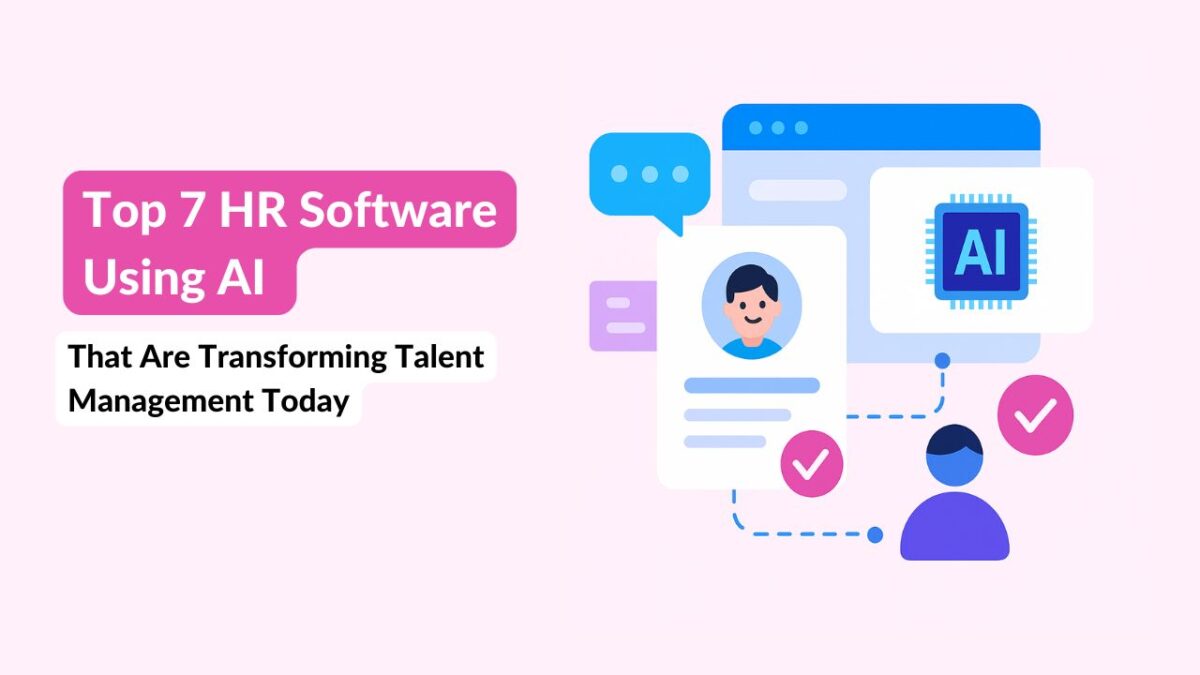
7 Top HR Softwares Using AI That Are Transforming Talent Management Today

HR is no longer just a support function—it’s now a strategic force driving business success. As workplaces grow more complex, digital, and distributed, traditional HR tools are struggling to keep up. That’s where AI-powered HR software is stepping in to transform how organizations hire, develop, and retain talent.

With 76% of HR professionals warning that companies risk falling behind if they don’t adopt AI, it’s clear this is more than a trend—it’s a business imperative. AI is doing far more than automating admin tasks. It’s helping teams anticipate attrition, personalize employee experiences at scale, and make smarter, faster people decisions.

In this article, we explore 7 leading HR platforms powered by AI that are reshaping the future of workforce management. From hiring and onboarding to performance, learning, and retention—these tools are built to align people strategies with business goals.

Why Must Businesses Invest in Top HR Software Using AI

Today’s workforce is more diverse, digital, and dynamic than ever before. This is why HR leaders require more than manual processes and gut feeling; they need AI-driven agility.

Key benefits of investing in top HR software using AI:

  1. Minimizing Bias in Hiring: AI tools offer skills-based shortlisting, which helps avoid unconscious bias and promotes fairer hiring decisions.
  2. Forecasting Attrition: Predictive analytics for employees at risk of leaving their organizations enables early intervention by HR before valuable talent is lost.
  3. Personalizing Employee Experience at Scale: Onboarding, learning, and engagement journeys are facilitated with AI HR assistants, utilizing customized approaches for each employee, automatically and at scale.
  4. Automating Feedback Loops: AI-powered surveys assess employee input instantly and function in real time, enabling prompt action. 
  5. Improving Workforce Planning: AI-based tools help managers and HR leaders to assess future hiring and upskilling needs, internal workforce planning, unbiased work allocation, and productivity enhancement criteria.
  6. Analyzing Employee Sentiments: The modern AI-based feedback and survey systems help leaders assess the pain points of employees and encourage them to take action before the occurrence of disenagement or high attrition.
  7. Enhancing Compliance: Organizations need to stay compliant with certain internal and external policies and regulations. AI-based software helps them abide by such laws, improve audit quality, and prevent penalties or fines.
  8. Planning Career Goals: HR platforms help leaders and employees assess their individual career goals and form learning paths. Such measures fill skill gaps, empower employees, enhance productivity, and boost retention.

12 Features to Search for in Top HR Software using AI

Here are 12 key features that top companies prioritize when selecting the best AI-powered HR software in 2025:

1. AI-Powered Recruitment

Search for advanced tools that use AI to scan resumes, compare candidate skills to the requirements of a role, and set up interviews automatically. Tools like HireVue and Manatal shorten the hiring process and enhance the match between a candidate and a job.

2. Sentiment Analysis

Artificial intelligence classifies the emotional tones present in the various types of text and speech feedback input provided by employees in surveys, chats, or even internal forums. This alerts HR concerning any negativity that, if left unattended, may spiral into disengagement or overt dissatisfaction.

3. Talent Risk Identification

Advanced analytics will enable HR leadership to identify any signals that a particular employee may be experiencing burnout or declining performance. This kind of visibility allows proactive HR intervention to take place before a problem arises. 

4. Smart Onboarding

AI adapts onboarding steps based on employee role, department, and even learning preference through AI HR assistants. Tools like BambooHR help in a more engaging and personalized start.

5. Customized Learning & Development

Instead of generic learning tracks, AI looks into contextual data, like performance gaps, role changes, and team goals, to recommend the most appropriate training content. Agentic AI for Talent Management by Engagedly recommends skill improvements and contributions to projects. Discover how Engagedly’s AI powered platform streamlines HR processes, elevates performance outcomes, and enhances every stage of the employee lifecycle.

6. Virtual HR Assistants

AI chatbots answer any HR-related queries today. Spoke-type tools allow employees to log service tickets and route inquiries in real time.

7. DEIB Analytics

AI-enabled dashboards assess Diversity, Equity, Inclusion, and Belonging. Tools like Lattice don’t just analyze demographics but also which possibilities and recognition are distributed equitably.

8. Automation

Seek platforms that enable employees to handle their HR-related tasks independently. Engagedly’s  Marissa AI, their lead AI assistant, offers predictive performance insights, policy access, and leave management, along with document automation. See how Engagedly brings AI into core people operations to simplify workflows, support data informed decisions, and optimize talent management.

9. Predictive People Analytics

Such tools predict important workforce trends. For example, Visier calculates attrition, absenteeism, and internal mobility rates, so management can react faster.

10. OKRs and Performance Intelligence

The AI monitors the progress about objectives, signaling context whenever HR targets lag or exceed expectations.

11. Nudges and Pulse Insights on Engagement

Select AI algorithms, such as Engagedly, that send personalized nudges to enhance survey response rates, the quality of feedback, and team morale based on behavioral data.

12. Retention Forecasting & Career Planner

More advanced models, such as Agentic AI, examine role fit, career trajectory, and job satisfaction and identify which top performers are at risk and where development can be targeted.

7 Top HR Software using AI for Better People-Oriented Strategies

Below is a closer look at the 7 Top HR Software using AI in 2025:

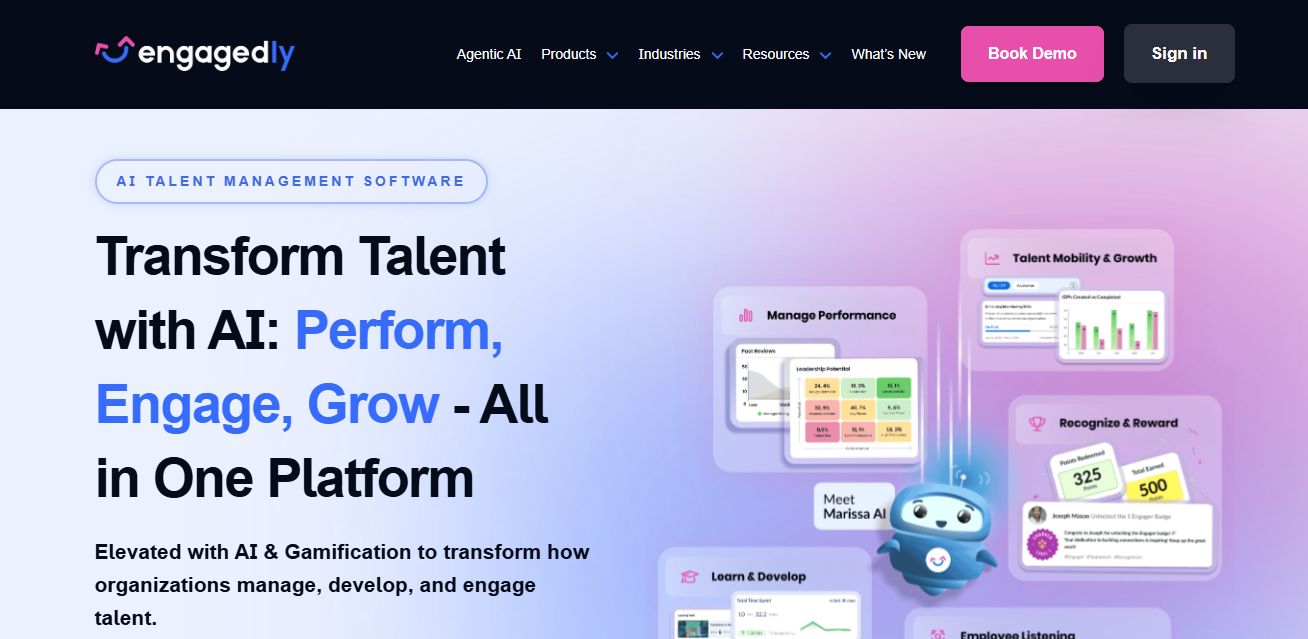
1. Engagedly (AI-Powered Talent Enablement Platform) (Chnage this image)
Source

  • Overview: Engagedly is an agile performance management and development solution that offers managers and employees a simpler way to help them monitor and improve performance.
  • Differentiators: It’s differentiated by how it exposes API-first proprietary AI engines. Marissa AI is best used for performance insights. Agentic AI is a great tool for career pathing throughout the employee experience stack.
  • AI Features: Marissa AI provides context-sensitive actions during reviews and feedback, and Agentic AI creates development and internal mobility paths based on real-time data.
  • Pros: Very modular and perfect for fast-growing businesses in multiple functions. Provides unique feedback on intra-connections with performance measures and learning. Great for HR teams looking for proactive intervention tools.
  • Cons: Its robustness can be more than what smaller teams want. The execution might demand a hands-on approach to onboard and train to reach its full potential.
  • Pricing: Custom pricing based on features and team size; must contact for a quote.

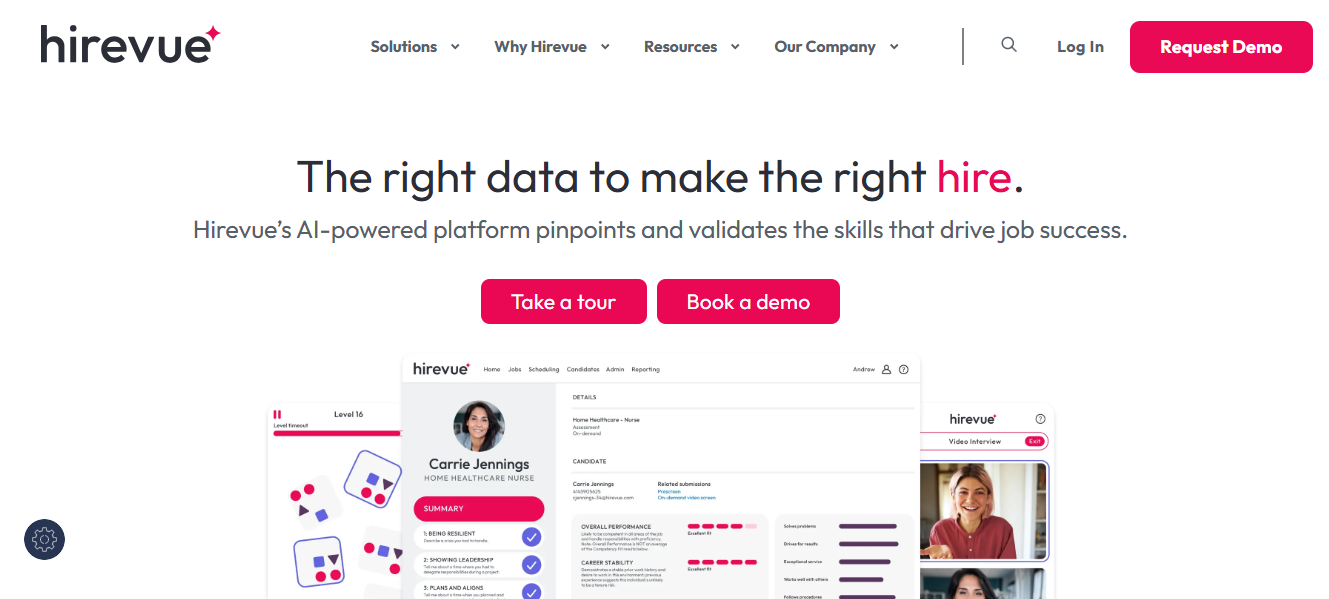
2. HireVue (AI for Smart Hiring Decisions)
Source

  • Overview: HireVue is an AI-driven hiring platform that improves candidate evaluation in video-based interviews with data analysis, predictive analytics, and assessment tools.
  • Differentiators: It leverages AI to analyze video interviews, evaluating verbal, facial, and linguistic cues to determine job performance and cultural fit.
  • AI Features: It is a recruitment platform that analyses the tone, vocabulary, and expression in recorded interviews, combined with a list of structured questions. It helps make high-volume hiring more consistent.
  • Pros: Ideal for organizations that hire extensively and conduct thousands of interviews. Slashes through recruiter complexities and makes the hiring process faster and more objective.
  • Cons: Facial and tonal analysis based on AI can raise ethical concerns when transparency and auditability are lacking. There may be restrictions on customization without enterprise support.
  • Pricing: Starts around $35 per recruiter per month; custom packages for larger teams.

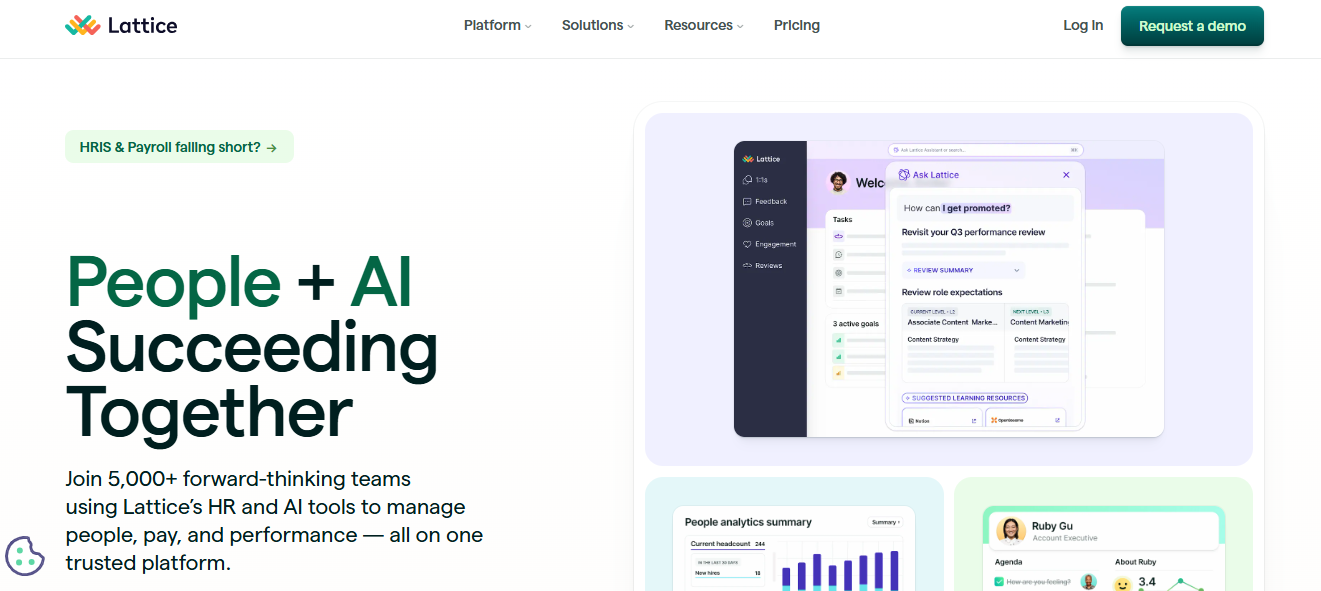
3. Lattice (AI-Powered Performance and Engagement)
Source

  • Overview: Lattice is an easy-to-use, performance-first software that allows HR to manage employee development, growth, and engagement feedback. 
  • Differentiators: It incorporates artificial intelligence (AI) into its feedback and pulse survey systems to predict disengagement trends and burnout signs, allowing executives to take appropriate action in advance.
  • AI Features: Lattice’s analytics derive information from peer feedback and manager reviews. HR departments can detect fluctuations in sentiment and drops in engagement.
  • Pros: It’s extremely simple to use and loved by all. It’s modularly priced and best for a scaling team. Provides excellent engagement and goal-tracking tools.
  • Cons: It doesn’t cover hiring or onboarding, so it wouldn’t work well on its own for small HR teams.
  • Pricing: Begins at $11 per user/month after add-ons.

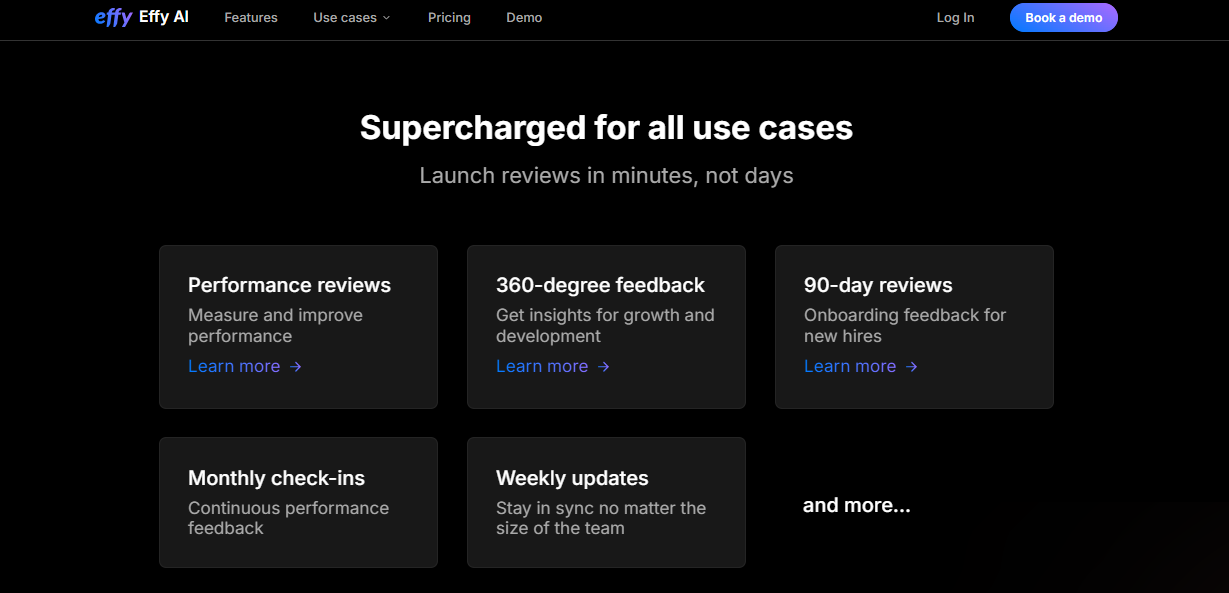
4. Effy AI (Easy Performance Reviews powered by AI)
Source

  • Overview: Effy AI is purpose-built to simplify 360-degree performance and development feedback. It is well-equipped with AI-generated summaries, feedback prompts, and customized report templates.
  • Differentiators: Its GPT-inspired prompts make it easy for users to create constructive, unbiased feedback, saving them up to 60% of the time they would otherwise waste on reviews.
  • AI Features: It utilizes AI to sift through written feedback, suggest wording for responses, and compile summarized reviews for each employee to ensure quality and consistency.
  • Pros: Quick installation and easy to learn. Solid initialization for startups and mid-sized teams in need of thorough reviews without the burden of full HR systems.
  • Cons: No modules for onboarding, analytics, or L&D; limited in scale and scope; and its integrations are not flexible with other systems.
  • Pricing: Basic plan is free; paid options start at $4 per user per month.

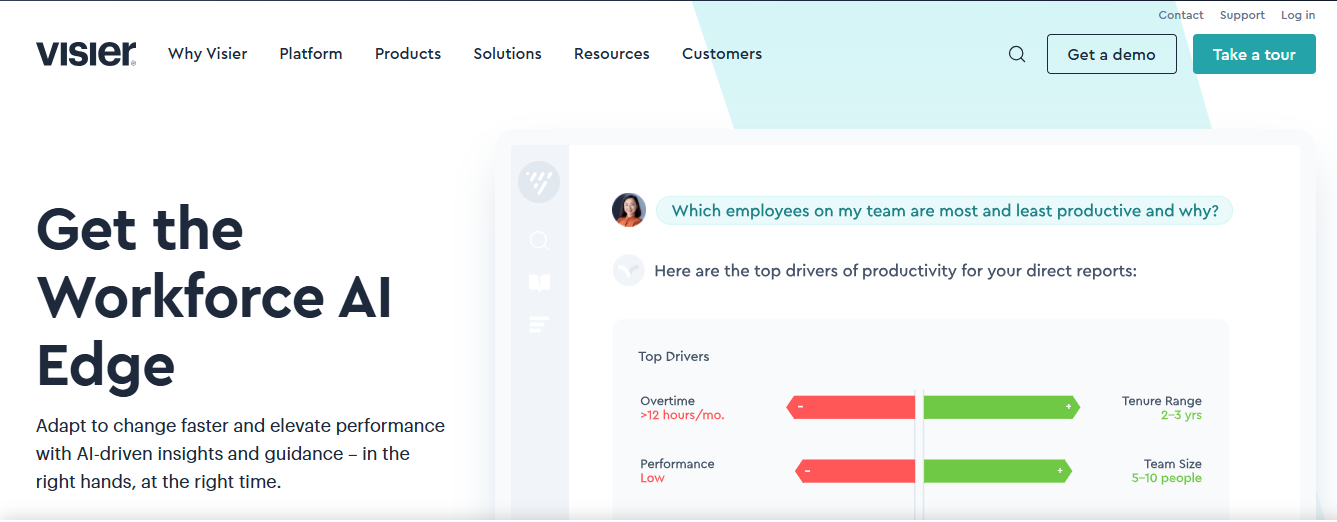
5. Visier (Workforce Intelligence at Scale)
Source

  • Overview: Visier is a data analytics software that believes that data should be structured, well-understood, and become the focus of everything HR teams do.
  • Differentiators: It pulls data from multiple sources within HR tech stacks, including ATS, payroll, and LMS. This empowers leaders to build a unified, decision-ready analytics ecosystem.
  • AI Features: By using predictive modeling and dashboard alerts, its AI identifies workforce trends such as flight risk, pay inequity, and hiring pipeline bottlenecks.
  • Pros: Ideal for large businesses with sophisticated reporting requirements. Very informative and helps plan for HR’s future. 
  • Cons: A steep learning curve, especially for teams that lack data expertise. Its implementation may need analysts or consultants.
  • Pricing: Enterprise pricing; contact us for more details and a customized proposal.

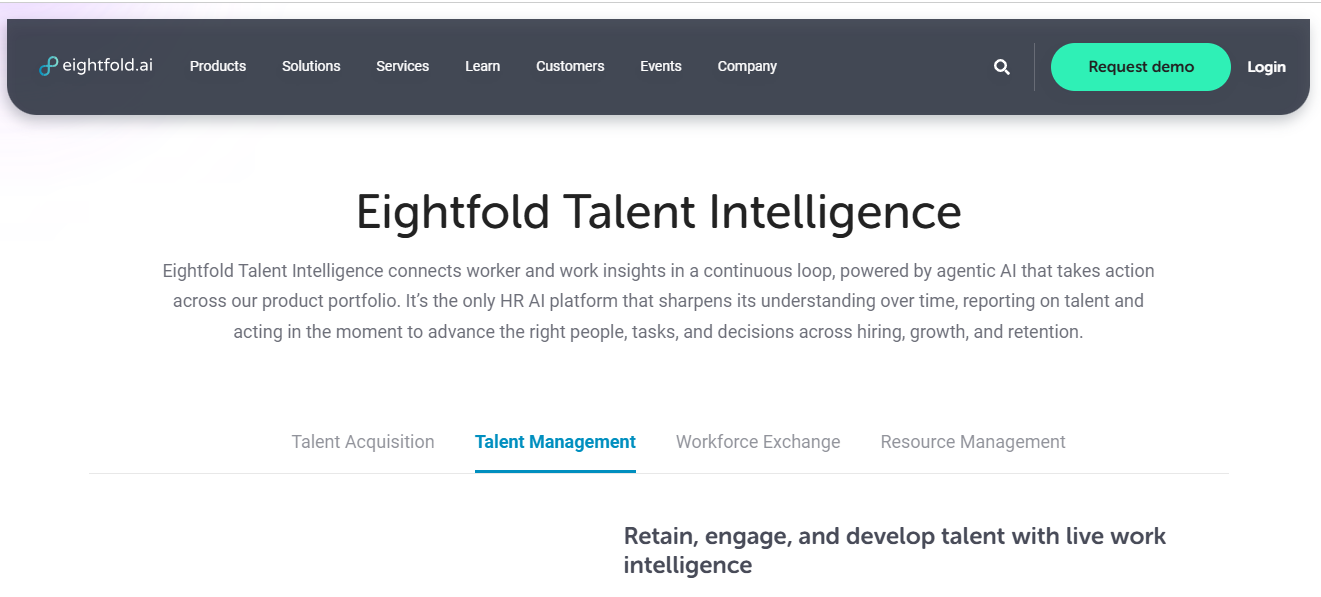
6. Eightfold AI (The Talent Intelligence Platform)
Source

  • Overview: Eightfold AI is a next-generation talent intelligence platform that leverages deep learning to match talent with opportunities like external hiring and internal mobility processes.
  • Differentiators: It provides a skills-first approach that uses AI to pair candidates with roles they may not have applied for, driving diversity and performance.
  • AI Features: From reading resumes and connecting future-fit roles to reskilling opportunities, its AI manages job matching, succession planning, and DEI mapping.
  • Pros: Ideal for multinational companies aiming for agility, upskilling, and future-proofing their workforce. Nothing beats diversity and defense in depth.
  • Cons: Pricing and complexity make it unrealistic for startups or lean HR teams to consider it. Organizations need stringent collaboration between IT and HR before implementing it.
  • Pricing: Pricing is customized and conducted through consultation and a demo of the product.

7. Workhuman (AI and Employee Rewarding and Retention)
Source

  • Overview: Workhuman combines AI with employee experience strategy, recognition, culture analytics, and emotional intelligence to help drive retention.
  • Differentiators: It transforms recognition data, who is being appreciated, by whom, and how often. This means predictive insights about engagement and flight risk.
  • AI Features: AI-based tools facilitate peer recognition, DEIB participation, and reward data analysis at scale, driving company culture and reducing attrition.
  • Pros: Great for organizations that emphasize corporate culture and diversity helping them build a strong culture.
  • Cons: It is not a full-suite HR tool. It works best when integrated with existing HRIS or performance systems.
  • Pricing: Customized according to the organization’s size and deployment requirements.

Wrapping Up

Manual HR management has evolved into an AI-informed talent strategy, reflecting how companies engage with their employees. These digital improvements enable HR leaders to evolve their roles from being reactive responders to predictive mentors.

What is so compelling about the top HR software using AI reviewed is not just that they are automation-enabled but also how they have been designed in a smart way to interconnect data points across the employee lifecycle.

Among the top tools, Engagedly supports businesses with integrated solutions for performance, development, and engagement.

However, the right platform for your organization ultimately depends on addressing its specific challenges and goals.

Book a demo now to learn more!

FAQs

How does HR software facilitate employee engagement?

Top HR Software using AI boosts engagement by constantly tracking employee sentiment, collecting feedback in real time, and prompting proactive nudges. With learning paths, recognition, and burnout detection, these platforms can also make employees feel heard, recognized, and supported.

What should you look for in the best AI-based HR software?

Seek a platform that includes predictive people analytics, AI-driven performance management, personalized L&D recommendations, automated recognition flows, and agentic intelligence capable of encouraging proactive action.

What is the best HR software for small-budget companies?

Effy is ideal for quick, easy reviews without overwhelming complexity, while Lattice offers excellent engagement tracking and performance insights at a low entry price.

Top 10 15Five Alternatives You Need to Know in 2025

Performance management tools play a pivotal role in enhancing employee performance and overall organizational productivity. These tools facilitate continuous feedback, goal setting, performance reviews, and employee engagement, which are crucial for maintaining a motivated and high-performing workforce. By implementing robust performance management systems, companies can align individual objectives with organizational goals, identify and address performance gaps, and foster a culture of continuous improvement and development.

Why Companies Might Seek Alternatives to 15Five

While 15Five is a widely recognized performance management tool known for its user-friendly interface and comprehensive features, companies might seek alternatives for several reasons. Some organizations may find that 15Five’s features do not fully align with their specific needs or industry requirements. Others may be looking for a more cost-effective solution, better integration capabilities with existing systems, or advanced analytics and reporting functionalities. Additionally, as the market for performance management tools evolves, new players with innovative features and unique approaches continue to emerge, offering competitive alternatives to established solutions like 15Five.

This article aims to provide an overview of the best alternatives to 15Five, helping companies identify the right performance management tool that meets their unique needs. We will evaluate each alternative based on key criteria such as features, pricing, user experience, and unique selling points, ensuring a comprehensive analysis to aid in the decision-making process.

Criteria for Evaluation

Features

Key functionalities are essential in performance management tools to ensure they meet the diverse needs of an organization. Important features include:

  • Performance Reviews: Regular and systematic assessments of employee performance.
  • Goal Setting and Tracking: Tools for setting, monitoring, and achieving individual and team goals.
  • Feedback Mechanisms: Continuous feedback options to facilitate communication between employees and managers.
  • Employee Engagement: Features that promote engagement and monitor employee satisfaction.
  • Analytics and Reporting: Advanced reporting tools to analyze performance data and make informed decisions.
  • Integration Capabilities: Ability to seamlessly integrate with other HR and productivity tools.

User Experience

Ease of use and user interface are vital for ensuring widespread adoption and effective utilization of the tool. Key aspects include:

  • Intuitive Design: User-friendly interface that simplifies navigation and reduces the learning curve.
  • Accessibility: Availability of mobile and web applications for easy access.
  • Customization: Ability to tailor the tool to meet specific organizational needs and preferences.
  • Support and Training: Availability of customer support, training resources, and documentation.

Unique Selling Points (USPs)

What sets each alternative apart from the competition is crucial in identifying the right fit for an organization. USPs might include:

  • Innovative Features: Unique functionalities that address specific challenges or provide distinct advantages.
  • Market Position: Reputation and credibility in the performance management space.
  • Customer Reviews: Positive feedback and testimonials from existing users.
  • Differentiation: How the tool stands out in terms of technology, approach, or user experience.

By evaluating 15Five alternatives based on these criteria, this article aims to provide a clear and comprehensive guide to help organizations choose the most suitable performance management tool for their needs.

Top 10 Excellent Alternatives to 15Five You Should Consider

Here are 10 excellent alternatives to 15Five to consider before choosing performance management software:

1. Engagedly
2. Lattice
3. Betterworks
4. Culture Amp
5. Reflektive
6. Leapsome
7. 7Geese
8. Trakstar
9. Zoho People
10. BambooHR

1. Engagedly

Engagedly is an AI-powered talent management platform designed to address every facet of workforce development, empowering organizations to solve persistent challenges with intelligent precision. Powered by Marissa, our AI SuperAgent, Engagedly helps mid-market organizations overcome hurdles like inconsistent performance evaluations, goal misalignment, low engagement, and fragmented learning experiences—transforming these challenges into opportunities for growth.

AI-Driven Capabilities

Engagedly unifies performance management, employee engagement, and learning management into a single, agentic platform. With Marissa’s intelligent guidance, organizations gain actionable insights and proactive recommendations that optimize performance and foster a culture of continuous improvement.

Key Features with Marissa AI

  • Performance Reviews: AI-driven evaluations ensure consistent, unbiased, and transparent reviews, helping mid-market organizations improve satisfaction and retention.
  • Goal Setting & Alignment: Marissa auto-suggests goals, aligns them with strategic objectives, and tracks progress in real time.
  • Employee Engagement: AI-powered sentiment analysis and recommendations help leaders boost morale and reduce turnover by addressing engagement gaps.
  • Continuous Feedback: Intelligent nudges foster a feedback-rich environment, empowering managers and employees to communicate effectively and grow together.
  • Learning Management: Personalized learning paths, curated by AI, make upskilling efficient and engaging without the need for separate platforms.
  • 360-Degree Feedback: AI-enhanced analytics provide deeper insights into peer, manager, and report feedback for holistic performance development.
  • OKRs (Objectives and Key Results): Automated tracking and predictive analytics keep teams aligned and on track to meet organizational goals.
  • Employee Recognition: AI identifies top performers and suggests timely recognition opportunities, fostering motivation and a culture of appreciation.

User Experience

Engagedly delivers a seamless experience across web and mobile with an intuitive design and AI-guided navigation. Marissa’s conversational interface allows leaders and employees to interact naturally—no complex menus, just strategic conversations that turn intent into intelligent actions.

Unique Value Proposition

Engagedly isn’t just another HR system—it’s an Agentic AI-driven talent management powerhouse. By combining Marissa’s intelligence with robust tools, mid-market organizations can:

  • Automate tactical processes so leaders can focus on strategy.
  • Gain predictive insights to proactively address workforce challenges.
  • Build a culture of engagement, growth, and high performance.

For organizations seeking scalable talent transformation, Engagedly with Marissa is not just an upgrade—it’s a competitive advantage.

2. Lattice

Lattice

Lattice is a performance management and employee engagement platform that focuses on continuous feedback and employee development. It helps organizations drive better performance through goal setting, performance reviews, and engagement surveys.

Key Features:

  • Performance Reviews: Structured performance evaluations to assess and develop employee performance.
  • OKRs: Tools for setting and tracking objectives and key results.
  • Feedback: Continuous feedback options to facilitate regular communication between employees and managers.
  • Employee Engagement Surveys: Tools to measure and improve employee engagement and satisfaction.

User Experience:
Lattice is known for its intuitive interface and robust analytics, making it easy for users to navigate and gain insights. The platform’s design focuses on simplicity and effectiveness, ensuring a positive user experience.

USP:
Lattice’s strong focus on employee development and continuous feedback sets it apart, making it an excellent choice for organizations that prioritize ongoing employee growth and improvement.

3. Betterworks

Betterworks

Betterworks is a performance management platform that emphasizes goal alignment and achievement. It provides tools for setting and tracking goals, conducting performance reviews, and facilitating continuous performance management.

Key Features:

  • Goal Setting and Tracking: Tools to set, monitor, and achieve individual and organizational goals.
  • Performance Reviews: Comprehensive performance evaluation tools.
  • Feedback: Continuous feedback mechanisms to support employee development.
  • Continuous Performance Management: Tools to ensure ongoing performance tracking and improvement.

User Experience:
Betterworks features a clean and user-friendly interface that integrates seamlessly with other tools. Its design focuses on ease of use, ensuring a smooth user experience.

USP:
Betterworks stands out for its emphasis on goal alignment and achievement, helping organizations ensure that their employees’ goals are aligned with overall business objectives.

4. Culture Amp

Culture-Amp

Culture Amp is an employee engagement and performance management platform that provides data-driven insights to improve company culture. It offers tools for engagement surveys, performance reviews, goal setting, and feedback.

Key Features:

  • Employee Engagement Surveys: Tools to measure and enhance employee engagement.
  • Performance Reviews: Comprehensive tools for conducting performance evaluations.
  • Goal Setting: Facilitates setting and tracking individual and team goals.
  • Feedback: Continuous feedback mechanisms to support employee development.

User Experience:
Culture Amp features a user-friendly design that provides actionable insights, making it easy for users to navigate and make informed decisions.

USP:
Culture Amp’s data-driven insights for improving company culture make it a valuable tool for organizations looking to enhance employee engagement and performance through actionable data.

5. Reflektive

Reflektive

Reflektive is a performance management platform that focuses on real-time feedback and goal management. It provides tools for performance reviews, goal setting, feedback, and check-ins to drive continuous improvement.

Key Features:

  • Performance Reviews: Structured tools for conducting regular performance evaluations.
  • Goal Management: Tools for setting and tracking individual and team goals.
  • Feedback: Real-time feedback mechanisms to facilitate regular communication and development.
  • Check-Ins: Regular check-ins to monitor progress and address any issues promptly.

User Experience:
Reflektive features a modern and intuitive interface that ensures ease of use. The platform’s design focuses on simplicity and effectiveness, providing a positive user experience.

USP:
Reflektive’s real-time feedback and goal management capabilities set it apart, making it a valuable tool for organizations that prioritize continuous improvement and timely feedback.

6. Leapsome

Leapsome

Leapsome is a comprehensive performance management and learning platform designed to enhance employee development and organizational performance. It integrates various functionalities to provide a seamless experience for managing performance reviews, goal setting, and continuous feedback.

Key Features:

  • Performance Reviews: Structured and customizable performance review processes.
  • Goal Setting: Tools for setting, tracking, and achieving individual and team goals.
  • Feedback: Continuous feedback mechanisms to foster ongoing development and communication.
  • Learning Management: Integrated learning management system to support employee training and development.

User Experience:
Leapsome features an intuitive platform with customizable workflows, making it easy for users to tailor the system to their specific needs. The user-friendly interface ensures a smooth experience for both employees and managers.

USP:
Leapsome stands out for its integration of performance management and learning, providing a holistic approach to employee development and organizational growth.

7. 7Geese

7Geese-is-Now-Paycor-Talent-Development

7Geese is a performance management platform that focuses on OKR-driven performance management. It provides tools for setting and tracking Objectives and Key Results (OKRs), conducting performance reviews, and facilitating feedback and recognition.

Key Features:

  • OKRs: Tools for setting, tracking, and achieving Objectives and Key Results.
  • Performance Reviews: Comprehensive performance evaluation tools.
  • Feedback: Continuous feedback mechanisms to support employee development.
  • Recognition: Features to recognize and reward employee achievements.

User Experience:
7Geese features a clean interface with easy navigation, ensuring a positive user experience. The platform is designed to simplify the performance management process and enhance user engagement.

USP:
7Geese’s strong focus on OKR-driven performance management sets it apart, making it an excellent choice for organizations that prioritize goal alignment and achievement.

8. Trakstar

Trakstar-Employee-Performance-Software

Trakstar is a performance management platform that provides tools for performance reviews, goal setting, feedback, and employee engagement. It aims to enhance organizational performance through comprehensive reporting and analytics.

Key Features:

  • Performance Reviews: Tools for conducting regular and structured performance evaluations.
  • Goal Setting: Features to set, track, and achieve individual and team goals.
  • Feedback: Continuous feedback mechanisms to facilitate communication and development.
  • Employee Engagement: Tools to measure and improve employee engagement.

User Experience:
Trakstar features a simple and effective design, making it easy to navigate and use. The platform provides comprehensive reporting and analytics to support informed decision-making.

USP:
Trakstar’s extensive reporting and analytics capabilities make it a valuable tool for organizations seeking in-depth insights into their performance management processes.

9. Zoho People

Zoho-People


Zoho People is a comprehensive HR management platform that includes performance management features. It integrates seamlessly with other Zoho products, providing a unified solution for managing HR and performance processes.

Key Features:

  • Performance Reviews: Tools for conducting regular performance evaluations.
  • Goal Setting: Features to set, track, and achieve goals.
  • Feedback: Continuous feedback mechanisms to support employee development.
  • HR Management: Comprehensive HR management features, including employee data management, leave tracking, and more.

User Experience:
Zoho People provides a user-friendly interface that integrates with other Zoho products, ensuring a seamless experience for users. The platform’s design focuses on ease of use and efficiency.

USP:
Zoho People’s comprehensive HR suite with integrated performance management features makes it a versatile solution for organizations seeking a unified HR and performance management platform.

10. BambooHR

BambooHR

BambooHR is an all-in-one HR management platform that includes performance management features. It provides tools for performance reviews, feedback, goal setting, and employee data management.

Key Features:

  • Performance Reviews: Structured tools for conducting performance evaluations.
  • Feedback: Continuous feedback mechanisms to support employee development.
  • Goal Setting: Features to set, track, and achieve individual and team goals.
  • Employee Data Management: Comprehensive tools for managing employee data, leave tracking, and more.

User Experience:
BambooHR features an easy-to-use interface that simplifies HR and performance management processes. The platform is designed to be intuitive and accessible, ensuring a positive user experience.

USP:
BambooHR’s all-in-one HR and performance management platform makes it a valuable tool for organizations looking for a comprehensive solution to manage their HR and performance processes.

Conclusion

Performance management platforms offer a wide spectrum of options, each catering to diverse organizational needs and preferences. From tools emphasizing advanced analytics and seamless integration capabilities to those focusing on real-time feedback, goal alignment, or comprehensive employee engagement, the choices are plentiful. By carefully evaluating these alternatives based on criteria such as functionality, user experience, and innovative features, companies can select a platform that best supports their unique goals and operational dynamics. This strategic decision not only enhances organizational effectiveness but also fosters a culture of continuous improvement and employee development, driving sustained success in today’s competitive landscape.

Talent Management

Frequently Asked Questions (FAQs)

What should you look for in a performance management platform besides 15Five?

A strong performance management platform should support continuous feedback, structured performance reviews, and clear goal alignment. Beyond basic check-ins, look for:

  • OKR or KPI tracking with real-time progress updates
  • 360-degree feedback capabilities
  • Engagement surveys and sentiment analysis
  • Advanced analytics and reporting dashboards
  • HRIS and payroll integrations

Modern tools also offer AI-driven insights to reduce bias and improve decision-making. Prioritize ease of use, mobile accessibility, and scalability to ensure adoption across teams and long-term value as your organization grows.

Why do companies switch from 15Five to other performance tools?

Organizations often explore alternatives when they need deeper analytics, broader talent management features, or tighter system integrations. Common reasons include:

  • Desire for integrated learning management or employee recognition
  • More advanced OKR tracking and predictive insights
  • Better alignment with industry-specific workflows
  • Cost scalability for mid-market or growing teams

As performance management evolves toward continuous, data-driven models, companies seek platforms that combine engagement, development, and analytics in a unified ecosystem rather than standalone feedback tools.

How do AI-powered performance management systems improve employee outcomes?

AI-powered performance management systems use automation and analytics to enhance fairness, alignment, and development. These platforms can:

  • Detect performance trends and engagement risks early
  • Suggest SMART goals aligned with company objectives
  • Reduce review bias through structured evaluations
  • Recommend personalized learning paths

By turning performance data into actionable insights, AI-driven systems help leaders move from reactive reviews to proactive talent development, improving retention, productivity, and employee satisfaction.

What is the difference between goal tracking tools and full performance management software?

Goal tracking tools primarily focus on setting and monitoring objectives, such as OKRs or KPIs. In contrast, full performance management software includes:

  • Performance reviews and calibration processes
  • Continuous feedback and manager check-ins
  • Employee engagement surveys
  • Recognition and development planning
  • Reporting and workforce analytics

If your organization wants strategic alignment plus long-term employee growth, a comprehensive performance management solution provides broader capabilities than standalone goal-setting platforms.

Which type of organization benefits most from switching performance management software?

Mid-sized and scaling organizations often benefit most from upgrading their performance management systems. As teams grow, spreadsheets and manual reviews become inefficient and inconsistent. Companies experiencing rapid hiring, remote workforce expansion, or leadership development challenges typically need:

  • Automated workflows
  • Structured review cycles
  • Real-time goal visibility
  • Integrated engagement analytics

Switching to a unified platform can streamline HR operations, improve manager effectiveness, and support sustainable growth through data-driven talent decisions.

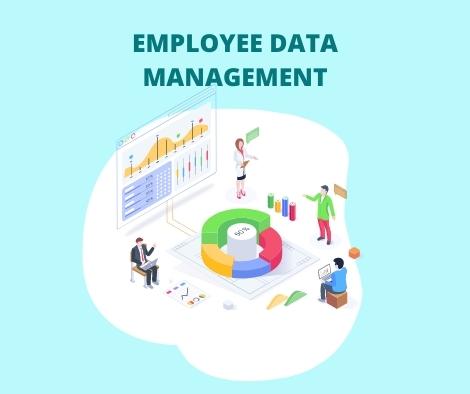
Employee Data Management in 2025: Strategies, Best Practices & Tools for HR Success

Data is present throughout the employee cycle, from the data-driven recruitment phase to the employee exit interview. But how would you feel if we told you there’s a chance you’re missing vital information about your employees?

You may not know how many people moved over the last few years? Or if they have the right skills for the next big project you’re about to undertake. Maybe you don’t know enough about their expense reports.

When you handle massive amounts of employee data, it’s easy to lose sight of what’s essential for your organization and how to leverage it to move your company forward. 

In today’s digital-first workplace, employee data management is no longer just about storing files—it’s about creating a reliable, real-time source of truth that supports business strategy, compliance, and employee experience. As organizations move into 2025, the stakes are higher: regulatory pressures are tightening, employees expect data transparency, and HR leaders need accurate insights to drive workforce planning.

This guide explores employee data management from its definition to 2025 innovations, essential tools, best practices, and actionable templates so your HR team can stay ahead.

What Is Employee Data Management?

Employee data management involves collecting, storing, and maintaining critical information concerning your organization’s employees.

data management best practices


From personal bios and medical information right down to employment details and performance data, collecting data from each employee is a fundamental HR requirement. But this operational need of maintaining and managing the information collected at onboarding, during employment, and throughout their tenure from employees is an arduous task. 

Why? Employee data can be required for statutory purposes and, therefore, must be maintained for long periods. If you don’t want to spend too much time and effort doing this, you need a master plan for collecting, organizing, and retaining all that data to comply with legal regulations.

What Is Employee Data Management in 2025?

Employee data management has evolved into a strategic, AI-powered process designed to capture, maintain, and leverage workforce information for smarter business decisions.

Key characteristics in 2025 include:

  • Centralized digital records through HRIS or integrated HR platforms for clean, accessible, and real-time workforce insights.
  • Automated accuracy that removes duplicates, updates outdated entries, and streamlines payroll, compliance, and analytics.
  • Predictive analytics to forecast turnover, identify skill gaps, and optimize performance rewards.

What Is Employee Data Management in 2025?

Employee data management has evolved into a strategic, AI-powered process designed to capture, maintain, and leverage workforce information for smarter business decisions.

Key characteristics in 2025 include:

  • Centralized digital records through HRIS or integrated HR platforms for clean, accessible, and real-time workforce insights.
  • Automated accuracy that removes duplicates, updates outdated entries, and streamlines payroll, compliance, and analytics.
  • Predictive analytics to forecast turnover, identify skill gaps, and optimize performance rewards.

Benefits of Employee Data Management

Employee data management can be challenging, but it’s especially essential in today’s data-driven company culture. The fact you get several significant benefits further sweetens the deal. 

These are the benefits of effectively managing your employee data:

Creates a Comprehensive Picture of Your Workforce

Employee data management gives you a good understanding of: 

  • who works for you, 
  • how long they have worked, 
  • what skill sets they possess, and 
  • their overall work performance. 

Knowing this information can help you accumulate your overall organization strategy and create a more productive work environment by assigning the right people to the right roles.

Saves Time

Correctly collecting and storing your employee’s information saves you time as you can easily access the data when needed without extra hassle.

Boosts Operational Efficiency

Employee data management makes your operations more efficient. You know what’s going on with your employees, what needs to be updated, and which HR processes need optimization to eliminate bottlenecks and ensure smooth working.

Managing employee data also helps you spot trends related to your workforce. For instance, you may notice employees tend to leave your organization after a 2-year stay. After knowing this, you can focus on building programs aimed at improving staff retention.

Ensures Compliance

Data laws exist to ensure the safety of your sensitive documents and information. Incorporating these laws in your data management processes helps you maintain legal compliance and gives you greater peace of mind.

7 Types of Data to Store

It isn’t unusual to wonder what kinds of employee data impact your organization most. Here’s a list of the common data types you should store in your employee database:

data management best practices

Demographic Information

These are basic details about your employees. Think: their gender, age, marital status, educational qualifications, and nationality. 

This data tells you what kind of people you have in your workforce, their general characteristics, and how diversified they are. Knowing this information always comes in handy, so ensure you store in an easily accessible place. 

While you’re at it, limit the number of people that have access to demographic data as it’s still sensitive.

Medical Information

Medical data helps you maintain a safe workplace, so keeping and managing these data properly is essential. In fact, 87% of company leaders say they collect pandemic-related medical data, including vaccine status, COVID-19 tests, and temperature checks. 

Similarly, you can also store your employees’ medical data, including drug tests, the Family and Medical Leave Act (FMLA)-related, and COVID-19-related information. 

Employment Details

Employment details consist of records such as past work experiences, employment agreements, hiring incentives, background check results, and legal documents showing each individual’s employment terms. 

Other information includes employee ID number, leave policies, and bank details for receiving salaries. 

Job Details

No, job details and employment details aren’t the same. 

Job details comprise job description, skills and expertise, current projects, and location. This information helps you identify employees who currently don’t have work assigned to them in existing projects and have the capacity to take on more tasks within the organization.

Make sure these details are updated annually, as well as when new projects come up.

Training and Skills Development Data

Employees need training and development to reach their full potential and gain the necessary skills to do their duties effectively. An example of such an activity is the sales training game, just one of many strategies to improve sales performance.

As these trainings occur periodically, it’s vital to accurately record the training each employee gets and what skill sets they have or need to have. 

Doing this will help you maintain an inventory of employee skill sets and identify any skill gaps that require additional training. You can also decide which employees can take on more responsibilities like a managerial role.

Performance Data

Many organizations regularly evaluate their employees’ performance engagement through annual or quarterly performance appraisals. 

Storing relevant HR metrics data helps you track your workers’ progress and gives you information like, say, the state of high-performing sales teams. You can then set goals and expectations for other employees in different departments of the company. 

Keeping sales performance data also helps you brainstorm employee reward and recognition ideas for awards and achievements events.

Also Read: A complete guide to performance management

Employee Feedback Data

These include data from onboarding surveys, employee engagement surveys and templates, and exit interviews. The valuable information generated from the channels will allow you to make changes and improvements across your organization whenever necessary. 

7 Best Practices and Tips for Effective Employee Data Management

Now that you know the kinds of data you need to store, let’s find out the best ways to manage it.


1. Assess and Audit the Data You Have

Carefully assess the data currently stored in your HR department. What kinds of data do you currently have, and how important are they for your organization?  

You must understand the information on your employees, both past and present, so you know how to organize and store them. Certain records shouldn’t be kept for long, so it’s vital to determine when to delete them from your data management system. 

2. Categorize Your Stored Data

It makes sense to separate the data you collected from your employees and then organize and store it.

Let us explain—suppose you have a large organization and find yourself responsible for handling massive amounts of data after interpreting employee engagement survey results.

 How do you do it? The most effective way is to categorize the data by creating data segments, such as gender, location, and department. 

Categorizing enables your HR department to easily access all employees information, saving precious time that would otherwise have been wasted scouring and locating scattered files. It also protects sensitive information by storing them separately from non-sensitive data.

3. Limit Access of Employee Data to Authorized Users

Certain employee details like medical records are confidential and should only be assessed by authorized users. 

Create a structure that lets you define who should have access to such data. Passwords and multi-factor authentication may not be enough. In such cases, consider implementing policies that require approval from top-level management before getting access to any sensitive information.

4. Redesign Data Handling Methods

The first step to redesigning your data management is getting clarity on the existing laws on employee data storage. Follow this up by evaluating your current techniques for collecting, sorting, and processing employee information.

Always ask your employees for permission before storing their information and let them know the measures you have in place to protect it. This is especially important when you have sensitive information like medical records. Research shows only 1 in 4 employees feel comfortable giving out such information to their employer. 

We also recommend referring to the employee data bill of rights document to better understand the appropriate way to handle employee data.

5. Use a Data Management Software

There’s hardly any room for error when managing employee data, which is why automation is the best. 

A data management software keeps every bit of the employee information in one place, making it easy to handle and accessible. Don’t postpone using tech tools to track and store employee data quickly and efficiently wherever possible. 

Also Read: Why you need a talent management software!

6. Encrypt All Employee Information

Data breaches resulting from cybercrimes can happen anytime, so it’s important to pay utmost attention to data security. 

While it’s standard for organizations to only encrypt sensitive information, a better approach would be encrypting the whole employee file. If you update employee records regularly, ensure the HR department and high-level managers know how to keep it safe.

7. Train HR Staff to Handle Data Securely

The HR team and managers with access to employee data should be trained regularly on applicable laws, the outcome of data breaching, and bad data management

If an employee resigns from the company, the managers need to be professionally prepared to prevent data leaks. Keep your team updated on the latest employment laws to ensure legal compliance on data storage.

Managing Employee Data Properly Is Serious Business

Employee data management facilitates strategic human resource management

When handling information about your employees, figure out the types of data your organization needs and use automation tools like Engagedly to collect, manage and analyze it for good purpose. Always keep data security and compliance with data laws top of mind, too. 

It’s better to be overly protective of your employees’ information than be casual. Use the tips above to effectively manage and protect your employee data.

Conclusion

As HR moves deeper into the digital transformation era, employee data management is emerging as the foundation for strategic workforce decisions, compliance assurance, and employee trust. By adopting AI-enabled tools, following best practices, and keeping data governance transparent, organizations can not only improve operational efficiency but also create a work culture grounded in accuracy, fairness, and innovation.


FAQs

What is employee data management and why is it important in 2025?

Employee data management is the structured process of collecting, storing, maintaining, and using workforce data across the entire employee lifecycle. In 2025, it has become critical because organizations rely on accurate, real-time data to meet compliance requirements, support workforce planning, and improve employee experience. With stricter data privacy laws and rising expectations for transparency, poor data management can lead to legal risks and bad decisions. Effective employee data management helps HR teams move beyond record-keeping and use data strategically to forecast skills, reduce attrition, and support business growth.

What types of employee data should organizations store and manage?

Organizations should manage both operational and strategic employee data to gain a complete workforce view. Common categories include:

  • Demographic data (age, gender, education, location)
  • Employment and job details (contracts, roles, projects)
  • Medical and compliance-related records
  • Training, skills, and development data
  • Performance and goal-tracking data
  • Employee feedback from surveys and exit interviews

When stored securely and updated regularly, this data helps leaders identify trends, close skill gaps, and align people strategy with business objectives.

How does employee data management improve workforce planning and productivity?

Employee data management improves workforce planning by giving leaders visibility into skills, performance, and capacity across teams. When HR teams can quickly see who has the right skills, who needs training, or where turnover risks exist, they can plan projects more effectively. Predictive analytics also helps forecast attrition and future talent needs. This reduces reactive hiring, improves role alignment, and boosts productivity by ensuring the right people are placed in the right roles at the right time.

What are the biggest risks of poor employee data management?

Poor employee data management can expose organizations to compliance violations, data breaches, and costly inefficiencies. Inaccurate or outdated records may lead to payroll errors, incorrect reporting, or unfair performance decisions. Weak access controls increase the risk of sensitive data leaks, damaging employee trust and employer reputation. Additionally, fragmented data makes it difficult to identify workforce trends, resulting in missed opportunities to improve retention, engagement, and operational efficiency.

What tools can help organizations manage employee data more effectively?

Modern HR platforms and HRIS solutions play a key role in effective employee data management. Tools like Engagedly centralize employee records, automate updates, and provide analytics for performance, engagement, and skills tracking. These platforms reduce manual errors, improve data security, and enable HR teams to turn workforce data into actionable insights. Using the right technology ensures employee data is accurate, compliant, and aligned with long-term business strategy.


This article is written by Rana Bano. She is a one-part B2B content writer and one-part content strategist. She uses these parts to help SaaS brands tell their story, aiming to encourage user engagement and drive traffic.

Here Are 6 Simple Tools To Measure Employee Engagement

Employee engagement is a common topic of discussion for all organizations globally. In the post-pandemic era where employees are still working remotely or working from home, the topic of employee engagement has gained center stage. Employees who are engaged tend to work harder and stay with the same company for a long time. Research by Gallup highlights that companies with highly engaged employees make 21% higher profits and 17% more productive when compared to others.

Employee engagement is not simply the happiness level or the quantity of work done by an employee; there is more to that. It is a workplace concept that relates to the level of commitment, connection, and motivation that employees have in their job roles, work, and the organization.

However, employees do not have the same level of engagement throughout; it fluctuates from time to time. To ensure that employee engagement is nurtured and measured, here are some tools:

  1. Reward and Recognition
  2. Employee Surveys
  3. One-on-Ones
  4. Exit and Stay Interviews
  5. Focus Group
  6. Measure Productivity Metrics and Retention Rate

Why Measuring Engagement in 2025 Needs Smarter Tools

In today’s hybrid and fast-moving workplaces, measuring employee engagement demands more than annual surveys. This is where the best employee engagement survey softwares come into play with real-time insights. To stay relevant, tools must be real-time, analytics-driven, and predictive:

  • Pulse surveys & eNPS tracking deliver frequent, actionable insights into employee sentiment and loyalty, helping HR respond rapidly to shifts.
  • Engagement Index models, such as Quantum Workplace’s scientifically validated e9 model, measure nine core engagement drivers tied directly to business outcomes.
  • AI-enhanced analytics extract sentiment and themes from open-ended responses, enabling faster, smarter insight into engagement trends.

Employee Reward And Recognition Programs

According to a recent study, 69% of employees would work harder if they felt their efforts were better appreciated.

Employee recognition and rewards activities are a good way to identify engaged employees. It is already known that recognition and rewards have a direct impact on employee engagement. The reverse also stands true, identifying the number of employees receiving rewards and recognition helps managers and HRs to identify employee engagement in their organization.

Also Read: Employee Rewards And Recognition For An Engaged Workforce

Frequent Employee Surveys

If you want quick and effective methods to measure employee engagement, then your go-to option should be to conduct surveys. It not only helps in measuring engagement, but it also helps in employee motivation, and getting ideas from employees. This two-way communication is very important in having an engaged workforce. HRs and managers should frequently send simple, small, and actionable surveys to the employees of the organization asking them about work. It will help HRs, managers, and the organization to know how engaged their employees are and also help them understand the temperament of the organization. Be sure to focus your survey questionnaire on three basic metrics: Satisfaction, Alignment, and Future orientation. These metrics are best captured through well-structured employee engagement survey questions.

Engagedly’s built-in survey feature helps you create and assign surveys without a hitch.

Beyond Surveys: Smarter Metrics You Should Be Tracking

Consider these key metrics to deepen your measurement strategy:

  • Participation Rate – The percentage of employees completing surveys; high participation correlates with engagement.
  • Engagement Touchpoints – Monitor involvement in 1:1s, training programs, and peer recognition as supplemental engagement indicators.
  • Demographic Insights – Breakdown scores by team, role, or tenure for targeted improvement actions.
  • Feedback-to-Action Ratio – Measure the percentage of feedback items followed up with leadership action, reflecting true responsiveness.

free e10 Survey

Have Frequent One-On-Ones

From time to time, HR and managers should have one-to-one meetings with their employees. As one-to-one meetings are in person with the manager or the HR, the employee feels free to share information and express themselves. This should be done regularly, probably weekly once or every fortnight is advisable.

Also Read: Download the ultimate guide to employee engagement survey and templates

Conduct Exit And Stay Interviews

Employees leave the organization at different points in time, but as a manager or an HR, you need to know the actual cause behind it. Often employees cite that they didn’t feel engaged or excited with the work they do, as the reason behind leaving the organization. Conducting exit interviews and stay interviews helps the managers and the HRs to know which areas they should work on to improve employee engagement.

Exit interviews help in understanding what you could have done differently to improve engagement, whereas stay interviews let you know what you are already excelling at and what not.

Some common questions for both exit and stay interviews are:

  • What do you like most about your job?
  • What makes for a great day of work to you?
  • What do you look forward to everyday at your work?
  • What’s your relationship with your manager like?
  • What do you dislike most about your job?
  • If you could, what’s one thing you would change with your role?
  • What makes you want to stay with this organization?
  • What makes you want to leave this organization?

This helps prevent another employee from leaving the organization for the same reason.

Also Read: 7 Successful Strategies To Conduct A Stay Interview

Make Small Focus Groups

When organizations are very large it might be difficult for you to conduct a one-to-one meeting with your employees. In this case, focus groups could be formed. Often members of the same team or different teams can be grouped for this. As a manager, you should be prepared with a set of 5 to 8 questions, based on asking the employees whether they feel that their work is important or whether they have all the tools to do their work. This will help organizations to know what they can do to improve employee engagement and productivity.

Measure Productivity Metrics And Retention Rate

Retention rate and productivity metrics of employees will help determine how engaged the employees are in the organization. Employee engagement will have a direct effect on the retention rate and productivity metrics.

Thus it cannot be stressed enough how important employee engagement is and why it should be measured from time to time to keep your employees motivated and retain them in your organization. So if you have not been doing so, now is the time you should incorporate employee engagement measurement strategies and tools.

Employee Engagement

Case Study: What Makes the Best Tools Stand Out in 2025

At one HR summit, the WorkL Six-Step Engagement Framework—covering Recognition, Pride, Information Sharing, Empowerment, Well-Being, and Job Satisfaction—emerged as a research-based model aligning happiness with productivity. Companies scoring ≥70% across these drivers gained recognition as Best Places to Work. This underscores the value of holistic engagement measurement over standalone surveys.

Conclusion

In 2025, the best tools to measure employee engagement go far beyond static annual surveys. HR leaders now have access to real-time, AI-driven platforms that not only track engagement scores but also provide predictive insights and actionable recommendations. Whether through pulse surveys, eNPS tracking, sentiment analysis, or comprehensive Engagement Index models, modern measurement is about speed, accuracy, and strategic impact.

Organizations that invest in smarter engagement tools are better equipped to understand their workforce, close the feedback loop, and create a thriving, high-performance culture. The right tool doesn’t just measure engagement — it drives it forward. If you are evaluating platforms that can connect engagement data with performance, feedback, and retention outcomes, this is a good time to request a demo and explore how Engagedly supports that end to end.

FAQs

What are the best ways to measure employee engagement?

The best ways to measure employee engagement combine real-time feedback tools with data-driven analytics. Instead of relying only on annual surveys, organizations now use:

  • Pulse surveys and eNPS tracking for continuous sentiment insights
  • Engagement index models that assess core drivers
  • AI-powered sentiment analysis for open-text responses
  • Retention and productivity metrics as performance indicators

Research from Gallup shows engaged teams drive higher profitability and productivity. Modern engagement measurement focuses on speed, accuracy, and actionable insights rather than static reports.

How do pulse surveys and eNPS improve engagement tracking?

Pulse surveys and eNPS (Employee Net Promoter Score) provide frequent, actionable insights into workforce sentiment. Unlike annual engagement surveys, pulse surveys are short and conducted monthly or quarterly to capture real-time feedback.

eNPS measures employee loyalty by asking how likely employees are to recommend the organization as a workplace. Tracking trends over time helps HR identify early warning signs of disengagement, turnover risk, or morale dips. This continuous listening strategy supports faster leadership action and stronger employee trust.

What metrics should HR track beyond engagement surveys?

Beyond surveys, HR teams should track operational and behavioral indicators that reflect workforce commitment. Important metrics include:

  • Participation rate in surveys and programs
  • Retention rate and voluntary turnover
  • Productivity metrics and goal completion rates
  • Feedback-to-action ratio (how often feedback leads to change)
  • Engagement touchpoints like one-on-ones and recognition frequency

These metrics create a fuller picture of employee experience and performance. Combining qualitative feedback with quantitative data strengthens workforce analytics and strategic decision-making.

How do recognition and rewards programs impact workplace commitment?

Recognition and rewards programs directly influence motivation, loyalty, and performance. When employees feel appreciated for their efforts, they are more likely to demonstrate discretionary effort and long-term commitment. Studies indicate a strong correlation between recognition frequency and productivity gains.

Tracking who receives recognition, how often, and for what achievements can reveal engagement patterns across teams. Well-structured reward programs reinforce company values, improve morale, and contribute to higher retention rates in competitive job markets.

What tools help organizations measure and improve engagement effectively?

Modern engagement platforms integrate surveys, analytics, performance tracking, and recognition into a centralized system. Solutions like Engagedly allow HR leaders to automate pulse surveys, analyze sentiment, and connect engagement data to productivity and retention metrics.

AI-enhanced dashboards help identify trends, skill gaps, and disengagement risks before they escalate. The most effective tools not only measure engagement but also provide actionable recommendations, helping organizations build a high-performance and people-first culture.

Engagedly vs PerformYard: Which Performance Management Platform Wins in 2025?

Discover why HR leaders choose PerformYard instead of Engagedly for their performance management strategies.
Now, flip that question: what if the very features drawing them in are exactly where Engagedly goes further?

In 2025, the performance management landscape demands more than simple review cycles and feedback forms. Today’s top organizations need solutions that are intelligent, integrated, and engaging—platforms that don’t just manage performance but actively drive growth, culture, and retention.

Both Engagedly and PerformYard bring strong capabilities to the table. But when you take a closer look—across areas like AI-powered analytics, user engagement, learning and development, and long-term scalabilityEngagedly emerges as the platform of choice for forward-thinking HR leaders.

This in-depth comparison breaks down how both platforms perform across the categories that matter most—and reveals why more companies are making the strategic switch to Engagedly.

1. Feature-by‑Feature Comparison

Overview of Capabilities

Engagedly delivers an end-to-end talent management suite, combining:

Engagedly
  • Performance reviews, real-time feedback, recurring check‑ins, 360-degree assessments, and goal alignment (OKRs/KPIs) within a unified E3 framework.
  • AI-powered insights and workforce analytics to drive smarter decisions.
  • A gamified learning experience via LXP—complete with personalized paths, assessments, certifications, and compliance tracking.
  • Engagement tools including surveys, social sharing, peer praise, interest groups, and pulse checks.

PerformYard offers a flexible, modular approach with:

PerformYard
  • Customizable workflows encompassing reviews (including annual, project-based, 360), continuous feedback, goal setting and check‑ins, and engagement surveys.
  • Recognition tools and performance note tracking to support ongoing conversations.
  • Reporting and analytics capabilities.

AI & Analytics: Agentic AI Advantage

Meet Marissa AI new

Engagedly goes beyond traditional analytics with Marissa™ AI, a suite of autonomous agents that streamline HR workflows and surface actionable talent insights—all embedded at the core of the platform. Among the role-based agents are:

  • HR Help Desk Agent for 24/7 policy support
  • Growth Agent for tailored development planning
  • Meeting Agent for automated meeting summaries and action tracking
  • Talent Optimization & Engagement Driver Agents that proactively nudge managers to meaningful engagement and performance actions
  • And more, such as Learning Recommendation and Goal Setting agents

These capabilities—absent in PerformYard’s offerings—empower organizations with automation, personalized guidance, and decision support that scale across the employee lifecycle.

Head-to-Head Snapshot

CapabilityEngagedlyPerformYard
Performance ReviewsFull suite (360, check‑ins, real‑time feedback, goals)Robust modular reviews and check‑in tools
AI & AnalyticsDeep AI-driven talent insights and analyticsSolid reporting and analytics
Learning & DevelopmentAI-powered LXP with gamification, certification, complianceLacks built-in LXP
Engagement & CultureSocial, pulse surveys, peer praise, interest groupsFeedback, recognition, engagement surveys
Customization & FlexibilityHighly customizable across modulesFlexible workflows and templates

While both platforms are capable, Engagedly offers a broader, deeply integrated toolkit—especially in learning, engagement rhythm, and AI-enhanced decision-making.

2. Pros and Cons

Engagedly

✔ Pros

  • Comprehensive, unified platform across performance, engagement and learning.
  • Strong AI tools for analytics and personalized learning.
  • Highly engaging features—gamification and social sharing create a culture of recognition.
  • Excellent customer support; recognized for responsiveness and partnership mentality.

⚠ Cons

  • Some users note a learning curve in advanced modules or complex multirater setups.
  • LMS capability is strong but may require external SCORM‑compliant systems for deeper compliance needs.

PerformYard

✔ Pros

  • Clean, intuitive interface; praised for ease of use and simple setup process.
  • Flexible workflow and templates adapt well to varied organizational needs.
  • Strong customer service with high satisfaction scores (~9.7–9.8/10).

⚠ Cons

  • Integration options might be less extensive; some feedback points to room for improvement.
  • Mixed reviews with at least one strongly negative account that emphasized customer service issues.

Integration & Compatibility

In the modern HR tech stack, seamless integration is no longer optional—it’s essential. Let’s compare how Engagedly and PerformYard stack up when it comes to connecting with the systems your organization depends on.

Engagedly: A Rich, Intelligent Integration Ecosystem

Engagedly offers an exceptionally comprehensive and adaptable integration framework designed to automate workflows and enhance data consistency across systems:

  • HRIS & User Sync: Connects effortlessly with leading platforms including ADP, BambooHR, HiBob, Namely, Paychex, Paylocity, Gusto, Personio—and more—ensuring that user and employment data syncs automatically and accurately.
  • Single Sign-On (SSO): Supports enterprise-grade authentication via Okta, Azure AD (Microsoft Entra), AD FS, JumpCloud, OneLogin, and more—providing secure, streamlined access.
  • Communication Channels: Deep integrations with Gmail, Microsoft Outlook, Slack, and Microsoft Teams make engagement effortless and native to your team’s workflow.
  • Goals & LXP Tools: It syncs directly with tools like Jira, Salesforce, Google Sheets for goal tracking, and connects to learning networks such as LinkedIn Learning, Udemy, BizLibrary, Go1, and OpenSesame—creating a unified talent development ecosystem.
  • Universal API & Automation: With Tray.ai connectors and a REST-based Unified API, Engagedly offers flexibility for advanced automation—integrating with CRMs, analytics tools, and bespoke systems with minimal lift.

The takeaway: Whether you’re streamlining HR operations, enabling seamless login, embedding in daily communication channels, or constructing advanced workflows—Engagedly’s integration capabilities are strategy-led and future-ready by design.

PerformYard: Core Integrations with HRIS Focus

PerformYard delivers solid functionality for organizations seeking essential connectivity in performance management workflows with its integrations:

  • HRIS System Sync: Supports major platforms including ADP Workforce Now, UKG Pro, Gusto, BambooHR, Rippling, plus support for SFTP imports—making setup straightforward for data synchronization.
  • Communication Tools: Integrates with Slack and Microsoft Teams—for context-aware feedback and recognition inside established collaboration tools.
  • API Access: Offers REST APIs and ecosystem support via secondary platforms like Tray.ai for further automation.

While PerformYard offers a strong baseline for core HRIS and communication integration, it offers fewer out-of-the-box connections with learning platforms or goal tracking systems.

Why Engagedly Stands Out

Integration DomainEngagedlyPerformYard
HRIS & User SyncBroad support across most major HR systemsCore platforms like ADP, BambooHR, Gusto
SSO & SecurityFull enterprise SSO via Okta, Azure AD, OneLogin, and moreNot prominently featured
Communication ToolsGmail, Outlook, Slack, Microsoft Teams integrationSlack, Teams
Learning & GoalsLXP + LinkedIn Learning, Udemy, Go1, Goal tools (Jira, Salesforce, Sheets)Limited offerings in goal or learning ecosystems
Developer/API AccessUnified API + Tray.ai connectors for deep automationAPI + limited universal connectors

Customer Reviews & Market Reputation

Engagedly: Endorsed for Support, Engagement & Innovation

Across multiple independent review platforms, Engagedly consistently earns high praise for its responsiveness, engagement features, and intelligent design:

  • Capterra: Engagedly receives a perfect 4.6 out of 5 in categories including Ease of Use, Customer Service, Features, Value for Money, and Likelihood to Recommend based on user feedback. One reviewer raved: “If I run into an issue… the support team has been outstanding… From a cost perspective… you cannot go wrong. 12/10 would recommend.”
  • Software Advice: The platform holds a solid 4.6 overall, with 4.7 for both Customer Support and Value for Money, and 4.4 for Ease of Use. Users highlight thoughtful customer care, gamification, and customization—while noting room for improvement on some configuration experiences.
  • TrustRadius: Engagedly is praised for its comprehensive approach to performance, engagement, and learning in one system:
    “We love that it centralizes performance reviews, feedback, goals, and learning into one seamless platform.”
    Some users mention initial complexity during setup, but most affirm that onboarding support helps bridge that gap effectively.
  • SHRM Vendor Directory & Info-Tech: Engagedly is recognized by HR professionals on platforms like SHRM and Info-Tech for its strategic alignment with employee development and for driving engagement across distributed teams.

In summary: Engagedly shines not only for advanced features but for delivering a supportive, people-centered experience that consistently earns user trust and satisfaction.

PerformYard: Exceptional Satisfaction for Usability & Service

PerformYard shines when it comes to customer happiness and operational ease—particularly among mid-market organizations:

  • PerformYard’s own figures reveal extraordinary scores:
    • 9.8/10 for Ease of Doing Business and Business Partner Rating
    • 9.7/10 for Quality of Support
  • G2 (Spring 2023) also recognized PerformYard with top “Highest Satisfaction” honors—scoring 98% Relationship Score, 97% for Ease of Use and Support, and 96% for Ease of Use overall. This underscores their reputation for customer care and usability excellence.
  • Capterra & Software Advice echo this with average star ratings around 4.7 out of 5 across platforms. Reviews commonly praise simplicity, straightforward review workflows, and intuitive dashboards.

However, it’s worth noting that while many users report stellar experiences, some raise concerns: one user criticized the company’s contract process, calling it “terrible… forced” with limited flexibility.

Pricing and Plans (Detailed Upgrade)

Engagedly Pricing

  • Modular pricing, billed annually, starts at $5–$8 per user/month for performance management, with additional modules priced between $2–$10 per user/month, depending on your suite selections.
  • Options include: Learning Experience Platform, Mentoring Suite, Compensation Planning, Deskless Communication, and more.
  • Every plan includes core features such as Marissa AI, workflow automation, mobile access, talent analytics, and extensive integration support.
  • Professional services are tiered (Essential, Accelerate, Optimize) to offer setup, strategic guidance, or fully managed implementation support.

PerformYard Pricing Snapshot

  • Performance management: $5–$10 per user/month, inclusive of review cycles, goals, feedback, reporting, and support.
  • Engagement survey bundle: additional $1–$3 per user/month.
  • Meetings and standalone surveys: extra $2–$4 each, when bundled.

While PerformYard is transparent and cost-effective, Engagedly’s modular structure offers broader choice and strategic scalability—especially for organizations that want to invest in learning, mentoring, recognition, and AI-enablement alongside performance.

Why Leading Organizations Choose Engagedly Over PerformYard in 2025

While PerformYard emphasizes its flexibility, ease of use, and support, Engagedly goes several steps further—delivering a truly intelligent, engaging, and future-ready performance management solution. Here’s how Engagedly outperforms PerformYard where it matters most:

🔄 Engagedly is Intelligent and Truly Flexible

What PerformYard says: PerformYard helps tailor your process without enforcing a rigid structure.

Why Engagedly goes further:
Engagedly doesn’t just support your process—it amplifies it. Powered by Marissa™ Agentic AI, Engagedly proactively recommends smarter workflows, nudges managers with real-time insights, and dynamically adapts to evolving team needs. Rather than static templates, you get an intelligent system that evolves with your people and your strategy.

  • AI-driven goal alignment, check-ins, and growth paths tailored to your culture
  • Customizable review cycles, 360° feedback, competency frameworks, and OKRs
  • Built-in learning paths and performance-linked development

The result? A performance strategy that’s flexible and forward-thinking—not just administratively convenient.

✅ Engagedly is Easy to Use—and Designed to Engage

What PerformYard says: Their platform simplifies employee reviews with an easy-to-navigate UI.

Why Engagedly wins here too:
Engagedly offers a modern, intuitive user experience designed for engagement—not just completion. While PerformYard offers a clean interface for admins, Engagedly focuses on employee and manager adoption through:

  • Gamified UX, customizable dashboards, and role-based workflows
  • Seamless mobile experience
  • Real-time feedback and social recognition embedded into the flow of work
  • Clear, contextual navigation and action-driven prompts

With Engagedly, the platform doesn’t just “work”—it gets used, embraced, and integrated into daily culture.

🤝 Engagedly is Supportive—and Built for Long-Term Success

What PerformYard says: Unlimited expert support with a dedicated success manager and training.

Why Engagedly delivers more:
Engagedly offers tiered onboarding and success services based on your growth goals, from essential setup to hands-on strategic partnerships. You get:

  • A dedicated Customer Success Manager (CSM) from day one
  • Live onboarding, self-paced learning, and contextual help centers
  • Advanced reporting and optimization services as you scale

And most importantly: our success team partners beyond setup—helping clients continuously evolve their performance culture.

Frequently Asked Questions (FAQs)

What is the main difference between Engagedly and PerformYard for performance management?

The primary difference lies in platform depth and intelligence. Engagedly offers a unified talent management suite that combines performance reviews, OKRs, 360-degree feedback, engagement tools, and a built-in learning experience platform powered by AI. PerformYard focuses more on flexible, modular performance review workflows and ease of use.

While both support goal tracking and continuous feedback, Engagedly integrates AI-driven insights, gamified learning, and workforce analytics into a single ecosystem. This makes it more suitable for organizations seeking long-term talent development, not just review cycle administration.

Is Engagedly better suited for enterprise or mid-market organizations?

Engagedly is designed to scale across mid-market and enterprise organizations that need integrated performance, learning, and engagement capabilities. Its modular pricing, unified API, enterprise SSO support (Okta, Azure AD), and broad HRIS integrations make it attractive for complex environments.

PerformYard is often praised by mid-sized companies for its simplicity and fast setup. However, organizations planning to expand into learning, mentoring, AI-powered analytics, or advanced automation may find Engagedly more future-ready and strategically scalable.

How does AI improve performance management platforms in 2025?

AI enhances performance management by automating insights, personalizing development paths, and proactively guiding managers. Engagedly’s Marissa™ AI agents, for example, assist with goal alignment, meeting summaries, learning recommendations, and engagement nudges.

Instead of static dashboards, AI-powered systems analyze performance trends, skills gaps, and engagement signals in real time. This supports data-driven decisions around promotions, succession planning, and workforce optimization. Platforms without embedded AI typically rely on manual reporting and reactive analysis.

What integrations should you look for in a performance management system?

A strong system should integrate with your HRIS, communication tools, and learning platforms. Key integrations to prioritize include ADP, BambooHR, Slack, Microsoft Teams, LinkedIn Learning, and goal-tracking tools like Jira or Salesforce.

Advanced platforms also offer REST APIs and automation connectors for syncing compensation data, engagement surveys, and workforce analytics. Broad integration ecosystems reduce manual data entry, improve reporting accuracy, and ensure performance management connects seamlessly with your broader HR tech stack.

How do pricing models compare between Engagedly and PerformYard?

Both platforms offer per-user, per-month pricing starting around $5–$10 for performance management. PerformYard bundles core reviews, goals, and reporting, with add-ons for engagement surveys and meetings.

Engagedly uses a modular structure, allowing organizations to add learning, mentoring, compensation planning, and engagement tools as needed. This model supports strategic expansion over time. For decision-stage buyers, the key consideration is whether you want a focused review tool or a comprehensive talent management ecosystem that scales with growth.

10 Employee Feedback Tools In 2025| Features| Pricing| Usage

Frequent employee feedback is one of the best practices for tracking employee progress and improving it from time to time. This practice helps not only the employees but helps the team and the entire organization increase their productivity.

While most organizations already have digitized the process of employee feedback, here’s a list of few employee feedback tools that can enhance the whole experience!

Why Employee Feedback Software Matters More Than Ever in 2025

In 2025, employee feedback software is no longer a nice-to-have—it’s a strategic necessity. The hybrid and remote work era has underscored the need for transparent communication and a connected workplace culture. Modern platforms now use pulse surveys and real-time feedback loops to improve trust and responsiveness between employees and managers, aligning seamlessly with organizational goals (The Guardian).

Software with embedded AI recognition tools—such as Workhuman’s “Human Intelligence”—enables employees to deliver emotionally rich, authentic feedback at scale, which boosts both morale and actionable insights (Financial Times). For organizations, this means feedback that is not just faster but also fairer, more impactful, and more human-centered.

Why These Feedback Tools Stand Out in 2025

Today’s employee feedback software isn’t just about collecting opinions—it’s about driving measurable improvement. The best employee feedback softwares go further by turning feedback into actionable insights.Some standout 2025 features include:

  • Continuous Feedback Functionality – Real-time feedback helps teams identify strengths, close skills gaps early, and align with organizational goals instantly (AIHR).
  • Anti-Bias & Fairness Features – AI-assisted self-appraisals counteract recency bias and help ensure fair evaluations, particularly for underrepresented groups (Business Insider).
  • Integrated Recognition Systems – Built-in tools reward achievements in real time, reinforcing motivation and reducing disengagement.
  • Analytics & Insights Dashboards – Visual reporting turns feedback into actionable performance and engagement strategies.
Continue reading “10 Employee Feedback Tools In 2025| Features| Pricing| Usage”

13 Leadership Challenges In The Workplace & Ways To Overcome Them

“The greatest leader is not necessarily the one who does the greatest things but is the one that gets the people to do the greatest things.” – Ronald Reagan

Leadership is not an easy task, whether you are in a position of authority or leading a team towards success. Each day brings new leadership problems and obstacles that can greatly impact your ability to lead effectively.

As a leader, you are responsible for guiding and motivating others, making tough decisions, and creating a positive work culture. However, no one is immune to the various leadership challenges that arise in the workplace.

In fact, it takes constant effort and dedication to overcome these leadership problems and continue to thrive as a leader. In this blog post, we will discuss 13 common leadership challenges faced by professionals in the workplace and provide strategies on how to overcome them.

Whether you are just starting your leadership journey or looking for ways to improve your skills as a seasoned leader, this post will offer valuable insights into navigating the complexities of being an effective leader.

TL;DR Summary

Leaders often face recurring challenges that impact team performance, culture, and business outcomes. Here are 13 common workplace leadership challenges and effective ways to overcome them:

  1. Lack of Communication – Use clear channels, regular check-ins, and active listening.
  2. Change Management – Explain the “why,” involve employees, and support transitions.
  3. Employee Mental Health – Promote well-being with resources and open dialogue.
  4. Conflict Resolution – Foster safe spaces, train teams, and mediate fairly.
  5. Employee Development – Align growth plans with personal and business goals.
  6. Understanding Expectations – Conduct surveys and 1:1s to stay aligned.
  7. Adapting to Technology – Embrace learning and stay ahead of digital trends.
  8. Crisis Management – Prepare in advance and communicate clearly during crises.
  9. Work-Life Balance – Lead by example and encourage boundaries.
  10. Diversity & Inclusion – Address bias, ensure equity, and value all perspectives.
  11. Succession Planning – Mentor future leaders and plan transitions early.
  12. Remote Team Management – Build trust, measure impact, and support remote needs.
  13. Strategic Decision-Making – Use data, align with vision, and stay adaptable.

Leadership Challenges in the Workplace

The following section highlights the leadership challenges that are faced by most of the leaders.

1. Lack of Communication

In addressing the challenge of lack of communication, leaders should establish clear and consistent channels for information dissemination. This includes regular team meetings, open-door policies, and utilizing various communication tools.

Encouraging a culture of active listening and feedback ensures that employees feel heard and valued. Regular one-on-one meetings are an excellent way to enhance communication and keep teams aligned with organizational goals.

Transparent communication about organizational changes, goals, and expectations helps align the team’s efforts and fosters a sense of shared purpose. Additionally, leaders should recognize the importance of non-verbal communication and body language, as these play a crucial role in conveying messages within the workplace.

2. Change Management

common leadership challenges in the workplace

Successfully navigating change requires leaders to communicate the reasons behind the changes, outlining the benefits and potential challenges. Acknowledging and addressing employees’ concerns, fostering a sense of involvement in the decision-making process, and providing training for new skills required are integral to effective change management.

Leaders should also emphasize the positive aspects of change, highlighting opportunities for growth and innovation. Maintaining open lines of communication throughout the change process builds trust and helps mitigate resistance.

3. Employee Mental Health Issues

One of the rising challenges leaders face is prioritizing employee mental health, which involves creating a workplace culture that values work-life balance, promotes stress management, and reduces the stigma surrounding mental health discussions.

Leaders can implement wellness programs, offer mental health resources, and encourage a healthy work environment. Regular check-ins with team members and providing access to mental health professionals contribute to a supportive workplace that recognizes the holistic well-being of its employees.

4. Conflict Management

Leaders addressing conflicts must first create an environment where team members feel safe expressing their concerns. Implementing conflict resolution training for both leaders and employees equips the team with effective communication and problem-solving skills.

Leaders should mediate conflicts impartially, focusing on finding solutions rather than assigning blame. Proactive measures, such as team-building activities and clear communication of expectations, can also help prevent conflicts from escalating.

5. Employee Development

leadership challenges- growth opportunities to employees

Leaders should tailor employee development programs to align with individual career aspirations and organizational goals. Regular performance reviews and feedback sessions provide opportunities for leaders to understand each team member’s strengths and areas for improvement. Managers can use these performance review examples to conduct effective performance reviews.

Investing in employee training and development programs further enhances employees’ skills and drives long-term success. Leaders can also explore cross-functional training and collaboration to broaden employees’ skill sets and enhance overall organizational flexibility.

To further support managers in developing their teams, it’s essential to set clear professional development goals for work that align with both personal and organizational growth. Incorporating manager coaching techniques can enhance this process, helping managers nurture talent effectively while maintaining high levels of employee engagement.

Employee Engagement Survey

6. Understanding Employees’ Expectations

Another challenge leaders face is understanding and managing diverse employee expectations, which can vary based on roles, goals, and personal circumstances. Leaders should conduct regular one-on-one meetings, surveys, and feedback sessions to gauge employee satisfaction and gather insights.

Recognizing and celebrating individual achievements contributes to a positive work environment. Leaders should also be flexible in accommodating diverse needs, such as remote work options, flexible schedules, or professional development opportunities, to meet the expectations of a modern and diverse workforce.

Regularly communicating the organization’s vision and values helps align employee expectations with overarching company goals, fostering a sense of shared purpose and commitment.

7. Adapting to Technological Changes

In today’s rapidly evolving technological landscape, leaders must not only be aware of emerging technologies but also understand their implications for the organization. This challenge involves assessing the cost, benefits, and potential risks associated with adopting new technologies.

Leaders need to facilitate a culture of continuous learning to ensure that the team remains adaptable and can leverage technology to enhance efficiency and innovation.

8. Crisis Management

Crisis management is not only about reacting to emergencies but also about being proactive in risk assessment and planning. Leaders need to develop crisis communication strategies, establish clear roles and responsibilities during crises, and conduct regular drills to ensure the team is well-prepared. Navigating through a crisis requires a steady hand, empathetic leadership, and the ability to make tough decisions for the greater good.

9. Balancing Work-Life Integration

Achieving a healthy work-life integration involves setting clear expectations for work hours, encouraging breaks, and providing resources for stress management.

Leaders should lead by example, promoting a culture that values well-being and acknowledges that personal time is crucial for sustained productivity. This challenge requires ongoing communication with the team to address individual needs and concerns.

10. Diversity and Inclusion

Building a diverse and inclusive workplace demands more than just hiring individuals from different backgrounds. Leaders must actively foster an inclusive culture where diverse perspectives are not only welcomed but valued.

This challenge involves addressing unconscious biases, promoting equity in opportunities, and creating an environment where all employees feel a sense of belonging and can contribute their unique strengths.

11. Succession Planning

Succession planning is a strategic process that involves identifying high-potential employees, providing them with the necessary skills and experiences, and preparing them for leadership roles.

Leaders need to assess the skills and competencies required for key positions, mentor potential successors, and ensure a seamless transition when a leadership change occurs. This challenge is essential for the long-term sustainability and growth of the organization.

12. Remote Team Management

Managing remote teams goes beyond the logistics of virtual collaboration tools. Leaders need to establish a sense of team identity, foster open communication channels, and implement performance metrics that account for remote work challenges.

This challenge involves understanding the unique needs of remote employees, providing the necessary resources for a productive home office, and maintaining a strong team culture despite physical distance.

13. Strategic Decision-Making

Strategic decision-making requires a deep understanding of the organization’s mission, vision, and values. Leaders must analyze market trends, assess competitive landscapes, and anticipate future challenges.

This challenge involves balancing short-term goals with long-term vision, making data-driven decisions, and being agile in response to dynamic business environments. Successful leaders continuously scan the horizon for opportunities and risks, adapting their strategies to ensure the organization’s continued success.

We hope the leadership challenges and solutions listed in this article will help you become a better leader. Share your experience of how you helped your organization overcome common leadership challenges and pave the way to success. To address these leadership challenges with better visibility, feedback, and alignment, you can request a demo and see how it works in practice.

Talent Management Software


Frequently Asked Questions

What challenges do leaders face at work?

The most common leadership challenges include communication, change management, conflict resolution, employee development, and strategic decision-making.

Leadership challenges are recurring obstacles that affect a leader’s ability to align teams, make decisions, and sustain performance.
Common examples include:
poor communication and unclear expectations
managing change and resistance
resolving team conflict fairly
supporting employee development
balancing short term execution with long term strategy
Many leaders also struggle with remote team management, employee mental health, and technology adoption. These issues often overlap. For example, unclear communication can increase conflict, weaken trust, and slow decision-making. The strongest leaders address these challenges with regular check-ins, clear priorities, active listening, and structured feedback systems that keep teams aligned and engaged.

Why do leaders struggle with communication?

Communication is a major leadership problem because unclear messaging causes confusion, weakens trust, and reduces team alignment.

Communication is one of the biggest leadership challenges because it shapes clarity, trust, accountability, and execution.
When communication breaks down, teams often experience:
unclear priorities and duplicated work
misunderstandings between managers and employees
lower engagement and morale
slower decision-making and missed expectations
Leaders can improve this by using regular team meetings, one-on-one check-ins, and clear communication channels for updates and feedback. Active listening also matters. Employees are more likely to stay aligned when they feel heard. Strong workplace communication is not just about sharing information. It is about making sure people understand what matters, why it matters, and what action is expected next.

How do leaders build trust during change?

Leaders manage change effectively by explaining the why, involving employees early, and communicating consistently throughout the transition.

Handling change well means helping employees understand what is changing, why it matters, and how they will be supported.
A practical approach includes:
explain the reason behind the change clearly
share expected benefits and likely challenges
involve employees in discussions where possible
provide training, tools, and frequent updates
Trust usually drops when change feels sudden or poorly explained. Leaders who communicate early and acknowledge employee concerns tend to reduce resistance. For example, during a process change or technology rollout, regular updates and Q&A sessions can improve adoption. Effective change management is not only about execution. It is also about maintaining confidence, transparency, and team commitment during uncertainty.

How do leaders resolve workplace conflict?

The leadership skills that best solve conflict are active listening, empathy, fairness, clear communication, and timely intervention.

Conflict resolution is a core leadership skill because unresolved tension can damage morale, collaboration, and performance.
The most useful skills include:
active listening to understand each perspective
empathy to reduce defensiveness
fairness when mediating disagreements
clear communication to set expectations and boundaries
timely action before conflict escalates
Leaders should focus on solving the issue, not assigning blame. For example, when two team members disagree on priorities, a leader can clarify roles, align on outcomes, and create a shared plan. Team-building efforts, communication training, and regular feedback can also reduce future friction. Strong leaders treat conflict as something to manage constructively, not avoid.

How do leaders manage remote teams and burnout?

Leaders overcome modern workplace challenges by combining clear communication, flexibility, data-driven decisions, and consistent employee support.

Modern workplace leadership requires more than supervision. It requires adaptability across people, technology, and culture.
To handle issues like remote work, burnout, and fast change, leaders should:
set clear goals and performance expectations
use regular check-ins to spot risks early
support employee well-being and work life balance
invest in development and digital skills
make decisions using both data and employee feedback
For remote teams, that may mean better collaboration tools and stronger team rituals. For burnout, it may mean workload reviews and healthier boundaries. Leaders who respond early, stay visible, and adapt their management style are better equipped to guide teams through complexity without losing engagement or performance.

How To Set Employee Engagement OKRs To Make A Real Difference

OKRs or Objectives and Key Results are a collaborative goal-setting tool employed by sales teams and other departments to line challenging, ambitious goals with measurable results. OKRs are often a superpower for creating an environment where employees are able to work with purpose. The OKR framework is simple and when appropriately used, OKRs are helpful to HR leaders to create things like high output management, team alignment, and increased communication.

Employee Engagement OKRs

Functions of OKRs & Employee Engagement Rates 

The latest Pew Research data shows that although 64% of workers are happier to work from home because of the COVID-19 pandemic, an identical 60% of workers feel more disconnected from their colleagues. The challenge for human resource managers today is to bring a method of connection and community to a distant team and keep everyone on the identical page regarding the company’s overall vision and goals.

One way to keep your team engaged is by employing a goal-setting framework like the OKR methodology. The best OKR softwares make it easier to implement and scale this framework across teams. OKR and employee engagement software can help boost employee motivation and employee retention. This framework could be a goal-setting procedure utilized by industry-leading companies of all sizes to target their most significant goals, measure progress throughout the quarter, and achieve targets more efficiently. 

  • Create the best workplace in the world
  • Create the A-Team
  • Improve recruiting funnel
  • Develop a smooth hiring process
  • Improve the effectiveness of the training program
  • Build an awesome mentorship program
  • Project an extraordinary employer branding
  • Increase employee engagement
Also Read: The Impact Of Employee Engagement On Productivity

Drivers of Employee Engagement 

The drivers of employee engagement vary from organization to organization and employee to employee. They also switch over time with all kinds of changes in management, culture, or external factors. A contemporary approach to employee engagement requires understanding what drives team members, whilst they shift to a platform that details a comprehensive view of the employee experience, which is the most important thing to measure and monitor the drivers at scale and in real-time.

The key drivers of employee engagement include setting a clarity of purpose by understanding the vision, mission, road map, and direction of the organization. Employees desire a clear sense of what their organization stands for and desires to accomplish. They want to understand their exact roles and responsibilities and also the roles of others within the organization. With clarity, everyone is going to be more willing to tug together for a standard cause.

Employee engagement survey guide

Benefits of OKR Software 

  • Agility – OKR software enables the team to stay agile, even when setting ambitious goals and transparently tracking progress throughout the quarter or year.
  • Higher team engagement – Employee OKRs encourages a sense of responsibility for all parties to achieve business goals. The team always stays focused and engaged in the organization’s success with OKRs because they can see how their daily tasks affect the company’s overall success.
  • Clear short-term objectives OKRs enable cascading and rolling up OKRs, which helps break down company-level key results into department-level objectives, department-level key results into the team and individual-level objectives, and so on for the employees and teams. These ways are more tangible for the progress toward long-term goals.
  • Visualize your goals – OKR software offers a dashboard view of how the team works, using data generated from everyday business activities. With the software, the team can use interactive graphs to track all activities contributing to your business goals.
  • Greater transparency – With clear, measurable business goals publicly visible to everyone in the organization, OKRs give the team a clear view of the company’s priorities and the specific role they play in the business’s success.

How to Set Meaningful Employee Engagement OKRs


  • Employee alignment with company goals and values


You need to be crystal clear and compelling when communicating the corporate goals and values. Use the employee newsletter to spotlight the team accomplishments, circulate exciting company news, and the rest of the accounts that echoes the identity and mission of your brand.


  • Employee productivity


Productive employees continuously think about new solutions to business problems and go above and beyond in their tasks. This includes being creative, innovative, passionate, and most of all, engaged in the work that results in better business productivity.


  • Enhance employee wellbeing


Use an employee wellness pulse survey to get employees to rate their current state of well-being and offer anonymous suggestions on what can help.


  • Improve employee safety


Employee safety is a paramount employee engagement goal. It can be achieved when employees are invested in the company’s success and understand their role clearly. Begin by focusing on effective communication. It helps to understand if employees are on the same page about safety protocols. 


  • Align employees and management


Establish a reliable channel for the aim of surveys and feedback that features managers and employee feedback from managers. The employee engagement survey goals should be focused on receiving honest and authentic feedback, which supplies an improved approach for future employee engagement ideas.


  • Increase customer success and satisfaction


Brand reputation and loyalty are built by satisfied customers. This begins with engaging employees with the corporate vision and values, which is required within long-term commitment and in internal marketing strategy.


  • Create high performance management culture


Creating a culture of high performance includes every employee engagement drive, from employee motivation to alignment with company goals values. When employees see that the organization is continuously succeeding, they want to get engaged and be part of that success.

Employee Engagement Metrics

Employee engagement describes an employee’s dedication to the organization and commitment to their work. Employee engagement metrics, thus, indirectly or directly measure the way to engage employees.

  • Voluntary employee turnover rate Highly engaged employees are less likely to go away voluntarily, which reflects in the voluntary employee turnover rate. Turnover is one of the best costs for any organization, and a lower turnover results in less disruption, greater productivity, and more cohesion. The more satisfied an employee is, the less likely they’re to resign.
  • Employee retention rate A good employee retention rate cuts down on the prices of onboarding a brand new employee. It also increases productivity – the longer someone is with a company, the higher their understanding of internal processes is. This enables employees to try and do things faster and with greater accuracy.
  • Absenteeism Absenteeism may be a behavior that may even have a severe outcome. The absenteeism rate leads to a greater workload for employees, which causes stress and lowers employee satisfaction score.
  • Employee Net Promoter Score (eNPS) Organizations use the Employee Net Promoter Score (eNPS), which is a well-known HR metric that helps to rate employee engagement and is sometimes measured through an employee engagement survey.
Also Read: How Company Culture Shapes Employee Engagement?
  • UWES & Gallup Scales There are some known employee engagement scales that can be used. The higher scores obtained on these well-known scales reflect superior business outcomes.
  • Cost per hire Cost per hire is among the foremost valuable metric used in HR department. It helps to forecast what budget is ready to rent over the following period. This metric helps HR professionals optimize the recruitment process by investing their resources in recruitment channels to recruit high-performing candidates. Moreover, it reduces spending on methods that aren’t bringing in a high ROI.
  • Internal mobility rateInternal mobility rate is the percentage of employees that move through a company through promotions, transfers, and demotions. The larger a corporation is, the upper internal mobility it’ll have, as there are generally more positions available. 
  • Cost of HR employeeThe value of HR per employee refers to the overall cost a corporation spends on Human Resources per full-time employee. 

Conclusion

OKRs establish a high-performance work culture by focusing on and creating corporate commitments. This method ensures productive communication by positioning targeted goals with proper implementation, thereby driving the organization to achieve success.

Frequently Asked Questions (FAQs)

What are OKRs and how do they improve employee engagement?

OKRs (Objectives and Key Results) are a collaborative goal-setting framework that aligns ambitious objectives with measurable outcomes. In HR and people management, OKRs create clarity around company vision, team priorities, and individual responsibilities.

By connecting daily tasks to strategic goals, employees see how their work contributes to business success. This transparency increases motivation, accountability, and engagement. When combined with employee engagement tools like pulse surveys and performance dashboards, OKRs help organizations track progress in real time and build a high-performance culture rooted in purpose and measurable impact.

How do OKRs align remote teams with company goals?

OKRs help remote teams stay aligned by clearly defining objectives and measurable key results at company, department, and individual levels. This cascading structure ensures everyone understands how their work contributes to broader organizational goals.

In distributed environments, where employees may feel disconnected, OKR software provides shared visibility through dashboards and progress tracking. Regular check-ins, quarterly reviews, and transparent updates reinforce alignment and accountability. This structured approach reduces ambiguity, improves communication, and strengthens engagement—especially when teams are not physically together.

What are the most important employee engagement metrics to track?

Key employee engagement metrics include:

  • Employee Net Promoter Score (eNPS) to measure advocacy
  • Voluntary turnover rate to assess retention risk
  • Employee retention rate to evaluate workforce stability
  • Absenteeism rate as an early signal of disengagement
  • Internal mobility rate to track growth opportunities

Organizations also use engagement scales like UWES and Gallup surveys for deeper insights. Tracking these metrics alongside OKRs helps HR leaders connect engagement levels to business outcomes such as productivity, customer satisfaction, and recruitment efficiency.

How does OKR software improve performance management?

OKR software enhances performance management by making goals visible, measurable, and time-bound. Instead of relying on annual reviews alone, teams can monitor progress continuously through dashboards, automated tracking, and quarterly evaluations.

This approach supports agile goal-setting, encourages accountability, and reduces misalignment between teams. Features like cascading objectives and real-time reporting help managers identify performance gaps early. By integrating OKRs with engagement surveys and productivity metrics, organizations create a data-driven system that supports coaching, transparency, and sustained high performance.

What are examples of employee engagement OKRs?

Employee engagement OKRs focus on improving alignment, wellbeing, productivity, and workplace culture. Examples include:

  • Objective: Improve employee alignment with company values
    • Key Result: Increase eNPS score by 15%
    • Key Result: Achieve 90% participation in quarterly town halls
  • Objective: Enhance employee wellbeing
    • Key Result: Launch monthly pulse survey with 80% response rate
    • Key Result: Reduce absenteeism by 10%

These examples connect engagement initiatives to measurable outcomes, ensuring HR strategies drive real business results rather than abstract goals.

How To Improve Employee Productivity In 2025?

Improving employee productivity can be a challenge, especially when most of the employees are newcomers who are also new to the industry. In fact, according to a study by Academia, the employee productivity rate is decreasing day by day, which has created an atmosphere of panic for employers. But you don’t need to worry, as there is a solution to this problem. 

There are many tried-and-tested ways to improve productivity that are quite effective. In this blog, we’re going to reveal five such ways that will help you improve employee productivity.

What is Employee Productivity?

Before we begin to learn about ways to improve productivity, we need to know what employee productivity is. It is not just a way to evaluate employee performance but also to know if the employees are working to their full potential. Business leaders want their companies to compete with others in their industry. For them to do so, they need an engaged workforce that will increase productivity.

Employee productivity is an assessment of the efficiency of a worker or group of workers. Productivity may be evaluated in terms of the output of an employee in a specific time.

As a general rule of thumb, it’s best to find ways for your employees to feel like they’re spending their time working toward something meaningful. This can make employees feel like they’re a part of something bigger than themselves. In that case, it is likely to have a positive impact on productivity. Encourage a positive work culture and team engagement. Tracking each employee’s performance so that you can share the feedback with them will go a long way toward enhancing their growth and development in the company.

Also Read: Employee Engagement on Productivity

Why Measure Employee Productivity?

Before you even think about improving workforce productivity, you need to ensure that you can measure your employees’ performance in a meaningful way. There are multiple ways to measure an employee’s productivity; for example, you can track how many files are processed or what percentage of clients have been contacted per day. You need to clearly identify what you want your employees to do and then build a way to measure it. Otherwise, you will never know if they are achieving their targets.

Why Employee Productivity Might Be Low?

In today’s day and age, organizations have to fight common contemporary factors that often hurt employees’ productivity levels. Factors such as long working hours and irregular shifts can cause mental health issues among employees. While these factors might not affect every individual who works within an organization, they do play a pivotal role in lowering the productivity levels of individuals. 

It’s essential to understand what caused your low productivity before improving it. Chances are, several factors contributed to the problem. At times, when employees are working remotely, they can feel disconnected from their workplace, and can be challenging to supervise—and that can hamper their performance. It can also be due to a lack of clear objectives or expectations. Time management can also be an issue, for example, some people need more structure than others and may struggle with setting their schedules or meeting deadlines without some guidance from you.

Also Read: Reduce Anxiety at the Workplace

How to Improve Productivity In the Workplace?

Managers spend a lot of time working on an employee’s growth and development. Still, sometimes they lack concrete tools to help them achieve their goal. If you are having productivity issues, here are five tried-and-tested ways to improve your employees’ productivity:

1. Increase Visibility and Access

You can encourage your employees to be more productive by increasing their visibility and access to resources. It’s pretty easy to get into a rut where employees are frustrated with limited software or equipment access, but it’s just as easy to change that.

Bring in a consultant if you need assistance in helping your staff upskill themselves. Then, work with them on creating a timeline for training. The end result is an engaged workforce aligned with the organization’s vision, with increased motivation and overall productivity.

2. Set Clear Expectations

As a leader, it’s up to you to set clear expectations. Connect with an individual employee or a group to assess their career goals and figure out areas of improvement. 

Some companies have structured annual reviews that are handled by managers. If your company handles performance reviews more informally than that, then your first step should be setting clear expectations about where people should focus their attention and how they can improve. 

3. Goal-Setting and Tracking

Delegating tasks is a tried and tested way to get employees up to speed. Encourage your employees to take on as much responsibility as they can handle and learn from their mistakes along the way. You could say that managing smart employees is really about managing their development, which requires some investment of time and resources. Ultimately, it will improve employee performance and productivity in leaps and bounds. 

The key here is to trust your team. When you do, you’ll see employee engagement and satisfaction increase dramatically, which should translate into increased output over time as well. Don’t try to be everything for everyone—it may seem like a lot of work at first, but it pays off in employee engagement in terms of encouraging your team’s productivity over time.

5. Use Employee Productivity Tools

Learning how to improve employee productivity is all about having access to good tools. This can be in-house software or off-the-shelf applications that are available online. All of these offer ways to get more work done and improve processes, allowing you to spend less time on manual work and more time focusing on activities that help boost your bottom line. 

If you can find tools that can better connect employees and empower them at every level, you’ll notice a real increase in their productivity. Invest in those tools that have proven value for your specific business needs and goals.

6. Measure Performance Periodically

It’s not always easy to find that one sure thing that makes employees more productive; there are usually a number of factors involved. However, if you take a look at any employee review website and search for tips on improving employee performance, you’ll notice that most revolve around giving employees room for improvement. 

Make sure you share feedback with them on a regular basis and try to avoid looking at mistakes as signs of failure. Pay attention to each little detail. Just remember—don’t rush things! It takes time for new hires to become familiar with your company culture and standards.

Scaling Up Productivity

Businesses frequently look for strategies to motivate staff to work harder in an effort to increase productivity. The use of bonuses and commissions is one of these strategies. You’ve probably dealt with performance-based incentives if you’ve worked in sales or customer service. Although these techniques may be useful in some situations, they aren’t always reliable. In fact, if something looks too good to be true, it probably is, as with many other things. 

According to a recent Stanford University study, offering a small wage raise has a greater impact on productivity and job satisfaction than introducing commission-based compensation systems. In the end, commission-based pay is less effective than simply paying people what they earn based on their time spent at work because it may appear like an easy method to inspire employees—especially those who don’t feel personally motivated by their professions. Naturally, employing wage raises doesn’t imply you should stop using any other employee motivation strategies; instead, think about how each strategy fits into your overarching strategy for enhancing employee satisfaction and productivity.

Conclusion

There is no universal way to boost employee productivity. But if you use these five tried and tested ways that we have shortlisted, you will be able to help your employees enhance their productivity and boost their career growth.

While no one can say for sure which method is best for you and your team, we believe in practicing what we preach. We’ve seen first-hand how rewarding it is to invest in individual development of our employees.

Everyone comes to work excited and ready to take on new challenges, because they know their manager believes in them and their growth potential. When people feel appreciated and valued by those around them, they want to keep those relationships strong. So invest in employee development!


Employee Engagement

Elevate Your Workforce: 14 Dynamic Employee Development Ideas for 2025

Employee development is a crucial part of creating a culture of continuous learning within your organization. 

When companies consider employee growth and development, there are several ways to motivate and interact with employees in business and related activities. Effective employers take advantage while understanding the need for a growth process within a corporation for future benefits. 

Individuals’ growth must be continuous; anything stagnant loses value and deteriorates. Employee development keeps corporations alive and thriving, increasing productivity and improving individual functionality. Constant training instills confidence and boosts performance.

Explore the strategies for employee development in this insightful video.


How to Create an Employee Development Plan?

Employers who deliver time in staff development add more value to the work they do and positively impact their business. This enhances the culture of learning and development to improve employee engagement aligned with OKRs and goals and equip them for their current roles.

Competition

The covid – 19 pandemic led to work from home (WFH) scenario for most of the employees, which reversed the definition of jobs. Since many employees started to work remotely globally, the market for good talent has become increasingly competitive. A staggering 83% of HR professionals in a study reported continuing difficulty in recruiting.

Talent Development

According to ClearCompany, 74 percent of employees say that a lack of professional development is preventing them from reaching their full potential. Investing in employee development not only allows your employee to feel good about growing their skills, but these learning opportunities can also translate into integral promotions that allow you to retain top talents.

Culture of Learning

Continuous learning can be part of a rewards program that helps to retain employees because they value self-development and advancement. 

14 Proven Employee Development Ideas to Drive Success

The following growth ideas for employees form the benchmark for every organization.

employee development ideas

1. Employee Mentoring and Coaching 

Mentorship is the key to helping employees grow and be the best at their work. Staying competitive with others in their industry build a good reputation for employee growth and boost them to adapt to be quick learners in the changing business structure and models. 


Employee Development Ideas

2. Regular And Continuous Training

An effective training program increases efficiency in the company’s work and gains a profitable output. Moreover, it reduces the investment in the program and helps the employees to excel in soft skills training, thereby improving employee behavior and interaction with their colleagues.

To further improve employee growth and performance, explore these performance review examples to understand how regular appraisals can contribute to development goals.

Also Read: Importance, Implementation, and Benefits of Training and Development Program

3. Shift To Microlearning

Microlearning is a revolutionized method of learning that chunks overwhelming information into digestible, bite-sized modules. This will help employees to troubleshoot problems, overcome obstacles, and broaden their knowledge. Moreover, it saves time and money and improves workplace productivity more rapidly and efficiently.

4. Gamify Employee Training Programs

Infusing gamification elements into your learning content will excite your learners and sustain their interest in participating and completing their mandatory training courses.

Typical eLearning courses only have completion rates of 20%. However, gamification creates an engagement of up to 90% and raises them towards completion.

5. Organize A Book Club and Employee Forum

Employees can select a book, article, or topic and meet regularly – in person or via videoconference – for discussion. This is a fun way for employees to share the latest ideas and trends in their industry or their roles, or learn more about critical talents and skills.

6. Host Lunch-And-Learns

Many companies were successful in arranging an over-lunch educational program in both remote and office work environments. The lunch-and-learns program became a new and fresh development opportunity after bringing the employees back on-site in the post-pandemic era.

7. Job Shadowing

Shadowing is a term used when an employee follows another member of staff to observe and learn from that person. Shadowing can be an easy way to learn new skills like aligning to organizational strategy, fitting in the organization’s needs, and gaining a much greater understanding of other people’s roles.

8. Job Rotation

Rotation of jobs is the perfect way to acquire specific skills, learn, gather knowledge, and competencies. This helps new hires understand the different facets of business and get to know their colleagues. This can challenge and reinvigorate employees, encouraging them to flex different muscles and approach their roles from a new perspective. 

9. Peer-To-Peer Learning Opportunities

peer-to-peer learning supported by 360-degree feedback is an approach to teaching where learners teach each other by building teamwork and collaboration in the workplace. With this method, employees can learn knowledge sharing, and social learning skills like strategic thinking, and leadership, and improve team building. 

10. Job Enlargement

Job enlargement is another definite possibility whereby expanding employees’ responsibilities within their current jobs, can help them to increase their knowledge and skill sets. An idea is a good option for an employee who is keen and happy to take on new duties. This builds the impression that the company trusts them and values them. 

11. Promote External Training

External training programs play a significant role in strengthening the confidence of the individuals. It is specially designed for workforce play and its benefits in creating a change in the environment. It proves to be efficient in the use of digital tools and provides a unique approach to teaching tactics. 

Amazon runs multiple training programs like Associate2Tech under the Amazon Technical Academy to prepare non-technical employees to move into software engineering profiles. It is an ingenious way to assist employees move to their desired career goals.

12. Reward Employees Suitably 

Rewarding and recognizing play a key role in boosting employee morale. The employees generate motivation to work hard for new challenges and evolve better in team building that brings out the best performances with efficiency and effectiveness. This benefits both the company and the employee to grow and learn together and functions as a key factor in the employee development program.

Also Read: Employee Rewards and Recognition For An Engaged Workforce

13. Focus on Leadership Development

Leadership development focuses on enabling the current employees to be the leaders of tomorrow. It helps in developing skills that are important for effectively leading the organization and ensuring succession planning. Leadership skills like decision making, problem solving, innovative and creative thinking, and project management are imparted to employees to help them scale the career ladder.

14. Personalized Learning Programs

Personalized learning programs focus on individual abilities, skills, strengths, weaknesses, and aspirations. It offers training based on the needs of employees and thereby helps them perform their job duties efficiently. Every employee is unique, and they all grow at a different pace. Having personalized development programs enables employees to be committed to their learning journey and makes them more accountable towards their jobs.

Conclusion 

Fostering employee development is essential for the continuous growth and success of an organization. We trust that the innovative professional development ideas highlighted in this blog will provide valuable insights for implementing growth ideas for employees in your organization. We are eager to learn about the employee growth strategies that you employ within your company. If you’re looking to build a more structured and scalable approach to employee development, it may be worth requesting a demo to see how leading organizations are doing it.


Employee Career Development

Understanding Employee Wellbeing In 2025

2020 has been a busy and difficult year for everyone! While employees were busy settling down with the idea of remote work, HR leaders were busy in making this transition seamless.

For many of us, the transition from a physical workspace to a remote one has been palatable. Work from home has its own benefits for the employees and the organization. It helped companies reduce their costs and recruit a global workforce. Similarly, employees have gained the flexibility to work from anywhere around the world.

Also Read: Tips To Manage Stress Of Your Remote Team

However, recent studies and reports suggest otherwise. They highlight that continuous work from home has resulted in increased stress, anxiety, and feelings of isolation among employees. It has affected their mental and physical health and has increased disengagement.

The health and wellness of an employee have a direct impact on an organization’s productivity. Companies and HR leaders must treat employee health as a top priority and realign, and change the existing employee wellness initiatives to support remote employees.

Here are four employee wellbeing initiatives that we expect to see in 2025.

Employee Wellbeing Initiative #1: More Importance To Work-Life Balance

With employees working from home, they often tend to spend more time in front of their screens. They tend to overwork without even realizing it. This leaves the employee stressed and exhausted, which ultimately affects their productivity. Moreover, they get less time to spend with their families. Gallup, in their recent research, highlights that employees who report burnout are 2.6 times more likely to look for a new job.

Employees should know when to switch off, and organizations must understand the importance of work-life balance. Having a work-life balance is as important as having a good salary, job satisfaction, security, employee benefits and perks, etc.

Also Read: The Essential Guide To Employee Productivity In A Hybrid Setup

Employee Wellbeing Initiative #2: Address Employee Mental Health

According to the U.S. National Comorbidity Survey for Americans ages 15 to 54, 18% of employed individuals experienced symptoms of mental health issues.

While discussing workplace issues, almost every article or survey revolves around topics such as bullying, bad managers, workplace biases, and work-life balance. However, the topic of mental health is often overlooked. The mental health issue is one serious issue that needs to be given importance like any other.

Working from home has allowed employees to work from anywhere and flexibly at any time. However, it has led to other issues such as insomnia, anxiety, and isolation. As a manager or an HR, you cannot act as a therapist or a shrink, but you can take a series of steps to ensure that your employees are doing good.

  • Have informal conversations with them from time to time to understand how they are doing
  • Conduct anonymous surveys
  • Give equal importance to mental health as physical health
  • Give every employee training so that they can identify their mental health issues because often the signs are ignored
  • Make online therapy and counseling sessions a part of employee benefits and perks
  • Encourage everyone to speak up

Also Read: Employee Burnout: What You Need To Know About It

Employee Wellbeing Initiative #3: Your Employees Need To Be Physically Fit Too

While we cannot undermine the importance of mental health, physical well-being is important too. When employees were working out of the office they had access to ergonomically designed workstations, gyms, healthy eating options, etc. But with work from home, many of us have the habit of working from the couch or bed. Additionally, there is no fixed routine for work or breaks. It leads to obesity and fatigue, which ultimately affects the productivity of the employee.

Here are a few things that you can do to ensure your employee’s physical well-being:

  • Invest in their remote workspace set-up
  • Conduct exercise and yoga sessions online and encourage your employees to take part
  • Gift your employees’ smart bands to track their steps
  • Offer incentives to your employees for calories burnt

Also Read: Virtual Onboarding: A New Reality

Employee Wellbeing Initiative #4: Communication Is The Key

In the remote workspace, employees often feel disconnected and isolated from their teammates and the organization because of a lack of communication. Whether casual or formal, it helps employees to stay connected. Connect with your team over a one-on-one or in group meetings to hear their concerns. Let them know that you are there to help them out if they face any difficulty working remotely. Encourage your employees to block time for virtual water cooler breaks so that they can have a casual discussion with their colleagues. Additionally, ensure that they have the tools and software required to make communication and collaboration easy. Some of the most commonly used tools are:

  • Engagedly–  for real-time performance management, feedback, rewards, and gamification
  • Slack, Google Meet, and Skype- for communication and easy collaboration
  • Asana, Basecamp, and Trello- for Project Management

Your employees are your assets! Have you started taking care of them yet?


Do you want to know how Engagedly can help you with Employee Engagement and Employee well-being? Request for a live demo.

Request A Demo

[/vc_column_text][/vc_column][/vc_row]

How are Organizations Increasing Employee Engagement in 2025?

Are you struggling to keep your employees engaged in the current era of hybrid work? You’re not alone! According to a recent survey, only 28% of employees feel highly engaged while working remotely. The problem is real, and if you don’t find a solution, it will ultimately impact job satisfaction and employee productivity. But don’t worry; there are ways to boost employee engagement and keep your team motivated, even in this new way of work.

In this article, we’ll dive into the latest trends and best practices for increasing employee engagement in 2025. We’ll also explore how to effectively navigate hybrid work and keep your employees connected and invested in their work.

What is Employee Engagement? 

Employee engagement is a measure of how committed and invested employees are in their work and in the company’s success. It is characterized by employees who are motivated, productive, and satisfied with their jobs.

Employee Engagement in 2024

An example of high employee engagement would be a team of employees who consistently go above and beyond their job roles, take initiative on projects, and have a positive attitude toward their work. They are not just clocking their hours but also taking ownership of their role and responsibilities and looking out for opportunities to improve the process and benefit the company.

So, whether you are a business leader, HR professional, or an employee looking for ways to stay engaged, here’s how to increase employee engagement in 2025!

1. Clear Communication:

Clear communication helps foster employee engagement. When leaders communicate clearly, it helps employees understand the company’s mission and goals. They have a clear idea of where they fit into the bigger picture. It helps to build trust and transparency between management and employees and fosters a sense of ownership and empowerment. Conduct regular team meetings, share company-wide updates, and have an open-door policy to promote a culture of communication.

2. Provide employees with opportunities for growth and development:

This can include training programs, mentorship, and internal job mobility. By investing in their employees’ professional development, organizations can help build a more skilled and motivated workforce. Additionally, providing employees with opportunities to take on new challenges and responsibilities can help keep them engaged and motivated.

3. Create a positive and inclusive work culture:

This includes fostering a sense of belonging and encouraging employees to share their ideas and concerns. Employers can also help to create a positive work environment by promoting work-life balance and providing employee benefits such as flexible work hours, mental health support, and wellness programs. When employees see that the company values them and their opinions, they in return become satisfied and engaged at work.

4. Invest in tools and technologies:

In this era of hybrid or remote work, investing in tools and technology will help increase employee engagement. By providing employees with tools that make their work easier, such as automation and collaboration software, organizations can help to increase productivity and improve communication. Some of the commonly used tools are:

  • Project Management: Trello, Basecamp, etc.
  • Goal Setting / OKRs: Engagedly, etc.
  • Communication: Slack, Zoom, Google Hangouts, etc.

5. Surveys and feedbacks :

Many organizations use employee engagement surveys and feedback to gather data on employee satisfaction and engagement. It helps keep tabs on the current environment in the organization. This data can identify areas for improvement and track progress over time.

6. Recognition:

Organizations can increase employee engagement by recognizing and rewarding employees for their contributions. This can include formal recognition programs, bonuses, public praise, announcements in newsletters, and other incentives. Additionally, organizations can recognize and celebrate employee milestones, such as birthdays, work anniversaries, and other special events.

Also Read: The Top Talent Retention Challenges in Business

How HR is the lifeline of employee engagement?

How HR impacts employee engagementHuman Resources (HR) drives employee engagement initiatives in an organization. Here’s how they are doing it.

1. The tale behind every storyteller

Storytelling has brought more people together than a cult ever has. For eras now, it has been a soft skill that dominates and influences people’s mindsets, and the HRs of today have mastered this art. Personal storytelling is a good idea for employee engagement. Conduct first-person interviews, with realistic and relatable scenarios where the employees can picture themselves in the story and come to a stage of self-discovery. When employees are engaged, they share their ideas and opinions, work harder, stretch their bandwidth, and work towards the goal of the organization.

2. Be The jack of all trades

As an HR professional, being a jack of all trades contributes to employee engagement. The diverse skill set of an HR professional enables them to work with employees across the organization. From payroll, administration, talent sourcing, employee relations, performance management, and setting office policies and guidelines, they work on practically everything. Their versatile nature of work allows them to offer comprehensive solutions and holistic support to employees. They help employees align their individual goals with the organization’s goals. Their nature of work enables them to create an inclusive and engaging work culture that fosters a sense of belonging.

3. Driving Continuous Transformation and Organizational Growth

A strategic HR department delivers world-class leadership activities. As per the research report at McKinsey, HR fits into a bigger picture and sets out a clear message on “Who we are,” “How we operate,” “How we plan to grow,” and to roll out the below:

  1. HR adopts new prototypes and the latest technology software that promotes effective internal-external collaboration.
  2. Introduces the next-generation performance management system.
  3. Map talent to its actual value, taking employee experience to the next level.
  4. Make better judgments faster and take the right guidance and training from the experts.

In a nutshell, HR is an agent of continuous transformation, shaping processes, and a culture that together enhances an organization’s capacity for change.

4. Networking 101

Whether internal or external, HR professionals are number one when it comes to their networking skills. They are good at establishing connections with all the employees in the organization. They are easily approachable, which helps build a sense of trust and open communication. It results in building strong employee relationships. Networking enables HR to better understand their employees. They understand their needs and aspirations and create tailor-made engagement strategies for them. HRs can also help in the personal and professional growth of employees by establishing learning and development opportunities. 

5. Tech-driven organization

Now that HR has fully embraced technology, companies are depending on tech solutions for hiring, onboarding, and engagement. Technology has taken the traditional way of database maintenance using spreadsheets. The virtual world offers organizations a wide range of benefits, and leadership teams are leveraging it to stay connected with employees more often. The use of digital town halls, newsletters, organizational communication, and feedback sessions facilitates a technology-driven, collaborative culture within an organization.

6. Building a safe space in your second home

In a space where you spend most of your day, it is important to keep it healthy, and HR ensures that. It is often said that “changing habits is equal to changing the culture” and it is in HR’s hands to build a healthy culture. From conceptualizing the process of culture to explaining why it directly impacts business outcomes, HR bridges the necessary gaps to propose, facilitate discussions, gather feedback, and incorporate the best practices.

7. The final say in any Mergers and Acquisitions (M&A), because why not and who else?

While onboarding a new candidate is a job in itself, retaining the existing ones and making sure they are happy is a challenge that every HR faces. M&As can make employees feel ignored as organizations prioritize their leadership team. As such, employees can end up in somewhat of a holding pattern and feel they aren’t being heard, or that their role has been usurped.

In fact, almost half (47%) of all employees leave a business within a year after a merger or acquisition takes place, and 75% leave within three years. Another challenge is to bring all the HR database and information without any delay in delivery.HR moderates plans strategically and provide self-service tools, communication, centralized databases, and in-depth training to employees.

Also Read: 6 Recruitment Strategies for Hiring Great Employees in 2025

Takeaway: Invest a huge chunk in employee engagement 

Investing in employee engagement is not a one-time effort but a continuous process. It enhances the performance and productivity of the organization while increasing employee satisfaction and motivation. It is a win-win situation for both employees and the company.

  1. Communicating clear goals and expectations: Employees are more engaged when they understand what is expected of them and how their work contributes to the overall success of the company.
  2. Providing opportunities for growth and development: Employees are more engaged when they feel like they are learning and growing in their roles. Offering training and development programs, as well as opportunities for advancement, can help with this.
  3. Recognizing and rewarding good performance: Employees are more engaged when they feel like their hard work is valued and appreciated. Implementing a performance appraisal and recognition program can help with this.
  4. Involving employees in decision-making: Employees are more engaged when they feel like their input is valued and that they have a say in how the company is run. Encouraging employee involvement in decision-making processes can help with this.
  5. Building a positive and inclusive culture: Employees are more engaged when they feel like they belong and are valued as part of the company. Promoting diversity and inclusion and fostering a positive work environment can help with this.

free e10 Survey

Top 20 Essential Pulse Survey Questions You Should Ask in 2025

Employee engagement strategies are rapidly revolutionizing the modern workplace with comprehensive and cutting-edge approaches. An employee engagement survey is one of the most reliable ways to measure a company’s employee engagement. However, completing an engagement survey is a time-consuming and tedious activity. Here, a pulse survey is a quick means of corporate communication to get employee feedback.

The typical response rate for an employee engagement survey is just 30–40%, whereas the average response rate for a pulse survey is 85%. The entire feedback process is streamlined and enhanced through a pulse survey. You can get feedback on workplace morale, challenges, and relationships by conducting pulse surveys. We have compiled the top pulse survey questions for your perusal. Let’s explore pulse surveys’ meaning, benefits, and important questions to include.

What Are Pulse Surveys?

Pulse surveys are quick ways to receive feedback from your employees. They can highlight present issues or chances to improve your employees’ working conditions. Pulse surveys, commonly conducted monthly, quarterly, or weekly, are intended to be shorter, more targeted, and more frequent than traditional annual or biannual engagement surveys. Pulse surveys are a less expensive and more effective way to learn about the workplace.

Employee pulse surveys are suitable for large and small businesses, and their popularity is growing constantly due to their many advantages. They help improve company culture, provide honest feedback to management, and increase employee retention.

Top 20 Essential Pulse Survey Questions 

Employees can score or provide genuine feedback on a few targeted pulse check questions in pulse surveys. Here are some examples of the top pulse survey questions in 2025 you can use to gain insights into your workforce:

Questions About Employee Satisfaction

Employee discontentment poses risks such as increased turnover, diminished performance, and harm to the organization’s reputation. Factors contributing to this dissatisfaction include a lack of connection with coworkers, a surge in workload, and inadequate support from supervisors.

Understanding the satisfaction levels of your workforce is crucial. Content and loyal employees are more likely to stay with the company, becoming valuable brand ambassadors who aid in attracting and retaining talent. Consider incorporating the following pulse survey questions to gauge employee satisfaction:

  • How satisfied are you with your current job?
  • How would you rate your work-life balance?
  • How likely are you to recommend your company to a friend or peer seeking employment?

Questions on Inclusion and Diversity

DEI questions to ask in pulse surveyAssessing Diversity, Equity, and Inclusion (DEI) is imperative in the ever-evolving and fast-paced workplace, as improvement hinges on a clear understanding of existing gaps. Achieving diversity, equity, and inclusion involves offering every employee equal opportunities and recognition, irrespective of their background or identity. Monitoring the progress of diversity and inclusion within an organization is effectively accomplished through pulse surveys. Given that sensitive topics such as diversity and inclusion can be challenging for employees to discuss openly, pulse surveys provide a valuable platform for employers to gauge sentiments regarding inclusion, justice, equity, respect, and diversity.

Key DEI-related questions for inclusion in pulse surveys are:

  • Are diverse viewpoints and innovative ideas valued within the organization?
  • Does the organization provide equal opportunities for learning and advancement to all employees based on merit?
  • Can you express concerns or ideas without fear of repercussions?

Questions on Communication

Utilizing an employee pulse survey is a valuable method to assess the effectiveness of your organization’s communication channels. This tool aids in identifying strengths and areas for improvement, ensuring that communication serves as a catalyst for swift goal achievement while minimizing misunderstandings. Evaluating employee satisfaction with internal communications is pivotal in maintaining a cohesive and informed workforce. Consider incorporating the following employee pulse survey questions related to company communication:

  • How effectively does the company communicate its goals, objectives, and strategic initiatives to its personnel?
  • Are the communication channels we utilize—such as emails, instant messages, and internal platforms—effective in promoting collaboration and knowledge-sharing?
  • Does the company cultivate a culture of two-way communication, where employees feel encouraged to share ideas, express opinions, and voice concerns?
  • Does the organization demonstrate respect and appreciation for its employees’ contributions and achievements?

Questions on Company Culture

Company culture pulse questions Company culture forms the bedrock of your organization’s values, serving as a steadfast motivator for employee engagement during both prosperous and challenging times. Robust corporate cultures empower teams to surmount significant obstacles by fostering a deep connection to the central organizational mission and strong values.

The pursuit of establishing and perpetuating a positive workplace culture is a primary objective for every leader. However, cultivating a culture centered on appreciation and creativity is a nuanced endeavor. To gain a comprehensive perspective, leaders can pose pertinent questions about organizational culture. Key inquiries include:

  • On a scale of 1 to 10, how comfortable do you feel at work?
  • Do you believe that your workplace actively promotes collaboration and teamwork?
  • On a scale of 1 to 10, how closely do you perceive the alignment between the principles of your organization and your personal values?
  • Do you have access to the necessary resources and technology to successfully carry out your tasks?

Questions on Work-Life Balance 

Work-life balance is integral to promoting employee well-being, reducing stress levels, and enhancing overall productivity. Employees who perceive a harmonious balance between their professional and personal commitments are more likely to remain interested, motivated, and satisfied in their careers.

To identify areas where employees may face challenges in managing personal and professional responsibilities, consider asking the following questions related to work-life balance. This data can be instrumental in crafting strategies to foster improved work-life integration:

  • How frequently do you find yourself working after regular business hours?
  • Does your work schedule provide sufficient flexibility to meet your personal commitments and obligations?
  • In your opinion, how effectively does the company support the mental health and overall well-being of its employees?

Questions on Leadership 

Employees are sometimes required to step outside their comfort zones or exert extra effort, particularly in unforeseen circumstances. The success of leadership teams is significantly shaped by managers and leaders who actively support organizational change, foster employee participation, and ensure the provision of necessary resources for optimal performance.

To precisely assess the impact of their actions on their workforces, managers and leaders can leverage employee pulse surveys. These surveys serve as valuable tools for gathering feedback, enabling leaders to identify areas that may require adjustments. Consider incorporating the following questions in these surveys to gauge employee sentiment:

  • Does your manager empower you to determine the best way to accomplish tasks?
  • Are company leaders consistent in expressing gratitude for your contributions?
  • How effectively do you believe leadership welcomes and values employees’ opinions and ideas?

Summing Up 

Pulse surveys serve as a valuable tool for assessing team morale, gaining insights into ongoing projects, understanding the direction of your organization, and inspiring staff to excel in their roles. Crafting effective survey questions is paramount to acquiring accurate and meaningful data about various aspects of your workplace culture. Employing best survey practices, such as clarity, impartiality, and anonymous response options, ensures that you receive insightful feedback from respondents.

Leveraging a pulse survey platform to administer these thoughtfully crafted survey questions facilitates the swift gathering of employees’ feelings and sentiments. Engagedly, an employee performance management platform, streamlines the creation and analysis of pulse surveys. With features allowing for automated distribution to specific teams or departments at scheduled intervals, you can effortlessly collect relevant data and glean insightful employee statistics. This, in turn, opens avenues for organizational change and improvement. Schedule a DEMO with Engagedly today!

Frequently Asked Questions

Q1. What characteristics distinguish a quality pulse survey? 

A quality pulse survey typically possesses characteristics such as clear and concise questions, anonymity options, regular and timely distribution, alignment with organizational goals, and the ability to gather actionable insights swiftly. It should prioritize clarity, impartiality, and relevance to effectively measure and improve various aspects of workplace culture and employee engagement.

Q2. How is a pulse survey taken? 

A pulse survey can be distributed to the staff via email, a Google form, or a workforce management app for the quickest and most effective results. Avoid using the pen-and-paper approach, as this leaves room for lost records, inaccuracies, and unnecessarily long processing times.

Q3. What benefits does a pulse survey offer?

Pulse surveys enable you to concentrate on key employee metrics, including engagement, satisfaction, and retention. It aids businesses in locating issues and gaps so they may address them as soon as possible. Continuous learning about employee opinions and the resulting corrections is encouraged by pulse surveys.

10 Productivity Tips For Managers and Employees In 2025

Over the past two years, we saw a series of transitions in how we work. First organizations went remote, and work from home became the new norm. Then, when the pandemic normalized in some countries, organizations went hybrid. 

But the question that remains is whether the pandemic is over? No.

With the discovery of newer strains of the COVID-19 virus, we can understand that the pandemic is far from being over and is still a global threat. Like the past two years, many of us will still be working from home, and this will be the norm for organizations worldwide. Working from home has made life simple for many, but many are still struggling to stay productive and engaged while tackling the numerous distractions at home, and the thought of the pandemic.

Also Read: 10 Best Employee Feedback Tool To Track Performance

Here are some useful productivity tips that will help you be more productive in 2025.

1. Have A Dedicated Workspace 

To ensure that you are productive and have a supportive work environment, you need to set up a dedicated workspace for yourself. According to an article on Forbes, having a dedicated workspace improves your focus, and results in lesser distractions. If you have a dedicated office at your home, then it is the best thing to have. But if not, then select an area in your house with the least distraction and which you can use as your workspace daily. Study table, dining room table, etc. can serve as your regular workspace. If you are still unsure which space in your house is best suited for work, then invest in a work desk and chair. Most organizations these days are helping employees set up workstations at home. Check with your employer to see if you can get that facility. 

2. Identify Your Most and Least Productive Hours

According to research on ultradian rhythms, the human body follows a cycle that affects how productive they are. They go through a cycle of 90-120 minutes, where they go from a productive peak to an unproductive trough. 

Everyone is not equally productive during all hours of the day, the body clock works differently for all. Some are more productive in the morning, while others are productive in the evening, or others might be productive consistently throughout the day. The human brain is more productive, active, and focused during the high productive hours. Schedule important and difficult tasks for the highly productive hours and the routine or rote tasks can take place in the less productive hours. This will help you identify when you are most productive, distribute workload, and produce more effective results.

Also Read: The Impact Of Employee Engagement on Productivity

3. Take Breaks

Taking breaks is important for your body and mind. Sitting at one position throughout the day in front of your screen is difficult, uncomfortable and stressful. While your upper part of the body is active while working, the lower part remains more or less in a stationary state. Use the Pomodoro technique to schedule your work time and breaks. Take a small walk, do simple stretches, or go for a short walk with your dog. This will not only improve your productivity but will also help you refresh your mind and improve blood circulation.

4. Start With SMART Goals

Lofty goals (no matter how good they look) are not always easy to achieve. More often than not, they might lead to failure. Or often, we don’t even tackle them, because the goal feels too lofty to begin with. On the other hand, simple goals might not even challenge us and give us a false sense of achievement that will soon diminish as the year progresses.

Use the SMART goals method to set goals that challenge you but also seem achievable. Or maybe there’s another method that you used to set goals. Regardless of the method you use, ensure that your goal list challenges you, but does not overwhelm you.

5. Breakdown Your Goals 

Assume you want to write 100 blog posts in a year. At first, this goal might seem a little daunting to achieve. But when you break them down into smaller chunks, they seem more achievable. So 100 blog posts in a year becomes 25 blog posts each quarter. This way, 100 will not be the number you focus on. Rather, it will be 25, 50, 75, and then finally 100. 

Use the OKR methodology to set monthly, quarterly, and yearly goals and tie them with the business goals. It makes it easy to track progress and align individual goals with organizational goals.

Also Read: OKRs: How To Set Winning Objectives and Key Results?

6. Assign Priority To Your Goals

Every goal that you set has a different priority. Even if your goal list only has 5 goals, there must be some priority based on which you can classify your goals. Prioritize them under High, Medium, and Low. This way, you know what you want to focus on first. And you will not try to stretch yourself in five different ways to achieve your goals.

7. Create A Routine

Set up a disciplined routine for yourself. We know it can be difficult to follow a routine while you are working from home, but having a routine always helps. Your routine does not need to ensure that you work your nose to the grindstone to achieve your goals. But it should provide a structured period for work without distractions. Even dedicated pockets of focused time will ensure that you can work towards achieving your goals, rather than trying to expend all your energy at one go and feeling discouraged about not reaching your goal.

8. Check In With Your Colleagues / Team

When you are working from home or remotely, it can create a sense of isolation and disconnect. This affects mental health. 

Make sure to check in with your team or colleagues weekly, if not daily. Catch up with them on what they are working on and whether they need any help from your end. Various video conferencing tools, such as Zoom, Google Meet, or Slack, will make the job easy. It will reduce the stress and anxiety among employees and help them stay engaged and productive.

9. Block Out Digital Distractions

We are not going to say social media is evil, but there is no denying that it does distract us. When working on your goals, ensure that you schedule time off. This means no email alerts, no notification pings, and no quickly scrolling through Facebook Instagram, or Twitter. Instead, completely silence your phone and place it some distance away from you. You can even prioritize notifications to ensure that you don’t miss out on important messages.

Also Read: How To Curb Digital Distractions

10. Treat Yourself As the Priority

Last two years have been hard, so wherever you are working from, home or office, treat yourself as the priority. You will be at maximum productivity only when your body gets what it needs. Sleep on time and have healthy food so that your brain and body function well. Once your body gets what it needs, it will function like a well-oiled machine.

As individuals, it might take time for us to adopt these habits or tips into our daily routine. But we need not try out all these tips right away or in a single day. Slowly incorporate them into your daily routine and see the changes they bring to your productivity and the way you work. 


Want to know how Engagedly can help you improve your team’s productivity, request a demo from our experts!

Request A Demo

How to Fight Employee Burnout in Healthcare?

Healthcare is one of the most demanding industries to work in. Unfortunately, burnout among healthcare professionals has become increasingly common in recent years. How can we prevent this and keep employees energized and motivated?

According to Medscape National Physician Burnout, the reported burnout rate is around 43%, which is considerably high. 

Burnout affects a wide range of healthcare employees. All nurses, physicians, and support staff have felt some emotional exhaustion due to their increased workloads. It often leads to decreased job satisfaction and an inability to complete tasks proficiently, ultimately hampering the overall functionality of the workplace.

We need effective strategies that address the underlying causes of burnout among healthcare professionals. In this article, we will be discussing several ways in which organizations can help fight employee burnout in healthcare by promoting a better working environment through better decision-making processes, encouraging team-building initiatives, giving employees control over their schedules, and creating policies that promote work-life balance for their employees.

What is Employee Burnout? 

Employee burnout is a state of physical, mental, and emotional exhaustion caused by prolonged stress. It can be triggered by various factors, including long working hours, high workloads, lack of control over one’s work environment, and inadequate support from colleagues or supervisors. Burnout can lead to decreased job satisfaction and productivity and increased absenteeism and turnover rates.

Also read: How Engagedly Can Drive Your Performance Management Process Forward

The Present Condition of Healthcare Professionals

Burnout among healthcare workers is a growing concern, with approximately one in three physicians experiencing burnout at any given time. It can have a significant impact on the quality of care they provide as well as their well-being.

According to statistics, 15.6% of nurses were burned out, which is at an all-time high of 95% in just three years post-COVID. In 2021, around 30% of nurses quit their jobs. 

Feelings of exhaustion, depersonalization, and a reduced sense of accomplishment characterize burnout. Various factors, such as long hours, a lack of support from colleagues or supervisors, and an overwhelming workload, can cause it.

The diagnosis and treatment of burnout in healthcare workers require an understanding of its cause and symptoms. Diagnosis typically involves assessing signs and symptoms such as fatigue, irritability, difficulty concentrating, and decreased motivation.

Treatment strategies may include lifestyle changes such as increased exercise or relaxation techniques; cognitive-behavioural therapy; stress management training; or organizational interventions such as improved communication between staff members or better work-life balance policies.

Prevention strategies should focus on creating supportive environments that promote resilience and reduce stressors associated with the job. Ultimately, it is essential to remember that even the most muscular arms grow weary without proper rest and support.

Why are a Large Number of Healthcare Employees Suffering From Burnout? 

employee burnout in healthcare industryBurnout is a significant issue in the healthcare industry due to the high demands placed on employees. Healthcare workers are often expected to work long hours, handle complex tasks, and manage difficult patient cases. It can lead to feelings of exhaustion and frustration, resulting in burnout.

Additionally, many healthcare organizations need more adequate support systems for their staff members, which can further contribute to burnout. Furthermore, healthcare workers often feel their work is undervalued and needs to be adequately compensated for their efforts.

Also read: Benefits of Implementing an Employee Career Development Program

How do you Fight Employee burnout in Healthcare? 

Here are some of the great ways to fight employee burnout in the healthcare industry:

  1. Promote a healthier working environment: Organizations should strive to create an environment where employees feel supported and valued. It can be done by providing adequate resources, offering flexible scheduling options, and encouraging open communication between staff members.
  2. Encourage team building initiatives: Team- building activities can help foster a sense of camaraderie and collaboration amongst healthcare professionals. These activities can range from simple icebreakers to more complex problem-solving exercises.
  3. Give employees control over their schedules: According to studies, aAllowing employees to have some control over their work schedules can help reduce stress levels and prevent burnout. Organizations should consider implementing flexible scheduling options that allow employees to take breaks when needed and adjust their hours as needed.
  4. Create policies that promote work / life balance: Healthcare organizations should strive to create policies that promote a healthy work/life balance for their staff members. It can include offering paid time off, providing childcare services, and encouraging employees to take regular daily breaks.
  5. Provide adequate resources: Organizations should ensure that their staff members can access the resources they need to do their jobs effectively. This can include providing suitable training, offering support services, and ensuring employees have the necessary tools and equipment to do their jobs.
  6. Provide recognition and rewards: Organizations should recognize the hard work of their staff members and reward them for their efforts. It can include offering bonuses, providing additional vacation time, or identifying employees publicly for their achievements.
  7. Encourage self-care: Healthcare organizations should encourage their staff members to practice self-care to prevent burnout. It can include taking regular breaks throughout the day, engaging in physical activity, and getting enough sleep. Additionally, organizations should provide access to mental health services for employees who may be struggling with burnout.
  8. Implement stress-reduction techniques: Organizations should provide employees access to processes such as mindfulness, yoga, and meditation. These activities can help employees manage their stress levels and reduce the risk of burnout.
  9. Promote open communication: Organizations should create an environment where employees feel comfortable communicating their concerns and needs. It can include providing feedback mechanisms, offering mentorship programs, and encouraging employees to speak up when feeling overwhelmed.
  10. Encourage team-building: Healthcare organizations should promote team-building activities to help employees build relationships and foster a sense of camaraderie. It can include organizing social events, offering team-building exercises, and encouraging collaboration between departments.
  11. Monitor workloads: Organizations should monitor the workloads of their staff members to ensure that they are not taking on too much work. Organizations should provide additional resources or reassign tasks to other staff members if an employee feels overwhelmed.

By implementing these strategies, healthcare organizations can help reduce employee burnout and create a healthier working environment for their staff members. By addressing the underlying causes of burnout, organizations can ensure that their employees can perform at their best and remain motivated in the long term.

Also read: Start, Stop, Keep-Doing: 3 Words That Will Transform How Your Managers Deliver Feedback

What are the Major Symptoms of Burnout in the Healthcare Industry? 

The significant symptoms of burnout in the healthcare industry include exhaustion, frustration, and a lack of motivation. Other signs may be an increased sense of cynicism or detachment from work, difficulty concentrating, and decreased job satisfaction. Employees may also experience physical symptoms such as headaches, fatigue, and insomnia. If left unchecked, burnout can lead to more serious mental health issues, such as depression and anxiety.

Impact of Healthcare Employee Burnout  

Healthcare employeeburnout is a growing crisis that affects us all. It is a state of physical, emotional, and mental exhaustion caused by excessive and prolonged stress. Healthcare workers are at the forefront of providing care to those in need, and when they become overwhelmed with anxiety, it can have severe consequences for everyone.

We must address this issue now before it becomes an even bigger problem. We must take steps to reduce stress levels among health workers by providing better support systems and resources so that they can continue providing quality care without burning out.

Burnout can significantly impact the quality of care that healthcare workers provide. When health workers are burned out, they may be less likely to follow protocols and procedures, leading to errors in diagnosis and treatment. Additionally, burnout can lead to decreased job satisfaction and higher turnover rates, which can further strain an already overburdened healthcare system.

Organizations must take proactive steps to reduce stress levels and create a healthier working environment to combat burnout in the healthcare industry. 

Conclusion

Burnout in the healthcare industry is a growing crisis that affects us all. Organizations must take proactive steps to reduce stress levels and create a healthier working environment for their employees.

By providing adequate resources, monitoring workloads, and creating support systems such as counseling and stress management programs, organizations can help prevent burnout and ensure that their employees can provide quality care without burning out.

Frequently Asked Questions

Q1: What are the long-term effects of burnout? 

A: The long-term effects of burnout can include physical and mental health issues such as depression, anxiety, and insomnia. Additionally, burnout can lead to decreased job satisfaction and higher turnover rates.

Q2: What are some strategies to prevent burnout? 

A: Some strategies to prevent burnout include providing adequate resources, monitoring workloads, and creating a healthier work environment. Additionally, organizations should provide support systems such as counseling and stress management programs to help employees cope with the demands of their jobs. Organizations should also encourage employees to take breaks and practice self-care to reduce stress.

Q3: How can hospitals support employees who are experiencing burnout?

A: Hospitals can support employees who are experiencing burnout by providing resources such as counseling and stress management programs. Hospitals should also create an open communication culture where employees feel comfortable discussing their feelings and concerns. Finally, hospitals should encourage employees to take daily breaks to reduce stress levels.

Women Business Leaders You Should Know About Leading Great Teams

When women are empowered to lead, businesses and the economy flourish. A 2016 survey by the Hay Group found that women outperform men in 11 emotional intelligence traits. These included emotional self-awareness, empathy, conflict management, flexibility, teamwork, and more. These skills are essential to becoming a good leader at work. Decades of studies have proven the role of women leaders in enhancing productivity, collaboration, organizational dedication, and workplace fairness.

Despite the exceptional skills a woman leader brings to an organization, only 10% of Fortune 500 companies are led by women. Women continue to confront higher obstacles to success and authority in the 21st century than their male colleagues. However, despite these challenges, women are slowly yet steadily moving up the career ladder. This blog aims to celebrate women making strides and setting an example for other women with a business idea or wanting to grow up to be leaders.

Female Leadership in the Workplace 

Women leaders in the workplaceAs stated earlier, women taking over leadership can have metamorphic effects on organizational performance. Studies have supported the notion that female leaders exhibit transformational leadership skills. Additionally, the simple fact that a female leader is in a position of authority is a beacon illuminating the way to progress and upward mobility. It fosters trust, innovation, and fair treatment in an organization.

An analysis by McKinsey & Company reported that increasing gender diversity at the senior executive level contributed to the highest performance increase in their data set. For every 10% increase in gender diversity, EBITDA rose by a glaring 3.5%.

Also read: This Study Says That You Should Hire More Female Leaders

Importance of Female Leadership

Women are blessed with a unique set of skills and creative talents. Effective solutions are fueled by the structural and cultural distinctions that female executives bring to the table. Their creative standpoint and exceptional awareness enable them to study and uncover the finer details that others may miss. Following are the six ways female leadership benefits an organization:

  • Enhanced Teamwork 

Women exhibit passion, zeal, and the capacity to assume control of a situation when necessary. They are considered good leaders as they exhibit the ability to make audacious yet prudent choices when promoting collaboration within the team. Additionally, the ability to inculcate a family-like feel in the team boosts teamwork across the organization.

Also read: Managing Virtual Teamwork in 2023

  • Superior Leadership Values 

A Pew Research Center Social and Demographic Trends survey report outlines that half of the respondents ranked women as more honest than men. Moreover, most respondents believe women are smarter than their male counterparts. In other cases, women were ranked as being more compassionate, outgoing, and creative. These are some of the essential skills that make a great leader.

  • Enhanced Business-Wide Communication  

Communication skills are one of the greatest strengths of women. Female leaders utilize this power to facilitate meaningful conversations with employees, co-workers, customers, and partners, maintaining an open communication stream to promote clarity.

Also read: Tips on Communicating Better in a Hybrid Work Environment
  • Better Financial Decisions

Since more than half of women are responsible for managing their household finances and savings, investing in women leaders is a smart business move. In a workplace study, it was found that 21% of businesses are more likely to experience greater profitability and lower turnover rates when led by a female leader.

  • Better Conflict Resolution 

Women often reflect more and analyze better, which helps them practically resolve most problems. The resolution of disputes is crucial since it affects the team’s energy level. Men are more inclined to take a more linear approach to dispute resolution in the workplace. They are generally competitive and work toward resolving the conflict by compromising and accommodating.

Conversely, women are naturally good at bringing people together and are more aware of potential underlying issues, such as personality conflicts or authority issues. A great female leader will assist people in resolving a problem to enhance relationships among staff members and avoid a recurrence.

Also read: The Delicate Art Of Conflict Resolution
  • Improved Pay Equity 

It is possible today to see the gender pay gap transformed into a gender opportunity gap. Employing more women in leadership roles provides the benefits listed above and helps close the pay gap more effectively. Moreover, when one organization hires women as leaders, other organizations are either inspired or forced to keep up with the trend to satisfy customer and employee expectations.

Famous Business Leaders and Their Leadership Styles 

Shattering glass ceilings and challenging traditional barriers, here are the five inspiring female business leaders who took risks, persevered, and paved their way to success.

  • Susan Wojcicki, YouTube 

Susan Wojcicki took charge of YouTube, an online video-sharing and social media platform, in 2014. She made her way to one of today’s highest-performing female CEOs. The American business executive is enriched with strong analytical knowledge and innovative thinking.

Her innovative leadership style drove YouTube towards innovation, cultivating a culture of creativity and a conducive work culture. Some innovations proposed under Susan Wojcicki’s leadership that propelled the company’s success are AdSense, the doodles on Google’s homepage, Google Analytics, DoubleClick, and AdWords.

Susan Wojcicki understands the idea of teamwork and encourages employees to add value to the organization by working on new ideas or reworking an existing one. She values and carefully considers all recommendations or suggestions from team members, implementing those that she deems beneficial for the organization. 

  • Falguni Nayyar, Nykaa 

Falguni Nayar, a self-made billionaire, is among India’s top 20 wealthiest people. Her strong belief in taking risks and experimenting with business ideas helped her business scale to new heights.

As a leader and successful businesswoman, Ms. Nayyar has always participated actively in the various aspects of the business, from drafting the overall business strategy to building growth through new initiatives, technology, marketing, and commercial strategy, all while cultivating a customer-oriented business. Her agile methodology and open-minded approach have adeptly guided the company through the challenges posed by the pandemic.

  • Kiran Mazumdar-Shaw, Biocon 

Kiran Mazumdar-Shaw is another self-made woman, ranked among India’s richest women. She is the chairperson of Biocon Limited, a leading biopharmaceutical company. She is a visionary leader, inspiring thousands of women aspiring to become entrepreneurs. Her managerial approach promotes employee engagement and empowerment. Her leadership has cultivated a culture of creativity, excellence, and diversity.

  • Melanie Perkins, Canva 

Canva, the graphic design platform, has helped hundreds of Fortune 500 companies create professional-looking designs. Its co-founder and CEO, Melanie Perkins, is just 34. What’s more interesting is that Perkins was 19 when she first pitched this business idea of an online platform that makes it easy and free to create designs and templates.

Her ability to spot sticking points in industries and her commitment to offering a platform that allows easy creation of custom graphics helped her company reach a valuation of $40 billion. Furthermore, she upholds the values of compassionate leadership and social responsibility, exemplified by the significant portion of the company’s profits dedicated to charitable causes.

  • Tricia Griffith, Progressive 

Tricia Griffith, CEO of Progressive Corporation, is known for her innovative ideas and speaking honestly about women’s challenges in the corporate workplace. Under Griffith’s leadership, Progressive ranked among the top companies in diversity and inclusion.

Tricia played a crucial role in reshaping the company’s human resources department. She helped the company embrace diversity and introduce employee engagement programs, including employee resource groups. Her strategy to cultivate an inclusive culture paid off, and the business started witnessing revenue soaring under her leadership.

Also read: How To Add More Women in Leadership Roles

Summing Up 

In recent decades, workplaces have recognized the importance of gender equality and inclusivity, highlighting the necessity of bridging the employment gap between men and women. Despite considerable progress, there remains room for improvement. It’s crucial for organizations to implement enhanced policies and opportunities for women to address this challenge effectively.

A robust performance management software is one such solution that offers an unbiased and effective solution to managing performance, helping women rise in organizations based on their merit. Engagedly offers a platform that effectively streamlines HR processes to ensure everything remains on track. It offers centralized goal-setting and tracking, keeps goal progress auto-updated with native integrations, and provides real-time visibility into performance review cycles, mitigating the risk of gender bias.

Frequently Asked Questions

Q1. How does gender inequality hamper the progress of an organization?  

Workplace gender inequality hinders innovation and productivity. When women employees aren’t appreciated and their distinct perspectives are ignored, the company misses out on a powerful competitive advantage – fresh ideas and innovation. Women contribute diverse insights and experiences crucial for fostering new idea generation and effective problem-solving.

Q2. What are some of the initiatives that organizations can take to help develop women leaders? 

Organizations can take the following initiatives to encourage qualified women to take on leadership roles.

  • Flexible working options to help women have a more balanced work-life equation.
  • Training and tools to tackle gender bias, negotiate salaries, etc. Female mentors can empower women with this knowledge to help them climb the corporate ladder. 
  • Identify and address unconscious biases to improve employee satisfaction.

Q3. How do employee resource groups help in reducing gender disparity in organizations?

Employee Resource Groups (ERGs or affinity groups) are voluntary, employee-led, and interest-based groups created to build a diverse, inclusive workplace aligned with their organizations. Women’s ERGs, particularly help in ensuring equality for women employees. This, in turn, fosters diversity, reduces gender disparity and promotes effective team building.

Employee Engagement Roles: Who is in Charge of Employee Engagement?

Employee engagement is the cornerstone of a successful business, directly impacting performance and profitability. When employees feel valued, engaged, and empowered, they are more likely to go above and beyond, leading to a thriving company culture. However, a recent survey reveals a stark reality: only 20% of employees globally are truly satisfied and engaged with their work.

This alarming statistic underscores the urgent need to clarify and activate the diverse employee engagement roles within every organization. While HR and senior executives play a crucial role in establishing the strategic framework for employee engagement, it’s not simply their task.

Every member of the organization, from HR and senior executives to managers and individual employees, has a defined and crucial role to play in bridging the engagement gap. It’s a collaborative effort that requires ongoing commitment and strategic intervention, with each individual contributing their unique skills and perspectives.

By collectively identifying and fulfilling these diverse employee engagement roles, organizations can unlock the full potential of their workforce and achieve sustainable success.

What is Employee Engagement?

Employee engagement is a concept that describes the emotional commitment an employee feels towards their work, organization, and colleagues. It goes beyond mere job satisfaction and encompasses a sense of purpose, motivation, and dedication.

Highly engaged employees become valuable assets, exceeding expectations through initiative, collaborative spirit, and unwavering loyalty. Fostering a positive workplace culture and encouraging desired behaviors pave the way for long-term growth and success.

Cultivating this level of commitment requires ongoing effort, including:

  • Providing constructive feedback to foster continuous improvement.
  • Supporting employees in acquiring new skills and expanding their knowledge base.
  • Recognizing and celebrating accomplishments boosts motivation and morale.
  • Empowering employees to contribute their ideas and actively participate in decisions that impact their work and the organization as a whole.

Who is in Charge of Employee Engagement?

engaged employees having a discussion in office settingThe emphasis on employee engagement is rising. However, employee engagement roles are never limited to the company’s HR department. It is a trend that involves and impacts the whole organization at every level and deserves thoughtful attention.

Recent engagement survey reports have shed light on a crucial aspect of organizational success: the shared responsibility of building and nurturing a positive employee engagement culture. This responsibility falls upon three distinct pillars: human resources (41%), management (28%), and employees (31%). Let’s understand the three different levels:

  • Human Resources Leadership

While every individual contributes significantly to employee engagement endeavors, HR leaders assume a pivotal role in these initiatives. Armed with expertise and experience, they comprehend strategies to elevate employee engagement rates. Through proactive measures, HR not only cultivates a positive workspace but also plays a crucial role in exemplifying its unwavering commitment to the overall success of the organization.

  • Managers

According to a recent survey, the primary driver of employee engagement is the role of management in creating a welcoming and conducive environment. From the interview process to the actual onboarding, the company’s management should employ coordinated efforts to make employees feel comfortable and excited to work. Some strategies involve encouraging a positive company culture and being open to overall feedback to enhance the engagement rate.

  • Employees

Employees play the most active role in employee engagement initiatives. Their performance and engagement rate will be directly affected by the input they give and the decisions they make. Even though HR and senior management highly influence employee engagement, the behavior and actions of the employer also matter.

Every employee is responsible for their actions and attitude in approaching situations, from entry-level staff to senior executives. Maintaining engagement in their job will empower them to make deliberate contributions and navigate their career path successfully.

According to a survey from Gallup, companies with engaged workforces are 24% more profitable than others. It is no wonder that organizations with better and more skilled employee engagement roles outperform their competitors in the long term.

Also Read: Strategies to Promote Workplace LGBTQ+ Diversity and Inclusivity

1. The Role of Human Resources Leaders in Employee Engagement

  • Hiring talent to balance diverse cultures

The major responsibility of HR is to find the best talent for every open profile. During the hiring process, it is important to emphasize diversity within the company, ensuring that the organization has employees from every cultural background and that they complement the organizational values.

  • Emphasizing the significance of individual contributions

In today’s leading companies, human resource management is entrusted with the crucial task of conducting annual performance appraisals. While effectively managing overall performance is essential, HR professionals can unlock significant potential by facilitating individualized assessments that emphasize employee goals. This shift in focus fosters a sense of ownership and empowers individuals to contribute meaningfully to the organization’s success.

  • Promoting open communications across levels

The rise of remote and hybrid workforces has revolutionized the business landscape, offering cost-effectiveness and flexibility. However, this new paradigm presents challenges in maintaining open communication, a vital ingredient for employee engagement and organizational success. To address this, HR professionals must strategically implement ongoing and active communication initiatives that cater to the unique needs of a dispersed workforce.

  • Recognizing and rewarding employee achievements

Do you regularly and publicly acknowledge the accomplishments of your employees? If your answer is anything other than a confident yes, it’s time to improve. Going the extra mile to reward the good efforts of employees and making it a part of company culture will pay off in the future.

Be it through digital systems or introducing awards nights, recognition serves as an essential element in creating an engaged workforce.

2. The Role of Managers in Employee Engagement 

  • Providing learning and growth opportunities

Employee engagement is not only about recognition and appreciating the employee’s efforts. It encompasses every aspect of employees’ work-life and will ultimately lead the management to provide fair opportunities to boost their professional and personal development.

Lack of learning opportunities can affect employees’ career advancement, making them feel disengaged. However, employee engagement managers offer employees the necessary learning and growth chances, enhancing their organizational involvement.

  • Instilling a feedback culture

Increasing employees’ performance while focusing on revenue is a fundamental aspect of the company’s management. The management must focus on a real-time and transparent feedback system that will promote employee engagement in the long run. The ideal feedback mechanism helps gauge the employee’s job satisfaction, productivity, and other essential metrics.

  • Promoting diversity and inclusion

In recent years, there has been a growing acknowledgment among companies regarding the advantages of fostering diversity and inclusion within the workplace. A work environment that actively supports Diversity, Equity, and Inclusion (DEI) treats every employee fairly, ensuring equal opportunities regardless of their backgrounds.

Organizations prioritizing employee engagement actively promote awareness of these workforce initiatives, actively seeking talent from diverse pools. This not only enhances the engagement rate within the workforce but also contributes to elevating the global reputation of the organization.

3. The Role of Employees in Employee Engagement

While organizations play a vital role in fostering employee engagement, individual employees also hold significant responsibility for their own experience and contribution. By actively engaging in various aspects of their work and that of the organization, employees can significantly impact their own engagement and the overall engagement culture.

Here are some key ways individual employees can contribute to their own engagement:

  1. Taking Initiative and Ownership:
  • Proactively seeking out new challenges and responsibilities within their roles.
  • Identifying areas for improvement and proposing solutions or initiatives.
  • Taking ownership of their work, projects, and personal development.
  1. Participating in Community Events and Activities:
  • Engaging in company-organized team outings, social events, and community activities.
  • Contributing to employee resource groups or volunteering for internal initiatives.
  • Building connections and fostering a sense of belonging within the organization.
  1. Investing in Personal Growth:
  • Taking initiative to learn new skills and gain additional knowledge through training programs, workshops, or self-directed learning.
  • Seeking feedback and guidance from managers and mentors to identify areas for improvement and development.
  • Applying new knowledge and skills to work effectively and contribute to organizational goals.
Also Read: Discovering the Importance of Employer Branding Guide

Summing Up

While individual employees play a vital role in driving their own engagement, a truly engaged workforce requires a collaborative effort from HR, management, and the employees themselves. HR sets the stage with effective engagement strategies; management fosters trust and empowers; and employees actively contribute to the culture. This shared responsibility unlocks the full potential of the workforce, leading to increased productivity, innovation, and ultimately, organizational success.

free e10 Survey

Frequently Asked Questions

1. How does employee engagement affect the bottom line of the organization?

Highly engaged employees are more productive, innovative, and loyal, leading to reduced costs, increased revenue, and a stronger brand reputation, ultimately boosting the organization’s bottom line and enhancing its long-term sustainability.

2. Are managers responsible for employee engagement?

Yes, managers also play a vital role in improving engagement among employees. They have to organize regular meetings and help employees understand established goals. A good employee engagement manager should be committed to their responsibility and encourage the other team members to realize the same, delivering optimal performance.

3. How can HR improve employee engagement?

HR plays an important role in improving employee engagement by facilitating a healthy work atmosphere that stimulates trust and collaboration. The professionals will help employees find and overcome the bottlenecks in their workflow, ensuring they feel supported and valued in the office.

DEI in Manufacturing: Challenges & Strategies for Inclusion

Today, many businesses aim to live up to the three ideals of diversity, equality, and inclusion (DEI) to better serve the needs of individuals from all walks of life. Every industry needs DEI, and the manufacturing sector is no different. A diverse workforce solves problems more creatively and effectively; DEI also improves hiring, retention rates, employee engagement, and financial performance.

Recent data from the Manufacturers Alliance for Productivity and Innovation paints a troubling picture regarding workplace DEI. The number of women employed in the business has decreased over the past twenty years, despite attempts to increase diversity. This highlights the urgent need for manufacturing to give DEI more attention.

In this changing environment, manufacturers who use DEI are better positioned to innovate, adapt, and prosper. In this blog, we will explore the challenges of achieving DEI in manufacturing and offer practical strategies for creating a more inclusive environment.

Also Read – Strategies to Promote Workplace LGBTQ+ Diversity and Inclusivity

Challenges of Achieving DEI in Manufacturing

Achieving DEI in the manufacturing industry presents several challenges, including:

  • Historical Lack of Diversity

The manufacturing industry has historically been dominated by men, with minimal representation from women, minorities, and other marginalized groups. Despite constituting over half of the American workforce, women make up less than one-third of manufacturing professionals today. Stereotypes and societal norms play a significant role in excluding women from the manufacturing sector.

Underrepresented groups are often dissuaded from pursuing careers in manufacturing due to perceptions of the industry as physically demanding and potentially risky, further reinforcing its male-centric image. This perpetuates the stereotype that manufacturing is better suited for men.

Also Read – Most Successful and Innovative Women Business Leaders in 2025
  • Unconscious Bias

In the workplace, unintentional bias fosters homogeneity by giving preference to candidates who share recruiters’ values or resemble them. This leads to a terrible loop in which marginalized groups—like women, people of color, and people with disabilities—get negligible employer attention.

Unconscious biases are influenced by stereotypes and ideas about gender, race, ethnicity, and other characteristics. These prejudices have the potential to limit career options and progression for underrepresented groups.

  • Unwelcoming Workplace Culture

The manufacturing sector’s discriminatory work climate might make it difficult for people of different races and genders to succeed. For underrepresented groups, a lack of DEI in manufacturing initiatives can devalue emotions. Talent from a diverse pool may leave an organization if the culture accepts and encourages harassment, discrimination, or microaggressions.

Additionally, underrepresented groups in manufacturing can struggle to conceive successful careers and find mentors and advisors due to a lack of easy access to professional networks and role models. Thus, an inclusive, courteous, and belonging culture is necessary to retain talent.

  • Attracting a Diverse Talent Pool

Many marginalized groups may have false beliefs about jobs in manufacturing, believing them to be potentially risky, exhausting, or non-competitive. Furthermore, these groups likely don’t receive enough information on the industry’s variety of positions, career paths, and opportunities for growth. This lack of complete knowledge may impact their decision to join manufacturing jobs.

Also Read – 5 top companies embracing diversity and inclusion | Engagedly

Strategies for Creating a More Inclusive Manufacturing Workplace

Leadership Commitment:

Your leadership team serves as the cornerstone in establishing and nurturing an inclusive workplace environment. Leaders wield significant influence over organizational culture, and when they actively advocate for diversity, equity, and inclusion (DEI) in manufacturing, it permeates decision-making at all levels. By fostering a culture where DEI is fundamental, leadership sets the stage for a sincere and welcoming atmosphere for all employees. Therefore, securing leadership buy-in is not just advantageous but imperative for the success of DEI initiatives.

Diverse Recruitment Practices:

To cultivate a more diverse workforce from the outset, organizations must scrutinize and revise job descriptions to eliminate any language that could deter qualified applicants from diverse backgrounds. Expanding the talent pool involves collaborating with staffing agencies, forging partnerships with educational institutions, and engaging with like-minded companies that prioritize diversity in their recruitment efforts.

Inclusive Onboarding and Training:

Creating inclusive onboarding and training programs is essential to bolster employee engagement, retention, performance, and the organization’s reputation. A standardized onboarding process should be implemented for every new hire, irrespective of their background. Furthermore, regular DEI training and clear policies help ensure that employees from diverse backgrounds feel valued and embraced from day one.

Mentorship and Sponsorship Programs:

Underrepresented employees stand to gain invaluable soft skills such as negotiation, leadership, and effective communication through mentorship and sponsorship programs. These initiatives not only facilitate professional growth but also help individuals overcome barriers to advancement. Implementing such programs underscores an organization’s steadfast commitment to fostering diversity and inclusion throughout its ranks.

Also Read – 7 Diversity, Equity, and Inclusion Best Practices
  • Employee Resource Groups (ERGs)

ERGs provide a safe space for underrepresented employees to freely demonstrate who they are, what they’ve been through, and what challenges they face at work. They reflect the concerns and interests of underrepresented personnel, advocate for more inclusive policies and practices, and encourage employees from all backgrounds to voice their opinions. ERGs also provide a sense of community, empowerment, and support among staff members. By encouraging a workplace culture supporting DEI in manufacturing, ERGs enhance employee engagement, retention, and overall organizational success.

  • Data-Driven Approach

Data may be used to accurately measure an organization’s current DEI level. Identifying and addressing gaps in the expected and current levels can help companies address prejudice, exclusion, and discriminatory acts, promoting a more inclusive work environment. It also offers information on initiative results and helps distinguish between successful areas and those that still need work. Data analysis provides a structure that companies may use to establish their objectives, assess their progress, and ultimately create better DEI work environments.

Benefits of a Diverse and Inclusive Manufacturing Workforce

  • Innovation and Problem-Solving

A diverse and inclusive workforce brings together individuals with varying backgrounds, perspectives, and abilities. This diversity of views leads to increased creativity and innovation within manufacturing groups. When employees from different backgrounds collaborate, they provide fresh perspectives and ideas that foster the development of innovative solutions and improved decision-making.

  • Employee Engagement and Retention

Workers who have a sense of belonging in their organizations are more likely to be enthusiastic about their jobs and the organization as a whole. They have a stronger sense of dedication and ownership, which boosts output and performance. Employees are inspired to go above and beyond in their positions when they feel that their efforts are valued and acknowledged.

Moreover, people are less stressed and anxious when they feel satisfied with their work. This results in better mental health, a rise in job satisfaction and retention, and improved morale.

  • Enhanced Reputation and Employer Branding

Customers, investors, and the community tend to have positive opinions of businesses that emphasize DEI initiatives. A firm dedication to DEI strategies in manufacturing may help a company stand out from the competition and improve its reputation by showing that it values equality and social responsibility. Companies may also access a wider talent pool by actively promoting diversity and inclusion. This broadens the company’s pool of potential hires and raises the possibility of identifying the most suitable candidates for available roles.

Also Read – Diversity and Inclusion In The Workplace: Benefits

Summing Up

Embracing Diversity, Equity, and Inclusion (DEI) in manufacturing heralds a promise of innovation, expansion, and harmony. According to a Workday poll, 78% of executives in global companies acknowledge the growing significance of DEI in 2023. By cultivating a DEI-centric work culture that fosters creativity, boosts employee engagement and retention, fortifies decision-making processes, and underscores a commitment to social responsibility, firms can attract top talent and enhance their reputation. Moreover, DEI fosters financial competitiveness and directly enhances business performance and innovation. Thus, companies that prioritize creating a diverse and equitable work environment are strategically positioned to excel in today’s dynamically evolving manufacturing landscape.

Performance Management System

Frequently Asked Questions

  • Why is it essential to create effective affinity groups?

Affinity groups offer a secure and encouraging environment for people with similar personalities or backgrounds. These groups may provide emotional support, encouragement, and motivation, especially in situations of marginalization or prejudice. Thus, developing strong affinity groups is critical to achieving social justice, ensuring belonging, and promoting fairness.

  • How can the manufacturing industry overcome resistance to DEI initiatives?

Initiatives promoting DEI may encounter resistance from various sources, including cultural prejudices, resistance to change, ignorance, and so on. Therefore, organizations should offer thorough education and training programs to staff members at all levels to clarify myths, resolve misconceptions, and increase knowledge of DEI’s significance.

  • How can the success of DEI projects in manufacturing be measured?

The success of DEI strategies in manufacturing may be assessed using metrics, including employee satisfaction surveys, the presence of diverse leadership teams, the inclusion of people from diverse backgrounds in hiring and promotion, and retention rates of people from underrepresented groups.

Top 20 Essential Pulse Survey Questions You Should Ask in 2025

Employee engagement strategies are rapidly revolutionizing the modern workplace with comprehensive and cutting-edge approaches. An employee engagement survey is one of the most reliable ways to measure a company’s employee engagement. However, completing an engagement survey is a time-consuming and tedious activity. Here, a pulse survey is a quick means of corporate communication to get employee feedback.

The typical response rate for an employee engagement survey is just 30–40%, whereas the average response rate for a pulse survey is 85%. The entire feedback process is streamlined and enhanced through a pulse survey. You can get feedback on workplace morale, challenges, and relationships by conducting pulse surveys. We have compiled the top pulse survey questions for your perusal. Let’s explore pulse surveys’ meaning, benefits, and important questions to include.

What Are Pulse Surveys?

Pulse surveys are quick ways to receive feedback from your employees, often powered by modern pulse survey platforms. They can highlight present issues or chances to improve your employees’ working conditions. Pulse surveys, commonly conducted monthly, quarterly, or weekly, are intended to be shorter, more targeted, and more frequent than traditional annual or biannual engagement surveys. Pulse surveys are a less expensive and more effective way to learn about the workplace.

Employee pulse surveys are suitable for large and small businesses, and their popularity is growing constantly due to their many advantages. They help improve company culture, provide honest feedback to management, and increase employee retention.

Top 20 Essential Pulse Survey Questions 

Employees can score or provide genuine feedback on a few targeted pulse check questions in pulse surveys. Here are some examples of the top pulse survey questions in 2025 you can use to gain insights into your workforce:

Questions About Employee Satisfaction

Employee discontentment poses risks such as increased turnover, diminished performance, and harm to the organization’s reputation. Factors contributing to this dissatisfaction include a lack of connection with coworkers, a surge in workload, and inadequate support from supervisors.

Understanding the satisfaction levels of your workforce is crucial. Content and loyal employees are more likely to stay with the company, becoming valuable brand ambassadors who aid in attracting and retaining talent. Consider incorporating the following pulse survey questions to gauge employee satisfaction:

  • How satisfied are you with your current job?
  • How would you rate your work-life balance?
  • How likely are you to recommend your company to a friend or peer seeking employment?

Questions on Inclusion and Diversity

DEI questions to ask in pulse survey

Assessing Diversity, Equity, and Inclusion (DEI) is imperative in the ever-evolving and fast-paced workplace, as improvement hinges on a clear understanding of existing gaps. Achieving diversity, equity, and inclusion involves offering every employee equal opportunities and recognition, irrespective of their background or identity. Monitoring the progress of diversity and inclusion within an organization is effectively accomplished through pulse surveys. Given that sensitive topics such as diversity and inclusion can be challenging for employees to discuss openly, pulse surveys provide a valuable platform for employers to gauge sentiments regarding inclusion, justice, equity, respect, and diversity.

Key DEI-related questions for inclusion in pulse surveys are:

  • Are diverse viewpoints and innovative ideas valued within the organization?
  • Does the organization provide equal opportunities for learning and advancement to all employees based on merit?
  • Can you express concerns or ideas without fear of repercussions?

Questions on Communication

Utilizing an employee pulse survey is a valuable method to assess the effectiveness of your organization’s communication channels. This tool aids in identifying strengths and areas for improvement, ensuring that communication serves as a catalyst for swift goal achievement while minimizing misunderstandings. Evaluating employee satisfaction with internal communications is pivotal in maintaining a cohesive and informed workforce. Consider incorporating the following employee pulse survey questions related to company communication:

  • How effectively does the company communicate its goals, objectives, and strategic initiatives to its personnel?
  • Are the communication channels we utilize—such as emails, instant messages, and internal platforms—effective in promoting collaboration and knowledge-sharing?
  • Does the company cultivate a culture of two-way communication, where employees feel encouraged to share ideas, express opinions, and voice concerns?
  • Does the organization demonstrate respect and appreciation for its employees’ contributions and achievements?

Questions on Company Culture

Company culture pulse questions

Company culture forms the bedrock of your organization’s values, serving as a steadfast motivator for employee engagement during both prosperous and challenging times. Robust corporate cultures empower teams to surmount significant obstacles by fostering a deep connection to the central organizational mission and strong values.

The pursuit of establishing and perpetuating a positive workplace culture is a primary objective for every leader. However, cultivating a culture centered on appreciation and creativity is a nuanced endeavor. To gain a comprehensive perspective, leaders can pose pertinent questions about organizational culture. Key inquiries include:

  • On a scale of 1 to 10, how comfortable do you feel at work?
  • Do you believe that your workplace actively promotes collaboration and teamwork?
  • On a scale of 1 to 10, how closely do you perceive the alignment between the principles of your organization and your personal values?
  • Do you have access to the necessary resources and technology to successfully carry out your tasks?

Questions on Work-Life Balance 

Work-life balance is integral to promoting employee well-being, reducing stress levels, and enhancing overall productivity. Employees who perceive a harmonious balance between their professional and personal commitments are more likely to remain interested, motivated, and satisfied in their careers.

To identify areas where employees may face challenges in managing personal and professional responsibilities, consider asking the following questions related to work-life balance. This data can be instrumental in crafting strategies to foster improved work-life integration:

  • How frequently do you find yourself working after regular business hours?
  • Does your work schedule provide sufficient flexibility to meet your personal commitments and obligations?
  • In your opinion, how effectively does the company support the mental health and overall well-being of its employees?

Questions on Leadership 

Employees are sometimes required to step outside their comfort zones or exert extra effort, particularly in unforeseen circumstances. The success of leadership teams is significantly shaped by managers and leaders who actively support organizational change, foster employee participation, and ensure the provision of necessary resources for optimal performance.

To precisely assess the impact of their actions on their workforces, managers and leaders can leverage employee pulse surveys. These surveys serve as valuable tools for gathering feedback, enabling leaders to identify areas that may require adjustments. Consider incorporating the following questions in these surveys to gauge employee sentiment:

  • Does your manager empower you to determine the best way to accomplish tasks?
  • Are company leaders consistent in expressing gratitude for your contributions?
  • How effectively do you believe leadership welcomes and values employees’ opinions and ideas?

Summing Up 

Pulse surveys serve as a valuable tool for assessing team morale, gaining insights into ongoing projects, understanding the direction of your organization, and inspiring staff to excel in their roles. Crafting effective survey questions is paramount to acquiring accurate and meaningful data about various aspects of your workplace culture. Employing best survey practices, such as clarity, impartiality, and anonymous response options, ensures that you receive insightful feedback from respondents.

Leveraging a pulse survey platform to administer these thoughtfully crafted survey questions facilitates the swift gathering of employees’ feelings and sentiments. Engagedly, an employee performance management platform, streamlines the creation and analysis of pulse surveys. With features allowing for automated distribution to specific teams or departments at scheduled intervals, you can effortlessly collect relevant data and glean insightful employee statistics. This, in turn, opens avenues for organizational change and improvement. Schedule a DEMO with Engagedly today!

Frequently Asked Questions

Q1. What characteristics distinguish a quality pulse survey? 

A quality pulse survey typically possesses characteristics such as clear and concise questions, anonymity options, regular and timely distribution, alignment with organizational goals, and the ability to gather actionable insights swiftly. It should prioritize clarity, impartiality, and relevance to effectively measure and improve various aspects of workplace culture and employee engagement.

Q2. How is a pulse survey taken? 

A pulse survey can be distributed to the staff via email, a Google form, or a workforce management app for the quickest and most effective results. Avoid using the pen-and-paper approach, as this leaves room for lost records, inaccuracies, and unnecessarily long processing times.

Q3. What benefits does a pulse survey offer?

Pulse surveys enable you to concentrate on key employee metrics, including engagement, satisfaction, and retention. It aids businesses in locating issues and gaps so they may address them as soon as possible. Continuous learning about employee opinions and the resulting corrections is encouraged by pulse surveys.

How to Measure Employee Sentiment Analysis?

Did you know that organizations with high levels of employee engagement report a 23% increase in profitability? This shocking statistic by Gallup clearly shows how important it is to understand employees’ feelings. In this blog, we examine the delicate arena of employee sentiment analysis, why it’s so important to your business, and how dramatically it can shift productivity, retention, and overall workplace culture.

This guide offers the essential knowledge and tools needed for effectively measuring and analyzing employee sentiment. If you are new to the concept or looking to refine existing practices, you’ll find valuable insights here. In return, this will guarantee that your team’s voice is heard and actively responded to.

What is Employee Sentiment Analysis?

Employee sentiment analysis is a strong instrument that processes employee feedback data to gauge the overall sentiments of the workforce. This helps organizations understand how employees feel about their workplace, leadership, and roles. This organizational understanding helps to improve the ambience at the workplace and ensures that the employees are kept happy.

This is where the importance of employee sentiment analysis comes into play. It will have a direct influence on strategic business decisions by giving actionable insights into areas such as employee engagement, workplace culture, and overall morale. According to a Gallup study, companies with active employee engagement appear to recover and increase their earnings per share (EPS) more rapidly compared to their industry peers. This underscores how understanding employee sentiment boosts individual morale and also drives financial outcomes for businesses.

Why Measure Employee Sentiment?

Employee sentiment is crucial as it helps track the general employee experience. It provides an important understanding of how employees view surroundings, relations, and roles within any organization. By using tools like employee sentiment surveys and advanced AI-driven analysis software, companies can capture and analyze a broad spectrum of employee emotions.

  • Understanding Employee Experience: Sentiment analysis can help you know employees’ daily experiences and how they affect their productivity. For instance, organizations leading in employee experience outperformed the S&P 500 by 122%. Statistics like this show that understanding and improving employees’ experiences has a highly marked impact.
  • Identifying Strengths and Weaknesses:  By measuring sentiment, organizations can identify their strengths and weak areas that require improvement. This ongoing assessment allows for targeted interventions that can address issues before they escalate.
  • Impact on Business Metrics:  Employee sentiment is intrinsically linked to key business metrics such as productivity, customer satisfaction, and profitability. According to IBM,  if a Company could increase its EXI (Employee Experience Index) score by 0.25, its Return on sales could increase by 1.81%. By understanding and improving employee sentiment, companies enhance workplace morale and drive better business outcomes. This illustrates the profound impact of employee sentiment analysis on organizational performance.
Also Read: Impact of Continuous Performance Management on Employee Retention

Methods for Measuring Employee Sentiment

Understanding employees’ sentiments needs to be approached in a multifaceted way. From traditional surveys to AI technologies, it is now possible to get very comprehensive and actionable insights.

1. Surveys

Surveys are a fundamental tool for measuring employee sentiment. They can be categorized into:

  • Pulse Surveys: Short and frequent surveys aimed at rapidly capturing the immediate sentiments of employees on a regular basis. The shortness and frequency of pulse surveys help companies get a real-time pulse of employee mood and engagement at that particular point in time. Companies using pulse surveys often notice higher engagement as they can promptly address employee concerns.
  • Annual Surveys: Comprehensive and detailed surveys can provide a macro view of employee sentiment across the organization. They provide insight into long-term trends and broader issues that frequent, shorter surveys would fail to capture.

2. Interviews and Focus Groups

  • Interviews: One-to-one interviews, either face-to-face or virtual, have the potential to dig much deeper into individual employees’ experiences. This approach can uncover insights, details, and meanings that might be missed in surveys.
  • Focus Groups: These are organized discussions between employees facilitated by a leader. They prove valuable in exploring complex issues fully and gaining insight into diverse views present within the workplace.

3. Social Media Listening

  • Monitoring Platforms: Tools like CultureMonkey and Intellica.ai employ AI and natural language processing (NLP) to analyze employee feedback from social media platforms and internal communication channels. This method is particularly effective for capturing unsolicited opinions and broader sentiments that might not be expressed in formal surveys or interviews.
Also Read: Succession Planning: A Comprehensive Guide for HR

Sentiment Analysis Tools

Artificial intelligence and natural language processing tools are gradually becoming integral to employee sentiment analytics. This advancement is changing how organizations interpret complex human emotions and feedback. These tools perform text analysis of emails, chat logs, social media posts, or feedback forms to sense employee sentiment accurately.

  • AI Tools: AI tools conduct sentiment analysis at a large scale, inferring patterns and sentiments that would be missed in a human analysis. These tools rely on machine learning to enhance their accuracy over time and adapt to the subtleties involved in the use of languages within a given organization.
  • NLP tools: NLP allows machines to understand human language and interpret the context and emotion behind the words. This forms the core of actually understanding sentiments expressed in written feedback, giving insight into employee satisfaction, engagement, and overall morale.

Best Practices for Effective Sentiment Analysis

To ensure that sentiment analysis yields meaningful and actionable results, organizations should adhere to a set of best practices that optimize data collection and analysis processes:

  1. Regular and Anonymous Feedback: Maintaining anonymity in feedback collection is crucial for obtaining honest responses from employees. Anonymity encourages openness without fear of repercussion, leading to more accurate data. Regular collection of feedback through methods like weekly or monthly pulse surveys allows for timely assessment and response to issues as they arise.
  2. Actionable Insights: A final goal of conducting sentiment analysis is the extraction of insights that can be acted on. This includes:
    • Systematically analyzing the data to identify trends and recurring themes.
    • Prioritizing issues according to their effect on employee satisfaction and business results.
    • Designing focused interventions for these areas.
  3. Business Metrics Correlation: When worked out with results, sentiment analysis can clearly be drawn in relation to business metrics like employee turnover, productivity of employees, and customer satisfaction. The linkage of these areas helps quantify the impact that employee sentiment has on business performance. This understanding justifies further investment in other employee-centric initiatives.

Tools and Technologies for Sentiment Analysis

Choosing the right tools and technologies is crucial for effectively measuring and analyzing employee sentiment. Here are some of the top tools in the market and the key features to look for when selecting a sentiment analysis tool.

Top Tools:

  • CultureMonkey: Designed specifically for employee feedback, CultureMonkey offers robust survey tools and real-time analytics to help organizations gauge employee sentiment and culture health.
  • Intellica.ai: Utilizes AI and machine learning to analyze textual feedback from various sources, providing deep insights into employee emotions and attitudes.
  • KeenCorp: This innovative software measures changes in workforce engagement and tension. It analyzes communication patterns within corporate emails and messaging platforms.

Features to Look For:

  • User-Friendly: The tools should be developed so that HR professionals can set up and manage surveys or analyses without in-depth knowledge of the tools themselves.
  • Analytics: Rigorous analytical capabilities must be in place to dissect large datasets and extract useful insights.
  • Customization: Surveys can be customized to be done according to organizational needs and analysis parameters.
  • Integration Capabilities: Smooth integration with any other operational and HR system to pull the data together for more coherent insights.
  • Privacy and Security: Verify the compliance of the tool with data protection so that information regarding employees will be secure.
Also Read: Enhancing Employee Wellness: A 10-Step Guide

How to Implement Sentiment Analysis in Your Organization

Implementing sentiment analysis effectively requires careful planning and execution. Here are some practical steps to get started, along with common challenges and their solutions:

  • Define Objectives: It is important to define what you hope to achieve with sentiment analysis clearly. For example, it can improve employee engagement, reduce turnover, or enhance workplace culture.
  • Select the Right Tools: Select tools that match your requirements with consideration of ease of use, integration ability, and analytics features.
  • Rollout Plan: Develop a plan for implementing the tools in the organization. This includes workshops for managers and communication with employees about how and why sentiment analysis will be used.
  • Gather Information: Begin collecting data through surveys, social listening on social media, or any other way relevant to your objectives.
  • Analyze and Act: Act on an analysis of the data collected to derive actionable insights. Develop mechanisms to act based on the derived insights, like resolving trouble spots or reinforcing best practices.

Common Challenges and Solutions:

  • Employee Privacy Concerns: Ensure that all information gathering and analysis methods meet the legal standards and that the employees’ views are clear. The data should be anonymous, and the employees should be assured of data confidentiality to build trust.
  • Information Overload: Avoid data paralysis by focusing the analysis on pre-defined specific objectives and using available AI-driven tools to manage and sort large datasets.
  • Integration with Existing Systems: Choose a sentiment analysis tool that integrates seamlessly with existing HR systems, causing no disturbances and maintaining continuity in handling data.

Case Studies and Examples

Prominent companies have successfully harnessed the power of employee sentiment analysis to enhance their organizational health and employee satisfaction. For instance:

  • Google: Google uses its platform, Googlegeist, to conduct annual employee surveys that inform their people operations strategies, helping maintain high employee satisfaction rates in the tech industry.
  • Rabobank: This global bank implemented sentiment analysis tools to monitor employee engagement and morale, resulting in a more agile response to employee needs and a noticeable improvement in workplace satisfaction.
  • Amazon: Amazon utilizes internal feedback tools and sentiment analysis to gauge employee satisfaction across its global operations. This enables quick adjustments and creates a culture that values employee feedback.
  • Zappos: Known for its strong focus on company culture, Zappos employs sentiment analysis to track and respond to employee feedback in real time. This helps them maintain a reputation for exceptional workplace happiness and customer service.
Also Read: Understanding 360-Degree Leadership Assessment: A Complete Guide

Conclusion

In summary, appropriate sentiment analysis of employees will lead to better engagement and enhanced productivity at the workplace. Employee sentiment and their performance in business can be put together by surveying, interviewing, using AI tools, and monitoring social media. Embracing such tools and methodologies has far-reaching effects on the decisions that can change company culture and employee satisfaction.

As you look to implement these strategies, consider Engagedly’s suite of sentiment analysis tools designed to streamline this process. Start measuring employee sentiment today with Engagedly to foster a more responsive and engaged workforce. Ready to transform your organizational health? Book a demo now.

Employee Engagement Survey

Frequently Asked Questions

How often should employee sentiment surveys be conducted?

Frequency can vary based on organizational needs, but generally, pulse surveys are recommended monthly for timely insights, whereas comprehensive surveys might be conducted annually.

What makes AI tools effective in employee sentiment analysis?

The AI tools are very effective since they can analyze massive amounts of data in such a short time, where identification of patterns and insights in real-time is not easily recognizable through human analysts.

How do you ensure the privacy of employees when measuring sentiment?

Ensuring privacy involves anonymizing data, securing feedback channels, and making participation voluntary to uphold confidentiality and trust.

DEI Best Practices: 7 Ways To Make A Real Impact

Diversity, equity, and inclusion are the buzzwords that have surrounded businesses for more than a decade. In the last few years, we have heard innumerable global leaders talk about the importance of DEI and how it impacts the future of an organization.

But the myriad of challenges caused by the COVID-19 pandemic, followed by the excessive pressure from the great resignation, accentuated the DEI process in numerous organizations.

For essential statistics that highlight the impact of DEI in today’s workplace, check out this collection of top DEI statistics.

Multiple research and studies have shown that diversity and inclusion are flag bearers of higher productivity, engagement, and overall organizational success. That’s why the emphasis on DEI initiatives has been amplified and, globally, organizations are taking innovative steps to attract and retain employees from diverse backgrounds.

To create more awareness in the business domain regarding the importance of diversity, every year in the month of April, organizations observe “Celebrate Diversity Month.” The importance of the event lies in coming together to embrace the differences in cultures, people, interests, and unique characteristics of individuals.

It helps foster a respectful, open-minded, and accommodating business environment. Companies that embrace workforce diversity organize multiple events to give an open platform for their employees to express themselves freely. 

“A diverse mix of voices leads to better discussions, decisions, and outcomes for everyone.” —Sundar Pichai, CEO, Google.

It is high time that leaders understand the value of diversity and promote it throughout the organization by undertaking several DEI initiatives. This article will provide DEI best practices that you can follow to make the most of ‘Celebrate Diversity Month 2024’.

7 DEI Best Practices To Adopt In 2024

Check out the following Diversity, Equity, and Inclusion best practices to adopt for enhancing employee engagement and productivity.

DEI Best Practices 1: Switch To Empathetic Leadership

Empathetic leaders try to understand the concerns, feelings, and thoughts of their team while undergoing an organizational change. Much research has shown that they are able to bring better changes and can manage inhibitions and resistance from employees.

When it comes to diversity, equity, and inclusion, many leaders consider DEI the responsibility of HR and are not completely involved in the end-to-end processes. Such organizations aren’t able to achieve much from the DEI initiatives. 

A study conducted by Catalyst found that empathy can create inclusivity in the workplace. It states that 50% of the people working with empathetic leaders experience higher workplace inclusion, in contrast to 17% with less empathetic leaders.

Empathy has a direct relationship with innovation, creativity, acceptance, and engagement. By switching to empathetic leadership, organizations make the workplace more inclusive and accommodative.

Leaders should get personally involved in the process and must share stories with employees that answer critical questions like why DEI matters and what changes the organization anticipates with the DEI initiatives.

DEI Best Practices 2: Empower the Chief Diversity Officer

A chief diversity officer is a person who helps shape the DEI initiatives of an organization. They help in creating strategies to include diversity, equity, and inclusion in all organizational processes.

Many organizations have started to realize the need for DEI professionals in their teams. That’s why the current demand for CDOs is high, but the harsh reality is that their turnover is even higher. 

In comparison to 2018, the average turnover of a CDO officer in 2021 had reduced from three years to two years. Furthermore, around 60% of CDOs working in 2018 have left their positions, and most of them are looking for different professional endeavors. 

While it is imperative to have DEI professionals on board, empowering them with financial and human resources is the key to successful organizational change. Reducing red-tapism and distributing the responsibilities of creating and implementing DEI initiatives should be shared between employees.

If required, upper management should consult external officers for help and support from the CDOs in strategizing the processes.

DEI Best Practices 3: Include DEI In Your Branding 

As per the Fortune 500 list, the top 5 companies with the best diversity and inclusion initiatives included Microsoft, Centene, Target, Gap, and Biogen. These organizations have embedded DEI initiatives into their business DNA and are making the rounds with exemplary performance and success.

Other than garnering high employee performance and empowering various underrepresented groups, they have achieved the pinnacle of success in employee satisfaction, product innovation, and customer acquisition and retention.

Organizations can notch up their DEI initiatives by rebranding themselves and letting employees from different groups be a part of the change. While this makes employees feel more valued and responsible, it also provides better visibility in the marketplace and attracts better talent.

DEI Best Practices 4: Make Workplace More Accessible

As per the US department of labor, from 2020 to 2021, there was an uptick in the employment of people with disabilities from 17.9 to 19.1 percent. The numbers in themselves show a dismal performance in providing employment opportunities for people with disabilities. Unfortunately, both the business culture and environment are not suitable or accessible for differently-abled employees. 

The number of lawsuits against employers for disability discrimination has seen a huge surge from 1997 to 2021. Out of the total charge filings of 61,331, 37.2% of cases pertain to disability discrimination. 

The foremost step organizations need to take is to make the workplace more accessible to differently-abled employees. The following steps will help create a better workplace for them.

  • Empower and direct HR professionals to formulate policies and procedures to safeguard employees against disability discrimination
  • Openly communicate the policies through different channels to get more visibility
  • Create infrastructure to provide specific facilities to different-abled employees
  • Flexible work timings and internal communication structure to accommodate differences
  • Create guidelines and grievance redressal mechanisms for employees

DEI Best Practices 5: Accountability At Every Step

“Accountability breeds response-ability.”― Stephen R. Covey.

It is a harsh reality that nothing in the business world changes until we make someone accountable for it. To successfully implement DEI initiatives, it is important to make every employee accountable for the change. Strictures and guidelines should be made a part of the onboarding process and addressed on several occasions. 

Understanding how to set measurable DEI metrics is key to holding individuals accountable. Learn more about how to set meaningful DEI metrics

HR management should conduct anonymous employee surveys to gather feedback and report any biases or discriminatory behavior within the team and leadership. Furthermore, management should inculcate a responsible and inclusive leadership style to understand and respond to the concerns of the employees.

DEI Best Practices 6: Employees To Elevate Awareness 

Mentoring is a time-tested technique to increase awareness regarding diversity, equity, and inclusion in an organization. Continued learning and mentoring have proved vital in enhancing the growth and development of diverse talent.

Multiple research projects have provided insights into how minorities and underrepresented groups find mentoring to be a pivotal tool in their career and professional development. This is especially true for women of color and employees from different backgrounds who are looking for leadership opportunities.

Organizations can create specific mentoring programs targeting the skill development of minorities and provide mentors from varied backgrounds. It is important to note that such programs should be made available to other employees to raise awareness regarding workplace diversity and inclusion.

DEI Best Practices 7: Create a Safe and Supportive Workplace

Creating a safe and supportive workplace is essential to promoting DEI. This includes implementing policies and procedures that ensure that every employee feels safe from discrimination and harassment, as well as providing resources for employees who may need support or assistance.

For an organization to remain competitive in the marketplace and reap the benefits of a diverse workforce, it is important to work on the DEI best practices and support its employees at every step. Make the most out of Celebrate Diversity Month and inculcate the discussed DEI best practices into your organizational culture. 

For more insights on how to integrate DEI strategies into your business, check out this comprehensive guide.

Employee Engagement

Frequently Asked Questions

Q1. What are DEI practices?

DEI is an umbrella term that includes organizational policies, programs, and practices that aim to create an equitable, inclusive, and diverse workplace. It helps create an environment where differences are celebrated and everyone is respected for their unique identity.

Q2. How do you promote DEI in the workplace?

Ans. The following best practices will help in promoting DEI in the workplace:

  • Switch to empathetic leadership
  • Empower Chief Diversity Officer
  • Include DEI on your branding
  • Make the workplace more accessible
  • Make everyone accountable
  • Mentor employees to elevate awareness

Q3. What are the best ways to promote diversity in the workplace?

Ans. The following ways will help in promoting diversity in the organization:

  • Educate your employees on the benefits of workplace diversity
  • Create policies to support diverse talent
  • Organize mentoring programs to raise awareness among employees
  • Hire diverse talent to support organizational diversity goals

Q4 : How can leaders promote DEI within their organizations?

Ans. Leaders can promote DEI within their organizations by modeling inclusive behaviors and language, setting clear DEI goals and holding themselves accountable for progress, ensuring diverse representation at all levels of the organization, and creating opportunities for underrepresented groups to develop and advance their careers.