



Supporting Neurodiverse Employees: How HR Can Build Compliant and Compassionate Processes

The conversation around neurodiversity in the workplace is growing louder—and for good reason. Conditions such as ADHD, Autism, Dyslexia, and other neurodivergent traits are increasingly recognized as strengths, not deficits. Yet many organizations still struggle to balance compliance with the Americans with Disabilities Act (ADA) and the need to build compassionate, scalable processes that support neurodiverse employees.

For HR leaders, this challenge presents an opportunity: to transform the workplace into a space where all employees can thrive—while staying aligned with legal requirements.

Neurodiversity in the Workplace Matters

Research shows that 15–20% of the global population is neurodivergent. That means nearly one in five employees may process information, communicate, or learn differently.

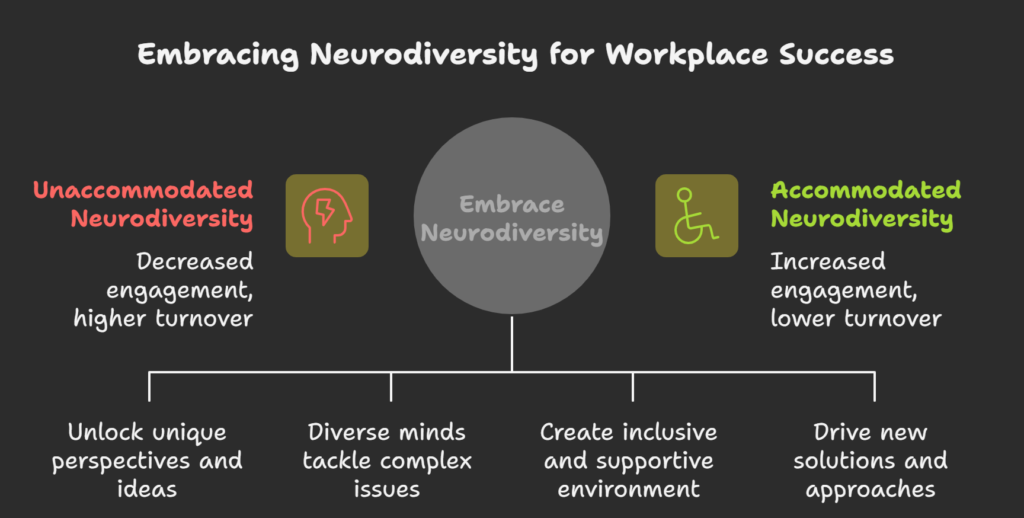
When workplaces fail to accommodate these differences, the costs are high:

  • Decreased employee engagement
  • Higher turnover rates
  • Increased compliance risks

On the flip side, organizations that embrace neurodiversity in the workplace often see improved creativity, stronger problem-solving, and a more loyal workforce.

The Compliance Challenge for HR

The ADA requires employers to provide reasonable accommodations to employees with disabilities, including neurodivergent conditions. But in practice, many HR teams struggle with:

  • Evaluating accommodation requests fairly
  • Building an interactive process that is both efficient and empathetic
  • Keeping up with evolving statutory and federal leave requirements
  • Scaling processes without losing the human touch

This is where strategy comes in. HR leaders must adopt a structured framework that ensures compliance while fostering inclusion.

Strategies to Support Neurodiverse Employees

Here are key approaches HR professionals can implement:

1. Create a Clear Accommodation Framework

Develop policies that outline how requests are submitted, reviewed, and implemented. A transparent process builds trust and reduces confusion.

2. Train HR and Managers on Neurodiversity

Awareness training helps reduce bias and equips managers with tools to support neurodivergent employees effectively.

3. Offer Flexible Work Arrangements

For many neurodiverse employees, adjustments like flexible schedules, quiet workspaces, or remote options can make a significant impact.

4. Leverage Assistive Technology

Tools like speech-to-text software, noise-canceling devices, and project management platforms can help employees perform at their best.

2025 brings important federal leave and accommodation updates. HR teams must remain proactive to avoid compliance gaps.

Examples of Real-World Accommodations

Supporting neurodiversity in the workplace doesn’t have to be costly or complex. Common accommodations include:

  • Modified training materials (visual aids, step-by-step guides)
  • Adjusted lighting or noise control measures
  • Flexible deadlines for projects
  • Job coaching or mentorship programs

These changes often have minimal cost but deliver major benefits for productivity, engagement, and retention.

Building a Culture of Inclusion

Policies and processes are only half the equation. True support for neurodiverse employees requires cultural change:

  • Encourage open dialogue about accommodation needs.
  • Highlight neurodiverse success stories within the organization.
  • Measure progress with regular employee feedback and inclusion metrics.

When HR combines compliance with compassion, organizations unlock the full potential of their workforce.

Final Thoughts

Embracing neurodiversity in the workplace is no longer optional—it’s a business imperative. HR leaders who invest in compliant, compassionate processes not only meet legal requirements but also build stronger, more innovative, and more resilient organizations.

By approaching accommodations strategically and inclusively, HR can create a workplace where neurodiverse employees don’t just fit in—they thrive.

Retain Talent with Predictive HR Analytics: Your Secret Weapon Against Turnover

Employee turnover isn’t just a hassle; it’s hemorrhaging your budget. The average annual turnover costs companies $36,295 in lost productivity and recruitment expenses, with over 20% of organizations reporting this number climbs to $100,000 or more. But here’s the thing: 42% of employees who voluntarily left their organization report that their manager or organization could have done something to prevent them from leaving.

That’s where predictive HR analytics comes in. Instead of watching your best people walk out the door and wondering what went wrong, you can actually see it coming—and do something about it.

What Is Predictive HR Analytics (And Why Should You Care)?

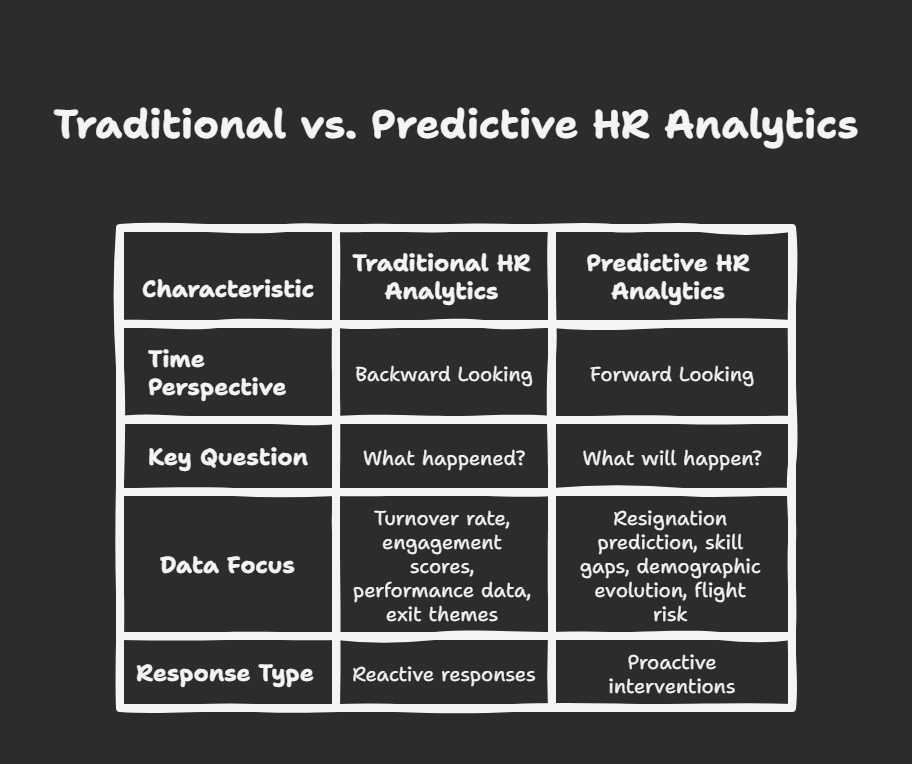
Think of predictive HR analytics as your workforce weather forecast. Traditional HR analytics tells you what already happened—like last quarter’s turnover rate or last year’s engagement scores. Predictive HR analytics uses historical data, statistical algorithms, and machine learning to show you what’s likely to happen next.

It answers questions like: Which employee is likely to resign in the next 6 months? Which skills will be in high demand based on company’s business priorities? How will workforce demographics evolve over the next 3-5 years?

The shift from reactive to proactive isn’t just nice to have—it’s becoming essential. According to a Deloitte survey, 70% of companies reported using data analytics to support HR decision-making in 2022, and by 2025, its use is predicted to exceed 80%.

The Real Cost of Getting Retention Wrong

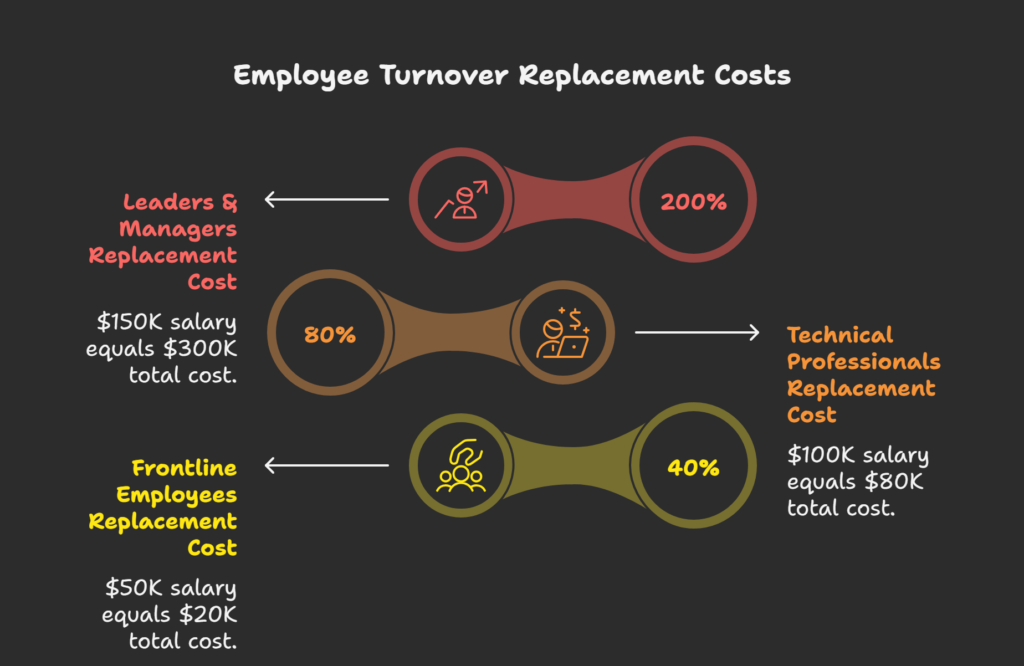
Before we dive into solutions, let’s talk numbers. Gallup estimates that replacing leaders and managers costs around 200% of their salary, professionals in technical roles 80% of their salary, and frontline employees 40% of their salary.

But the financial hit is just the beginning. You’re also losing:

Institutional knowledge that took years to build. When Sarah from finance leaves, she takes five years of process optimization and client relationships with her.

Team morale and productivity. About 73% of hiring decision-makers say employee turnover burdens existing employees. The people who stay end up carrying extra workload while you scramble to backfill roles.

Competitive advantage. More than 50% of all organizations globally have difficulty retaining some of their valued talents, and your competitors are actively targeting your best performers.

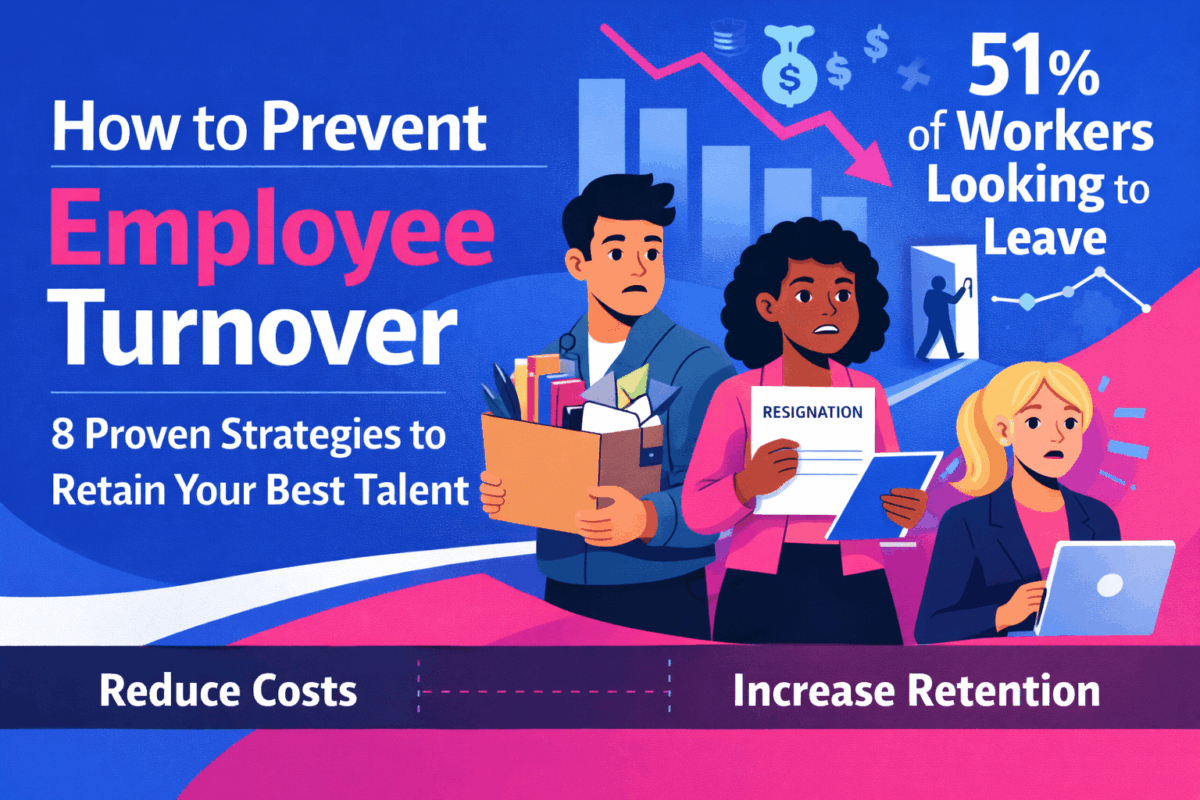
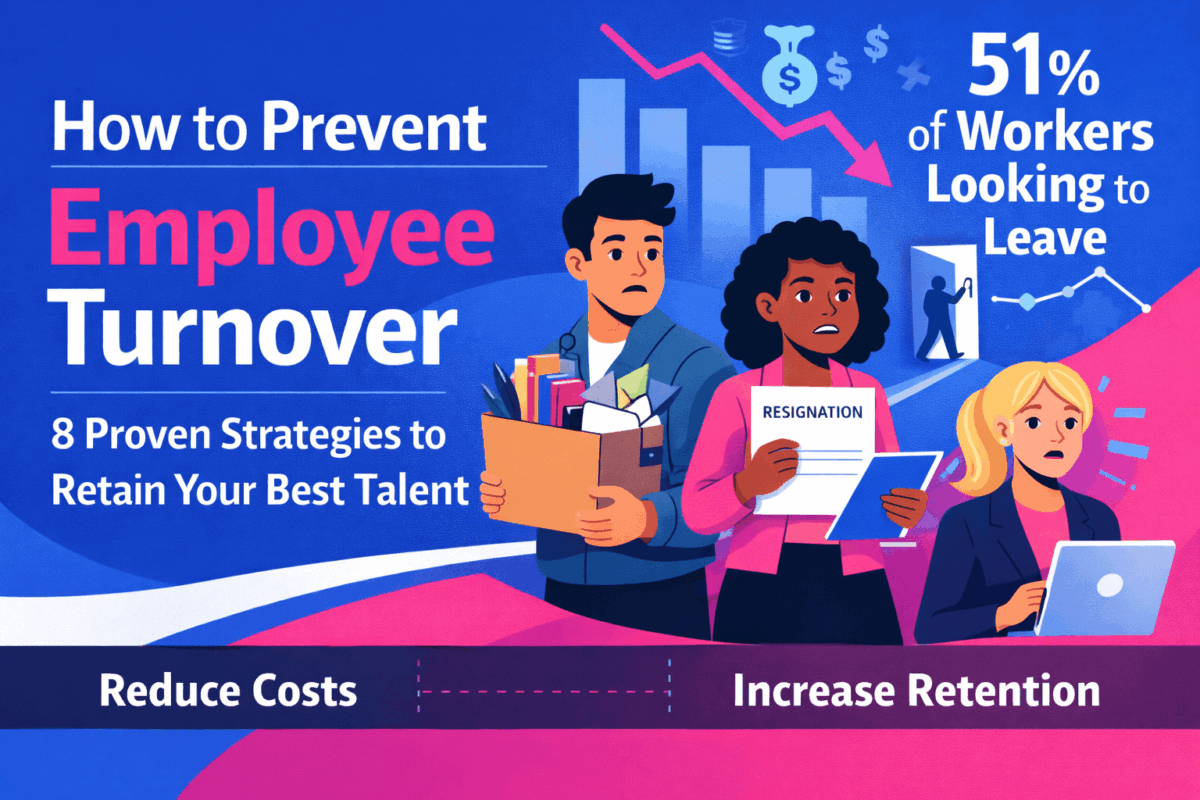
The labor market is volatile. According to Gallup’s Employee Retention and Attraction Indicator, 51% of U.S. employees—roughly 1 in 2 workers—are either actively searching for or watching for new job opportunities. That means half your team has one foot out the door.

How Predictive HR Analytics Actually Works

Here’s what makes predictive HR analytics different from the reports gathering dust in your HR dashboard. This is powered by the best HR analytics softwares that integrate multiple workforce data points.

From Reactive to Proactive

Traditional HR looks backward. Predictive HR analytics looks forward by analyzing patterns across multiple data points:

  • Engagement survey scores and trends over time
  • Performance review ratings and improvement trajectories
  • Absenteeism patterns and leave usage
  • Employee tenure and career progression timelines
  • Compensation relative to market benchmarks
  • Training completion rates and skill development
  • Manager effectiveness scores
  • Communication patterns and collaboration metrics

When these data points start trending in certain directions, the system flags potential flight risks before they hand in their resignation.

Real-World Application: HP and Google

Hewlett-Packard has used a predictive analytics program that uses statistical modeling and text mining to predict and prevent employee turnover successfully. They’re not waiting for exit interviews to learn why people leave—they’re catching problems early.

Google’s HR team (People Operations) uses predictive HR analytics to assess employees’ productivity and optimize people processes aligned with their work culture. When you’re competing for the best talent in tech, you can’t afford to lose people because of fixable problems.

Five Ways Predictive HR Analytics Transforms Retention

1. Identify Flight Risks Before They Job Hunt

The most powerful use case? Spotting employees likely to leave before they start updating their LinkedIn profile.

Predictive analytics can analyze patterns in employee data to identify flight risks or anticipate when new skill sets will be needed. Maybe engagement scores have been dropping for three consecutive quarters. Or someone’s manager effectiveness rating is consistently low. Or a high performer hasn’t received a promotion in three years while their peers advanced.

These patterns tell a story—and predictive HR analytics helps you read it before the final chapter.

The key is acting on these insights. Nearly half (45%) of voluntary leavers report that neither a manager nor another leader proactively discussed their job satisfaction, performance or future with the organization in the three months before leaving. The conversation doesn’t happen because managers don’t see the warning signs until it’s too late.

2. Optimize Your Hiring for Long-Term Fit

Predictive analytics allows HR teams to analyze historical hiring data and get insights into reliable and effective channels to get top talents. Which recruiting sources produce employees who stay longest? Which interview questions correlate with retention? Which managers have the best track record of keeping their teams intact?

Predictive analytics makes the hiring process smarter by analyzing patterns in employee data and demographics to identify potential top performers, ensuring the hiring process aligns with organizational goals.

Instead of filling seats, you’re building a sustainable workforce.

3. Anticipate and Address Skill Gaps

The business landscape is changing faster than ever. According to a report by Gartner, 49% of HR leaders had identified the future of work as a top priority, with 46% indicating an increased investment in future of work initiatives.

If a company anticipates a shift toward automation, predictive models can highlight which roles are most at risk and which skills will be in demand. This allows you to upskill current employees rather than losing them because their roles became obsolete.

Skills mapping isn’t just about filling today’s gaps—it’s about preparing for tomorrow’s needs. Employees who see a clear growth path are far more likely to stick around.

4. Personalize Employee Development

One-size-fits-all development programs are dead. Predictive HR analytics reveals what actually drives engagement and growth for different employee segments.

Maybe your engineering team values technical certifications while your sales team prioritizes leadership development. Perhaps early-career employees need mentorship while mid-career professionals want autonomy. Companies that utilize predictive analytics for human resources are 3x more likely to improve workforce planning and retention rates.

When you tailor development to individual needs, employees feel seen and invested in. That emotional connection is what keeps them engaged when recruiters come calling.

5. Improve Manager Effectiveness

Here’s an uncomfortable truth: managers are often the reason people quit. When asked what their manager or organization could have done to prevent them from leaving, the most common responses were providing additional compensation or benefits (30%), but 70% of preventable leavers reported actions more directly related to how they are managed daily such as creating more positive personal interactions with their manager (21%), addressing frustrating organizational issues (13%), or creating opportunities for career advancement (11%).

Predictive HR analytics can identify which managers consistently have high turnover on their teams, declining engagement scores, or poor employee development outcomes. Then you can intervene with coaching, training, or—when necessary—structural changes.

IBM artificial intelligence is now 95% accurate in predicting workers who are planning to leave their jobs, and much of that predictive power comes from analyzing manager-employee relationships.

The technology keeps getting smarter, and the applications keep expanding.

AI and Machine Learning Integration

According to a McKinsey report, 70% of HR leaders believe that leveraging HR analytics will be essential for gaining a competitive edge over the next five years. The global HR technology market is expected to soar from $40.45 billion in 2024 to $81.84 billion by 2032, showcasing a robust compound annual growth rate of 9.2%.

AI isn’t replacing HR professionals—it’s giving them superpowers. The algorithms can process millions of data points to surface insights that would take humans months to uncover manually.

Real-Time Analytics

The quarterly engagement survey is becoming obsolete. Modern predictive HR analytics platforms provide real-time insights into employee sentiment, collaboration patterns, and engagement levels.

This means you can catch problems when they’re small and fixable rather than waiting until your annual review cycle reveals mass dissatisfaction.

Predictive Analytics for Employee Experience

38% of HR teams are already leveraging artificial intelligence to enhance their operations, with predictive analytics becoming a cornerstone for anticipating workforce needs and improving employee retention.

The focus is shifting from predicting who will leave to predicting how to create experiences that make people want to stay.

Getting Started: Implementation Roadmap

Ready to move from reactive to proactive? Here’s how to begin.

Step 1: Audit Your Data

You can’t predict the future without understanding the past. Gather data on:

  • Turnover rates and patterns (by department, role, tenure, manager)
  • Engagement survey results over time
  • Performance review data
  • Compensation and promotion history
  • Exit interview themes
  • Time-to-hire and source effectiveness

The more complete your historical data, the more accurate your predictions will be.

Step 2: Define Your Key Retention Metrics

What matters most to your organization? High-value roles with long replacement times? Diversity in leadership pipeline? Early-career retention?

Different organizations have different retention priorities. Be clear about yours so you can focus your predictive models on the outcomes that matter.

Step 3: Choose the Right Technology

You don’t need to build everything from scratch. Modern HR platforms often include predictive analytics capabilities. Look for solutions that:

  • Integrate with your existing HRIS
  • Provide actionable insights, not just data dumps
  • Offer user-friendly dashboards for non-technical users
  • Include privacy and security safeguards for sensitive employee data

Step 4: Train Your Team

Predictive HR analytics requires a new skill set. Invest in training for:

  • Data literacy: Understanding what the metrics actually mean
  • Insight interpretation: Translating predictions into action
  • Privacy and ethics: Using data responsibly and transparently
  • Change management: Helping employees understand how data improves their experience

Step 5: Start Small and Scale

Don’t try to predict everything at once. Pick one high-impact use case—maybe identifying flight risks in your sales team or optimizing hiring for your engineering department.

Learn what works, refine your approach, and then expand to other areas.

Common Pitfalls to Avoid

Predictive HR analytics is powerful, but it’s not foolproof. Watch out for these mistakes:

Over-relying on algorithms without human judgment. Data shows correlations, not causations. A manager should always review predictive insights and apply context before taking action.

Ignoring data privacy concerns. Employees need to trust that their data is being used to help them, not spy on them. Be transparent about what data you collect and how it’s used.

Focusing only on retention without addressing root causes. If your model predicts someone will leave, the solution isn’t just throwing money at them. Figure out why they’re unhappy and fix the actual problem.

Forgetting the human element. When asked what their manager could have done to prevent them from leaving, employees cited more positive personal interactions with their manager, addressing organizational issues, and creating career advancement opportunities. Technology enables better decisions, but relationships retain talent.

The Bottom Line: Predictive HR Analytics Isn’t Optional Anymore

The organizations winning the war for talent aren’t the ones paying the most—they’re the ones being most strategic about retention.

HR data analytics has emerged as a crucial enabler in shaping the future of work and workforce planning, and predictive capabilities are at the heart of that transformation.

Your competitors are already using these tools. The global HR analytics market has demonstrated strong growth at a CAGR of 13.4%, projected to reach $9.9 billion by 2032. The question isn’t whether to adopt predictive HR analytics—it’s how quickly you can implement it effectively.

Start by identifying your biggest retention challenge. Use predictive analytics to understand the patterns driving that challenge. Take proactive action based on those insights. Measure your results and refine your approach.

The talent you save could be the difference between hitting your goals and watching your competitors eat your lunch.

FAQs

What is predictive HR analytics and how does it work?

Predictive HR analytics is the use of historical workforce data, statistical models, and machine learning to forecast future employee outcomes such as turnover, performance, or skill gaps.

It analyzes patterns across engagement scores, performance reviews, absenteeism, compensation history, and manager effectiveness. When specific trends emerge—like declining engagement combined with stalled promotions—the system flags potential risks. Unlike traditional HR reporting, which explains past events, predictive analytics helps leaders take proactive action.

How can companies predict which employees are likely to leave?

Organizations predict turnover risk by combining multiple data signals into a flight risk model. Common indicators include:

• Declining engagement survey trends
• Reduced performance trajectory
• Long tenure without promotion
• Pay gaps versus market benchmarks
• High absenteeism patterns

Advanced people analytics tools use machine learning to detect correlations that human reviewers may miss. However, predictions should always be validated with manager context and one-on-one conversations.

What data is needed to implement workforce forecasting successfully?

Effective workforce forecasting requires clean, integrated data from multiple HR systems. Key inputs include:

• Historical turnover rates by role and manager
• Performance and promotion history
• Compensation benchmarking data
• Skills inventories and training completion rates
• Engagement and pulse survey results

Integration with your HRIS ensures accuracy and reduces manual reporting errors. The more consistent and complete your data, the more reliable your predictive models become.

Is predictive HR analytics only useful for large enterprises?

Predictive analytics is not limited to large enterprises; mid-sized organizations can benefit significantly, especially in high-turnover industries.

Modern HR technology platforms offer built-in analytics dashboards that simplify implementation without requiring in-house data scientists. Even basic models—like identifying teams with rising attrition trends—can improve retention strategy. Starting with one use case, such as sales team turnover, allows smaller organizations to test ROI before scaling.

How do you measure the ROI of predictive analytics in HR?

The ROI of predictive HR analytics is measured by reduced turnover costs, improved retention rates, and stronger workforce planning accuracy.

Key metrics include:

• Reduction in voluntary attrition percentage
• Cost savings from avoided replacement expenses
• Improvement in engagement or manager effectiveness scores
• Shorter time-to-fill for critical roles

For example, preventing the exit of a high-performing manager—whose replacement may cost up to 200% of salary—can justify the investment quickly. Tracking before-and-after retention data strengthens your business case.

Coaching vs. Managing: Key Differences, Benefits, and Manager Coaching Tips

The importance of managing a team or department efficiently is well-established. Top leaders recognize that they need effective management to achieve organizational goals. However, one significant aspect of effective management that is often overlooked is coaching. 

Coaching vs. Managing: A coach focuses on skill development, engagement, motivation, and a healthy work environment for employees. While managers are responsible for organizing the work, tasks, and processes of their team members.

Managers handle a lot of critical functions and convey confidential information to team members and employees. Hence, team members need to rely on managers for their direction. However, managers also need to ensure other important factors for a company, like employee engagement, motivation, and commitment to goals. They give direction on day-to-day activities and develop problem-solving skills by enabling employees to arrive at their own solutions. 

A successful leader needs to assess a situation and decide whether they need to manage or coach the employees. Hence, Managing and Coaching are not interchangeable. Let us discuss what is Coaching in management and how it differs from Managing.

Coaching 

Coaching is the act of guiding, engaging, assessing, influencing, and motivating your employees to contribute to organizational goals. It is a two-way process that benefits the management and the other team members. 

It serves as a useful means to reduce employee turnover by providing employees with recognition for their work. Coaching boosts employee engagement and increases their level of commitment to organizational goals. The workforce also benefits from the growth and learning opportunities presented to them in such a working environment. 

As per Harvard Business Review, direct experience accounts for 70% of employee development in comparison to formal training. Coaching differs from the traditional directive and authoritative approach. The employees are encouraged to come up with innovative solutions. The managers provide the required guidance and support to steer them towards the desired outcome. Although coaching differs from managing in many ways, it can become instrumental to sound management practices. 

Managing 

Management is the art of getting things done with the help of others. Traditionally, managers are solely focused on achieving a set of outcomes for the organization and give clear and specific instructions to the employees to achieve such goals. 

Management involves delegating a task, assigning responsibility, giving direction, and supervising employees. The accurate measure of successful management is the results obtained. These outcomes are often evaluated through structured performance reviews. However, the absence of coaching can cause employees who rely on the managers to solve every problem they encounter. 

Difference Between Coach and Managers

Coaching and managing are two complementary skills. Once a manager understands the difference between coaching vs. managing, they can hone the skills of managing and coaching as and when needed. 

Some key differences between coaches and managers are as mentioned below. 

Goal-oriented vs. growth-oriented

Managing is a goal-oriented process that ensures that the required outcomes are achieved within the preset deadlines. On the other hand, coaching involves making employees feel valued by enabling them to find solutions through critical thinking. The first step to coaching is to ask a series of questions to help your employees set goals. Hence, facilitating the growth and development of employees.
 

Authority vs. autonomy

Managers have power over their employees, and they direct such authority to control the work of team members. On the contrary, coaching is based on the premise of having a strong relationship that increases your collective power to achieve long-term growth and success.

While managing is about authority to get things done, coaching provides autonomy to the members of a team. 

One-to-many vs. one-to-one relationship

Managing involves leaders instructing an entire team. Coaching, on the other hand, encourages one-to-one relationship building and communication. Many organizations also incorporate multi-rater feedback to strengthen feedback quality.

Instructions vs. conversation

Managing focuses on giving instructions, supervising performance, and issuing feedback as and when necessary. Hence, managing involves one-way communication. 

On the other hand, coaching is a conversation between the managers and the employees. The employees can communicate their objectives, goals, and problems to the employer, who, in turn, can provide their support and guidance. 

Crisis management vs. long-term goals

Managing can be suitable for faster decision-making in a crisis. Clear instructions from managers can enable quick execution and remove any room for error. The manager’s experience serves as a valuable resource in crisis management and achieving desired objectives.

Coaching is primarily focused on the long-term goal of both employees and the entity through collaboration and skill development. The employees can communicate their personal growth objectives when managers ask relevant questions and act as a facilitator. 

Certainty vs. creativity

 Managers use time-tested plans and proven methods to combat a situation and achieve their targets, whereas coaching provides room for creativity and innovation. The employees can come up with their own methodologies to overcome a challenge.  

These are some differences between coaches and managers. A successful leader needs to use a mix of these approaches as the situation demands. 

 However, in some circumstances, it can become difficult to decide between the two alternatives. In such a situation, the 3 Ds of management serves as a useful framework to put an end to the dilemma of coaching vs. managing. 

Also read: Employee Wellbeing And Absenteeism At Work


Benefits of Manager Coaching

Manager Coaching

Manager coaching helps employees feel valued and empowered. It leads to better engagement, higher retention rates, and improved productivity. By focusing on manager coaching, leaders can foster a culture of growth and development, resulting in long-term organizational success.

  1. Increased Employee Engagement
    • Manager coaching helps employees feel valued, improving engagement and reducing turnover rates.
    • Coaching fosters open communication and trust between managers and employees.
  2. Improved Productivity
    • Through effective manager coaching, employees gain confidence and become more self-reliant, leading to increased productivity.
    • Coaching helps employees develop problem-solving skills, contributing to more efficient task completion.
  3. Personal and Professional Growth
  4. Enhanced Leadership Development
    • Coaching empowers managers to develop future leaders within their teams by honing decision-making and leadership abilities.
    • It fosters an environment of autonomy where employees take ownership of their roles and growth.
  5. Increased Retention Rates
    • When employees feel supported through coaching, they are more likely to remain loyal to the organization.
    • Manager coaching promotes a positive work environment, contributing to higher job satisfaction and retention.

Three Ds of successful management

Direct 

Directing is a management activity that involves giving clear instructions to the employees about their work, expected results, methodologies to be used, and the deadline for the project. The roles are defined in writing to act as future references, both during and after the task. Templates and examples can also be used to clear out any doubts. 

Directing can be helpful when employees have limited experience and competence to complete a task. The situation that requires leaders to direct are: 

  • When an employee is new to the organization.
  • When they need to handle a new client or customer.
  • When an employee is assigned a new job role and responsibility.
  • When they have a different way of working.
  • When you need to execute a new strategy or plan of action. 

Delegate 

The delegation represents a mix of managing and coaching. It can work in situations where employees are experienced and have a proven record of competence. 

The leaders need to clearly define the expected result and goals. However, the employees should be allowed to choose their own methodologies to arrive at the desired outcome. The role of the manager, in such a case, involves monitoring progress and providing feedback as and when necessary. 

Leaders can choose delegation: 

  • When the employee is skilled and confident of their abilities.
  • When they have the experience and competence to perform the required job role.
  • When employees are dealing with a sensitive client.
  • When they have a similar approach to working.

Develop 

Developing is a manager coaching activity, where you define the objective and let employees take care of the rest. The leaders do not monitor or control the activity. On successful completion, the employees are appreciated to make them feel valued for their contribution.

The leaders then identify new challenges for the continual growth of the employees. Developing is more suitable for employees who are highly experienced, competent, and committed to their job role. You can choose to develop:

  • When dealing with a highly skilled and competent workforce.
  • When employees have performed similar roles and dealt with similar clients.
  • When employees are focused on developing new skills and competencies.
Also read: 7 Ways To Curb Workplace Negativity

Tips for Managers to Improve Their Coaching Skills

As per Gallup, a highly motivated workforce that is aware of their strength can lead to 10% to 19% increased sales and 14% to 29% increased profits. Hence, coaching is quintessential to business success. Some tips that can help managers to improve their coaching vs. managing skills are as mentioned below.

An active listener

As a manager, you should motivate the employees and provide them space to put forward their views. A good manager coaching session involves listening carefully to employees and avoiding any chances of miscommunication.

However, if you are too focused on your inner dialogue, you cannot understand their perspective on the situation, and the conversation becomes futile. Hence, a manager needs to inculcate active listening skills.

A constant source of motivation

A successful manager keeps the employees motivated and provides them with a sense of purpose in the organization. When employees feel they are heard and valued, they are more likely to commit to organizational goals and objectives.  

To develop self-confidence, the manager should help employees in improving their skills and provide constructive real-time feedback when required.

Growth mindset

A good manager should aim to create an organizational culture where each employee is provided with the space to learn and grow. From time to time, the managers need to shift the focus from end results to the process of achieving those outcomes.

 Ask a question and understand any challenges that the team members are encountering. Encourage your employees to come up with their own solutions. This will help them develop their skills and also contribute to organizational growth. 

Coaching vs. Managing: Conclusion

Coaching and managing are two management activities that complement each other. For a successful organization that focuses on growth and development, finding a balance between coaching vs. managing becomes critical.  

Managing employees requires strategic thinking, clarity of vision, and good communication. The managers should be assertive and authoritative. However, to coach your workforce, you need to have two-way communication where employees are encouraged to pursue their own growth objectives. The managers act as a support mechanism and a guiding force to steer them to success. 

When manager coaching is part of the organization’s culture, managers can work alongside employees to achieve unprecedented growth and success. If you’re looking to make coaching and performance management more structured and scalable across teams, you can request a demo to see how it works in practice.

Employee Engagement

FAQs

What is the difference between coaching and managing?

The primary difference between coaching and managing is their purpose. Managing focuses on achieving business goals through direction, task assignment, and performance monitoring. Coaching focuses on developing employees by improving their skills, confidence, and problem-solving abilities through guidance and meaningful conversations.
Effective leaders know when to manage for immediate results and when to coach for long-term employee growth.

When should a manager coach instead of manage?

Managers should coach when employees are capable of finding solutions but need support, encouragement, or skill development. Coaching is most effective for:

Developing leadership skills
Improving employee engagement
Supporting career growth
Solving complex problems collaboratively
Encouraging ownership and accountability

Managing is more appropriate when employees are new, deadlines are urgent, or tasks require clear instructions and close supervision.

What are the benefits of manager coaching?

Manager coaching helps organizations build stronger, more engaged, and higher-performing teams. Key benefits include:

Higher employee engagement
Improved productivity and performance
Better problem-solving and critical thinking
Increased employee retention
Stronger leadership development
Greater trust and communication
More ownership and accountability among employees

A coaching culture also creates continuous learning and long-term organizational growth.

Can managers be both coaches and managers?

Yes. The most effective leaders combine coaching and management based on the situation. They manage by setting expectations, assigning responsibilities, and monitoring progress while also coaching employees through regular feedback, active listening, and development conversations.

Balancing both approaches helps organizations achieve short-term business goals while developing future leaders.

What coaching skills should every manager develop?

Successful manager coaches should develop the following skills:
Active listening
Asking open-ended questions
Providing constructive feedback
Emotional intelligence
Empathy
Goal setting
Problem-solving facilitation
Trust building
Recognition and motivation
These coaching skills help employees grow while strengthening manager-employee relationships.

What are the 3 Ds of management?

The 3 Ds of management help leaders determine the right leadership approach based on employee capability and experience:
Direct – Provide detailed instructions and close supervision for new or inexperienced employees.
Delegate – Assign responsibility while monitoring progress for experienced employees.
Develop – Coach highly capable employees by giving them autonomy, encouraging growth, and focusing on long-term development.
Using the appropriate approach improves both employee performance and leadership effectiveness.

Why is coaching important in leadership?

Coaching is important because it develops employees beyond their current role. Rather than simply directing work, coaching helps employees build confidence, improve decision-making, strengthen problem-solving skills, and achieve professional growth.

Organizations with strong coaching cultures often experience higher employee engagement, better retention, stronger leadership pipelines, and improved business performance.

How can organizations build a coaching culture?

Organizations can create a coaching culture by:

Training managers in coaching techniques
Encouraging regular one-on-one coaching conversations
Providing continuous feedback instead of annual reviews
Recognizing employee growth and achievements
Supporting learning and development programs
Using performance management and coaching platforms to track goals and development

A coaching culture promotes continuous improvement, collaboration, and employee engagement across the organization.

Is coaching better than managing?

Neither coaching nor managing is universally better – they serve different purposes. Managing is essential for execution, accountability, and operational efficiency, while coaching focuses on employee development, engagement, and long-term success.

The strongest leaders know when to provide direction and when to empower employees through coaching, using both approaches to maximize team performance.

How does manager coaching improve employee engagement?

Manager coaching improves employee engagement by making employees feel heard, supported, and valued. Regular coaching conversations provide recognition, clarify career goals, encourage skill development, and build trust between managers and employees.

Employees who receive consistent coaching are more likely to stay motivated, perform at a higher level, and remain committed to the organization’s success.


What are the Best 5 HR Machine Learning Use Cases?

HR is transforming, and with the latest technologies paving the way, the HR industry is on the cusp of a significant evolution. As the machine learning market is projected to skyrocket from 140 billion dollars to approximately 2 trillion dollars by 2030, the potential impact on HR becomes increasingly evident. Amidst the myriad possibilities, a pressing question emerges: How will technologies like “machine learning” help HR advance in the future?

This exploration uncovers the top 5 machine learning use cases shaping HR departments. Focusing initial efforts in these strategic areas allows organizations to optimize processes, gain valuable insights into employees and talent, identify at-risk individuals, and enhance the overall employee experience. As machine learning transforms HR practices, these practical starting points offer companies a gateway to initiate their machine learning journey, empowering their workforce and driving transformative change. Let’s dive into each use case, unveiling how machine learning can be applied today to bring empowerment and innovation to your people and business.

Also read: Engagedly’s Brand New Indigo Design System

What is Machine Learning?

Machine learning, a branch of artificial intelligence, powers the personalized recommendations we receive on platforms like Netflix and Amazon, suggesting movies or series tailored to our preferences. Employing algorithms trained on extensive datasets, machine learning enables the creation of models that outperform humans in tasks such as photo classification, data analysis, and price forecasting. Widely integrated into digital products and services, machine learning stands as a prevalent and transformative force within the realm of artificial intelligence, influencing our daily digital experiences.

This technology enables computers to learn from historical data, constructing mathematical models to predict future outcomes based on past information. Its applications span a multitude of areas, including recommendation systems, email filtering, Facebook auto-tagging, image recognition, speech analysis, and even machine learning in the manufacturing industry. To understand its impact on Human Resources, let’s explore how ML is harnessed in this context.

Also read: HR Virtual Summit – Everything You Need to Know

Machine Learning in HR – Benefits

Machine Learning (ML) offers numerous advantages in HR processes, ranging from substantial time savings and reduced decision-making risk to maintaining a balanced workforce.

  • In talent acquisition, AI assists in identifying relevant skills and traits by analyzing multiple CVs and job descriptions. Moreover, it streamlines communication with candidates, allowing chatbots to schedule interviews efficiently.
  • AI/ML tools significantly enhance routine tasks such as sending emails, generating interview questions for technical positions, and monitoring process evolution. The application of machine learning in HR ensures swift documentation of interviews, audio files, and videos.
  • In the era of personalized interactions and instant responses, ML meets expectations by providing real-time access to HR resources. It goes further by delivering customized training and career path recommendations to employees, fostering effective communication within the organization.

5 HR Machine Learning Use Cases

Machine learning continues to evolve within the HR industry, with early adopters leveraging the technology to enhance business outcomes and streamline operational processes. By minimizing routine tasks through ML, HR professionals can allocate more time to focus on people-centric initiatives, refining strategies to attract, develop, and retain talent. Let’s explore how ML is changing the landscape of HR operations.

1. Hiring the Best Talent

Many businesses now leverage machine learning tools to enhance their ability to identify qualified candidates. Employing cutting-edge intelligent algorithms, platforms like Indeed, Glassdoor, and LinkedIn successfully harness machine learning to streamline searches and identify well-suited applicants.

HR chatbots proactively engage with applicants, posing preliminary screening questions and collecting candidate data. Machine learning then utilizes this information to assess applicants, presenting the results to recruiters. This integration of ML assists recruiters in selecting candidates with the highest caliber while aiding applicants in quickly and effortlessly discovering suitable opportunities.

Furthermore, machine learning can conduct background checks or additional research to verify that prospective candidates meet the requirements. By analyzing the traits of potential candidates, ML facilitates the provision of job opportunities aligned with their abilities, experiences, and personalities.

2. Increasing Employee Engagement

HR employs machine learning (ML) to delve into numerous employee data signals, enabling more personalized communication with employees. The system analyzes hundreds of unique data points related to employee engagement across the organization, a task that could take humans days or weeks but is efficiently processed by ML in the HR system.

These algorithms aggregate information from diverse sources, including surveys, HRIS systems, and more, to determine factors influencing employee engagement—such as workload, satisfaction, pay, management relationships, and time off. Machine learning employs predictive analytics and real-time monitoring to identify patterns contributing to employee turnover.

By anticipating staff turnover ahead of time, HR teams gain insights to pinpoint breakdowns and strategically focus efforts to enhance employee engagement and reduce attrition rates proactively.

Employee Engagement

3. Minimizing Biases in Hiring Decisions

While human interaction remains essential in AI usage, the integration of machine learning in HR provides precise and valuable insights, enhancing hiring efficiency. Notably, it plays a crucial role in mitigating human biases that might impede your business from selecting the most qualified applicants.

Machine learning simplifies the candidate assessment process for hiring managers by concealing bias-prone personal information, such as last names, regions of residence, family backgrounds, etc. It also assists in crafting unbiased job descriptions to attract a diverse pool of skilled candidates. ML algorithms further ensure equitable compensation for hires at the same level, eliminating manual biases.

While machine learning acts as a check against potential biases within HR teams, it’s imperative for HR leaders to proactively address potential biases within ML algorithms. Human oversight becomes essential in identifying intrinsic biases in these tools and scrutinizing their decisions and predictions.

Also read: How an LMS Makes HR Tasks Simpler and Easier

4. Enhancing Diversity and Inclusion

Many organizations prioritize fostering diversity and inclusion, and machine learning algorithms offer invaluable assistance to HR teams in identifying discrimination and biases within hiring, performance reviews, and promotion processes. These algorithms, for example, can detect language that may unintentionally convey bias or prejudice against specific demographic groups based on age, skin color, or other characteristics. In HR, ML also plays a role in pinpointing employees who may not have actively contributed to decision-making or engagement initiatives, prompting managers to encourage their involvement.

To maximize the impact of this technology, those working with ML systems must actively train them to be inclusive, taking into account gender roles and diversity considerations to enhance workplace diversity. Leveraging ML for better decisions in hiring, salary, promotion, and retention will inherently contribute to promoting a culture of inclusion and diversity.

5. Workforce Optimization and Planning

To achieve their business goals, firms must prioritize effective workforce planning. Leveraging AI and ML algorithms can optimize scheduling and resource allocation by considering personnel availability, skill sets, workload distribution, and business requirements. This approach can lead to more effective staffing, increased output, and a more efficient use of human resources. Furthermore, workforce management can utilize machine learning to automate routine tasks, analyze data using talent analytics and mobility insights, and forecast future requirements. As a result, businesses can operate more successfully, and employee performance is likely to see improvement.

Machine learning algorithms can assess historical data, current labor demographics, and market trends to forecast future personnel requirements. This equips HR departments with better insights for decision-making in hiring, succession planning, and skill development, ensuring the right individuals are placed in suitable positions at the right time.

Also read: Engagedly launches Growth Hub to Empower Career Development with Marissa AI

Emerging Use Case: Performance Review Calibration & Feedback Enhancement

Another fast-growing area is using ML to support more fair, consistent performance reviews and feedback cycles. Here’s how:

  • ML tools can analyze past ratings, identify manager bias (e.g. leniency / severity, central tendency), or anomalies in review distributions across teams.
  • During calibration meetings, these analytics help flag skewed rating patterns or inconsistent descriptions.
  • ML‐based feedback tools can suggest improvement points or learning paths for employees based on performance data, peer feedback, and self-assessment, helping make feedback more actionable.
  • Real-time feedback systems with ML can monitor employee sentiment, engagement, and flag potential issues early.

Risks, Ethical Considerations & Compliance

Using ML in HR offers many advantages, but it also comes with responsibilities. To use ML well, HR needs to guard against potential pitfalls and ensure the system is fair, transparent, and compliant. Key considerations include:

  • Bias in training data and model outputs — If historical data reflects past biases (e.g. in gender, race, educational background), ML may perpetuate those unless carefully audited.
  • Explainability and transparency — Employees and managers should understand how ML-based suggestions are made (features, weights, data used) and have recourse if something seems unfair.
  • Data privacy & security — Sensitive employee data (performance, demographics) must be collected, stored, and used according to applicable laws (GDPR, local privacy laws), and with informed consent.
  • Model drift & relevance — ML models may degrade over time if the job market, roles, skills expectations, or organizational strategy change; regular retraining and validation are essential.
  • Human oversight & hybrid decision-making — ML suggestions should assist, not replace, human judgment; soft skills, cultural fit, context are things machines can’t fully capture.
  • Regulatory risks, ethical audits — As governments regulate AI more strictly, companies should be mindful of regulations, potential legal liabilities, and ethical frameworks (e.g. having ethics boards or AI governance committees).

Summing Up

Machine learning in HR is reshaping talent acquisition, employee engagement, and decision-making processes, ushering in a transformative era for the HR industry. By harnessing data and sophisticated algorithms, human resources departments can elevate productivity, enrich employee experiences, and enhance overall business outcomes. 

The applications of machine learning in HR are diverse and impactful, spanning from automating resume screening to identifying attrition risks. ML-powered applications generate predictions that complement human judgment, enabling more informed decision-making. However, the success of ML relies on trust, and such trust can only be established through adherence to ethically sound business practices.

Talent Management Software

Frequently Asked Questions

What is machine learning in HR?

Machine learning in HR refers to the use of artificial intelligence algorithms to analyze employee and workforce data, identify patterns, automate repetitive tasks, and support better decision-making. HR teams use machine learning to improve recruitment, employee engagement, performance management, workforce planning, and talent development while reducing manual effort.

How is machine learning used in human resources?

Machine learning supports HR across multiple functions, including:

Resume screening and candidate matching
Employee engagement analysis
Predicting employee attrition
Performance review analysis
Personalized learning recommendations
Workforce planning and scheduling
Diversity and inclusion initiatives
HR chatbots and employee support

These applications help HR teams make faster, more informed, and data-driven decisions.

What are the benefits of machine learning in HR?

Machine learning helps HR teams automate repetitive tasks, improve hiring accuracy, reduce bias, enhance employee engagement, predict turnover, personalize learning, optimize workforce planning, and generate actionable workforce insights. It allows HR professionals to spend more time on strategic initiatives and employee development.

Can machine learning improve recruitment?

Yes. Machine learning improves recruitment by analyzing resumes, matching candidates with job requirements, automating initial screening, identifying qualified applicants, and supporting recruiters with data-driven recommendations. It can also reduce hiring time and improve candidate quality when used alongside human decision-making.

How does machine learning reduce hiring bias?

Machine learning can reduce hiring bias by masking demographic information, identifying biased language in job descriptions, standardizing candidate evaluations, and focusing on job-related skills and qualifications. However, HR teams should regularly audit machine learning models to ensure they do not inherit or reinforce historical biases.

How does machine learning predict employee attrition?

Machine learning predicts employee attrition by analyzing historical and real-time workforce data, including employee engagement, performance, absenteeism, compensation, tenure, workload, and survey responses. These insights help HR identify employees who may be at risk of leaving and take proactive retention measures.

How is machine learning used for employee engagement?

Machine learning analyzes employee surveys, HR systems, performance data, and workplace trends to identify factors that influence engagement. It helps HR teams detect engagement issues early, personalize employee experiences, recommend development opportunities, and improve retention through predictive analytics.

What are the challenges of using machine learning in HR?

The biggest challenges include data privacy, algorithmic bias, transparency, regulatory compliance, data quality, model accuracy, and maintaining human oversight. Organizations should regularly validate machine learning models, protect employee data, and use AI as a decision-support tool rather than replacing human judgment.

Can machine learning improve performance management?

Yes. Machine learning helps improve performance management by identifying performance trends, detecting rating inconsistencies, supporting fair calibration, recommending personalized development plans, and providing managers with data-driven insights for more objective evaluations and continuous feedback.

What is the future of machine learning in HR?

The future of machine learning in HR includes more predictive workforce analytics, AI-assisted recruiting, personalized employee experiences, intelligent career path recommendations, skills-based workforce planning, automated HR support, and enhanced decision-making. As AI adoption grows, machine learning will become an increasingly important tool for improving employee experience and organizational performance while supporting ethical and transparent HR practices.

The Key Differences Between Transactional and Strategic HR: A Comprehensive Guide

Human Resources (HR) is an integral organizational unit that manages employee-related tasks and contributes to corporate strategies. HR deals with recruitment, training, performance reviews, and staff welfare. This field has evolved into two main approaches – transactional HR and strategic HR – often working together within the same organization.

Transactional human resources deals with the daily administrative functions, which include payroll, compliance issues, and employee benefits. Their focus is on efficiency, and they are in charge of regular operations, which are crucial in keeping organizations going.

Strategic HR aims to integrate HR policies and practices with the organization’s strategic goals. It emphasizes talent management, leader development, and building a culture that promotes innovation and competitive strength.

While both approaches are necessary, distinguishing and integrating them tightly is essential to creating a successful HR strategy. What is the difference between transactional HR and strategic HR? Let’s find out.

Also read: Enhancing Human Resource Processes with HR Chatbots | Engagedly

Transactional HR

Transactional HR is considered the foundation of human resources management because it concerns routine and regular administrative tasks vital for any enterprise’s seamless operation. This approach guarantees that basic HR requirements are met in a responsive, timely, and compliant manner.

Key Functions of Transactional HR include:

  • Recruitment and Onboarding of New Employees: The processes of posting and managing job ads to determine the administrative steps to bring more employees to the organization are involved. Onboarding employees to make their transition into the organization smooth is also involved.
  • Payroll Processing and Benefits Administration: This critical function encompasses the issuance and disbursement of salaries and the management of benefits, including health insurance, retirement plans, and employee perks.
  • Performance Reviews and Disciplinary Actions: HR with a transactional orientation would handle initial performance reviews and standardized disciplinary measures before escalating these processes.
  • Maintaining Employee Records: Maintaining up-to-date and well-organized records to include each employee’s personal information, work performance, and employment history is vital for meeting both legal requirements and operational needs.
Also Read: The Culture Code: How Core Values Shape Thriving Workplaces

Benefits of Transactional HR

  • Streamlines Operations: Automation of simple tasks and transactions through transactional HR enables the organization to work smoothly, reducing errors and ensuring that the company always complies with the latest laws and standards.
  • Ensures Compliance with Regulations: Establishing current knowledge about labor laws and regulations is an essential part of transactional HR, which helps the organization prevent legal challenges and punishment.

Limitations of Transactional HR

  • Repetitive, Reactive Approach: Transactional HR deals with the same set of procedures without using much creativity or innovation. It adopts the strategy of dealing with current problems as they arise rather than planning for the future.
  • Lacks Focus on Long-term Goals: Though the transactional approach might be necessary, it often ignores the broader organizational and strategic goals such as employee engagement, succession planning, and encouraging innovation, which are integral parts of an organization in the long run to help it compete and succeed.
Also read: How Global Companies Can Attract and Retain Their Top Talent in 2024

Strategic HR

Strategic HR extends beyond the administrative scope of traditional human resources, aiming to integrate HR policies and practices with broader strategic goals. This approach is designed to ensure that the workforce is well-managed and aligned with future organizational objectives.

Key Functions of Strategic HR include:

  1. Developing Talent Management Programs: Strategic HR focuses on crafting comprehensive talent management strategies that encompass employee engagement, retention, and succession planning. It ensures that the organization has a continuous pipeline of highly skilled personnel.
  2. Designing Training and Development Opportunities: By identifying skill gaps and forecasting future industry trends, strategic HR invests in the professional growth of employees through targeted training programs. This enhances the workforce’s overall capability.
  3. Fostering a Positive and Productive Work Culture: This function involves creating an organizational culture that promotes innovation, accountability, and inclusiveness, which are essential for sustaining employee motivation and productivity.
  4. Analyzing Workforce Data to Make Informed Decisions: Utilizing data analytics, strategic HR gathers and interprets data related to workforce data through 360-degree feedback, helping the organization make informed decisions that can lead to better management and strategic adjustments.
  5. Partnering with Business Leaders to Identify Talent Needs: Strategic HR collaborates closely with department heads and senior management to forecast and plan for future talent requirements.
Also  Read:  Actionable Strategies to Design a Fulfilling Career Path

Benefits of Strategic HR

  • Boosts Employee Engagement: By aligning employee goals with organizational objectives, strategic HR increases job satisfaction, loyalty, and productivity among staff.
  • Improves Performance: Targeted development and training opportunities enhance employees’ skills, leading to improved performance and efficiency.
  • Creates a Competitive Advantage: A well-managed and strategically aligned HR function attracts and retains top talent, fostering innovation and giving the company a competitive edge in the market.

Limitations of Strategic HR

  • Requires Strong Leadership and Long-term Vision: Implementing an effective strategic HR approach demands foresight, robust leadership, and a clear understanding of the organization’s long-term goals, which can be challenging to maintain consistently.
  • Resource-Intensive: Strategic HR initiatives often require significant investment in time and financial resources to develop and sustain, posing a challenge for smaller organizations or those in highly competitive environments.

How Modern Technology is Redefining Transactional HR

Transactional HR is no longer purely manual administrative work. Technology is transforming many of its elements, making them faster, more accurate, and less burdensome. Here are some modern shifts:

  • Automation of routine tasks – things like payroll processing, benefits administration, absence / leave tracking are increasingly automated, reducing errors and freeing HR to focus on higher-value work.
  • Self‐service platforms – employees access leave request, policy documents, and onboarding information themselves via HR portals or apps. This lowers bottlenecks and improves transparency.
  • AI-assisted compliance & analytics – systems that flag regulatory changes, help manage data privacy, or even predict risk (e.g. for workforce non-compliance) are enabling proactive handling of some transactional duties.

Because of this, transactional HR today is less about rote work and more about enabling efficiency. This redefinition makes the gap between transactional vs strategic more bridgeable — organizations that embrace tech can shift faster into strategic roles.

Emerging Strategic HR Priorities in 2025
As more organizations shift toward strategic HR, certain priorities are rising to the top. Here are what modern strategic HR teams are focusing on:

Responsible Use of AI & Data
As HR tools get more powerful, strategic HR must ensure tools are fair, transparent, secure, and ethical. Data privacy, avoiding bias, and ensuring accountability are essential.

Employee Experience & Mental Well-being
Beyond performance and engagement metrics, caring for mental health, psychological safety, work-life flexibility, and creating belonging are central to strategic HR.

DEI, ESG & Ethical Practices
Diversity, equity, inclusion, and environmental/social governance are no longer side concerns. Strategic HR is integrating these into employer branding, talent development, compensation policies, and decision-making.

Skills & Learning Agility
With rapid changes (AI, automation, global shifts), strategic HR invests in continuous learning, upskilling/reskilling, agility of roles, and in helping employees build future-ready skills.

People Analytics & Predictive Insights
Using data to forecast turnover, identify skill gaps, measure sentiment, and drive decisions. Strategic HR uses this not just for reporting, but for anticipating challenges.

Hybrid/Flexible Work Models & Remote-First Thinking
Strategy now includes policies around where, when, and how work gets done; ensuring remote/hybrid employees get equal visibility, access, and inclusion.

Also read: How to Upskill Your Workforce for the Future of Work – Engagedly

Comparison Chart: Transactional vs. Strategic HR

Below is the difference between transactional HR and strategic HR.

AspectTransactional HRStrategic HR
FocusDay-to-day administrative tasksAligning HR practices with organizational strategy and goals
Activities
  • Recruitment and onboarding
  • Payroll processing
  • Performance reviews
  • Maintaining employee records
  • Developing talent management programs
  • Designing training and development opportunities
  • Fostering a positive work culture
  • Analyzing workforce data
  • Partnering with business leaders
Benefits
  • Streamlines operations
  • Ensures compliance with regulations
  • Boosts employee engagement
  • Improves performance
  • Creates a competitive advantage
Limitations
  • Repetitive, reactive approach
  • Does not focus on long-term goals
  • Requires strong leadership and vision
  • Resource-intensive
Also read: Insights and Challenges in the “Day-to-Day Role of an HR Manager”

Why You Need Both

To achieve a well-rounded HR strategy, organizations must integrate both transactional and strategic HR. These two approaches are not mutually exclusive but are complementary, each fulfilling distinct but interconnected roles within the human resources framework.

Transactional HR 

  1. It lays the foundational groundwork for any HR department.
  2. By handling routine administrative tasks such as payroll processing, recruitment logistics, and employee records management, transactional HR supports the necessities that keep an organization functional daily. 
  3. It maintains order and efficiency, allows for enforcing HR policies, and ensures that employees’ needs are met promptly.
Also read: Empowering Employees, Streamlining Processes: The Game-Changing Impact of HR Tech

Strategic HR 

  1. It takes foundational elements and builds upon them to align human resources with the organization’s long-term goals.
  2. This approach involves planning and implementing HR practices that cultivate a skilled, engaged, and committed workforce, which is crucial for achieving sustained organizational success. 
  3. Strategic HR focuses on broader aspects such as talent management, employee development, and organizational culture, which drive innovation and competitive advantage.

Together, these two facets of HR ensure that the immediate needs of the organization and its employees are met while also planning for future growth and challenges. While transactional HR keeps the engine running, strategic HR steers the organization toward its larger objectives. Therefore, a balanced emphasis on both transactional and strategic HR is essential for a dynamic and successful human resources strategy.

Also read: Top 7 Unique Employee Engagement Strategies for HR Success

Challenges / Common Pitfalls in Shifting from Transactional to Strategic HR

Challenges & Pitfalls in Moving from Transactional to Strategic HR
Transitioning well is harder than just wanting it. Here are common pitfalls and how to avoid them:

PitfallWhat tends to go wrongMitigation / Best Practice
Lack of time or capacityHR teams often remain overwhelmed by transactional load; without offloading/admin automation, strategic plans get postponed.Invest in technology, process automation, or even outsource parts of transactional HR so HR can free up bandwidth.
Insufficient skills or mindsetStrategic HR requires business acumen, data literacy, change leadership — not all HR practitioners have these yet.Training; hiring for combo skill sets; partnering with other functions (finance, operations) to build understanding.
Poor stakeholder buy-inLeadership or managers may not see HR as strategic, or may resist change.Clear communication of value, small pilot projects, showing early wins.
Over-relying on tools without human judgmentAI/data tools are helpful, but if used blindly, may ignore context or cause bias.Build in human oversight, review of tool outputs, feedback loops, ethical checks.
Neglecting culture & well-beingFocusing on strategy/metrics but ignoring employee experience risks burnout, reduced trust, turnover.Keep people at the center; include well-being, psychological safety; solicit employee feedback through continuous real-time feedback regularly.

Recognizing these pitfalls early helps organizations move more smoothly from doing merely the essentials to accomplishing strategic impact.

It’s helpful to think of transactional vs strategic HR not as an either/or, but as a spectrum. Even highly strategic HR teams will always need solid transactional foundations. The goal is to progressively shift the balance, enabled by culture, leadership, tools, and continuous feedback.

Summing Up

In conclusion, understanding strategic and transactional human resource management is fundamental in shaping the role of human resources within modern organizations. Transactional HR focuses on administrative functions and day-to-day operations, ensuring compliance and efficiency. In contrast, strategic HR is pivotal in aligning HR policies with long-term business goals, fostering organizational growth and competitive advantage through talent management and workforce development. Understanding and implementing both dimensions can enhance an organization’s adaptability, employee satisfaction, and success in today’s dynamic business environment.

If you’re looking to move beyond administrative HR and build a more strategic, data-driven people function, it may be worth requesting a demo to see how leading organizations are doing it.

Talent Management Software

Frequently Asked Questions

What is the difference between transactional HR and strategic HR?

Transactional HR focuses on day-to-day administrative tasks such as payroll, recruitment administration, compliance, benefits management, and employee records. Strategic HR aligns people practices with business goals by focusing on talent management, workforce planning, employee development, leadership, and organizational growth. Both functions are essential and work together to support business success.

What is transactional HR?

Transactional HR is the operational side of human resources that manages routine administrative activities. Its responsibilities include payroll processing, onboarding, benefits administration, compliance, maintaining employee records, and handling HR policies. The primary goal is to ensure efficient, accurate, and compliant HR operations.

What is strategic HR?

Strategic HR is a long-term approach to human resource management that aligns HR initiatives with organizational objectives. It focuses on talent acquisition, employee engagement, leadership development, succession planning, workforce analytics, learning and development, and building a high-performing organizational culture.

Why is strategic HR important?

Strategic HR helps organizations achieve long-term business goals by developing talent, improving employee engagement, strengthening leadership, supporting workforce planning, and fostering innovation. It enables HR to contribute to business strategy rather than focusing solely on administrative tasks.

Can transactional HR and strategic HR work together?

Yes. Transactional HR and strategic HR are complementary. Transactional HR ensures that essential HR operations run efficiently, while strategic HR focuses on long-term workforce planning and organizational growth. Strong administrative processes provide the foundation that allows HR teams to focus on strategic initiatives.

How is technology changing transactional HR?

Modern HR technology automates many transactional tasks such as payroll, leave management, onboarding, benefits administration, and compliance tracking. Self-service employee portals, AI-assisted workflows, and HR information systems improve efficiency, reduce manual work, and allow HR professionals to spend more time on strategic activities.

What are the benefits of strategic HR?

Strategic HR offers several benefits, including:

Better employee engagement
Improved talent retention
Stronger leadership development
More effective succession planning
Data-driven workforce decisions
Higher organizational performance

Greater alignment between people strategy and business objectives
These outcomes help organizations remain competitive and adaptable.

The Impact of HR Policies on Employee Well-being: A Comprehensive Overview

In the current dynamic work environment, the importance of employee well-being for business success can not be overstated. With the progress of technology and changes in business dynamics, good mental and physical health is crucial for productivity and the creation of a positive workplace culture. However, it can sometimes take a hit because of internal or external factors.

HR policies and practices are a central element in shaping employees’ well-being. These policies embody a variety of livelihood approaches, such as work-life balance strategies, mental health support, physical wellness programs, and ergonomic workstations. Effective HR policies not only assist in talent attraction and retention but also create an adaptable workforce that can handle changing workplace dynamics.

The role of human resources (HR) policies in employee well-being may be positive or negative. The formulation and implementation of creative HR strategies are essential for fostering an all-encompassing approach to health and happiness within workplaces. What is the impact of HR policies and practices on employee job satisfaction? Let’s find out.

Also read: Top 7 Unique Employee Engagement Strategies for HR Success

According to a 2025 Workant study, 81% of companies have made employee well-being a strategic priority, not just a benefit.

New research on Employee Well-Being in the Age of AI finds that while AI has benefits, employees often report concerns with job security, fairness, and privacy; HR policies that do not address these lead to decreased trust and increased stress.

In India, Infosys recently introduced an HR policy that sends automated warning emails to employees working more than 9 hours 15 minutes per day (for remote/hybrid settings), aiming to enforce work-life balance and mitigate burnout.

What are HR Policies?

HR policies are formal guidelines and rules established by an organization to manage its employees and ensure consistent, fair treatment. These policies cover various aspects such as recruitment, onboarding, compensation, benefits, performance management, conduct, and workplace safety. They help in maintaining compliance with laws and regulations while promoting a positive work environment.

HR policies also play a crucial role in defining the company culture and setting expectations for employee behavior and performance. They provide a framework for addressing issues such as discrimination, harassment, and conflicts, ensuring that all employees are treated with respect and dignity. By clearly outlining procedures and standards, HR policies help prevent misunderstandings and disputes, fostering a more harmonious and productive workplace. Additionally, these policies support strategic goals by aligning employee actions with the organization’s mission and values, ultimately contributing to overall business success.

Positive Impacts of HR Policies on the Workplace

How do HR management practices affect employee well-being? Here are a few positive ways:

  • Work-life Balance


Human resources policies aimed at promoting work-life balance may include flexible work arrangements, paid time off, and comprehensive parental leave.

The provision of flexible work hours and the option of working remotely relieve employees from commuting and adhering to strict office schedules, allowing time for personal and family needs. By taking paid time off, employees will be able to take breaks not only for rest and recovery but also to foster better interpersonal relationships, which ensures good mental and physical health. Parental leave policies empower new parents to manage their families without having to worry about job security.

These policies will help employees effectively deal with stress, resulting in better harmony in their personal lives and work responsibilities.

Also read: LMS vs LXP: Understanding the Key Differences and Benefits for Your Organization
  • Supportive Work Environment


One of the most important HR functions is providing a supportive working environment. Policies such as open communication, recognition programs, and strong anti-discrimination measures create an environment where workers are happy, creative, and productive.

Open communication channels allow employees to share their grievances and feedback without reprisals, hence building a climate of trust. Recognition programs acknowledge employees’ work and efforts while boosting morale, which is directly proportional to motivation. Anti-discrimination practices form the basis of a fair and equitable work atmosphere that provides a diversity- and inclusion-friendly environment and boosts employee well-being by making all people feel safe.

Also read: Matrix Organizational Structure: Meaning, Types and Benefits
  • Professional Development


HR policies that facilitate professional development—such as training and development programs, tuition reimbursement, and clear pathways for career advancement—play a significant role in empowering employees. These opportunities allow employees to acquire new skills and knowledge, which can lead to increased job satisfaction and a reduced sense of detachment.

Continual learning and development make work more engaging and rewarding, providing employees with a sense of progress and achievement. When employees see that their employer invests in their career growth, it can also increase loyalty and long-term commitment to the company.

Also read: DEI in Manufacturing: Challenges & Strategies for Inclusion
  • Health and Wellness


Effective HR policies also focus on health and wellness by offering on-site wellness programs, comprehensive health insurance benefits, and accessible mental health resources.

On-site wellness programs might include activities like yoga classes, health screenings, and fitness centers that encourage employees to adopt healthier lifestyles. 

Comprehensive health insurance removes the stress and financial burden associated with medical needs. Additionally, providing access to mental health resources such as counseling services and stress management workshops emphasizes the importance of mental health. These initiatives demonstrate an organization’s commitment to the holistic well-being of its employees.

Employee Engagement

Negative Impacts of HR Policies

  • Unrealistic Workloads and Long Hours


Demanding workloads and the absence of appropriate regulations for overtime can severely impact employee well-being, leading to stress and burnout. When employees are consistently expected to meet high work demands without adequate compensation or time to recover, they experience chronic stress and exhaustion, diminishing their productivity and overall health.

The lack of attention to reasonable workload limits can also foster a culture where long hours are glorified, marginalizing those who prioritize work-life balance and leading to an unsustainable work environment.

Also read: People Strategy: What Is It and How to Make One?
  • Lack of Flexibility


Rigid work schedules and limited leave options pose significant challenges for employees trying to balance their professional responsibilities with their personal lives. When employees are unable to adjust their working hours to accommodate personal matters, such as medical appointments or family obligations, it can create significant stress and conflict.

Additionally, insufficient leave policies can discourage employees from taking time off, potentially leading to a decline in mental and physical health as they might continue working without a break and even when unwell.

Also read: Handling Workplace Conflicts Like a Pro: New Manager Edition
  • Unfair Treatment and Discrimination


Unfair HR practices, including biased promotions, unequal pay, and discrimination, can create a toxic work environment. These practices undermine trust and respect in the workplace, fostering resentment and insecurity among employees.

Experiencing or even witnessing discrimination and unfair treatment can lead to anxiety, decreased job satisfaction, and low morale. Over time, this can erode the organizational culture and lead to higher turnover rates, as employees will seek more equitable and supportive environments elsewhere.

Also read: What Is Dotted-Line Reporting in Organizations?
  • Lack of Support for Mental Health


When HR policies do not offer adequate mental health resources, employees may feel neglected and unsupported, particularly those dealing with mental health issues.

Lack of access to counseling services, mental health days, and stress management programs can prevent employees from obtaining the necessary help. This oversight can exacerbate mental health conditions, contribute to an increase in absenteeism, and reduce productivity.

Also read: How to Prevent the Cost of Fraud in HR? – Engagedly

Creating a Well-being-Focused HR Strategy

Now that we have understood the impact of HR policies on employee well-being, let’s explore how to create good policies that support employee well-being.

Tips for Developing Well-being-Focused Policies

  1. Regular Employee Surveys: Conduct anonymous surveys regularly to gauge employee satisfaction, stress levels, and well-being needs. Use these insights to identify gaps in current HR policies and design initiatives that address specific concerns such as workload, mental health support, and work-life balance.
  2. Open Communication Channels: Establish and maintain open lines of communication where employees feel safe to express concerns and make suggestions without fear of repercussions. This can include regular town hall meetings, suggestion boxes, and forums where employees can directly communicate with HR and senior management.
  3. Data-Driven Decision-Making: Utilize data from employee feedback, health claims, and productivity metrics to make informed decisions supported by CXO-level insights about which well-being initiatives are most effective. Analyzing trends over time can help HR refine strategies and allocate resources more effectively to support employee health.
  4. Comprehensive Health and Wellness Programs: Develop and implement a range of health and wellness programs that address physical and mental health. These could include partnerships with fitness centers, on-site medical check-ups, mental health days, and access to counseling services.
  5. Flexible Working Arrangements: Promote flexible work policies that allow employees to choose their working hours or work from home according to their needs. Flexibility is key to helping employees manage their personal lives alongside their professional responsibilities, which in turn can reduce stress and burnout.
Also read: Your Guide to Encouraging Employees to Apply for Internal Jobs

Benefits of a Well-being Focused Approach

A well-being-focused HR strategy benefits both the employees and the company in numerous ways. For employees, these policies enhance job satisfaction, reduce stress levels, and promote a healthier lifestyle both mentally and physically. This personal well-being translates into increased engagement and productivity at work, as employees are better equipped and more motivated to excel.

Benefits for the company include reduced turnover rates, as employees are more likely to stay with an organization that values their health and well-being. Another key benefit is a reduction in absenteeism, as healthier and happier employees tend to take fewer sick days. Additionally, a well-being-focused approach improves the employer brand, making the company more attractive to potential talent who values supportive and progressive workplace cultures.

Summing Up

As companies increasingly recognize the correlation between well-being and performance, investing in comprehensive, thoughtful HR policies is not just ethical but economically prudent. Effective HR strategies, encompassing aspects like flexible working arrangements, fair performance evaluations, and supportive workplace environments, significantly boost employee morale and productivity. Therefore, organizations must prioritize and continually refine their HR approaches to foster an engaged, healthy, and highly motivated workforce.

If you’re looking to bring more structure and visibility into employee well-being, engagement, and performance, it may be worth requesting a demo to see how leading organizations are doing it.

Performance Reviews

Frequently Asked Questions

How do HR policies impact employee well-being?

HR policies directly influence employees’ physical, mental, and emotional well-being by shaping their day-to-day work experience.

Well-designed HR policies help:
• Promote work-life balance through flexible work arrangements
• Reduce stress with fair workload management
• Support mental health through wellness programs and counseling resources
• Create an inclusive and respectful workplace culture
• Improve employee engagement, satisfaction, and retention

Supportive HR policies benefit both employees and organizations by creating a healthier, more productive workplace.

What are the most effective HR policies for improving employee well-being?

Organizations can improve employee well-being by implementing HR policies that support health, flexibility, and professional growth.
Some of the most effective policies include:

• Flexible work hours and hybrid or remote work options
• Paid time off and parental leave
• Employee wellness and mental health programs
• Comprehensive health insurance benefits
• Learning and career development opportunities
• Employee recognition and reward programs
• Anti-discrimination and workplace safety policies

Together, these initiatives foster a positive employee experience and strengthen organizational performance.

Can poor HR policies negatively affect employee well-being?

Yes. Poorly designed or outdated HR policies can increase employee stress, reduce engagement, and contribute to higher turnover.
Common negative impacts include:

• Unrealistic workloads and excessive overtime
• Limited flexibility for personal responsibilities
• Lack of mental health support
• Unfair treatment or biased workplace practices
• Poor communication and unclear expectations
• Reduced job satisfaction and employee morale

Regularly reviewing HR policies helps organizations address these challenges before they affect business performance.

How can organizations create a well-being-focused HR strategy?

A well-being-focused HR strategy combines employee feedback, supportive policies, and continuous improvement to create a healthier work environment.

Best practices include:
• Conduct regular employee engagement and well-being surveys
• Encourage open communication between employees and leadership
• Use workforce data to improve HR decisions
• Offer flexible work arrangements and wellness benefits
• Invest in mental health resources and employee assistance programs
• Promote recognition, inclusion, and career development

A proactive HR strategy helps employees thrive while supporting long-term business success.

Why is employee well-being important for organizations?

Employee well-being has a direct impact on productivity, engagement, retention, and overall organizational performance.

Prioritizing well-being can help organizations:
• Increase employee engagement and motivation
• Improve productivity and work quality
• Reduce absenteeism and burnout
• Lower employee turnover rates
• Strengthen employer branding and talent attraction
• Foster innovation and stronger team collaboration

Organizations that invest in employee well-being are better positioned for sustainable growth and long-term success.

What role does HR play in supporting employee well-being?

Human Resources plays a central role in creating policies, programs, and workplace practices that promote employee health, engagement, and satisfaction.

HR teams support employee well-being by:
• Designing fair and inclusive workplace policies
• Providing health and wellness benefits
• Promoting work-life balance initiatives
• Supporting learning and career development
• Managing employee recognition programs
• Addressing workplace conflicts and employee concerns
• Building an inclusive and psychologically safe workplace culture

By aligning people strategies with employee needs, HR helps create a healthier, more engaged, and high-performing workforce.

HRM vs HRD: Key Differences and Insights for HR Leaders

Human resources play a crucial role in the success of any organization. They are responsible for recruiting, hiring, training, and managing employees to ensure that the organization runs smoothly and efficiently.

However, within the realm of human resources, there are two distinct fields that often get lumped together: Human Resources Development (HRD) and Human Resources Management (HRM).

AspectHRMHRD
DefinitionManages current workforce, focusing on recruitment, payroll, and compliance.Develops employees through training, mentoring, and career growth.
FocusCurrent workforce, operational efficiency, and compliance.Future workforce, skill development, and personal growth.
Key ActivitiesRecruitment, onboarding, training, compliance, and performance management.Learning, mentoring, career development, and leadership coaching.
OutcomeImproved productivity, compliance, and risk reduction.Enhanced adaptability, innovation, and employee engagement.
GoalMaximize employee productivity and meet immediate organizational needs.Equip employees with future skills for long-term organizational success.


While both are essential components of a successful HR department, they serve different functions and have distinct goals. In this blog post, we will explore the differences between HRD and HRM, and why understanding these distinctions is crucial for any organization looking to maximize the potential of their workforce.

So, let’s dive in and unravel the complexities of HRD and HRM!

AI & HR Analytics Integration: HRM is increasingly using predictive analytics for workforce planning, attrition forecasting, and identifying training needs. HRD is using analytics to personalize learning paths and measure learning impact.

Hybrid / Remote Work Impacts: HRM must manage compliance, monitoring, remote onboarding, and wellness for distributed teams. HRD must adapt by offering remote-friendly learning: virtual mentoring, micro-learning, digital skill development.

Continuous Learning & Lifelong Development: Rather than periodic training, HRD programs are shifting toward continuous, just-in-time learning — enabling employees to acquire skills dynamically as needs emerge.

DEI & Inclusive Development: Both HRM and HRD are more actively including diversity, equity, inclusion in their agendas—not just as a policy, but ensuring equitable access to development opportunities and removing bias in evaluation.

Employee Experience & Wellbeing: HRM’s administrative and compliance tasks are now balanced with employee satisfaction and mental health. HRD supports this by helping managers lead with empathy and offering skill development around resilience and adaptability.

HRM & HRD: Overlaps & How They Support Each Other

While HRM and HRD have distinct roles, they also overlap and reinforce each other. Here’s how:

  • Performance Management Feedback: Performance Management Feedback: HRM processes like performance reviews and KPIs identify gaps.. HRD steps in with training, coaching, or mentoring to close those gaps.
  • Talent / Succession Planning: HRM identifies who might succeed in key roles. HRD builds their readiness via development programs.
  • Policy & Culture for Learning: HRM policies (e.g., leave, rewards, time allocation) affect how much time people can spend in learning. If policies support development, HRD efforts are more effective.
  • Data Sharing: HRM holds much of the workforce data (turnover, performance metrics). HRD leverages that data to determine what skills are missing, what learning interventions to design.
  • Shared Accountability: Outcomes like employee satisfaction, retention, productivity are jointly influenced by both HRM (how well employees are managed) and HRD (how well they are developed).

Understanding the Core Functions

Human resources is a growing field. According to BLS projections, employment vacancies in human resources will expand by nearly 8% between 2021 and 2031, faster than the average for all occupations. Now, let’s understand the core functions of HR’s two important pillars, HRM & HRD:

HRM

HRM is a strategic approach to managing an organization’s people and culture, ensuring employees align with company goals. It covers everything from recruitment and payroll to employee well-being and development, focusing on fostering productivity and engagement. Many organizations also incorporate multi-rater feedback for broader evaluation

As Peter Drucker famously said, “The most valuable asset of a company is its people.” This highlights the essential role HRM plays in nurturing and supporting employees to achieve organizational success.

HRM goes beyond basic tasks by investing in people’s growth, retention, and motivation, helping create a thriving workplace. Whether it’s hiring new talent or conducting exit interviews, HRM integrates essential HR functions with strategic decision-making.

One way organizations can streamline these functions is through the use of HRM software, which offers numerous benefits to enhance workforce management efficiency and productivity

HRD

HRD focuses on structured learning and growth opportunities within an organization. It aims to enhance both performance and personal development, ensuring employees are equipped for the future.

As Richard Branson once said, “Train people well enough so they can leave, treat them well enough so they don’t want to.” This perfectly captures the essence of HRD, where investing in employee potential drives both individual and organizational success.

HRD offers training, mentoring, and career development programs to build a skilled and motivated workforce. By investing in employee potential, HRD creates a culture of continuous learning, preparing the team to meet evolving challenges.

Creative methods like gamification and virtual reality training are part of HRD’s innovative approach to fostering talent.

Key Differences Between HRM and HRD: A Comparative Analysis

Some of the key differences between HRM and HRD are: 

Focus

HRM and HRD differ significantly in their core focus. HRM is concerned with managing the present needs of the organization and its workforce, whereas HRD is oriented toward the future, helping employees grow and evolve in line with organizational goals.

  • HRM:
    • The focus of HRM is on managing the current workforce by handling recruitment, payroll, and ensuring that employees are working efficiently and in compliance with regulations.
    • Example: An HR manager ensuring all payroll processes are handled smoothly and employees receive timely benefits.
  • HRD:
    • HRD focuses on developing employees’ potential to meet future needs through learning, coaching, and skill enhancement to ensure they are prepared for long-term success within the organization.
    • Example: Offering training programs to upskill employees for emerging technologies relevant to the business.

Key Activities

The activities carried out under HRM and HRD also differ in scope and purpose. HRM activities primarily revolve around the day-to-day functioning and compliance of the organization, while HRD initiatives aim at employee development and preparing the workforce for future challenges.

  • HRM:
    • HRM is focused on operational tasks such as recruitment, onboarding, employee relations, and managing compliance with legal regulations. To manage these tasks more effectively and improve overall efficiency, many organizations adopt HRM software, which plays a significant role in automating and streamlining key HR processes
    • Example: HRM ensures compliance with labor laws and handles administrative tasks like managing employee benefits.
  • HRD:
    • HRD is engaged in growth-oriented activities such as training, career development, and leadership coaching to enhance employees’ skills and capabilities.
    • Example: Conducting a leadership development program to prepare high-performing employees for future managerial roles.

Outcomes

The results of HRM and HRD efforts lead to different organizational outcomes. HRM typically yields immediate benefits like efficiency, compliance, and resource management, while HRD’s long-term impact is seen in employee development, innovation, and adaptability.

  • HRM:
    • HRM activities drive organizational efficiency by managing employee relations, ensuring compliance, and streamlining operational processes. Many organizations achieve these improvements by replacing outdated paper-based processes with HRM software, allowing for faster, more accurate management of HR tasks.
    • Outcome: HRM helps align employees with the company’s immediate goals, reduces operational risks, and enhances productivity. HRM helps align employees with the company’s immediate goals, reduces operational risks, and enhances productivity.Additionally, effective HR management plays a key role in driving business growth through strategic HR initiatives that foster employee engagement and innovation.
    • Example: A performance appraisal system ensuring that employees’ efforts contribute directly to achieving business goals.
  • HRD:
    • HRD initiatives contribute to employee growth and innovation by fostering continuous learning and encouraging skill development, which ultimately leads to a more dynamic and competitive workforce.
    • Outcome: HRD creates a proactive workforce that is ready to adapt to industry changes and enhances overall job satisfaction and engagement.
    • Example: A mentoring program that builds confidence and leadership abilities among employees, contributing to long-term organizational success.

In summary, HRM focuses on the present operational needs, while HRD looks at the future potential of employees and how their growth can align with and advance organizational objectives.


Shaping the Future Workforce: The Crucial Interplay of HRM and HRD

In the dynamic landscape of the future of work, HRM and HRD stand as pivotal pillars, indispensable for organizational triumph. Striking a nuanced balance between the two becomes imperative for sustained succss, with HRM ensuring present equilibrium and HRD fostering future workforce readiness.

Together, they cultivate a dynamic and adaptable workforce, well-prepared for the transformative challenges of the future workplace. Organizations can leverage effective and trending HR practices to stay competitive and ensure their HRM and HRD strategies align with the evolving needs of their workforce

Key Similarities: Bridging the Present and Future

  • Mutual Benefit: HRM’s adept resource management becomes the cornerstone for HRD’s forward-looking growth objectives in the future of work.
  • Integrated Employee Experience: Both collaborate seamlessly, orchestrating a unified employee journey from recruitment to development, strategically aligned with evolving business goals.
  • Communication Synergy: Ongoing communication between HRM and HRD becomes paramount, where insights from daily operations inform HRD’s adaptive strategies, fostering a synergistic approach propelling the organization into the future.

Navigating Tomorrow’s Challenges

  • AI-Driven Insights: As the future of work unfolds, HRM incorporates advanced analytics and AI-driven tools for predictive workforce planning. This ensures a proactive approach to talent development, motivation, and strategic placement, enhancing overall organizational resilience.
  • Continuous Learning Platforms: In the future, HRD leans heavily into continuous learning platforms, empowering employees with personalized development paths.These initiatives not only address current skill gaps but also prepare the workforce for the ever-evolving demands of emerging technologies and industries.

This forward-looking integration of HRM and HRD is vital in navigating the complexities of the future workplace, fostering a workforce that thrives on adaptability, innovation, and continuous growth.

Let’s Sum Up

HRD and HRM both focus on the development and management of the employees of a business. These programs use various methods to improve staff productivity and performance.

Although both appear to be the same, they differ in terms of development and administration. Understanding the differences and synergies between HRM and HRD is critical for firms looking to foster an efficient and productive workplace.

HRM is a broader concept than HRD. Its primary objectives are to plan, staff, create, maintain, monitor, manage, and evaluate. HRD, on the other hand, is a subset of HRM that focuses exclusively on employee development, including talent management, staff participation, professional growth, training, and empowerment through mentoring or coaching.

By effectively combining HRM and HRD, organizations may maximize their human resources, boost employee engagement and morale, and build a culture of continuous improvement. If you’re looking to align workforce management and development into a single, structured system, you can request a demo to see how it works in practice.

Talent Management Software

Frequently Asked Questions

Is HRD a part of HRM?

Yes. HRD is a specialized function within HRM that focuses on employee learning and development. While HRM manages the entire employee lifecycle, HRD helps employees build skills through training, mentoring, leadership development, career planning, and succession planning.

What are the main functions of HRM?

The primary role of Human Resource Management (HRM) is to manage the workforce efficiently while supporting business goals.
Key HRM functions include:
Recruitment and onboarding
Payroll and compensation
Performance management
Employee relations
HR policies and compliance
Workforce planning

What are the main functions of HRD?

Human Resource Development (HRD) focuses on improving employee skills and preparing people for future roles.

Its main functions include:
Training and development
Leadership development
Coaching and mentoring
Career planning
Succession planning
Organizational development

How do HRM and HRD work together?

HRM and HRD complement each other. HRM identifies workforce needs through hiring, performance reviews, and workforce planning, while HRD addresses those needs through training, coaching, mentoring, and leadership development. Together, they improve employee performance, engagement, and long-term organizational success.

Why are both HRM and HRD important?

HRM ensures employees are managed effectively, while HRD helps them continuously develop new skills. Together, they improve productivity, employee engagement, retention, leadership development, and business performance by balancing day-to-day workforce management with long-term employee growth.

What Is A Weekly Check In? Definition and Tips

Weekly check-ins are a great way to touch base with your team. They give managers and employees a chance to get on the same page without the stress of the check-in being treated like an actual meeting. Moreover, effective managers will use weekly check-ins to gain insight into how the employee works, what does not work, and what needs to change. And, considering the current times when most of the employees globally are still working from home, it is crucial to have weekly check-ins.

Continue reading “What Is A Weekly Check In? Definition and Tips”

5 Teamwork Challenges Every Team Encounters!

A study conducted by the i4cp (Institute for Corporate Productivity) Rob Cross, Edward A. Madden (Professor, Global Business at Babson College) found that top employers are 5.5 times more likely to promote individual, team, and leader collaboration in the organization.

Teamwork undeniably fosters creativity and enhances overall organizational productivity. However, amid these benefits lie unspoken challenges of teamwork that can lead to a frustrating collaborative experience. Many organizations resort to employee engagement software to address these teamwork-related issues effectively.

This article aims to shed light on common questions such as “What challenges do you typically encounter in teamwork within your organization? How do you approach overcoming them?” Delve into valuable insights to navigate and tackle the challenges of teamwork for a more harmonious and productive collaborative environment.

5 Challenges of Teamwork

There are multiple challenges of working in a team. As a leader, one has to be available for their team members and must understand their concerns to ensure that they stay productive and engaged. The following are some of the teamwork challenges and how one can overcome them.

5 Challenges of Teamwork

1. Role Uncertainty

Role uncertainty is one of the most common challenges of group work. There are a lot of differences between working as an individual employee and working as a part of a team. When you work with a team, your responsibilities are shared with other team members.

This culture of shared responsibilities might be a little hard to get used to if you have never worked with a team before. Working with many people can create confusion about your role in the team, resulting in multiple people taking up the same responsibility or leaving out some vital tasks. Asking the manager of the team clearly about your role in the team could help avoid these situations.

2. Lack Of Trust

When you work as an individual, you are used to making decisions and completing tasks individually. But when you work with a team, you have to trust your teammates and let them make a few decisions for the team.

Sometimes, team members make mistakes and it could be hard for you to trust them with any other decision. But as a team, it is important to trust your teammates and function. Building trust goes a long way in resolving the challenges of group work.

3. Unclear Goals

Some employees perform better when they function as a team, and some perform better than individual contributors. One reason for this could be setting the right goals. You can easily set the right goals for yourself as an individual contributor, but when you are a part of the team, you have to consider your teammates before setting goals.

One of the most common reasons for conflicts in teams is the ambiguity of goals. If you are not on the same page with your other teammates about your goals, it affects the productivity of the entire team, so communicate with the team/ manager and be clear about your goals.

4. Disengagement

Disengagement is one of the most common challenges of group work faced by everyone in the workplace. Teams tend to get disengaged when there’s a lack of proper direction or vision. Team members fail to understand their role in the bigger picture, which leads to lack of motivation.

Disengagement in teams is often a result of lack of clarity on team goals and how they contribute to the organization.

To learn more about addressing disengagement, read our detailed guide on Employee Disengagement and How To Fix It.

5. Talent Differences

Some employees contribute more to a team than the rest of the team. The reason is not always that they feel responsible for the team, the share of their contribution depends on their individual talent and efficiency. But sometimes, these talent differences cause conflicts between team members.

Some employees of the team could be slower and less efficient than the rest. This could decrease the overall productivity of the team which could be frustrating for the high-performers of the team causing conflicts within the team. To avoid this, the goals should be set based on their capability and skills.

6. Systemic & Structural Challenges

  • 6.1 Information Silos & Poor Knowledge Sharing
    • Problem description: Even in teams with good trust and clarity of role, information can get hoarded or trapped in silos — either because individuals are protective, or because there’s no shared system to document and share knowledge. This leads to duplication of work, misalignment, and frustration.
    • Impact: Redundant efforts, rework, wasted time, and reduced innovation.
    • Solution: Use a centralized knowledge management system (wiki, shared docs), enforce transparency (make docs and progress visible), and set protocols for what should be shared and when. Encourage open collaboration by default.

  • 6.2 Collaboration Overload / Burnout
    • Problem description: Ironically, too much collaboration can become a burden. When team members are constantly in meetings, expected to give feedback, attend calls, or be available for synchronous work, they may feel drained, leading to burnout.
    • Impact: Lower productivity, exhaustion, disengagement, resentment toward “collaboration as a requirement.”
    • Solution: Establish clear collaboration protocols. Define when synchronous meetings are needed vs asynchronous work. Encourage time-blocking, use project management tools, and audit the collaboration load regularly to prevent overload.
  • 6.3 Decision-Making Imbalance / Inequity
    • Problem description: In many teams, decision-making authority is concentrated in a few (e.g., extroverted people, dominant personalities, or formal leadership), while others feel excluded.
    • Impact: Team members disengage, feel undervalued, or stop contributing ideas. Innovation suffers; decisions may be biased.
    • Solution: Adopt decision-making frameworks (e.g., DECIDE model: Define, Explore, Consider, Identify, Decide, Evaluate), or use RACI (Responsible, Accountable, Consulted, Informed) matrix to clarify who contributes to decisions. Rotate decision roles, democratize inputs, ensure every voice is heard.

  • 6.4 Psychological Safety and Trust at the Cultural Level
    • Problem description: Team members may not feel safe to speak up, admit mistakes, or challenge ideas due to fear of judgment or blame. This lack of psychological safety suppresses honest communication and innovation.
    • Impact: Shallow conversations, suppressed creativity, unaddressed conflict, and slow learning.
    • Solution: Leaders should model vulnerability (share own failures), encourage feedback, and explicitly create norms where dissent is welcomed. Regularly check “safety levels” (e.g., via surveys), host reflection sessions, and reward speaking up.

  • 6.5 Social Loafing / Unequal Participation
    • Problem description: Some team members contribute less (free riding), assuming others will pick up the slack — social loafing.
    • Impact: Resentment, burnout among high performers, and reduced fairness.
    • Solution: Make individual contributions visible. Use peer feedback, set individual accountability, clarify roles, and ensure that tasks are fairly distributed. Reward both team and individual performance.

  • 6.6 Structural / Organizational Complexity
    • Problem description: In large or hierarchical organizations, complexity in structure (multiple sub-teams, departments) makes collaboration hard. Teams might compete, priorities clash, and there’s misalignment.
    • Impact: Delayed decisions, conflicting goals, inefficient cross-team collaboration, duplication.
    • Solution: Introduce cross-functional governance, clarify team charters, define shared objectives, and align on KPIs. Use shared dashboards, regular cross-team syncs, and role clarity.

How To Overcome Teamwork Challenges?

1. Clarify Roles and Responsibilities

To combat role uncertainty, establish clear and defined roles for each team member. Make sure everyone knows their specific duties and how their tasks contribute to the overall project. Regularly review and update these roles as the project evolves.

Solution:

  • Clearly outline each team member’s responsibilities at the start.
  • Maintain an accessible document that tracks roles and responsibilities for easy reference.
  • Regularly review roles during meetings to ensure everyone stays aligned.

2. Build Trust

To address the lack of trust within a team, focus on fostering open communication and collaboration. Encourage a safe space where team members can share ideas, express concerns, and give feedback.

Solution:

  • Promote transparent and honest communication. Continuous real-time feedback helps reinforce trust and prevents issues from escalating.
  • Implement team-building activities that encourage cooperation.
  • Recognize and celebrate individual and team achievements to build confidence in each other’s capabilities.

3. Set Clear Goals

To tackle unclear goals, set SMART (Specific, Measurable, Achievable, Relevant, and Time-bound) goals that all team members understand and agree upon. Ensure everyone is on the same page with what is expected and how success is defined.

Solution:

  • Define and communicate SMART goals to the team. Using structured frameworks like OKRs and goals ensures alignment across individuals and teams.
  • Engage team members in collaborative goal-setting to create buy-in.
  • Conduct regular goal check-ins to track progress and adjust as needed.

4. Increase Engagement

To overcome disengagement, ensure that each team member understands the value of their contributions and how their work ties into the bigger picture. Make sure the team feels connected to the mission and motivated.

Solution:

  • Clearly articulate the team’s vision and how individual tasks contribute to it.
  • Regularly acknowledge contributions and successes to boost morale.
  • Personalize tasks to match team members’ strengths and interests, making them feel more engaged.

5. Manage Talent Differences

To address talent differences, tailor task assignments based on each individual’s strengths and abilities. Ensure that high performers are not overburdened, while also providing growth opportunities for those with less experience.

Solution:

  • Assign tasks that align with team members’ strengths and skills.
  • Implement mentorship or cross-training programs to bridge skill gaps.
  • Foster a team-first mindset by encouraging collaboration rather than competition.

We hope this article helps you manage your team effectively. Do let us know about the ways you use to overcome teamwork challenges in your organization. Tell us about the challenges you face when working in groups in the comments below.

Leadership & Team Design Strategies to Prevent Challenges

Leadership & Team Design Strategies

  • Regular 1-on-1s Focused on Engagement & Trust
    • Leaders should hold consistent 1-on-1s not just for performance updates, but to check on team morale, psychological safety, and trust. Atlassian recommends asking open questions about how people feel, what worries them, and how their work contributes to purpose.
    • Use these conversations to spot disengagement early.
  • Transparent Collaboration Infrastructure
    • Make collaboration tools and document repositories accessible and “open by default” where possible. This reduces silos and increases knowledge sharing.
    • Establish norms around how and where work and decisions are recorded (e.g., shared digital workspace, wiki).
  • Design for Equity: Use Decision Frameworks
    • Implement a decision-making model (e.g., DECIDE) to ensure participation. Rotate roles (facilitator, decision-maker, reviewer) so no one person dominates.
    • Use a RACI matrix (Responsible / Accountable / Consulted / Informed) for clarity on roles in decisions and execution.
  • Team Charter & Norm Setting
    • At the start (or reboot) of a team/project, co-create a team charter: working norms, meeting cadence, communication style, decision rights, conflict resolution process.
    • For remote or hybrid teams, include time zone overlapping rules, expected response times, and meeting patterns. This echoes Mural’s advice to use a team charter.
  • Psychological Safety Mechanisms
    • Embed routines like “blameless post-mortems” or “retrospectives” where failure is discussed openly.
    • Leadership should model vulnerability — share learnings from what went wrong, not just victories.
    • Use surveys or pulse-checks to measure how safe people feel to speak up, then act on feedback.
  • Recognition & Accountability Systems
    • Introduce peer-recognition practices (shout-outs, rewards) so contribution is visible.
    • Combine team KPIs with individual KPIs, so both collective and personal effort is tracked.
    • Use peer feedback and 360 reviews to surface social loafing or over-contribution. Structured performance reviews help reinforce accountability while keeping feedback continuous and actionable.

Conclusion

Teamwork may be the backbone of every successful organization, but it doesn’t become effective by accident. From role ambiguity and trust issues to deeper structural challenges like information silos, collaboration overload, and psychological safety, teams face a complex mix of obstacles that can quietly undermine performance.

Leaders who want to build high-performing teams must go beyond surface-level fixes. That means designing teams with clarity, setting equitable decision-making processes, removing structural barriers, and building an environment where people feel safe to contribute, challenge ideas, and take ownership. When teams are supported with the right systems, frameworks, and cultural norms, collaboration becomes smoother, faster, and measurably more impactful.

If your organization is looking to address these challenges with a more scalable and consistent approach, Engagedly can help. Our platform enables role clarity, continuous feedback, recognition, team alignment, and engagement insights – all essential components of strong teamwork. If you want a more structured and scalable way to improve teamwork across your organization, request a demo and see how Engagedly brings clarity, feedback, and alignment together.

Frequently Asked Questions (FAQs)

What are the biggest teamwork issues at work?

Common teamwork challenges include unclear roles, lack of trust, poor communication, disengagement, and unequal contribution among team members.
Teamwork challenges are obstacles that reduce collaboration, productivity, and trust within a group working toward shared goals.

The most common issues include:
Role uncertainty where responsibilities overlap or remain unclear
Lack of trust among team members
Unclear goals that create confusion about priorities
Employee disengagement caused by lack of direction or recognition
Talent differences leading to uneven workload or conflict
These challenges often appear when teams grow quickly or communication structures are weak. When leaders establish clear roles, transparent communication, and shared goals, teams become more aligned and productive.

How do managers fix teamwork problems?

Leaders overcome teamwork challenges by clarifying roles, setting shared goals, encouraging open communication, and building trust.
Leaders play a critical role in resolving teamwork challenges by designing systems that support collaboration and accountability.

Effective strategies include:

Clarifying roles and responsibilities so every member understands their contribution
Setting SMART goals that align team priorities
Encouraging open communication through regular check-ins
Building trust through transparency and recognition
Providing collaboration tools for shared visibility of work
For instance, a RACI framework can clarify decision ownership while weekly team check-ins improve alignment. When leaders create structured collaboration processes, teams can work more efficiently and avoid common conflicts.

What structural issues affect teamwork?

Structural teamwork barriers include information silos, collaboration overload, unequal decision-making power, and organizational complexity.
Structural teamwork barriers are systemic issues within organizations that prevent teams from collaborating effectively.

These barriers often include:
Information silos where knowledge is not shared across teams
Collaboration overload caused by excessive meetings or coordination demands
Decision-making imbalance where only a few voices influence outcomes
Organizational complexity across departments and hierarchies
For example, when teams operate in separate systems or departments, information gaps slow down decisions and innovation. Implementing shared documentation platforms, decision frameworks like RACI, and cross-team communication rituals helps reduce these structural obstacles.

How do organizations improve teamwork?

Organizations build stronger teams by improving trust, clarifying goals, encouraging psychological safety, and recognizing contributions.
Organizations can strengthen teamwork by creating an environment that supports transparency, accountability, and collaboration.

Key practices include:
Establishing clear team goals and shared KPIs
Creating psychological safety so employees feel comfortable speaking up
Encouraging knowledge sharing through collaborative tools and documentation
Recognizing team contributions to build motivation and trust
Combining individual and team accountability metrics
For example, companies often implement regular retrospectives, peer recognition programs, and shared knowledge bases to improve collaboration. When teams understand their purpose and feel safe contributing ideas, they work more effectively and innovate faster.

Cost per Hire for U.S. Companies Rises to $4,700, New Survey Shows

How much does it really cost to hire someone? The answer might surprise you. Hiring a single employee comes with more than just a paycheck—it’s a full-on financial investment. Beyond wages, there’s a lineup of hidden expenses, from job ads and recruitment fees to onboarding and training. For small businesses, these costs can easily hit five figures, a hefty outlay that eats into tight budgets.

Making matters worse, external forces are driving costs up every year. Ultra-low unemployment rates, an aging workforce, and a surge in freelance and remote work have created a talent crunch that’s pushed hiring expenses higher than ever before. 

In fact, the Society for Human Resource Management (SHRM) reports that average cost per hire has jumped from $4,129 in 2019 to $4,700 in 2023—a 14% increase.

And for roles in high-demand fields like cybersecurity, data science, and nursing, costs can surpass $10,000.

Hiring expenses also vary wildly by position. A typical entry-level hire may run around $2,000 – $3,000, but filling an executive position? That’s a whole different ball game, averaging $28,329 and climbing even higher for C-suite roles due to specialized recruiting, interviewing, and relocation costs. According to LinkedIn, 72% of organizations have reported higher costs for these specialized roles.

Industry dynamics add another layer. In competitive sectors like tech and healthcare, where the hunt for talent is fierce, costs reflect that reality. In 2023, tech companies spent around $6,000 – $8,000per hire, while healthcare organizations saw hiring costs of $9,000 – $12,000 to secure top professionals.

TL;DR Summary:

  • Average cost per hire is $4,700, with executive roles often exceeding $28,000—and high-demand roles costing $6K–$12K+.
  • Hidden costs include recruitment fees, job ads, interviews, background checks, onboarding, and tech tools.
  • Top cost drivers: recruitment agencies (15–25% of salary), job board ads, onboarding ($1.5K–$7K), and internal HR time.
  • Industries like tech and healthcare see higher costs due to talent scarcity.
  • Use cost-saving strategies like employee referrals, ATS automation, retention programs, and onboarding improvements.
  • Smart hiring isn’t just about cutting costs—it’s about investing wisely in quality, retention, and long-term success.

Top 8 Costs to Consider When Hiring

Recruitment Agency Fees 

Recruitment is one of the most commonly outsourced functions for companies, especially those hiring for specialized roles or scaling quickly. Third-party recruitment agencies provide expertise, industry connections, and speed that are hard to match internally.


Outsourcing recruitment makes sense if you:

✅ Lack in-house HR expertise or need to fill specialized roles quickly

✅ Are in a high-growth phase and need to hire in volume

✅ Hire infrequently and want to avoid full-time HR costs

✅ Want access to international talent but lack familiarity with local labor laws

✅ Require seasonal or temporary hires, especially during peak seasons

While using an external recruiter offers flexibility and access to a broader talent pool, it comes with a price. According to SHRM, recruitment fees can range from 15% to 25%of a new hire’s annual salary. For instance:

💰 For a role with a $70,000 salary, expect to pay $10,500 – $17,500 in recruitment fees.

Job Advertising 

Advertising a job on multiple platforms increases reach but comes at a cost. Job boards like LinkedIn, Indeed, and industry-specific sites charge per click or listing, which can add up quickly.


Companies often use paid job ads when they:

✅ Need to target a broad audience across platforms

✅ Want to fill roles quickly in competitive markets

✅ Are seeking candidates for high-visibility positions

Here’s an idea of what you might spend:

💰 LinkedIn: $5 – $9 per click, depending on location and industry

💰 Indeed: $100 – $300 per month for sponsored job listings

Depending on traffic and competition, monthly job ad costs can range from $500 to $2,000 or more.

Internal Recruiter Salaries and Time 

Internal HR staff handle every aspect of the recruitment process, from writing job descriptions to screening candidates. For companies hiring year-round, maintaining an in-house recruiter or talent acquisition (TA) team is often more efficient.


Hiring in-house recruiters makes sense if you:

✅ Need regular recruitment support for ongoing hiring needs

✅ Want close control over the recruitment process

✅ Are hiring for highly specialized roles that require a more hands-on approach

Example costs for in-house recruitment:

💰 The average TA specialist’s salary: $60,000 – $80,000 per year

💰 Cost per hire for an in-house recruiter (assuming 40 hires per year): $2,000 per hire

Interview Costs 

Interviews involve not only HR but also department heads and team members. The time invested in multi-stage interviews is valuable but represents an opportunity cost.


Interview costs are significant if you:

✅ Conduct multiple interview rounds, especially for leadership roles

✅ Involve team members from different departments

✅ Conduct technical assessments or require in-depth screening

Common costs involved in interviews:

💰 For each three-hour interview with two managers: $300 per candidate (assuming $50 per hour)

💰 High-level or C-suite roles may require $1,000+ per candidate in total interview time across rounds

Background Checks and Assessments 

Background checks help ensure you’re hiring qualified, trustworthy candidates. These checks are especially crucial in regulated industries, like finance and healthcare.


Companies typically perform background checks when:

✅ Compliance requires it for specific roles (e.g., finance, healthcare)

✅ Hiring for senior or executive positions

✅ Screening remote or international candidates

Estimated background check costs:

💰 Basic check: $30 – $50

💰 Comprehensive check with credit and criminal history: $100 – $200

Onboarding and Training 

Effective onboarding is critical to setting new hires up for success, but it’s also an investment that can take time to yield returns.

Companies invest in onboarding when they:

✅ Want to integrate new hires efficiently and reduce early turnover

✅ Are hiring for roles that require extensive training, like technical or compliance roles

✅ Need to instill company culture and values early on

Typical onboarding and training costs:

💰 Average U.S. onboarding cost: $1,500 – $5,000 per employee

💰 Cost for roles requiring extensive training (e.g., IT, sales): $5,000 – $7,000

Technology and Software 

Many companies use recruitment software to streamline the hiring process. Applicant Tracking Systems (ATS) and Human Resource Information Systems (HRIS) help manage job applications and keep the process organized.

Companies invest in recruitment technology when they:

✅ Have regular hiring needs that require streamlined workflows

✅ Need to manage high volumes of applications efficiently

✅ Aim to use data to improve recruitment outcomes

Sample annual costs for recruitment software:

💰 Small to medium-sized business ATS: $6,000 – $12,000 per year

💰 Enterprise ATS solutions can cost upwards of $20,000 per year

Relocation and Signing Bonuses 

Relocation packages and signing bonuses help attract talent for critical roles but can add a significant upfront cost.

These incentives are common when you:

✅ Need to hire from out-of-state or attract candidates in high-demand roles

✅ Offer specialized positions that require unique skills or experience

✅ Want to secure talent quickly in a competitive market

Example costs:

💰 Average relocation package: $5,000 – $15,000

💰 Typical signing bonus: $2,000 – $10,000

How to Calculate Recruitment Costs: Step-by-Step

1. List All Expenses Involved in the Hiring Process

Begin by identifying all costs associated with hiring, including job advertising, recruiter fees, interview costs, and onboarding expenses.

Example: Suppose your expenses include:

Job ads: $500

Recruiter fees: $2,500

Interview costs (e.g., manager time): $300

Background checks: $100

Onboarding and training: $1,000

Total: $4,400

2. Separate Fixed and Variable Costs

Fixed costs are those that don’t change regardless of the number of hires, like an annual subscription to an Applicant Tracking System (ATS). Variable costs fluctuate based on hiring volume, such as job ads or interview expenses.

Example:

Fixed costs: ATS subscription at $6,000 annually.

Variable costs (e.g., interview costs, job ads): $4,400 for this round of hiring.

3. Sum Up Direct, Indirect, and Overhead Costs

Direct costs are those directly tied to recruitment (e.g., job ads, recruiter fees), while indirect costs include employee time (e.g., managers conducting interviews). Overhead costs are additional expenses (e.g., onboarding or equipment setup).

Example:

Direct costs: $3,100 (recruiter fees + job ads)

Indirect costs: $300 (interview time for managers)

Overhead costs: $1,000 (onboarding)

Total combined cost for this hire: $4,400

4. Divide the Total by the Number of Hires in a Specific Period to Get an Average Cost per Hire

To get a broader view, take the total recruitment costs for all hires over a given period (e.g., quarterly or annually) and divide by the total number of hires.

Example: If your company spent $44,000 on recruitment over a quarter and hired 10 employees, then:

Average cost per hire: $44,000 ÷ 10 = $4,400 per hire

Tracking these numbers over time helps you identify cost trends, such as increases in advertising expenses or differences between departments.

Example: If you find that your sales department’s average cost per hire is consistently $5,000, while other departments average $3,500, this could indicate specific challenges in sourcing sales talent. Recognizing these patterns enables better budgeting and strategic planning.

How to Optimize Your Recruitment Costs Without Breaking the Bank

Let’s face it—hiring can be expensive. But with a few clever moves, you can make sure those costs don’t spiral out of control. Here’s how to stretch your hiring budget without cutting corners:

1. Streamline Job Advertising

Imagine casting a net where the fish actually are! By using data to see which platforms deliver the best hires, you can focus your budget where it matters. If LinkedIn is a goldmine for your tech roles, give it more love and cut back on the scattershot job boards.

Pro Tip:Look at your best hires – where did they come from? Double down on those sources to get more of the same.

2. Leverage Employee Referrals

Ever notice how some of your best employees come from referrals? Employees know your company inside out, so their recommendations are often spot-on. Plus, they’ll be excited to help out if there’s a little incentive in it for them!

Example: Offer $500 for a successful hire from an employee referral. That’s a fraction of what you’d spend on an agency fee, and your team members get to build the kind of culture they want.

3. Boost Retention, Reduce Recruiting

Here’s a no-brainer: the more employees you keep, the fewer you need to hire. By investing in keeping your team happy and engaged, you’ll save tons in recruitment costs. Think of it like this—every employee that stays is one less hire to make.

Idea: Try regular one-on-one check-ins or career development workshops. Happy employees stick around, and you save big by not having to refill their seats!

4. Automate Recruitment Tasks

Ever feel like you’re drowning in resumes and interview schedules? Let technology take the load off! An Applicant Tracking System (ATS) can speed up screening, scheduling, and candidate tracking, leaving you more time for big-picture tasks.

Fun Fact: An ATS may cost $6,000 a year, but it’s worth every penny if it shaves hours off each hire. Think of it as your recruitment sidekick that never sleeps.

5. Do a Hiring Needs Analysis

Sometimes, the best hire is no hire at all. Before you post that job ad, take a step back and assess—do you really need someone new, or can current team members handle the role? You might just find that with a few adjustments, you can save a whole lot of cash.

Example: Instead of hiring a new project manager, could existing team members take on additional responsibilities? This move could mean huge savings—and hey, your team may welcome the chance to stretch their skills!

6. Invest in a Rock-Solid Onboarding Program

First impressions count, especially when it comes to new hires. A smooth, supportive onboarding process helps new employees feel like they belong, boosting their chances of staying long-term.

Think of it like this: The more engaged and prepared new hires feel, the less likely they are to leave early. Just cutting early turnover by 5% could save you thousands each year in recruiting costs!

The Real Cost of Hiring: Your Bottom Line

Let’s be real—hiring isn’t cheap, but it’s an investment that can pay massive dividends when done right. Whether you’re looking at a $4,700 average hire or a $28,000+ executive search, understanding the true costs helps you budget effectively and make smarter hiring decisions.

Remember, there’s no one-size-fits-all approach to optimizing your recruitment spend. The key is finding the right balance for your organization. Maybe that means building a stellar employee referral program, or perhaps it’s investing in recruitment technology that saves time and money in the long run.

Whatever path you choose, focus on quality over quick fixes—after all, the most expensive hire is often the one you have to make twice.

Start by tracking your costs using the calculation methods we’ve covered, then experiment with the optimization strategies that make the most sense for your business.

And don’t forget: sometimes the best way to reduce hiring costs isn’t about spending less—it’s about investing wisely in retention and creating a workplace where great talent wants to stay.

Frequently Asked Questions (FAQs)

What does cost per hire mean?

Cost per hire is the total amount a company spends to recruit, hire, and onboard one employee.
Cost per hire is a recruiting metric that shows how much it costs to bring one new employee into the company.

It usually includes:
job advertising and sourcing costs
recruiter fees or internal recruiting time
interview and assessment expenses
background checks
onboarding and training costs
hiring software or ATS costs

This metric helps HR and finance teams understand whether hiring is efficient and sustainable. For example, an entry-level role may cost a few thousand dollars to fill, while executive or highly specialized roles can cost far more due to longer searches, agency fees, and relocation support. Tracking cost per hire helps companies budget more accurately and improve hiring strategy over time.

What is included in cost per hire?

Hiring expenses should include sourcing, recruiter time, interviews, background checks, onboarding, software, and incentive costs.
Hiring expenses include all direct and indirect costs involved in attracting, selecting, and onboarding a new employee. The main categories usually include:

recruitment agency fees
job board and advertising costs
internal recruiter salaries and time
interview costs for managers and teams
background checks and assessments
onboarding and training expenses
applicant tracking systems and HR software
relocation packages and signing bonuses

For example, a company hiring for a specialized role may spend on agency support, technical interviews, software tools, and onboarding. If these costs are not tracked together, the true cost of hiring can be underestimated. A complete view leads to better budgeting and smarter hiring decisions.

Why are some hiring costs higher than others?

Cost per hire varies because some roles require longer searches, specialized recruiters, higher competition, and more onboarding.
Cost per hire varies by role and industry because the effort, competition, and resources needed to fill a position are not the same. The biggest reasons include:

specialized skills are harder to source
competitive industries require more advertising and incentives
senior roles need more interview rounds and recruiter involvement
regulated fields may require deeper screening and training
relocation or signing bonuses may be necessary

For example, an executive hire often costs much more than an entry-level hire because of search complexity, interview time, and negotiation. Similarly, industries like healthcare and tech often face talent shortages, which pushes recruitment costs higher than in less competitive sectors.

How can companies reduce cost per hire without hurting quality?

Companies can reduce cost per hire by improving referrals, using automation, strengthening retention, and targeting better hiring channels.
Companies can lower cost per hire by improving efficiency and retention instead of simply cutting recruiting spend.
Practical ways to reduce hiring costs include:

using employee referral programs
focusing job ad spend on the best-performing channels
automating screening and scheduling with an ATS
improving onboarding to reduce early turnover
reviewing whether every open role truly needs external hiring
investing in retention so fewer backfills are needed

For example, a referral bonus may cost far less than an agency placement fee while often producing faster, better-fit hires. The goal is not just cheaper hiring. It is better hiring economics, where cost, quality, and retention all improve together.

What Is ‘Volunteer Time Off (VTO)’: All You Need To Know

Volunteering is an important way for many people to give back to their community and help those in need. However, many who wish to volunteer full-time are limited by job responsibilities and other commitments.

In recent years, some companies have sought to address this issue by introducing “Volunteer time off,” or VTO, policies that allow employees to take paid leave for volunteer work.

This emerging employee benefit is gaining traction as more employers recognize the personal and professional value of volunteering. By examining what volunteer time off entails and exploring how companies are implementing these programs, this article aims to provide insight into this growing trend and its potential to encourage greater civic engagement while supporting workforce happiness and well-being.

Why Volunteer Time Off Matters in 2025

In 2025, Volunteer Time Off (VTO) is no longer just a “feel-good” perk—it’s a strategic driver of engagement, retention, and brand equity. Today’s workforce is driven by authenticity, flexibility, and purpose. VTO fosters all three while making a tangible impact on communities.

Industry leaders like Cisco and American Express integrate VTO into their core culture, recognizing that community engagement fuels morale, strengthens loyalty, and enhances employer branding. Organizations that embrace VTO are better positioned to attract top talent in a values-driven job market.

60% of companies now offer paid VTO, with 21% planning to introduce it soon. (Donorbox)

On average, organizations grant 20 hours (2.5 days) of paid volunteer time per employee annually. (Double the Donation)

Companies offering VTO see ~7% higher employee engagement and 13% higher productivity. (Lucet)

Organizations that actively track and promote VTO participation report up to 2x higher retention rates. (Percent Pledge)

What is Volunteer Time Off?

Volunteer time off (VTO) is a paid leave allowing employees to support approved charitable organizations. This benefit enables organizations to attract potential employees by giving them the freedom to make a positive impact outside of work while still receiving their regular pay.

Employee time-off requests, volunteering activity standards, and how employees can gain permission for their requests must all be included in the Volunteer Time Off Program or policy. The organization must select Employee Volunteering Policy specifics that align with the organization’s objectives.

A small business may enable employees to use one day of vacation time each year to volunteer at a shelter, clean a roadway or beach, or work at a food bank. Larger companies may enable employees to take up to five days of voluntary time off per year.

Why Should a Company Implement VTO?

Our family, friends, society, and community provide us with so much. As a result, there is always time to contribute meaningfully to the community. It could take any shape, such as serving at a local voting station or a child’s school. The only thing that matters is that the employees work hard to make the community a better place.

Employees nowadays expect more from their jobs than just a good salary. A chance to make a tiny difference in the world goes a long way toward retaining outstanding talent.

According to a study by Core Communications, over 75% of employees will stay with a firm that offers Paid volunteer time off policy to work for the greater good.

As a result, the desire to work for a socially responsible firm has taken hold, and employees are looking for companies where their personal ambitions fit with the companies. It also contributes to lower staff turnover.

Benefits of Providing Volunteer Time Off

Implementing the Employee Volunteer Program Policy has many advantages for a firm, including attracting and keeping top personnel in the industry. It enables employees to contribute back to the community while also improving their emotional and physical well-being.

Here are some of the most important advantages of Volunteer Time Off Best Practices.

1. Enhances mental well-being

Many businesses have embraced Volunteer Time Off Guidelines and put them in place to reap the benefits. It also helps in the betterment of their employees’ physical and emotional well-being.

According to a study, after implementing Volunteer Time Off, a larger percentage of employees reported a happier mood and lower stress levels.

Employees who volunteer have been shown to have a higher feeling of overall happiness. It also keeps them motivated, which shows up in their work results. Volunteering employees have also stated that their blood pressure is under control, indicating that they are in good cardiovascular health.

2. New Skills Acquisition

Employees have the chance to learn new skills outside of the workplace. They gain hands-on experience in a new field, which helps them do their job perfectly in an organization. Employees who oversee or manage a volunteer training program are deemed to improve their leadership and communication abilities.

3. Gives a Sense of Direction

Volunteering offers employees a sense of purpose and allows them to see how their efforts are making a difference in people’s lives. It gives them a sense of belonging, achievement, and self-assurance. This feel-good effect boosts their mood and allows them to live happy lives.

If you’re wondering how to use volunteer time off, it’s a paid vacation during which employees are rewarded for hours spent volunteering in a community or nonprofit organization. As a result, this paid volunteer time off policy allows employees to conduct some good work for the community without losing their jobs.

How to Write a Successful Volunteer Time Off Policy?

One of the simplest policies to write is a VTO policy.

Step 1: Define your goals.

When you have an idea of what you want to do, you can start there and build your program around it.

Step 2: Obtain Management and Leadership Support

This is a crucial step that occurs twice: first when you create the policy and again when an employee requests VTO.

Managers may appreciate the requirement of a request form in advance. This gives them the information they need to alter their workload or fill in for shifts. As a team-building activity, offer that teams to take a half-day of VTO to perform a charitable project together.

Step 3: Make Time Tracking Official

Use a documented time-tracking mechanism, as you do for PTO or sick leave, to eliminate the possibility of abuse. Keep the time in its bank (whether it’s all given at the start of the year, on a service anniversary, or accrued throughout the year), so it doesn’t get mixed up with other time banks.

Decide how much VTO you’re willing to provide in hourly, half-day, or full-day increments.

Step 4: Create a Comprehensive Policy

Make the policy comprehensive and easy to grasp. Include:

Who may take part? (Are they required to be full-time employees? Is there a limited length of time they must have spent at your company? Are employees who are members of a union eligible?)

How much time is available?

What types of organizations are permitted and which are prohibited (For-profit corporations are prohibited, but do you allow VTO in political organizations?)

Are disciplined employees eligible?

What type of screening process (if any) do you need to evaluate the organization before approving VTO?

What kind of auditing (if any) would you do to ensure that VTO was utilized appropriately and in the permitted amount?

What kind of record-keeping is required, and who handles it?

Is there a form with the policy? Is it necessary to get VTO approval ahead of time? Who is it?

Best Practices to Frame Paid Volunteer Leave Policy

Before rolling out a VTO program, businesses need to consider a few key factors.

1. Eligibility: Who Qualifies?

Should both full-time and part-time employees be eligible for VTO? Will factors like rank, tenure, or performance be considered? For instance, would an employee on a Performance Improvement Plan still have access to this benefit, or should they meet specific performance criteria first?

2. Organization Eligibility: Which Causes Qualify?

Can employees choose any organization to volunteer for, such as spending a day helping at their child’s school? Or should the company provide a list of pre-approved nonprofits?

What about political organizations—are they allowed? It’s essential to think about whether the chosen causes align with the company’s values. For example, volunteering for a controversial organization could spark internal or public conflict.

3. Type of Volunteer Work: What Activities Qualify?

Does the volunteer work need to be tied to a specific event, or can ongoing tasks like food distribution at a local food bank qualify? Additionally, can employees volunteer in areas aligned with their professional skills?

For instance, could someone in marketing help a nonprofit with their social media strategy? Be mindful of potential conflicts of interest, especially if the volunteer work mirrors their day-to-day job responsibilities.

4. Leave Allocation: How Much Time is Granted?

Will VTO be part of the general PTO pool, or will it have a separate allowance? For instance, will employees be given 8 hours or 2 days specifically for volunteer work, and will it need to be accrued over time? Should the policy allow employees to earn more volunteer time after reaching certain milestones?

5. Tracking Time: What’s the Calendar Structure?

Is the VTO granted based on the calendar year or fiscal year? What’s the most efficient way for employees to log their volunteer hours? For example, should they report their hours monthly, or can they use a digital tool for real-time tracking?

6. Request Process: How Do Employees Apply?

Is the process similar to regular PTO requests, or does it require additional information about the volunteer organization? For example, do employees need to provide details on the group and their specific volunteer role?

Also, consider how far in advance requests must be made. Will there be blackout periods during high-demand times like holidays, and how will you manage coverage if many employees request VTO simultaneously?

Volunteer Time Off (VTO) Policy Examples

One of the best ways to create a VTO policy that suits your company is by exploring examples from other organizations. Below are six examples of how companies have structured their VTO programs:

Silicon Valley Community Foundation (SVCF)

SVCF’s Entrepreneur’s Foundation offers a robust VTO policy template that not only guides how to implement a program but also clearly outlines what qualifies for VTO. It serves as an excellent blueprint for conveying VTO benefits to employees.

North Texas Entrepreneurs

This VTO policy is cleverly integrated with the company’s overall business guidelines, ensuring seamless alignment with broader corporate values, making it a practical solution that addresses two needs at once.

United Way

United Way’s VTO policy includes a helpful request form template that employees can use when applying for volunteer time, offering a clear and structured process for approval.

Thomson Reuters

The company’s VTO policy features an innovative “Dollars for Doers” initiative, where they match employees’ volunteer hours with up to $1,000 in monetary donations, adding a unique incentive to encourage participation.

San Mateo Community

Although complex, with elements like fact sheets and reference cards, this VTO policy is comprehensive, showing how detailed a policy can be, offering employees all the information they need in one place.

Markit IHS

This is a standout example of a well-rounded VTO policy, covering everything from the program’s goals to time allocation, eligibility, and time-off tracking, making it a great reference for those seeking a detailed approach.

Digital & micro-volunteering – Bite-sized virtual volunteer opportunities, like online mentoring and translation projects, are ideal for hybrid teams.

AI-powered volunteer matching – Platforms now match employees to causes based on skills, interests, and availability, boosting participation.

Data-driven CSR – Companies measure VTO outcomes, tracking community impact, participation rates, and ESG alignment.

Global collaboration – Cross-border volunteering initiatives foster cultural awareness and global citizenship.

Key Takeaways on Volunteer Time Off

Feedback, as with any HR program, is really valuable. If you’re just getting started, ask your team members what they would like to see in your volunteer time off program.

Then, regularly check to learn about the program’s benefits and identify opportunities for improvement. This is especially true among millennials, who desire to contribute comments, ideas, and solutions to help companies improve their corporate social responsibility activities.

Find out if they have any specific organizations in mind or if they’d like some suggestions to begin. Inquire about their preferred structure for the VTO program. For example, should you volunteer for a full day or for a shorter time?

Flexible vacation time to help their own charity or go on team service trips? Find out which people on your staff are most enthusiastic about volunteering and urge them to establish a committee to help you expand the program internally. We hope that this blog has answered all your queries and doubts.

Conclusion

Volunteer Time Off is a powerful, purpose-driven benefit that enriches employee experience, strengthens company culture, and amplifies social impact. In 2025, the most successful VTO programs follow the ATAL modelAnytime, Tailored, Anywhere, and Linked to measurable outcomes. By combining clear policies, engaging promotion, and tech-enabled volunteer matching, organizations can turn VTO into a cornerstone of their employee value proposition.

360-degree Feedback

Frequently Asked Questions (FAQs)

What is Volunteer Time Off (VTO) and how does it work?

Volunteer Time Off (VTO) is a paid leave policy that allows employees to take time away from work to support approved nonprofit or community organizations. Unlike traditional PTO, VTO is specifically designated for charitable activities and typically ranges from 8 to 40 hours per year.
Companies usually require:


Pre-approval from managers
Volunteering with eligible nonprofit organizations
Proper time tracking through HR systems
VTO programs align corporate social responsibility (CSR) goals with employee engagement, allowing staff to contribute to causes they care about without sacrificing income.

Why are more companies offering paid volunteer leave?

Paid volunteer leave has shifted from a perk to a strategic retention and employer branding tool. Modern employees prioritize purpose-driven work, flexibility, and alignment with company values. Research shows organizations offering VTO report higher engagement, productivity, and retention rates.
Additionally, companies are linking VTO participation to ESG goals and CSR reporting. With digital volunteer tracking tools and AI-powered cause matching, businesses can now measure impact more effectively, making VTO both socially meaningful and strategically measurable.

How much volunteer time should employers offer?

Most organizations offer between 8 and 20 hours (1–2.5 days) of paid volunteer time annually, though larger enterprises may provide up to five days per year. The right amount depends on company size, budget, and CSR strategy.
When determining allocation, employers should consider:


Workforce coverage and operational needs
Alignment with employee engagement goals
Whether VTO is separate from PTO
Best-in-class programs also allow flexible increments (hourly, half-day, full-day) and may include team-based volunteering options to strengthen collaboration.

What should be included in a strong VTO policy?

A strong Volunteer Time Off policy clearly defines eligibility, time allocation, approval processes, and permitted organizations. It should outline:


Who qualifies (full-time, part-time, tenure requirements)
Approved nonprofit categories and exclusions
Request and documentation procedures
Time tracking and compliance measures
Clear guidelines prevent misuse while maintaining flexibility. Many organizations also specify whether political organizations qualify and whether performance status affects eligibility. Transparent communication ensures fairness, accountability, and smooth implementation.

How can companies measure the impact of a VTO program?

Companies can measure VTO success using engagement metrics, retention rates, and participation data. Key indicators include:


Employee engagement scores (eNPS improvements)
Participation percentage across departments
Retention comparisons between participants and non-participants
CSR or ESG impact reporting
Modern HR platforms like Engagedly help track engagement trends and workforce sentiment alongside VTO participation. By combining data analytics with employee feedback, organizations can ensure their volunteer programs drive both community impact and measurable business value.

Want to know how Engagedly can help you manage your hybrid employees better? Request us for a demo.

Request A Demo

10 Best HR SaaS Platforms for 2026 (Features & Pricing)

Managing people has always been complex. But doing it with spreadsheets, siloed inboxes, and disconnected payroll tools in 2026? That’s a recipe for burnout – for your HR team and your employees.

HR SaaS platforms have fundamentally changed how companies handle everything from hiring to performance reviews to payroll compliance. And the numbers back it up: over 68% of enterprises have now transitioned to cloud-based HR platforms, and nearly 64% report efficiency improvements exceeding 30% after adopting integrated HR SaaS solutions.

The market is growing fast. The global HR SaaS market was valued at $42.2 billion in 2025 and is projected to reach $132.96 billion by 2035, growing at a CAGR of 13.6%.

But with hundreds of platforms claiming to be “the best,” how do you choose? This guide breaks down the 10 strongest HR SaaS platforms available today, explains what separates each type, and helps you match the right tool to your company’s actual needs – whether you’re a 10-person startup or a 10,000-employee enterprise.

What are HR SaaS platforms?

An HR SaaS (Software as a Service) platform is a cloud-hosted solution that centralizes and automates core human resource functions. Instead of installing software on local servers or managing disconnected tools, everything lives in one place – accessible from any device, updated automatically, and scalable as your company grows.

These platforms typically handle things like:

Payroll processing and tax compliance, employee onboarding and offboarding, performance reviews and goal tracking, benefits administration, recruitment and applicant tracking, time and attendance management, learning and development, and workforce analytics.

The key difference from traditional HR software is delivery. SaaS platforms are subscription-based, require no on-premise infrastructure, and your vendor handles all updates, security patches, and compliance upgrades. You log in, and it works.

Modern HR SaaS platforms can handle routine approvals, workflow management, and employee data updates automatically, freeing HR professionals to focus on strategic initiatives such as talent development and employee engagement.

One more thing worth knowing: more than 80% of HR professionals are planning to adopt more AI-based HR tools into their talent management process by the end of 2026. So the platforms you’re evaluating today should have a clear AI roadmap – not just a features list from two years ago.

10 HR SaaS Platforms for 2026

1.  Engagedly

Engagedly Home Page

Engagedly is a comprehensive performance management and employee engagement platform committed to employee growth and your organization’s success. It offers easy-to-use features such as performance appraisals, 360-degree feedback, goal setting, and real-time recognition. This valuable platform offers reliable solutions for employee performance and assessments.

Example:

Engagedly’s feature of continuous feedback and employee reward system has helped many companies form a positive culture of growth and collaboration, building a strong global reputation for itself.

Highlights:

  • Knowledgeable support team
  • Real-time recognition
  • Efficient review and praise system
  • Easy to use and runs smoothly

In 2026, these platforms will offer even more advanced features, driving efficiency and enhancing the employee experience. Here are 10 top HR SaaS platforms to watch for the year ahead.

Pricing: Modular pricing starting at $2 to $8 per user per month (billed annually), with a minimum annual commitment of $7,500. Add-on suites are available.

2. BambooHR

BambooHR Home Page

BambooHR is a user-friendly software that is easy to learn and can automate HR tasks very efficiently. Features such as applicant tracking, payroll integration, onboarding, time-off tracking, and performance management have been highly appreciated by administrators and organizations.

Example:

BambooHR’s easy-to-use interface for an application tracking system that allows you to manage the recruitment process, from posting jobs to selecting candidates and scheduling interviews, makes the administrative process easy even for novices.

Highlights:

  • Intuitive interface
  • Offers 125 integrations that can connect with various tools and systems
  • Multi-taxation features for income

Pricing: BambooHR offers flexible HR, payroll, and benefits plans starting at $10 per employee per month, with volume and non-profit discounts.

3. Workday

Workday Home Page

Workday is a comprehensive cloud-based tool that provides all the solutions for managing our workforce. Even if you’ve just joined the organization as an HR, Workday offers built-in administrative chat assistance and an easy user interface. Features such as predictive analytics and real-time data allow you to make informed decisions and avoid any miscommunications or human errors.

Example:

Workday’s talent management module helps you identify the workforce talent and distribute them to the right roles in the company.

Highlights:

  • Global capabilities for multinational companies
  • Employee-friendly self-service features
  • Multifunctional dashboard
  • Cloud-based

Pricing: Starts at $5 per user per month for Officevibe, Performance, or Compensation. Combined engagement and performance packages at $8 per user per month. No setup fees.

4.  ADP Workforce Now

ADP Workforce Now Home Page

ADP Workforce Now is an all-in-one HR SaaS platform that automates tax management, payroll, employee hiring process, and performance reviews. The platform is also employee-friendly with all information in one place, pending payment scheduling and holiday notifications, and tracking work hours.

Example:

The mobile app version is equally efficient; employees can easily check pay stubs and work hours.

Highlights:

  • HR, manager, and employee-friendly interface
  • All financial information on one platform
  • Easy to process payroll
  • Highly customizable platform

Pricing: Custom pricing based on modules and size.

5.  SAP SuccessFactors

SAP SuccessFactors Home Page

SAP SuccessFactors is a cloud-based Human Capital Management (HCM) suite that offers various features for HR solutions, such as core HR, talent management, workforce analytics, and employee management tools. The platform also offers excellent customer support and offers greater visibility when it comes to the recruitment process.

Example:

Great employee experience management tools that help you gather feedback from the company’s workforce and take necessary steps to improve employee satisfaction.

Highlights:

  • Easy to use
  • Great for businesses of any scale
  • Easy integration

Pricing: Subscription-based, typically per user per month, with module-based bundles.

6.  Cornerstone On Demand

Cornerstone On Demand Home Page

Cornerstone OnDemand is an HR Saas platform by a multi-award-winning firm specializing in talent management, learning, and development. The platform can easily assign and track compliance training even on a global scale. The efficient performance management tool helps employees track goals and progress and overall build a motivational environment.

Example:

Cornerstone OnDemand’s extensive learning management system provides instructor-led online training and development resources to help employees advance quickly.

Highlights:

  • Easy to use
  • Focus on talent management and learning development
  • Extensive training solutions and succession planning

Pricing: Custom enterprise pricing. Contact Cornerstone for a quote.

7. Ultimate Software UltiPro (UKG Pro)

Ultimate Software UltiPro Home Page

Ultimate Software’s UltiPro is also a cloud-based HR, payroll, and talent management platform designed to streamline all managerial processes. The platform offers great customer configuration options and offers flexible options depending on company needs.

Example:

The software offers a massive informational dashboard with benefits info, employment, and performance data and can manage payroll for both US and Canadian employees.

Highlights:

  • Flexible and highly customizable
  • Predictive analytics and AI assistance
  • Comprehensive HR management tools

Pricing: Custom mid-market pricing; generally quote-based depending on workforce size

8.   Gusto

Gusto Home Page

Gusto is an HR Saas platform that works well for small and medium-sized businesses. It has various features like payroll, benefits administration, time tracking, and compliance solutions. For new businesses or novices, Gusto offers easy-to-use interfaces, task reminders, and a great support system to streamline your administration.

Example:

Gusto has a benefits administration feature that helps employees to enroll and manage their benefits easily.

Highlights:

  • Easy to use
  • Great for small businesses and startups
  • Automatic local and federal tax filings for payroll

Pricing: Gusto offers HR software through tiered plans starting at $49/month plus $6 per person, with higher tiers at $80 and $180 per month plus per-employee fees.

9.  Zoho People

Zoho People Home Page

Zoho People is a cloud-based HR SaaS platform that offers a wide range of HR solutions, including employee database management, time and attendance tracking, performance management, and employee self-service. Zoho People’s customizable features and integrations make it suitable for organizations of all sizes.

Example: Zoho People’s performance management module enables you to set and track employee goals, conduct performance reviews, and provide feedback, helping to drive employee growth supported by a structured growth hub and development.

Highlights:

Offers customizable features and integrations for effective employee database and performance management.

Pricing: Custom Pricing

10.  Namely

Namely Home Page

Namely is an award-winning HR Saas platform that is ideal for mid-sized businesses. Namely offers you 24/7 customer support, scalability, payroll, and extensive employer services. Namely, it is also easy to use for both administrative personnel and employees, making the management process seamless for the company.

Example:

Namely’s performance management tool helps you set and track employee goals, conduct timely reviews, and provide important feedback so that the workforce can be directed toward continuous growth.

Highlights:

  • Ideal for mid-scale businesses
  • Easy-to-use features
  • Easy setup
  • Efficient payroll function

Pricing: Pricing varies based on selected modules, including HR, payroll, benefits, compliance, and managed services.

Why Companies Should Use SaaS?

Features vary wildly between platforms, so here’s what actually matters when you’re evaluating a tool – not what sounds impressive in a sales demo.

Core employee data management. The platform needs to be your single source of truth for employee records. If data lives in three places, nothing works well.

Payroll processing and tax compliance. This is non-negotiable. Payroll errors are expensive – legally and culturally. Make sure the platform handles your states, countries, and employment types.

Self-service access for employees. Around 67% of US enterprises prioritize employee self-service portals, which strengthen operational transparency and digital workforce management. If employees constantly have to email HR for their pay stubs or PTO balance, you have a problem.

Integrations. Your HR platform doesn’t live in a vacuum. It needs to talk to your ATS, accounting software, communication tools, and benefits providers. Always check the integration library before signing.

Mobile accessibility. About 62% of companies now prioritize mobile HR access. A platform with a broken or limited mobile experience will see poor adoption.

Reporting and analytics. Real-time dashboards and custom reports are the difference between reacting to problems and anticipating them. Look for platforms with built-in workforce analytics, not just exports to Excel.

AI and automation. Predictive analytics is moving HR from a reactive to a proactive function – helping managers identify potential risks, optimize staffing, and align HR strategies with broader business goals. In 2026, platforms without AI features are already behind.

Compliance management. Labor laws change constantly. Your platform should help you stay current, not leave you chasing updates manually.

Scalability. Choose a platform your company can grow into, not one you’ll outgrow in 18 months.

How to Choose the Right HR SaaS by Company Size

The “best” HR SaaS platform depends almost entirely on your company size and maturity. Here’s a practical breakdown.

Startups and Small Businesses (1–100 employees)

At this stage, complexity is your enemy. You need something that works out of the box, doesn’t require a dedicated IT team to configure, and won’t break the bank.

Priorities: Payroll + tax compliance, easy onboarding, employee self-service, affordable pricing.

Best picks: Gusto (best for payroll-first simplicity), BambooHR (best if you need full HRIS without complexity), Zoho People (best for budget-conscious teams).

What to avoid: Enterprise platforms like Workday or SAP SuccessFactors – the implementation complexity and cost will outweigh the benefits at this scale.

Mid-Sized Companies (100–1,000 employees)

This is where most companies start to feel the pain of outgrowing basic tools. You need something that can handle multi-state compliance, support managers (not just HR), and scale without requiring a platform migration in two years.

Priorities: Robust HRIS, performance management, integrations, manager tools, reporting.

Best picks: ADP Workforce Now (payroll-first mid-market), BambooHR (if simplicity still matters), UKG Pro (analytics-forward teams).

Large Enterprises (1,000+ employees)

At this scale, you need a platform that can handle global payroll, complex org structures, deep compliance requirements across multiple jurisdictions, and strategic workforce planning.

Priorities: Global compliance, workforce analytics, talent management, security, customization.

Best picks: Workday (gold standard for enterprise), SAP SuccessFactors (best for SAP-ecosystem companies), Dayforce (payroll reliability at scale), UKG Pro (people analytics depth).

Global and Distributed Teams

If you’re hiring across multiple countries – whether full-time employees or contractors – you need platforms specifically built for international employment.

Priorities: Multi-country payroll, EOR (Employer of Record) services, local compliance, contractor management.

Best picks: Rippling (global payroll + IT), Deel or Remote (EOR + contractor management – standalone platforms not in the list above, but worth evaluating specifically for international hiring).

HR SaaS vs Traditional HR Software

If you’re still on the fence about moving from legacy software to a SaaS platform, here’s an honest breakdown of what actually changes.

FactorTraditional HR SoftwareHR SaaS Platform
DeploymentInstalled on local serversCloud-hosted, browser/app access
UpdatesManual IT updates; often lag 12–18 monthsAutomatic, continuous updates from vendor
Cost structureHigh upfront licensing fee + maintenanceMonthly/annual subscription, no CapEx
ScalabilityAdding users often requires new licenses + IT workAdd users in minutes
Remote accessLimited or requires VPNFull access from anywhere, any device
Data securityManaged internally (dependent on IT team)Enterprise-grade security managed by vendor
ComplianceManual updates required for law changesVendor handles compliance updates
ImplementationMonths to yearsWeeks to a few months (for most platforms)
IntegrationsLimited, often costly custom workWide ecosystem of native integrations

The honest reality: traditional on-premise HR software made sense when data security concerns outweighed the benefits of cloud access. That trade-off has largely reversed. Over 85% of companies now use cloud-based HR solutions for at least one core HR function, while 73% leverage AI-powered features for recruitment and payroll processing. Payrun

The main reason companies still hold onto legacy systems is existing infrastructure investment, data migration concerns, or internal resistance to change – not because the legacy tools are better.

You’ll increasingly hear the term “employee experience platform” (EXP) alongside HR SaaS – and the distinction matters.

Where a traditional HR platform focuses on operational processes (payroll, compliance, records), an employee experience platform focuses on how employees actually feel about work: their engagement, wellbeing, sense of belonging, and day-to-day work satisfaction.

Tools like Culture Amp, Glint (now part of Microsoft Viva), Leapsome, and Lattice sit in this category. Some, like Engagedly, blend performance management with experience-centric features.

What’s driving the shift? Research consistently shows that employee experience directly impacts retention. And given that replacing an employee can cost 50–200% of their annual salary, investing in experience isn’t a “nice to have” – it’s a cost-control strategy.

Key features to look for in an EXP:

Pulse surveys and continuous listening tools, manager effectiveness dashboards, peer-to-peer recognition, goal alignment (individual to company-level), onboarding experience tracking, and DEI analytics.

Many all-in-one HCM platforms (Workday, UKG, Paylocity) now include employee experience features as modules. But if experience is your primary focus, a dedicated EXP may outperform a bolted-on module.

Conclusion

As HR leaders, CXOs, CHROs, and people leaders, you must be willing to adapt new cloud-based HR SaaS technology for overall organizational success and employee experience. As you prepare yourself for SaaS technology, first consider the needs of your organization and workforce, look into data security, and prioritize user experience for both your management and employees.

For HR leaders and top officials looking forward to improving their culture management and employee experience, consider exploring how can support your journey.

With comprehensive performance management tools and real-time recognition features, Engagedly can benefit your organization’s workforce and drive toward sustainable growth. Request a demo today!

FAQ

What is an HR SaaS platform?

HR SaaS (Software as a Service) platforms are cloud-based applications that help organizations manage HR processes such as payroll, hiring, onboarding, performance management, employee records, and workforce analytics through a subscription model.

Key features include:
Cloud-based access from any device without on-premise installation.
Automated updates, security patches, and compliance improvements.
Centralized employee data and HR workflows.
Integration with payroll, recruiting, and business applications.
Scalability for growing organizations.

What is the difference between HRIS, HRMS, and HCM?

HRIS, HRMS, and HCM are related HR software categories, but they serve different purposes. HRIS focuses on employee data management, HRMS adds workforce process automation, and HCM includes strategic talent management and workforce planning.

Key differences:
HRIS: Employee records, payroll, benefits, and basic HR administration.
HRMS: Includes HRIS features plus workflow automation and workforce management.
HCM: Adds talent acquisition, learning, succession planning, and analytics.
Most modern HR platforms combine features from all three categories.
HCM solutions are typically used by larger organizations with strategic talent needs.

Why do companies use HR SaaS platforms?

Companies use HR SaaS platforms to automate repetitive HR tasks, improve employee experiences, reduce administrative workload, and gain better workforce insights.

Benefits include:
Faster payroll and benefits administration.
Improved compliance and recordkeeping.
Better employee self-service capabilities.
Reduced manual data entry and paperwork.
Enhanced workforce analytics and reporting.

How much do HR SaaS platforms cost?

HR SaaS platform pricing varies based on company size, features, implementation requirements, and vendor pricing models.

Typical pricing ranges:
Small business solutions often start at $5–$15 per employee per month.
Mid-market platforms typically range from $10–$30 per employee per month.
Enterprise solutions usually require custom pricing.
Additional costs may include implementation, training, and premium modules.
Many vendors offer scalable plans based on workforce size.

8 Types of Corporate Culture: A Guide for HR Leader

Corporate culture defines the essence of an organization—it’s the invisible thread connecting employees, values, and practices. A healthy corporate culture fosters collaboration, innovation, and long-term success, serving as the backbone of any thriving organization.

However, 57% of HR professionals report struggling to align cultural practices with strategic objectives. To address this challenge, HR leaders must understand, implement, and sustain cultures that align with organizational goals and resonate with employees’ values.

This guide explores the eight types of corporate culture, complete with actionable insights and real-world examples to help HR leaders optimize workplace dynamics. Read on!

8 Types of Corporate Cultures

Here are the main eight types of corporate cultures, along with actionable insights and examples to help HR leaders shape a positive workplace environment:

1. Clan Culture

Clan culture favors a family-driven environment that encourages collaboration, trusting fellow members, supporting each other, and working together as a close-knit group.

Organizations that practice such a culture are strongly based on teamwork, mutual growth, and a deep sense of community.

Takeaways for HR:

  • Major focus on individual mentorship and development
  • Unstructured and open interactions with top management/persons on all posts
  • Discussing shortcomings openly and being transparent, helps pinpoint problems and avoid blame-game scenarios
  • High and loyalty
  • Casual/informal language and flexibility in dress codes

Example of Successful Application:

  • Zappos is known for its high employee retention and follows three major rules for happy employees: Culture, Passion, and Ownership.
  • It has built a core foundation by practicing an excellent work culture. Zappos understood that to deliver good customer service, you need to make sure your employees can enjoy equally good services and healthy workplace ethics.
  • The company practices its culture by ensuring that it is not just words on a wall but actually makes decisions every day with core values in mind. This builds a deep sense of community, trust, and loyalty that helps employees avoid burnout and toxic cultures.
  • The employees are not forced to follow one hierarchal rule but are free to support, invent, and think outside of the box.
  • Zappos also gives its employees ownership of all the tools they need to get the work done. This gives employees all the power and permission to direct tasks their way and make necessary decisions to keep customers happy.

2.  Adhocracy Culture

Adhocracy culture decentralizes all hierarchal approaches and distributes authority and decision-making among all employees based on what the situation calls for or the employee’s unique abilities.

The culture promotes innovation, creativity, and adaptability among all its workforce and encourages new ideas without any restrictions based on power or designation. The structure is practically flat, avoiding all bureaucratic problems that might hinder crucial decision-making.

Takeaways for HR:

  • A flexible and dynamic culture that can easily adapt to changing market challenges
  • No hierarchical structure, employees work independently based on expertise and take ownership of work
  • Encourages innovative approaches and new ways of problem-solving and taking risks
  • Transparent flow of information and good communication helps optimize the workforce

Example of Successful Application:

  • Google, the fastest-growing company in the world, works on an adhocracy model.
  • Google promotes one culture but also identifies subcultures that accommodate employees from various geographical and ethnic backgrounds, making the work environment comfortable for all. This is also reflected in the company’s performance, as Google also promotes innovation, and risk-taking, and gives employees the freedom to work as they like.
  • The organization promotes individual thinking and is also sensitive about the workforce’s identities, social standings, uniforms, and work and family.
  • Overall, Google has managed to produce some excellent products like Gmail and Google Maps because of a healthy and comfortable culture.

3.  Market Culture

The major factors that drive a market culture are competition, result-oriented work, achieving target goals on time, and customer satisfaction.

This culture focuses on high-profit margins and promotes a competitive environment for high performance and timely goal accomplishments. Such a culture often harbors tense work cultures and high-pressure work tasks.

Takeaways for HR:

  • High-performance, results-oriented, and competitive work environments
  • Reward-based performance evaluations
  • Focuses on ambitious employees and big wins
  • The importance of customer satisfaction makes continuous improvement and growth a major factor among employees
  • Very adaptable to changing market dynamics

Example of successful application:

  • General Electric (GE) is a multinational organization that has turned itself into a competitive giant by practicing market culture.
  • The organization is intensely focused on customer needs, performance and efficiency, and a result-driven workforce.
  • Setting ambitious goals for its employees and constant evaluation to measure the product’s success helps keep the company at a competitive advantage.
  • GE also incorporated the Six Sigma method, along with a successful market culture to benefit more and become highly profitable in a five-year span.

4.  Hierarchy Culture

Among various types of corporate culture, hierarchy culture is strictly based on structured environments that enforce strong working relationships through a chain of command. This top-down control helps distribute power among the working members and assign specific responsibilities to each.

Takeaways for HR:

  • Clear-defined organizational structure
  • Emphasis on policies, rules, and set processes
  • Stability and a clean code of conduct that keep the organizational values in check
  • Major decisions are taken by top management as they hold most information and power
  • Properly distributed and structured tasks as everyone has a mentioned role and is familiar with their roles in the company

Example of Successful Application:

  • McDonald’s practices a strong hierarchal culture throughout all geographical locations, distributing tasks and roles based on a top-down hierarchy.
  • For example, from the CEO and board of directors to the outlet’s staff, every employee knows their role well. This helps establish consistency in service, flavor, and operation throughout the globe.

5. Safety Culture

Source

In a safety culture, employee safety and well-being are given top priority. Businesses with this culture implement strong safety measures and encourage a watchful and considerate culture.

When it comes to promoting a strong safety culture, organizations must lead by example. Leadership must demonstrate a commitment to safety in every decision. This includes investing in state-of-the-art safety equipment, providing regular training, and creating an environment where employees feel empowered to report potential hazards without fear of retaliation.

Takeaways for HR:

  • Strong emphasis on safety protocols
  •  Regular safety training and awareness programs
  •  Commitment to creating a safe work environment

Example of Successful Application:

  • DuPont is known for its safety culture.
  • The company has implemented comprehensive safety programs and protocols to ensure the well-being of its employees.
  • Dupont follows the Bradley Curve to assess its employee’s safety continuously.
  • DuPont’s commitment to safety has set a benchmark for other organizations in the chemical industry.

6. Purpose Culture

Purpose-driven work culture is based on finding a common purpose and mission that drives the entire organization.

Such companies have very clear social and cultural responsibilities and work hard toward creating a positive impact on society. In this case, it is your responsibility as a leader to continually encourage employees toward the company’s purpose philosophies and how their work affects societal functioning.

Takeaways for HR:

  • Commitment to a sincere purpose that takes work beyond profit and performance
  • More focus on sustainability and social responsibility
  • More about making impacts through purpose-driven projects and changing social structures for betterment.
  • The employees are focused more on why their work matters for the company than what the work consists of.

Example of successful application:

  • Pantagonia is a globally renowned company for its purpose-driven ethics and work culture.
  • The company is deeply committed and dedicated to environmental sustainability and land conservation.
  • The company’s strong ethics have helped it stay true to its purpose, even after taking significant losses for it.
  • Pantagonia’s initiative, such as the “Worn Wear” program, encourages its customers to reuse and repair clothing and not indulge in fast fashion and is one of the many sustainable initiatives to reduce environmental impact.

7.  Innovation Culture

Innovation culture promotes continuous improvement and encourages employees to think outside the box. Organizations with this culture value new ideas and want employees to practice an environment of creativity.

The model works on the fact that there are no bad ideas, so free thinking can get the company in a competitive advantage.

Takeaways for HR:

Example of Successful Application:

  • Tesla embodies an innovation culture. The company’s focus on pushing boundaries in the automotive and energy sectors drives its success.
  • Tesla encourages employees to challenge the status quo and contribute to groundbreaking advancements in electric vehicles and renewable energy.

8. Customer-Centric Culture

Customer-centric culture places the customer at the heart of all decision-making. Organizations with this culture prioritize excellent customer service and strive to exceed customer expectations.

This culture helps build strong, long-lasting relationships with customers and drives brand loyalty and advocacy. Organizations can stay ahead in competitive markets by continuously gathering feedback and adapting to customer needs.

Takeaways for HR:

  • Customer satisfaction is a top priority
  • Emphasis on understanding and meeting customer needs
  •  Focus on building long-term customer relationships

Example of Successful Application:

  • Amazon’s customer-centric culture is a key factor in its success.
  • The company’s relentless focus on customer satisfaction, from personalized recommendations to efficient delivery services, has made it a leader in the e-commerce industry.
  • Amazon also depends on constant experimentation with customers to find out what works best and take quick decisions and actions that are backed by innovative ideas

Pointers for HR Leaders

Source

Here are some additional points for HR leaders to consider when cultivating a strong corporate culture:

  • Review Current Culture: Use big data, relevant surveys, and interviews to understand cultural dynamics.
  • Define a Suitable Culture for All: Collaborate with leaders to focus on common goals, vision, and values to pick appropriate culture after assessing all types of corporate culture.
  • Include Leadership: Encourage senior leaders to drive cultural change through role modeling.
  • Use Training and Development: Bring in excellent training programs for employees that align with company culture. 
  • Celebrate Diversity and Inclusion: Promote an inclusive culture where all employees feel respected, regardless of their background. Diverse perspectives contribute to innovative solutions and a richer workplace culture.
  • Provide Continuous Feedback: Create a system of continuous feedback to help employees grow. Regular feedback reinforces the organization’s commitment to individual development, enhancing the overall work culture.

Final Words

To build a positive work environment in any organization, it is crucial to develop a well-defined HR strategy, regardless of the corporate culture you adopt.

By assessing and reviewing your current culture and understanding what your employees actually desire, you can implement the necessary steps to create a work culture that benefits both your workforce and the company’s mission.

For HR leaders looking forward to enhancing their strategy in culture management, effective platforms like Engagedly offer extensive tools and insights to support your initiative.

Request a demo now to explore how we can help you build work cultures that thrive on a global scale!

FAQs

1. What is the most effective way to assess corporate culture?

Conduct employee surveys, focus groups, and one-on-one interviews to gather detailed insights into the existing types of the corporate culture.

2. How can HR leaders foster leadership buy-in for culture change?

Engage senior leaders in the culture transformation process and highlight the importance of their commitment and role modeling.

3. What are some key characteristics of a customer-centric culture?

A customer-centric culture prioritizes customer satisfaction, emphasizes understanding and meeting customer needs, and focuses on building long-term customer relationships.

4. How can organizations maintain a strong safety culture?

Implement robust safety protocols, provide regular safety training and awareness programs, and maintain a commitment to creating a safe work environment.

HRMS Software vs. Traditional HR Practices: Why Businesses Are Making the Switch

The way an organization employs its human resource processes has revolutionized the current business environment.

The global market for HR software was $16.43 billion in 2023 and is expected to grow at a CAGR of 12.2% between 2024 and 2030. This development is mainly due to automation, efficiency, and data-driven decision-making. 

Traditional HR practices are essential; however, depending solely on such practices can deteriorate speed and accuracy. Organizations need to fill the gap by incorporating modern HRMS software, which introduces automated solutions to serve organizations.

These solutions integrate critical matters such as payroll, employee management, recruitment, and performance tracking. A study reveals that 58% of organizations use cloud-based HRMS tools to streamline processes.

Hybrid work models are becoming increasingly common, with a growing focus on employee engagement in 2025. As a result, organizations are shifting from manual HR operations to HRM software to enhance efficiency and support this transition.

What Is Traditional HRM?

Traditional Human Resource Management involves manual and paper-based methods. These methods help manage recruitment, payroll, attendance, performance reviews, and other HR activities. They use spreadsheets, filing systems, manual reporting, and face-to-face communication.

Traditional HRM has existed for years. This system focuses on hierarchical workflows, personal relationships, time-consuming HR-related processes, and manual records. Though functional, traditional HRM can be inadequate in responding to today’s business needs, particularly in large and complex workplaces.

Traditional HR practices work through direct communication, leading to personal relationships between human resource professionals and employees. Some advantages are:

  • Traditional HRM is good enough for smaller organizations since there are fewer employees to handle and less complexity.
  • Traditional HR practices require fewer technology investments. This means lower upfront costs for businesses.
  • Organizations can develop custom HR processes without depending on rigid software workflows.

Traditional HRM Disadvantages

The time-consuming process involves manual data entry, reduced self-help for employees, filling out paperwork, and approving processes. These mitigate the efficiency levels of employing traditional HRM processes. Here are some drawbacks:

  • Traditional HR practices often make human mistakes in payroll, attendance records, and record keeping.
  • Analytical tools are absent, which makes traditional HRM not provide actionable insights into strategic workforce planning.
  • The physical records are always hard to organize, and their access and maintenance bring compliance and audit issues.
  • When an organization grows, relying only on traditional HR processes can increase costs and workloads.

What Is HRMS Software?

HRMS software is a fully integrated digital solution that facilitates, streamlines, automates, and centralizes HR processes. It includes different HR functions such as payroll, recruitment, benefits management, performance tracking, and employee engagement.

Cloud-based technology, automated processes, artificial intelligence, and real-time analytics power these systems. HRMS software facilitates data-driven decisions in the organization that enhance the employees’ experience.

Benefits of Modern HRMS Software

  • It enables the automation of repetitive workloads, such as payroll processing, leave management, and onboarding.
  • It offers real-time analytics and reporting to facilitate better workforce planning and performance management.
  • Employee self-service allows employees to view their data, apply for leaves, track taxes, and also monitor performance.
  • HRMS applications can accommodate large volumes of data and also help with the expansion of an organization
  • HRMS tools support regulatory compliance for sensitive information related to employees using advanced encryption protocols.

Today, 73% of modern organizations are implementing generative AI, which extends to all departments, including HR.

Here are some key trends:

  • AI and Machine Learning: According to a study 90% of employees improve their productivity with AI-empowered processes. AI and machine learning are increasingly being implanted into HRMS platforms so that repetitive tasks can be automated, decision-making facilitated, and predictive analytics can be provided to them.
  • Employee Support: HRMS software focuses on usability, self-service capabilities, and personalized content. This engages employees and enhances their experiences in the workplace.
  • Support for Remote and Hybrid Work Models: Remote work has been gaining traction, which makes HRMS solutions suited for distributed and dispersed teams. They facilitate activities like virtual onboarding, collaboration tools, and performance tracking systems that measure output rather than hours worked.
  • Focus on Diversity, Equity, and Inclusion: 91% of employees claim that they are more engaged in their jobs when they feel a sense of belongingness. 
  • Focus on eNPS: Research shows that companies with an eNPS greater than 50 are more likely to report using an all-in-one system for HR functions because they can better implement, oversee, and understand changes and experiences across the organization. 

Choosing the Right Solution for Your Business— HRMS Software vs Traditional HR Practices

Human Resource Management Systems software makes processes smarter, more efficient, and more productive.

Here are some key factors to consider when choosing the best HR solution:

1. Efficiency and Automation

Traditional HR practices are quite manual and paper-based, hence involving a lot of hours spent by HR professionals doing repetitive tasks. This would often lead to delays and mistakes from maintaining employee records to payroll processing.

On the contrary, HRMS software mechanizes key HR processes by which human intervention is at a minimum. For instance, using tools like Engagedly’s HRMS would auto-manage leave and payrolls, attendance, onboarding, etc. Automation saves a lot of time and also ensures accuracy.

2. Employee Data Management

In traditional HR practices, data is mostly dispersed or spread across spreadsheets, in physical files, or some isolated systems. Reconstructing and managing this information can be difficult and increases the possibility of a loss or duplication of data.

Proper HRMS software brings all employee details together in one place. It has all the information, profiles, performance history, and attendance records; everything goes easily. Modern HRMS sites provide real-time updates to maintain data accuracy.

3. Cost and Resource Allocation

Traditional HR practices can be very resource-intensive. Businesses need physical storage for regular HR functions, which drives up operational costs.

Investment in the best HRMS software reduces the cost because it minimizes paperwork, streamlines processes, and requires fewer HR personnel. 

4. Compliance Management

Maintaining labor laws and regulations is quite cumbersome in traditional HR settings. Missing deadlines or making mistakes would attract a huge amount of fines and related legal issues.

Compliance is easy with HRMS because it maintains records automatically, and handles tax filing and labor law updates. 

Ashley Donohue, Chief Compliance Officer at PrimePay, estimates “that employers spend up to 80 hours per year on their ERISA, COBRA, and POP requirements. Having software that helps you efficiently manage, track your hours, send out notices, and complete other tasks which otherwise take up a great deal of time is an incredibly valuable tool for employers.”

5. Interconnections with Other Tools

For the most part, siloed HR functions happen with little or no interface between departments.

Modern HRMS integrates well with payroll, project management tools, and communication platforms, which smoothen the flow of information. HRMS software helps to integrate with the present tools and creates a unified ecosystem for HR activities.

Key Functional Areas of Advanced HRMS Software

Here are some ways in which HRMS software eases the working of organizations:

1.  Payroll and Compensation Management

HRMS software manages salary calculation, tax deductions, and observance of local labor law. It helps in the following:

  • Keeping track of attendance, leaves, and overtime for precise payroll.
  • Providing timely salary transfers.
  • Adhering to taxes and other regulatory compliance standards.
  • Reducing payroll errors and ensuring tax compliance.

2.  Recruitment and Onboarding

36% of HR leaders claim that effective strategies are not used in recruitment processes. HRMS software helps streamline recruitment by managing job postings, applications, and interviews. It:

  • Scans and organizes candidate details for easy comparison
  • Automates onboarding processes such as document collection, training schedule, and other orientation activities
  • Cuts down hiring time and boosts candidate experience.

3. Performance Management

Using effective HRMS software, managers can define and assign employee goals and track them. It:

  • Incorporates feedback from peers, managers, and direct reports.
  • Streamlines the evaluation process and links performance to rewards.
  • Tracks individual and team performance against goals.
  • Enhances employee performance and creates a culture of continuous improvement.

4. Employee Self-Services

Employees can update personal information and access pay slips, tax forms, etc., using the modern HRMS software: It helps in the following:

  • Employees can manage their time-off requests.
  • It streamlines the submission and approval of expense claims.
  • Saves administrative overhead and gives more power to employees.

5. Learning and Development

HRMS software like Engagedly tracks and organizes employee training programs. It helps in:

  • Finding skill gaps and recommending appropriate courses.
  • Supporting online training modules and certifications.
  • Enhancing workforce skills and preparing employees for future roles.

6. Workforce Analytics and Reporting

Organizations benefit by getting real-time reports of HR metrics on attrition, productivity, and headcount. It:

  • Shows trends in the workforce, which could be utilized in decision-making
  • Enables leadership teams to receive views of KPIs and other key HR metrics
  • Helps in proper strategic HR decisions made with reliable data

7. Compliance and Document Management

HRMS software maintains compliance with local and international labor laws. It helps in the following:

  • Employees’ documents are stored securely in the cloud.
  • Tracks changes and updates to ensure transparency and accountability.
  • Minimizes legal risks, as well as secure document handling.

8. Employee Engagement and Communication

HRMS software incorporates and surveys employee engagement to measure satisfaction and facilitates announcements, messaging, and employee recognition. It:

  • Measures morale and identifies areas for improvement.
  • Maximizes employee satisfaction, improves work-life balance, and reduces turnover.

Combination of Traditional HR Solutions and Advanced HRMS Software

For organizations not ready to switch completely, a hybrid approach of employing traditional HR practices and modern HRMS software can be very effective. Organizations can retain personalized human interactions and leverage automation for administrative purposes.

For example:

  • HR professionals can deal with payroll and attendance using the HRMS tool, even while encouraging one-to-one interactions to improve employee engagement.
  • This type of gradual transition through the implementation of HRMS software prepares businesses to train and make the employees test the processes, ensuring their smooth integration.

Wrapping Up 

Organizations must remain efficient and satisfied concerning human resources. Businesses can no longer rely solely on traditional HR practices. Advanced HRMS software empowers any organization to automate processes with great data-driven insights to enhance the employee experience.

The HR landscape is changing at an unprecedented rate. The companies that don’t move forward with contemporary HR practices will lag. HRMS software such as Engagedly equips an organization to simplify its processes, enhance employee engagement, and make smarter data-driven decisions. 

Get ready to take your HR processes to the next level! See how Engagedly’s HRMS can revolutionize your business processes.

Book a demo with Engagedly today!

FAQs

What is HRMS software?

HRMS (Human Resource Management System) software is a digital platform that automates and centralizes HR functions such as payroll, recruitment, attendance, leave management, performance management, employee records, onboarding, learning, and compliance. It helps organizations streamline HR operations and improve employee experiences.

What are the benefits of HRMS software?

HRMS software helps organizations:

Automate repetitive HR tasks
Reduce manual errors
Improve payroll accuracy
Simplify recruitment and onboarding
Enhance employee engagement
Strengthen compliance with labor laws
Provide workforce analytics and reporting
Improve overall HR efficiency and productivity

What features should you look for in HRMS software?

Key HRMS software features include:

Employee database management
Payroll and compensation management
Attendance and leave tracking
Recruitment and onboarding
Performance management
Learning and development
Employee self-service portal
Workforce analytics and reporting
Compliance management
Mobile accessibility and cloud deployment

How does HRMS software improve HR efficiency?

HRMS software automates time-consuming HR processes such as payroll, leave approvals, attendance tracking, document management, and employee onboarding. This reduces administrative workload, minimizes errors, speeds up HR operations, and allows HR teams to focus on strategic initiatives.

What is the difference between HRMS, HRIS, and HCM?

Although the terms are often used interchangeably, they have different scopes:
HRIS (Human Resource Information System): Primarily manages employee records and core HR administration.
HRMS (Human Resource Management System): Includes HRIS features plus payroll, performance management, attendance, and employee lifecycle management.
HCM (Human Capital Management): Extends beyond HRMS by focusing on strategic workforce planning, talent management, succession planning, learning, and employee development.

How does HRMS software support employee self-service?

HRMS software provides employee self-service portals where employees can:

Update personal information
Apply for leave
Access payslips and tax documents
View attendance records
Track performance goals
Complete onboarding tasks
Enroll in training programs

Self-service reduces HR administrative work while improving the employee experience.

Is cloud-based HRMS software better than traditional HR systems?

Cloud-based HRMS software offers several advantages over traditional HR systems, including remote accessibility, automatic software updates, enhanced data security, easier scalability, lower infrastructure costs, and real-time reporting. It is especially beneficial for organizations with remote or hybrid workforces.

Ultimate HR Training Programs List for 2025

The HR field is evolving faster than ever, yet only 21% of professionals possess the skills necessary to navigate today’s dynamic labor market. This alarming statistic comes at a time when organizations are rapidly transforming work practices and adapting to shifting employee expectations.

The consequences of this skills gap are significant. Today’s HR departments deal with advanced technologies, a telecommuting workforce, and highly evolved and complicated employee relations scenarios around the globe.

Across the board, certified HR professionals report significantly higher compensation than those who are not certified, with up to 31% higher salaries, showing that organizations understand the importance of properly trained HR personnel.

In this blog post, you will learn about the key programs in HR training for 2025, their advantages, and how to progress in your HR career.

The Importance of HR Training in 2025

Here are the reasons why professional HR training has emerged as an essential requirement for thriving in the current career world:

1. Strategic Business Partnership 

Contemporary human resource management specialists require high skills to act as strategic partners. Since 82% of global leaders acknowledged that HR has become more important than ever, extensive HR training prepares professionals for effective strategic planning, data analysis, and business-oriented performance of the organization. Many organizations rely on the best HR analytics softwares to support this data-driven approach.

2. Digital Transformation Management

Technology integration in HR practices is an ongoing process that requires constant improvement. HR training programs are effective in this regard as they equip these professionals with the knowledge of how to harness HR technologies, analytics tools, and digital platforms.

3. Employee Experience Enhancement

The modern workforce requires leaders to possess complex people skills in orderto address them effectively.

By participating in HR training sessions, executives are trained in how to build compelling experiences for the workers, construct powerful training and development programs, and undertake retention activities to improve morale and productivity in employees.

4. Compliance and Risk Management

It becomes imperative to learn about the changes that have occurred in the regulatory environment. Training makes it easier for HR professionals to stay up to date with employment laws, workplace safety rules, and legal/ethical standards to reduce organizational risks while observing compliance.

5.  Performance and Development Expertise

The growth and development of the employee is a concept that is of most importance within organizations.

HR training strengthens knowledge acquisition in performance management systems, learning program design, and career development, hence empowering HR professionals to improve the capability of the workforce and the performance of the organisation.

Parameter for Choosing the Best HR Training Courses

Below are the critical factors that any company should consider when assessing human resource training programs to maximize their investment:

1.  Subject Matter Depth and Relevance 

This content should, therefore, be current with best practices in Human Resource Management as well asbest practices in the future. Search for thorough information on operations of the key HR tasks such as recruiting, employee relations, performance, and planning. Make sure that, in your chosen subject, you have the opportunity tostudy examples of actual practice that will be useful to confront you with real work conditions.

2. Learning Format Flexibility

Think about the correspondence between the training and instructional methods you prefer. Quality programs provide for a variety ofdelivery methods, including Web-based self-study sessions and real-time workshops. Determine if there is an option to learn at will using the same program from different devices so that you canjuggle work and education.

3. Instructor Expertise and Teaching Quality

Consider the employment experience of program instructors. The best training involves people in the industry who can provide real-life insights about the topic. Check course previews or sample lectures for the tone the teacher sets and the level of students’ activity.

4. Interactive Learning Elements

Search for programs that include different types of learning. These are practical activities, quizzes, sources, and working assignments that help to strengthen knowledge and practical skills.

5.  Professional Community Access

Value programs targeted at providing networking options. Some of the best practices of HR training include allowing participants to join professional groups and forums, discussion forums, and mentor networks to share knowledge and new opportunities for career advancement.

6.  Certification and Recognition

Think about the program’s reputation in the field of other organizations’ human resources. Recognized quality certifications increase not only your salary but also your caliber. Subsequently, determine whether the given certification is accepted by organizations, associations, or employers.

Overview of Ten Leading HR Training Programs and Models

In 2025, as organizations evolve, HR professionals need to engage with effective and innovative training programs. These programs cater to different career stages, offering unique benefits to help professionals adapt to the changing workforce demands.

Here are the top ten programs and models shaping HR training in 2025:

1. Engagedly Academy

A specialized platform focused on performance management and employee involvement in HR training, as well as the integration of modern HR technology solutions.

Key Features:

  • Industry-driven content is regularly updated
  • Video-based learning modules
  • Curriculum designed by experts
  • Integration of performance management tools
  • Additional resources and guides
  • Interactive assessments
  • Implementation aid

Focus Areas for Courses:

  • Performance management systems
  • Feedback and communication
  • Objective and implementation of OKR
  • Remote work management strategies
  • Leadership development programs
  • Employee participation Techniques
  • Change Management Practices

Technology Integration:

  • Performance management software
  • Real-time feedback tools
  • Target monitoring systems
  • Analytics dashboards
  • Learning management systems
  • Mobile applications
  • Cooperation instruments

2. AIHR (Academy to Innovate HR)

As a leading online HR training marketplace, AIHR stands out by its applicability and professionalism. The university offers practical curricula blended with intense theoretical understanding, thus suitable for new and practicing HR personnel.

Key Features:

  • International endorsement by the SHRM and HRCI guarantees this field’s recognition
  • SRI Resource Library with templates, checklist, and guidelines for implementing the recommendations
  • Source of information and research focus for the practitioner community.
  • Convenient learning schedule that comes in small pieces to accommodate working people
  • Substantial and timely content involving changes in the industry as well as the latest recommendations.
  • Get professional tips and advice from professionals
  • Specifically, it is defined as a concept that is designed to be flexible and compatible with using the content on the go and on a mobile device

Comprehensive Programs:

  • Digital HR and Analytics Certificate: Implement best-of-breed data-oriented HR processes
  • Strategic HR Management: It’s important to learn about the integration of HR with business goals.
  • Talent Acquisition and Management: Working on the assumption that traditional recruitment practices would not serve this particular client well, modern recruitment strategies had to be developed.
  • Compensation and Benefits Design: Establish equal but challenging reward frameworks
  • Learning and Development Specialization: Specialist training regime
  • Organizational Development: Successfully change the leadership of organizations
  • HR Metrics and Analytics: Make data-informed decisions

Program Details:

  • Duration: 22-36 hours per certificate, in total, not more than 120 hours or 4 months
  • Format: Web-based; totally flexible with features of computer-based learning.
  • Access Period: 12 months with a possibility of renewal
  • Support: Teacher facilitation supported with online discussion boards and opportunities for group work
  • Assessment: These include project-based assessments that include real-life examples.
  • Certification: Once a student completes the program it earns internationally accredited certification.

3. HR Certification Institute (HRCI)

HRCI provides globally recognized certifications for various levels of HR training expertise, establishing itself as a benchmark for HR professional standards worldwide.

Certification Levels:

  • Associate Professional in HR: Entry-level certification
  • Professional in Human Resources: Mid-level practitioners
  • Senior Professional in Human Resources: Strategic leaders
  • Global Professional in HR: International HR specialists
  • California PHR: State-specific certification

Program Benefits:

  • Comprehensive exam preparation with updated content
  • Practice assessments simulating actual exam conditions
  • Self-paced study options for busy professionals
  • Global recognition from employers worldwide
  • Ongoing professional development opportunities
  • Access to exclusive HR resources and research
  • Career advancement support

Study Resources:

  • Online learning modules with interactive content
  • Practice exams with detailed explanations
  • Comprehensive study guides and materials
  • Mobile learning options for flexibility
  • Expert support through study groups
  • Video tutorials and webinars
  • Downloadable study tools

Support Features:

  • Virtual study groups
  • Exam preparation workshops
  • One-on-one coaching options
  • Online practice questions
  • Progress tracking tools
  • Recertification support

4. SHRM HR Certification

The Society for Human Resource Management provides professional human resource training in strategic management orientation. Their programs prepare human resources with comprehensive human resources skills to meet the new challenge of an organized workplace.

Program Components:

  • Developed based on related research while presenting total competencies needed.
  • SHRM principles with examples of operations
  • An assessment of business experiences by analyses of different cases
  • Organizational leadership competency development training sessions
  • Exclusive professional networking with active and passive leaders in the fields.
  • This category includes liberties to other research and publications done by SHRM.
  • Continuous learning resources and updates

Specialized Focus Areas:

  • A version of the paper focused on talent acquisition for the digital age
  • Work relations and industrial relations
  • The techniques of the working optimisation
  • Organizational development approaches
  • Combined certainty that legal requirements have been met and reduced uncertainty as to how best to address risk.
  • Organizational development particularly in the aspects of change management and organizational culture transformation
  • Employee engagement and retention
  • Sometimes it may be necessary to state diversity, equity, and inclusion initiatives.

Learning Structure:

  • Duration: between 3-4 months with choices of flexible completion.
  • Format: Online classes with self-study and guiding webinars
  • Study Materials: Detailed tutorials and real full-length tests
  • Practice Exams: Multiple full-length tests included
  • Support: Expert guidance through email and chat
  • Learning Tools: Mobile app, flashcards, and study planners
  • Recertification: Credits available for ongoing education

5. ATD: Association for Talent Development

They offer learning and development part of HR training mainly courses under certifications that are targeted and relevant to the modern workplace.

Main Certifications:

  • Certified Professional in Talent Development (CPTD)
  • Associate Professional in Talent Development (APTD)
  • Specialized Learning Certificates in Development
  • Custom corporate training solutions

Focus Areas:

  • Design Methodology / Best Practices in Training
  • Adult Learning Principles and Applications
  • Performance Improvement Strategies
  • Learning Experience Creation and Optimization
  • Evaluation and Measurement Techniques
  • E-learning Development
  • Instructional design principles.

Advanced Topics:

  • Virtual training delivery
  • Microlearning design
  • Mobile learning strategies
  • Gamification in training
  • Social learning implementation
  • Learning analytics
  • ROI measurement

Delivery Options:

  • In-person workshops at various locations
  • Virtual live sessions with expert facilitators
  • Self-paced modules with progress tracking
  • Team training programs for organizations
  • Hybrid learning options combining methods
  • Customized corporate solutions
  • International training opportunities

6. Cornell HR Programs

Cornell University has an online presence that provides access to quality education. Its focus is on programs that prepare students for the workplace with the foremost HR training services. Faculty specialists develop these programs in conjunction with professionals in the field.

Distinguished Features:

  • Peer-constructed curriculum that embraces contemporary research findings
  • Opportunity to organize learning in small groups with a limited number of students – no more than 20 people
  • Situational case studies providing project-based problem-solving experiences
  • Expert instructor interaction throughout the program
  • Networking chances with other professionals and international counterparts
  • The analysis of different cases of leading organizations
  • Regular webinars with industry experts

Certificate Programs:

  • HR Essentials: Core fundamental principles and practices
  • Diversity and Inclusion Management: Creating inclusive workplaces
  • HR Transformation Strategies: Modernizing HR functions
  • Strategic Recruitment: Advanced talent acquisition
  • Talent Development: Employee growth and retention
  • HR Analytics: Data-driven decision making
  • Employee Relations: Conflict management and participation

Learning Experience:

  • Duration: 2-3 months per certificate
  • Format: Web-based tutorials with deadlines set for each week
  • Projects: Practical uses or scenarios
  • Networking: Education through active collaboration with the global cohort
  • Support: Support received from faculty members and colleagues
  • Resources: Users can access Cornell’s research databases.
  • Alumni Benefits: With a focus on continuous professional development

7. Coursera HR Programs

Partnership HR training programs with university references with flexible learning opportunities for global accessibility.

Program Highlights:

  • University partnerships with leading institutions
  • Interactive assessments and classified assignments
  • Peer learning opportunities through forums
  • Professional network platforms
  • Instruction and guidance of industry experts
  • Practical projects and case studies
  • Mobile learning opportunities

Course Categories:

  • Strategic HR Management Fundamentals
  • Advanced People Analytics
  • Diversity and Integration Leadership
  • Performance management systems
  • Employee Relations and Engagement
  • HR Analytics and Metrics
  • Talent development strategies

Learning Functions:

  • Video lectures from the expert faculty
  • Interactive quizzes and assignments
  • Peer-reviewed projects
  • Discussion forums
  • Real-world case studies
  • Practical exercises
  • Professional certificates

8. HR University

Specialized certification tracks offer expert HR training through comprehensive video instruction and practical applications for modern HR professionals.

Program Functions:

  • Accessibility of learning platforms to request
  • Interactive content with engagement tools
  • Case studies and scenarios in practice
  • Expert instruction of industry leaders
  • Certification material
  • Progress tracking possibilities
  • Mobile learning opportunities

Specialization Tracks:

  • HR Generalist Certification Program
  • Diversity management and integration
  • Strategic Talent Development
  • HR Analytics and Metrics
  • Management of industrial relations
  • Performance management
  • Compensation and benefits

Educational Material:

  • Video Lessons
  • Downloadable Templates
  • Practical evaluations
  • Implementing directives
  • Industrial research
  • Network capabilities
  • Careers resources

9. Bersin Academy

Modern HR training focuses on contemporary challenges and future skills for HR professionals who navigate digital transformation.

Program Focus:

  • AI applications in HR practices
  • Modern Performance Management
  • Design thinking for HR solutions
  • Technology integration strategies
  • Management methods for changes
  • Future of work preparation
  • Digital HR Transformation

Learning Functions:

  • Cohort-based learning structure
  • Peer collaboration opportunities
  • Expert facilitation and guidance
  • Analysis sessions for case studies
  • Workshops for practical applications
  • Innovation labs
  • Research-based content

Implementing Instruments:

  • Strategic planning models
  • Change management toolkits
  • Assessment frameworks
  • ROI calculators
  • Project Planning Guides
  • Implementation plans
  • Best practice databases

10. Human Capital Institute (HCI)

It offers strategic workforce development and leadership-focused HR training programs designed for forward-thinking HR professionals.

Core Programs:

  • Strategic Workforce Planning Certification
  • Talent Acquisition Strategy Development
  • Change Management Leadership
  • Strategic Leadership Development
  • Employee Experience Design
  • Analytics for HR Leaders
  • Engagement Strategy

Program Benefits:

  • Workshop-style interactive learning
  • Conference access and networking
  • Professional certification opportunities
  • Global networking platforms
  • Resource library access
  • Research publications
  • Consultation services

Learning Methodology:

  • Interactive workshops
  • Case study analysis
  • Role-playing exercises
  • Group discussions
  • Action learning projects
  • Virtual simulations
  • Mentoring opportunities

To Wrap Up

The HR training landscape continues to evolve with technological progress and changing dynamics in the workplace. These top HR training programs offer different learning opportunities for professionals at every career stage.

Whether certification, skills enhancement, or extensive HR knowledge, these programs offer the necessary tools and expertise. Investment in HR training programs remains crucial to remain competitive in the dynamic business environment of 2025 and beyond.

Ready to transform your HR expertise? Learn how Engagedly’s advanced HR training tools and resources can help you manage performance and engage employees. Start today!

Frequently Asked Questions (FAQs)

What is HR training and why is it important for modern organizations?

HR training is the structured development of skills, knowledge, and competencies required to manage people, compliance, performance, and workforce strategy effectively.

It equips HR professionals to act as strategic business partners rather than administrative support. With digital transformation, remote work, and evolving labor laws, organizations need HR teams skilled in analytics, employee experience, and performance management systems. Proper training improves compliance, strengthens talent acquisition, enhances retention strategies, and supports workforce planning. Companies that invest in professional certifications and continuous learning often see stronger organizational performance and reduced operational risk.

Which certifications are most recognized in the human resources industry?

The most recognized HR certifications are those backed by established professional bodies and global employers. Programs from the HR Certification Institute and Society for Human Resource Management are widely respected across industries.

These certifications validate expertise in employment law, strategic HR management, and workforce planning. For professionals focused on talent development, credentials from the Association for Talent Development also carry strong industry weight. Choosing an accredited certification improves credibility, salary potential, and career mobility while ensuring alignment with global HR standards.

How do you choose the right HR course for your career stage?

Selecting the right program depends on your experience level and long-term career goals.

  • Entry-level professionals benefit from foundational HR management and compliance training.
  • Mid-level practitioners should prioritize analytics, strategic HR management, and digital HR transformation.
  • Senior leaders may focus on workforce planning, organizational development, and executive leadership.

Evaluate course depth, instructor expertise, learning format flexibility, and certification recognition. Programs that include real-world case studies, performance management tools, and project-based assessments offer stronger practical application than purely theoretical coursework.

Can HR training increase salary and career advancement opportunities?

Yes, professional HR certification and advanced training often lead to higher earning potential and promotion opportunities.

Certified HR professionals report significantly higher compensation compared to non-certified peers because organizations value validated expertise in compliance, analytics, and strategic planning. Training in areas such as HR metrics, employee engagement strategies, and digital transformation strengthens decision-making capabilities. Employers are more likely to promote HR professionals who demonstrate business acumen, data-driven insights, and workforce optimization skills supported by recognized credentials.

What skills should HR professionals focus on developing today?

Modern HR roles require a blend of technical expertise and strategic leadership capabilities. Key skills include:

  • People analytics and data-driven decision making
  • Performance management system design
  • Talent acquisition and workforce planning
  • Employee experience and engagement strategy
  • Change management and digital HR implementation

As organizations adopt AI tools and advanced HR technology platforms, professionals who combine compliance knowledge with digital fluency gain a competitive advantage. Continuous upskilling ensures HR teams can support organizational growth while managing risk and cultural transformation effectively.

HR Courses Online: Discover the Best Options for 2025

Over the past few years, the HR domain has been moving exponentially. Businesses are now considering Artificial intelligence, remote work, employee mental well-being, and diversity, equity, and inclusion (DEI) while creating HR strategies. So, how can you remain up-to-date with these trends as an HR professional? The answer is straightforward—continuous learning.

While the continuous learning process might look easy at first glance, it can be difficult to attain formal education, especially for working professionals, as these courses are time-consuming. Thankfully, HR courses online are the perfect option, as they give you the flexibility you need while helping you upskill. Although thousands of online courses are available, deciding which ones are worth your time and money can be a challenge.

This blog will walk you through the best HR courses online for 2025, the benefits of learning HR online, and practical tips for choosing the right course for your career goal.

Why HR Is the Hottest Career Space Right Now

As per a study, 80% of executives consider HR a key business strategy driver. Below are some of the factors that drive this change:

  • The advancement of AI and automation in recruitment and workforce administration.
  • A focus on diversity, equity, and inclusion (DEI).
  • High-paced transition towards hybrid workforces.
  • Increased focus on employee well-being and mental health.

Think data analytics, cross-cultural management, and even AI integration. That’s where HR courses online come in, offering a way to learn these cutting-edge skills without having to quit your job.

Why Opt for HR Courses Online in 2025?

As per a study, 77% of HR professionals think that learning new skills is important for their careers. However, it can be hard to find time for full-time in-person programs due to busy schedules or limited resources. That’s why online courses are a great option. Here are the reasons why you should consider taking online HR courses in 2025.

Flexibility to Learn at Your Own Pace

The most important advantage of online learning is its flexibility. Compared to traditional degree programs, this usually has a fixed schedule and place of study. Besides, online HR courses also allow you to study at your own pace.

Access to Top Institutions and Experts

Whether you wish to enroll in a course from Harvard, Cornell, or any other reputed institution, top instructors are right there whenever you need them. In addition, access to a world-class online learning platform also implies having access to a diversified range of theories and insights from professionals and students globally.

Unlocking the Power of Online HR Courses: Why You Need Them Now

Below are some of the key reasons why you must enroll for online HR courses.

1. Stay Ahead of the Curve

HR processes these days go beyond filling out forms. It’s about remaining prepared for success and driving change. If you remain stuck with conventional practices, it’s time to reconsider your strategy. It is where online HR courses are an excellent way to remain well-versed with all current HR trends and tools. These courses are filled with skills that are not only important now but are also shaping the future of HR, covering topics like AI-driven recruitment and employee engagement strategies.

Taking an online course means you’re always in the loop, always learning, and always ready for whatever’s coming next in the world of people management.

2. More Skills, More Dollars

Here’s the thing—knowledge is power, and in HR, it directly translates to higher paychecks. Certified professionals in HR roles tend to earn 25% more than their non-certified counterparts, according to research.

Online courses are a smart investment. They’re highly cost-effective and accessible, but the return is exceptional. You also get professional certifications that show recruiters you’re not just doing the bare minimum—you’re ready to lead, innovate, and get things done. And who doesn’t want to be that person?

3. Open New Doors

Are you thinking about moving forward in your HR career or switching to HR from another field? Taking online HR courses can provide a great opportunity to discover new opportunities. These courses also enable you to apply for any positions you are interested in. From hiring new talent to managing recruitment and employee relationships, the possibilities are endless.

One great feature of these online programs is that anyone can sign up for them. Whether you are new to the HR field or have years of experience, there is always something to discover. You can shift into more specialized positions or enhance your knowledge in areas you are already familiar with.

4. Master the Latest HR Trends

HR is changing fast. Whether it’s the latest in AI-powered recruitment tools or how to manage a hybrid workforce, online HR courses will teach you the cutting-edge practices that are changing the game. These courses are updated regularly, so you’ll always be ahead of the curve.

So, if you wish to learn about staying updated with current HR trends and advanced tools seriously, then online courses are something you must look for. You’ll learn the latest strategies and understand how to execute them in the real world. So, you’re not just a learner—you’re a practitioner, too.

The Best HR Courses Online in 2025

Let’s take a closer look at some of the standout options setting the stage for HR professionals to thrive in this fast-evolving field.

1. Professional in Human Resources (PHR) Certification

Source

  • Provider: HR Certification Institute (HRCI)
  • Why it’s great: PHR certification is essential if you want to exhibit your understanding and commitment to HR policies. This industry-recognized certification is designed for professionals with at least several years of human resources experience. This program covers important HR topics. From talent management to compensation, benefits, and even labor law compliance, PHR-certified HR professionals also tend to have greater job security and earning potential. higher
  • Duration: Self-paced, but most candidates finish in 3–6 months.
  • Cost: $495 (exam fee)
  • What You’ll Learn:
    • Strategic HR management
    • Employee relations and engagement
    • Legal compliance and ethical matters
    • Talent acquisition and expansion

2. Strategic Human Resource Leadership

Source

  • Provider: Cornell University (eCornell)
  • Why It’s Great: This course is an excellent learning source for HR professionals who are willing to work in leadership roles. This course usually focuses on how human resource managers can create value even at the highest organizational level by streamlining the HR strategy with business goals. What’s even more exciting is its interactive, case-study-driven format that helps you apply the lessons in real-world scenarios.
  • Duration: 2 weeks (intensive)
  • Cost: $3,600
  • What You’ll Learn:
    • Creating and implementing HR strategy
    • Change leadership and organizational development
    • Executive administration in HR
    • Creating a high-performance workforce

3. HR Analytics Certificate Program

Source

  • Provider: University of California, Irvine
  • Why It’s Great: Advanced HR analytics isn’t the future; it’s happening right now. The learning material of this course is particularly focused on HR experts who want to use actionable data to create a productive working atmosphere. Moreover, this course also talks about predictive analytics, machine learning models, and how to use HR metrics for data-driven decision-making. Therefore, this certification is a must for anyone who wants to future-proof their career by understanding the world of HR through numbers.
  • Duration: 12 weeks
  • Cost: $2,000
  • What You’ll Learn:
    • HR Analytics and KPIs
    • Predictive Assessments in HR
    • Employee performance data analysis
    • Leveraging analytics for workforce planning

5. HR Management Specialization

Source

  • Provider: Society for Human Resource Management (SHRM)
  • Why It’s Great: When talking about HR learning, SRHM is the name you must count upon. Their HR Management course is suitable for both beginner HR professionals and seasoned experts aspiring to upgrade their knowledge. Additionally, this course covers the entire HR management domain, comprising recruitment tactics, employee development, compensation, and statutory compliance. The material revolves around SHRM’s HR Body of Knowledge (BoK), ensuring you receive a top-tier, well-rounded, theoretical, and practical education.
  • Duration: 8 weeks
  • Cost: $1,500
  • What You’ll Learn:
    • HR leadership fundamentals
    • Employee concerns and labor regulations
    • Performance administration systems
    • Compensation and benefits planning

6. Employee Experience & Well-being

Source

  • Provider: LinkedIn Learning
  • Why It’s Great: Want to learn the best ways to improve employee performance and wellness as an HR manager? Well, this is the perfect course for you. This course offers practical tips to boost employee engagement and also teaches you how to promote your team’s mental health, foster inclusivity, and boost job satisfaction. If you want to build a positive culture in your company, this course is a great option.
  • Duration: 3 hours (self-paced)
  • Cost: Free with a LinkedIn Learning subscription
  • What You’ll Learn:
    • Strategies to enhance employee well-being
    • Building an inclusive work environment
    • Designing employee engagement programs
    • The role of HR in mental health support

7. Global HR & Labor Laws

Source

  • Provider: University of London
  • Why It’s Great: Understanding international labor laws is crucial for those working in global companies. This course delves into the intricacies of HR management in different parts of the world, teaching you how to navigate cross-cultural issues and legal requirements. Whether you’re dealing with international recruitment, remote workers, or compliance with local labor regulations, this course ensures you’re well-prepared to manage the complexities of a global workforce.
  • Duration: 10 weeks
  • Cost: $1,200
  • What You’ll Learn:
    • Understanding labor laws across different countries
    • Managing cross-border HR challenges
    • International recruitment and talent management
    • Navigating cross-cultural communication

Tips for Choosing the Right Online HR Course

Selecting the most suitable HR course might seem like finding a needle in a haystack. Here are some tips to help you make the best decision for your career:

  • Set Clear Goals: Ask yourself what you want to accomplish before selecting a course. Are you planning to specialize in a specific area, such as HR analytics or employee engagement? Or do you want a broader overview of HR management?
  • Check Accreditation: Accreditation ensures that the course you choose meets industry standards. Look for courses from recognized bodies such as SHRM, HRCI, or top universities.
  • Consider Course Length and Flexibility: Online courses offer a range of timelines, from short certifications to in-depth specializations. Consider your availability and study style when choosing a course.
  • Read Reviews: Check platforms like LinkedIn, Reddit, or Trustpilot to see what others have to say about the course. Real-life feedback is invaluable.

Latest HR Stats You Should Know

Staying informed about industry trends and statistics is essential for every HR professional. Here are a few stats to help you understand the state of HR education in 2025:

  1. Learning Investment: Organizations increased their learning and development budgets by 15% in 2024, highlighting the growing importance of upskilling and certification for HR teams.
  2. Tech Integration: A study found that 65% of organizations are now using AI for HR processes such as recruitment, performance evaluation, and talent management.
  3. Employee Retention: According to LinkedIn, 94% of employees would stay longer at a company if they felt there were opportunities for continuous learning.

Free vs. Paid Courses: Which One Should You Choose?

Not sure whether to go for a free course or invest in a paid program? Here’s how they stack up:

Free Courses

  • Pros: Cost-effective and great for exploring interests.
  • Cons: Limited depth and no recognized certification.

Paid Courses

  • Pros: Comprehensive content, recognized certifications, and better career impact.
  • Cons: Higher cost.

Tip: Start with a free course to test the waters, then invest in a paid program for long-term career benefits.

The field of HR is progressing very quickly, and keeping up with all this progress demands a constant learning process. Online courses in HR offer an easy, flexible, and inexpensive means of developing skills and advancing professional careers. No matter your focus—people analytics, HR strategy, diversity, equity, and inclusion—there’s a course to meet your requirements.

Final Thoughts

Wondering how HR managers and businesses can train their employees better? The answer lies in an advanced LXP that offers more than just training—it’s a gateway to curated, cutting-edge HR courses designed to keep you ahead in 2025 and beyond. From mastering HR analytics to shaping DEI strategies and excelling in employee engagement, the LXP platform should empower you to upskill with personalized learning paths, interactive content, and real-world insights from industry leaders.

Transform how you learn, lead, and innovate—book a demo with Engagedly today and redefine the future of HR.

FAQs

1. Can I switch to an HR career through online courses?
Absolutely! Online HR courses are perfect for career changers, offering foundational knowledge and specialized training to help you transition smoothly into HR roles like talent management or HR strategy.

2. Are online HR courses recognized by employers?
Yes, most reputable online HR courses, especially those offering certifications from recognized organizations like SHRM or HRCI, are highly respected by employers and can give your resume a significant boost.

3. How long does it take to complete an HR online course?
It depends on the course! Many online HR programs offer flexibility, allowing you to complete courses at your own pace, from a few weeks to a few months. There are options for both quick learning and in-depth study.

4. Do HR online courses offer networking opportunities?
Yes! Many online courses provide forums, peer groups, and alumni networks that allow you to connect with professionals worldwide, offering valuable opportunities for collaboration, job leads, and career advice.

HR Self-Service Portals: Revolutionizing Employee Experience and Engagement

In recent years, workplaces worldwide have experienced major changes. Workers don’t like dealing with complicated procedures, filling out tons of forms, or waiting a long time for simple HR tasks to get done. They want to have a say in how they work. They want things to be easy, quick, and convenient in every situation.

HR self-service portals are changing how employees and HR departments communicate, making the experience better for everyone. These digital tools are making a big difference in how things are done, but why are they so important, and how do they help engage employees and make organizations run smoother? Let’s explore further.

The Problem with Old-School HR

Source

Remember the old HR systems that most companies used to depend on for a long time?

  1. Paper Trails Everywhere: Every process, from requesting time off to getting money back for work expenses, required a lot of paperwork. Employees had to document details on forms by hand and give them directly to someone, which made HR teams have tons of extra work to do.
  2. Long Wait Times: Employees would wait days or even weeks for routine requests, such as obtaining a salary slip or updating personal details. This inefficiency led to added stress and a feeling of helplessness.
  3. Miscommunication: Employees frequently found it difficult to locate important policies that were either buried in emails or hidden in large manuals. They had trouble finding clear information about benefits, leave policies, or tax filings, leading to many questions back and forth with HR.

The result? Employees were stuck in a system they found confusing, and HR teams were overwhelmed with boring tasks that kept them from working on important projects.

What Are HR Self-Service Portals?

HR self-service portals are comprehensive digital platforms designed to give employees autonomy over routine HR functions. Consider these portals as a helpful resource for your HR needs – a simple, convenient, and efficient solution to simplify your daily tasks. Here are the key reasons why these portals are essential:

  1. Accessibility Anytime, Anywhere: Employees can access the portal 24/7 using a desktop, mobile device, or tablet. This means that HR support is always available, regardless of time or location.
  2. Streamlined Processes: Gone are the days of submitting physical forms or chasing approvals via email. Everything—from applying for leave to downloading payslips—can be done with just a few clicks.
  3. Self-Reliance for Employees: Employees can now make minor updates, like changing their address or accessing tax documents, without having to depend on HR. This not only saves time but also gives employees the power to manage their own work experience.

These portals are more than just tools—they have significantly shifted how businesses think about involving their employees and boosting productivity.

Why Employees Love Them

Source

Employees are the backbone of every organization. The more they remain satisfied with the company, the more loyal and productive they will be. Earlier, outdated HR systems made employees feel powerless, but self-service portals in HR have transformed this situation. Here is how:

  1. Faster Processes:
    • Employees no longer have to wait days or weeks for simple tasks. Want to request time off? It’s done in seconds. Need to update personal information? It’s just a click away. Automated workflows ensure that approvals happen in real time.
  2. Transparency:
    • Now, employees can easily access the most up-to-date and accurate information whenever they want. With just a few clicks, they can check their remaining leave balance, view their salary slips, and view their performance metrics. This user-friendly system promotes trust and reduces misunderstandings.
  3. Empowerment:
    • Self-service portals help employees feel happier and more confident because they can handle their HR tasks by themselves. For example, they can quickly access tax forms and change emergency contacts without asking for assistance from HR staff.
  4. Convenience:
    • Working from home or a hybrid job model is a usual practice now, and having HR support available 24/7 is really beneficial. Employees can manage their tasks easily whether they are at home, on the go, or in the office.

The result? Workers feel happier and more self-reliant. They can focus on their tasks instead of handling administrative challenges.

What’s in It for HR?

HR teams can gain multiple advantages from working on self-service portals, not just the employees. In the past, the HR team had to give in a lot of time on redundant administrative tasks. Self-service portals help lower this workload in many significant ways.

  1. Reducing Repetitive Queries:
    • Employees used to ask questions such as “How much leave do I have left?” or “When will I get my payslip?” in HR emails every day. Portals now give employees instant access to this information, reducing the number of questions HR teams have to answer.
  2. Automating Routine Tasks:
    • Automating tasks like updating employee information, creating pay stubs, and approving vacation requests makes sure that everything is done correctly and saves a lot of time.
  3. Focusing on Strategic Initiatives:
    • With day-to-day jobs out of the way, HR teams can spend time on strategic planning like talent acquisition, employee development, and engagement plans.
  4. Cost Savings:
    • Organizations can save a lot of money every year by improving the efficiency of their operations, which helps reduce administrative costs. This allows bigger companies to save tens or hundreds of thousands of dollars annually.

Key Features of an HR Self-Service Portal

Source

Not all HR self-service portals are the same. These platforms need to be easy to use, strong, and safe in order to have the best results. Here are the qualities that set apart a top HR self-service portal:

  1. User-Friendly Design:
    • A simple, intuitive interface ensures that employees can navigate the portal with ease, regardless of their technical skills.
  2. Mobile Accessibility:
    • As remote work and flexible schedules are becoming more popular, mobile-first portals help employees stay connected no matter where they are.
  3. Customizable Dashboards:
    • Personalized dashboards display information relevant to individual employees, such as leave balances, upcoming appraisals, and performance metrics.
  4. Automation:
    • Automated systems handle tasks such as approving leave, making payslips, and submitting documents. This streamlines HR processes and further reduces the amount of manual work required.
  5. Integration:
    • Having effortless integration with payroll, attendance, and performance management systems guarantees an organized experience for everyone involved.
  6. Security:
    • Employee data is extremely confidential. Therefore, it is better to opt for an HR portal that offers robust encryption and complies with data protection regulations.

These features transform HR self-service portals from simple tools into powerful enablers of efficiency and engagement.

The Numbers Don’t Lie

Still not sure about the impact of HR self-service portals? The data shows just how beneficial they can be.

These statistics highlight the undeniable value that self-service portals bring to organizations of all sizes and industries.

Challenges? Yes, There Are Some

No automated system can be perfect, and it is no different with the HR self-service portal. Here are some common challenges and their solutions:

No automated software can be flawless, and HR self-service portals are no exception. Let’s take a look at some common issues and how to solve them:

  1. Resistance to Change:
  • Not everyone is comfortable adopting new technology.
  • Solution: Offer comprehensive training sessions and communicate the benefits clearly to employees and managers.
  1. Cost of Implementation:
  • Building an effective portal requires investment, which can be daunting for smaller organizations.
  • Solution: Emphasize long-term ROI through efficiency gains, cost savings, and improved employee satisfaction.
  1. Technical Glitches:
  • Bugs or downtime can frustrate users and undermine trust in the system.
  • Solution: Regular updates, thorough testing, and dedicated IT support are essential.

By addressing these challenges proactively, organizations can maximize the benefits of self-service portals.

The Future of HR Self-Service

HR self-service portals are changing quickly, using new technology to provide more benefits. Let’s take a look at what’s coming next.

  1. AI-Powered Assistance: Smart chatbots respond quickly to employee questions, decreasing waiting times and improving the overall user experience.
  2. Predictive Analytics: Tools that analyze employee behavior and provide actionable insights to HR teams, enabling proactive decision-making.
  3. Integrated Wellness Tools: Access to mental health resources, fitness programs, and wellness tracking directly through the portal.
  4. Gamification: Making routine tasks more engaging through badges, rewards, and leaderboards.
  5. Learning & Development Dashboards: Personalized growth plans and training recommendations to help employees advance their careers.

The focus is shifting from mere automation to delivering personalized, value-added experiences.

Why HR Self-Service Portals Are a Necessity for Remote Teams

With the rise of remote work, HR self-service portals have become even more essential. Here’s why:

  1. Remote Work Isn’t Going Away:
    59% of employees are now preferring employers who offer remote opportunities. Thus, HR self-service portals provide the flexibility needed for a geographically dispersed workforce.
  2. Instant Access to Information:
    Remote employees don’t have the luxury of walking up to HR to clarify doubts. Portals offer on-demand access to everything they need without the need for constant communication.
  3. Promoting Independence:
    Empowering remote workers to handle their HR tasks independently reduces the burden on HR teams. This allows them to focus on more strategic efforts like team building and employee engagement.
  4. Improved Collaboration:
    When remote workers have access to the same tools and information, it helps create a feeling of equality and inclusivity, which improves teamwork and morale.

Why Every Company Needs One

Still on the fence? Let’s summarize the benefits:

  • For Employees: More autonomy. Fewer frustrations. Better engagement.
  • For HR Teams: Reduced workload. More time for strategic initiatives. Improved relationships with employees.
  • For Businesses: Higher productivity. Lower costs. A happier workforce.

HR self-service portals are not only convenient but also give companies a competitive edge.

Wrapping It Up

HR self-service portals are transforming the way workplaces function, making it simpler for employees to complete tasks. These portals assist workers, streamline HR processes, and enhance efficiency in businesses. In today’s fast-paced society, where time is precious, these portals are more than just tools—they are methods to improve productivity.

Future-Proofing HR: The Role of HR Managers in Shaping Tomorrow’s Workplace

The workplace has changed dramatically in the blink of an eye. HR managers are now at the crossroads of technological disruption, a changing workforce, and unprecedented organizational challenges.

According to Gartner’s 2023–2024 surveys, employee experience has become a top strategic priority for over 80% of organizations, underlining the critical role of HR managers in navigating this complex landscape. 

To address these priorities, HR managers must move beyond traditional personnel policies. They need to adopt a forward-looking approach that anticipates change, leverages advanced technologies, and develops adaptive strategies to meet the needs of both employees and organizations.

With AI reconstructing roles in the workplace and employees’ changing expectations, HR managers must become architects of innovation that will build bridges between technological advancement and human potential. How can they do this to ensure the most effective, flexible, and creative execution of teams tomorrow’s challenge?

The Current HR Landscape 

The HR function has undergone a huge shift in the digital age, forcing HR managers to reconsider their role in a more complex and technical workspace.

Current HR professionals face issues like:

1. Increased Technology Dependency

The reality is that AI and machine learning change how HR processes are administered.

AI is being used to improve hiring efficiencies and use technology for predictive analytics for talent management. This demands HR managers to keep a good eye on responsible AI implementation, ensuring the tools are more like a win-win partnership rather than completely making anything redundant.

2. Remote and Hybrid Workforce Management

The workplace as we know it does not exist!

HR managers must get a leg up on advanced virtual leadership, creating strong communication channels and engaging beyond a physical presence. This means developing new competencies in remote team building and digital collaboration will be very handy.

3. Welfare and Involvement of Employees 

HR managers no longer count attendance and payroll but take a much wider holistic view of employee experience, which now also encompasses flexible work arrangements, mental-emotional support, and environments-aligned personalization to the new-age expectations of those of this generation.

4. Diversity, Skills, and Continuous Learning

Managing a diverse and integrated workforce entails developing skills and closing skills gaps, devising work practices and environments that promote diversity and integration, and ensuring that workers possess the requisite skills to cope with rapidly advancing technology.

In addition, they should indicate an appropriate balance in training programs that can serve the needs of the employees and the organization.

5. Evolving Legal Framework

The HR manager would most probably be aware of the changed regulations, which involve compliance with the Americans with Disability Act and a lot more other changes, like policies for monitoring social media and anti-discrimination laws.

Following these changes would result in a continuous updating of policies and measures in the workplace to align both compliance and employees’ rights.

Key Responsibilities of Future-Ready Human Resources Managers

Although organizations continue to develop, human resources managers are crucial in driving complex workplace changes and promoting strategic success.

1. Driving Organizational Strategy

  • The importance of people analytics is always increasing. Depending on computation, about 50% of the tasks that people do at their workplace can be completed through computation. That is why there is a need for strategic planning in the allocation of workforce in any organization.
  • Leverage technology and staff analytics to predict talent needs, identify skills gaps, and develop proactive talent management strategies that support long-term organizational goals.
  • Implement organizational design techniques that transform roles, structures, and processes to meet dynamic business requirements so that the HR function remains adaptable and forward-thinking.

2. Promoting a Positive Employee Experience

  • Employ a personalized approach to incorporating employee involvement that will address different bases for each individual, given their needs and career aspirations. Empirical research shows that firms with top-quartile cultures outperform their peers by large margins in shareholder returns, among other metrics. 
  • Create an “always-on” digital interface with employees that is very interactive regarding experiences, leading them toward satisfaction, productivity, and retention.
  • Revamp performance management by disconnecting pay from development conversation, focusing on coaching, and using analytics to make performance check-ins more meaningful and growth-promoting.

3. Adapting to Workforce Diversity

  • Develop holistic strategies to ensure your culture accepts and encourages various views, backgrounds, and work styles.
  • Create recruiting and internal talent development programs that intentionally engage many diverse people who think differently with the right goals and outcomes in mind. This will lead to organizational creativity and resilience.
  • Being aware of global work dynamics can help you bridge the cultural gap. You can also apply frameworks like the 7 Dimensions of Culture to build cooperative and effective teams.

4. Managing Risk and Compliance

  • Anticipating risks of employees through scenario planning and regulatory compliance.
  • Ensure ethical data use and privacy protection in HR operations.
  • Develop crisis management strategies for unexpected workplace disruptions.

5. Leading Digital Transformation

  • Guide employees through technological changes and hybrid work models.
  • Implement HR technology ecosystems across the employee lifecycle.
  • Drive continuous learning initiatives using innovative digital platforms.

The Major Strategies for HR Future – Proofing

Considering the changing environment of the contemporary workspace, HR specialists should be equally agile to lead organizational success and employee advancement.

1. Embrace Technology and Data Analytics

HR technology platforms such as Human Capital Management systems (HCM) transform administrative burdens so HR managers can focus on strategic initiatives. According to a study, HR technology enables HR to spend more time on high-quality activities that stimulate business performance.

AI tools facilitate phenomenal recruitment and permit automated screening, predictive analytics, or improved candidate matching. However, honesty and transparency must be the watchwords of ethical AI practices.

2. Prioritizing Continuous Learning and Upskilling

The OECD predicts that by 2030, more than 1 billion people will need reskilling, underlining the importance of robust learning programs.

Create accessible and personalized staff training programs for HR skills development to fill emerging talent gaps. Possible learning opportunities should include workshops, online courses, and even some interactive courses to put the employees on an equal footing in terms of competition and adaptability.

3. Enhancing Employee Well-Being

The IBM study showed that organizations that provide a high employee experience generate almost triple returns on assets compared to companies with lower performance. Comprehensive mental health, work-life balance, and flexible systems are essential to maintaining employee commitment and productivity.

4. Developing Agility and Adaptability

HR managers must cultivate a change-centric work culture that encourages collaborative, multidisciplinary workflow and differentiated skill set hiring. Attracting talents rich in such attributes, combined with an acute strategic eye in the design of training, can deliver an organization a future-ready workforce built to withstand the difficulties ahead.

Emerging HR Roles and Responsibilities

The fast pace with which workplace dynamics change is leading to a change in the HR manager’s toolkit, which is now more strategic and technology-driven.

1. Integration of New Roles

  • Forbes reports that more than 60% of C-Suite executives view HR as work primarily done as an administrative function and that HR must be placed at the center of a strategic transformation.
  • The function changes from an earlier recurrent transactional role to a setup that drives organizational performance. Also, complex new-age workforce challenges are giving birth to new specialized roles such as HR data scientists, AI and automation ethics officers, and workforce planning strategists.
  • Today, HR needs a broader set of skills that combines traditional HR expertise with data analytics, technology integration, and strategic insight.

2. In-Leading Change Management

  • HR leaders have become crucial in bridging and helping organizations to adapt to the many transitions with more advanced change management techniques.
  • Effective communication and engagement approaches need to be developed by HR to manage employee uncertainties around technological disruptions and organizational restructuring.
  • Expectations from HR managers include the ability to foster highly adaptable work environments capable of integrating newly introduced technologies and/or working practices.

3. Innovation and Change Leadership

  • Change Management Experts: HR managers develop and execute transition strategies for technological changes and organizational restructuring.
  • Workplace Innovation Leaders: These specialists design future-ready work environments, balancing technology integration with human-centric practices.

4. Strategic Communication

  • HR managers develop comprehensive communication frameworks for organizational changes.
  • They create engagement strategies that maintain workforce stability during transitions while supporting long-term business objectives.

Optimizing the Use of People Analytics in Planning Business Strategies

HR managers find that analytics helps them make important decisions about their staff, thus changing how talent management is achieved.

  1. Improved Decision-Making: Organizations using analytics are three times more likely to improve decision-making accuracy, according to a PwC survey of over 1,000 senior managers.
  2. Retention Strategies: HR managers can predict risks of personnel turnover, understand underlying factors that affect employee departure, and develop targeted retention plans by analyzing comprehensive workforce data.
  3. Performance Optimization: Through assessing measures such as revenue per employee, examining performance appraisal scores, evaluating learning curve durations, and determining skill deficiencies, HR managers can design enhanced performance development interventions.
  4. Diversity and Inclusion Insights: Analytics helps HR managers compare employees’ pay in different categories, the proportionality of their representation in various jobs, and the frequency of promotion to counteract biased workplace cultures.
  5. Workforce Planning: They include generational analysis, predictive retirement modeling, and succession planning, by which HR managers can forecast the workforce’s future composition and probable talent deficiency.
  6. Engagement Measurement: This knowledge allows HR managers to augment organizational culture by tracking internal promotion rates, measuring employee absence rates, and analyzing average employee tenures and factors influencing workplace satisfaction.

Overcoming Resistance to Change

Understanding and addressing employee concerns becomes critical to successful implementation as HR managers navigate technological transformations.

Challenges in Implementing New HR Technologies:

  1. Workers’ fears stem from fear of relocation, with companies missing a clear AI strategy, creating uncertainty about technological change.
  2. Resistance usually involves emotional aspects such as fear, concern about learning new applications, and perceived threat to one’s job.
  3. Lack of employee engagement (as we currently stand at 23% globally) increases the problems in technology acceptance.

Actionable Steps for HR Managers:

  1. Communicate Transparent Value: Explain how existing capabilities will build on the new technologies rather than providing an alternative. Focus on general efficiency; for instance, AI increases productivity at the workplace by 40%.
  2. Develop Comprehensive Training Programs: To create structures that foster personalized learning interaction acceptable to the learners according to their capability level and acceptance of technology-based assistance.
  3. Implement Phased Rollouts: Introducing new technologies over time makes it easier for the workers to adjust and offer feedback.
  4. Involving Employees in the Change Process: Involve team members in decision-making and show their insights and concerns, which are important.
  5. Continuous Provision Support: Providing ongoing resources, including special helpdesks, interactive training, and accessible documentation.

Conclusion

HR managers have evolved into strategic leaders, driving organizational transformation.

By embracing continuous learning, technological adaptability, and a human-centric approach, they harness the true potential of their workforce. The future belongs to those who seamlessly blend innovation with empathy, shaping technologically advanced and deeply human workplaces.

Ready to transform your HR strategy? Discover how Engagedly, a leading performance management platform, can help HR managers create thriving, future-ready workplaces.

Full Cycle Recruiting: A 7-Step Process for Smarter Hiring

An effective set of recruitment strategies is the attributing factor responsible for the success of the workforce of every company. Full cycle recruiting is essential to maintain the workflow! This approach is all about onboarding based on the need for a specific job role. 

It ends with a new hire settled for taking up the role while remaining aligned with the goals of the company. To ace this approach, one needs to secure and retain the top and perfect talent in this dynamic business world to make a difference. 

What is full-cycle recruiting?

This hiring approach is 360-degree or end-to-end recruiting for talent acquisition in the company. HR professionals are responsible for taking up the task and following every step involved encompassing initial identification of the vacancy, sourcing potential candidates, creating job descriptions, scheduling interviews, and negotiating job offers. 

Of course, being a challenging task it needs a deep understanding of the organization’s culture, a versatile skill set, and the ability to align talent management with the business objectives. 

This kind of modern hiring approach not only assists the organizations in filling up the positions but also lets them make foundations for employee engagement, retention, and performance – which are the key components of the growth potential and health of the company. 

Do you know?

According to the Society for Human Resource Management (SHRM):

Implementing full-cycle hiring can significantly enhance recruitment efficiency and employee satisfaction:

  • Reduced Time-to-Fill: Companies utilizing an Applicant Tracking System (ATS) and a streamlined full-cycle hiring process experience a 50% reduction in vacancy fill time.
  • Enhanced Job Satisfaction: Candidates hired through this comprehensive approach report a 35% increase in job satisfaction, attributed to consistent communication throughout the hiring process.
  • Improved Quality of Hires: Organizations adopting full-cycle hiring witness a 25% enhancement in hire quality at each stage of the recruitment process.
  • Higher Retention Rates: This methodology leads to a 20% increase in employee retention within the organization.
  • Increased Offer Acceptance: Companies employing full-cycle hiring report offer acceptance rates exceeding 85%.

These statistics underscore the effectiveness of full-cycle hiring in optimizing recruitment processes and fostering a more satisfied and stable workforce.

Step- 1: Preparing for recruitment

Of course, the first step will be the identification of recruitment requirements and accordingly developing a dedicated recruitment team to define the job description precisely along with role needs. Usually, it comprises of: 

Identification of hiring requirements

Before understanding the requirements of the vacancy or a specific job role, it is imperative to know the strategic goals of the business. By determining the capabilities of the existing workforce with their long-term and short-term objectives, businesses can detect the holes where new hires should be placed. 

Development of a recruitment team

After evaluation of the hiring requirements, create a dedicated recruitment team to deal with the whole hiring process of the new and potential candidates. Make sure the team has HR professionals with deep insight into the values and culture of the company to put a blend of skills to the table along with onboarding coordinators and interview specialists.  

Job descriptions

It is simple yet certain nuances are there to take under consideration. It must grab the essence of the job role while serving as both specification and pitch for attracting top talents in the specific industry or field. 

You must cover the following points in a professional job description:

Point Example
Skills and Qualifications Needed Proficiency in Python and SQL, Bachelor’s degree in Computer Science.
Role Purpose To design, develop, and implement data analytics solutions.
Core Responsibilities Analyze datasets, create dashboards, and prepare reports.
Experience 3-5 years in data analytics or related field.
Competencies Strong analytical thinking, problem-solving abilities.
Cultural Fit Team player with a collaborative mindset.
Advancement Potential Opportunities for promotion to a senior analyst role.
Expectations Meet project deadlines, maintain data integrity.
Impact Drive strategic decision-making with data insights.
Flexibility and Adaptability Ability to adapt to new tools and changing requirements.
Innovation and Creativity Develop innovative data visualization techniques.
Collaboration and Autonomy Work independently while collaborating with cross-functional teams.
Organizational Skills Efficiently manage multiple projects and priorities.

Step- 2: Sourcing

This stage is all about evaluation and engagement with potential candidates using multiple channels, platforms, and professional networks. 

Talent acquisition strategies

Once you have a clear understanding of the role you can align it with potential candidates’ profiles and with deep analysis they can determine whether to proceed with the resume or not.

The recruitment team mainly considers these:

  • Data-driven recruitment
  • Talent mapping
  • Boolean Search

Use of social media and job boards

These are ideal platforms serving both passive candidates and active job aspirants who are looking to grab new opportunities. You can reach to ideal candidate through:

  • Optimized job postings
  • Social recruiting
  • Social media analytics

Employee referrals and recruiting events 

These are regarded as the most effective and personal talent sourcing strategies using:

  • Implementation of internal networks
  • Structured referral programs
  • Organizing career events
  • Industry conferences

Step- 3: Screening

The screening stage is all about a full-cycle recruiting approach where the applications and resumes review is done ensuring the aspirants meet the basic requirements.

This is the stage where the recruiters will decide if the resume can be advanced to the interview phase. They only focus on shortlisting the most promising candidates for the desirable role. 

Development of screening framework

It entirely relies on the requirements of the role and recruiters should have skills and qualifications to align the candidate’s resume with the company’s goals and role requirements typically including:

  • Soft skills to fit within the company culture
  • Related work experience
  • Necessary technical skills or certifications
  • Minimum educational qualification

Application reviewing techniques

This step deems heed for both efficacy and detail. Recruiters make use of certain techniques likewise:

  • Assessment of the overall goal of the company and resume clarity with a cover letter
  • Check quantifiable achievements aligning with the specific job opening
  • Looking for qualifications and specific skills needed for the role

Initial candidate assessments 

Often recruiters conduct a prelim screening for further assessment of the candidates prior to devoting more time to technical or intensive interviews. This step comprises: 

  • Psychometric or personality tests for gauging cultural fitness
  • Short technical assessment for validating skills
  • Call screening for evaluating communication skills and immediate qualifications

Automated screening tools 

Modern screening procedure is incomplete without technology like AI-powered tools and ATS that are helpful for:

  • Initial filtering for human review
  • Ranking the candidates based on their skills matching the criteria
  • Parsing the resumes automatically depending on relevant skills and experience 

Step- 4: Selection

This phase refers to the selection of the candidates relevant for the role of the final hiring procedure. 

Face-to-face interviews 

This is imperative prior to hiring a talent for eliciting detailed information about the workplace behavior, experience, and skills of the candidates. Often infused with situational and behavioral questions for better understanding! 

Selection committees 

The involvement of the selection committee is actually fruitful in gaining diverse perspectives to alleviate individual bias fostering fair candidate assessment. It must include individuals from different departments and roles within the organization for a fair recruitment process.  

Candidate evaluation

Evaluation of the candidate is the next step after the interview process. This involves the committee members giving scores or rating the candidates depending on the different qualifications and competencies needed for the specific role. Quantification makes the contrast between the candidates easy. 

Final selection 

Considering the above aspects, the selection process will narrow down to the finalist candidates. Now a deep and careful review of feedback and scores along with debriefing meetings can make the final selection easy. 

A Final assessment may be involved in this stage and often consists of:

  • Considering organizational and team fit from diverse perspectives
  • Consistent score in multiple competencies
  • Interview performance mainly situational and behavioral responses

Step- 5: Hiring

After selection, the confirmation process will begin confirming the suitability of the candidate via comprehensive checks and legal compliance to make the final hiring decision

References and background checks 

These comprise reaching out to academic contacts, former colleagues, and employers to validate the claims of the candidate along with other insights on interpersonal skills and work habits. Financial and legal records are being checked to ensure no problem is there for hindrance of hiring. Usually, recruiters check:

  • Work history
  • Work performance 
  • Background verification

Compliance considerations 

Legal implications can be imposed on the hiring procedure and hence it must be done strictly by following labor laws and regulations. Bias and discrimination must be avoided based on sexual orientation, disability, religion, age, gender, and race to nurture equal employment opportunities. 

To ensure legal repercussions, you must follow:

Hiring decisions 

It often involves a collaborative approach to consider the input of all members of the selection committee. Decisions will be taken considering a combination of aspects like references, performance, and background checks of the aspirants. This step includes:

  • Collaborative decision making
  • Balanced assessment
  • Risk mitigation

Communication with candidates 

Communication is considered as the final step of the recruitment process. They seek a professional approach and tone to reach out to both unsuccessful and successful candidates. Sharing constructive feedback to the former and making the job role clear to the latter is beneficial with a sign of empathy and a dedicated way to handle things by the HR. 

Step- 6: Offer and negotiation

This step of full-cycle recruitment involves offering a job to the selected candidate and engaging to finalize the employment terms. Imperative factors are considered in this stage such as job responsibilities, additional perks, and salary. The focus is to maintain a delicate balance between budget constraints, and policies of the company with that of role and attractive offers made to the candidate. 

Creating the job offer 

The offer is beyond salary, including career advancement opportunities, work-life balance, and additional benefits. Salary must reflect the value of the role to the company along with the experience, potential, and expertise of the candidates.

Negotiation techniques 

This natural part is integrated into the offer procedure. Some common techniques for consideration to driving negotiations are:

  • Knowing market rates for the dedicated role and understanding the potential value of the candidate
  • Developing rapport with the candidate to build a foundation of trust
  • Actively listening to questions and concerns of the candidate
  • Staying transparent about the flexibility of the company 
  • Striving for a winning outcome to onboard the talented candidate by meeting the needs

Dealing with counter offers

Nowadays, this is a real challenge in the job market. If the candidate gets a competing offer, it’s ideal to reassess the position by the company considering the following:

  • Comparing the increasing cost of the offer with the candidate’s value
  • Impact on internal equity and future negotiations
  • If non-monetary adjustments are appealing like extra vacations or career advancement opportunities
  • Open communication can help you to understand the priorities of the candidate and offer a unique value proposition accordingly to join your company

Finalizing the offer

Once everything is settled, the next step is all about documenting the agreement:

  • After acceptance of the offer letter ensure a seamless onboarding process
  • Get ready to take any last-minute concern or question into account
  • Communicate about the expectations and timeline for acceptance with necessary follow-up
  • Give a detailed offer letter mentioning prerequisites, special conditions, benefits, and salary

Step- 7: Onboarding and retention

The very last stage comprises the integration of job offers into the organization via onboarding to start and continue the tenure along with effective retention strategies. 

Designing of the onboarding program 

A well-crafted onboarding program is integral for hiring new talents to maintain their success and satisfaction during their tenure within the organization. The new joiners can become familiar with company culture, and colleagues, and share the necessary information and tools for enhanced performance. 

It must include:

  • First day of pre-onboarding communication
  • Essential paperwork and set of workstations and other administrative processes
  • Giving a brief about the values, mission, and culture of the company
  • Clarification of job expectations and providing role-centric training
  • Team introductions and relationship-developing activities
  • Giving a concise 30-60-90 day plan with stipulated milestones and goals 

Retention strategies

Talent retention is equally important to hire new talents. It cultivates a work environment where employees feel supported, inclusive, and valuable.

Here’s how you can ensure long-term retention:

  • Employee recognition program for celebration of milestones and achievements
  • Career development paths with opportunities for growth and progression
  • Coaching and mentorship program for nurturing professional relationships
  • Competitive compensation packages that incline to industry standards
  • Regular performance review for addressing concerns and tracking the progress

Consistent improvement in the recruitment process and onboarding experience is of paramount importance for maximum efficacy in the hiring process. It includes: 

  • Adjustment in recruitment strategies based on data insights
  • Analysis of performance data of new joiners and hiring metrics 
  • Assessment of the efficacy of various recruitment channels
  • Seeking feedback from new talents regarding their experience

Wrapping Up

By leveraging full-cycle recruiting you can streamline the whole hiring process for your organization. This will assist the recruiters to grab the attention of top talent by boosting their experience and retention rates.

Irrespective of the large corporation or small business, this inclusive approach will let you develop an engaged and skillful workforce that is willing to drive the company’s success.  

FAQs

What is the difference between traditional recruiting and full-cycle recruiting?

Traditional recruiting is all about hiring candidates through different stages dealt with by specialized recruiters or teams. On the other hand, full-cycle hiring deals with the whole hiring process by a single recruiter ensuring continuity and personalized experience for both employers and candidates. 

What are some advantages of full-cycle recruiting?

It ensures consistent experience of the candidate; fosters a strong relationship between candidates and recruiters and alleviates the time for hiring. Moreover, it enables the HRs to customize the process to meet the specific requirements of the company. 

What are the necessary skills for full-cycle recruiters?

Full cycle recruiters should have strong organizational, negotiation, and communication skills. They must be proficient in interview techniques, and sourcing tools with a wealth of knowledge on labor laws.  

Is full-cycle recruiting ideal for all organizations?

This unique approach is perfect for SMEs and small businesses. Large giants having a high number of vacancies must benefit from specialized recruitment for effectiveness. Regardless of the choice, it is better to give the approach a personalized touch. 

In which ways do technologies help in full-cycle hiring?

You can adopt recruitment technological tools including ATS (application tracking system), virtual interview tools, and AI-driven sourcing platforms for streamlining the entire procedure, better candidate tracking, and enhanced communication throughout the hiring procedures.  

Favoritism in the Workplace Identifying the Signs, Examples, and Proven Solutions

The dynamics of a job are quite complex and intricate for an individual to manage. In the meantime, the worst can happen if there is favoritism in the workplace. Amidst numerous challenges and hardships to navigate modern-day work and hustle, favoritism is sticky. 

Despite overt or subtle, it permeates organizational and professional culture while overshadowing the work of effective employees. Sometimes it neglects the work done irrespective of how fulfilling or successful it is in itself. 

It is perilous and likely to push back the hardworking members by making them underrated, and undervalued, and they start looking for jobs somewhere else. This blog will let you know how favoritism affects the working environment and the efficient ways to combat it with examples. So, don’t miss reading it out.  

Understanding favoritism in the workplace

Prior to beginning with its grayish shades, we think it’s important for you to know and understand favoritism at the workplace better. Let’s understand this phenomenon along with common types we witnessed around us. 

In a nutshell, it is nothing but considered as preferential treatment to specific individuals over others often depending on unfair reasons or personal bias. You can manifest it in different ways starting from subtlety to overt that makes it a real challenge to detect.  

Metaphorically, it is synonymous to a poisonous vine infiltrating the fertile soil of the organization, strangling slowly flourishing employees and overall potential growth. On the surface level, you may find it inevitable or harmless, but favoritism at work is powerful enough to undermine the true essence of collaboration and teamwork. 

Favoritism at work can be classified into 3 popular forms, namely;

  • Nepotism
  • Cronyism
  • Perceived favoritism 


A study carried out by researchers from Penn Schoen Berland and Georgetown University of senior executives at companies with at least 1,000 employees revealed:

  • 56% of bosses have ‘favorites’ in mind for promotion before the formal review procedure starts.
  • At the end of the review process, predetermined favorites got promotion 96% of the time.
  • Surprisingly, 94% of them said that their organizations have preventive measures against favoritism.
  • 4 out of 5 respondents disclosed that companies ensure formal procedures to choose employees for promotion.
  • 75% of survey respondents said they experienced favoritism.
  • 23% admitted they practice favoritism while 83% say that favoritism is unfair and leads to unfair decisions.

Another study by the O.C. Tanner Institute disclosed favoritism results in disengagement while increasing the odds of employee burnout by 23%. 


What are potential signs of favoritism in the workplace?

Identification of favoritism at work is challenging when the signs are subtle or overt. You may experience that favoritism is right under the surface. But here we are to make the job somewhat easy for you by summing up some of the potential signs below:

1. Unequal treatment

If you notice that individuals are treated differently based on preferential access to opportunities, flexible work arrangements, and resources without any clarity or justification then it is the prime indicator. 

Such action is guaranteed to raise fingers on favoritism and host resentment among the teams. It can divide employers and fellow employees too resulting in disruption for collaborative work spaces and team dynamics. 

2. Promotions and assignments

Another significant sign is regular observation of specific individuals for desirable assignments, promotions, or opportunities related to career advancement irrespective of their lack of requisite skills or experience, while overlooking the deserving employees. 

Such instances will foster frustration and a sense of disillusionment within the rest of the members who are highly competent in their respective positions. This will lead to the feeling of unrecognized efforts along with declined employee engagement with time. 

3. Exclusive information

Privileges to access information or in the decision-making process may be offered to favorable employees often leading to them being more involved or informed in key initiatives or discussions.

It takes away deserving authority from other employees who can put many fresh perspectives to the table during discussions. It creates an environment with a lack of diversity hindering both efficiency and diversity within the organization. 

4. Social circles

Favoritism starts via social connections letting them be an integral part of the inner circle or develop personal relationships with decision-makers. It makes them receive preferential treatment in the form of advancement, support, and recognition. 

It will perpetuate the culture of favoritism inevitably by undermining other individuals who are way more competent. In the end, it will cause stifled innovation and diversity within the company.  

5. Blind eye for performance issues

When leaders bear with sub- or below-par performance and behavioral misconduct from favored employees while others with high performance face repercussions for the same is a wreck to have within the company. 

Performance issues are clear indications for undervaluing the ones with high standards or quality of work. It makes the hardworking and performing employees unnoticed whilst others are not being considered at all. Having the burden to pick and favor the preferable ones is major frustration. 

6. Public praise and recognition

Favored employees will receive consistent awards, recognition, and public praise for their mediocre contributions while the real hard-working peers seem insignificant to the employers. 

Such unfair rewards and recognition distribution will jeopardize the top talent retention in the company impacting directly the sustained success of the same. 

7. Exclusion from opportunities

Many individuals are removed systematically from certain opportunities for high-profile projects, training programs, and career development plans irrespective of their expressed interest or qualifications is a potential favoritism sign

This will demotivate talented employees for putting out quality work while undervaluing them to look for opportunities. In case, your company is not careful then favoritism in the workplace can lead to a high employee turnover rate with low retention. 

8. Lack of transparency

Crucial instances in which the decision-making process involved such as performance evaluations, raises, or promotions seem arbitrary or lack transparency then it will cause distrust and lead to speculation among employees. 

As the team is not included in the procedure fairly, lack of transparency will be questioned if it is backed by favoritism turning out to employee disengagement

There are many other indications of favoritism at work you may experience individually or collectively. However, both employers and employees have to be vigilant to address such issues which can put favoritism in question. 

Real-life examples of favoritism in the workplace

Favoritism at work can be prevalent in numerous forms, often overt or subtle. So, going through real-life examples can help address the issue. Here we state some instances of favoritism with innovative and unconventional approaches for diminishing them:

CategoryExamples
Promotions and RecognitionPromotions based on personal connections, Unearned recognition, Higher pay for the same work.
Work Assignments and OpportunitiesPreferential treatment in high-impact projects, Selective access to networking and training opportunities.
Policy and Rule ViolationsIgnoring violations by preferred employees, Ignoring ethical violations, Pardoning poor leadership.
Perks and BenefitsSpecial perks and benefits, Selective inclusion in decision-making panels.
Performance and AccountabilityLenient performance reviews, No accountability for mistakes, Selective problem resolution.
Social Dynamics and Decision-MakingExclusion from networking events, Prolonged personal chats during work hours.
Work-Life Balance and FlexibilityUndeserved flexibility in schedules, Skewed work-life balance for favored members.
Leadership and Resource AllocationExcessive trust in favored employees, Disproportionate resource allocation to favored projects.


To take favoritism at work into account you need to be adept at innovative approaches like inclusion training, implementation of diversity, conducting anonymous employee feedback sessions, and using AI for making unbiased performance assessments. Recognize such examples and address them proactively to create an equitable and fair workplace. 

Effective solutions to deal with favoritism at work

Now that you know the signs and how they affect the working environment, here we sum up effective solutions both employees and employers can adopt for taking a stand against favoritism at work

The solutions employees can adopt:

Assessment of the situation rationally

Before taking any step, you must assess the situation as rationally as possible. Think of the situation where you feel favoritism peaked. Take all possible reasons for receiving treatment by the employee into consideration

For instance, if the employee has interpersonal skills, relationship, or technical qualifications for influencing the leader to take such a drastic decision or action! Assessment will make you more confident regarding your next steps. 

Speak to the mentor

During such situations, speaking to a mentor is beneficial. Choose from those who are removed from such situations and present your rational assessment in front of them. They may somewhat agree, wholeheartedly agree, or flat out the assessment completely. 

Despite their action, you must stay open to any constructive feedback coming your way. Insights offered by an impartial person are what you may need to deal with favoritism at work efficiently. 

Take a stand for yourself

After finishing the above-mentioned steps, you have done your bit and due diligence. Now, it’s time to take a step ahead with the action plan, i.e., taking a stand for yourself! When you do make sure that evidence or examples are necessary as proof of favoritism, speak with clarity, and stay confident during convictions. 

The solutions leaders can adopt:

Identifying the unconscious biases

Of course, the job is not as simple at all as it sounds! However, if you commit to rooting off any behaviors or actions related to favoritism play even unconsciously you can make use of online tests and tools. Such solutions will let you look for unconscious biases that are dominating within the organization. 

Don’t delay to take actions

Suppose your company doesn’t show any favoritism sign but that never means you should not take precautions. To mitigate this toxic element from occurring then draft up the effective procedures. 

Now ask the team to share their constructive feedback or input on this proposed procedure to strengthen it more making the employees feel invested and valued. At last support and buy-ins are necessary. It may be possible to deal with the actions and behaviors where other employees were feeling ‘playing favorites.’

Solicit support from the leadership coach

When you are keen to cope with your unconscious biases or gain awareness of how your actions affect others, a leadership coach can help you in the best possible ways. They make use of real-world experience, qualifications, and training to work closely with you for a stipulated time period and navigate your ways of thinking. 

They will offer feedback on different scenarios serving as a sounding board where you need to push up your critical thinking ability. As a result, you can think wisely to deal with such situations promoting fairness and equality.    

Conclusions 

Any organization can flourish or boom when the employees are valued and appreciated for their innovative contributions, despite biases or personal connections. 

Favoritism in the workplace will surely jeopardize the trust and belief between employees and employers causing resentment, creating conflicts, and undermining collaboration. Favoritism is toxic and if your organization exhibits signs for favoritism then you and the employees are equally accountable to take a stand against that. 

In this way, you can harness a culture of collaboration, opportunities, and success in the company. Also, you can build a workplace where equality and fairness loom, enriching the lives of contributing members.


FAQs

What is favoritism in the workplace?

Favoritism in the workplace occurs when a manager or leader consistently gives certain employees unfair advantages that are not based on performance, qualifications, or merit. These advantages may include promotions, recognition, desirable projects, flexible schedules, or career development opportunities. Favoritism can reduce trust, lower morale, and negatively impact employee engagement.

What are common signs of favoritism in the workplace?

Some common signs of favoritism in the workplace include:

One employee consistently receives better assignments without clear justification.
Promotions or raises are based on personal relationships instead of performance.
Rules are enforced differently for different employees.
Certain employees receive more recognition, coaching, or development opportunities.
Managers regularly overlook poor performance from preferred employees while holding others to stricter standards.

Recognizing these signs early helps organizations maintain fairness and transparency.

What causes favoritism in the workplace?

Favoritism can result from several factors, including:

Personal friendships between managers and employees.
Unconscious bias or affinity bias.
Lack of standardized performance evaluation processes.
Poor leadership training.
Subjective decision making without measurable performance criteria.

Organizations can reduce favoritism by implementing structured performance management and objective evaluation systems.

How does favoritism affect employees and organizations?

Favoritism in the workplace can have serious consequences, such as:

Lower employee morale and motivation.
Reduced trust in managers and leadership.
Increased workplace conflict.
Higher employee turnover.
Lower productivity and collaboration.
Difficulty attracting and retaining top talent.

A fair and transparent workplace creates stronger engagement and better business outcomes.

How can managers prevent favoritism in the workplace?

Managers can reduce favoritism by:

Using objective performance metrics.
Setting clear expectations for every employee.
Providing equal access to learning and development opportunities.
Giving regular, evidence based feedback.
Documenting performance decisions.
Conducting calibration meetings to ensure fairness across teams.

Consistent and transparent leadership helps build employee trust.

What is Unlimited PTO? The Ultimate HR Guide to Policies and Best Practices

Unlimited Paid Time Off or Unlimited PTO enables workers to take leave as required without any specific limit. However, they have to complete their work responsibilities for that.

Conventional leave policies will assign a specific number of sick or vacation days. On the other hand, unlimited Paid Time Off doesn’t have such a boundary. 

Nevertheless, they have to maintain productivity while doing that. At present, this concept has become popular in contemporary workplaces. It is essential to have a thoughtfully designed and clear PTO policy to avoid misuse and ensure fairness. 

It is imperative for the policy to approve procedures and outline expectations. In this guide, we have articulated the nuances of Unlimited Paid Time Off. We have also provided perceptions into the most effective practices to create a policy for benefiting organizations and employees.

What is Unlimited Paid Time Off?

Unlimited Paid Time Off empowers employees to balance their personal lives and work in a manner that will be appropriate for them. This is because they are free to take time off as and when required. There is no need for them to be concerned about exhausting a specific number of days.

Unlimited Paid Time Off doesn’t mean that it is possible for employees to go on unending vacations without any responsibility. On the contrary, it focuses on mutual responsibility and trust.

We can expect employees to satisfy their work commitments while providing results. On the other hand, it is imperative for the managers to make sure that the objectives of the company and team productivity are not compromised. It will be feasible to promote a culture of respect and autonomy because of the flexibility to take off time.

The primary difference between conventional PTO and unlimited PTO is based on accountability and structure. Conventional PTO policies happen to be rigid. They will monitor every day off and cap unused leave at the conclusion of the year. On the contrary, Unlimited Paid Time Off will focus on performance and outcomes instead of tracking days. 

Nevertheless, a high degree of trust and communication among the managers and employees will be required by this freedom. It will make certain that there is no disruption in team dynamics and workloads.

Unlimited Paid Time Off is being implemented successfully by several high-profile businesses. For example, LinkedIn and Netflix have embraced this approach. They have cited the ability of this policy to entice top talent and enhance the gratification of the employees. 

Other companies like Grubhub and HubSpot have reported that employees are motivated by Unlimited Paid Time Off to take breaks whenever required. It has resulted in innovation and enhanced productivity.

Nonetheless, one cannot describe Unlimited Paid Time Off to be a “one-size-fits-all” solution. Businesses succeeding with this policy usually back it with clear guidelines, supportive leadership, and robust cultural values. These companies emphasize employee trust and well-being. It has helped them to redefine the manner in which time off is managed at present.

Benefits of Unlimited Paid Time Off

1. Enhanced Employee Satisfaction and Retention

Employees can make use of Unlimited Paid Time Off to have the freedom to take time off whenever required. It will encourage enhanced work-life balance. Job satisfaction will be enhanced by this flexibility since employees will be able to give priority to their personal interests and well-being.

It is more likely for satisfied employees to stay with any business, minimizing turnover rates. Providing unlimited Paid Time Off in competitive job markets can be an invaluable recruitment tool as well. It will help companies to attract the best talent while positioning them as liberal employers.

2. Encourages Trust and Autonomy

Unlimited Paid Time Off policy helps employees to manage their time in a responsible way by demonstrating trust in them. This particular approach will shift the focus to results achieved from hours of work. It will promote a culture of mutual respect and accountability.

Workers will feel valued when their company believes in their capability to balance personal and professional commitments. Employee loyalty will be strengthened because of this trust. Moreover, it will result in a positive and empowering work ambiance.

3. Reduces Administrative Overhead

Conventional PTO policies need extensive monitoring of sick leave, vacation days, and carryover balances. It will result in administrative botheration for HR teams. Unlimited Paid Time Off will alleviate the requirement to track and take care of leave accruals.

It will streamline processes and minimize paperwork. It will be possible for HR professionals to emphasize strategic initiatives like organizational development with fewer administrative chores.

4. Boosts Productivity and Creativity

Employees will be less likely to encounter burnout while taking time off whenever required. It will result in enhanced efficiency levels eventually. It will be feasible for rested workers to start working with renewed focus and motivation. 

Moreover, Unlimited Paid Time Off will motivate employees to perform activities besides their regular work to inspire innovation and creativity. These experiences can result in fresh ideas and perspectives irrespective of whether they are pursuing hobbies or traveling. It will be beneficial for the workplace for sure.

Thus, it can be asserted that Unlimited Paid Time Off will provide an array of benefits for employers and employees. It can transform workplace culture effectively by promoting trust and satisfaction plus minimizing administrative tasks. Nevertheless, the success of this policy will depend on a supportive environment and clear guidelines.

Challenges and Concerns of Unlimited Paid Time Off

1. Risk of Overuse or Misuse

Unlimited Paid Time Off comes with certain challenges. One of them is the possibility of misuse or overuse. Some workers might take excessive time off without strict boundaries. It can disrupt project timelines and team dynamics. Other employees might not be able to understand the policy and end up using it irresponsibly.

It will put unwanted strain on coworkers who have to compensate instead while they are absent. Consequently, companies have to establish clear expectations to avoid this issue. Moreover, they should make sure that workloads are monitored by the managers effectively.

2. Perceived Inequality among Team Members

It is possible for Unlimited PTO to create a feeling of inequality among the workers. Some team members might be in time-sensitive or client-facing roles. They might think that they are not able to pick as much time off as those workers who are in less demanding roles. 

In the same manner, there might be some employees whose managers discourage absence for extended periods. They might think that the policy is unfair. This kind of disparity can result in decreased morale and resentment. It will underscore the requirement for equitable application of the policy and consistent communication.

3. Pressure to Take Less Time Off

Unfortunately, employees can be discouraged by Unlimited Paid Time Off from taking sufficient time off. They might feel unsure regarding how much leave will be acceptable without the allocation of a specific number of days.

Otherwise, they might be scared of being criticized by supervisors or peers. This pressure might force the workers to take fewer breaks than they might have taken under a conventional Unlimited Paid Time Off policy. It will defeat the purpose of encouraging well-being and work-life balance eventually.

4. Difficulty in Measuring Effectiveness

It can be difficult to figure out the success of an Unlimited Paid Time Off policy. It is easy to monitor conventional PTO. However, unlimited Paid Time Off does not have the metrics to figure out its impact. Companies might find it difficult to figure out whether they are using the policy effectively. 

They might also struggle to understand whether it is helping to enhance employee performance and gratification. Monitoring productivity trends and gathering feedback is vital. Nevertheless, it entails extra tools and effort.

In spite of having several benefits, Unlimited Paid Time Off likewise comes with some challenges. The advantages of this flexible policy can be undermined by the risk of misuse and hesitation to take leave. Apart from this, one more challenge is the difficulty of figuring out its success. 

It is essential for the organizations to establish clear guidelines to address these concerns. Moreover, they must offer consistent support and promote an open culture. It will help to make the policy effective as well as fair.

How to Create an Effective Unlimited Paid Time Off Policy

An Unlimited Paid Time Off Policy can be beneficial for employers and employees in case it is implemented sensibly. A properly communicated and structured policy ought to be created by companies to make this policy successful. It is essential to balance accountability with flexibility while doing so. Here, we have mentioned some essential steps to create a successful Unlimited Paid Time Off policy.

1. Define Clear Expectations

An Unlimited Paid Time Off policy can be made effective by defining clear expectations. It is a fact that the policy enables the workers to take leave as and when needed. Nevertheless, it ought to focus on the significance of satisfying deadlines and maintaining performance. It is vital to define clear guidelines for requesting time off. 

For example, we can talk about the approval of managers for prolonged absences or requiring notice in advance. Make certain to clearly communicate your expectation that workers ought to cooperate with their teams. It will aid in preventing disruptions in project timelines or workflows.

2. Ensure Consistent Communication

It will be feasible to implement an Unlimited Paid Time Off successfully with the help of ongoing and transparent communication. Always make sure that the employees can comprehend the purpose and benefits of the policy. Also, provide training to the managers to implement the policy in a fair way while addressing employee concerns. 

Open discussions regarding time-off requests should be encouraged. It will aid in creating clarity and trust. All types of misunderstandings will be reduced because of consistent communication. Employees will also feel at ease while using this policy.

3. Address Potential Misuse

Unlimited Paid Time Off will encourage flexibility. Nevertheless, one ought to address any possible misuse proactively. Make certain to monitor absentee patterns and workloads by establishing appropriate mechanisms. It will aid in preventing abuse and ensuring fairness. 

Systems to track time off must likewise be implemented. It will aid in maintaining balance and transparency without restricting usage. 

Managers should be provided with tools to assess performance depending on outcomes instead of the time invested in the workplace. It will promote accountability without fail. 

4. Align PTO with Business Goals

It is imperative for an Unlimited Paid Time Off policy to align with the business and operational objectives of the company. While crafting the policy, take into consideration the workload cycles and project demands of the company. 

For example, recommending workers to stay away from taking prolonged leaves during peak times is advisable. Also, try to align PTO with the objectives of the business. It will make sure that flexibility for the workers doesn’t come at the expense of client gratification or productivity.

5 .Emphasize Work-Life Balance

One essential objective of this policy will be to encourage work-life balance and the well-being of the employees. They should be encouraged to take a break to prevent burnout and recharge. Normalize taking time off by leading from the top – this behavior ought to be modeled by leaders and managers by using the policy themselves. 

This method will promote a culture that will help the workers feel supported in providing priority to their personal lives and health. It will help to encourage retention and morale in the long run.

Meticulous planning and execution of thoughts will be essential to create an effective Unlimited Paid Time Off policy. Companies will be able to take advantage of this policy by ensuring consistent communication and outlining clear expectations. 

They should also align the policy with business targets, address any possible misuse, and emphasize a balance between work and life. Besides enhancing employee productivity and gratification, a properly implemented policy will likewise fortify the reputation of the business. 

Best Practices for Managing Unlimited Paid Time Off

A thoughtful approach will be essential to manage Unlimited Paid Time Off successfully. Make certain to set clear expectations for encouraging responsible time-off usage. Workers must be encouraged to plan their absences beforehand. 

They must also be able to reduce disruptions by ensuring that their responsibilities are covered. It is also imperative for managers to model balanced usage. They should do so by taking leave themselves, thus encouraging a culture of trust.

It is also essential to evaluate the manner in which team collaboration and workloads are affected by Unlimited Paid Time Off. Managers must also monitor schedules to make sure that nobody feels overburdened. It will be possible to detect and address any imbalances with the help of open communication.

The feedback of the employees must also be accumulated via one-on-one discussions and surveys. It will help to comprehend the manner in which the policy is used. This input should be used to address concerns, refine the policy, and make sure that it aligns with the well-being of the workers. 

Examples of companies using the Unlimited Paid Time Off policy

1. Microsoft

Microsoft offers unlimited time off to its employees. US-based workers are no longer required to record vacation days and are compensated for unused days.

2. Autodesk

Autodesk implements an unlimited PTO policy with some constraints. For instance, employees must get approval from their managers and provide prior notice. This flexible policy helps safeguard business continuity while minimizing strict rules.

3. Netflix

Netflix is known for its generous employee benefits, including unlimited PTO. Employees are encouraged to take as much time as needed, provided they meet their work goals and responsibilities.

4. LinkedIn

LinkedIn offers unlimited vacation time to promote work-life balance. The company trusts its employees to manage their time off responsibly while delivering results.

5. HubSpot

HubSpot embraces a “no policy” PTO approach, allowing employees to take as much time off as they need to recharge. The policy supports a strong culture of trust and accountability.

Closing thoughts

Unlimited PTO happens to be a transformative approach to employee leave. It focuses on establishing trust and flexibility and encouraging productivity. A culture of work-life balance and autonomy will be fostered by emphasizing attaining results instead of tracking hours.

Nonetheless, the success of Unlimited Paid Time Off will depend on consistent communication, clear policies, and alignment with business objectives. The potential of the aforementioned policy to attract the best talents and boost morale has been showcased by organizations such as LinkedIn and Netflix.

There is no doubt that Unlimited Paid Time Off can be accountable for improving employee gratification and driving long-term success in case it is managed sensibly. 

FAQs

How is Unlimited Paid Time Off different from traditional PTO policies?

Unlimited Paid Time Off will provide the flexibility of taking leave as and when required without any accrual restrictions. On the contrary, conventional PTO provides a specific number of days monitored and managed yearly. 

How does Unlimited Paid Time Off impact employee productivity?

Productivity can be boosted by Unlimited Paid Time Off by encouraging rest, minimizing burnout, and fostering innovativeness. Workers can return motivated and rejuvenated. It will result in higher productivity, better focus, and efficient problem-solving. 

How can companies prevent employees from misusing Unlimited Paid Time Off?

The misuse of Unlimited Paid Time Off can be prevented by companies by establishing clear guidelines. It entails advance approvals for prolonged leaves as well as tracking workloads. 

How can HR teams address workload coverage during employee absences? 

Workload coverage can be addressed by HR teams by promoting planning beforehand for absences, encouraging cross-training, ensuring team collaboration, and defining clear delegation protocols.