Find tons of enriching performance management resources in this blog category. It is a real-time people strategy platform that helps all aspects of business insights!
Setting employee goals and objectives is a common practice among organizations worldwide. To get the most out of your employees, you must give them goals they can work towards. This not only keeps them motivated but also maintains high performance levels.
Here are the 5 Examples of Professional Goals For Work 2025.
Goal#1: Bring More Creativity To Work
As the corporate world continues to become more competitive, creativity keeps on gaining more significance among employers. Creativity can impact how well your employees can implement their tasks. Because it contributes to the development of the company, organizations are increasingly showing interest in cultivating employees’ creative thinking. And you don’t want to fall behind. So this year, creativity should top the list of your employees’ goals and objectives.
Though creativity is not something that can be taught, few proven practices can make your employees think out of the box. Interestingly, some of the practices are as simple as walking, learning a new instrument, and even just sitting at a place doing nothing at all.
Here is what employees need to do:
Go for a 30-minute walk, 3 times a week, after work. Don’t listen to music or be on call while walking. The primary focus would be the surroundings
Pick up a new hobby or learn to play a new instrument. Dedicate at least half an hour to it in a day
Every day, spend some time away from technology. Read a book or just do nothing
Make sure your employees develop these habits by the end of this quarter.
Remember, everyone is creative in their own ways. So, putting some effort into nurturing your employees’ creativity will eventually pay off.
Goal#2: Learn People Management
Every organization has employees of different age groups, backgrounds, and ideas. That means every employee’s way of working is different. To ensure everyone in a team is collaborative and a team player, organizations must include people management skills in their employees’ individual goals and objectives.
People management skills include strong communication, the ability to motivate others, patience, problem-solving, positivity, and honesty.
Some examples of practicing people management skills are:
Provide teammates or peers with feedback at least once a month until the end of Q4
Recognize one colleague’s work effort weekly by sending them an encouraging email for the next 6 months
Encourage inclusive work culture by involving everyone in a monthly brainstorming session till the end of this year
Involve employees in a monthly problem-solving session where every employee will solve one critical problem, given by their team leads or upper management, for the next six months
By improving people management skills in your employees, you build effective future leaders within the workforce.
Negotiation skill is vital for every individual in a business. It helps in reaching common ground in case of any confrontation and improves relationships in the workplace. Negotiation is also important for career growth.
Some of the characteristics of negotiation skills are- knowledge of the subject matter, listening skills, ability to express thought verbally, general intelligence and judgment, and patience.
Developing negotiation skills in employees must be a priority for 2023
To develop this skill, your employees need to:
A negotiation course
Find a good negotiation coach and have a monthly or biweekly meeting till Q4
Every month, keep an hour aside to try out new negotiation skills with a peer, until the end of this year
Coursera provides negotiation skills training “Successful Negotiation: Essential Strategies and Skills”. In this course, your employees will learn about and practice the 4 steps of negotiation: Prepare (how to plan negotiation strategy), Negotiate (how to use key tactics for success), Close (how to create a contract), and Perform & Evaluate (the end game). Coursera also provides a Course Certificate on the successful completion of the course.
Goal#4: Practice Decision Making
Decision-making is a critical skill for anyone in an authorized position. So having a workforce that can make quick yet good decisions is something that makes an organization stand out. That’s why your employee goals and objectives list for 2025 should have decision-making in it.
Though it is a difficult skill to develop, if your employees actively involve themselves in the process, they can achieve significant long-term results.
What your employees need to do to improve decision-making skills:
Invest at least an hour every week to learn some basics of probability. It helps in improving one’s decision-making skills
Do not postpone any difficult decision that you are required to make for the next 3 months
Udemy offers an excellent course named “Decision Making: Mistakes, in Probability and Statistics,” which can improve your employees’ decision-making skills. This course is specially built for leaders and managers.
This course offers learnings on- common mistakes made in probability for everyday judgments and decisions, the psychological biases and fallacies that make us conclude wrongly, and how to use probability effectively during decision-making.
Emotional intelligence is one’s capability to recognize, manage, and use their own emotions in positive ways to empathize with others and overcome challenges. It helps you build stronger relationships at work and achieve your career goals. As a result, emotional intelligence becomes a critical skill for collaboration and working effectively in a team.
The skills involved in emotional intelligence are- self-awareness, motivation, social skills, and empathy.
To improve emotional intelligence, your employees:
Need to practice self-awareness thrice a week through self-reflection, noting down feelings and experiences, and reflecting on behavior throughout the year
Must practice active listening and pay attention to non-verbal cues when communicating with others
Many organizations are now switching to performance management software to automate and enhance setting up of employee goals and objectives. These tools provide real-time data on goals achievement and further help to increase employee accountability and transparency in the system.
Learn how Engagedly can help you set employee goals and objectives. Schedule a free demo!!
Effective communication is the backbone of any successful organization, and when it comes to performance management, this statement holds especially true. In today’s fast-paced business world, a well-designed communication plan can make all the difference in ensuring that employees are aligned with company goals and objectives, their performance is accurately evaluated, and their efforts are recognized and rewarded.
However, developing a comprehensive communication plan for performance management can be quite challenging for even the most experienced managers. That’s why in this blog post, we will dive deep into the intricacies of creating a successful communication plan that can enhance your organization’s overall performance management system.
Purpose-driven communication is vital in the performance management process because it defines the objectives that will guide the process. You could have the following objectives:
Increase employee buy-in:
Communication should focus on increasing employee buy-in by showing how the performance management process supports the company’s goals and the individual’s progress.
Improve clarity on the process:
Open, honest communication about how the performance management process flows, its timetable, criteria, and evaluation protocols helps employees and managers understand what the process is all about. It reduces anxiety and the externalization of the process.
Emphasize the benefits for employees and the organization:
Communication should demonstrate that the performance management process leads to organizational success and provides employees with benefits like professional development, recognition, and career advancement opportunities.
Knowing the target audience is a cornerstone for communicating strategically. Here are two facets of your workforce you can focus on:
Employees at all levels:
Building a communication plan for all organizational employees means designing personalized goals, information, and outcomes for each level.
Managers specifically:
While managers set the standards, give feedback, and assess performance, they also initiate the process. Equipping managers with specialized communication instruments, methods, and skills will enable them to perform their duties efficiently and lead teams to success.
Selecting the right communication channels is crucial for ensuring the message is received and understood by all members of the organization. Below are some ways to use a communication plan for performance management.
Consider the message and the audience.
Different channels serve specific purposes and audiences:
Use formal channels such as company-wide emails, newsletters, or intranet postings to announce initial details about the performance management cycle, policy updates, or changes in procedures. These platforms ensure that everyone receives the same information simultaneously, maintaining transparency and consistency.
To help everyone understand complex aspects of the performance management process, such as how to use new software or how assessments are conducted, conduct in-person or virtual training sessions.
Organize regular Q&A sessions where employees can freely ask questions and express concerns about the performance management process. These can be held as open forums or virtual meetings, providing a safe space for dialogue and clarifying doubts.
Utilize internal communication tools for ongoing updates, reminders, and continuous feedback.
Use a multi-channel approach for maximum reach and engagement
Adopting a multi-channel communication approach ensures that messages reach the entire intended audience in formats that cater to diverse preferences and needs, thereby maximizing engagement. This strategy involves using a combination of emails, meetings, digital platforms, and face-to-face interactions to cover all bases.
By providing multiple ways for employees to receive and interact with information, organizations can enhance understanding, participation, and buy-in across different levels. This approach also helps in reinforcing key messages through repetition across different media, ensuring that important details are retained and acted upon.
Below are the ways to communicate the new performance management process.
Focus on the “why”
Effective communication in performance management hinges on employees understanding and embracing the rationale behind the process. This understanding can significantly influence their engagement and cooperation.
Make it clear that the process is designed not merely as a bureaucratic exercise but as a strategic tool to ensure that every employee’s efforts align with the organization’s broader objectives.
Emphasize personal benefits such as career growth, recognition, and development opportunities. Clarify how the process provides a structured path for professional development and skill enhancement, leading to potential promotions and salary increments.
Use clear, concise, and jargon-free language
Avoid using technical terms or complex jargon that might confuse employees. Use straightforward, simple language to ensure the message is accessible and easily understood by everyone, regardless of their role or level within the organization.
Emphasize the positive aspects of performance management
Always present performance management in a positive light. Highlight stories or examples of how the process has helped individuals or teams improve and succeed. Positive framing helps build enthusiasm and reduce any anxiety surrounding evaluations or feedback.
Frame it as a collaborative effort between managers and employees
Present performance management as a collaborative, ongoing dialogue rather than a one-sided assessment. Emphasize that it is a partnership where both parties contribute openly and constructively. Managers are there not just to evaluate but also to support and guide their teams toward achieving their personal and professional goals.
Use the following strategies to communicate and implement performance management processes:
Develop a communication timeline
Pre-launch announcements to generate interest:
Start by communicating about the upcoming performance management process a few weeks before its launch. Use these announcements to create buzz and set expectations.
Outline the process’s goals and benefits for the employees. This can be done via emails, posts on internal social media, or team meetings.
Training sessions during rollout:
Once the process is about to begin, organize comprehensive training sessions. These sessions should educate employees and managers on how to use the performance management system, understand the criteria, and give and receive feedback. Ensure that these sessions are interactive and allow time for attendees to ask questions.
Regular updates and reminders throughout the process:
Throughout the performance management cycle, send out periodic updates and reminders via emails, newsletters, or internal communication platforms. These updates can inform staff about key dates, such as review deadlines, and provide tips on achieving their objectives. Regular communication helps keep the process on track and maintains high engagement.
Address concerns and answer employee questions promptly
Create a dedicated channel for questions and concerns regarding the performance management process. This could be an email address, a hotline, or a chat function on your company intranet.
Staffing this channel with knowledgeable HR personnel will ensure that responses are timely and helpful. Prompt and clear responses can reduce anxiety and confusion, thereby enhancing trust in the process.
Gather feedback and iterate on the communication plan as needed
After the initial rollout and at the end of each performance management cycle, actively seek feedback on communication effectiveness. Use surveys, focus groups, or informal one-on-one discussions to gather insights.
Evaluate what worked well and what areas need improvement. This feedback should be used to iterate and improve the communication plan, making adjustments to timing, channels used, or the clarity of the messages.
Continually refining the communication strategy based on direct feedback will help tailor the approach to better meet the needs of the organization and its employees.
By aligning goals, fostering open dialogue, providing constructive feedback, and leveraging appropriate channels, organizations can ensure that their employees are empowered, engaged, and motivated to achieve their best. Remember, effective communication isn’t just about conveying information—it’s about creating a culture of transparency, accountability, and collaboration that drives continuous improvement and ultimately leads to greater organizational success. With a robust communication plan in place, companies can navigate the complexities of performance management with confidence, ensuring that every team member is positioned for growth and development.
Frequently Asked Questions
How often should a communication plan be reviewed and updated?
A communication plan should be reviewed and updated annually or whenever there are significant changes in the organization, such as new performance management software, changes in leadership, or shifts in strategic direction. Regular updates ensure the plan remains effective and relevant.
Can a communication plan impact employee engagement?
Absolutely. A well-crafted communication plan can significantly boost employee engagement by making staff feel informed, supported, and valued. Clear, consistent communication around performance helps employees understand their roles better and how their contributions align with organizational goals.
What role does culture play in the communication plan for performance management?
Organizational culture greatly influences how messages are received and perceived. The communication plan should align with the organization’s culture to ensure messages are appropriate and resonate with the audience.
Performance appraisal is a vital process for businesses to increase employee productivity and outcomes and evaluate an employee’s strengths and weaknesses. In the past, they primarily used the process as a benchmark for promotions and salary increases. Now, modern methods offer more comprehensive and holistic evaluation tools that allow companies to track an employee’s performance more effectively.
While some employees may have negative perceptions of the appraisal process due to a fear of criticism, it is crucial for companies to provide constructive feedback and train their supervisors and managers to handle the process tactfully. There are many ways that companies can conduct a performance appraisal, including annual or bi-annual review meetings based on company policies.
Before diving into the modern performance appraisal types, let us first understand what modern methods of performance appraisal are and why they are necessary in today’s business environment.
What is Performance Appraisal?
Performance evaluation is the practice of analyzing an employee’s performance over a period. In the workplace, it is typically manifested as an annual or quarterly procedure that entails reviewing each employee’s performance and productivity.
The modern performance appraisal process can be incredibly advantageous for the organization. It helps to modify the performance appraisal processes to be more flexible to accommodate modern demands. This, in turn, helps in the following ways:
Setting clear company goals
Provide real-time feedback to all the employees in the workforce
Increase individual employee performance and productivity
Figure out the needs for professional training needs
Offer the employees accurate insights into counter-productive tasks
Align individual employee performance with the company’s business goals
What is the Purpose of the Performance Appraisal Method?
As per reports, 94% of employees believe that managers and team leaders should address mistakes in real-time instead of once a year. (source) The modern appraisal process has proven to be a win-win situation for both companies and employees alike.
Employees can use performance evaluation to understand how their performance affects corporate success. It also helps identify the good and bad performers and identify training and developmental needs..
Advantages for businesses
Determine departmental concerns that have an impact on job quality
Motivate your employees’ talents to boost production
Find ways to improve the working environment
Assist with strategic decisions on expansion planning, layoffs, and so on
Advantages for employee
Recognize an employee’s successes
Determine the potential for job advancement
Identify performance gaps
Need for Modern Performance Appraisal Methods
Workplaces have changed dramatically as a result of sophisticated technologies, and offices now require a better and more transparent appraisal approach. In general, older appraisal systems place a greater emphasis on grading an individual’s personality attributes, whereas the modern performance appraisal method places a greater emphasis on an employee’s accomplishments.
A Gartner survey shows that about 59% of employees consider traditional performance reviews to have low to no impact on their performance (source). That is why the modern method was created to address problems in traditional performance management.
These traditional methods, rather than focusing on future performance and effort, are more concerned with an employee’s past. Many employers regard the entire procedure as pointless!
On the other hand, current approaches have a good impact on appraisal system employees, and they can now confront the appraisal meeting with greater confidence and without feeling burdened by it. These innovative processes can readily satisfy modern company and employee demands. Companies now utilize the most recent method to ensure that the evaluation process is neutral. As per a Harvard Business Review report, about 70% of multinational companies are moving toward this. (source)
Importance of Modern Approach to Performance Appraisal
Improved communication: Continuous feedback, goal-setting, and 360-degree feedback encourage ongoing communication between employees and their supervisors. This helps to foster a culture of open and honest communication, which is essential for a healthy and productive workplace.
Developmental focus: Modern methods focus on helping employees reach their potential and develop their skills, rather than just evaluating their past performance. This helps to create a culture of learning and development, which can lead to increased productivity and retention.
Alignment with business goals: By setting clear goals and regularly reviewing progress towards those goals, modern performance appraisal methods help to ensure that employees’ efforts are aligned with the organization’s overall goals. Ithelps to drive business success and create a more cohesive and effective team.
Improved employee engagement: When employees feel that their efforts are valued and that they have opportunities to learn and grow, they are more likely to be engaged and motivated. It helps to create a positive work environment.
Increased fairness: Traditional performance appraisal methods can be subjective and may not accurately reflect an employee’s contributions. Modern methods, such as 360 degree feedback, help gather feedback from multiple sources, which can help create a more fair and accurate assessment of an employee’s performance.
7 Modern Performance Appraisal Types That any Organization can Follow
1. Management by Objective (MBO)
This method allows managers and employees to collaborate,identify, organize, and strategize the success objectives for the organization. The management outlines the intended objectives to be met, giving the employee a significant amount of responsibility for the results that are expected of them. The manager and employee review progress at regular touchpoints. The company can then use these progress indicators as a guide to determine the employee’s contribution.
While effective in assessing productivity rates, this technique typically stresses career-oriented and measurable goals. As a result, intangible aspects of an employee’s success, such as interpersonal skills or professional devotion, are sometimes overlooked.
2. BARS (Behaviorally anchored rating scale)
In this method, both qualitative and quantitative gains are achieved from the performance appraisal process. The Behaviorally Anchored Rating Scale (BARS) approach compares employee performance to particular behavioral examples that are numerically rated.
BARS excel in giving clear standards, improving feedback, and delivering accurate performance evaluation and continuous evaluation since it accesses both quantitative and qualitative types of measurement while also adding intangible traits of employees into the rating system. However, when done manually, this method is often affected by bias.
3. Critical Incident Method
In this system, the employer assesses the performance of an employee based on specific events called “critical incidents.” As per these critical incidents, an individual either excels or fails in any given activity. Throughout the procedure, the evaluator keeps a digital or physical diary in which the information from the many episodes is recorded.
This method, while labor-intensive, is beneficial to employees’ personal development. Employers can provide specific feedback to employees by keeping detailed records of both positive and opportunity-area milestones in their career trajectory. This improves the prospects for future development. During the scheduled progress or 1:1 meeting, these metrics can be easily reviewed.
4. Assessment Centre Method
This approach to performance evaluation evaluates employee performance in social circumstances. Employees are requested to participate in situational exercises such as simulations, role-playing exercises, or workgroups that are designed to emphasize their potential success in various positions and responsibilities.
This process is beneficial in terms of providing insight into the employee’s personal traits and characteristics that can influence their success. These characteristics are:
Problem-solving skills
Work ethics
Tolerance
Adaptability
Judgement
Introversion or extroversion
Collaboration
However, this method can lead to unhealthy competition among employees. Furthermore, because of the social aspect of the assessment, it has the potential to have negative consequences for low achievers.
5. Psychological Appraisals
This method is especially beneficial for discovering an employee’s hidden potential because it focuses on analyzing an employee’s future performance rather than previous work. Qualified psychologists conduct a number of tests on employees. In-depth interviews, psychological exams, and private discussions are a part of this performance appraisal appraoch. These tests are designed to assess an employee’s emotions, cognition, and other associated characteristics that may affect their future performance.
Although this method is thorough and insightful, it is clearly a time-consuming, complex, and costly process. Furthermore, the quality of the results is dependent on the psychologist who conducts the technique as well as a range of other influences that may affect the employee during testing (e.g., personal stress-related events); therefore, results can be uneven at times.
6. Human-Resource (Cost) Accounting Method
The cost accounting method evaluates an employee’s performance in terms of the monetary advantages they provide to the firm. This is often calculated by comparing the cost of maintaining an employee to the ROI obtained by the business from that specific person.
Many elements are included in this performance rating approach, including overhead cost, average service value, quality, interpersonal interactions, and so on. However, its fundamental disadvantage is its reliance on the quality of cost-benefit analysis.
7. 360 Degree Feedback
According to industry consensus, the annual performance appraisal system is obsolete and no longer useful. Employees must maintain constant communication with team leaders and supervisors. Continuous feedback procedures, such as 360degree feedback, help get unbiased feedback.
In this process, multiple raters are involved in evaluating an individual’s performance. Everyone in the organization who has engaged with the employee, including managers, colleagues, subordinates, and even consumers, shares their feedback.
Typically, this feedback is gathered using an online questionnaire created specially for this purpose. When every employee in a business evaluates their managers, peers, customers, and suppliers, as well as participates in regular self-evaluation, effective performance analysis with varying levels of transparency is ensured.
Wrapping Up
In conclusion, modern performance appraisal methods have come a long way from the traditional annual review process. These new approaches focus on ongoing communication and development rather than just evaluating past performance.
While there is no one-size-fits-all solution, these modern methods have shown to be more effective in helping employees reach their potential and drive business success. It is important for organizations to regularly assess and evaluate their performance appraisal process to ensure it aligns with their goals and meets the needs of their employees.
Frequently Asked Questions
Q1. What are the modern methods of performance appraisal?
Some of the most used Modern Methods of Performance Appraisal are:
HR accounting method
BARS method
MBO method
Psychological appraisal method
The 360-degree performance appraisal method
Q2. What is the Cost Accounting Method of performance appraisal?
This strategy assesses employees’ performance based on the economic output a business generates from their input. This is determined by comparing the costs of retaining personnel to the advantages that an organization derives from their contributions.
The long-term success of any organization largely depends on purposefully determining objectives and setting company-wide goals that can demarcate success from failure. A recent research found that people who set goals are43% more likely to achieve them. Likewise, employees who set goals are 14.2× more likely to be inspired at work.
Nonetheless, the concept of goal setting has been quite complex for most organizations in terms of executing it successfully and consistently over time.
This is when the need for cascading goals comes up.
Goal cascading is a strategy that assists organizations in creating unified goals for all levels within their organizational structure. This enables people to achieve various predetermined goals in different and complementary ways, and these individual efforts will eventually bring the company’s vision and goals closer to reality.
Keep scrolling to learn about cascading goals in more detail, their benefits, and their role in transforming the overall company culture. The blog also discusses different ways to implement cascading goals to help team members effectively contribute to goals and objectives.
Understanding Cascading Goals
Cascading goals refers to a structured strategy where larger organizational goals are broken down and distributed across various levels within a company. They begin with the top-tier objectives and flow down to the specific or individual tasks that each employee works on.
The fundamental benefit of cascading company goals is the potential formation of a common vision, shared purpose, and focus which unifies members of the organization.
For instance, an organization may have the corporate objective of increasing client retention, and many departments such as the sales department, customer success department, etc. can play a part in realizing such objectives. This emphasizes on a cascaded goal where every department focuses on the same objective which is to retain a client.
Put simply, cascading goals are a graded framework that helps you break down goals as per the hierarchical structure of an organization. The goals in the process are set at the highest level, and then they cascade throughout the organization in clear and actionable steps and deliverables.
The main objective of the goal cascading process is to get a clear understanding of the organizational goal, starting from the top to the bottom management.
This helps management to gain a clear idea of what is going to happen when the strategy gets broken down into clear and attainable deliverables, to make communication and tracking easy within an organization.
Types of Cascading Goals
There are four types of cascading goals that organizations can work upon, such as:
1. SMART (Specific, Measurable, Achievable, Relevant, and Time-Bound) Goals
SMART goals provide a well-structured framework for creating and achieving objectives at different levels of hierarchies within an organization.
BHAGs are more ambitious, long-term organizational goals that lead to both systematic progress and innovation in the organization. These goals are mainly designed to guide an organization in the right direction of achieving the long-term goals.
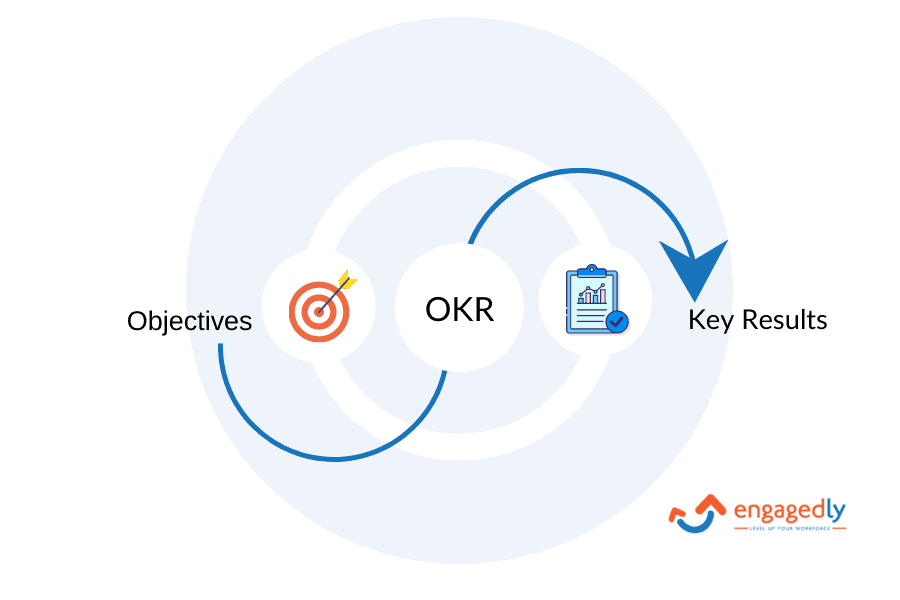
3. OKRs (Objectives and Key Results)
OKRs are a goal-setting framework that helps organizations to build a well-understood system of well-defined and measurable targets and outcomes.
Top OKR software tooloffers a great way for goal-setting which allows employees to execute individual as well as company objectives effectievely.
4. V2MOMs (Vision, Values, Methods, Obstacles, and Measurements)
V2MOMs refers to a popular and comprehensive goal-setting approach that includes various elements such as values, vision, methods, obstacles, and measurements. It offers a comprehensive and well-rounded approach to aligning organizational goals with individual goals.
Examples of Cascading Goals
Here are some of the examples of cascading goals to help you understand the concept better:
1. Sales Team
The specific objectives of a sales team in a software company, focusing on both acquiring new customers and retaining existing clients, are closely tied to the company’s main goal of boosting its market share by a set percentage (for example, 10%) during the fiscal year.
Every team member or sales representative is aware of how their contributions impact the company’s overall growth, fostering a sense of strategic alignment.
2. Product Development Team
The product development team’s objectives in a technology or software organization stem from the broader company mission of launching a set number of innovative products each year.
Every team member is assigned a specific goal that, when combined, helps reach this overall objective, ensuring that the entire team is aligned and working together towards a common aim.
How Cascading Goals Help Transform Company Culture
Well-translated and properly executed cascaded goals keep everyone in order, thus allowing individual efforts to show up collaboratively to make progress toward final objectives even faster.
There are several benefits of cascading goals for transforming an organization’s culture, including:
1. Develop a Higher Sense of Purpose
The cascading goal is an excellent technique that takes care of a shared direction and improves strategic alignment across the entire organization. Employees become more attached to and willing to perform a particular task when they see its positive contribution to the overall business results that would otherwise seem far-flung from them.
2. Enhanced Employee Engagement
Higher employee engagement is directly proportional to a productive workplace and goal cascading can be an excellent way to achieve this. Data also show that companies with a highly engaged workforce have 21% higher profitability and employees here are better equipped to collaborate with peers and managers to set performance goals.
Besides, cascading goals help employees and managers align the set goals with larger company-wide objectives, which further increases engagement.
3. Build a Unified Vision
In addition to being a remarkable management mechanism, cascading goals can also be considered an excellent unifying tool for any organization. In this situation, the higher-level organization’s goal or objective is broken down into smaller, more precise, and manageable tasks at different levels, in which each individual knows exactly how his/her work fits into the overall purpose.
This kind of strategic alignment inspires employees and helps them appreciate the relevance of their work toward the success of the organization.
Common objectives enhance cohesion among the members of an organization leading to a number of advantages for the creation of a positive organizational culture such as increased efficiency as everyone is working collectively towards achieving a common objective.
4. Empower the Workforce Through Clarity and Communication
One more positive point of cascading goals is their provision for growth in the clarity and transparency of internal communication.
Management should be properly executed so that it is kept between the higher-ups and the subordinates. Such qualities as openness, innovation, and continuous performance management are enhanced as the goals are communicated throughout every business unit.
This is also a way for the employees to be more skilled and enabled as they see the big picture. It could also facilitate greater productivity and/or happiness in their job and a reduction in turnover rates by building a company culture of which every member of the organization is also a part of. This will, in turn, enable employees to invest in organizational success through both personal and group efforts.
5. Bring Flexibility and Adaptability
Having a clear and well-defined set of cascading goals offers clear direction for employees and teams at every level. This means that even when external working conditions change or organizations achieve their goals, they are better equipped to pivot toward new ones.
Goal cascading empowers each team and individual to be more flexible and adaptable so that they can modify their goals by taking a reference from the one set by the team above them in the hierarchy.
Likewise, cascading goals also bolster accountability in the organization. This can be done by both teams and individuals regularly by reporting back to those who depend on their efforts.
The best way to do this is through weekly or daily team check-ins, where each individual can share updates on their respective work. If they find that they are not in line with reaching their set KPIs, they can collectively work with their peers or managers to overcome any challenges efficiently.
How to Implement Cascading Goals
Implementation of cascading goals in an organization is an ongoing process and should be revisited often. Here’s how you can implement cascading goals in a simple stepwise process.
Step 1: Thoroughly Review the Company Mission and Set Long-term Goals
The first step in the process before you even think about setting goals, is to consider the vision and mission of the organization, which may not be clear for employees at large organizations.
The mission and values of the company should always guide the work you do. Developing a clear understanding of a company’s values and mission allows you to create achievable goals that help you move your business forward.
Additionally, it is important to ensure that your employees understand the business objectives clearly which makes them better at the jobs that they do and more in tune with the organizational needs.
Step 2: Create Departmental and Team Goals
To set goals at the department or team level, make sure to discuss potential goals as a group. This will help you build investment in achieving them while also taking advantage of individual team members’ insights on how to use their respective talents to support company goals.
You can do this by discussing the organization’s strategic goals followed by brainstorming ideas.
Step 3: Set and Align Individual Goals
When setting a cascading strategy, the decisions don’t stop at the departmental level. It further drills down to teams and individual levels. This helps employees gain a deeper understanding of the organization’s vision and top priorities as the plans go down the hierarchy.
This kind of strategic alignment imparts a higher sense of purpose, highlighting the impact of each employee’s contribution at the organizational level.
Step 4: Use Goals in Daily Communication
As soon as all teams and individuals have set their goals and objectives based on the cascaded goals strategy, it is critical to keep a check on their progress as a part of a continuous goal management cycle.
Instead of simply conducting weekly or bi-weekly goal check-ins with their team members, managers also need to discuss the respective goals in daily communication such as as performance management plans, and keep note of milestones as and when achieved to keep employees motivated.
Step 5: Track the Progress of Goals
The next step in the process is establishing Key Performance Indicators (KPIs) that help you quantify the progress of each of the set goals. It is important to keep in mind here that ambitious yet attainable targets should be the priority to keep employees motivated and to drive teams to their performance management goals better.
Apart from this, tracking goal progress regularly ensures higher accountability and offers excellent opportunities for making changes/ corrections mid-way.
The key advantage of this kind of data-driven approach is that it converts the goal-cascading strategy into a more adaptive journey, thus fostering a culture of collaboration among teams and continuous workflow improvement.
To Conclude
If implemented properly, goal cascading can help increase strategic alignment, thus fostering a culture of better collaboration, greater transparency, and improved employee engagement.
However, if you do not revisit the goals to incorporate upward feedback or only set them annually, then cascading goals can be ineffective or frustrating in the long run.
A robust goal-setting software such as Engagedly can help you navigate this by allowing you to both create goals and letting you manage and track them easily.
Using Engagedly’s goal-setting software, you can manage employee goals effectively throughout the organization. The best part about Engagedly is its cascading feature that allows adding individual contributors or stakeholders to each goal.
FAQs
1. What is the cascade approach to organizational goal setting?
Cascading goals refer to the organizational goals that are established first at the highest level of the organization. This is followed by supporting goals created for each team and individual within the organization.
2. What is the purpose of cascading goals?
The main purpose of goal cascading is to set strategic business goals at the highest level and ensure that those goals cascade down throughout the organization to help guide team and individual-level goals.
3. What is an example of a goal cascading?
In an organizational context, a cascaded goal could be a company’s larger or overarching objective of increasing revenue. This goal can be cascaded down to the other departments such as sales or marketing with a specific target to achieve a specific percentage growth in sales within a defined period.
4. What are the three KPI cascade methods?
The top three KPI cascade methods include:
Top-Down Approach: In this approach, objectives or goals flow from top management to lower levels, thus ensuring complete alignment with strategic objectives.
Bottom-Up Approach: This is the approach where employees contribute to goal-setting, thus allowing better and deeper insights from frontline workers to inform higher-level objectives.
Hybrid Approach: A hybrid approach is one that combines elements of both top-down and bottom-up methods for a more balanced approach, thus promoting better organizational alignment and higher employee engagement
5. What should be the frequency of reviewing the cascaded goals?
Cascaded goals should be reviewed regularly to assess progress and make adjustments as required. Depending on the organization or business, this can range from quarterly and half-yearly reviews to more frequent evaluations.
6. Do cascading goals need to be adapted in response to market changes?
Yes, cascading goals should be adaptable to market changes as flexibility is key to ensure that these goals remain relevant and attainable, especially in dynamic business environments.
HR managers are always hunting for ways to keep employees engaged and boost productivity. Some strategies stick, while others fall flat. Why? Because every workplace is different—different industries, different people, different vibes.
But there’s one method that works universally, no matter your industry or team size: weekly check-ins.
Now, you might be thinking, “Weekly check-ins? Aren’t those just another meeting on my already-packed calendar?”
But here’s the thing: when done right, weekly check-ins are like your team’s productivity superpower. They build trust, improve communication, and help you solve problems before they explode into major issues.
Let’s break down the magic of weekly check-ins, complete with examples and expert insights to show you how to get it right.
Why Weekly Check-Ins Matter (With Real-World Examples and Insights)
1. Communication: Break Down the Walls
Weekly check-ins are a golden opportunity for open, honest communication. They create a space where employees feel comfortable sharing their thoughts, challenges, and ideas.
Example:
Take Sarah, a marketing manager at a mid-sized tech firm. She introduced weekly 20-minute check-ins with her team. One Friday, a junior designer, Jason, mentioned he was stuck on a project due to unclear instructions. Because of the check-in, Sarah caught the problem early and clarified expectations. What could have turned into a missed deadline was fixed in minutes.
As Kim Scott, author of Radical Candor, says:
“When you create an environment where people feel they can speak up, you create an environment where they can do their best work.”
Quick Tip:
Start check-ins with a simple, open-ended question like, “What’s one thing you want to talk about this week?” It encourages employees to open up without feeling put on the spot.
2. Trust: The Glue That Holds Teams Together
Trust isn’t built through grand gestures; it’s built through consistency. Weekly check-ins show employees that you care about them—not just as workers, but as people.
Example:
At a fast-growing startup, Emma, a team lead, makes it a point to ask about her team’s well-being during check-ins. One week, her developer, Raj, shared that he was feeling overwhelmed with multiple projects. Emma helped him prioritize tasks and offered additional support. This simple act made Raj feel valued and built a stronger sense of trust.
According to Brené Brown, author and leadership expert:
“Trust is built in very small moments.”
Your weekly check-ins are those small moments that add up to a culture of trust.
Quick Tip:
Follow through on what you promise during check-ins. If you say, “I’ll get you that resource,” make sure you do. Trust comes from actions, not just words.
3. Accountability: Keep Everyone on Track
Let’s face it: deadlines can slip when there’s no accountability. Weekly check-ins keep everyone focused and aware of what’s expected.
Example:
James, a project manager, wraps up each check-in by asking, “What’s your main priority for the week?” Then, he follows up on those priorities in the next check-in. This simple habit has reduced missed deadlines by 40% in his team.
According to productivity coach David Allen:
“What gets measured gets managed.”
Weekly check-ins help you measure progress and keep projects moving forward.
Quick Tip:
Summarize action items at the end of each check-in: “Great, so your focus this week is completing the report by Thursday. Let’s touch base next week and see how it went!”
4. Problem-Solving: Fix Issues Before They Blow Up
Small problems can turn into major headaches if they’re not addressed early. Weekly check-ins give you a chance to catch these issues while they’re still manageable.
Example:
Linda, an HR manager, noticed a pattern during check-ins: several team members were frustrated with a new software tool. Instead of waiting for things to get worse, she arranged a quick training session. The result? Improved efficiency and fewer complaints.
As business strategist Patrick Lencioni puts it:
“It’s easier to solve a small problem today than a big one tomorrow.”
Quick Tip:
Ask during each check-in, “Are there any roadblocks you’re facing?” This simple question can uncover issues you wouldn’t have otherwise known about.
5. Motivation: Celebrate Wins and Boost Morale
Everyone likes to feel appreciated. Weekly check-ins are a perfect time to acknowledge achievements, no matter how small.
Example:
During one check-in, Ben, a manager, congratulated his team member, Maria, for solving a tough customer issue. Maria felt recognized, and her motivation soared. Simple, but powerful.
According to Gallup, employees who regularly receive recognition are:
4 times more likely to be engaged
5 times more likely to stay with the company
Quick Tip:
End each check-in with positive feedback. A quick “Great job on that presentation!” can make a big difference.
🗓️ Schedule Consistently:
Pick a day and time and stick to it. Routine builds reliability.
📋 Have a Simple Agenda:
What’s going well?
What challenges are you facing?
What’s your focus for next week?
🗣️ Ask Open-Ended Questions:
“What’s on your mind this week?”
“What can I help you with?”
✍️ Take Notes:
Jot down key points to follow up on.
✅ End with Clear Action Items:
“Let’s aim to complete XYZ by next Friday.”
🎉 Celebrate Wins:
Recognize even small achievements. It keeps morale high.
🤝 Follow Up:
Check back on commitments made in the last check-in.
Conclusion: Big Wins from Small Check-Ins
Weekly check-ins are a simple habit with a big payoff. They boost communication, build trust, solve problems early, and keep your team motivated and on track. A few minutes each week can transform productivity and morale.
Start small, stay consistent, and watch your team thrive. You’ve got this! 🚀
Imagine clicking the reset button halfway through a game to examine your strategy and secure a victory; that is the power of mid-year reviews. Essential to personal and organizational growth, these reviews offer a unique opportunity to align goals, celebrate achievements, and adjust strategies.
A key factor contributing to employee turnover is the need for recognition. 79% of people who quit cite ‘lack of appreciation’ as their reason for leaving. Mid-year reviews can help you cultivate long-term commitment and retain valuable staff.
However, without preparation or well-defined objectives, the discussion can quickly go off course and become contentious. Unbalanced feedback can also make workers feel demotivated and disengaged.
As we move forward, we will provide HR leaders and managers with actionable insights for conducting transformative reviews, ensuring that these crucial touchpoints enhance morale and achieve strategic outcomes.
Why Do Mid-Year Reviews Matter?
Reviews conducted around the midpoint of the year provide valuable chances for assessment and modification.
By evaluating past performance and charting the route for the next several months, these conversations help the organization and its staff stay focused on the most critical goals.
Mid-year reviews can take several forms, including performance reviews, goal-setting sessions, and development conversations. These illustrations provide an opportunity to examine successes, challenges, and potential areas for development.
Here’s why mid-year reviews are important, as well as the main advantages they provide:
Align Goals with the Company’s Vision: Mid-year evaluations ensure that each worker’s objectives are in line with the organization’s strategic goals, enabling collaboration and promoting the accomplishment of common pursuits.
Increase Employee Engagement: Feedback provided during these meetings makes employees feel valued and understood, which improves their performance and engagement.
Address Gaps Early: Mid-year evaluations provide an opportunity to discover performance or skill gaps early, allowing for timely interventions to help projects get back on track.
Improve Communication: By fostering open discussion between managers and employees, they can help to clarify expectations and encourage stronger teamwork.
Enable Personal Development: Workers are given a personalized performance assessment that identifies their areas of growth and strength and lays the groundwork for future career advancement.
Prepare for Year-End Evaluations: These assessments assist in reducing surprises by giving employees an early warning about what to expect at the end of the year, allowing them to alter their efforts as needed.
Common Mid-Year Review Mistakes to Avoid
While mid-year reviews are important for employee growth, they can be weakened by frequent errors.
Here are some common errors and practical tips to overcome them:
1. Lack of Preparation
Managers must prepare for mid-year reviews, which is a significant flaw. Relying on recollection rather than thorough performance records can lead to ambiguous and incomplete feedback.
Here are some practical strategies for better preparation:
Maintain Standard Documentation: Keep track of employee performance throughout the year. Make regular updates to these notes using a digital tool or system.
Review Past Feedback: Prior to the mid-year review, go over the input from previous evaluations. This helps to provide consistent and meaningful feedback.
Set Specific Criteria: Develop exact benchmarks or measures for evaluating performance. Team members should review these thoroughly in advance of the evaluation.
Prepare Examples: Collect clear instances of achievement and areas that want improvement. During the exam, use them to highlight crucial points.
Seek Comments from Others: If feasible, solicit feedback from coworkers or other team members who have worked closely with the individual. This can provide a comprehensive assessment of their performance.
2. Focusing Only on Recent Events
An overemphasis on current events is a prevalent issue in midterm assessments. Recency bias can influence a judgment of an employee’s performance by neglecting previous accomplishments and problems.
To establish an objective and complete examination, consider the following tactics:
Review the Full Period: Make it a habit to analyze performance over the full review period rather than just the most recent weeks. Use a performance tracking system to help maintain an ongoing record.
Create a Timeline of Events: Document significant achievements, challenges, and feedback throughout the year. This timeline will help you recall and reference earlier events during the review.
Provide Feedback: Ensure that your remarks cover the entire time frame. Recognize consistent performers and keep track of any declines or improvements over time.
Use Performance Metrics: To evaluate progress objectively, apply consistent metrics that cover the full review period. This approach minimizes the impact of any recent events on the overall assessment.
3. Not Setting Clear Goals
One key error in mid-year assessments is a failure to establish defined goals. Reviews might result in confusing future action plans without clear expectations, weakening their purpose.
To address this issue, managers might use the following strategies:
Establish SMART Goals: Make sure employees’ goals are specific, measurable, achievable, relevant, and time-bound. This clarity enables them to focus their efforts more effectively.
Review and Adjust Goals: Return to the goals you established at the beginning of the year on a regular basis. Assess their relevance in light of any changes in business strategy or job roles and make any necessary adjustments.
Communicate Expectations Clearly: During the review, explain what is expected of employees in the following months. Ensure that they understand their objectives and the measures by which they will be evaluated.
Provide Resources for Achievement: Identify and discuss the resources or help that employees require to attain their goals. This could involve training, new tools, or team assistance.
4. Ignoring the Development Aspect
One of the most prevalent mistakes in mid-year reviews is focusing solely on performance indicators while ignoring staff development. This inaccuracy may make team members apprehensive about their future prospects and opportunities for advancement.
Here are some practical tips to ensure development is a central part of your mid-year reviews:
Incorporate Development Goals: Alongside performance objectives, set specific development goals tailored to each employee’s career aspirations and skills gaps.
Offer Training Opportunities: Identify relevant training or professional development courses to help employees enhance their skills and contribute more effectively to the team.
Use Constructive Feedback: Develop a clear follow-up plan for reviewing development goals and discussing progress in regular one-on-one meetings. This keeps development on pace and displays a continual commitment to their advancement.
Encourage Self-Assessment: Ask employees to assess their own skills and growth needs. This self-assessment can provide useful insights and encourage a proactive approach to personal progress.
5. One-Sided Conversation
Managers’ attempts to control the topic are a major issue in many midyear reviews. This biased approach may make it more difficult to grasp the employee’s requirements and perspectives, reducing the effectiveness of the evaluation.
Here are some tips to ensure a more fair conversation:
Encourage Employee Feedback: Begin the evaluation by asking employees to reflect on their performance and development needs. This establishes a collaborative tone.
Practice Active Listening: Make an attempt to listen more than you speak. Listen to what the employee says and accept their arguments before reacting.
Ask Open-Ended Questions: Use questions that need more than a yes/no answer. For example, “What challenges have you faced?” or “What support do you need to achieve your goals?”
Build a Comfortable Environment: Make the setting easygoing and welcoming. A calm environment can foster more open and honest conversations.
Focus on Solutions Together: When discussing areas for improvement, involve the employee in brainstorming possible solutions. This approach fosters a sense of teamwork and empowerment.
6. Failure to Address Weaknesses Constructively
One of the pitfalls during mid-year reviews is the overemphasis on areas needing improvement, with inadequate recognition of successes. This imbalance can impact employee morale and diminish the perceived value of the review process.
Here’s how to maintain a balanced approach:
Highlight Achievements: Begin discussions by identifying distinctive accomplishments. This acknowledgment can boost morale and validate the employee’s efforts.
Future-Oriented Feedback: Focus on how current successes can lead to future opportunities. Encourage employees to build on their strengths.
Personalize Appreciation: Tailor your positive feedback to the individual characteristics of the employee. Personal recognition can increase its impact and relevance.
Strategies for Preparing for Mid-Year Reviews
Preparation is key to successful mid-year reviews that benefit both employees and the organization.
Here are effective steps for HR leaders to prepare themselves and their teams for this critical evaluation process:
1. Educate and Train Managers
Conduct Training Sessions: Organize workshops for managers on how to conduct effective reviews. Focus on techniques for balanced feedback and active listening.
Provide Resources: Distribute guidelines and checklists that outline the review process, emphasizing the importance of preparation and documentation.
2. Set Clear Objectives for the Review
Define Review Goals: Clearly articulate what the reviews aim to achieve, such as aligning individual goals with organizational objectives or identifying professional development opportunities.
Communicate Expectations: Ensure that both managers and employees understand the objectives and benefits of mid-year reviews. With 74% of employees receiving a performance review once a year or less often, ongoing communication is vital for clarity.
3. Gather Comprehensive Data
Compile Performance Data: Collect performance data and feedback from various sources to provide a complete picture of each employee’s contributions and areas of improvement.
Review Historical Performance: Look at past reviews to track progress and recurring issues, which can provide valuable insights for current assessments. Alarmingly, only 14% of employees strongly agree that the performance reviews they receive inspire them to improve, indicating a pressing need for more effective review methods.
4. Develop a Review Agenda
Outline Key Topics: Create a structured agenda for each review session that includes time for discussing achievements, challenges, and goals.
Allocate Enough Time: Schedule sufficient time for a thorough discussion that allows for meaningful dialogue between the manager and the employee.
5. Foster a Supportive Atmosphere
Promote Open Communication: Encourage an environment where feedback is seen as a tool for growth and development, not as a critique.
Prepare to Address Sensitivities: Equip managers with strategies to handle sensitive issues respectfully and constructively. It’s crucial to consider how feedback is delivered; only 10.4% of U.S.-based employees felt engaged after receiving negative feedback from their managers, highlighting the need for a more supportive approach.
6. Plan for Follow-up Actions
Set Next Steps: Plan for actionable steps post-review, such as training, goal adjustments, or project reassignments.
Schedule Follow-Up Meetings: Establish dates for follow-up meetings to discuss progress on action items discussed during the review.
Tailoring Mid-Year Reviews to Different Employee Types
Adapting mid-year reviews to meet the diverse needs of different employee types is crucial for maximizing their effectiveness and relevance. Here are strategies to ensure the review process is tailored appropriately:
1. For High Performers
Challenge and Motivate: Focus on providing new challenges and advanced projects to keep them engaged and growing.
Leadership Development: Offer opportunities for leadership roles or mentorship of junior staff.
2. For Steady Performers
Recognition and Encouragement: Acknowledge their consistent contributions and discuss ways to maintain or increase their productivity.
Skill Enhancement: Identify skills that can be enhanced to help them take on more responsibilities or achieve higher efficiency.
3. For Underperformers
Constructive Feedback: Clearly outline where improvements are needed and why. Provide specific, actionable advice.
Support Plans: Discuss potential support mechanisms, such as training or more frequent feedback sessions, to help them improve.
4. For New Employees
Orientation and Expectations: Ensure they understand their roles and the expectations associated with them.
Early Feedback: Provide early feedback to correct course where necessary and confirm alignment with company standards.
5. For Remote Workers
Communication Frequency: Increase the frequency of reviews to ensure they feel connected and aligned with the team’s goals.
Technology Use: Leverage technology to facilitate seamless communication and provide them with the tools they need to succeed remotely.
HR leaders are encouraged to adopt a proactive and strategic approach to mid-year reviews. This commitment to continuous improvement and personalized development is key to building a resilient and high-performing team.
To support this initiative, Engagedly offers solutions that can streamline and enhance your mid-year review processes.
With customizable review cycles and approval workflows, comprehensive 360° feedback or multi-rater assessments, robust goal management and OKRs, and integrated 1:1 meetings, feedback, and check-ins, Engagedly empowers organizations to maximize the effectiveness of their review processes and cultivate a thriving workforce.
What is the ideal frequency for providing feedback to employees?
While formal reviews are typically semi-annual, ongoing informal feedback throughout the year is essential to maximize performance and engagement.
How can HR leaders ensure fairness in mid-year reviews?
Standardizing the review process and training managers on unbiased evaluation techniques can help ensure fairness and consistency across all reviews.
What tools can assist in conducting effective mid-year reviews?
Performance management software like Engagedly can facilitate tracking goals, providing feedback, and documenting employee progress efficiently.
How should an organization handle a mid-year review if business goals have shifted significantly?
Reviews should address any changes in business goals, align employee objectives with the new direction, and set clear expectations for the upcoming period.
Can mid-year reviews impact employee motivation negatively?
If not handled carefully, focusing too heavily on criticism can demotivate staff. Balance constructive feedback with recognition of achievements is crucial for maintaining morale.
As businesses seek a more adaptive and employee-centric workplace, digital playbooks are emerging as a dynamic tool for adjusting performance reviews. Performance assessments, also known as employee appraisals, have long been a yearly custom that assesses an employee’s work over a specific period.
These assessments are used to set objectives, identify areas for improvement, and decide on bonuses and promotions.
Conventional tactics, on the other hand, have been criticized for being arbitrary, irregular, and unrelated to employees’ day-to-day obligations. Digital playbooks offer a dynamic, interactive, and data-driven approach, making them an invaluable tool for performance management.
What Is a Performance Appraisal?
A firm evaluates an employee over a set period using a rigorous method known as performance assessment. In general, managers evaluate employee performance once or twice a year following predetermined objectives and standards.
However, this approach has been criticized for being highly subjective, relying heavily on previous performance, and frequently removing staff from their regular responsibilities.
Modern performance review systems address these challenges using data analytics, ongoing feedback, and a more thorough approach to employee evaluation. This innovative technique is primarily based on digital playbooks, which provide firms with the frameworks and tools needed to align performance assessments and company objectives with employees’ needs.
Essential Features of Digital Playbooks for Performance Evaluation
By examining the essential components of digital playbooks, we may understand how they affect performance reviews. When combined, firms may create dynamic, effective, and growth-oriented evaluation systems that outperform standard assessments.
The key components of the digital playbook approach to current performance management are as follows:
1. Continuous Feedback and Real-Time Data Collection
Digital playbooks include systems that enable real-time performance tracking and feedback delivery, promoting continuous learning.
Unlike traditional methods based on annual assessments, these instruments encourage ongoing communication between managers and staff, helping to identify problems and opportunities as they develop.
This approach promotes employee participation and enables quicker answers to performance problems, therefore fostering a culture of constant improvement. This approach is a core pillar of modern performance appraisal methods used by high-performing teams.
2. Holistic Evaluation Criteria
Performance reviews today go beyond numbers. They combine leadership, creativity, adaptability, and teamwork, among other abilities.
This update recognizes that an employee’s value extends beyond their productivity to their potential to improve the overall performance and culture of the firm.
Employers like Google and Airbnb have introduced tactics that encourage constant feedback, skill improvement, and goal setting, backed up by web platforms for continuous evaluation.
3. Integration with Organizational Goals
Individual ambitions in digital playbooks are aligned with overall corporate objectives. This link inspires and motivates employees, allowing them to understand that their job is important to the organization’s success.
Performance management software enables managers and employees to evaluate work, identify areas for improvement, and track results in real time.
4. Improved Fairness and Transparency
Exact evaluation criteria and performance targets in digital playbooks can help employees understand how their work is evaluated. Transparency in the assessment process increases credibility and reduces the possibility of bias.
Peer assessments and 360-degree feedback provide a more complete view of an employee’s performance, resulting in a more equitable assessment process.
5. Enhanced Staff Training
Digital playbooks offer personalized development plans that highlight strengths and indicate areas for growth. These initiatives, which include training programs, career paths, and mentoring opportunities, are all intended to help people develop and succeed inside the firm.
Performance assessments are changing due to digital playbooks, which offer numerous benefits. They solve the limits of traditional ways by integrating technology and data-driven insights to deliver a comprehensive and successful approach to employee performance management.
There are numerous benefits to using digital playbooks in performance reviews, including:
1. Greater Motivation and Engagement
Digital playbooks make regular, constructive feedback possible, helping to build a more dynamic workplace. Employees receiving timely appreciation for their achievements are likelier to feel valuable and driven.
Public acknowledgment, development opportunities, and fair incentive systems can raise employee morale and motivation, improving performance.
2. Better Productivity and Alignment
Digital playbooks unite efforts to obtain the same results when personal ambitions complement company aims. This alignment helps staff members see the bigger picture and understand the value of their contributions to the company, improving output. This clarity and concentration lead to more involvement and better general performance.
3. Improved Decision-Making Using Data Analysis
Nowadays, performance reviews incorporate data analytics. Digital playbooks leverage data to identify high performers, performance patterns, and areas that may require intervention. Managers can use this method to make data-driven decisions about prospective career advancement, promotions, and compensation.
4. Improved Employee Welfare
The importance of employee well-being in performance management is growing. Digital playbooks might include wellness assessments, flexible work hours, and mental health support networks. Businesses that prioritize employee well-being can improve performance and retention, reduce fatigue, and foster a more positive workplace culture.
Problems and Solutions for Digital Playbook Implementation
Digital playbooks offer various benefits for current performance reviews, but they also have a number of disadvantages. Companies must address these concerns in a timely and effective manner to ensure successful deployment.
Here are some common difficulties and feasible solutions for merging digital playbooks and performance management:
1. Resistance to Transformation
A change in the performance evaluation system may be met with resistance, particularly from staff members acclimating to outdated procedures. Businesses should prioritize training and clear communication to address this issue properly. To calm individuals down and increase acceptance, underline the new system’s benefits and its role in supporting employee development.
2. Concerns About Data Privacy
Data privacy becomes increasingly important as technology is integrated into performance management. Employers are required by law to collect, store, and use employee performance data. Transparent data use methods and strong data security requirements help boost system confidence.
3. Saving a Human Touch
Even as technology progresses, it is vital to retain a human element in the appraisal process. Managers can use digital technologies to strengthen their relationships with employees rather than replacing them.
Making connections and building a sense of importance and encouragement in employees requires frequent one-on-one meetings, coaching sessions, and open communication.
Emerging Trends in Performance Appraisals
Several developing tendencies shape the direction of performance assessments as performance management changes. Technology’s developments, changing workplace dynamics, and growing attention to employee well-being and inclusivity drive these trends.
Here are the main trends ready to revolutionize performance evaluations in the next few years:
1. Systems of Constant Feedback
The transition from annual assessments to continuous feedback systems marks a watershed moment in performance evaluation. Managers can use this strategy to assess performance and provide advice and direction as needed quickly.
Regular feedback enhances the assessment process by identifying areas for improvement and encouraging ongoing employee involvement and development.
2. Reviews From an Employee’s Perspective
Contemporary performance evaluations provide individualized feedback and goal setting based on each individual’s needs. Performance reviews are improved by incorporating 360-degree peer feedback and self-evaluations, resulting in a more comprehensive and inclusive process.
This employee-centric strategy ensures that each individual receives relevant and useful insights for personal development.
3. AI and Predictive Analytics Integration
Performance management increasingly includes artificial intelligence and machine learning. These tools dig into performance data to provide predictive analytics, helping identify possible problems early on and strong achievers.
Based on statistics, this method helps to enable wise decision-making in performance reviews and employee development strategies. Predictive analytics support exact performance ratings and enable automated performance evaluations, promoting best practices in performance management.
4. Remote and Hybrid Work Adaptations
The rise of remote and hybrid work has driven a need for creative tools and approaches to assess staff performance. Evaluation tools and performance management systems today include capabilities meant for remote work, thereby ensuring fair and consistent assessments anywhere an employee is located.
These instruments enable exact performance monitoring and measurement, preserving performance criteria in many different working settings.
5. Emphasizing Staff Engagement and Well-Being
Performance reviews have changed noticeably in their focus on employee well-being. Companies are increasingly realizing that driving performance and output depends critically on employee mental health and satisfaction.
Strategies for performance management include creative ideas, including mental health support, wellness programs, and flexible work schedules. This focus on well-being fosters a culture of harmony and fulfillment that drives staff retention and employee involvement.
6. Performance Management: Inclusion and Diversity
Performance management plans increasingly center on inclusion and diversity. Businesses are changing conventional performance criteria to highlight the skills and viewpoints that their employees bring.
This change entails setting reasonable performance targets for every staff member and including systems of cultural awareness. This strategy guarantees that every staff member can flourish and contribute to a more inclusive company.
7. Matching Business Objectives with Individual Goals
Managing performance depends on well-defined goals. Aligning personal growth with company goals helps staff members have a common focus, increasing general output. Real-time tracking and performance measurements provided by performance management solutions help managers and staff stay aligned with corporate objectives.
Best Practices for Implementing Digital Playbooks
Here are some effective strategies for implementing digital playbooks in performance appraisals:
1. Gradual Transition to Continuous Feedback
Over time, companies should move from yearly reviews to constant feedback systems. This change helps managers and staff members welcome the new approach, enabling flawless execution.
Standard practice should include regular check-ins and immediate feedback, which should be improved by performance management systems that streamline feedback collection and analysis.
2. Emphasize Employee Development and Growth
Employee growth should be front-stage in performance reviews rather than only assessment. Combine customized development plans with opportunities for career progress and skill enhancement. This strategy helps staff members see appraisals as opportunities for development, fostering a culture of continuous improvement.
3. Leverage Technology for Enhanced Transparency
Use technology to improve the clarity of the performance appraisal process. By providing an all-encompassing view of employee performance, tools include 360-degree feedback, and real-time performance dashboards help to minimize bias and support fair appraisals.
Fostering confidence in the system depends on clear information about the performance objectives and evaluation standards.
4. Train Managers and Employees
Managers and staff must receive training to properly apply new tools and see how they could improve their performance and advancement. Regular training courses and updates on new features can help guarantee that everyone feels comfortable and confident with the new system.
Wrapping Up
Using digital playbooks that enable consistent, data-driven, and customized assessments will help shape performance review’s future.
Changing from rigorous annual assessments to a more flexible and responsive approach lets companies foster a culture of continuous development, participation, and improvement.
Growing recognition of the benefits of digital playbooks marks a significant change in how performance reviews are handled, improving their relevance and efficacy for companies and staff.
Engagedly is among the major performance management and employee engagement systems in this revolution. It provides businesses with all-encompassing tools to help foster a culture of constant development and feedback.
It allows employees and supervisors to collaborate on goal setting, track progress in real time, and offer perceptive comments encouraging participation and growth.
How do digital playbooks differ from traditional performance management tools?
Digital playbooks offer a more vibrant and immediate way to manage performance, unlike traditional tools that usually emphasize periodic assessments like annual reviews.
They incorporate AI and data analytics to provide ongoing feedback, tailored development plans, and immediate performance tracking. This change enables a comprehensive and continuous evaluation of employee performance, promoting a culture of constant enhancement and adaptability.
What role do digital playbooks play in remote and hybrid work environments?
In remote and hybrid work settings, digital playbooks offer tools for tracking performance from afar, conducting virtual feedback sessions, and aligning goals. They ensure that employees, regardless of location, have the same access to performance evaluations and development opportunities.
Can digital playbooks help mitigate biases in performance appraisals?
Digital playbooks have the potential to greatly minimize biases in performance appraisals. By using data analytics and AI-driven insights, they offer a clearer perspective on employee performance, focusing on measurable metrics instead of personal opinions.
For many years, annual performance reviews have been the standard procedure for assessing worker performance. Managers assess an entire year’s work in a single meeting, leaving little room for continuous improvement.
However, today real-time feedback technologies are expeditiously replacing this conventional method.The inadequacies of the previous approach are shown by the fact that only 2 out of 10 employees strongly feel that their performance is handled in a way that inspires them to accomplish exceptional jobs.
The importance of continuous performance assessments is rising for modern businesses. This method of encouraging input takes care of issues as they come up. Continue reading to see why the future belongs to real-time performance assessments.
What Is a Performance Review?
A performance review is a process where a manager and employee discuss the employee’s work and achievements over a set period, typically once a year. These evaluations, which offer a formal means of evaluating performance and offering criticism, have become an integral element of business operations.
Managers typically use these annual evaluations to determine whether employees should be promoted, adjust pay, and identify areas for improvement. It may surprise you to hear that most managers spend roughly 210 hours a year preparing their teams’ yearly performance reports.
Although the typical performance review provides an organized means of monitoring advancement, it frequently fails to take into account current obstacles or successes. This kind of inert approach may result in delayed feedback, which can lower staff morale.
Continuous performance reviews offer more rapid and useful feedback; therefore, transitioning from annual to continuous performance reviews is important.
The Limitations of Traditional Annual Performance Reviews
Annual performance reviews have been a part of business culture for a while, but their advantages are dwindling.
Here’s the reason behind this:
1. Outdated Feedback
By the time of the annual review, the input may not be relevant. Employees may experience a range of problems and changes throughout the year that aren’t typically addressed in an annual meeting. Staff members may become frustrated and feel cut off from management as a result of these delays.
2. Lack of Employee Engagement
Conventional annual evaluations may come across as a checkbox exercise instead of a sincere conversation. Employee disengagement may occur if they see the procedure as a formality rather than an opportunity for growth.
3. Inability to Handle Ongoing Issues
Annual assessments usually concentrate more on previous performance than on dealing with present problems. Due to the delay in input, problems could continue if they are not addressed in a timely manner, which would eventually impact team dynamics.
Many companies are giving up on this business model. For instance, Deloitte redesigned its performance management systems in 2015 and eliminated cascade targets, yearly assessments, and 360-degree feedback tools in an effort to promote a more flexible approach. In a similar spirit, Adobe has also included a continuous feedback system.
Do Most Companies Still Host an Annual Performance Review?
It may surprise you to hear that many businesses continue to use the annual performance review model, even with all the noise about doing away with traditional reviews.
In fact, nearly half (49%) of companies conduct annual or semiannual reviews, according to a recent study that surveyed 1,000 full-time U.S. employees.
The great part is that an increasing number of firms are changing course and accepting ongoing input. This is becoming quite popular! Why? Real-time feedback facilitates the recognition of accomplishments and prompt resolution of difficulties, hence establishing an open and adaptable work environment.
As companies maneuver through the rapid changes in today’s environment, having continuous performance discussions is starting to become standard practice. Annual reviews may still be necessary, but it appears that more regular, fruitful conversations that empower employees will be key in the future.
As noted by McKinsey & Company, Annual reviews can create a bottleneck on managers and the C-suite. More regular performance conversations can be successful in a variety of formats; quarterly, weekly, and casual check-ins should supplement formal reviews.
Today, employee assessments are being approached differently by firms thanks to continuous performance reviews. In contrast to traditional techniques, which usually entail an annual assessment, continuous reviews place an emphasis on regular check-ins and continual feedback all year long.
Annual vs. Continuous Performance Reviews: Key Differences
Aspect
Annual Performance Review
Continuous Performance Review
Frequency
Annual or semiannual
Ongoing
Feedback Timing
Retroactive
Real-time
Focus
Past performance
Current performance and growth
Preparation
Time-consuming, annual prep
Minimal prep, spontaneous
Employee Involvement
Passive, top-down process
Active participation, collaborative
Constant assessments, real-time feedback, and frequent check-ins are becoming common practices as a result of the continuous performance review system. Large corporations like Microsoft, Adobe, and Deloitte have successfully implemented ongoing performance assessments to boost worker engagement and productivity.
How Continuous Reviews Improve Employee Engagement and Growth?
Here’s a snapshot of how continuous performance reviews can significantly enhance employee engagement and foster professional growth:
1. Career Development
Real-time performance reviews are changing the workplace for employees. They bring in numerous benefits that enhance the overall experience of employees. One key advantage is career development due to continuous learning based on continuous feedback. When feedback is delivered weekly, employees find it much more meaningful—over five times more so!
2. Increased Productivity and Employee Engagement
Another important advantage is engagement. Employees who feel engaged are four times more likely to have received feedback within the last week than those who haven’t. It’s evident that giving employees regular feedback helps them stay engaged and committed to their task.
Indeed, over 50% of the workers say they would want to receive feedback on a daily or weekly basis, and almost 75% think it is very important for their productivity.
3. Motivation and Overall Job Satisfaction
The perception that employees have about their jobs significantly changes when they receive feedback in real-time. When they get recognized and supported right away, it creates a more positive and stimulating work environment.
It should come as no surprise that 94% of workers would like to receive real-time feedback and opportunities for career development rather than waiting for the customary formal appraisals.
Impact of Continuous Reviews on Organizational Performance
A 2020 study found that companies that used constant feedback beat their rivals by 24%. This improvement is primarily the result of employees’ ability to move fast on timely information and make improvements.
Additionally, firms that prioritize continuous feedback outperform those that use traditional review procedures in terms of attracting talent and employee retention by 39% and 44%, respectively (cited above).
The advantages also extend to employee development, since real-time reviews encourage continuous dialogue about personal development and match personal goals with company objectives.
It also leads to an improvement in retention rate, which leads to a more stable staff and lower recruitment expenses.
Technology’s Role in Facilitating Continuous Performance Reviews
Technology is essential in today’s hectic work environment because it facilitates ongoing performance reviews. With the correct tools, organizations can improve employee engagement and expedite feedback processes.
Here’s how technology makes this possible:
Real-Time Feedback Platforms
Tools like performance management software enable managers and employees to share feedback instantly. This means that input is immediate and relevant, cultivating a culture of continuous improvement.
Automated Check-Ins
Performance management systems have calendar connections and reminders, which make it simple to schedule routine check-ins. This is to make sure that current discussions don’t get lost in the shuffle.
Data Analytics
Organizations may track employee performance patterns over time with the use of performance management tools, which offer insightful data. Managers can thus identify areas of improvement and recognize high performers.
What Are Common Goals for Performance Reviews?
Here are some common goals for performance reviews:
1. Aligning Individual Goals with Company Objectives
Performance reviews should align individual goals with the company’s broader objectives so that employees’ work can support organizational priorities.
2. Improving Employee Skills
Performance reviews must help employees identify areas for growth and offer opportunities for targeted development.
3. Recognizing and Rewarding Achievements
Performance reviews must highlight employee accomplishments to reinforce positive behaviors and boost morale.
4. Setting Future Objectives
Performance reviews should be an anticipatory tool that enables managers and staff to set targets for the upcoming review cycle.
When compared to regular annual evaluations, continuous performance reviews greatly improve the achievement of important corporate goals.
They facilitate the alignment of individual goals with company objectives by allowing real-time adjustments, ensuring that employees’ objectives reflect the company’s evolving priorities.
Additionally, regular feedback encourages honest dialogue between employees and managers, which in turn builds trust and teamwork. This constant conversation makes providing feedback seem like a normal aspect of working.
Lastly, because ongoing reviews are collaborative in nature, dynamic goal-setting is made possible, allowing for necessary adjustments to match individual goals with company objectives.
How Can Annual Performance Reviews Be Converted to Ongoing Performance Reviews?
You might find switching from yearly to continuous performance assessments a bit overwhelming but it is doable with the appropriate strategy.
Here are some key steps for managing this shift for HR teams and managers:
Step 1: Offer Education and Training for Managers
Managers are the ones who are in charge of providing feedback to the employees. Thus, as an organization, you must always begin by instructing managers on the proper method of offering continuous feedback.
Urge them to think more in the direction of continual conversations rather than just annual evaluations. Consequently, establishing an ecosystem of frequent communication that assists managers in giving insightful, timely, and constructive feedback.
Step 2: Invest in the Right Tools and Software
You must provide your employees with the performance management resources they need to make continuous reviews easier. Choose performance-managing software that facilitates goal tracking, progress monitoring, as well as real-time feedback.
Performance management tools by Engagedly help HRs and managers to easily give and receive feedback, monitor progress in real-time, and more.
Step 3: Set Up Feedback Loops with Periodic Check-Ins
As a next step, you must establish a regular check-in schedule, whether it be weekly, biweekly, or monthly. As a result, receiving feedback becomes normal and expected at work, thereby stimulating candid discussions about accomplishments, difficulties faced, and performance.
To make feedback facilitation a norm at your workplace, you have to establish a minimum frequency for these touchpoints. During these sessions, pay attention to personal growth and possible obstacles that employees may face
Step 4: Encourage Employee Self-Assessments and Peer Reviews
At last, empower employees by encouraging self-assessments and peer feedback. This promotes accountability and self-reflection, giving employees a more active role in their development and creating a collaborative team environment.
To do so, you can use peer feedback tools, such as 360-degree reviews, to let employees offer and obtain feedback from one another.
To Wrap Up
In a quest to keep up with the needs of businesses and improve productivity, it’s critical to shift from annual performance evaluations to ongoing reviews. A continuous feedback approach facilitates open discussions that lead to continuous growth and development opportunities.
By adopting this method, which encourages dialogue and quick identification of skill gaps, organizations can guarantee an alignment between individual goals and company objectives while improving communication between staff members and managers.
Ultimately, this shift can improve performance levels and overall job satisfaction across the organization.
Performance management tools by Engagedly boost this shift with features like ongoing feedback and frequent check-ins. This way, employees receive timely, relevant feedback that enables them to make real-time improvements and adjustments
A performance review is a structured evaluation where managers and employees discuss job performance, achievements, strengths, areas for improvement, and future goals. Performance reviews help measure progress, align individual performance with business objectives, and identify opportunities for career development. While many organizations traditionally conducted annual reviews, modern businesses increasingly combine formal reviews with continuous feedback throughout the year.
What is the difference between annual and continuous performance reviews?
Annual performance reviews evaluate an employee’s performance once or twice a year, focusing primarily on past achievements. Continuous performance reviews involve regular check ins, ongoing feedback, and real time coaching throughout the year. This approach enables employees to address challenges quickly, improve performance consistently, and stay aligned with changing business priorities.
Why are organizations moving away from annual performance reviews?
Many organizations are shifting toward continuous performance reviews because annual reviews often provide delayed feedback that is no longer actionable. Frequent performance conversations improve employee engagement, strengthen manager employee relationships, encourage continuous learning, and help resolve performance issues before they grow. Continuous reviews also create more accurate and balanced performance evaluations.
What are the benefits of continuous performance reviews?
Continuous performance reviews offer several advantages, including:
Faster and more actionable feedback. Higher employee engagement and motivation. Better goal alignment across teams. Stronger communication between managers and employees. Earlier identification of skill gaps and development needs. Improved productivity and performance over time. Greater employee retention through ongoing support and recognition.
These benefits help organizations build a culture of continuous improvement.
What are the common goals of a performance review?
Performance reviews are designed to:
Evaluate employee performance objectively. Recognize achievements and contributions. Identify strengths and development opportunities. Align employee goals with organizational objectives. Create personalized development plans. Support promotion, compensation, and succession planning decisions. Encourage continuous growth through constructive feedback.
An effective performance review balances evaluation with employee development.
Have you ever felt like a mistake you made long ago unfairly influenced your performance review, or found yourself judging an employee too positively or negatively based on just one trait?
This is the halo/horns effect, a bias that occurs when we allow a single characteristic to skew our entire evaluation of someone’s performance. In the context of performance reviews, these biases can lead to inaccurate feedback, unfair assessments, and distorted perceptions, which ultimately harm team development and individual growth.
To ensure fair and effective performance reviews, it’s crucial to recognize and overcome these biases. This article will discuss the halo/horns effect and provide strategies for giving balanced, accurate feedback.
What is the Halo Effect?
The “halo effect” is a cognitive bias where our overall impression of someone influences how we perceive their specific traits. If a person excels in one area, we tend to assume they excel in others, even without evidence.
For instance, if John is well-liked because he is friendly, his manager might also rate him highly in areas like leadership or productivity, even if his performance in those areas is average.
The term was coined by psychologist Edward Thorndike in 1920 during studies on how military officers rated their subordinates.
What is the Horns Effect?
The “horns effect” is the opposite of the halo effect. It occurs when a negative impression of a person influences how we view their other traits or abilities. In this case, if someone displays a single unfavorable quality, we may unfairly assume they perform poorly in unrelated areas, leading to biased evaluations.
Like the halo effect, the horns effect is rooted in the cognitive biases first explored by Edward Thorndike.
How Does the Halo/Horns Effect Happen in Performance Reviews?
The halo/horns effect is a type of bias that can occur in any relationship, but especially during performance reviews. The halo/horns effect occurs when a manager allows one positive or negative trait to ‘color’ their whole evaluation of an employee.
In other words, the manager becomes either too lenient or too critical of the employee based on a single trait. This can lead to inaccurate and unfair performance reviews.
For instance, in company ABC, John is the marketing manager and is in charge of Sally who has been tasked with finding cheap email marketing software for their company. Sally forgot about it and consequently missed the deadline for finding the tool they needed, causing a major headache for John as he ended up doing it himself.
Instead of coaching Sally and helping her get better so that it didn’t happen again, he wrote her off as a bad team member and stopped trying to help her grow.
We can all see how unfair it is to treat someone like this. None of us would want to be treated this way for our mistakes. So, it is essential that we are aware of this cognitive bias, and take concrete steps to overcome it.
How Do You Avoid the Halo Horns Effect in Performance Reviews?
1. Be aware of your biases
We all have them! If you know that you tend to be too lenient or too critical of a type of person, make a conscious effort to counterbalance that tendency in your performance reviews. We can also be aware of our biases by being mindful of how we are feeling when we are rating someone’s performance.
For example, suppose we are feeling angry or frustrated with a member of our marketing team because they failed to properly audit our website causing our Google rankings to suffer, or feeling annoyed at our salesman who messed up a big presentation a while back costing us a large client. In that case, we will likely be more critical in our rating.
By taking a step back and objectively evaluating the situation, we can make sure that our biases do not affect our judgment.
2. Treat them as an individual
Try to view each employee as an individual, rather than lumping them into categories.
For example, don’t think of all ‘millennials’ as lazy and entitled just because you read that somewhere on the internet — get to know your employees as individuals and treat them accordingly.
Similarly, don’t give all of your employees the same rating just because they are in the same department or have been with the company for the same amount of time. Each person has different strengths and weaknesses, and each deserves to be evaluated as an individual.
3. Incorporate 360 Reviews
Incorporating 360-degree reviews helps mitigate the halo and horns effect by gathering feedback from multiple perspectives, leading to a more balanced and objective assessment of an employee’s performance.
However, feedback from Emily’s peers and subordinates could reveal issues such as missed deadlines or unclear communication. This well-rounded input helps create a more accurate and comprehensive evaluation, preventing any single perspective from dominating the review process.
To enhance your performance reviews with multi-rater feedback, explore Engagedly’s 360 Feedback tool, designed to offer in-depth insights from a diverse range of evaluators.
4. Use a performance review template
A performance review template can help you to ensure that you are evaluating each employee fairly. By using the same template for every performance review, you can avoid any potential biases that may come into play.
The critical thing to remember is that it’s still possible to let bias influence you as you fill out the templated review, however, it serves as a guide to help keep you fair and unbiased. A good performance review template is an essential tool in the review process.
5. Focus on behaviors, not traits
Rather than saying ‘John is always late for his shifts,’ try, ‘I noticed that John has been coming in late for his shifts the last few Mondays.’ This helps to keep the review objective and focused on specific behaviors that can be changed.
The more that we can focus on the concrete examples of behavior we’d like to see changed, the better the employee will receive it. And the more we can show that we truly want to support them in their changes (instead of just bossing them around), the more likely they are to improve their behavior.
Consider equipping them with some specialized third-party coaching through a learning experience platform, helpful decision-making tools to improve their processes, or regular one-on-one time to accelerate their change.
The more that we can come alongside them and support their change through a structured growth hub, the quicker we will see the results in them we’d like to see. Think of how you can support the employee, instead of focusing on the few things they are doing poorly and need to improve.
6. Use objective data when possible
If you’re struggling to remain objective, look at hard data such as sales numbers,PPC campaign performance, punctuality records, and other KPIs (key performance indicators) that your company tracks. This can help ground your performance review in reality and avoid undue bias.
Taking a step back from the emotions of the situation and examining the data with an unbiased eye when evaluating our people objectively can make all the difference in the world.
This is whereperformance review software can really shine. It helps remove biases because when you are looking at the raw data, feelings or prejudices will not influence you.
6. Seek input from others
If you’re struggling to get a well-rounded picture of an employee’s performance, seek input from their co-workers, direct reports, or even customers/clients if possible.
Just make sure that you’re not taking this input at face value; use it as a starting point for further investigation rather than the cornerstone of your review process.
When in doubt, seek third-party insight and perspectives – in the counsel of many, there is wisdom.
Conclusion
The halo/horns effect is a type of bias that occurs all the time during performance reviews across the world. Most people don’t realize they are doing this until someone points it out to them, which is what this article does.
If you have experienced adverse effects from the halo/horns effect, take some steps to rectify the situation and move forward in a fair, productive manner.
The halo effect is a cognitive bias where one positive quality or achievement influences a manager’s overall evaluation of an employee, resulting in overly favorable performance ratings across unrelated areas. For example:
• A top salesperson receives high ratings for teamwork despite limited collaboration • An employee with excellent communication skills is assumed to excel in leadership as well • One successful project influences the entire performance review
Using competency-based evaluations and objective performance data helps reduce the halo effect.
What is the horns effect in performance reviews?
The horns effect is a cognitive bias where one negative trait, mistake, or incident unfairly influences an employee’s overall performance evaluation.
Common examples include: • Rating an employee poorly because of a single missed deadline • Allowing one customer complaint to overshadow months of strong performance • Assuming poor performance across multiple competencies after one mistake
Managers should evaluate employees based on their overall performance rather than isolated incidents.
What is the difference between the halo effect and the horns effect?
The halo effect and horns effect are opposite forms of performance appraisal bias.
Halo effect: • One positive characteristic leads to overly favorable ratings • Strengths in one area influence ratings in unrelated competencies Horns effect: • One negative characteristic leads to overly critical ratings • A single weakness overshadows overall performance
Recognizing both biases helps managers deliver more balanced and accurate performance reviews.
How can managers avoid the halo and horns effect?
Managers can minimize these biases by using structured evaluation methods and focusing on objective evidence instead of personal impressions.
Best practices include: • Evaluate each competency independently • Use measurable performance data and KPIs • Document employee performance throughout the review period • Provide behavior-based feedback supported by examples • Gather feedback from multiple reviewers through 360-degree reviews • Use standardized performance review templates • Participate in bias awareness and calibration training
These practices improve fairness, consistency, and review accuracy.
Why are the halo and horns effects harmful?
The halo and horns effects reduce the accuracy and credibility of performance reviews by allowing one characteristic to influence the entire evaluation.
They can lead to: • Unfair performance ratings • Biased promotion and compensation decisions • Lower employee trust and engagement • Missed development opportunities • Reduced morale among high-performing employees • Poor talent management decisions
Eliminating these biases helps create a more equitable and effective performance management process.
How does 360-degree feedback help reduce the halo and horns effect?
360-degree feedback reduces individual evaluator bias by collecting performance feedback from multiple perspectives, including managers, peers, direct reports, and sometimes customers.
Its benefits include: • Provides a more balanced view of employee performance • Reduces reliance on a single manager’s opinion • Highlights strengths and improvement areas more accurately • Improves fairness and transparency in performance reviews • Supports more objective development conversations
By combining multiple viewpoints, organizations can significantly reduce the impact of halo and horns bias during performance evaluations.
Okay, let’s talk about this: traditional performance reviews have always been a bit of a drag, haven’t they? You sit down with your manager, anxiously waiting for feedback that feels either sugarcoated or way too harsh.
You nod along, smile, say you’ll “work on that,” and then… what? Nothing changes. It’s no wonder that employees and even managers are increasingly fed up with this outdated process. But, in true 21st-century style, something new is shaking up the workplace: The Self-Assessment Revolution.
Performance self-assessments are gaining serious momentum, and not just because they make us all feel warm and fuzzy inside. When done right, they’re transforming how we evaluate performance by focusing not just on the past (hello, “feedback”) but also on what’s next (enter “feedforward”). With the growing number of self-assessment examples in modern workplaces, it’s clear this shift is here to stay.
So, why exactly are self-assessments on the rise, and how are they changing the game? Buckle up, because we’re diving deep into the benefits, practical applications, and even some juicy real-life case studies.
The Problem with Traditional Performance Reviews
Let’s break it down. Traditional performance reviews generally happen once, maybe twice a year, and they’re typically one-sided. The manager tells the employee what they’ve done right (usually in about two minutes) and what they’ve done wrong (taking up the other 28 minutes of the meeting).
Employees often leave these reviews confused, deflated, or—let’s be honest—ready to rage-quit. There’s often little room for dialogue, personal reflection, or meaningful change. And this is where the magic of self-assessment comes in, offering more meaningful, personalized insights into performance.
What Exactly is a Performance Self-Assessment?
If you’re imagining a stuffy worksheet full of yes-or-no questions, you’ve got the wrong idea. Performance self-assessments are dynamic, reflective processes where employees take the lead in evaluating their own performance. They ask questions like:
“What did I accomplish this quarter?”
“How did I contribute to the team’s goals?”
“Where do I see opportunities for improvement?”
And the key? Employees are driving the conversation. It’s not just about looking back at past performance, but about thinking forward (or should I say feedforward) to where you can grow next. There are countless self-assessment examples of how this proactive reflection can spark real growth and innovation within teams.
Here’s a little reality check: It’s one thing to get feedback from your manager, but quite another to truly self-assess and think critically about your own strengths, challenges, and future goals.
Feedforward: The Future of Self-Assessments
Ah yes, the term feedforward. It sounds a bit like something Tony Stark would say before launching into a grand futuristic plan, right? Feedforward is all about looking ahead—focusing on where you’re going, rather than dwelling on where you’ve been.
Here’s the thing: feedback is inherently backward-looking. It’s about “what you did” or “what you should have done differently.” It’s like reviewing a game you’ve already played. But feedforward is a fresh twist, focusing on “HOW” you can improve in the future—what strategies, skills, or behaviors you can adopt to take things up a notch.
And guess what? Feedforward doesn’t just come from managers. It can come from peers, cross-functional teams, or even—you guessed it—yourself. The best part? It allows for multiple self-assessment examples to be integrated into your overall development plan, ensuring you’re continuously improving without dwelling on past mistakes.
Why Are Self-Assessments Gaining Momentum?
So, why are we witnessing such a surge in the popularity of self-assessments? Well, it’s not just a fad. Several powerful factors are driving this shift, and they’re reshaping how both employees and organizations approach performance and growth. Let’s dive into the key reasons behind this rising trend:
1. Increased Autonomy and Accountability
In today’s modern workplace, the days of being spoon-fed tasks and micromanaged are long gone—thankfully! Employees today crave autonomy and the chance to be accountable for their own success. Self-assessments provide an ideal avenue for this. They allow individuals to take ownership of their work and progress without needing someone constantly looking over their shoulder
2. Greater Self-Awareness
Let’s face it, sometimes we’re blind to our own strengths and weaknesses until we’re forced to stop and reflect. Self-assessments encourage this necessary introspection. By regularly evaluating their own performance, employees develop a clearer picture of what they’re really good at and where they need to improve. This kind of deep self-awareness isn’t just a feel-good exercise—it leads to more targeted growth and development.
3. Personalized Development
If there’s one thing that irks employees about traditional performance reviews, it’s the dreaded one-size-fits-all feedback. Everyone gets the same vague comments about being a “team player” or “needing to improve communication.” (Yawn) Self-assessments, however, flip the script. They allow for personalized development plans that cater specifically to an employee’s unique circumstances, skills, and career aspirations.
4. Continuous Improvement
The pace of the modern workplace is relentless, and let’s be honest—annual performance reviews just don’t cut it anymore. The continuous improvement mindset has taken over, and for good reason. Self-assessments, which often happen more frequently than traditional reviews, create a constant cycle of reflection, feedback, and growth.
Employees aren’t left waiting for a once-a-year meeting to find out how they’re doing. Instead, they’re in a continual loop of self-evaluation, making tweaks and improvements along the way.
Real-Life Case Study: Netflix’s Radical Transparency
Netflix is a company that’s synonymous with innovation, not just in content but in workplace culture. One of the reasons Netflix’s culture is so groundbreaking is their focus on radical transparency and employee autonomy, both of which are key components of the self-assessment revolution.
At Netflix, feedback isn’t just a top-down process. Employees are encouraged to offer candid assessments of their own performance and the performance of their peers. They’re even expected to give feedback to managers!
This isn’t just a free-for-all. Netflix has created a structured environment where continuous feedback is part of the daily routine, making the traditional annual review obsolete.
Tools for the Self-Assessment Revolution
So, you’re sold on the idea of self-assessments, but how do you actually implement them? Let’s break it down.
1. Lattice
Lattice is a performance management tool that puts a strong emphasis on self-assessment examples and regular feedback loops. Employees can set goals, track progress, and, yes, conduct their own self-assessments.
2. 15Five
Another popular tool, 15Five, integrates weekly self-reflections, creating a habit of continuous improvement. With 15Five, employees assess their performance on a regular basis, providing a steady stream of self-assessment examples for managers to review.
3. CultureAmp
This platform goes beyond just self-assessments. CultureAmp allows for a mix of feedback sources, from peers to managers, while empowering employees to take the lead on their own development.
Case Study: Google’s OKRs and Self-Reflection
Let’s shift gears to another tech giant: Google. Google is famous for its use of Objectives and Key Results (OKRs) to drive employee performance and company alignment. But here’s the twist—employees are heavily involved in setting and assessing their own OKRs.
At Google, employees regularly reflect on their progress toward OKRs, essentially performing a mini self-assessment every quarter. This isn’t just about patting themselves on the back, either. Employees critically analyze what worked, what didn’t, and what they can do better moving forward.
The result? A culture that’s both highly innovative and highly introspective. By focusing on personal goals and accountability, Google ensures its employees are always looking forward, not just at past performance but toward what they can achieve next.
Common Pitfalls to Avoid
Of course, no revolution comes without a few bumps in the road. Self-assessments, for all their benefits, aren’t without challenges. Here are some common pitfalls to watch out for:
Overconfidence Bias
We all know that one person who thinks they’re absolutely crushing it, even when the results say otherwise. Self-assessments can sometimes lead to inflated self-perception if not balanced with objective feedback from others.
Not Taking it Seriously
Let’s be real: some people will see the self-assessment as a box-checking exercise. If the organization doesn’t place enough emphasis on the importance of this process, employees might rush through it without giving it the introspection it deserves.
Lack of Alignment with Organizational Goals
Self-assessments are only as good as their alignment with broader company goals. If employees are self-reflecting without a clear understanding of how their role ties into the bigger picture, the benefits can be minimal.
How to Get Started with Self-Assessments
Now that we’ve covered the why and how, let’s talk about the next steps. If you’re ready to bring self-assessments into your workplace, here are a few tips to get started:
1. Provide Clear Guidelines
Make sure employees understand what’s expected in their self-assessments. Offering self-assessment examples can help set the tone and give people a framework to follow.
2. Encourage Regular Reflection
Self-assessments shouldn’t just happen once a year. Encourage employees to regularly reflect on their performance, whether it’s quarterly, monthly, or even weekly. This continuous cycle will make the process more natural and effective.
3. Foster a Culture of Openness
The more open your organization is to feedback—both giving and receiving—the more effective self-assessments will be. Encourage managers to lead by example by conducting their own self-assessments and sharing them with their teams.
A (Feed)Forward Conclusion
So, there you have it. The days of the dreaded annual performance review are fading into the background, and self-assessments are taking center stage. By encouraging employees to take the wheel in evaluating their performance, organizations can create a more engaged, self-aware, and forward-thinking workforce.
Self-assessments aren’t just about looking in the rearview mirror—they’re about plotting a course for the future. And, let’s be honest, who doesn’t want to be in the driver’s seat of their own career?
With tools like Lattice, 15Five, and real-world examples from companies like Netflix and Google, the self-assessment revolution is well on its way. Feedforward, my friends. Feedforward.
FAQs
What is the difference between feedback and feedforward?
Feedback focuses on past actions and behaviors, while feedforward emphasizes future improvement and growth.
Can self-assessments replace traditional performance reviews?
While they may not completely replace them, self-assessments offer a more dynamic and continuous way of evaluating performance.
How can I encourage employees to take self-assessments seriously?
Provide clear guidelines, examples, and align self-assessments with organizational goals to make the process meaningful.
Are there tools to help with self-assessments?
Yes, tools like Lattice, 15Five, and CultureAmp are popular platforms that facilitate self-assessments and feedback.
Can self-assessments lead to biased evaluations?
Yes, there is a risk of overconfidence or bias, but when combined with peer and managerial feedback, this can be mitigated.
You know sometimes feedback can be uncomfortable, right? And for some reason, the moment you mix feedback with workplace hierarchy, things get even more awkward. Picture this: you’re supposed to give feedback to the person who signs off on your performance reviews, promotions, and raises.
Sounds like a fun conversation, right? Yet, something interesting is happening in the modern workplace. Top companies are flipping the script, encouraging employees to provide direct feedback to their managers. Wait, what? Why would any manager sign up for this?
Spoiler alert: it’s a game-changer for businesses. In fact, it’s become a revolution. Curious to know why? Let’s dive into how and why companies are giving employees the green light to grade their bosses—and what this shift means for the future of work.
A Brief History: Why Feedback Was Always Top-Down
Traditionally, feedback in the workplace has been, shall we say, a bit of a one-way street. Managers give feedback to employees—full stop. Performance reviews focus on the person in the subordinate role, while managers, seemingly immune to scrutiny, float above the fray.
Why was it like this? Well, part of it is rooted in corporate culture. For decades, leadership was synonymous with authority, not transparency or vulnerability. Feedback from employees? That was seen as unnecessary, even disrespectful. The assumption was, that managers knew how to manage. Feedback? Not required, thank you very much.
Enter the Modern Workplace: Open Communication Wins
But things have changed. Today’s workforce—especially Millennials and Gen Z—values transparency, open communication, and growth. And let’s be honest, it’s hard to grow without knowing how you’re doing. That’s why many companies have recognized that feedback should be a two-way street.
According to a 2023 Gallup poll, companies that foster open communication, including feedback for managers, see significantly higher engagement and lower turnover rates. Employees today don’t just want to be heard; they want to know their thoughts make a difference. And the most effective way to achieve this? Allow them to rate and give feedback to their managers.
The Benefits of Employee Feedback for Managers
Okay, let’s play a quick game of “What If?” What if employees could offer constructive feedback for managers? What if the person reviewing your work every quarter suddenly became the one on the receiving end? Here’s why this topsy-turvy approach works:
Boost in Managerial Accountability
When employees know they have a voice, managers are motivated to step up their game. It’s simple. If you know your team is going to rate your leadership, you’re going to pay more attention to how you lead. Managers are no longer untouchable—they’re accountable.
Creating a Culture of Growth
Companies that collect feedback from all directions create an environment of continuous improvement. When managers receive feedback, they can work on their weaknesses, just like employees do. This culture of mutual growth fosters an inclusive and forward-thinking workplace where everyone is improving.
Breaking Down Communication Barriers
There’s no better way to make employees feel comfortable speaking up than making it a part of the culture. Once employees are accustomed to giving feedback for managers, the lines of communication open up in all directions. Suddenly, feedback becomes a regular occurrence—not just during awkward annual reviews.
Case Study: Adobe’s Check-In Feedback System
Adobe, a tech giant known for its creativity tools, has embraced upward feedback through its innovative “Check-In” system. Instead of traditional annual reviews, Adobe implemented regular, real-time feedback sessions where employees assess their managers’ leadership skills and communication abilities. The goal? Continuous improvement and open dialogue.
The feedback, which remains anonymous, allows employees to be candid without fear of repercussions. Managers receive actionable insights, enabling them to address weaknesses quickly. Since launching the system, Adobe has seen increased engagement and more agile leadership, fostering a collaborative and growth-focused work environment.
The Downside: What Could Possibly Go Wrong?
Before we go ahead and paint a perfect picture, let’s get real for a second. Allowing employees to grade their managers isn’t all sunshine and rainbows. There are potential pitfalls. One glaring issue is that feedback can sometimes feel personal or biased. It’s hard for people to separate their feelings from objective criticism—especially when emotions run high.
Also, there’s the classic concern of retaliation. Sure, you can give feedback, but what happens if your manager figures out it was you who left the not-so-glowing review? Can you say “awkward meetings”? This is why many companies ensure that the employee’s feedback for managers remains anonymous.
Real Talk: Managers Need Thick Skin
Now, let’s break the fourth wall for a minute. If you’re a manager reading this, you might be wondering: “What about me? How do I handle this feedback revolution without crumbling into a heap of insecurity?” Fair question. The truth is, grading managers only works if they’re prepared to receive criticism with grace.
No one likes to hear they’re not doing a great job, but that’s where thick skin comes into play. Managers who embrace feedback as a tool for growth will come out ahead. After all, even top-performing leaders have areas to improve.
The Impact on Employee Engagement and Retention
Alright, we’ve spent plenty of time talking about the perks for managers, but what about the employees themselves? After all, they’re the ones driving the engine of any company. How does this whole “feedback revolution” shake things up for the workforce on the ground level? Spoiler alert: the results aren’t just noticeable—they’re transformative.
Increased Engagement: Employees Start Caring (A Lot More)
When employees feel that their voices genuinely matter and that their input is being considered by leadership, something magical happens—they start caring more. Engagement skyrockets. But what exactly does that mean?
Let’s break this down with some data. According to a study from Gallup, highly engaged workplaces see a 21% increase in profitability compared to less engaged ones. Why? Because employees who feel they have a say in how the ship is being steered are far more likely to work harder, put in that extra effort, and come up with innovative ideas.
Lower Turnover Rates: Breaking Free from the ‘Bad Boss’ Cycle
Let’s talk about turnover. It’s the corporate equivalent of a leaky faucet: irritating, costly, and totally preventable with the right tools. High employee turnover often has a direct line back to bad management. And honestly, no one wants to work under a boss who doesn’t seem to care, communicate, or provide growth opportunities.
But here’s where the feedback for managers process comes in like a rescue mission. When employees know they have a safe, structured way to voice their concerns about leadership, they’re far less likely to start mentally drafting resignation letters. Instead of silently suffering under ineffective management, they can speak up and suggest changes. This feedback loop allows managers to course-correct before employees feel the need to walk out the door.
Stronger Workplace Relationships: From Feedback to Friendlier Teams
Now, I know what you might be thinking: isn’t giving feedback to your boss a recipe for awkwardness? In the short term, maybe. But long-term? It’s actually a powerful tool for building stronger, healthier relationships within the workplace. The initial awkwardness wears off, and what’s left is a more transparent, open, and collaborative environment.
Think about it this way—when feedback becomes a normal part of the work culture, communication barriers dissolve. Employees feel more comfortable sharing their thoughts, and managers become more approachable. This fosters mutual respect and a deeper understanding between teams.
How Companies Can Encourage Feedback for Managers
So now that we’ve established how employee feedback transforms engagement, reduces turnover, and strengthens workplace relationships, how can companies get this right? After all, it’s not as simple as launching a feedback survey and calling it a day. The success of feedback systems depends heavily on the execution. Let’s dive into some practical tips for making sure this feedback loop becomes an organic part of the workplace culture.
Make It Regular: Frequency is Key
Here’s the thing about feedback—it can’t be a one-off event. If employees only get one opportunity a year to provide feedback, it’s not going to have much of an impact. Top companies know that feedback needs to be woven into the fabric of everyday work life.
The key is to normalize feedback by making it frequent and part of the culture. Many successful companies hold quarterly feedback reviews, while others go for more informal monthly check-ins. Even quick “pulse checks” through surveys or one-on-one meetings can go a long way in creating an environment where feedback is continuous, rather than something employees dread once a year.
Anonymity is Crucial: No Fear, Just Facts
Now, let’s talk about the elephant in the room—fear of retaliation. Employees won’t give honest feedback if they’re worried it might come back to bite them later. This is why anonymity is essential in any feedback system.
Anonymous feedback systems, whether through surveys, digital platforms, or third-party facilitators—remove that fear. They allow employees to provide candid, constructive criticism without the added anxiety of it affecting their relationship with their manager.
Provide Training: Managers Aren’t Born Ready
Giving and receiving feedback is a skill, and like any skill, it requires training. For many managers, the idea of getting graded by their team can be uncomfortable at first. That’s why the best companies invest in training programs to help managers embrace feedback and turn it into actionable insights.
These programs don’t just teach managers how to receive feedback without getting defensive; they also teach them how to act on it effectively. It’s all about creating a growth mindset, where feedback is seen as an opportunity for improvement rather than an attack on character.
The Future is Feedback
So, where does this leave us? The feedback revolution is here to stay, and it’s transforming the way companies operate from the top down (or should we say, bottom-up?). The days of managers sitting comfortably on their thrones are over. Instead, we’re moving towards a more collaborative, transparent, and feedback-driven workplace where everyone has a voice.
By allowing employees to offer feedback, companies not only improve leadership but also boost employee morale, engagement, and retention. It’s a win-win, even if it comes with a little discomfort.
FAQs
What is upward feedback?
Upward feedback is when employees provide feedback for their managers, allowing them to assess leadership and managerial qualities.
How can companies ensure employee feedback is honest?
Anonymity is the key to ensuring honest feedback. Many companies use anonymous surveys to encourage candid responses without fear of retaliation.
What are the benefits of employee feedback for managers?
Benefits include improved managerial performance, better workplace communication, and a more engaged workforce.
Are there any risks to employees providing feedback for managers?
Potential risks include biased or emotional feedback, but these can be mitigated through structured and anonymous processes.
Companies are rethinking how they measure employee success. Traditional annual reviews are making way for more agile, frequent methods like performance snapshots. These provide a quick, real-time overview of an employee’s performance, perfectly aligning with the modern workforce’s expectation for immediate feedback.
According to a Gallup study, 80% of employees who have received meaningful feedback in the past week report being fully engaged. This statistic highlights the effectiveness of timely feedback. It satisfies employees’ need for immediate recognition and also boosts the agility of decision-making within companies.
As we delve deeper, we’ll explore what exactly a performance snapshot entails, how it differs from traditional performance appraisals, and its growing importance in effective performance management.
What is a Performance Snapshot?
A performance snapshot is a new, agile way of evaluating an employee’s work performance in real-time. It is generally done monthly or quarterly, unlike the traditional once-per-year reviews, to help provide current feedback on an employee’s performance. Here are the key components and benefits of performance snapshots:
Components of Performance Snapshots:
Key Performance Indicators (KPIs) are measurable, specific dimensions of an employee’s performance designed around the description of their job.
Metrics are facts and figures that provide evidence of performance in the form of quantitative data, such as sales numbers and customer service ratings.
Quick feedback is immediate, concrete responses from supervisors or peers that steer the employees in the right direction to correct their performance.
Benefits of Performance Snapshots:
Quick Insights: This ensures the immediate identification of issues and successes, which enables more responsive management practices.
Decision Agility: Supports real-time decision-making processes through the availability of current performance data.
Increased engagement:Regular feedback loops ensure employees are kept aware of what they need to do next to maintain a good level of performance and are, therefore, well engaged in the process.
Recent studies underscore the effectiveness of this approach. A survey by Adobe found that frequent feedback could reduce employee turnover by up to 30%, highlighting the impact of immediate and ongoing feedback on retention rates.
Performance appraisals are systemized assessments in which supervisors evaluate an employee’s performance, usually after six or 12 months. These appraisals are very important for evaluating an employee’s achievements over a set period and also for further planning regarding the employee in the organizational framework.
Components of Performance Appraisals:
Detailed feedback is an elaboration of strengths and weaknesses noticed in the employee during the duration.
Ratings are numerical or categorical scales on a specific set of performance dimensions.
Self-assessments are employees’ own evaluations of their performance, which are compared against management’s assessment.
Peer reviews, often part of 360-degree feedback systems, are feedback from peers that helps to provide a holistic view of the employee’s impact on the rest of the team.
Purpose of Performance Appraisals:
Informed Decisions: They help in making critical decisions about promotions, compensations, and terminations.
Documentation: Serves as a record for tracking employee progress and supporting decisions in HR processes.
Performance appraisals are criticized as not taking place often and for the delay in getting feedback. According to a Gallup study, only 14% of employees strongly agree that performance reviews they receive inspire them to improve. Further, traditional appraisals often prove extremely stressful for the employee and can result in disengagement and dissatisfaction.
Performance Snapshot Vs. Performance Appraisal: Key Differences
Understanding the key differences between performance snapshots and performance appraisals can help organizations optimize their employee evaluation processes. Here’s a detailed comparison based on focus, frequency, feedback nature, and scope:
Aspect
Performance Snapshot
Performance Appraisal
Focus and Purpose
Aimed at providing real-time feedback to address performance issues and align with ongoing goals and OKRs quickly
Designed to evaluate cumulative performance over an extended period, often influencing career progression decisions
Frequency
Conducted frequently, which can be daily, weekly, or monthly, facilitating immediate adjustments and continuous engagement
Typically annual or semi-annual, providing a retrospective assessment of performance and planning
Feedback Nature
Immediate, often informal feedback that is action-oriented allows for quick integration into work practices
Formal and structured, involving detailed reviews that comprehensively cover successes and areas for improvement over the past cycle
Scope
Focused on current projects or specific performance metrics, assessing immediate tasks and short-term objectives
A comprehensive evaluation covering all aspects of an employee’s role, including performance, behavior, and skills development over the year
Benefits
Enhances agility in management decisions, increases employee motivation by recognizing immediate efforts, and allows for rapid course corrections
Provides a structured opportunity for reflection and development, helps in strategic planning of career paths, and aligns individual goals with organizational objectives
Challenges
May overlook long-term development needs and broader career planning due to its focus on immediate metrics
Can be inflexible and outdated by the time of review, and due to its infrequency and formality, may cause disengagement among employees
Employees are over three times more likely to express strong motivation to deliver exceptional performance when managers offer feedback daily rather than annually, which performance snapshots effectively facilitate.
Meanwhile, traditional appraisals, though sometimes seen as stressful and outdated, provide essential, in-depth insights that can influence career development.
Performance snapshots and traditional performance appraisals each have their own set of advantages and disadvantages that can affect their suitability. Here is a detailed exploration of the pros and cons:
Performance Snapshots:
Advantages:
Timeliness: They provide immediate feedback, which is crucial for making quick adjustments. This real-time feedback aligns well with dynamic work environments.
Increased Engagement: Frequent feedback has been shown to increase employee engagement and motivation. A Gallup report suggests that employees who receive regular feedback are more committed and satisfied at work.
Agility: Allows organizations to respond swiftly to changes in performance or business objectives, enhancing overall operational agility.
Disadvantages:
Human Insight: Snapshots may be too shallow in frequency and depth to provide deep insights into performance issues or development needs.
Short-term Goal Orientation: There is a risk that there is too much focus on getting results immediately over the long term and employee development.
Overload: When performance is assessed repeatedly, feedback fatigue among employees and managers may occur, rendering the feedback’s effectiveness less powerful.
Performance Appraisals:
Advantages:
Comprehensive Evaluation: Provides a thorough review of an employee’s work over an extended period, helping to assess their overall contribution and growth.
Developmental Feedback: It is best to identify long-term professional development opportunities and align them with career growth.
Strategic Decision Making: Eases making well-thought-out decisions in areas such as promotions, compensation adjustments, and other HR actions.
Disadvantages:
Infrequency: Going for long intervals without appraisals only lessens the relevance of the feedback, as it might not address present challenges.
Stress and Anxiety: Formal appraisals can stress employees out, which may affect their work or well-being.
Resource-intensive: They involve a lot of time and effort in preparation and delivery, straining organizational resources.
Integrating both performance snapshots and traditional appraisals into a unified performance management system can enhance the effectiveness of your evaluations. Here are some practical tips for merging these approaches successfully:
Establish Clear Objectives: Define what each method aims to achieve. Use snapshots for continuous feedback and quick adjustments while reserving appraisals for comprehensive reviews and strategic planning.
Schedule Strategically: Coordinate the timing so that snapshots provide ongoing feedback leading up to a detailed annual or semi-annual appraisal. This helps maintain a balance between immediate and long-term performance insights.
Harmonize Feedback: Ensure that feedback from both methods aligns with and supports overall performance goals. Feedback from snapshots can feed into more formal appraisals, providing a fuller picture of employee performance.
Use of Technology: Use performance management software that supports snapshots and appraisals. These tools can help track and analyze feedback from both methods, simplifying data management and enhancing the accuracy of performance assessments.
Train Managers: Equip managers with the skills to deliver both immediate and in-depth feedback. This training should emphasize the importance of communication and how to tailor feedback to different situations and objectives.
Best Practices for Effective Performance Management
To maintain effective performance management, consider these best practices that use both performance snapshots and traditional appraisals:
Encouragement for Continuous Learning: Establish an organizational culture that encourages continuous learning. Use snapshots and appraisals to illuminate skill gaps and developmental needs. Let employees take advantage of opportunities for professional development to exercise feedback aimed at self-improvement.
Open Communication: Develop an open communication culture where employees feel free to discuss their performance and development requirements. Get constant feedback from employees on Performance Management and implement changes as needed.
Balance Quantitative and Qualitative Feedback: While performance snapshots often provide quantitative data, appraisals might provide more qualitative insights. Therefore, it becomes necessary to balance and integrate both types of feedback to get a comprehensive view of performance.
Build Personalized Development Plans: Utilize the combined insights from Snapshots and Appraisals. Develop training and career development programs that are in line with the unique needs and career aspirations of the employees. Aim to be in line with strengths and areas for development.
Monitor and Adjust Practices: The performance management system should be reviewed and assessed frequently. Seek feedback from the managers on the use of snapshots and appraisals and incorporate any changes to enhance the system’s effectiveness and align with organizational goals.
Encourage Peer Feedback: Make peer feedback part of the performance management process so that employees can hear about their performance from a different perspective. This may provide other forms of insight into performance besides those realized through snapshots and appraisals.
Reviewing real-world modern performance appraisal methods can help you design a more effective evaluation strategy. Understanding the distinct roles of performance snapshots and traditional performance appraisals is crucial for effective performance management.
While snapshots offer quick, actionable feedback aligned with ongoing projects, traditional appraisals provide a comprehensive review of longer-term performance and career development. Integrating both ensures that management strategies are both responsive and reflective, catering to immediate needs while planning for future growth.
To use these tools in your performance management strategy, explore how Engagedly’s innovative solutions can streamline and enhance your approach. Contact Engagedly today to implement these methods effectively.
Frequently Asked Questions
What is a performance appraisal?
A performance appraisal is a structured evaluation process used to assess an employee’s performance, achievements, skills, and development over a specific period. It helps organizations measure employee contributions, provide feedback, identify development opportunities, and support decisions related to promotions, compensation, and career growth.
What is the difference between a performance snapshot and a performance appraisal?
A performance snapshot provides a quick, real time view of an employee’s recent performance, goals, and progress. It focuses on continuous feedback and immediate improvements.
A performance appraisal is a comprehensive evaluation conducted periodically, typically annually or semiannually. It reviews overall performance, competencies, achievements, and long term development to support strategic talent decisions.
Why is a performance appraisal important?
Performance appraisals help organizations and employees align individual performance with business goals. They also:
Recognize employee achievements Identify strengths and development areas Support career planning and succession planning Improve communication between managers and employees Inform promotion and compensation decisions Encourage continuous learning and performance improvement
How often should performance appraisals be conducted?
Most organizations conduct performance appraisals annually or twice a year. However, many companies now combine formal appraisals with quarterly performance snapshots, regular one on one meetings, and continuous feedback to ensure employees receive timely guidance throughout the year.
What are the key components of an effective performance appraisal?
A comprehensive performance appraisal typically includes:
Performance goals and objectives Key performance indicators Competency assessment Employee self assessment Manager feedback Development goals Career growth discussions Action plans for future improvement
These components create a balanced and objective evaluation process.
Can performance snapshots replace performance appraisals?
No. Performance snapshots and performance appraisals serve different purposes.
Performance snapshots provide continuous performance updates and quick coaching opportunities, while performance appraisals deliver a complete review of an employee’s overall performance, long term progress, and career development. Using both together creates a more effective performance management strategy.
Imagine if your employees didn’t have to wait until the end of the year to know how they’re performing. What if feedback was immediate, growth was continuous, and goals were always aligned with the company’s mission? That’s the power of modern performance management.
In this ultimate guide, we’ll break down everything you need to know about performance management—what it is, why it matters, and how it can drive both employee development and business success.
Whether you’re looking to overhaul your current system or just want to sharpen your strategies, this guide is here to help you build a process that keeps your team engaged and your organization thriving.
What Is Performance Management?
Performance management is a continuous process that helps organizations ensure their employees meet goals and contribute to overall business success. It’s more than just annual reviews—it’s an ongoing dialogue between managers and employees to set expectations, provide feedback, and help employees grow.
Performance management is not just about assessing performance, but also about development. This means setting clear goals, offering real-time feedback, and providing opportunities for employees to improve their skills.
For example, imagine a manager who notices an employee struggling with time management. Rather than waiting for a yearly review, the manager can step in early, offer support, and recommend tools or training to help the employee get back on track.
An expert in the field, Dr. Angela Duckworth, who studies human performance, once said, “The best way to help people achieve their potential is not by judging them at fixed intervals, but by guiding them with consistent, constructive feedback.” This reflects the evolving nature of performance management, where the focus is shifting from evaluation to employee development and support.
Why is performance management important?
Now that we understand what performance management is, let’s talk about why it’s so important. At its core, performance management ensures that employees are not just meeting expectations but are also growing and developing in a way that aligns with the company’s long-term goals.
It’s about creating a continuous loop of feedback, improvement, and recognition that helps both the employee and the organization thrive.
In fact, McKinsey & Company found that Companies with effective performance management processes are 30% more likely to outperform their competitors in productivity. This isn’t surprising when you think about how timely feedback and support can turn challenges into opportunities for growth.
Imagine an employee struggling with a key project—without regular check-ins and feedback, the issue might not come up until it’s too late. But with a solid performance management process, the manager can step in, provide guidance, and help the employee get back on track, which could save both time and resources.
As Jason Averbook, a leader in HR strategy, explains, “Performance management is no longer about rating employees once a year. It’s about providing ongoing support and development to help them thrive in an ever-changing work environment.”
This shift from one-time evaluations to continuous development is what makes performance management so essential in today’s fast-paced business world. When done right, it drives higher engagement, better productivity, and, ultimately, greater business success.
How Performance Management Works
Performance management is a structured, ongoing process that helps align employee performance with business goals. It begins with setting clear expectations—managers and employees collaborate to define roles, responsibilities, and specific goals. These objectives should be measurable and tied to the company’s overall mission.
Next comes continuous feedback and development. Instead of waiting for an annual review, managers provide regular feedback throughout the year, helping employees stay on track and improve. This feedback is both constructive and supportive, focusing on growth opportunities.
Performance reviews are still an essential part of the process, where both past achievements and areas for improvement are discussed. However, modern performance management emphasizes these reviews as checkpoints rather than the sole evaluation tool.
Finally, it includes reward and recognition, where high-performing employees are acknowledged through promotions, bonuses, or other incentives, reinforcing positive behaviors and results.
By consistently following this cycle, performance management helps boost employee engagement, development, and organizational success.
Benefits of Performance Management
Performance management comes with several key benefits that can have a direct impact on both employee satisfaction and organizational success. Here’s a quick breakdown of why it matters:
Boosts Employee Performance: Regular feedback helps employees stay on top of their game. When they know where they stand and what needs improvement, they can course-correct in real-time, leading to better overall performance.
Aligns Everyone with Business Goals: Performance management ensures that employees aren’t just working in silos. It connects their individual goals with the bigger company picture, making sure everyone’s moving in the same direction.
Increases Engagement: People feel more motivated when they know they’re growing and their work is appreciated. When you have regular check-ins and development opportunities, employees feel more engaged and committed to their roles.
Helps Leaders Make Data-Driven Decisions: Performance reviews give leadership clear data on who’s excelling and who might need extra support. This helps with decisions around promotions, raises, or even hiring new talent.
Prevents Problems Before They Grow: Instead of waiting for a major issue to surface, regular feedback allows managers to tackle small problems early. This keeps projects on track and prevents employees from getting frustrated.
Builds a Positive Company Culture: When performance is regularly managed, it creates transparency and trust. Employees feel valued when their efforts are recognized, which strengthens the company culture overall.
In a nutshell, performance management doesn’t just help your employees grow—it aligns your team with the company’s goals and keeps everyone engaged.
What are the stages of performance management?
Planning: This is where it all starts. Managers and employees set clear, measurable goals that align with the company’s objectives. It’s important to define expectations, key performance indicators (KPIs), and timelines at this stage so everyone knows what success looks like.
Monitoring: Once the goals are set, the next step is tracking progress. This involves regular check-ins, feedback sessions, and assessing whether employees are on track to meet their goals. This stage helps catch potential problems early and provides opportunities for adjustments if needed.
Development: Along the way, employees should have opportunities to improve and grow. This might involve coaching, mentoring, or offering additional training. The focus here is on continuous improvement and supporting employees in reaching their full potential.
Reviewing: This stage is the formal evaluation, where you look back at the employee’s performance over a certain period (often annually, though more frequent reviews are common). It’s a time to reflect on achievements, address challenges, and provide structured feedback.
Rewarding: Recognizing and rewarding employees for their hard work is key. Whether it’s through bonuses, promotions, or other incentives, this stage reinforces positive behaviors and keeps employees motivated.
Renewing/Goal Setting: After the review, the cycle begins again with setting new goals based on the employee’s progress and business needs. It’s all about continuous growth and alignment.
To fully understand the stages of performance management, make sure to check out this article.
How to Improve the Performance Management Process
Improving the performance management process requires a shift from once-a-year reviews to a more dynamic, continuous approach. Here are actionable steps you can take, along with examples:
Set Clear, Specific Goals: Make sure employees know exactly what’s expected of them. Use the SMART framework (Specific, Measurable, Achievable, Relevant, Time-bound). Example: Instead of saying, “Improve customer service,” set a goal like, “Increase customer satisfaction scores by 10% over the next quarter.”
Offer Continuous Feedback: Don’t wait for annual reviews—provide ongoing feedback throughout the year. Regular check-ins help keep employees on track and improve performance. Example: Schedule bi-weekly or monthly one-on-ones where managers offer constructive feedback and discuss any roadblocks.
Use Technology for Real-Time Tracking: Leverage tools that allow you to monitor progress on goals in real-time. This way, both managers and employees can easily track performance. Example: Implement a performance management platform like Engagedly, where employees can update progress on goals and receive immediate feedback.
Focus on Development, Not Just Evaluation: Shift from just assessing past performance to creating development plans. Provide opportunities for growth through training or mentorship. Example: If an employee is struggling with project management, set up training sessions or pair them with a mentor who excels in that area.
Make Performance Reviews More Frequent: Move away from annual reviews to quarterly or even monthly performance discussions. Example: At the end of each quarter, managers can conduct a more formal evaluation based on the ongoing feedback already given, so there are no surprises.
Recognize and Reward Achievements: Reinforce good performance with timely recognition. This motivates employees to continue performing at a high level. Example: Instead of waiting until the year-end bonus, recognize high achievers with spot bonuses, public shout-outs, or even small rewards like gift cards throughout the year.
Incorporate Peer Feedback: Sometimes managers don’t see the full picture. Including peer feedback provides a more comprehensive view of an employee’s performance. Example: Implement 360-degree feedback where employees receive feedback from peers, direct reports, and managers.
Tailor Goals to Individual Strengths: Recognize that each employee has different strengths and areas for improvement. Personalize goals based on their unique abilities and career aspirations. Example: If an employee is a great communicator but struggles with data analysis, set a goal that leverages their communication skills while offering them resources to improve data analysis.
The Era of Automated Performance Management
We’re living in an era where automation is transforming every facet of business, and performance management is no exception. Gone are the days of manual, time-consuming processes where feedback is delayed, goals are vague, and managers struggle to keep track of their teams’ progress. Automated performance management is not just a trend—it’s a necessity in today’s fast-paced, data-driven work environment.
Automation in performance management allows companies to streamline their processes, ensuring that feedback is timely, goals are clear, and data is available in real-time. This not only saves time for HR and managers but also fosters a culture of continuous improvement.
Employees no longer need to wait for an annual review to understand where they stand; automated tools provide real-time insights into their performance, helping them stay on track and improve continuously.
This is where Engagedly comes into play. Engagedly’s performance management platform is designed for the modern workplace, offering solutions that align with the need for automation. The platform helps HR teams and managers by automating performance reviews, real-time feedback, goal tracking, and employee development plans.
For instance, with features like goal-setting tools, continuous feedback loops, and performance dashboards, Engagedly ensures that every stage of performance management is data-driven and seamless.
The beauty of a tool like Engagedly is that it personalizes the experience for both managers and employees. Managers get a clear, data-backed view of their team’s performance in real-time, making it easier to provide constructive feedback and make informed decisions.
Employees, on the other hand, are empowered with visibility into their own progress, enabling them to take charge of their development without having to wait for periodic reviews.
In today’s workplace, where hybrid models and remote teams are becoming the norm, having an automated performance management system like Engagedly is critical. It’s not just about making processes faster—it’s about creating a more engaged, productive workforce.
By integrating automation, you’re ensuring that performance management is not a burden but a continuous, value-adding activity that drives real results for both the business and its people.
Automated performance management is no longer a luxury; it’s the need of the hour. And with platforms like Engagedly, organizations can lead the charge toward a more efficient, engaged, and high-performing workforce.
Performance management examples
Performance management practices vary globally, but some companies have stood out with innovative approaches. Here are a few real-world examples:
1. Netflix
Known for its famous “Freedom and Responsibility” culture, Netflix moved away from traditional performance reviews. Instead, they encourage continuous feedback and high transparency. Employees have the freedom to manage their performance, with leaders focusing more on long-term career development rather than annual assessments.
2. Google
Google uses a data-driven approach to performance management. Their Objectives and Key Results (OKRs) system allows employees to set ambitious goals and track them.
This method encourages transparency, and employees at every level can see how their goals align with broader company objectives. Feedback is continuous, and peer reviews play a critical role in their process.
3. Deloitte
Deloitte revamped its performance management system after realizing their old method of annual reviews took too much time without yielding actionable results.
They introduced more frequent check-ins, known as “check-ins,” where employees discuss their progress and receive real-time feedback from managers. This shift led to a more engaged workforce and higher employee satisfaction.
4. Accenture
In 2016, Accenture moved away from annual reviews to embrace continuous performance management. Employees now receive real-time feedback, which helps them adjust quickly rather than waiting for a yearly review. This shift was aimed at promoting employee growth and aligning individual performance with the company’s evolving business needs.
Future of Performance Management
The future of performance management will heavily rely on AI integration, offering real-time feedback, identifying performance gaps, and creating personalized development plans for each employee.
AI will also reduce bias by relying on objective data, ensuring fairer evaluations. With continuous tracking, AI will replace annual reviews, providing real-time insights into productivity and engagement.
However, human intervention remains crucial. While AI can analyze data and predict outcomes, managers play an irreplaceable role in providing context, emotional intelligence, and personalized support. AI enhances the process, but the human touch ensures meaningful, compassionate leadership and development.
In short, AI will make performance management smarter and more personalized, but human involvement will always be the key to success.
Imagine a workplace where every employee feels motivated, engaged, and consistently achieving their best. It’s not merely about having the right tools or strategies; it’s fundamentally about leadership. Leadership shapes how engaged and motivated employees are.
A study by Gallup found that managers influence employee engagement scores, accounting for at least 70% of the variance. This statistic reveals how important leadership is in setting what is expected and actively working to create an environment that raises employee engagement while ensuring effective performance management.
As we explore the dynamics of leadership in continuous performance management, it is evident that leaders are architects of team success. Through their actions and strategies, they shape pathways to innovation and commitment.
Understanding Employee Engagement
Employee engagement measures the extent of an employee’s emotional investment and interest an employee has in their work and employer. It is one of the important metrics that will directly influence productivity and company retention rates.
Engaged employees are driven by a connection to their company’s mission and work for organizational goals rather than personal rewards.
Key Factors Influencing Engagement
The key factors that affect employee engagement and, in the process, help develop the atmosphere of the workplace include:
1. Communication
Transparent communication and clear expectations build trust and make employees feel valued.
2. Recognition
Regular appreciation and reward for employee’s work and performance infuses motivation and morale. In fact, one study reported that 79% of employees who resign from their jobs voluntarily cite a lack of appreciation as a major reason. Thus, it is important to ensure appropriate recognition to enhance retention and engagement.
3. Growth Opportunities
Professional development and career advancement are extremely critical in ensuring employee engagement. Employees need to see a path to growth within the organization to invest fully in their roles.
According to LinkedIn’s Workforce Learning Report, 94% of employees would be more inclined to remain in the company if it invested in their career development.
4. Work-Life Balance
Keeping a good work-life balance in employees ensures sustained engagement. Flexible working hours and remote working help reduce burnout and increase job satisfaction by promoting the culture of respecting individual space.
5. Wellness Programs
Conducting wellness programs that focus mainly on physical and mental health can greatly affect employee engagement. Offering employees health screenings, stress management workshops, and fitness activities demonstrates that a company truly cares for them, therefore increasing morale and productivity.
6. Support from Leadership
Employee engagement hinges on supportive leadership. An approachable leader with mentorship and listening traits creates an engaging work environment. Employees feel more secure and valued when they know their leaders support their growth and success.
One of the central elements promoting high employee engagement in the work environment is effective leadership. This section considers two components of leadership support: trust and transparency, vision and alignment, and how leadership cultivates an energized and aligned workforce.
1. Trust and Transparency
Transparency in leadership fosters trust, a key factor in employee engagement. When leadership is transparent, it addresses the company’s direction, decision-making processes, and the challenges faced. People feel more secure in a team where decision-making is open and clear.
Employees in high-trust companies experience 74% less stress, are 50% more productive, and are 76% more engaged compared to those in low-trust companies. This transparency cultivates a culture of honesty, where leaders make employees feel secure and involved. Thus, it nurtures a supportive environment where open feedback and collaboration can thrive.
2. Vision and Alignment
Another important way by which leadership plays a critical role in employee engagement is by setting the vision and goal of the team in line with organizational objectives. A well-articulated vision provides a sense of purpose and direction, which is very important for engagement and motivation towards the workforce.
Goals must align with organizational objectives, reflecting on each contributor and linking their success to that of the company. According to Gallup, employees who are clear about what makes their organization different from competitors are 3.7 times more likely to be fully engaged. This helps create a vision and goal alignment that shows employees how their efforts lead to the big picture, boosting commitment and drive.
Continuous Performance Management
Continuous Performance Management involves regular interactions to improve performance and align goals with organizational objectives. Unlike the traditional single annual performance appraisal process, Continuous Performance Management provides constant feedback and sets goals at regular intervals. This ensures that employees stay motivated and proactive throughout the year.
The important elements of the continuous performance management process are:
Continuous Feedback: The feedback should be regular so that employees are always aware of their performance, which helps to make changes for real-time adjustment.
Dynamic Goal Setting: Goals are set in such a way that they can respond to the demands of changes in projects and organizational changes while keeping employees up-to-date and motivated.
Continuous Development Plans: Development plans run parallel with individual career aspirations and organizational needs, structuring personal and professional growth.
The benefits of continuous performance management are enormous and multi-fold:
Real-Time Feedback: Giving immediate feedback has proven to be a tool for markedly increasing employee engagement and performance. According to a Gallup study, employees are 3.6 times more likely to agree that they feel motivated to excel in their tasks when they receive daily encouragement and feedback from their manager.
Ongoing Development: Personal and professional development occurs in a continuous cycle in which employees develop themselves to change job roles. All of these are very important in fast-changing work environments.
Increased Motivation and Productivity:Regular check-ins with clear and consistent communication concerning expectations and achievements lead to employee appreciation and understanding. This, in turn, boosts their motivation and productivity.
The Role of Leadership in Continuous Performance Management
Leaders shape workplace culture by integrating feedback into daily work and setting an example for others. Here is how leaders can create a culture of feedback:
Leading from the Front: Engage in the act of both giving and receiving feedback transparently and respectfully.
Encouraging Open Communication: Establish an environment where employees feel comfortable expressing their concerns or giving ideas without fear of retribution.
Regular Feedback Mechanisms: Establish structured feedback sessions, such as weekly one-on-ones and real-time feedback tools, to make feedback part of the organizational routine.
A study has shown that 83% of employees appreciate feedback, whether it is good or bad, as long as it is constructive. This shows that a culture of rich feedback can be crucial for boosting employee engagement and productivity.
Providing Necessary Tools and Training
Equipping managers with proper tools and training is one of the basics required to adopt continuous performance management successfully. Leaders need to ensure that the following is available for the managers:
Training Programs: Conduct training sessions and workshops to train on effective feedback techniques, how to set goals, and monitor performance.
Performance Management Tools: Implementation of modern performance management software, whereby continuous feedback can be shared, and performance can be monitored.
For instance, Adobe and many other companies have reported great improvements in productivity from their employees after changing processes to a continuous performance management system.
On the flip side, Adobe’s “Check-in” approach focuses on clearly setting expectations, providing regular feedback, and having constant conversations about development. All this has resulted in decreased voluntary attrition by 30%. This is an example that simply underscores providing managers with all the support that helps build a culture of continuous improvement.
Effective leadership is critical for enhancing a climate of increasing employee engagement and managing their performance. Here are some best practices for a leader who wants to leverage his team to the maximum:
1. Regular Check-Ins
Regular check-ins ensure continuous support and open communication, align goals and provide real-time feedback. The purpose of these check-ins includes the following:
Goal Alignment: Making sure that individual goals align with team and organizational objectives.
Immediate Feedback and Coaching: The frequent meetings permit real-time feedback and customized coaching in order to overcome problems as they occur.
Engagement of Employees: Helping employees feel that their leadership cares about them and their personal development.
2. Recognition and Rewards
Acknowledgment and rewarding employees for their work and the success achieved are crucial for increasing motivation and morale. Good practices in the recognition process include:
Timely Recognition: Promptly recognize achievements to reinforce desired behaviors.
Customized Rewards: Make rewards customized to personal preferences to make them most effective.
Public Recognition: Public recognition will serve as a force multiplier, increasing the rewarded person’s sense of accomplishment and similarly inspiring others.
Case Studies and Examples
Effective leadership and performance management practices are key drivers of success in today’s business world. Here are examples of companies that excel in these areas:
Google: Known for its innovative approach to performance management, Google uses data-driven HR processes to ensure continuous development. Their approach includes regular feedback, peer reviews, and open communication forums, fostering a high level of employee engagement and operational excellence. This has led to higher satisfaction and retention rates.
Deloitte: Deloitte revamped its performance management system to focus more on frequent, informal check-ins. The new system, which emphasizes real-time feedback, has improved performance and increased engagement across the firm. As a result, Deloitte reports an increase in employee satisfaction with the performance process.
Throughout this discussion, we have discussed the fact that leadership is crucial in fostering employee engagement and making continuous performance management work.
From setting up a culture of trust and transparency to recognition, leadership plays an important part in creating the right environment at the workplace. Companies like Google and Deloitte very clearly gave us a great example of what innovative practices on leadership can do with regard to performance outcomes.
Now, it’s your turn to elevate your leadership strategy. Evaluate and refine your approaches with Engagedly, where tools and insights are designed to boost leadership effectiveness and organizational success. Book a demo today and drive real change in your team’s engagement and performance.
Frequently Asked Questions
Why is leadership important for employee engagement?
Leadership plays a critical role in employee engagement because managers influence how employees feel about their work, growth, and workplace culture. Effective leaders build trust through transparent communication, recognize employee contributions, provide continuous feedback, and create development opportunities. When employees feel supported by their leaders, they are more motivated, productive, and committed to organizational success.
How does continuous performance management improve employee engagement?
Continuous performance management improves employee engagement by replacing annual reviews with regular feedback, ongoing coaching, and frequent goal discussions. Employees receive timely guidance, understand performance expectations, and can make improvements throughout the year. This approach strengthens communication, increases motivation, and helps employees stay aligned with business objectives.
What leadership practices improve employee engagement and performance?
Leaders can improve employee engagement and performance by following these best practices:
Hold regular one on one meetings to discuss progress and challenges. Provide timely and constructive feedback. Recognize achievements consistently. Set clear and measurable goals aligned with business priorities. Support career development through coaching and learning opportunities. Encourage open communication and psychological safety.
These practices create a culture of trust, accountability, and continuous improvement.
What are the key benefits of continuous performance management?
Continuous performance management benefits both employees and organizations by:
Increasing employee engagement through ongoing feedback. Improving goal alignment across teams. Identifying performance issues early. Supporting continuous learning and career development. Increasing productivity and accountability. Reducing turnover by strengthening manager employee relationships.
Organizations that adopt continuous performance management often see better business outcomes and stronger employee retention.
For decades, annual performance reviews played a pivotal role in employee evaluations. This standard approach involves conducting a once-a-year discussion where employees get feedback on their performance over the past year. The procedure ends with a performance rating, which affects appraisals, salary hikes, and opportunities for career advancement.
Unlike annual performance reviews, real-time feedback is a continuous, dynamic approach where feedback is given and accepted throughout the year. Hence, shifting from annual performance reviews to real-time feedback reflects a growing recognition that employees benefit from frequent, constructive input.
Understanding the Limitations of Annual Performance Reviews
Some limitations of annual performance reviewsthat can slow down employee growth and organizational success are as follows:
1. Infrequency and Recency Biases
One of the most notable problems with annual performance reviews is that they happen infrequently. Assessing an employee’s work over a year creates a recency bias, where recent events have a stronger impact on how they are evaluated.
For example, what someone did in the last few weeks might count more heavily than what they accomplished earlier in the year. This type of bias undermines accuracy and fairness in evaluations.
2. High Pressure and Anxiety Associated with Annual Reviews
The other drawback to this type of review process is that it puts people under tremendous stress when being reviewed once every 12 months. Simply knowing that everything you did right or wrong within a whole year will be analyzed during one conversation can make individuals shy away from talking about their achievements or challenges throughout such period because they might become apprehensive.
3. Lack of Continuous Development and Timely Feedback
The static nature of annual performance reviews means that feedback is often outdated by the time it is delivered. Employees miss out on opportunities for immediate improvement and development. The lack of ongoing feedback can hinder continuous learning and growth, leading to stagnation and missed opportunities for enhancement.
Below are some key advantages of offering real-time feedback to employees.
1. Continuous Performance Improvement
Real-time feedback helps employees improve their performance consistently as they get timely insights into their work. Also, regular feedback allows employees to make adjustments and enhancements in real-time, leading to incremental improvements and more consistent performance.
2. Increased Employee Engagement and Satisfaction
Employees who receive regular feedback concerning their work tend to be more involved and satisfied with what they do best daily at the workplace.
Instant response helps foster an open communication culture where people feel appreciated, leading to motivation among staff. When an individual knows that his contribution counts towards overall success, then creativity flourishes, and this person becomes attached to the duties assigned.
3. More Accurate and Holistic Performance Assessments
With real-time feedback, performance assessments become more accurate and holistic. Continuous feedback provides a comprehensive view of an employee’s performance, capturing strengths and areas for improvement throughout the year.
4. Timely Identification and Resolution of Issues
Real-time feedback allows for the timely identification and resolution of performance issues. Instead of waiting for a formal review to address concerns, managers can address problems as they arise, leading to quicker resolutions and reduced impact on overall performance.
There are some important steps that need to be followed when changing from yearly evaluations to real-time feedback.
Some of them are as follows:
1. Gain Leadership Support
Securing buy-in from leadership is crucial to successfully transitioning from annual performance reviews to real-time feedback. Leaders and managers must be committed to the change and actively support the new approach. Their endorsement and participation set the tone for the rest of the organization and helped drive the transition.
2. Assess Organizational Readiness
It is important to evaluate whether or not the current corporate climate can accommodate such a change. Real-time feedback calls upon both employees and supervisors to be open when it comes to adoption. Understanding how prepared your company is for these changes helps identify possible hurdles that may be faced along the way so as to prepare them adequately beforehand.
3. Develop a Pilot Program
Begin by creating a test program that is used to try out the new feedback system in a limited setting. Choose several teams or departments to adopt real-time feedback practices and see how they work. Use the pilot stage to tweak the method and solve any problems before rolling it out more widely.
4. Select the Right Tools
Choose software solutions that support real-time feedback provision and tracking. Various tools are available on the market today that offer continuous feedback platforms, performance-tracking functionalities, and goal-setting features, among other things.
These can help streamline processes, making it easier for employees to engage managers on a regular basis about their work performance.
5. Train Managers and Employees
Managers should be trained on how best to provide regular input as well as train their teams. However, not all managers may have the adequate skills or knowledge needed to offer immediate responses.
Train managers on effective feedback principles and active listening skills and coach them toward this approach. Give them resources like tip sheets so that they are equipped with what they need when making fast, specific, constructive observations about somebody’s work, among other things.
Once the transition plan is in place, it’s time to implement real-time feedback practices. Here’s how you can do it effectively:
1. Regular Check-Ins
Schedule frequent one-on-one meetings between managers and employees to discuss performance and progress. These regular check-ins provide opportunities for ongoing feedback and ensure that employees receive timely input on their work.
2. Feedback Channels
Establish multiple channels for reviewing, including peer assessment systems and self-appraisals. Various evaluation methods help gather comprehensive data about how someone did something, thereby fostering a continuous improvement culture within organizations.
3. Goal Setting and Tracking
Adopt Objectives Key Results (OKRs) to align individual goals with those at the organizational level. OKRs make expectations clear while also showing progress, hence providing relevant guidance and supporting staff development.
Transitioning to real-time feedback is not without its challenges. Addressing these challenges proactively will help ensure a successful transition.
1. Resistance to Change
Address resistance to change by creating an environment of open communication and involving employees in the decision-making processes surrounding such transitions.
Explain why real-time feedback matters for personal growth and professional improvement. When people are engaged, they will support the process, thereby reducing-resistance.
2. Maintaining Consistency
Ensure uniformity in applying new feedback procedures across all teams. Consistency is crucial when implementing real-time feedback, as it ensures equal levels of support and input for each worker.
3. Balancing Workloads
Avoid overloading managers due to the frequent need for feedback sessions. Streamline feedback processes and integrate them into existing workflows to ensure that the additional time commitment does not negatively impact overall productivity.
Measuring Success
Measuring the success of the new feedback process is essential for continuous improvement and ensuring that the transition meets organizational goals.
1. Set Clear Metrics
Come up with clear indicators that show whether a particular initiative has succeeded or failed, such as engagement percentages and frequency rates. Clear metrics help evaluate the effectiveness of real-time feedback and provide insights into areas for further refinement.
2. Collect Feedback
Regularly collect feedback from employees and supervisors to improve the process. Continuous input helps identify challenges, address issues, and make necessary adjustments to improve the real-time feedback system.
3. Adjust and Improve
Be ready to iterate on the procedure based on feedback and changing needs. The transition to real-time feedback is an ongoing process that requires flexibility and adaptability. Continuously refining the approach ensures that it remains effective and relevant.
The transition from annual performance reviews to real-time feedback shows a substantial shift in how businesses manage their employees’ performance.
Switching to real-time feedback offers multiple advantages, including continuous progress, increased engagement, and more accurate performance reviews. Also, by following the above steps, companies can successfully execute real-time feedback practices and promote a culture of continuous development and change.
Don’t let outdated review processes hinder your team’s potential—embrace the power of real-time feedback and propel your organization towards greater engagement and growth with Engagedly! With our advanced tools and support, you can transform your performance management approach.
1. What are the challenges in implementing real-time feedback?
Challenges include resistance to change, maintaining consistency, and managing additional time for regular feedback sessions.
Additionally, it can be difficult to ensure that feedback is always constructive and avoid potential burnout from frequent feedback sessions. It’s important to address these challenges with clear communication and support throughout the transition.
2. How do you measure the success of real-time feedback?
Success is measured by tracking engagement levels, feedback frequency, performance improvements, and gathering feedback from employees and managers.
Monitoring changes in employee satisfaction, productivity, and overall team dynamics can also provide insights into the effectiveness of the real-time feedback system. Regular assessments help fine-tune the process and ensure ongoing improvement.
3. How should managers be trained for real-time feedback?
Managers should be trained in delivering constructive feedback, active listening, and using feedback tools effectively. Training should also cover how to handle sensitive topics and provide actionable suggestions for improvement.
Role-playing scenarios and ongoing support can help managers build confidence and proficiency in delivering feedback that fosters growth and development.
A survey conducted by workplace equity analytics platform Syndio found that 25% of survey respondents felt that their performance reviews were affected negatively by the biases of their supervisors.
Considering that the 2024 Workplace Equity Trends Report found that in more than half of the organizations and in almost 2/3rd of enterprises, performance evaluations are being conducted only by the manager of the employee, the above statistics need to be improved.
The main reason behind this is that bias in employee performance reviews demotivates your top performers from doing their best, negatively impacts workplace productivity, and damages employees’ development and career advancement opportunities.
Thus, if you want to ensure high employee engagement and retention, as well as the overall success of your organization, you must reduce bias in performance reviews and make them fair and effective.
This article will help you identify different types of biases, their impact on employee performance reviews, and tips to reduce bias in employee performance reviews.
Understanding Bias in Performance Reviews
If you want to learn how to reduce bias in performance reviews, you must first understand them completely.
What is Bias in Performance Reviews?
Bias in performance reviews are errors in judgment that occur when an individual lets their conscious or unconscious prejudices affect their evaluation of another person. They tend to lead to unfair judgments, either in favor of or against someone.
They are also known as implicit bias or unconscious bias.
Biases can manifest in multiple forms during performance reviews and tend to be influenced by factors like personal preferences, time, stereotypes, and even the performance management plan developed by your organization.
7 Common Types of Biases
Some of the most common performance review biases that you should be acquainted with to reduce bias in performance reviews successfullyare:
1. Recency Bias
This bias occurs if you consider only the most recent performance instead of considering your employees’ performance throughout the year. It makes you overlook the contributions made by them throughout the year.
2. Halo Effect
Under the halo effect, you will make the mistake of letting your employee’s one good performance or aspect overshadow their other performances or aspects, even if they are not equally good.
3. Horns Effect
If you have a poor experience with an employee in regards to a single aspect, you will let that negative perception overshadow your judgment. It make you perceive their other performances or aspects as poor, even if that is not the case.
4. Central Tendency Bias
You will end up rating your employee’s performance in the middle of the spectrum instead of choosing a side. It happens when you find it difficult to make a decision and want to choose a safe option instead.
It will also make it difficult to identify top and low performers, which will negatively impact employee happiness.
5. Leniency Bias
This performance review bias will make you give your employees higher ratings than what their performance actually deserves. It results in you promoting someone who needs to improve while leaving behind someone who truly deserves recognition, promotion, and appreciation.
You will end up giving higher ratings to employees who share the beliefs, perceptions, and skills similar to you.
This is because we usually like people who are similar to us more. We also tend to find our qualities most desirable, and thus, individuals who are similar to us end up getting higher ratings.
Gender bias is evident, and it refers to evaluating the performance of an individual based on their gender and, thus, stereotypes matching them.
For example, the performance of your female employees is being evaluated on the basis of their behavior and personality. In contrast, the performance of your male employees is being evaluated on the basis of their work.
This will lead to failure in empowering women in your workplace while also having an incorrect perception of the contributions made by both genders for the success of your organization.
Performance review bias will have a significant impact on the development of your employees in the following ways:
1. Limited Opportunities
When managers evaluate employees with bias, they are more likely to make faulty decisions, either promoting someone to a critical position even if they are not deserving or failing to promote a deserving candidate.
This will mean that key assignments and tasks will be handled by less deserving candidates, which will affect your organization’s success.
A biased performance review will make your employees feel mistreated or unappreciated, which will lead them to look for other jobs where they will feel more motivated and valued.
Additionally, they will stop sharing their ideas and strategies, and start contributing less to the success of your organization.
It will also lead to less diversity and inclusion in your organization because dissimilar people will not be promoted, or they will not be allowed to contribute to key assignments even though they deserve it. In certain circumstances, they might not be hired in the first place.
These diversity and implicit biases will also prevent the sharing of creative and innovative ideas, which would have made your organization more competitive.
Practical Steps to Reduce Bias in Performance Reviews
The four tips to reduce bias in employee performance reviews are:
Tip 1: Increase Education and Awareness
The first tip for managers to reduce bias in performance reviews is to increase education and awareness.
1. Unconscious Bias Training
To help your managers reduce biases, you must conduct workshops and training sessions that will help them understand and identify implicit assumptions and prejudgements.
This training will help them conduct performance assessments objectively and monitor and manage their own biases.
2. Reflective Practices
Encourage your managers to reflect on their biases regularly and become self-aware of their presence.
You can help them do so through ‘a-ha’ activities that will help them discover their biases in an evidence-based, non-confrontial manner.
The insights gathered will also help them in forming strategies to reduce and mitigate their biases and thus add to their qualities of being a good manager.
Tip 2: Standardize Evaluation Criteria
One of the ways to reduce bias in employee performance reviews is by standardizing evaluation criteria.
This standardization will help your managers ensure consistency and objectivity in their employee performance reviews while also allowing them to handle workplace conflicts like pros.
Some of the most common employee performance metrics and rubrics that your managers can use for their performance reviews are revenue per employee, number of errors, work efficiency, net promoter score, and human capital ROI.
2. Job Description-Based Criteria
One practice that managers must follow to reduce bias in performance reviews is measuring and evaluating employees’ performance based on their job roles.
To do so, they must align their performance evaluation forms and tools with the employee’s job descriptions.
The job descriptions will serve as a guideline for setting and reviewing performance indicators. They will also help determine the expected targets and outcomes for each position.
By setting up 360-degree feedback for your employees, they will get feedback from their subordinates, peers, and managers on multiple topics.
Such comprehensive feedback will help reduce bias in employee performance reviews, as it will give you and your managers a multi-perspective yet accurate view of the employee’s skill level, performance, and areas for improvement.
2. Diverse Perspectives
You must ensure that the performance evaluation tools used by your managers support diverse perspectives so that the individual biases get balanced out, resulting in accurate and insightful employee performance reviews.
Some of the ways they can support diverse perspectives in by using techniques like 180-degree feedback, taking feedback from the customers they are dealing with, and incorporating peer reviews.
Tip 4: Use Data Over Time
One more way in which your managers can reduce bias in employee performance reviews is by using data over time.
1. Performance Tracking
Your managers must collect and analyze employee performance data over time to avoid recency bias and gain a comprehensive view.
By continuously interacting and staying up to date with employees, your managers will get a clearer idea about their performance and free them from biases as well.
2. Regular Check-ins
Additionally, to have extended data for performance review, your managers must conduct regular check-ins.
Ideally, they must have one-on-one meetings with the employees either weekly or at least monthly. This will not only help them remove bias from their judgment but also help them build a trusting relationship.
These regular employee check-ins will also help them align employee goals with your organization’s objectives, resulting in better contributions to your organization’s success.
To mitigate and reduce bias in performance reviews, your managers must build a bias-resistant review culture. Here’s how to do it:
1. Promote Continuous Feedback
To create a bias-resistant review culture, your managers must promote continuous feedback and development rather than only annual or semi-annual reviews.
This means that instead of forcing rankings and comparing employees’ performance with their peers, compare it with their past performance, as this will be more accurate, and employees will find it more fair.
Also, clearly communicate performance criteria and development goals before the beginning of each performance review period.
Lastly, by conducting regular meetings for feedback, your managers will be able to help them achieve their goals while removing their own biases through continued proof.
2. Foster an Inclusive Environment
To reduce bias in employee performance reviews, your managers must encourage the development of an inclusive environment where diverse perspectives are heard, valued, and recognized.
This is one of the best ways of reducing bias because it will help us better understand the employees and their underlying strengths, motivations, and histories.
Once managers and peers know a person beyond their surface-level characteristics, they will be able to remove biases caused by those superficial perceptions.
It is important that your managers reduce bias in performance reviews to ensure that they are fair and effective. By following the above four steps and creating a bias-resistant culture, your managers will be able to the performance reviews are objective and accurate.
This will lead to a better work environment with engaged and motivated employees that will help you achieve your organization’s objectives and success. By using tools like Engagedly’s performance reviews, your managers will be able to easily carry out unbiased talent assessments of all employees and help them reach their full potential.
Frequently Asked Questions
1. Why is it crucial for you to update the evaluation criteria regularly?
It is crucial to update the evaluation criteria regularly, as this ensures relevancy and alignment with the employees’ current job roles and your organization’s goals. This will help reduce the risk of biased or outdated assessments.
2. How can managers become more aware of their biases?
Your managers can become more aware of their biases by undergoing unconscious bias training, seeking regular feedback on their evaluations, and reflecting on their decision-making processes.
3. How can technology assist in reducing bias in employee performance reviews?
Technology offers features like data analytics, automated performance tracking, and 360-degree feedback, all of which contribute towards making the reviews more objective.
If you’ve ever felt like standard annual performance reviews are just too slow to keep up with your workforce’s requirements, you’re not alone. Many companies are now shifting towards Continuous Performance Management (CPM), a process that replaces outdated review methods with real-time feedback and ongoing development.
Unlike the conventional annual performance reviews, CPM is all about real-time feedback and continuous growth. This technique not only keeps employees engaged but also helps businesses stay agile and responsive to changes.
Furthermore, recent studies show that organizations that implement CPM witness a substantial growth in employee engagement and an improvement in productivity. In fact, companies with greater-than-average levels of employee engagement had 38% higher productivity, leading to 27% higher profits.
This emphasizes how CPM is not just a trend but a vital approach for modern businesses. In this blog, we will give you an overview of how you can implement a continuous performance management systemsuccessfully.
Gain Executive Buy-In
One of the most importanttips for implementing continuous performance management is gaining executive buy-in. CPM adoption success depends on leadership support because it determines where resources are allocated and sets the tone of the organizational culture. Executives should comprehend the value this brings, which includes employee motivation, productivity improvement, and overall organizational performance enhancement.
To present to executives effectively, begin with data-driven arguments and case studies. Demonstrate through examples how other organizations have implemented CPM successfully leading to tangible improvements in performance levels among workers together with their satisfaction rates. Highlight how CPM aligns with the organization’s strategic goals and can address current performance management challenges.
It is said that the early involvement of top management not only guarantees their backing but also ensures that continuous performance becomes part of the company’s culture. Their endorsement can drive commitment across all levels, fostering a positive environment for continuous improvement.
Setting clear objectives alongside structured frameworks is a key element for successful CPM implementation. Begin by stating specific, measurable goals that should align with your organization’s priorities and address both worker and manager needs. Clear objectives provide direction and ensure that everyone understands what is expected from the CPM process.
Describe how often check-ins will occur, the format the sessions shall take (e.g., formal reviews or informal conversations), and criteria to be evaluated during such moments, among others. Consistency in these elements is key to maintaining a coherent and effective CPM system. Also, aligning CPM objectives with organizational goals ensures that the performance management process supports the company’s broader mission and vision.
Train Managers and Employees
Instructional training plays a crucial role when adopting any new system of work like CPM. Both management personnel and employees should be taken through what this approach entails so that they can actively participate in it. Create all-inclusive training programs that cover the basics of continuous performance management, including its benefits, procedures, and expectations, among others.
Introduce interactive components such as role-playing or feedback exercises into classroom environments where trainees get a chance to practice what is taught with real-life scenarios.
Feedback sessions allow for constructive conversations between workers while managers are given an opportunity to practice, giving direction on how best employees could improve their output levels through various means.
By equipping managers with the tools and knowledge they need, you ensure they can effectively lead their teams through the CPM process and contribute to its success.
Regular one-to-one checks conducted between supervisors and subordinates act as building blocks toward achieving success under CPMs. These reviews help monitor progress made against set goals and identify areas needing improvement, as well as setting new objectives if necessary. Stick to a schedule for these meetings throughout so that no one loses interest along the way.
During check-ins, focus on progress updates, challenges faced, and goal adjustments. Encourage open and honest dialogue to identify areas for improvement and celebrate achievements. This approach not only helps employees stay on track but also promotes a supportive environment where they feel valued and understood.
Consistency in the timing of reviewing sessions is important to keep CPM effective. Regular meetings ensure performance management remains continuous rather than episodic. This builds confidence between managers and their staff while keeping performance talks at the top of minds.
Foster a Culture of Continuous Feedback
Creating a culture of continuous feedback is vital for the success of CPM. Encourage an environment where feedback is regular, constructive, and multi-directional. This means feedback should come from various sources, including peers, managers, and customers. Regular feedback helps employees understand how their work impacts others and where they can make improvements.
Incorporate different forms of feedback, such as project feedback, peer reviews, and customer feedback. In addition, real-time recognition, or acknowledging achievements as they happen, is also an important aspect of continuous feedback. This approach can significantly boost employee motivation and drive improved performance. Employees are more likely to engage in self-improvement and take ownership of their performance when they receive regular, constructive feedback.
Technology is very important in enhancing and simplifying the CPM process. Purchase CPM software solutions that have features like goal tracking, feedback documentation, and performance analysis. These tools can help automate administrative tasks, thereby making it easier to monitor progress and gain insights.
When choosing CPM tools, consider those with features that blend easily with your current systems and workflows. Look for programs that offer real-time updates, customizable reports, and user-friendly interfaces. Effectively integrating technology into your CPM process will improve efficiency and provide useful information for decision-making.
Adopting CPM technology may also foster better communication among team members who are geographically dispersed or work remotely from each other. Such features include online feedback forms, performance dashboards, and goal-setting tools, which can enhance transparency while keeping everybody aligned with organizational objectives.
Shift to Short-Term, Dynamic Goals
Short-term goals have several advantages over traditional long-term yearly objectives. They allow more flexibility since they enable employees to shift their focus based on what needs immediate attention or changes due to external factors beyond their control. Setting quarterly objectives and monthly milestones can help maintain momentum and drive continuous performance improvements.
Ensure alignment of short-term goals with overall business strategies so that they contribute towards the long-term success of the organization. For example, if an enterprise focuses on expanding into new markets, then short-term goals should be about market research, customer acquisition, and product development. This ensures that day-to-day efforts align with wider corporate aspirations.
Also, dynamic goal-setting techniques, such as OKRs (Objectives and Key Results) or SMART goals (Specific, Measurable, Achievable, Relevant, Time-bound), can improve the effectiveness of short-term objectives, making it easier to measure progress and achieve desired outcomes.
Regular coaching sessions aid employees in skill enhancement, dealing with performance gaps as well as realizing their career dreams. Effective coaching should be personalized to fit individual requirements while linking it up with improvement areas and growth prospects.
Come up with ways of conducting impactful coaching sessions, like setting specific objectives, giving constructive feedback, and creating actionable development plans.
Allow your team members to set personal goals and assist them in attaining such through focused coaching backed by appropriate resources. Investing in continuous coaching not only enhances personal performance but also contributes towards the achievement of overall organizational goals.
Communicate Transparently and Frequently
Communication is a key factor in successfully implementing CPM. Share the entire CPM process with all stakeholders involved, including any modifications or updates that may have been made. Use various communication channels, such as emails, meetings, or webinars, so that information can be disseminated widely and understood by everyone concerned.
Transparency during communication fosters trust among workers, hence promoting greater involvement in activities related to CPM. Explain clearly what is expected from this system, the advantages associated with its use, and how they will affect different roles within an organization. By fostering open communication, you create a supportive environment where employees feel valued and engaged in the CPM process.
Gather and Act on Feedback
Gathering feedback on the CPM system from managers and employees regularly is crucial for continuous improvement. Use methods such as surveys, focus groups, and informal conversations to collect actionable insights. Analyze this feedback to identify areas for improvement and make necessary adjustments to the CPM process.
Implementing changes based on feedback demonstrates a commitment to refining the system and enhancing its effectiveness. Engage with employees to discuss their experiences with CPM and gather suggestions for improvement. By actively responding to feedback, you create a more effective and responsive performance management system.
To sum up, adopting Continuous Performance Management (CPM) is more than just embracing a new approach—it’s about transforming your work culture to prioritize real-time feedback and ongoing development. By implementing the required steps to implement a continuous performance management process, you can readily set the stage for a more engaged, motivated, and high-performing team. This proactive approach not only enhances individual performance but also drives overall organizational success.
Revolutionize your performance management process with Engagedly’s advanced CPM solutions can help you implement continuous performance management effortlessly. With features developed for real-time feedback, goal tracking, and performance analytics, Engagedly makes it effortless to keep your workforce aligned, engaged, and motivated. Schedule a demo to experience the future of performance management!
Frequently Asked Questions
1. Why is executive buy-in important for CPM?
Executive buy-in is important for CPM as it ensures organizational commitment and resource allocation for effective CPM implementation.
2. How often should check-ins be scheduled in a CPM system?
Schedule check-ins regularly, such as monthly or quarterly, to maintain continuous feedback and support.
3. What role does technology play in CPM?
Technology helps streamline CPM processes by providing tools for goal tracking, feedback documentation, and performance analytics.
4. How can short-term goals benefit CPM?
Short-term goals offer flexibility and immediate focus, aligning quickly with changing priorities and driving continuous progress.
Frequent employee departures are a major setback for any company. They slow down projects, bringing someone new up to speed up, but the added recruitment and training costs put a strain on the company’s coffers.
A great way to identify such problems and build long-term relations is through Continuous Performance Management (CPM).
CPM is not a testing tool. On the contrary, it is a two-way street that keeps communication open between a company and its employees. The process allows for an ongoing feedback mechanism between employees and the company.
The company can help employees understand their performance and thus align with company goals. At the same time, employees can point out their pain points within the company, which, if dealt with correctly, can build trust in the long run.
The impact of Continuous Performance Management on employee retention is substantial. This article dives right into the process’s dos and don’ts and explains how to use it effectively.
Understanding Continuous Performance Management
CPM, in contrast with its traditional counterpart, evaluates employee performance throughout the year. It emphasizes regular feedback and constant real-time communication instead of depending on a singular annual review.
The key components of Continuous Performance Management are:
Regular feedback: Frequent discussions leading to a holistic analysis of employee performance and setting developmental goals are the backbone of this process.
Mentorship: Managers focus on supporting employees in skill development, understanding their challenges, and ensuring their needs are met.
Frequent Check-ins: Annual appraisals are replaced by continuous dialogues. Managers regularly check up on their employees and fix problems in real-time.
So, what is the impact of Continuous Employee Management? By its very nature, CPM distributes the load of a cumbersome process of annual reviews and brings in multiple benefits:
Reduced Stress: Annual performance reviews can cause anxiety in employees and managers alike. When employees receive constructive criticism throughout the year, and managers have the time to mentor them, this pressure drops considerably. In the long run, this can boost productivity and improve job satisfaction. In fact, employees are 2.7 times more engaged when they receive feedback every week.
Increased Relevance: Frequent check-ins allow employees to bring up smaller and bigger issues in real-time, giving managers the bandwidth to solve them when they’re most needed. This, of course, leads to less stress and better performance.
Improved Relationships: The regular nature of interactions fosters trust and friendship between employees and managers. Managers act as mentors, guiding employees as opposed to an examiner judging them. This directly leads to better teamwork and improved employee retention.
Let’s take a deeper dive into how CPM directly affects employee retention.
Although the concept of Continuous Performance Management might seem like someone breathing down your neck at first glance, rest assured, it’s anything but that. CPM is not an evaluation but rather a constructive discussion on how to best improve everyone’s lives. It benefits both employees and the company, ensuring both their needs are met.
1. Improved Engagement
With a regular feedback mechanism in place, employees are now aware of how their performance is stacking up against company expectations. Managers can set clear and attainable short-term goals. On achieving these goals, the employee feels a sense of achievement, which, more often than not, aligns with increased motivation and productivity.
The employee finds they can put their trust in the company. Their achievements are celebrated while the problems they face are taken up proactively. This boosts engagement and, in turn, leads to better employee retention.
2. Development Opportunities
Continuous conversations help employees grow by identifying skills that need work and additional skills they may need to upgrade to. It also gives employees the confidence to take up more leadership roles. They learn to adapt to changing industry trends and feel more accomplished.
Along with the guidance employees receive from their managers, the opportunities presented to them make employees feel valued within the company. As job satisfaction rises, so does long-term retention.
3. Recognition and Appreciation
It’s no secret that people like being recognized for their contributions to a project. Employees also expect to be appreciated for the work they put into their organization. It fosters a sense of belonging and increases employee loyalty towards the company.
Continuous Performance Management ensures every small achievement is celebrated. It encourages employees to take initiative and motivates them to maintain higher standards of performance. It celebrates their efforts every day, creating a positive work environment that retains employee favor for the long run.
Now that we have established the tremendous impact of Continuous Performance Management on Employee Retention, it is time to understand how to establish CPM in your organization effectively. To do so, you need to understand the key components of CPM.
1. Goal Setting
You may have heard the saying that smart work beats hard work. What that essentially means is focussing on the right goals and working smart, where SMART stands for Specific, Measurable, Achievable, Relevant, and Time-bound:
Goal Alignment: Align individual employee goals with business priorities.
Clarity: Have clear objectives with a fixed, pre-decided timeline.
Motivation: Well-defined, time-bound goals help employees stay motivated.
Flexibility: Ensure you revisit goals regularly and adjust them as per changing business and individual needs.
Collaboration: Individual goals must gel well together with goals set for each team. This minimizes conflict and maximizes productivity.
2. Ongoing Coaching
Mentorship is key to ensuring employee comfort. Designate coaches to help your employees achieve their professional goals in their individual capacities and grow within the company.
Development plans must be personalized to fit individual needs. This will boost confidence in employees, and they will be more invested in the company’s progress as they start equating it with personal success. Of course, this will lead to higher retention.
3. Regular Feedback
This is perhaps the most important step in CPM. Having a regular feedback mechanism is the step that leads to the most profound effect of continuous performance management on employee retention.
Not only can employees offer real-time feedback to management on what is working and what is not, but management can also directly inform employees of what needs improving and celebrate their strengths. This transparent exchange of information leads to a strengthened relationship between employees and management, which, in the long term, promotes employee retention.
So, what is the impact of continuous performance management? Let’s look at some data:
Companies that can effectively implement CPM can achieve their strategic goals 70% more often compared to non-CPM companies.
Such companies also experience 15-20% lower turnovers in employees.
Implementing CPM also leads to an average 10-15% increase in return on investment in employees.
Success Stories
Now let us look at some continuous performance management examples in real life that have shown promising results. Here are our top 3 finds:
1. Microsoft
Microsoft decided to pick a more dynamic approach, moving away from the traditional annual appraisals. They installed conversations between managers and employees as a regular check-up point.
Microsoft saw employees quickly align with company goals. Teams could now quickly adapt to changing business needs, as they were always informed of the bigger picture.
2. IBM
IBM saw similar results as Microsoft. They were able to become an organization that responds to market needs quickly and effectively.
3. General Electric (GE)
General Electric is one of the early adopters of CPM. Their 2013 FastWorks program had HR teams leverage customer feedback and open communication lines directly to boost employee engagement.
GE also removed archival practices like employee ratings, instead preferring instantaneous, upward feedback.
CPM is the way to build a company focused on creating an environment where employees feel appreciated, and there are quite a few ways to do so.
1. Starting Small
Pilot Program: Implement the process on a smaller scale, in a single department, before rolling it out organization-wide.
Incremental Changes: Start with the easily implemented steps and gradually add to them.
Collect and Implement Feedback: Check in with employees regularly and make changes to the process based on feedback.
2. Training Managers
Work on Communication: Managers are at the pivot point of this entire process. Help them learn how to articulate constructive feedback and act as mentors.
Conflict Resolutions: Train them to handle conflict situations in a way that makes both parties feel like they get something out of the deal. This will improve relations and productivity.
3. Using Technology
Real-time Feedback and Resolution: Use tools that allow employees and managers to log in and provide feedback in real time and resolutions.
Goal Tracking: Use tools that allow goals and progress to be updated regularly to create a transparent system.
Data Analytics: Performance management software can provide valuable insights into employee performance trends and measure the effectiveness of the system in place. Use this to improve the process for even better results.
Employee turnover is a real headache for companies. It slows things down, costs a ton, and leaves everyone stressed. Like Microsoft, IBM, or GE, you too can adopt Continuous Performance Management to overturn the dreaded annual review and create a supportive corner with regular check-ins, helpful feedback, and a clear path forward for everyone.
In this regard, you can consider an easy-to-use, all-in-all talent management suite like Engagedly to turn challenges into opportunities.
Frequently Asked Questions
1. How does Continuous Performance Management differ from traditional annual performance reviews?
CPM replaces the dreaded annual review with frequent feedback sessions, focussing on solving problems rather than just assigning blame. Goal alignment replaces performance assessment.
2. What are the key components necessary for effective Continuous Performance Management implementation?
There are three key components essential for effective CPM implementation:
Regular feedback to address issues in real-time and celebrate success promptly
Mentorship for better support and employee growth
Goal-setting for clarity and better engagement
3. How can Continuous Performance Management improve employee retention and job satisfaction?
Increased engagement, combined with a supportive environment, leads to employees feeling a sense of loyalty to the organization. This, along with increased job satisfaction, leads to long-term retention.
The success of your business depends on your employees. Aside from their skills, you have to factor in motivation as part of the equation. Because no matter how talented your employees are, it won’t matter if they are not motivated.
Worse, when employees lose interest in their work, it leads to them leaving. If you already have a resource crunch, the last thing you want is attrition. As their manager, it is your responsibility to boost their morale and get them working with vigor.
We have come up with a couple of employee motivation strategies that you can implement to ensure that your team’s performance is top-notch!
1. Be Transparent
Employees are motivated if they know the purpose of their job. That means you have to communicate the goals and objectives of the projects. More importantly, you need to share the same information with everybody.
By providing employees with everything they need to know about the tasks, you earn their trust. And if they believe in you, you can expect them to do a much better job moving forward.
This might become a challenge if you work with remote employees in the organization. You can use different collaboration tools to help keep everyone in the loop.
2. Promote Teamwork
Aside from having a clear sense of purpose, employees must learn how to work with each other as a team. You cannot simply force employees into team-building activities and make them understand teamwork. A few hours of activities will not magically transform them into a cohesive unit. Let employees figure things out and let things naturally happen.
However, at the core of teamwork is proper communication. You try to have open communication among your employees. Implement the best tools and strategies. This way, they can discuss their project plan effectively.
They can use the different communication channels that you provided for them to socialize and build better relationships. Once your team has fluid communication with each other, you have fertile ground for employee engagement.
If you run an established company and your past work has resulted in growth, add to your team. For example, if your business is up 18% compared to last year, your team will need extra resources to handle that growth. Adding more staff helps your existing team know that they are valued, respected, and motivated to keep pressing forward.
3. Acknowledge Accomplishments
The easiest and most effective way to motivate your employees is to acknowledge a job well done. Regardless of how big or small their accomplishments are, management must acknowledge the hard work. Employees gain a sense of pride and purpose in the things they do in your organization.
Implement an employee appreciation program that grants the best-performing employees the recognition they value. Financial rewards include (but are not limited to) bonuses, increased salary, paid time off, and stock options. Non-monetary rewards could be job security, internal career development, and flexible work hours and locations. Apart from these, you can create an effective video that motivates your employees.
Structure your program in such a way that the rewards are fair and make sense. For instance, you can’t offer monetary rewards if your company can’t afford them. But even in highly profitable organizations, non-monetary rewards are usually the best way to go when acknowledging accomplishments. When you’re deciding on rewards, forget spreadsheets and focus on things you know will make your people smile.
4. Offer Internal Job Opportunities
Employees are more than just cogs in a wheel. Cultivate their desire to grow and build their skills. This is why you need internal training programs to improve your skills.
You can purchase online courses and programs that your team can take in their free time and at their own pace. Whether the course is about selling products to another business or learning how to market on social media, the goal is to help them build their skills so they can contribute to your company in more meaningful ways.
After completing a course, they should receive certification to prove that they passed the course. The accreditation also doubles as an incentive to take the program seriously.
If possible, bring your employees to training seminars to network with other professionals and learn from the top practitioners in their field.
Another example of how to increase employee motivation is formal workplace mentoring programs. This is because employee motivation is closely tied to engagement, and that’s why many organizations leverage mentoring programs to increase employee engagement and retention. They use mentoring software to match employees and use its reporting tools to keep track of how each pair (mentor and mentee) is doing.
5. Encourage Breaks
High-performing employees in the organization are difficult to manage. They get too immersed in their jobs and they put their well-being on the back burner. Even if they recognize that they need time to recover physically and mentally, your organization probably doesn’t have a program in place that champions mental well-being.
It doesn’t help if your workplace promotes a sedentary lifestyle where employees sit down and face the computer screen the whole day. In this case, the most obvious answer is to recommend that they take breaks and use their vacation leaves to recharge.
Since you can’t force employees to take breaks, the next best thing you can do is educate them on health issues. Provide them with a library of bestselling books about health, food, and positive thinking. Some may borrow and read them during their free time.
To help promote a healthy culture in the workforce, look for marathons, mini-triathlons, and sports leagues that you and your team train for and participate in. Not only do you encourage people to take a breather from work, but you get to do this together as a team. This builds even greater rapport and camaraderie among employees, which helps build up morale and motivation.
6. Allow Flexible Work Schedules
While many businesses do not allow employees to work remotely all the time, there’s a possibility that a hybrid work arrangement will become the new standard moving forward. This is where people work from home for part of the week and work at the office on specified days.
It’s a fair compromise, especially for companies that can’t operate without employees in their office locations. However, what’s important is that everybody meets their goals and completes their tasks on or before their respective deadlines.
In this case, you need to help employees work productively regardless of what setup your organization adopts. You must align your project scheduling techniques based on their availability in the office or at home for a hybrid work setup. You want to provide employees with goals they can achieve over a reasonable period, given their current structure and schedule.
There are new productivity and performance tools that can help you establish boundaries by signaling bosses and co-workers that an individual team member is or is not available for interruptions.
You can ask your company to give employees access to a coworking space. There might be times when their home internet is not available, or the office is filled up with other employees scheduled at that time, or two people need to work side-by-side for a day or two each week, but don’t want the distraction of the office around them.
A coworking space allows them to continue their productivity without missing a beat and provides access to resources and perks. (Example: Networking opportunities with other remote workers)
7. Listen to Your People
It’s important to acknowledge people for their achievements. To make motivation even more powerful, spend time listening and talking to your employees.
Encourage employees to reach out to you in person regarding their concerns. Employees are not just workers defined by what they do at the office but also individuals with hopes and aspirations. As their leader, you need to align their dreams with what they do at work to give them a sense of direction.
To start a habit of getting your team to talk with you (and each other), open your meetings or gatherings with an ice-breaker — interesting, team-building questions that everyone in the group can answer. This shared experience helps build trust and camaraderie.
As the group leader, it’s your role to make sure everyone gets a chance to speak and that the quieter voices aren’t drowned out by the louder, more confident team members. This leads to a culture where everyone knows that what they have to say is valued.
There might be times when employees are afraid to reach out to you with information about their workplace observations or lack the confidence to make recommendations. In such scenarios, set up a suggestion box in the break room where people can share their information anonymously. They would feel that their concerns are conveyed even if they’re reluctant to have a full conversation.
Conclusion
You can also conduct a survey with questions about the company and find ways to resolve or improve your team’s environment based on their responses. By encouraging everyone to use their voice, you give them the power to make memorable and meaningful changes in the workplace for the better. All you have to do is listen to their concerns.
Want to learn more tips to motivate your team? Wondering how to enhance their performance? Engagedly can help you with that!
This article is written by Christopher Jan Benitez.
Christopher Jan Benitez is a freelance writer for hire who specializes in the digital marketing field. His work has been published on SEO and affiliate marketing-specific niches like Monitor Backlinks, Niche Pursuits, Nichehacks, Web Hosting Secret Revealed, and others.
The manufacturing industry is experiencing a transformation. Automation and technological advancements are reshaping the sector, leading to a growing need for workers. However, due to skill gaps and mismatches, there will be a shortage of 2.1 million manufacturing jobs by 2030.
Given the increasing competition in the sector, manufacturers are using tactics to attract and retain talent. Read this comprehensive guide to learn effective ways to attract and retain talent in the manufacturing industry.
Recognizing What Top Talent Desires
Today, offering compensation and benefits has become a standard expectation and no longer serves as an upper hand. Thus, to retain top-tier talent, it has become crucial to ensure a work experience that transcends financial rewards. Here’s an overview of what holds significance for them:
Flexibility: Flexible work hours, remote work options, and a predictable schedule
Growth and Development: Upskilling programs for tuition reimbursement and mentorship to bridge skill gaps
Employee Satisfaction: A workplace environment where employees feel respected and heard
Pay and Benefits: Can create an appeal to potential recruits
How to Attract and Retain Top Manufacturing Talent?
To draw in individuals you need more than putting up a job listing. Establishing a top-performing reputation as an employer is crucial for attracting talent in the manufacturing field. Here are some key pointers for luring talent in the manufacturing sector:
1. Employer Branding
In a study, 83% of global workers reported that a strong employer brand is important when considering a new job. Here’s how to build a strong employer brand in the manufacturing sector:
2. Showcase the Modern Face of Manufacturing
Manufacturing is no longer deemed factory labor. According to research conducted by the Manufacturing Institute and Deloitte, a significant 77% of manufacturing roles involve creativity. However, there is a lack of knowledge regarding the latest developments in the field.
Emphasize the incorporation of technology, robotics, automation, and data-driven methods in your operations. Showcase your commitment to sustainability to appeal to candidates who prioritize consciousness.
3. Leverage Social Media Platforms
Given the digital evolution, prospective job seekers look for opportunities online. Thus, create job posts on social media platforms like LinkedIn. While doing so, focus on highlighting your company’s culture, sharing stories from existing employees, listing the perks of joining your organization, etc.
4. Collaborate with Institutions and Training Programs
Another effective way is to collaborate with schools, technical colleges, and universities that provide engineering programs. You can also consider participating in job fairs to establish connections with talented individuals. Moreover, offer internship programs to provide opportunities to freshers and students and help them navigate career options within your enterprise.
A well-defined recruitment process not only attracts top talent but also improves the candidate experience. Here’s how to streamline your recruitment process:
1. Streamlined Application Process
A recent study by Greenhouse found that60% of job seekers abandon applications due to a complex or lengthy process. This makes it crucial to offer a user-friendly and mobile-optimized online application process. To streamline the process and ensure timely conversation with the prospective candidates, you can implement an Applicant Tracking System (ATS).
2. Focus on Skills-Based Assessments
Instead of traditional resumes that solely highlight work experience, consider skill-based assessments. This will help you evaluate the capacity of a candidate to get a better judgment about their performance at your organization. Moreover, you can get a clear picture of who has a conventional background yet possesses the necessary skills.
3. Highlight Company Culture During Interviews
The interview process works both ways. Besides assessing the candidate’s capabilities, you get a chance to showcase your company culture, share employee stories, and showcase the perks of being part of your team.
How can the Manufacturing Industry Keep Its Talent?
In the current job market, it’s vital for companies to attract and retain their top talent. With plenty of job options for workers, manufacturers must implement strategies to retain their best employees.
1. Offering a Compensation and Benefits Package
A compensation and benefits package is crucial for attracting and retaining top talent. According to a 2023 report by the Small Business Association of Michigan,compensation and benefits rank as the factors in employees’ decisions to stay with their current employer. Here are some tips on ensuring your package remains competitive:
Strategy
Description
Competitive Compensation and Benefits
Conduct regular market research to ensure competitiveness
Adjust salaries and benefits to stay ahead of the curve
Comprehensive Benefits Package
Includes health insurance, dental/vision insurance, retirement plans (with employer matching), and paid time off
Consider additional benefits like wellness programs, childcare assistance, and student loan repayment programs
2. Continuous Learning and Development (L&D)
Employees today crave opportunities for growth and development. Investing in your workforce demonstrates your commitment to their long-term success and keeps them engaged. Here’s how to promote continuous learning:
Strategy
Description
Continuous Learning and Development
Offer training programs in technical skills (automation, robotics, data analysis) and soft skills (communication, leadership, problem-solving).
Skill Development for Industry Advancements
Encourage employees to develop skills relevant to emerging technologies.
Tuition Reimbursement or Scholarships
Provide financial assistance for relevant education/certifications to invest in employee growth and bridge the skills gap.
3. Creating a Positive Work Environment
Here are some ways to create a work environment where employees feel valued and motivated:
Strategy
Description
Invest in Employee Well-being
Promote work-life balance with flexible scheduling and paid time off
Implement mental health initiatives like Employee Assistance Programs (EAPs)
Open Communication and Recognition Programs
Encourage open communication through regular feedback and addressing concerns
Delegate tasks, provide autonomy, and encourage ownership
This calls for initiative, problem-solving, and contribution to company success
Remember, investing in your workforce is an investment. Therefore, implement these strategies to develop a work environment that encourages employee engagement, satisfaction, and, ultimately, retention.
Success Stories: How to Retain Employees in the Manufacturing Industry?
The methods described earlier offer a guide to drawing in and keeping talent in the manufacturing industry. However, sometimes, real-life examples can be motivating. In this section, we will look at the success stories of companies that have implemented strategies to ensure their employees are involved and content.
These instances demonstrate how manufacturers can connect theory with reality, creating a workplace where exceptional talent flourishes.
1. Siemens
Siemens, a highly recognized corporation based in Germany, aims to attract talent by highlighting the cutting-edge technological advancements taking place in their manufacturing plants. It leverages media platforms, such as Instagram to offer employees a sneak peek into the dynamic realm of contemporary manufacturing.
Siemens uses virtual reality tours to attract people who haven’t considered a career in manufacturing. By showcasing their cutting-edge production facilities and exciting projects, they aim to spark curiosity and interest in the generation about opportunities in the industry.
2. Boeing
Boeing, an aerospace company, has collaborated with local colleges and vocational schools to create training programs tailored to their production requirements. This initiative aims to cultivate a pool of individuals prepared to fill job openings.
3. GE Aviation
GE Aviation primarily emphasizes employee training and advancement. In fact, they offer initiatives like tuition reimbursement schemes and leadership development options to support employees in advancing their careers.
The manufacturing sector is currently experiencing transformations. By implementing the advice provided in this blog, manufacturers can build a reputation as employers, attract high-quality employees, and create a workplace culture that promotes engagement, development, and employee retention. Prioritizing investment in your workforce is no longer a choice; it’s essential for the lasting success of any manufacturing business.
Creating an employer brand and implementing the strategies mentioned earlier will position your manufacturing company as an option for top talent in today’s competitive job market.
Reach out to Engagedly for a seamless mentoring integration and create connections to kickstart this journey today! Empower your employees to help them reach their full potential and encourage knowledge-sharing culture.
Mentoring helps leaders
Develop skills to drive organizational success and improve business outcomes
Create a leadership development pipeline for future leaders
Increase employee engagement and retention with effective mentoring programs
Mentoring helps managers
Develop leadership and management skills to improve team performance and productivity
Build stronger relationships with direct reports
Foster an inclusive, diverse, and collaborative environment
Mentoring helps individual employees
Identify opportunities for career growth through effective mentoring relationships
Improve performance and productivity with mentoring support
Create a sense of support and belonging fostered by effective mentoring programs
Frequently Asked Questions
1. What are the key preferences of employees in the manufacturing industry today?
While pay and benefits matter, factors like maintaining a work-life balance, opportunities for career advancement, and a supportive work environment rank high as well.
2. How can manufacturing companies enhance their reputation as employers?
By showcasing the aspects of manufacturing through technology and sustainability initiatives. Utilize media to engage with hires and collaborate with educational institutions to cultivate a pool of skilled talent.
3. What strategies can be implemented to retain performing employees in the manufacturing sector?
Offer compensation packages training for skill enhancement and create a positive workplace culture that emphasizes wellness, transparent communication, and recognizing employee contributions.
Did you know that according to Gallup’s 2022 data, low engagement teams typically experience turnover rates that are 18% to 43% higher than highly engaged teams?
In today’s competitive landscape, one on one meetings are not just routine check-ins—they are a strategic tool for enhancing communication, building trust, and driving employee performance. For HR leaders and CXOs, mastering the art of one on one meetings can be the key to creating a performance-first culture that retains talent and drives success.
Whether you’re new to one on one meetings or looking to refine your approach, this guide will walk you through the benefits, provide a practical checklist, and offer a step-by-step guide to help you implement effective 1:1s that truly make a difference
One-on-ones can be simply defined as standard scheduled time for managers to check-in with their direct reports. These meetings are important for both managers and direct reports because they ensure that both of them stay on the same page.
One on ones help managers with the following:
Keep track of team goals
Discuss action plan with their team
Stay aligned with direct reports’ goals
Sharing ideas and concerns
One-on-one meetings are very useful, but they often end up being more disorganized than expected. How can you prevent this and make your one-on-ones more productive?
Here’s a step-by-step guide for you to have effective one on one meetings with your team and help them stay productive!
Step 1: Schedule The Meeting
Setting the right schedule is crucial for every one on one meeting. You cannot use a one-size fits all approach; the frequency of one on ones depends upon the size of the team, size of the organization and on how experienced your team members are.
Inform the meeting details to your direct reports and stick to it. If this is your first one on one, let your team know about one on ones and how they can help them. As a manager, it is hard to stick to a schedule every month or week, but keep experimenting with the frequency of one on ones until you find the right pulse.
Step 2: One on one meeting Agenda
Agenda is very important for every meeting. Communicate the agenda clearly to your direct report. Be sure of what needs to be communicated in the meeting.
Remember not to make the meeting about yourself; always make it about your direct reports. Ask them to come prepared with what they want to discuss in the meeting. This makes employees feel valued and keeps them motivated at work.
Step 3: Prepare For The Meeting With Relevant Questions
Productive meetings take preparation, so prepare for the meeting ahead with relevant questions for your team members. Remember that this meeting isn’t about their performance issues, so add questions about their working style, their long- term and short-term goals, etc.
Also, come prepared with a list of questions about the improvement of your organization, manager improvement and their own improvement.
Step 4: Catch-Up Informally
Start the one on one meeting by catching up with your direct report informally. Try to informally ask about their current project and the progress that they are making on it. Before going into the details, make them feel comfortable.
Step 5: Listen To Them And Discuss Agenda
Listen to what your direct reports have to say about the meeting agenda. Ask them questions about their career development, this makes employees feel that you are invested in their career growth. It acts as a motivator at work.
Step 6: Give Suggestions/ Solutions/ Ask Questions & Create An Action Plan
Actively ask questions and listen to the concerns of your direct reports. Give them suggestions wherever necessary and ask for their opinions. Also, discuss and create an action plan for them. This action plan will help as a guide to achieving their work goals for the next quarter.
Step 7: Document It
Document the highlights of the 1 on 1 meeting. As a manager, it is hard to keep track of every one on one meeting you have, so document the highlights of each one on one meeting you have with your direct reports. This will help you get started for the next meeting you have with them and you will not miss anything important from the past meeting.
Once you finish a one on one meeting, send a wrap up email to your direct reports with the highlights that you’ve made note. Also include in the email, what is expected of them by the next meeting. Your direct reports can refer to the email if they need to revise the contents of the meeting.
Step 9: Follow Up
Following up on a meeting is vital. Always remember to keep track on the progress your direct reports make after a one on one meeting. Be ready to help them with implementing the action plan discussed in the meeting. This will help them stay motivated and productive at work.
Step 10: Repeat!
One on one meetings give the best results when they are recurring; so, experiment with the frequency of meetings and set a regular schedule for one on one meetings with your direct reports.
One-on-One Meetings Checklist
1. Set the Agenda in Advance
Collaborate with the employee to set meeting topics. Ask:
“What would you like to discuss?”
“Any challenges you’re facing?”
2. Define Success
Clearly outline what excellence looks like in their role before diving into individual performance.
3. Start with a Check-In
Begin by asking, “How are you feeling today?” to build rapport and create a safe space for open conversation.
4. Review Progress on Goals
Discuss updates on tasks and objectives set during previous meetings, ensuring alignment with team and company goals.
5. Provide Constructive Feedback
Offer specific, timely feedback on recent performance—both successes and areas for improvement.
6. Address Challenges
Ask about any current roadblocks or difficulties. Collaborate on potential solutions and strategies for growth.
7. Discuss Career Development
Explore the employee’s career aspirations and opportunities for learning and development within the organization.
8. Acknowledge Wins
Recognize the employee’s accomplishments and growth to boost morale and motivation.
9. Set Actionable Next Steps
Agree on clear action items with timelines for both short-term tasks and long-term goals.
10. Document and Follow Up
Take notes on key takeaways and commitments, and ensure regular follow-up in the next meeting.
Effective one-on-one meetings are key to employee development and engagement. But why stop there? With Engagedly, you can build a continuous feedback culture through regular check-ins, 1-on-1s, real-time feedback, comprehensive performance reviews, and engagement surveys.
Empower your team to grow and succeed with our complete performance management solution. Learn more about how Engagedly can help you streamline and elevate your performance management strategy!














 Performance evaluation is the practice of analyzing an employee’s performance over a period. In the workplace, it is typically manifested as an annual or quarterly procedure that entails reviewing each