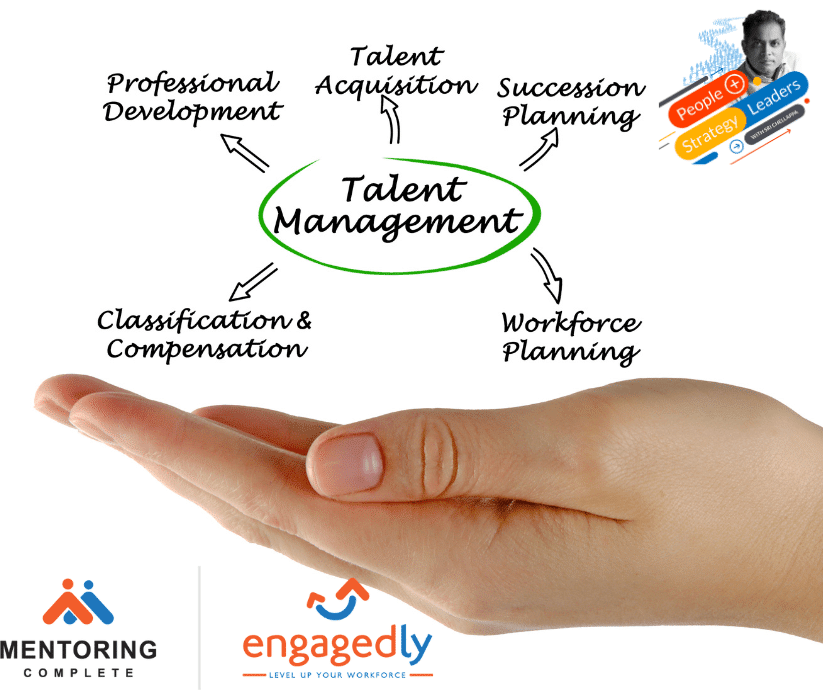
Srikant Chellappa is the Co-Founder and CEO at Engagedly and is a passionate entrepreneur and people leader. He is an author, producer/director of 6 feature films, a music album with his band Manchester Underground, and is the host of The People Strategy Leaders Podcast.
Talent management is a workplace practice that helps companies recruit and create a talent pool that is productive and committed to the organization in the long run. When implemented strategically, talent management can boost overall business efficiency and help companies gain a competitive advantage.
Talent management is a comprehensive process that includes how organizations bring employees on board, keep them happily engaged, and help them advance in their career paths over time.
How Can Technology Enhance Talent Management?
In 2026, technology plays a pivotal role in optimizing talent management processes. Organizations are increasingly adopting AI-driven tools and platforms to streamline recruitment, performance evaluations, and employee development. For instance, AI-powered analytics can provide insights into employee performance trends, helping HR professionals make data-driven decisions. Additionally, digital platforms facilitate continuous learning and development, enabling employees to upskill and reskill in alignment with organizational needs.
Why Should Organizations Implement Talent Management Practices?
1. Promotes Employee Retention and Engagement
Employee engagement refers to the workplace concept where employees communicate, network, coordinate, give feedback, practice teamwork, and are excited and dedicated to their job. Retention is when they feel loyal and plan to stay in the organization longer.
Talent management practices primarily provide employees with opportunities to learn and grow. This ultimately leads to increased cohesion between the employer and employee. Employees feel valued and consider a long-term association with the organization.
The knowledge or talent gap refers to an organization’s lack of sufficient skilled personnel. A persistent skill gap can hinder an organization’s growth and development. It also negatively impacts the employees’ motivation. Employees feel demotivated owing to a lack of experienced and talented people to look up to for necessary instructions and support to work effectively.
One of the best approaches to talent management to manage this gap is identifying KSA (knowledge, skills, and ability) for a job role and providing training opportunities accordingly.
3. Saves Hiring Costs
A survey conducted by Gallup found that replacing an employee costs one-half to two times the employee’s annual salary. Investing in a talent management program improves employee retention and reduces employee turnover, eliminating these expenses.
According to a study by Gallup, organizations with a high level of employee engagement were found to have 22% higher productivity than those with less engaged employees. Talent management tools boost productivity and efficiency by streamlining procedures and making important information and resources easily accessible.
Organizations must implement a sound and robust talent management strategy and best practices to create and nurture a thriving work environment. Talent management strategies ensure employees are engaged, motivated, and empowered to contribute to their maximum potential. Read ahead to learn about the 9 best practices to adopt in talent management in 2026.
What Are the Top Talent Management Strategies for 2026?
An effective talent management process includes various processes such as recruiting, onboarding, performance management, compensation planning, learning, and succession planning. When all these things work in harmony, companies gain a competitive advantage.
1. Define Clear Objectives
Aligning individual goals with the organization’s goals and objectives helps employees understand their responsibilities more clearly. This ultimately results in greater accountability as well as stronger job performance. However, this requires communicating the business’s objectives across the entire company.
Moreover, managers must be able to access and view the goals of other departments to reduce redundancy and build cross-functional support.
Proactive vs. Reactive Approach: Shift the focus from just offering support when issues arise to proactively building a culture that prioritizes mental health. For instance, integrating mental health days, flexible work hours, and access to counseling services as part of the benefits package can normalize self-care.
Holistic Well-being: It’s not just about physical or mental health; incorporating financial well-being programs (such as financial literacy workshops, student loan assistance) can further reduce stress among employees, making your organization a more attractive place to work.
Personalized Well-being Initiatives: Well-being programs should be personalized based on employee needs. For example, providing employees with choices such as meditation apps, fitness programs, or stress management coaching can address diverse well-being needs.
3. Employee Recognition and Rewards Programs
Real-time, Continuous Recognition: Move away from annual or quarterly recognition programs and instead implement real-time, ongoing feedback. Employees thrive when recognition happens as soon as they achieve milestones, promoting a culture of continuous motivation.
Peer-to-Peer Recognition: Recognition shouldn’t just come from managers. Implementing systems that allow peers to recognize each other’s contributions builds camaraderie and strengthens teamwork.
Personalized Rewards: Instead of generic rewards like bonuses or vouchers, tailor the rewards to each employee’s preferences. For instance, some employees might value additional paid time off, while others might prefer professional development opportunities or experiences.
4. Employee Engagement through Gamification
Purpose-Driven Gamification: Rather than just adding game elements for fun, align them with business goals. Gamification strategies should reward employees for hitting key performance metrics or improving skills aligned with organizational goals, making engagement purposeful.
Collaboration-Based Competitions: Use gamification to promote teamwork rather than just individual achievements. Creating team-based challenges and rewards can encourage collaboration and improve cross-functional communication.
Instant Feedback Loops: In gamification, instant feedback (like point systems or leaderboards) motivates employees to improve continuously, making learning and performance enhancement more enjoyable.
5. Internal Talent Mobility and Succession Planning
Career Path Transparency: Clearly defined career paths can help employees see how they can grow within the company, reducing turnover. Use talent management platforms to allow employees to explore internal opportunities easily.
Cross-functional Skill Development: Encourage employees to acquire skills outside their current role. This not only helps them grow but also equips the organization with a more versatile workforce. Offering mentorship and shadowing programs between departments can foster cross-functional skill-building.
AI-Driven Talent Mobility: Using AI to assess skill gaps and match employees with internal opportunities based on their skills, interests, and career goals ensures the right person is in the right role at the right time, making succession planning more effective.
6. Workforce Analytics and Predictive Insights
Customized Dashboards for Leaders: Leaders need real-time, easy-to-read analytics dashboards that can show workforce metrics like engagement, retention risks, and productivity at a glance. These insights should empower managers to take immediate action when red flags arise.
Predictive Turnover Models: Use predictive analytics to identify patterns that suggest an employee is likely to leave (e.g., declining engagement scores, missed promotions, etc.) and intervene before it’s too late.
Data-Driven Diversity and Inclusion: Analytics can also help track diversity and inclusion efforts, revealing how diverse teams perform in terms of engagement and retention, allowing companies to improve DEI initiatives strategically.
7. Hybrid Work Model Optimization
Hybrid Role Customization: Not all roles fit into a one-size-fits-all hybrid model. Offer flexibility in how different roles adapt to hybrid work—some may work better with more remote flexibility, while others may require in-person collaboration. This approach ensures no employee feels restricted by rigid policies.
Tech-Enabled Collaboration: Invest in collaborative tools that make remote communication as seamless as in-person. Tools like virtual whiteboards, project management software, and advanced video conferencing tools ensure that hybrid teams remain as engaged and collaborative as those in the office.
Inclusive Hybrid Policies: Ensure equal opportunities for both in-office and remote employees when it comes to promotions, recognition, and participation in decision-making processes. This avoids creating a divide between remote and office-based staff.
Cultural Cohesion in Hybrid Teams: Maintaining a unified company culture is a challenge in hybrid work. Organize regular virtual team-building activities, in-person retreats, or culture-sharing initiatives to foster a sense of belonging, regardless of location.
8. Effective Compensation and Benefits Program
Compensation and benefits form an integral part of a talent management strategy. Companies must devise practical and cost-effective compensation plans to attract and retain the best talent. One such innovative idea can be to provide employees with a Flexi Benefit Plan (FBP).
This employee benefit plan allows employees to choose a few components of their CTC per their requirements and preferences. Personalized benefit plans strengthen interpersonal relationships between employees and employers and foster employee engagement. Another way to offer a competitive salary package is to benchmark the compensation across different industries and offer a standard package.
Quality learning and development programs help employees advance in their career paths. Companies should develop and introduce training programs that enable employees to acquire new skills and fine-tune the current knowledge base.
Investing in employee professional and personal growth by offering various learning platforms is a good idea. One such initiative can be to implement learning management systems (LMS).
The software application provides on-site, remote, and on-demand cloud-based training. The integrated platform administers, tracks, records, and automates the delivery of educational training.
10. Regular and Robust Performance Evaluation
A robust performance management system is devised to offer a systematic platform to assess and improve employees’ performance. Choose a performance management system that identifies areas for improvement, helps employees develop new skills, and aligns individual goals with organizational objectives.
Companies can use automated performance management software to streamline and fasten their performance evaluation process. Another strategy will be to define KPIs (key performance indicators) and KRAs (key resulting areas) for different employees and job roles.
A ManpowerGroup Solutionsresearch shows that approximately 40% of job seekers consider workplace flexibility as a top priority while making career decisions. Hence, organizations must embrace flexibility and autonomy to attract and retain a skilled workforce.
The following are the key factors that describe flexibility and autonomy in today’s work world to foster work-life balance:
Choice of part-time or full-time work
Compressed shifts or workweek
Increased paid time off
Leaves for attending personal exigencies such as caregiving leave, sabbatical, career breaks, etc.
A survey by Valuvox across 11 Indian cities found that 77% of employers acknowledge that not prioritizing diversity, inclusion, and belonging (DI&B) could negatively impact their organization’s growth and performance.
Following are some of the initiatives HR leaders can take to embrace DEI effectively:
Create employee resource groups (ERGs).
Make recruitment inclusive by creating a diverse interview panel.
Source candidates beyond the usual network.
Draft inclusive company policies.
Train and educate managers to mitigate unconscious bias at the workplace and during the hiring process.
With the advent of technology in every aspect of an organization, it will be wise to embrace the same for managing Human Resources-related tasks. Implement sound Human Capital Management (HCM) software to automate various HR processes, such as performance management, payroll management, training, and development.
Make sure the HCM software has the following features:
Easy to navigate
Mobile friendly
Easy to integrate with other software used by the company
A survey found that 36% of the employees feel their company doesn’t track or manage their personal/career development. Additionally, a LinkedIn report suggests that 94% of employees surveyed believe increased learning and career development opportunities can make them stay longer with the organization.
Hence, talent management practices must focus on career development mechanisms to plan, prepare, and advance an employee’s career over time. It should include coaching, mentoring, skills development, networking, and defining a career path. Job shadowing and rotation are some workplace practices that can aid career development.
Additionally, companies must focus on succession planning as well. It can be done through continuous upgradation of skills and competencies of employees to meet the current demands.
Why Should Organizations Prioritize Employee Well-being?
A key component of effective talent management is ensuring the well-being of employees. Organizations that prioritize mental health and work-life balance foster a more engaged and productive workforce. Implementing flexible work arrangements, providing access to mental health resources, and promoting a supportive work environment are essential strategies. Research indicates that companies with strong well-being programs experience lower turnover rates and higher employee satisfaction levels.
How Can Organizations Overcome Talent Management Challenges?
While implementing effective talent management strategies is crucial, organizations often face challenges such as skill shortages, high turnover rates, and resistance to change. To address these issues, companies should invest in comprehensive training programs, develop clear career progression paths, and foster a culture of continuous feedback. Additionally, strategic workforce planning and succession planning can mitigate the impact of talent gaps and ensure organizational resilience.
Wrapping Up
Various studies and surveys suggest that organizations that focus on building a strong company culture and ideology successfully attract and retain a workforce that doesn’t just work for a paycheck. Talent management fosters a work environment where employees share the same beliefs and motivations, investing more effort in achieving great results and driving organizational growth.
Engagedly offers talent managers a platform to keep track of employees within the organization. The software tracks data at different points of the employee life cycle. The platform takes care of everything from offering managers unique report cards, tracking employee performance, and training employees on crucial subjects to an open communication channel nurturing transparency.
Talent management is the strategic process of attracting, developing, engaging, and retaining employees to support business goals. Talent management is a strategic approach to recruiting, developing, engaging, and retaining employees throughout their lifecycle in the organization.
At a glance: Attract the right people Develop skills and careers Retain high performers Align talent with business goals
It goes beyond hiring. A strong talent management strategy includes onboarding, learning and development, performance management, succession planning, career growth, and employee engagement. The goal is to build a productive workforce that stays committed over time. When done well, talent management improves business efficiency, strengthens culture, and helps organizations stay competitive in changing market conditions.
Why does talent management matter?
Talent management is important because it improves retention, closes skill gaps, boosts productivity, and reduces hiring costs. Talent management is important because workforce quality directly affects business performance, employee engagement, and long-term growth.
Key benefits include: Higher employee retention and loyalty Reduced skill and knowledge gaps Lower turnover and hiring costs Better productivity and performance
What does a talent management strategy include?
An effective talent management strategy includes hiring, onboarding, development, engagement, performance evaluation, and succession planning. An effective talent management strategy combines multiple people processes into one connected system that supports both employee growth and business performance.
Core components include: Recruitment and onboarding Learning and development Performance management Recognition and rewards Internal mobility and succession planning Compensation, flexibility, and well-being support
These components work best when they are aligned. For example, performance data can inform development plans, while internal mobility programs can support succession planning. A disconnected approach creates friction and turnover. A strong strategy helps employees see a future in the organization while giving leaders better visibility into skill gaps, retention risks, and workforce readiness.
How does technology support talent management?
Technology improves talent management by automating HR processes, tracking workforce data, and enabling smarter development decisions. Technology improves talent management by making HR processes faster, more data-driven, and easier to personalize at scale.
Common benefits include: Automated recruitment and onboarding workflows AI-powered workforce analytics and trend insights Learning platforms for upskilling and reskilling Performance tracking and real-time feedback Better visibility into retention risks and internal mobility
For example, AI-driven analytics can help leaders identify performance trends, skill gaps, and turnover signals early. Learning management systems can deliver on-demand training tailored to employee needs. Human Capital Management software can also connect payroll, development, and performance data in one place, helping organizations make more informed talent decisions.
What are the best talent management practices?
The best talent management practices combine career development, recognition, flexibility, well-being, and continuous learning opportunities. The best talent management practices focus on giving employees reasons to stay, grow, and perform at a higher level.
High-impact practices include: Clear career development paths Quality training and learning opportunities Recognition and rewards programs Employee flexibility and autonomy Mental health and well-being support Continuous feedback and performance evaluation
Together, these practices create a more supportive employee experience and reduce avoidable turnover. When employees can see growth opportunities, feel recognized, and have access to relevant learning, they are more likely to stay engaged and committed to the organization.
Accurately and fairly evaluating employees is a critical skill for both employers and managers. However, one of the greatest challenges in performance management is combating biases that can distort evaluations. The truth is, we all have biases, even if we are unaware of them, and these can affect how we assess employee performance.
In fact, a Harvard Business Review study found that 76% of men and 85% of women managers viewed performance evaluations as highly ambiguous and subjective. Recognizing and addressing these biases is essential to conducting performance evaluations that are accurate and fair.
Here are some of the most common biases in employee evaluations and practical tips on how to avoid them.
1. Central Tendency Bias: The Middle Ground Trap
Central tendency bias occurs when managers rate all employees in the middle or “satisfactory” range, regardless of their actual performance. This often happens when a manager evaluates many employees and unconsciously starts giving similar scores to everyone to avoid making difficult judgments.
Example: Imagine a manager overseeing 20 employees. Instead of recognizing individual strengths and weaknesses, the manager gives nearly all of them a “satisfactory” rating. This not only demotivates top performers who aren’t recognized for their efforts but also overlooks underperformers who need improvement.
How to Avoid It
To prevent central tendency bias, focus on each employee’s individual performance and how it aligns with the expectations of their role. Collect performance data at multiple points throughout the year rather than relying on a single evaluation period. Aligning performance with OKRs and goals makes evaluations more objective.
This provides a more comprehensive view of each employee’s contributions and ensures that standout performers receive the recognition they deserve.
2. Leniency and Severity Bias: The Extremes of Evaluation
Leniency bias occurs when a manager rates all employees too positively, while severity bias happens when the manager rates all employees too harshly. Both extremes can distort the performance review process and lead to frustration.
Example: A manager who wants to avoid conflict may give all employees high marks (leniency bias), even when some are clearly underperforming.
Conversely, a manager trying to motivate employees might rate everyone low (severity bias), hoping that tough evaluations will encourage improvement.
Unfortunately, leniency bias creates a false sense of accomplishment, while severity bias can lead to disengagement.
How to Avoid It
To counter these biases, establish clear evaluation criteria and use a consistent rating scale. If using a 5-point scale, consider eliminating the middle or neutral option, forcing managers to make a definitive judgment about performance.
By creating distinct rating categories, managers are encouraged to think critically about each employee’s achievements and areas for improvement.
3. Halo and Horn Bias
Halo and horn bias occur when managers allow a single trait or characteristic of an employee to disproportionately influence the entire performance review.
Halo Bias happens when a manager gives an employee an overly positive evaluation based on one strong trait, such as their punctuality, or even unrelated factors like supporting the same sports team. This singular focus can overshadow areas where the employee may need improvement.
Horn Bias is the opposite, where a manager gives an employee a negative review based on one disliked trait or past mistake, even if the employee excels in other areas. This bias can manifest as a result of personal preferences or even unconscious discrimination, such as sexism or racism.
Why It’s Problematic: No employee is perfect, and focusing on just one aspect of their performance—whether positive or negative—means overlooking other key contributions or challenges. This can lead to unfair evaluations, with high-performing employees going unrecognized or employees being penalized for one-off issues.
How to Avoid It
To avoid halo and horn biases, managers need to adopt a structured and objective performance evaluation process. Research shows that using a consistent, well-defined decision-making process is six times more effective than relying on subjective judgments.
Evaluating employees across multiple metrics ensures that no important qualities are overlooked, and it helps uncover faulty logic, such as cherry-picking evidence to fit a preconceived conclusion. Many organizations also use multi-rater feedback to ensure broader evaluation inputs.
4. Recency and Primacy Bias: The Influence of Time
Recency bias occurs when a manager focuses primarily on the most recent work or interactions they remember with the employee, allowing these events to overshadow their overall performance throughout the evaluation period.
For example, if an employee closed a big deal just before the review, they may receive a high rating, even if their performance was inconsistent or underwhelming earlier in the year.
Primacy bias, on the other hand, is the tendency to give more weight to an employee’s initial performance, often overlooking their more recent achievements or struggles.
A manager might continue to rely on their first impressions of an employee’s past successes or failures, regardless of their current work.
The spillover effect also plays a role here. This happens when a manager assumes that an employee’s past performance trends—whether positive or negative—are continuing without thoroughly evaluating recent work.
For instance, if an employee has consistently performed well in the past, their manager might assume they’re still doing well and neglect to carefully assess their recent contributions.
Why It’s Problematic: Both biases skew the accuracy of evaluations, leading to unfair assessments. Recency bias can result in overrating short-term successes, while primacy bias can lead to outdated assessments that don’t reflect an employee’s current abilities or efforts.
How to Avoid It
To reduce the impact of recency and primacy biases, managers need to assess performance over the entire evaluation period, not just based on recent or early impressions.
Documenting regular real-time feedback throughout the year and reviewing an employee’s contributions at multiple intervals ensures a more balanced and fair evaluation. When employees work in teams, be sure to evaluate their contributions to get an accurate picture of their performance.
By maintaining a structured, consistent review process, managers can prevent these biases from skewing the performance appraisal and ensure that evaluations reflect an employee’s true capabilities over time
5. Similar-to-Me Bias: Liking What’s Familiar
Similar-to-me bias occurs when managers give higher ratings to employees they perceive as being similar to themselves, whether in terms of interests, personality, or background.
Example: A manager who shares a hobby or alma mater with an employee might give them a better evaluation because they feel a connection, even though other employees are performing just as well, if not better.
How to Avoid It
To reduce similar-to-me bias, set specific, measurable criteria for performance evaluations. Ensure that all employees are assessed based on their achievements and contributions rather than personal connections or similarities.
Using a structured, objective review process helps maintain fairness and focus on performance rather than personal traits.
6. Confirmation Bias & Stereotype Bias
What it is
Confirmation bias is when evaluators favor information or examples that confirm their existing beliefs about an employee, ignoring evidence to the contrary.
Stereotype bias involves allowing stereotypes (e.g. gender roles, age, race) to shape judgments of performance rather than actual behaviors. Role congruity theory shows how women in leadership are judged more harshly for traits viewed as “not fitting” stereotypes.
Why it’s problematic
Employees may be under-credited because of preconceived notions, or praised unfairly for confirming the manager’s expectations.
Stereotype bias can lead to systemic inequities in ratings, promotions, and development.
How to avoid it
Encourage evaluators to list disconfirming examples (instances that contradict prior impressions).
Use structured rubrics and behavioral anchors for rating, rather than relying on subjective impressions.
Include diversity, equity & inclusion training that surfaces unconscious stereotypes.
Rotate or anonymize parts of evaluation when possible (e.g. blind peer assessments) to reduce identity cues.
Bias in AI & Automated Performance Tools
As organizations increasingly adopt AI or algorithm-driven performance evaluation tools, bias can creep in from datasets, model training, or feature design:
Data bias & historical bias: If past performance ratings already included bias, AI models built on them may perpetuate unfair patterns.
Feature bias: The attributes or metrics used may favor certain roles, styles, or work modes (e.g. remote vs in-office).
Context insensitivity: AI may miss contextual nuance (e.g., personal challenges, team dependencies) and penalize unfairly.
Mirroring halo / horn biases: Studies show that even GPT/LLMs can reflect halo-type bias in evaluating text responses.
Mitigation strategies:
Regularly audit AI outputs for disparity (by gender, age, function).
Combine AI insights with human judgment, not as sole decider.
Use diverse training sets and include fairness constraints.
Transparently communicate how the AI model makes decisions, and allow appeal or override mechanisms.
Final Thoughts
Avoiding biases in performance evaluations is essential to fostering a fair, motivating work environment. By being aware of biases like halo, horn, recency, and primacy, and implementing structured evaluation processes, managers can ensure that employee assessments are accurate and objective.
Ultimately, this leads to more informed decisions, greater employee satisfaction, and a stronger organizational culture.
FAQs
What does performance management mean?
Performance management is the process of setting expectations, tracking progress, giving feedback, and evaluating employee performance fairly.
Performance management is a continuous, structured process designed to align an employee’s daily output with overarching business goals. Rather than relying solely on a single annual review, a robust performance management framework incorporates proactive goal setting, regular manager check-ins, continuous coaching, objective reviews, and developmental career pathing. Done well, it gives employees crystal-clear benchmarks for success and gives leadership reliable, year-round data to inform promotions and recognition.
Why do fair performance reviews matter?
Fairness in employee performance reviews builds trust, improves motivation, and leads to better decisions on growth and recognition.
Fairness in performance reviews is the bedrock of workforce morale, retention, and psychological safety. When employees view evaluations as arbitrary, biased, or subjective, engagement and trust in leadership drop rapidly. A structurally fair performance system ensures that promotions, compensation increases, and recognition are awarded based on verifiable evidence rather than managerial preference or guesswork – protecting the business from disputes and cultivating a high-performance culture.
What biases affect performance reviews?
The most common performance management biases include central tendency, halo, recency, similarity, confirmation, and stereotype bias. Performance review biases are subconscious judgment errors that distort how a manager evaluates an employee’s contributions. The most common threats include:
Central Tendency Bias: Playing it safe by grading all employees as “average,” regardless of actual performance. Recency Bias: Overindexing on an employee’s most recent successes or mistakes from the last few weeks while forgetting the rest of the year. Halo / Horn Effect: Allowing one highly positive or negative trait to skew the entire multi-dimensional review. Similar-To-Me Bias: Giving higher scores to employees who share similar personal backgrounds, work styles, or habits.
How do managers avoid bias in reviews?
Managers can reduce bias by using structured criteria, tracking performance regularly, and evaluating employees across multiple metrics.
The most effective way to eliminate bias is to replace subjective memory and opinion with consistent, structured evidence. Managers can achieve this by: Utilizing clear, standardized rubrics and behaviorally anchored scales across all teams. Documenting employee performance and logging milestone wins consistently throughout the entire year. Actively seeking disconfirming evidence to challenge their own initial impressions before finalizing a rating tier. Reviewing performance across multiple separate dimensions rather than giving one overarching holistic score.
Talent management is a pivotal element of organizational success, encompassing a strategic approach to attracting and developing the right talent to meet the company’s objectives. By emphasizing talent acquisition and fostering employee growth, companies can cultivate a highly skilled, engaged, and productive workforce.
In today’s fiercely competitive market, businesses must make substantial investments in human capital to ensure success. However, the consequences of a disengaged workforce and the loss of talented individuals can be detrimental to the organization’s bottom line. Ineffective employee retention management could lead to disaster.
A study found that companies that invested in developing their employees had a 42% increase in profitability compared to those that don’t.
What is Talent Management?
Talent management is a strategic approach to attracting, developing, and retaining skilled individuals within an organization, aiming to align their growth with the company’s goals. Rather than merely filling positions, talent management focuses on nurturing employees’ potential, enabling them to thrive in their roles and grow within the organization.
At its heart, good talent management means seeing employees as more than just resources. It’s recognizing each person’s unique strengths, ambitions, and growth paths. So, a solid talent management approach isn’t just about meeting immediate business needs; it’s about investing in people for the long haul, creating a workplace where they feel supported and have room to develop.
Why the Importance of Talent Management Peaks in 2025
As we enter 2025, organizations are navigating a triple challenge: AI disruption, a tight talent market, and evolving workforce expectations. Research by SHRM highlights labor shortages, AI-induced skill gaps, and regulatory shifts as top talent risks. Deloitte reinforces that failure to align talent with rapid change jeopardizes both business goals and human outcomes.
In this environment, the importance of talent management becomes clearer than ever—it’s not just HR’s responsibility, but a strategic imperative that ensures adaptability, engagement, and future readiness.
Strategic Talent Management Driving Business Advantage
Organizations that embed strategic talent management aligned with business goals deliver up to 20% higher return on equity, and those with integrated programs see 38% greater returns (TalentGuard).
In 2025, effective talent management goes beyond traditional development—emerging trends such as skills-first hiring, AI integration, and career lattice models are reshaping not only who you manage but also how you nurture and retain them (Odgers, Totara Learning).
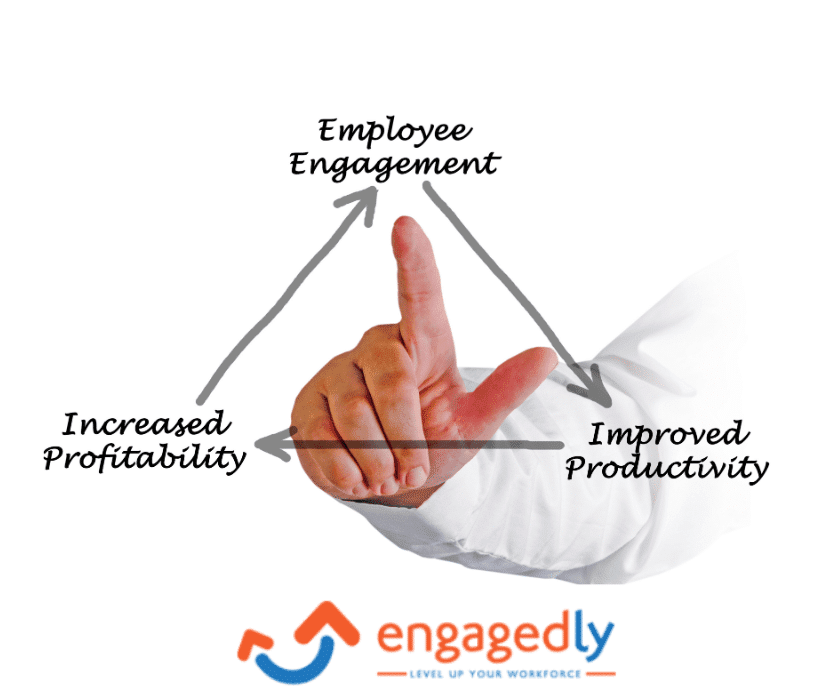
Engaging your employees will help them perform better and increase productivity. Research shows that when employees are engaged, they’re more productive than when they aren’t. They’ll also have higher morale, which means less turnover and increased loyalty.
The report showed that organizations that took steps to improve employee engagement saw a 21% improvement in productivity. There are now over 500 studies showing how investing in your employees leads to increased profits, better-quality products, happier customers, and improved morale.
Importance of a Talent Management System
TMS also plays a crucial role in boosting the overall productivity and profitability of an organization in the following ways:
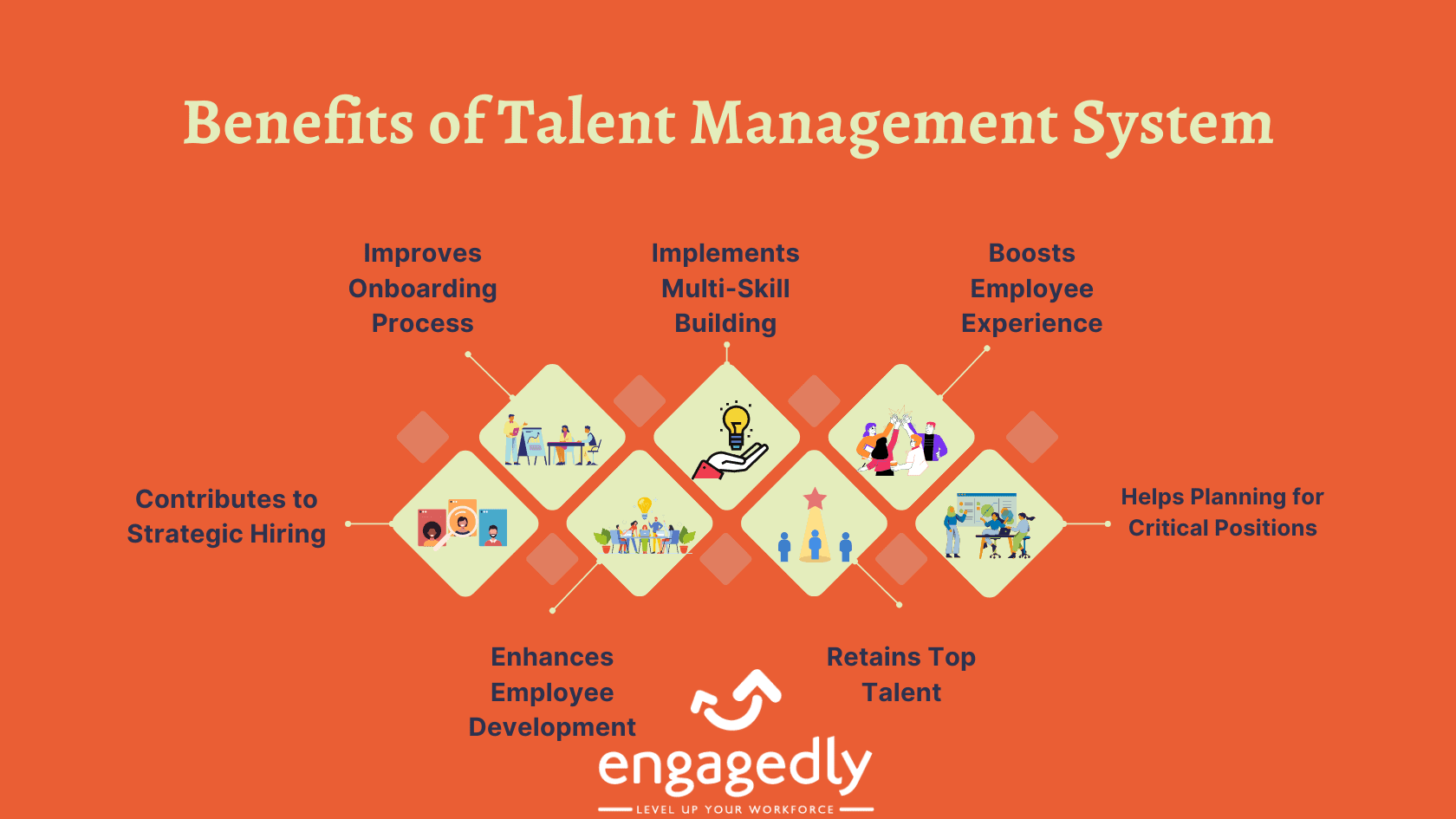
1. Contributes to Strategic Hiring
A TMS, especially AI-powered talent management software, allows you to automate, including creating job postings, managing applications and communicating with candidates. A TMS makes it easier to track each step of the recruitment process, helping you keep up with everything. You can even use a TMS to send automated cold emails to candidates based on specific criteria.
Enterprises need to have visibility into the destiny and pipeline tasks to make knowledgeable hiring selections. Resource capacity planning allows you to pick out the talent gap in advance. It enables avoiding last-minute scuffles for capable personnel and hires suitable talent units to fulfill destiny work demands. Depending on the scope and period of the tasks, you may hire permanent or contingent personnel.
2. Improves the Onboarding Process
The process of recruiting and hiring employees can be tedious and inefficient. This often leads to long hours spent filling out forms and waiting for responses. A good TMS can help automate the entire process of onboarding new hires. With a TMS, you can store all of the information gathered throughout the recruitment and hiring process into one centralized database. From there, it becomes easy to update each profile with relevant information.
You can even set up automated reminders to ensure that new hires are completing the necessary paperwork on time. This allows you to spend less time doing repetitive tasks and more time focusing on what matters most – growing your business.
An effective TMS solution also collects data about what skills an employee has. This information is used to provide personalized recommendations to the individual based on their job role and responsibilities. For example, an accountant might receive suggestions to learn how to use Excel while working on a specific project.
A good TMS enable employees to take advantage of educational opportunities and continue their professional growth. At the same time, it should make sure that every employee receives the appropriate training and support for their career goals.
4. Implements Multi-Skill Building
Limited and monotonous repetitive work can cause boredom and a sense of professional stagnation for most personnel. Not exposing them to numerous roles and sports hinders employees’ professional targets resulting in decreased morale, productivity, and unplanned attrition.
According to Gartner,” loss of profession improvement possibilities ends in 40% attrition in businesses worldwide.” Skill construction and improvement are substantial results of skills management.
Managers can enforce a task rotation approach that facilitates team contributors to diversify their ability sets. Workforce management answers seize their skills and allow the well-timed allocation of resources to the proper job. Encouraging personnel to construct a couple of secondary capabilities improves worker motivation and additionally enhances their billability.
Once you have the best employees in your organization, you need to keep those people. In fact, according to a study conducted by LinkedIn, companies lose up to 40% of their most talented workers every three years. And once they move on, there’s no guarantee they’ll come back. So why do we let our best people go?
A study by SHRM reveals that “the common hiring fee and lead-time are $4129 and forty-two days, respectively“. The employee turnover additionally consists of smooth prices which include reduced productivity, reduced engagement, training expenses, and cultural impact. Employee retention is an important factor of expertise control and consists of hiring the proper candidates and providing worker benefits, education, and development opportunities. If turnover is inevitable, additionally it is succession making plans for commercial enterprise continuity.
The truth is that retaining great employees requires effort. You need to invest in training, mentoring, and development. Otherwise, you risk losing out on some of the very people who can help grow your business. It is essential to enforce TMS in place to bring down the employee attrition rate in the company.
A TMS that integrates with HR software allows companies to improve the employee experience by providing access to payslips and holiday requests. This helps employees feel valued and appreciated, while also improving productivity and reducing the likelihood of employee burnout.
Businesses can use workforce planning equipment to schedule group individuals for activities primarily based totally on their capabilities and interests. It has a huge effect on worker motivation and productivity.
According to Gallup, “utilizing the skills and strengths of employees regularly improves their engagement by six times.”
Providing good enough training possibilities for reskilling or constructing new capabilities allows hold their Individual Development Plan or IDP. Training new skills additionally makes sure that assets finishing up at the bench are billable as quickly as they’re rolled off from initiatives.
7. Helps Planning for Critical Positions
Succession planning is a vital technique of skills control that allows the creation of professional personnel able to fill management and different vital roles because the enterprise grows, changes, or develops. During enterprise enlargement or control turnover, succession-making plans guarantee that productiveness and worker morale aren’t always affected. Since the multi-professional team member’s function will want distribution amongst numerous employees, it may drastically spike resourcing costs. A workforce planning and management tool offers full visibility of assets throughout geographical barriers. It allows distribution work amongst multiple people from low-price locations. Thus, agencies can keep away from an unmarried factor of failure if a vital resource leaves the employer without finances overrun.
Talent Management Strategy
A talent management strategy is a structured plan that companies use to attract, develop, and retain their best employees to meet both immediate and long-term business goals. It’s about aligning an organization’s workforce with its vision and values by focusing on everything from hiring and training to employee growth, engagement, and succession planning.
5 Successful Talent Management Strategies
Talent management is everyone’s responsibility. But it doesn’t mean you have to do everything yourself. Here are five tips to help you recruit, hire and keep great workers.
1. Focusing on Data-Driven Recruitment
Data-driven recruitment strategies have been around for some time now. But it wasn’t until recently that we saw a shift toward a more data-centric approach to talent acquisition.
The latest wave of change began about four years ago when companies like LinkedIn and Hired launched AI-powered tools to assist recruiters. These platforms allow you to curate relevant jobs based on specific criteria, such as industry, salary range, and location. They also provide insight into how many open positions there are within a certain radius, what types of skills are needed, and whether those skills are in high demand.
This type of information helps recruiters make better decisions regarding where to focus their efforts. And because the majority of recruiters are already spending most of their time looking for qualified candidates, having a tool that makes finding those people easier and faster is a huge win.
2. Enabling Automated Recruitment
Personalized, intelligent nurturing will continue to be one of the most important keys to providing a premier candidate and hiring experience. As we move into the next decade, it will become even more critical to understand each prospect’s unique needs and preferences and tailor messaging to keep candidates engaged throughout the entire process.
One key facet of data-driven recruiting and Talent Acquisition (TA) is candidate nurturing. It’s about understanding how to reach out to candidates in ways that are relevant and engaging, while still keeping the conversation positive and productive. This includes reaching out via email, phone calls, text messages, social media posts, and landing page visits.
3. Promoting Internal Mobility
Talent acquisition leaders who prioritize internal mobility will be better positioned to retain top talent. According to LinkedIn, employees are more likely to stay at organizations that provide opportunities for internal career growth and mobility, highlighting the importance of strong internal hiring strategies.
This is good news for those looking to fill positions, but it also highlights a growing issue for many employers: retention. The average tenure at an organization has dropped from 5.5 years in 2014 to 4.7 years in 2000.
4. Focusing on the Employees’ Mental and Physical Well-Being
Recruitment experts agree that companies should prioritize improving employees’ mental health and wellness. “As we move into the future, I think there will be a greater emphasis on how you treat people,” says Michael Littwin, CEO of TalentGuru. “You’re going to see organizations focusing on making sure that they’re treating their people well.”
In response to the growing demand for help, many companies have rolled out programs aimed at addressing workplace anxiety. Some offer free access to counselling sessions via phone, video chat, or email; others provide paid assistance for those who need it. Others still are offering flexible hours and telecommuting options in addition to financial support.
The shift toward employee engagement is another trend that HR professionals should pay attention to. According to a survey by the Society for Human Resource Management, only 20% of respondents say their company provides training and development opportunities for its employees. That means 80% of workers don’t feel supported in their professional growth.
Employee engagement is not just about creating a fun work environment,” says Laura D’Andrea Tyson, president of the Center for Workforce Development at New York University Stern School of Business. “It’s about helping your workforce grow and develop professionally so they can contribute more effectively to your business.
To create a culture of learning and continuous improvement, companies must invest in training and education.
Talent Management Examples
1. Career Pathing and Development Programs
Structured career paths and development programs give employees a clear view of growth opportunities, motivating them to stay and progress. Take IBM, for instance—they offer employees plenty of tools to plan their careers, from training sessions to leadership programs, all designed to help folks move up the ladder. This approach keeps talent engaged and loyal since employees can see a future for themselves within the company.
2. Mentorship and Coaching Initiatives
Mentorship and coaching programs are invaluable for helping employees build skills and learn from seasoned leaders. General Electric (GE) is a perfect example—they have their famous “Crotonville” leadership development center where mentorship and coaching are core elements. This investment in mentorship helps GE cultivate internal talent, ensuring employees feel valued and prepared for future leadership roles.
3. Performance and Feedback Systems
Continuous performance management with regular feedback sessions supported by 360-degree feedback keeps employees aligned with goals and helps them grow. Adobe made a smart move by replacing traditional annual reviews with their “Check-In” system, allowing for more frequent conversations between employees and managers. This setup has improved engagement and performance, creating a more constructive, stress-free feedback environment.
4. Succession Planning
This involves spotting and developing potential future leaders early on. Companies like PepsiCo have really mastered this. Their “Leadership Pipeline” is all about identifying top talent and preparing them for bigger roles, which keeps the company stable and ensures a smooth leadership transition when the time comes.
5. Employee Recognition and Rewards
Recognizing achievements through structured programs boosts morale and retention. Zappos is known for its culture of recognition, offering peer-to-peer recognition, performance awards, and fun perks like themed celebrations. This approach has helped Zappos keep turnover low and maintain a lively, engaged work environment.
Talent Management and Talent Acquisition: Are They the Same?
While talent management covers the entire employee lifecycle, talent acquisition is focused on recruiting and hiring candidates. This includes everything from screening resumes to conducting interviews to onboarding new hires into the organization. While it might seem like talent management and talent acquisition are one and the same, there are some key differences between the two.
One major distinction is that while both involve managing people, talent acquisition involves finding and attracting those individuals. In addition to sourcing potential employees, talent acquisition professionals typically work closely with human resources departments to recruit and screen job applicants. They also evaluate and recommend compensation packages based on skills and experience.
Talent management, meanwhile, tends to focus more on retention and development. Organizations use talent management software to track performance reviews and provide feedback to help improve overall productivity and efficiency. By focusing on the entire employee lifecycle rather than just recruitment, organizations can retain better workers and prevent turnover.
Talent Planning vs. Talent Management
Aspect
Talent Planning
Talent Management
Primary Focus
Future workforce needs and preparation for upcoming demands
Current workforce lifecycle, development, and engagement
Purpose
Ensuring the organization has the right talent in place for future goals
Developing, supporting, and retaining employees from hiring through to their career progression
Key Components
Workforce forecasting, skills gap analysis, succession planning, recruitment strategy
Onboarding, training & development, performance management, employee engagement, retention
Time Orientation
Primarily proactive and future-focused
Primarily present-focused but supports long-term employee growth
Objective
Address skill shortages, leadership gaps, and other future talent needs
High employee engagement, low turnover, strong performance outcomes, and career progression
2025 Trends That Reinforce Why Talent Management Matters
Data-Driven Talent Insight – Companies now leverage advanced analytics powered by talent analytics to understand promotion rates, engagement drivers, and retention risks.
Personalized Talent Experiences – AI-enabled personalization ensures tailored development and retention strategies aligned with individual career aspirations.
Human-Centric Leadership and Succession – Boards are increasingly treating talent strategies as strategic assets, ensuring leadership pipelines are agile, diverse, and future-proof.
How to Elevate Your Talent Management Strategy in 2025
Embed AI and analytics to track internal mobility, retention risks, and leadership potential.
Shift to skills-first models by adopting micro-credentials, internal talent marketplaces, and competency mapping to fill gaps faster.
Refresh succession planning to support career lattices, enabling non-linear growth and enhanced internal mobility.
Treat talent as a strategic risk—ensure C-suite sponsorship and cross-functional involvement in talent initiatives.
Final Thoughts
Talent management is one of those buzzwords that seems simple enough, but it encompasses a lot of things. From recruiting to performance evaluation to compensation planning, many different aspects of human resources management fall under the broad heading of talent management. In addition to being able to manage people effectively, you must be able to understand what motivates employees and how to motivate them.
You might think that this sounds like a tall order, but there are plenty of jobs out there that require just such skills. If you’re looking to build a more structured and scalable talent management strategy, it may be worth requesting a demo to see how leading organizations approach it.
Frequently Asked Questions
What does talent management mean?
Talent management is the strategic process of attracting, developing, engaging, and retaining employees to meet business goals.
Talent management is a comprehensive HR approach focused on optimizing the full employee lifecycle-from recruitment and onboarding to continuous learning, performance management, succession planning, and retention. Unlike a narrow focus on immediate hiring needs, talent management treats employees as dynamic, long-term organizational assets whose professional growth directly impacts overall business performance, adaptability, and future readiness.
Why does talent management matter?
Talent management is important because it improves engagement, retention, productivity, succession readiness, and long-term business performance.
An organization’s ultimate competitiveness depends entirely on its ability to maximize its people. A structured talent management strategy delivers crucial business benefits: Higher Discretionary Effort: Boosts daily employee engagement, morale, and baseline productivity. Lower Turnover Costs: Retains high performers by providing clear, internal upward mobility. Robust Leadership Pipelines: Builds predictable succession readiness for critical executive roles. Strategic Agility: Aligns workforce skill sets directly with shifting corporate strategy and market changes.
What features does a talent management system have?
A talent management system typically includes hiring, onboarding, development, performance management, succession planning, and retention tools.
A Talent Management System (TMS) is an integrated platform that centralizes employee lifecycle data. Essential features to look for include: Applicant Tracking & Onboarding: Automating candidate pipelines and standardizing initial training workflows. Learning & Development (L&D): Managing upskilling, compliance tracking, and skill-gap identification. Performance & Goal Tracking: Aligning individual daily tasks with organizational OKRs and running review cycles. Succession Planning Analytics: Mapping leadership readiness, potential, and internal talent marketplaces.
Is talent management the same as recruitment?
Talent acquisition focuses on hiring people, while talent management covers hiring, development, engagement, retention, and succession planning.
While closely related, the two functions operate on different scopes and timelines: Talent Acquisition (Recruitment): A transactional, front-end focus on sourcing, screening, interviewing, and successfully hiring external candidates to fill immediate openings. Talent Management: A holistic, long-term strategy covering the entire employee journey. It includes career pathing, performance coaching, compensation rewards, internal mobility, and cultural engagement after the hire is completed.
How can companies improve their talent management strategy in 2026?
Companies can improve talent management by using analytics, strengthening internal mobility, building skills-first models, and updating succession plans.
Modernizing your talent strategy requires a data-driven, adaptive, and highly personalized approach to the workforce. Key priority actions include: Leveraging People Analytics: Using predictive data to identify flight risks, track internal mobility trends, and evaluate leadership potential. Shifting to Skills-First Models: Deploying competency mapping and micro-credentials rather than relying strictly on legacy job titles or degrees. Creating Talent Marketplaces: Facilitating agile cross-departmental projects to allow non-linear, flexible career growth. Integrating Responsible AI: Customizing internal training recommendations to match employee aspirations with real-time business needs.
As 76% of HR leaders express concern that their companies risk falling behind competitors within the next 12 to 24 months without adopting AI solutions, the discourse around generative AI ethics gains prominence. This transformative technology, spanning healthcare, advertising, transportation, banking, legal, education, and workplaces, introduces a pivotal shift in the employment landscape.
AI, beyond automating tasks, empowers human potential and yields rapid, precise outcomes. Its impact on HR extends to cultivating a culture of connection, communication, and collaboration. Through sophisticated AI solutions, HR managers can seamlessly engage with employees, fostering meaningful interactions.
As artificial intelligence (AI) technologies reshape HR—from hiring and onboarding to performance reviews and employee engagement—understanding AI Ethics is more important than ever. In 2025, HR leaders face a dual challenge: embracing the productivity benefits of AI while ensuring fairness, transparency, and trust in people-centric processes. This guide unpacks the ethical implications of AI in HR and outlines best practices for adopting AI responsibly.
AI ethics refers to the principles and guidelines that govern the responsible development, deployment, and use of artificial intelligence (AI) technologies. It involves ensuring that AI systems and applications align with ethical standards, human values, and legal regulations. The goal of AI ethics is to address potential risks and challenges associated with AI, promote transparency, fairness, accountability, and avoid any negative consequences that may arise from AI decision-making.
Key aspects of AI ethics include:
Transparency: Ensuring that AI systems are transparent and explainable, allowing users to understand how decisions are made.
Fairness: Mitigating biases in AI algorithms to prevent discrimination and ensure fair treatment across diverse demographic groups.
Accountability: Holding individuals and organizations responsible for the development, deployment, and outcomes of AI systems.
Privacy: Respecting individuals’ privacy rights and protecting sensitive information when collecting and processing data.
Security: Implementing measures to secure AI systems against malicious attacks and unauthorized access.
Collaboration: Encouraging collaboration between developers, policymakers, ethicists, and other stakeholders to establish universal standards and best practices.
Sustainability: Considering the environmental impact of AI technologies and promoting sustainable practices in their development and usage.
AI ethics seeks to strike a balance between advancing technological innovation and ensuring that AI benefits society without compromising fundamental human values or causing harm. Establishing ethical frameworks helps guide the responsible development and application of AI in various domains, fostering trust and minimizing unintended consequences.
Why AI Ethics Matter in Human Resources
Balancing Productivity with Oversight
AI tools now handle up to 94% of routine HR queries, significantly reducing administrative workload. But without governance, risks of bias, job displacement, and dehumanization rise. (Source: Josh Bersin via IBM)
Workers Value AI Support—but Not AI Managers
A Workday study revealed that 75% of employees view AI agents as helpful teammates, but only 30% are comfortable being managed by AI. Human oversight remains vital to preserve empathy and accountability. (Source: IT Pro, TechRadar)
AI Bias and Discrimination Remain a Concern
Recruitment AI often struggles with accents, dialects, and diverse backgrounds, potentially excluding non-native speakers. Inclusive training data and transparency are essential to reduce hiring bias.
Regulation on the Rise
Governments are tightening controls. The EU AI Act and NYC AI bias audit laws require transparency and fairness in automated HR tools. HR leaders must stay ahead of compliance requirements.
Top Ethical Challenges & Mitigation Strategies
Loss of Human Touch
AI can undermine empathy when applied to sensitive areas like grievances, promotions, or layoffs. Maintain a human-in-the-loop model for critical decisions.
Data Bias & Fairness
Test systems for algorithmic bias, mandate third-party audits, and adopt explainable AI models to ensure fair outcomes.
Transparency & Trust
Promote AI literacy training for HR and employees. Use transparent systems that explain why decisions were made.
Ethical Governance
Set up AI Review Boards including HR, compliance, and ethics experts. Leverage AI governance platforms to flag risks early.
Well-Being & Perception
While AI boosts efficiency, employees fear job loss, privacy risks, and loss of autonomy. HR leaders must integrate feedback channels, upskilling initiatives, and clear guardrails during implementation.
The Role of Artificial Intelligence in HR
In the dynamic landscape of HR, the synergy between artificial intelligence (AI) and human resources professionals is reshaping the industry. While AI can’t replace the human touch that defines HR’s people-centric nature, its transformative potential is unmistakable. From expediting recruitment processes and optimizing employee selection to task allocation and predictive analytics for engagement, AI is revolutionizing HR practices.
A survey of 250 HR leaders, as presented in Eightfold AI’s report, “The Future of Work: Intelligent by Design,” underscores the widespread use of AI in various HR functions, including employee records management, payroll processing, hiring, recruiting, performance management, and onboarding. The implications of AI on HR processes are far-reaching, contributing to a more seamless and efficient HR landscape. Discover how Engagedly’s AI powered platform streamlines HR processes, elevates performance outcomes, and enhances every stage of the employee lifecycle.
As HR managers embrace AI tools to enhance the employee experience, a thorough examination of the ethical dimensions is paramount. This exploration delves into the responsible and mindful integration of AI into HR practices, ensuring a harmonious balance between innovation and ethical considerations.
What Are the Ethical Implications of AI in HR?
The integration of Artificial Intelligence (AI) with human resources introduces a multitude of opportunities and challenges. As HR leaders embrace AI to enhance various functions, ethical considerations take center stage. This section delves into the ethical implications of AI in HR, exploring how organizations can navigate this evolving landscape responsibly while ensuring transparency, fairness, and ethical integrity in their HR practices.
1. Conduct Bias & Fairness Assessment
Conducting a bias and fairness assessment is a crucial step in ensuring the ethical implications of AI in HR. This process involves a comprehensive examination of AI systems to identify and rectify any potential biases and unfairness. It entails a meticulous review of training and development data, scrutinizing the hiring process, validating against discrimination, assessing AI-generated outcomes, and closely monitoring system effectiveness across diverse employee groups.
To implement this assessment effectively, organizations should establish a cross-functional team of stakeholders responsible for guiding the ethics of AI. This collaborative group, which may include representatives from HR, IT, legal, and other relevant departments, plays a pivotal role in upholding moral standards, overseeing AI usage, and proactively addressing any ethical concerns that may arise. A robust bias and fairness assessment not only ensures ethical AI practices but also promotes transparency and fairness in HR processes.
Privacy concerns may arise when implementing AI tools that collect, store, and analyze personal data. It is crucial to ensure that candidates and employees are fully informed about how and why their information is handled, stored, and safeguarded against unauthorized access.
Prioritizing privacy and security is paramount in the adoption of AI in the workplace. While some AI systems are designed to discard or refrain from reusing user information, others may use data (such as voice commands, gender details, language modulations, etc.) to train machine-learning algorithms. This introduces potential risks to the privacy of employees or customers. Therefore, any data related to employees, customers, or other confidential aspects of the organization must undergo anonymization before being utilized in AI applications.
3. Ensure Clarity and Fairness
Transparency and clarity are essential ethical considerations in the utilization of artificial intelligence in human resources. Business leaders must prioritize openness, particularly when AI is employed to monitor individuals or make decisions that directly impact them. In cases where an AI system is responsible for decision-making concerning employees, HR professionals should provide clear explanations regarding the factors considered in the decision-making process. This commitment to transparency enhances trust and accountability in the use of AI within HR practices.
4. Ensure Human Control
Ensuring human control is a fundamental ethical principle in the deployment of artificial intelligence (AI) in human resources. While AI can enhance efficiency and decision-making, maintaining a balance with human oversight is critical, even when using AI HR assistants. Human control ensures that AI systems are aligned with ethical standards, promoting fairness and preventing unintended consequences. HR professionals should retain the authority to intervene, interpret, and correct AI-generated outcomes. This human-centric approach safeguards against the undue influence of AI, fostering a workplace environment where technology serves as a supportive tool under human guidance.
Moreover, human control acts as a safeguard against potential biases embedded in AI algorithms. As AI systems learn from historical data, they may inadvertently perpetuate existing biases. Human intervention becomes essential to identify, rectify, and prevent any discriminatory patterns that may emerge. HR professionals, with their expertise in understanding organizational dynamics and diverse workforce needs, play a crucial role in mitigating bias and ensuring that AI aligns with the company’s commitment to fairness and inclusivity. By upholding human control, organizations not only adhere to ethical AI practices but also foster a culture of transparency and accountability. See how Engagedly brings AI into core people operations to simplify workflows, support data informed decisions, and optimize talent management.
By prioritizing a human-centric approach, organizations acknowledge the importance of preserving the well-being, dignity, and rights of the individuals involved. Designing AI systems that prioritize the human experience ensures fair and unbiased outcomes, promoting inclusivity and mitigating potential harm.
A human-centric AI system emphasizes factors such as equity, diversity, and the protection of individual privacy. It strives to enhance, rather than replace, human decision-making, fostering collaboration between AI technology and human intuition. By actively involving employees in the development and implementation processes, organizations can cultivate a system that aligns with their values and ethical standards.
In essence, a human-centric AI system seeks to augment human capabilities, support ethical decision-making, and uphold the principles of fairness and respect within the HR domain. It serves as a foundation for building trust, fostering positive employee experiences, and navigating the ethical complexities associated with the integration of AI in HR practices.
New Enhancements for 2025
HR Chatbots with Emotional Intelligence– Some AI systems now detect tone and sentiment, ensuring more empathetic interactions.
AI-Powered Coaching Assistants – Helping managers give better feedback while keeping a human-centered approach.
Bias Detection Tools – New platforms audit training data before deployment to prevent systemic bias.
Emerging Trends in AI Ethics & HR Innovation
Job Impact Predictions Gartner forecasts that 37% of the workforce will be impacted by generative AI in the next 2–5 years, without net job loss through 2026, and generative AI creating half a billion net-new jobs by 2036. (Source: Gartner)
AI as a Cultural KPI At Microsoft, AI tool usage (like Copilot) is now part of employee performance reviews—focusing on AI learning mindset, not usage volume. (Source: Business Insider)
Governance Amid Global Standards The World Employment Confederation (WEC) has released an HR-targeted AI Ethics Toolkit, aligning with EU and U.S. transparency and bias mandates. (Source: WEC Toolkit)
AI Governance Platforms Rising Gartner predicts that organizations using AI governance platforms will suffer 40% fewer ethical incidents. Embedding these platforms—and ethics officers into governance—will be a must-have. (Source: Brightmine)
Global Safety Oversight The UK, U.S., and India have established or expanded AI Safety Institutes, and the Paris 2025 IASEAI summit showcased international efforts to define AI safety and ethics standards. (Sources: Wikipedia, IASEAI)
Real-World Snapshots & Stories
WEC’s Toolkit helps HR services comply with EU’s AI Act and similar regulations.
IBM’s AskHR handles nearly all routine staff queries via AI—a leap in efficiency—but only with careful compliance alignment.
Microsoft now evaluates employee AI usage behavior to reinforce AI fluency as part of workplace culture.
Summing Up
The swift advancement of artificial intelligence (AI) in the realm of human resources offers numerous opportunities, such as streamlining talent acquisition, improving employee engagement, and optimizing HR processes. However, this rapid evolution also raises critical ethical concerns within HR practices. AI systems utilized in HR could inadvertently perpetuate biases, impact employee rights, and present various ethical challenges. Adhering to stringent AI ethics and ensuring robust data privacy measures become imperative in navigating these potential ethical pitfalls within HR operations. AI in HR is no longer optional—it’s a strategic necessity. But without strong ethical foundations, organizations risk damaging employee trust, DEI progress, and compliance standing. By adopting transparent, human-centered, and accountable AI strategies, HR leaders in 2026 can balance innovation with integrity.
If you’re evaluating how to introduce AI into people processes without compromising trust, it may be worth requesting a demo to see how structured, ethical implementation looks in action.
Frequently Asked Questions
What does AI ethics mean in HR?
AI ethics in HR means using artificial intelligence fairly, transparently, securely, and with human oversight in people decisions.
AI ethics in HR refers to the core principles that guide how artificial intelligence should be designed, deployed, and monitored in people processes. A strong ethical framework focuses on: Fairness: Actively preventing discrimination and algorithmic bias. Transparency: Explaining clearly how data is analyzed and how recommendations are made. Accountability: Defining who is legally and operationally responsible for system errors. Human Oversight: Keeping trained HR professionals in ultimate control of final decisions.
This is especially critical in hiring, onboarding, performance reviews, and employee engagement, where automated decisions directly impact human careers.
Why is AI ethics important in HR?
AI ethics matters in human resources because HR decisions affect careers, trust, inclusion, privacy, and legal compliance.
AI ethics matters because HR systems influence high-stakes decisions about people, not just inanimate business processes. Key reasons include: Career Impact: Automated screening or evaluations directly dictate promotions and hiring. Diversity & Inclusion: Biased systems can quietly replicate historical workforce discrimination. Employee Trust: Poor transparency or secretive data collection instantly degrades workplace morale. Data Privacy: Massive language and monitoring models expose highly sensitive, personal employee data. Regulatory Compliance: Rapidly growing global laws now strictly mandate fairness and data explainability in the workplace.
What are the ethical problems with AI in HR?
The biggest ethical risks of AI in HR are bias, privacy violations, lack of transparency, and overreliance on automation. The most common ethical failures in automated workforce systems include: Algorithmic Bias: Recruiting tools misinterpreting accents, dialect variations, or historical hiring gaps, which unfairly excludes qualified candidates. Privacy Intrusions: Invasive data mining through continuous employee monitoring or sentiment analysis tools. The “Black Box” Problem: A total lack of explainability behind why an AI rejected a candidate or flagged an employee. Loss of Empathy: Removing the human touch from deeply sensitive moments like terminations, mental health support, or disciplinary actions. Automation Bias: Managers trusting AI scores blindly without reviewing the underlying context.
How do you implement ethical AI in HR?
HR leaders can use AI responsibly by auditing bias, protecting privacy, keeping humans involved, and improving transparency.
Responsible AI adoption requires building strict guardrails before scaling any tool. Best practices include: Pre-Deployment Audits: Conduct independent bias and fairness assessments on software before buying it. Human-in-the-Loop: Ensure automated recommendations are always verified by an HR professional. Data Safeguards: Anonymize and encrypt employee data to protect individual privacy. Clear Communication: Build AI literacy by openly telling employees how, why, and where AI is analyzing workplace data. Phased Rollouts: Start with low-risk tasks (like answering basic onboarding FAQs) before expanding to high-stakes areas.
What is AI governance in HR?
An ethical AI governance framework for HR should include oversight, audits, privacy rules, transparency standards, and accountability.
An AI governance framework is a structured system for managing how workplace AI tools are selected, monitored, and legally controlled. A complete framework includes: Clear internal ownership and executive accountability. Routine, independent third-party bias testing. Explicit data consent and privacy policies for employees. Transparent explainability standards for all software logic. An escalation path allowing employees to dispute automated outcomes. Cross-functional review boards composed of HR, IT, legal, and compliance stakeholders.
Artificial intelligence has permeated every aspect of our lives. The highly disruptive technology is transforming industries worldwide, and HR is no exception.
Undoubtedly, AI can help streamline many HR tasks. From automating the candidate screening process to boost employee engagement, AI in HR offers several notable benefits. But does it also have the potential to take over certain jobs traditionally done by humans?
Well, it certainly appears so.
Areport from the Academy to Innovate HR (AIHR) claimed that HR roles that are “repetitive and with low levels of complexity” are at a huge risk of being automated in the coming years.
This has sparked spirited debates across HR departments, fostering both hope and caution about the potential impacts of this emerging technology.
Today, we will explore the HR job roles that AI could potentially transform or even replace while offering helpful advice on how to thrive in this new era.
How Is AI Impacting the HR Industry?
Let’s start by talking about a real-world example.
Genesis10 is a leading HR staffing company in New York City with over 1,000 employees. The company has implemented AI to streamline and expedite its hiring process.
From automating resume prescreening to algorithmic candidate matching, they have efficiently deployed AI to reduce costs. Additionally, the AI-powered chatbot on their website seamlessly gathers candidate data, conducts preliminary screening, and filters out applicants- all without any human intervention. Brilliant, isn’t it?
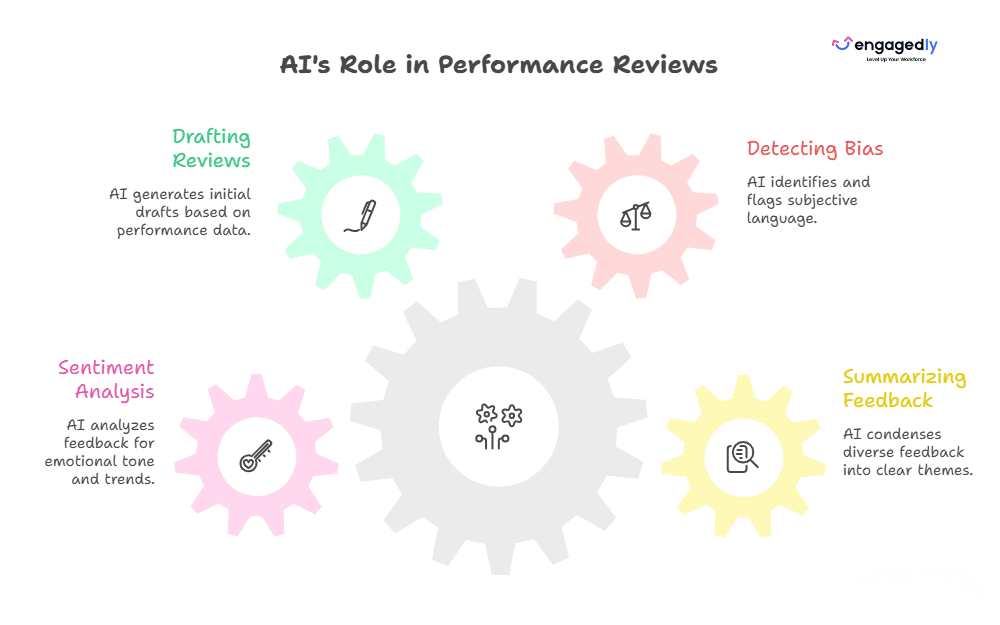
AI in human resources can help companies create a more efficient HR department by improving decision-making and boosting employee engagement. Structured performance reviews help translate these insights into measurable outcomes.
One aspect that AI is massively transforming is recruitment. Leveraging thebenefits of AI, companies can automate resume screening and swiftly identify the best candidate for the job. This saves HR professionals a lot of time and effort.
Advanced AI algorithms can also help HR personnel identify patterns in employee data. By analyzing metrics such as job satisfaction and turnover rates, HR can pinpoint areas for improvement and boost employee engagement.
But which are the specific job roles that are likely to be taken over by AI? Let’s find out in the following section.
What Are AI Agents and How Are They Creating Autonomous HR Assistants?
In 2025, a new generation of AI agents — semi-autonomous systems that can plan, execute, and interact — is beginning to emerge within HR. These agents can carry out tasks such as:
Conversing with employees or candidates using natural language, performing follow-ups or scheduling without human intervention
Coordinating with other systems (payroll, LMS, access provisioning) to act on decisions
Making recommendations autonomously and flagging issues for human review
Gartner reports that the share of HR leaders planning to use semiautonomous AI agents in HR increased significantly in 2025, with 44% of HR leaders stating intent to adopt agentic AI in the next 12 months.
This means that HR professionals will gradually shift from being the executors of HR tasks to orchestrators of AI systems—managing, auditing, and guiding their behavior. Rather than viewing AI as merely a tool, HR must now think in terms of agentic systems as collaborative partners.
Tip for authors / practitioners: Introduce pilot AI agents in narrowly defined, low-risk domains (such as FAQs, leave requests, simple onboarding steps). Monitor their outputs for fairness, transparency, and employee satisfaction before scaling.
Which HR Roles Are Most Likely to Be Replaced by AI?
Skynova surveyed to understand the impact of AI in HR. The results revealed that 86% of HR felt that it was likely that their jobs would be replaced by AI in the coming years.
Anotherstudy revealed that nearly one-third of all HR roles face a high risk of automation. A deeper analysis reveals that HR administration job roles face a 90% likelihood of automation. On the other hand, roles that necessitate excessive human intervention, such as HR directors and managers, are less at risk.
Now, let’s look at some HR roles that are most likely to be replaced by AI in the near future.
1. Recruiting Managers
The automation of the entire candidate sourcing and screening process has largely impacted the role of recruiting managers. Today, there are plenty of AI-powered tools that can sift through hundreds of resumes and online profiles within minutes to identify the best candidates for different job roles.
Moving on, there is a proliferation of talent assessment tools that help measure each candidate’s competency and personality traits. These tools utilize an efficient way to evaluate the candidate through behavioral assessments, skill testing, and gamification. AI algorithms analyze the gathered data to generate detailed reports on a candidate’s strengths, weaknesses, and other personality attributes.
Additionally, AI-powered chatbots and virtual assistants can help companies provide an improved candidate experience. These assistants can easily track website visitors, address common candidate queries, and keep them in the loop throughout the recruitment process.
This shows that administrative tasks such as CV screening will be gradually taken over by AI. Recruitment managers, on the other hand, will focus on cultural fit, talent potential and management, and soft skills. Using AI insights, their role will become more about nurturing relationships and less about sifting through resumes.
2. HR Analysts
An HR analyst gathers and evaluates HR information to streamline processes and improve decision-making. AI in analytics is swiftly changing how HR analytics is performed.
With the ability to process vast amounts of data at lightning speed, AI algorithms can identify patterns and correlations that may not be perceived by human analysts. Moreover, AI-powered predictive analytics can help identify trends in employee performance, engagement, and turnover. Aligning these insights with OKRs and goals ensures actions are tied to business outcomes.
For instance, AI might discover that a lack of adequate training opportunities is causing employees to feel disengaged and disgruntled. Thus, HR departments can tackle problems more proactively.
The automation of data collection, analysis, and reporting can free up HR professionals to focus on strategic initiatives rather than spending time crunching numbers.
However, this doesn’t necessarily mean that AI will replace the job role of HR analysts. Instead, HR analysts can leverage AI to augment their capabilities and use it as a powerful tool to make more informed decisions.
Furthermore, AI-enabled tools can also match mentors with their mentees based on diverse factors such as career goals and skill sets. They can even offer real-time feedback on employees’ progress. Incorporating 360-degree feedback provides more well-rounded input across teams.
In the coming years, AI will completely transform generic training sessions into highly personalized modules. This shift will not necessarily sideline learning and development professionals but instead empower them to focus on more complicated aspects of learning and execution.
4. Payroll Administrator
Until now, payroll administrators have been playing a very crucial role in the HR department. They have been responsible for ensuring that all employees within an enterprise get paid fairly and on time.
However, many organizations have now introduced AI tools for payroll management to increase efficiency and accuracy. Automated payroll systems can streamline hundreds of salary lines, bonuses, and tax discrepancies within minutes. With these tools, it is easier to reduce risk, eliminate unintentional errors, and combat fraud.
The introduction of AI will likely bring a change in the traditional job roles of payroll administrators. However, the role will still require human intervention to resolve any issues that arise. Also, given the personal and sensitive nature of the data that a payroll system utilizes, companies must take a balanced approach to automation, ensuring that privacy and security concerns are carefully addressed.
In the coming years, payroll administrators will increasingly pivot towards roles that emphasize strategic decision-making, compliance management, and employee support, leveraging AI as a powerful tool to enhance efficiency while maintaining the integrity of payroll operations.
What Actions Must HR Professionals Take to Adapt?
As AI continues to reshape the HR industry, professionals must embrace the opportunities and challenges it presents. Continuous knowledge upgrading and adaptation to changing scenarios are paramount.
HR professionals who are in high-risk roles must create a smart upskilling strategy to future-proof their careers. They must also identify transferable skills to help them seamlessly transition to a new role if need be.
HR professionals should become comfortable with prompting, customizing, evaluating outputs, and interpreting AI recommendations. This shifts the role from “user of HR tools” to “designer / critic of AI outputs.”
Similarly, employees who are at moderate risk must embrace the use of new and innovative AI tools and leverage them to augment their capabilities. They must also work to enhance their management and critical thinking skills.
Remember, HR must ultimately continually develop, reskill, and upskill to stay relevant in their fast-paced world. In the end, AI is just one tool among many, and learning to collaborate with it will unlock immense potential and drive sustainable change.
What Are the Key Challenges, Ethical Risks, and Mitigation Strategies?
While the benefits of AI in HR can be compelling, the risks and challenges are nontrivial. HR leaders should stay alert to:
Bias & Discrimination
Historical data often reflect biases (gender, race, age). If AI models are trained naively, they might amplify such biases in hiring, promotions, or performance evaluation.
Lack of Transparency & Explainability
When AI makes recommendations, employees may feel decisions are black boxes. Without explainable reasoning, trust can erode.
Privacy, Data Protection & Consent
AI in HR involves processing highly personal, sensitive data (employee records, performance metrics). Ensuring proper consent, secure storage, and legal compliance is critical.
Employee Well-being & Anxiety
The integration of AI can trigger fear about job security or fairness. A recent study on employee perceptions found that transparency, involvement, and clear communication moderated negative well-being outcomes.
Overreliance & Automation Bias
When humans defer excessively to AI outputs (“automation bias”), they may under-scrutinize wrong recommendations. HR must maintain human oversight.
Implementation Failure & Abandoned Projects
Not every AI project succeeds. Even with enthusiasm, nearly half of AI initiatives in companies have been abandoned in 2025.
Conclusion
AI is no longer a distant trend in HR — it’s already reshaping how organizations hire, engage, and support their people. From streamlining repetitive tasks to enabling more strategic, data-driven decision-making, AI is becoming a true partner in the HR function.
Yet, its value lies not in replacing humans, but in empowering HR teams to focus on what they do best: building culture, driving growth, and creating meaningful employee experiences. The future of HR will be about co-working with AI — where machines handle scale and efficiency, while humans bring empathy, ethics, and vision.
For HR leaders, the path forward is clear: stay curious, experiment responsibly, and keep people at the heart of every AI initiative. Those who strike the right balance between technology and humanity will not only future-proof their roles but also unlock new levels of impact in their organizations. If you’re looking to bring AI and performance management together in a practical way, it’s worth requesting a demo to see how it can work for your organization.
FAQs
What does AI in HR mean?
AI in HR uses machine learning and automation to improve hiring, analytics, employee support, and routine HR operations. AI in HR refers to the use of artificial intelligence to automate, assist, and improve human resources processes.
At a glance: Common uses: recruitment, analytics, payroll, learning, employee support Main benefit: faster decisions and less manual work Human role: oversight, judgment, and employee care
Organizations use AI in human resources for tasks such as resume screening, candidate matching, chatbot-based support, payroll processing, and personalized learning recommendations. AI can also analyze employee data to identify trends in engagement, turnover, and performance. The strongest use cases are repetitive, data-heavy workflows where speed and consistency matter, while human teams still handle empathy, ethics, context, and final decision-making.
What HR jobs can AI automate?
The HR tasks most likely to be automated are repetitive, rules-based processes such as screening, scheduling, payroll, and reporting. The HR tasks most likely to be automated by AI are high-volume activities that follow predictable rules and require limited human judgment.
These typically include: Resume prescreening and candidate matching Interview scheduling and follow-ups Payroll processing and anomaly checks HR reporting and data analysis FAQ handling through chatbots or virtual assistants
Your blog highlights recruiting administration, HR analytics support, learning personalization, and payroll administration as major areas of change. In practice, AI handles speed and scale well, but roles involving culture, conflict resolution, coaching, leadership trust, and sensitive employee situations still need human involvement. Automation is most effective when it removes admin burden rather than replacing the full HR function.
Will AI take over HR jobs?
AI is more likely to change HR roles than replace them by shifting work from administration to strategy. AI is more likely to transform HR roles than eliminate them completely.
The shift usually looks like this: Less time on admin work More focus on strategy and decision support Greater need for critical thinking and AI oversight Higher emphasis on employee experience and ethics
For example, recruiting managers may spend less time screening resumes and more time assessing cultural fit and relationship quality. HR analysts may rely on predictive analytics but still interpret trends and recommend action. Learning teams may use AI for personalized training paths while focusing on program design and behavior change. The future role of HR is increasingly about orchestrating systems, validating outputs, and keeping people at the center.
What are the advantages of AI in HR?
The biggest benefits of AI in human resources are efficiency, better decision-making, personalization, and faster employee support. The biggest benefits of AI in human resources come from its ability to process data quickly and automate repetitive work.
Key benefits include: Faster hiring workflows Improved data analysis and forecasting More personalized learning and development Better employee support through chatbots Reduced manual errors in payroll and admin tasks
Your blog notes that AI can improve decision-making and boost employee engagement by identifying patterns in turnover, job satisfaction, and development needs. AI also helps HR teams scale support without increasing administrative load. When used well, it frees up time for higher-value work such as coaching, workforce planning, culture-building, and leadership support.
What are the risks of AI in HR?
HR leaders should assess bias, privacy, explainability, employee trust, and overreliance before adopting AI systems. The main risks of AI in HR involve fairness, transparency, compliance, and employee confidence.
Before adoption, HR leaders should review: Bias and discrimination risk in hiring or promotion decisions Data privacy and consent for employee information Explainability of AI recommendations Automation bias where humans trust AI too quickly Employee anxiety around job security and fairness Your blog also notes that many AI projects are abandoned, which makes pilot testing important. A smart approach is to start with narrow, low-risk use cases such as FAQs or simple onboarding tasks, then track satisfaction, fairness, and quality. Human oversight is essential, especially when decisions affect pay, performance, hiring, or employee well-being.
The future of HR is being rewritten – one algorithm at a time. From AI-powered recruitment to immersive onboarding in the Metaverse, HR technology is rapidly evolving to meet the needs of a hybrid, digital-first workforce. In 2026, we’ll see a major shift toward personalization, automation, and data-driven strategies that don’t just support HR processes—they transform them.
Backed by over $17 billion in recent investments, the HR tech space is set to revolutionize how companies hire, engage, and retain talent. In this blog, we’ll explore the 10 biggest HR technology trends shaping the workplace in 2026—and how forward-thinking leaders can stay ahead.
Here’s a quick sneak peek of the Top 10 HR Technology Trends for 2026:
Organizations are moving from simply experimenting with HR tech to strategically integrating it across every HR function. This shift—from isolated pilots to sustained deployment—marks a turning point in how HR drives value.
A well-defined HR technology strategy ensures that investments align with organizational goals, AI tools are implemented ethically, and automation supports—not replaces—human capabilities. In 2026, companies that strategically connect payroll, HRIS, learning systems, and analytics will gain a competitive edge in agility, decision-making, and talent retention.
What Is HR Technology?
HR technology, often called HR tech, refers to the digital tools and software that help HR teams manage various functions like hiring, payroll, employee performance, and even employee engagement. Think of it as the backbone that keeps a company’s people processes running smoothly.
For example, if you’ve ever applied for a job online and got an automated email saying, “Thank you for applying,” that’s HR tech in action. Tools like Applicant Tracking Systems (ATS) help companies manage applications efficiently.
On a broader scale, HR tech includes things like learning management systems (LMS) for employee training, performance review platforms, and employee engagement apps that keep teams connected and motivated.
HR tech isn’t just for big companies, either. Even startups use tools like Slack or Trello to streamline communication and collaboration among teams, which are part of this growing tech ecosystem. Ultimately, it saves time, reduces errors, and makes the employee experience better.
10 HR Technology Trends in 2026
Measuring the outcome is the first step in improving or enhancing the system. By adopting HR technologies, organizations are becoming more aware of their employees’ expectations.
According to recent research from G2, organizations managing large employee data sets are increasingly relying on ETL tools for data transfer to streamline their analytics processes.
A similar trend will follow in 2026 with the following upcoming HR technologies.
1. Workplace Digitization
The surge in workplace digitization, which began in March 2020, continues to reshape the way businesses operate. In 2026, expect organizations to remodel their technical infrastructure by incorporating artificial intelligence and machine learning, revolutionizing employee experiences and customer satisfaction. From employee onboarding to retirement, HR technologies will leave no stone unturned in enhancing the employee lifecycle.
The digital workplace will foster seamless connectivity among colleagues, providing personalized experiences for each individual. Employers investing in these technologies can expect a more informed, knowledgeable, and innovative workforce, leading to higher operational efficiency driven by data and technology.
2. Elevating Hybrid Workplace
Forrester’s prediction report states that 60% of organizations will shift to hybrid work models and only 10% will stay committed to a completely remote working model. Further, it adds that 1 in 3 companies shifting to a hybrid model will fail in doing so. The primary reason is redesigning the workplace, and job roles, and creating an engaging work environment.
So far, employers have been facing the challenge of maintaining higher standards of work and productivity with a geographically dispersed workforce.
To make a hybrid workplace successful, organizations are taking several measures. These include the following:
Deploying a centralized platform to integrate multiple employee applications to enhance productivity
Improving internal communication through multimedia content: HR can break silos by connecting with employees through interactive videos and surveys
Deploying space management technology to reserve office space and desks
Using tools like OfficeTogether to offer a healthy work environment by monitoring visitors’ check-ins, employee health screening updates, and offering superior assistance to every employee.
3. Digital Learning & Development
Employee learning and development is a core strategy of every organization. In the last two years, L&D has faced an onslaught of changes due to sudden shifts in work setups and organizations’ lack of preparedness for them.
In 2026, L&D professionals will have an uphill task of providing continued learning along with engagement and inclusivity at the forefront. Employee experience and learning will have to go hand in hand to get optimum results. Structured career development and continuous growth conversations ensure employees stay engaged while preparing for future opportunities.
With organizations already embracing digital learning, 2026 will be a landmark year with the deployment ofgamification and virtual reality in the learning process. The overall estimated impact is higher employee engagement, motivation, and better learning outcomes. Further, to ensure the learning of employees working remotely, digital learning will be customized to cover more ground through mobile and desktop applications.
4. Hyper-Personalization
To understand hyper-personalization in the workplace, try answering the following questions:
What work environment brings out the best in employees?
Is every employee doing what they are best at?
What activities, policies, and infrastructure are more meaningful and engaging to employees?
What does an ideal workplace look like?
For decades, hyper-personalization has been used in marketing to attract customers, but by 2026, it has made its way into office cubicles. With45% of US employeesworking remotely (completely or partially) and a shortage of skilled labor in the market, the power of decision-making has shifted from employers to employees. Hyper-personalization gives employees more flexibility and an opportunity to change work environments to better suit them.
Organizations are working to provide a better employee experience and transform traditional office spaces into more interactive, accommodative, and inclusive workplaces. They are working on three pillars to provide a personalized experience to employees: communication, management, and work environment. It will help in resolving challenges around accessibility, gender diversity, and inclusivity.
5. Data-driven DEIB
In the last decade, organizations have amped up their efforts to create a diverse and inclusive environment for employees. But the achievement has not been much substantial. The primary reason was that many of the efforts were on paper and there wasn’t enough data to analyze the outcomes. It is a proven fact that data disclosures in certain industries harbor behavioral changes.
With organizations adopting several policies and practices for enhancing diversity, equity, inclusion, and belongingness in the workplace, it is imperative to use data analytics to get actionable insights. Research conducted by HBR found that data disclosure and analysis can have a profound effect on the diversity initiatives of an organization.
One of the most important HR tech trends in 2026 is a reliable and data-driven DEIB strategy. As a large proportion of employees are willing to work in a hybrid setup, organizations have to place pragmatic measures to enhance diversity and inclusion. It involves driving various processes such as sourcing, hiring, onboarding, employee engagement, grievance redressal, and policy formation through a competent tech-enabled system.
6. Tech Enabled Employee Self-Service
Employee self-service is an aspect of Human Resources (HR) technology that enables employees to access and manage their HR-related information and tasks independently. This can include updating personal information, viewing pay stubs, and requesting time off. The primary objective of employee self-service is to improve operational efficiency and reduce the workload for HR departments.
As we move into 2026, it is expected that employee self-service portals, mobile applications, and chatbots will become increasingly prevalent. These tools will allow employees to access the information they need quickly and easily, regardless of location.
Furthermore, the integration of artificial intelligence (AI) and machine learning will enable these portals, applications, and chatbots to provide personalized recommendations and assistance to employees.
The adoption of employee self-service not only improves organizational efficiency and reduces costs, but also enhances the employee experience. By providing employees with the ability to manage their HR-related tasks independently, organizations can become more agile and responsive to employee needs, which can improve employee satisfaction and engagement. In conclusion, employee self-service is an important aspect of HR technology that is expected to continue to evolve and gain prominence in the years to come.
7. Metaverse in HR
Immersive alternate reality, also known as the Metaverse, is poised to revolutionize various aspects of HR practices. This groundbreaking technology offers seamless integration of virtual meetings, interviews, discussions, onboarding, employee engagement, employee experience, and learning and development.
By creating lifelike virtual environments, the Metaverse enables HR professionals to host dynamic and interactive meetings, conduct immersive job interviews, and facilitate engaging discussions among remote teams.
Researchers predict a swift and widespread adoption of the Metaverse in HR, with a projected 25% of people dedicating at least an hour of their daily work routine to this transformative technology by the year 2026.
As more organizations recognize the immense potential of the Metaverse, its impact on reshaping traditional HR processes and enhancing collaboration across distributed teams will be nothing short of revolutionary.
The Metaverse empowers HR to transcend geographical boundaries and usher in a new era of seamless and impactful virtual interactions that enrich employee experiences and elevate organizational productivity.
8. Data-Backed and Digitally-Led Organizations
In the transformative landscape of 2026, organizations are embracing a data-driven approach to gain a deeper understanding of their employees and customers. By harnessing the power of employee and customer data, organizations are poised to align their actions and initiatives with a clear sense of purpose and direction. Executive leaders also benefit from centralized workforce insights that connect people data with strategic business outcomes.
This trend goes beyond mere data analysis; it signifies a holistic shift towards customer and employee centricity, where organizations strive to cater to individual needs and preferences, fostering stronger relationships and brand loyalty. Moreover, the data-driven trend extends its reach to address pressing social and environmental concerns, as organizations recognize their role in contributing to a more sustainable and responsible future.
9. Artificial Intelligence to Address Talent Concerns
Talent shortage and hiring will get tough in 2026. To overcome these issues, organizations will see a surge in the adoption of AI to create a digital skills catalog and utilize it for hiring, internal mobility, overcoming paper ceilings, and bias in recruitment processes.
10. People Analytics
The contribution of people analytics in the critical decision-making process and business outcomes has outpaced convention and paper-led strategies. It will continue to grow through massive adoption and upscaling in 2026.
AI Ethics & Employee Well-Being Amid HR Tech Strategy
AI can supercharge HR efficiency, but unchecked automation risks employee trust, fairness, and mental well-being. To make AI a force for good, HR leaders must:
Maintain transparency in AI decision-making.
Include employee representation when selecting or configuring tools. Tools like 360-degree feedback can also help HR teams validate sentiment across teams before scaling workplace changes too quickly.
Establish ethical AI safeguards to avoid bias and promote inclusivity.
When implemented with ethics in mind, AI can simultaneously enhance operational efficiency and workforce morale.
Steps to Build a Robust HR Technology Strategy
Form an HR/AI Governance Committee – Include HR, IT, legal, and employee advocates to guide responsible AI adoption. (AIHR)
Map the HR Tech Ecosystem – Align HRIS, payroll, L&D, and analytics systems into a single integrated architecture. (Outsail)
Pilot & Validate New Tools – Test solutions like agentic HR assistants, AI-based compensation benchmarking, or sentiment analytics for wellness. (TechRadar, Business Insider, arXiv)
Track Impact with Dashboards – Use metrics like retention risk, skills growth, and engagement sentiment to measure tech ROI.
Conclusion
To cope with the demand for a more innovative employee experience and provide a progressive environment for employees, the future of HR technology will have to be based on continuous modernizing technology, innovative frameworks, and data-driven approaches.
We hope the HR technology trends mentioned in the article will help you to create a better workplace. If you’re evaluating how to bring performance, learning, and workforce planning into one connected strategy, this is a good time to request a demoand see how modern HR teams are simplifying execution.
FAQs
What are the latest HR tech trends?
HR technology trends refer to the digital tools and systems changing how organizations hire, engage, develop, and retain employees.
The most important trends shaping the workplace include: Agentic AI: Shifting from basic text generation to autonomous systems that can manage complex workflows, forecast workforce gaps, or update records independently. Skills-Based Hiring Infrastructure: Platforms that prioritize verified capabilities, certifications, and real-world performance over traditional degrees. Unified, Connected Ecosystems: All-in-one HRIS platforms replacing fragmented tech stacks to ensure smooth data flow and full-funnel visibility. Always-On Workforce Listening: Continuous pulse-survey tools replacing slow annual surveys to track burnout, wellbeing, and sentiment in real time. Hyper-Personalized Employee Experience: Self-service portals and digital rewards tailored directly to individual employee needs.
These trends matter because HR is moving from manual administration to strategic workforce enablement. Organizations use these modern tools to reduce administrative load, improve employee experience, and make faster, more accurate talent decisions.
Why do companies need an HR tech strategy?
An HR technology strategy helps organizations align tools, data, and automation with business goals and employee needs. An HR technology strategy is a structured plan for selecting, integrating, and governing HR tools so they support business outcomes and workforce goals.
A strong strategy helps organizations: Connect HRIS, payroll, learning, and analytics systems Avoid fragmented tool adoption Improve data quality and reporting Support ethical AI use and stringent data privacy compliance (e.g., DPDP Act, CCPA) Strengthen agility, retention, and decision-making
Without a strategy, many companies end up with disconnected platforms and poor adoption. For example, if payroll, performance, and learning systems do not work together, HR teams lose visibility into skills, engagement, and workforce trends. Strategic integration turns HR tech from a set of tools into a true business advantage.
What is AI used for in HR?
AI is changing HR by improving hiring, coaching, self-service, analytics, and workforce decision-making at scale. AI in HR refers to the use of machine learning, automation, and predictive tools to improve HR processes and employee support.
Common use cases include: Screening candidates and objectively matching verified skills faster Delivering chatbot-driven, 24/7 employee self-service Generating personalized learning paths or tailored coaching suggestions Identifying retention risks and forecasting workforce patterns before resignations happen Automating routine interview scheduling and onboarding paperwork
For example, AI tools can build skills catalogs, surface likely flight risks, or automate routine HR queries. The value is not just speed. Done well, AI helps HR teams shift from reactive administration to proactive workforce planning. However, it works best when paired with transparency, bias controls, and human oversight.
What are people analytics in HR?
People analytics improves HR decision-making by turning workforce data into insights on retention, engagement, performance, and skills. People analytics is the use of employee data to identify trends, measure outcomes, and guide better workforce decisions.
It helps HR teams track and improve areas such as: Turnover trends and predictive retention risk Real-time engagement and employee sentiment Skills development, adjacencies, and internal mobility Hiring effectiveness, channel performance, and quality of hire DEIB (Diversity, Equity, Inclusion, and Belonging) outcomes
For instance, modern HR dashboards combine continuous pulse survey scores, training completion rates, and attrition patterns to identify exactly where intervention is needed. Instead of relying on assumptions, leaders can use evidence to prioritize actions. This makes HR more strategic, especially when organizations want to connect employee experience, performance, and business outcomes in one measurable framework.
How do you choose HR software?
Companies should look for integration, usability, ethics, analytics, and measurable business impact when adopting new HR technology. When evaluating new HR technology, organizations should focus on fit, governance, and long-term value rather than just features.
Key evaluation criteria include: Ecosystem Compatibility: Easy, open API integration with existing payroll and HR systems. Mobile-First User Experience: Intuitive self-service portals for employees and managers. Predictive Analytics: Dashboards that translate raw data into actionable workforce forecasts. Compliance & Ethics: Strong data security safeguards, role-based access, and strict alignment with local data privacy laws. Measurable ROI: Clear tracking tied to key metrics like adoption rates, time-to-hire, or retention improvements.
For example, a self-service platform may look impressive, but it should also reduce HR workload, improve response times, and connect seamlessly with payroll data. The best HR tech choices solve real workforce problems, support employee wellbeing, and scale with the organization’s future needs.
Human resources are the driving force behind the success of any business, and they are the ones who do the physical and mental work. Human resources ensure that all the functions in the business are running in the way they should. Business of any size needs efficient HR management to get the best optimal results from its employees. Human resource management involves all business management decisions that affect the relationship between the employees and the organization.
Using Payroll and HR Software, an organization can improve its ability to find the best-fit candidate from the huge list of applicants without any bias.
Importance of Human Resource Management in business
The growth of the company is wholly dependent on its employees, and human resource management is an important part of increasing and sustaining the health of the business. To make the company stay competitive in the business, HR managers play an important role in recruiting the right talent into the business.
Apart from recruiting the candidates, HR management also ensures benefits and salaries are fair, keep employees satisfied in their job, and make personalized tasks. HR management assists the employees with the right training, HR courses, and also other developments needed to meet the objectives. Here is the list of 5 effective ways an effective human resource management can help the business grow.
For any company, expansion, and success depend on its ability to hire and keep top talents. According to an earlier survey, businesses with effective talent recruitment strategies had 3.5 times more revenue growth than those that don’t have strategies.
To successfully overcome the challenges of a business environment that is ever-changing, it is important to develop a diversified and talented team. An organization’s efficiency, customer happiness, ability to compete in the market, and more can be improved by having highly skilled and motivated employees.
Effective recruitment and retention methods often have the important side effect of reducing the turnover of employees.Replacing an employee might cost anywhere between one and a half and two times that person’s annual income. Businesses can attract and keep top talent, which is necessary for long-term success, by investing in effective recruitment and retention methods.
HR management is important in this process because it helps identify applicants with the necessary education and work history. Businesses are better able to meet the demands of a quickly evolving business environment and retain top talent when they have a robust and diversified staff.
Employee turnover
Planning, management, training, and benefits reduce retention rates and increase recruiting costs. Project delays, productivity losses, training obligations, and a negative effect on team morale are ways employees find it better to leave the job, which can hurt the firm.
By putting the right programs in place and using HR planning, you can increase your ability to retain employees. Through the use of employee satisfaction surveys, clear policies and procedures, and programs to boost morale, you can improve employee satisfaction.
Salaries also play an important role in employee turnover. By ensuring that the right salaries are paid to the employees, the credibility of the organization will increase among the employees. So look for the best Payroll Softwareand incorporate it into your organization for effective payroll management.
Your HR team must create an employee onboarding process to welcome your new employee. They will benefit from this by gaining the required abilities and organizational knowledge. If you instill the ideas of cooperation, openness, and constant progress sooner for the new hires, the results will be better.
Having work procedures, protocols, and guidelines that promote a satisfying working environment is important. Each worker will have to become an expert in the techniques and methods particular to their job.
HR should provide informational guides, select people to oversee new recruits, standardize employee training, and do other things. Having such a process in place will enable new hires to focus more on doing well in their new roles.
Emerging HR Trends Shaping Growth in 2026
As businesses face rapid change, effective HR management now also involves adapting to some newer forces. Here are trends that companies should be aware of to ensure HR continues to drive growth:
People Analytics & Data-Driven Decision Making HR leaders increasingly leverage analytics to understand employee behavior, predict turnover risk, identify skill gaps, and tailor development programs. Using metrics such as time-to-fill, retention rates, engagement scores, and predictive modeling helps align HR strategy with real business outcomes.
AI, Automation & HR Tech Integration Repetitive HR tasks (e.g. resume screening, scheduling, basic queries) are being automated, freeing HR to focus on strategy, wellbeing, coaching. But with tech comes responsibility — ensuring fairness, transparency, and avoiding bias in AI systems.
Remote / Hybrid Work & Flexible Workforce Models Post-pandemic, hybrid and remote work are no longer exceptions. Growth comes from designing HR policies that support remote productivity, ensure equitable experience for remote/hybrid staff, maintain belonging, and reimagine leadership/trust without physical co-location.
Well-being, Mental Health & Burnout Prevention Employee wellness is now strategic. HR initiatives around mental health support, flexible scheduling, workloads, psychological safety, and continuous check-ins are key to retaining top talent and sustaining performance.
Diversity, Equity, Inclusion, Belonging & ESG Alignment Organisations are integrating DEIB into their core growth strategies, not as a “nice-to-have.” Also, ESG (environmental, social, governance) factors are influencing employer branding, employee engagement, and stakeholder expectations.
Regulatory Compliance, Data Privacy & Ethical HR With more data collection (analytics, AI, remote monitoring), there are increased responsibilities around data security, privacy laws, consent, and ethics. HR leaders must stay ahead of legal/regulatory changes and embed fairness and transparency.
Incorporating these trends into HR planning and operations doesn’t mean discarding foundational HR work — instead, it means enhancing it so HR remains not just reactive, but a proactive growth partner.
Challenges & Pitfalls HR Must Navigate
While HR has huge opportunity to contribute to growth, there are common pitfalls if not handled carefully:
Over-dependence on metrics without context — Data/metrics are powerful, but misinterpreting them (or ignoring qualitative insight) can lead to wrong decisions. Always combine data with frontline feedback.
Technology adoption without change management — Introducing tools (AI, remote tools, analytics platforms) without proper training, stakeholder buy-in, or communication often causes resistance or sub-par usage.
Burnout & employee stress — Push for performance without support for well-being leads to morale issues, turnover, engagement loss; may even erode growth instead of helping it.
Inequity in hybrid/remote arrangements — Remote employees may miss informal visibility compared to in-office ones; inequitable distribution of resources, perks, recognition. HR must consciously ensure fairness.
Regulatory or ethics missteps — Using employee data (analytics, monitoring) raises privacy concerns; biased algorithms may cause discrimination; non-compliance with local laws/data protection can cause reputational and legal costs.
Recognizing these risks early, and planning mitigations (e.g. feedback loops, audits, inclusive design, ethics/compliance oversight) makes HR’s growth-contribution stronger and more resilient.
Performance evaluation and employee development
One of the most important components of an HR management strategy for company success is performance management and employee development. A reliable performance management system is needed to track staff progress.
You can track an employee’s performance, compare it, and understand their strengths and areas for development as part of keeping records of their development. The implementation of the performance management system should fall under the HR department.
Data from a performance management system can provide an amount of knowledge about a worker’s objectives and potential career paths. This also includes how important perks and benefits are given to the employees according to their performance.
Creating incentive and recognition programs provides employees with a sense of value and boosts employee retention. You can use Payroll Software to make correct payments and other benefits to employees based on their performance.
Successful businesses must have a futuristic business plan as it helps the organization’s human resources match its objectives. An essential part of the business strategy process is played by the HR function, which also develops and implements programs to help employees get and develop the skills and competencies.
The business strategy involves analyzing the future of the business and market, competitor analysis, and resources required for the new business plan. To work on business strategy goals, HR can make sure they have the right people in the right roles to achieve their objectives by coordinating their activities.
Apart from assisting businesses in remaining competitive in a continuously evolving business environment, this also gives the company a clear direction and vision to work.
Final thoughts
HR is an important driver of growth and helps to compete in the market. For leveraging the full benefits of HR management HR Softwarecan be the right choice. They help in attracting and retaining talent, managing and mitigating tasks, and more that helps businesses to compete and grow in the market. Always remember that investing in HR software is not about cost but an opportunity that helps businesses to succeed.
Frequently Asked Questions
What does HR management do?
HR management is the process of hiring, developing, supporting, and retaining employees to help a business achieve its goals. HR management is the strategic function responsible for managing the employee lifecycle and aligning people practices with business objectives.
It typically includes: recruitment and onboarding payroll, benefits, and compliance performance management and development employee engagement and retention
In practice, HR management helps ensure that the right people are in the right roles, with the right support to perform well. For example, HR teams use unified HRIS (Human Resources Information Systems) platforms and automated payroll software to streamline hiring, improve fairness, and reduce administrative errors. A strong HR management approach improves both employee experience and organizational performance over time.
Why is HR management important for business growth?
HR management supports business growth by improving hiring, retention, productivity, workforce planning, and employee development. HR management is important because business growth depends heavily on people, performance, and the ability to retain strong talent.
It contributes to growth by: hiring the right people faster through predictive talent sourcing reducing employee turnover and high replacement costs upskilling and reskilling the workforce through structured training aligning future workforce capacity with long-term business strategy
Companies with effective talent strategies are more likely to sustain long-term performance because they build stronger teams and reduce costly disruptions. HR also helps improve employee satisfaction through fair pay, transparent compliance policies, and clear development opportunities, all of which directly drive productivity, engagement, and corporate growth.
How does HR reduce employee turnover?
HR management improves hiring and retention through better recruitment, onboarding, compensation, development, and employee satisfaction strategies. HR management helps organizations attract and keep talent by building a stronger employee experience from recruitment through long-term development.
Its biggest impact includes: identifying best-fit candidates during hiring through data-driven assessments creating structured preboarding and onboarding experiences for new hires ensuring market-competitive salaries and equitable benefits packages using real-time employee listening tools and retention programs to catch flight risks early
For example, a company with a clear onboarding process and competitive compensation is far more likely to retain employees than one with poor communication and inconsistent support. HR also uses tools like continuous pulse surveys, automated payroll software, and personalized development programs to address dissatisfaction early and improve overall retention outcomes.
What does modern HR management include?
Modern HR management includes hiring, onboarding, performance management, analytics, compliance, wellbeing, and workforce strategy. Modern HR management goes beyond manual administration and plays a critical, data-driven role in shaping business performance and employee experience.
Key HR functions include: recruitment, skills-based hiring, and strategic onboarding payroll architecture, fringe benefits, and statutory compliance agile performance evaluations and continuous feedback systems people analytics, workforce planning, and core HR tech infrastructure employee wellbeing, hybrid work governance, and DEIB (Diversity, Equity, Inclusion, & Belonging) initiatives
HR leaders heavily rely on data – such as retention rates, time-to-fill, and engagement scores – to make predictive workforce decisions. At the same time, they manage modern priorities like remote work fairness, burnout prevention, and ethical data privacy compliance. This transforms HR into a core business engine rather than a back-office support role.
How does HR support employee development?
HR management improves employee performance through goal setting, feedback, training, recognition, and structured development programs. HR management improves performance and development by creating systems that help employees grow, stay aligned, and perform consistently.
Effective HR support usually includes: structured onboarding and immediate role clarity continuous performance management software and peer reviews learning and development (L&D) programs tailored to specific skill gaps recognition frameworks, performance incentives, and clear career pathing
HR can look across individual performance data to pinpoint skill gaps and deliver targeted training, continuous micro-learning, or internal mentorship loops. It also equips managers with frameworks for objective goal tracking, regular check-ins, and meaningful recognition. When employees understand what is expected of them and see a viable path for internal growth, they naturally stay more engaged and contribute at a much higher level.
Author: Ravi Varma
I am Ravi Varma, A Digital Expert and blogger at We Suggest Software – A Leading Software Reviews and recommendations Platform Worldwide.
In the past, employee performance reviews typically took place once a year or, at best, bi-annually. These meetings were often stressful and unproductive, as managers struggled to remember details from months earlier, and employees felt blindsided by sudden feedback.
This traditional method of performance review has increasingly been replaced by continuous feedback, a system that allows for more consistent and meaningful interactions between managers and their teams.
Gallup data show that 80% of employees who have received meaningful feedback in the past week are fully engaged in their work. This statistic highlights the significant role that regular, constructive feedback plays in driving employee engagement, productivity, and retention.
Continuous feedback is a solution to the common pitfalls of annual reviews, helping both managers and employees thrive.
But what exactly is continuous feedback, and how does it help your organization thrive?
What is Continuous Feedback?
Continuous feedback is a structured approach where managers provide real-time feedback provided continuously to employees throughout the year, instead of waiting for annual performance reviews. This systematic approach creates a feedback culture in the organization.
For example, rather than discussing a project that was completed months ago, a manager may offer feedback right after a significant milestone, allowing the employee to learn and apply the feedback to their current work. This timely intervention ensures that employees are aligned with company goals and their personal development.
What Is Continuous Feedback in 2026?
Continuous feedback in 2026 goes beyond the simple exchange of performance comments. It’s now a dynamic, AI-enabled process that blends technology with human empathy to enhance workplace communication.
AI-assisted recognition platforms (like Workhuman’s Human Intelligence) are making feedback more emotionally intelligent, ensuring praise feels sincere and specific while keeping the human connection at the forefront.
Feedback is now collected in real-time across multiple channels—email, internal apps, SMS, and even chat tools like Slack or Microsoft Teams—allowing instant responses without waiting for a scheduled review. (inFeedo, 2025)
This shift has transformed feedback into a continuous conversation, not a calendar event.
Why Continuous Feedback Matters in 2026
Emotional & Cultural Impact
Feedforward (future-focused feedback) builds trust and reduces performance anxiety, especially as small and mid-sized businesses shift from formal reviews to agile coaching systems. (Business Insider, 2025)
Higher engagement rates, especially when feedback is given weekly or more frequently (Psico Smart Blog, 2025)
Gen Z Expectations
Younger professionals expect real-time recognition paired with personalized career development tools. They value immediacy, clarity, and digital integration. (The Times of India, 2025)
Continuous feedback benefits
1. Improved engagement
Straight away, one of the biggest improvements that can be seen with a culture of continuous feedback is an increase in engagement. There are plenty of statistics that point towards employees being unhappy with the amount of feedback they are receiving.
Consider the following statistics:
27% of employees strongly agree that the feedback they receive helps them improve their performance.
According to Gallup, only 21% of millennials and 18% of non-millennials meet with their managers weekly. The majority—56% of millennials and 53% of non-millennials—meet with their managers less than once a month.
Meaningful and consistent feedback helps employees feel valued, reinforcing the connection between their work and the organization’s goals. When employees know their contributions are recognized and aligned with the company’s objectives, they are more motivated to improve and stay engaged.
2. Decreases attrition
High employee turnover is costly, both in terms of recruitment expenses and loss of institutional knowledge. One of the key drivers of employee attrition is the lack of recognition or constructive feedback. When employees feel unappreciated or ignored, they are more likely to leave.
Feedback can mean anything, even noise. On the other hand, constructive feedback not only takes into account the person receiving the feedback, but also their skills and competency and the work they are doing.
3. Increased productivity
When employees receive continuous feedback, they can adjust their performance in real-time, leading to higher levels of productivity. Consistent feedback means there is less room for errors to accumulate, and employees can address issues before they become larger problems.
Example: A sales team that receives regular feedback is more likely to refine their approach, leading to higher sales and better outcomes. Implementing a continuous feedback system not only helps with individual growth but also contributes to overall team performance.
Sometimes, feedback is the push most of us need to try a new approach or to keep going on a difficult path. Feedback eases the way because employees know their manager is paying attention and invested in their work.
For more information on how performance management software can enhance productivity and streamline continuous feedback, check out this article on Continuous Performance Management Software.
4. Provides an accurate account of employee performance
A continuous feedback system offers a more accurate and holistic view of an employee’s performance. Unlike traditional reviews, which focus on a specific time frame, continuous feedback captures an employee’s development over time, highlighting both successes and areas for improvement.
For example, an employee may have had a slow start to the year but steadily improved after receiving feedback. By the end of the year, their consistent improvement can be documented through ongoing feedback, offering a more balanced and fair evaluation.
While continuous feedback drives performance, there are risks:
Feedback Fatigue – Too much feedback, too quickly, can overwhelm employees and dilute its impact.
Inconsistent or Biased Feedback – Without manager training, feedback may feel unfair or unhelpful. Using talent analytics and mobility insights can help identify patterns and reduce bias.
Perception of Surveillance – If implemented poorly, systems can feel judgmental rather than developmental.
Best Practices for Giving Continuous Feedback
Use Real-Time Examples: Feedback should be tied to recent tasks or achievements so that employees can immediately relate to the feedback and apply it to their work. For example, if a marketing campaign was particularly successful, highlight what the employee did right and suggest improvements for the next project.
Set Clear Goals: To ensure feedback is actionable, it’s essential to link it to clear, achievable goals. Instead of general comments like “good job,” frame feedback as “Your analysis of market trends was thorough and helped inform our strategy. Let’s aim to deepen our data analysis for future campaigns.“
Foster Two-Way Communication: Encourage employees to provide feedback to their managers. This opens up dialogue and ensures the continuous feedback process is a collaborative effort.
Be Constructive, Not Critical: Feedback should aim to improve performance without discouraging the employee. For example, instead of saying “Your report was poorly written,” offer specific suggestions: “The structure of your report could be clearer. Perhaps we can focus on making the introduction more concise.“
2026 Trends & Innovations in Continuous Feedback
AI-Assisted Gratitude Tools – Platforms that craft sincere, situation-specific praise messages at scale.
Pulse Survey Analytics – Multichannel micro-surveys (via SMS, Slack, or email) that improve response rates and reach distributed teams.
Gamified Feedback Mechanics – Turning recognition into challenges or rewards, boosting participation and retention.
Final thoughts
Continuous feedback is more than just a trendy management strategy—it is a tool for increasing engagement, boosting productivity, and lowering attrition. By fostering an open dialogue between managers and employees, organizations can create a feedback culture that drives better performance and professional growth. If you’re looking to build a continuous feedback culture that actually scales across teams, you can request a demo to see how leading organizations are doing it.
Frequently Asked Questions
What does continuous feedback mean in the workplace?
Continuous feedback is an ongoing process where managers provide real-time guidance, recognition, and coaching instead of waiting for annual reviews. Continuous feedback is a performance management approach where employees receive ongoing guidance, recognition, and coaching throughout the year.
Key characteristics include: Real-time feedback after tasks or milestones Regular manager-employee conversations Frequent recognition and coaching Alignment with team and organizational goals
Unlike traditional annual reviews, continuous feedback focuses on immediate learning and improvement. For example, a manager might discuss the outcome of a project right after completion, helping employees apply feedback immediately. This approach improves clarity, strengthens manager-employee communication, and ensures performance discussions are timely, actionable, and supportive of long-term development.
Does regular feedback increase employee engagement?
Continuous feedback improves engagement by helping employees feel recognized, supported, and aligned with organizational goals. Continuous feedback improves employee engagement by keeping communication active between managers and employees.
Its impact on engagement comes from: Timely recognition of accomplishments Ongoing guidance and coaching Stronger connection between daily work and company goals Increased employee voice and participation
Research shows that employees who receive meaningful feedback frequently are significantly more engaged at work. When employees know their work is recognized and their development is supported, they are more motivated to contribute and grow. Regular feedback also helps employees understand expectations clearly, which reduces uncertainty and improves overall job satisfaction.
Does continuous feedback improve productivity?
Continuous feedback improves performance by allowing employees to adjust behavior quickly and correct issues before they escalate. Continuous feedback improves employee performance by enabling faster learning and course correction.
It works because it allows employees to: Receive guidance immediately after completing tasks Correct mistakes early Refine skills continuously Stay aligned with goals and expectations
For example, a sales manager who reviews a sales call shortly after it happens can help the employee refine messaging or objection handling immediately. This real-time coaching prevents mistakes from repeating and accelerates skill development. Over time, frequent feedback creates a stronger performance culture where improvement becomes part of everyday work.
How frequently should employees receive feedback?
Managers should provide feedback weekly or after key milestones to keep guidance timely and relevant. Continuous feedback works best when it occurs regularly rather than waiting for scheduled reviews.
Common feedback rhythms include: Quick weekly check-ins or 1:1 conversations Feedback after important tasks or project milestones Recognition for achievements as they happen Monthly development conversations
The exact frequency depends on team structure and workload. However, many organizations find that weekly or biweekly feedback keeps communication strong without overwhelming employees. The goal is not constant evaluation but consistent support that helps employees stay aligned, motivated, and focused on improvement.
How do companies implement continuous feedback?
Successful continuous feedback programs rely on real-time examples, clear goals, two-way communication, and constructive coaching. Continuous feedback works best when it is structured, consistent, and focused on development.
Best practices include: Using recent examples to make feedback relevant Linking feedback to clear goals or performance metrics Encouraging two-way conversations between managers and employees Focusing on constructive coaching rather than criticism
For example, instead of vague praise, managers should explain what specific behavior led to a positive result. Technology such as performance management platforms, pulse surveys, and recognition tools can also support continuous feedback by making conversations easier to track and act on. When implemented thoughtfully, it builds a culture of learning, accountability, and improvement.
Leadership is not an inherent trait; it evolves through experience and time. Genuine leaders consistently seek opportunities for growth, recognizing that there’s always room for improvement. Setting and actively pursuing goals is a crucial aspect of leadership, but these goals should specifically target areas of weakness, amplify strengths, and refine leadership skills.
Prioritizing personal development is crucial for every individual, with a particular emphasis on leaders. Leaders play a pivotal role in providing guidance and establishing benchmarks for individual growth. To delve into the significance of personal development goals for leaders, let’s explore their importance further.
More than the title, it is the skills of an individual that are pivotal. Leaders should help others grow in their respective fields and understand one’s competency level. Besides the title or the position, the behavioral approach includes leadership traits that drive high employee engagement.
The behavior and accomplishment of a person contribute towards earning the title. There is no power related to the title, rather, the number of people a leader could empower and inspire makes one a successful leader.
Leadership is considered learned behavior, and one can develop it over time. A person will not suddenly become a leader in a group or team. It is the ability to influence others in a group without trying to control them.
With development goals, leaders know how to create an environment of respect and a comfortable space for everyone on the team. They share their vision and objective and inspire passion on how to collaborate as a team and get the best results. These are some tactics that will help an individual and the team grow.
In an ever‑evolving business landscape, clear leadership goals are your North Star. Leaders who set specific, measurable targets outperform peers by 25%—here’s how to craft yours for 2026.
Focus on 10 important development goals
Although the focus area may vary from leader to leader, here are ten common personal development goals for leaders that every leader should have.
1. Become a Good Mentor
Among the personal development goals for leaders, try to become a good mentor, as the team depends on the leader for guidance. Mentorship should be a priority and set goals to help the team grow and everyone will know their roles better.
SMART Goal Template:
Specific: Schedule weekly one-on-one mentoring sessions with each team member
Measurable: Track employee skill development and career progression quarterly
Achievable: Start with 2-3 direct reports, expanding gradually
Relevant: Aligns with team development and retention goals
Time-bound: Implement within 30 days, review progress monthly
Hear out every individual on your team consider their opinion and try to understand their perspectives. It helps in working together team building, and achieving goals. Give feedback and guidance for the growth of team members on the right track.
To further enhance leadership development, setting professional development goals for work can greatly impact both personal and team growth. When focusing on personal development, invest time, listen to each of them, and help overcome new challenges.
2. Build Better Connection With Peers
Leaders should try to establish good connections with every individual in a team. The focus should be on cooperation and effective collaboration, no matter what the situation is. Interpersonal connections can be supportive to overcome difficult phases. Besides, encourage your team to collaborate and not work in silos. This will help them understand the value of team building.
SMART Goal Template:
Specific: Improve communication and relationship-building with team members and cross-functional peers
Measurable: Increase team engagement scores by 15% within 6 months
Achievable: Schedule regular informal check-ins and team-building activities
Relevant: Better relationships lead to improved collaboration and results
Time-bound: Monthly team bonding activities, quarterly relationship assessments
A leader’s listening skills matter. Don’t just hear them passively, practice active listening. Try to find what ideas set every individual apart. People appreciate it when you hear them out. This will help you brainstorm new ideas. Everyone should get a chance to speak.
Use signs to show that you are listening actively. It helps in an excellent exchange of ideas among team members that help get productive and innovative results. Additionally, your employees feel valued and important when they are listened to, in turn, it improves employee engagement.
Leaders should be confident, and this helps earn respect. Your confidence should encourage others. Confidence comes from within and one should take a moment to understand how they have achieved it. Try to exhibit the skills at work and help others develop them under your guidance. The better you can encourage and inspire others, the more confident you will feel.
SMART Goal Template:
Specific: Build authentic confidence through skill development and self-awareness
Achievable: Focus on strengths while addressing skill gaps through training
Relevant: Confident leaders inspire trust and drive better team performance
Time-bound: Quarterly confidence assessments and skill-building activities
Here, you can focus on self-development goals for better results.
4. Ability to make SMART decisions
Leaders should be prompt enough to make decisions and focus on the decision-making procedure. It would help a team start with projects sooner, without finding it difficult to meet deadlines.
SMART Goal Template:
Specific: Improve decision-making speed and quality using data-driven approaches
Measurable: Reduce decision-making time by 30% while maintaining 95% accuracy
Achievable: Implement decision-making frameworks and tools
Relevant: Faster, better decisions drive team productivity and project success
Time-bound: Implement new process within 60 days, review monthly
Involve team members in every decision-making process and it would open up options for final decisions. Try to set examples about setting personal development goals for your team members. Your approach to achieving the goals should inspire them to become one like you.
A leader should be able to make smart decisions in the face of hardship and it is important to build resilience. It is not about being powerless but about the quality of remaining flexible and the ability to adapt easily, no matter what the condition is.
It is important to pull your team up for future endeavors and teach them how to overcome failures. Help your team prepare for inevitable hardships and try to go ahead with a positive mindset.
5. Be confident in what you do
Leaders should be confident, and this helps earn respect. Your confidence should encourage others. Confidence comes from within and one should take a moment to understand how they have achieved it. Try to exhibit the skills at work and help others develop them under your guidance. The better you can encourage and inspire others, the more confident you will feel. Here, you can focus on self-development goals for better results.
SMART Goal Template:
Specific: Build authentic confidence through skill development and self-awareness
Achievable: Focus on strengths while addressing skill gaps through training
Relevant: Confident leaders inspire trust and drive better team performance
Time-bound: Quarterly confidence assessments and skill-building activities
Here, you can focus on self-development goals for better results.
6. Efficient time management skills
It is an essential goal of a leader that helps to handle multiple projects. It requires meeting deadlines and knowing how to make the most use of available time. Being a leader, if you can complete your tasks on time, your team is likely to follow the same. Prioritize meeting deadlines by use of suitable time management skills and this is what research has to state about time management goals.
SMART Goal Template:
Specific: Master time management and productivity techniques
Measurable: Increase productivity by 25% and meet 100% of deadlines
Achievable: Implement time-blocking, delegation, and priority matrix methods
Relevant: Better time management leads to reduced stress and increased team efficiency
Time-bound: Learn and implement 3 new time management techniques within 30 days
The vital skills are:
Understanding that time is limited and one should be realistic to make effective use of available time
Organize daily tasks and goals practically
Monitor correct use of time for projects and quick response for adapting to changes in a given time
7. Design Better Processes And Strategies
Try to find new strategies for your team to work with less effort and time, but not compromise on the quality. As a leader, one should plan for effective processes within the team to ensure maximum business profitability.
SMART Goal Template:
Specific: Optimize team processes to improve efficiency and quality
Measurable: Reduce process completion time by 20% while maintaining quality standards
Achievable: Map current processes, identify bottlenecks, and implement improvements
Relevant: Streamlined processes lead to better results and higher team satisfaction
Time-bound: Complete process audit within 45 days, implement improvements within 90 days
Try to identify the forte of each member of a team and delegate tasks according to skills so that you can complete projects on time. When focusing on personal development goals for leaders, one should come up with efficient strategies and deploy them for suitable results.
8. Adaptability
A leader should be adaptable to change depending on the situation they are put in. As a leader, a person should know how to adapt to change quickly and help the team to adjust accordingly. This is another important skill where a leader requires strength and confidence to adapt and help them do the same confidently and quickly.
SMART Goal Template:
Specific: Develop change management and adaptability skills
Measurable: Successfully lead 100% of change initiatives with minimal resistance
Achievable: Learn change management frameworks and practice flexible thinking
Relevant: Adaptable leaders thrive in dynamic environments and help teams navigate uncertainty
Time-bound: Complete change management training within 60 days, apply skills immediately
It is one of the essential self-development goals of an individual to work on and help an individual serve better as a leader. The leader would show his supervising style, and create networks with individual leaders such that it contributes to the self-development growth process.
Therefore, leader self-development can be considered as a cost-effective method for an organization to develop their leaders and result in a competitive edge. It helps organizations easily survive amidst the growing competitive nature of the market.
9. Focus on Self-Discipline
A self-disciplined person can make better decisions at work. It would help if you had a better analysis of what is good for your business rather than looking for only personal gain. Try to be quick in choosing the possible outcomes and choose the favorable one.
SMART Goal Template:
Specific: Strengthen self-discipline in decision-making and daily habits
Measurable: Maintain consistent daily leadership practices for 90 consecutive days
Achievable: Start with 2-3 key habits and gradually expand
Relevant: Self-disciplined leaders model consistency and reliability for their teams
Time-bound: Establish routine within 2 weeks, track progress monthly
An unbiased leader can show integrity in work and help team members focus on self-discipline. If leaders can develop self-discipline, it will help them make unbiased decisions in a controlled way. In this, the leader should be aware of the decisions, and their repercussions on the actions and the final decision taken.
10. Be more responsible
Even when you make decisions in a hurry, dare to accept the consequences quickly and learn from them. You should accept your responsibilities as a leader and be ready to work on solutions for unexpected problems that crop up in the workplace. Correctassessment and successful planning can help leaders get desired results and decide for the good of an organization.
SMART Goal Template:
Specific: Take full accountability for team results and organizational outcomes
Measurable: Receive 90% positive feedback on accountability and responsibility
Achievable: Implement regular accountability check-ins and transparent communication
Relevant: Responsible leaders build trust and create high-performance cultures
Time-bound: Establish accountability practices within 30 days, review quarterly
In personal development goals for leaders, both short-term and long-term goals can be beneficial to stay focused on day-to-day and future goals. Try to choose goals that help develop personal skills and a leader can become an example for his or her team.
Remember these four tips to achieve your goals
One doesn’t become a leader overnight. It takes hard work, commitment, setting goals, and achieving goals to reach the top. Evaluation of goals and how well one can achieve them helps understand how much effort one needs to put in. Here are some characteristic aspects that will always boost your abilities to achieve your goals better and faster.
1. Acquiring better skills
If you do not acquire the skills required for a leader, you should not worry. Practice can make one perfect and nurture skills for developmental growth. Try to work on career and unique leadership skills that would help one improve their mindset in the right direction. Together, all these will help you become a confident and strong person to lead a team on the right path.
In the personal development goals for leaders, finding new challenges will make one’s job fulfilling and interesting. This gives scope to develop commitment in an individual and meet them. So, work on abilities to supervise better and get improved results.
Commitment towards goals would reflect an individual’s personality and approach to taking up new challenges and how smoothly you can solve them. This is a great way to improve oneself continuously for a better future.
3. Working on personal relationships
Team unity can become strong when working in a mature working environment and the team can be productive when there is a personal element in the relationship. Leaders should nourish the team and engage in honest communication among team members for better results.
It is of immense importance to earn the trust of every member and strengthen the relationship. For this, welcome ideas and cultural diversity and try to be a good listener. This is how leaders get a scope to learn from everyone in a group and can club together innovative ideas.
4. Develop a growth mindset and be positive
Be positive and try to have a progressive mindset as it would help handle things better. If an individual has a growth mindset, he or she is more likely to collaborate and communicate with others, strive for growth, and help others. They are always looking for potential learning opportunities and finding innovative ways to do things.
The personal development goals examples will help understand how to achieve goals and how it helps in the personal development of a leader. Try to think of leadership as behavior that others can exhibit and try to follow them and contribute effectively to the growth of an organization.
Things to remember:
Leaders should influence and not control
Leaders should not go by title as the focus should be on the behavioral approach
Everyone can become a leader. The only difference is the way to nurture and practice them for the best
If a leader has followers, it is a positive sign of achievement
In cultivating personal development goals for leaders, it’s essential to choose skills that distinguish them from their peers. Effective leaders possess the ability to think strategically and act with purpose, allowing them to perceive beyond conventional boundaries and address challenges proactively.
A distinctive leadership approach contributes significantly to positive growth, emphasizing the importance of broad perspectives. Determination and clarity in leaders’ objectives facilitate seamless collaboration within the organization and the team, ensuring a collective effort toward achieving desired results with unwavering dedication. If leadership development is a priority for your organization, it may be worth requesting a demo to explore how Engagedly helps turn development goals into measurable progress.
Frequently Asked Questions (FAQs)
What are leadership development goals?
Personal development goals for leaders are targeted growth objectives that improve leadership skills, decision-making, communication, and team impact. Personal development goals for leaders are specific objectives designed to strengthen the skills, habits, and behaviors needed to lead effectively.
They often focus on areas such as: communication and active listening decision-making and accountability time management and adaptability mentoring, collaboration, and confidence
Unlike generic career goals, these goals are tied to how a leader influences others and drives team performance. For example, a leader may set a goal to improve coaching skills through weekly one-on-one mentoring sessions or strengthen decision-making by using a structured framework. When clearly defined, these goals support stronger leadership development and better organizational results.
What development goals should a leader have?
The best leadership growth goals focus on mentoring, communication, confidence, time management, adaptability, and accountability. The best personal development goals for leaders are the ones that improve both self-management and team leadership.
High-value goals usually include: becoming a better mentor building stronger peer and team relationships improving confidence and executive presence making faster, better decisions managing time more effectively becoming more adaptable and accountable
These goals matter because leadership is measured by behavior, not title alone. For example, a manager who improves delegation, listening, and process design can raise team efficiency and engagement at the same time. The strongest goals are practical, measurable, and directly connected to day-to-day leadership responsibilities.
How do you set SMART personal development goals?
SMART personal development goals are specific, measurable, achievable, relevant, and time-bound objectives that make leadership growth easier to track. SMART personal development goals are structured goals that make progress easier to define, measure, and improve.
A strong SMART goal should be: Specific: clearly state the skill or behavior to improve Measurable: include a metric or outcome Achievable: realistic based on current capacity Relevant: tied to leadership effectiveness Time-bound: linked to a deadline or review period
For example, instead of saying “be a better mentor,” a leader could set a goal to hold weekly one-on-one coaching sessions with three direct reports for the next 90 days. This creates a clearer path to accountability, progress tracking, and professional growth.
Do personal development goals make better leaders?
Personal development goals improve leadership performance by sharpening skills, increasing self-awareness, and creating more consistent team impact. Personal development goals improve leadership performance by turning broad intentions into focused action.
They help leaders: identify skill gaps and growth opportunities improve communication, discipline, and resilience make better decisions under pressure build stronger trust with teams model positive behavior for others
For example, a leader working on active listening may improve team collaboration and employee engagement over time. Another focused on time management may reduce missed deadlines and improve team productivity. When leaders invest in self-development, the benefits usually extend beyond personal growth and show up in team morale, execution quality, and organizational performance.
How do you stay focused on self-development goals?
Leaders stay committed to personal development goals by tracking progress, building habits, reviewing results, and staying open to feedback. Leaders stay committed to development goals when they treat growth as an ongoing practice rather than a one-time intention.
The most effective ways to stay on track include: breaking large goals into smaller milestones building consistent daily or weekly habits reviewing progress regularly asking for peer, team, or manager feedback adjusting goals when priorities change
For example, a leader aiming to improve accountability might use monthly check-ins and feedback surveys to track progress. Others may use journals, performance tools, or 360-degree feedback. Consistency matters more than intensity. Small, repeatable actions usually produce stronger leadership development over time than occasional bursts of effort.
New employee forms are one of the first building blocks of a smooth onboarding process. They help employers verify work eligibility, set up payroll, collect tax details, enroll employees in benefits, and confirm company policies.
A complete new hire forms checklist also reduces back-and-forth for HR and helps employees feel prepared before day one. This guide breaks down the essential federal, state, company, benefits, and remote work forms employers should collect during onboarding.
New Employee Forms Checklist
Use this checklist to organize new hire paperwork before the employee’s first day, during onboarding, and after employment begins.
Category
Forms to collect
When to collect
Federal forms
Form I-9, Form W-4, Form W-9 if applicable
Before or by start date
State forms
State withholding forms, labor notices, required acknowledgments
Before payroll processing
Internal company forms
Offer letter, handbook acknowledgment, NDA, direct deposit, emergency contact
Before or during onboarding
Benefits forms
Health insurance, retirement plan, beneficiary forms
During benefits enrollment
Remote employee forms
Remote work agreement, equipment agreement, security acknowledgment
Before remote work begins
Role-specific forms
Safety forms, compliance forms, system access forms
Based on role requirements
The exact list may vary by state, industry, role, and employment type.
Why New Employee Forms Matter in 2026
Using a complete checklist for new employee forms helps organizations:
Ensure compliance with employment and tax regulations
Streamline payroll and benefits enrollment
Save HR teams time with structured processes. Leaders often rely on CXO-level insights to measure onboarding effectiveness.
Reduce new hire anxiety and improve retention
Set clear expectations about roles, responsibilities, and company policies
In short: accurate forms = smoother onboarding + happier employees.
Digital Onboarding & Paperless Forms
Using digital onboarding forms provides several key benefits:
Faster Processing: Forms can be completed and submitted before the employee’s first day, saving time for both HR teams and new hires.
Fewer Errors: Digital systems often include built-in validation, reducing mistakes such as missing signatures or incorrect tax information.
Eco-Friendly: Eliminating paper reduces waste, contributing to sustainability goals.
Easier Storage and Retrieval: Digital forms are automatically stored in centralized HR systems, making audits, compliance checks, and reporting much simpler.
Modern HR software like HRIS platforms, BambooHR, or DocuSign allows organizations to automate onboarding workflows. For instance, once a candidate accepts an offer, the system can automatically send all required new employee forms, track completion status, and alert HR if any form is missing.
Note: Use digital onboarding when possible
Digital onboarding forms can reduce errors, speed up completion, and make it easier to track missing documents. They are especially useful for remote and hybrid teams because forms can be completed before day one and stored securely in one place.
Internal / Company Forms
Internal company forms help set expectations, collect employee information, and document important agreements between the employer and the new hire. These forms may vary by company, role, industry, and employment type.
Offer Letter, Employee Handbook Acknowledgment, Direct Deposit
Job Offer Letter The job offer letter confirms the basic terms of employment. It usually includes the job title, department, reporting manager, compensation, start date, work location, and employment status.
A signed offer letter gives both the employer and the new hire clarity before the first day.
Employment Contract / Contractor Agreement An employment contract provides more detailed terms than an offer letter. It may include responsibilities, compensation, benefits, confidentiality terms, termination conditions, and other employment expectations.
For independent contractors, this may be replaced with a contractor agreement that defines scope of work, payment terms, deliverables, timelines, and ownership of work.
Non-compete clauses, if used, should be reviewed carefully because enforceability varies by state and role. Employers should confirm local requirements before including them in any employment agreement.
Non-Disclosure Agreement A non-disclosure agreement protects confidential company information. This may include trade secrets, customer data, business strategies, product plans, pricing information, internal processes, or proprietary documents.
Employees who handle sensitive information should sign an NDA before gaining access to confidential systems or data.
At-Will Agreement An at-will agreement confirms that either the employer or employee can end the employment relationship at any time, as allowed by applicable law.
This form is common in many U.S. workplaces, but employers should ensure the language aligns with state-specific employment laws.
Employee Handbook Acknowledgment The employee handbook acknowledgment confirms that the employee has received, reviewed, and understood company policies.
This may cover attendance, leave, code of conduct, anti-harassment policies, data security, remote work expectations, benefits, disciplinary procedures, and workplace behavior.
Direct Deposit Form The direct deposit form allows payroll to send wages directly to the employee’s bank account. It usually collects the bank name, account number, routing number, account type, and deposit preferences.
Collecting this form early helps prevent payroll delays.
Emergency Contact Information The emergency contact form helps HR know whom to contact if an employee experiences an emergency at work.
It usually includes the contact’s full name, relationship to the employee, phone number, and email address.
Background Check Consent Form Some roles require background checks before employment begins. Employers should collect written consent before starting any screening process.
Depending on the role, background checks may cover employment history, education, criminal records, credit history, motor vehicle records, or professional licenses.
New Employee Questionnaire A new employee questionnaire is optional, but helpful. It can give managers and HR a better understanding of the employee’s work preferences, learning style, career interests, communication preferences, and onboarding needs.
This form can make onboarding feel more personal and less transactional.
Benefits Enrollment Forms
Benefits enrollment forms help employees choose, confirm, or waive workplace benefits. These forms are usually completed during the benefits enrollment window, but employees should receive the information early enough to make informed decisions.
Common benefits enrollment forms include:
Health insurance enrollment
Dental and vision insurance enrollment
Retirement plan enrollment
Life insurance enrollment
Disability insurance enrollment
Flexible Spending Account or Health Savings Account forms
Beneficiary designation forms
Dependent coverage forms
Benefits waiver forms, if the employee declines coverage
HR teams should clearly explain eligibility rules, enrollment deadlines, plan options, dependent documentation, and whom employees can contact with questions.
A benefits brochure or benefits guide can still be included, but it should support the enrollment process rather than replace the actual enrollment forms.
Remote Employee Additional Forms
Remote and hybrid employees may need additional documentation because their work setup, location, equipment, and data access can differ from onsite employees.
Common remote employee forms include:
Remote work agreement
Company equipment agreement
Data security acknowledgment
Acceptable use policy
Confidentiality acknowledgment
Home office safety acknowledgment
Internet or phone reimbursement form
Remote expense reimbursement form
State tax forms based on the employee’s work location
A remote work agreement should clarify work hours, availability expectations, communication norms, equipment responsibilities, data security rules, and whether the arrangement is temporary or ongoing.
For remote employees working in another state, HR should confirm tax withholding, wage and hour rules, paid leave requirements, and other state-specific employment obligations.
Role-Specific Forms
Some employees may need additional forms based on their department, job duties, or access level.
IT / Technology Roles Employees in IT or technical roles may need system access authorization forms, data security agreements, acceptable use policies, and equipment handling forms.
Field / Warehouse Roles Field, warehouse, or onsite operations employees may need safety training acknowledgments, hazard communication forms, equipment usage forms, or compliance checklists.
Sales / Marketing Roles Sales and marketing employees may need client confidentiality agreements, CRM access approvals, brand usage acknowledgments, or data protection forms if they handle customer or prospect information.
Role-specific forms help employees start with the right access, training, and expectations from day one.
How to Create the Best New Employee Forms Checklist
An effective new hire checklist will ensure that workers will understand their positions smoothly, along with company culture, processes, and expectations. A well-structured onboarding process maximizes retention, engagement, and productivity.
Here is how organizations must curate a checklist for new employee forms:
1. Preboarding Period
The preboarding phase is from when the candidate accepts the job offer up until his arrival. It helps reduce anxiety, builds anticipation, and primes the employee for a great first day. A strong preboarding process enhances new hire retention by 82%. Key activities include:
Send a welcome email in a positive tone, including:
Schedule of first days or week
Contacts and team introduction
Pre-Arrival Forms and Paperwork, which involves delivering crucial documents like
Tax forms (e.g., W-4, I-9).
Payroll direct deposit details.
Benefits enrollment information.
Employee handbook or company policies for preview purposes.
Communicate Key Information, including practical information, to avoid surprises. It should include:
Attire.
Parking details, if on-site.
Login information for remote tools.
Virtual Introductions: To enable the new employee to begin developing relationships, Provide a virtual introduction to the team members or influential stakeholders.
2. Onboarding Day
The first day creates an inviting atmosphere and an impression of the organization for the new hire. A good first day helps increase morale, reduce stress, and ultimately set the tone for success.
Key Steps to Include:
Greet employees warmly with a prepared workspace, physical or virtual. Assign a mentor or onboarding buddy.
Provide a comprehensive job description that defines short-term tasks, early projects, and long-term expectations and goals.
Hold a meeting to address concerns and provide support for change.
3. First 90 Days (30-60-90 Day Plan)
The first 90 days are vital in building confidence, familiarization with the company culture, and establishing performance expectations. Segmenting the onboarding process will allow for smooth progression.
How will their coworkers connect with stakeholders and with each other?
How will they feel welcomed into your work environment?
How will they learn the expectations and milestones of their new role?
Common New Hire Form Mistakes to Avoid
Even with a thorough new employee forms checklist, HR teams can encounter mistakes that slow down onboarding, create compliance issues, or frustrate new hires. Being aware of these pitfalls and proactively addressing them ensures a smooth onboarding experience.
Frequent Errors in New Employee Forms
Missing Signatures
One of the most common mistakes is incomplete paperwork due to missing signatures on employment contracts, offer letters, or acknowledgment forms.
Tip: Use digital forms with mandatory signature fields or automated reminders to ensure every form is signed before the first day.
Delayed Submission of I-9 or W-4 Forms
Forms like Form I-9 (Employment Eligibility Verification) and Form W-4 (Employee Withholding Certificate) are legally required to be submitted within specific timelines. Late submissions can lead to compliance issues or payroll delays.
Tip: Include these forms in the preboarding process and set automatic alerts for HR to track completion.
Forgetting State-Specific Tax Forms
Several states, such as California, New York, and Illinois, require additional tax forms beyond the federal W-4. Missing these can lead to incorrect withholdings or penalties.
Tip: Maintain a state-specific form checklist and integrate it with your HRIS system for accurate filing.
Ignoring Optional Engagement Forms
Forms like new employee questionnaires, interest surveys, or role-specific forms may seem optional but can greatly enhance employee experience and team integration. Ignoring them may lead to missed opportunities for engagement.
Tip: Treat engagement forms as part of the onboarding workflow and encourage new hires to complete them early.
By addressing these common pitfalls, HR teams can prevent new employee forms errors, maintain compliance, and create a positive onboarding experience that sets the stage for long-term success.
Key Legal Updates Affecting New Hire Forms
Non-Compete Agreement Restrictions
Several states, including California and Minnesota, have significantly restricted or outright banned non-compete agreements for most employees.
Employers must review role-specific non-competes and ensure they comply with state laws to avoid unenforceable contracts or legal challenges.
Digital Signatures Legality
Digital and electronic signatures are now widely recognized as legally binding for most HR documents, including offer letters, contracts, and policy acknowledgments.
Using digital onboarding forms reduces paper usage and streamlines the signing process, while remaining fully compliant.
Updated Federal Tax and I-9 Rules
The IRS has released updated 2025 withholding guidelines for Form W-4, ensuring accurate federal tax deductions.
Form I-9 verification procedures remain strict, with an emphasis on timely completion within three business days. HR teams must ensure all new hires complete the forms correctly to maintain compliance.
Remote Work Considerations
For hybrid or fully remote employees, certain compliance rules now include state-specific labor laws, especially regarding tax withholding, overtime, and eligibility verification. HR must verify forms based on the employee’s work location.
Conclusion
All comprehensive new employee forms checklists are crucial to ensure that onboarding takes place smoothly, efficiently, and in full compliance. It provides clear expectations for new employees, protects the company, and helps integrate them with others in the company.
Effective onboarding reduces turnover and enhances employee satisfaction and productivity. Organizations with structured onboarding programs encourage a growth-oriented workplace culture and retention. If you’re looking to create a more structured and scalable onboarding experience that connects with performance and growth, you can request a demo to see how it works in practice.
FAQs About New Employee Forms
What are new employee forms?
New employee forms are the documents employers collect during hiring and onboarding to verify employment eligibility, set up payroll, enroll employees in benefits, and document company policies. These forms help HR teams stay compliant while giving new hires everything they need to start smoothly.
What forms should a new employee fill out?
Most new employees need to complete a mix of federal, state, and internal company forms. These usually include: Form I-9 Form W-4 State tax withholding forms Direct deposit form Employee handbook acknowledgment Emergency contact form Benefits enrollment forms Offer letter or employment agreement The exact list may vary based on role, location, and employment type.
When should new employee forms be completed?
New employee forms should ideally be completed before the first day or during the first few days of onboarding. Forms like the offer letter, direct deposit, and tax paperwork are often handled during preboarding, while benefits and role-specific forms may be completed after the employee starts.
Why are new employee forms important?
New employee forms help employers stay compliant with labor laws, avoid payroll delays, reduce onboarding errors, and set clear expectations from day one. They also help create a smoother onboarding experience for new hires by ensuring important paperwork is handled early.
Can new employee forms be completed online?
Yes. Many companies now use digital onboarding tools to send, collect, sign, and store new employee forms online. Digital forms help reduce paperwork, prevent missing information, speed up onboarding, and make it easier for HR teams to track completion status.
What is included in a new employee forms checklist?
A new employee forms checklist typically includes: Federal tax and work eligibility forms State employment forms Payroll setup documents Internal HR paperwork Benefits enrollment forms Remote work agreements Role-specific compliance forms A structured checklist helps ensure nothing is missed during onboarding.
Do remote employees need additional onboarding forms?
Yes. Remote employees often need additional forms beyond standard onboarding paperwork. These may include:
Remote work agreement Equipment agreement Data security acknowledgment Acceptable use policy Home office safety acknowledgment Remote expense reimbursement forms These documents help clarify expectations and support compliance for remote work setups.
How can HR make new employee forms easier to manage?
HR teams can simplify new employee forms by using digital onboarding software, organizing forms by category, automating reminders, and using prebuilt checklists. This reduces manual follow-up, improves compliance, and creates a smoother experience for both HR and new hires.
What are the most common mistakes with new employee forms?
Common mistakes include missing signatures, incomplete tax forms, delayed I-9 submission, forgotten state-specific paperwork, and poor document tracking. These issues can lead to compliance risks, payroll delays, and onboarding friction if not addressed early.
How long should employers keep new employee forms?
Retention periods vary by form type and local laws. For example, Form I-9 must typically be retained for a specific period after hire or termination, while payroll and tax documents often have separate retention requirements. Employers should follow federal, state, and industry-specific regulations to ensure compliant document storage.
AI is becoming a practical support tool in performance reviews. It can help managers summarize feedback, draft review comments, identify patterns, and make performance conversations more consistent. But it should not replace manager judgment. The best use of AI in performance reviews is to improve clarity, fairness, and follow-through while keeping people at the center of the process.
How AI Is Used in Performance Reviews Today
AI in performance reviews refers to the use of artificial intelligence to support employee evaluations, feedback analysis, review writing, goal tracking, and development planning.
In simple terms, AI helps managers and HR teams make sense of performance data faster.
Instead of relying only on memory, annual review notes, or scattered feedback, AI can bring together information from multiple sources such as goals, peer feedback, manager notes, self-assessments, recognition, learning activity, and past review data.
The goal is not to replace managers. The goal is to help managers run more consistent, evidence-based, and development-focused conversations.
Today, AI is most commonly used to summarize feedback from multiple sources, draft first versions of reviews, identify patterns in manager feedback, detect biased language, analyze sentiment, suggest development areas, and connect performance trends to goals or learning plans.
AIHR notes that AI in performance reviews is commonly used for bias detection, goal tracking, performance assessment, and review drafting. It can improve consistency and reduce manual work, but still requires human oversight to keep reviews accurate and useful.
That distinction matters. AI can organize information and surface patterns, but managers still need to add context, judgment, empathy, and accountability.
A good AI-supported review process should help answer questions like:
Is the review language fair, specific, and evidence-based?
What should the employee focus on next?
When used well, AI can make performance reviews less subjective and less time-consuming. When used poorly, it can make reviews feel automated, opaque, or unfair.
Key Use Cases
AI can support performance reviews in several practical ways. The strongest use cases are the ones that reduce administrative work while improving the quality of feedback.
Summarizing Feedback
One of the most useful applications of AI in performance reviews is feedback summarization.
Managers often collect feedback from several places: peer reviews, manager notes, self-evaluations, 360-degree feedback, project updates, customer comments, and recognition data. Reviewing all of that manually can take hours and still leave room for missed patterns.
One of AI’s most useful roles in performance reviews is turning scattered feedback into clear, usable themes.
For example, it may identify that an employee is consistently praised for collaboration but receives repeated feedback about delayed follow-ups. It can also group comments by strengths, improvement areas, behaviors, and impact.
This helps managers prepare for reviews with better context.
Instead of starting from a blank page, they can begin with a structured summary and then validate it with their own observations.
AIHR explains that AI can gather and condense feedback from multiple sources, including managers, peers, customers, and self-assessments, to create a more complete view of employee performance.
Example: AI might summarize feedback like this:
“Across peer and manager feedback, the employee is consistently recognized for strong collaboration and problem-solving. The most common improvement theme is timeliness of stakeholder updates during cross-functional projects.”
This kind of summary gives managers a clearer starting point for the conversation.
Detecting Bias in Reviews
Another valuable use case for AI in performance reviews is identifying review language that is biased, vague, or difficult to act on.
Performance reviews are often shaped by human bias, even when managers have good intentions. Recency bias, inconsistent standards, and personality-based judgments can all influence how feedback is written and interpreted. Over time, these patterns make reviews less fair and less useful.
AI can help by flagging language that may be too subjective, overly broad, or potentially biased before the review is finalized.
For example, it may surface phrases such as:
“not leadership material”
“too emotional”
“not a culture fit”
“lacks executive presence”
“needs to be more aggressive”
These kinds of statements are often too vague to be useful and too subjective to be fair. They describe impressions, not observable behaviors, which makes them harder for employees to understand and harder for managers to justify.
A stronger review focuses on specific actions instead of personality judgments.
Instead of: “She is not assertive enough.” Use: “She can improve by sharing recommendations earlier in planning discussions and supporting them with data.”
This makes the feedback more specific, more actionable, and easier to apply.
Used well, AI can help managers catch unclear or loaded language early and reframe feedback in a way that is more consistent, evidence-based, and fair.
However, AI is not automatically unbiased. If the model is trained on biased historical review data, it can reinforce the same patterns it is supposed to catch.
The European Commission has also noted that AI systems can make it difficult to understand why a decision or prediction was made, which makes it harder to assess whether someone has been unfairly disadvantaged. That lack of explainability becomes a real risk when AI influences performance feedback, ratings, or development decisions.
This is why bias detection should be treated as a review aid, not a final judgment. AI can flag risk, but managers and HR still need to decide what fair feedback actually looks like.
Drafting Reviews
For managers staring at a blank review form, AI is often most useful as a drafting assistant.
This is especially useful for managers who lead large teams or struggle to turn notes into clear, balanced feedback. AI can take inputs such as goals, feedback notes, project outcomes, and past check-ins, then create a first draft of a review.
AI is most useful at the drafting stage, not the decision stage. Managers still need to review, refine, and contextualize every draft before it is shared.
A good AI-generated draft should help managers:
organize feedback
reduce blank-page effort
create clearer review language
balance strengths and development areas
connect feedback to goals
suggest next steps
For example, a manager might enter:
“Employee met 4 of 5 goals, led onboarding project, received positive peer feedback for collaboration, but missed two reporting deadlines.”
AI might draft:
“Over the past review cycle, you made strong contributions to the onboarding project and were consistently recognized by peers for collaboration. One development area is improving reporting consistency, especially when deadlines are shared across stakeholders.”
The manager should then edit the draft with specific examples, context, and agreed next steps.
Sentiment Analysis
Sentiment analysis uses AI to identify tone, themes, and emotional patterns across feedback.
In performance reviews, this can help HR teams understand whether feedback is positive, negative, neutral, or mixed. It can also surface themes that may not be obvious when reading individual comments.
For example, sentiment analysis may show that employees in one department receive mostly positive feedback on collaboration but negative feedback on workload and manager support.
At an individual level, sentiment analysis can help identify patterns in review comments, peer feedback, and engagement survey responses.
It can help answer questions like:
Is feedback mostly constructive or overly negative?
Are certain teams receiving more critical feedback than others?
Are employees consistently raising concerns about workload?
Are managers using supportive or punitive language?
Are performance conversations improving over time?
This can make performance reviews more useful at both individual and organizational levels.
However, sentiment analysis should be used carefully. Tone is contextual. A comment may sound negative because it describes a real performance issue, not because the feedback process is unfair.
AI can identify patterns, but HR and managers need to interpret them responsibly
AI can improve performance reviews when it is used to support better conversations, not replace them.
The biggest benefits are speed, consistency, visibility, and stronger development planning.
1. Less manual work for managers
Managers often spend significant time collecting notes, reviewing feedback, and drafting reviews. AI can reduce this administrative load by summarizing information and preparing first drafts.
This gives managers more time to focus on coaching and follow-up.
2. More consistent reviews
AI can help standardize how reviews are written and structured.
For example, it can prompt managers to include specific examples, connect feedback to goals, and avoid vague language. This can reduce inconsistencies between managers and teams.
3. Better use of performance data
AI can analyze multiple data points instead of relying only on memory.
This is important because traditional reviews often suffer from recency bias, where managers overfocus on what happened most recently rather than the entire review period.
AI can help bring older feedback, completed goals, recognition, and development progress back into the conversation.
4. Faster feedback cycles
AI can support more continuous performance management by analyzing feedback and progress throughout the year.
Instead of waiting for annual reviews, managers can identify patterns earlier and coach employees in real time.
5. Stronger development planning
AI can help connect performance gaps to learning recommendations, coaching plans, and career development paths.
For example, if an employee repeatedly receives feedback about presentation skills, AI can suggest relevant learning resources or development goals.
6. Better visibility for HR and leadership
AI can help HR teams spot broader performance trends across teams, roles, or departments.
This can help answer questions like:
Which teams need more manager support?
Where are skill gaps emerging?
Are review ratings consistent across departments?
Are high performers getting enough development opportunities?
Are certain groups receiving less actionable feedback?
This makes performance reviews more valuable for workforce planning and talent decisions.
Additional Risks & Challenges to Be Aware of in 2026
Along with the usual concerns around bias and oversight, organizations also need to account for a newer set of risks as AI becomes more embedded in performance reviews. These challenges are less about whether AI can support reviews and more about whether it can do so fairly, transparently, and responsibly at scale.
1. Bias in training data
AI systems learn from historical performance data, and that data is not always neutral. If past reviews reflect biased manager behavior, uneven access to opportunity, or inconsistent standards across teams, AI can inherit and repeat those patterns.
Without regular auditing, this can reinforce existing inequalities rather than reduce them.
2. Uneven access and AI fluency
Not every employee has the same level of comfort with AI tools, digital systems, or workplace technology. Some employees may know how to use AI to improve documentation, feedback, or self-assessments, while others may have less exposure or support.
If performance systems assume equal access and equal AI fluency, they risk rewarding familiarity with tools instead of actual performance.
3. Black-box decision making
One of the biggest risks in AI-supported reviews is opacity. When AI surfaces recommendations, patterns, or warnings without explaining how it reached them, employees and managers may struggle to trust the output.
If people cannot understand how conclusions are reached, it becomes harder to challenge errors, identify bias, or explain decisions fairly.
4. Privacy and compliance risk
Performance reviews often involve sensitive employee data, including feedback history, development needs, performance concerns, and manager observations. Introducing AI into that process increases the need for stronger data controls.
Organizations need clear policies around what data is collected, how it is used, who can access it, how long it is stored, and whether employees have visibility into that process. This is especially important in regions with stricter privacy and employment regulations.
5. Over-reliance on automation
AI can make reviews faster, but speed should not come at the cost of judgment. When managers rely too heavily on AI-generated summaries or drafts, reviews can become generic, impersonal, and disconnected from real day-to-day performance.
The more AI handles the thinking, the easier it becomes for managers to disengage from the quality of the conversation itself.
6. Employee trust and fairness perception
Even if an AI system is technically sound, employees still need to believe the process is fair. If AI feels opaque, overly influential, or difficult to question, trust in the review process can erode quickly.
In performance management, employee perception matters almost as much as technical accuracy. If people do not trust the process, they are less likely to trust the outcome.
7. Model drift over time
AI systems can become less reliable as business priorities, performance expectations, and organizational norms evolve. A model trained on outdated review data may continue reinforcing standards that no longer reflect how performance should be evaluated today.
Without periodic review and retraining, AI can drift out of alignment with current expectations and create poor recommendations that look credible on the surface.
Best Practices for Using AI in Reviews
AI works best when it improves the quality of performance conversations. It should not make reviews colder, more automated, or harder to understand.
Use these best practices to keep AI-supported reviews fair and useful.
1. Keep managers accountable
AI can suggest, summarize, or draft. Managers should still own the final review.
Every AI-generated review should be checked for accuracy, context, tone, and fairness before it is shared with an employee.
2. Be transparent with employees
Employees should know when AI is being used in the review process.
Explain what the AI does, what data it uses, and what decisions remain with managers or HR.
Transparency builds trust.
3. Use AI for patterns, not final judgments
AI is useful for identifying trends across feedback, goals, and review notes. It should not be the final authority on ratings, promotions, compensation, or performance improvement decisions.
4. Audit for bias regularly
Review AI outputs for patterns across demographic groups, teams, managers, locations, and roles.
If the system consistently produces less specific feedback for certain groups, flags certain employees more often, or mirrors biased historical patterns, it needs review.
5. Train managers on AI literacy
Managers need to understand what AI can and cannot do.
Training should cover:
how to interpret AI summaries
how to edit AI-generated drafts
how to spot bias
how to protect employee data
how to explain AI-supported feedback to employees
6. Use specific examples
AI-generated feedback can become generic if it is not grounded in real examples.
Managers should add specific projects, outcomes, behaviors, and context.
7. Give employees a chance to respond
Employees should be able to clarify, challenge, or add context to AI-supported feedback.
This is especially important when reviews influence promotions, compensation, or development plans.
8. Connect feedback to development
AI should not only identify performance gaps. It should help managers turn those gaps into useful development plans.
A good review should end with clear goals, learning support, and follow-up actions.
AI Tools for Performance Reviews in 2026
AI performance review tools generally fall into two categories: dedicated performance management platforms and general AI writing tools.
Dedicated platforms are usually better for structured, compliant, and scalable review processes because they connect AI to goals, feedback, 360 reviews, development plans, and performance data.
General AI tools can help with drafting or rewriting feedback, but they require more caution because they may not have the same governance, privacy controls, or HR-specific workflows.
Here are common types of AI tools used for performance reviews in 2026:
1. Performance management platforms with AI
These tools support structured review cycles, goal tracking, feedback, calibration, and AI-assisted review writing. The strongest performance review tools connect AI to structured workflows instead of treating review writing as a standalone task.
They are best for organizations that want one system for performance reviews, feedback, and development.
Examples include platforms such as Engagedly, Betterworks, Lattice, 15Five, Leapsome, and Culture Amp.
2. 360-degree feedback tools with AI summaries
These tools collect feedback from managers, peers, direct reports, and stakeholders, then use AI to summarize themes.
These tools help managers rewrite feedback to make it clearer, more constructive, and more specific.
They are useful for improving review language but should not be used with confidential employee data unless approved by the organization.
4. People analytics tools
These tools use AI to identify trends in performance, engagement, retention risk, manager effectiveness, and talent mobility.
They are useful for HR leaders who want to connect performance reviews to broader workforce decisions.
5. Learning and development platforms
Some learning platforms use AI to recommend courses, skills, or development paths based on review feedback.
This helps turn performance reviews into action plans.
When evaluating AI performance review tools, look for:
clear data privacy practices
explainable AI outputs
bias monitoring
human approval workflows
integration with goals and feedback
audit trails
configurable review templates
role-based permissions
employee visibility and consent controls
Regulatory Considerations
AI in performance reviews can touch employment law, data privacy, anti-discrimination rules, and AI governance.
Regulations are changing quickly, so organizations should involve legal, HR, compliance, and data privacy teams before using AI in review processes.
Two areas are especially important in 2026: the EU AI Act and New York City’s AEDT law.
EU AI Act
The EU AI Act is the world’s first comprehensive AI legal framework. It uses a risk-based approach and sets rules for AI providers and deployers depending on the risk level of the system.
Employment-related AI can fall into a high-risk category when it is used to make or support decisions about workers.
The EU AI Act’s high-risk categories include AI systems used in employment, worker management, and access to self-employment. This can include systems used for recruitment, selection, promotion, termination, task allocation, and evaluation of workers.
Organizations using AI in performance reviews should prepare for stronger expectations around:
transparency
human oversight
risk management
documentation
bias monitoring
data governance
explainability
employee rights
The European Commission states that prohibited AI practices and AI literacy obligations began applying from February 2025, GPAI obligations from August 2025, and the AI Act is broadly applicable from August 2026, with some exceptions and transition periods.
The practical takeaway: if AI affects employment decisions, treat it as a high-accountability system.
NYC AEDT Law
New York City’s Local Law 144 regulates automated employment decision tools, often called AEDTs.
The NYC Department of Consumer and Worker Protection says employers and employment agencies cannot use an AEDT unless it has had a bias audit within one year of use, the audit summary is publicly available, and required notices have been provided to employees or job candidates.
This law is most often discussed in the context of hiring, but it also refers to tools used for employment decisions involving candidates or employees.
Organizations should pay attention if AI tools are used to support decisions around:
screening
selection
promotion
ranking
recommendations
employment advancement
For performance reviews, the risk increases when AI outputs influence promotions, compensation, or employment decisions.
The practical takeaway: if an AI tool meaningfully affects employment outcomes, HR and legal teams should review whether audit, notice, and disclosure requirements apply.
Looking Forward: Evolving with AI, Not Being Overtaken
Incorporating AI into performance reviews isn’t an endpoint—it’s an ongoing journey. As AI capabilities evolve, and as norms, laws, and employee expectations shift, organizations need to revisit their policies, models, and practices regularly.
The goal should be to build a system that augments human judgement, maintains fairness, earns trust, and supports continuous growth—not just efficiency. The companies that succeed will be those that treat AI as a partner in performance, rather than a replacement for human oversight.
Frequently Asked Questions
What is AI in performance reviews?
AI in performance reviews refers to the use of artificial intelligence to support employee evaluations, feedback analysis, review writing, goal tracking, and development planning. It helps managers make better use of performance data while maintaining human oversight.
AI can help organizations: Summarize feedback from multiple sources Identify strengths and improvement areas Draft performance review comments Track goals and progress over time Support employee development planning
How is AI used in performance reviews?
Organizations use AI to streamline review processes and improve the quality of performance conversations. It helps managers analyze large amounts of feedback and surface meaningful insights more quickly.
Common use cases include: Summarizing peer, manager, and self-review feedback Drafting performance review narratives Detecting potentially biased language Analyzing sentiment and feedback trends Tracking goal completion and performance progress Recommending development opportunities
Can AI write employee performance reviews?
Yes, AI can generate first drafts of employee performance reviews based on goals, feedback, achievements, and manager notes. However, it should be used as a drafting assistant rather than the final decision-maker.
Best practices include: Reviewing AI-generated content for accuracy Adding specific examples and context Personalizing feedback to the employee Ensuring the review reflects manager judgment Verifying fairness and completeness before sharing
Does AI reduce bias in performance reviews?
AI can help identify potentially biased, vague, or subjective language in performance reviews. While it can support fairer reviews, it cannot completely eliminate bias on its own.
AI can help by: Flagging potentially problematic language Encouraging behavior-based feedback Highlighting inconsistencies across reviews Promoting more objective review writing However, organizations should still: Audit AI systems regularly Review outputs for fairness Maintain human oversight Monitor for bias in training data
What are the benefits of using AI in performance reviews?
AI can improve review quality while reducing administrative work for managers and HR teams. The greatest value comes from making reviews more consistent, data-informed, and development-focused.
Key benefits include: Reduced time spent preparing reviews More consistent review structures Better use of performance data Faster feedback and coaching cycles Improved development planning Greater visibility into workforce trends
What are the risks of AI in performance reviews?
While AI offers significant advantages, it also introduces risks that organizations must manage carefully. Most risks stem from poor oversight, biased data, or excessive reliance on automation.
Potential risks include: Bias amplification from historical data Lack of transparency in AI recommendations Employee privacy concerns Over-reliance on automated outputs Reduced employee trust Outdated models producing inaccurate insights
Is AI replacing managers in performance reviews?
No, AI is designed to support managers, not replace them. Human judgment remains essential for evaluating performance, understanding context, and delivering meaningful feedback.
Managers are still responsible for: Making performance decisions Providing context and examples Coaching employees Conducting review conversations Setting goals and development plans Ensuring fairness and accountability
How does AI summarize employee feedback?
AI can analyze large volumes of feedback from multiple sources and identify recurring themes. This helps managers quickly understand key strengths, concerns, and development opportunities.
Feedback sources may include: Peer reviews Manager feedback Self-assessments 360-degree reviews Recognition programs Customer feedback Project performance data
Can AI detect biased language in reviews?
Yes, many AI-powered review tools can flag language that may be subjective, unclear, or potentially biased. This helps managers create feedback that is more actionable and evidence-based.
AI may identify phrases such as: “Not leadership material” “Too emotional” “Not a culture fit” “Needs executive presence” It can then suggest: Specific behavioral observations Measurable performance examples More objective language Clear development recommendations
What is sentiment analysis in performance reviews?
Sentiment analysis uses AI to evaluate the tone and emotional patterns within employee feedback and review comments. It helps organizations identify trends that may not be obvious through manual review.
Sentiment analysis can help organizations: Detect recurring employee concerns Measure feedback quality Identify team-level trends Monitor manager communication styles Understand changes over time
Is it safe to use AI for employee performance evaluations?
AI can be used safely when organizations implement strong governance, privacy protections, and human oversight. AI should support decisions rather than make employment decisions independently.
Safe AI practices include: Protecting employee data Limiting access to sensitive information Providing transparency about AI use Conducting bias audits Maintaining human review and approval
If you’re wondering how to keep up with the quickly evolving field of education and training, online learning platforms provide an answer. With their adaptable and user-friendly approaches to learning anything, anywhere, at any time, these platforms will significantly impact education in the future.
These platforms have become even more crucial as many courses and resources are available to help professionals and students stay ahead of the curve.
This article discusses the top 10 online learning platforms for 2026 and provides a road map of the most innovative and useful choices available. Let us commence!
Quick Overview: Top Online Learning Platforms
Platform Name
Best use case
G2 Ratings
Thinkific
Course Creators
4.6/5
Coursera
Academic Learning
4.5/5
LinkedIn Learning
Professional Development
4.4/5
Skillshare
Creative Skills
3.3/5
Teachable
Entrepreneurs
4.0/5
TalentLMS
Small to Medium Businesses
4.6/5
Docebo
Compliance Training
4.3/5
Moodle
Educational Institutions
4.1/5
Canvas LMS
Higher Education
4.4/5
Engagedly LXP
Corporate Training
4.3/5
Here’s a rundown of the top 10 online learning platforms for 2026, each with its unique strengths and offerings:
1. Thinkific
Thinkific is an intuitive platform that helps business owners design, promote, and sell virtual courses. It provides a range of multimedia course content.
Best Project Features:
Drag-and-Drop Course Builder: Without technological knowledge, easily build courses.
Comprehensive Marketing Tools: Combined tools to aid in successfully promoting courses.
Student Progress Tracking: Basic tracking to monitor student engagement and progress.
Extensive Integrations: Connects with 100+ apps like Zapier, MailChimp, and Shopify for streamlined workflows.
Course Pricing Options: Flexibility to set various pricing models, including subscriptions and memberships.
Pros:
Intuitive interface, ideal for beginners.
Built-in marketing tools boost course visibility and sales.
Supports multimedia content for more engaging course experiences.
No native, advanced analytics; third-party tools needed for in-depth insights.
Course completion certificates are only available on paid plans.
What People Think:
G2 Review: 4.5/5 (463 reviews)
Capterra Review: 4.4/5 (184 reviews)
User Testimonials:
“Thinkific makes it fast and easy for everyone from beginners to experts to get courses out of their heads and onto the web.”
“The platform is very user-friendly and creating both courses and landing pages is very intuitive.”
2. Engagedly LXP
Engagedly LXP provides a full range of learning and development tools for contemporary business settings. This platform focuses on learning together, making it perfect for companies promoting a culture of ongoing enhancement.
Best Project Features:
Gamification: Incorporates game mechanics such as badges, points, and leaderboards to enhance user engagement and motivation.
Social Learning: Facilitates knowledge sharing through social media-like features, enabling employees to collaborate and learn from each other.
Customizable Learning Paths: Allows the creation of tailored courses to meet specific training needs, ensuring relevance and effectiveness.
AI-Driven Personalization: Utilizes artificial intelligence to analyze employee data and learning preferences, delivering personalized content that aligns with individual learning styles.
Mobile Learning Support: Optimized for mobile devices, enabling professionals to access learning materials on the go, thus enhancing flexibility and convenience.
Integration Capabilities: Seamlessly integrates with various third-party applications and existing HR systems, facilitating a cohesive learning ecosystem.
Pros:
High customization options enhance the user experience.
Strong support for mobile learning adapts to on-the-go professionals.
Cons:
Initial setup can be complex without proper IT support.
Premium pricing may deter small businesses.
What People Think:
G2 Review: 4.5/5 (538 reviews)
Capterra Review: 4.6/5 (44 reviews)
Real User Feedback:
“Engagedly LXP’s gamification features keep our team motivated and engaged. We’ve seen a noticeable increase in participation in training programs.”
“The social learning aspect is fantastic. It feels like a community where team members can support each other’s learning. However, setting everything up was a bit tricky initially.”
“The customizable learning paths are a huge plus for us, as we can tailor courses to fit our needs exactly. The mobile experience is also smooth and efficient.”
3. Coursera
Coursera offers online degrees and courses through partnerships with institutions and organizations worldwide. It is well known for its challenging academic offerings and wide course options.
Best Project Features:
University-Level Courses: Enroll in classes created by top universities.
Professional Certificates: Get professional certificates that are accepted by employers.
Financial Aid Available: Provides support to students in need of financial aid.
Pros:
Wide variety of courses from top-tier universities.
Provides both free and paid course options.
Cons:
Free courses don’t come with certificates
Certificates can be expensive.
What People Think:
G2 Review: 4.5/5 (428 reviews)
Capterra Review: 4.5/5 (17 reviews)
4. LinkedIn Learning
LinkedIn Learning provides video tutorials taught by professionals in software, creative, and business competencies. It also offers LinkedIn’s professional networking tools.
Best Project Features:
Structured Career Development Paths: Offers curated learning paths to guide users through comprehensive skill development tailored to specific career goals.
Professional Networking Integration: Enhances learning by connecting users with industry professionals, facilitating networking and career advancement opportunities.
Expert Instructors: Courses are taught by seasoned professionals with real-world experience, ensuring practical and applicable knowledge.
Pros:
Seamless integration with LinkedIn profiles.
Wide range of courses tailored to professionals.
Cons:
Mainly focuses on soft skills and business courses.
Need a LinkedIn profile to access learning
What People Think:
G2 Review: 4.4/5 (675 reviews)
Capterra Review: 4.6/5 (93 reviews)
User Testimonials:
“LinkedIn Learning is an excellent platform for professional development. It offers a wide variety of courses across different fields, taught by industry experts.”
“The integration with LinkedIn allows for seamless tracking of skills and certifications, making it easy to showcase new knowledge to potential employers.”
5. Skillshare
With courses in writing, design, and photography, Skillshare specializes in producing creative content. It supports the use of a community-based learning strategy.
Best Project Features:
Creative Course Offerings: Provides a wide range of classes in various creative disciplines.
Community Interaction: Encourages collaboration and feedback through class projects and discussions.
Project-Based Learning: Emphasizes hands-on learning by encouraging students to complete projects that apply course concepts.
Pros:
Ideal for creatives looking to enhance their skills.
Encourages active learning through projects.
Cons:
Minimally customizable
Limited in-depth courses in non-creative subjects.
What People Think:
G2 Review: 3.3/5 (41 reviews)
Capterra Review: 4.7/5 (10 reviews)
User Feedback:
“Skillshare offers a plethora of creative courses that are both engaging and informative.”
“The project-based learning model has significantly enhanced my practical skills.”
“The platform’s community aspect fosters collaboration and inspiration among learners.”
6. Teachable
With the help of Teachable’s robust platform, individuals and small businesses may design and market customized online courses. Its scalability and ease of usage are designed in.
Best Project Features:
Customizable Branding: Tailor the look and feel of your course site to match your brand’s identity, giving it a professional touch.
Comprehensive Sales Tools: Offers features like coupon codes, promotional tools, and affiliate programs to boost course sales.
Integrated Payment Processing: Built-in payment gateways simplify transactions, handling everything from payments to refunds.
Pros:
Setup and management are made simple with an intuitive UI.
Gives substantial control over student data and course costs.
Cons:
Students and teachers don’t engage as much.
Compared to others, the pricing structure is not as scalable.
What People Think:
G2 Review: 4/5 (46 reviews)
Capterra Review: 4.3/5 (170 reviews)
User Feedback:
“Teachable’s flexibility with branding and pricing is great for creating a customized experience.” (G2.com)
“The platform makes it easy to start an online course business, though more student engagement features would be a bonus.” (Capterra.com)
“The payment processing and sales tools are very well-integrated, making course sales smooth and hassle-free.” (e-student.org)
7. TalentLMS
TalentLMS prioritizes ease and flexibility in its design to support corporate training. It is appropriate for companies of all sizes looking to simplify their training procedures.
Best Project Features:
Scalability: Easily adapts to the needs of both small businesses and large enterprises, accommodating growth and diverse training requirements.
Gamification: Incorporates elements like badges, points, and leaderboards to boost learner engagement and motivation.
Pros:
Highly intuitive setup and daily management.
Extensive customization options.
Cons:
More than basic reporting features may be required for larger enterprises.
The user interface can feel outdated.
What People Think:
G2 Review: 4.6/5 (726 reviews)
Capterra Review: 4.7/5 (537 reviews)
User Feedback:
“TalentLMS is superbly suited for our learning participants who don’t have access to, or don’t regularly use, more complicated and less user-friendly LMS systems. The interface is simple, clean, and doesn’t get in the way of learning goals.”
“TalentLMS is the perfect LMS for first-time users for both administrators and learners.”
8. Docebo
AI creates personalized learning experiences, which is how Docebo differentiates itself. Large companies aiming to improve and automate learning outcomes can benefit from this.
Best Project Features:
Artificial Intelligence: Utilizes AI to tailor learning paths based on individual user behavior, enhancing engagement and effectiveness.
Social Learning Tools: Encourages knowledge sharing among peers through features like content sharing and discussion forums.
Robust Reporting: Provides advanced analytics for comprehensive tracking of learner progress and program effectiveness.
Pros:
AI features create a highly customized learning environment.
Strong integration capabilities with other enterprise tools.
Cons:
Higher costs can be a barrier for smaller businesses.
The platform’s advanced features require a learning curve.
What People Think:
G2 Review: 4.3/5 (612 reviews)
Capterra Review: 4.4/5 (204 reviews)
User Feedback:
“Docebo has been transformative for our learning programs, but there’s a learning curve. Once you get familiar with the system, it’s incredibly powerful.”
“The AI features are fantastic, but it took time to see the real benefits. Our team had to invest in understanding how to maximize its potential.”
9. Moodle
Moodle is a free, open-source learning platform available online and widely used in educational institutions worldwide. It’s celebrated for its flexibility and extensive customization options.
Best Project Features:
Open-Source: Free to use and modify, allowing for deep customization and scalability according to specific educational needs.
Community Support: Supported by a large, global community that actively contributes resources, plugins, and troubleshooting advice.
Plugin Variety: Offers an extensive library of plugins, covering everything from gamification to advanced analytics.
Pros:
Highly customizable to fit specific educational needs.
Supports a massive range of languages and users worldwide.
Cons:
It requires technical expertise to set up and customize.
The free version of Moodle is not customizable.
What People Think:
G2 Review: 4.1/5 (398 reviews)
Capterra Review: 4.3 (3286 reviews)
User Feedback:
“Moodle’s flexibility is fantastic, but it’s not the easiest to set up. We had to invest in some technical help to get everything running smoothly.”
“The open-source nature is great, but it can be overwhelming if you’re not tech-savvy. Once set up, though, it’s powerful and reliable.”
10. Canvas LMS
Because of its user-friendly layout and robust support for group learning, Canvas LMS is preferred in educational environments. It makes integrating with a variety of educational resources simple.
Best Project Features:
User-Friendly Interface: The clean and modern design is simple to navigate, appealing to both students and educators.
Comprehensive Integration: Integrates seamlessly with many third-party tools, including Google Workspace and Microsoft Office 365, enhancing its utility.
Rich Media Support: Supports a variety of media formats, allowing instructors to incorporate videos, audio, and interactive elements into courses.
Pros:
The layout is intuitive and simplifies the learning process, which is a plus.
Robust support systems and community.
Cons:
Multiple functionalities can be too much for inexperienced users to handle.
Mobile apps could be made more functional.
What People Think:
G2 Review: 4.4/5 (1483 reviews)
Capterra Review: 4.6/5 (4086 reviews)
Real User Feedback:
“Canvas has a great interface that makes navigating courses easy for both teachers and students. However, there’s a bit of a learning curve with its many features.”
“The integration options with other educational tools are a huge advantage. The mobile app, though, could use some upgrades.”
“Canvas is excellent for group projects and discussions, and the media support makes it easy to create engaging content.”
How to Choose the Best Online Learning Platform
Choosing the correct online learning platform is crucial for educational or training achievements.
Here’s a guide on how to make a well-informed decision:
1. Cost
Budget Alignment: Evaluate how well the platform matches your budget.
Subscription vs. One-time Payment: Decide which payment plan aligns with your financial circumstances.
Hidden Costs: Be aware of any additional fees for certifications, extra features, or updates.
2. Features
Course Variety: Ensure the platform offers courses that meet your specific needs.
Interactive Tools: Look for features like quizzes, forums, and live sessions that enhance learning.
Mobile Accessibility: Confirm if the platform is accessible on various devices, enhancing flexibility.
3. User Interface
Ease of Use: A straightforward, clean interface can greatly enhance the learning experience.
Navigation: Check how easy it is to find courses and resources.
Design Quality: A well-designed platform can keep users engaged and reduce learning fatigue.
4. Support
Customer Service: Reliable support is crucial, especially for troubleshooting and guidance.
Resources Available: Look for extensive resources like tutorials, FAQs, and community forums.
Response Time: Ensure the support team is responsive and helpful.
5. Scalability
Growth Accommodation: The platform should grow with your learning needs or business.
Upgrade Options: It should offer advanced features or content as your expertise grows.
Multiple Users Handling: Check if it supports multiple users efficiently, which is important for businesses.
What’s the Difference Between Online Learning Platforms and Learning Management Systems?
Understanding the distinction between online learning platforms and learning management systems (LMS) is key to selecting the right tools for educational and training endeavors.
Online Learning Platforms
Online learning platforms are web-based portals that offer educational content accessible from anywhere. These platforms are typically aimed at self-directed learning.
Purpose: Designed to provide a wide range of learning materials for individual learners, such as courses on specific subjects or skills.
Functionality: Focus on delivering course content. It often includes interactive components like videos, quizzes, and forums. It is suited for individuals looking to learn at their own pace.
Learning Management Systems:
An LMS is a software tool or online technology used to organize, execute, and evaluate an educational procedure.
Purpose: Schools and companies mainly use it to offer courses, provide training, manage enrollment, and track progress.
Functionality: It offers resources for producing, organizing, and providing educational materials. It also has functions for enrolling users, monitoring progress, and connecting with external platforms.
Key Differences:
Scope of Use: Online learning platforms are often public and accessible to anyone, whereas LMSs are usually restricted to registered users.
Control: Users generally have more control over learning paths on online platforms, whereas LMSs often have structured courses defined by instructors or administrators.
Benefits of Online Learning Platforms
Online digital learning platforms are changing how people and companies engage with education by providing a range of advantages that meet various learning requirements.
1. Flexibility
Online platforms offer unparalleled flexibility, enabling students to access educational materials anytime and anywhere.
This adaptability accommodates individuals with hectic schedules or those who like to determine their learning speed. You can begin and pause whenever necessary, integrating education into your lifestyle rather than restructuring your life for education.
2. Accessibility
Just by being connected to the internet, students from all around the globe can access educational material that may not be accessible in their local area. This accessibility eliminates obstacles based on location and income, providing equal access to excellent education for all.
3. Variety of Learning Resources
Learners can select from various multimedia resources, such as videos, articles, live webinars, and interactive tools. This range meets the needs of various learning preferences, enhancing the effectiveness and engagement of education.
4. Cost-Effectiveness
Many online platforms offer courses that are more affordable than traditional education. Additionally, learners save on related costs such as travel and accommodation. Some platforms even provide free courses or scalable subscriptions based on what users can afford.
5. Wide Range of Subjects
Whether you’re interested in learning coding, design, management skills, or something more niche, online learning platforms likely offer it. The breadth of subjects allows individuals and companies to tailor education paths that align with their specific goals and industries.
6. Personalized Learning
Technology allows these platforms to provide tailored learning experiences. Classes can frequently be customized to fit the student’s pace and preferred learning method, with numerous resources offering adaptive assessments that change in difficulty according to the student’s progress.
7. Networking Opportunities
Online courses frequently offer forums and group projects where learners can connect. This networking can lead to professional opportunities and collaborations, adding a community aspect to digital education.
8. Skill Advancement
Practical and immediately applicable skills are the focus of many online courses. Completing these courses often grants certifications recognized by employers and can significantly boost your career prospects.
9. Continuous Learning
Online platforms facilitate lifelong learning, a critical component in maintaining professional relevance. With the rapid pace of change in most fields, continuous learning is necessary to keep up with new technologies and methodologies.
Key Online Learning Statistics
The growth and impact of online learning platforms are underscored by compelling statistics that illustrate their increasing adoption and effectiveness:
Market Growth: The global e-learning market is projected to reach almost $400 billion by 2026, growing from nearly $200 billion in 2019.
Adoption Rates: As of 2024, 68% of companies have online learning programs, with a significant shift from in-person training.
Mobile Learning: Mobile learning is one of the fastest-growing segments, expected to reach over $80 billion by 2027, with a strong CAGR of 20%.
Corporate Training: Around 90% of companies now offer some form of digital learning to employees, leading to a 20% increase in employee engagement and a 30% improvement in performance.
Environmental Impact: E-learning has a lower ecological footprint, reducing training’s carbon impact by up to 96% compared to in-person learning.
Start Building an Online Learning Platform with Engagedly
With the increasing shift toward digital education, creating an effective online learning environment is crucial for educational and organizational success. Engagedly offers a robust solution that enables you to build or enhance your online learning platform efficiently.
Personalized Learning Experiences: Create customized learning journeys corresponding to your unique objectives and audience’s requirements.
Scalable Solutions: Engagedly can accommodate your changing needs, whether you are a new business or a big company.
Engaging Tools: Interactive tools and collaborative features can help boost learner engagement and retention.
Engagedly platform smoothly integrates with your current workflows, simplifying the management and monitoring of learning progress. It also provides analytical tools to assist in comprehending and continuously enhancing the effects of your training initiatives.
Ready to transform how you train and develop talent? Visit Engagedly today to start your journey toward creating a more knowledgeable and skilled workforce.
Book a demo and revolutionize your learning strategy with Engagedly!
FAQs
What does an online learning platform do?
Online learning platforms are digital systems that deliver courses, training, and educational content for self-paced or structured learning. They are web-based tools that let individuals or organizations access, manage, and deliver educational content online.
They typically help users: Access courses anytime and anywhere Learn at their own pace or in guided programs Track progress through quizzes, dashboards, or certificates Build skills for academic, professional, or corporate goals Some platforms are built for individual learners, while others support employee training, compliance, or internal learning programs. For example, Coursera is known for academic learning, while platforms like Engagedly LXP or TalentLMS are better suited for workplace learning and development. The right platform depends on your audience, goals, and content needs.
What is the difference between e-learning platforms and LMS?
Online learning platforms mainly deliver courses, while learning management systems manage enrollment, tracking, administration, and structured training workflows. Online learning platforms and learning management systems are related, but they are not exactly the same.
A simple distinction is: Online learning platforms focus on delivering learning content to users Learning management systems (LMS) focus on managing training, users, reporting, and administration Online platforms are often open and self-directed, whereas LMS tools are often used by schools or companies for structured programs. For example, Skillshare or Coursera are online learning platforms aimed at learners choosing courses. A system like Canvas LMS or TalentLMS is designed to manage users, training progress, and learning operations at scale. Many modern tools now blend both functions, especially in corporate training.
What makes a good online learning platform?
The best online learning platforms offer relevant content, easy navigation, mobile access, analytics, integrations, and strong learner support. They combine useful content with a smooth learning experience and practical management features.
Key features to evaluate include: Course variety and content relevance Easy-to-use interface and navigation Mobile accessibility for on-the-go learning Progress tracking and reporting Integrations with other tools or systems Customer support and learning resources For business use, additional features like gamification, customizable learning paths, and analytics can make a major difference. For example, corporate platforms often need dashboards, role-based access, and integrations with HR systems. The right feature mix depends on whether your goal is personal learning, course selling, academic use, or employee development.
Which online learning platform is best for professionals?
The best online learning platform depends on whether you need academic courses, creative learning, course creation, or corporate training. There is no single best online learning platform for everyone because each platform is built for different goals.
Based on common examples: Coursera works well for academic learning and university-style courses LinkedIn Learning is strong for professional development Skillshare is better for creative skills Thinkific and Teachable suit course creators and entrepreneurs TalentLMS, Docebo, Canvas, Moodle, and Engagedly LXP are stronger for organizational learning or formal training programs For example, a creator selling courses needs marketing and payment tools, while a business training employees needs reporting, mobile learning, and admin controls. Platform choice should follow the use case, not just brand popularity.
A 30-60-90 day performance review is a set of three structured check-ins that a manager holds with a new hire at the end of their first 30, 60, and 90 days. It covers onboarding, role clarity, goal progress, and support needs, and it gives both sides a documented view of how the start is going. It works best as a coaching tool rather than a pass or fail test, and it does not replace everyday feedback or the annual review.
New hires form opinions quickly, and most companies do not onboard well. That is why these three conversations matter. Here is the short version.
Day 30 focuses on onboarding quality, role clarity, tools, and team support.
Day 60 focuses on goal progress, collaboration, and learning needs.
Day 90 focuses on readiness, engagement, and longer-term development.
Below you will find the 2026 changes worth adopting, questions for each review, a filled-in example, a plan for off-track hires, and a free template.
What Has Changed for 30-60-90 Day Reviews in 2026?
The biggest change is that these reviews are no longer three isolated meetings. Strong teams now treat them as checkpoints inside a steady flow of feedback, with the manager clearly in charge of the experience.
Managers carry the onboarding experience
Gallup research on US employees found that when managers take an active role in onboarding, employees are 3.4 times as likely to say their onboarding was exceptional. That is a strong argument for putting the reviews on the manager’s calendar rather than leaving them to HR.
Feedback happens between the reviews
The three formal reviews work best when weekly one-on-ones feed them. If a 60 day review contains a surprise, the weekly conversations were not doing their job.
AI helps with preparation, not judgment
Managers can use AI tools to summarize one-on-one notes, draft questions, or turn feedback into a clear write-up. The rating and the message itself should stay with a person who knows the employee. Always check that AI-generated notes match what was actually said.
Reviews cover hybrid and remote realities
Time zones, meeting access, and tool comfort now belong in the conversation. See the remote section below.
What are 30-60-90 Day Reviews?
30-60-90 day reviews are an employee engagement and development strategy opted by various organizations for newly inducted employees. The process involves checking in with employees frequently and developing a standard practice to conduct reviews during the first 30, 60, and 90 days of an employee’s tenure in the organization.
During the reviews, managers can share their feedback with the employees and reflect upon their performance during the review period, using performance review examples to provide structured assessments. This helps in laying down a path for performance tracking and aligning employee goals with organizational objectives. Moreover, it also gives new hires an opportunity to discuss their career objectives and ambitions with their managers. Hence, these strategic reviews help in the learning and development initiatives of employees and carve out a career path based on their skill sets and organizational requirements.
30-60-90 day reviews help in laying out a standard procedure for employees to measure their performance against the set benchmark. This helps leaders and managers recognize the best talent and reward them for their excellence. It also leads to the development of action plans for employees with low performance and engagement. Moreover, during the annual appraisal process, managers can refer to the documented reviews and measure improvements and employee performance against the goals set up during the review period.
The added advantage of conducting 30-60-90 reviews is the measurement of the engagement level of the newly hired employees in the organization. Employee engagement is one of the most important aspects of retaining and nurturing talent. Through an effective and strategic review process, organizations can create an action plan for increasing employee engagement and productivity. Furthermore, it aids in reducing the turnover of the newly recruited employees.
What Do the Latest Statistics Reveal About 30-60-90 Day Reviews?
The numbers point to a gap between how much onboarding and feedback matter and how well most organizations deliver them. These are Gallup survey findings based on what employees say they experienced. They show why early, regular conversations are worth the effort, but they do not prove that a 30-60-90 review alone causes better results.
Onboarding statistics
Only 12% of employees strongly agree that their organization does a great job of onboarding, according to Gallup. In other words, most new hires start without an experience they would call great, which leaves plenty of room for a structured review process to make a difference.
The manager’s role stands out in the data. When managers take an active part in onboarding, employees are 3.4 times as likely to say their onboarding process was exceptional. That is one of the strongest arguments for having the manager, not only HR, run the 30, 60, and 90 day conversations.
Onboarding quality also shapes how ready people feel. Employees who strongly agree their onboarding was exceptional are nearly twice as likely to feel fully prepared to excel in their new role, according to a Gallup Panel study of US employees. They are also 2.3 times as likely to say their job is as good as or better than they expected.
Feedback and engagement statistics
Feedback frequency matters as much as the review itself. In seven Gallup studies covering 44,025 responses, about seven in 10 employees were highly engaged when they strongly agreed they had received meaningful feedback in the past week. That held regardless of team size, which is a useful reminder that a busy manager can still get this right with short, regular conversations.
The gap between annual and frequent feedback is wide. Gallup found that employees are 3.6 times more likely to strongly agree they are motivated to do outstanding work when their manager gives feedback daily rather than annually. For a new hire, waiting for an annual review to hear how they are doing means going a very long time without a clear signal.
What these numbers mean for your review plan
Taken together, the data supports three practical choices.
Have the manager lead each review, since manager involvement is linked to a better onboarding experience.
Hold weekly one-on-ones between the three formal reviews, so nothing in the 30, 60, or 90 day conversation comes as a surprise.
Keep each conversation specific and short enough to repeat, rather than saving everything for one long meeting.
Let us look at why the first 90 days deserve this attention.
Why Are 30-60-90 Day Reviews Important?
The pandemic has caused a massive shift from traditional work setups to working from home or hybrid work environments. Most new employees are being onboarded virtually, and they miss the opportunity to physically interact with the team and human resource managers.
In such a scenario, it is increasingly difficult to understand the problems and concerns of the new hires. Therefore, to overcome this barrier, it is imperative to have a review mechanism that provides a platform for employees to have a discussion with managers.
Having a structured 30-60-90 day review process helps in checking in on employees at a fixed interval and giving them feedback on their performance. Let us discuss why it is important for organizations to have a review process in place.
Opportunity to Identify Gaps in the Onboarding Process
Employee onboarding is the first impression of an employer towards its employees. A report by Glassdoor states that strong onboarding practices can increase employee retention by 82% and productivity by over 70%. Therefore, it is important to support new employees in the initial 90 days of their employment.
Organizations with better onboarding practices utilize tools and technology to equip employees to succeed in their new positions. Furthermore, emphasizing assimilation and fostering employee socialization can boost employee confidence in the organization.
Employers can identify gaps in their onboarding process by having an employee review at the end of the first 30 days of employment. It is an opportunity to understand why the employee felt disengaged and left out during the onboarding process. Additionally, managers can also initiate a formal mentoring program to help employees acquire the skills required for task accomplishment.
Moreover, it helps employees build connections with other employees in different departments. Conducting reviews also helps in understanding the mental health of employees and creating measures for overall employee well-being.
Once the gaps in the process are identified, organizations can initiate corrective actions to improve the overall employee experience. For example, employee engagement and social connection can be improved by physically or virtually introducing employees to different team members and starting a buddy system for new hires. Formal mentoring and coaching sessions can be conducted for employee development and skill enhancement.
A Benchmark for Measuring Employee Performance
In addition to having a great onboarding experience, it is important to set up a benchmark for measuring the performance of new employees. As per a research, the productivity of employees in the first 90 days of employment increases as they adapt to the company culture and understand the various aspects of performance. In order to gauge and measure employee performance, managers must initiate 30-60-90 day reviews.
Managers can set SMART (Specific, Measurable, Achievable, Relevant, Time-bound) goals for employees and measure performance based on goal achievement. Aligning these with structured OKRs and goals ensures clarity and alignment across teams. By having various checkpoints, it becomes easier to align employees towards organizational goals and provide them with guidance for improving their performance.
In addition, employees are also aware of the performance standards they are expected to achieve in order to create a strong foundation in the organization. Having a realistic timeframe helps with the smooth transition of new employees into the organization.
Building a Foundation for Employer-Employee Relationships
Conducting reviews goes a long way toward establishing a strong foundation for the employer-employee relationship. That’s why employee bonding and relationship building are rated as one of the most important aspects of engagement, productivity, and retention.
Social connectivity is quintessential for employee engagement and development, especially for new employees. Therefore, human resource managers should collaborate with leaders to develop a well-defined review plan that supports social connectivity over multiple platforms.
Fostering connections and relationships are equally important for employees working from home and from the office. Therefore, leveraging virtual tools to conduct reviews can help resolve the challenges of geographically dispersed employees.
Understanding Employee Wellbeing & Mental Health
Employee well-being and mental health have gained prominence with the adoption of a hybrid work culture. The lack of human connectivity and social connections is a predominant factor in debilitating mental health. Mental health issues become a pressing issue when employees start feeling distant and neglected by their employers.
Even for new employees, addressing personal challenges they encounter at the workplace or because of the business modus operandi is critically important.
Conducting reviews at frequent intervals can help managers keep track of employee well-being and mental health. Furthermore, fostering a supportive culture and encouraging employees to share their problems during reviews can help in identifying any underlying concerns.
While conducting reviews, managers can assure employees that their mental health is of prime importance to organizations. Such activities help in assuring employees that they are being cared for.
What Are the Benefits of 30-60-90 Day Reviews?
A report11 by Gallup on “How Millennials want to work and live”, highlights that 44% of employees feel more engaged when their managers hold regular review meetings with them. In contrast, only 20% of employees who do not meet their managers frequently are engaged.
The above statistics highlight the importance of conducting frequent reviews for employee engagement. By prudently implementing a 30-60-90 day review plan, organizations can transform their employees into a dynamic and self-driven workforce.
The benefits of conducting reviews extend to all the stakeholders involved in the organization. Let us understand how the application of 30-60-90 day reviews benefits both employees and employers.
Benefits For Employees
Employees can take advantage of the 30-60-90 day reviews and leverage the knowledge grasped during the process to improvise on their performance. Check out the list of benefits for employees below.
1. Personal and Professional Development
Conducting reviews in the initial phase of an employee’s journey goes a long way in their personal and professional development. During reviews, managers can highlight the strong and weak areas of employees and suggest a learning path for them to enhance their skills and productivity. In addition, employees can also discuss plans for their career progression with the managers. It helps them in envisioning their future roles in the organization.
The reviews are of great help in identifying personal development gaps that could lead to low performance by an employee. An extensive 30-60-90 day review plan also suggests interpersonal areas of an employee to improve upon.
2. Asking for Support
Every organization tries to foster a supportive environment for its employees. But not everyone can achieve it because of the challenges put forward by culture, hierarchy, and personal inhibitions of employees. One of the ways to achieve higher organizational efficiency is to have a respectable and supportive culture that allows employees to reach out for help.
Employee reviews give an opportunity to new employees to ask for support from their managers. Based on the discussion, managers can initiate mentoring and coaching sessions, 1:1s with employees, and other activities deemed necessary for employee support.
3. Boosts Employee Morale and Motivation
A self-driven and motivated workforce is the strongest asset of an organization. Finding suitable and dynamic employees requires hard work from the human resources department. But developing them into a performance-driven and committed workforce is far more challenging.
Employees are skeptical about the organization during their first 90 days of employment. In this phase, they are unsure about the culture and business environment, and require more than just formal training to assimilate into the organization.
Conducting planned and strategic reviews helps in boosting employee confidence and motivation. Frequent check-ins and 1:1s organized by managers make employees feel supported and cared for, which ultimately sets them in the right direction.
Benefits For Employers
Employee reviews directly impact the performance of employees and, thereby, the organization’s output. A well-structured and strategically laid-out review plan can benefit the organization in the following ways:
1. Reducing Employee Turnover
As per the statistics12, over one-third of all new hires leave within the first six months of their tenure. This is irrespective of the job role and position being offered by the organization.
The great resignation has further added to the woes of human resource managers. They are now battling with the problems of finding new talent and ensuring they stay committed for a long period of time. To contain the premature exit of employees, it is crucial for organizations to consider strategic ways to convert them into long-term employees.
Using 30-60-90 day reviews helps in understanding the challenges faced by employees and finding strategic solutions to them. Managers can pick up early warning signs during the review process and can take preemptive action to contain attrition. It may include training and incentive programs for employees. A well thought out 30-60-90 day review process can reduce employee turnover at all levels of the organization.
2. Increasing Employee Engagement
Employee engagement is one of the most important traits of a performance-driven organization. Engaged employees are likely to stay for a longer period in the organization and are more oriented towards business goals. Employee engagement is an organizational strategy that helps in achieving higher levels of performance, better retention, and better quality of work.
One of the benefits of conducting 30-60-90 reviews is that it increases employee engagement. Frequent reviews help employees understand their performance gaps and provide them with learning opportunities. Continuous real-time feedback further strengthens this process by enabling immediate course correction. Furthermore, managers can better assess the skills of new hires and align them to the respective projects where they can best utilize their skill sets.
3. Metrics for Performance Measurement
Employee reviews are a great way to assess the performance of new hires. Every employee has a unique set of skills and competencies, and utilizing them effectively is the key to increasing organizational efficiency. By measuring performance at regular intervals, managers can ascertain that employees are on the right track. It also helps in comprehending any challenges that are undermining the performance of employees.
Reports and data created at the time of conducting 30-60-90 day reviews help in recognizing the efforts of employees. Additionally, it is also used to identify low performing employees and help them improve. Leveraging talent analytics and mobility insights helps turn this data into actionable decisions.
4. Reward and Recognition
SurveyMonkey conducted a survey13 with over 1,500 employed Americans to find out how recognition at their organization helps them. Following were the key highlights of the survey:
Around 82% of the employees felt that recognition is linked to happiness in the workplace.
Over 32% of surveyed employees felt that recognition improves the way their colleagues interact with them.
Public recognition, according to 68% of employees, increases their chances of getting a raise or promotion.
These above statistics highlight how important recognition is for employees. A reward and recognition platform supports employees in achieving their highest potential and thereby increasing organizational efficiency.
30-60-90 day reviews are a great way to identify potential employees and reward them suitably for their efforts. Effective utilization of such a review mechanism can help in building a skilled, performance-driven, and happy workforce that is ready to go the extra mile to achieve organizational goals.
5. Identify Training Needs
Learning capabilities and aptitude are different for every employee. Even after going through the initial level of training and induction, there might be scenarios where an employee needs more support.
To handle such challenges, it is important to organize reviews where employees can share their concerns regarding performance. Therefore, managers should create an open channel of communication during reviews that helps employees clearly state any obstacles in their learning process.
Performance metrics, such as quality of work, customer centricity, and productivity level collected during 30-60-90 day reviews help in identifying employees with training needs. Managers can create a training plan to improve the performance of such employees.
If multiple employees are struggling in the same learning areas, then it can be because of the wrong practices and systems being followed for the onboarding process. Such issues can be handled by identifying the loopholes in the system and initiating corrective actions.
6. Employee Development
The entire process of the performance management system revolves around employee development. Such development plans have to be built in collaboration with employees. It ensures that their skills, competencies, and expectations are taken into consideration while planning the activities.
A successful employee development plan involves conducting reviews to understand the current performance level of employees and setting SMART goals to help them achieve better results.
Managers usually inculcate employee development initiatives while creating a 30-60-90 day reviews plan. It offers a constructive and flexible way of reviewing new employees’ performance and motivating them to achieve more. 30-60-90 day reviews are a holistic approach to employee development.
How Can You Create an Effective 30-60-90 Day Review Plan?
Creating a review plan requires collaboration from multiple departments. Human resource managers must inform the team leaders/managers regarding the onboarding of new employees and arrange sessions to discuss the review plan. The process is highly dependent on the job position and role of the employee joining the organization.
By undertaking the below discussed best practices, human resource managers can create an effective 30-60-90 day review plan.
Step 1: Setting Realistic Expectations
The time spent between sharing a job post and getting someone onboarded can be too overwhelming for the organization. At this time, managers can be tempted to get a new employee rolling and take up the responsibilities for which they were hired. Instead of pushing them to a quick start and passing on innumerable duties, it is preferable to let them gradually transition into the organizational culture. Undertaking 30-60-90 day reviews helps managers understand employee strengths and weaknesses and strategically place them in projects.
To set the course in action, managers can select two or three prime responsibilities/goals for the new hires and explain to them the process to achieve them. Setting realistic, quantifiable, and focused goals should be the foundation of conducting reviews.
Step 2: Creating Milestones to Measure Performance
The first 90 days of an employee’s journey are full of twists and turns. In this period, they are assimilating into the organizational culture and understanding the intricacies of the new business environment. Furthermore, if they are working from home, it is comparatively difficult to understand the tools and technologies.
Setting milestones while conducting the reviews helps managers measure the performance of employees. Additionally, it ensures support and collaboration in the initial days of employees.
Highlighting accomplishments and achievements of milestones is equally important in the review process. Positive feedback in the initial phase goes a long way in building employee confidence and boosting productivity. Similarly, providing constructive feedback for performance improvement is equally important.
Therefore, managers must set milestones and measure performance to provide employees with clear and open feedback for improvement.
Step 3: Collaborating With New Hires
New employees join the organization with some specific vision, expectations, and mindset. Even the business environment and culture can be new to them. In such a scenario, it is important to understand the personal goals and objectives of employees and help them align with the organizational goals.
In the first few weeks after joining, managers should talk to employees and try to comprehend their learning objectives. Based on the inputs collected from them, managers can modify the 30-60-90 day review plan. It will ensure that employees’ expectations and personal goals are also included in the plan.
It is also an opportunity to inculcate collaboration and teamwork while designing the review plan. The fresh perspective of new employees helps in bringing dynamism and strategicness to the review plan.
Step 3: Check-in Regularly
As the employees are getting accustomed to their new roles and responsibilities, it is important for managers to check in with them frequently in the initial days of their joining. It gives employees an opportunity to talk about their concerns and suggest any improvements to the current processes. Therefore, either organizing a daily catch up or weekly 1:1s will steer the employees in the right direction.
Through regular check-ins, managers can track the performance of their employees and can understand their strengths and weaknesses rather quickly. Furthermore, they can identify any persistent issues like difficulty in integrating with the team or in understanding the business dynamics and find solutions collaboratively.
Step 4: Measuring the Impact of the Plan
“You can’t improve what you don’t measure.” by Peter Drucker.
The objectives of a 30-60-90 day review plan should be quantifiable and measurable. Using SMART goals can help in making the plan more process-driven. The ultimate aim of conducting reviews in the first 90 days of an employee is to ensure their smooth transition into the business environment and help them align with the organizational objectives. Therefore, by setting measurable goals, managers have a fair understanding of employees’ strengths and weaknesses.
At the end of the review plan, it is easier to reflect upon employee performance against the set objectives. The insights collected from reviews help in creating further action plans for employees with low performance. It includes conducting formal mentoring and coaching sessions, skill development and enhancement, and buddy programs.
An Empathic, Compassionate, and Supportive Approach
Conducting reviews in the time of a pandemic is quite challenging. As the majority of employees have been working from home for months, it has become difficult to evaluate their performance. Managers face this dilemma of fairly conducting the review and also considering the impact of the COVID-19 crisis in their assessment.
Mark Mortensen, associate professor of organizational behavior at INSEAD, says that even in normal times, it is difficult for managers to conduct a performance review. Reviews are tense, stressful, and anxiety-inducing at times. Now, in the middle of the pandemic, it is much more difficult to assess an employee on performance parameters.
In such a scenario, managers must be empathic and compassionate towards their employees during the review process. They must first ask about their physical and mental health and ensure that their wellbeing is of utmost importance to the organization. Taking a compassionate approach can help employees overcome challenges and share their concerts with managers.
How Should You Conduct 30-60-90 Day Reviews?
Conducting frequent reviews of new employees lets them know that the organization has a vested interest in their growth and development. Moreover, it also helps in finding performance deficiencies and starting corrective actions to scale up employee development.
The learning curve of a new employee varies from three months to six months based on their job role and designation. Therefore, conducting reviews at the right time with the right assessing parameters is important to having meaningful employee reviews.
Communicating the 30-60-90 day review plan to the employees is the first step in preparing for the evaluation process. During regular 1:1s and check-ins, managers should substantiate the importance of reviews and lay out the detailed process to employees. It helps them to understand its effectiveness on their performance.
Below we have highlighted the details of the 30-60-90 day review process individually, along with the questions that managers should ask while conducting reviews. Please note that 30-60-90 day reviews are highly dependent on the designation and role of the employee upon joining the organization. Therefore, managers can alter the process and change the questions as per the requirements.
How Do You Run 30-60-90 Day Reviews for Remote and Hybrid Teams?
Keep the same structure, but adapt the logistics so remote employees get the same quality of attention as office-based ones.
Pair every remote hire with a buddy for daily check-ins in the first two weeks.
Schedule reviews at a time that works for both time zones, not just the manager’s.
Use video for reviews so tone and reactions are visible.
Send questions 48 hours ahead so the hire can prepare.
Ask directly about tool access and comfort, not just performance.
Confirm that remote participants can see shared screens and documents during the meeting.
What Are the Most Effective 30-60-90 Day Review Techniques for 2026?
Multi-Modal Review Approaches
Traditional one-on-one conversations are evolving to include:
1. Video Reflection Assignments
New hires record brief video updates on their progress
Managers provide video feedback for more personal connection
Creates valuable documentation for future reference
Weekly 10-minute check-ins focused on specific competencies
Real-time project-based evaluations
Continuous learning pathway adjustments
Digital-First Review Formats
Virtual Reality Onboarding Reviews
Immersive environment simulations for role-specific scenarios
Safe space practice for high-stakes situations
Enhanced engagement through interactive experiences
Gamified Progress Tracking
Achievement badges for milestone completions
Leaderboards for team integration activities
Point systems for skill development progress
Conducting a 30 Day Review
As soon as the new employees are inducted into the organization, they are assigned tasks to learn the product, understand the business culture and environment, and get an overview of the business dynamics. During the first few weeks of employee onboarding, managers should communicate frequently with the employees to give them an understanding of their job roles and responsibilities.
Providing supporting material like product documentation, departmental inductions, technical guides, and historical data will help employees ramp up the processes. It is good practice to introduce employees to the team members that they will be working closely with. Make sure that things don’t get too overwhelming and that there is no information overload for employees.
Conducting frequent 1:1s in the first month is helpful in understanding the skill set of the employee. It guides the manager in defining and communicating performance expectations and employee goals for the first 30 days. The frequency of 1:1s can be adjusted once the employee is well versed in the job role.
A 30 day review is conducted at the end of the first month of the employee’s tenure. The review involves a detailed discussion between the employee and the manager. Managers must ensure that they convey information regarding the review well in advance. It helps employees to prepare their responses for the process.
Questions to Ask in a 30 Day Review
The following questions will help you get better insight into the initial 30 days of the employee.
How is your overall wellbeing and mental health?
Please rate the overall onboarding process.
How would you rate the first 30 days of your employment?
Are the job responsibilities in tandem with the expectations you had before joining?
Do you require more clarity about the job role and responsibilities?
Do you feel any challenges with the current role?
What does the best day at work look like to you?
What do you like the least about your current role?
Do you have sufficient tools to deliver on your job responsibilities?
Is the company culture congenial and growth-oriented?
Do you feel welcomed and supported by your team?
Have you achieved your 30-day goals?
What goals do you have for the next 30 days?
Do you have any feedback for your manager and the team?
Conducting a 60 Day Review
The first 30 days of the employee’s journey are usually about learning the product and business culture. In the next 30 days, also known as the development phase, the actual growth of an employee begins. Now that the employee is accustomed to the business practices and company policies, it is time to check on their performance and also collect feedback on their day-to-day activities.
A 60 day review helps in gaining insights regarding the performance and development of employees. During these 60 days, employees must have had an opportunity to interact with the clients, resolve customer/client queries, and provide resolution to internal issues. Therefore, it is important to collect employee feedback at this interval to understand the following:
The process structure and its efficiency
Overall job satisfaction of employees
Speeding up employees to their job responsibilities
Identify any challenges in the current job role
Providing them with actionable performance insights
A 60 day review is the right time to assess the contribution of employees to the achievement of short-term team goals and organizational objectives. It also gives an opportunity to discuss the long-term career vision of the employees and offer them managerial insights into their performance.
Questions to Ask in a 60 Day Review
The following questions will help in conducting a 60 day review effectively.
Did you face any challenges in adapting to the organizational culture and values?
Did the training sessions conducted in the first 30 days prepare you for the job responsibilities in the next 30 days
Is there anything that you would like to change about the onboarding process conducted so far?
Are the job responsibilities the same as per your expectations?
Have you got sufficient training sessions to perform the current job role?
Do you believe your job role is in line with the organization’s values and mission?
What would you like to learn more about in your current job role and how can the organization help in achieving that?
Is the organization’s culture and business dynamics the same as shared during the interview process? Is there anything you would like to improve in the overall process, from interviewing to onboarding?
Do you get enough support from the supervisor?
Do you enjoy working with your team?
How do you generally collaborate with team members for work?
Have you completed your 60 day goals?
What challenges did you face while working on the goals?
What goals do you expect for the next 30 days?
Do you need any additional support to complete your next 30 day goals?
Conducting a 90 Day Review
The end of 90 days usually marks the completion of the probation period for most of the employees. At this time, employees have undergone extensive training to understand the products, have a fair understanding of their job roles, and are prepared to take on responsibilities like other team members.
A 90 day review serves a major role in collecting intelligent insights about the extensive onboarding process followed by the organization. The feedback collected at this stage will help in making the processes better aligned to employee growth and development.
Managers need to perform a thorough check of the employee’s performance in the review to understand their competencies, engagement and productivity levels, collaboration with team members, and collect any feedback pertaining to their managers, team members, and organizational processes.
Questions to Ask in a 90 Day Review
The following questions resonate with the 90 day review process. Please note that questions regarding job responsibilities can be changed as per the designation and role of the employee.
Did you complete your training sessions organized to understand the product/process, organizational culture, and business dynamics?
Please share your feedback regarding the onboarding process.
What would you like to change in the current learning process of the organization?
Did you receive enough support from the colleagues? Who has been the most helpful to you so far?
Do you have any particular questions related to your job roles and responsibilities?
Do you feel comfortable asking for help from your team members?
Is your manager approachable and helpful in discussing personal and professional matters?
How would you rate the leadership of the organization? Is there any suggestion for the current leadership?
Has your manager conveyed the expectations the organization has from you?
What are your long-term goals for the organization?
How was your experience with the extended onboarding process implemented by the organization? Are there any suggestions to make it better?
What Should You Do If a New Hire Is Off Track?
Talk to them early, be specific about the gap, and agree a short, written plan before anything formal. Most early gaps come from unclear expectations, missing training, or poor fit with the tools, not from effort.
Check your own side first. Were the goals clear, was the training complete, and did they have access to what they needed?
Name the gap with an example. “Three of your last five reports missed the deadline” works better than “you need to be more reliable.”
Agree a two to four week plan with one or two measurable targets.
Add a weekly check-in and write down what was agreed.
Involve HR if the plan is not working, especially before any formal step.
Probation rules, notice periods, and documentation requirements differ by country and contract. Check with HR or legal counsel before making any employment decision. This article is not legal advice.
What Should a 30-60-90 Day Review Template Include?
The downloadable template is a ready-to-use employee performance evaluation toolkit that will help in strategizing the first three months of new hires. Managers can use this template to understand their employee’s overall performance and provide actionable feedback to them.
We have also included an employee performance evaluation form in the 90 days review tab to help gauge the achievement of employee goals. To understand the development of employees on various parameters the template is segregated into different sections
What Does a Completed 30-60-90 Day Review Look Like?
Here is a sample for a customer support specialist, using a four-point scale where 1 means needs support, 2 means developing, 3 means on track, and 4 means ahead.
Review
Goal
Evidence
Rating
Day 30
Finish product training and shadow 15 live tickets
Training checklist complete, 15 shadowed tickets logged
3
Day 60
Resolve tier 1 tickets independently
Quality score on peer-reviewed sample, first-response time against team target
3
Day 90
Own a ticket queue and improve one help article
Queue handled for two weeks, article updated and published
4
The rating is only half of the review. The written comments should name one strength, one gap, and one agreed next step. For example, “Strong product knowledge, still slow on billing tickets, will shadow the billing lead twice next month.”
Avoid giving a rating at day 30 if the role has a long ramp-up. A “ready to learn” note is often more useful than a score.
Many organizations have reaped the benefits of a well-defined and structured 30-60-90 day review process. By building a standard process for extensive reviews, organizations can achieve higher productivity, engagement, and low employee turnover.
Moreover, it helps employees form a strong connection with their colleagues and organization, thereby making them more loyal and committed towards the employer.
Through features like SMART goals setting, real-time feedback, ongoing check-ins, and 30-60-90 reviews, organizations can keep track of employee activities and offer innovative solutions to help engage, enable, and empower their workforce. If you’re looking to streamline and scale your review process, it’s worth requesting a demo to see how it can be implemented effectively.
Frequently Asked Questions (FAQs)
What is a 30-60-90 day performance review?
It is a set of three manager-led check-ins at the end of a new hire’s first 30, 60, and 90 days. Each one looks at onboarding, progress toward goals, and support needs. The aim is to catch problems early and set clear expectations, not to deliver a final verdict on the person.
Are 30-60-90 day reviews necessary?
They are not legally required in most places, but they are a practical way to avoid surprises. Without them, a new hire can go months without knowing how they are doing. If your team is small, even three short documented conversations will do the job.
What should you say in a 30-60-90 day review?
Start by asking how the hire is settling in, then move to goal progress, then give one strength and one gap with a specific example. Close by agreeing on the next 30 days. Keep your own comments concrete and leave time for the employee to talk.
Who should run the reviews, HR or the manager?
The manager should lead, because they see the daily work and own the relationship. HR should provide the template, keep timing consistent, and step in if a hire is struggling or if a formal process could be triggered.
Should new hires get a rating at 30 days?
Not always. At 30 days most hires are still learning the basics, so a written note on progress and clarity is often more useful than a score. Many teams add ratings at 60 or 90 days, once the hire has had time to work independently.
What if a new hire is struggling at 60 days?
Be direct and specific, check whether training and expectations were clear, and agree a short plan with measurable targets and weekly check-ins. Involve HR before any formal step. Rules on probation and notice vary by location, so confirm with HR or legal counsel.
How do you run 30-60-90 day reviews for remote employees?
Use the same structure but hold the review on video, choose a time that suits both time zones, and send the questions ahead. Ask about tool access and team connection directly, since remote hires often will not raise those issues on their own.
Is a 90 day review the same as a probation review?
Not necessarily. A 90 day review is a development conversation, while a probation review can carry contractual or legal consequences depending on your country and employment terms. If your probation period ends at 90 days, treat them as related but check your policy before merging them.
Can AI write a 30-60-90 day review?
AI can help draft questions, summarize one-on-one notes, and tidy up wording, but the assessment should come from the manager. Check any AI-generated text against what actually happened, and avoid pasting sensitive employee details into tools your company has not approved.
What is the difference between a 30-60-90 day plan and a 30-60-90 day review?
The plan sets goals for the first three months, usually written by the new hire or manager. The review is the conversation at each milestone where you check progress against that plan. Use both together for the best results.
While managers commonly set growth objectives for their teams, crafting specific development goals for work and managers can markedly enhance their leadership skills, ultimately improving employee performance and satisfaction. A comprehensive grasp of the elements that contribute to a manager’s development goals is pivotal in maximizing employee potential. This article explores various professional development goals tailored for managers, offering insights into setting objectives that elevate employee productivity levels.
Development Goals for Managers–What is it and Why is it Required in 2026?
Development goals for work act as a guide for managers to create measurable and attainable objectives for their employees. To elaborate, the goals act as a beacon for a manager to set employees’ objectives. The objectives may help to bring about an improvement in their performance, aligned with the company’s plans. Many organizations align these initiatives through OKRs and goals.
Managers today are navigating an unprecedented leadership landscape—hybrid workforces, rapid AI integration, and shifting employee expectations. Yet, only 44% of managers have received formal training (Business Insider), even as global manager engagement continues to decline.
Research from Gallup shows that 70% of employee engagement is directly influenced by managerial quality. This means that developing managers is no longer a “nice-to-have”—it’s a strategic necessity for organizational health and retention.
According to Gartner, 75% of HR leaders say managers are overwhelmed, and 70% believe current development programs are falling short. In 2026, manager development is not just about improving performance—it’s about sustaining leadership resilience, agility, and trust in an era of constant change.
What Key Factors Lead to the Success of a Manager’s Development Plan?
In every organization, managers strive hard for the growth of the company. Ideally, they want employees to operate at their maximum efficiency. To achieve optimum productivity, managers need to understand both development goals for work and their role in guiding employees toward success. These goals provide a clear roadmap for employees and managers alike.
In line with this, we have listed down certain key factors related to professional development goals for managers that they need to be cognizant of.
Clarity – Clarity of the goals helps managers to increase employee efficiency.
Measurable: Measurement of goal achievement helps to set new targets for the employees.
Achievable–When you set measurable, attainable goals for a manager, they will not only bring improvements in his performance but also help the manager overcome his limitations.
Timeline—Managers should be in sync with the project timeline so that team members can give their best to reach them, within the stipulated time.
Reward–When a goal is met, it is important to recognize the achievement and reward your employees. This boosts employees’ confidence and fosters future development.
What Are the 13 Development Goals for Managers
A goal-oriented manager understands where he is headed. With goals in place, a manager understands exactly what he needs to do to accomplish them and how to guide his team in the right direction. Without further ado, let’s get started with 10 manager development goals. Following these goals may help managers boost employee confidence and increase their productivity.
1. Organize productive meetings
Managers conduct one-on-one employee meetings, organize team meetings, and oversee other group meetings. This means managers must have a thorough understanding of the types of meetings and points of discussion. Here are a few suggestions to help your managers conduct meetings effectively:
Setting pragmatic goals for employees
Establishing regular meeting schedules
Taking detailed notes about project progress
Specifying an action plan to reach the set target
Having constructive meetings can enhance employee enthusiasm as they get a sense that the company values their input.
Active listening signifies being open-minded to non-verbal signals or any form of employee concerns. Thus, managers need to develop active listening skills to not just hear what their team members say but also to understand them. Better listening skills will help managers to learn more from their teams. As a result, they will be able to handle problems effectively, understand the needs of their team, and become more efficient.
3. Employee development
Several employees want to take on leadership positions. Other employees might like to explore another role or gain expertise that can be useful in enhancing employee productivity. Thus, as a manager, you should encourage employees to go beyond their comfort zone.
You must provide employees with an opportunity to learn new skills and grow, in line with the company’s requirements. Effective employee training and development programs can significantly enhance skill-building and productivity
4. Boost team productivity
Productivity goals are often included in managers’ strategic objectives. You may want to consider how your managers set and communicate goals. You would also like to know how they track employees’ progress.
For instance, ask your manager to assess each employee’s contribution toward the overall team productivity. By facilitating regular status meetings, managers can review team progress and ensure that the development goals for work are being met effectively.
These meetings allow managers to identify gaps and take necessary action to boost productivity. Look for positive trends in productivity to gauge an employee’s development.
Implement the Eisenhower Matrix to prioritize tasks—studies show busy managers save 4+ hours weekly when classifying urgent vs. important.
In 2024, 68% of managers used data dashboards to track team health (Source: Gallup). Companies tying leadership metrics to bonuses saw a 30% uplift in engagement (Source: SHRM 2023) Average training hours per manager rose to 35 in 2023, up 15% YoY (Source: LinkedIn Learning)
Setting effective development goals for work is crucial for both managers and their teams. These goals not only drive personal growth but also enhance overall team performance.
By aligning individual development goals with the organization’s objectives, managers can ensure that each team member contributes to larger business goals while also focusing on their personal career development.
When managers support these goals, it creates a culture of continuous improvement, leading to higher retention rates and job satisfaction.
6. Celebrate employees’ efforts and intentions
Great leaders know that the most valuable asset of their business is their employees. Be gracious and appreciative of your team’s efforts, especially when they accomplish a new milestone. Whenever possible, acknowledge your employees publicly so that they understand how valuable and appreciated they are.
Do not take your employees’ contributions for granted as are a valuable part of your company. Hold a companywide meeting where employees can thank each other for the help they received or for going the extra mile. This way, happy employees would contribute to increased productivity and reduced turnover.
7. Offer insightful inputs
Professional development goals for managers can guide managers to set specific objectives for each employee. This way managers can gain a comprehensive insight into an employee’s work style and share the same with the employee. Insightful feedback can help employees to improve their performance.
For instance, managers can ask employees to identify specific goals related to their jobs and meaningful to them. To ensure employees’ suggested goals align with company objectives, a manager can offer better insights and develop action plans, like creating employee guides to reach those goals.
8. Work on networking skills
Managers should develop, practice, and apply networking skills as part of their development goals. Having a fixed daily routine, with the least emphasis on building relationships with employees, can only take you up the rungs of the leadership ladder.
You can gain a great deal of insight into employees around you by building strong work relationships. As a manager, honing your networking skills would not only help you but your team as well. It is therefore certainly worthwhile to explore networking as a key development goal.
9. Increase Retention Rates
To increase the retention rate, employees must be given regular feedback to enhance their productivity–both positive and constructive.
According to a Harvard Business Review study, the optimal ratio between positive and negative suggestions is 5.6 (positive) to 1 (corrective).
To motivate employees and to empower them to work to their optimal capacity, positive feedback should be given often. Having said this, constructive and corrective remedial measures must be provided with equal importance, particularly when an issue needs to be nipped in the bud.
Other techniques that can be part of development goals for managers to increase retention rate can be:
10. Encourage creativity among employees
Many companies claim to value creativity, but they don’t necessarily have policies or initiatives to support it. To Increase creativity, offer rewards for tangible results.
Take employees’ suggestions seriously and implement them if you want to encourage them. Encourage and reward employees who make a tangible contribution.
11. Foster a respectable work environment
Nowadays, employees expect respect from their employers more than ever. In an organization, employees do not want to feel undervalued or insignificant, which may result from a lack of respect.
There are many ways to foster a culture of respect. Among them are: taking feedback intending to improve their productivity; recognizing their contributions; sharing ideas and encouraging collaboration.
12. Be a mentor and coach
It is considered that good leaders can turn out to be great mentors as well. Employees look up to their managers as a source of guidance, coaching, and counseling. Mentorship should therefore be made a priority by all managers to help their employees achieve career and knowledge growth.
Work with each employee to help them set career goals and devise productivity strategies accordingly. Make sure you provide them with opportunities that challenge them so that they can grow as individuals.
Engagedly’s Mentoring Complete can be an effective solution to mentor your employees and help them grow.
13. Regular upskilling
Being a manager does not mean that one knows everything there is to know about your industry. There is always more to learn as a manager and there is no end to learning to become more efficient with time. Thus, as a part of a manager’s growth and development goals, managers should find time to learn and master new skills. It might range from learning technical skills to management or leadership skills.
They can even enroll in a development course or register for a webinar session in an area they wish to further develop. Also, an organization can provide online resources for developing unique competencies related to project management, time management, and motivation.
Example Goal: By Q3, gather 360° feedback and hold monthly one-on-one coaching sessions to support team growth.
3. Lead Hybrid Teams Effectively
Example Goal: Within 3 months, implement a set of team rituals, asynchronous updates, and transparent decision-making processes to maintain cohesion in hybrid settings.
4. Champion Inclusive & Agile Leadership
Example Goal: Lead at least one DEI initiative and one agile improvement project before year-end.
What Lessons Can Managers Learn from Today’s Leadership Development Trends?
Executive Coaching on the Rise Top organizations and business schools are integrating coaching as a critical development tool. It’s now the third most in-demand learning method, after career development and skills assessments.
Ethical AI Leadership As AI becomes integral to business operations, managers must model ethical decision-making, prioritizing transparency, fairness, and trust.
Gen Z’s “Conscious Unbossing” Younger leaders are rejecting traditional “boss” dynamics in favor of autonomy, purpose, and balance. Development goals must reflect this shift to attract and retain next-gen talent.
How Can Managers Set Effective Development Goals?
Start with a 360-Degree Assessment – Identify strengths, blind spots, and development opportunities. This is typically enabled through 360-degree feedback systems.
Integrate Structured Coaching – Provide access to internal or external coaching to help managers stay focused and reflective.
Set 3–5 SMART Goals Per Quarter – Ensure a mix of technical skills (e.g., AI literacy) and behavioral skills (e.g., empathy, inclusion).
Offer Mentorship Opportunities – Structured mentorship can boost both productivity and well-being.
Wrapping Up
Professional development goals change a manager’s outlook and make them an individual who leads by example.
By setting development goals for your manager, you are creating a road to success for three entities: your organization, employees, and yourself. To bring structure, visibility, and continuous development into this process, you can request a demo and see how it works across your teams.
FAQs
What are examples of professional development goals?
Professional development goals are structured objectives that help employees and managers improve skills, performance, and long-term career growth. Professional development goals are clearly defined objectives that help employees or managers improve their skills, knowledge, and career performance. These goals usually focus on: Skill improvement such as leadership, communication, or technical expertise Career advancement through training or certifications Productivity improvement by strengthening time management and decision-making Leadership growth through mentoring, coaching, and feedback Organizations often use structured frameworks such as SMART goals to ensure these objectives are measurable and achievable. When employees work toward meaningful development goals, they build stronger capabilities while contributing more effectively to organizational success.
Why should managers set development goals?
Development goals help managers strengthen leadership skills, improve team performance, and align employee growth with organizational objectives. Development goals are important for managers because they guide leadership growth and improve team performance. These goals help managers: Enhance leadership abilities such as coaching and decision-making Improve employee engagement and retention Align team goals with company strategy Build resilience and adaptability in changing work environments Research shows that managers influence a significant portion of employee engagement and productivity. When leaders set clear development goals, they become better equipped to mentor employees, manage hybrid teams, and create a more motivated and high-performing workplace culture.
What are examples of leadership development goals?
Examples include improving communication, strengthening emotional intelligence, mentoring employees, increasing team productivity, and learning new leadership skills. Professional development goals for managers typically focus on improving leadership effectiveness and team performance. Common examples include: Improving active listening and communication skills Mentoring and coaching team members regularly Increasing team productivity through better goal tracking Developing emotional intelligence and conflict resolution skills Learning data analytics or AI tools for decision-making For example, a manager might set a goal to conduct monthly one-on-one coaching sessions or complete leadership training within six months. These goals help managers strengthen both technical and interpersonal leadership capabilities.
How do you create professional development goals?
Managers can set effective goals by using SMART criteria, conducting skill assessments, and aligning development plans with organizational priorities. Managers can create effective professional development goals by using a structured approach that focuses on measurable progress. A common framework includes: Assessing current skills and gaps through feedback or 360-degree reviews Using SMART goals that are specific, measurable, achievable, relevant, and time-bound Aligning goals with company objectives to support business outcomes Tracking progress regularly through check-ins or performance dashboards For example, a manager might set a goal to complete leadership training within six months or improve team engagement scores by a defined percentage. This structured approach ensures development goals remain practical and impactful.
How do development goals improve employee productivity?
Professional development goals improve performance by building skills, increasing engagement, and aligning employee growth with business outcomes. Professional development goals improve employee performance by providing a clear roadmap for skill improvement and career growth. They help organizations: Increase employee motivation and engagement Improve productivity and job performance Develop leadership and technical skills Strengthen retention by supporting career growth For example, when managers support training, mentoring, or skill development initiatives, employees gain confidence and contribute more effectively. Companies that encourage continuous learning and goal setting often experience higher employee satisfaction, better collaboration, and stronger organizational performance.
Do you aspire to become a remarkable leader within your organization? Have you noticed the varying levels of charisma among different leaders?
The answers to these questions are both straightforward and thought-provoking. Exceptional leadership skills are the hallmark of great leaders. While some individuals may naturally embody leadership qualities, others develop these skills over time through experience.
Regardless of your current role within the organization, it is crucial to cultivate and demonstrate leadership abilities. In this article, we will provide expert tips to help you navigate the journey toward outstanding leadership.
In 2026, leadership at work goes far beyond titles or corner offices. The modern workplace—often hybrid, diverse, and tech-driven—demands leaders who inspire, adapt, and build trust in every interaction. Whether you’re a team member or a manager, learning how to show leadership at work is key to professional growth and organizational success.
What Does Demonstrating Leadership Look Like in 2026?
True leadership today means more than issuing directives—it’s about building human connection, fostering trust, and navigating change with empathy and agility.
Key leadership behaviors include:
Leading by example—embracing accountability, transparency, and integrity.
Commitment to continuous growth—regular reflection, feedback, and learning. Many organizations formalize this through structured performance reviews.
Adaptive mindset—responding to uncertainty with strategic flexibility and innovation.
Building connection—prioritizing communication, trust, and inclusive team culture.
How Do I Demonstrate Leadership Skills? (A Practical, Step-By-Step Guide)
If you’re wondering “How do I demonstrate leadership skills at work?” the answer lies in consistent, visible behaviors—not your job title. Top-performing professionals demonstrate leadership by influencing others, driving outcomes, and showing ownership in everyday moments.
Here are practical, real-world ways to show leadership starting today:
1. Lead Yourself First
Strong leadership begins with personal discipline and accountability.
How to apply this today:
Keep your commitments (deadlines, meetings, follow-ups).
Share weekly progress updates proactively.
Own your mistakes and communicate your recovery plan.
This builds instant credibility, even if you’re not in a formal leadership role.
2. Show Leadership in Daily Interactions
Micro-behaviors are the strongest indicators of leadership.
Demonstrate leadership by:
Asking clarifying questions in meetings.
Summarizing group decisions so everyone leaves aligned.
Offering help before being asked.
Bringing solutions—not just problems—to your manager.
These everyday actions signal maturity, initiative, and influence.
3. Drive Outcomes (Not Just Activity)
Leadership is visible when you move work forward.
Show results-driven leadership by:
Setting weekly priorities and sharing them with your team. Clear alignment is often driven through OKRs and goals.
Measuring your outcomes and improving your process.
Highlighting risks early and proposing alternatives.
Managers consistently rank “ownership + impact” as the #1 sign of leadership.
4. Build Trust Through Communication
Great leaders communicate with clarity and empathy.
Show this by:
Listening fully before responding.
Asking for feedback—and applying it. This is often strengthened through 360-degree feedback for broader input.
Delivering feedback that is specific and behavior-based.
Psychological safety starts with how you communicate daily.
5. Demonstrate Leadership Even Without Authority
You don’t need a title to lead.
Practical examples:
Onboard a new teammate and guide them through early tasks.
Volunteer to coordinate a small project or sprint.
Facilitate a meeting when the team is stuck.
Share best practices and document processes others can follow.
These are clear, measurable demonstrations of leadership initiative.
6. Model the Behaviors You Want Others to Follow
Leadership is contagious.
Demonstrate this by:
Showing calm during stressful situations.
Being transparent about decisions.
Promoting inclusion by ensuring everyone’s voice is heard.
Recognizing others publicly.
Your behavior sets the tone for the team—even if unofficially.
What are Leadership Skills?
Leadership skills encompass a range of abilities, traits, and behaviors that empower an individual to lead and manage a team or organization effectively in pursuit of a shared objective.
Proficient leaders leverage these skills to inspire and motivate their team, foster trust, encourage collaboration, and cultivate a positive and productive work atmosphere.
These skills are indispensable for success in any field or profession, as they empower individuals to steer change, overcome obstacles, and attain their objectives.
Leaders who take initiative are self-starters who are not afraid to take calculated risks, explore new ideas, and think outside the box. They are proactive in identifying problems and opportunities, and they take action to address them.
To demonstrate your initiative, be willing to take on new projects, offer suggestions for improvement, and go the extra mile to get things done. Leaders who take initiative are often seen as proactive problem-solvers who are committed to achieving results.
2. Foster Curiosity
If you want to demonstrate leadership in workplace, ask questions whenever you get an opportunity to. Asking questions shows your dedication and enthusiasm for your work. Don’t hold back any questions about work; sometimes questions can lead to some magnificent ideas that contribute to organizational success.
3. Deliver High Performance
If you want your colleagues and managers to recognize your leadership skills, you have to deliver high performance. By high performance, we don’t mean just completing your goals; you should overperform! Doing extra work always helps you to stand out from the crowd.
It makes your managers count on you more and depends on you for tasks that require you to put extra effort into them. We recommend reading this article on Leadership SMART Goals Examples.
4. Continuous Improvement
One of the most important leadership qualities is continuous learning. A good leader never stops learning. There is a lot to learn every day; learn from everyone around you.
The world is filled with examples. Learn from your mistakes and those of your colleagues. Be open to learning, there’s always a new skill to master! Look out for a mentor within the organization or outside who can help you become a better leader.
Approach problems and challenges with a mindset that is open to new and innovative solutions. Leaders who problem-solve with creativity are able to see beyond the surface-level symptoms of a problem and identify the root cause. They are skilled at analyzing data, generating new ideas, and implementing effective solutions.
To demonstrate your problem-solving skills, take a collaborative approach, bringing together different perspectives and expertise to solve complex problems. Be open to feedback and willing to adapt your approach as needed. Leaders who can problem-solve with creativity are valued for their ability to drive innovation and deliver results in challenging situations.
6. Communicate Effectively
According to a survey published on recruiter.com, 33% of employees believe that lack of communication results in poor employee morale.
As a leader, you should understand the importance of communicating effectively with your colleagues and managers. Most mistakes at the workplace happen because of a lack of proper communication.
Build influence on your colleagues and teammates by listening to them when they are communicating. Make sure that you are heard and that everyone properly understands the point you make. Scheduling regular one-on-one meetings is an excellent way to foster open communication with your team and address concerns effectively.
When offering feedback, focus on behavior, not the person. For example, instead of ‘You’re disorganized,’ try ‘I noticed the report was late—how can we adjust your process to hit deadlines?’ This approach keeps the team member engaged and solutions‑oriented.
7. Focus on Results
In today’s business environment, it is essential for leaders to be results-driven. Showcase your leadership skills by setting clear goals and expectations, monitoring progress, and holding yourself and your team accountable for results. Celebrate successes learn from failures, and be willing to make tough decisions when necessary to achieve your goals.
When you slip up—say, missing a key stakeholder email—own it publicly. A quick team message like, ‘I missed that email; here’s how I’ll prevent it next time,’ models accountability and encourages the same openness in others.
8. Networking
Network or connect with key leaders in the organization or outside to hone your leadership skills. If you are connecting with someone from within the organization, have informal meetings with them from time to time. Take assistance from them when you face any difficulties or come across any problems you can’t solve. Look for a mentor in the organization who can guide you whenever required.
Otherwise, you can also join professional associations and attend networking events or seminars to start networking with leaders in your industry. This will help you build great connections and improve your leadership skills.
9. Coach and Mentor
Coaching and mentoring are important leadership skills that involve guiding and supporting team members in their personal and professional development. As a leader, take the time to understand your team members’ strengths and weaknesses, and provide feedback, advice, and encouragement. Encourage them to take on new challenges, learn new skills, and develop their talents. Be a role model for continuous learning and development, and show a genuine interest in your team members’ growth.
Schedule a 30‑minute monthly check‑in with each direct report. Use a short mentorship template—ask about their goals, obstacles, and one skill they want to master this quarter. This routine shows you’re invested in their growth.
10. Embrace Change
Change is a constant in the workplace, and leaders who can embrace it and adapt quickly are highly valued. To demonstrate your leadership skills in this area, cultivate a growth mindset that sees change as an opportunity rather than a threat.
Be open to new ideas and approaches, and encourage your team to do the same. Stay informed about industry trends, technological advancements, and other factors that could impact your organization, and proactively suggest changes that could benefit the team or the company as a whole.
11. Build a Collaborative Team Culture
Effective leaders know the importance of fostering a collaborative team culture. Encourage open communication, teamwork, and mutual support among team members. Create an environment where everyone’s ideas are valued, and individuals feel comfortable sharing their perspectives.
By promoting collaboration, you strengthen the overall team dynamic, leading to increased creativity, productivity, and job satisfaction. Show that you appreciate diverse talents within the team and recognize the contributions of each member toward shared goals.
12. Demonstrate Empathy
Great leaders understand the importance of empathy in building strong relationships within the team. Take the time to understand your team members’ perspectives, challenges, and emotions. Show genuine concern for their well-being and actively listen to their concerns.
Acknowledge both professional and personal aspects of their lives, creating a supportive work environment. By demonstrating empathy, you not only strengthen interpersonal connections but also inspire trust and loyalty among your team members. This, in turn, fosters a positive and collaborative work atmosphere.
Imagine Sara, a new hire anxious about her first presentation. You sit with her for 10 minutes to hear her concerns, then share your own first‑time nerves. That simple act of empathy deepens trust and empowers Sara to perform.
What Leadership Frameworks and Models Can You Apply in 2026?
1. Transformational Leadership Model
Transformational leadership focuses on inspiring people to exceed expectations by tapping into purpose, vision, and empowerment. To demonstrate this leadership style at work, practice behaviors such as:
Communicating a clear future vision
Recognizing individual achievements
Encouraging innovation and questioning old assumptions
Modeling the values and behaviors you want others to follow
Employees often ask, “How do I demonstrate leadership skills if I’m not a manager?” Transformational behaviors—like taking initiative, supporting team members, and bringing positive energy- apply to every level, not just formal leadership roles.
This widely used leadership framework suggests that effective leaders adapt their style based on team members’ competence and commitment.
Use four styles depending on the situation:
Directing – When teammates are new or uncertain
Coaching – When motivation is low but skills are growing
Supporting – When skills are solid but confidence needs boosting
Delegating – When teammates are competent and motivated
Applying situational leadership helps you make smarter decisions about when to guide, when to empower, and when to step back. It is one of the most practical ways to show everyday leadership.
3. Servant Leadership Model
Servant leadership flips the traditional hierarchy; leaders serve the team, not the other way around.
Core behaviors include:
Active listening
Providing resources to remove barriers
Encouraging personal development
Practicing empathy and ethical decision-making
If you’re asking, “How do I demonstrate leadership skills without authority?” servant leadership is the simplest answer: serve the team’s needs first.
4. The Five Practices of Exemplary Leadership (Kouzes & Posner)
A research-backed model used globally across organizations. The five practices are:
Model the Way – Lead through consistent actions
Inspire a Shared Vision – Rally people around meaningful goals
Challenge the Process – Improve systems and suggest bold ideas
Enable Others to Act – Build trust, collaboration, and support
Encourage the Heart – Recognize contributions and celebrate wins
Embedding these practices in daily work helps employees of any level demonstrate leadership skills visibly and consistently.
5. The GROW Model for Coaching-Based Leadership
GROW (Goal—Reality—Options—Way Forward) is widely used by managers and aspiring leaders to guide conversations and performance development.
Use this model when:
Mentoring junior employees
Supporting peers struggling with challenges
Coaching teams toward ambitious goals
This framework strengthens your coaching ability—one of the most in-demand leadership skills today.
What Are Examples of Demonstrating Leadership Skills in Real Situations?
During a Meeting:
“Before we move forward, let’s summarize what we agreed on so we’re all aligned.”
“I’d love to hear Priya’s perspective—she had a strong point earlier.”
When a Project Goes Off Track:
“Here’s what caused the delay. Here’s what I’ll change to prevent it going forward.”
When Supporting a Teammate:
“I noticed you’re juggling a lot—want me to take the analysis piece off your plate?”
When Resolving Conflict:
“Let’s focus on the shared outcome instead of positions. What’s the best path forward?”
These small, intentional actions demonstrate leadership more than any title.
What Leadership Trends Should You Embrace in 2026?
Emphasize human connection and trust-building in leadership — Strong leadership is built on trust, transparency, and meaningful relationships. As workplaces become more digital and distributed, leaders must prioritize authentic communication, empathy, and active listening. Building trust helps strengthen team cohesion, improve engagement, and create a resilient workplace culture that can withstand uncertainty and change.
Lead with agility, innovation, and adaptive leadership practices — Modern leadership requires the ability to respond quickly to changing business conditions. Effective leaders encourage experimentation, embrace continuous learning, and create environments where employees feel safe sharing ideas and taking calculated risks. By fostering innovation and rapid iteration, leaders can help their teams remain competitive and adaptable in an evolving workplace.
Practice inclusive leadership and develop future leaders — Inclusive leadership goes beyond diversity initiatives by ensuring every employee feels heard, valued, and empowered to contribute. Great leaders encourage collaboration, support bottom-up leadership, and actively invest in coaching and mentoring. Building leadership capabilities across the organization also strengthens succession planning and prepares teams for long-term success.
Move beyond traditional hierarchies with purpose-driven leadership — Today’s employees increasingly seek purpose, autonomy, and meaningful work. Effective leadership focuses less on command-and-control structures and more on empowering teams through shared goals, accountability, and trust. By embracing distributed leadership models, organizations can unlock greater innovation, improve decision-making, and create a culture where leadership exists at every level of the business.
What Are Practical Ways to Demonstrate Leadership in 2026?
Leadership in 2026 goes beyond managing teams and delivering results. Effective leaders combine technology, adaptability, and human-centered leadership to inspire trust, foster innovation, and help teams navigate constant change. The following approaches can help leaders strengthen their impact while preparing for the future of work.
Pair Up with an AI Coaching Copilot Leaders can use AI-powered coaching tools to gain personalized insights into their communication patterns, decision-making habits, and leadership effectiveness. These tools provide real-time feedback, identify development opportunities, and help leaders refine their management style. When combined with self-reflection and human feedback, AI coaching can accelerate leadership growth and improve team outcomes.
Train Through Immersive Simulations and VR Experiences Modern leadership development increasingly includes immersive learning environments where leaders can practice difficult conversations, crisis management, negotiation, and conflict resolution in realistic scenarios. These experiences provide a safe space to build confidence, improve decision-making, and develop critical leadership skills before applying them in real-world situations.
Champion Ethical and Responsible AI Adoption As AI becomes embedded in workplace processes, leaders have a responsibility to ensure technology is used fairly, transparently, and responsibly. Demonstrating leadership means balancing innovation with accountability, addressing potential biases, protecting employee trust, and ensuring that technology enhances rather than replaces meaningful human contributions.
Encourage Micro-Mentorship and Knowledge Sharing Leadership is no longer limited to formal mentoring programs. Small, frequent coaching moments can have a significant impact on employee growth and engagement. By sharing expertise, offering timely guidance, and creating opportunities for peer learning, leaders can build a culture of continuous development and collaboration throughout the organization.
Strengthen Human Connection and Trust Despite rapid technological advancement, trust remains the foundation of effective leadership. Leaders who communicate openly, actively listen, show empathy, and support employee well-being create stronger relationships and more resilient teams. Building genuine human connections helps maintain engagement, improve retention, and foster a positive workplace culture.
Lead with Agility and a Growth Mindset The pace of change requires leaders to remain flexible, experiment with new ideas, and adapt quickly to evolving business needs. Encouraging innovation, embracing continuous learning, and viewing challenges as opportunities for improvement can help organizations remain competitive while empowering teams to thrive in uncertainty.
Practice Inclusive and Distributed Leadership Modern leadership involves empowering others rather than centralizing authority. Leaders can create stronger organizations by encouraging diverse perspectives, promoting shared decision-making, and developing future leaders throughout the company. This approach improves collaboration, strengthens succession planning, and creates a more inclusive and engaged workforce.
Lead with Purpose and Vision Employees increasingly seek meaning and purpose in their work. Leaders who clearly communicate organizational values, connect day-to-day efforts to broader goals, and inspire teams around a shared mission are better positioned to drive engagement, loyalty, and long-term success.
By combining technological fluency with empathy, adaptability, and purpose-driven leadership, leaders can build high-performing teams that are prepared to succeed in the evolving workplace of 2026 and beyond.
Conclusion
Leadership is about influencing and motivating others to achieve a common goal. Effective leadership in any workplace requires a combination of relevant skills, attitudes, and behaviors. By incorporating the strategies discussed in this article, you can inspire others, achieve results, and contribute to a positive workplace culture. To scale these leadership behaviors across your organization with better feedback, alignment, and visibility, you can request a demo and see how it works in practice.
Frequently Asked Questions
What does leadership mean at work?
Leadership in the workplace means influencing others through accountability, communication, trust, and action to achieve shared goals. Leadership in the workplace is the ability to guide, influence, and support others toward a common objective, whether or not you hold a formal title. Strong workplace leadership usually includes: taking ownership of outcomes communicating clearly and consistently building trust through actions helping others succeed and stay aligned In modern teams, leadership is no longer limited to managers. Employees show leadership every day by solving problems, supporting teammates, and improving processes. For example, someone who proactively clarifies priorities in a meeting or helps a new colleague onboard is already demonstrating leadership. At its core, leadership is visible through behavior, not position.
How do employees demonstrate leadership skills?
You can demonstrate leadership without authority by taking initiative, solving problems, supporting teammates, and communicating clearly. Demonstrating leadership without being a manager means showing ownership and positive influence in daily work. Practical ways to do that include: taking initiative on tasks or problems offering solutions instead of only raising concerns helping onboard or guide teammates summarizing decisions so teams stay aligned staying calm and constructive during pressure For example, volunteering to coordinate a small project sprint or documenting a better process for others to use are strong leadership signals. These actions show maturity, reliability, and impact. In most organizations, leadership potential is noticed when people move work forward and make the team better, even without formal authority.
What skills make a good leader?
The most important leadership skills are communication, accountability, adaptability, empathy, problem-solving, and the ability to build trust. Leadership skills are the behaviors and abilities that help someone guide others, navigate challenges, and deliver results. The most important ones include: communication to align people and reduce confusion accountability to build credibility and trust adaptability to respond well to change empathy to strengthen relationships and morale problem-solving to handle challenges creatively coaching and mentoring to support team growth These skills matter because leadership today is highly people-focused. For instance, a technically strong employee may still struggle as a leader if they cannot give feedback well or build team trust. The strongest leaders combine execution skills with interpersonal influence.
What are examples of leadership at work?
Simple examples of leadership include taking initiative, resolving conflict calmly, mentoring others, and improving team alignment. Leadership shows up in everyday moments, not just large strategic decisions. Common workplace examples include: asking clarifying questions in a meeting summarizing next steps so everyone leaves aligned owning a mistake and sharing the fix helping a teammate who is overloaded facilitating a discussion when a team is stuck recognizing someone else’s contribution publicly For example, if a project slips behind schedule, a leadership response is to identify the cause, suggest a recovery plan, and communicate it clearly. These small actions build influence over time. They also show managers that you can handle responsibility, support others, and create momentum when it matters.
What leadership model works best today?
Useful leadership models today include transformational, situational, servant, coaching-based, and inclusive leadership approaches. The most useful leadership models today are the ones that help people adapt, communicate, and support others effectively. Key models include: Transformational leadership for inspiring vision and innovation Situational leadership for adjusting style based on team needs Servant leadership for removing barriers and supporting people first GROW model for coaching and performance conversations Inclusive leadership for building trust and making space for diverse perspectives These frameworks are practical because modern workplaces are hybrid, fast-changing, and team-oriented. For example, situational leadership helps when one teammate needs close guidance while another is ready for full ownership. Good leaders often blend models instead of relying on just one approach.
An individual development plan, or IDP, is a structured document that helps employees set career goals, identify skill gaps, and plan the actions needed for professional growth.
It gives employees and managers a practical way to turn development into something measurable. Instead of vague career conversations, an IDP creates a clear plan with goals, timelines, learning activities, and progress checkpoints.
Importance of Creating an Individual Development Plan
A recent study indicates that employees who are offered professional development opportunities are likely to be 15% more engaged in the workplace. This ultimately leads to a 34% higher retention rate. IDPs help employers create a highly engaged workforce by offering a defined roadmap for achieving certain professional and personal goals and objectives. They also offer metrics to gauge employees’ progress regularly and effectively.
Benefits of Creating an Individual Development Plan:
For Employees:
Clarity of Job Goals and Standards: IDPs provide clear information on job expectations, helping employees understand their goals and how to achieve them.
Enhanced Performance and Productivity: With a well-structured IDP, employees can focus on their development areas, leading to improved performance.
Increased Engagement: A Gallup survey found that companies with engaged employees are 21% more profitable. Since IDPs keep employees aware of their goals and responsibilities, they tend to be more engaged and motivated at work.
Comprehensive Assessment: IDPs offer an in-depth look at an employee’s strengths and areas for improvement, enabling targeted development.
Autonomy and Planning: Employees can schedule and plan their development annually. Studies show that employees who have autonomy in their work are more than twice as likely to be highly engaged.
Career Advancement: A well-structured IDP supports employees in charting a clear path for career progression and personal growth.
For Managers:
Continuous Communication and Feedback: IDPs foster regular communication between managers and employees, creating a more productive, engaged, and motivated work environment.
Succession Planning: By documenting employee progress, managers can better identify potential leaders for succession planning and stay prepared for unexpected changes such as turnover or skill gaps during expansion.
Talent Retention: According to recent surveys, 86% of millennials would stay in their roles if given opportunities for career development. This highlights how effective IDPs can help retain top talent and strengthen organizational resilience.
Components of an Individual Development Plan
1. Employee Profile:
Basic Information: This includes the employee’s name, position, department, and date of hire.
Skills Inventory: A summary of the employee’s current skills, competencies, and qualifications.
Performance Summary: A brief overview of the employee’s recent performance, including strengths and areas for improvement. Structured performance reviews make it easier to capture and reference this information consistently.
2. Career Goals:
Short-Term Goals: Goals that the employee aims to achieve within the next 6-12 months. Using structured OKRs and goals helps align individual development with business priorities. These should be specific, measurable, attainable, relevant, and time-bound (SMART).
Long-Term Goals: Goals focused on where the employee sees their career progressing over the next few years.
Career Aspirations: An outline of the employee’s long-term vision for their career and potential roles they would like to pursue.
3. Skill Development Areas:
Gap Analysis: Identification of skills or knowledge the employee needs to acquire or improve to achieve their career goals.
Strengths and Weaknesses: A detailed look at what the employee excels at and where there is room for improvement.
Developmental Needs: Specific skills, knowledge, or experiences the employee needs to enhance their current performance and future potential.
4. Action Plan:
Development Activities: A list of training programs, workshops, certifications, courses, or job rotations that will help the employee develop the identified skills.
Mentorship or Coaching: Opportunities for the employee to receive guidance from a mentor or coach who can assist with skill development and career progression.
On-the-Job Learning: Specific projects, responsibilities, or assignments that allow the employee to gain practical experience and apply new skills in real-world scenarios.
Individual Development Plan for Administrative Assistant
Properly Formatted Table
Long-Term Goals
Reduce operational costs.
Short-Term Goals
Reduce supply costs.
Goal
Objective
Resources
Progress Tracking Metrics
Completion Date
Reduce the purchase of supplies
Work with the department to identify unnecessary supplies.
Monitor monthly purchases and consumption.
Identify the need and place an order accordingly.
Department survey to assess the use of supplies.
A course on inventory management.
Reduced purchase of supplies
XYZ Date
Individual Development Plan for Training Manager
Long-Term Goals
Reduce the organizational skill gap.
Short-Term Goals
Introduce necessary training programs and deliver quality training.
Goal
Objective
Resources
Progress Tracking Metrics
Completion Date
Keeping the workforce updated with the latest industry trends, skills, and knowledge
Teach new skills to employees to improve their work speed and knowledge about the job role.
Conduct an off-site training program.
Travel costs and paid leaves to attend online training and certification courses.
Cost of inviting professors or industry experts to deliver lectures.
Conducting online or offline exams after course completion
Tracking performance before and after training sessions
XYZ Date
Improving the effectiveness of training sessions
Conduct “train the trainer” programs.
Take feedback on training delivery management.
Survey employees to see if the training sessions are adding value to their job roles.
Preparing and circulating online and offline survey forms.
Analyzing the information received.
Employee engagement metrics: absenteeism rate, turnover, eNPS, and number of people enrolling in a training program.
XYZ Date
Individual Development Plan for Leadership
Long-Term Goals
Improve IT management.
Short-Term Goals
Improve soft skills, learn new technology, and acquire leadership skills.
Gain leadership skills by working on small-sized products.
Projects to lead
Support from senior developers and leaders
Feedback from the team
XYZ Date
Individual Development Plan for Managers (Operations)
Long-Term Goals
Get promoted to the position of senior manager.
Short-Term Goals
Improve soft skills, learn new technology, and acquire managerial skills.
Goal
Objective
Resources
Progress Tracking Metrics
Completion Date
Improve communication skills
Have better communication with the team.
Soft skills training
Team member feedback
XYZ Date
Acquire managerial and technical skills
Work closely with line management.
Take certification courses. Renew all overdue certificates and licenses.
Participate in the decision-making process.
Courses and certification fees
Successful completion of courses
XYZ Date
Individual Development Plan for Junior Accountant (with a section for manager notes)
Date
DD/MM/YYYY
Employee Name
XYZ
Designation
Junior Accountant
Goals
Fine-tuning existing skills for career advancement
Training and Development Needs
Accounting fundamental training programs
Tax consultation training
On-the-job training for understanding financial transactions
Online courses to strengthen concepts of investment planning
Estimated Costs
Estimated cost for each training program and online course
Completion Date
DD/MM/YYYY
Manager Notes
Funds and resources for providing training are available in the organization.
Mr. ABC can introduce on-the-job training.
Individual Development Plan for Onboarding New Hires (in the form of a checklist)
Employee Name
Designation
Department
Team Leader
Onboarding Checklist
Status
Priority level
Give an introductory lecture on the company’s vision, mission, achievements, and history.
Introduce yourself to the team members.
Give an office tour.
Provide employee handbooks.
Introduction to Office Practicalities
Status
Priority level
Assign a workstation.
Provide desktop credentials.
Generate employee IDs.
Inform employees about the company policy on leave, working hours, compensation, and benefits.
Training Needs
Status
Priority level
Introduce hires to the company’s training software.
Generate credentials for accessing training modules and literature.
How to Customize an IDP Template
A strong individual development plan template should be flexible enough to match the employee’s role, goals, and growth stage.
Adjust by role
A sales employee may need goals tied to communication, pipeline growth, and negotiation. A technical employee may need goals tied to certifications, systems, or project ownership.
Adjust by career stage
New hires need onboarding and skill ramp-up. Mid-career employees need growth and mobility. Senior employees need leadership and succession planning.
Adjust by development goal
Not every IDP should focus on promotion. Some should focus on performance recovery, skill building, role expansion, or leadership readiness.
Adjust review cadence
Some development plans need monthly check-ins. Others only need quarterly reviews. Match the review cycle to the pace of the goal.
Summing Up
IDP is a great tool to empower employees, improve engagement, and propel organizational performance. The systematic approach fosters a high-performance culture where employees understand their goals and expected performance and contribute to the organization’s success. If you’re looking to make development planning more structured and scalable, it’s worth requesting a demo to see how it can be implemented effectively.
Our platform facilitates extensive cooperation, offers seamless interfaces, and delivers a comprehensive picture of organizational goals and useful tools such as feedback, guidance, and visual graphs to track outcomes.
Frequently Asked Questions
What is an individual development plan template?
An individual development plan template is a structured document that helps employees identify career goals, assess skill gaps, and create a roadmap for professional growth. It provides a clear framework for planning development activities, tracking progress, and measuring success over time.
A typical individual development plan template includes: Employee information and current role Short-term and long-term career goals Strengths and development areas Learning and development activities Timelines and milestones Progress tracking and review notes Using a structured template helps employees and managers turn career development into a measurable, actionable process.
What should an IDP template include?
A strong IDP template should capture both career aspirations and the practical steps needed to achieve them.
Key components include: Employee profile and current responsibilities Career goals and aspirations Strengths and areas for improvement Skill gap analysis Development activities and learning plans Mentorship or coaching opportunities Target completion dates Progress metrics and review checkpoints These elements help create accountability while ensuring development efforts remain aligned with business needs and employee growth goals.
What is the purpose of an individual development plan?
The purpose of an individual development plan is to help employees grow their skills, prepare for future opportunities, and achieve career goals in a structured way.
Benefits of an IDP include: Clear career direction and development goals Better alignment between employee aspirations and business needs Increased employee engagement and motivation Improved performance through targeted skill development Stronger succession planning and talent readiness More meaningful career conversations between employees and managers An effective IDP transforms development from an occasional discussion into an ongoing growth strategy.
What is the best format for an individual development plan template?
The best format depends on how the development plan will be created, shared, and tracked.
Common formats include: Excel or spreadsheets for tracking progress and milestones Google Docs for collaboration and manager feedback Microsoft Word for formal documentation HR software platforms for ongoing development management Learning and performance management systems for integrated tracking Organizations often choose formats based on their development processes, reporting requirements, and collaboration needs.
How often should an IDP be reviewed?
Most individual development plans should be reviewed regularly to ensure goals remain relevant and progress stays on track.
Recommended review schedules include: Monthly reviews for fast-paced development goals Quarterly reviews for most career development plans Mid-year progress discussions Annual updates aligned with performance reviews Additional check-ins when goals or responsibilities change Regular reviews help employees stay accountable and allow managers to provide timely guidance and support.
Who should create an individual development plan?
An individual development plan should be created collaboratively by the employee and their manager.
The employee typically: Identifies career aspirations Assesses strengths and development needs Takes ownership of learning activities Tracks progress toward goals The manager typically: Provides feedback and coaching Helps identify development opportunities Aligns goals with business priorities Removes obstacles and provides support A collaborative approach ensures the plan supports both employee growth and organizational objectives.
What are the benefits of using an individual development plan template?
An individual development plan template provides structure, consistency, and accountability for employee growth.
Key benefits include: Clear development goals and expectations Improved employee engagement Better career planning and progression More focused learning and development efforts Stronger succession planning Increased retention of high-potential employees Easier progress tracking and performance discussions Organizations that invest in development planning often see stronger employee commitment and long-term talent growth.
How is an individual development plan different from a performance improvement plan?
An individual development plan focuses on future growth and career advancement, while a performance improvement plan addresses performance deficiencies.
Individual Development Plan (IDP): Supports career growth Focuses on learning and development Builds future capabilities Applies to employees at all performance levels Performance Improvement Plan (PIP): Addresses performance concerns Focuses on correcting specific issues Includes short-term improvement expectations Typically used when performance falls below expectations While both involve goal setting, their objectives are fundamentally different.
Can an individual development plan support succession planning?
Yes. Individual development plans are commonly used as part of succession planning strategies.
They help organizations: Identify future leaders Develop critical skills and competencies Prepare employees for larger responsibilities Build internal talent pipelines Reduce leadership gaps Improve workforce readiness By linking development goals to future roles, organizations can create a stronger and more sustainable succession strategy.
How do managers make individual development plans more effective?
Managers can improve the effectiveness of IDPs by treating them as ongoing development tools rather than annual documents.
Best practices include: Setting realistic and measurable goals Providing regular coaching and feedback Encouraging continuous learning Connecting development goals to business objectives Reviewing progress consistently Offering stretch assignments and growth opportunities Recognizing milestones and achievements The most successful development plans are actively discussed, updated, and supported throughout the year.
Performance reviews live and die by the questions asked. Ask the wrong ones and you get rehearsed, surface-level answers that tell you nothing. Ask the right ones and you get honest conversations that actually move people forward.
This guide gives you 40 ready-to-use performance review questions organized by role — employees, managers, self-evaluations, 360-degree reviews, and peer reviews — along with the questions you should never ask and a simple framework for structuring the conversation itself.
Why Do the Questions You Ask in Performance Reviews Matter?
Most performance reviews fail before they start. Not because managers don’t care, but because the questions they ask are either too vague (“How do you think things are going?”) or too backward-looking (“Why did that project run late?”). Both put employees on the defensive and produce answers that protect rather than illuminate.
The right questions do three things simultaneously: they surface useful performance data, they signal to the employee that their growth matters to the organization, and they create the psychological safety needed for honest dialogue. That last point is harder than it sounds. Research consistently shows that employees withhold critical feedback — about their own struggles, about leadership, about team dynamics — when they sense the review is evaluative rather than developmental.
Questions also shape what managers pay attention to after the review. If you ask only about past accomplishments, your mental model of that employee freezes in the past. If you ask about future goals, blockers, and needed support, you walk away with an action list. The question set is the difference between a conversation that ends in a filed form and one that changes how you work together for the next six months.
Finally, the questions you ask send a message about your values as a leader. Asking “What did you achieve?” signals that output is what you measure. Asking “What did you learn, and how did that change how you work?” signals that growth is what you value. Employees notice this distinction, and it affects how invested they feel in the process.
What Are the 40 Best Performance Review Questions Organized by Role?
For Employees
These questions are designed for managers to ask individual contributors during a standard performance review. They balance backward reflection with forward planning, and give employees space to surface concerns they might not raise unprompted.
What accomplishment from the past review period are you most proud of, and why does it stand out?Opens with a positive that’s genuinely employee-led, not manager-selected.
Which of your goals from last cycle did you fall short on? What got in the way?Separates execution gaps from structural blockers — critical for coaching.
What skills have you developed most this year, and how are you applying them day-to-day?Surfaces growth that may not show up in deliverables.
What part of your role energizes you most right now?Identifies where discretionary effort naturally flows — useful for role design.
What part of your role drains you or feels misaligned with your strengths?Rarely asked, often the most actionable answer in the room.
Where do you feel you need more clarity, support, or resources to do your best work?Shifts the review from judgment to problem-solving.
How have you contributed to your team’s culture or collaboration, beyond your individual work?Gets at team citizenship without using vague terms like “attitude.”
What’s one thing you’d change about how this team or organization operates?Signals you want honest input, not compliance; often uncovers systemic issues.
What does your ideal next six to twelve months look like professionally?Aligns development planning with what the employee actually wants.
What’s one thing I could do differently as your manager to better support you?The most important question on this list. If the culture can handle it, the answers are gold.
For Managers
These questions help HR leaders, senior leaders, or skip-level managers evaluate people managers fairly — looking beyond team output to assess leadership behaviors that are harder to see from a distance.
How did you support the career development of each person on your team this year?Replaces vague “develops talent” competency with a concrete, person-by-person account.
Tell me about a difficult people decision you made. What was your reasoning, and what was the outcome?Assesses judgment, courage, and the ability to reflect on difficult calls.
How do you currently measure and maintain team morale and psychological safety?Pushes managers past “my team seems fine” to articulate actual methods.
Describe a time you delivered feedback that was hard to give. What was your approach?Feedback quality is one of the highest-leverage managerial behaviors — this surfaces it.
Where did your team fall short of goals, and what accountability did you take for that?Distinguishes managers who own outcomes from those who attribute failures externally.
How have you handled underperformance on your team? What’s your current approach?Underperformance management is where many managers stall — this opens the conversation.
How do you ensure your team’s priorities stay aligned with broader organizational goals?Tests strategic thinking and communication habits, not just execution.
What’s the most important thing you’ve learned about leadership this year?A growth mindset question that rewards candor and self-awareness.
How are you developing your own skills, and what support do you need from leadership?Managers need development investment too — this models reciprocal accountability.
What would your direct reports say is your most significant strength as a manager? Your biggest blind spot?Creates productive tension between self-perception and likely team perception.
For Self-Evaluation
Self-evaluation questions require a slightly different design. The goal is to help employees reflect honestly without defaulting to either self-promotion or self-deprecation. The best questions give them a structured way to examine their own patterns.
Looking at your original goals for this period, rate your own performance on each. What evidence supports your rating?Anchors self-assessment in specifics rather than feelings.
What’s a situation this year where you handled something really well? What made that possible?Gets at transferable strengths, not just individual wins.
What’s a situation where you could have done better? What would you do differently?The best self-evaluations name specific situations, not abstract tendencies.
What feedback have you received this year — formal or informal — and how did you respond to it?Assesses coachability and self-awareness simultaneously.
What have you done to grow beyond your core role responsibilities?Separates high performers who invest in themselves from those maintaining the status quo.
How have you contributed to colleagues’ success, not just your own deliverables?Surfaces collaborative contributions that often go undocumented.
What are the two or three development priorities that matter most to you for the next year?Employee-led development priorities are more likely to stick than manager-assigned ones.
What obstacles are currently limiting your performance that you haven’t raised before?Gives employees explicit permission to surface blockers, which many hesitate to do unprompted.
360-Degree Review Questions
360-degree questions are asked of multiple respondents — peers, direct reports, managers, and sometimes cross-functional partners. They should be behaviorally specific and framed to elicit examples, not just ratings. Keep response formats consistent across rater groups so data is comparable.
Can you describe a specific instance where this person demonstrated strong leadership or ownership?Anchors qualitative feedback in observable behavior.
In what situations does this person struggle most, and what impact does that have on the team or project?Invites honest developmental feedback without sounding like an attack.
How effectively does this person communicate — in terms of clarity, timeliness, and listening?Communication quality is one of the most consistently cited factors in performance.
How does this person respond when things go wrong or under pressure?Behavioral under stress is often invisible to the person themselves.
What’s one thing this person could change that would most improve their effectiveness?Open-ended; often produces the most actionable single piece of feedback in the entire 360.
What does this person do exceptionally well that should be recognized or leveraged more?Balances the developmental focus with genuine appreciation.
Peer Review Questions
Peer reviews work best when they’re structured, specific, and psychologically safe. These questions are designed for colleagues who work closely together, not casual acquaintances in the same department.
When we’ve worked together directly, how would you describe the quality and reliability of this person’s contributions?Scopes the feedback to direct experience, which reduces speculation.
How does this person handle disagreement or conflicting priorities between team members?Conflict navigation is rarely captured in manager-only reviews.
In what ways has working with this person made your own work better?Positive, specific, and reveals collaborative value-add.
What’s one piece of feedback you wish you could give this person directly? (You can be honest — this is anonymous.)When anonymity is guaranteed, this often surfaces the most useful developmental insight.
How well does this person represent the team’s values and culture in their day-to-day behavior?Culture carrier assessment — distinct from technical performance.
If you were their manager, what would you invest in developing for this person in the next year?Role reversal creates perspective and often surfaces concrete, practical suggestions.
Which Questions Should You Avoid in Performance Reviews?
Knowing what not to ask is just as important as the list above. These questions either create legal risk, undermine psychological safety, or produce data that’s too biased to be useful.
“What are your weaknesses?” This question is so overused that every employee has a rehearsed, non-threatening answer ready (“I care too much,” “I’m a perfectionist”). It produces theater, not insight. Replace it with specific behavioral questions tied to real situations.
“Why did [specific negative event] happen?” Why-questions in a review context feel interrogatory. They put employees in defense mode immediately. Instead, ask “Walk me through what happened with X and what you’d do differently.” Same information, very different dynamic.
“Do you have any plans that might affect your availability over the next year?” This is a veiled attempt to ask about pregnancy, medical treatment, or caregiving responsibilities. It’s potentially discriminatory and legally risky in many jurisdictions. Don’t ask it.
“How do you compare to [colleague]?” Comparative language destroys trust. Reviews should evaluate employees against their own goals and role expectations, not against each other. This also risks creating or reinforcing inter-team resentment.
“Are you happy here?” Happiness is a feeling, not a performance metric. This question is too vague to yield anything actionable and too emotionally loaded to produce an honest answer in a formal review setting.
“What are your five-year career goals?” This question has been thoroughly debunked as a useful review question. Most people don’t have a firm five-year plan, and those who do may feel they need to perform ambition rather than express genuine uncertainty. Focus on the next six to twelve months where real planning is possible.
“How would you rate your own performance on a scale of 1 to 10?” Numeric self-ratings without behavioral anchors are almost entirely driven by personality type rather than actual performance. Overconfident employees rate themselves high; conscientious employees rate themselves low. The number tells you about temperament, not output.
How Do You Structure a Performance Review Conversation?
Even the best questions fail without a clear structure. A performance review conversation has four stages, and most managers spend almost all their time in the wrong one.
Stage 1: Set the tone (5 minutes) Before asking anything, establish the purpose of the conversation. “My goal today is for us to both leave with a clear picture of what’s working, what to build on, and what I can do differently to support you. This isn’t about judgment — it’s about making the next six months better than the last six.” This single framing dramatically increases candor.
Stage 2: Review the past (15–20 minutes) Work through the employee’s self-evaluation before sharing your own assessment. You will hear things you didn’t know. Ask clarifying questions. Don’t interrupt with your own view until they’ve finished. If their self-assessment is significantly more positive than yours, note that now and address it directly rather than dancing around it.
Stage 3: Plan the future (15–20 minutes) This is the most important and most neglected stage of a performance review. Agree on two or three specific development priorities, identify the concrete support you’ll provide (not just “reach out if you need anything”), and set a checkpoint date — typically 60 to 90 days — to revisit progress.
Stage 4: Close with the manager feedback question (5 minutes) End every review by asking the employee what you could do differently as their manager. This signals humility, creates reciprocal accountability, and ensures the conversation doesn’t feel one-directional. Document what you hear and follow up on it. Nothing destroys the credibility of a review culture faster than asking for manager feedback and then visibly ignoring it.
A note on documentation: Take notes during the conversation, not after. Managers who rely on memory consistently underrepresent what employees said and overrepresent their own contributions. When you write the formal review, treat your notes as source material — the employee’s exact words matter more than your paraphrase of them.
Final Thoughts
The quality of a performance review is rarely determined by the form, the rating, or the review cycle itself. It is shaped by the quality of the conversation.
The right questions make that conversation more honest, more useful, and far easier to act on. They help employees reflect with more clarity, managers coach with more precision, and teams leave with a clearer sense of what needs to improve next.
When reviews are built around better questions, they stop being a compliance exercise and start becoming a real performance tool.
If you want to make performance discussions more structured, measurable, and easier to act on, request a demo to see how leading teams manage reviews with more consistency and less manual effort.
Frequently Asked Questions (FAQs)
What are the best performance review questions to ask employees?
The best performance review questions encourage employees to reflect on their achievements, challenges, and future goals. Effective questions often focus on:
Key accomplishments and contributions during the review period. Progress toward goals and performance expectations. Skills developed or improved since the last review. Obstacles that affected performance. Support, resources, or coaching needed for future success. Career aspirations and development opportunities. These questions create more meaningful conversations than simple yes-or-no questions.
How many questions should be asked during a performance review?
There is no universal number, but most productive performance reviews include between 8 and 15 core questions.
3–5 questions focused on past performance and achievements. 2–4 questions about challenges and learning opportunities. 2–4 questions about future goals and development. 1–2 questions that allow employees to provide feedback to managers. The goal is to encourage discussion, not complete a questionnaire.
What questions should managers avoid in performance reviews?
Managers should avoid questions that are vague, biased, overly personal, or legally risky. Examples include:
“What are your weaknesses?” “Are you happy here?” “How do you compare yourself to your coworkers?” Questions about family plans, health conditions, age, religion, or other protected characteristics. Leading questions that assume blame or failure. Instead, focus on specific behaviors, outcomes, and development opportunities.
Why are performance review questions important?
Performance review questions determine the quality of the feedback conversation. Good questions help organizations:
Identify strengths and areas for improvement. Improve employee engagement and trust. Support career development and growth. Uncover barriers affecting performance. Align employee goals with business objectives. Create actionable plans for future success. Poor questions often lead to vague answers and missed development opportunities.
What are good self-evaluation questions for performance reviews?
Strong self-evaluation questions encourage honest reflection and ownership of performance. Common examples include: What accomplishments are you most proud of? Which goals did you achieve and why? What challenges did you encounter? What feedback have you received this year? What skills have you developed? What are your top development priorities moving forward? These questions help employees prepare thoughtful, evidence-based responses.
What are 360-degree performance review questions?
360-degree review questions gather feedback from multiple perspectives, including managers, peers, direct reports, and cross-functional partners. They typically assess:
Communication effectiveness. Leadership behaviors. Collaboration and teamwork. Accountability and ownership. Problem-solving abilities. Areas for professional growth. Because feedback comes from several sources, 360-degree reviews often provide a more balanced view of performance.
What are the most effective peer review questions?
Effective peer review questions focus on observable workplace behaviors rather than personal opinions. Common topics include:
Reliability and quality of work. Collaboration with teammates. Communication and responsiveness. Handling disagreements or conflicts. Contributions to team success. Opportunities for growth and improvement. The best peer review questions encourage specific examples rather than general feedback.
How often should performance reviews be conducted?
Many organizations conduct formal performance reviews annually or semi-annually, but best practices increasingly favor more frequent feedback.
A common approach includes: Annual or biannual formal reviews. Quarterly goal-setting and progress discussions. Monthly or regular one-on-one meetings. Continuous feedback throughout the year. Frequent conversations help prevent surprises during formal review cycles.
What is the purpose of a performance review?
The primary purpose of a performance review is to evaluate performance while supporting employee growth.
Performance reviews help organizations: Measure progress against goals. Recognize achievements and contributions. Identify development opportunities. Improve communication between employees and managers. Align individual performance with business objectives. Inform promotion, compensation, and succession decisions. When done effectively, performance reviews become a tool for development rather than simply evaluation.
How can managers make performance reviews more effective?
Managers can improve performance reviews by focusing on preparation, specificity, and ongoing follow-up.
Best practices include: Using examples and data to support feedback. Asking open-ended questions. Encouraging two-way conversations. Recognizing achievements as well as improvement areas. Collaboratively setting future goals. Following up on agreed action items after the review. Employees are more likely to view reviews positively when discussions are constructive and actionable.
Handling angry employees is not a very pleasant experience, but it is very crucial to handle them calmly and defuse the situation. While there are plenty of reasons for employees’ aggression, be it a toxic work environment or a disagreement with a colleague, what matters is how a manager or an HR professional handles it without sabotaging the relationship with them.
Employees have been through a lot in the last two years; extended working hours, extreme burnout, and increased healthcare responsibilities of family members. In such a scenario, managers need to know how to deal with angry employees.
Mishandling such situations can lead to disengagement and financial loss. In fact, employees who are not engaged or who are actively disengaged cost the world $8.8 trillion in lost productivity, according to Gallup’s State of the Global Workplace: 2023 Report. That’s equal to 9% of global GDP.
Though every organization has its policies and procedures to handle situations, some tactics can be extremely helpful in keeping things under control.
This article will provide you with some tips on how to deal with angry employees professionally.
How To Deal With Angry Employees As A Manager
Here are 8 tips on how to deal with angry employees as a manager. Hopefully, you’ll never have to use them!
1. Remain calm and professional
Usually, managers also tend to lose their cool when the employees behave in an irate manner. But managers cannot lose their cool and behave irrationally. Staff at the workplace observe how the managers handle the anger directed at them and if the manager loses his cool, it might have an unpleasant effect on the entire workplace.
Avoid yelling and swearing. Remain calm and deal with the situation like a professional.
2. Do not quote company policies
When people are angry they do not care about the policies. Telling them that their issue will not be solved because it is against the company policy just worsens the situation instead of helping it.
Try to establish an agreement about something. Find something that you both can agree on, for example, “William, I think we can agree that we both want this project to be done correctly by the month-end. Do you agree?” Aligning discussions with clear OKRs and goals helps keep conversations focused and constructive.
3. Show your concern
Stay calm and listen to them. Using 360-degree feedback can provide broader insights into underlying concerns. Show your concern and tell them that you will do your best to solve the problem that they face. Don’t act like you don’t care about their concerns.
Do not sympathize with their anger but assure them that their concern will be solved as soon as possible.
4. Document the behavior
Document the behavior of your employee. In the document, describe the incident where the employee displayed anger and explain why the employee’s behavior was inappropriate. Also, observe and document the impact on their co-workers.
5. Thank Employees for Their Feedback
Employee feedback is an opportunity for an organization to make changes. Even though it can be a bit hard to thank an employee for their negative feedback, it is important to show them that their feedback is taken into consideration. You can use it constructively to fine-tune the processes.
6. Setup a meeting
Dealing with angry employees is a manager’s nightmare. Sometimes employees might not always display anger aggressively, but you can see it all through their body language like rolling their eyes, sighing etc.
7. Set a Follow-Up Meeting
If there are frequent employee outbursts, then it must be taken into consideration and a follow-up plan should be set up to understand their concerns. Moreover, if you promised something to the employee in the last meeting, then it is crucial to follow up with them. It also reinforces their trust in the employer. Continuous real-time feedback helps prevent issues from escalating.
8. Prepare for Further Action
Sometimes it can get tough to deal with employees with behavioral issues. Managers or HR professionals often have to face employees with anger issues, and even after guiding them or helping them loosen up, the situation does not change. In such cases, it becomes important to terminate them for the good of the team.
Toxicity spreads fast, and therefore, to save other team members from facing trouble, it is sometimes useful to let go of toxic employees.
Talk to the employee behind closed doors about the inappropriate behavior. Show them what you’ve documented and explain to them the impact of their inappropriate behavior on their co-workers.
Advise them that consequences might be ghastly if such behavior is observed from their side again.
Special Considerations in Remote / Hybrid Teams
When part or all of your team is remote or hybrid, dealing with anger requires adjustments. Here are things to keep in mind:
Watch for non-verbal cues In video calls or chat, employees may show frustration by silence, reduced participation, or abrupt responses. Don’t wait for overt displays of anger — check in early if you sense these signals.
Set clear boundaries for communication Encourage employees to express concerns early (via video chat, phone, or text) instead of letting them build up. Make virtual “office hours” available so people can talk things through.
Ensure reliable and inclusive tech setups Frustrations often stem from tech issues (poor internet, audio/video lag). Validate and support employees’ remote working setups to reduce cause for irritation.
Emphasize psychological safety remotely Foster an environment where employees feel safe sharing concerns without fear. Remind the team that it’s okay to admit mistakes or express dissatisfaction.
Use follow-ups and written summaries After a heated remote interaction, send a summary of what was discussed and agreed next steps. This helps avoid misinterpretation and ensures accountability.
Conclusion
In conclusion, handling angry employees requires calm, empathy, and professionalism. By addressing concerns thoughtfully and following up, managers can resolve issues while maintaining a positive work environment. In cases where behavior doesn’t improve, taking further action may be necessary to protect team morale. If you’re looking to build a more responsive and supportive workplace, it’s worth requesting a demo to see how structured feedback and performance tools can help.
Frequently Asked Questions (FAQs)
Why do employees get angry at work?
Employees often become angry due to burnout, poor communication, unfair treatment, workplace conflict, or unresolved work-related stress. Employee anger at work usually develops from unresolved frustration, stress, or workplace conflict.
Common causes include: heavy workload and burnout lack of recognition or support unclear expectations or poor communication conflicts with colleagues or managers perceived unfair treatment or policy issues
For example, an employee who consistently works overtime without recognition may eventually express frustration during meetings. Similarly, communication breakdowns or unresolved team conflicts can trigger emotional reactions. When managers understand these underlying causes, they can address the root issue rather than reacting only to the emotional outburst.
What should a manager do when an employee is angry?
Managers should stay calm, listen actively, acknowledge concerns, and focus on resolving the issue rather than escalating conflict. Managers should respond to angry employees with calmness, professionalism, and a focus on understanding the underlying concern.
Effective responses include: staying calm and avoiding defensive reactions listening carefully without interrupting acknowledging the employee’s concern discussing possible solutions or next steps
For example, if an employee raises their voice during a meeting, the manager should not react emotionally. Instead, they can acknowledge the frustration and suggest discussing the issue privately. Handling the situation calmly helps defuse tension and prevents the conflict from affecting the broader team.
How do you prevent workplace anger?
Managers can prevent workplace anger by encouraging open communication, providing support, and addressing employee concerns early. Preventing employee anger starts with creating an environment where concerns are addressed early.
Managers can reduce frustration by: encouraging open communication and feedback addressing employee concerns promptly setting clear expectations and responsibilities recognizing employee contributions regularly maintaining a supportive work environment
For example, regular 1:1 conversations allow managers to detect frustration before it escalates into visible anger. When employees feel heard and supported, they are less likely to let issues build up. Proactive communication is one of the most effective ways to prevent workplace conflict and emotional outbursts.
How do you manage angry remote employees?
Managers should monitor communication signals, check in early, and address concerns through private conversations in remote teams. Handling anger in remote or hybrid teams requires paying attention to subtle communication cues.
Managers should: watch for signs such as silence, abrupt messages, or reduced participation check in privately when frustration appears encourage employees to raise concerns early clarify expectations and next steps after discussions
For example, if an employee suddenly stops contributing during video meetings or responds abruptly in chat channels, it may signal frustration. Managers should address these signals early with a private conversation to understand the issue. Remote environments require more proactive communication because emotional signals are harder to detect than in physical workplaces.
When should HR take formal action for employee anger issues?
HR should take formal action when angry behavior becomes disruptive, repeated, or harmful to workplace safety or team morale. HR intervention becomes necessary when anger crosses into disruptive or harmful workplace behavior.
Formal action may be required when: repeated outbursts disrupt team productivity behavior intimidates or harms colleagues prior feedback and coaching fail to improve behavior workplace policies are violated
In such cases, managers should document incidents and discuss the behavior privately with the employee. HR may then implement corrective measures such as formal warnings, performance improvement plans, or behavioral coaching. If the behavior continues despite intervention, stronger disciplinary action may be necessary to protect team morale and workplace safety.
Checking in on the progress of your direct reports doesn’t need to be a long and stressful process. Employee check-ins are an easy way to keep track of the performance of your employees without making it seem like an actual performance review.
Employee performance check-ins are one-on-one conversations between managers and employees about their goals objectives and performance plans. A Beginner’s Guide to Effective One-on-One Meetings can help you understand how to conduct more impactful one-on-one meetings.
These help you gain an understanding of what your employees are working on and the issues they face from time to time and help you resolve them without having to wait for annual performance reviews. This article will talk about the importance of staff check-in and some steps to make it more productive and engaging.
Particularly for remote employees, regular check-ins play an even more crucial role in ensuring engagement and productivity.
Employee check-ins are scheduled meetings between an employee and their manager to discuss a range of topics related to the employee’s work and progress toward their goals. Held regularly, check-ins provide an opportunity for employees to receive feedback, guidance, and support from their manager.
The purpose of these check-ins can vary depending on the organization and the individual employee’s needs, but common topics of discussion can include workload management, career development, feedback and guidance, work-life balance, team collaboration, and progress toward goals.
Employee check-ins are important for fostering open communication, building trust and accountability, and supporting employees in their professional growth and development. If you’re looking to make check-ins more structured, measurable, and aligned with performance outcomes, you can request a demo to see how it works in practice.
We believe that effective employee check-ins require a structured and consistent approach. That’s why we’ve created this manager’s checklist for employee check-ins. By following these steps, you can ensure that your check-ins are productive, focused, and valuable for both you and your employees.
Step 1: Set clear expectations
Before the check-in, make sure that you and your employee are on the same page about what will be discussed. This includes the meeting’s purpose, the agenda, and the outcomes you hope to achieve. By setting clear expectations, you can ensure that both you and your employees are prepared and can use the time effectively.
Use the following discussion points to set clear expectations for the check-ins:
1. How are you feeling about your workload and workload management?
2. How have you been prioritizing your tasks and responsibilities?
Career Development:
3. How are you feeling about your career progression and development?
4. Are there any training or learning opportunities that you’re interested in pursuing?
Feedback and Guidance:
5. Is there anything you need from me or the company to better support you in your work?
6. Are there any areas of your job that you’d like more feedback or guidance on?
Work-Life Balance:
7. Have you been able to maintain a healthy work-life balance?
Policies and Procedures:
8. Are there any company policies or procedures that you have questions or concerns about?
Team Collaboration:
9. How are you feeling about the team dynamic and collaboration?
10. Have you been able to build positive relationships with coworkers and managers?
Company Culture:
11. Is there anything you’d like to see change or improve in the workplace?
12. How are you feeling about the company’s overall direction and vision?
13. Have you had any opportunities to provide feedback or input to the company?
Benefits and Perks:
14. Have you been able to utilize any company benefits or perks?
Upcoming Projects and Initiatives:
15. Are there any upcoming projects or initiatives that you’re excited about?
Strengths and Skills:
16. How have you been able to apply your strengths and skills in your work?
Goals and Objectives:
17. Are there any goals or objectives you’re working towards in the short or long term?
Open Discussion:
18. Is there anything else you’d like to discuss or bring up during our check-in?
Challenges and Accomplishments:
19. Are there any challenges or roadblocks you’re currently facing in your work?
20. Have you had any recent successes or accomplishments that you’re proud of?
Conversation Starters: Help Employees Open Up
Employees must open up and discuss in these meetings to get the most out of them. Here are some sample questions that you can use as conversation starters:
How are you feeling about your work and progress towards your goals?
What accomplishments are you most proud of since our last check-in?
Are there any areas where you feel you’ve made significant progress?
What have been some challenges you’ve faced since our last check-in?
How have you been able to overcome any obstacles or roadblocks in your work?
Is there anything you need from me or the company to better support your progress towards your goals?
How have you been able to apply any new skills or knowledge to your work?
Are there any areas where you’d like additional training or development opportunities?
How do you feel your progress toward your goals aligns with the company’s overall objectives and direction?
Step 2: Create a comfortable environment
Effective check-ins require a comfortable and safe environment where employees can share their thoughts, feelings, and concerns. It’s essential to create a positive and relaxed atmosphere where employees feel comfortable discussing their progress and any challenges they’re facing.
Step 3: Provide feedback and support
Feedback is a crucial part of performance management, and check-ins provide an excellent opportunity to offer constructive feedback. Remember to provide specific examples and suggestions for improvement. Additionally, ensure that your employees receive the support they need to achieve their goals, whether it be training, resources, or other assistance.
Step 4: Review progress towards goals
Check-ins are an excellent time to review progress toward goals and ensure that employees are on track. By monitoring progress, you can identify any challenges early on and work with your employees to find solutions.
Step 5: Plan for the future
Finally, use the check-in to plan for the future. This includes setting goals, discussing career development opportunities, and identifying any support your employees may need to achieve their objectives. By planning for the future, you can ensure that your employees remain motivated and engaged.
Step 6. Set up cadence for the check-ins
Setting up a regular cadence for employee check-ins is an important aspect of fostering strong communication and feedback within a team. By establishing a routine schedule, employees can feel confident in their ability to voice their concerns, share their successes, and receive guidance from their managers.
Consistency in the frequency and format of check-ins can also help ensure that no important issues are overlooked or forgotten. Additionally, regularly scheduled check-ins can help build a sense of accountability and responsibility for both employees and managers, as they are encouraged to regularly review progress towards goals and take steps to address any areas that may need improvement.
Engagedly’s Check-in Module for Ongoing Conversations and Growth
Traditional performance management often relies on infrequent, formal reviews, overlooking the crucial value of ongoing dialogue and feedback. Engagedly’s Check-in Module bridges this gap, enabling regular, informal conversations between managers and employees that foster growth, engagement, and alignment.
Regular Pulse Checks for Continuous Improvement:
Flexible Cadence: Set up recurring check-ins tailored to your team’s needs and preferences, whether weekly, bi-weekly, or monthly. This ensures regular touchpoints and timely discussions to address emerging issues or celebrate achievements.
Structured yet Adaptable: Pre-defined topics and prompts guide the conversation while allowing for customization based on individual goals, projects, or challenges. This flexibility ensures relevant talking points without stifling organic dialogue.
Real-time Feedback Exchange: Both managers and employees can provide open feedback during check-ins, creating a two-way communication loop that builds trust and fosters a culture of continuous improvement.
Enhanced Employee Development and Engagement:
Goal Tracking and Adjustment: Regular check-ins help track progress towards individual and team goals, allowing for course correction, resource allocation, and adjustments as needed. This sense of direction and agency keeps employees engaged and motivated.
Skill Development and Learning Opportunities: Check-ins offer a platform to discuss learning needs and identify opportunities for skill development. Managers can recommend resources, training programs, or mentorship support, empowering employees to take ownership of their growth.
Early Problem Identification and Resolution: Regular conversations facilitate the early identification of challenges or roadblocks faced by employees. This allows for timely intervention and support, preventing issues from escalating and impacting performance.
Improved Communication and Alignment:
Open Dialogue and Transparency: Regular check-ins foster a culture of open communication and transparency. Employees feel heard and valued, while managers gain valuable insights into team dynamics and individual needs.
Clear Expectations and Feedback: Check-ins ensure clarity on expectations, priorities, and deadlines. This alignment between managers and employees minimizes confusion and miscommunication, leading to smoother workflows and improved efficiency.
Strengthened Team Collaboration: Regular conversations between manager and team members bridge communication gaps and promote collaboration. This fosters a more cohesive and supportive work environment, where individuals feel comfortable sharing ideas and requesting assistance.
Data-Driven Insights: Check-in data can be analyzed to identify trends, patterns, and areas requiring attention. This provides valuable insights for strategic decision-making and performance management initiatives.
Performance Management Integration: Seamlessly connect check-in data with performance reviews and development plans, creating a holistic view of employee performance and growth.
Scalable Solution: The module adapts to teams of all sizes and structures, catering to both individual and team-based check-ins.
Staff Check-In: Conclusion
Effective employee check-ins require a structured approach that sets clear expectations, creates a comfortable environment, provides feedback and support, reviews progress toward goals, and plans for the future. By following these steps, you can help your employees perform at their best and achieve their objectives.
We believe that regular staff check-ins are critical for maintaining a motivated and engaged workforce. By using our manager’s checklist, you can ensure that your check-ins are productive, focused, and valuable for both you and your team members.
Frequently Asked Questions (FAQs)
What is an employee check-in?
Employee check-ins are regular manager-employee conversations focused on progress, goals, feedback, support, and development. Employee check-ins are scheduled 1:1 conversations between a manager and an employee to discuss work progress, priorities, challenges, and growth.
They usually cover: progress toward goals current workload and roadblocks feedback and support needs career development and future plans
Unlike formal annual reviews, check-ins are more frequent and less rigid. Their purpose is to keep communication open and solve problems early. For example, a manager might use a weekly or monthly check-in to discuss missed deadlines, training needs, or workload concerns before those issues affect performance. This makes employee check-ins a practical tool for ongoing performance management and engagement.
Why do employee check-ins matter?
Regular check-ins improve communication, catch issues early, support development, and keep employees engaged and aligned. Regular check-ins are important because they create a consistent space for feedback, support, and alignment.
Their biggest benefits include: identifying challenges before they grow improving trust between managers and employees keeping goals and priorities clear supporting employee engagement and development helping remote employees stay connected
For example, if an employee is struggling with workload or unclear priorities, a check-in gives the manager a chance to intervene quickly. Without these conversations, teams often wait until a formal review to address issues that could have been solved much earlier. That is why staff check-ins are valuable for both performance and employee experience.
What questions should managers ask in a check-in?
Managers should discuss goals, workload, challenges, feedback, career growth, team dynamics, and support needs during check-ins.
A productive check-in should focus on the employee’s current experience, progress, and future needs.
Common discussion topics include: workload and task priorities progress toward short-term or long-term goals recent successes and obstacles feedback, coaching, and guidance career development or learning opportunities team collaboration and work-life balance
For example, a manager might ask what the employee is most proud of since the last meeting, what roadblocks they are facing, and what support would help most right now. A simple agenda keeps the conversation focused while still leaving room for honest discussion and new concerns.
How often should managers check in with employees?
Employee check-ins should happen weekly, biweekly, or monthly depending on role, workload, and team needs. The right check-in cadence depends on the employee’s role, work environment, and level of support needed.
A practical approach is: Weekly: for new hires, fast-moving roles, or employees needing close support Biweekly: for most teams needing regular alignment Monthly: for stable roles with fewer day-to-day changes
Consistency matters more than choosing a perfect schedule. Frequent but lightweight check-ins are often more effective than long, infrequent meetings. For example, remote teams may benefit from shorter weekly check-ins to maintain connection and visibility, while established in-office employees may do well with a biweekly or monthly rhythm. The key is to set a clear cadence and stick to it.
How do you run a good employee check-in?
Managers can improve check-ins by setting agendas, creating psychological safety, giving specific feedback, and following up on action items. Effective employee check-ins rely on preparation, trust, and consistent follow-through.
Managers can improve them by: setting clear expectations before the meeting using a simple agenda or discussion points creating a comfortable environment for honest conversation giving specific, actionable feedback reviewing progress toward goals
ending with clear next steps and support actions For example, instead of asking only broad questions, managers can ask about recent wins, blockers, and support needed this week. They should also follow up on previous action items so employees see that the conversation leads to real outcomes. That consistency makes check-ins more useful and more credible over time.
Imagine a busy office atmosphere in which a group of people is gathered around a conference table to brainstorm futuristic solutions for the firm. Among them is Sarah, a marketing expert who reports to the project manager.
For some guidance on a professional issue, Sarah reports directly to the marketing director, bypassing the project manager in the hierarchy. This is the normal course of hierarchy in the organization, so how does this work? Let us dive into the obscurity of dotted-line reporting.
Dotted-line reporting is a concept within organizational structures in which an employee has two reporting relationships: a solid reporting line to a direct supervisor and a dotted line to another manager or leader. The solid line shows the primary reporting structure, while the dotted line refers to secondary or additional reporting connections outside the direct supervision line.
Dotted-line reporting has a significant contribution to developing teamwork through enhancing collaborative activities, facilitating knowledge-sharing, and promoting cross-functional teamwork within the business environment. It provides employees with the ability to be part of projects, initiatives, or teams that extend beyond their departments´ boundaries.
Why Dotted Line Reporting Matters More
The shift toward agile, hybrid, and matrix organizations requires more flexible leadership structures. Dotted line reporting enables teams to collaborate across departments, share expertise, and respond swiftly to changing market needs—all without adding rigid hierarchy. This structure enhances organizational flexibility and supports cross-functional alignment, which is essential for thriving in 2025.
What Is Dotted-Line Reporting?
Dotted-line reporting means that the employee ensures a continuous reporting line with their supervisor while having a second reporting relationship with another manager or leader. The secondary reporting system is identified with a dotted line on organizational charts, so it is called “dotted-line reporting.”
The two-level reporting relationship creates an environment where the employee can work on projects or initiatives that require inputs and views from more departments or functions. Even though the project duties fall under their direct supervisor’s authority, the project manager ensures the employee’s involvement in cross-functional areas through the dotted-line manager.
Through dotted-line reporting, organizations can utilize expert staff and promote teamwork and tactical alignment within creative and diverse groups. It ensures efficiency by reducing bureaucracy and silos and by encouraging everyone to participate in a wider effort beyond their specialized areas.
Dotted line reporting examples in various types of organizational structures:
Cross-Functional Projects: Take the example of a software development company, where the engineers are usually reporting to the head of engineering. On the other hand, when engineers tackle a new product launch, their relationship with a product manager may be dotted-line reporting. This method ensures a smooth interplay between engineering and product development teams.
Matrix Organizations: In a matrix organization, people have both solid-line and dotted-line reporting relationships. For example, an organization might have a marketing manager who reports directly to the head of marketing but has a dotted-line reporting relationship with a regional sales director for a particular campaign.
Shared Services Centers: In firms with shared service centers, employees can also have redline reporting relationships with both their department manager and the shared services center manager. This guarantees a balance between the activities of the shared support team and the separate departments.
Here are some common reasons for using dotted line management:
Dotted-line reporting promotes collaboration by enabling individuals to collaborate beyond organizational boundaries.
Organizations use dotted-line reporting to identify and employ specialists or experts who may be situated in diverse departments or teams. This helps the group benefit from the synergy of resources.
Dotted-line communication endows the organization with the ability to adapt quickly to changing market and business requirements and develop cross-functional teams to cope with specific opportunities or issues.
Benefits of Dotted-Line Reporting
1. Increased Efficiency & Expertise
Dotted-line reporting allows organizations to leverage skillsets across teams more effectively. By working in secondary reporting relationships, employees can contribute their specialized knowledge and expertise to projects or initiatives beyond their immediate departments.
For example, a marketing specialist with a dotted-line reporting relationship to a product development manager can provide valuable insights into customer preferences and market trends, enhancing the overall quality and effectiveness of new product launches.
Dotted-line reporting breaks down silos within organizations and fosters communication and collaboration across functional boundaries. When employees have secondary reporting relationships with managers outside their immediate teams, it facilitates knowledge-sharing and the exchange of ideas.
For instance, a software engineer with a dotted-line reporting relationship to a user experience (UX) designer can collaborate more effectively on interface design, ensuring that technical considerations align with user needs and preferences.
Dotted-line reporting streamlines project management, particularly for cross-functional projects that require input from multiple departments or teams. By assigning dotted-line reporting relationships to key project stakeholders, organizations can ensure clear accountability and coordination among diverse contributors.
For example, in a construction project involving architects, engineers, and contractors, each team member may have dotted-line reporting relationships to a project manager overseeing the entire project. This centralized oversight ensures that project milestones are met, resources are allocated efficiently, and potential bottlenecks are addressed promptly.
Challenges of Dotted-Line Reporting
1. Conflicting Priorities & Confusion
Managing multiple reporting lines can lead to conflicting priorities and confusion among employees. They may receive instructions or feedback from different managers, each with their own agenda or perspective. This can result in uncertainty about which tasks to prioritize or which direction to follow, potentially leading to inefficiencies and frustration.
2. Performance Evaluation & Accountability
Performance evaluation and accountability can become challenging in dotted-line reporting structures. Employees may receive feedback and performance reviews from both their solid-line and dotted-line managers, which can be confusing and may result in discrepancies in expectations or assessments. Additionally, determining responsibility for performance outcomes and addressing underperformance can be complex when multiple managers are involved.
3. Communication Breakdown & Micromanagement
In dotted-line reporting, communication breakdowns can occur if expectations, roles, and responsibilities are not clearly defined. Employees may feel overwhelmed by micromanagement if both their solid-line and dotted-line managers provide detailed instructions or closely monitor their work. This can stifle autonomy and creativity, leading to disengagement and reduced productivity.
Making Dotted-Line Reporting Work
1. Clear Roles & Responsibilities
To mitigate challenges, organizations must establish clear roles and responsibilities for both managers and employees involved in dotted-line reporting relationships. They must also define expectations, objectives, and areas of authority for each manager, ensuring that employees understand who to turn to for guidance on specific tasks or projects.
2. Open Communication & Collaboration
Foster open communication and collaboration among all parties involved in dotted-line reporting. Encourage regular check-ins, team meetings, and project updates to facilitate information sharing and goal alignment. Continuous real-time feedback helps keep both reporting lines aligned. Create channels for feedback and discussion to address concerns and resolve conflicts proactively.
3. Performance Management Strategies
Develop performance management strategies that accommodate the complexities of dotted-line reporting. Implement joint performance reviews involving both solid-line and dotted-line managers to ensure consistency and fairness in evaluating employee performance. Establish clear performance metrics and objectives aligned with organizational goals, providing constructive feedback and support for professional development.
Employees are overloaded with competing priorities
There’s no clear purpose for introducing dual reporting lines
Summing Up
In conclusion, dotted-line reporting is a creative approach in an organization that allows flexibility and collaboration between different departments. Workers can report to more than one manager, stimulating work between different functional areas.
However, it can face challenges like confusion about power and responsibility. Therefore, establishing a good flow of information, clearly delegating roles, and fostering a supportive company culture is crucial to making the most of the dotted-line reporting system. If you’re looking to bring more structure and visibility into cross-functional performance and reporting, you can request a demo to see how teams manage it effectively.
Frequently Asked Questions
What does dotted-line reporting mean?
Dotted-line reporting is a secondary reporting relationship where an employee supports another manager without changing their primary supervisor. Dotted-line reporting is a workplace structure where an employee has a primary manager and a secondary reporting relationship with another leader. Solid line: Direct manager (formal authority) Dotted line: Secondary manager (functional guidance) Best used for: Cross-functional work, matrix structures, and shared priorities
This model is common in matrix organizations, project-based teams, and shared services environments. It helps businesses use specialized expertise across departments without changing the formal hierarchy. For example, a marketer may report to the marketing head but also support a product manager on a launch. The structure improves collaboration, but it works best when roles, decision rights, and expectations are clearly documented.
What is the difference between dotted line and solid line reporting?
Solid-line reporting controls primary supervision, while dotted-line reporting provides secondary guidance, collaboration, or project-level oversight. The main difference is authority. Solid-line reporting refers to the employee’s direct manager, while dotted-line reporting refers to a secondary manager with limited oversight.
In most organizations: Solid-line manager: Handles performance reviews, compensation, career development, and core responsibilities. Dotted-line manager: Supports project alignment, daily deliverables, cross-team work, or specialized input.
For example, a software engineer may report solid-line to the engineering director but dotted-line to a product manager during a launch. This helps align work across functions without creating a complex reporting hierarchy. To avoid confusion, companies should explicitly define who owns goal setting, feedback, approvals, and day-to-day decision making.
When does dotted-line reporting make sense?
Companies should use dotted-line reporting when work requires cross-functional coordination, shared expertise, or project alignment across departments. Dotted-line reporting works best when teams need collaboration across functions without adding extra organizational hierarchy.
It is most useful in: Matrix organizations: Managing regional versus global priorities simultaneously. Cross-functional projects: Involving multiple departments working toward a single launch. Shared services models: Where specialists (like HR, IT, or legal) support many business units. Agile environments: Workplace structures that prioritize flexibility and rapid scaling.
For example, HR, IT, finance, and operations often rely on shared expertise that does not fit a strict vertical structure. A dotted-line setup allows better alignment on deliverables, timelines, and communication. It is less effective when roles are unclear, employees are already overloaded, or decisions must be made quickly under one clear authority.
Why is dotted-line reporting useful?
The main benefits of dotted-line reporting are better collaboration, stronger expertise sharing, and improved coordination on cross-functional work. Dotted-line reporting helps organizations become more flexible by connecting employees to the people and knowledge they need beyond their own team.
Key benefits include: Improved collaboration across legacy departments Better utilization of niche, specialist expertise Stronger project coordination and delivery Less siloed communication and information hoarding Greater organizational agility
For example, a UX designer working closely with engineering and product teams can significantly improve speed and alignment during development. Businesses can also track success through metrics such as project completion time, stakeholder satisfaction, and team productivity. When managed well, this structure supports faster execution without requiring a major, disruptive corporate reorganization.
What problems does dotted-line reporting create?
The biggest challenges are conflicting priorities, unclear accountability, and communication gaps, which require defined roles and shared performance expectations. The biggest risks in dotted-line reporting are confusion, competing priorities, and inconsistent feedback from multiple managers.
To manage it well, companies should: Define decision rights clearly upfront. Document roles and responsibilities using frameworks like a RACI chart (Responsible, Accountable, Consulted, Informed). Set shared goals and performance metrics. Establish regular alignment check-ins between both managers. Align feedback in joint performance reviews.
For example, if both managers assign urgent work without coordinating, employees can quickly experience burnout, losing focus and productivity. The structure works best when accountability is explicitly mapped out and communicated, rather than assumed informally.
Struggling with employee underperformance can disrupt productivity, impact team morale, and hinder organizational goals. Without structured guidance, employees may find it difficult to improve, leading to frustration, disengagement, and even turnover.
In fact, companies with highly engaged employees are 23% more profitable than those with low engagement. This highlights the importance of having a clear strategy to support and uplift struggling employees.
Enter the Performance Improvement Plan (PIP) — a formal framework designed to help employees address performance gaps in a constructive way. A well-crafted PIP sets clear objectives, offers actionable feedback, and establishes achievable targets within a defined timeline.
It encourages open communication, provides structured support, and fosters skill development. Incorporating 360 degree feedback can provide broader context on performance gaps and behavioral concerns. By aligning individual efforts with company goals, PIPs not only help employees succeed but also boost accountability, motivation, and overall productivity.
In this blog, we’ll explore the best practices, examples, and templates to create effective PIPs. Whether you’re an HR leader or a manager, implementing these strategies can transform underperformance into growth opportunities, creating a thriving and goal-oriented work
When to Use a PIP
Below are key scenarios where a PIP can be beneficial.
1. Consistent Underperformance
A PIP is appropriate when an employee consistently fails to meet performance expectations. This may include missing sales targets, failing to achieve benchmarks, or producing low-quality work. These issues often point to gaps in skills, lack of motivation, or unclear expectations.
A PIP helps by identifying specific performance gaps and providing actionable steps to address them. It also communicates that the organization recognizes the employee’s potential and is committed to their long-term success.
2. Behavioral Issues Affecting Teamwork or Productivity
Persistent behavioral issues – such as poor communication, conflicts with colleagues, or reluctance to provide feedback – can disrupt team harmony and reduce productivity. If left unchecked, these behaviors can harm the work environment and project outcomes.
In such cases, a PIP can encourage self-awareness, define acceptable behaviors, and provide structured support through mentoring or training. By addressing these issues, a PIP helps create a positive work environment where employees can contribute effectively to team success.
3. Difficulty Meeting Deadlines or Quality Standards
Employees who consistently struggle to meet deadlines or maintain quality standards may benefit from a PIP. These challenges can stem from insufficient tools, poor time management, or inadequate training.
A PIP sets clear expectations by outlining specific objectives related to timeliness and quality. It provides a structured timeline for improvement and allows managers to assess whether additional resources or training are needed to support the employee’s performance.
4. Inconsistent Performance Levels
If an employee’s performance fluctuates significantly — excelling one month and underperforming the next — a PIP can help stabilize their output by providing clear benchmarks, regular feedback, and consistent expectations.
5. Resistance to Feedback or Development
If an employee resists constructive feedback, coaching, or professional development opportunities, a PIP can outline expectations for growth and cooperation. This approach emphasizes the importance of continuous learning and adaptability.
6. Lack of Initiative or Engagement
When employees demonstrate a lack of initiative, enthusiasm, or engagement, it can impact team dynamics and productivity. A PIP can help set goals to encourage proactive behavior, improve participation, and foster a greater sense of ownership in their work.
When Not to Use a PIP
A Performance Improvement Plan (PIP) can be a great tool for addressing performance issues — but let’s be real, it doesn’t work for every situation. Misusing a PIP can create unnecessary stress and damage trust.
Here’s when you should skip the PIP and try something else instead.
1. When Expectations Aren’t Clear
If your employee hasn’t had proper training or doesn’t know what’s expected of them, a PIP isn’t the answer. It’s not fair to hold someone accountable for goals they never understood in the first place.
👉 Fix First: Make sure job expectations, training, and resources are crystal clear before you even think about a PIP.
2. When Personal Challenges Get in the Way
Sometimes life happens. Maybe your employee is dealing with health issues, family emergencies, or other temporary setbacks. Slapping a PIP on them during a tough time isn’t just ineffective — it’s kind of heartless.
👉 Be Human: Offer support, flexibility, or counseling instead. Sometimes, a little empathy goes a long way.
3. When the Decision Is Already Made
Let’s be honest — if you’ve already decided to let someone go, don’t waste their time (or yours) with a PIP. It’s not meant to be a box-checking exercise before firing someone.
👉 Keep It Ethical: A PIP should be about helping employees improve, not leading them on.
4. For One-Off Mistakes
Everyone makes mistakes. If an employee messes up once or twice, it doesn’t mean they need a full-on improvement plan. PIPs are for consistent or major performance issues.
👉 Keep It Simple: A quick chat or some constructive feedback will usually do the trick.
5. When It’s a Personality Clash
If two employees just don’t get along, a PIP won’t fix that. These issues are more about relationships than performance.
👉 Resolve Conflicts: Try team-building activities, mediation, or honest conversations to work things out.
Key Components of a PIP
1. Specific Goals and Objectives
One of the most crucial elements of a Performance Improvement Plan (PIP) is setting clear and specific goals. Vague instructions like “do better” won’t cut it. Employees need to know exactly what’s expected of them.
Instead of saying, “Improve communication,” a better goal would be: “Respond to all emails within 24 hours for the next two weeks.”
These goals should be:
Precise and Measurable: Make sure targets are clear and easy to track.
Relevant: Align objectives with the employee’s job responsibilities and core tasks.
Time-Bound: Assign deadlines to create urgency and focus.
For example, if an employee struggles with deadlines, a goal might be: “Submit all assignments on time for the next 30 days.”
Clear, relevant, and time-bound targets give employees a concrete pathway to success and show them the company is invested in their growth. Connecting improvement plans with measurablegoals and OKRsmakes it easier to monitor progress throughout the PIP period.
2. Timeline for Improvement
A PIP needs a well-defined timeline to ensure accountability and track progress. Timelines typically range from 30, 60, or 90 days, depending on the complexity of the performance issue.
Longer Timelines: Better for more complex challenges, like skill development or behavioral changes.
Including milestones and check-ins within the timeline is key. For instance: “Weekly progress meetings to review tasks, address challenges, and adjust strategies as needed.”
Also, make sure the timeline factors in the support and resources provided to the employee, such as training, mentorship, or additional tools.
3. Actionable Steps and Support
Goals are great, but employees need to know how to achieve them. Break down objectives into actionable steps that are:
Practical and Measurable: For example, if the goal is to improve quality, an actionable step might be: “Double-check all work against a quality checklist before submission.”
Time-Specific: Assign deadlines for each step to keep progress on track.
Regular check-ins (e.g., weekly meetings) give employees a chance to get real-time feedback, ask questions, and tackle roadblocks.
But it’s not just about tasks — support matters too. This could include:
Mentorship: Pairing the employee with a mentor for guidance.
Training: Offering workshops or courses to build necessary skills.
Tools and Resources: Ensuring they have everything they need to succeed.
Finally, open communication is essential. Employees should feel comfortable asking for help or clarifying doubts without fear of judgment. Regular encouragement and constructive feedback can boost confidence and motivation.
4. Clear Consequences
A PIP should lay out the potential outcomes clearly. Employees need to know what happens if they succeed — and what happens if they don’t.
If the Employee Succeeds:
Positive outcomes could include retaining their position, being eligible for new opportunities, or earning renewed trust from management.
If the Employee Fails:
Consequences might include reassignment, demotion, or, in some cases, termination.
Being upfront about these outcomes ensures transparency and reinforces the seriousness of the PIP. However, the focus should always be on supporting improvement rather than punishment.
5. Performance Metrics and Measurement Criteria
Clearly define how success will be measured. Metrics provide objectivity and help both the employee and manager track progress effectively. For example:
Sales Goals: “Close 5 new deals per month.”
Quality Standards: “Achieve a project error rate of less than 2%.”
Customer Service: “Maintain a customer satisfaction score of 90% or above.”
Why It Matters: Metrics create transparency and eliminate ambiguity, ensuring both parties understand what success looks like.
6. Regular Feedback and Communication Plan
Incorporate a schedule for consistent feedback throughout the PIP period. Regular check-ins help keep the employee on track and provide opportunities for real-time adjustments.
Weekly Meetings: To review progress, address challenges, and offer support.
Progress Reports: Document key achievements and areas that still need attention.
Why It Matters: Ongoing communication fosters a collaborative environment and makes employees feel supported rather than scrutinized.
7. Employee Input and Agreement
Engage the employee in the PIP process by encouraging their input. Discussing their perspective and challenges can lead to a more tailored and effective plan.
Ask for Feedback: “Does this plan feel achievable to you?”
Mutual Agreement: Have the employee acknowledge and agree to the plan in writing.
Why It Matters: Collaboration ensures the employee feels ownership and commitment to the process.
8. Support from HR
Involve HR to ensure the process is fair, legal, and consistent with company policies.
HR Review: Ensure the PIP is documented and aligns with employment laws and company guidelines.
HR Mediation: If conflicts arise during the PIP, HR can help resolve them objectively.
Why It Matters: HR involvement safeguards against legal risks and supports fairness in the process.
9. Documentation and Record-Keeping
Maintain thorough documentation of the entire PIP process, including:
Initial Performance Issues
Goals and Action Plans
Progress Updates
Final Outcomes
Why It Matters: Proper documentation protects the company in case of disputes and ensures transparency.
10. Follow-Up Plan After Completion
Even after the PIP ends, have a follow-up plan to sustain improvement and prevent regression.
Continued Check-Ins: Monthly or quarterly reviews to monitor ongoing performance.
Recognition: Acknowledge improvements and successes to reinforce positive behavior.
Why It Matters: Follow-ups ensure long-term success and show the employee that their growth is valued.
Best Practices for Implementing a PIP
1. Maintain a Collaborative Approach
A PIP isn’t meant to be a top-down directive — it works best as a collaborative effort. When employees feel like partners in the process, it fosters trust, open communication, and mutual accountability.
Get Their Input: Involve employees in creating the PIP. Ask for their perspective on the challenges they’re facing and what support they need. For example, if deadlines are an issue, they might suggest tools or processes to help them stay on track.
Regular Check-Ins: Schedule weekly or bi-weekly meetings to discuss progress, challenges, and adjustments. Make these meetings a safe space where employees feel comfortable asking for help or clarification.
Offer Resources and Guidance: Provide the tools, mentorship, or training they need to succeed. This shows the company’s commitment to their development.
Celebrate Small Wins: Acknowledge progress along the way to keep morale high and reinforce positive behavior.
Why It Works: A collaborative approach shows employees that the company values them and is invested in their success, making the PIP feel supportive rather than punitive.
2. Be Transparent and Document Everything
Transparency and documentation are your best allies in implementing a fair and effective PIP. Clear communication and detailed records create trust and ensure accountability.
Set Clear Expectations: From the start, explain the goals, steps, timeline, and potential outcomes of the PIP. No one should be left guessing about what they need to achieve.
Document Thoroughly:
Initial Plan: Outline performance issues, specific goals, and the resources provided.
Meeting Summaries: After each check-in, document progress, feedback, and any changes to the plan.
Final Outcome: Whether the PIP succeeds or fails, document the result and the reasons behind it.
Explain Consequences Clearly: If the PIP could lead to disciplinary action, be upfront about it. Conversely, if the employee succeeds, highlight how that reinforces their value to the company.
Why It Works: Transparency removes ambiguity, while documentation protects both the employee and the company, ensuring a fair and consistent process.
3. Offer Constructive Feedback and Support
The goal of a PIP is improvement, not criticism. Providing constructive feedback and ongoing support makes the process positive and motivating.
Be Specific: Focus on behaviors and actions, not personal traits.
Instead of: “You’re not meeting expectations.”
Try: “I’ve noticed delays in submitting reports. Let’s discuss ways to improve your time management.”
Regular Feedback: Hold consistent check-ins to review progress, celebrate wins, and tackle challenges. This shows that the company is committed to helping the employee improve.
Provide Support: Offer the resources they need to succeed — whether it’s mentorship, training, or tools. If workload is an issue, consider redistributing tasks or adjusting deadlines.
Why It Works: Continuous support and clear, actionable feedback help employees feel guided and motivated, increasing their chances of success.
4. Focus on Growth, Not Punishment
A PIP should be seen as a tool for development, not discipline. Emphasizing growth helps employees stay positive and motivated.
Frame It Positively: Communicate that the goal of the PIP is to help the employee succeed, not to penalize them. Let them know their contributions are valued and the company is invested in their improvement.
Set Realistic Goals: Ensure the targets are achievable and aligned with the employee’s role. Clear steps for improvement make the process less daunting.
Avoid Threats: Don’t treat the PIP as a prelude to termination. Instead, approach it as a way to unlock potential and address performance gaps together.
Why It Works: When employees see the PIP as an opportunity for growth, they’re more likely to engage with the process and take ownership of their improvement.
📝 Basic PIP Template
Use this template as a foundation for any role or industry.
1. Employee Information
Name: ______________________
Job Title: __________________
Department: ________________
Date of PIP Initiation: _______
2. Performance Issues
Describe the specific behaviors or performance gaps that need improvement. Example: “Failure to meet deadlines for 3 consecutive projects” or “Consistent delays in responding to customer inquiries.”
3. Specific Goals and Objectives
Outline measurable and clear targets. Example: “Submit all project deliverables on time for the next 60 days” or “Respond to customer emails within 24 hours.”
4. Action Plan
List the steps and resources available to support improvement. Example:
Attend a time management workshop.
Weekly mentorship sessions with [Mentor Name].
4. Timeline for Improvement
Define the duration of the PIP and check-in dates. Example: “This PIP will run from [Start Date] to [End Date] with weekly progress check-ins.”
6. Support and Resources
Detail any tools, training, or assistance provided. Example:
Explain what will happen if the PIP is successfully or unsuccessfully completed. Example:
Success: Retain current position and responsibilities.
Failure: Possible reassignment or termination.
🔧 Customized PIP Examples
1. Sales Role PIP
Performance Issues:
Failure to meet monthly sales targets for 3 months.
Goals and Objectives:
Achieve 10 new client conversions per month for the next 60 days.
Schedule and complete at least 20 client calls per week.
Action Plan:
Weekly sales coaching sessions.
Access to new CRM tools for tracking leads.
Timeline:
60 days with bi-weekly check-ins.
Consequences:
Success: Eligible for performance bonuses.
Failure: Possible reassignment to a different role.
2. Customer Service Role PIP
Performance Issues:
Slow response time and unresolved customer complaints.
Goals and Objectives:
Respond to customer queries within 2 hours during business hours.
Resolve 90% of customer complaints within 48 hours.
Action Plan:
Training on customer service best practices.
Daily review of customer interactions with a supervisor.
Timeline:
30 days with weekly check-ins.
Consequences:
Success: Retain position and receive recognition for improvement.
Failure: Potential formal warning or transfer to another team.
3. Technical Role PIP
Performance Issues:
Delayed project submissions and lack of familiarity with new software.
Goals and Objectives:
Complete all project deliverables on time for the next 3 assignments.
Achieve proficiency in [New Software] within 45 days.
Action Plan:
Attend software training sessions.
Weekly check-ins to review project progress.
Timeline:
45 days with bi-weekly check-ins.
Consequences:
Success: Eligible for new project opportunities.
Failure: Possible reassignment or reduction in responsibilities.
IDPs in an Agile / Continuous Learning Era
In today’s fast-changing environment, it helps to treat your IDP as a living, adaptive plan rather than a static annual document. Here’s how you can make your IDP more agile:
Break it into shorter cycles — Instead of planning for 12 months only, divide goals into quarterly or 6-month cycles.
Frequent check & adjustment — At the end of each cycle, revisit goals, drop or reset those that no longer fit, and add new ones.
Feedback loops built in — Use regular 1:1s or peer check-ins to review progress, obstacles, and changes.
Dynamic reprioritization — As business needs shift, allow flexibility to reassign effort toward emergent skills or projects.
Use a digital, collaborative tool — Maintain the plan in a shared document or platform so both employee and manager can comment, update, and track changes.
Celebrate incremental wins — Recognize smaller achievements along the way, not just the big end goals.
This approach helps the IDP remain relevant, prevents goals from becoming stale, and encourages continuous growth rather than “set and forget.”
Examples of PIPs in Action
📈 Case Study 1: Sales Underperformance
Scenario:
Alex, a sales representative, struggled to meet monthly targets for three consecutive quarters. While he had excellent communication skills, he faced challenges managing follow-ups and converting leads, which severely impacted his overall performance.
PIP Details:
The company implemented a 60-day PIP to address Alex’s challenges. The plan included measurable targets like:
20% increase in lead conversion within 60 days.
Follow-ups within 24 hours of initial contact.
To support Alex, the plan provided:
Weekly mentorship with a senior sales manager to refine strategies.
Weekly training sessions on objection handling and advanced sales techniques.
Access to new CRM tools to streamline lead tracking and follow-ups.
Progress Review:
Bi-weekly check-ins were held to review progress, provide constructive feedback, and make adjustments as needed.
Outcomes:
By the end of the PIP, Alex exceeded expectations with a 30% improvement in lead conversion. The structured mentorship and training boosted his confidence, helping him retain his position and rebuild his credibility within the team.
✅ Key Takeaway:
This case highlights how a well-designed PIP with clear goals and strong support can turn underperformance into success.
🤝 Case Study 2: Improving Workplace Behavior
Scenario:
Emily, a project manager, frequently interrupted colleagues during meetings and made negative comments about their ideas. This behavior led to decreased collaboration and team morale.
PIP Details:
The company initiated a 45-day PIP focusing on improving Emily’s behavior. Specific goals included:
Practicing active listening by not interrupting during meetings.
Participating in conflict resolution training.
Seeking feedback from team members on her communication improvements.
To support her, the company assigned a mentor to help Emily develop her interpersonal and leadership skills.
Progress Review:
Regular check-ins allowed Emily to discuss her progress and challenges while receiving constructive feedback.
Results: Emily showed significant improvement by the end of the PIP. She actively participated in meetings with a more positive attitude and received favorable feedback from her team. Stronger working relationships and improved collaboration boosted overall team productivity.
✅ Key Takeaway:
This case demonstrates how a PIP can effectively address behavioral issues and promote personal growth within a team setting.
🏢 PIP in Action: Amazon’s Approach
At Amazon, underperforming employees are given a performance rating of “Needs Improvement.” They are placed on a program called “Focus,” which provides a development plan to help them get back on track.
If employees fail to improve during the Focus period, they move to a program called “Pivot.” At this stage, they have two choices:
Accept the PIP and commit to meeting the outlined improvement goals.
Leave the company.
✅ Key Takeaway:
Amazon’s approach shows how PIPs can serve as both a structured development tool and a final opportunity for employees to align with performance standards.
Final Thoughts
A well-crafted Performance Improvement Plan (PIP) is more than just a corrective tool — it’s an opportunity for growth and development. By setting clear goals, maintaining open communication, and providing actionable support, PIPs create a pathway for employees to succeed.
Customizing PIPs to address specific roles and challenges makes them more effective, while templates ensure consistency and clarity. When implemented thoughtfully, PIPs can transform underperforming employees into productive, engaged contributors.
By following best practices and learning from real-world examples, organizations can foster a culture of continuous improvement and support. In the end, a successful PIP benefits both employees and the organization, promoting growth, accountability, and long-term success. If you’re looking to make performance improvement more structured, measurable, and scalable across teams, you can request a demo to see how it works in practice.
Frequently Asked Questions (FAQs)
What is a Performance Improvement Plan (PIP) at work?
A Performance Improvement Plan (PIP) is a formal document that helps an employee improve specific performance or behavioral issues through clear goals, measurable expectations, a defined timeline, and ongoing manager support. Its purpose is to give employees a fair opportunity to succeed before further disciplinary action is considered.
A typical PIP includes: A description of the performance concerns Specific, measurable improvement goals A 30-, 60-, or 90-day timeline Regular manager check-ins and feedback Coaching, training, or additional resources Success metrics to evaluate progress Clear outcomes if expectations are or are not met
For example, instead of asking someone to “communicate better,” a PIP might require responding to internal emails within 24 hours for the next 30 days. Clear expectations make progress easier to measure and help both the employee and manager stay aligned.
When should a Performance Improvement Plan be used?
A Performance Improvement Plan should be used when an employee consistently fails to meet performance or behavioral expectations despite receiving regular feedback and having clear job expectations. It is designed to address ongoing issues, not isolated mistakes.
Common situations include: Repeatedly missing deadlines Consistently low-quality work Ongoing behavioral issues affecting the team Missing sales or productivity targets Resistance to coaching or constructive feedback Lack of engagement or initiative over time
A PIP is not appropriate when the employee has not received adequate training, expectations are unclear, the issue is a one-time mistake, or termination has already been decided. In those situations, coaching, additional training, or direct management conversations are usually more effective than a formal improvement plan.
What should a Performance Improvement Plan include?
An effective Performance Improvement Plan should clearly explain the performance issue, define measurable goals, provide support, establish review dates, and outline the consequences of meeting or missing expectations. Every element should help the employee understand exactly how to improve.
Core components include: Employee and role information Description of performance concerns SMART performance goals Measurable success criteria Improvement timeline Training, coaching, or mentoring Scheduled progress reviews Documentation requirements Expected outcomes for success and failure
For example, a sales employee’s PIP might require closing 10 new clients within 60 days while attending weekly coaching sessions. A structured plan removes ambiguity and creates accountability for both managers and employees.
How long should a Performance Improvement Plan last?
Most Performance Improvement Plans last between 30 and 90 days, depending on the complexity of the performance issue, the employee’s role, and the amount of improvement required. The timeline should provide enough opportunity for meaningful progress without delaying necessary decisions.
Managers should schedule weekly or bi-weekly review meetings throughout the plan to discuss progress, remove obstacles, and provide feedback. If goals are achieved early, the plan may conclude successfully. If improvement remains insufficient after the agreed period, the organization can decide on appropriate next steps based on documented results.
How can managers make a Performance Improvement Plan fair and effective?
Managers make a Performance Improvement Plan fair by focusing on employee development rather than punishment, setting realistic expectations, providing ongoing support, and measuring progress objectively. Employees are more likely to improve when they understand expectations and receive meaningful guidance. Best practices include:
Collaborate with the employee while creating the plan Set realistic and measurable goals Provide coaching, mentoring, or training Hold regular progress meetings Document feedback consistently Recognize improvements throughout the process Apply company policies consistently across employees
HR should also review the PIP to ensure fairness, consistency, and compliance with company policies. When employees receive clear expectations, practical support, and continuous feedback, a PIP becomes a genuine opportunity for professional growth instead of simply a disciplinary process.